語彙集

英単語辞書 | 単語の意味、定義、例文

noun
/lɪm/
手足 (tezoku)

an arm or leg of a person or animal; a large branch of a tree

"He broke a limb while climbing the tree."

"彼は木に登るときに手足を折った。" (Kare wa ki ni noboru toki ni tezoku o otta.)
adjective
/ˈlɪmbər/
柔軟で敏捷 (jūnan de binshō)

Flexible and agile in body or movement.

"Dancers need to stay limber to perform well."

"ダンサーはうまく演技するために柔軟でいる必要があります。" (Dansā wa umaku engi suru tame ni jūnan de iru hitsuyō ga arimasu.)
noun
/ˈlɪmboʊ/
不確実性、保留状態 (fukakujitsusei, horyu joto)

A state of uncertainty or neglect; an intermediate or transitional state.

"The project was left in limbo after the funding was withdrawn."

"資金が撤回された後、プロジェクトは不確実性に置かれました。" (Shikin ga tetsukai sareta ato, purojekuto wa fukakujitsusei ni okaremashita.)
noun
/laɪm/
ライム (raimu)

a small green citrus fruit with acidic juice

"Add a slice of lime to your drink."

"あなたの飲み物にライムのスライスを加えてください。" (Anata no nomimono ni raimu no suraisu wo kuwaetekudasai.)
noun
/ˈlaɪm.stoʊn/
石灰岩 (seki kai gan)

a hard sedimentary rock, composed mainly of calcium carbonate or dolomite, used as building material and in the making of cement

"The ancient building was made of limestone blocks."

"その古代の建物は石灰岩のブロックで作られていました" (sono kodai no tatemono wa seki kai gan no burokku de tsukurarete imashita)
noun
/ˈlaɪm.laɪt/
公衆の注目の中心; ライムのシリンダーを加熱して発生する明るい光 (laimlait)

the focus of public attention; a bright light produced by heating a cylinder of lime

"The celebrity enjoyed being in the limelight."

"有名人はスポットライトの中で楽しんでいました。" (yuumeijin wa supottoraito no naka de tanoshinde imashita)
noun
/ˈlɪmərɪk/
ユーモラスな五行詩 (yu-morasu na go gyou shi)

a humorous five-line poem with a specific rhythm and rhyme scheme (AABBA).

"She recited a funny limerick at the party."

"彼女はパーティーで面白いリメリックを朗読しました。" (Kanojo wa pa-ti- de omoshiroi rimerikku o roudoku shimashita.)
noun, verb
/ˈlɪmɪt/
限界 (genkai)

A point or level beyond which something does not or may not extend; to restrict.

"You should limit the amount of sugar you eat."
"あなたは食べる砂糖の量を制限すべきです。" (Anata wa taberu satou no ryou wo seigen subeki desu.)
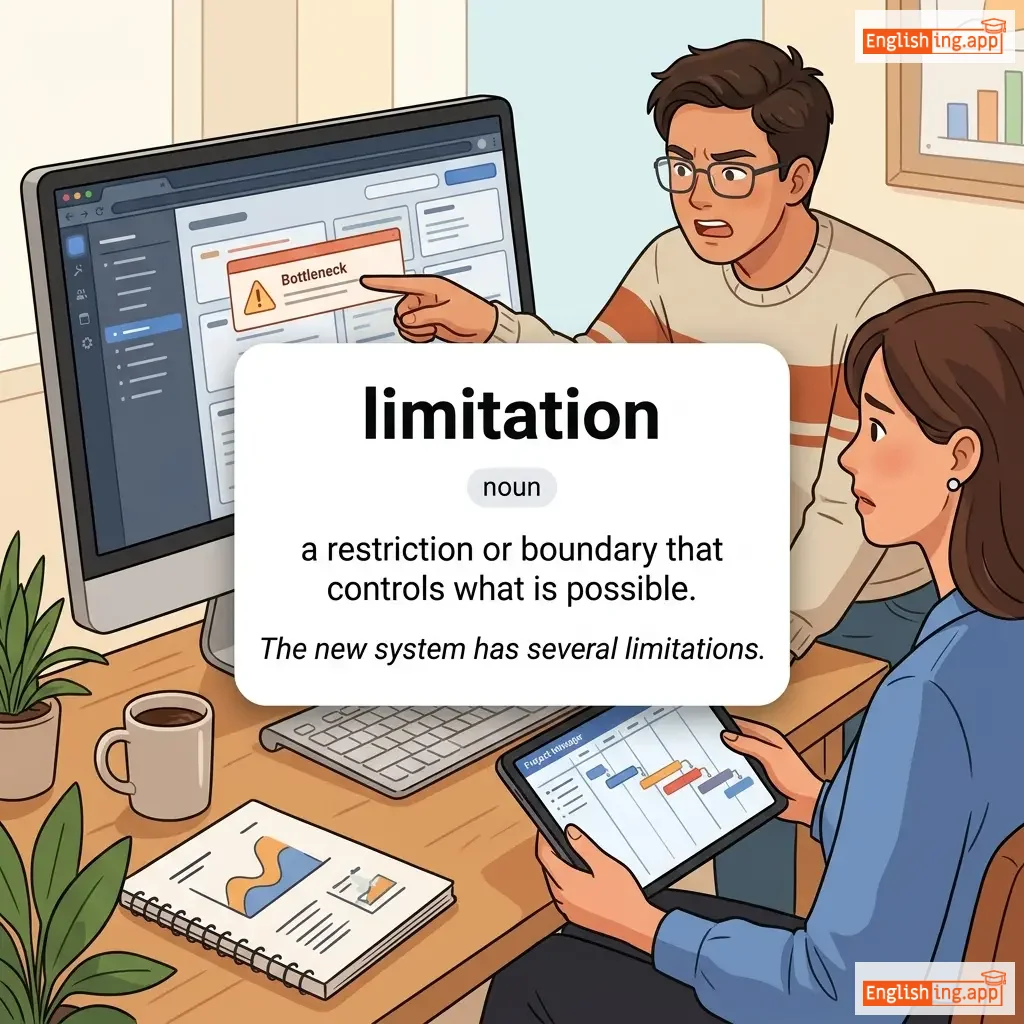
limitation definition card — visual illustration of the meaning
noun
/ˌlɪmɪˈteɪʃən/
制限 (seigen)

a restriction or boundary that controls what is possible.

"The new system has several limitations."

"新しいシステムにはいくつかの制限があります。" (Atarashii shisutemu ni wa ikutsuka no seigen ga arimasu.)
adjective
/ˈlɪmɪtɪd/
限定された (gentei sareta)

Restricted in size, amount, or extent; not great in number or ability.

"Tickets for the concert are limited."

"コンサートのチケットは限定されています。" (Konsaato no chiketto wa gentei sarete imasu.)
limn definition card — visual illustration of the meaning
verb
/lɪm/
描写する / 表現する (byōsha suru / hyōgen suru)

to depict or describe something vividly in words or art.

"The author limned the beauty of the countryside."

"作者は田舎の美しさを生き生きと描写しました。" (Sakusha wa inaka no utsukushisa o ikigiki to byōsha shimashita.)
noun
/ˈlɪməˌziːn/
運転手によって運転される大きな豪華な車 (untenshu ni yotte unten sareru ōkina gōka na kuruma)

a large, luxurious car driven by a chauffeur.

"The bride arrived in a white limousine."

"花嫁は白いリムジンで到着しました。" (Hanayome wa shiroi rimujin de tōchaku shimashita.)
verb, adjective, noun
/lɪmp/
引きずる / 弱い (hikizuru / yowai)

to walk with difficulty, often due to injury or weakness; lacking strength or firmness.

"He limped after injuring his ankle."
"彼は足首を怪我した後、足を引きずって歩いていた。" (Kare wa ashi-kubi o kega shita ato, ashi o hikizutte aruite ita.)
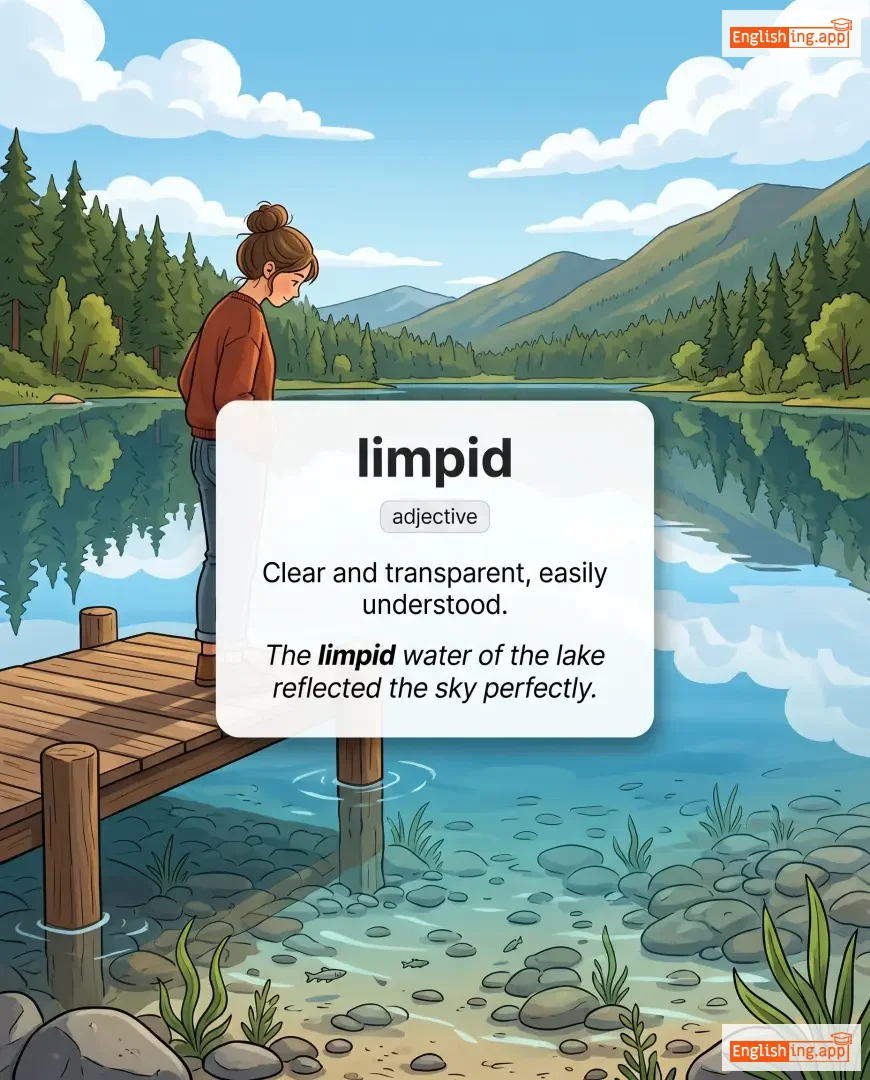
limpid definition card — visual illustration of the meaning
adjective
/ˈlɪmpɪd/
澄んだ (sunda)

Clear and transparent, easily understood.

"The limpid water of the lake reflected the sky perfectly."

"湖の澄んだ水は完璧に空を反映していました。" (Mizu no suna wa kanpeki ni sora o hanei shite imashita.)
noun, verb
/laɪn/
ライン (rain)

A long narrow mark or band; a row of people or things; to cover the inside surface of something.

"People waited in a long line outside the theater."

"人々は劇場の外で長い列を作って待っていた。" (Hitobito wa gekijou no soto de nagai retsu o tsukutte matte ita.)
noun; verb
/ˈlaɪnʌp/
ラインアップ;並べる (rainappu; naraberu)

a group or arrangement of people or things in a line; to arrange people or things in a row or planned order

"The coach announced the team line-up before the match."
"コーチは試合前にチームのラインアップを発表した。" (kochi wa shiai mae ni chiimu no rainappu o happyou shita)
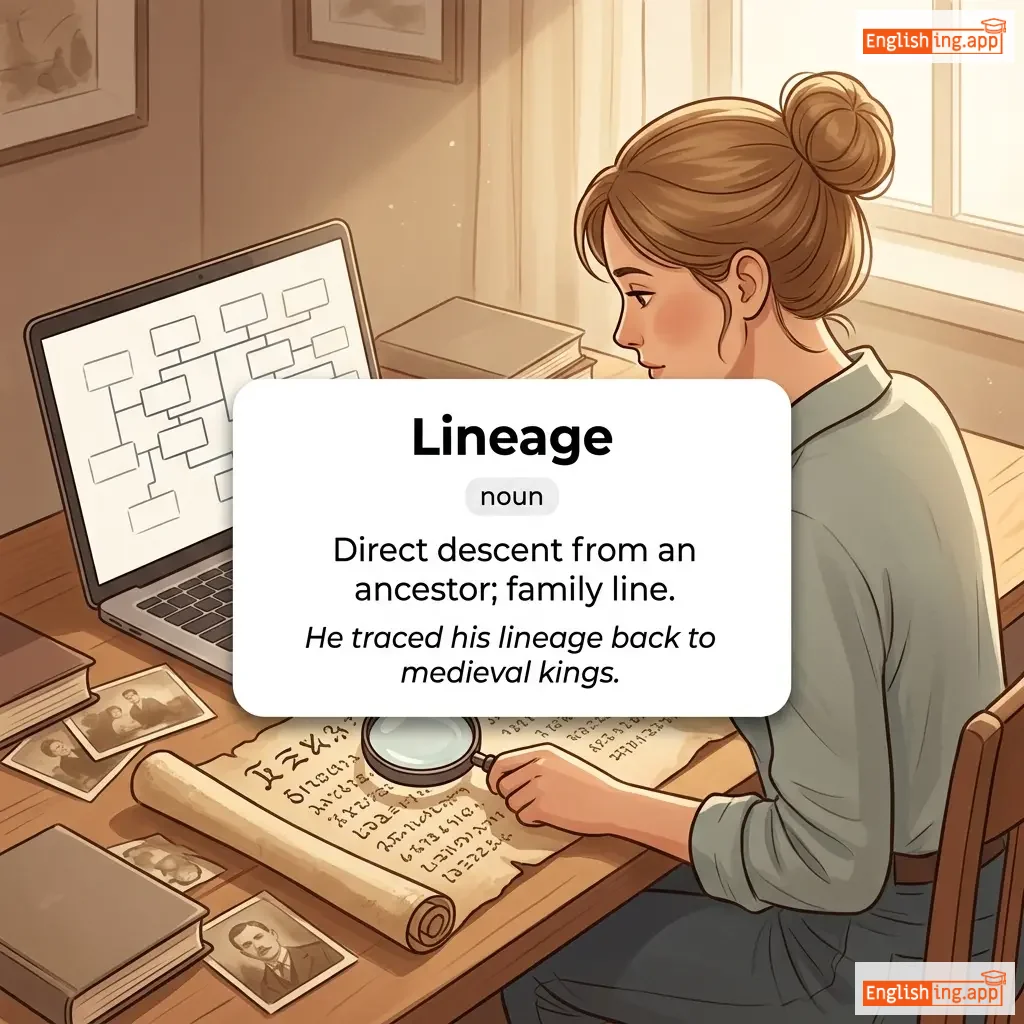
Lineage definition card — visual illustration of the meaning
noun
/ˈlɪniɪdʒ/
系譜 (keifu)

Direct descent from an ancestor; family line.

"He traced his lineage back to medieval kings."

"彼は自分の系譜を中世の王たちにまで遡りました。" (Kare wa jibun no keifu o chūsei no ō-tachi ni made sakomorimashita.)
noun
/ˈlɪniəmənt/
特徴 (tokuchou)

A distinctive feature or characteristic, especially of the face.

"Her delicate lineaments revealed her noble birth."

"彼女の繊細な特徴は彼女の高貴な誕生を明らかにしました。" (Kanojo no sensaina tokuchou wa kanojo no kouki na tanjou wo akiraka ni shimashita.)
noun (plural)
/ˈlɪniəmənts/
顔の特徴 (kao no tokuchou)

The features or distinctive characteristics of the face or body.

"The lineaments of his face were sharp and stern."

"彼の顔の特徴は鋭くて厳しかった。" (kare no kao no tokuchou wa surudakute kibishikatta.)
adjective
/ˈlɪniər/
線形 (senkei)

Arranged in or extending along a straight line.

"The artist used linear perspective in his drawings."

"アーティストは彼の絵に線形透視を使用しました。" (Ātisuto wa kare no e ni senkei tōshi o shiyō shimashita.)
noun
/ˈlɪn.ən/
リネン生地 (Rinen kiji)

A strong cloth made from the fibers of the flax plant, or items made from this cloth such as sheets or clothing.

"She bought new linen curtains for the living room."

"彼女はリビングルームのために新しいリネンのカーテンを買いました。" (Kanojo wa ribingu rūmu no tame ni atarashī rinen no kāten o kaimashita.)
🚢

liner

noun
/ˈlaɪ.nər/

A large ship used for transporting people or goods regularly, or a material used as a lining inside something.

"The luxury liner docked at the port yesterday."

noun
/ˈlaɪnˌʌp/
ラインアップ (rainappu)

a group of people or things arranged in a sequence

"The event featured a star-studded lineup of musicians."
"そのイベントは、スターが揃ったラインアップのミュージシャンを特集していました。" (Sono ibento wa, sutā ga sorotta rainappu no myūjishan o tokushū shite imashita.)
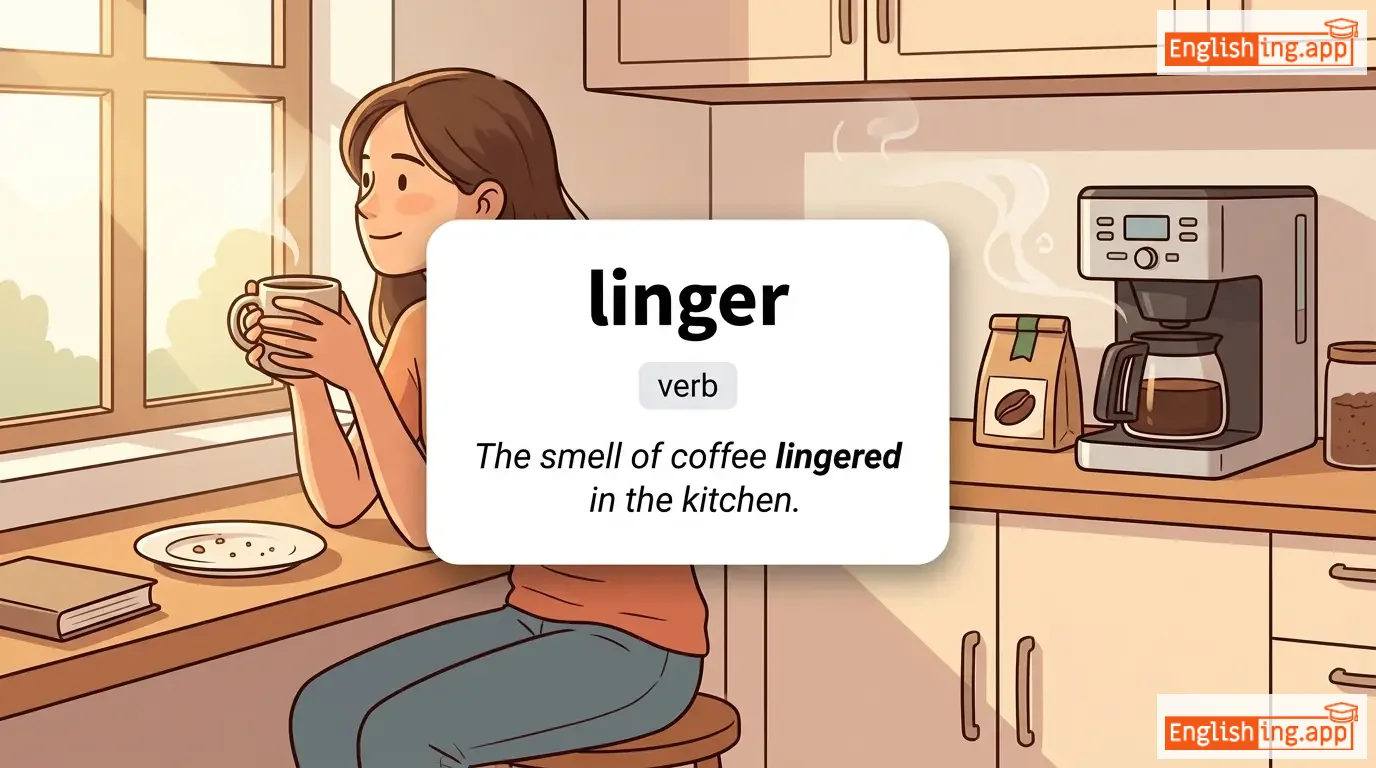
linger definition card — visual illustration of the meaning
verb
/ˈlɪŋ.ɡər/
長居する (nagai suru)

To stay in a place longer than necessary, often because of unwillingness to leave.

"The smell of coffee lingered in the kitchen."

"コーヒーの匂いはキッチンに長く linger していた。" (Kōhī no nioi wa kitchin ni nagaku linger shiteita.)
noun
/ˈlɪŋ.ɡoʊ/
専門用語 (senmon yōgo)

Specialized or informal language used by a particular group that is often difficult for outsiders to understand.

"The manual was written in technical lingo that confused the new employees."

"マニュアルは技術的な用語で書かれており、新しい従業員を混乱させました。" (Manyuaru wa gijutsuteki na yōgo de kakarete ori, atarashī jūgyōin o konran sasemashita.)
noun
/ˈlɪŋ.ɡwə/
言語 (gengo)

A language, especially one used for communication among people.

"English has become a global lingua for business and science."

"英語はビジネスと科学のためのグローバルな言語となっています。" (Eigo wa bijinesu to kagaku no tame no guroobaru na gengo to natteimasu.)
adjective
/ˈlɪŋɡwəl/
舌に関連する (shita ni kanren suru)

Relating to the tongue or speech.

"The dentist examined the patient's lingual surface of the teeth."

"歯科医は患者の歯の舌側面を調べました。" (Shika-i wa kanja no ha no shita sokumen o shirabemashita.)
noun
/ˈlɪŋɡwɪst/
言語学者 (gengogakusha)

A person skilled in foreign languages or in the scientific study of language.

"She is a linguist who speaks six languages fluently."
"彼女は6か国語を流暢に話す言語学者です。" (Kanojo wa rokkakokugo o ryūchō ni hanasu gengogakusha desu.)
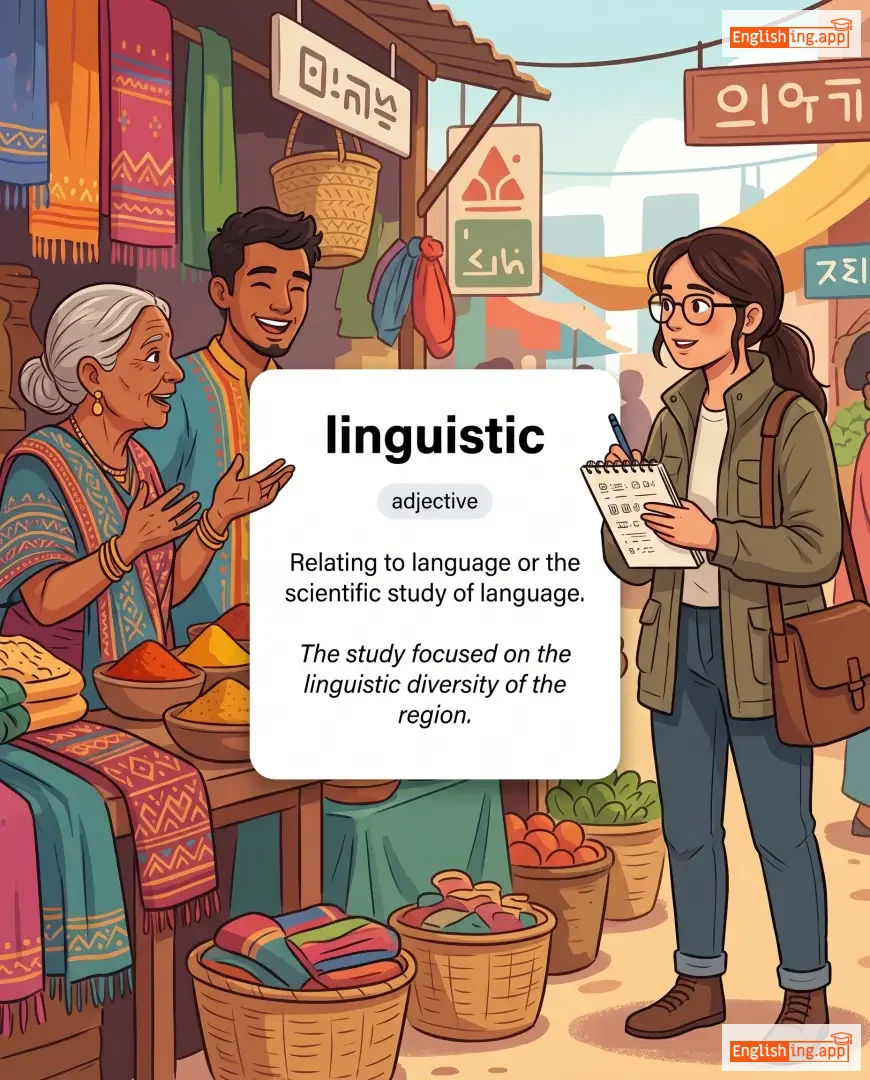
linguistic definition card — visual illustration of the meaning
adjective
/lɪŋˈɡwɪstɪk/
言語的 (gengo teki)

Relating to language or the scientific study of language.

"The study focused on the linguistic diversity of the region."

"その研究は地域の言語的多様性に焦点を当てました。" (Sono kenkyū wa chiiki no gengoteki tayōsei ni shōten o atemashita.)
noun
/lɪŋˈɡwɪstɪks/
言語学 (gengogaku)

The scientific study of language and its structure.

"She decided to major in linguistics at university."

"彼女は大学で言語学を専攻することに決めました。" (Kanojo wa daigaku de gengogaku wo senkou suru koto ni kimemashita.)
noun
/ˈlɪnəmənt/
リニメント / ローション (rinimento / roshon)

A liquid or lotion applied to the skin to relieve pain or stiffness.

"He rubbed liniment on his sore muscles after the workout."

"彼はトレーニング後、痛んだ筋肉にリニメントを擦り込んだ。" (Kare wa toreeningu go, itanda kinniku ni rinimento o surikonda.)
noun, verb
/lɪŋk/
リンク (link)

a connection between two things; to connect or associate

"The article includes a link to the official website."

"記事には公式ウェブサイトへのリンクが含まれています。" (Kiji ni wa kōshiki webusaito e no link ga fukumareteimasu.)
noun
/lɪˈnoʊ.li.əm/
リノリウム (rinoriumu)

a durable, washable floor covering made from solidified linseed oil, wood flour, or cork dust on a canvas backing

"They decided to cover the kitchen floor with linoleum."

"彼らはキッチンの床をリノリウムで覆うことに決めました。" (karera wa kicchin no yuka o rinoriumu de oou koto ni kimemashita)
noun
/lɪnt/
繊維くず (sen'i kuzu)

small soft fibers that come off cloth, often found in dryers or on clothes

"There was lint all over his black shirt after the wash."

"洗濯後、彼の黒いシャツに繊維くずがついていました。" (Sentaku go, kare no kuroi shatsu ni sen'i kuzu ga tsuite imashita.)
noun
/ˈlaɪən/
ライオン (raion)

a large wild animal of the cat family that lives in Africa and Asia, known as the king of the jungle

"The lion roared loudly in the distance."

"ライオンは遠くで大きな声で吠えました。" (Raion wa tōku de ōkina koe de hoemashita.)
noun
/ˈlaɪ.ə.nəs/
雌ライオン (mesu raion)

an adult female lion

"The fierce lioness protected her cubs from danger."

"その猛獣の雌ライオンは子ライオンたちを危険から守った。" (Sono mōjū no mesu raion wa koshirion-tachi o kiken kara mamotta.)
verb
/ˈlaɪ.ə.naɪz/
賛美する (sanbisuru)

to treat someone as a celebrity or give a lot of public attention

"The press began to lionize the young scientist after his discovery."

"彼の発見の後、メディアは若い科学者をライオナイズし始めました。" (kare no hakken no ato, media wa wakai kagakusha o raionaisu shi hajimemashita.)
noun
/lɪp/
(kuchin)

either of the two soft edges of the mouth

"She smiled and bit her lower lip nervously."

"彼女は笑い、緊張して下唇をかんだ。" (Kanojo wa warai, kinchou shite shita kuchin wo kanda.)
lipogenesis definition card — visual illustration of the meaning
noun
/ˌlaɪ.pəˈdʒen.ɪ.sɪs/
脂肪合成 (shibō gōsei)

The metabolic process of fat synthesis where excess carbohydrates are converted into fatty acids and stored as triglycerides.

"Excess carbohydrate intake promotes lipogenesis and fat storage."

"過剰な炭水化物の摂取は脂肪合成と脂肪の蓄積を促進します。" (Kajō na tansui kabutsu no sesshu wa shibō gōsei to shibō no chikuseki o sokushin shimasu.)
noun
/ˌlɪk.wəˈfeɪ.ʃənt/
液体化剤 (liquefacient)

a substance that causes something to become liquid

"The chemist explained how the liquefacient worked in the experiment."

"化学者は、実験で液体化剤がどのように機能するかを説明しました。" (Kagakusha wa, jikken de ekitaikazai ga dono yō ni kinō suru ka o setsumei shimashita.)
verb
/ˈlɪk.wɪ.faɪ/
液化する (liquefy)

to make or become liquid

"The heat will liquefy the butter in a few minutes."

"熱は数分でバターを液体に変えるでしょう。" (Netsu wa suū-fun de batā o ekitai ni kaeru deshō.)
noun
/lɪˈkjʊər/
甘いリキュール (amai rikyuuru)

A strong, sweet alcoholic drink flavored with fruits, herbs, or spices.

"She served a small glass of cherry liqueur after dinner."

"夕食後に小さなチェリーリキュールを出しました。" (Yūshokugo ni chiisana chērī rikyuuru o dashimashita.)
noun
/ˈlɪkwɪd/
液体 (ekitai)

a substance that flows freely but is of constant volume, having a consistency like water or oil.

"Water is a clear liquid that is essential for life."

"水は生命にとって不可欠な透明な液体です。" (Mizu wa seimei ni totte fukaketsu na tōmei na ekitai desu.)
verb
/ˈlɪkwɪdeɪt/
清算する (seisan suru)

To sell assets in order to pay off debts; to close a business and convert assets into cash.

"The company decided to liquidate its assets to pay creditors."

"会社は債権者に支払うために資産を清算することを決定しました。" (Kaisha wa saiken-sha ni shiharau tame ni shisan o seisan suru koto o kettei shimashita.)
liquidity definition card — visual illustration of the meaning
noun
/lɪkˈwɪd.ə.ti/
流動性 (ryūdō-sei)

The availability of liquid assets to a market or company.

"A business must maintain liquidity to cover expenses."

"企業は支出をカバーするために流動性を維持する必要があります。" (Kigyō wa shishutsu o kabā suru tame ni ryūdō-sei o iji suru hitsuyō ga arimasu.)
noun
/ˈlɪkər/

Alcoholic drinks, especially strong distilled ones such as whiskey or vodka.

"The shop sells both beer and hard liquor."

adjective
/ˈlɪsəm/
細く、しなやかで優雅な動き (hosoku, shinayaka de yūga na ugoki)

Thin, supple, and graceful in movement.

"The dancer moved with a lissome elegance."

"ダンサーはリソムな優雅さで動いていました。" (Dansā wa risomu na yūgasa de ugoite imashita.)
📋

List

noun, verb
/lɪst/

A series of names, items, or tasks written or printed together; also, to record or register items in such a way.

"She wrote a shopping list before going to the market."

listen definition card — visual illustration of the meaning
verb
/ˈlɪs.ən/
聞く (kiku)

to pay attention to sound

"She loves to listen to classical music in the evenings."

"彼女は夕方にクラシック音楽を聞くのが好きです。" (Kanojo wa yūgata ni kurashikku ongaku o kiku no ga suki desu.)
noun
/ˈlɪsənər/
リスナー (risunā)

a person who listens or pays attention to something, especially to a speaker or sound.

"She is a good listener who always understands others' problems."

"彼女は他の人の問題をいつも理解する良いリスナーです。" (Kanojo wa hoka no hito no mondai o itsumo rikai suru yoi risunā desu.)