語彙集

英単語辞書 | 単語の意味、定義、例文

adjective
/ˌɪməˈtɪəriəl/
無関係 (mukankei)

Not important or relevant; lacking physical substance.

"The judge ruled that the argument was immaterial to the case."

"裁判官はその議論が事件に関係ないと判断しました。" (Saibankan wa sono giron ga jiken ni kankei nai to handan shimashita.)
adjective
/ˌɪməˈtjʊər/
未熟 (mijuku)

Not fully developed; childish or lacking maturity.

"His immature behavior annoyed everyone at the meeting."

"彼の未熟な振る舞いは会議で皆をイライラさせた。" (Kare no mijuku na furumai wa kaigi de mina o iraira saseta.)
noun
/ˌɪməˈtjʊərəti/
未熟さ (mijukusa)

the state of not being fully developed emotionally, mentally, or physically; lack of maturity

"His immaturity made it difficult for him to handle responsibility."

"彼の未熟さは責任を果たすことを難しくした。" (kare no mijukusa wa sekinin o hatasu koto o muzukashiku shita)
adjective
/ɪˈmɛʒərəbl/
計り知れない (hakari shirenai)

Too great or extreme to be measured.

"Her kindness brought him immeasurable happiness."

"彼女の優しさは計り知れない幸福をもたらした。" (Kanojo no yasashisa wa hakari shirenai kōfuku o motarashita.)
immediacy definition card — visual illustration of the meaning
noun
/ɪˈmiːdiəsi/
即時性, 緊迫感 (sokujisei, kinpokkan)

The quality of bringing one into direct and instant involvement with something, giving rise to a sense of urgency or excitement.

"The immediacy of digital communication has reshaped business operations."

"デジタルコミュニケーションの即時性は、ビジネスの運営方法を変えました。" (Dejitaru komyunikeeshon no sokujisei wa, bijinesu no un'ei hōhō o kaemashita.)
adjective
/ɪˈmiːdiət/
即時 (sokujī)

happening or done without delay

"The doctor gave her immediate attention."

"医者は彼女に即時の注意を与えました。" (Isha wa kanojo ni sokujī no chūi o ataemashita.)
adverb
/ɪˈmiːdiətli/
直ちに (tadachini)

at once; without delay

"She responded immediately to the emergency call."

"彼女は緊急の電話に直ちに応答した。" (Kanojo wa kinkyū no denwa ni tadachini ōtō shita.)
adjective
/ˌɪməˈmɔːriəl/
不朽の (fukyū no)

Extending back beyond memory or record; ancient.

"The tradition has been followed since time immemorial."

"その伝統は不朽の時代から受け継がれてきた。" (Sono dentō wa fukyū no jidai kara uketsugarete kita.)
adjective
/ɪˈmɛns/
巨大な (kyodaina)

Extremely large or great in size, amount, or degree.

"The project required an immense amount of effort."
"そのプロジェクトには膨大な努力が必要でした。" (Sono purojekuto ni wa boudaina doryoku ga hitsuyou deshita.)
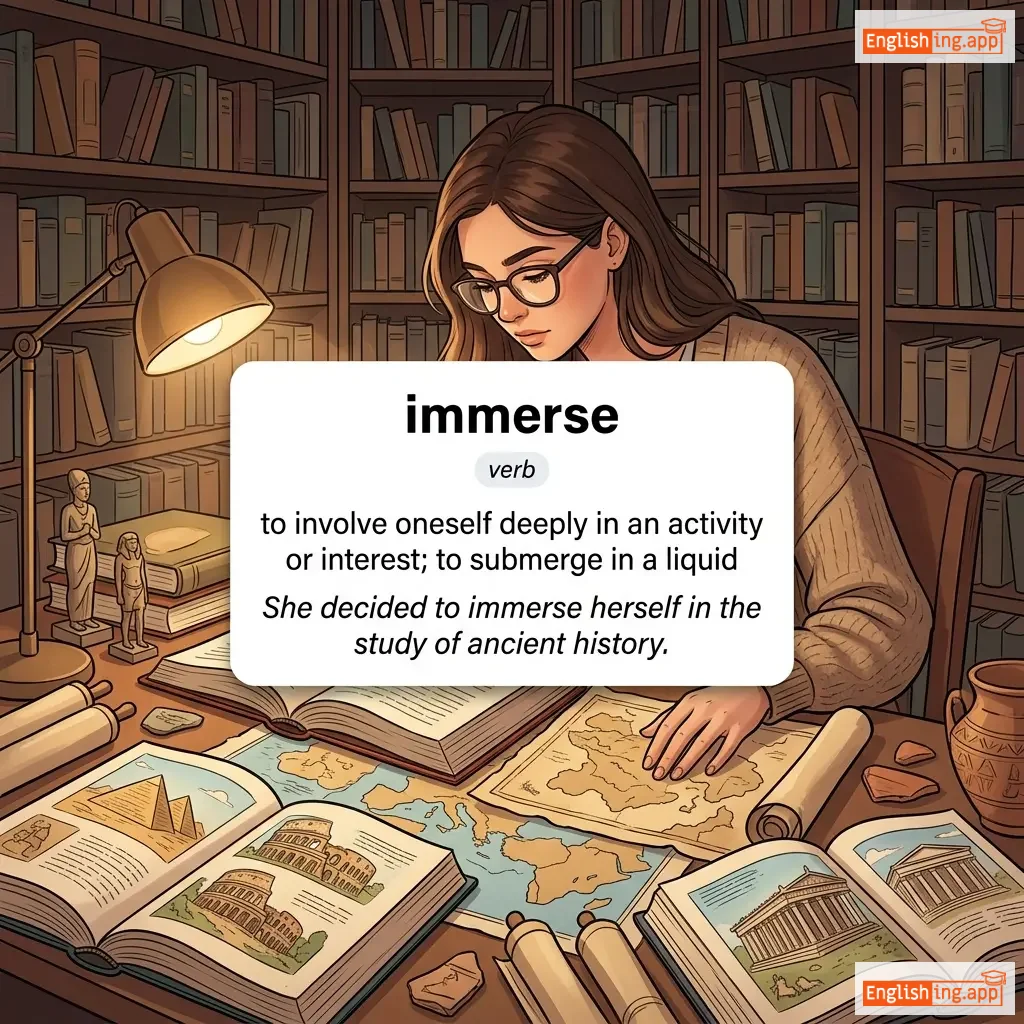
immerse definition card — visual illustration of the meaning
verb
/ɪˈmɜːrs/
浸る、没頭する (hitaru, mottou suru)

to involve oneself deeply in an activity or interest; to submerge in a liquid

"She decided to immerse herself in the study of ancient history."
"彼女は古代の歴史の研究に没頭することに決めました。" (Kanojo wa kodai no rekishi no kenkyuu ni mottou suru koto ni kimemashita.)
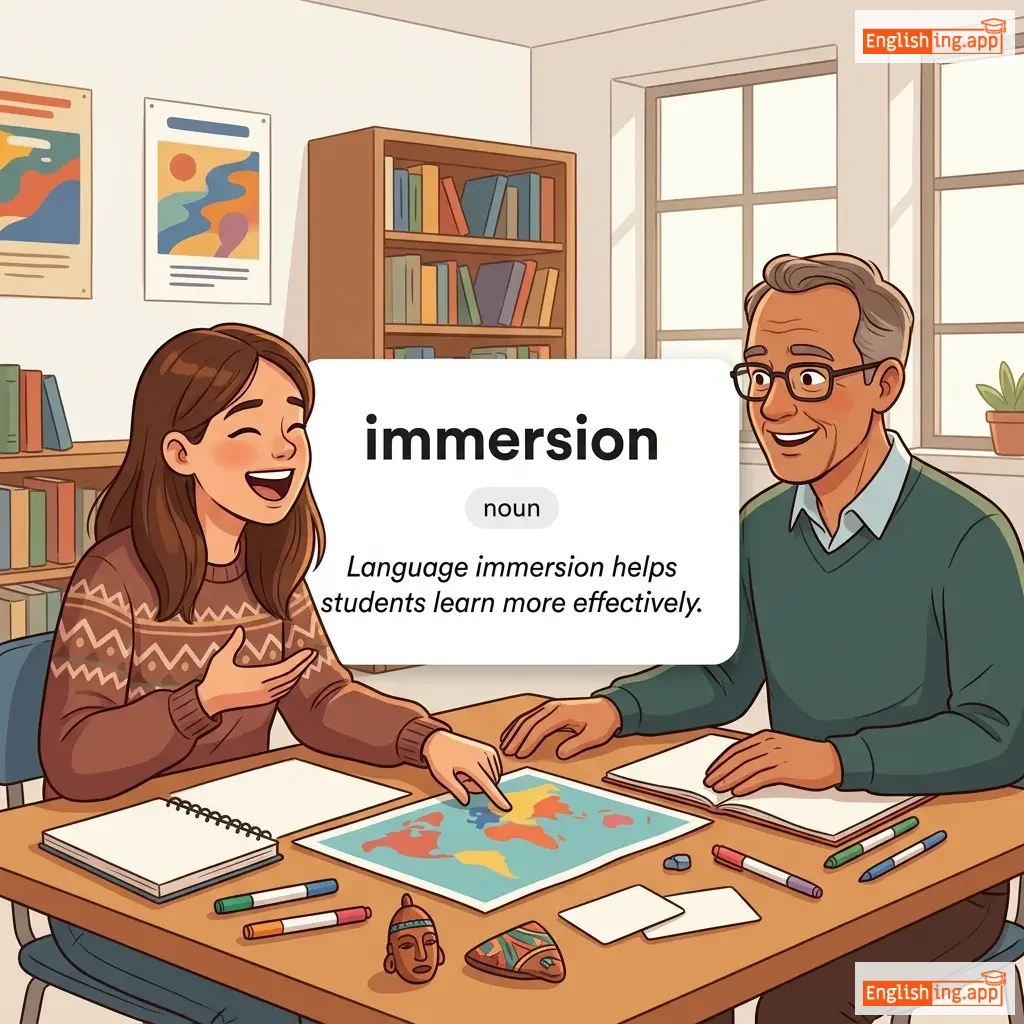
immersion definition card — visual illustration of the meaning
noun
/ɪˈmɜːrʒən/
イマーシブ (imāshibu)

the act of deeply involving oneself in something; the state of being completely surrounded by liquid

"Language immersion helps students learn more effectively."

"言語のイマーシブは学生がより効果的に学ぶのに役立ちます。" (Gengo no imāshibu wa gakusei ga yori kōkatekini manabu no ni yakudachimasu.)
immersive definition card — visual illustration of the meaning
adjective
ɪˈmɜː.sɪv
イマーシブ (imashibu)

Providing, involving, or characterized by deep absorption or immersion in something.

"The immersive experience of VR makes learning more interactive."

"VRのイマーシブ体験は、学習をよりインタラクティブにします。" (VR no imāshibu taiken wa, gakushū o yori intarakutibu ni shimasu.)
noun
/ˈɪmɪɡrənt/
移民 (imin)

a person who comes to live permanently in a foreign country

"The city has welcomed many new immigrants this year."

"今年、市は多くの新しい移民を迎えました。" (Kotoshi, shi wa ōku no atarashī imin o mukaemashita.)
verb
/ˈɪmɪɡreɪt/
移住する (ijyuu suru)

to come to live permanently in a foreign country

"He immigrated to Canada five years ago."

"彼は5年前にカナダに移住しました。" (Kare wa go-nen mae ni Kanada ni ijyuu shimashita.)
noun
/ˌɪmɪˈɡreɪʃən/
移民 (imin)

the action of coming to live permanently in a foreign country

"Immigration policies vary from country to country."

"移民政策は国によって異なります。" (Imin seisaku wa kuni ni yotte kotonari masu.)
noun
/ˈɪmɪnəns/
差し迫り、間近な状態 (sashisemari, majikana joutai)

the state of being about to happen

"The imminence of the storm forced people to take shelter."

"嵐の差し迫りが人々を避難させることを強制した。" (Arashi no sashisemari ga hitobito o hinan saseru koto o kyousei shita.)
adjective
/ˈɪmɪnənt/
差し迫った (さしせまった)

About to happen; likely to occur very soon.

"Dark clouds signaled that a storm was imminent."

"暗い雲は嵐が迫っていることを示していた。" (Kurai kumo wa arashi ga sematte iru koto o shimeshite ita.)
adjective
/ɪˈmɪsəbl/
不混和 (fukonwa)

Describes liquids that do not mix together.

"Oil and water are immiscible liquids."

"油と水は不混和の液体です。" (Abura to mizu wa fukonwa no ekitai desu.)
adjective
/ɪˈmoʊbəl/
動けない (ugokenai)

unable to move or be moved

"After the accident, he was immobile for weeks."

"事故の後、彼は数週間動けなかった。" (Jiko no ato, kare wa suushukan ugokenakatta.)
noun
/ˌɪməʊˈbɪləti/
不動 (fudou)

The state of being unable to move.

"After the accident, she suffered from immobility in her legs."

"事故の後、彼女は足の不動に苦しみました。" (Jiko no ato, kanojo wa ashi no fudou ni kurushimashita.)
adjective
/ɪˈmɒdərət/
過度な (kadona)

excessive; beyond reasonable limits

"He has an immoderate love for sweets."

"彼はお菓子に対して過度の愛情を持っています。" (Kare wa okashi ni taishite kadona aijō o motteimasu.)
adjective
/ɪˈmɒdɪst/
傲慢 / 不適切 (ouman / futekisetsu)

lacking humility or decency; excessively proud or improper

"His immodest remarks offended the audience."

"彼の傲慢な発言は観客を不快にさせた。" (Kare no ouman na hatsugen wa kankyaku o fukai ni saseta.)
noun
/ɪˈmɒdəsti/
不謹慎 (fukinshin)

lack of modesty or decency; behavior or attitude that is overly bold or improper

"The article was criticized for its tone of immodesty."

"その記事は不謹慎な語調で批判された。" (sono kiji wa fukinshin na gochou de hihansareta)
verb
/ˈɪməleɪt/
犠牲にする/焼死させる (gisei ni suru/yakushi saseru)

To kill or sacrifice, especially by burning.

"The protesters threatened to immolate themselves in front of the building."

"抗議者たちは建物の前で自ら火にくべると脅した。" (Kōgisha-tachi wa tatemono no mae de mizukara hi ni kuberu to odoshita.)
adjective
/ɪˈmɒrəl/
不道徳な (fudōtoku na)

Not conforming to accepted standards of morality; unethical or wicked.

"He was fired for his immoral behavior."

"彼は不道徳な行動で解雇されました。" (Kare wa fudōtoku na kōdō de kaiko saremashita.)
noun
/ˌɪməˈrælɪti/
不道徳 (fudotoku)

the quality of being immoral; behavior that violates accepted moral standards

"The community condemned the immorality of the corrupt officials."

"地域社会は腐敗した役人の不道徳を非難した。" (Chiiki shakai wa fuhai shita yakunin no fudotoku o hinan shita)
adjective; noun
/ɪˈmɔːrtl/
不死の (fushi no)

living forever; never dying; lasting forever in fame or memory

"Legends often describe heroes as immortal beings who never die."

"伝説では英雄は不死の存在だとされる。" (densetsu dewa eiyuu wa fushi no sonzai da to sareru)
noun
/ˌɪmɔːrˈtæləti/
不死; 永遠の命 (fushi; eien no inochi)

the state of living forever; eternal life or lasting fame beyond death

"Many ancient cultures believed that heroes could achieve immortality through great deeds."

"多くの古代文化では、英雄が偉業によって不死を得られると信じられていた。" (ooku no kodai bunka dewa eiyuu ga igyou ni yotte fushi o erareru to shinjirarete ita)
verb
/ɪˈmɔːrtəlaɪz/
不朽の (fukyuu no)

to preserve the memory of someone or something forever

"The statue was built to immortalize the hero’s sacrifice."
"その像は、英雄の犠牲を永遠にするために建てられました。" (Sono zō wa, eiyū no gisei o eien ni suru tame ni tateraremashita.)
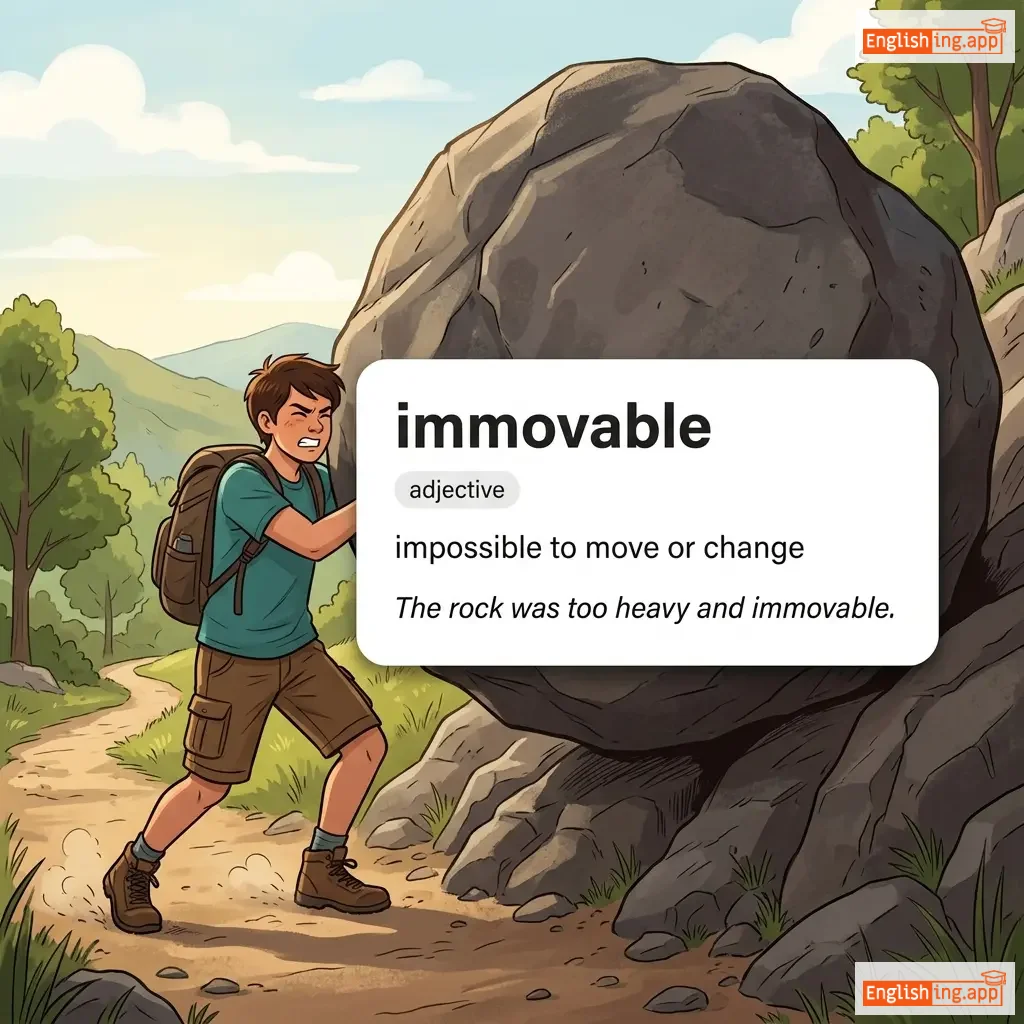
immovable definition card — visual illustration of the meaning
adjective
/ɪˈmuːvəbl/
動かせない (ugokasenai)

impossible to move or change

"The rock was too heavy and immovable."

"岩は非常に重く、動かすことができませんでした。" (Iwa wa hijou ni omoku, ugokasu koto ga dekimasen deshita.)
adjective
/ɪˈmjuːn/
免疫の (men'eki no)

protected from disease or from the effects of something

"Children who are vaccinated are immune to many diseases."
"予防接種を受けた子供たちは多くの病気に免疫があります。" (Yobou sesshu wo uketa kodomotachi wa ooku no byouki ni men'eki ga arimasu.)
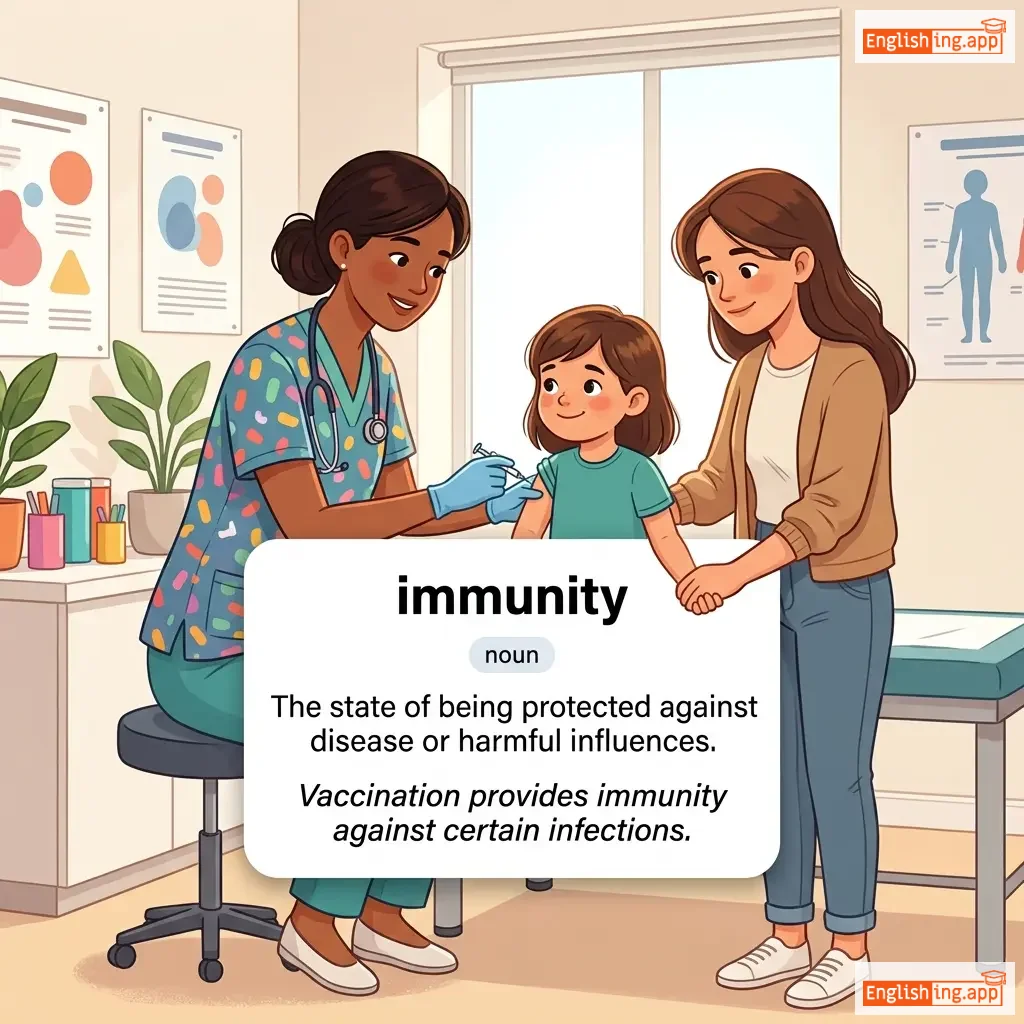
immunity definition card — visual illustration of the meaning
noun
/ɪˈmjuːnɪti/
免疫 (men'eki)

The state of being protected against disease or harmful influences.

"Vaccination provides immunity against certain infections."

"ワクチン接種は特定の感染症に対する免疫を提供します。" (Wakuchin sesshu wa tokutei no kansenshou ni taisuru men'eki wo teikyou shimasu.)
verb
/ɪˈmjʊər/
閉じ込める (tojikomeru)

to confine or enclose someone against their will

"The prisoner was immured in a dark cell."
"囚人は暗い監房に閉じ込められた。" (Shūjin wa kurai kanbō ni tojikomerareta.)
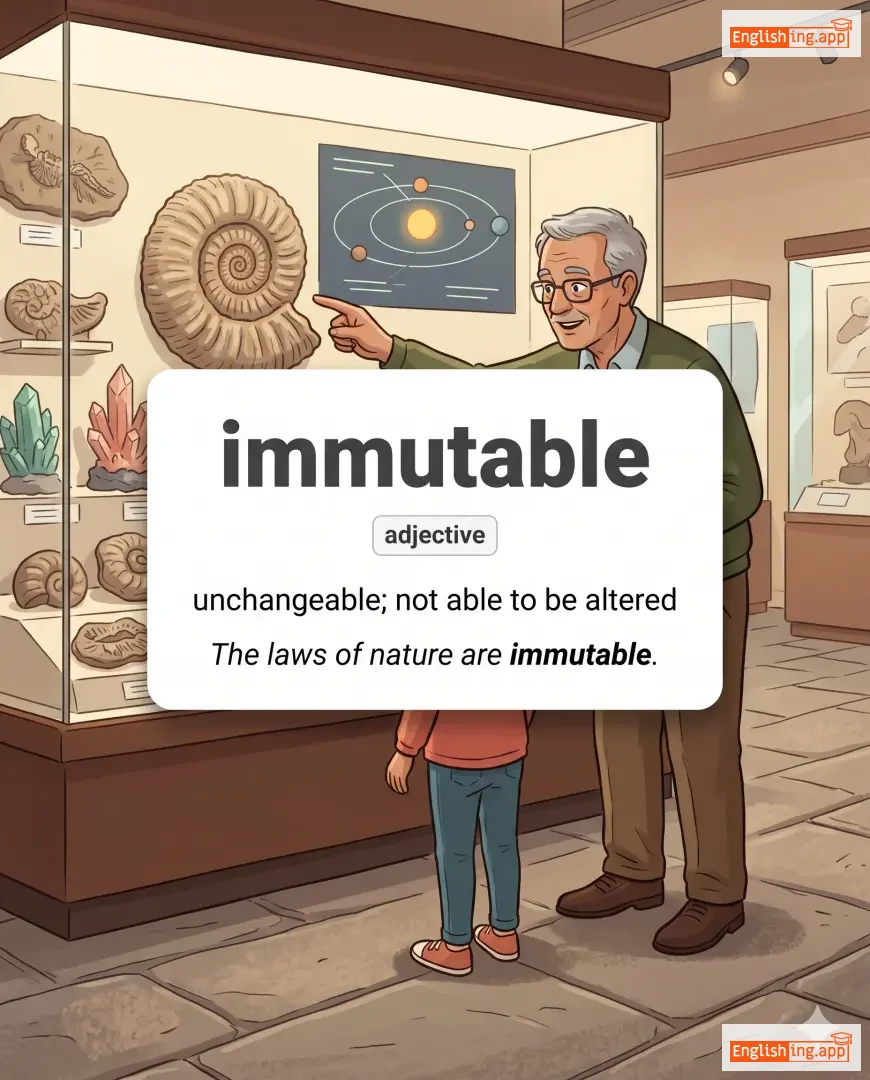
immutable definition card — visual illustration of the meaning
adjective
/ɪˈmjuːtəbl/
不変 (fuhen)

unchangeable; not able to be altered

"The laws of nature are immutable."

"自然の法則は不変です。" (Shizen no hōsoku wa fuhen desu.)
noun
/ɪmp/
小さないたずら好きな悪魔 (chiisana itazura suki na akuma)

a small mischievous devil or sprite; a playful troublemaker

"The child was acting like a little imp, hiding his toys everywhere."
"その子供は小さなインプのように振る舞い、どこにでもおもちゃを隠していました。" (Sono kodomo wa chiisana impu no you ni furumai, doko ni demo omocha wo kakushite imashita.)
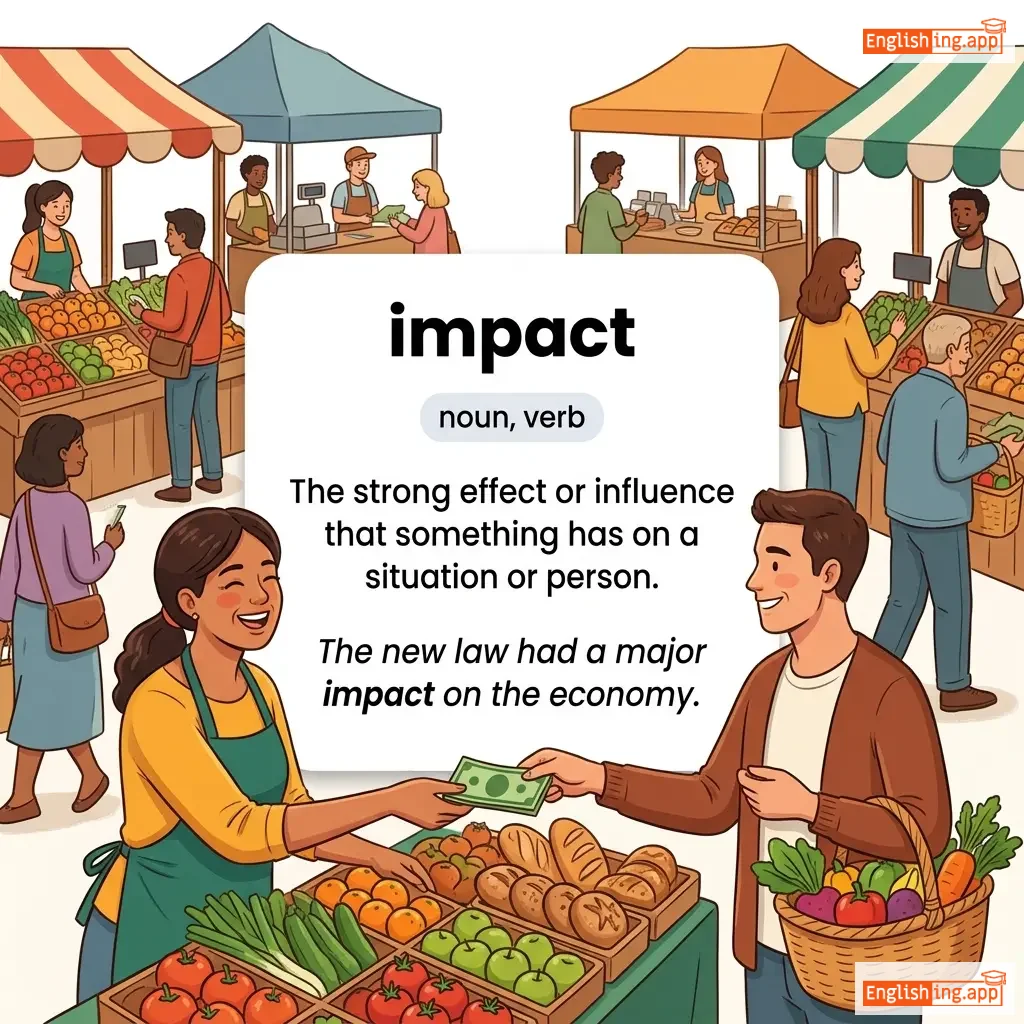
impact definition card — visual illustration of the meaning
noun, verb
/ˈɪmpækt/
影響 (eikyou)

The strong effect or influence that something has on a situation or person.

"The new law had a major impact on the economy."
"新しい法律は経済に大きな影響を与えました。" (Atarashii houritsu wa keizai ni ookina eikyou wo ataemashita.)
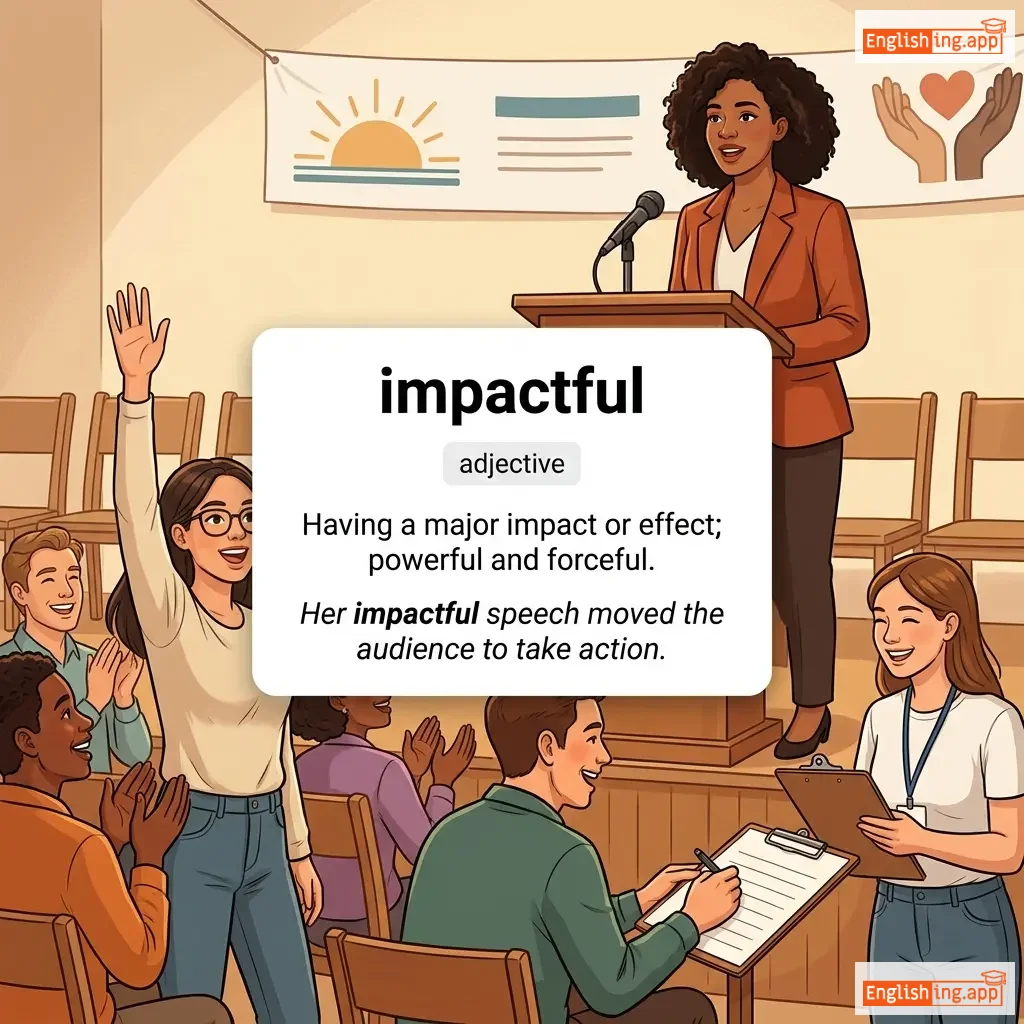
impactful definition card — visual illustration of the meaning
adjective
/ˈɪmpæktfʊl/
インパクトがある (inpakuto ga aru)

Having a major impact or effect; powerful and forceful.

"Her impactful speech moved the audience to take action."
"彼女のインパクトのあるスピーチは、聴衆を行動に駆り立てた。" (Kanojo no inpakuto no aru supīchi wa, chōshū o kōdō ni karitate ta.)
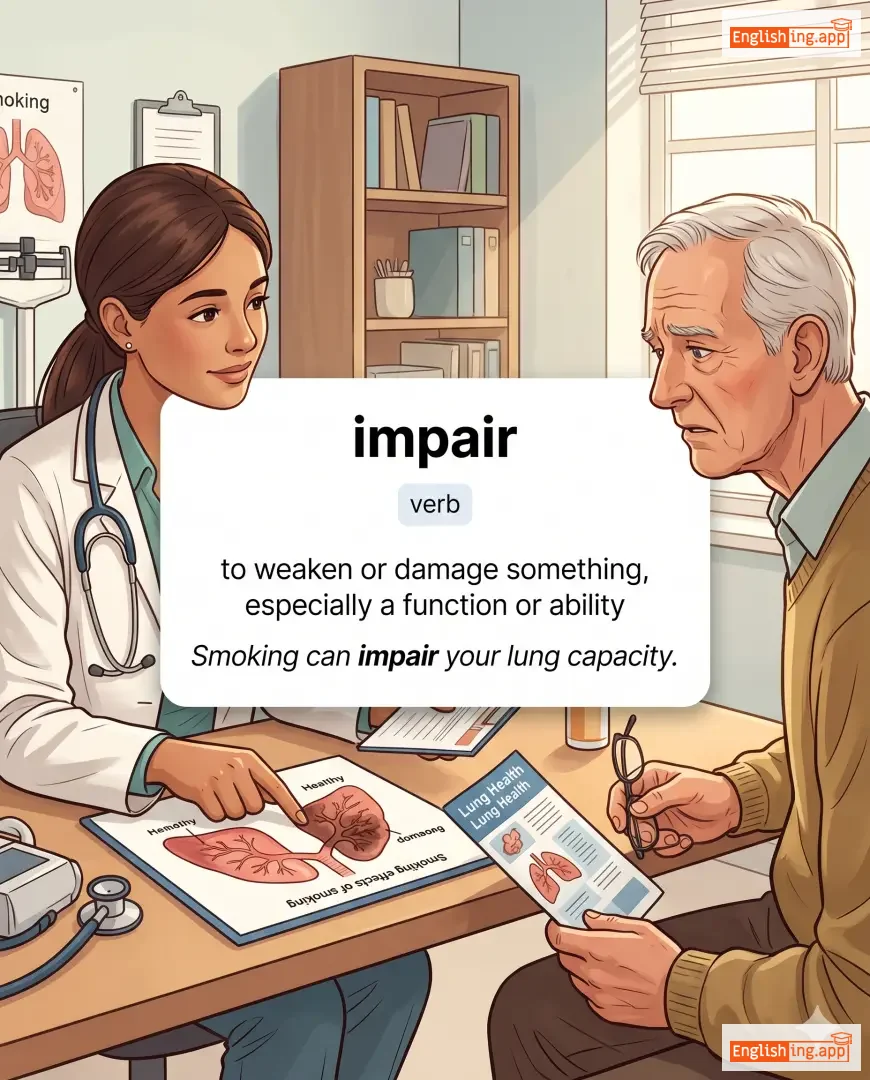
impair definition card — visual illustration of the meaning
verb
/ɪmˈpɛər/
損なう (sonnau)

to weaken or damage something, especially a function or ability

"Smoking can impair your lung capacity."
"喫煙は肺活量を害する可能性があります。" (Kitsuen wa haikatsuryou wo gaishirukanoosei ga arimasu.)
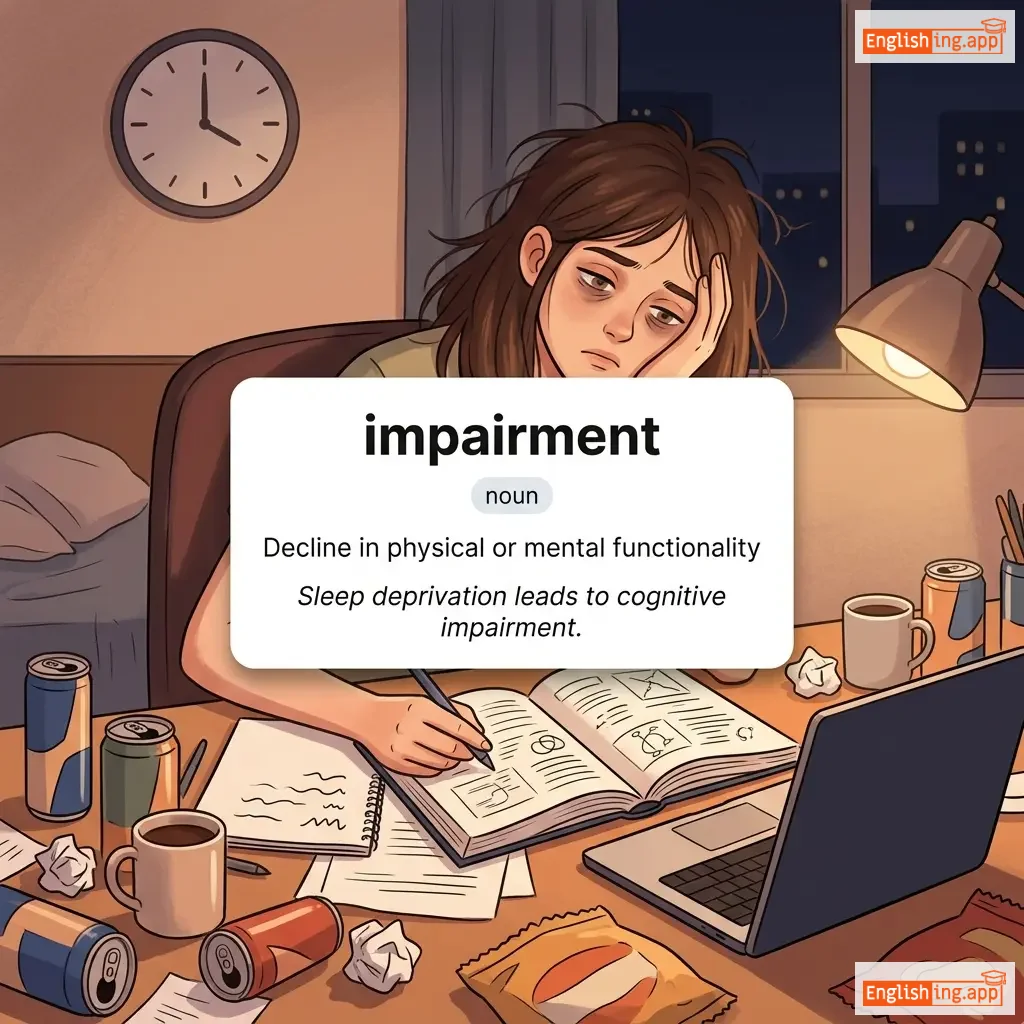
impairment definition card — visual illustration of the meaning
noun
ɪmˈpɛərmənt
障害 (shōgai)

Decline in physical or mental functionality

"Sleep deprivation leads to cognitive impairment."

"睡眠不足は認知障害を引き起こす。" (Suimin busoku wa ninchi shōgai o hikiokosu.)
verb
/ɪmˈpeɪl/
突き刺す (tsukisasu)

to pierce or fix something with a sharp object

"The knight was impaled by the enemy’s spear."

"騎士は敵の槍で突き刺さった。" (Kishi wa teki no yari de tsukisatta.)
adjective
/ɪmˈpælpəbəl/
触れない (furenai)

unable to be felt by touch; difficult to grasp or understand

"There was an impalpable sense of fear in the room."

"部屋には触れない恐怖感があった。" (Heya ni wa furenai kyoufukan ga atta.)
verb
/ɪmˈpɑːrt/
伝える (tsutaeru)

to make information known; to bestow or communicate

"The teacher imparted valuable knowledge to her students."

"教師は生徒に貴重な知識を授けました。" (Kyōshi wa seito ni kichōna chishiki o sazukemashita.)
adjective
/ɪmˈpɑːrʃəl/
公平 (kouhei)

Treating all rivals or disputants equally; fair and just.

"The judge remained impartial throughout the trial."

"裁判官は裁判の間、公平を保ちました。" (Saibankan wa saiban no aida, kōhei o tamochimashita.)
adjective
/ɪmˈpæsəbəl/
通行不可能 (tsuukou fukanou)

Impossible to travel along or over.

"The road became impassable after the heavy snowfall."
"大雪の後、道は通行不可能になりました。" (Ooyuki no ato, michi wa tsuukou fukanou ni narimashita.)
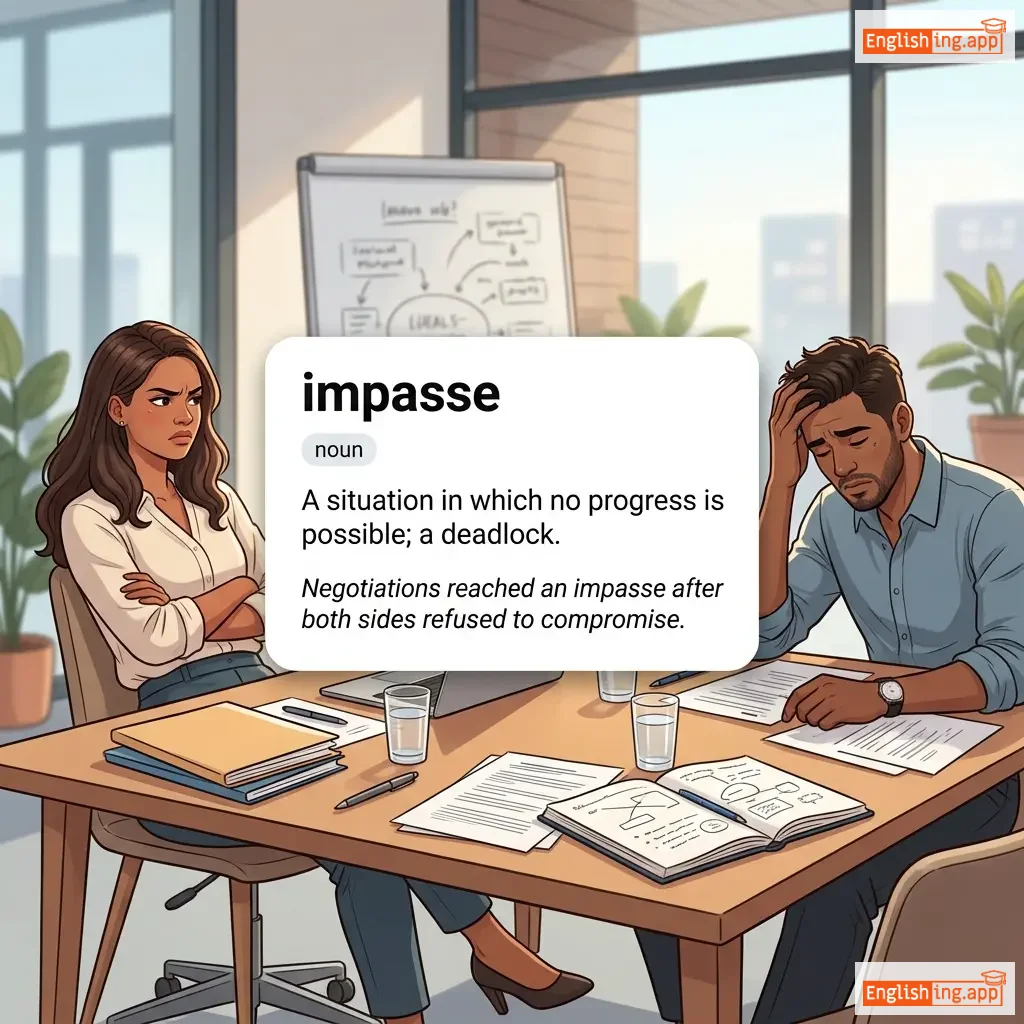
impasse definition card — visual illustration of the meaning
noun
/ˈɪmpæs/
行き詰まり (ikidzumari)

A situation in which no progress is possible; a deadlock.

"Negotiations reached an impasse after both sides refused to compromise."

"両サイドが妥協を拒否したため、交渉は行き詰まりました。" (Ryō saido ga dakyo o kyohi shita tame, kōshō wa ikidzumari mashita.)
adjective
/ɪmˈpæsɪbəl/
無痛性 (mutsuusei)

Incapable of suffering or feeling pain (used mainly in theological or philosophical contexts).

"Some philosophers argue that God is impassible and cannot experience human emotions."

"一部の哲学者は、神は無痛性であり、人間の感情を感じることはできないと主張しています。" (Ichi bu no tetsugakusha wa, kami wa mutsuusei de ari, ningen no kanjou o kanjiru koto wa dekinai to shuchou shiteimasu.)
adjective
/ɪmˈpæʃənd/
情熱的な (jōnetsuteki na)

Filled with or showing great emotion.

"She gave an impassioned speech about human rights."
"彼女は人権について情熱的なスピーチを行いました。" (Kanojo wa jinken ni tsuite jōnetsuteki na supīchi o okonai mashita.)
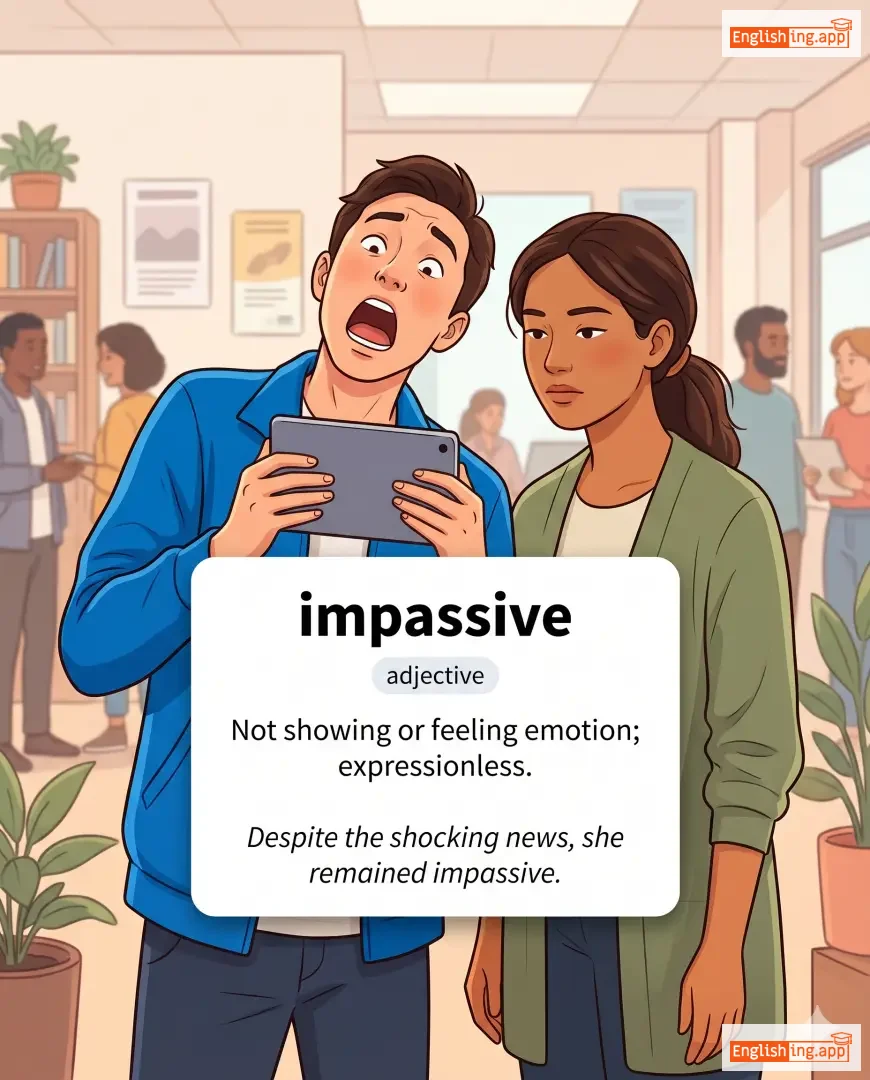
impassive definition card — visual illustration of the meaning
adjective
/ɪmˈpæsɪv/
無表情 (muhyōjō)

Not showing or feeling emotion; expressionless.

"Despite the shocking news, she remained impassive."

"衝撃的なニュースにもかかわらず、彼女は無表情のままでした。" (Shōgeki-teki na nyūsu ni mo kakawarazu, kanojo wa muhyōjō no mamadashita.)
noun
/ɪmˈpeɪʃəns/
忍耐力不足 (nintairyoku fusoku)

The state of being quickly irritated or unable to wait calmly.

"His impatience grew as the meeting dragged on."

"会議が長引くにつれて、彼の忍耐力不足が増しました。" (Kaigi ga nagabiku ni tsurete, kare no nintairyoku fusoku ga mashimashita.)
adjective
/ɪmˈpeɪʃənt/
イライラ (iraira)

Not able to wait calmly; restless and eager for something to happen.

"She grew impatient while waiting in the long queue."

"彼女は長い列で待っている間にイライラしてきた。" (Kanojo wa nagai retsu de matteru aida ni iraira shite kita.)