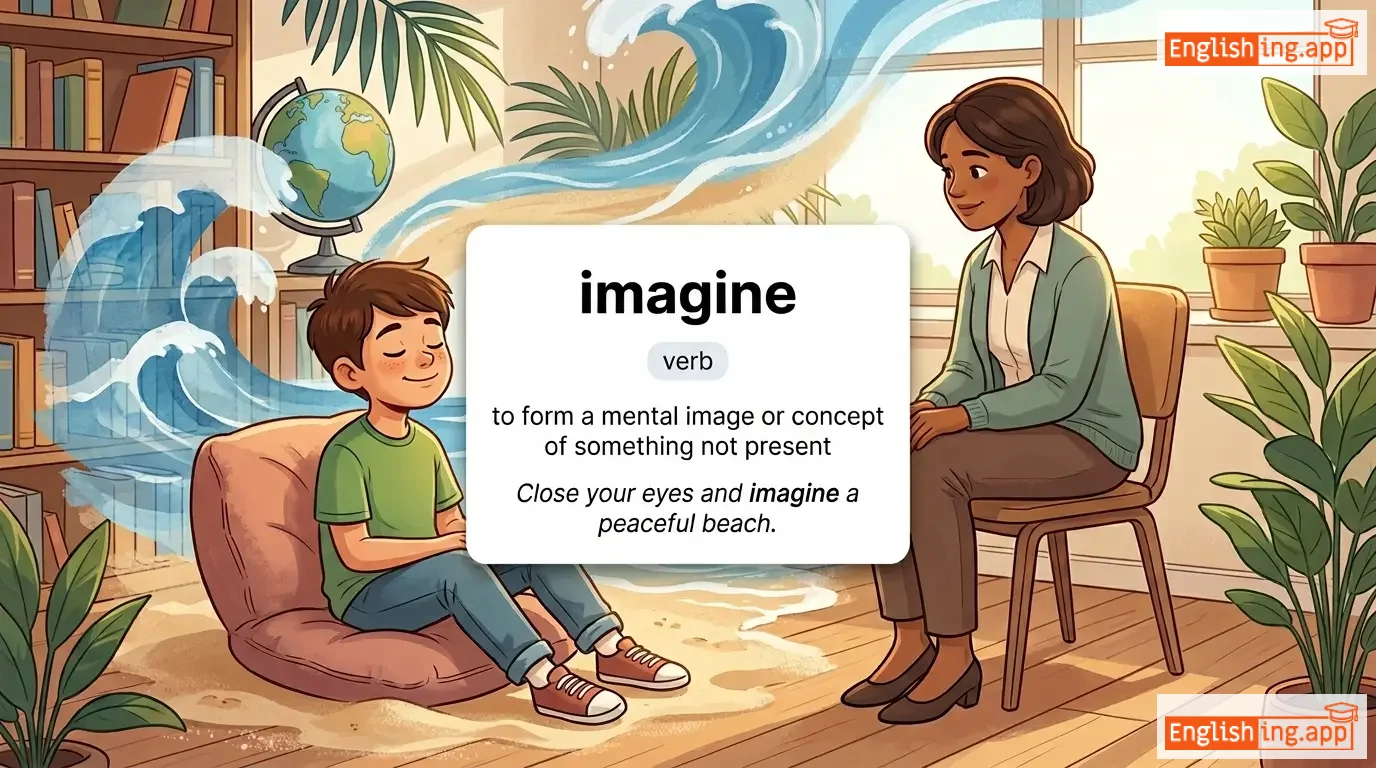
語彙集

英単語辞書 | 単語の意味、定義、例文

adjective
/ˌɪɡ.nəˈmɪn.i.əs/
不名誉な (fumei na)

Marked by shame, disgrace, or humiliation.

"The team suffered an ignominious defeat in the finals."

"チームは決勝で不名誉な敗北を喫した。" (Chiimu wa kesshou de fumei na haiboku o kitta.)
noun
/ˈɪɡ.nəˌmɪn.i/
恥辱 (chijoku)

Public shame, disgrace, or dishonor.

"He lived the rest of his life in ignominy after the scandal."

"スキャンダル後、彼は生涯を恥辱の中で過ごした。" (Sukyandaru go, kare wa shōgai o chijoku no naka de sugoshita.)
noun
/ˈɪɡnərəns/
無知 (muchi)

lack of knowledge or awareness in general

"His ignorance about the subject was evident."

"その主題に対する彼の無知は明らかだった。" (Sono shudai ni taisuru kare no muchi wa akiraka datta.)
adjective
/ˈɪɡ.nər.ənt/
無知 (muchi)

lacking knowledge, awareness, or education

"He made an ignorant comment about the culture."
"彼は文化について無知なコメントをした。" (Kare wa bunka ni tsuite muchi na komento o shita.)
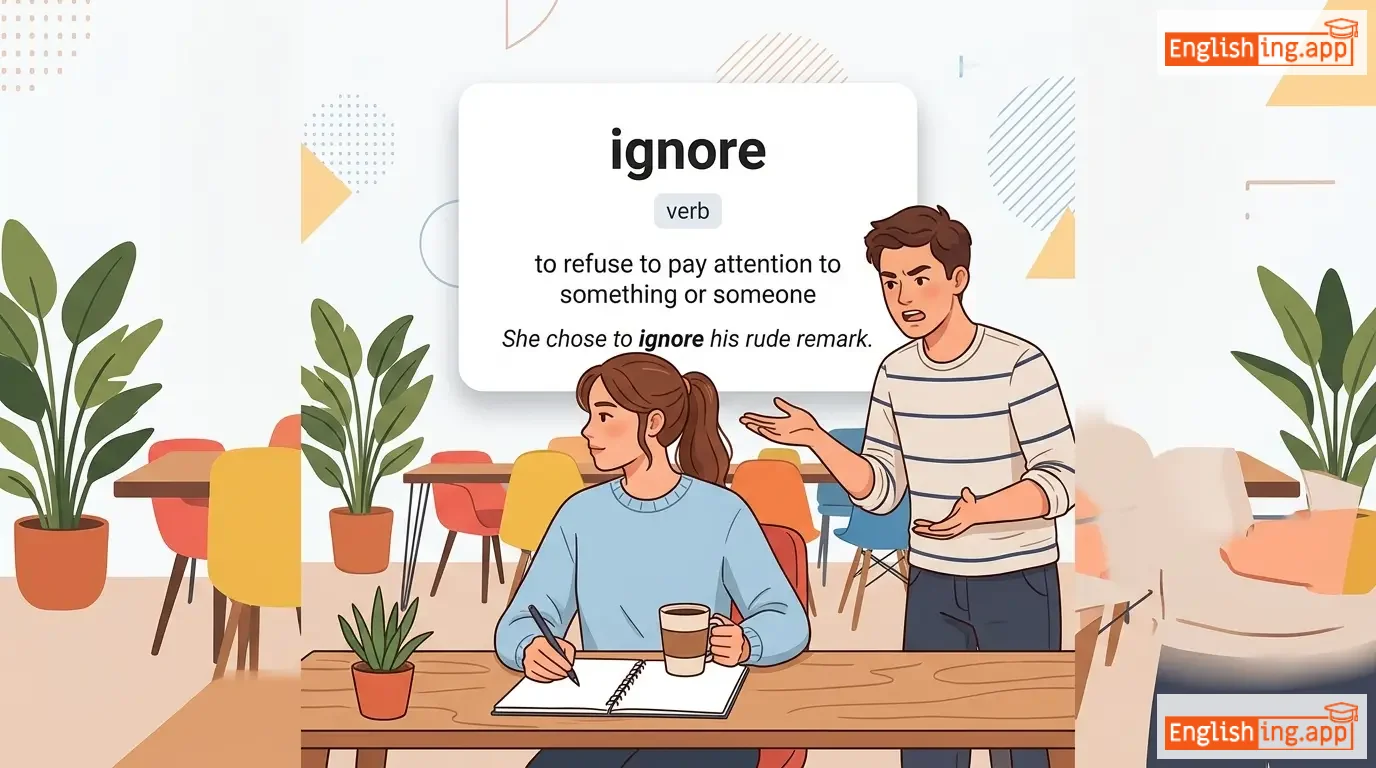
ignore definition card — visual illustration of the meaning
verb
/ɪɡˈnɔːr/
無視する (mushi suru)

to refuse to pay attention to something or someone

"She chose to ignore his rude remark."

"彼女は彼の失礼なコメントを無視することを選んだ。" (Kanojo wa kare no shitsurei na komento o mushi suru koto o eranda.)
noun
/ˈaɪ.kɒn/
宗教的な画像やシンボル (shūkyō-teki na gazō ya shinboru)

A religious image or symbol, especially in the Eastern Orthodox Church.

"The church displayed a beautifully painted ikon of the Virgin Mary."

"教会は美しく描かれた聖母マリアのアイコンを展示しました。" (Kyōkai wa utsukushiku egakareta Seibo Maria no aikon o tenji shimashita.)
noun
/ˈɪl.i.æd/
イリアス (Irias)

An ancient Greek epic poem attributed to Homer, describing the events of the Trojan War.

"Students studied the Iliad to understand Greek mythology and heroism."

"学生たちはイリアスを学び、ギリシャ神話と英雄主義を理解しました。" (Gakusei-tachi wa Irias wo manabi, Girisha shinwa to eiyuu shugi wo rikai shimashita.)
adjective
/ɪl/
病気 (byouki)

Not in good health; sick or unwell.

"He has been feeling ill since yesterday."

"彼は昨日から体調が悪いです。" (Kare wa kinou kara taichou ga warui desu.)
adjective
/ˈɪl bred/
無作法な (illbred)

lacking good manners; rude; showing poor upbringing

"His ill-bred behavior shocked everyone at the dinner party."

"彼の無作法な振る舞いは、ディナー・パーティーで皆を驚かせた。" (kare no musahou na furumai wa dinaa paatii de mina o odorokaseta)
adjective
/ˌɪlˈneɪ.tʃəd/
性格が悪い (seikaku ga warui)

Having a bad or unpleasant character; unkind or malicious.

"He made an ill-natured remark about his colleague."

"彼は同僚について悪意のある発言をしました。" (Kare wa dōryō ni tsuite akui no aru hatsugen o shimashita.)
adjective
/ɪˈliː.ɡəl/
違法 (ihou)

Not allowed by law; unlawful.

"It is illegal to drive without a valid license."

"有効な免許なしで運転することは違法です。" (Yūkō na menkyo nashi de unten suru koto wa ihō desu.)
noun
/ɪˌledʒ.əˈbɪl.ə.ti/
読みにくさ (yomnikusa)

the quality of being impossible or difficult to read; unclear writing or print

"The doctor's handwriting was famous for its illegibility among the pharmacy staff."

"医者の手書きは薬局のスタッフの間でその読みにくさで有名でした。" (Isha no tegaki wa yakkyoku no sutaffu no aida de sono yomnikusa de yūmei deshita.)
adjective
/ɪˈledʒ.ə.bəl/
読めない (yomenai)

Not clear enough to be read; unreadable.

"The doctor’s handwriting was almost illegible."

"医者の手書きはほとんど読めなかった。" (Isha no tegaki wa hotondo yomenakatta.)
adjective
/ˌɪlɪˈdʒɪtɪmət/
不正 (fusei)

Not authorized by law, rules, or standards; not recognized as valid.

"The court ruled the contract to be illegitimate."

"裁判所は契約が不正であると判断しました。" (Saibansho wa keiyaku ga fusei de aru to handan shimashita.)
adjective
/ɪˈlɪbərəl/
非リベラル (hi riberaru)

Opposed to liberal principles; restricting freedom of thought or behavior.

"The government was criticized for its illiberal policies."

"政府はその非リベラルな政策について批判された。" (Seifu wa sono hi riberaru na seisaku ni tsuite hihan sareta.)
noun
/ˌɪlɪbəˈræləti/
不寛容 (fukanyou)

The quality of being illiberal; lack of tolerance or generosity.

"The illiberality of the new laws alarmed the citizens."

"新しい法律の不寛容が市民を驚かせました。" (Atarashī hōritsu no fukanyō ga shimin o odorokasemashita.)
adjective
/ɪˈlɪsɪt/
不法な (fuhō na)

Forbidden by law, rules, or custom.

"The police shut down the illicit drug operation."

"警察は不法な麻薬取引を閉鎖しました。" (Keisatsu wa fuhō na mayaku torihiki o heisa shimashita.)
adjective
/ɪˈlɪmɪtəbl/
無限 (mugen)

Without limits or bounds.

"The universe is often described as illimitable."
"宇宙はしばしば無限であると説明されます。" (Uchū wa shibashiba mugen de aru to setsumei saremasu.)
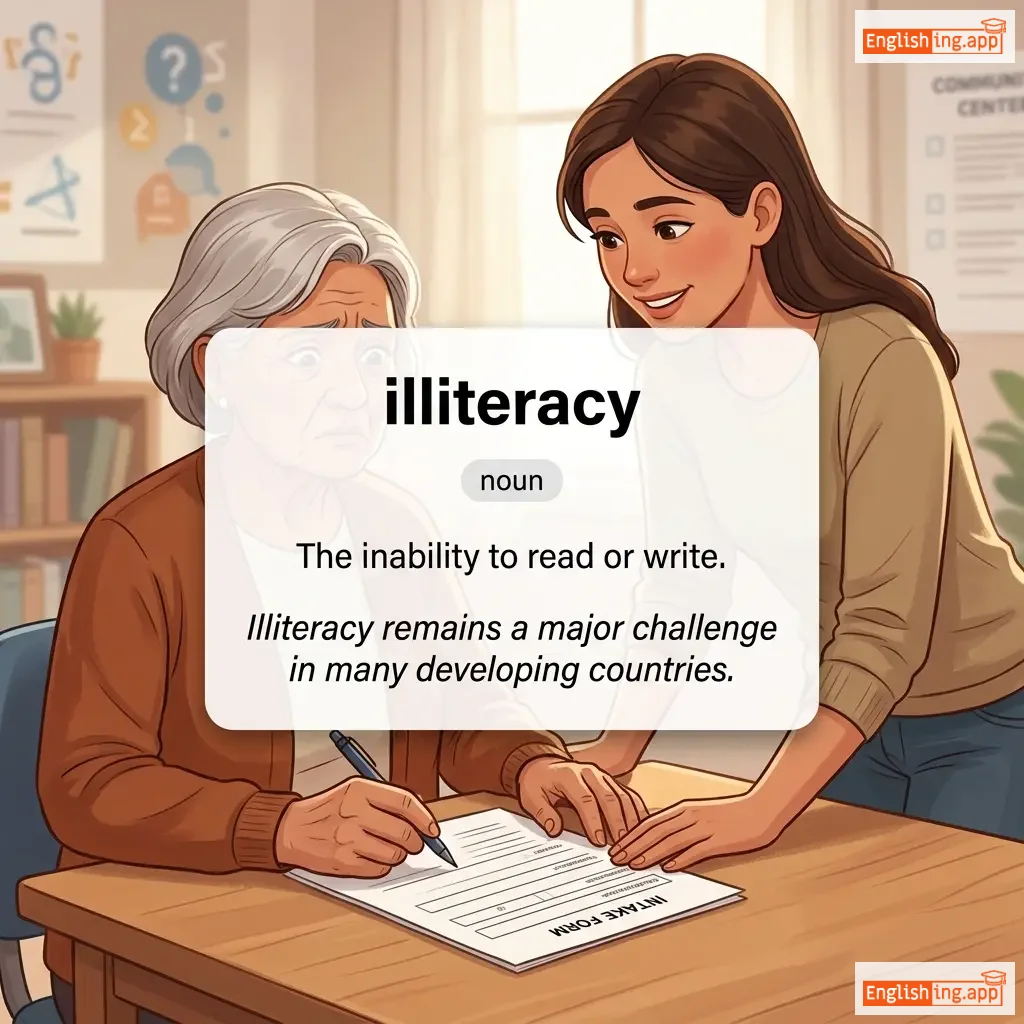
illiteracy definition card — visual illustration of the meaning
noun
/ɪˈlɪtərəsi/
識字率の低さ (shikijiritsu no hikusa)

The inability to read or write.

"Illiteracy remains a major challenge in many developing countries."

"識字率の低さは、多くの発展途上国において重要な課題のままである。" (Shikijiritsu no hikusa wa, ooku no hatten tojoukoku ni oite juuyou na kadai no mama de aru.)
adjective
/ɪˈlɪtərət/
読み書きできない (yomikaki dekinai)

Unable to read or write.

"Many villagers were still illiterate in the past."

"多くの村人たちは過去に読み書きできないままでした。" (Ooku no murabito tachi wa kako ni yomikaki dekinai mamadeshita.)
noun
/ˈɪlnəs/
病気 (byōki)

A condition of being unwell or suffering from a disease.

"She missed school due to a serious illness."

"彼女は深刻な病気のため学校を休んだ。" (Kanojo wa shinkoku na byōki no tame gakkō o yasunda.)
adjective
/ɪˈlɒdʒɪkl/
非論理的 (hironriteki)

Not making sense or lacking clear reasoning.

"It is illogical to blame children for adult mistakes."

"子供たちを大人の過ちのせいにするのは非論理的です。" (Kodomo-tachi o otona no ayamachi no sei ni suru no wa hironriteki desu.)
noun
/ɪˈluːmɪnənt/
光源 (kōgen)

A substance or device that produces light.

"The lamp acted as an illuminant in the dark cave."

"ランプは暗い洞窟で光源として機能しました。" (Ranpu wa kurai dōkutsu de kōgen to shite kinō shimashita.)
verb
/ɪˈluːmɪneɪt/
照らす (terasu)

To light up or make something clearer.

"Streetlights illuminate the road at night."

"街路灯が夜に道路を照らします。" (Gairoto ga yoru ni doro o terashimasu.)
noun
/ɪˌluːmɪˈnɑːti/
イルミナティ (iruminati)

a group of people claiming to have special enlightenment or secret knowledge, often linked to conspiracies

"Many conspiracy theories involve the Illuminati as a secret world-controlling group."

"多くの陰謀論はイルミナティを世界を支配する秘密のグループとして扱っている。" (Ooku no inbouron wa iruminati o sekai o shihai suru himitsu no guru-pu toshite atsukatte iru.)
noun
/ɪˌluːmɪˈneɪʃən/

the act of lighting something or making something clear

"The street was filled with bright illumination from the lamps."

verb
/ɪˈluːmɪn/
照らす (terasu)

to light up or make clear

"The rising sun illumined the mountain peaks."

"昇る太陽が山頂を照らした。" (Noboru taiyō ga sanchō o terashita.)
noun
/ɪˈluːʒən/
錯覚 (sakkaku)

a false idea or belief; a deceptive appearance

"The magician created the illusion of a floating woman."

"魔法使いは浮かぶ女性の錯覚を作り出しました。" (Mahōtsukai wa ukabu josei no sakkaku o tsukuridashimashita.)
adjective
/ɪˈluːsɪv/
幻想的 (gensō-teki)

deceptive or misleading; based on illusion

"His hopes of sudden wealth proved to be illusive."
"彼の突然の富の希望は幻想的であることが証明された。" (Kare no totsuzen no tomi no kibō wa gensō-teki de aru koto ga shōmei sareta.)
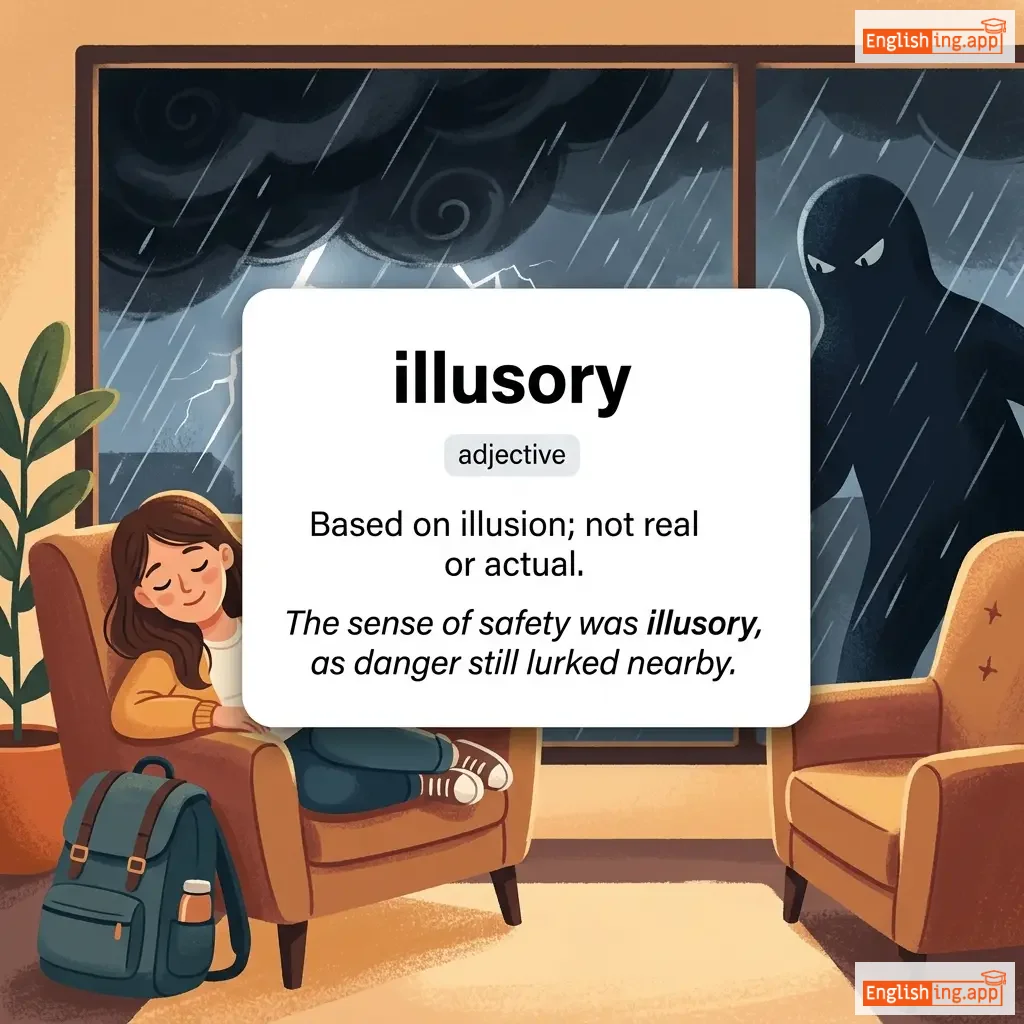
illusory definition card — visual illustration of the meaning
adjective
/ɪˈluːsəri/
幻想的 (gensō-teki)

Based on illusion; not real or actual.

"The sense of safety was illusory, as danger still lurked nearby."

"安全の感覚は幻想的で、危険はまだ近くに潜んでいた。" (Anzen no kankaku wa gensō-teki de, kiken wa mada chikaku ni hisonde ita.)
verb
/ˈɪl.ə.streɪt/
説明する (setsumei suru)

to explain or make something clear by using examples, pictures, or comparisons

"The teacher used diagrams to illustrate the concept."

"先生はその概念を説明するために図を使いました。" (Sensei wa sono gainen o setsumei suru tame ni zu o tsukaimashita.)
adjective
/ɪˈlʌstriəs/
著名 (chomei)

Well known, respected, and admired for past achievements.

"She had an illustrious career in medicine."

"彼女は医学の分野で著名なキャリアを持っていた。" (Kanojo wa igaku no bunya de chomei na kyaria o motte ita.)
noun
/ˈɪmɪdʒ/
画像 (gazo)

A visual representation of something, such as a picture or likeness.

"The magazine published a clear image of the celebrity."

"雑誌は有名人の鮮明な画像を公開しました。" (Zasshi wa yūmeijin no senmei na gazō o kōkai shimashita.)
noun
/ˈɪmɪdʒəri/
イメージ (imeji)

visually descriptive or figurative language, especially in a literary work

"The poet's use of imagery brought the scene to life."

"詩人のイメージの使用は、シーンに命を吹き込みました。" (Shijin no imeji no shiyou wa, shīn ni inochi o fukikomi mashita.)
adjective
/ɪˈmædʒɪnəbl/
想像できる (souzou dekiru)

Capable of being imagined or conceived.

"They offered every imaginable type of food at the festival."

"彼らはフェスティバルであらゆる想像できるタイプの食べ物を提供しました。" (Karera wa fesutibaru de arayuru souzou dekiru taipu no tabemono wo teikyou shimashita.)
adjective
/ɪˈmædʒɪnəri/
架空の (kakuu no)

Existing only in the imagination; not real.

"Children often have imaginary friends."
"子供たちはしばしば架空の友達を持っています。" (Kodomotachi wa shibashiba kakū no tomodachi o motteimasu.)
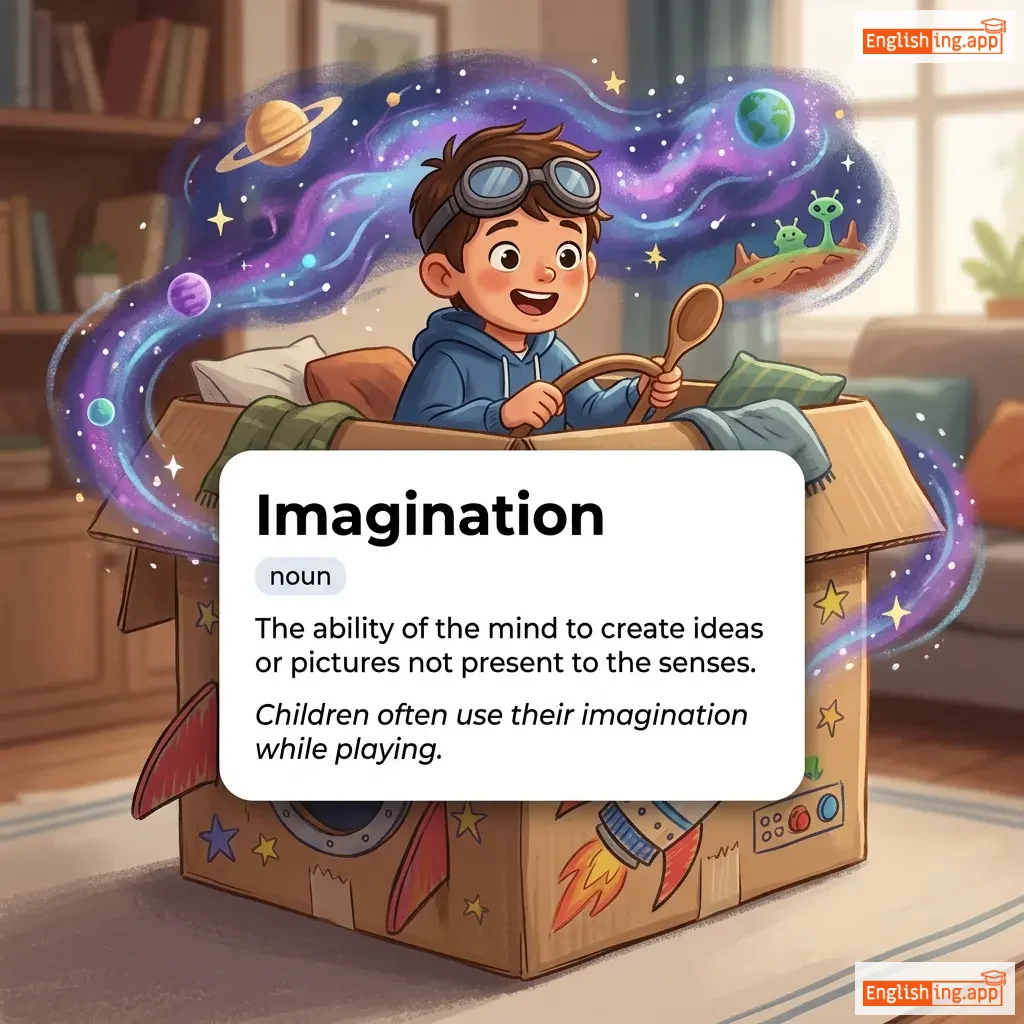
Imagination definition card — visual illustration of the meaning
noun
/ɪˌmædʒɪˈneɪʃən/
想像力 (souzouryoku)

The ability of the mind to create ideas or pictures not present to the senses.

"Children often use their imagination while playing."

"子供たちは遊んでいるときによく想像力を使います。" (Kodomotachi wa asonde iru toki ni yoku souzouryoku o tsukaimasu.)
imagine definition card — visual illustration of the meaning
verb
/ɪˈmædʒ.ɪn/

to form a mental image or concept of something not present

"Close your eyes and imagine a peaceful beach."

noun
/ɪmˈbæləns/
不均衡 (fukinou)

A lack of balance; a state of inequality or disproportion.

"The imbalance of power led to conflict."

"権力の不均衡が対立を引き起こした。" (Kenryoku no fukinou ga tairitsu wo hikiokoshita.)
noun
/ˌɪmbəˈsɪləti/
愚かさ (orokasa)

Extreme foolishness, stupidity, or weakness of mind.

"The plan was abandoned due to its sheer imbecility."

"その計画はその愚かさから放棄されました。" (Sono keikaku wa sono orokasa kara hōki sare mashita.)
verb
/ɪmˈbɛd/
埋め込む (umekomu)

To fix firmly or deeply in a surrounding mass.

"The journalist imbedded himself with the troops to report firsthand."
"ジャーナリストは部隊に埋め込まれて、最前線から報告を行った。" (Jānarisuto wa butai ni umekomarete, saizensen kara hōkoku o okonatta.)
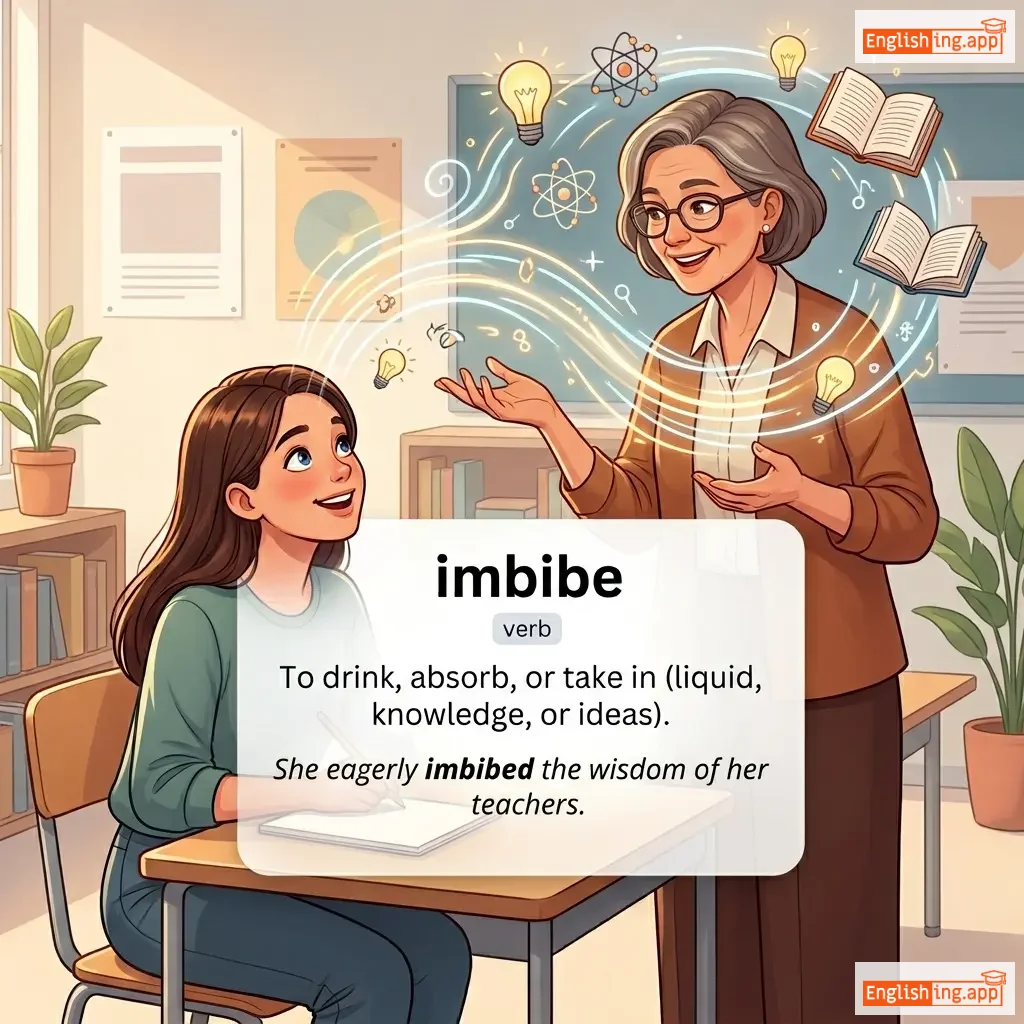
imbibe definition card — visual illustration of the meaning
verb
/ɪmˈbaɪb/
吸収する (kyuushuu suru)

To drink, absorb, or take in (liquid, knowledge, or ideas).

"She eagerly imbibed the wisdom of her teachers."
"彼女は教師たちの知恵を熱心に吸収しました。" (Kanojo wa kyoushitachi no chie wo nesshin ni kyuushuu shimashita.)
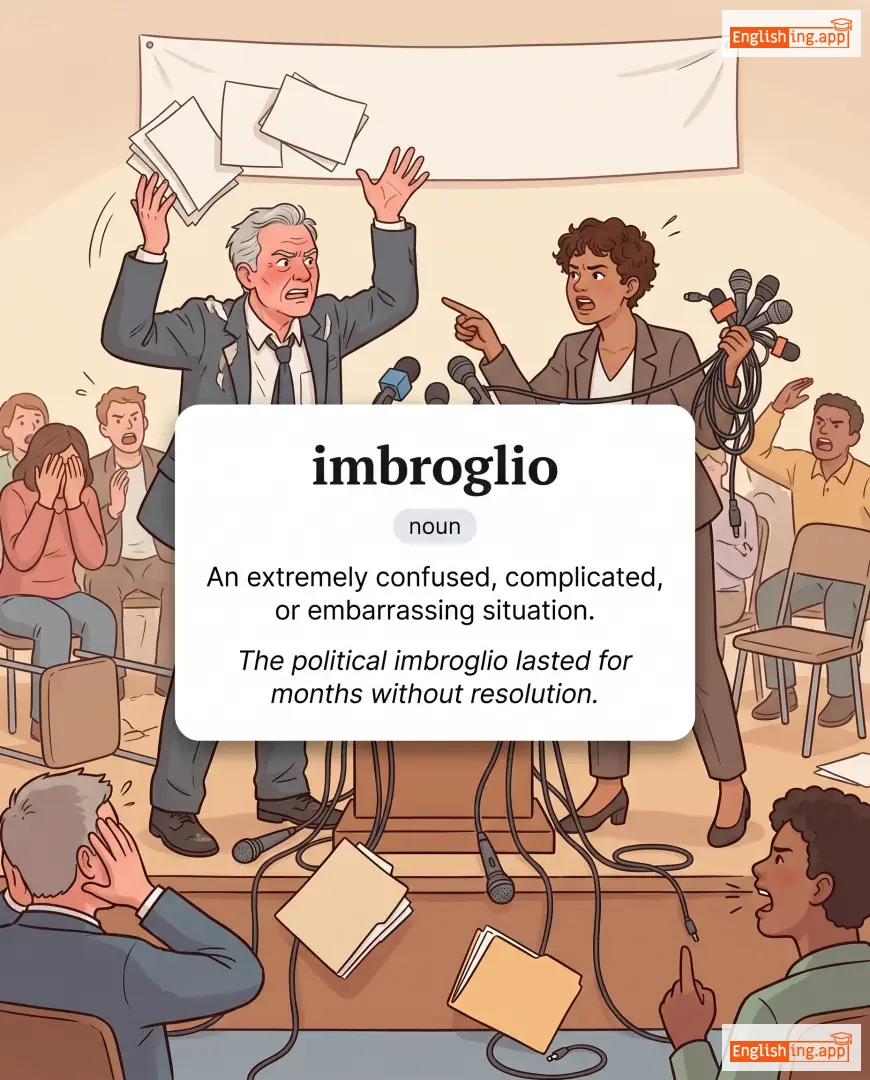
imbroglio definition card — visual illustration of the meaning
noun
/ɪmˈbroʊlioʊ/
困惑 (konwaku)

An extremely confused, complicated, or embarrassing situation.

"The political imbroglio lasted for months without resolution."

"政治的な困惑は数ヶ月間解決なしで続きました。" (Seijiteki na konwaku wa suukagetsukan kaiketsu nashi de tsuzukimashita.)
verb
/ɪmˈbruː/
汚す (yogosu)

To stain, especially with blood.

"His hands were imbrued with blood after the battle."
"戦いの後、彼の手は血で汚れていた。" (Tatakau no ato, kare no te wa chi de yogorete ita.)
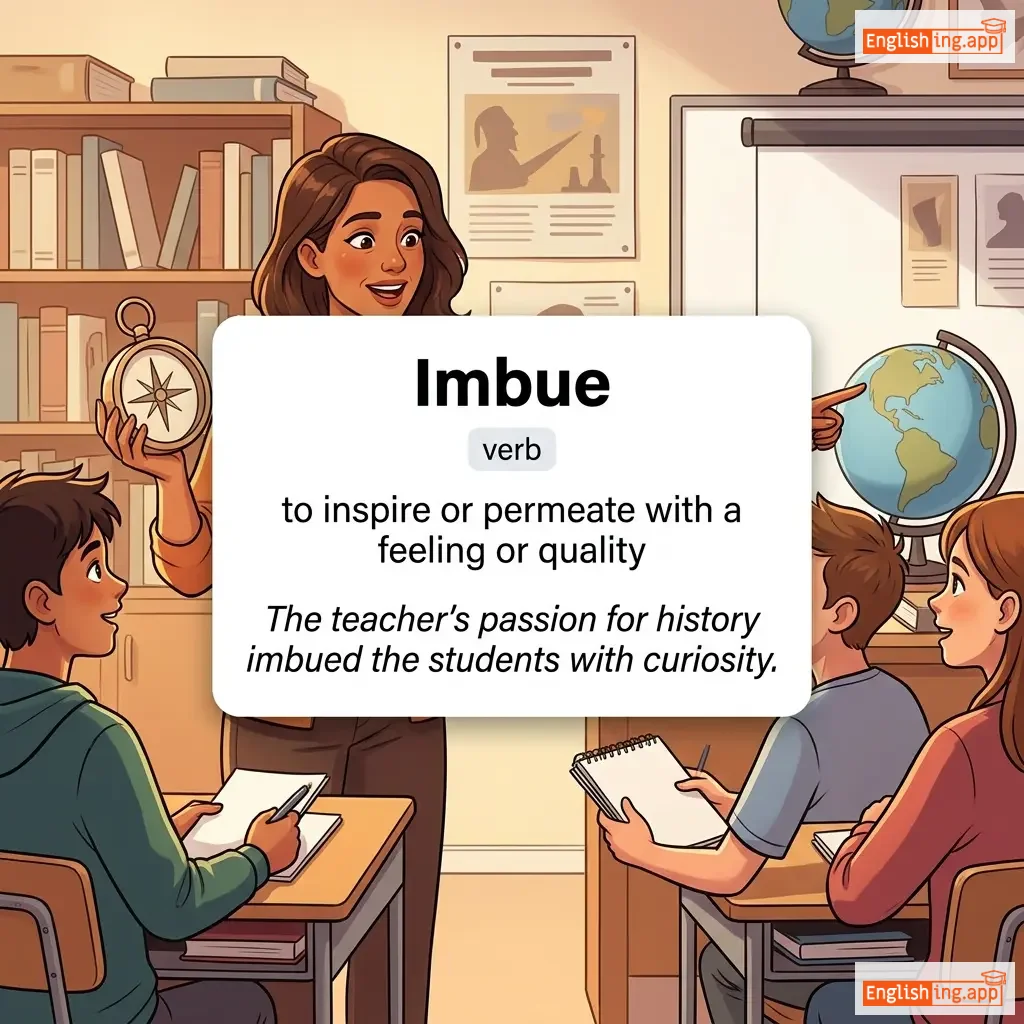
Imbue definition card — visual illustration of the meaning
verb
/ɪmˈbjuː/
染み込ませる (shimikomaseru)

to inspire or permeate with a feeling or quality

"The teacher's passion for history imbued the students with curiosity."
"歴史への教師の情熱は学生たちに好奇心を植え付けました。" (Rekishi e no kyōshi no jōnetsu wa gakuseitachi ni kōkishin o uetsukemashita.)
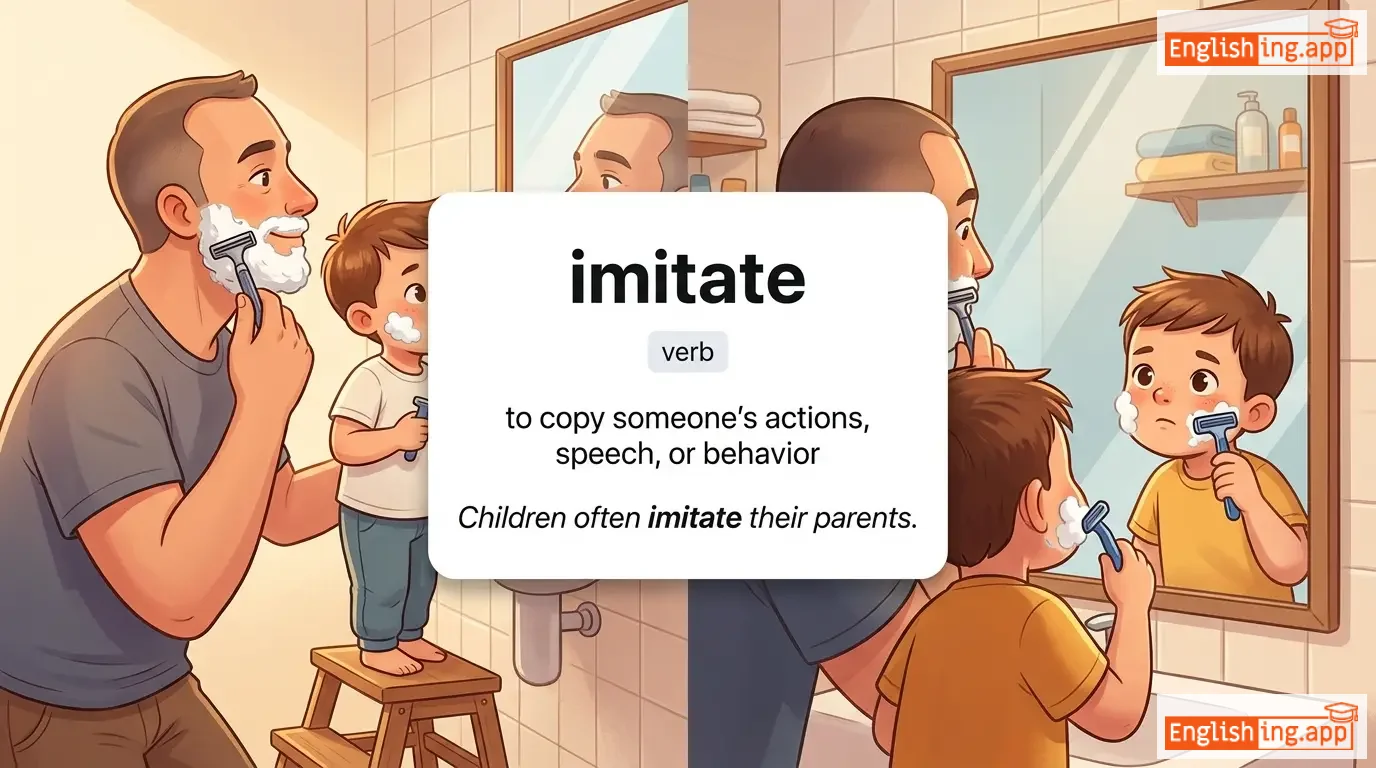
imitate definition card — visual illustration of the meaning
verb
/ˈɪmɪteɪt/
模倣する (mohō suru)

to copy someone's actions, speech, or behavior

"Children often imitate their parents."

"子供たちはしばしば親を真似ます。" (Kodomo-tachi wa shibashiba oya o manemasu.)
noun
/ˌɪmɪˈteɪʃən/
模倣 (mohō)

the act of copying or mimicking someone or something

"Children learn many skills through imitation."

"子供たちは模倣を通じて多くのスキルを学びます。" (Kodomotachi wa mohō o tōjite ōku no sukiru o manabimasu.)
noun
/ˈɪmɪˌteɪtər/
模倣者 (mōhōsha)

a person who copies the behavior, style, or actions of others

"He became famous as an imitator of popular singers."

"彼は人気のある歌手の模倣者として有名になった。" (Kare wa ninki no aru kashu no mōhōsha toshite yūmei ni natta.)
adjective
/ɪˈmækjələt/
完璧 (kanpeki)

perfectly clean, neat, or free from flaws

"Her room was immaculate, with everything in its place."

"彼女の部屋は完璧で、すべてが所定の位置にありました。" (Kanojo no heya wa kanpeki de, subete ga shotei no ichi ni arimashita.)
adjective
/ˈɪmənənt/
内在的 (naizai-teki)

existing or operating within; inherent

"He believed that moral values are immanent in human nature."

"彼は道徳的価値が人間の本性に内在していると信じていました。" (Kare wa doutokuteki kachi ga ningen no honsei ni naizai shite iru to shinjite imashita.)