語彙集

英単語辞書 | 単語の意味、定義、例文

noun
/ˈhjuːməs/
腐植土 (fushokudo)

The dark, organic material in soil formed from decayed plants and animals.

"The gardener enriched the soil with humus to improve plant growth."

"庭師は植物の成長を促進するために土にフムスを加えました。" (Niwa-shi wa shokubutsu no seichō o sokushin suru tame ni tsuchi ni humusu o kuwaemashita.)
noun, numeral
/ˈhʌndrəd/
(hyaku)

the number 100

"There are a hundred students in the hall."

"ホールには百人の学生がいます。" (Hōru ni wa hyaku-nin no gakusei ga imasu.)
noun
/ˈhʌŋɡər/
飢餓 (kiga)

the feeling of discomfort caused by lack of food

"The child cried out of hunger."

"その子供は飢えで泣いていました。" (Sono kodomo wa ue de naite imashita.)
adverb
/ˈhʌŋ.ɡrə.li/
空腹で; 欲張って; 熱心に (kōfuku de; yokubatte; nesshin ni)

in a way that shows hunger; greedily; eagerly

"The dog ate hungrily after not eating for hours."

"犬は数時間食べていなかった後、空腹で食べました。" (Inu wa suū jikan tabete inakatta ato, kōfuku de tabemashita.)
adjective
/ˈhʌŋɡri/
空腹 (kuufuku)

feeling or showing the need for food

"The children were hungry after playing outside all day."
"子供たちは一日中外で遊んだ後、空腹だった。" (Kodomotachi wa ichinichijuu soto de asonda ato, kuufuku datta.)
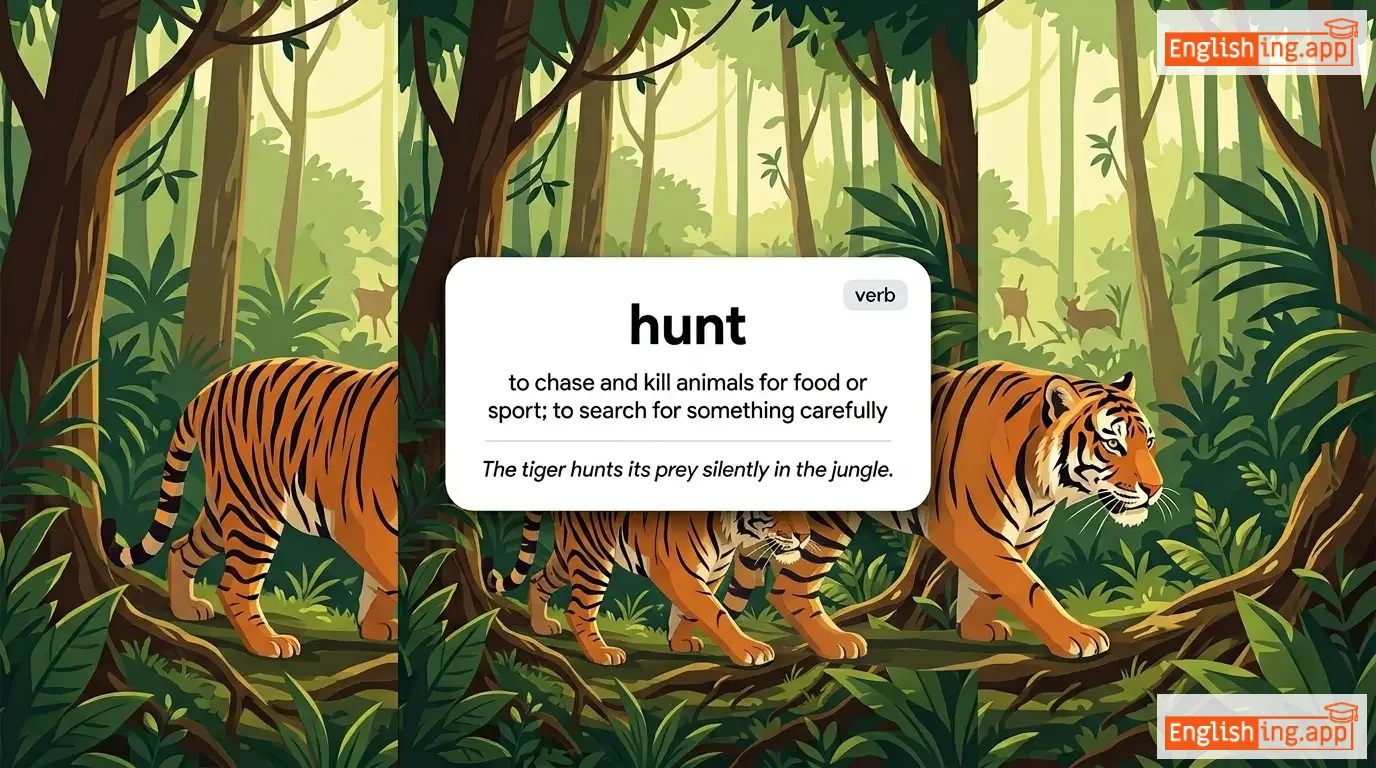
hunt definition card — visual illustration of the meaning
verb
/hʌnt/
狩り (kari)

to chase and kill animals for food or sport; to search for something carefully

"The tiger hunts its prey silently in the jungle."

"トラはジャングルで静かに獲物を狩ります。" (Tora wa janguru de shizuka ni emono o karimasu.)
noun
/ˈhʌntər/
ハンター (hantā)

a person or animal that hunts animals for food or sport

"The hunter tracked the deer through the forest."

"ハンターは森を通って鹿を追跡しました。" (Hantā wa mori o tōtte shika o tsuiseki shimashita.)
noun/verb
/ˈhʌntɪŋ/
狩猟 (shuryou)

the activity of chasing and killing wild animals

"Hunting is strictly regulated in many countries."

"狩猟は多くの国で厳格に規制されています。" (Shuryou wa ooku no kuni de genkaku ni kisei sareteimasu.)
🪨

hurl

verb
/hɜːrl/

To throw something with great force.

"The boy hurled a stone into the river."

noun
/ˈhʌrɪkən/
ハリケーン (harikeen)

A violent tropical storm with very strong winds and heavy rain.

"The hurricane destroyed hundreds of homes along the coast."
"ハリケーンは沿岸の数百軒の家を破壊しました。" (Harikēn wa engan no suuhyaku ken no ie o hakai shimashita.)
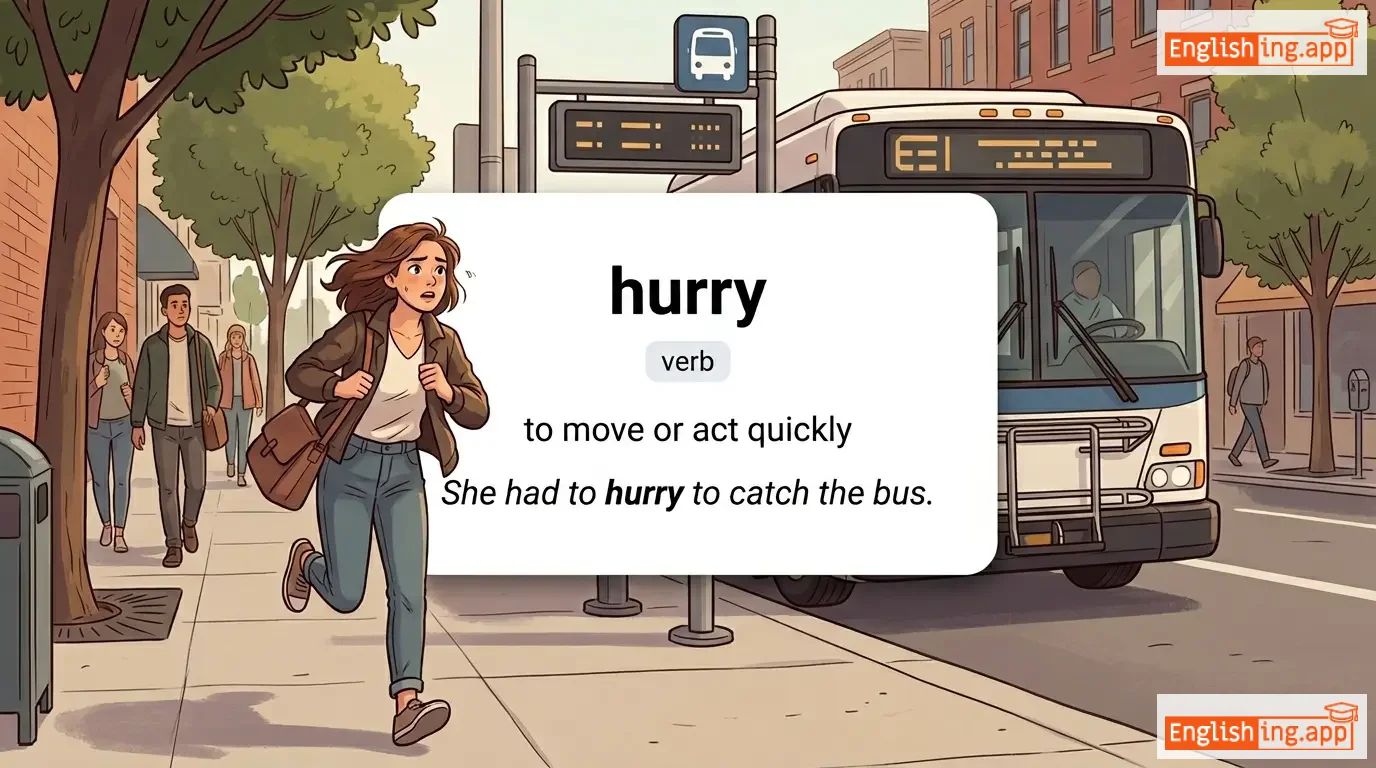
hurry definition card — visual illustration of the meaning
verb
/ˈhʌri/
急ぐ (isogu)

to move or act quickly

"She had to hurry to catch the bus."

"彼女はバスに乗るために急がなければならなかった。" (Kanojo wa basu ni noru tame ni isoganakereba naranakatta.)
verb/adjective
/hɜːrt/
傷つける (kizutsukeru)

to cause pain or injury; to feel pain

"He hurt his knee while playing football."

"彼はサッカーをしている時に膝を傷つけた。" (Kare wa sakkā o shite iru toki ni hiza o kizutsuketa.)
verb
/ˈhɜːrtl/
猛スピードで進む (mō supīdo de susumu)

To move or cause to move at great speed, often in a dangerous way.

"The car hurtled down the mountain road."

"車は山道を猛スピードで下っていました。" (Kuruma wa yamamichi o mō supīdo de kudatte imashita.)
👨‍👩‍👧

husband (ハズバンド)

noun
/ˈhʌzbənd/
(otto)

A married man regarded in relation to his spouse.

"Her husband is very supportive of her career."

"彼女の夫は彼女のキャリアを非常に支援しています。" (Kanojo no otto wa kanojo no kyaria o hijō ni shien shiteimasu.)
husbandry definition card — visual illustration of the meaning
noun
/ˈhʌzbəndri/
農業と畜産業 (nōgyō to chikusan gyō)

the care, cultivation, and breeding of crops and animals; management and conservation of resources

"Modern husbandry practices focus on sustainability and animal welfare."

"現代の農業と畜産業の実践は、持続可能性と動物福祉に焦点を当てています。" (gendai no nōgyō to chikusan gyō no jissen wa, jizoku kanōsei to dōbutsu fukushi ni shōten o atemasu.)
noun
/hʌsk/
外皮 (gaihi)

the dry outer covering of some fruits or seeds

"The corn husk was peeled away before cooking."

"料理の前にトウモロコシの外皮が剥がされました。" (Ryōri no mae ni tōmorokoshi no gaihi ga hagasaremashita.)
🐺

husky

adjective
/ˈhʌski/

deep, rough, and slightly hoarse voice; also refers to a strong and sturdy build

"He spoke in a husky voice after shouting all day."

noun
/hʊˈzɑːr/
フサール (fusāru)

a member of a light cavalry regiment in European armies, especially the Hungarian cavalry

"The hussar rode swiftly across the battlefield."

"フサールは戦場を素早く駆け抜けた。" (Fusāru wa senjō o subayaku kakenuketa.)
noun
/ˈhʌstɪŋz/
選挙活動 (senkyo katsudo)

the political campaigning and speeches before an election

"The candidate gained popularity during the hustings."

"候補者は選挙活動中に人気を集めました。" (Kohosha wa senkyo katsudo-chu ni ninki o atsumemashita.)
verb
/ˈhʌsəl/
一生懸命働く / 速く動く (isshōkenmei hataraku / hayaku ugoku)

to move quickly and energetically; to push or work hard to achieve something

"She had to hustle to finish the project on time."

"彼女はプロジェクトを時間通りに終わらせるために一生懸命働かなければならなかった。" (Kanojo wa purojekuto o jikan-dōri ni owaraseru tame ni isshōkenmei hatarakanakereba naranakatta.)
noun
/hʌt/
小屋 (koya)

a small simple shelter or house

"They lived in a small wooden hut near the river."

"彼らは川の近くの小さな木の小屋に住んでいました。" (Karera wa kawa no chikaku no chiisana ki no koya ni sunde imashita.)
noun
/ˈhaɪbrɪd/
ハイブリッド (haiburiddo)

a mixture of two different things, often combining the best qualities of both

"The car is a hybrid that runs on both electricity and fuel."

"その車は電気と燃料の両方で走るハイブリッド車です。" (Sono kuruma wa denki to nenryō no ryōhō de hashiru haiburiddosha desu.)
noun
/ˈhaɪdrə/
ヒドラ (hidora)

a many-headed serpent in Greek mythology; a problem that seems to grow worse when attempts are made to solve it

"Corruption is like a hydra, hard to defeat completely."
"汚職はヒドラのようで、完全に打ち負かすのは難しい。" (Oshoku wa hidora no you de, kanzen ni uchimakasu no wa muzukashii.)
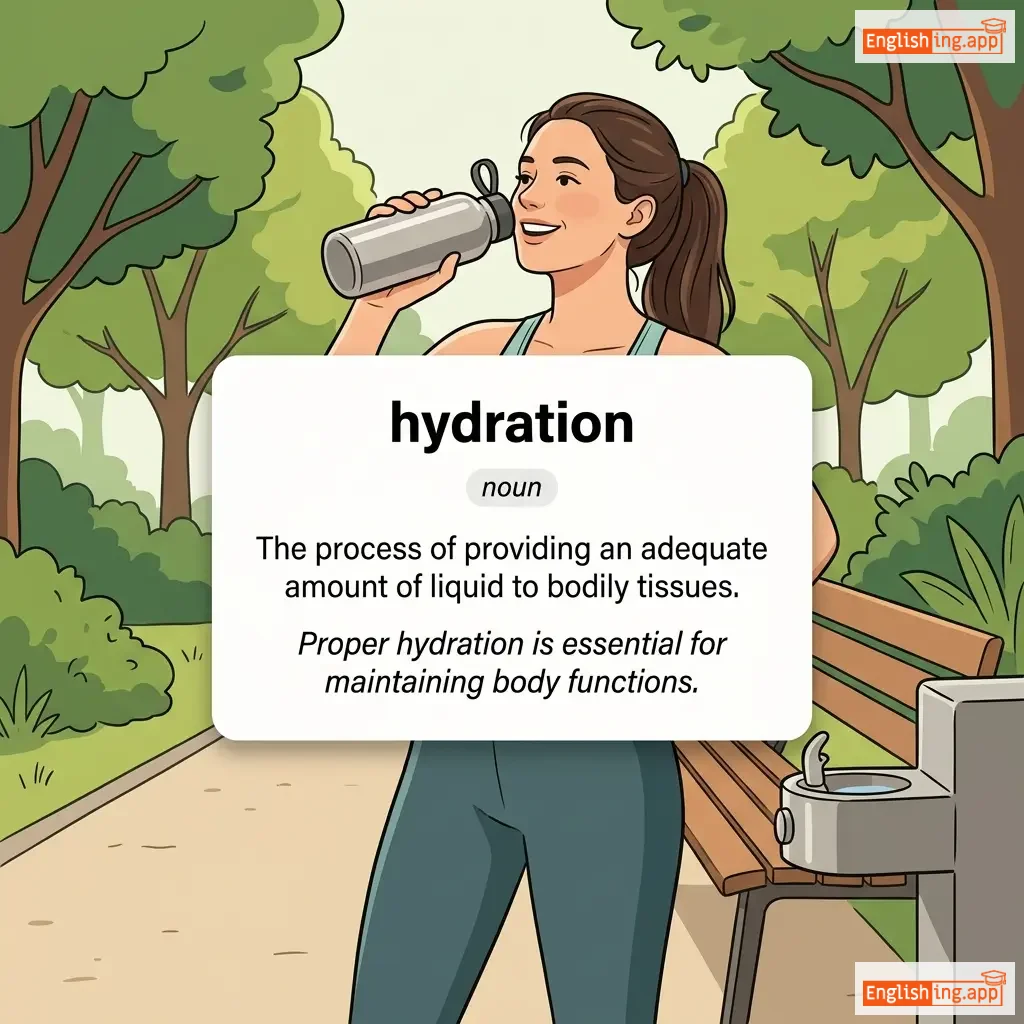
hydration definition card — visual illustration of the meaning
noun
/haɪˈdreɪʃən/
身体組織に適切な量の液体を提供するプロセス。 (Karada soshiki ni tekisetsu na ryou no ekitai wo teikyou suru purosesu)

The process of providing an adequate amount of liquid to bodily tissues.

"Proper hydration is essential for maintaining body functions."

"適切な水分補給は、体の機能を維持するために重要です。" (Tekisetsu na suibun hokyuu wa, karada no kinou wo iji suru tame ni juuyou desu)
adjective
/haɪˈdrɔːlɪk/
油圧の (yatsuatsu no)

operated by the pressure of liquid, especially water or oil

"The mechanic repaired the hydraulic system of the machine."

"機械工は機械の油圧システムを修理しました。" (Kikai kō wa kikai no yatsuatsu shisutemu o shūri shimashita.)
noun
/ˌhaɪdroʊdaɪˈnæmɪks/

The branch of science concerned with the motion of fluids, especially liquids, and the forces acting on solid bodies immersed in fluids.

"Hydrodynamics is essential in designing efficient ship hulls."

adjective
/ˌhaɪdroʊɪˈlɛktrɪk/
水力発電 (suiryoku hatsuden)

Relating to or denoting the generation of electricity using flowing water.

"The country invested heavily in hydroelectric power plants."

"その国は水力発電所に多額の投資をしました。" (Sono kuni wa suiryoku hatsudensho ni tagaku no tōshi o shimashita.)
noun
/ˈhaɪdrədʒən/
水素 (suiso)

a colorless, odorless, highly flammable gas that is the lightest and most abundant chemical element in the universe

"Hydrogen is used as a clean fuel in many energy systems."
"水素は多くのエネルギーシステムでクリーンな燃料として使用されています。" (Suiso wa ooku no enerugii shisutemu de kuriin na nenryou toshite shiyou sareteimasu.)
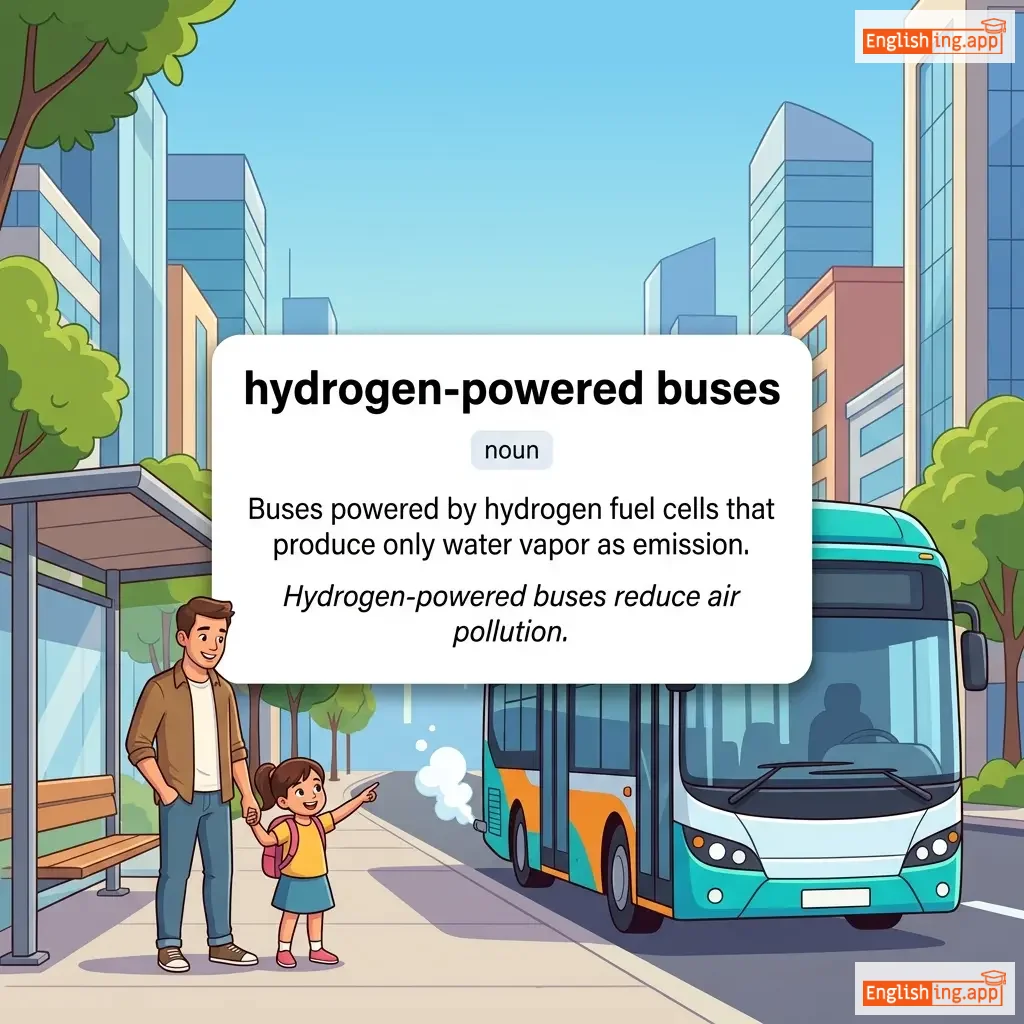
hydrogen-powered buses definition card — visual illustration of the meaning
noun
ˈhaɪ.drə.dʒən ˈpaʊ.əd bʌsɪz
水素バス (suiso basu)

Buses powered by hydrogen fuel cells that produce only water vapor as emission.

"Hydrogen-powered buses reduce air pollution."
"水素バスは大気汚染を減らします。" (Suiso basu wa taiki osen o herashimasu.)
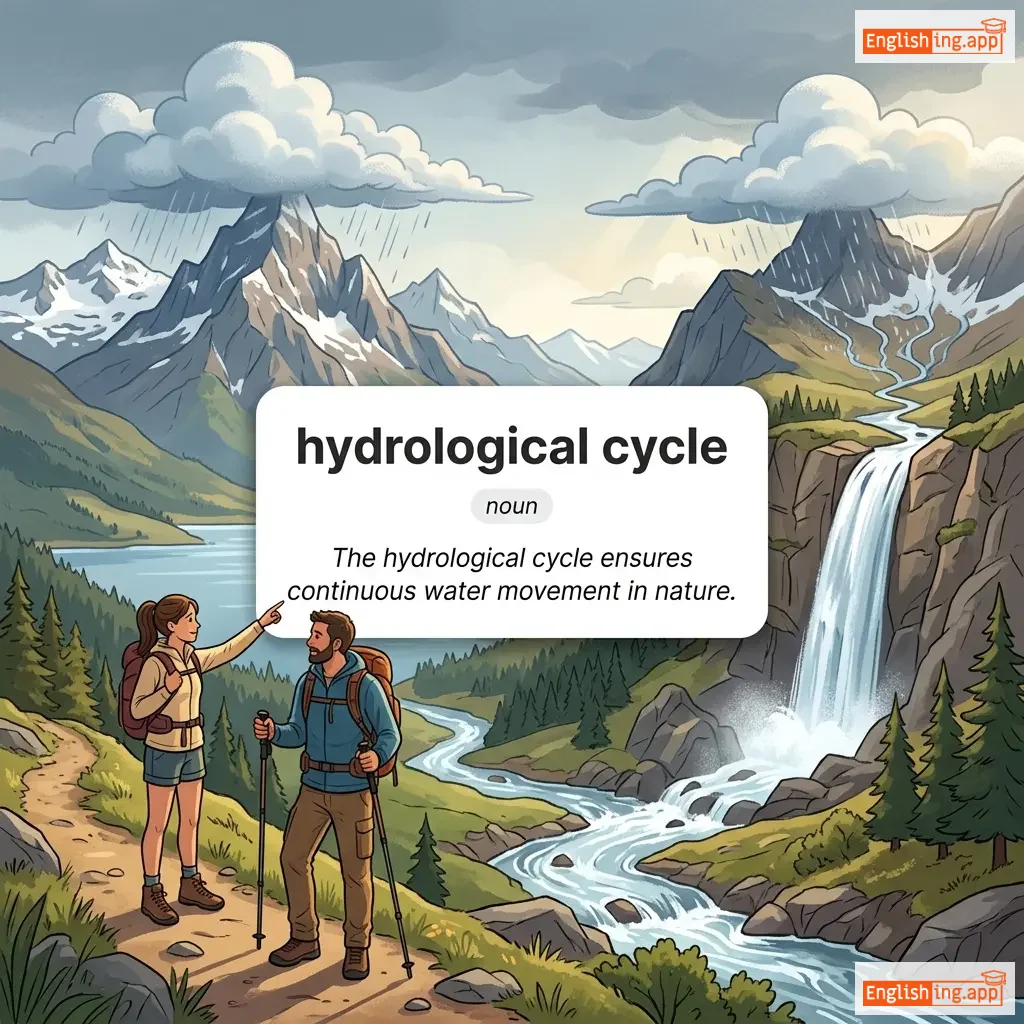
hydrological cycle definition card — visual illustration of the meaning
noun
ˌhaɪ.drəˈlɒdʒ.ɪ.kəl ˈsaɪ.kəl
水文循環 (suibun junkan)

The cycle of processes by which water circulates between the earth's oceans, atmosphere, and land.

"The hydrological cycle ensures continuous water movement in nature."
"水文循環は自然界での水の連続的な動きを保証します。" (Suibun junkan wa shizen-kai de no mizu no renzokuteki na ugoki o hoshō shimasu.)
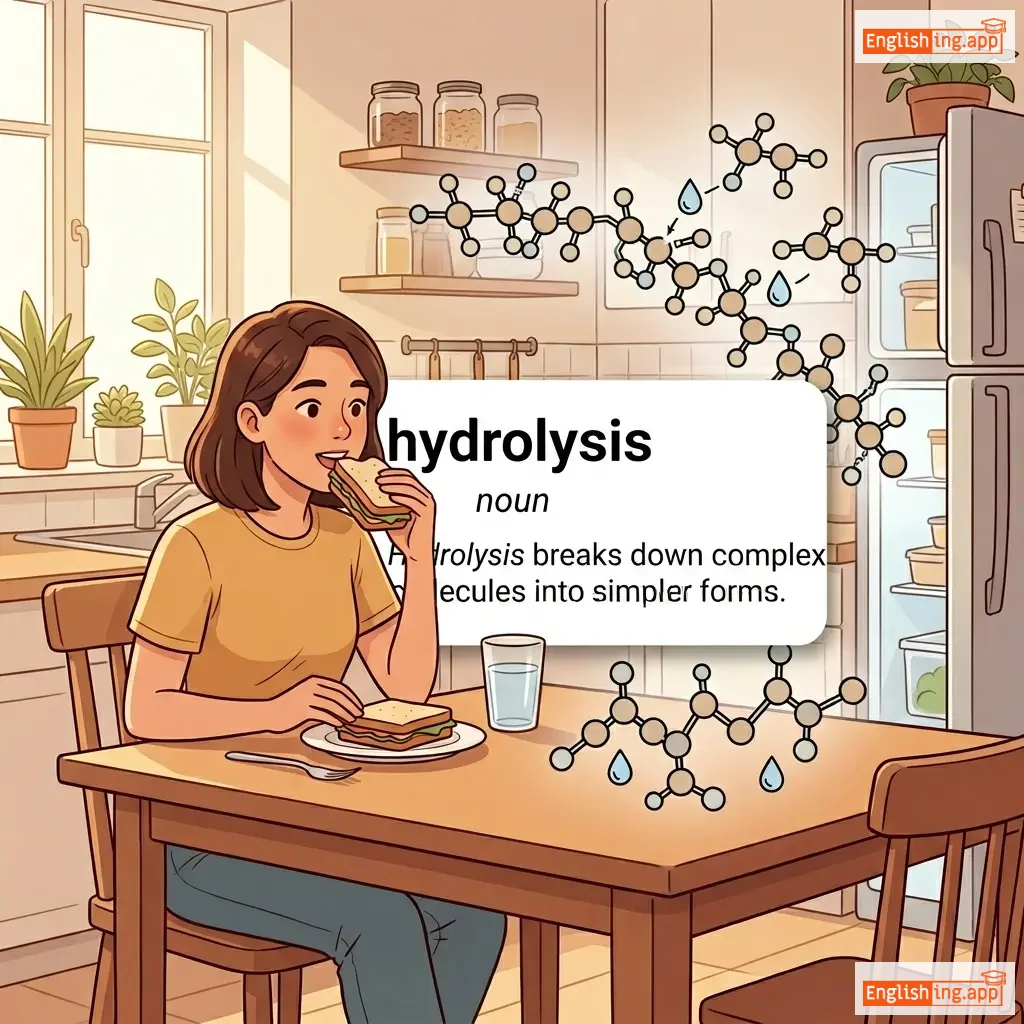
hydrolysis definition card — visual illustration of the meaning
noun
/haɪˈdrɒl.ɪ.sɪs/
加水分解 (kasuibunkai)

A chemical process that breaks down compounds by adding water, splitting complex molecules into simpler forms.

"Hydrolysis breaks down complex molecules into simpler forms."

"加水分解は複雑な分子をより単純な形に分解します。" (Kasuibunkai wa fukuzatsu na bunshi wo yori tanjun na katachi ni bunkai shimasu.)
noun
/ˌhaɪdroʊməˈkænɪks/
ハイドロメカニクス (haidromechanics)

The study of the mechanical properties and behavior of fluids in motion and at rest.

"Hydromechanics provides the foundation for naval architecture."

"ハイドロメカニクスは船舶建造の基盤を提供します。" (Haidromechanics wa senpaku kenzo no kiban o teikyō shimasu.)
noun
/haɪˈdrɒmɪtər/

An instrument used to measure the density or specific gravity of liquids.

"The brewer used a hydrometer to test the sugar content of the solution."

noun
/ˌhaɪdroʊˈfoʊbiə/
水恐怖症 (mizu kyōfushō)

Extreme or irrational fear of water; historically, another name for rabies.

"After being bitten by a stray dog, the man was treated for hydrophobia."
"野良犬に噛まれた後、その男は水恐怖症の治療を受けました。" (Nora inu ni kamareta ato, sono otoko wa mizu kyōfushō no chiryō o ukemashita.)
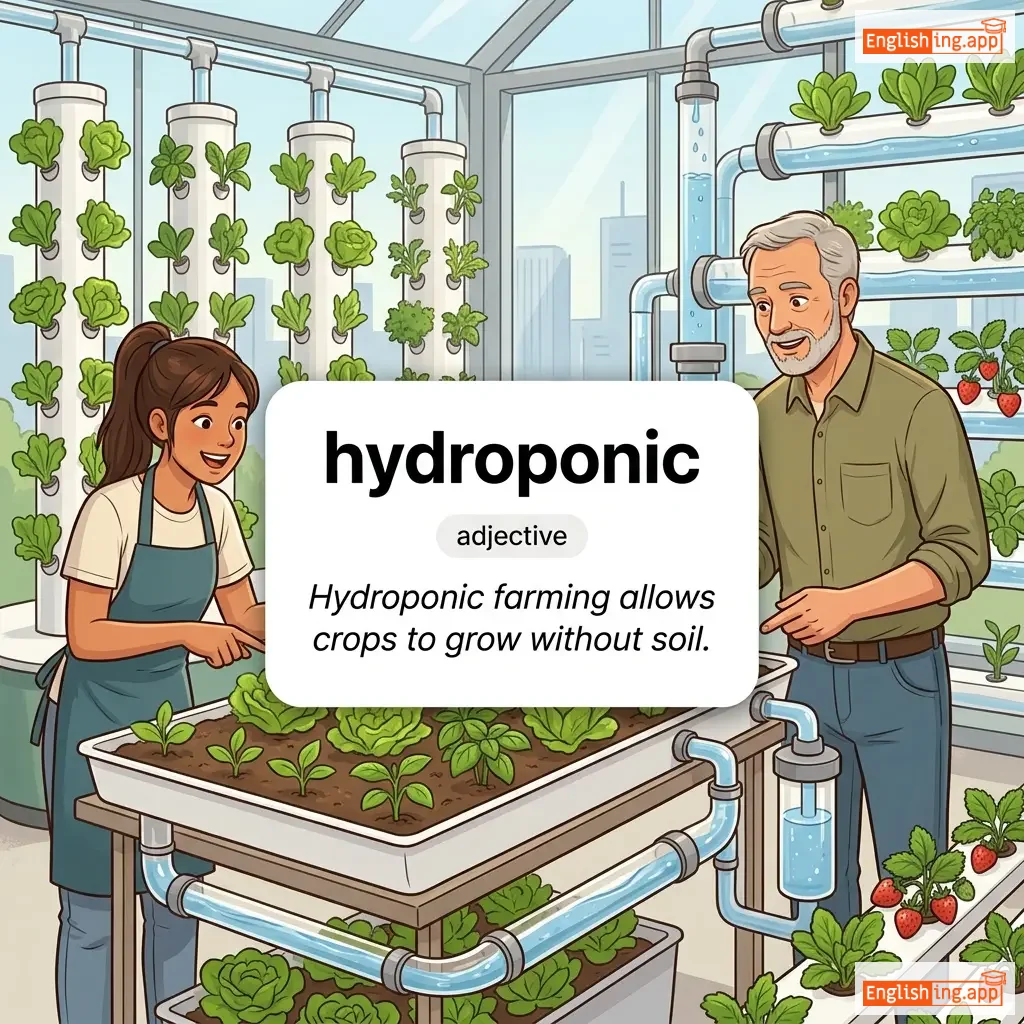
hydroponic definition card — visual illustration of the meaning
adjective
/ˌhaɪ.drəˈpɒn.ɪk/
ハイドロポニック (haidoroponikku)

Relating to the process of growing plants in sand, gravel, or liquid, with added nutrients but without soil.

"Hydroponic farming allows crops to grow without soil."
"水耕栽培は、土なしで作物を育てることを可能にします。" (Suikō saibai wa, do nashi de sakumotsu o sodateru koto o kanō ni shimasu.)
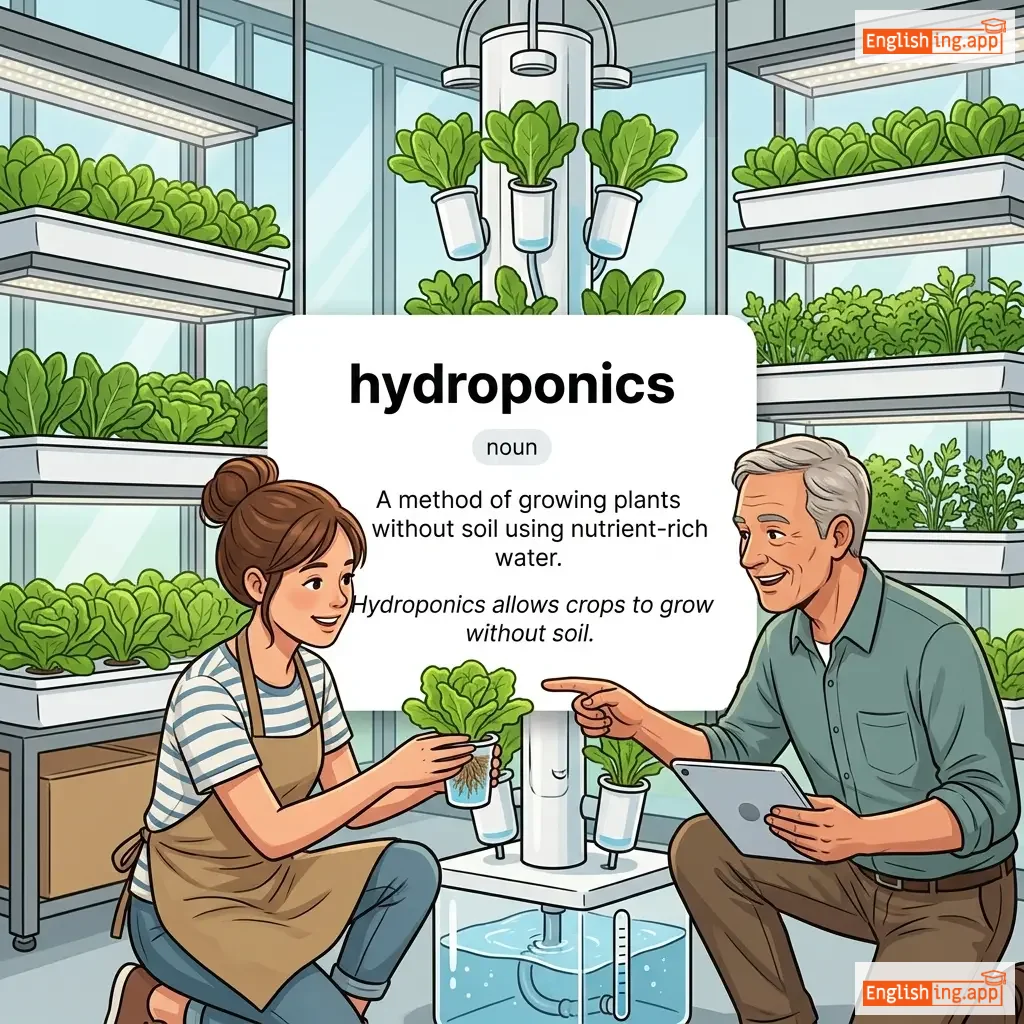
hydroponics definition card — visual illustration of the meaning
noun
/ˌhaɪ.droʊˈpɒn.ɪks/
水耕栽培 (suikousaibai)

A method of growing plants without soil using nutrient-rich water.

"Hydroponics allows crops to grow without soil."
"水耕栽培は土を使わずに作物を育てることを可能にします。" (suikousaibai wa tsuchi o tsukawazu ni sakubutsu o sodateru koto o kanou ni shimasu)
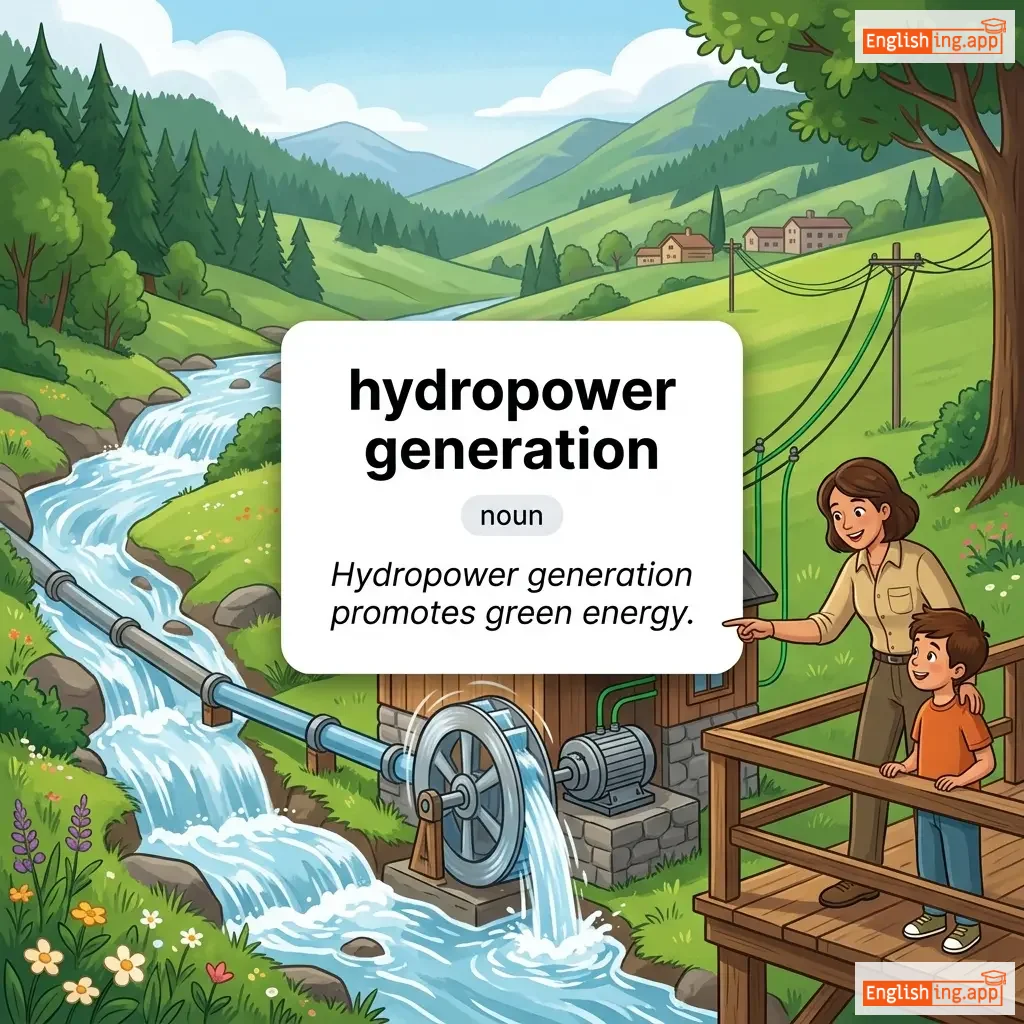
hydropower generation definition card — visual illustration of the meaning
noun
/ˈhaɪ.drəʊˌpaʊər ˌdʒen.əˈreɪ.ʃən/
水力発電 (suiryoku hatsuden)

The production of electrical power through the use of the gravitational force of falling or flowing water.

"Hydropower generation promotes green energy."

"水力発電はグリーンエネルギーを促進します。" (Suiryoku hatsuden wa guriin enerugii o sokushin shimasu.)
noun
/ˌhaɪdrəˈstætɪks/
静水力学 (seisuiryokugaku)

The branch of science concerned with the mechanical properties of fluids at rest.

"Hydrostatics is essential in understanding how dams and reservoirs function."

"静水力学はダムや貯水池の機能を理解するために不可欠です。" (Seisui ryokugaku wa damu ya chōsuichi no kinō o rikai suru tame ni fukaketsu desu.)
adjective
/ˈhaɪdrəs/
含水 (gansui)

Containing water, especially water of crystallization.

"The mineral is hydrous because it contains water molecules in its structure."

"その鉱物は水分を含んでいるため、構造内に水分子を含んでいます。" (Sono kōbutsu wa suibun o fukunde iru tame, kōzō-nai ni suibunshi o fukunde imasu.)
noun
/haɪˈiː.nə/
ハイエナ (haiena)

a wild animal of Africa and Asia that looks like a dog and makes a sound like laughter

"The hyena laughed in the darkness of the night."
"ハイエナは夜の闇の中で笑いました。" (Haiena wa yoru no yami no naka de waraimashita.)
noun
/ˈhaɪdʒiːn/

Conditions or practices conducive to maintaining health and preventing disease.

"Good hygiene is essential for preventing the spread of infections."

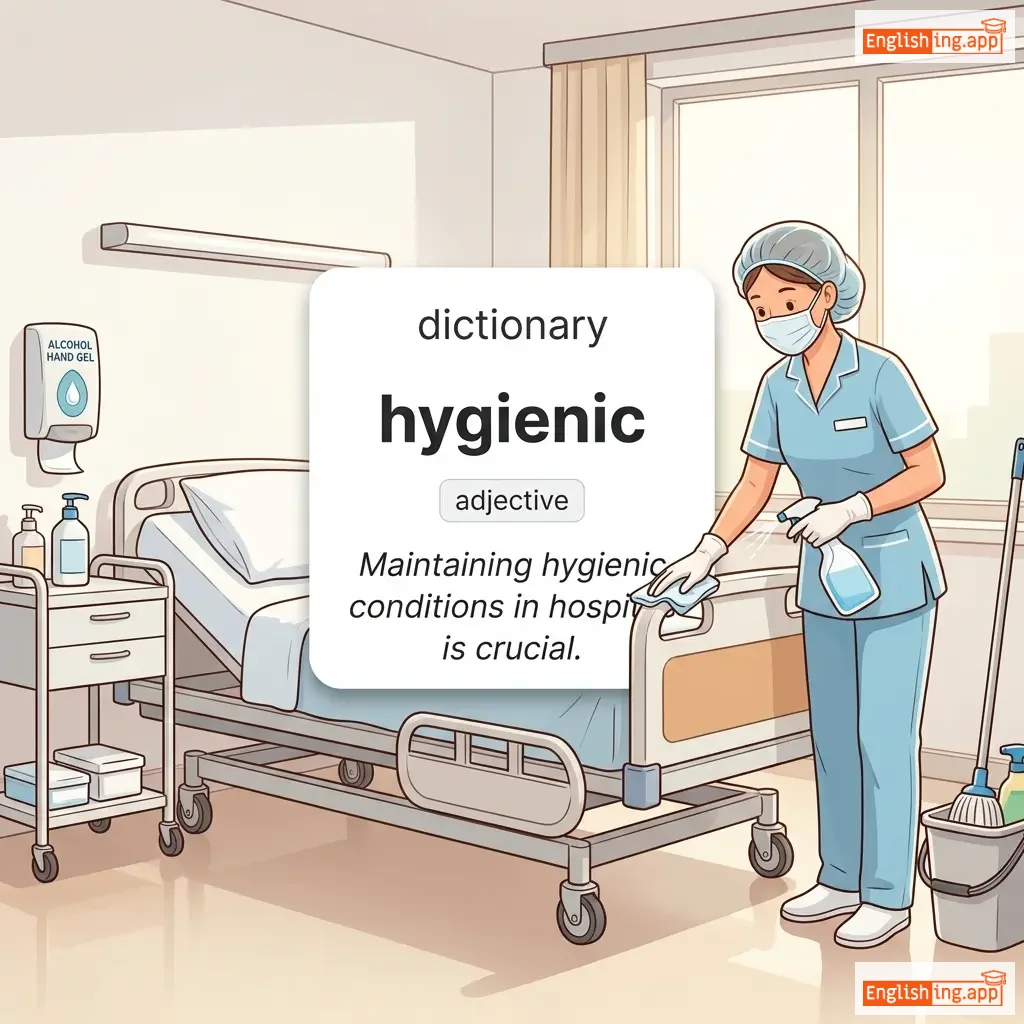
hygienic definition card — visual illustration of the meaning
adjective
haɪˈdʒiː.nɪk

Conducive to maintaining health and preventing disease, especially by being clean.

"Maintaining hygienic conditions in hospitals is crucial."

🎶

hymn

noun
/hɪm/

A religious song or poem of praise to God or a deity.

"The congregation sang a hymn during the morning service."

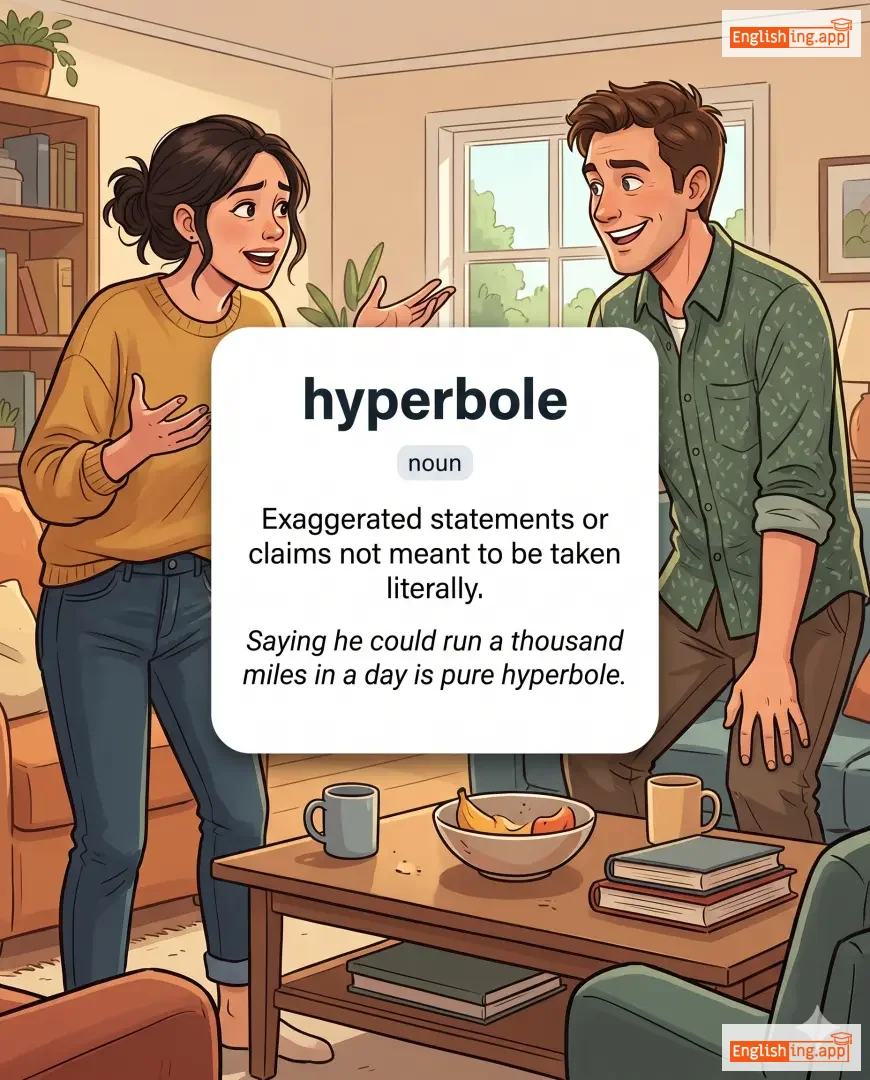
hyperbole definition card — visual illustration of the meaning
noun
/haɪˈpɜːrbəli/
誇張法 (kochouhou)

Exaggerated statements or claims not meant to be taken literally.

"Saying 'I’m so hungry I could eat a horse' is a classic example of hyperbole."

"'私は馬を食べることができるほどお腹がすいている' は誇張法の典型的な例です。" ('Watashi wa uma o taberu koto ga dekiru hodo onaka ga suiteiru' wa kochouhou no tenkeiteki na rei desu.)
adjective
/ˌhaɪpərˈbɔːriən/
極北の (kyokuhoku no)

Relating to the extreme north; very cold or frigid.

"The explorers prepared for the hyperborean climate of the Arctic."

"探検家たちは北極の極北の気候に備えていた。" (Tankenka-tachi wa hokkyoku no kyokuhoku no kikō ni sonaete ita.)
hyperconnectivity definition card — visual illustration of the meaning
noun
ˌhaɪ.pər.kəˈnɛk.tɪ.vɪ.ti
ハイパーコネクティビティ (haipā konekutibiti)

The use of multiple systems and devices to remain constantly connected.

"The era of hyperconnectivity has led to a digital revolution."

"ハイパーコネクティビティの時代はデジタル革命を引き起こした。" (Haipā konekutibiti no jidai wa dejitaru kakumei o hikiokoshita.)
adjective
/ˌhaɪpərˈkrɪtɪkl/
過剰に批判的な (kajou ni hihanteki na)

Excessively or unreasonably critical.

"The teacher was often hypercritical of small mistakes."
"教師は小さなミスに対して過剰に批判的でした。" (Kyoushi wa chiisana misu ni taishite kajou ni hihanteki deshita.)
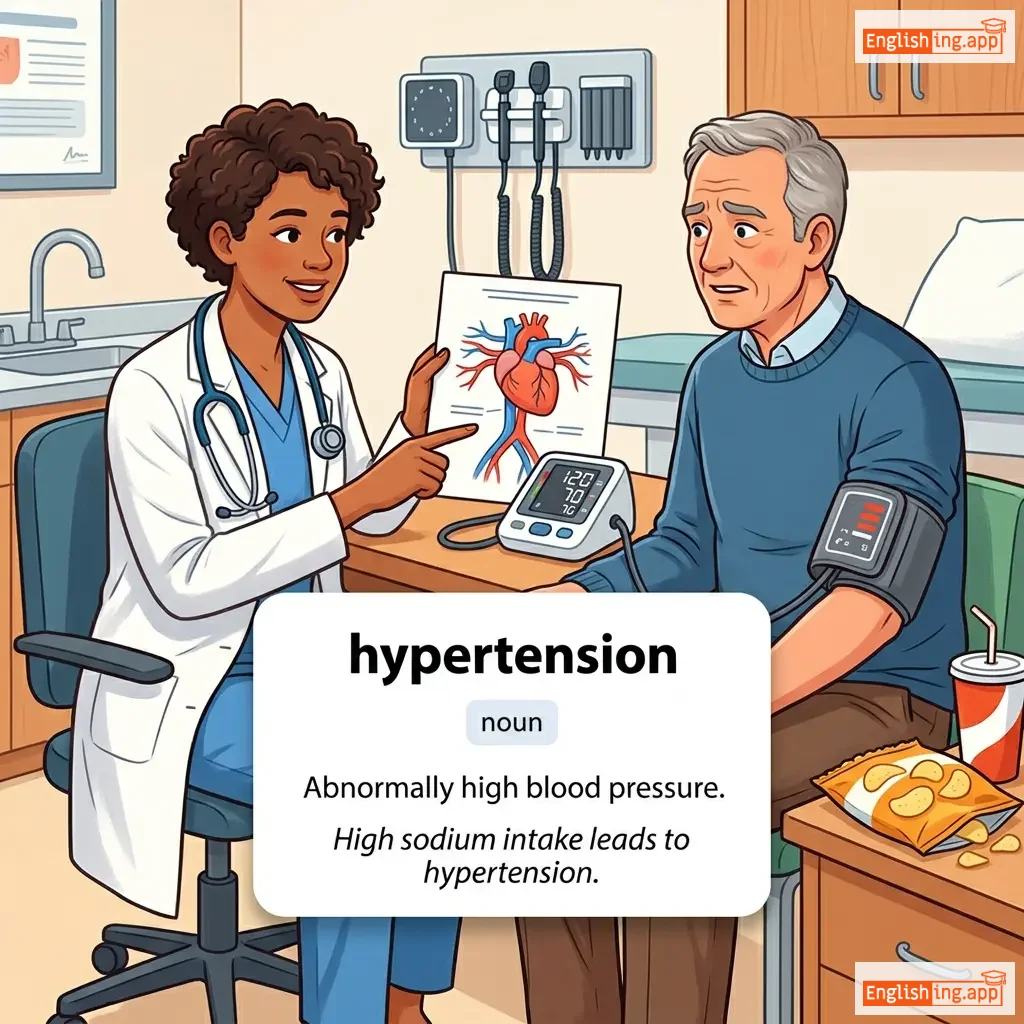
hypertension definition card — visual illustration of the meaning
noun
ˌhaɪ.pɚˈten.ʃən
高血圧 (kōketsuatsu)

Abnormally high blood pressure.

"High sodium intake leads to hypertension."

"高ナトリウム摂取は高血圧を引き起こします。" (Kō natoriumu sesshu wa kōketsuatsu o hikiokoshimasu.)
noun
/hɪpˈnoʊsɪs/
ヒプノシス (hipunoshisu)

A trance-like state of consciousness usually induced by suggestion.

"She underwent hypnosis to overcome her fear of flying."

"彼女は飛行機恐怖症を克服するためにヒプノシスを受けました。" (Kanojo wa hikouki kyōfushō o kokufuku suru tame ni hipunoshisu o ukemashita.)
adjective
/hɪpˈnɒtɪk/
催眠的な (saimin-teki na)

Producing sleep or a trance-like state; mesmerizing.

"The music had a hypnotic effect on the audience."

"その音楽は聴衆に催眠的な効果を与えました。" (Sono ongaku wa chōshū ni saimin-teki na kōka o ataemashita.)