語彙集

英単語辞書 | 単語の意味、定義、例文

adverb
/ˈɡrædʒuəli/
徐々に (jojoni)

Slowly and steadily, taking place step by step.

"She gradually improved her English over the year."

"彼女は一年を通して徐々に英語を改善しました。" (Kanojo wa ichinen o tōshite jojoni eigo o kaizen shimashita.)
noun, verb
/ˈɡrædʒuət/ (noun), /ˈɡrædʒueɪt/ (verb)
卒業生 (sotsugyousei)

As a noun: a person who has completed a course of study; As a verb: to complete a course of study successfully.

"She will graduate from university next year."

"彼女は来年大学を卒業する。" (Kanojo wa rainen daigaku wo sotsugyou suru.)
adjective
/ˈɡrædʒuˌeɪtɪd/
段階的な / 卒業した (dankai-teki na / sotsugyō shita)

Arranged in steps, levels, or stages; having completed a course of study and received a degree

"The scientist used a graduated cylinder to measure the liquid precisely."

"科学者は液体を正確に測定するためにグラジュエイテッドシリンダーを使用しました。" (Kagakusha wa ekitai o seikaku ni sokutei suru tame ni gurajuēteddoshirindā o shiyō shimashita.)
noun
/ˌɡrædʒ.uˈeɪ.ʃən/

the act of receiving a degree or diploma after completing a course of study

"Her parents attended her graduation ceremony with pride."

noun
/ɡrəˈfiː.ti/
公共の場所にある壁やその他の表面に違法に書かれたり描かれたりした文字や絵 (gurafiti)

writing or drawings scribbled, scratched, or sprayed illicitly on a wall or other surface in a public place

"The subway walls were covered with colorful graffiti created by local street artists."

"地下鉄の壁は地元のストリートアーティストによって作られたカラフルなグラフィティで覆われていた。" (Chikatetsu no kabe wa jimoto no sutoriito aatisuto ni yotte tsukurareta karafuru na gurafiti de owarete ita.)
noun/verb
/ɡræft/
移植 / 賄賂 (ishoku / waifu)

To join or insert a part of one plant or tissue into another; also refers to corruption or bribery

"The surgeon performed a skin graft to treat the burn victim."

"外科医はやけどの被害者を治療するために皮膚移植を行いました。" (Gekai wa yakedo no higaisha o chiryo suru tame ni hifu ishoku o okonaimashita.)
noun
/ɡreɪn/
穀物 (kokumotsu)

a small hard seed of a cereal plant such as wheat or rice; a tiny particle of a substance

"A grain of rice fell off the plate."

"一粒の米が皿から落ちた。" (Hitotsubu no kome ga sara kara ochita.)
noun
/ɡræm/
ひよこ豆 (hiyokodou)

chickpea; a leguminous plant and its edible seed

"She cooked gram curry for lunch today."

"今日は昼食にひよこ豆カレーを作りました。" (Kyou wa chuushoku ni hiyokodou karee o tsukurimashita.)
noun
/ˈɡræmər/
文法 (bunpo)

the system and structure of a language, including rules for syntax, morphology, and usage

"She studied grammar to improve her writing skills."

"彼女は文章力を向上させるために文法を勉強した。" (kanojo wa bunshoryoku o kojo saseru tame ni bunpo o benkyo shita)
noun
/ˈɡrænəri/
穀物倉庫 (kokumotsu souko)

A storehouse for grain; a region that produces a large amount of grain

"The farmers stored their harvest in the village granary."

"農民たちは村の穀物倉庫に収穫物を保管しました。" (Nōmin-tachi wa mura no kokumotsu souko ni shūkakumono o hokan shimashita.)
adjective
/ɡrænd/
壮大 (soudai)

magnificent and impressive in appearance, size, or style

"They stayed at a grand hotel in Paris."

"彼らはパリの壮大なホテルに泊まりました。" (Karera wa Pari no soudaina hoteru ni tomarimashita.)
noun
/ˈɡrænd.tʃaɪld/
(mago)

the child of one's son or daughter

"They love spending time with their grandchild on weekends."

"彼らは週末に孫と一緒に過ごすのが大好きです。" (Karera wa shūmatsu ni mago to issho ni sugosu no ga daisuki desu.)
noun
/ˈɡræn(d)ˌdɔːtər/
孫娘 (mago musume)

the daughter of one’s son or daughter

"Her granddaughter visits her every weekend."

"彼女の孫娘は毎週末彼女を訪ねます。" (kanojo no mago musume wa maishu matsu kanojo o tazunemasu)
Grandeur definition card — visual illustration of the meaning
noun
/ˈɡrændʒər/
壮麗 (souryoku)

Impressive beauty, scale, or magnificence

"The grandeur of the palace left the visitors speechless."

"宮殿の壮麗さは訪問者を言葉を失わせた。" (Kyuuden no souryoku wa houmon-sha o kotoba o ushinawaseta.)
noun
/ˈɡrændˌfɑːðər/
祖父 (sofu)

the father of one's father or mother

"My grandfather tells us stories every evening."

"私の祖父は毎晩私たちに物語を話してくれます。" (Watashi no sofu wa maiban watashitachi ni monogatari o hanashite kuremasu.)
noun
/ˈɡrændɪləkwəns/
誇張した言葉 (kojō shita kotoba)

Pompous or extravagant language, style, or manner, often intended to impress

"The politician’s speech was full of empty grandiloquence."
"政治家の演説は、空虚な誇張した言葉で満たされていました。" (Seijika no enzetsu wa, kūkyo na kojō shita kotoba de mitasareteimashita.)
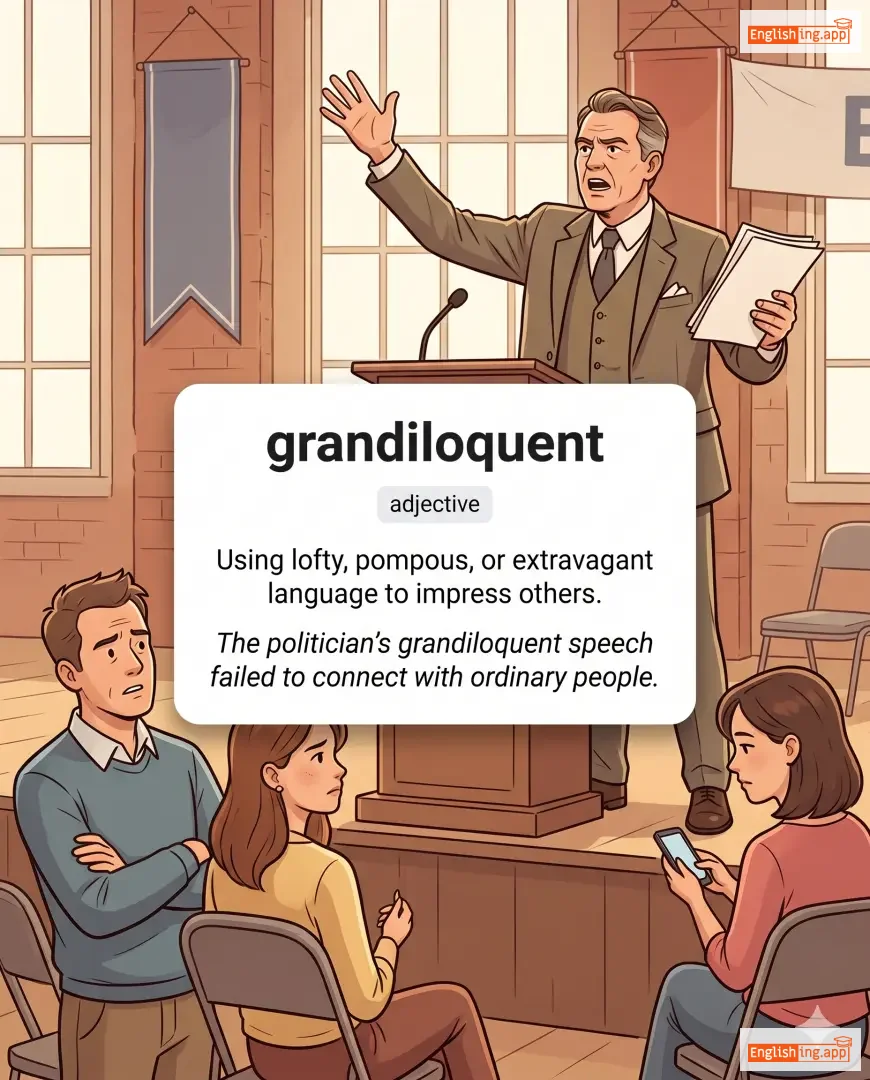
grandiloquent definition card — visual illustration of the meaning
adjective
/ɡrænˈdɪləkwənt/
誇張な言語 (kochou na gengo)

Using lofty, pompous, or extravagant language to impress others.

"The politician’s grandiloquent speech failed to connect with ordinary people."

"その政治家の誇張された演説は一般の人々とつながることができなかった。" (Sono seijika no kochou sareta enzetsu wa ippan no hitobito to tsunagaru koto ga dekinakatta.)
adjective
/ˈɡrændioʊs/
壮大な (soudaina)

Impressive or magnificent in appearance or style, often pretentiously so.

"He had grandiose plans of building a futuristic city in the desert."

"彼は砂漠に未来的な都市を建設する壮大な計画を持っていました。" (Kare wa sabaku ni mirai-teki na toshi wo kensetsu suru soudaina keikaku wo motteimashita.)
noun
/ˈɡrændˌmʌðər/
祖母 (sobo)

the mother of one's father or mother

"My grandmother makes delicious cakes."

"私の祖母は美味しいケーキを作ります。" (Watashi no sobo wa oishii kēki o tsukurimasu.)
noun
/ˈɡrændˌpeə.rənt/
祖父/祖母 (sofu/sobo)

the parent of one's father or mother

"My grandparents live in a small village near the hills."
"私の祖父母は小さな村に住んでおり、丘の近くにあります。" (Watashi no sofu-sobo wa chiisana mura ni sunde ori, oka no chikaku ni arimasu.)
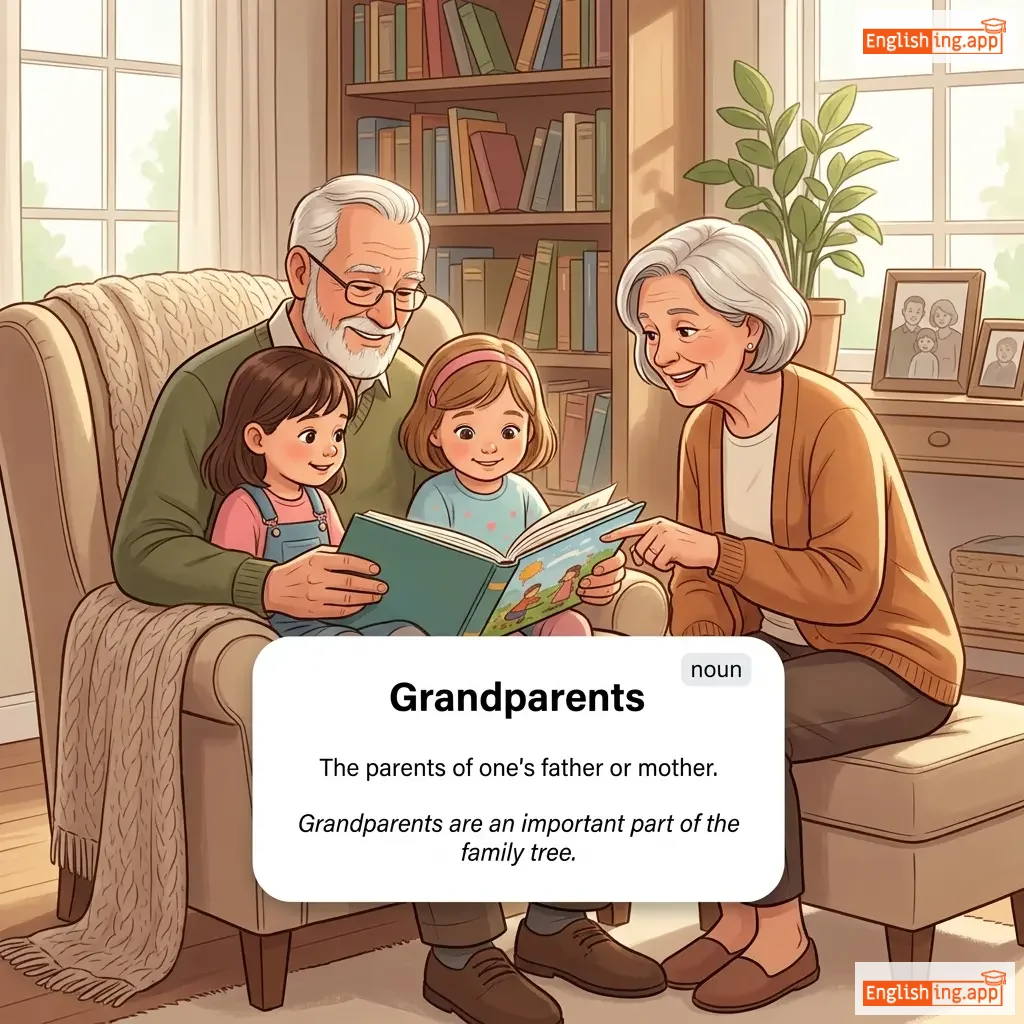
Grandparents definition card — visual illustration of the meaning
noun
ˈɡrænˌpɛrənts
祖父母 (sofumobo)

The parents of one's father or mother.

"Grandparents are an important part of the family tree."

"祖父母は家族の大切な一部です。" (Sofubo wa kazoku no taisetsu na ichibu desu.)
noun
/ˈɡrændsʌn/
(mago)

the son of one's son or daughter

"His grandson visits him every weekend."

"彼の孫は毎週末彼を訪ねます。" (kare no mago wa maishuumatsu kare o tazunemasu)
verb
/ˈɡrændstænd/
注目や拍手を求めて見せかけの行動をする (chumoku ya hakushu o motomete misekake no kodo o suru)

To seek attention or applause by behaving or speaking in a showy way.

"The actor was accused of grandstanding during the charity event."

"その俳優はチャリティイベントでグランドスタンディングをしていると非難された。" (Sono haiyuu wa charity event de grandstanding o shite iru to hinan sareta.)
grant definition card — visual illustration of the meaning
🎓

grant

verb
/ɡrænt/

To give or allow something, usually in an official or formal way.

"The university granted him a scholarship for his excellent results."

noun
/ɡrænˈtiː/
助成金受領者 (joseikin shuryousha)

A person or organization that receives a grant or benefit.

"The grantee must submit a progress report every six months."

"助成金受領者は、6ヶ月ごとに進捗報告書を提出しなければならない。" (Joseikin shuryousha wa, 6 kagetsu goto ni shinchoku houkokusho wo teishutsu shinakereba naranai.)
noun
/ˈɡræn.tɔːr/
譲渡者 (joutosha)

A person or entity that makes a grant or transfers property or rights to another.

"The grantor transferred the property rights to the nonprofit organization."

"譲渡者は、財産権を非営利団体に譲渡しました。" (Joutosha wa, zaisanken wo hieiridan tai ni jouto shimashita.)
adjective
/ˈɡræn.jʊ.lər/
粒状の (ryūjō no)

Consisting of small grains or particles; detailed and specific.

"The report provided a granular analysis of the market data."

"レポートは市場データの詳細な分析を提供しました。" (Repōto wa shijō dēta no shōsai na bunseki o teikyō shimashita.)
verb
/ˈɡræn.jʊ.leɪt/
顆粒化する (karyū-ka suru)

To form or cause to form into grains or small particles.

"The sugar began to granulate as it cooled."

"砂糖は冷えるとグラニュレートし始めました。" (Satō wa hieru to guranyurēto shihajimemashita.)
noun
/ˈɡræn.juːl/
(tsubu)

A small compact particle of a substance.

"Each granule of salt sparkled under the sunlight."

"塩の粒は日光の下で輝いていました。" (Shio no tsubu wa nikkō no shita de kagayaite imashita.)
noun
/ɡreɪp/
ぶどう (budou)

a small, round fruit that grows in clusters on vines and is used to make wine or eaten as food

"She picked a bunch of grapes from the vine."

"彼女はぶどうの房を vine から取った。" (Kanojo wa budou no fusa wo vine kara totta.)
noun
/ɡreɪps/
ぶどう (budou)

small round fruits that grow in clusters on vines; used to make wine

"She bought a bunch of grapes from the market."

"彼女は市場で一房のぶどうを買いました。" (Kanojo wa ichiba de hitofusa no budou o kaimashita.)
adjective
/ˈɡræf.ɪk/

Relating to visual art, especially involving drawing, design, or vivid description.

"The movie contained graphic scenes of violence."

noun
/ˈɡræfɪks/
グラフィックス (gurafikkusu)

visual images, designs, or drawings used to convey information or artistic expression

"The website uses stunning graphics to attract visitors."

"そのウェブサイトは訪問者を引き付けるために素晴らしいグラフィックスを使用しています。" (Sono uebusaito wa hōmon-sha o hiki tsukeru tame ni subarashī gurafikkusu o shiyō shiteimasu.)
noun
/ˈɡræfaɪt/
グラファイト (gurafaite)

a soft, black form of carbon used in pencils and as a lubricant

"The artist sketched the portrait using a graphite pencil."

"アーティストはグラファイト鉛筆を使って肖像画を描きました。" (Ātisuto wa gurafaite enpitsu o tsukatte shōzōga o kakimashita.)
verb
/ˈɡræpəl/
格闘する, 取り組む (kakutō suru, torikumu)

to struggle or wrestle with something, often a problem or opponent

"The company is grappling with financial difficulties."
"その会社は財務問題に取り組んでいます。" (Sono kaisha wa zaimu mondai ni torikundeimasu.)
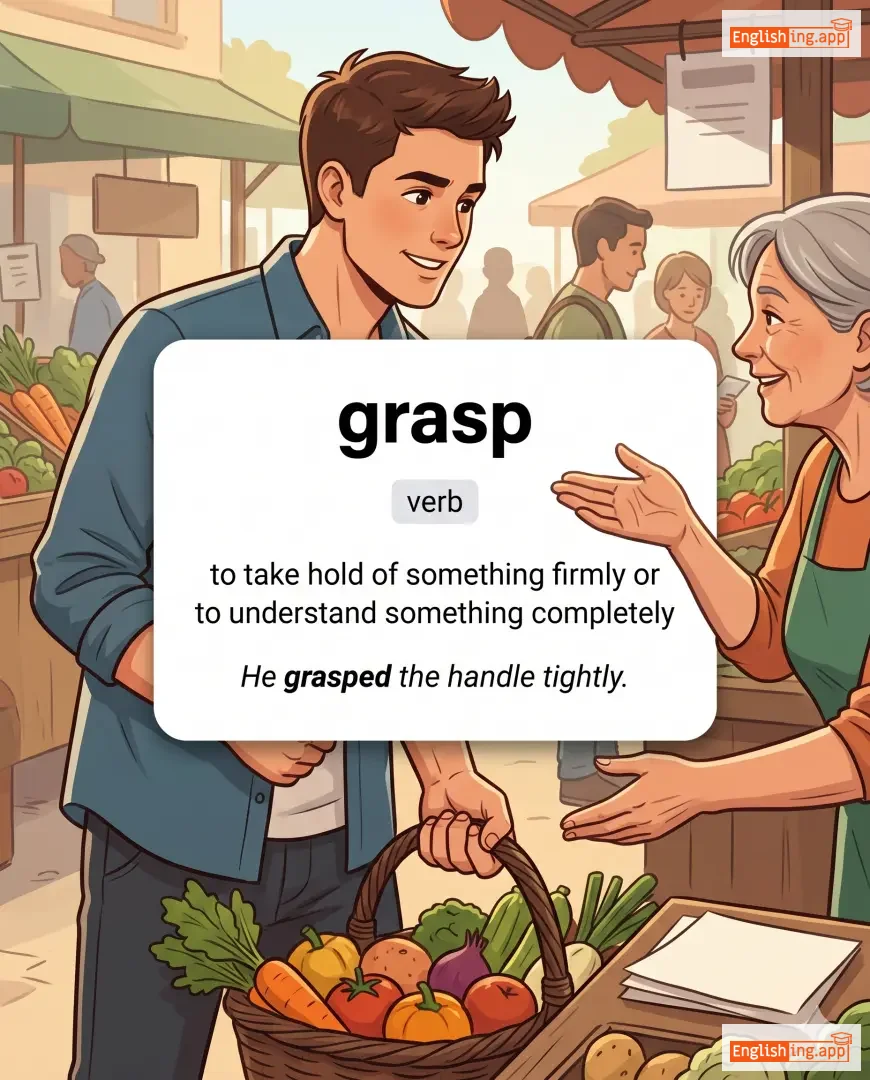
grasp definition card — visual illustration of the meaning
verb
/ɡrɑːsp/
しっかりとつかむまたは完全に理解する (shikkari to tsukamu matawa kanzen ni rikai suru)

to take hold of something firmly or to understand something completely

"He grasped the handle tightly."

"彼はハンドルをしっかり握った。" (Kare wa handoru o shikkari nigitta.)
verb/adjective
/ˈɡræspɪŋ/
しっかりつかむ / 欲張り (shikkari tsukamu / yokubari)

Holding firmly; or (as an adjective) excessively greedy.

"The child was grasping her mother’s hand tightly."

"その子は母親の手をしっかりつかんでいた。" (Sono ko wa hahaoya no te wo shikkari tsukande ita.)
noun
/ɡræs/
幸福 (kōfuku)

plants with narrow green leaves, often covering the ground in fields or gardens

"Children are playing on the grass."

"彼女は賞を受け取ったとき、幸せを隠すことができませんでした。" (Kanojo wa shō o uketotta toki, kōfuku o kakusu koto ga dekimasen deshita.)
noun
/ˈɡræs.hɒp.ər/
バッタ (batta)

a jumping insect with long hind legs that feeds on grass and plants

"The grasshopper jumped from one leaf to another."

"バッタは一枚の葉から別の葉へ跳びました。" (Batta wa ichi-mai no ha kara betsu no ha e tobimashita.)
adjective
/ˈɡræs.i/
草の生えた (gurasshii)

covered with grass; resembling grass in color; green like grass

"The grassy field stretched as far as the eye could see."

"草原は視界の彼方まで広がっていた。" (sougen wa shikai no kanata made hirogatte ita)
verb
/ɡreɪt/
すりおろす, 苛立たせる (suri orosu, iradataseru)

to shred food into small pieces using a grater; to irritate or annoy

"She grated the cheese for the pasta dish."

"彼女はパスタ料理のためにチーズをおろしました。" (Kanojo wa pasuta ryouri no tame ni chiizu o oroshimashita.)
adjective
/ˈɡreɪtfəl/
感謝している (kansha shiteiru)

feeling or showing thanks for something or someone

"I am grateful for your help."

"私はあなたの助けに感謝しています。" (Watashi wa anata no tasuke ni kansha shiteimasu.)
noun
/ˈɡreɪt.fəl.nəs/
感謝 (kansha)

the quality of being thankful; readiness to show appreciation for kindness

"She expressed her gratefulness to the doctors who saved her life."

"彼女は彼女の命を救ってくれた医師たちに感謝の気持ちを表現しました。" (kanojo wa kanojo no inochi o sukunatte kureta ishi-tachi ni kansha no kimochi o hyōgen shimashita.)
noun
/ˈɡreɪ.tər/
おろし金 (oroshigane)

a kitchen utensil with a rough surface for grating food into small pieces

"Use the grater to grate cheese for the pizza."

"ピザ用のチーズをおろすためにおろし金を使ってください。" (Piza-yō no chīzu o orosu tame ni oroshigane o tsukatte kudasai.)
gratification definition card — visual illustration of the meaning
noun
/ˌɡrætɪfɪˈkeɪʃən/
満足感、充足感 (manzokukan, jūzokukan)

the feeling of pleasure or satisfaction when something is achieved or received

"She felt great gratification after completing the project."

"プロジェクトを完了した後、彼女は大きな満足感を感じました。" (Purojekuto o kanryō shita ato, kanojo wa ōkina manzokukan o kanjimashita.)
verb
/ˈɡrætɪfaɪ/
満足させる、喜ばせる (manzoku saseru, yorokobaseru)

to give pleasure or satisfaction to someone

"It gratified him to know his work was appreciated."

"彼の仕事が評価されたことを知って、彼は満足しました。" (Kare no shigoto ga hyōka sareta koto o shitte, kare wa manzoku shimashita.)
adjective, noun
/ˈɡreɪtɪŋ/
耳障りな音 / 金属の格子 (mimizawari na oto / kinzoku no kōshi)

Harsh and unpleasant to the senses, especially sound; a framework of bars covering an opening.

"The teacher's grating voice made it hard to concentrate."

"先生の耳障りな声で集中するのが難しかった。" (Sensei no mimizawari na koe de shūchū suru no ga muzukashikatta.)
adverb, adjective
/ˈɡrætɪs/ or /ˈɡreɪtɪs/
無料 (muryou)

Without charge; free of cost.

"The drinks at the event were provided gratis."

"イベントで提供された飲み物は無料でした。" (Ibento de teikyō sareta nomimono wa muryō deshita.)
gratitude definition card — visual illustration of the meaning
noun
/ˈɡrætɪˌtjuːd/
感謝 (kansha)

The quality of being thankful; readiness to show appreciation for and return kindness.

"She expressed her gratitude to the team for their support."

"彼女はチームのサポートに感謝の気持ちを表しました。" (Kanojo wa chiimu no sapōto ni kansha no kimochi o arawashimashita.)
adjective
/ɡrəˈtjuːɪtəs/
不必要な (fuhitsuyouna)

Unnecessary, unwarranted, or given freely without reason or cause.

"The movie was criticized for its gratuitous violence."

"その映画は不必要な暴力で批判された" (Sono eiga wa fuhitsuyōna bōryoku de hihan sareta)