語彙集

英単語辞書 | 単語の意味、定義、例文

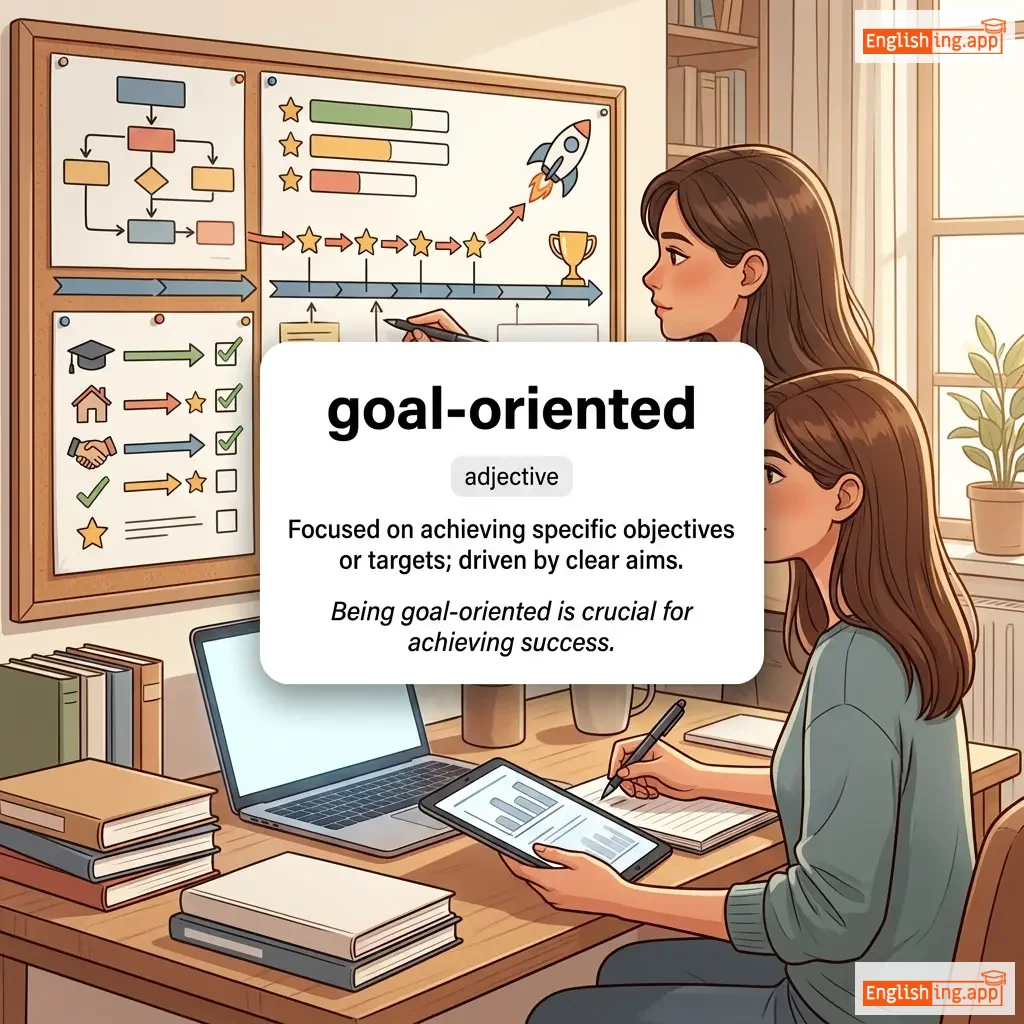
goal-oriented definition card — visual illustration of the meaning
adjective
/ɡəʊl ɔːˈrɪəntɪd/
目標指向 (mokuhyō shikō)

Focused on achieving specific objectives or targets; driven by clear aims.

"Being goal-oriented is crucial for achieving success."

"目標指向であることは成功を達成するために重要です。" (Mokuhyō shikō de aru koto wa seikō o tassei suru tame ni jūyō desu.)
noun
/ɡoʊl ˈsɛt.ɪŋ/
目標設定 (mokuhyou settei)

The process of identifying something that you want to accomplish and establishing measurable objectives to achieve it.

"Effective goal-setting helps individuals stay focused and motivated."

"効果的な目標設定は、個人が集中し、モチベーションを保つのに役立ちます。" (Koukateki na mokuhyou settei wa, kojin ga shuuchuu shi, mochibeeshon o tamotsu no ni yakudachimasu.)
goals definition card — visual illustration of the meaning
noun
ɡoʊlz
目標 (mokuhyō)

An aim or desired result; something that you want to achieve.

"Setting clear goals helps in achieving success."

"明確な目標を設定することは、成功を達成するのに役立ちます。" (Meikaku na mokuhyō o settei suru koto wa, seikō o tassei suru no ni yakudachimasu.)
noun
/ɡoʊt/
ヤギ (yagi)

a hardy domesticated animal kept for its milk, meat, and hair

"The farmer keeps several goats for milk production."

"農家は乳製品のために何匹かのヤギを飼っている。" (nōka wa nyūseihin no tame ni nanbiki ka no yagi wo katte iru.)
verb
/ˈɡɑːbəl/
ガツガツ食べる (gatsugatsu taberu)

to eat something quickly and greedily

"The children gobbled their food in minutes."

"子供たちは数分で食べ物をガツガツ食べました。" (Kodomotachi wa suufun de tabemono o gatsugatsu tabemashita.)
noun
/ɡɑːd/
(kami)

a deity; a supreme being believed to control the universe

"People in different cultures worship God in various ways."

"さまざまな文化の人々はさまざまな方法で神を崇拝します。" (samazama na bunka no hitobito wa samazama na hōhō de kami o sūhai shimasu)
verb
/ˈɡɑːɡəl/
目を見開いて見る (me o mihiraita miru)

to stare with wide open eyes, often in surprise or wonder

"The tourists goggled at the tall skyscrapers."

"観光客は高い摩天楼を驚きながら見つめていた。" (Kankōkyaku wa takai matenrō o odoroki nagara mitsumete ita.)
noun
/ɡoʊld/
(kin)

a yellow precious metal used in jewelry and as money

"The ring was made of pure gold."

"その指輪は純金でできていました。" (Sono yubiwa wa junkin de dekite imashita.)
noun
/ɡoʊld fɪʃ/
金魚 (kingyo)

a small ornamental freshwater fish with golden or orange coloration, commonly kept as a pet

"The goldfish swam in circles around its glass bowl."

"金魚はガラスの鉢の中をぐるぐる泳いでいました。" (kingyo wa garasu no hachi no naka o guruguru oyoideimashita)
noun
/ɡoʊld rɪŋ/
金の指輪 (kin no yubiwa)

a circular band of gold worn as jewelry, typically on a finger

"He gave her a beautiful gold ring for their anniversary."

"彼は彼らの記念日に美しい金の指輪を彼女に渡しました。" (Kare wa karera no kinenbi ni utsukushii kin no yubiwa o kanojo ni watashimashita.)
verb, noun
/ˈɡoʊld.brɪk/
仕事を避ける (shigoto o sakeru)

to avoid work or duty; a person who shirks responsibility

"He was accused of goldbricking while the rest of the team worked hard."

"彼は仕事を避けていると非難されたが、他のチームは一生懸命働いていた。" (Kare wa shigoto o sakete iru to hinan sareta ga, hoka no chiimu wa isshoukenmei hataraite ita.)
adjective
/ˈɡoʊldən/
金色の (kin iro no)

made of or resembling gold; precious or excellent

"This is a golden opportunity to learn new skills."
"これは新しいスキルを学ぶための金色の機会です。" (Kore wa atarashī sukiru o manabu tame no kin iro no kikai desu.)
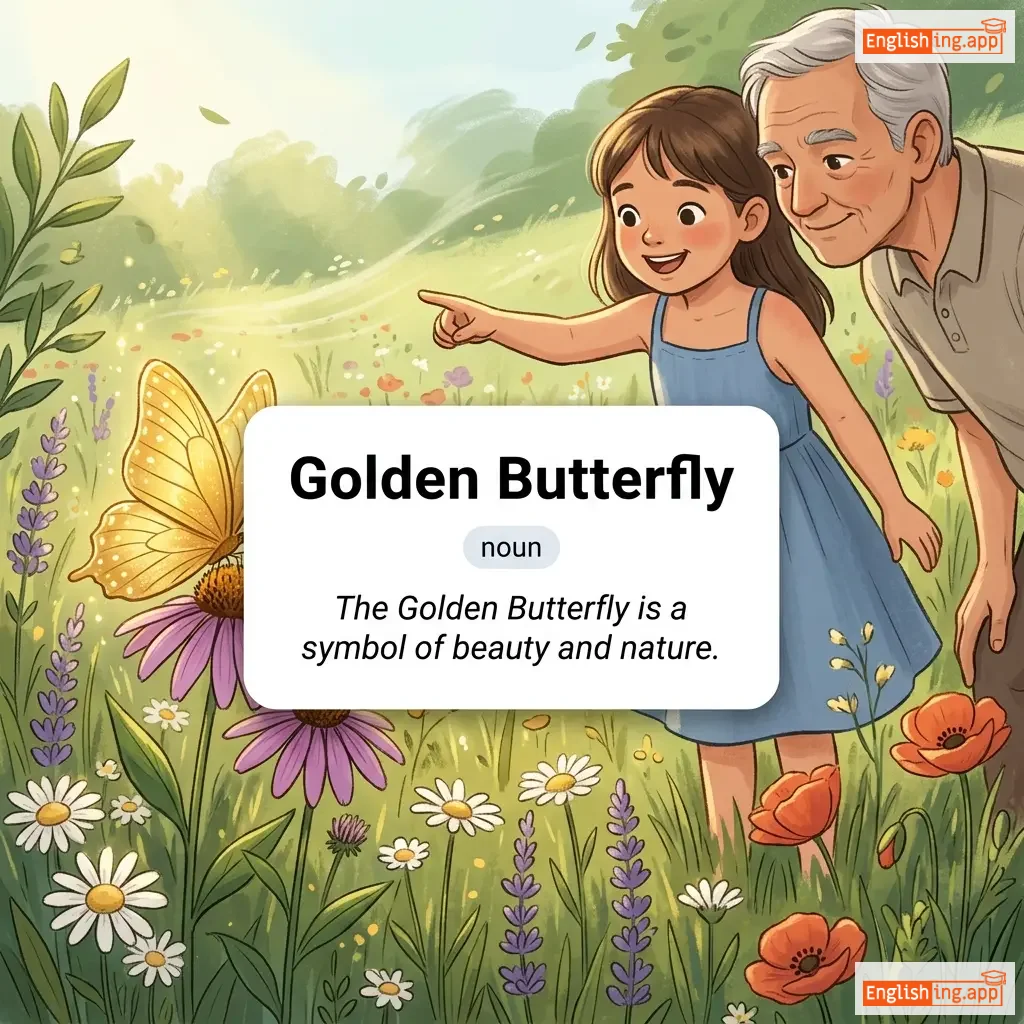
Golden Butterfly definition card — visual illustration of the meaning
noun
ˈɡoʊldən ˈbʌtərflaɪ
ゴールデンバタフライ (gōruden batafurai)

A beautiful species of butterfly with golden coloration, symbolizing beauty and nature.

"The Golden Butterfly is a symbol of beauty and nature."

"ゴールデンバタフライは美しさと自然の象徴です。" (Gōruden batafurai wa utsukushisa to shizen no shōchōdesu.)
noun
/ˈɡoʊld.moʊ.hɜːr/
黄花木 (gorudomofuru)

A tropical tree with bright orange-red flowers, also known as flame tree or royal poinciana

"The goldmohur tree bloomed beautifully in the summer heat."

"夏の暑さの中で、ゴールドモフルの木は美しく花を咲かせた。"
noun
/ˈɡoʊld.smɪθ/
金細工師 (kinzaikushi)

a person who makes or repairs articles of gold

"The goldsmith crafted a beautiful wedding ring."

"金細工師は美しい結婚指輪を作りました。" (Kinzai kushi wa utsukushii kekkon yubiwa o tsukurimashita.)
noun
/ɡɒlf/
幸福 (kōfuku)

A game in which players use clubs to hit a ball into a series of holes on a course in as few strokes as possible.

"He spends his weekends playing golf with his friends."

"彼女は賞を受け取ったとき、自分の幸福を隠すことができませんでした。" (Kanojo wa shō o uketotta toki, jibun no kōfuku o kakusu koto ga dekimasen deshita.)
adjective
/ɡʊd/
良い (yoi)

Of high quality; morally right or beneficial.

"She is a good student who always helps her classmates."

"彼女は良い学生で、いつもクラスメートを助けています。" (Kanojo wa yoi gakusei de, itsumo kurasumēto o tasuketeimasu.)
interjection;noun
/ɡʊdˈbaɪ/
さようなら (sayounara)

a polite expression used when leaving or ending a conversation; the act of parting

"She waved and said goodbye before leaving the station."

"彼女は駅を出る前に手を振ってさようならと言った。" (kanojo wa eki o deru mae ni te o futte sayounara to itta)
noun
/ˈɡʊdnəs/
善良 (zenryou)

the quality of being morally good or virtuous

"Her goodness was evident in the way she treated others."

"彼女の善良さは、他の人々に対する接し方に明らかに現れていました。" (Kanojo no zenryou sa wa, hoka no hitobito ni taisuru sesshika ni akirakani arawarete imashita.)
goods definition card — visual illustration of the meaning
noun
ɡʊdz
商品 (shouhin)

Merchandise or possessions; things that are bought and sold.

"The company produces high-quality goods for export."

"その会社は輸出向けの高品質な商品を生産している。" (sono kaisha wa yushutsu muke no kouhinshitsu na shouhin o seisanshiteiru)
noun
/ɡʊdz treɪn/
貨物列車 (kāmotsu ressha)

a train designed to transport cargo and freight rather than passengers

"The long goods train carried containers from the port to the inland depot."

"長い貨物列車が港から内陸の倉庫までコンテナを運んだ。" (nagai kamotsu ressha ga minato kara nairiku no sōko made kontera o hakonda.)
noun
/ɡuːs/
ガン (gan)

large waterbird with a long neck and webbed feet

"The goose swam gracefully across the pond."

"そのガンは池を優雅に泳いでいた。" (Sono gan wa ike o yūga ni oyoideita.)
noun
/ˈɡuːs.ber.i/
グーズベリー (gūsuberī)

a small round green or red berry that grows on a thorny bush

"Gooseberries are rich in vitamin C and make excellent jams."

"グーズベリーはビタミンCが豊富で、優れたジャムを作ります。" (gūsuberī wa bitamin C ga hōfu de, sugureta jamu o tsukurimasu)
noun
/ˈɡuːs.bʌmps/
鳥肌 (torihada)

small raised bumps on the skin caused by cold, fear, or excitement

"The horror movie gave me goosebumps."

"ホラー映画で鳥肌が立った。" (Horā eiga de torihada ga tatta.)
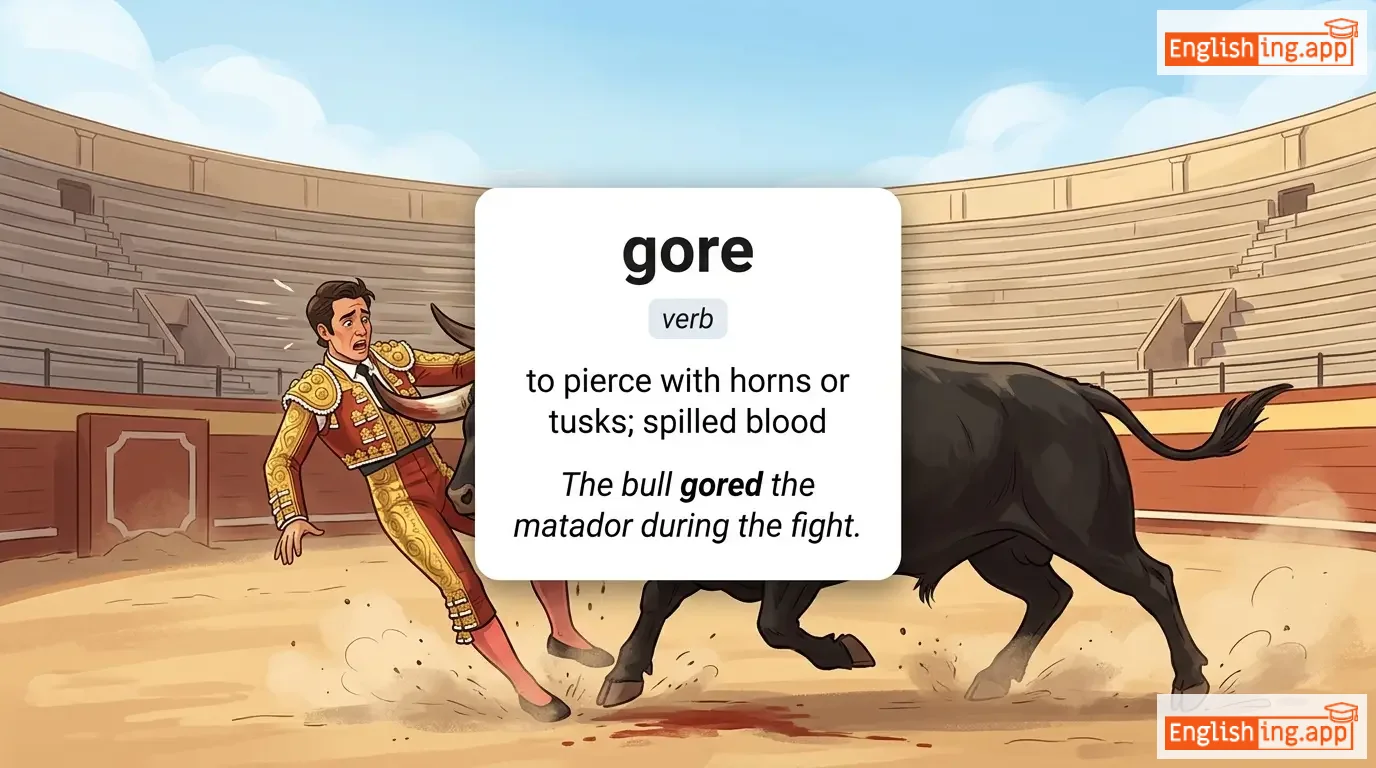
gore definition card — visual illustration of the meaning
verb
/ɡɔːr/
角で突く (kado de tsuku)

to pierce with horns or tusks; spilled blood

"The bull gored the matador during the fight."

"闘牛中に雄牛がマタドールを突き刺した。" (Tōgyū-chū ni osushi ga matadōru o tsukisashita.)
verb, noun
/ɡɔːrdʒ/
貪欲に食べる / 山間の狭い谷 (danyoku ni taberu / sankan no semai tani)

to eat greedily; a narrow valley between mountains or hills

"They gorged themselves on pizza after the hike."

"ハイキング後に彼らはピザをむさぼり食べました。" (Haikingu go ni karera wa pizza o musabori tabemashita.)
adjective
/ˈɡɔːrdʒəs/
素晴らしい (subarashii)

Extremely beautiful or attractive.

"The bride looked gorgeous in her wedding dress."

"花嫁はウェディングドレスで素晴らしい見えました。" (Hanayome wa wedingudoresu de subarashī miemashita.)
noun
/ɡəˈrɪl.ə/
ゴリラ (gorira)

a large powerful ape found in the forests of central Africa

"The gorilla beat its chest to show dominance."

"ゴリラは胸を叩いて支配を示しました。" (Gorira wa mune o tataite shihai o shimeshimashita.)
adjective
/ˈɡɔːri/
血なまぐさい (chinamagusai)

involving or showing a lot of bloodshed and violence

"The movie was too gory for children."

"その映画は子供には血なまぐさいすぎました。" (Sono eiga wa kodomo ni wa chinamagusai sugimashita.)
noun
/ˈɡɒz.lɪŋ/
ガンのひな (gan no hina)

a young goose

"The mother goose carefully protected her goslings."
"母ガンは仔ガンを慎重に守った。" (Haha gan wa koga o shinchou ni mamotta.)
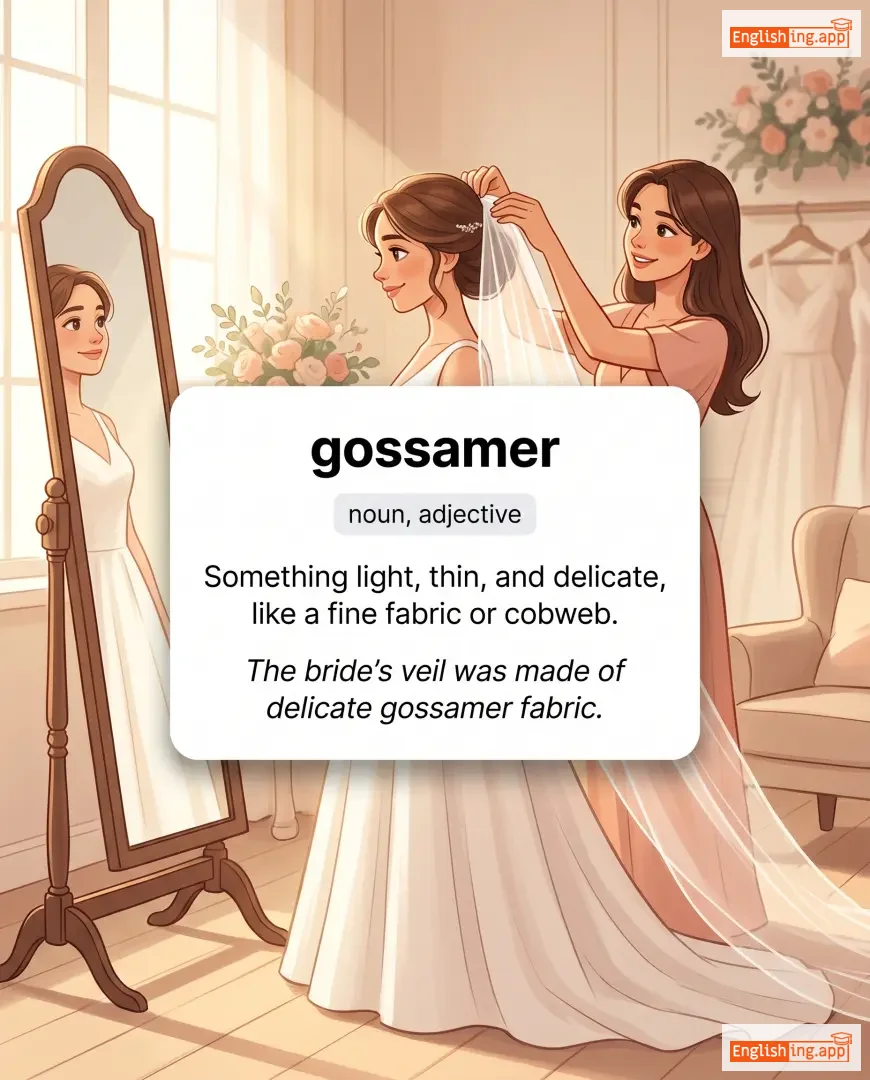
gossamer definition card — visual illustration of the meaning
noun, adjective
/ˈɡɒsəmər/
繊細なもの (sensaina mono)

Something light, thin, and delicate, like a fine fabric or cobweb.

"The bride's veil was made of delicate gossamer fabric."
"花嫁のベールは繊細なゴッサマー生地で作られていた。" (Hanayome no bēru wa sensaina gossamā kiji de tsukurarete ita.)
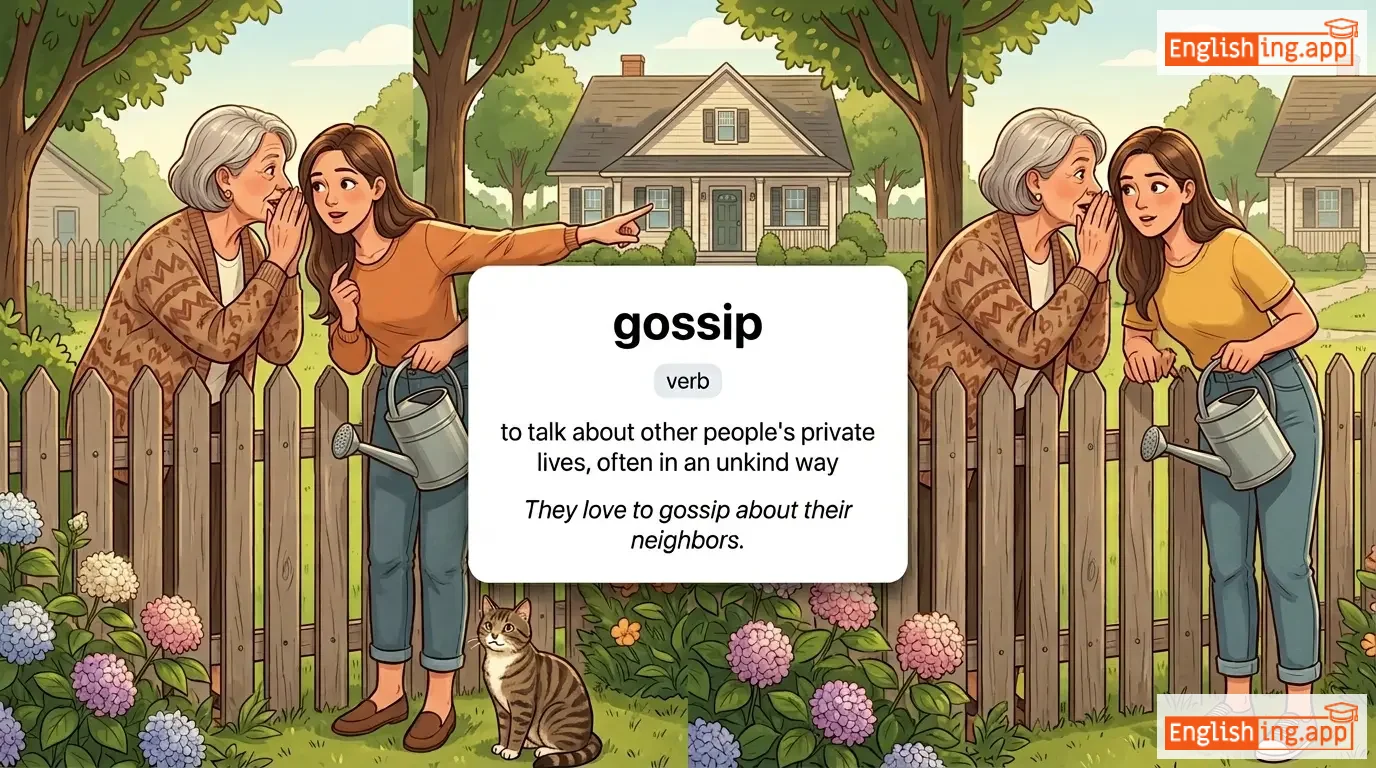
gossip definition card — visual illustration of the meaning
verb
/ˈɡɑːsɪp/
ゴシップする (goshippu suru)

to talk about other people's private lives, often in an unkind way

"They love to gossip about their neighbors."

"彼らは隣人についてゴシップするのが好きです。" (Karera wa rinjin ni tsuite goshippu suru no ga suki desu.)
gouge definition card — visual illustration of the meaning
verb, noun
/ɡaʊdʒ/
えぐる、不当に高く売る (eguru, futōni takaku uru)

To cut or scoop out a deep hole or groove; to overcharge unfairly.

"He accidentally gouged a hole in the wooden table."

"彼はうっかり木製のテーブルに穴を開けました。" (Kare wa ukkari mokusei no tēburu ni ana o akemashita.)
noun
/ɡɔːrd/
ひょうたん (hyoutan)

A large fruit with a hard shell, often used as food or for making containers.

"The farmer harvested several gourds from the field."

"農夫は畑からいくつかのひょうたんを収穫しました。" (Noufu wa hatake kara ikutsuka no hyoutan wo shuukaku shimashita.)
noun
/ˈɡʊrmənd/
美食家 (bishokuka)

A person who enjoys eating a lot or has a great appetite for food.

"As a true gourmand, he never missed an opportunity to try new dishes."

"本物の美食家として、彼は新しい料理を試す機会を決して見逃しませんでした。" (Honmono no bishokuka toshite, kare wa atarashī ryōri o tamesu kikai o kesshite minogashimasen deshita.)
noun, adjective
/ˈɡʊrmeɪ/
グルメ (gourmet)

A person who appreciates fine food and drink; also refers to high-quality food.

"They went to a gourmet restaurant to celebrate their anniversary."

"彼らは記念日を祝うためにグルメレストランに行きました。" (Karera wa kinenbi o iwau tame ni gourmet resutoran ni ikimashita.)
govern definition card — visual illustration of the meaning
🏛️

govern

verb
/ˈɡʌv.ən/

to control, direct, or strongly influence the actions and behavior of others, especially through laws or authority

"The country is governed by a coalition of parties."

governance definition card — visual illustration of the meaning
🏛️

governance

noun
/ˈɡʌvərnəns/

the action or manner of governing a state, organization, or people

"Good governance is key to building a strong, prosperous nation."

government definition card — visual illustration of the meaning
noun
/ˈɡʌvərnmənt/
政府 (seifu)

The governing body of a nation, state, or community responsible for making and enforcing laws.

"The government announced a new policy on education."

"政府は新しい教育政策を発表しました。" (Seifu wa atarashī kyōiku seisaku o happyō shimashita.)
noun
/ˈɡʌvərnər/
知事 (chiji)

An official appointed or elected to govern a state, territory, or organization.

"The governor addressed the citizens about the upcoming election."

"知事は市民に来たる選挙について話しました。" (Chiji wa shimin ni kitaru senkyo ni tsuite hanashimashita.)
noun
/ɡaʊn/
ガウン (gaun)

a long dress, typically worn on formal occasions; a loose robe worn for comfort or in professional settings

"She looked elegant in her evening gown at the graduation ceremony."

"彼女は卒業式でイブニングガウンを着てエレガントに見えた。" (Kanojo wa sotsugyoshiki de ibuningu gaun o kite ereganto ni mieta.)
verb
/ɡræb/
掴む (tsukamu)

To seize something quickly and firmly.

"He tried to grab the ball before it rolled away."

"彼はボールが転がる前にそれを掴もうとしました。" (Kare wa bōru ga korogaru mae ni sore o tsukamō to shimashita.)
noun
/ɡreɪs/
優雅, エレガンス (yūga, eregansu)

simple elegance or refined movement; goodwill and kindness

"She moved with grace across the stage."

"彼女は舞台を優雅に歩いた。" (Kanojo wa butai o yūga ni aruita.)
adjective
/ˈɡreɪs.fəl/
優雅な; 滑らかな; 洗練された; 動きや振る舞いの美しさを持つ (yūgana; namerakana; senrensareta; ugoki ya furumai no utsukushisa o motsu)

elegant; smooth; refined; having beauty of movement or manner

"The dancer moved with graceful elegance."

"ダンサーは優雅に動きました。" (Dansā wa yūgana ni ugokimashita.)
adjective
/ˈɡreɪsləs/
無作法 (musaho)

Lacking elegance, charm, or social refinement.

"His graceless behavior embarrassed everyone at the party."

"彼の無作法な行動はパーティーでみんなを困らせた。" (Kare no musaho na kōdō wa pātī de minna o komaraseta.)
adjective
/ˈɡreɪʃəs/
優雅 (yuuga)

Courteous, kind, and pleasant, especially to someone of lower status.

"The hostess was very gracious to all her guests."

"ホステスはすべてのゲストにとても優雅でした。" (Hosutesu wa subete no gesuto ni totemo yuuga deshita.)
noun
/ɡreɪˈdeɪʃən/
階調 (kaichou)

A gradual change from one stage, tone, or degree to another.

"The artist used subtle gradation of colors in her painting."

"アーティストは彼女の絵画で微妙な階調の色を使用しました。" (Aatisuto wa kanojo no kaiga de bimyou na kaichou no iro wo shiyou shimashita.)
noun, verb
/ɡreɪd/
成績 (seiseki)

A level of quality, rank, or performance; to assign a score or mark to work or performance.

"The teacher graded all the papers by the weekend."

"教師は週末までにすべての課題を採点しました。" (Kyōshi wa shūmatsu made ni subete no kadai o saiten shimashita.)
noun
/ˈɡreɪdiənt/
傾斜 (keisha)

A gradual slope, or the degree of inclination of a surface.

"The cyclist struggled up the steep gradient of the hill."
"サイクリストは急な傾斜の坂を上るのに苦労していた。" (Saikurisuto wa kyūna keisha no saka o noboru no ni kurō shite ita.)
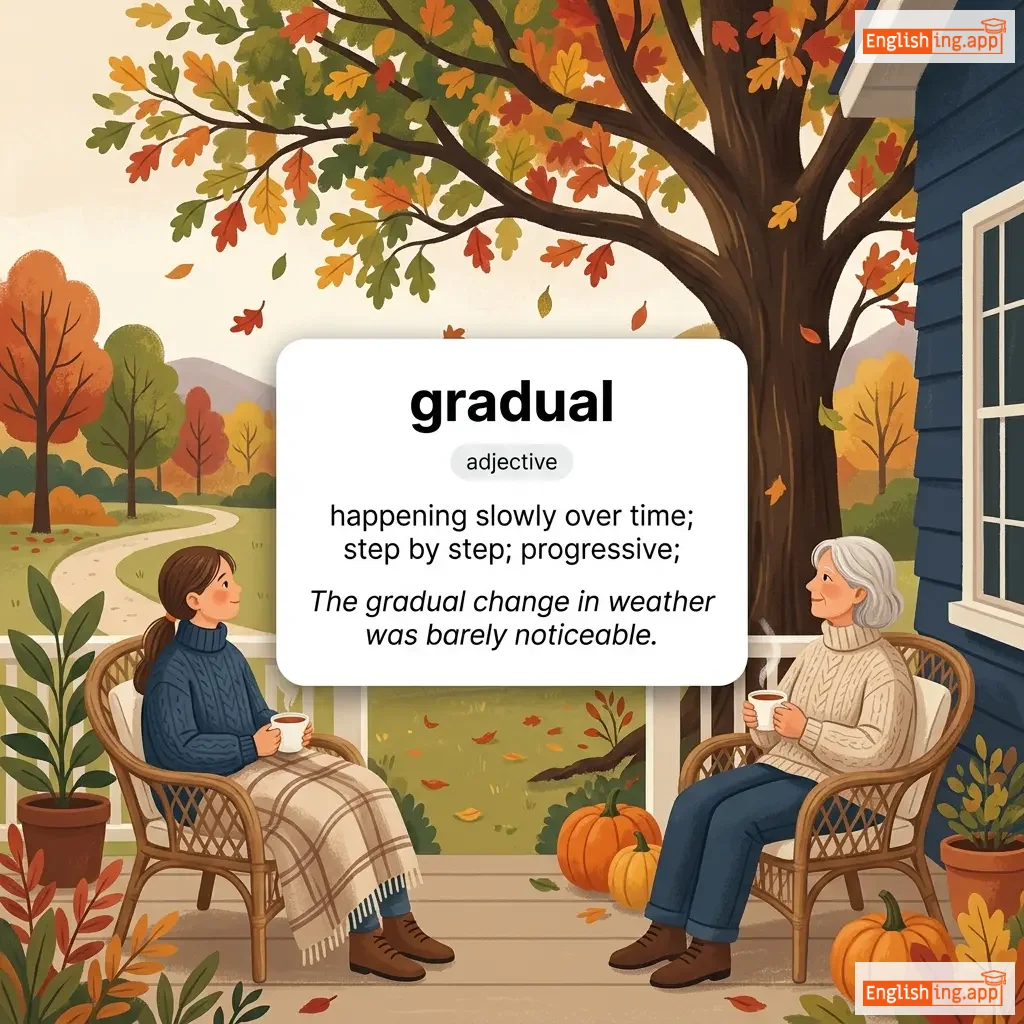
gradual definition card — visual illustration of the meaning
adjective
/ˈɡrædʒ.u.əl/
段階的な; 徐々の; 進行中の; (dankai-teki na; jojo no; shinkōchū no;)

happening slowly over time; step by step; progressive;

"The gradual change in weather was barely noticeable."

"天気の徐々の変化はほとんど気づかれなかった。" (Tenki no jojo no henka wa hotondo kizukarenakatta.)