語彙集

英単語辞書 | 単語の意味、定義、例文

adjective
/ˈɡæst.li/
恐ろしい (osoroshii)

Causing great horror or fear; very unpleasant.

"The crime scene was a ghastly sight."

"犯罪現場は恐ろしい光景だった。" (Hanzai genba wa osoroshī kōkei datta.)
noun
/ɡiː/
ギー (gii)

clarified butter used in South Asian cooking

"She used ghee instead of butter for cooking the rice."

"彼女は米を炊くとき、バターの代わりにギーを使った。" (Kanojo wa kome o taku toki bataa no kawari ni gii o tsukatta)
noun
/ɡoʊst/
おばけ (obake)

the spirit of a dead person that is believed to appear to the living

"She felt as if a ghost was watching her in the dark hallway."

"彼女は暗い廊下でおばけが彼女を見ているように感じた。" (Kanojo wa kurai rōka de obake ga kanojo o mite iru yō ni kanjita.)
noun
/ˈdʒaɪənt/
巨人 (kyojin)

an extremely large and powerful being or a very large person or thing

"The company grew into a giant in the tech industry."

"その会社はテクノロジー業界で巨人になった。" (Sono kaisha wa tekunorojī gyōkai de kyojin ni natta.)
noun
/ˈdʒaɪənt sneɪk hɛd/
オオカムルチー (ookamuruchii)

a large predatory freshwater fish with an elongated body and snake-like head

"The giant snake head is a fierce predator that can survive out of water for hours."

"オオカムルチーは、水の外でも数時間生きられる獰猛な捕食者です。" (Ookamuruchii wa mizu no soto demo suujikan ikirareru doumou na hoshokusha desu.)
verb
/ˈdʒɪb.ər/
意味不明に話す (imi fumei ni hanasu)

To speak rapidly and unintelligibly, typically through fear or shock.

"The frightened man began to gibber when he saw the ghost."

"怖がった男は幽霊を見たとき、意味不明に話し始めた。" (Kowagatta otoko wa yuurei wo mita toki, imi fumei ni hanashi hajimeta.)
noun
/ˈdʒɪb.ər.ɪʃ/
無意味な言葉 (mu imi na kotoba)

Unintelligible or meaningless speech or writing.

"He was so nervous that his explanation sounded like gibberish."

"彼はとても緊張していて、説明はまるでジブリッシュのように聞こえた。" (Kare wa totemo kinchou shite ite, setsumei wa marude jiburisshu no you ni kikoeta.)
noun
/ˈdʒɪbɪt/
絞首台 (kōshudai)

A gallows used for hanging criminals; historically also a post where bodies of executed criminals were displayed.

"The thief was sentenced to die on the gibbet."

"泥棒は絞首台で死刑を宣告された。" (Dorobō wa kōshudai de shikei o senkoku sareta.)
noun
/ˈɡɪbən/
テナガザル (tenagazaru)

a small to medium-sized tailless ape with long arms, native to the forests of Southeast Asia

"The gibbon swung gracefully through the trees using its long arms."

"ギボンは長い腕を使って木々の間を優雅に移動した。" (gibon wa nagai ude o tsukatte kigi no aida o yuga ni ido shita)
verb
/dʒaɪb/
嘲笑する (choushou suru)

To make insulting or mocking remarks; to taunt.

"The fans gibed at the losing team."

"ファンは負けたチームを嘲笑しました。" (Fan wa maketa chiimu o choushou shimashita.)
adjective
/ˈɡɪdi/
目眩, とても興奮している (mokunen, totemo kōfun shite iru)

Feeling dizzy or light-headed; also overly excited and frivolous.

"She felt giddy after spinning around so many times."

"彼女は何度も回った後、目が回った。" (Kanojo wa nando mo mawatta ato, me ga mawatta.)
noun
/ɡɪft/
ギフト (gifuto)

something given willingly to someone without payment; a present

"She gave him a beautiful gift for his birthday."

"彼女は誕生日に彼に美しいギフトを贈った。" (Kanojo wa tanjōbi ni kare ni utsukushī gifuto o okutta.)
adjective
/ˈɡɪftɪd/
才能のある (sainou no aru)

having exceptional talent or natural ability

"The gifted student solved the math problem in seconds."

"その才能のある学生は数秒で数学の問題を解決しました。" (Sono sainou no aru gakusei wa suubyou de suugaku no mondai wo kaiketsu shimashita.)
noun
/ɡɪɡ/
ミュージシャン、バンド、またはエンターテイナーによるライブパフォーマンス;または一時的な仕事 (gig)

A live performance by a musician, band, or entertainer; also a temporary job.

"The band has a gig at the local club tonight."

"今晩、バンドは地元のクラブでギグを行います。" (Konban, bando wa jimoto no kurabu de gigu o okonimasu.)
adjective
/dʒaɪˈɡæntɪk/
巨大な (kyodaina)

Extremely large or huge in size, power, or extent.

"The company made a gigantic investment in technology."

"その企業は技術に巨額の投資をしました。" (Sono kigyo wa gijutsu ni kyogaku no toshi o shimashita.)
verb
/ɡɪld/
金メッキ (kinmekki)

to cover something with a thin layer of gold or to make something appear more attractive than it really is

"The craftsman gilded the frame to give it a luxurious look."

"職人はフレームを金で覆い、豪華な外観を与えました。" (Shokunin wa furemu o kin de ōi, gōka na gaikan o ataemashita.)
noun
/ˈdʒɪn.dʒər/
生姜 (shoga)

a hot-tasting root used as a spice in cooking and as medicine

"Add fresh ginger to the curry for extra flavor."

"カレーに新鮮な生姜を加えて風味を増します。" (kare ni shinsen na shoga o kuwaete fumi o mashimasu)
adverb
/ˈdʒɪndʒərli/
慎重に (shinchou ni)

in a very careful or cautious manner

"She walked gingerly on the icy path."

"彼女は氷の道を慎重に歩いた。" (Kanojo wa koori no michi o shinchou ni aruita.)
noun
/dʒɪˈræf/
キリン (kirin)

a very tall African animal with a long neck and long legs

"The giraffe stretched its neck to reach the leaves on the tall tree."

"キリンは高い木の葉に届くために首を伸ばしました。" (Kirin wa takai ki no ha ni todoku tame ni kubi o nobashimashita.)
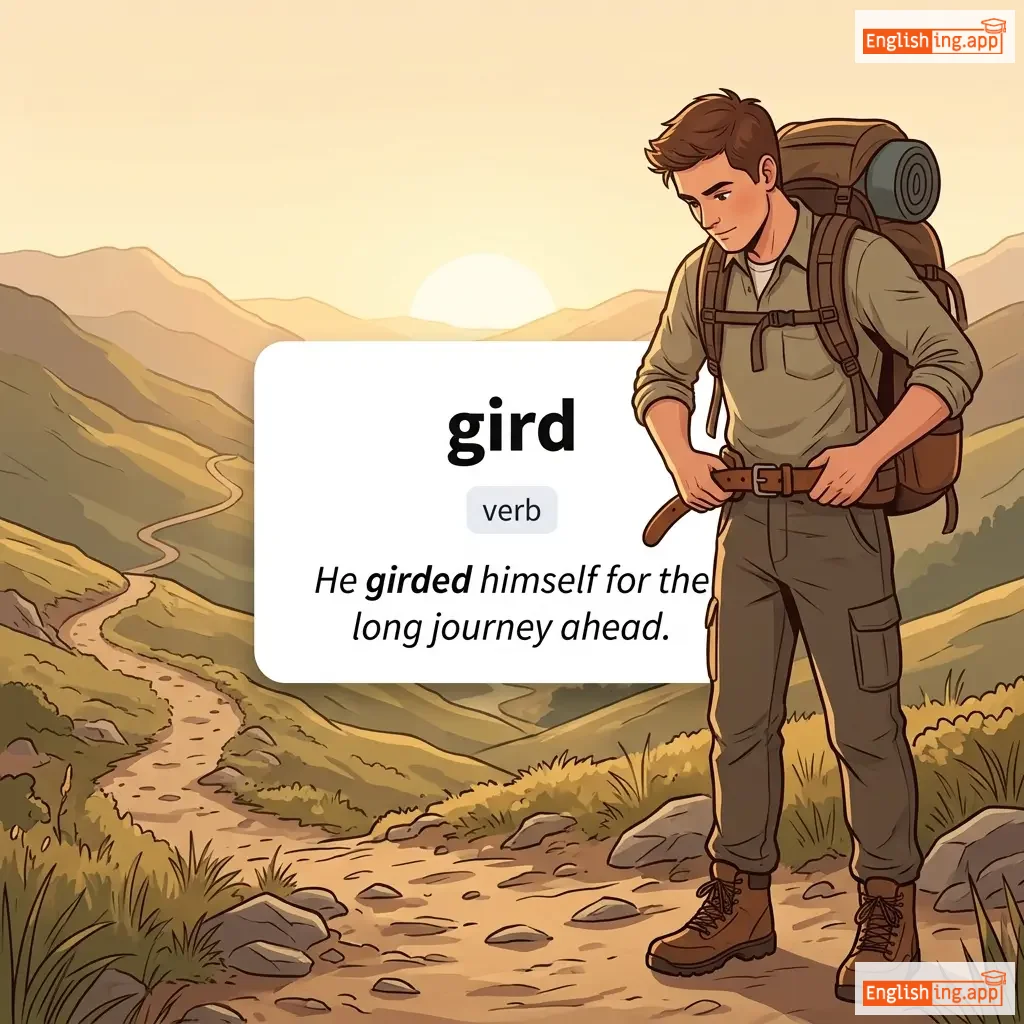
gird definition card — visual illustration of the meaning
🛡️

gird

verb
/ɡɜːrd/

to encircle or bind with a belt or band; to prepare oneself for something difficult

"He girded himself for the long journey ahead."

noun
/ˈɡɜːrdər/
ガーダー(鋼鉄の梁) (gaadā (kōtetsu no hari))

a large, strong beam used to support buildings or bridges

"The steel girders held the weight of the bridge."

"鋼鉄のガーダーが橋の重さを支えていた。" (Kōtetsu no gādā ga hashi no omosa o sasaete ita.)
noun
/ɡɜːrl/
女の子 (onnanoko)

a female child or young woman

"The girl was playing with her friends in the park."

"その女の子は公園で友達と遊んでいました。" (Sono onnanoko wa kōen de tomodachi to asonde imashita.)
noun
/ˈɡɜːrlfrɛnd/
彼女 (kareshi)

A woman or girl with whom someone is romantically or emotionally involved.

"He introduced his girlfriend to his family."

"彼は彼女を家族に紹介した。" (Kare wa kanojo o kazoku ni shōkai shita.)
noun
/ɡɜːrθ/
胴回り (dōmawari)

the measurement around the middle of something, especially a person's waist or a tree trunk

"The tree's girth measured nearly five feet."

"木の胴回りはほぼ5フィートでした。" (Ki no dōmawari wa hobo 5 fīto deshita.)
noun
/dʒɪst/
要点 (yōten)

the main or essential part of a matter; the central idea

"The gist of his speech was about unity and cooperation."

"彼のスピーチの要点は団結と協力についてでした。" (Kare no supīchi no yōten wa danketsu to kyōryoku ni tsuite deshita.)
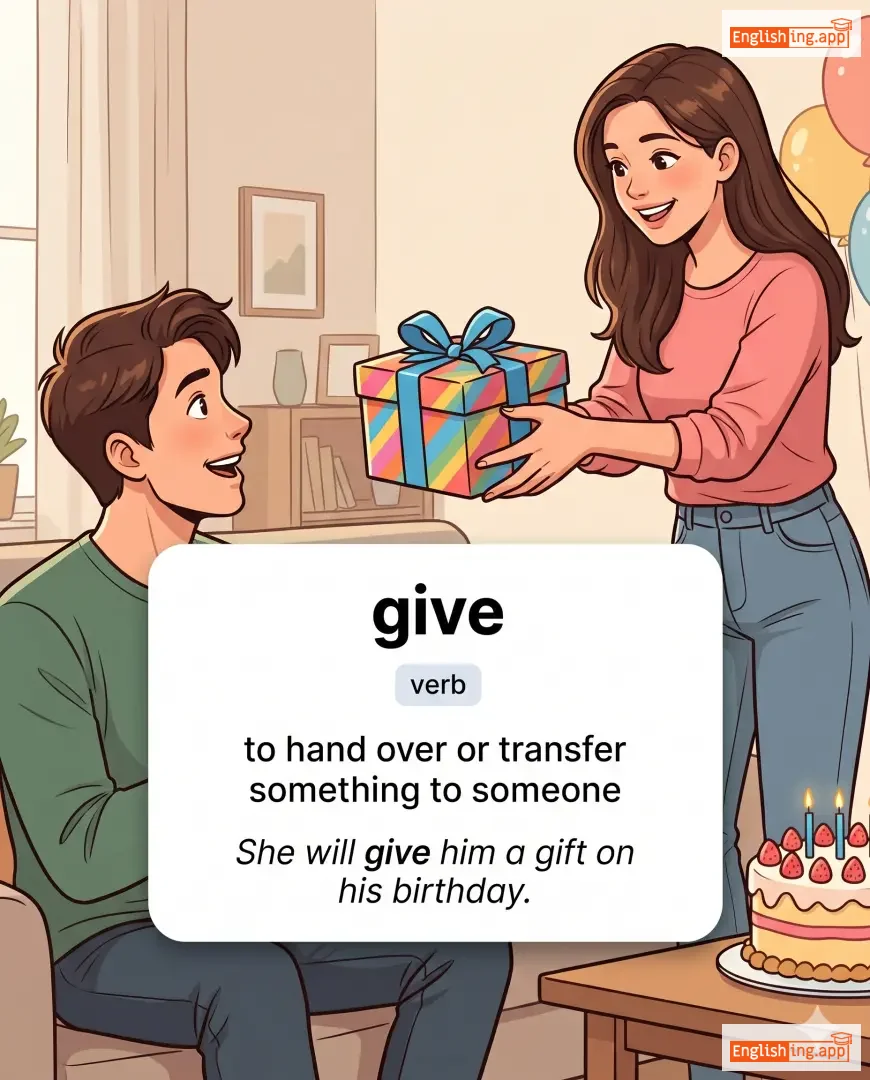
give definition card — visual illustration of the meaning
verb
/ɡɪv/
与える (ataeru)

to hand over or transfer something to someone

"She will give him a gift on his birthday."

"彼女は彼の誕生日に彼にプレゼントをあげるつもりです。" (Kanojo wa kare no tanjōbi ni kare ni purezento o ageru tsumori desu.)
adjective
/ˈɡɪvən/
既定 (kitei)

Specified or stated; already decided or certain.

"It is a given fact that hard work leads to success."

"努力は成功に導くというのは既定の事実です。" (Doryoku wa seikou ni michibiku to iu no wa kitei no jijitsu desu.)
noun
/ˈɡɪvər/
与える人 (ataeru hito)

a person who gives something

"She was always a generous giver to charity."

"彼女はいつも慈善団体への寛大なギヴァーでした。" (Kanojo wa itsumo jizen dantai e no kandaina giver deshita.)
adjective
/ˈɡleɪʃəl/
氷または氷河に関連する (kōri mata wa hyōga ni kanren suru)

relating to ice or glaciers; extremely cold or unfriendly

"The mountains were covered in glacial ice."

"山々は氷河の氷で覆われていました。" (Yamiyama wa hyōga no kōri de ōwarete imashita.)
noun
/ˈɡleɪʃər/
氷河 (hyōga)

a large mass of ice that moves slowly over land

"The glacier is slowly melting due to climate change."

"氷河は気候変動のためにゆっくりと溶けています。" (Hyōga wa kikō hendō no tame ni yukkuri to toketeimasu.)
Glad definition card — visual illustration of the meaning
adjective
/ɡlæd/
嬉しい (ureshii)

feeling pleased, happy, or delighted

"I am glad to see you again after so long."

"久しぶりにあなたに会えて嬉しいです。" (Hisashiburi ni anata ni aete ureshii desu.)
verb
/ˈɡlædən/
喜ばせる (yorokobaseru)

to make someone happy or bring joy

"The news of her recovery gladdened everyone."

"彼女の回復のニュースは皆を喜ばせました。" (Kanojo no kaifuku no nyūsu wa mina o yorokobasemashita.)
noun
/ɡleɪd/
林間の空き地 (rinkan no akichi)

An open space in a forest or woods.

"They rested in a sunny glade after their long hike."

"彼らは長いハイキングの後、日光を浴びた空き地で休んだ。" (Karera wa nagai haikingu no ato, nikkō o abita akichi de yasunda.)
noun
/ˈɡlædiˌeɪtər/
グラディエーター (guradiētā)

A man trained to fight in public contests in ancient Rome.

"The gladiator fought bravely in the arena."

"グラディエーターはアリーナで勇敢に戦いました。" (guradiētā wa arīna de yūkan ni tatakaimashita.)
noun
/ˌɡlæd.iˈoʊ.ləs/
グラジオラス (gurajiorasu)

A tall flowering plant with sword-shaped leaves and colorful spike-like flower clusters, popular in gardens and floral arrangements

"The gladiolus stood tall and elegant in the flower bed."

"花壇でグラジオラスは高く堂々と立っていた。" (kadan de gurajiorasu wa takaku doudouto tatteita.)
adverb
/ˈɡlæd.li/
喜んで、楽しんで (yorokonde, tanoshinde)

willingly and with pleasure

"I would gladly help you with your homework."

"私は喜んで宿題を手伝います。" (Watashi wa yorokonde shukudai o tetsudaimasu.)
noun
/ˈɡlæmər/
魅力 (miryoku)

An attractive or exciting quality that makes something or someone appealing.

"The glamor of city life attracts many young people."

"都市生活の魅力は多くの若者を引きつけます。" (Toshi seikatsu no miryoku wa ōku no wakamono o hikitsukemasu.)
adjective
/ˈɡlæm.ər.əs/
魅力的; 華やかな; ファッショナブル; (miryokuteki; hanayakana; fasshonaburu)

having glamour; attractive in an exciting way; fashionable;

"The actress looked glamorous in her designer gown at the awards ceremony."

"女優は授賞式でデザイナーのドレスを着て華やかに見えました。" (Joyū wa jushō shiki de dezainā no doresu o kite hanayaka ni miemashita.)
noun
/ˈɡlæm.ər/
魅力; 魅力的な魅力; (miryoku; miryokuteki na miryoku;)

an attractive or exciting quality that makes certain people or things seem appealing; alluring charm

"The glamour of Hollywood attracted young actors from around the world."
"ハリウッドのグラマーは世界中から若い俳優を引き寄せました。" (Haryuddo no guramā wa sekaijū kara wakai haiyū o hiki yose mashita.)
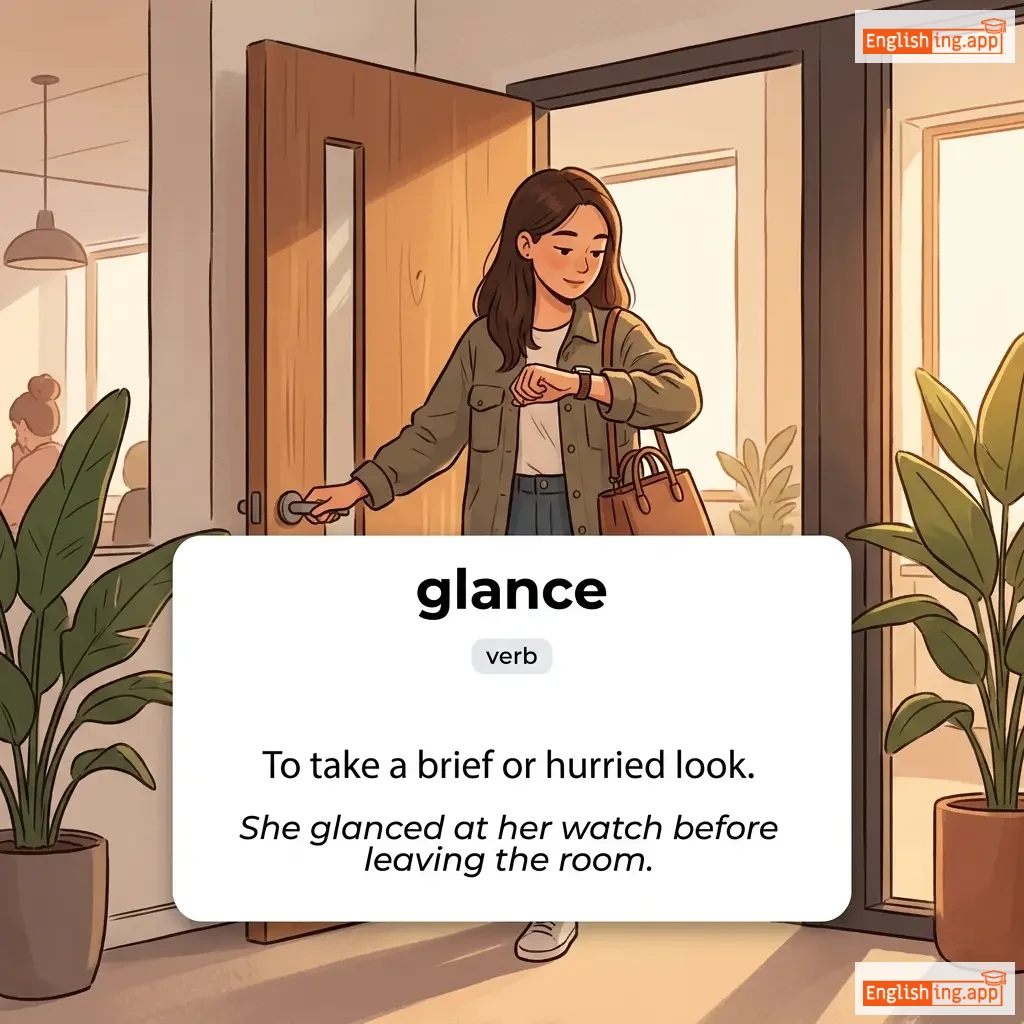
glance definition card — visual illustration of the meaning
verb
/ɡlæns/
一瞥 (ichime)

To take a brief or hurried look.

"She glanced at her watch before leaving the room."

"彼女は部屋を出る前に時計を一目見た。" (Kanojo wa heya o deru mae ni tokei o ichime mita.)
verb
/ɡlɛr/
怒った視線 / 強い光 (okotta shisen / tsuyoi hikari)

To stare angrily or to shine with a harsh bright light.

"She glared at him for being late."

"彼女は遅刻したことで彼をにらみつけた。" (Kanojo wa chikoku shita koto de kare o nirami tsuketa.)
adjective
/ˈɡlɛrɪŋ/
輝かしい / 明白な (kagayakashii / meihaku na)

Extremely obvious or shining intensely.

"There was a glaring mistake in the report."

"レポートには明らかな間違いがありました。" (Repōto ni wa meihaku na machigai ga arimashita.)
noun
/ɡlæs/
ガラス (garasu)

a hard, transparent material used for windows, bottles, and other objects

"She poured water into a glass and handed it to me."

"彼女は水をグラスに注ぎ、それを私に渡しました。" (Kanojo wa mizu o gurasu ni sosogi, sore o watashi ni watashimashita.)
noun
/ˈɡlɑːs.weər/
ガラス製品 (garasu seihin)

objects made of glass, especially drinking glasses and decorative objects

"The wedding registry included fine glassware."

"ウェディングレジストリには、上質なガラス製品が含まれていました。" (wedding registry ni wa, jōshitsu na garasu seihin ga fukumarete imashita.)
noun
/ˈɡlæsi fɪʃ/
ガラスの魚 (garasu no sakana)

a transparent freshwater fish with a glassy appearance, popular in aquariums

"The glassy fish is known for its transparent body and peaceful nature."

"ガラスの魚はその透明な体と穏やかな性格で知られています。" (garasu no sakana wa sono toumei na karada to odayaka na seikaku de shirareteimasu.)
verb
/ɡleɪz/
グレーズ (gureizu)

to cover with a smooth, shiny surface; to coat with a glossy finish

"The chef glazed the cake with chocolate."

"シェフはケーキにチョコレートをグレーズしました。" (Shefu wa kēki ni chokorēto o gureizu shimashita.)
noun
/ˈɡleɪziər/
ガラス職人 (garasu shokunin)

a person whose job is to fit glass into windows and doors

"The glazier repaired the broken window in our house."

"ガラス職人は家の壊れた窓を修理しました。" (Garasu shokunin wa ie no kowareta mado o shūri shimashita.)
noun, verb
/ɡliːm/
きらめき (kirameki)

a small or brief shining light; to shine softly

"A gleam of hope appeared in her eyes."

"彼女の目に希望の光が現れた。" (Kanojo no me ni kibou no hikari ga arawareta.)
verb
/ɡliːn/
集める (atsumeru)

to collect or gather slowly and bit by bit, especially information or crops left after harvest

"The journalist gleaned facts from several sources."

"ジャーナリストは複数の情報源から事実を収集した。" (Jānarisuto wa fukusū no jōhōgen kara jijitsu o shūshū shita.)
glib definition card — visual illustration of the meaning
adjective
/ɡlɪb/
表面的だが不誠実な (hyoumenteki da ga fuseijitsuna)

speaking easily but without sincerity or depth

"The politician gave a glib answer to a serious question."

"政治家は深刻な質問に対して表面的な答えをしました。" (Seijika wa shinkokuna shitsumon ni taishite hyoumenteki na kotae o shimashita.)