語彙集

英単語辞書 | 単語の意味、定義、例文

verb
/ɪnˈsnɛər/
罠にかける (wana ni kakeru)

to catch or trap, often by trickery or deceit

"The hunter ensnared the rabbit with a net."

"ハンターはネットでウサギを捕まえました。" (Hantā wa netto de usagi o tsukamaemashita.)
verb
/ɪnˈsjuː/
結果として起こる (kekka to shite okoru)

to happen as a result or consequence

"After the argument, silence ensued."

"議論の後、沈黙が続いた。" (Giron no ato, chinmoku ga tsuduita.)
verb
/ɪnˈʃʊər/
確実にする (kakujitsu ni suru)

To make certain that something will happen or be the case.

"Please ensure that the door is locked before you leave."
"出発前にドアが閉まっていることを確認してください。" (Shuppatsu mae ni doa ga shimatte iru koto o kakunin shite kudasai.)
verb
/ɪnˈteɪl/

to involve something as a necessary or inevitable part or consequence

"The job will entail a lot of travel across the country."

🕸️

entangle

verb
/ɪnˈtæŋɡəl/

to become twisted together or caught in something; to involve in difficulties

"The fish got entangled in the net."

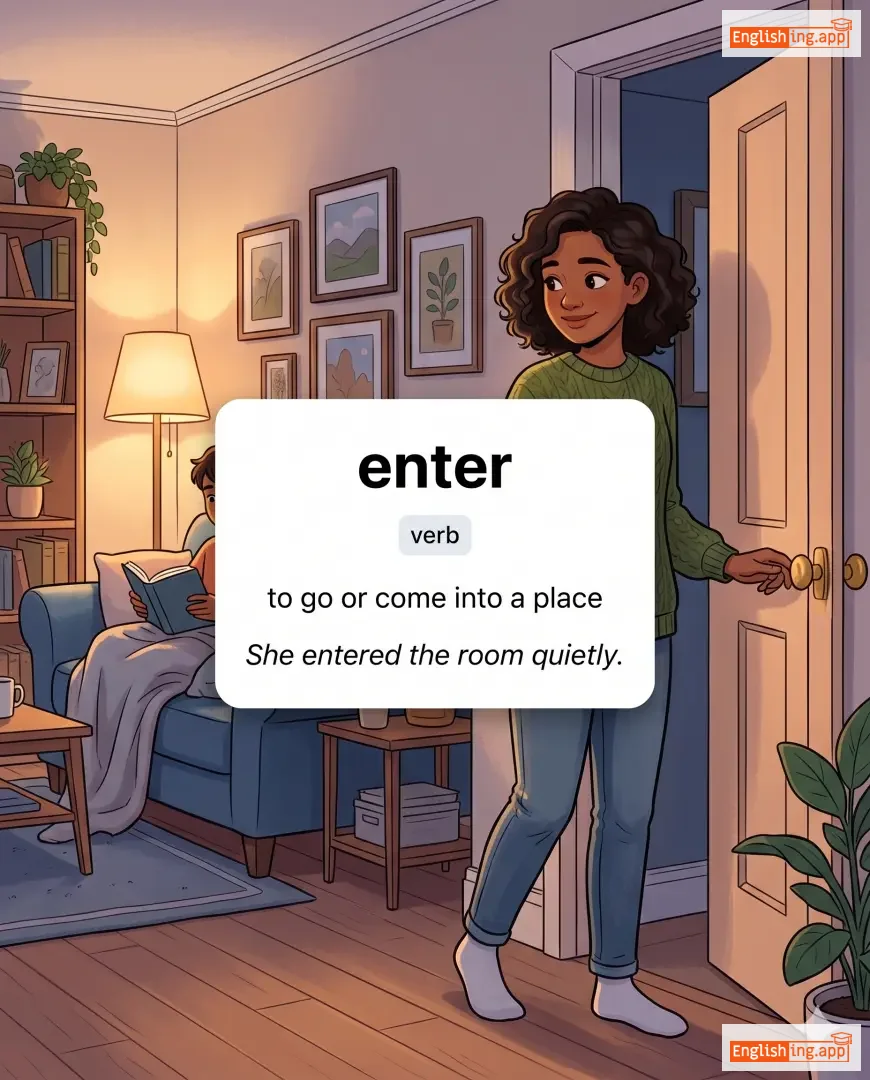
enter definition card — visual illustration of the meaning
verb
/ˈɛntər/
入る (hairu)

to go or come into a place

"She entered the room quietly."

"彼女は静かに部屋に入った。" (Kanojo wa shizuka ni heya ni haitta.)
noun
/ˈɛntərˌpraɪz/
企業 / 事業 (kigyō / jigyō)

a business or company; a project or undertaking that requires effort and initiative

"The new enterprise aims to create sustainable energy solutions."

"新しい企業は、持続可能なエネルギーソリューションを作成することを目指しています。" (Atarashī kigyō wa, jizoku kanō na enerugī sorūshon o sakusei suru koto o mezashiteimasu.)
adjective
/ˈɛntərˌpraɪzɪŋ/
企業家精神のある (kigyōka seishin no aru)

showing initiative and resourcefulness; willing to take risks to achieve success

"She is an enterprising young entrepreneur."

"彼女は企業家精神のある若い起業家です。" (Kanojo wa kigyōka seishin no aru wakai kigyōka desu.)
verb
/ˌɛntərˈteɪn/

to provide amusement, enjoyment, or hospitality to others

"The comedian entertained the audience with his jokes."

adjective
/ˌɛntərˈteɪnɪŋ/
面白い (omoshiroi)

providing amusement or enjoyment

"The comedian gave an entertaining performance."

"コメディアンは面白いパフォーマンスを披露しました。" (Komedian wa omoshiroi pafōmansu wo hirō shimashita.)
noun
/ˌɛntərˈteɪnmənt/
エンターテインメント (entāteinmento)

something that amuses, pleases, or diverts

"The concert was a great source of entertainment."

"コンサートは素晴らしいエンターテインメントの源でした。" (Konsāto wa subarashī entāteinmento no minamoto deshita.)
verb
/ɪnˈθrɔːl/
魅了する (miryō suru)

To captivate or hold someone’s full attention.

"The magician’s performance enthralled the audience."

"マジシャンのパフォーマンスは観客を魅了した。" (Majishan no pafōmansu wa kankyaku o miryō shita.)
verb
/ɪnˈθrɔːl/
魅了する (miryō suru)

to captivate or hold someone’s attention completely

"The magician’s tricks enthralled the children."
"マジシャンのトリックは子供たちを魅了しました。" (Majishan no torikku wa kodomotachi o miryō shimashita.)
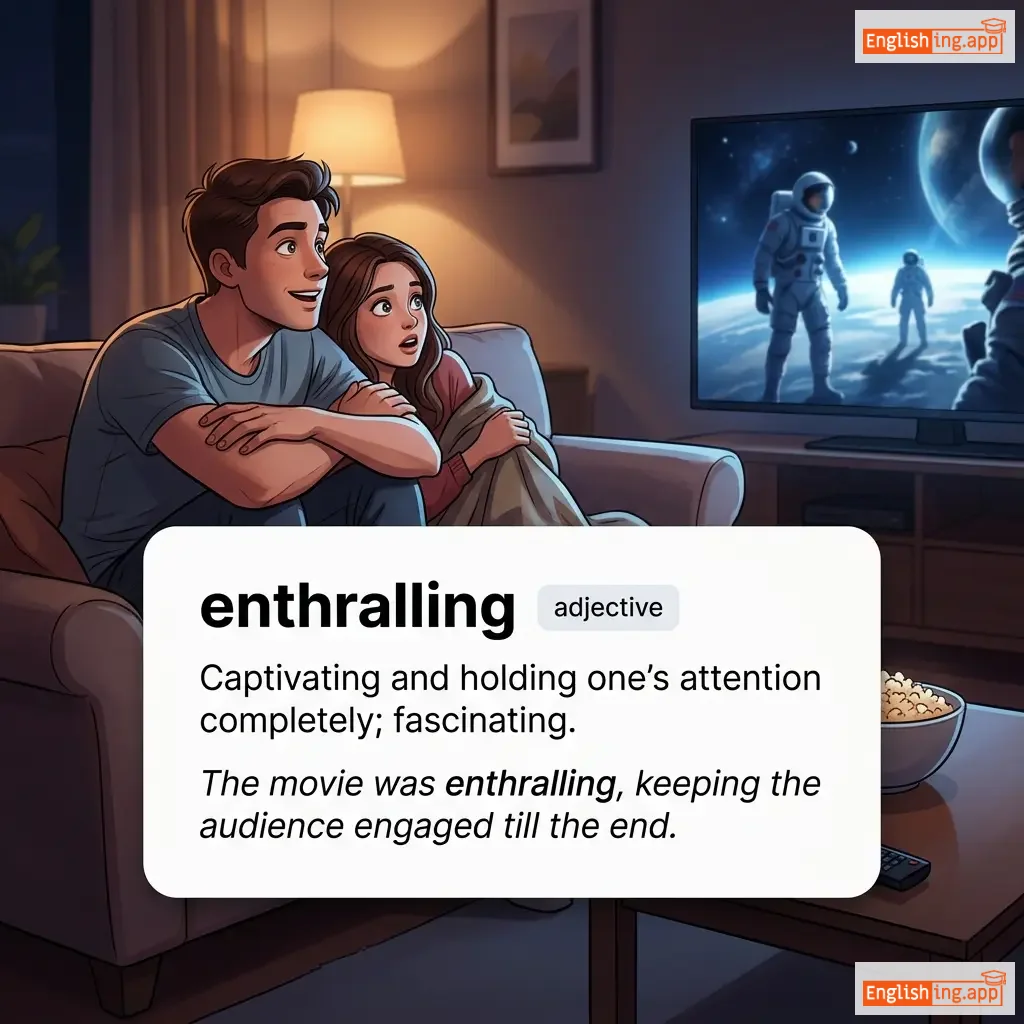
enthralling definition card — visual illustration of the meaning
adjective
/ɪnˈθrɔː.lɪŋ/
魅力的 (miryokuteki)

Captivating and holding one's attention completely; fascinating.

"The movie was enthralling, keeping the audience engaged till the end."

"その映画は魅力的で、観客は最後まで引き込まれていました。" (sono eiga wa miryokuteki de, kankyaku wa saigo made hikikomarete imashita.)
verb
/ɪnˈθroʊn/
戴冠する (daikan suru)

to install someone on a throne or to give someone high status

"The king was enthroned in a grand ceremony."

"王は大きな儀式で即位しました。" (Ō wa ōkina gishiki de sokui shimashita.)
verb
/ɪnˈθjuːz/
興奮させる (kōfun saseru)

to express excitement or admiration

"She enthused about her trip to Italy."

"彼女はイタリア旅行について興奮して話していました。" (Kanojo wa Itaria ryokō ni tsuite kōfun shite hanashite imashita.)
noun
/ɪnˈθjuːziæzəm/
熱意 (netsui)

intense and eager enjoyment, interest, or approval

"His enthusiasm for teaching inspired his students."

"彼の教育に対する熱意は、学生たちに影響を与えました。" (Kare no kyoiku ni taisuru netsui wa, gakuseitachi ni eikyo o ataemashita.)
noun
/ɪnˈθuziæst/
熱狂的なファン (nekkyouteki na fan)

a person who is very interested in a particular activity or subject

"He is a football enthusiast and watches every match."
"彼はサッカーenthusiastで、毎試合見ています。" (Kare wa sakka enthusiast de, mai shiai miteimasu.)
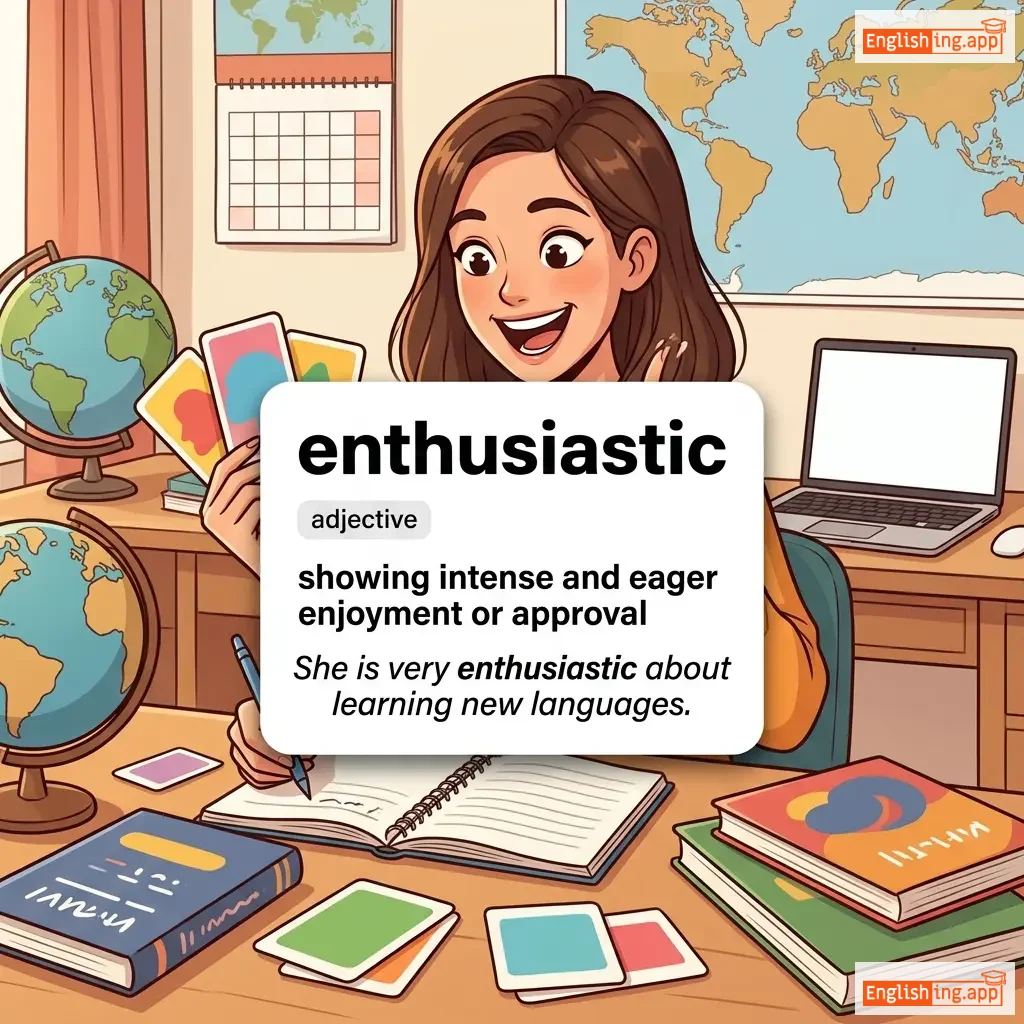
enthusiastic definition card — visual illustration of the meaning
adjective
/ɪnˌθjuːziˈæstɪk/
熱心な (nesshin na)

showing intense and eager enjoyment or approval

"She is very enthusiastic about learning new languages."

"彼女は新しい言語を学ぶことに非常に熱心です。" (Kanojo wa atarashī gengo o manabu koto ni hijō ni nesshin desu.)
verb
/ɪnˈtaɪs/
引きつける (hikitsukeru)

to attract or tempt someone by offering something appealing

"The advertisement was designed to entice customers into the store."

"広告は顧客を店に引き込むためにデザインされました。" (Kōkoku wa kokyaku o mise ni hikikomu tame ni dezain saremashita.)
adjective
/ɪnˈtaɪər/
完全な (kanzen na)

whole; with no part left out

"He spent the entire day reading books."

"彼は一日中本を読んで過ごしました。" (Kare wa ichinichijū hon o yonde sugoshimashita.)
adverb
/ɪnˈtaɪərli/
完全に (kanzen ni)

Completely or wholly.

"She is entirely responsible for the project."

"彼女はそのプロジェクトに完全に責任があります。" (Kanojo wa sono purojekuto ni kanzen ni sekinin ga arimasu.)
noun
/ɪnˈtaɪərəti/
完全性 (kanzensei)

the whole of something; the complete form

"He watched the movie in its entirety."

"彼は映画をその完全性で観ました。" (Kare wa eiga o sono kanzensei de mimashita.)
verb
/ɪnˈtaɪtəl/
権利を与える (kenri o ateru)

to give someone the right to have or do something

"Employees are entitled to receive paid holidays."

"従業員は有給休暇を受ける権利があります。" (jūgyōin wa yūkyū kyūka o ukeru kenri ga arimasu.)
adjective
/ɪnˈtaɪtəld/
権利を持つ (kenri wo motsu)

having the right to do or have something; feeling deserving of special treatment

"Employees are entitled to paid leave."

"従業員は有給休暇を取得する権利があります。" (Jūgyōin wa yūkyū kyūka wo shutoku suru kenri ga arimasu.)
noun
/ɪnˈtaɪtəlmənt/
権利 (kenri)

the belief that one is inherently deserving of privileges or special treatment; a right to benefits

"The program provides entitlement to health care."

"このプログラムは医療サービスの権利を提供します。" (Kono puroguramu wa iryō sābisu no kenri o teikyō shimasu.)
noun
/ˈɛntəti/
実体 (jittai)

something that exists as a single and complete unit; an organization or being

"The new company will operate as a separate legal entity."
"新しい会社は別個の法的実体として運営されます。" (Atarashī kaisha wa bekkō no hōteki jittai toshite un'ei saremasu.)
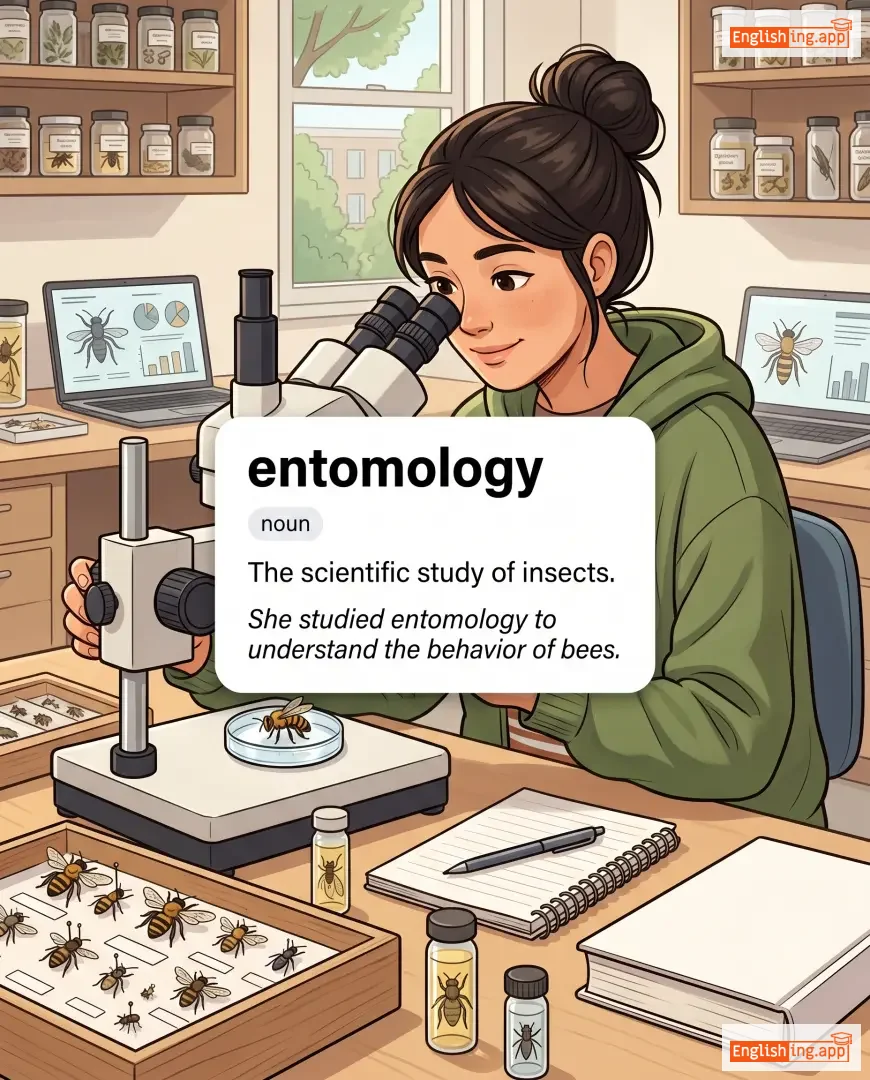
entomology definition card — visual illustration of the meaning
noun
/ˌɛntəˈmɒlədʒi/
昆虫学 (konchugaku)

The scientific study of insects.

"She studied entomology to understand the behavior of bees."

"彼女は蜂の行動を理解するために昆虫学を学びました。" (Kanojo wa hachi no koudou wo rikai suru tame ni konchugaku wo manabimashita.)
noun
/ˈɒntʊrɑːʒ/
随行者 (zuikōsha)

A group of people attending or surrounding an important person.

"The celebrity arrived with her entourage of assistants and bodyguards."

"その有名人は、アシスタントやボディガードを伴って到着しました。" (Sono yūmeijin wa, ashisutanto ya bodigādo o tomonatte tōchaku shimashita.)
noun
/ˈɛntrəns/
入り口 (iriguchi)

A place of entering; an entry point.

"They waited at the main entrance of the building."

"彼らは建物の正面入り口で待っていました。" (Karera wa tatemono no shōmen iriguchi de matte imashita.)
verb
/ɪnˈtræp/

To catch or trick someone into a difficult situation.

"The police tried to entrap the criminal with false evidence."

verb
/ɪnˈtriːt/
懇願する (kongansuru)

To ask earnestly or beg someone to do something.

"She entreated him to stay a little longer."

"彼女は彼にもう少し長くいてくれるように懇願した。" (Kanojo wa kare ni mou sukoshi nagaku itekureru you ni konganshita.)
noun
/ɪnˈtriːti/
請願 (seigan)

An earnest or humble request or plea.

"She made an entreaty for peace during the heated argument."

"彼女は激しい議論の中で平和を求める請願をしました。" (Kanojo wa hageshī giron no naka de heiwa o motomeru seigan o shimashita.)
noun
/ˈɒntreɪ/ (UK), /ˈɑːntreɪ/ (US)
メインディッシュ (mein disshu)

The main course of a meal (US); the right to enter or access (formal).

"The restaurant’s signature steak was served as the main entree."

"レストランのサインステーキはメインディッシュとして提供されました。" (Resutoran no sain sutēki wa mein disshu toshite teikyō saremashita.)
verb
/ɪnˈtrɛntʃ/
堅固にする (kengonishimasu)

To establish something so firmly that it is difficult to change.

"The company entrenched its position in the market through innovation."

"その企業は革新を通じて市場での地位を固めました。" (Sono kigyō wa kakushin o tōjite shijō de no chii o katamemashita.)
adjective
/ɪnˈtrɛntʃt/
根付いている (nezuiteiru)

Firmly established and unlikely to change.

"Corruption is deeply entrenched in the system."

"腐敗はシステムに深く根付いています。" (Fuhai wa shisutemu ni fukaku nezuitemasu.)
noun
/ˌɒntrəprəˈnɜːr/ (UK), /ˌɑːntrəprəˈnɝː/ (US)
起業家 (kigyōka)

A person who starts and runs a business, taking on financial risks in the hope of profit.

"The young entrepreneur launched a successful tech startup."

"若い起業家は成功したテクノロジースタートアップを立ち上げました。" (Wakai kigyōka wa seikō shita tekunorojī sutātopu o tachiagemashita.)
entrepreneurial definition card — visual illustration of the meaning
adjective
/ˌɒn.trə.prəˈnɜː.ri.əl/
起業家的 (kigyōteki)

Having the characteristics of an entrepreneur; showing initiative and willingness to undertake new ventures.

"Her entrepreneurial mindset led to the launch of a successful startup."

"彼女の起業家精神は成功したスタートアップの立ち上げに繋がりました。" (Kanojo no kigyōka seishin wa seikō shita sutātoappu no tachiage ni tsunagarimashita.)
noun
/ˈɛntri/
エントランス (entoransu)

the act of going into a place, or permission to go in

"Entry to the museum is free on Fridays."

"金曜日は博物館のエントランスが無料です。" (Kin'yōbi wa hakubutsukan no entoransu ga muryō desu.)
verb
/ɪnˈtwaɪn/
絡ませる (karamaseru)

to twist or wind together; to become closely connected or involved

"The vines entwine around the old fence."

"つるが古いフェンスを巻きつけている。" (Tsuru ga furui fensu o makitsukete iru.)
verb
/ɪˈnjuːməˌreɪt/
列挙する (retsu kyo suru)

to mention things one by one; to list or count

"She enumerated the reasons for her decision."
"彼女は決定の理由を列挙した。" (Kanojo wa kettei no riyuu o retsu kyo shita.)
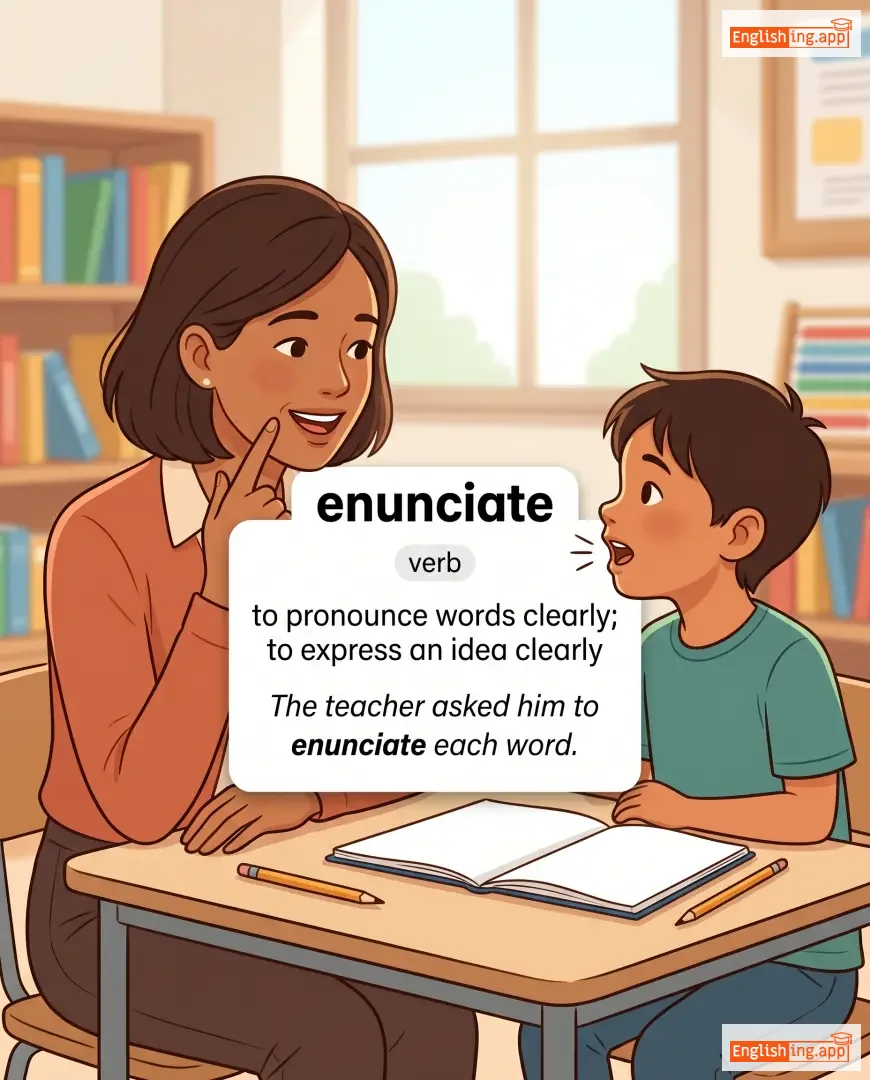
enunciate definition card — visual illustration of the meaning
verb
/ɪˈnʌnsieɪt/
明確に発音する (meikaku ni hatsuon suru)

to pronounce words clearly; to express an idea clearly

"The teacher asked him to enunciate each word."
"先生は彼に各単語を明確に発音するように頼んだ。" (Sensei wa kare ni kaku tango o meikaku ni hatsuon suru yō ni tanonda.)
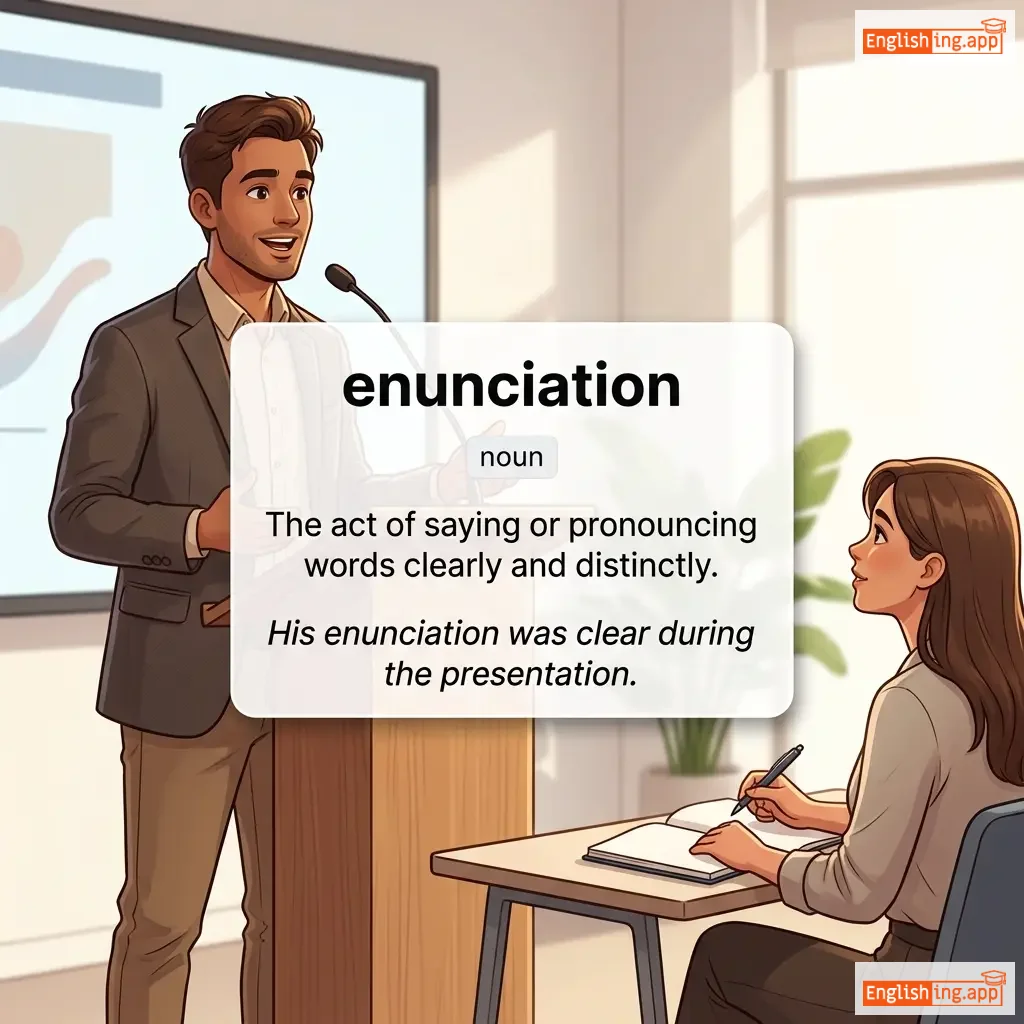
enunciation definition card — visual illustration of the meaning
noun
/ɪˌnʌn.siˈeɪ.ʃən/
発音, 明確な発音 (hatsuon, meikaku na hatsuon)

The act of saying or pronouncing words clearly and distinctly.

"His enunciation was clear during the presentation."

"彼の発音はプレゼンテーション中に明確でした。" (Kare no hatsuon wa purezentēshon-chū ni meikaku deshita.)
noun
/ˈɛnvəloʊp/
封筒 (fūtō)

a flat paper container used to enclose a letter or document

"She sealed the letter in an envelope and posted it."

"彼女は手紙を封筒に入れて、郵送しました。" (Kanojo wa tegami o fūtō ni irete, yūsō shimashita.)
adjective
/ˈen.vi.ə.bəl/
うらやましい (urayamashii)

causing envy; desirable

"Her success was enviable among her peers."

"彼女の成功は仲間の間でうらやましかった。" (Kanojo no seikou wa nakama no aida de urayamashikatta.)
adjective
/ˈen.vi.əs/
嫉妬深い; ねたむ (shittobukai; netamu)

feeling or showing envy; jealous

"She felt envious of her friend's new car."

"彼女は友達の新しい車に嫉妬していた。" (Kanojo wa tomodachi no atarashī kuruma ni shitto shite ita.)
verb
/ɪnˈvaɪərən/
囲む (kakomu)

to surround or enclose; to encircle

"Mountains environ the small valley."
"山々は小さな谷を囲んでいます。" (Yamayama wa chīsana tani o kakondeimasu.)
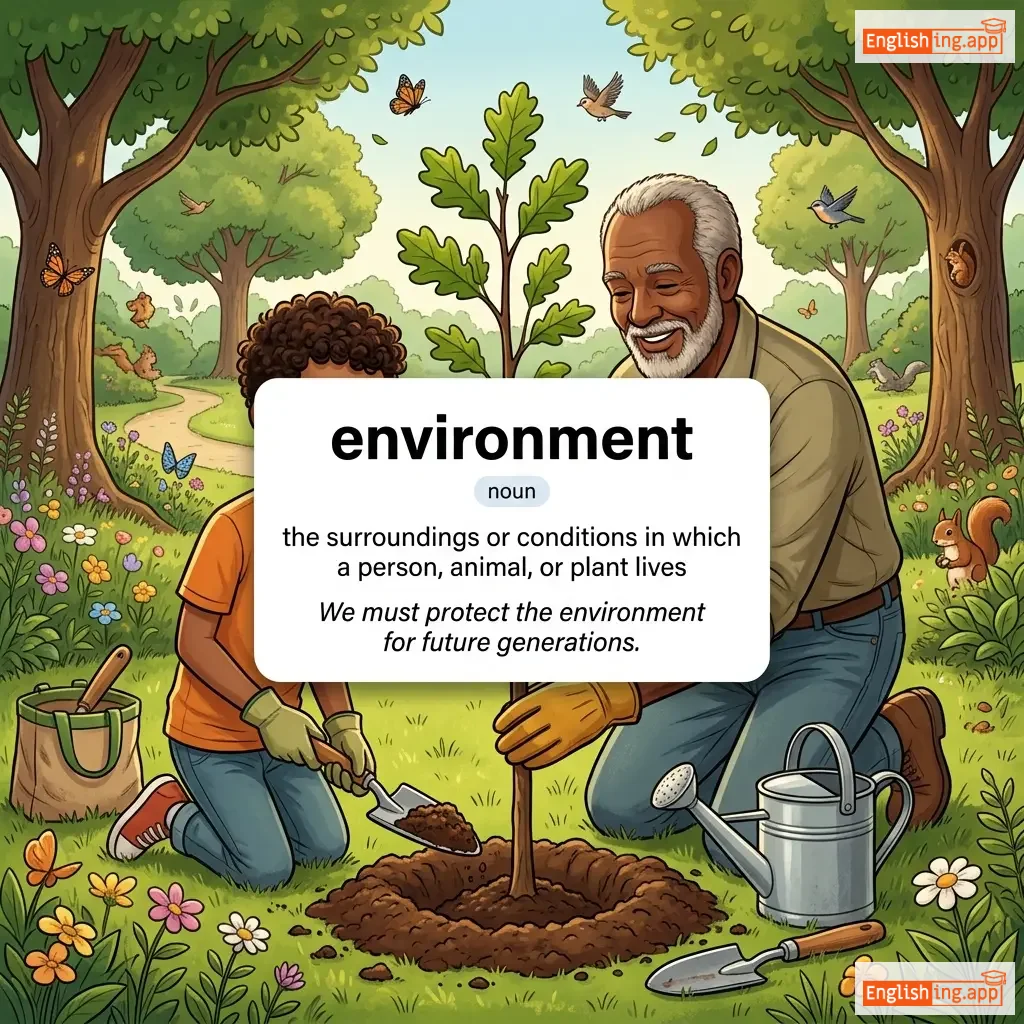
environment definition card — visual illustration of the meaning
noun
/ɪnˈvaɪrənmənt/
環境 (kankyou)

the surroundings or conditions in which a person, animal, or plant lives

"We must protect the environment for future generations."
"私たちは未来の世代のために環境を守らなければなりません。" (Watashitachi wa mirai no sedai no tame ni kankyou o mamoranakereba narimasen.)
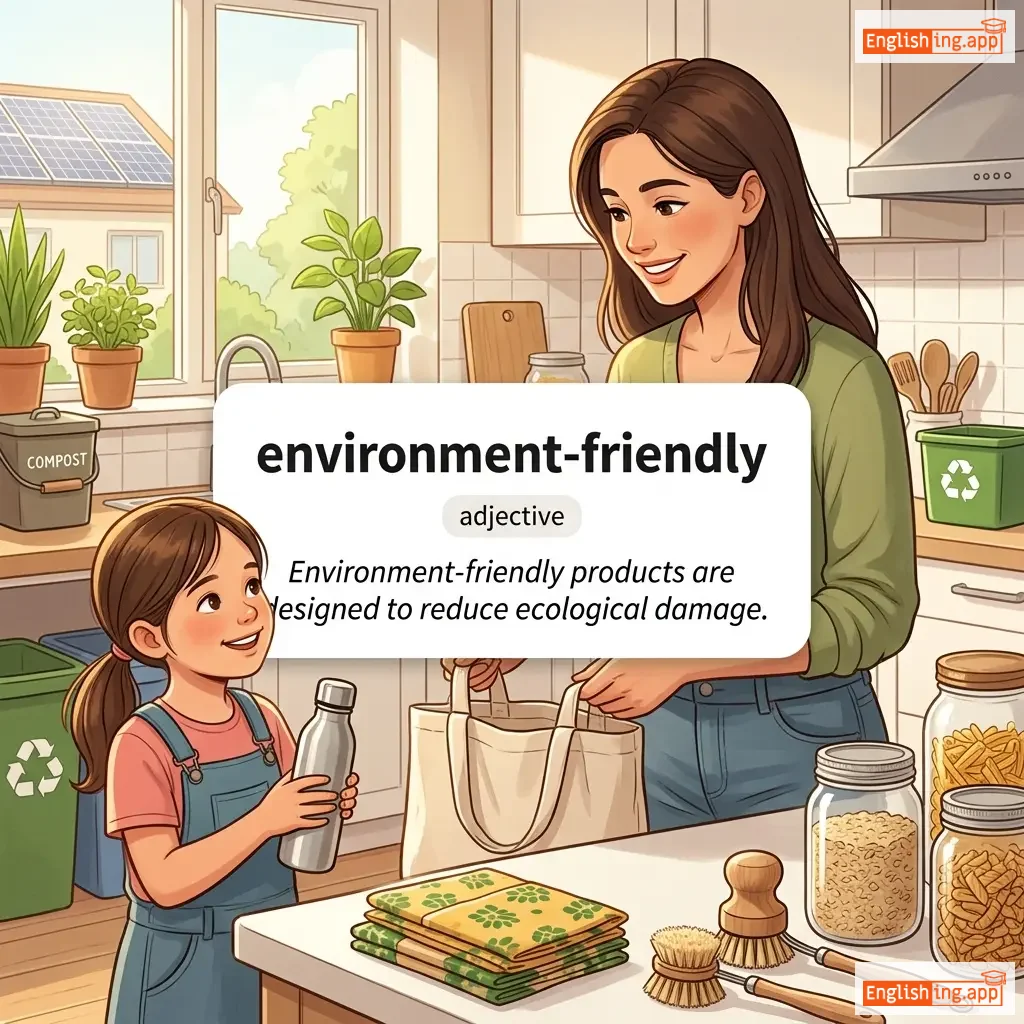
environment-friendly definition card — visual illustration of the meaning
adjective
/ɪnˈvaɪrənmənt ˈfrɛndli/
環境に優しい (kankyō ni yasashī)

Designed or produced in a way that causes minimal harm to the environment, often using sustainable materials and processes that reduce ecological impact.

"Environment-friendly products are designed to reduce ecological damage."

"環境に優しい製品は、環境へのダメージを減らすように設計されています。" (Kankyō ni yasashī seihin wa, kankyō e no damēji o herasu yō ni sekkei sareteimasu.)
adjective
/ɪnˌvaɪrənˈmɛntl/
環境的な (kankyōtekina)

relating to the natural world and the impact of human activity on its condition

"The company adopted new policies to reduce environmental damage."

"その会社は環境へのダメージを減らすために新しい方針を採用しました。" (Sono kaisha wa kankyō e no damēji o herasu tame ni atarashī hōshin o saiyō shimashita.)