語彙集

英単語辞書 | 単語の意味、定義、例文

verb
/ɪˈdʒɛkt/
追い出す (oidasu)

to force someone or something out, usually from a place or position

"The referee had to eject the player for unsportsmanlike behavior."
"レフェリーはアンスポーツマンライクな行為で選手を追い出さなければならなかった。" (Referee wa unsupōtsumanraiku na kōi de senshu o oidasanakereba naranakatta.)
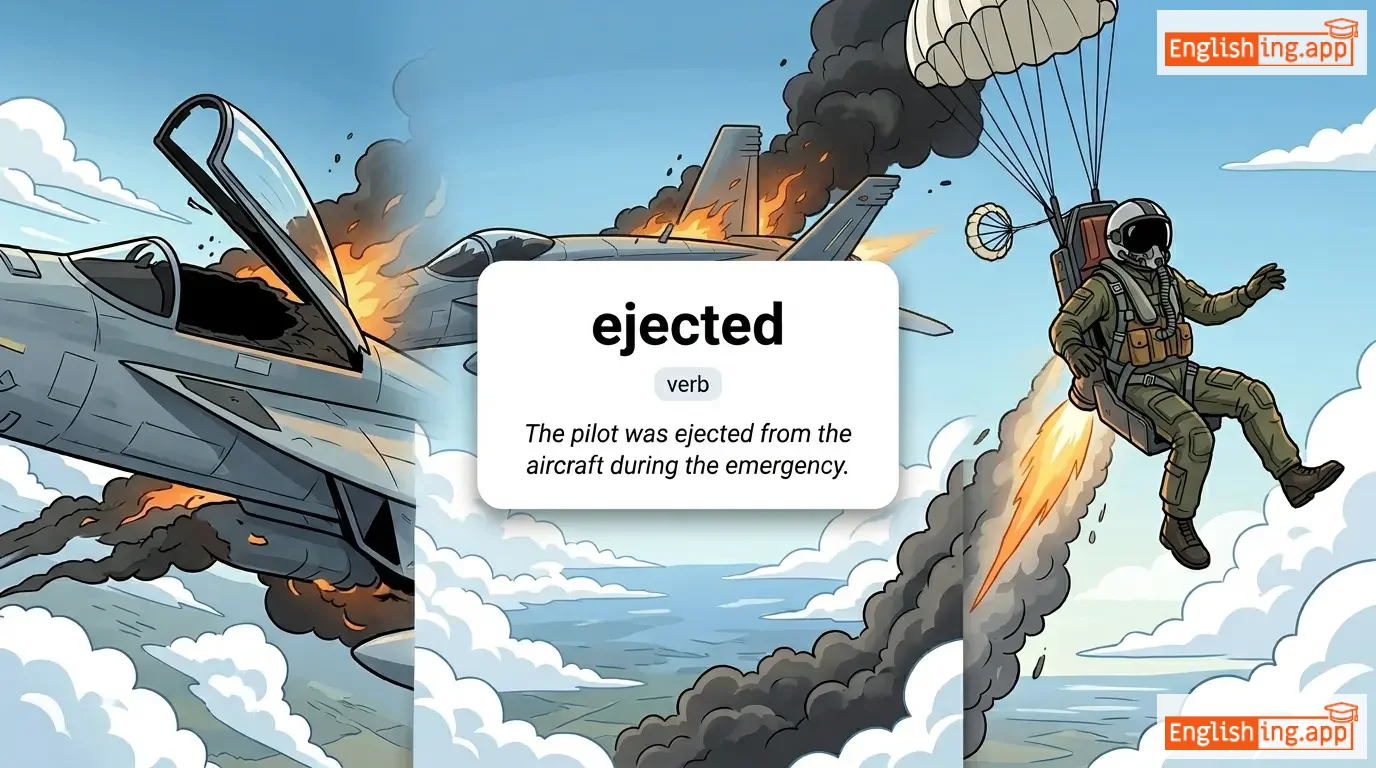
ejected definition card — visual illustration of the meaning
verb
/ɪˈdʒektɪd/
eject (eject)

to force someone or something to leave a place; to push or throw something out forcefully

"The pilot was ejected from the aircraft during the emergency."

"パイロットは緊急時に飛行機から eject されました。" (Pairotto wa kinkyuuji ni hikouki kara eject saremashita.)
verb
/iːk/
細々と使う (hosoboso to tsukau)

to make a small amount of something last longer by using it sparingly

"The family tried to eke out their savings during the tough months."

"家族は困難な月々に貯金をなんとかやりくりしようとしました。" (Kazoku wa konnan na tsukizuki ni chokin wo nantoka yarikuri shiyou to shimashita.)
verb, adjective
/ɪˈlæbəreɪt/ (verb), /ɪˈlæbərət/ (adjective)
詳しく説明する / 複雑で詳細なデザイン (kōshiku setsumei suru / fukuzatsu de shōsai na dezain)

verb: to explain something in detail; adjective: detailed and complicated in design

"She asked him to elaborate on his proposal."

"彼女は彼に提案について詳しく説明するように頼んだ。" (Kanojo wa kare ni teian ni tsuite kōshiku setsumei suru yō ni tanonda.)
noun
/ɪˌlæbəˈreɪʃən/
詳細な説明 / 拡張 (shōsaina setsumei / kakuchō)

the process of adding more detail or expanding on something

"The teacher appreciated the student's elaboration of the topic."

"先生は学生のトピックの詳細な説明を評価しました。" (Sensei wa gakusei no topikku no shōsai na setsumei o hyōka shimashita.)
verb
/ɪˈlæps/
経過する (keikasuru)

to pass or go by, usually referring to time

"Several hours elapsed before he finally returned home."

"数時間が経過し、彼はようやく家に帰った。" (Suujikan ga keika shi, kare wa youyaku ie ni kaetta.)
adjective
/ɪˈlæstɪk/
弾力性 (danryokusei)

Able to return to its original shape or size after being stretched or compressed.

"The waistband of the pants is made of elastic material."

"ズボンのウエストバンドは弾力性のある素材で作られています。" (Zubon no uesutobando wa danryokusei no aru sozai de tsukurareteimasu.)
elasticity definition card — visual illustration of the meaning
noun
/ɪˌlæˈstɪsɪti/

The ability of an object or material to resume its normal shape after being stretched or compressed.

"Rubber has a high degree of elasticity."

verb
/ɪˈleɪt/
喜ばせる (yorokobaseru)

To make someone very happy or proud.

"The success of the project elated the whole team."

"プロジェクトの成功がチーム全体を喜ばせました。" (Purojekuto no seikou ga chiimu zentai wo yorokobasemashita.)
adjective
/ɪˈleɪtɪd/
非常に幸せ (hijō ni shiawase)

Extremely happy and excited.

"She was elated when she heard the good news."

"良い知らせを聞いたとき、彼女は非常に幸せでした。" (Yoi shirase o kiita toki, kanojo wa hijō ni shiawase deshita.)
noun
/ɪˈleɪʃən/
興奮 (kōfun)

A feeling of great happiness and excitement.

"His elation was evident after winning the championship."

"彼の興奮はチャンピオンシップに勝った後、明らかだった。" (Kare no kōfun wa chanpionshipu ni katta ato, akiraka datta.)
noun/verb
/ˈɛl.boʊ/
(hiji)

The joint connecting the forearm and the upper arm; as a verb, to push aside using the elbow.

"He accidentally hit the table with his elbow."

"彼は偶然に肘でテーブルを叩きました。" (Kare wa guuzen ni hiji de teeburu wo tatakimashita.)
noun
/ˈɛldər/
長老 (chōrō)

a person who is older or has higher rank; an older person in a family or community

"We should always respect our elders."

"私たちは常に年長者を尊敬しなければなりません。" (Watashitachi wa jōni nenchōsha o sonkei shinakereba narimasen.)
adjective
/ˈɛldərli/
高齢者 (koureisha)

Being old or advanced in years.

"The elderly man walks slowly across the street."

"その高齢者はゆっくりと道を渡っている。" (Sono koureisha wa yukkuri to michi wo watatteiru.)
verb
/ɪˈlɛkt/
選ぶ (erabu)

To choose someone for a position or office by voting.

"The citizens elected a new president."

"市民は新しい大統領を選びました。" (Shimin wa atarashī daitōryō o erabimashita.)
noun
/ɪˈlɛkʃən/
選挙 (senkyo)

The process of choosing someone for public office by voting.

"The election will be held next month."

"選挙は来月行われます。" (Senkyo wa raigetsu okonawaremasu.)
adjective
/ɪˈlɛktərəl/
選挙の (senkyo no)

related to elections or voting

"The electoral process in the country has been reformed in recent years."

"その国の選挙プロセスは近年改革されました。" (Sono kuni no senkyo purosesu wa kin'nen kaikaku saremashita.)
adjective
/ɪˈlɛktrɪk/
電気的 (denki-teki)

Relating to or operated by electricity.

"The room was lit by an electric lamp."

"部屋は電気ランプで照らされていました。" (Heya wa denki ranpu de terasarete imashita.)
noun
/ɪˈlɛktrɪk drɪl/
電動ドリル (dendō doriru)

A power tool used for drilling holes in various materials

"He used an electric drill to make holes in the wall for hanging pictures."

"彼は壁に絵を掛けるために電動ドリルを使って穴を開けました。" (Kare wa kabe ni e o kakeru tame ni dendō doriru o tsukatte ana o akemashita.)
noun
/ɪˈlek.trɪk fæn/
電気ファン (denki fan)

a device with rotating blades that creates airflow to cool or ventilate a room

"The electric fan keeps the room cool during hot summer days."

"電気ファンは、暑い夏の日に部屋を涼しく保ちます。" (denki fan wa, atsui natsu no hi ni heya o suzushiku tamochimasu)
noun
/ɪˈlɛktrɪk ˈkɛtəl/
電気ケトル (denki ketoru)

An electrical appliance that heats water quickly using electricity

"The electric kettle automatically turns off when the water starts boiling."

"電気ケトルは水が沸騰し始めると自動でオフになります。" (Denki ketoru wa mizu ga futtō shi hajimeru to jidō de ofu ni narimasu.)
adjective
/ɪˈlɛktrɪkəl/
電気的な (denkitena)

related to electricity or the use of electrical power

"The electrical system in the house needs repair."

"家の電気システムは修理が必要です。" (Ie no denki shisutemu wa shūri ga hitsuyō desu.)
noun
/ɪˌlɛkˈtrɪsɪti/
電気 (denki)

A form of energy resulting from the existence of charged particles.

"The storm caused a power cut and we had no electricity."

"嵐で停電し、電気がありませんでした。" (Arashi de teiden shi, denki ga arimasen deshita.)
verb
/ɪˈlɛktrɪfaɪ/
電気を通す; 興奮させる (denki o toosu; koufun saseru)

to charge with electricity; to excite or thrill intensely

"The speaker's speech electrified the audience."

"スピーカーのスピーチは聴衆を興奮させた。" (Supeeka no supiichi wa choushu o koufun saseta)
noun
/ɪˌlɛkˈtrɑː.lə.sɪs/
電解 (denkai)

A chemical decomposition produced by passing an electric current through a liquid or solution.

"Electrolysis is used to separate hydrogen from water."
"電解は水から水素を分離するために使用されます。" (Denkai wa mizu kara suiso o bunri suru tame ni shiyou saremasu.)
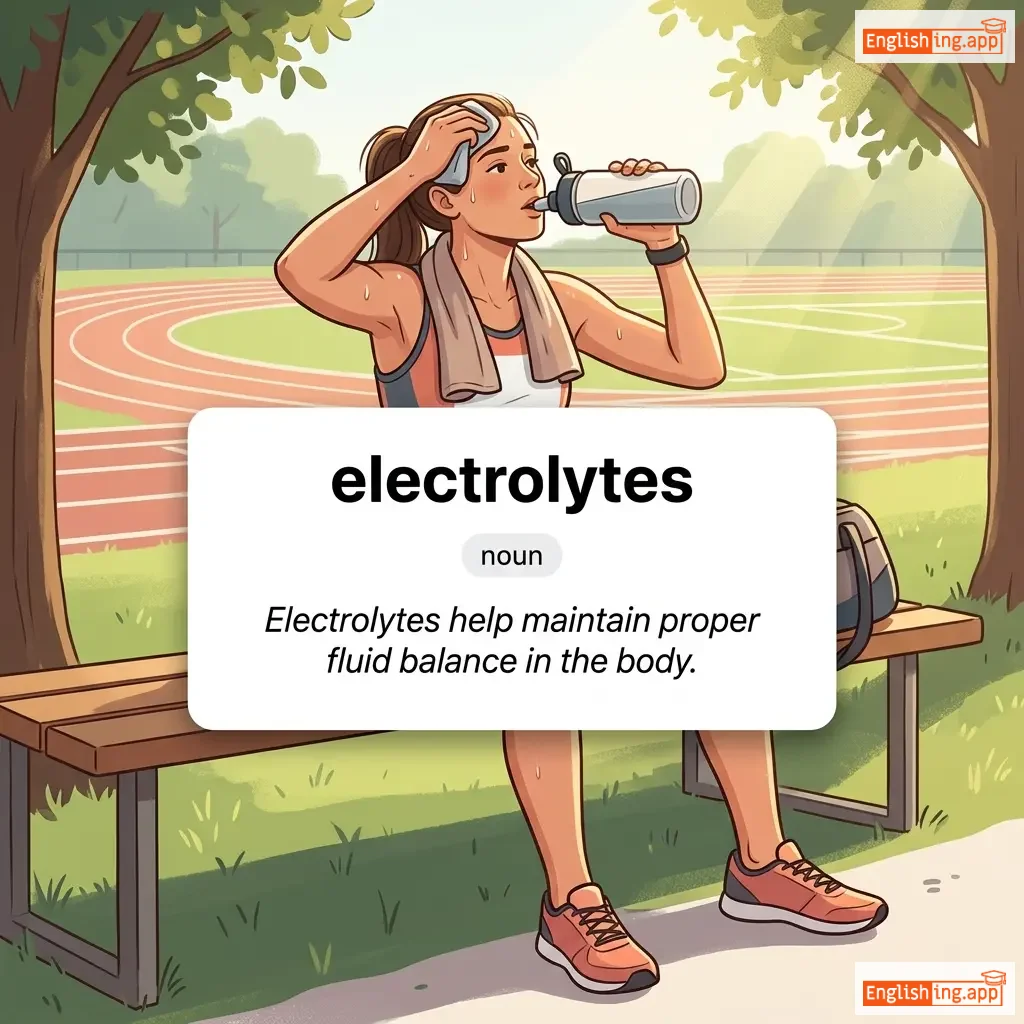
electrolytes definition card — visual illustration of the meaning
noun
/ɪˈlɛk.trəʊ.laɪts/
電解質 (denkaishitsu)

Minerals in body fluids that carry an electric charge and are essential for many bodily functions.

"Electrolytes help maintain proper fluid balance in the body."
"電解質は体内の液体のバランスを維持するのに役立ちます。" (Denkaishitsu wa tainai no ekitai no baransu wo iji suru no ni yakudachimasu.)
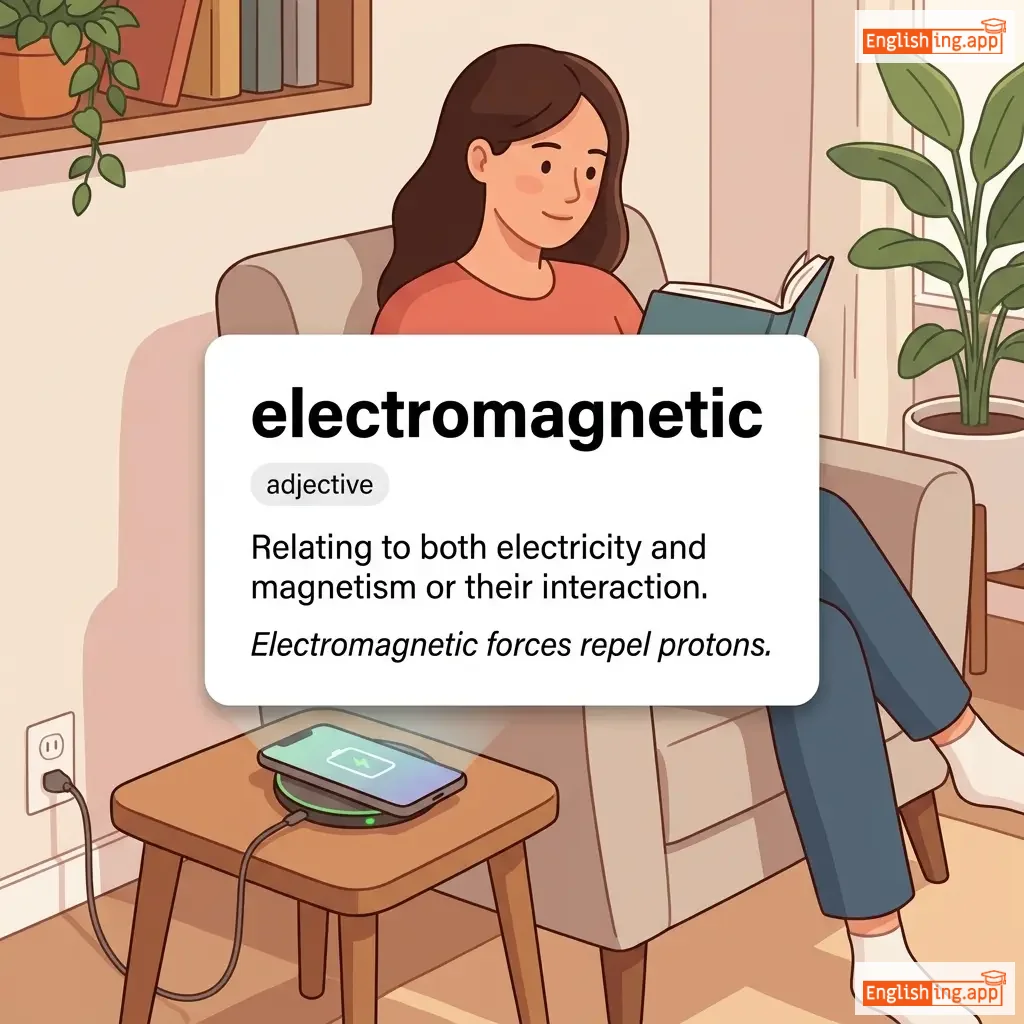
electromagnetic definition card — visual illustration of the meaning
adjective
ɪˌlektrəʊmæɡˈnetɪk
電磁的 (denjiteki)

Relating to both electricity and magnetism or their interaction.

"Electromagnetic forces repel protons."

"電磁力は陽子を反発させる。" (Denjiryoku wa youshi wo hanpatsu saseru.)
adjective
/ɪˌlɛkˈtrɒnɪk/
電子の (denshi no)

Operating with or produced by the use of electronic devices.

"She bought an electronic keyboard for her music lessons."

"彼女は音楽のレッスンのために電子キーボードを買った。" (Kanojo wa ongaku no ressun no tame ni denshi kībōdo o katta.)
noun
/ɪˌlɛkˈtrɒnɪks/
エレクトロニクス (erekutoronikusu)

the branch of physics and technology dealing with circuits and devices using transistors, microchips, and other components

"He studied electronics at university."

"彼は大学でエレクトロニクスを学びました。" (Kare wa daigaku de erekutoronikusu o manabimashita.)
noun
/ɪˈlɛk.trə.taɪp/
エレクトロタイプ (electrotype)

A duplicate printing plate made by electroplating a mold of the original.

"The printer used an electrotype to produce multiple copies of the page."

"プリンターはページの複数のコピーを作成するためにエレクトロタイプを使用しました。" (Purintā wa pēji no fukusū no kopī o sakusei suru tame ni elektrotype o shiyō shimashita.)
adjective
/ˌɛl.ɪˈmɑː.səˌnɛr.i/
慈善的な (jizentekina)

Relating to charity; dependent on or supported by charity.

"The hospital was founded as an eleemosynary institution."

"病院は慈善的な機関として設立されました。" (Byouin wa jizentekina kikan toshite setsuritsu saremashita.)
adjective
/ˈɛlɪɡənt/
優雅で洗練された (yūga de senren sareta)

pleasingly graceful and stylish in appearance or manner

"She looked elegant in her evening gown."

"彼女はイブニングガウンでエレガントに見えた。" (Kanojo wa ibuningu gaun de ereganto ni mieta.)
adjective
/ˌɛl.ɪˈdʒaɪ.ək/
エレジアック (erejiakku)

Expressing sorrow, often for something past; resembling an elegy.

"The novel ends on an elegiac note, mourning the lost era."

"小説は失われた時代を悼むエレジアックな調子で終わる。" (Shōsetsu wa ushinawareta jidai o itamu erejiakku na chōshi de owaru.)
elegy definition card — visual illustration of the meaning
noun
/ˈɛlɪdʒi/
エレジー (erejī)

A poem or song expressing sorrow, especially for someone who has died.

"The poet wrote an elegy for his late friend."

"詩人は亡き友人のためにエレジーを書きました。" (Shijin wa naki yūjin no tame ni erejī o kakimashita.)
noun
/ˈɛlɪmənt/
要素 (yōso)

A basic or essential part of something; a simple substance that cannot be broken down further.

"Trust is a key element of any strong relationship."

"信頼は強い関係の重要な要素です。" (Shinrai wa tsuyoi kankei no jūyōna yōso desu.)
adjective
/ˌɛlɪˈmɛntəri/
基本的な (kihonteki na)

Relating to the basic or fundamental aspects of something; simple or easy to understand.

"She gave an elementary explanation of the problem."

"彼女は問題の基本的な説明をしました。" (Kanojo wa mondai no kihonteki na setsumei o shimashita.)
noun
/ˈɛlɪfənt/
幸せ (shiawase)

a very large animal with a trunk, long curved tusks, and thick gray skin, found in Africa and Asia

"The elephant sprayed water over itself with its trunk."

"彼女は賞を受け取ったとき、自分の幸せを隠すことができませんでした。" (Kanojo wa shō o uketotta toki, jibun no shiawase o kakusu koto ga dekimasen deshita.)
noun
/ˈel.ɪ.fənt ˈæp.əl/
エレファントアップル (erefanto appuru)

a tropical fruit with a hard shell and acidic flesh

"Elephant apple is used to make delicious jams and pickles."

"エレファントアップルは、美味しいジャムやピクルスを作るために使用されます。" (Erefanto appuru wa, oishī jamu ya pikurusu o tsukuru tame ni shiyou saremasu.)
adjective
/ˌɛlɪˈfæntaɪn/
象のような (zō no yōna)

Huge, clumsy, or resembling an elephant in size or movement.

"The man moved with an elephantine grace."

"その男はエレファンタインの優雅さで動いた。" (Sono otoko wa erefantain no yūgasa de ugoita.)
elevate definition card — visual illustration of the meaning
verb
/ˈɛlɪveɪt/
高める (takameru)

To raise or lift something to a higher position; to improve in status, mood, or quality.

"Good music can elevate your mood instantly."

"良い音楽は瞬時に気分を高めることができます。" (Yoi ongaku wa shunji ni kibun o takameru koto ga dekimasu.)
noun
/ˌɛlɪˈveɪʃən/
高度 (kōdo)

The act of raising something to a higher position or level.

"The hikers reached a high elevation after hours of climbing."

"登山者たちは数時間の登攀後、高い高度に達しました。" (Tozanshatachi wa suujikan no tōhōgo, takai kōdo ni tasshimashita.)
noun
/ˈɛləˌveɪtər/
エレベーター (erebētā)

a machine that carries people or goods up and down between floors in a building

"We took the elevator to the tenth floor."

"私たちはエレベーターで10階に行きました。" (Watashitachi wa erebētā de jukkai ni ikimashita.)
number
/ɪˈlɛvən/
十一 (juuichi)

the number after ten and before twelve; 11

"There are eleven students in the classroom."
"教室には十一人の学生がいます。" (Kyoushitsu ni wa juuichi-nin no gakusei ga imasu.)
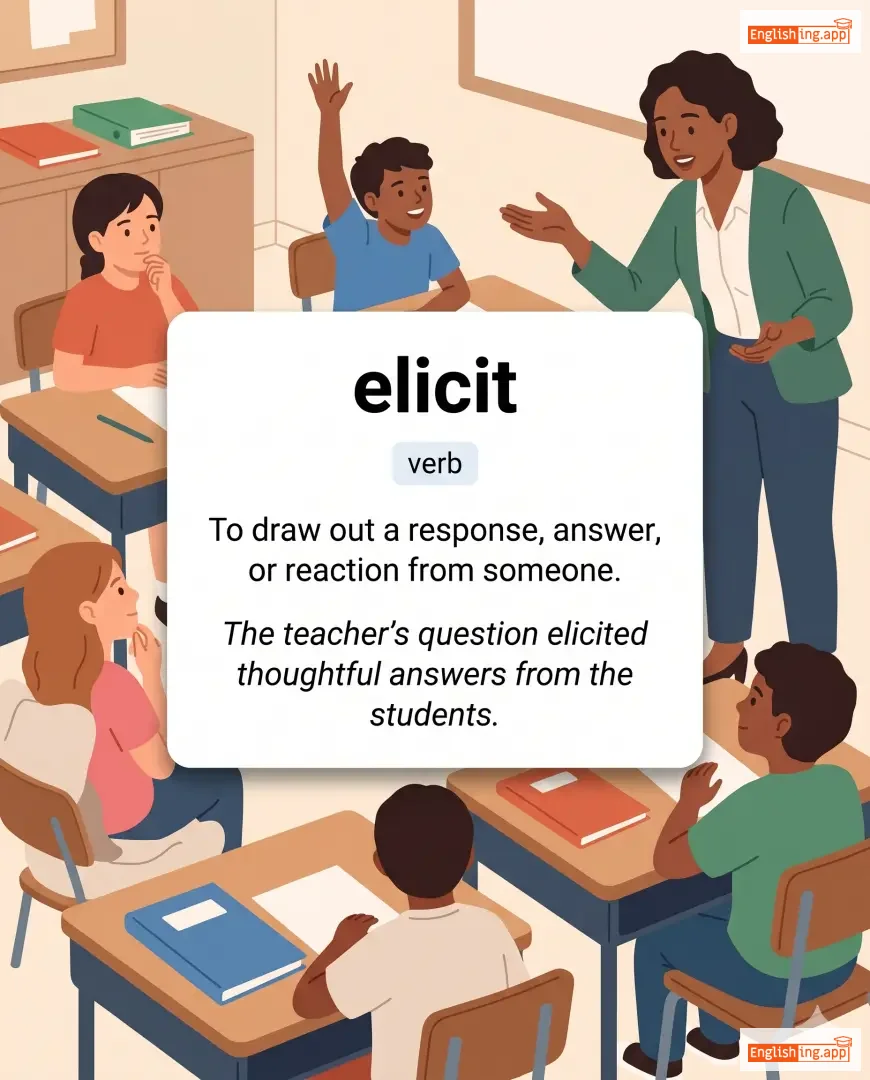
elicit definition card — visual illustration of the meaning
verb
/ɪˈlɪsɪt/
引き出す (hikidasu)

To draw out a response, answer, or reaction from someone.

"The teacher’s question elicited thoughtful answers from the students."
"先生の質問は生徒たちから思慮深い回答を引き出しました。" (Sensei no shitsumon wa seito-tachi kara shinri-bukai kaitō o hikidashimashita.)
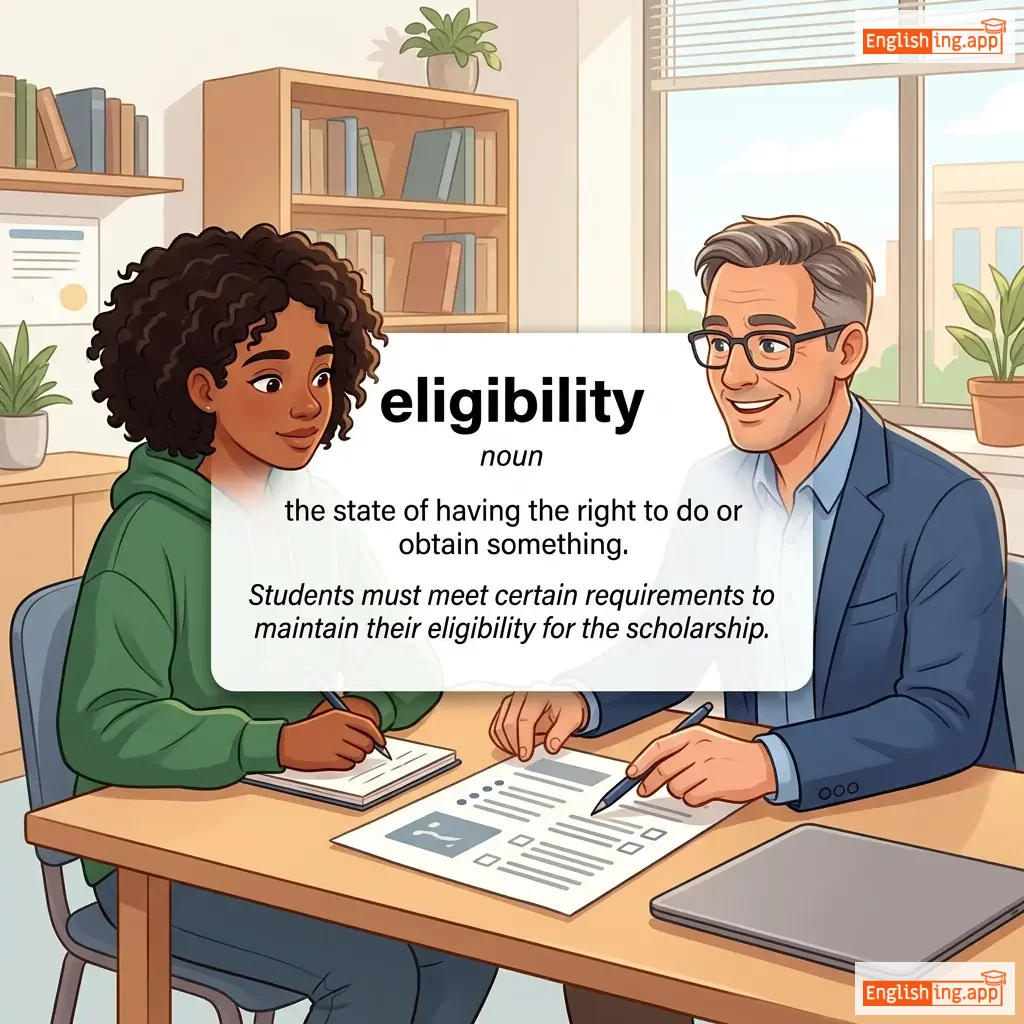
eligibility definition card — visual illustration of the meaning
noun
/ˌel.ɪ.dʒəˈbɪl.ə.ti/
資格 (shikaku)

the state of having the right to do or obtain something

"Students must meet certain requirements to maintain their eligibility for the scholarship."
"学生は奨学金の資格を維持するために特定の要件を満たす必要があります。" (Gakusei wa shōgakukin no shikaku o iji suru tame ni tokutei no yōken o mitasu hitsuyō ga arimasu.)
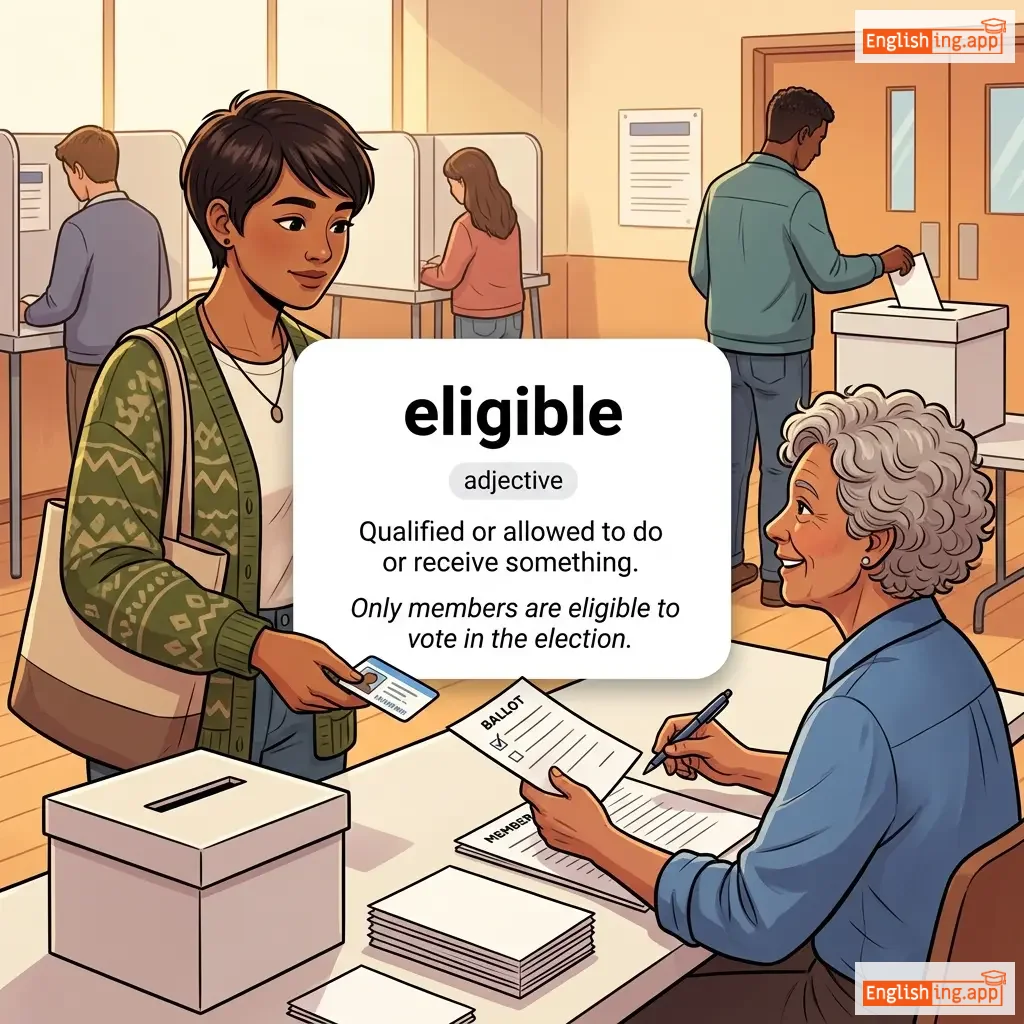
eligible definition card — visual illustration of the meaning
adjective
/ˈɛlɪdʒəbl/
適格な (tekikaku na)

Qualified or allowed to do or receive something.

"Only members are eligible to vote in the election."

"選挙で投票する資格があるのは会員のみです。" (Senkyo de tōhyō suru shikaku ga aru no wa kaiin nomi desu.)
eliminate definition card — visual illustration of the meaning
verb
/ɪˈlɪməˌneɪt/
排除する (haijo suru)

To completely remove or get rid of something.

"The new policy aims to eliminate corruption in the system."
"新しい政策はシステム内の汚職を排除することを目的としています。" (Atarashī seisaku wa shisutemu-nai no oshoku o haijo suru koto o mokuteki to shiteimasu.)
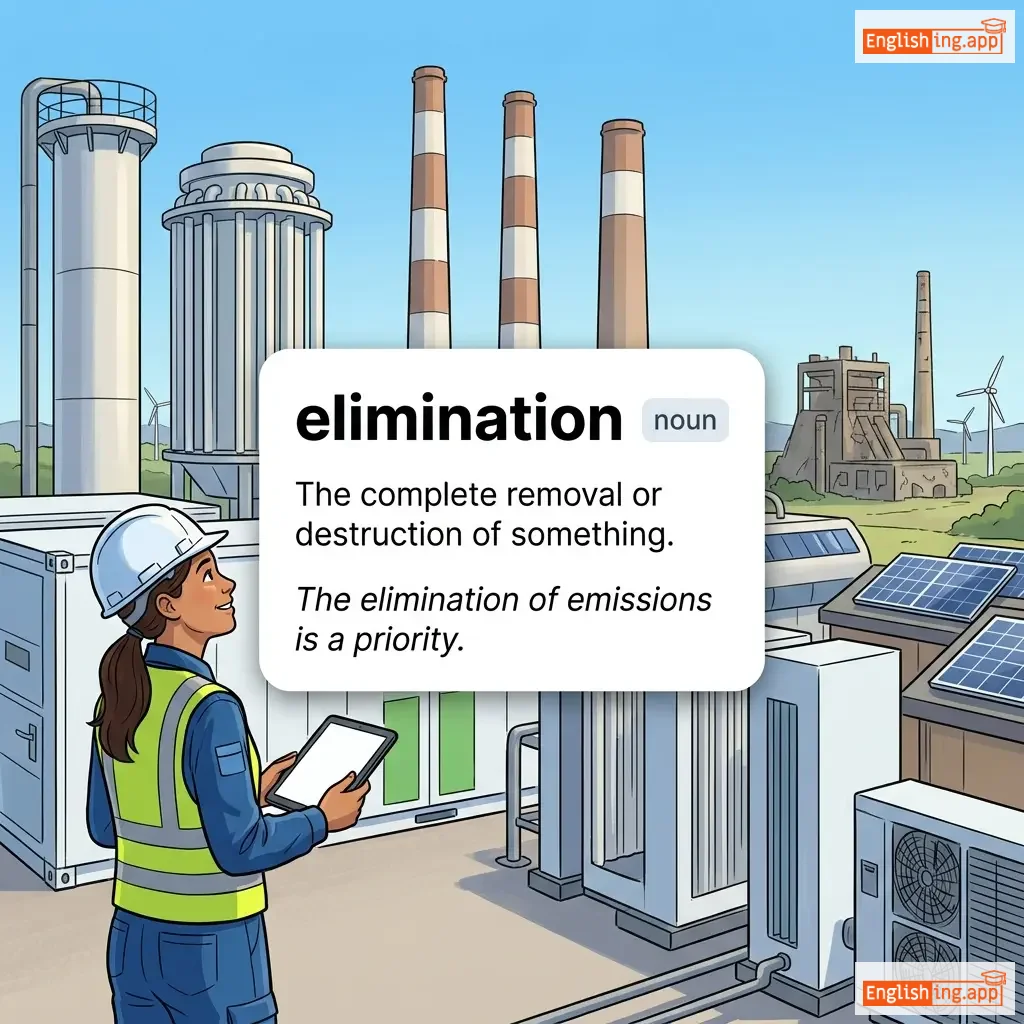
elimination definition card — visual illustration of the meaning
noun
ɪˌlɪm.ɪˈneɪ.ʃən
排除 (haijo)

The complete removal or destruction of something.

"The elimination of emissions is a priority."

"排出の排除は優先事項です。" (Haishutsu no haijo wa yūsen jiko desu.)
noun
/ɪˈliːt/ or /eɪˈliːt/
エリート (elite)

A select group that is superior in terms of ability or qualities.

"Only the elite were invited to the exclusive event."

"エリートだけがその独占的なイベントに招待されました。" (Erīto dake ga sono dokusenteki na ibento ni shōtai saremashita.)
noun/adjective
/ɪˈliːtɪst/
エリティスト (elitist)

A person who believes that a society should be led by an elite; showing preference for a privileged class.

"His elitist attitude made him unpopular among his peers."

"彼のエリティストな態度は、彼を仲間の中で不人気にした。" (Kare no eritisuto na taido wa, kare o nakama no naka de funinki ni shita.)