語彙集

英単語辞書 | 単語の意味、定義、例文

noun
/ˌɛkspɛkˈteɪʃən/
期待 (kitai)

a strong belief that something will happen or be the case

"The students had high expectations for their exam results."
"学生たちは試験結果に高い期待を持っていました。" (Gakusei-tachi wa shiken kekka ni takai kitai o motte imashita.)
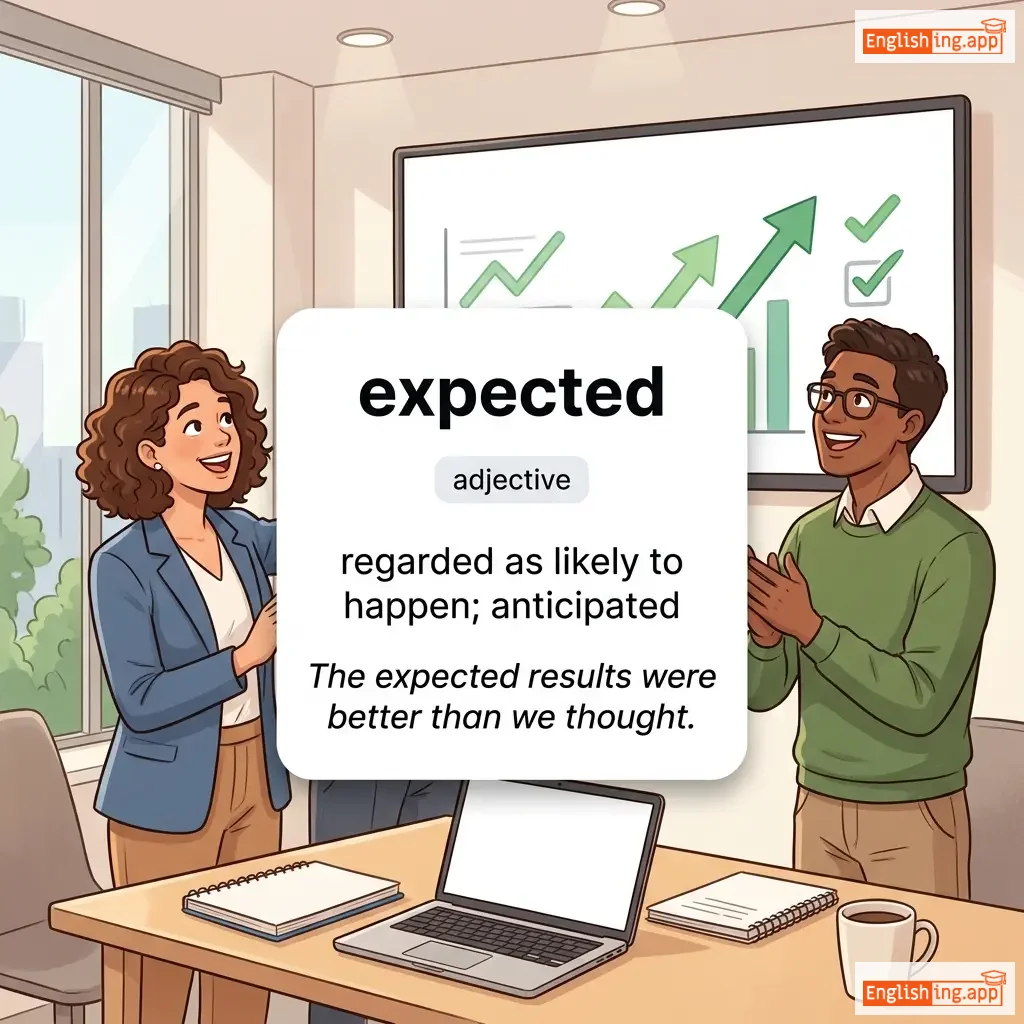
expected definition card — visual illustration of the meaning
adjective
/ɪkˈspɛktɪd/
予想される (yosou sareru)

regarded as likely to happen; anticipated

"The expected results were better than we thought."

"予想される結果は私たちが考えていたよりも良かった。" (Yosou sareru kekka wa watashitachi ga kangaete ita yori mo yokatta.)
verb
/ɪkˈspɛktəreɪt/
痰を吐く (tama wo haku)

to cough up and spit out mucus from the throat or lungs

"The patient began to expectorate thick mucus."

"患者は濃い粘液を吐き始めました。" (Kanja wa koi nen'eki wo haki hajimemashita.)
noun
/ɪkˈspiːdiənsi/
便宜主義 (ben'gi shugi)

the quality of being convenient and practical despite possibly being improper or immoral

"He acted out of political expediency rather than principle."

"彼は原則ではなく政治的便宜主義から行動した。" (Kare wa gensoku de wa naku seijiteki ben'gi shugi kara kōdō shita.)
adjective
/ɪkˈspiːdiənt/
便宜的 (ben'iteki)

suitable or convenient for achieving a particular end, sometimes at the expense of morality

"It was expedient to take the shortcut despite the risks."

"リスクにもかかわらず、近道を取ることは便宜的だった。" (Risuku ni mo kakawarazu, chikamichi o toru koto wa ben'iteki datta.)
expedite definition card — visual illustration of the meaning
verb
/ˈɛkspəˌdaɪt/
加速する (kasoku suru)

to make a process or action happen more quickly

"The company promised to expedite the delivery of the package."

"その会社はパッケージの配送を迅速にすると約束しました。" (Sono kaisha wa pakkēji no haisō o jinsoku ni suru to yakusoku shimashita.)
noun
/ˌɛkspəˈdɪʃən/
遠征 (ensei)

a journey made for a particular purpose, often exploration or research

"They went on a scientific expedition to the Arctic."
"彼らは北極への科学的な遠征に出かけました。" (Karera wa hokkyoku e no kagakuteki na ensei ni dekakemashita.)
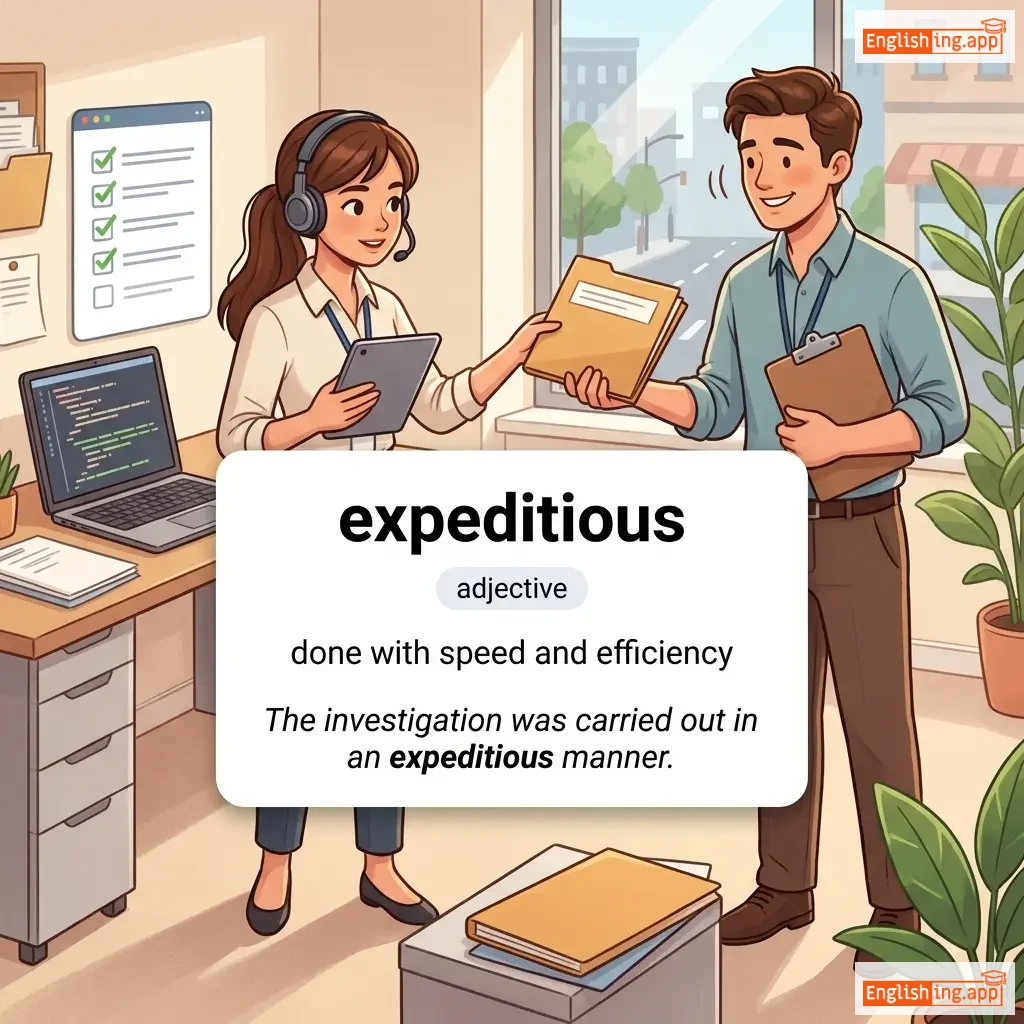
expeditious definition card — visual illustration of the meaning
adjective
/ˌɛkspəˈdɪʃəs/
迅速かつ効率的 (jinsoku katsu kōritsuteki)

done with speed and efficiency

"The investigation was carried out in an expeditious manner."

"調査は迅速かつ効率的に行われました。" (Chōsa wa jinsoku katsu kōritsuteki ni okonawaremashita.)
adverb
/ˌɛkspəˈdɪʃəsli/
迅速かつ効率的に (jinsoku katsu kōritsutekini)

in a quick and efficient manner

"The application was processed expeditiously."

"申請は迅速かつ効率的に処理されました。" (Shinsei wa jinsoku katsu kōritsuteki ni shori saremashita.)
verb
/ɪkˈspɛl/
追放する (tsui-hou suru)

to officially force someone to leave a place or organization

"The student was expelled from school for misconduct."
"その学生は不正行為で学校から追放されました。" (Sono gakusei wa fusei koui de gakkou kara tsuihou saremashita.)
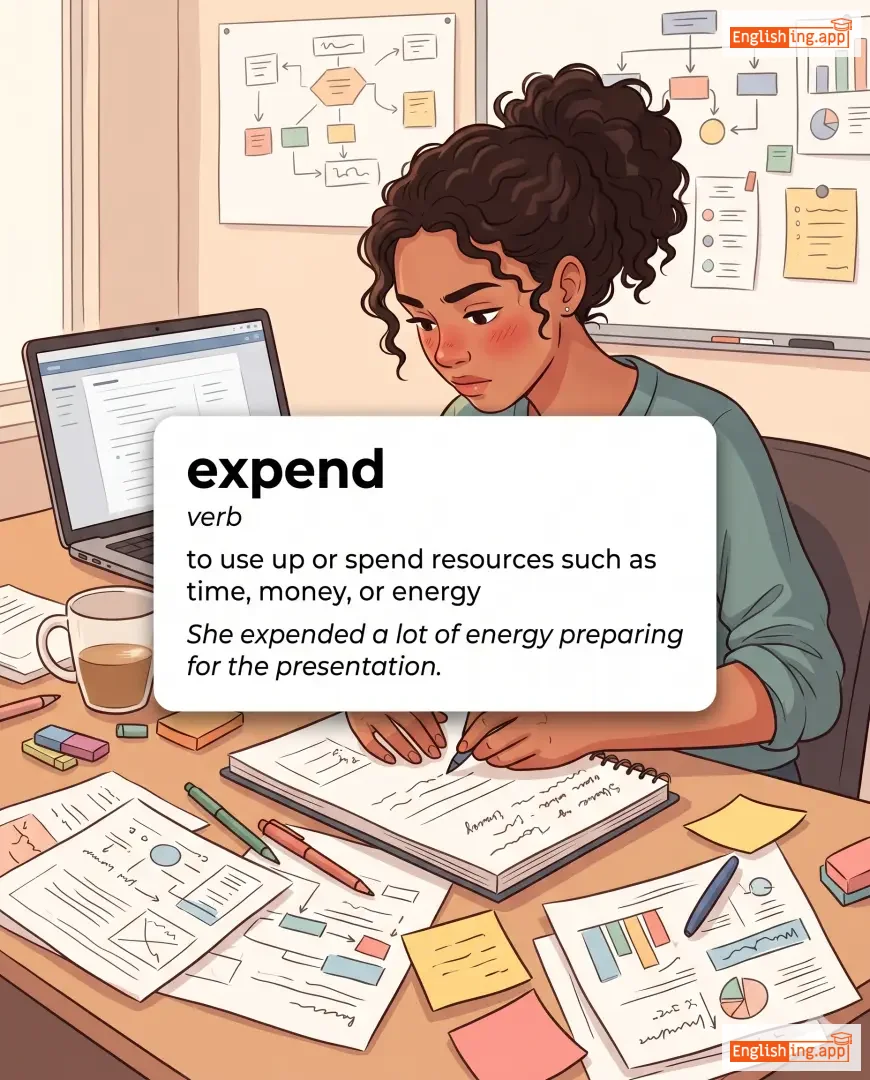
expend definition card — visual illustration of the meaning
verb
/ɪkˈspɛnd/
使う (tsukau)

to use up or spend resources such as time, money, or energy

"She expended a lot of energy preparing for the presentation."
"彼女はプレゼンテーションの準備に多くのエネルギーを使いました。" (Kanojo wa purezenteishon no junbi ni ooku no enerugi- wo tsukaimashita.)
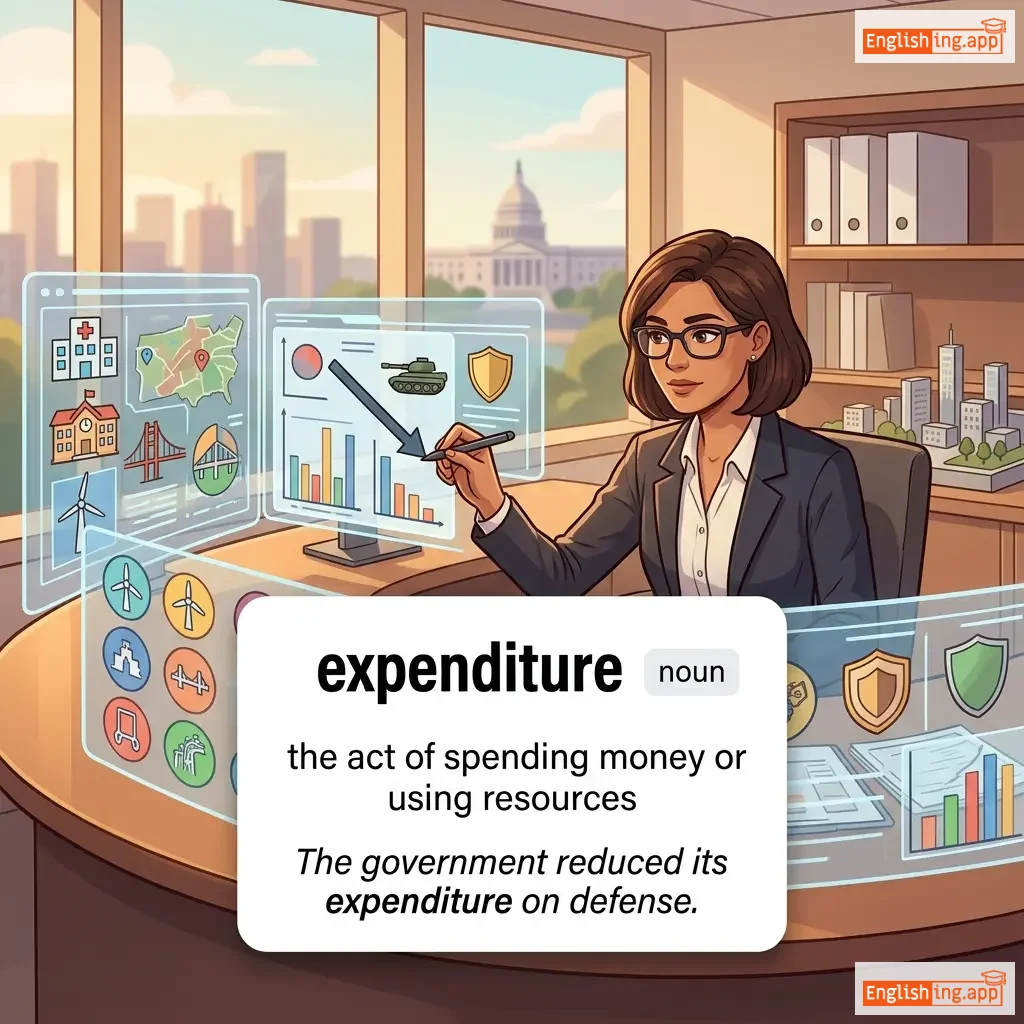
expenditure definition card — visual illustration of the meaning
noun
/ɪkˈspɛndɪtʃər/
支出 (shishutsu)

the act of spending money or using resources

"The government reduced its expenditure on defense."

"政府は防衛費を削減しました。" (Seifu wa bōei-hi o sakugen shimashita.)
noun
/ɪkˈspɛns/
費用 (hiyou)

the cost of something; money spent

"Traveling abroad can be a major expense."

"海外旅行は大きな費用となる可能性があります。" (Kaigai ryokou wa ookina hiyou to naru kanousei ga arimasu.)
adjective
/ɪkˈspɛnsɪv/

costing a lot of money

"That car is too expensive for me to buy."

noun/verb
/ɪkˈspɪəriəns/
幸せ (shiawase)

knowledge or skill gained through involvement in or exposure to something over time

"She gained valuable experience while working abroad."

"彼女は賞を受け取ったとき、幸せを隠すことができませんでした。" (Kanojo wa shō o uketotta toki, shiawase o kakusu koto ga dekimasen deshita.)
adjective
/ɪkˈspɪəriənst/
経験豊富な (keiken hōfuna)

having knowledge or skill in a particular field gained through experience

"She is an experienced teacher who knows how to handle difficult students."

"彼女は経験豊富な教師で、困難な生徒を扱う方法を知っています。" (Kanojo wa keiken hōfuna kyōshi de, konnan na seito o atsukau hōhō o shitteimasu.)
experiencing definition card — visual illustration of the meaning
verb
/ɪkˈspɪəriənsɪŋ/
体験している (taiken shite iru)

Encountering or undergoing an event or occurrence.

"The travelers are experiencing the thrill of adventure."

"旅行者たちは冒険のスリルを体験している。" (Ryokō-sha tachi wa bōken no suriru o taiken shite iru.)
noun/verb
/ɪkˈsperɪmənt/
実験 (jikken)

a test or trial carried out to discover something or prove an idea

"The scientist conducted an experiment on plant growth."

"科学者は植物の成長に関する実験を行いました。" (Kagakusha wa shokubutsu no seichō ni kansuru jikken o okonaimashita.)
adjective
/ɪkˌsperɪˈmentl/
実験的 (jikken-teki)

based on untested ideas or techniques; relating to experiments or testing

"The scientists developed an experimental drug to treat cancer."
"科学者たちは癌を治療するために実験的な薬を開発しました。" (Kagakusha-tachi wa gan o chiryō suru tame ni jikken-teki na kusuri o kaihatsu shimashita.)
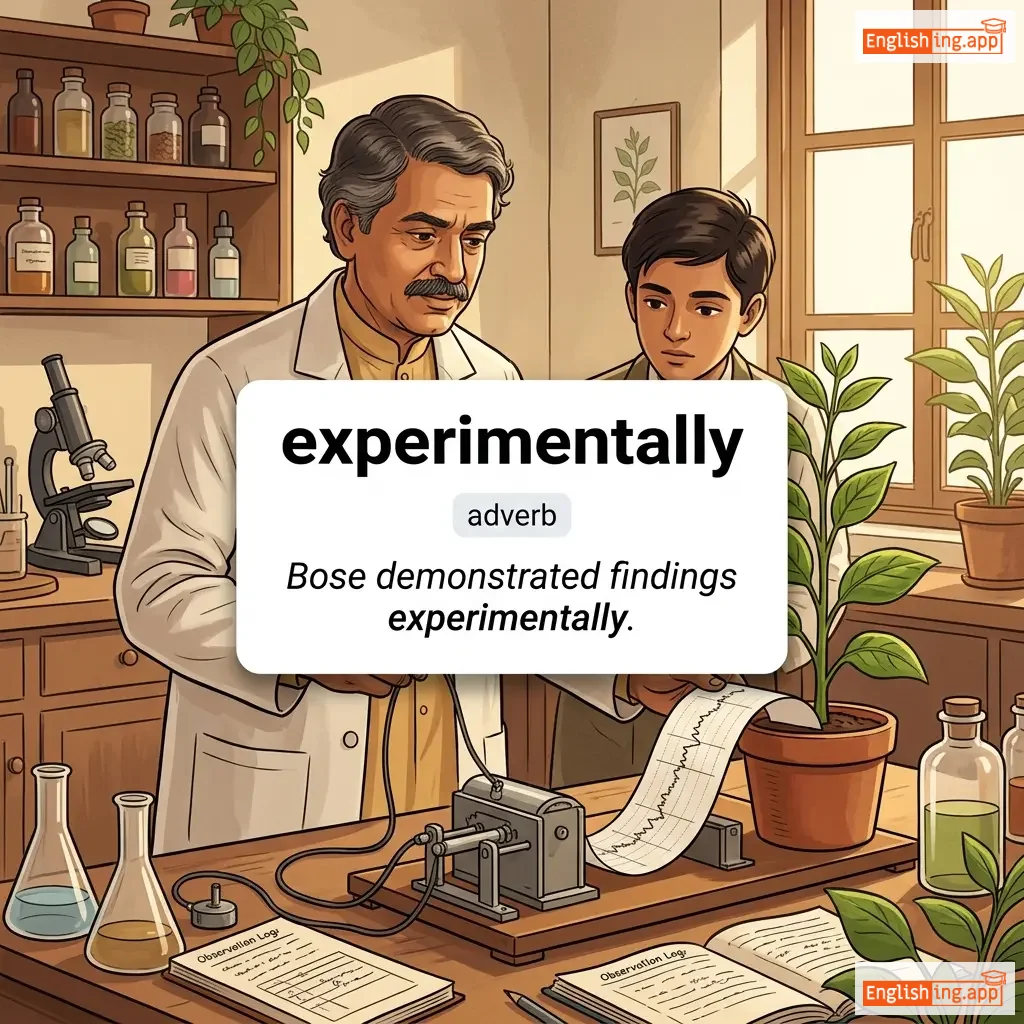
experimentally definition card — visual illustration of the meaning
adverb
ɪkˌsperɪˈmentəli
実験的に (jikken-teki ni)

In a way that is based on or derived from experiment and observation rather than theory.

"Bose demonstrated findings experimentally."
"ボーズは実験的に結果を示しました。" (Bōzu wa jikken-teki ni kekka o shimeshimashita.)
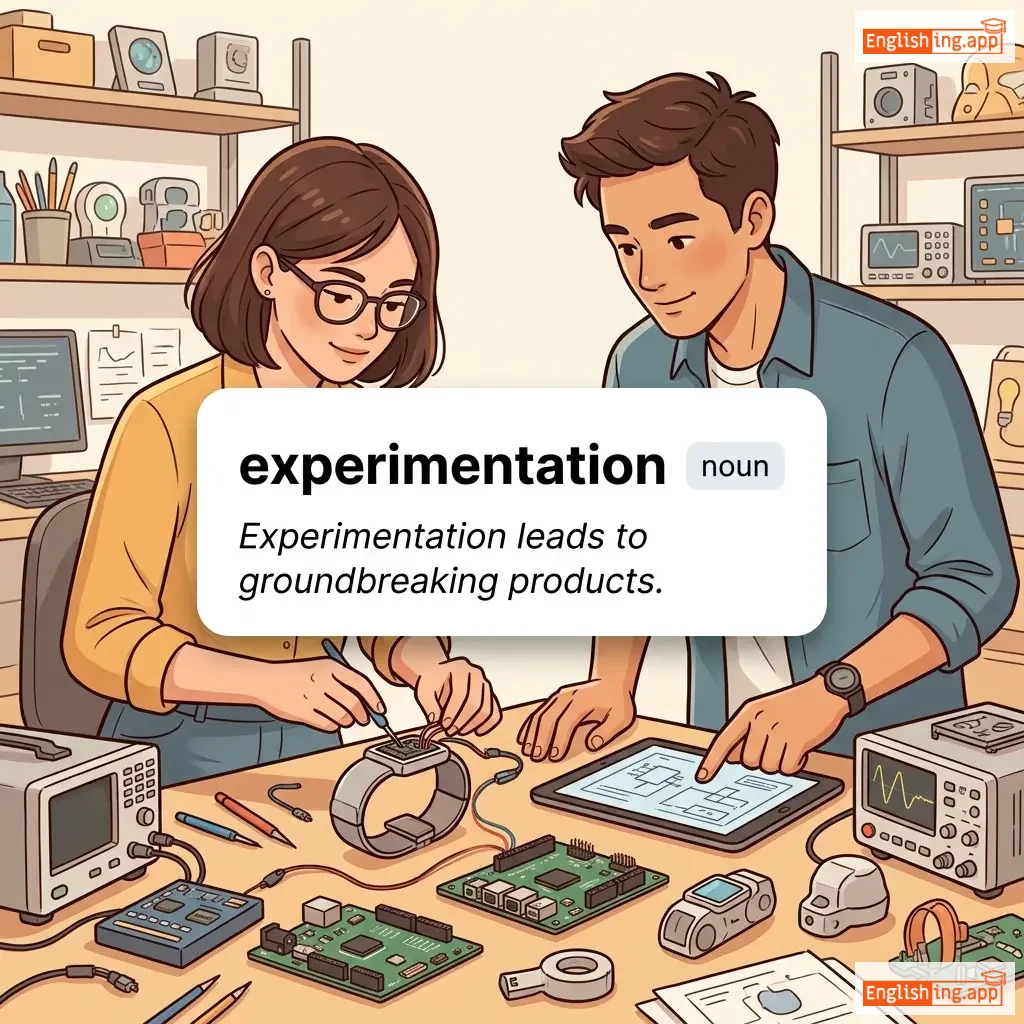
experimentation definition card — visual illustration of the meaning
noun
/ɪkˌsperɪˈmɛnteɪʃən/
実験 (jikken)

The process of performing a scientific procedure to make a discovery, test a hypothesis, or demonstrate a known fact.

"Experimentation leads to groundbreaking products."

"実験は革新的な製品を生み出します。" (Jikken wa kakushinteki na seihin o umidashimasu.)
noun/adjective
/ˈekspɜːt/
専門家 (senmongaku)

a person who has a lot of knowledge or skill in a particular area

"He is an expert in computer programming."

"彼はコンピュータプログラミングの専門家です。" (Kare wa konpyūta puroguramingu no senmongaku desu.)
expertise definition card — visual illustration of the meaning
noun
/ˌɛkspərˈtiːz/
専門知識 (senmon chishiki)

specialized knowledge or skill in a particular field

"Her expertise in data analysis is highly valued."

"データ分析における彼女の専門知識は高く評価されています。" (Dēta bunseki ni okeru kanojo no senmon chishiki wa takaku hyōka sareteimasu.)
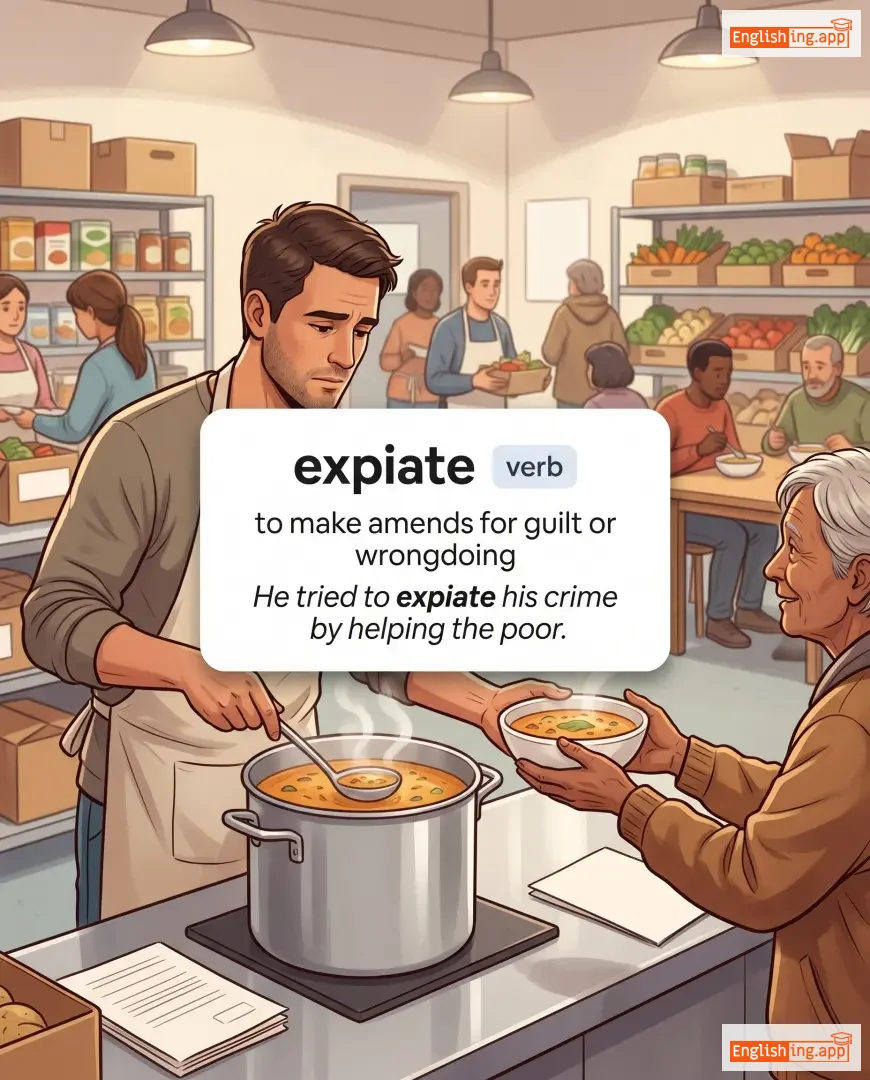
expiate definition card — visual illustration of the meaning
verb
/ˈɛkspieɪt/

to make amends for guilt or wrongdoing

"He tried to expiate his crime by helping the poor."

verb
/ɪkˈspaɪər/
期限切れ (kigen-gire)

to come to an end, especially a period of validity or life

"My passport will expire next month."
"私のパスポートは来月期限切れになります。" (Watashi no pasupōto wa raigetsu kigen-gire ni narimasu.)
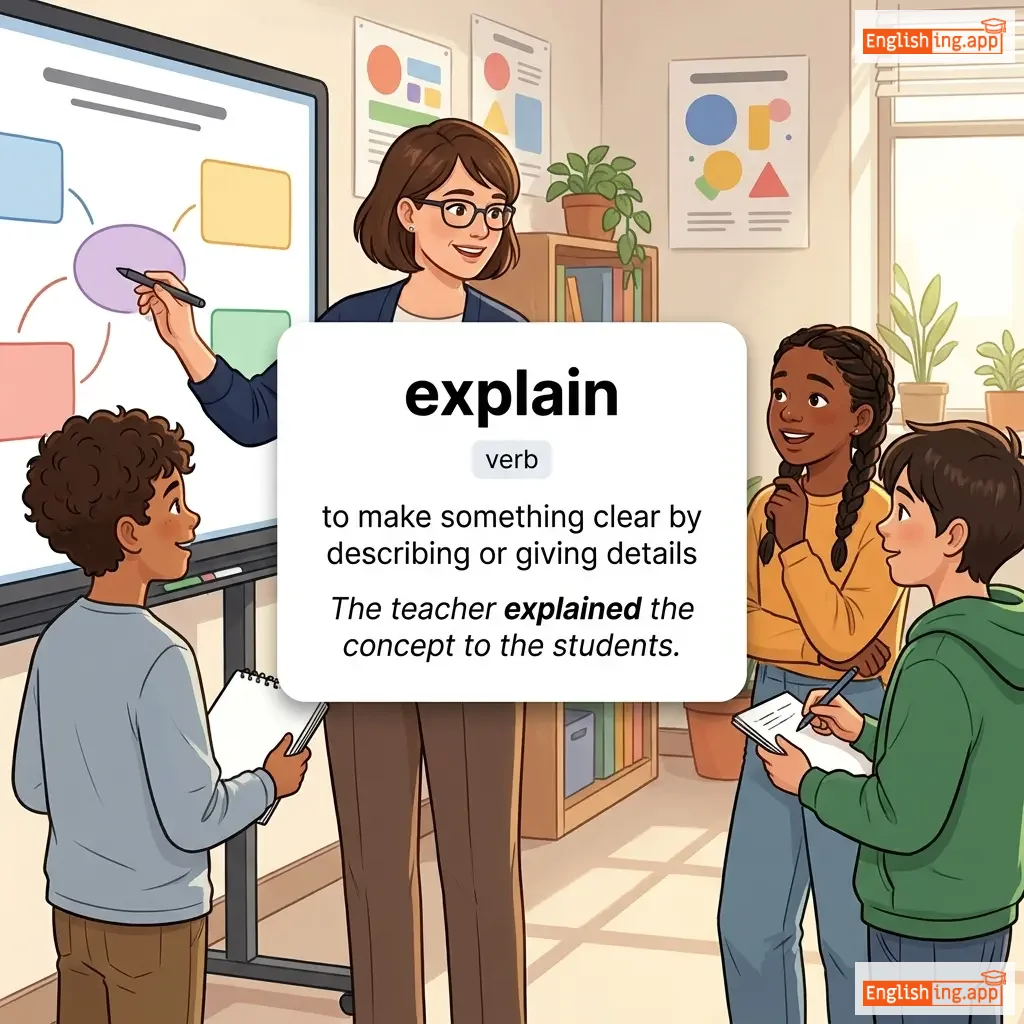
explain definition card — visual illustration of the meaning
verb
/ɪkˈspleɪn/
説明する (setsumei suru)

to make something clear by describing or giving details

"The teacher explained the concept to the students."

"先生は学生にコンセプトを説明しました。" (Sensei wa gakusei ni konseputo o setsumei shimashita.)
noun
/ˌekspləˈneɪʃən/
説明 (setsumei)

a statement or account that makes something clear

"The teacher gave a clear explanation of the theory."

"先生は理論を明確に説明しました。" (Sensei wa riron o meikaku ni setsumei shimashita.)
noun
/ˈɛksplətɪv/
罵声 (bakei)

a word or phrase used as an exclamation, often offensive or profane

"He shouted an expletive when he dropped the hammer on his foot."

"彼はハンマーを足に落としたときに罵声をあげました。" (Kare wa hanmā o ashi ni otoshita toki ni bakei o agemashita.)
adjective
/ˈɛksplɪkəbəl/
説明可能な (setsumei kanō na)

able to be explained or understood

"His sudden anger was explicable given the stressful situation."
"彼の突然の怒りは、ストレスの多い状況を考慮すれば説明可能だった。" (Kare no totsuzen no ikari wa, sutoresu no ōi jōkyō o kōryo sureba setsumei kanō datta.)
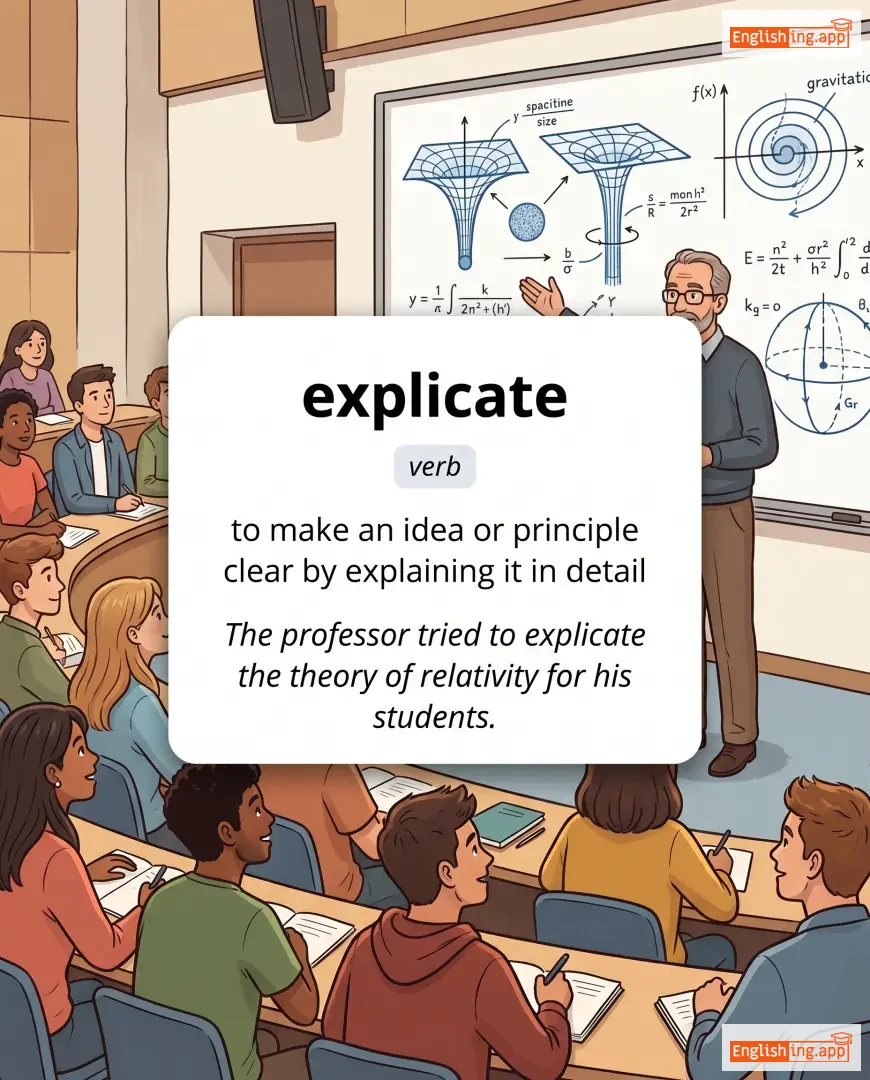
explicate definition card — visual illustration of the meaning
verb
/ˈɛksplɪkeɪt/
説明する (setsumei suru)

to make an idea or principle clear by explaining it in detail

"The professor tried to explicate the theory of relativity for his students."

"教授は学生たちに相対性理論を説明しようとしました。" (Kyōju wa gakusei-tachi ni sōtaisei riron o setsumei shiyō to shimashita.)
noun
/ˈɛksplɪkeɪtər/
解説者 (kaisetsusha)

a person who explains or interprets something in detail

"The critic served as an explicator of the poet’s complex works."
"批評家は詩人の複雑な作品の解説者として務めました。" (Hihyōka wa shijin no fukuzatsu na sakuhin no kaisetsusha toshite tsutomemashita.)
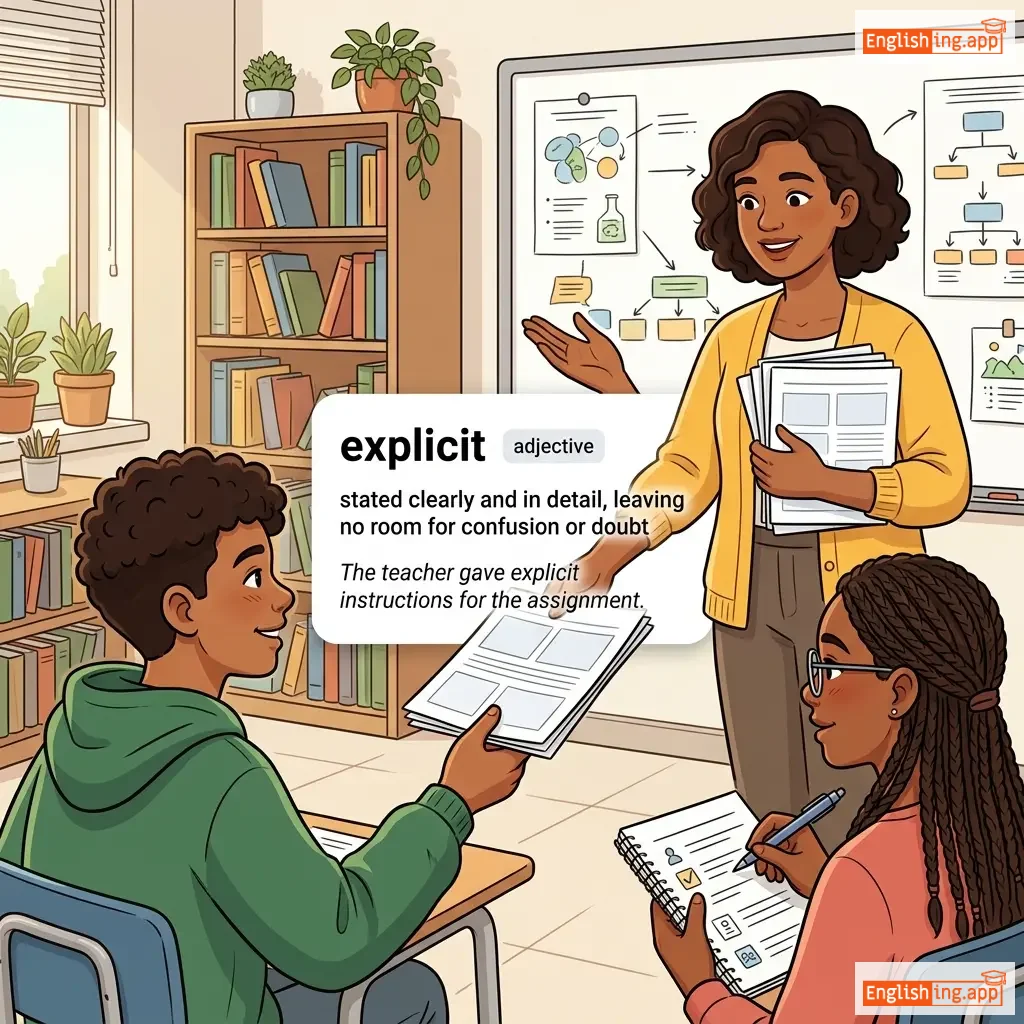
explicit definition card — visual illustration of the meaning
adjective
/ɪkˈsplɪsɪt/
明確な (meikaku na)

stated clearly and in detail, leaving no room for confusion or doubt

"The teacher gave explicit instructions for the assignment."

"先生は課題のために明確な指示を出しました。" (Sensei wa kadai no tame ni meikaku na shiji wo dashimashita.)
adverb
/ɪkˈsplɪsɪtli/
明確に (meikaku ni)

in a clear and detailed manner, leaving no room for confusion or doubt

"The instructions were explicitly written to avoid any confusion."

"指示は明確に書かれており、混乱を避けるためです。" (Shiji wa meikaku ni kakarete ori, konran o sakeru tame desu.)
verb
/ɪkˈsploʊd/
爆発する (bakuhatsu suru)

to burst or shatter violently and noisily as a result of rapid combustion or pressure

"The bomb exploded in the middle of the street."
"爆弾は通りの真ん中で爆発しました。" (Bakudan wa toori no mannaka de bakuhatsu shimashita.)
⚒️

exploit

verb, noun
/ɪkˈsplɔɪt/

to make full use of and derive benefit from (a resource); to use someone unfairly for one’s own advantage

"The company was accused of exploiting child labor."

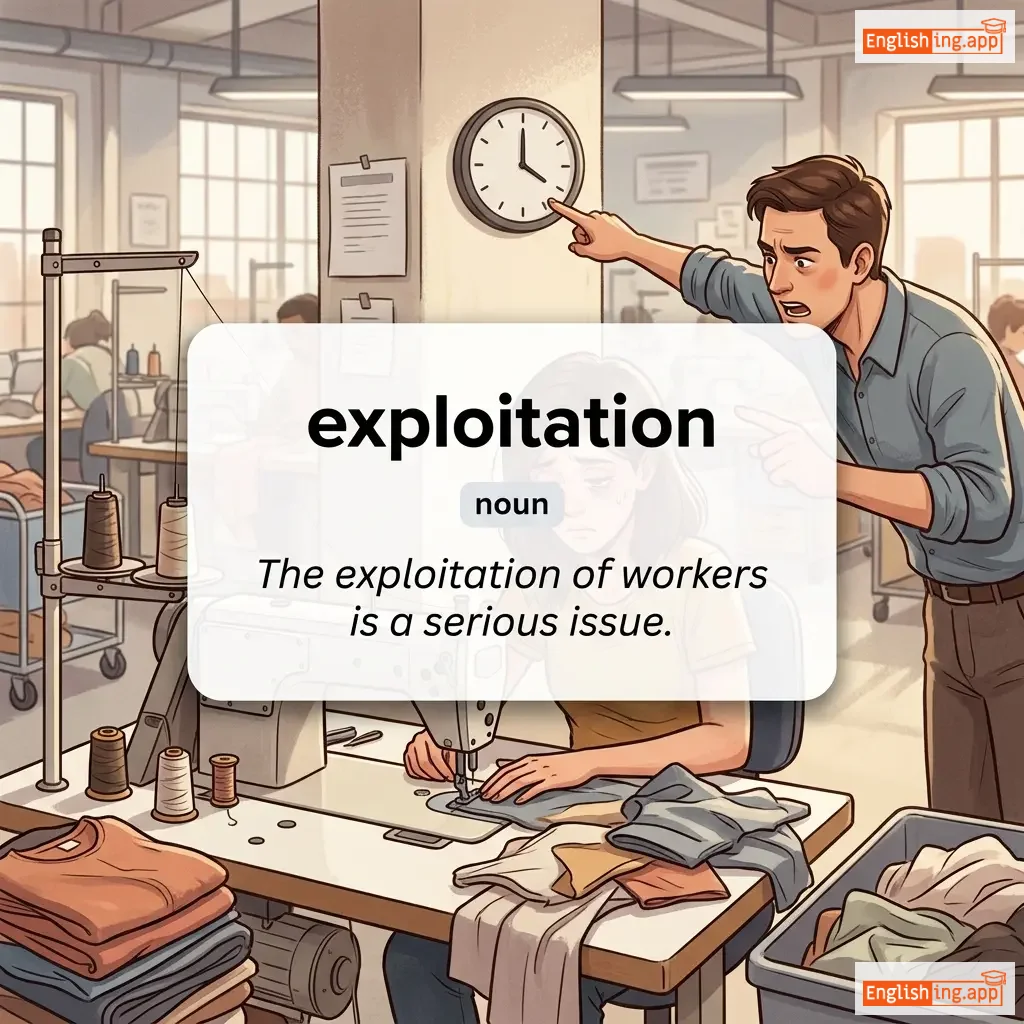
exploitation definition card — visual illustration of the meaning
noun
/ˌeksplɔɪˈteɪʃən/
搾取 (sakushu)

the action or fact of treating someone unfairly in order to benefit from their work; the use of resources for profit

"The exploitation of workers is a serious issue."

"労働者の搾取は深刻な問題です。" (Rōdōsha no sakushu wa shinkokuna mondai desu.)
adjective
/ɪkˈsplɔɪtətɪv/
搾取的な (sakushuteki na)

making use of a situation or people unfairly and unethically for one's own advantage

"The workers protested against the exploitative practices of the factory."

"労働者たちは工場の搾取的な行動に抗議した。" (Rōdō-sha-tachi wa kōjō no sakushuteki na kōdō ni kōgi shita.)
noun
/ˌekspləˈreɪʃən/
探査 (tansa)

the action of traveling through or studying an area to learn more about it

"Space exploration has expanded our understanding of the universe."

"宇宙探査は私たちの宇宙に対する理解を広げました。" (Uchū tansa wa watashitachi no uchū ni taisuru rikai o hirogemashita.)
verb
/ɪkˈsplɔːr/
探検する (tanken suru)

to travel through or study something in order to learn more about it

"They decided to explore the forest together."
"彼らは一緒に森を探検することに決めました。" (Karera wa issho ni mori wo tanken suru koto ni kimemashita.)
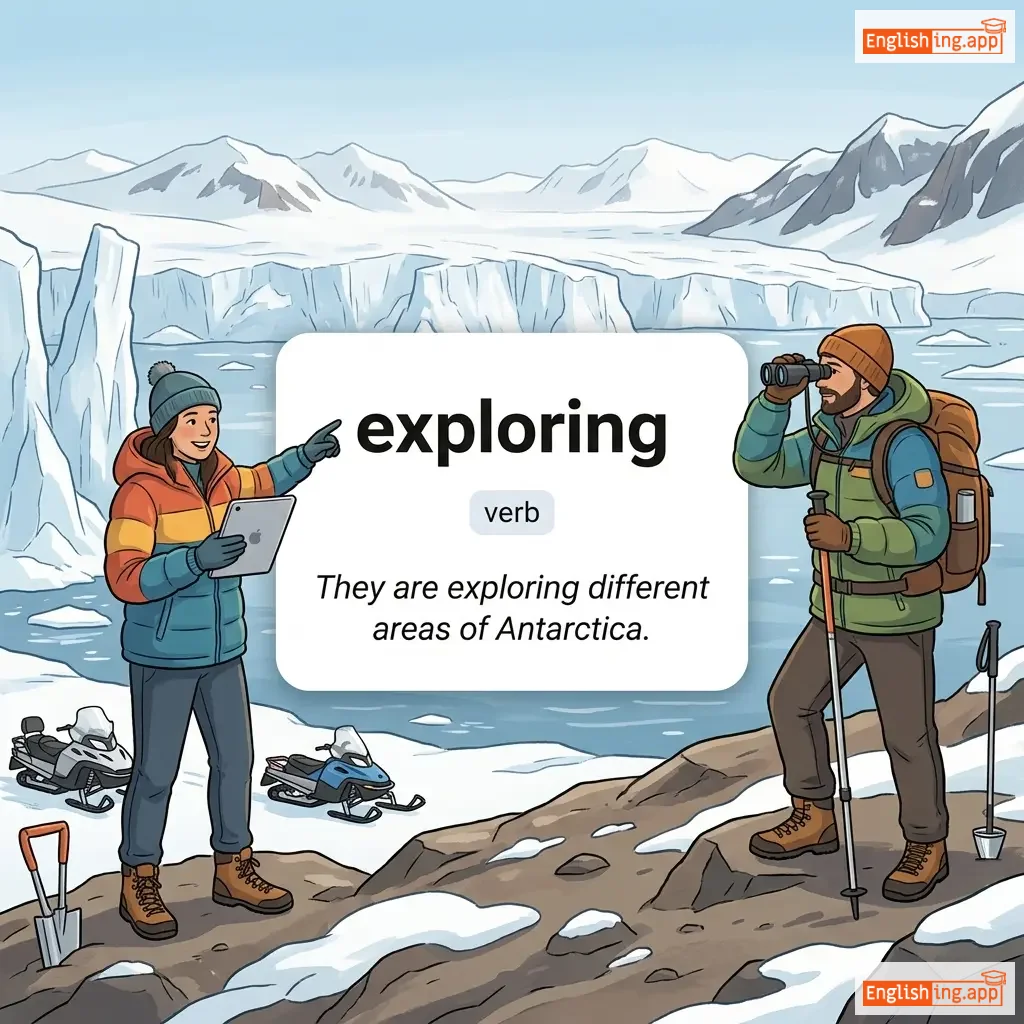
exploring definition card — visual illustration of the meaning
verb
/ɪkˈsplɔːrɪŋ/
探査する (tansa suru)

Investigating or studying thoroughly; searching into or ranging over for the purpose of discovery.

"They are exploring different areas of Antarctica."

"彼らは南極のさまざまな地域を探査しています。" (Karera wa nankyoku no samazama na chiiki o tansa shiteimasu.)
noun
/ɪkˈsploʊʒən/
爆発 (bakuhatsu)

a violent burst or release of energy, often causing damage and noise

"The explosion shook the entire neighborhood."

"爆発は近隣一帯を揺さぶった。" (Bakuhatsu wa kinrin ittai wo yusabutta.)
adjective
/ɪkˈsploʊsɪv/
爆発的 (bakuhatsuteki)

able to cause an explosion; likely to burst out suddenly

"The situation became explosive after the argument."

"議論の後、状況は爆発的になった。" (Giron no ato, jōkyō wa bakuhatsuteki ni natta.)
noun
/ɪkˈspoʊnənt/
指数 (shisū)

a person who supports, promotes, or explains an idea; in math, a symbol denoting power

"She is a leading exponent of modern dance."
"彼女は現代舞踏の先駆者です。" (Kanojo wa gendai butō no senkusha desu.)
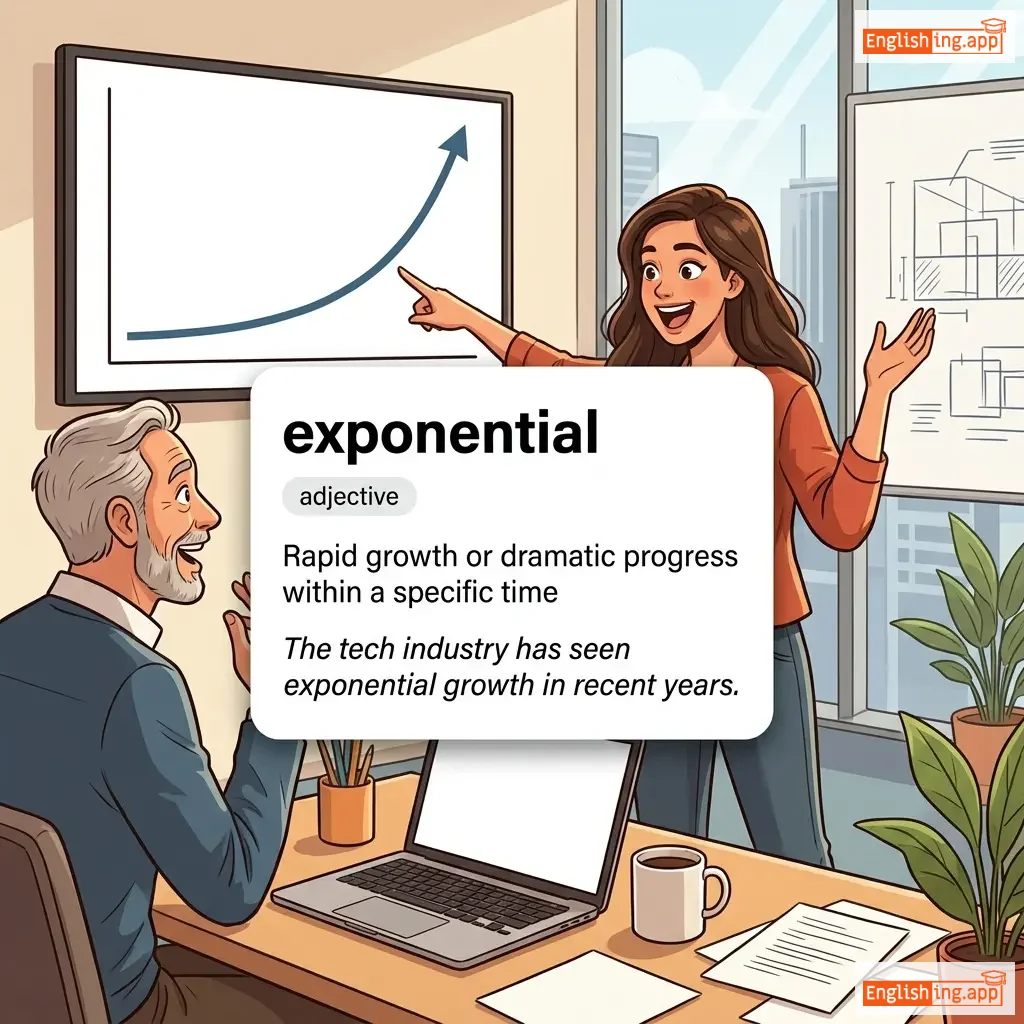
exponential definition card — visual illustration of the meaning
adjective
/ˌɛk.spəˈnɛn.ʃəl/
指数関数的 (shisū kansū teki)

Rapid growth or dramatic progress within a specific time

"The tech industry has seen exponential growth in recent years."
"テクノロジー業界はここ数年で指数関数的な成長を遂げています。" (Tekunorojī gyōkai wa koko sūnen de shisū kansū-teki na seichō o toge teimasu.)
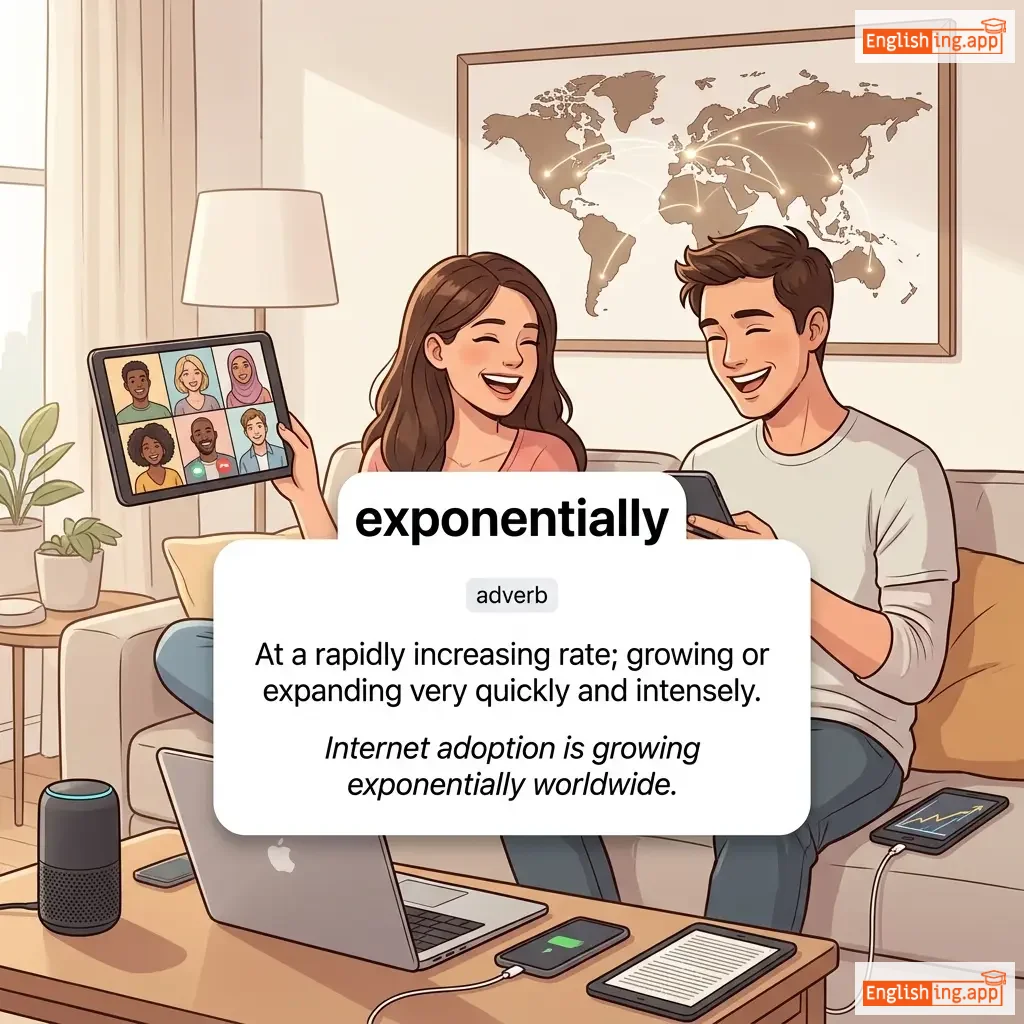
exponentially definition card — visual illustration of the meaning
adverb
ˌekspəˈnenʃəli
指数的に (shisū-teki ni)

At a rapidly increasing rate; growing or expanding very quickly and intensely.

"Internet adoption is growing exponentially worldwide."
"インターネットの採用は世界中で指数的に増加しています。" (Intānetto no saiyō wa sekaijū de shisū-teki ni zōka shiteimasu.)
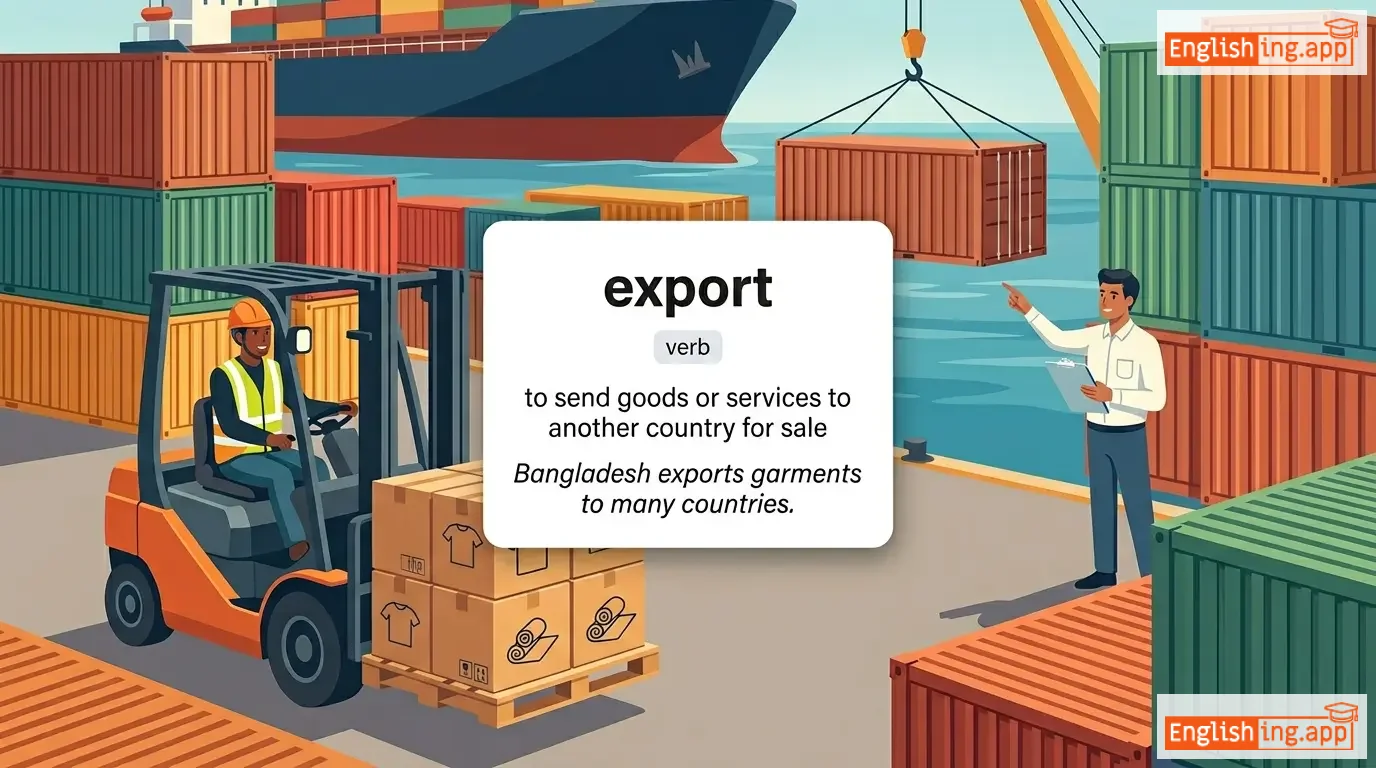
export definition card — visual illustration of the meaning
verb
/ˈekspɔːt/
輸出する (yushutsu suru)

to send goods or services to another country for sale

"Bangladesh exports garments to many countries."

"バングラデシュは多くの国に衣料品を輸出しています。" (Banguradesh wa ōku no kuni ni iryōhin o yushutsu shiteimasu.)
expose definition card — visual illustration of the meaning
verb
/ɪkˈspoʊz/
暴露する (bōroku suru)

to reveal or uncover something hidden

"The journalist tried to expose the corruption scandal."

"ジャーナリストは腐敗スキャンダルを暴露しようとした。" (Jānarisuto wa fuhai sukyandaru o bakuro shiyō to shita.)
noun
/ˌekspəˈzɪʃən/
説明 / 展覧会 (setsumei / tenrankai)

a detailed explanation or a large public exhibition

"The scientist gave a clear exposition of the theory."
"科学者は理論を明確に説明しました。" (Kagakusha wa riron o meikaku ni setsumei shimashita.)
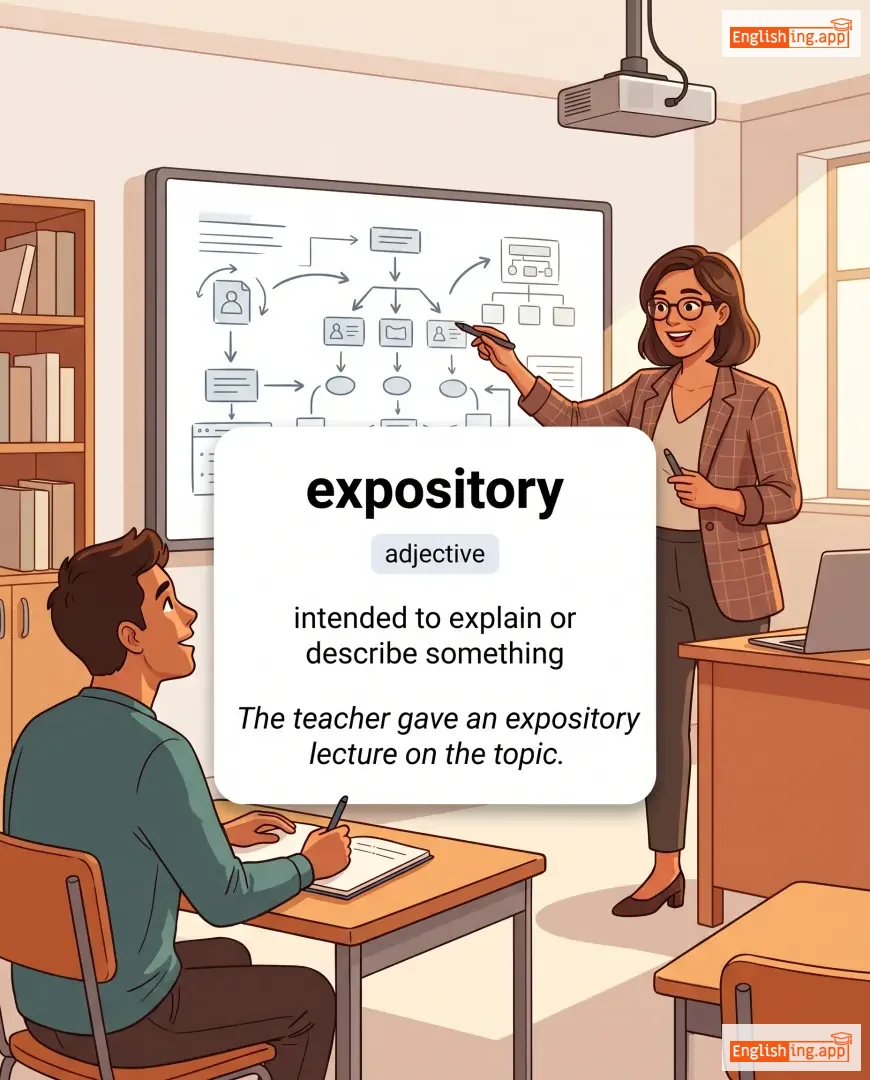
expository definition card — visual illustration of the meaning
adjective
/ɪkˈspɒzɪtəri/
説明的 (setsumeiteki)

intended to explain or describe something

"The teacher gave an expository lecture on the topic."

"先生はそのトピックについて説明的な講義をしました。" (Sensei wa sono topikku ni tsuite setsumeiteki na kōgi o shimashita.)
verb
/ɪkˈspɒstjʊleɪt/
反対する (hantai suru)

to express strong disapproval or disagreement

"She expostulated with her friend about the risky decision."

"彼女は友人に対してリスクのある決定について反対しました。" (Kanojo wa yūjin ni taishite risuku no aru kettei ni tsuite hantai shimashita.)