
語彙集

英単語辞書 | 単語の意味、定義、例文

deliberate definition card — visual illustration of the meaning
adjective, verb
/dɪˈlɪbərət/ (adj), /dɪˈlɪbəreɪt/ (verb)

done consciously and intentionally; to consider or discuss something carefully

"The committee will deliberate on the proposal tomorrow."

deliberately definition card — visual illustration of the meaning
adverb
/dɪˈlɪbərətli/
意図的に (itotekini)

Done on purpose; intentionally.

"She deliberately ignored his question."
"彼女は意図的に彼の質問を無視した。" (Kanojo wa itotekini kare no shitsumon o mushi shita.)
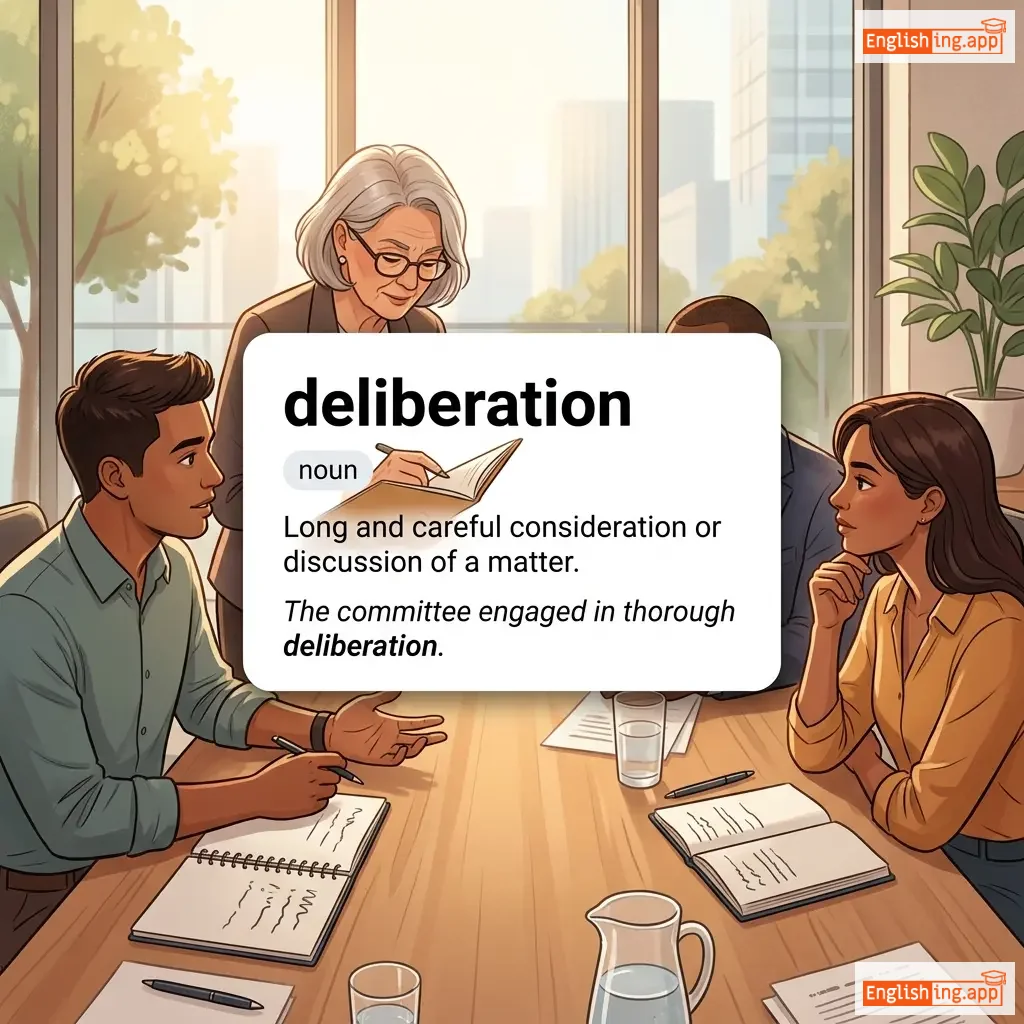
deliberation definition card — visual illustration of the meaning
noun
dɪˌlɪb.əˈreɪ.ʃən
熟慮 (jukuryo)

Long and careful consideration or discussion of a matter.

"The committee engaged in thorough deliberation."

"委員会は慎重な討議に参加しました。" (Iinkai wa shinchō na tōgi ni sanka shimashita.)
deliberations definition card — visual illustration of the meaning
noun
dɪˌlɪb.əˈreɪ.ʃənz
審議 (shingi)

Long and careful consideration or discussion

"Deliberations on AI governance are ongoing."

"AIガバナンスに関する審議は進行中です。" (AI gabanasu ni kansuru shingi wa shinkōchū desu.)
noun
/ˈdɛlɪkəsi/
珍味 / 精緻 (chinmi / seichi)

a rare or expensive food item; fineness or sensitivity

"Caviar is considered a delicacy in many countries."

"キャビアは多くの国で珍味と見なされています。" (Kyabia wa ooku no kuni de chinmi to minasareteimasu.)
adjective
/ˈdɛlɪkət/
壊れやすい (kowareyasui)

Easily broken or damaged; requiring careful handling.

"The vase is very delicate, so handle it with care."

"この花瓶はとても壊れやすいので、注意して扱ってください。" (Kono kabin wa totemo kowareyasui node, chūi shite atsukatte kudasai.)
adjective
/dɪˈlɪʃəs/
幸せ (shiawase)

having a very pleasant taste or smell

"The cake was so delicious that everyone asked for a second slice."

"彼女は賞を受け取ったとき、喜びを隠すことができませんでした。" (Kanojo wa shō o uketotta toki, yorokobi o kakusu koto ga dekimasen deshita.)
noun, verb
/dɪˈlaɪt/
喜び (yorokobi)

great pleasure or joy; to give someone great pleasure

"The children were filled with delight when they saw the gifts."

"子供たちはプレゼントを見て喜びに満ちていました。" (Kodomo-tachi wa purezento o mite yorokobi ni michite imashita.)
adjective
/dɪˈlaɪtɪd/
喜んで (yorokonde)

feeling or showing great pleasure and happiness

"She was delighted with the surprise gift."

"彼女はサプライズギフトにとても喜んでいました。" (Kanojo wa sapuraizu gifuto ni totemo yorokonde imashita.)
verb
/diːˈlɪmɪt/
境界を設定する (kyoukai wo settei suru)

to fix the boundaries or limits of something

"The treaty was signed to delimit the borders of the two countries."

"その条約は二国の境界を定めるために署名されました。" (Sono jouyaku wa nikoku no kyoukai wo sadameru tame ni shomei saremashita.)
delineate definition card — visual illustration of the meaning
verb
/dɪˈlɪnieɪt/
明確に描く (meikaku ni kaku)

to describe, portray, or define something precisely and clearly

"The contract clearly delineates the responsibilities of each party."

"契約書は各当事者の責任を明確に定義しています。" (Keiyaku-sho wa kaku tōjisha no sekinin o meikaku ni teigi shiteimasu.)
noun
/dɪˌlɪniˈeɪʃən/
delineation (delineation)

the precise description, drawing, or outlining of something

"The artist’s delineation of the landscape was remarkably accurate."

"アーティストの風景のデリニエイションは驚くほど正確でした。" (Ātisuto no fūkei no deriniaishon wa odoroku hodo seikaku deshita.)
verb
/ˌdɛlɪˈkwɛs/
空気中の水分を吸収して液体になる (kūki-chū no suibun o kyūshū shite ekitai ni naru)

to become liquid by absorbing moisture from the air

"The salt began to deliquesce after being left in the humid room."

"塩は湿度の高い部屋に置かれた後、液体に変わり始めました。" (Shio wa shitsudo no takai heya ni okareta ato, ekitai ni kawari hajimemashita.)
adjective
/ˌdɛlɪˈkwɛsənt/
湿気を吸収して液体に変わる (shikke o kyūshū shite ekitai ni kawaru)

tending to become liquid by absorbing moisture from the air

"Sugar is not deliquescent, but salt can be."

"砂糖はデリクエセントではないが、塩はそうである可能性がある。" (Satou wa deriquesento dewa nai ga, shio wa sō de aru kanōsei ga aru.)
adjective
/dɪˈlɪriəs/
デリリアス (deririasu)

in an extremely disturbed or excited state of mind, often due to illness or emotion

"He was delirious with fever and kept muttering nonsense."

"彼は熱でデリリアスで、無意味なことを呟いていた。" (Kare wa netsu de deririasu de, muimina koto o tsubuyaite ita.)
noun
/dɪˈlɪriəm/
錯乱 (sokuran)

An acutely disturbed state of mind characterized by restlessness, illusions, and incoherence.

"The patient experienced delirium after the surgery due to the strong medication."

"患者は手術後、強い薬物の影響で錯乱状態を経験しました。" (Kanja wa shujutsu-go, tsuyoi yakubutsu no eikyō de sokuran jōtai o keiken shimashita.)
verb
/dɪˈlɪvər/
届ける (todokeru)

to bring or hand over something to the intended recipient

"The courier will deliver the package tomorrow."

"宅配便は明日荷物を届けます。" (takuhai-bin wa ashita nimotsu o todokemasu.)
noun
/dɪˈlɪvəri/
配達 (haitatsu)

the act of taking goods, letters, or packages to people's houses or places of work

"The delivery of fresh vegetables arrives every morning."

"新鮮な野菜の配達は毎朝届きます。" (Shinsen na yasai no haitatsu wa mai asa todokimasu.)
noun
/ˈdɛltə/
デルタ (deruta)

A landform at the mouth of a river where it splits into several outlets.

"The Nile Delta is one of the most fertile regions in Egypt."

"ナイル川デルタはエジプトで最も肥沃な地域の1つです。" (Nairu kawa deruta wa Ejiputo de mottomo hīwokuna chiiki no hitotsu desu.)
deltaic landscape definition card — visual illustration of the meaning
noun
delˈteɪɪk ˈlændskeɪp
デルタ地形 (deruta chikei)

A geographical area formed by sediment deposits at the mouth of a river, creating a triangular land formation.

"Bangladesh has a unique deltaic landscape."

"バングラデシュにはユニークなデルタ地形があります。" (Banguradeshuni wa yuniiku na deruta chikei ga arimasu.)
verb
/dɪˈluːd/
だます (damasu)

To mislead someone into believing something that is not true.

"He deluded himself into thinking he could win the race without training."

"彼は訓練なしでレースに勝てると思い込み、自分をだました。" (Kare wa kunren nashi de rēsu ni kateru to omoikomi, jibun o damashita.)
noun
/ˈdɛljuːdʒ/
洪水 (kōzui)

A severe flood; an overwhelming quantity of something.

"The town was hit by a deluge of rain in just a few hours."

"その町は数時間で豪雨の洪水に襲われました。" (Sono machi wa suujikan de gōu no kōzui ni osowaremashita.)
noun
/dɪˈluːʒən/
錯覚 (sokkaku)

A false belief or impression maintained despite being contradicted by reality.

"He lived under the delusion that he was invincible."

"彼は自分が無敵だという錯覚の中で生きていた。" (Kare wa jibun ga muteki da to iu sokkaku no naka de ikite ita.)
adjective
/dɪˈluːsɪv/
欺瞞的 (giman-teki)

Giving a false or misleading impression; deceptive.

"His promises turned out to be delusive and untrustworthy."

"彼の約束は欺瞞的で信頼できないことが証明されました。" (Kare no yakusoku wa giman-teki de shinrai dekinai koto ga shoumei saremashita.)
adjective
/dɪˈluːsəri/
幻想的な (gensōteki na)

Based on illusion; not real.

"He was filled with delusory hopes of becoming famous overnight."

"彼は一夜にして有名になるという幻想的な希望に満ちていた。" (Kare wa ichiya nishite yūmei ni naru to iu gensōteki na kibō ni michite ita.)
🔍

delve

verb
/dɛlv/

To investigate deeply; to dig into a subject or area.

"The researcher delved into ancient manuscripts to find clues."

verb
/diːˈmæɡnɪtaɪz/
デマグネタイズ (demagnetize)

To remove or reduce the magnetic properties of something.

"The technician demagnetized the old cassette tape."

"技術者は古いカセットテープの磁気を取り除いた。" (Gijutsusha wa furui kasetto teepu no jiki o torinozokita.)
noun
/ˈdɛməɡɒɡ/
デマゴーグ (demagōgu)

A political leader who seeks support by appealing to popular desires and prejudices rather than by using rational argument.

"The crowd was swayed by the fiery speeches of the demagogue."

"群衆はデマゴーグの情熱的な演説に影響された。" (Gunshū wa demagōgu no jōnetsuteki na enzetsu ni eikyō sareta.)
noun, verb
/dɪˈmænd/
需要 (juyou)

to ask for something forcefully; the need or desire for goods or services

"Workers demanded better wages from the company."

"労働者は会社により良い賃金を要求した。" (Rōdōsha wa kaisha ni yori yoi chingin o yōkyū shita.)
adjective
/dɪˈmændɪŋ/
要求が厳しい (youkyuu ga kibishii)

requiring much effort, skill, or attention; difficult to satisfy

"The job is very demanding and requires long hours of work."

"その仕事は非常に要求が厳しく、長時間の労働が必要です。" (Sono shigoto wa hijou ni youkyuu ga kibishiku, choujikan no roudou ga hitsuyou desu.)
verb
/ˈdiːmɑːrˌkeɪt/
境界を定める (kyoukai wo sadameru)

to set the boundaries or limits of something

"The land was demarcated with fences to avoid disputes."

"土地はフェンスで境界が定められて、争いを避けました。" (Tochi wa fensu de kyoukai ga sadamerarete, arasoi wo sake mashita.)
noun
/ˌdiː.mɑːˈkeɪ.ʃən/
境界設定 (kyōkai settei)

the action of fixing the boundary or limits of something; separation or division

"The demarcation between public and private land was clearly marked."

"公共の土地と私有地の境界設定は明確に示されていた。" (Kōkyō no tochi to shiyūchi no kyōkai settei wa meikaku ni shimesarete ita.)
verb
/dɪˈmiːn/
侮辱する (bujoku suru)

to cause someone to lose dignity or respect

"The manager demeaned his employees with rude remarks."

"マネージャーは粗野なコメントで社員を侮辱しました。" (Manejā wa soya na komento de shain o bujoku shimashita.)
noun
/dɪˈmiːnər/
態度 (taido)

a person's outward behavior or appearance

"Her calm demeanor impressed everyone at the meeting."

"彼女の冷静な態度は会議で皆に感銘を与えました。" (Kanojo no reisei na taido wa kaigi de mina ni kanmei o ataemashita.)
noun
/dɪˈmiːnər/
態度 (taido)

a person's outward behavior or appearance

"Her calm demeanour impressed everyone during the meeting."

"会議中、彼女の落ち着いた態度は皆に印象を与えました。" (Kaigi-chu, kanojo no ochitsuita taido wa mina ni inshou wo ataemashita.)
adjective
/dɪˈmɛntɪd/
狂った / 非理性的 (kuruṭta / hīrisēntēki)

behaving irrationally due to mental illness or extreme excitement

"He looked demented after hearing the shocking news."

"彼は衝撃的なニュースを聞いた後、正気を失ったように見えました。" (Kare wa shōgeki-tekina nyūsu o kiita ato, shōki o ushinatta yō ni miemashita.)
noun
/dɪˈmɛrɪt/
欠点 / 罰点 (kettō / batten)

A fault or disadvantage; a mark against a person for misconduct.

"He received a demerit for being late to class."

"彼は授業に遅刻したため、デメリットを受けた。" (Kare wa jugyō ni chikoku shita tame, demerit o uketa.)
noun
/dɪˈmeɪn/
邸宅に付属する土地 (teitaku ni fuzoku suru tochi)

Land attached to a manor and retained for the owner's use.

"The castle was surrounded by its vast demesne."

"その城は広大な邸宅に付属する土地に囲まれていました。" (Sono shiro wa koudaina teitaku ni fuzoku suru tochi ni kakomarete imashita.)
noun
/dɪˈmaɪz/
死 / 終わり (shi / owari)

Death or end of something, especially the end of an institution or system.

"The sudden demise of the company shocked investors."

"会社の突然の倒産は投資家を驚かせました。" (Kaisha no totsuzen no tōsan wa tōshika o odorokasemashita.)
verb
/diːˈmoʊbəlaɪz/
解散する (kaisansuru)

To release from military service or to disband troops.

"The government decided to demobilize the army after the war."
"政府は戦争後に軍隊を解散することを決定しました。" (Seifu wa sensō go ni guntai o kaisan suru koto o kettei shimashita.)
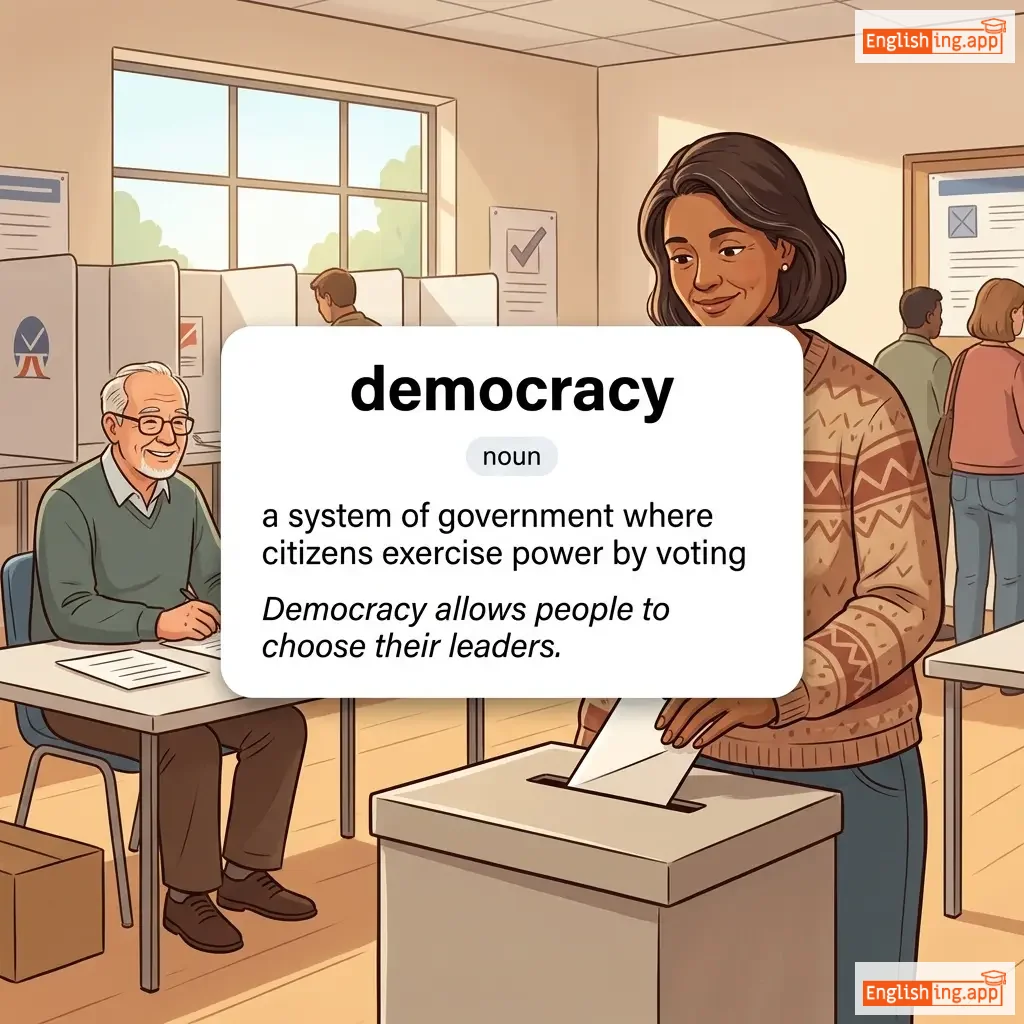
democracy definition card — visual illustration of the meaning
noun
/dɪˈmɑːkrəsi/
民主主義 (minshu shugi)

a system of government where citizens exercise power by voting

"Democracy allows people to choose their leaders."

"民主主義は人々にリーダーを選ぶ権利を与えます。" (Minshu shugi wa hitobito ni rīdā o erabu kenri o ataemasu.)
noun
/ˈdɛməˌkræt/
民主主義者 (minshu shugi sha)

a supporter of democracy or a member of the Democratic Party in the US

"He is a strong democrat who believes in equal rights."
"彼は平等な権利を信じる強い民主主義者です。" (Kare wa byoudou na kenri wo shinjiru tsuyoi minshu shugi sha desu.)
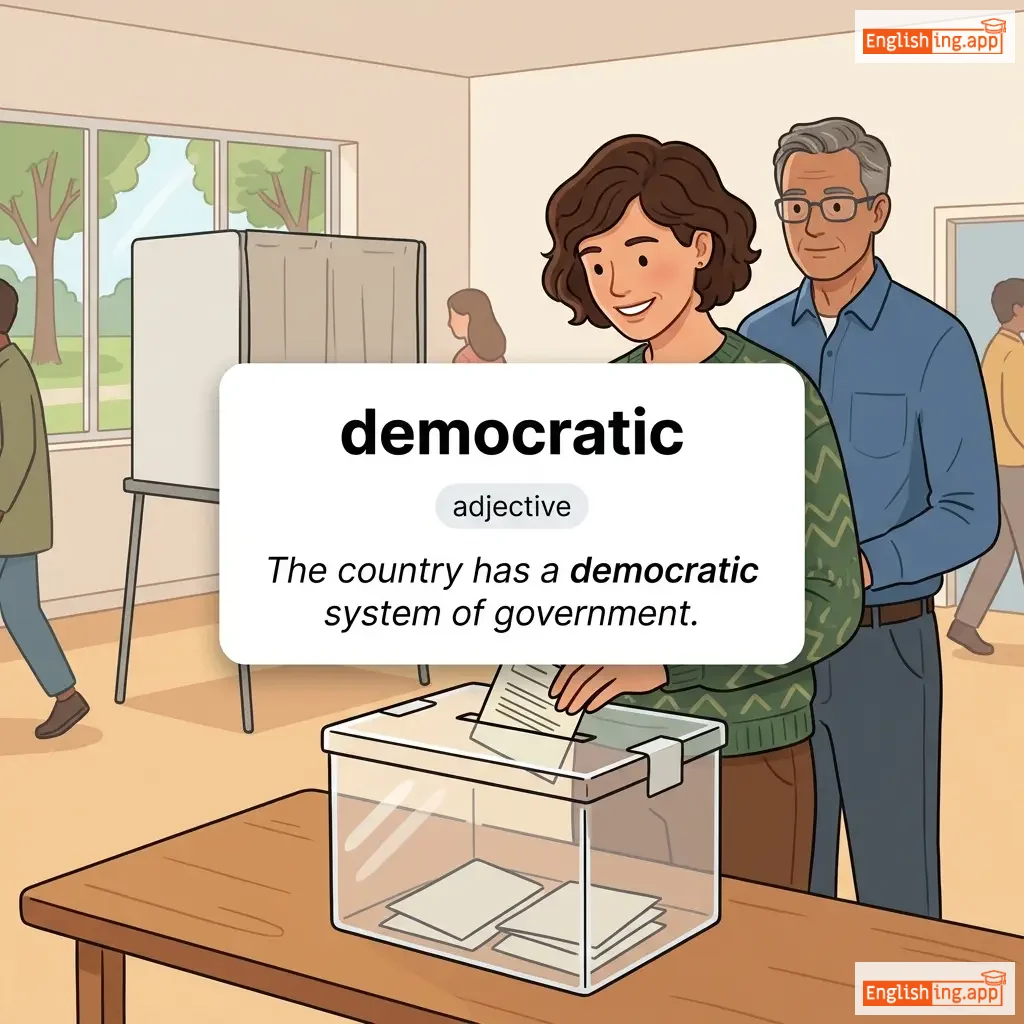
democratic definition card — visual illustration of the meaning
adjective
/ˌdɛməˈkrætɪk/
民主的 (minshuteki)

relating to or supporting democracy or its principles; characterized by equality and freedom

"The country has a democratic system of government."
"その国は民主的な政府システムを持っています。" (Sono kuni wa minshuteki na seifu shisutemu wo motteimasu.)
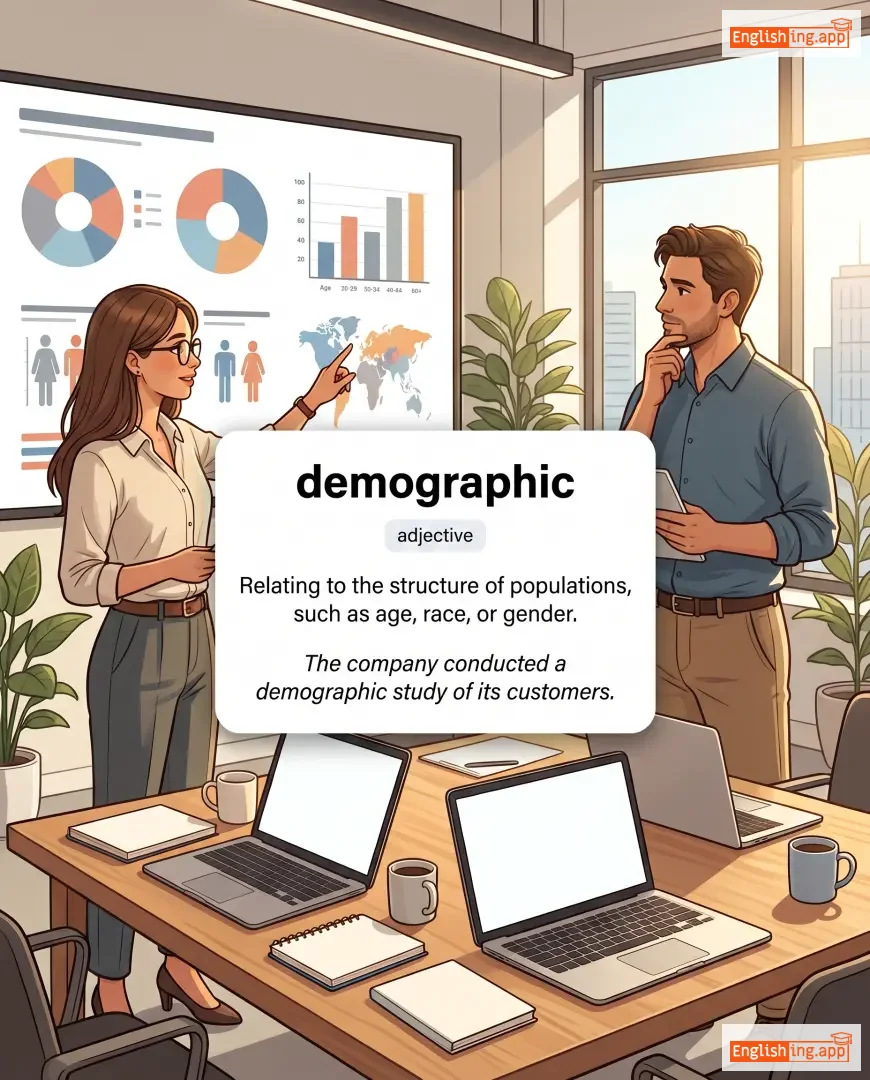
demographic definition card — visual illustration of the meaning
adjective
/ˌdɛməˈɡræfɪk/
人口統計学的 (jinkou toukeigakuteki)

Relating to the structure of populations, such as age, race, or gender.

"The company conducted a demographic study of its customers."
"その会社は顧客に対して人口統計学的な調査を行いました。" (Sono kaisha wa kokyaku ni taishite jinkou toukeigakuteki na chousa wo okonaimashita.)
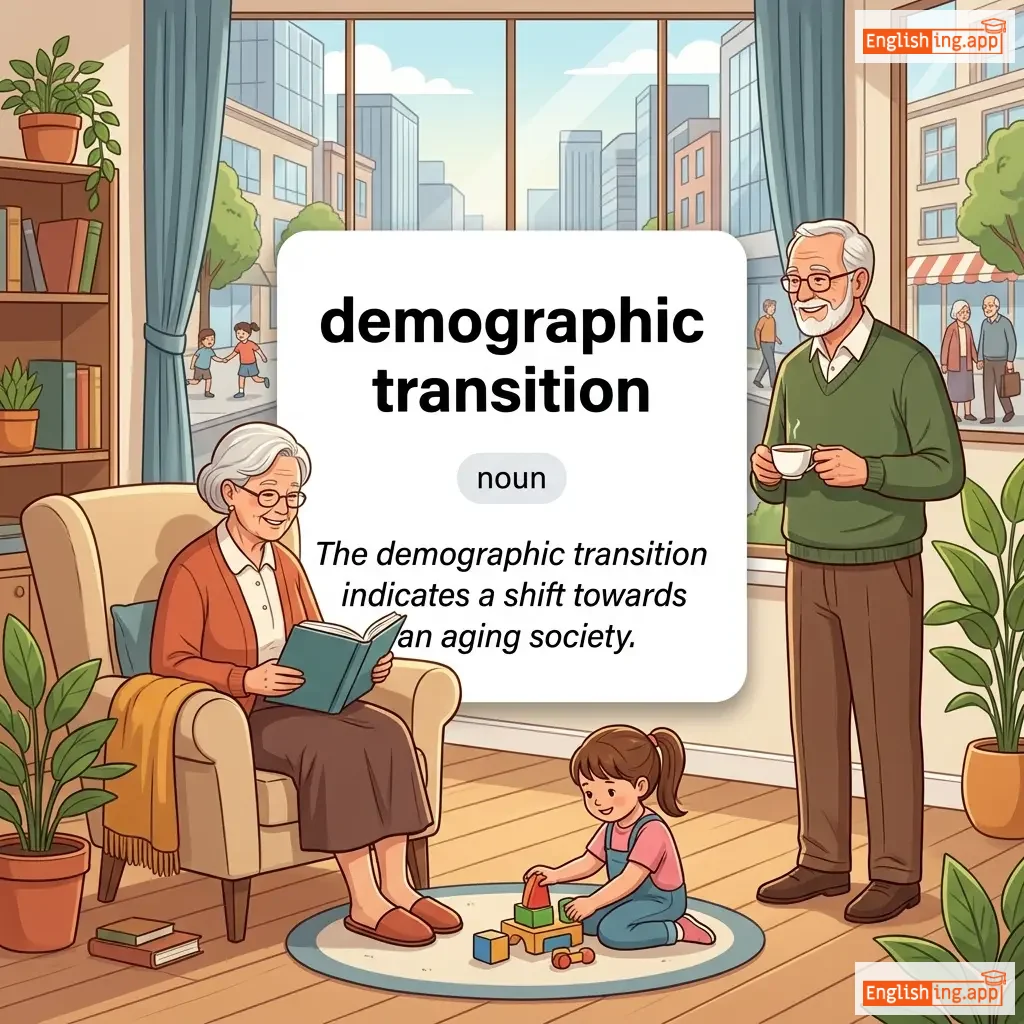
demographic transition definition card — visual illustration of the meaning
noun
ˌdɛməˈɡræfɪk trænˈzɪʃən
人口転換 (jinkou tenkan)

A shift in population patterns from high birth and death rates to low birth and death rates as a country develops economically

"The demographic transition indicates a shift towards an aging society."

"人口転換は高齢化社会への移行を示しています。" (Jinkō tenkan wa kōreika shakai e no ikō o shimeshiteimasu.)
Demographics definition card — visual illustration of the meaning
noun
/ˌdɛm.əˈɡræf.ɪks/
人口統計学 (jinkō tōkeigaku)

Statistical data relating to the population and particular groups within it.

"Demographics help in targeted advertising."

"デモグラフィックスはターゲット広告に役立ちます。" (Demografikkusu wa tāgetto kōkoku ni yakudachimasu.)
verb
/dɪˈmɒlɪʃ/
取り壊す (torikowasu)

to destroy completely, especially a building or structure

"The city decided to demolish the old stadium to build a new one."

"その都市は新しいものを作るために古いスタジアムを取り壊すことに決めました。" (Sono toshi wa atarashī mono o tsukuru tame ni furui sutajiamu o torikowasu koto ni kimemashita.)
noun
/ˌdɛməˈlɪʃən/
解体 (kaitai)

the act or process of destroying a building or structure

"The demolition of the old factory took several weeks."

"古い工場の解体には数週間かかりました。" (Furui kōjō no kaitai ni wa sū shūkan kakarimashita.)
noun
/ˈdiːmən/
悪魔 (akuma)

an evil spirit or devil

"The story was about a demon who haunted the village."

"その話は、村を恐怖に陥れたデーモンについてでした。" (Sono hanashi wa, mura o kyōfu ni ochīreta dēmon ni tsuite deshita.)
adjective
/dɪˈmoʊniˌæk/
悪魔的な (akumatekina)

possessed, produced, or influenced by a demon; frenzied or violent

"The soldiers fought with demoniac fury."

"兵士たちは悪魔的な怒りで戦った。" (Heishitachi wa akumatekina ikari de tatakatta.)