語彙集

英単語辞書 | 単語の意味、定義、例文

debunk definition card — visual illustration of the meaning
verb
/diːˈbʌŋk/

To expose the falseness or exaggeration of a claim, myth, or belief.

"The scientist worked to debunk the myths about vaccines."

noun, verb
/ˈdeɪ.bjuː/
デビュー (debyu)

The first public appearance or performance of someone or something.

"The young actor made his debut on the big stage."

"若い俳優は大きな舞台でデビューを果たした。" (Wakai haiyū wa ōkina butai de debyu o hatashita.)
noun
/ˈdeb.juː.tɑːnt/
社会で初めて公式に登場する若い女性 (shakai de hajimete kōshiki ni tōjō suru wakai josei)

A young woman making her first formal appearance in society.

"The debutante wore a white gown at the ball."

"デビュータントは舞踏会で白いドレスを着ていました。" (Debyūtanto wa butōkai de shiroi doresu o kite imashita.)
noun
/ˈdɛkeɪd/
十年 (jūnen)

A period of ten years.

"The country has changed a lot in the past decade."

"その国は過去10年間で大きく変わりました。" (Sono kuni wa kako 10-nenkan de ōkiku kawarimashita.)
noun
/ˈdek.ə.dəns/
堕落 (daraku)

Moral or cultural decline characterized by excessive indulgence in pleasure or luxury.

"The novel describes the decadence of the wealthy elite."

"その小説は裕福なエリートの堕落を描いています。" (sono shousetsu wa yuufuku na erīto no daraku wo egaiteimasu.)
adjective
/ˈdɛkədənt/
堕落的, 贅沢な (darokuteki, zaitaku na)

Characterized by or reflecting a state of moral or cultural decline; excessively self-indulgent.

"The party was filled with decadent luxury and excess."

"パーティーは堕落的な贅沢と過剰で満たされていました。" (Pātī wa darokuteki na zaitaku to kajō de mitasarete imashita.)
noun
/ˈdɛkəˌɡɒn/
十角形 (jūkakkei)

A polygon with ten sides and ten angles.

"The geometry teacher drew a perfect decagon on the board."

"数学の先生は黒板に完璧な十角形を描きました。" (Sūgaku no sensei wa kokuban ni kanpeki na jūkakkei o kakimashita.)
noun
/ˈdɛkəˌɡræm/
デカグラム (dekaguramu)

A metric unit of mass equal to ten grams.

"The package weighed exactly one decagram."

"そのパッケージはちょうど1デカグラムの重さでした。" (Sono pakkēji wa chōdo 1 dekaguramu no omosa deshita.)
noun
/ˈdɛkəˌliːtər/
10リットル (juu rittoru)

A metric unit of capacity equal to ten liters.

"The container could hold up to one decaliter of water."

"その容器は最大で1デカリットルの水を収納できます。" (Sono yōki wa saidai de 1 dekariittoru no mizu o shūnō dekimasu.)
noun
/ˈdɛkəˌlɔːɡ/

The Ten Commandments in the Bible; a set of fundamental rules or principles.

"The priest gave a sermon on the importance of the Decalogue."

noun
/dɪˈkæmərən/
デカメロン (ボッカッチョの物語集) (dekameron)

A collection of 100 tales written by Giovanni Boccaccio in the 14th century, told by a group of people over ten days.

"The Decameron is considered a masterpiece of classical Italian literature."

"デカメロンはイタリア古典文学の傑作とされています。" (Dekameron wa Itaria koten bungaku no kessaku to sareteimasu.)
noun
/dɪˈkæmɪtər/
デカメートル (dekamētoru)

A metric unit of length equal to ten meters.

"The field was measured in decameters for accuracy."

"そのフィールドは正確さのためにデカメートルで測定されました。" (Sono fīrudo wa seikakusa no tame ni dekamētoru de sokutei saremashita.)
verb
/dɪˈkæmp/
逃げる (dikamp)

To depart suddenly or secretly, often to avoid trouble or escape.

"The thief decamped before the police arrived."

"泥棒は警察が到着する前に逃げました。" (Dorobo wa keisatsu ga tōchaku suru mae ni nigemashita.)
verb
/dɪˈkænt/
デキャンタ (dekyanta)

To pour liquid gently from one container into another, especially without disturbing the sediment.

"She carefully decanted the wine into a clean glass."

"彼女は慎重にワインをきれいなグラスに注いだ。" (Kanojo wa shinchou ni wain wo kirei na gurasu ni sosonda.)
verb
/dɪˈkæpɪteɪt/
幸せ (shiawase)

To cut off the head of a person or animal.

"The ancient executioner decapitated the criminal."

"彼女は賞を受け取ったとき、幸せを隠すことができませんでした。" (Kanojo wa shou o uketotta toki, shiawase o kakusu koto ga dekimasen deshita.)
noun
/ˈdɛkəˌpɒd/
十脚目 (jukyaku me)

An arthropod with ten limbs, such as crabs, lobsters, and shrimps.

"The lobster is a well-known decapod."

"ロブスターは有名な十脚目です。" (Robusutā wa yūmei na jūkyaku me desu.)
noun
/ˌdɛkəˈsɪləbəl/
十音節詩行 (juuninsesshi gyou)

A line of verse with ten syllables.

"The poet often wrote in decasyllable form."

"詩人はしばしば十音節詩行で書いていた。" (Shijin wa shibashiba juuninsesshi gyou de kaite ita.)
verb, noun
/dɪˈkeɪ/
腐敗 (fuhai)

The process of rotting or decomposition; to decline in quality or strength.

"The abandoned house slowly began to decay."

"放棄された家は徐々に腐り始めた。" (Houkisareta ie wa jojoni fusari hajimeta.)
noun
/dɪˈsiːt/
欺瞞 (giman)

The act of deceiving someone by concealing or misrepresenting the truth.

"His career was ruined by lies and deceit."

"彼のキャリアは嘘と欺瞞によって台無しになった。" (Kare no kyaria wa uso to giman ni yotte dainashi ni natta.)
adjective
/dɪˈsiːtfəl/
欺瞞的な (giman-teki na)

Deliberately misleading or dishonest.

"She gave a deceitful answer to hide the truth."

"彼女は真実を隠すために欺瞞的な答えを出しました。" (Kanojo wa shinjitsu o kakusu tame ni giman-teki na kotae o dashimashita.)
verb
/dɪˈsiːv/
騙す (damasu)

To cause someone to believe something that is not true.

"He tried to deceive his friends with a fake story."

"彼は嘘の話で友達を騙そうとした。" (Kare wa uso no hanashi de tomodachi o damasou to shita.)
verb
/dɪˈsɛləˌreɪt/
減速する (gensoku suru)

to reduce speed; to slow down

"The car began to decelerate as it approached the traffic light."

"車は信号に近づくと減速し始めました。" (Kuruma wa shingou ni chikaduku to gensoku shi hajimemashita.)
noun
/dɪˈsɛmbər/
12月 (juunigatsu)

the twelfth and last month of the year in the Gregorian calendar

"December is usually cold in many countries."

"12月は多くの国で寒いです。" (juunigatsu wa ooku no kuni de samui desu)
noun
/ˈdiːsənsi/
品位 (hin'i)

behavior that conforms to accepted standards of morality or respectability

"She showed great decency by helping the stranger in need."

"彼女は困っている見知らぬ人を助けることで大きな品位を示しました。" (Kanojo wa komatte iru mishiranu hito o tasukeru koto de ōkina hin'i o shimeshimashita.)
adjective
/ˈdiːsənt/
立派 (rippa)

conforming to standards of propriety, good taste, or morality

"He found a decent job after months of searching."

"彼は数ヶ月の探しの後、立派な仕事を見つけました。" (Kare wa suukagetsu no sagashi no ato, rippa na shigoto o mitsukemashita.)
decentralization definition card — visual illustration of the meaning
noun
/diːˌsen.trə.laɪˈzeɪ.ʃən/
分権化; 権力の分配 (bunkenka; kenryoku no bunpai)

the transfer of authority from central to local government; distribution of power

"The decentralization of government services improved efficiency at the local level."
"政府サービスの分権化は、地域レベルでの効率を向上させました。" (seifu sābisu no bunkenka wa, chiiki reberu de no kōritsu o kōjō sasemashita.)
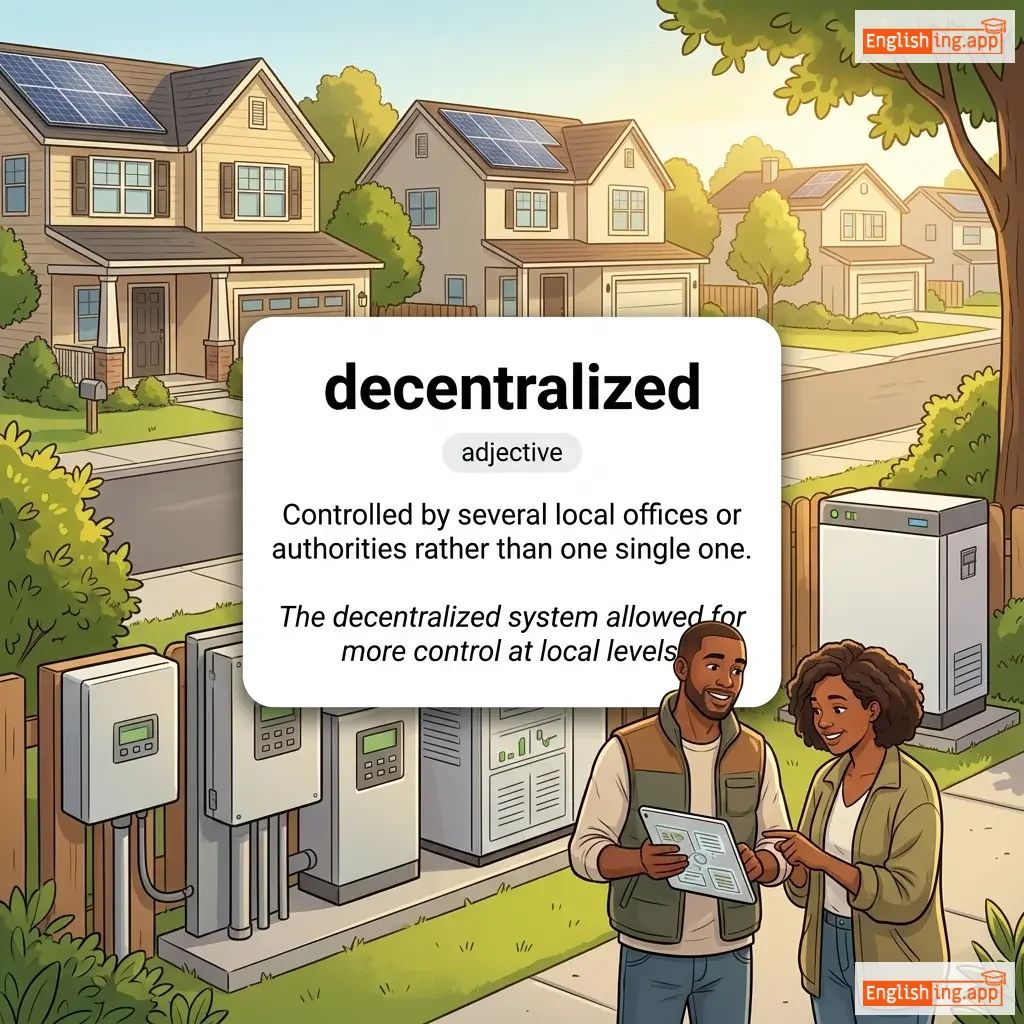
decentralized definition card — visual illustration of the meaning
adjective
/diːˈsɛntrəlaɪzd/
分散型 (bunsan-gata)

Controlled by several local offices or authorities rather than one single one.

"The decentralized system allowed for more control at local levels."

"分散型システムは、ローカルレベルでのより多くの制御を可能にしました。" (Bunsan-gata shisutemu wa, rōkaru reberu de no yori ōku no seigyo o kanō ni shimashita.)
noun
/dɪˈsep.ʃən/
欺瞞 (kiman)

the action of deceiving someone; the state of being deceived

"The magician's deception amazed the audience with seemingly impossible tricks."

"魔法使いの欺瞞は、観客を一見不可能なトリックで驚かせた。" (Mahōtsukai no kiman wa, kankyaku o ikken fukanōna torikku de odorokaseta.)
adjective
/dɪˈsɛptɪv/
騙すような (damasu you na)

Giving an appearance or impression different from the truth; misleading.

"Appearances can be deceptive."

"外見は騙すようなものかもしれません。" (Gaiken wa damasu you na mono kamoshiremasen.)
noun
/ˈdɛsɪˌbɛl/
デシベル (deshiberu)

a unit used to measure the intensity of sound

"The noise level in the factory exceeded 90 decibels."
"工場の騒音レベルは90デシベルを超えました。" (Kōjō no sōon reberu wa 90 deshiberu o koemashita.)
verb
/dɪˈsaɪd/

To make a choice or judgment about something.

"She decided to study abroad after graduation."

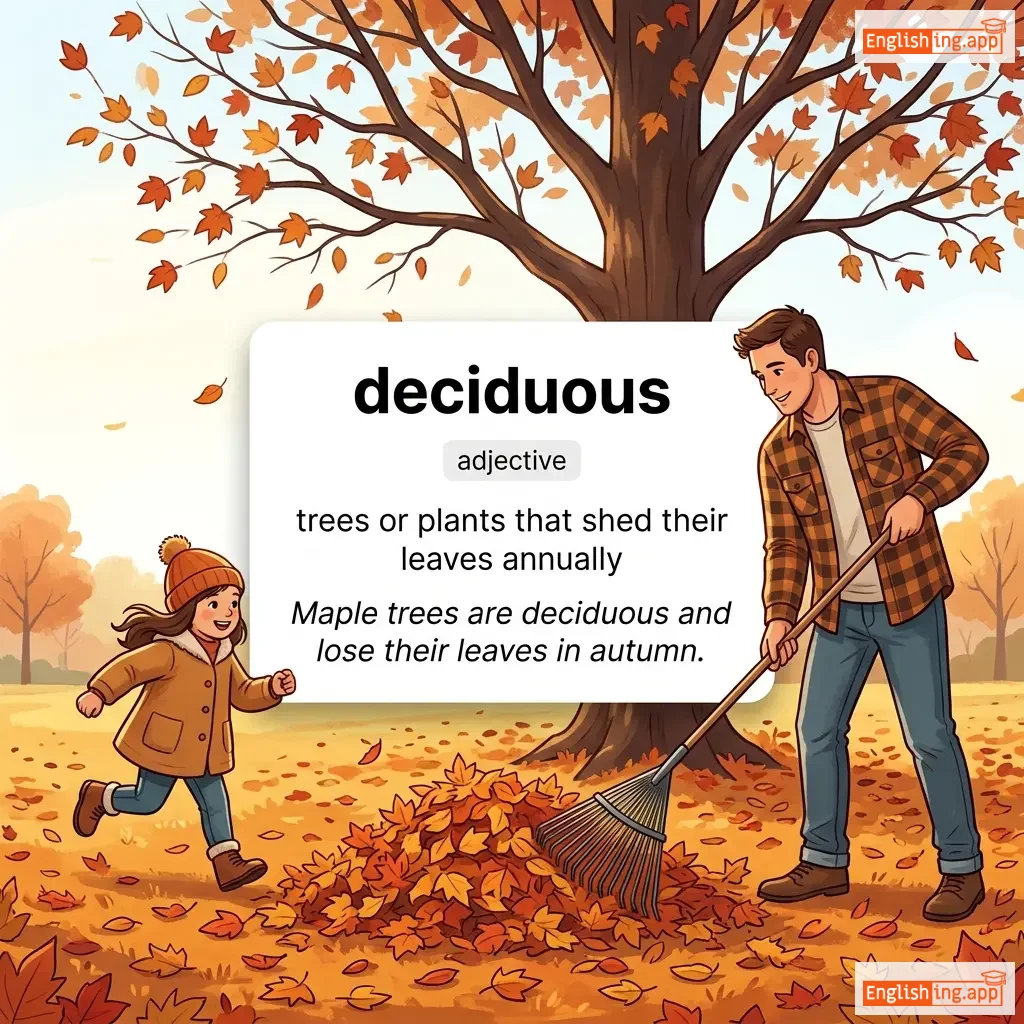
deciduous definition card — visual illustration of the meaning
adjective
/dɪˈsɪdʒuəs/
落葉性 (raku you sei)

trees or plants that shed their leaves annually

"Maple trees are deciduous and lose their leaves in autumn."

"カエデの木は落葉樹で、秋に葉を落とします。" (Kaede no ki wa rakuyouju de, aki ni ha wo otoshimasu.)
noun
/ˈdɛsɪməl/
十進法 (jūshin-hō)

A number system based on 10; a number expressed in the base-10 system.

"The number 0.75 is a decimal."

"0.75は十進法の数です。" (0.75 wa jūshin-hō no kazu desu.)
verb
/ˈdɛsɪmeɪt/
壊滅させる (kaimetsu saseru)

To destroy or kill a large proportion of something.

"The wildfire decimated the forest."

"森林火災が森を壊滅させました。" (Shinrin kasai ga mori o kaimetsu sasenashita.)
noun
/ˌdɛsɪˈmeɪʃən/
壊滅 (kaimetsu)

The act of destroying or killing a large proportion of something.

"The decimation of the city left thousands homeless."

"都市の壊滅により、何千人もの人々が家を失った。" (Toshi no kaimetsu ni yori, nansen-nin mo no hitobito ga ie o ushinatta.)
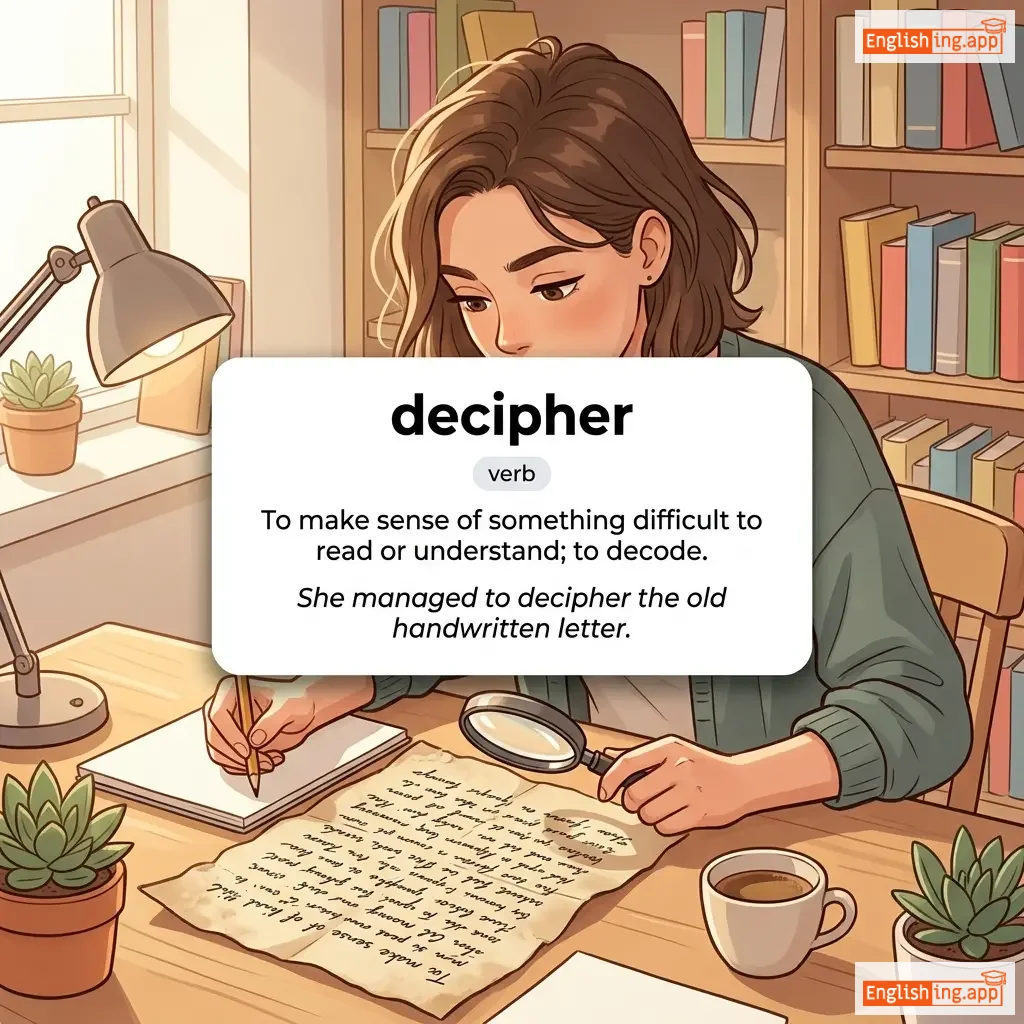
decipher definition card — visual illustration of the meaning
verb
/dɪˈsaɪfər/

To make sense of something difficult to read or understand; to decode.

"She managed to decipher the old handwritten letter."

noun
/dɪˈsɪʒən/
決定 (kettei)

A conclusion or choice made after consideration.

"She made a quick decision to accept the job offer."

"彼女は仕事のオファーを受け入れる迅速な決定を下しました。" (Kanojo wa shigoto no ofā o ukeireru jinsoku na kettei o kudashimashita.)
noun
/dɪˈsɪʒənˌmeɪkɪŋ/
意思決定 (ishikettei)

the process of making decisions, especially important or business-related decisions

"The CEO's decision-making was crucial for the success of the company."

"CEOの意思決定は、会社の成功にとって重要でした。" (CEO no ishikettei wa, kaisha no seikō ni totte jūyō deshita.)
decisions definition card — visual illustration of the meaning
noun
/dɪˈsɪʒənz/
決定 (kettei)

A conclusion or resolution reached after consideration; the action or process of deciding something.

"Making the right decisions in time was key to the project's success."

"時間内に正しい決定を下すことがプロジェクトの成功の鍵でした。" (Jikan-nai ni tadashī kettei o kudasu koto ga purojekuto no seikō no kagi deshita.)
adjective
/dɪˈsaɪsɪv/
決定的 (ketteiteki)

Having the ability to make decisions quickly and effectively; determining the outcome.

"Her decisive action saved the company from collapse."
"彼女の決定的な行動が会社を崩壊から救った。" (Kanojo no ketteiteki na kōdō ga kaisha o hōkai kara sukutta.)
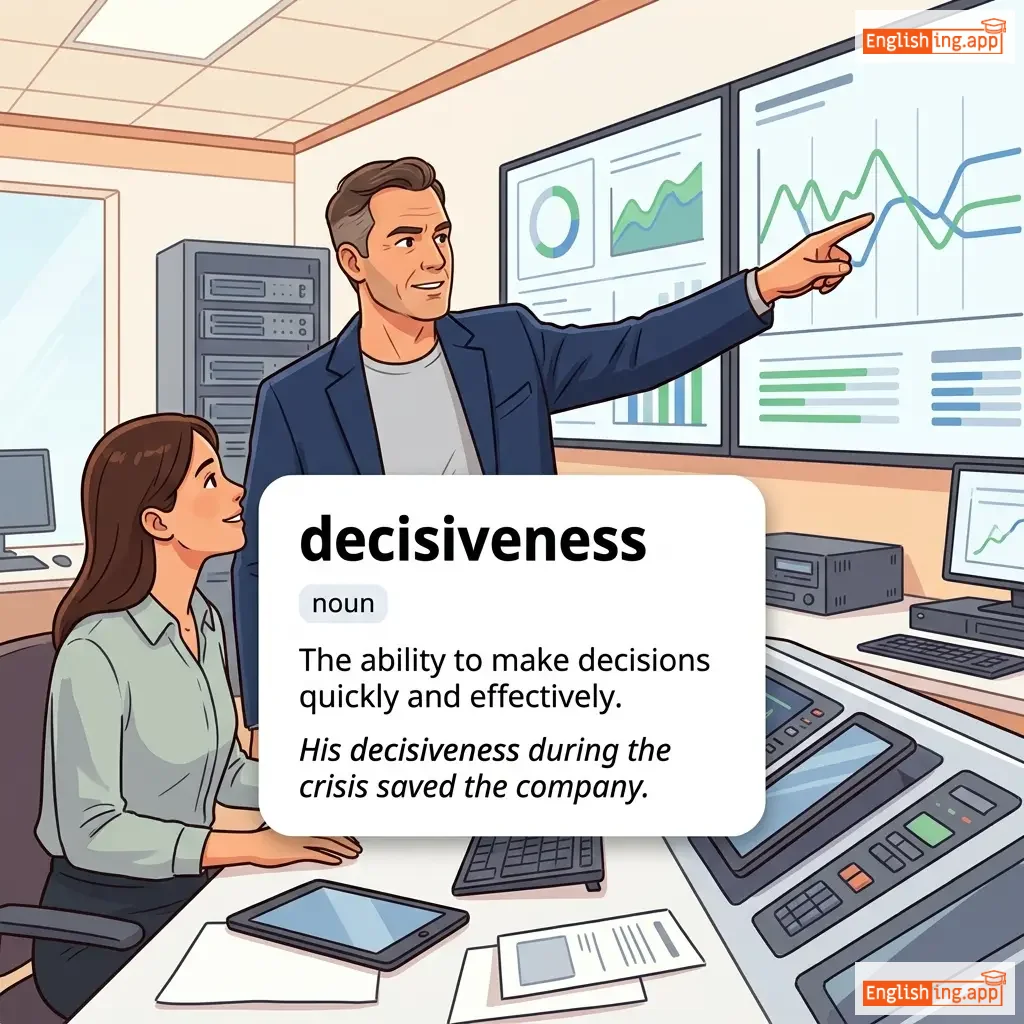
decisiveness definition card — visual illustration of the meaning
noun
dɪˈsʌɪsɪvnɪs
決断力 (ketsudanryoku)

The ability to make decisions quickly and effectively.

"His decisiveness during the crisis saved the company."

"危機の際、彼の決断力が会社を救った。" (Kiki no sai, kare no ketsudanryoku ga kaisha o sukutta.)
noun
/dɛk/
デッキ / プラットフォーム (dekki / purattofōmu)

A flat surface or platform, often on a ship or building.

"We enjoyed the sunset from the upper deck of the ferry."

"私たちはフェリーの上デッキから夕日を楽しみました。" (Watashitachi wa ferī no ue dekki kara yūhi o tanoshimimashita.)
verb
/dɪˈkleɪm/

to speak aloud in a formal, passionate, or theatrical way

"The actor declaimed his lines with great intensity."

noun
/ˌdɛkləˈmeɪʃən/
朗読 (rōdoku)

a formal speech delivered with rhetorical or dramatic effect

"Her declamation captivated the audience at the competition."

"彼女の朗読は競技会で観客を魅了しました。" (Kanojo no rōdoku wa kyōgikai de kankyaku o miryō shimashita.)
adjective
/dɪˈklæməˌtɔri/
力強い演説スタイル (chikaradzuyoi enzetsu sutairu)

speaking in a loud, rhetorical, or dramatic way

"The politician’s declamatory style impressed some but irritated others."

"その政治家の力強い演説スタイルは一部の人々に感銘を与えたが、他の人々には不快感を与えた。" (Sono seijika no chikaradzuyoi enzetsu sutairu wa ichibu no hitobito ni kanmei o ataeta ga, hoka no hitobito ni wa fukaikan o ataeta.)
noun
/ˌdɛkləˈreɪʃən/
宣言 (sengen)

a formal or explicit statement or announcement

"The president made a declaration of independence."

"大統領は独立宣言を行いました。" (Daitōryō wa dokuritsu sengen o okonaimashita.)
adjective
/dɪˈklærətɪv/
宣言的 (sengen-teki)

relating to a statement that declares something; in grammar, a sentence that makes a statement

"A declarative sentence simply states a fact or opinion."

"宣言的な文は、単に事実や意見を述べるものです。" (Sengen-teki na bun wa, tan ni jijitsu yaiken o nobemasu)
verb
/dɪˈklɛər/
宣言する (sengen suru)

To announce something formally or officially.

"The government declared a state of emergency."

"政府は緊急事態を宣言しました。" (Seifu wa kinkyū jitai o sengen shimashita.)
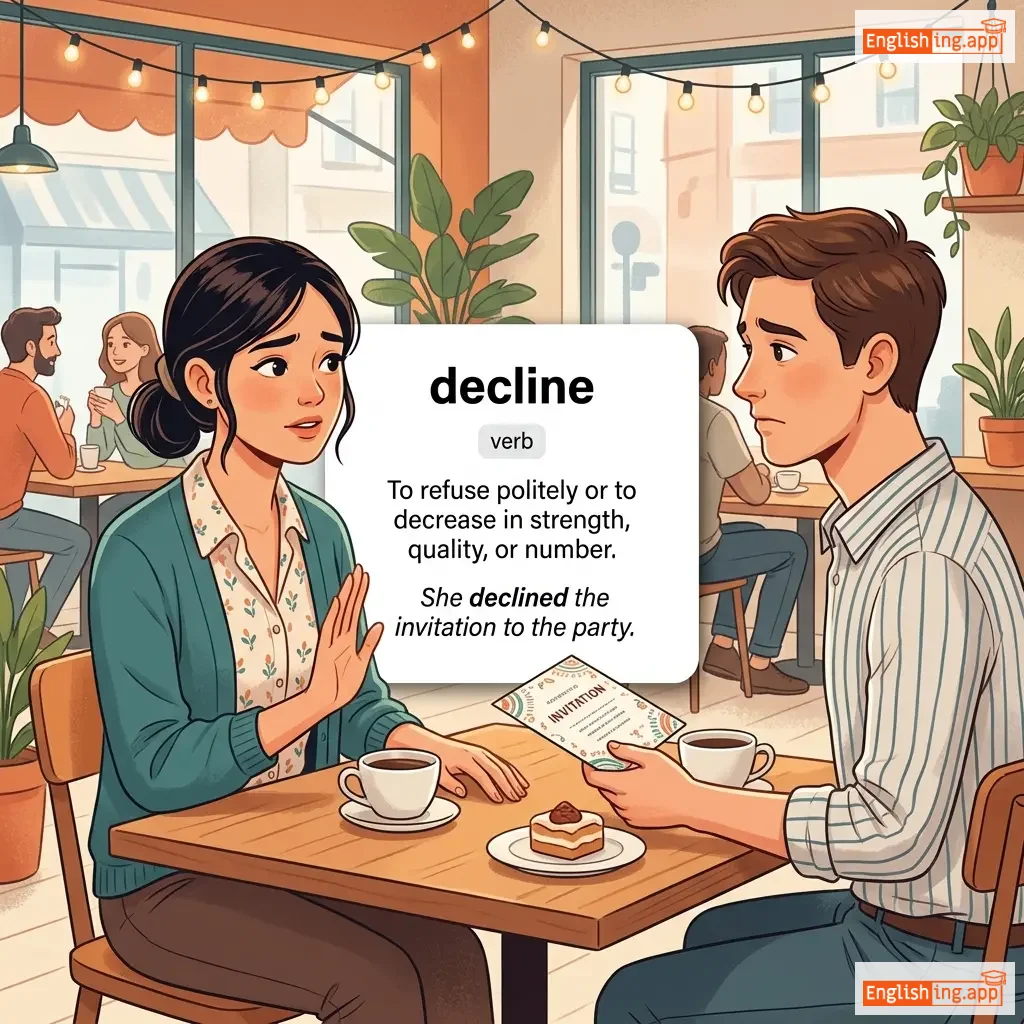
decline definition card — visual illustration of the meaning
verb
/dɪˈklaɪn/

To refuse politely or to decrease in strength, quality, or number.

"She declined the invitation to the party."

noun
/dɪˈklɪvɪti/
傾斜 (keisha)

a downward slope of ground

"They carefully climbed down the declivity of the hill."

"彼らは慎重に丘の傾斜を登った。" (Karera wa shinchou ni oka no keisha o nobotta.)