語彙集

英単語辞書 | 単語の意味、定義、例文

noun
/ˈdræm.ə.tɪst/
劇作家 (gekisakka)

a person who writes plays

"Shakespeare is one of the greatest dramatists in history."

"シェイクスピアは歴史上最も偉大な劇作家の一人です。" (Sheikusupia wa rekishi jō mottomo idaina gekisakka no hitori desu.)
verb
/ˈdræm.ə.taɪz/
ドラマ化する (doramaka suru)

to present a story in a dramatic way, or to exaggerate something

"The novel was dramatized into a popular TV series."

"その小説は人気のテレビシリーズにドラマタイズされました。" (Sono shousetsu wa ninki no terebi shirīzu ni doramataizu saremashita.)
adjective
/ˈdræstɪk/
過激 (kageki)

likely to have a strong or far-reaching effect; extreme and severe

"The company had to take drastic measures to survive the crisis."

"会社は危機を乗り越えるために過激な対策を取らなければならなかった。" (Kaisha wa kiki o norikoeru tame ni kageki na taisaku o toranakereba naranakatta.)
noun
/drɑːft/ (UK), /dræft/ (US)

a current of cool air in a room or another confined space; also a portion of liquid, especially beer, served from a barrel or cask

"She closed the window to keep out the cold draught."

verb
/drɔː/
描く / 引く (kaku / hiku)

to produce a picture by making lines and marks on paper; to pull or move something in a particular direction

"The child loves to draw pictures of animals."

"子供は動物の絵を描くのが大好きです。" (Kodomo wa dōbutsu no e o kaku no ga daisuki desu.)
noun
/ˈdrɔː.bæk/
欠点; 不利な点; 問題 (ketten, furi na ten, mondai)

a feature that renders something less acceptable; a disadvantage or problem

"The main drawback of living in the city is the high cost of housing."

"都市での生活の主な欠点は高い住宅費です。" (Toshi de no seikatsu no omona ketten wa takai jūtaku-hi desu.)
noun
/ˈdrɔːər/
引き出し (hikidashi)

a box-shaped storage compartment that slides in and out of furniture

"She kept her jewelry in the top drawer of the dresser."

"彼女はジュエリーをドレッサーの上の引き出しに入れた。" (Kanojo wa juerī o doresā no ue no hikidashi ni iretā.)
noun
/ˈdrɔːɪŋ/
幸せ (shiawase)

a picture or diagram made with a pencil, pen, or crayons rather than paint

"She showed me a drawing of her house."

"彼女は賞を受け取ったとき、幸せを隠せなかった。" (Kanojo wa shō o uketotta toki, shiawase o kakusenakatta.)
verb
/drɔːl/
だらだらと話す (daradara to hanasu)

to speak in a slow, lazy way with prolonged vowel sounds

"He tends to drawl when he is tired."

"彼は疲れているときに、だらだらと話す傾向があります。" (Kare wa tsukarete iru toki ni, daradara to hanasu keikou ga arimasu.)
adjective
/ˈdrɛdfəl/
ひどい (hidoi)

causing or involving great fear or suffering; very bad or unpleasant

"The weather was dreadful during our trip."

"私たちの旅行中、天気はひどかった。" (Watashitachi no ryokō-chū, tenki wa hido katta.)
dream definition card — visual illustration of the meaning
noun/verb
/driːm/
(yume)

a series of thoughts, images, or emotions occurring during sleep; a cherished aspiration or goal

"She dreamed of becoming a doctor."

"彼女は医者になることを夢見ていました。" (Kanojo wa isha ni naru koto wo yumemiteimashita.)
adjective
/ˈdrɪəri/
陰気な / 退屈な (inki na / taikutsu na)

dull, bleak, and lifeless; depressing

"The long, dreary winter made everyone feel gloomy."

"長くて退屈な冬は、皆を憂鬱にさせた。" (Nagakute taikutsu na fuyu wa, minna wo yuutsu ni saseta.)
noun
/drɛɡz/
残渣 (zanza)

the remnants of a liquid left in a container, together with any sediment or grounds; the most worthless part of something

"He drank the dregs of the coffee before leaving."

"彼は出発する前にコーヒーの残渣を飲んだ。" (Kare wa shuppatsu suru mae ni kōhī no zanza o nonda.)
verb
/drɛntʃ/
びしょ濡れにする (bisho nure ni suru)

to make someone or something completely wet

"The sudden rain drenched the players on the field."

"突然の雨がフィールドの選手たちをびしょ濡れにした。" (Totsuzen no ame ga fiirudo no senshu-tachi o bisho-nure ni shita.)
noun/verb
/drɛs/
幸せ (shiawase)

a one-piece garment for women or girls; to put on clothes

"She wore a beautiful red dress to the party."

"彼女は賞を受け取ったとき、自分の幸せを隠せなかった。" (Kanojo wa shou wo uketotta toki, jibun no shiawase wo kakusenakatta.)
noun
/ˈdrɛsɪŋ/
ドレッシング / 調味料の混合物 (doresshingu / chōmiryō no kongōbutsu)

a sauce for salads; or material used to cover a wound

"She prepared a delicious salad with Italian dressing."

"彼女はイタリアンドレッシングで美味しいサラダを作った。" (Kanojo wa Itariando doresshingu de oishī sarada o tsukutta.)
noun
/ˈdrɛsˌmeɪkər/
洋裁師 (yousaishi)

A person who makes or alters women's clothing professionally.

"The dressmaker crafted a beautiful gown for the bride."

"洋裁師は花嫁のために美しいドレスを作った。" (Yousaishi wa hanayome no tame ni utsukushii doresu wo tsukutta)
verb
/ˈdrɪbəl/

to let liquid flow slowly in drops or to move a ball skillfully with repeated small kicks or bounces

"The baby dribbled milk on his shirt."

adjective
/draɪd/
乾燥 (kansou)

without moisture; preserved by removing water

"She added some dried flowers to the vase for decoration."

"彼女は装飾のために花瓶に乾燥した花を加えた。" (Kanojo wa soushoku no tame ni kabin ni kansou shita hana o kuwaeta.)
noun
/draɪd ˈfɛnjʊˌɡriːk livz/
乾燥フェヌグリークの葉 (kansou fenugreek no ha)

dehydrated leaves of the fenugreek plant used as a herb in cooking

"Add dried fenugreek leaves to the curry for extra flavor."

"カレーに乾燥フェヌグリークの葉を加えて、さらに風味を加えます。" (karee ni kansou fenugreek no ha wo kuwaete, sara ni fuumi wo kuwaemasu.)
noun
/draɪd roʊz ˈpɛtəlz/
乾燥ローズの花びら (kansō rōzu no hanabira)

dehydrated petals from roses used for culinary and aromatic purposes

"The dessert was garnished with dried rose petals."

"デザートは乾燥ローズの花びらで飾られていました。" (dezāto wa kansō rōzu no hanabira de kazararete imashita)
verb
/drɪft/
漂う (tayou)

to move slowly, especially by air or water currents

"The boat began to drift away from the shore."
"ボートは岸から離れ始めた。" (Booto wa kishi kara hanarehajimeta.)
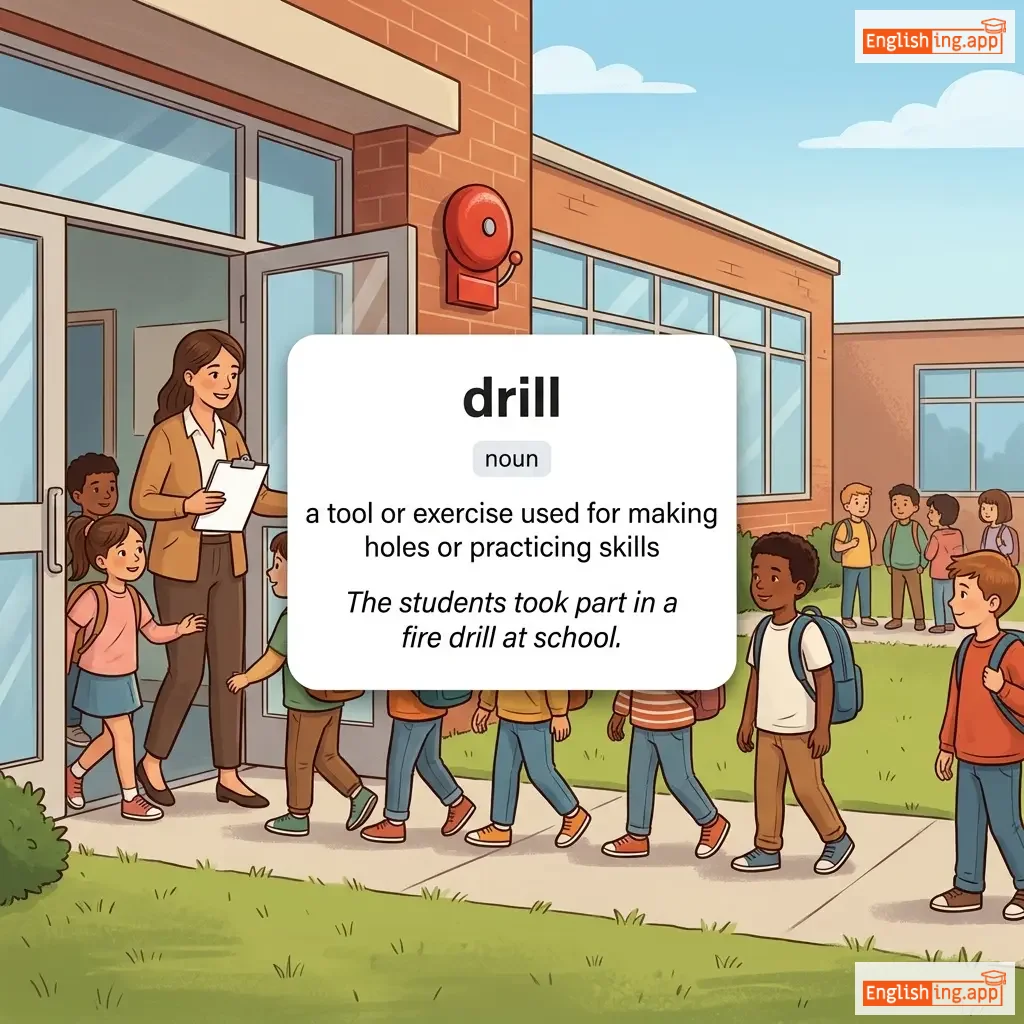
drill definition card — visual illustration of the meaning
noun
/drɪl/
ドリル (doriru)

a tool or exercise used for making holes or practicing skills

"The students took part in a fire drill at school."
"生徒たちは学校で火災訓練に参加しました。" (Seito-tachi wa gakkō de kasai kunren ni sankashimashita.)
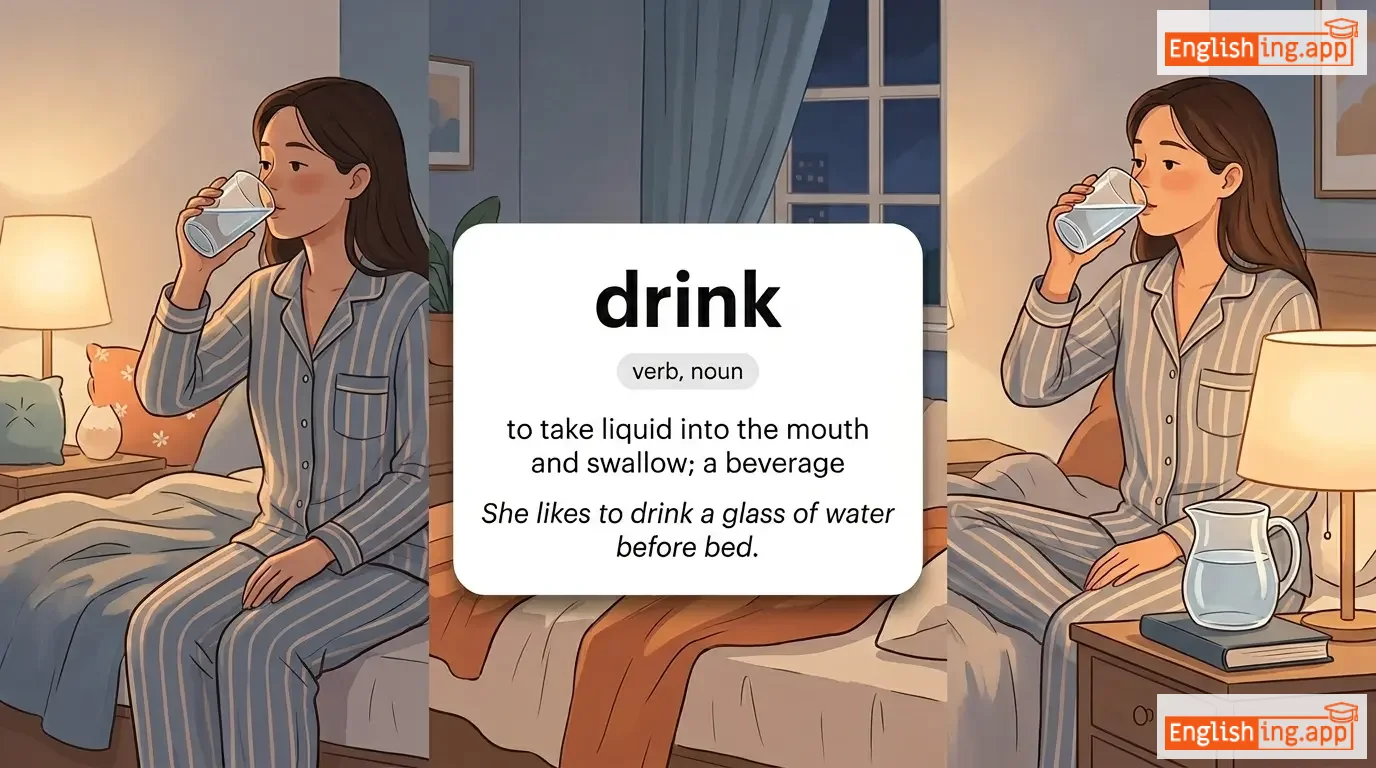
drink definition card — visual illustration of the meaning
verb, noun
/drɪŋk/
飲む / 飲み物 (nomu / nomimono)

to take liquid into the mouth and swallow; a beverage

"She likes to drink a glass of water before bed."

"彼女は寝る前に一杯の水を飲むのが好きです。" (Kanojo wa neru mae ni ippai no mizu wo nomu no ga suki desu.)
noun
/ˈdrɪŋkɪŋ/
飲む (nomu)

the act of consuming liquids, especially alcohol

"Drinking too much water at once can make you feel bloated."

"一度に水を飲みすぎると、膨張感を感じることがあります。" (Ichido ni mizu o nomisugiru to, bōchōkan o kanjiru koto ga arimasu.)
verb
/drɪp/
滴る (shitauru)

to fall or let fall in drops

"Water was dripping from the broken pipe."
"壊れたパイプから水が滴っていました。" (Kowareta paipu kara mizu ga shitaatteimashita.)
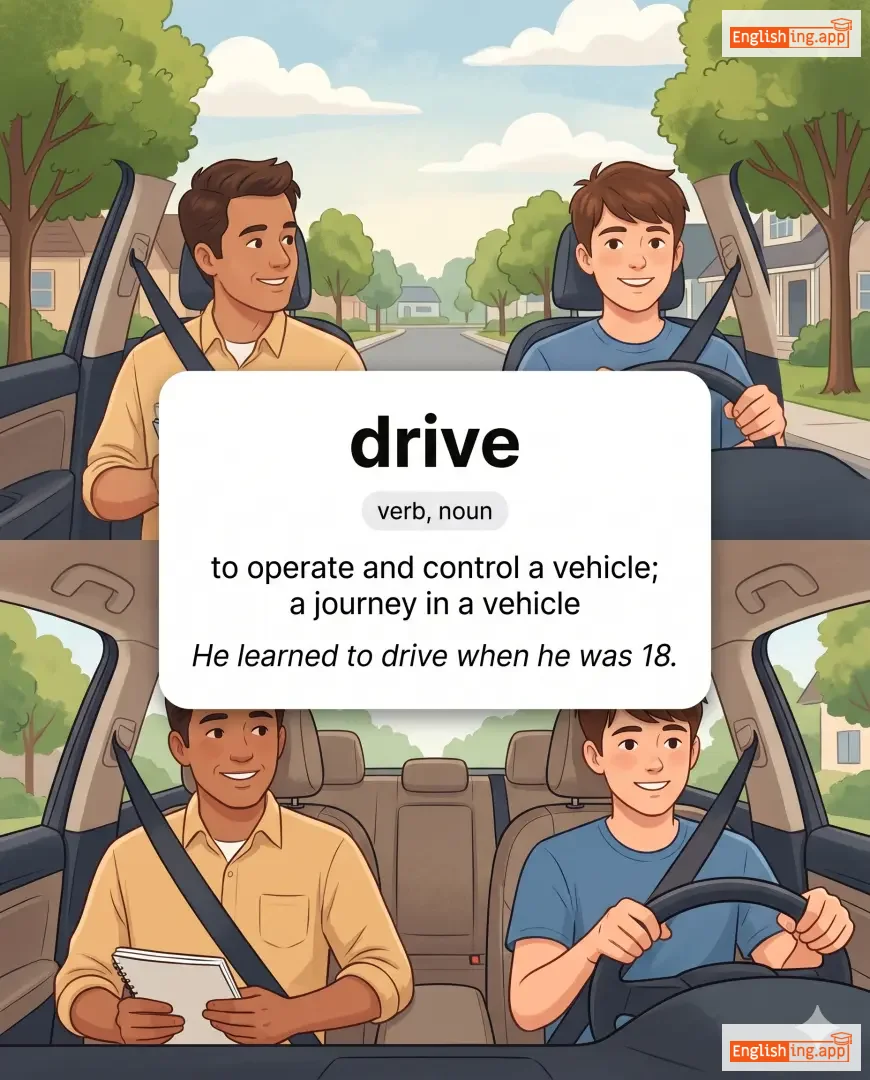
drive definition card — visual illustration of the meaning
verb, noun
/draɪv/
運転する (unten suru)

to operate and control a vehicle; a journey in a vehicle

"He learned to drive when he was 18."

"彼は18歳で車の運転を覚えました。" (Kare wa 18 sai de kuruma no unten o oboemashita.)
noun
/ˈdrɪvəl/
戯言 (tawagoto)

silly or nonsensical talk

"The politician’s speech was full of meaningless drivel."

"政治家の演説は意味のない戯言でいっぱいだった。" (Seijika no enzetsu wa imi no nai tawagoto de ippai datta.)
Driver definition card — visual illustration of the meaning
noun
/ˈdraɪvər/
運転手 (unten-shu)

a person who operates a vehicle

"The taxi driver took us to the airport."

"タクシーの運転手が空港まで私たちを連れて行った。" (Takushī no unten-shu ga kūkō made watashitachi wo tsurete itta.)
noun
/ˈdraɪv.weɪ/
車道 (shadō)

a short private road leading from a street to a house or garage

"The car was parked in the driveway next to the garden."

"車は庭の隣の車道に停められていた。" (Kuruma wa niwa no tonari no shadō ni tomerarete ita.)
verb
/ˈdraɪvɪŋ/
運転 (unten)

the act of controlling and operating a vehicle; guiding or motivating something forward

"She loves driving along the coast on weekends."

"彼女は週末に沿岸をドライブするのが大好きです。" (Kanojo wa shūmatsu ni engan o doraibu suru no ga daisuki desu.)
verb
/ˈdrɪzəl/
霧雨 (kisame)

to rain lightly with very small drops

"It began to drizzle just as we left the house."

"家を出たときに、小雨が降り始めました。" (Ie wo deta toki ni, kosame ga furi hajimemashita.)
adjective
/droʊl/
ユニーク (yuniiku)

curious or unusual in a way that provokes dry amusement

"He had a droll sense of humor that made everyone laugh."

"彼はみんなを笑わせるユニークなユーモアのセンスを持っていた。" (Kare wa minna wo warawaseru yuniiku na yu-moa no sensu wo motte ita.)
noun/verb
/droʊn/
ドローン / 低い音 (dorōn / hikui oto)

a continuous low humming sound; an unmanned flying device

"The drone of bees filled the garden."

"蜂の羽音が庭に響き渡った。" (Hachi no haoto ga niwa ni hibikiwatta.)
verb
/druːp/
垂れる (tareru)

to bend or hang downward; to become weak or tired

"The flowers began to droop in the heat."
"花は暑さで垂れ始めました。" (Hana wa atsusa de tarehajimemashita.)
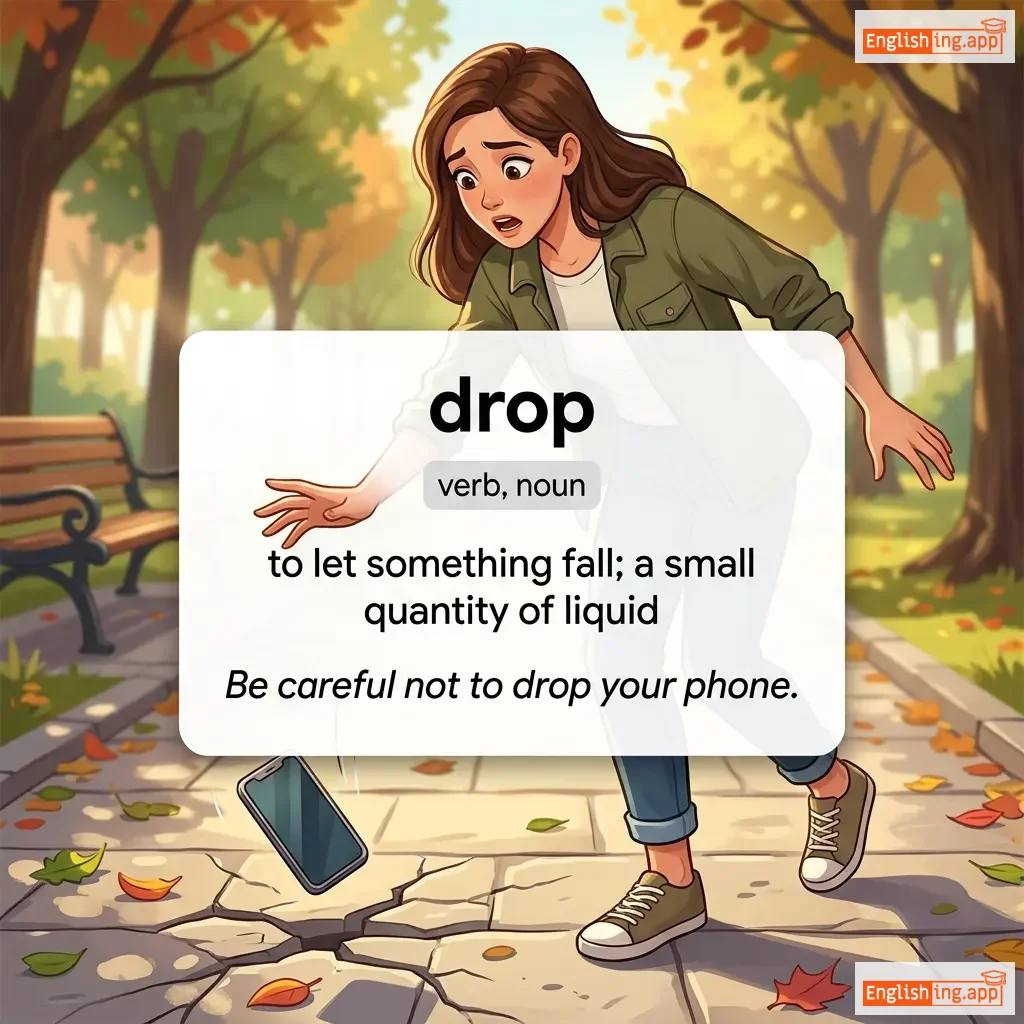
drop definition card — visual illustration of the meaning
verb, noun
/drɒp/
落とす / 液滴 (otosu / ekitaki)

to let something fall; a small quantity of liquid

"Be careful not to drop your phone."
"携帯電話を落とさないように気をつけてください。" (Keitai denwa wo otosana you ni ki wo tsukete kudasai.)
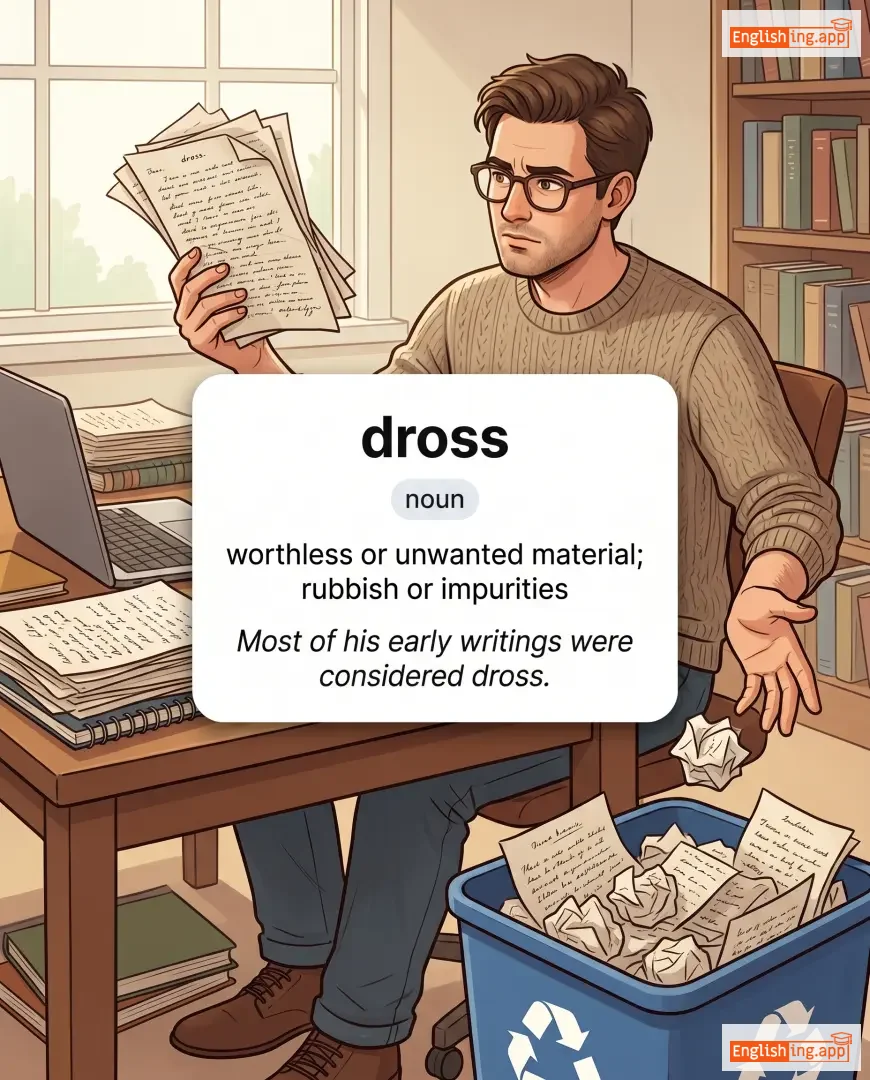
dross definition card — visual illustration of the meaning
noun
/drɒs/
無駄なもの (mudanamono)

worthless or unwanted material; rubbish or impurities

"Most of his early writings were considered dross."
"彼の初期のほとんどの作品は無駄なものと見なされていた。" (Kare no shoki no hotondo no sakuhin wa mudanamono to minasa reteita.)
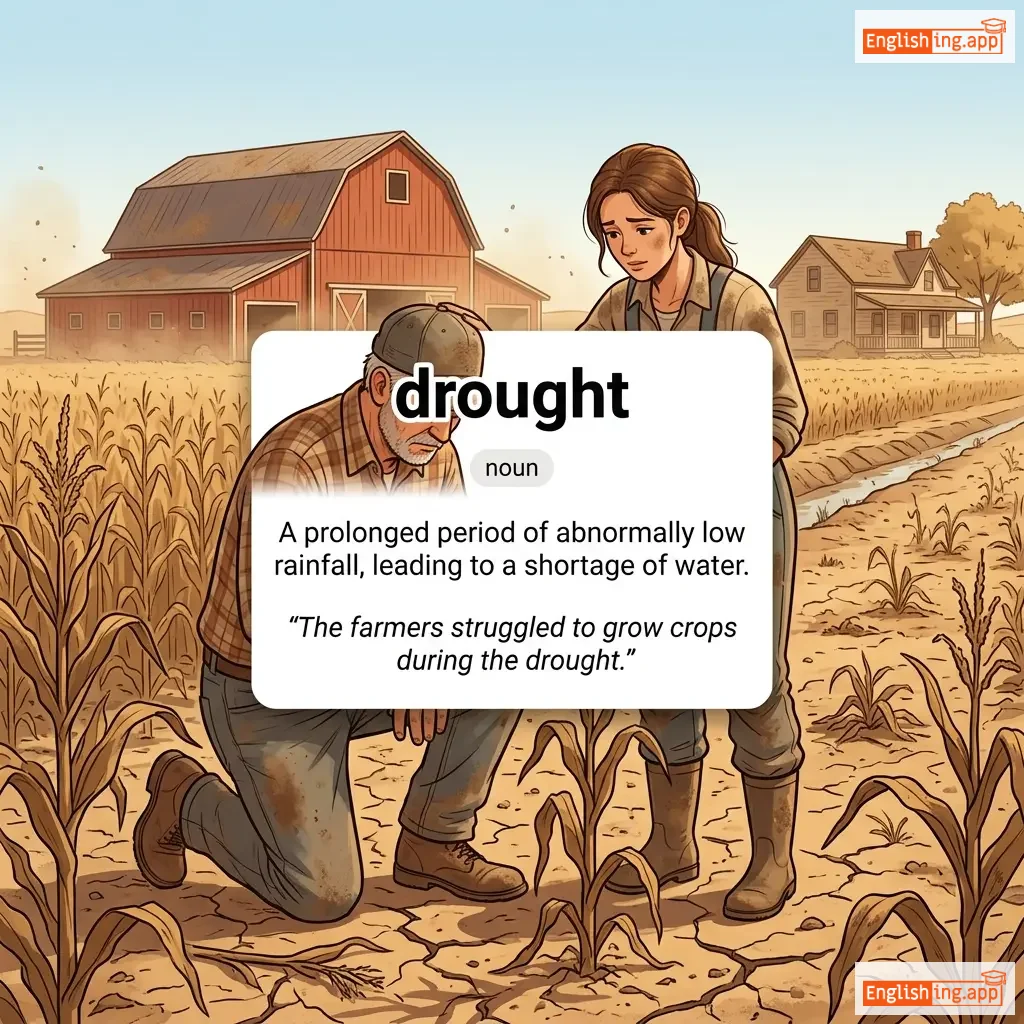
drought definition card — visual illustration of the meaning
noun
/draʊt/
干ばつ (kanbatsu)

A prolonged period of abnormally low rainfall, leading to a shortage of water.

"The farmers struggled to grow crops during the drought."
"農家は干ばつの間、作物を育てるのに苦労していました。" (Nouka wa kanbatsu no aida, sakumotsu o sodateru no ni kurou shiteimashita.)
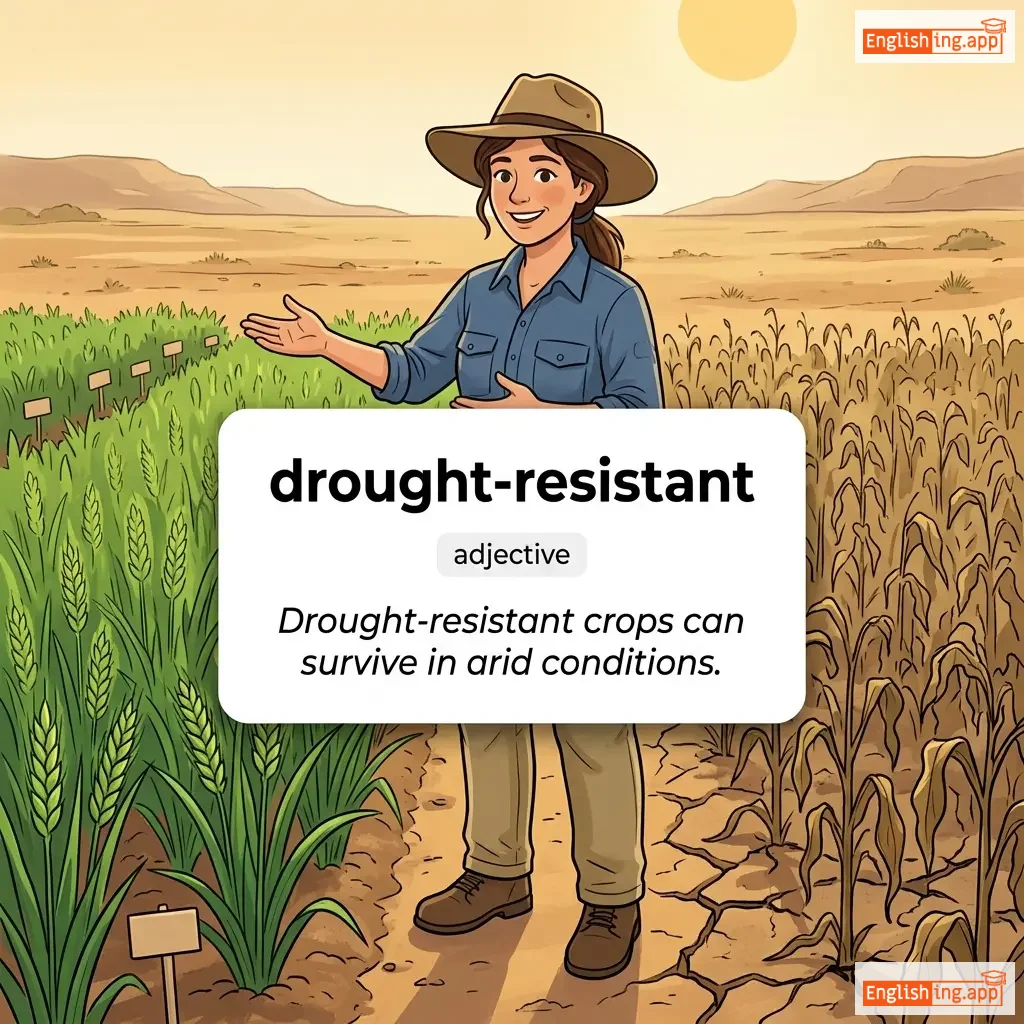
drought-resistant definition card — visual illustration of the meaning
adjective
draʊt rɪˈzɪs.tənt
耐乾燥 (taikansou)

Able to survive and grow despite limited water availability or drought conditions.

"Drought-resistant crops can survive in arid conditions."

"耐乾燥作物は乾燥した条件でも生き残ることができます。" (Taikansou sakumotsu wa kansou shita jouken demo ikinokoru koto ga dekimasu.)
verb
/draʊn/
溺れる (oboreru)

to die or cause to die by being submerged in and inhaling water

"He nearly drowned while swimming in the river."

"彼は川で泳いでいるときにほぼ溺れそうになった。" (Kare wa kawa de oyoide iru toki ni hobo obore sō ni natta.)
adjective
/ˈdraʊzi/
眠い (nemui)

Feeling sleepy or half-asleep.

"The warm room made him feel drowsy."

"暖かい部屋で彼は眠くなった。" (Atatakai heya de kare wa nemuku natta.)
noun
/drʌdʒ/
働き者 (hatarakimono)

A person made to do hard, menial, or dull work.

"He felt like a drudge, stuck in repetitive tasks all day."

"彼は一日中、繰り返しの仕事に縛られている働き者のように感じていた。" (Kare wa ichinichijū, kurikaeshi no shigoto ni shibararete iru hatarakimono no yō ni kanjite ita.)
noun
/ˈdrʌdʒəri/
退屈で骨の折れる仕事 (taikutsu de hone no oreru shigoto)

Hard, menial, or dull work.

"She wanted to escape the drudgery of her daily routine."

"彼女は日常の退屈なルーチンから抜け出したかった。" (Kanojo wa nichijō no taikutsuna rūchin kara nukedashitakatta.)
noun
/drʌɡ/
薬物 (yakubutsu)

a substance used as a medicine or an illegal addictive substance

"The doctor prescribed a new drug for the illness."

"医者はその病気のために新しい薬を処方しました。" (Isha wa sono byouki no tame ni atarashii kusuri wo shohoushimashita.)
noun
/ˈdrʌɡˌstɔːr/
薬局 (yakkyoku)

A retail store that sells medicines, health-related products, and sometimes cosmetics or snacks.

"I stopped by the drugstore to buy some cold medicine."
"風邪薬を買うために薬局に行きました。" (Kazegusuri wo kau tame ni yakkyoku ni ikimashita.)
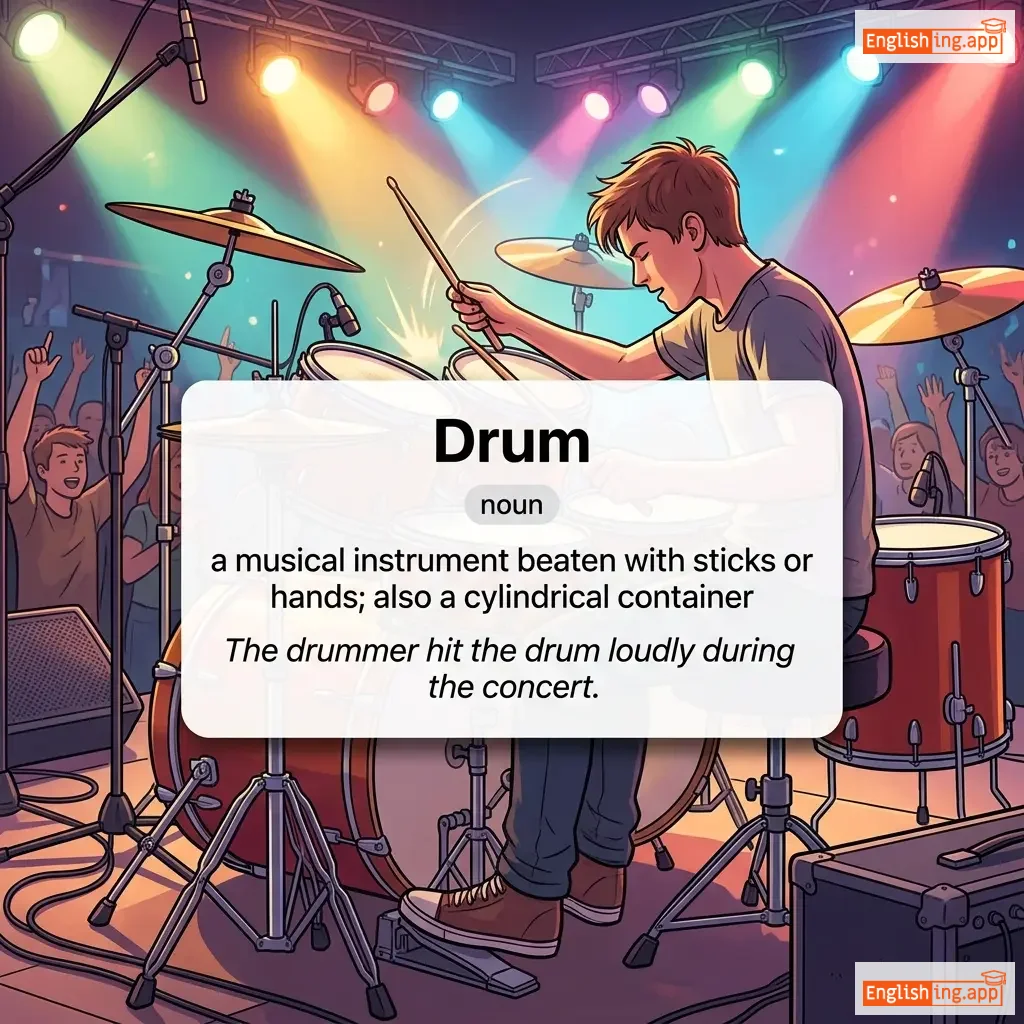
Drum definition card — visual illustration of the meaning
noun
/drʌm/
ドラムまたは樽 (doramu matawa taru)

a musical instrument beaten with sticks or hands; also a cylindrical container

"The drummer hit the drum loudly during the concert."

"ドラム奏者はコンサート中に大きな音でドラムを叩いた。" (Doramu sōsha wa konsāto-chū ni ōkina oto de doramu o tataita.)
noun
/ˈdrʌmɪt/
ドラメット (dorumetto)

a small drum used in military or marching bands

"The drummer played a steady beat on the drumet during the parade."

"ドラマーはパレード中にドゥルメットで一定のリズムを演奏しました。" (Dorama wa pareedo-chuu ni dorumetto de ittei no rizumu o ensou shimashita.)
noun
/ˈdrʌm.stɪk/
モリンガのさや (Moringa no saya)

long green pod vegetable from moringa tree; nutritious vegetable used in curries

"The drumstick adds a unique flavor to the traditional fish curry."

"ドラムスティックは伝統的な魚カレーに独特な風味を加えます。" (Doramusutikku wa dentōteki na sakana karē ni dokutoku na fūmi o kuwaemasu.)
adjective
/drʌŋk/
酔っ払った (yopparatta)

affected by alcohol to the point of losing control of one's faculties or behavior

"He was too drunk to walk straight."
"彼は酔っ払って、まっすぐ歩けなかった。" (Kare wa yopparatte, massugu arukenakatta.)
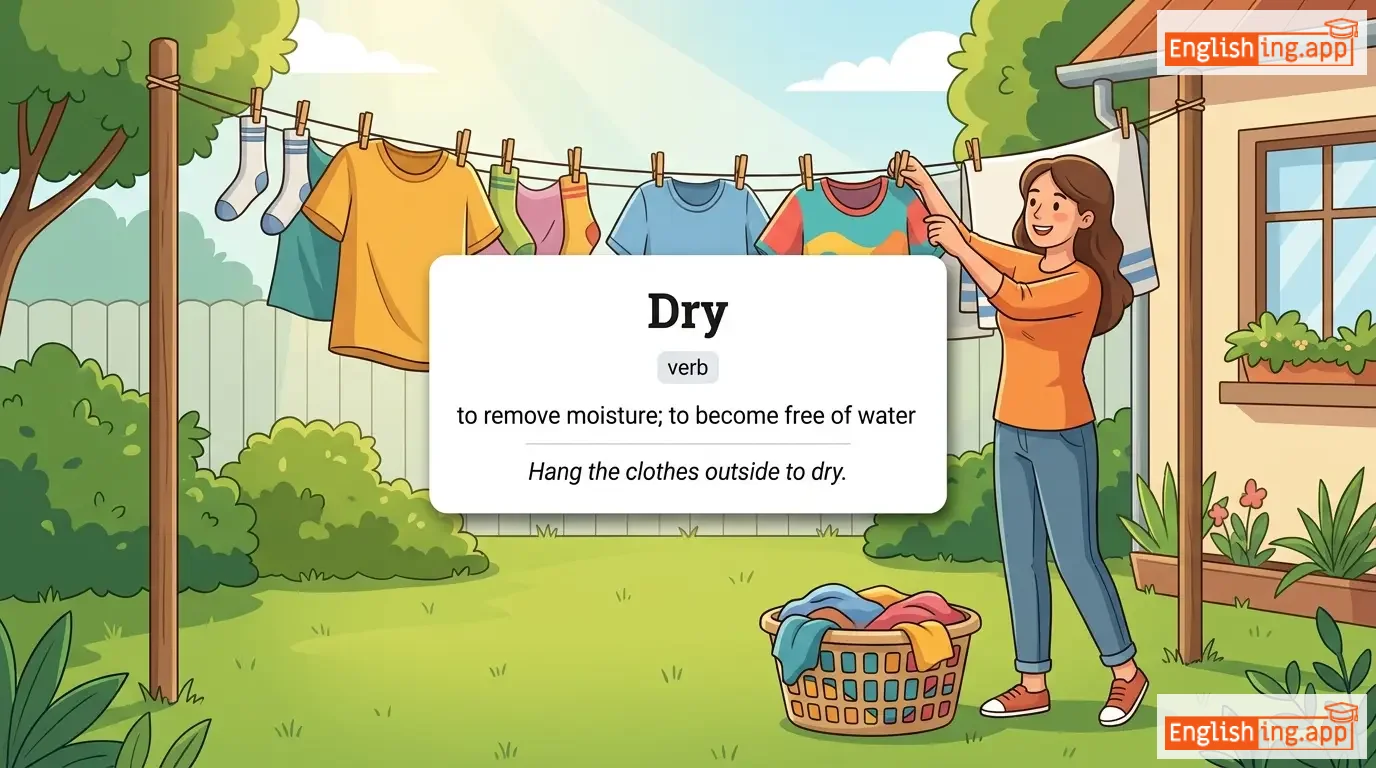
Dry definition card — visual illustration of the meaning
adjective
/draɪ/
乾燥 (kansou)

free from moisture or liquid; not wet

"The clothes are dry after hanging in the sun."

"太陽の下で乾いた後、服は乾いています。" (Taiyou no shita de kawaita ato, fuku wa kawaitemasu.)