語彙集

英単語辞書 | 単語の意味、定義、例文

noun
/ˈkænvəs/

A strong, coarse cloth used for tents, sails, or painting.

"The artist prepared a canvas for his new painting."

canvass definition card — visual illustration of the meaning
verb
/ˈkænvəs/
投票を集める (tōhyō o atsumeru)

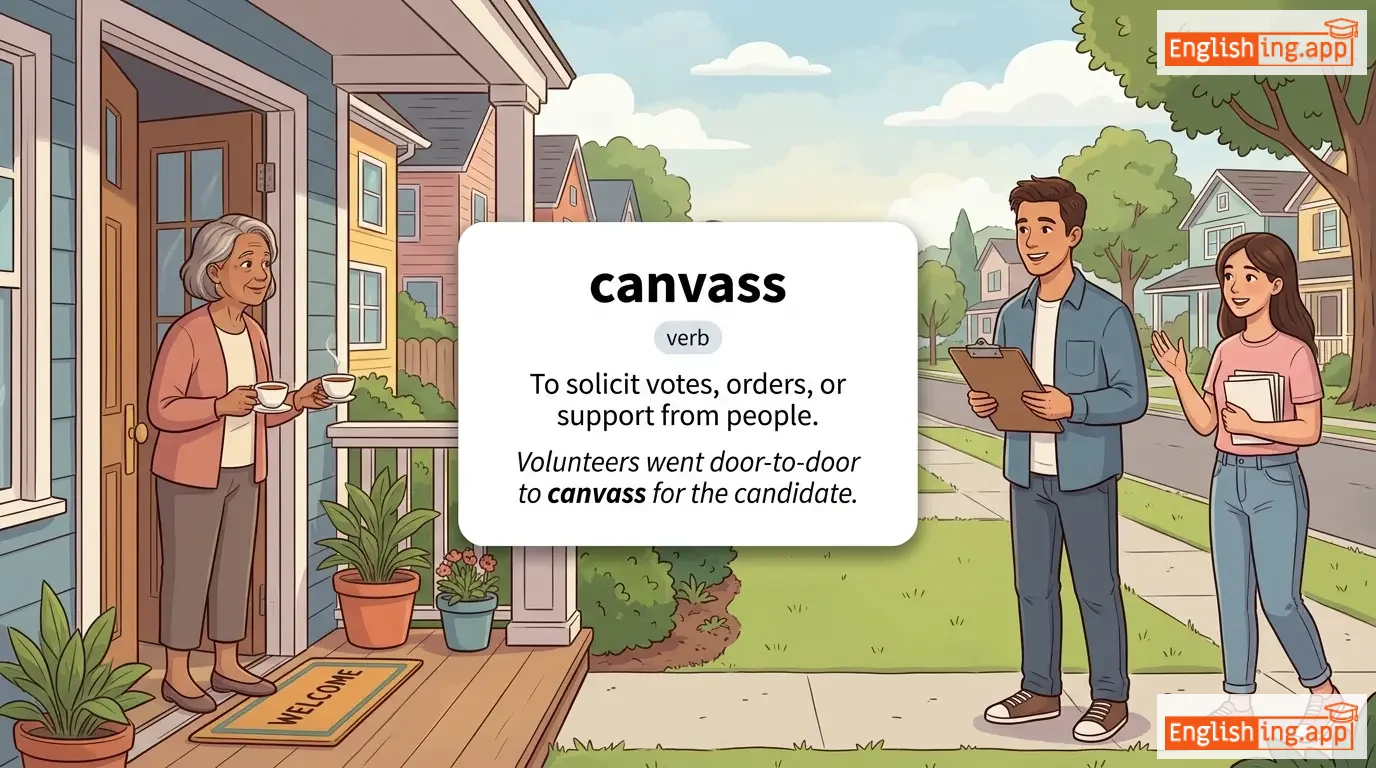
To solicit votes, orders, or support from people.

"Volunteers went door-to-door to canvass for the candidate."

"ボランティアは候補者のために戸別訪問して投票を集めました。" (Borantia wa kōhosha no tame ni kobetsu hōmon shite tōhyō o atsume mashita.)
noun
/ˈkænjən/
峡谷 (kyōkoku)

A deep gorge, typically one with a river flowing through it.

"The Colorado River carved the Grand Canyon over millions of years."

"コロラド川は何百万年もかけてグランドキャニオンを作り上げました。" (Kororado-gawa wa nan byakuman-nen mo kakete Gurando Kyanion o tsukuri agemashita.)
🧢

Cap

noun
/kæp/

A covering for the head, often with a visor.

"He wore a red cap to the baseball game."

capability definition card — visual illustration of the meaning
noun
/ˌkeɪpəˈbɪləti/

the power or ability to do something; potential for effectiveness or success

"The company has the capability to expand internationally."

adjective
/ˈkeɪpəbl/
能力がある (nōryoku ga aru)

having the ability, fitness, or quality necessary to do something

"She is capable of handling difficult situations calmly."

"彼女は困難な状況を冷静に処理できる能力があります。" (Kanojo wa konnan na jōkyō o reisei ni shori dekiru nōryoku ga arimasu.)
adjective
/kəˈpeɪʃəs/
広々とした (hirohiro to shita)

Having a lot of space inside; roomy.

"The capacious hall could seat over five hundred guests."
"広々としたホールは500人以上のゲストを収容できました。" (Hirohiro to shita hōru wa gohyakunin ijō no gesuto o shūyō dekimashita.)
capacity definition card — visual illustration of the meaning
noun
/kəˈpæsəti/
容量 (yorō)

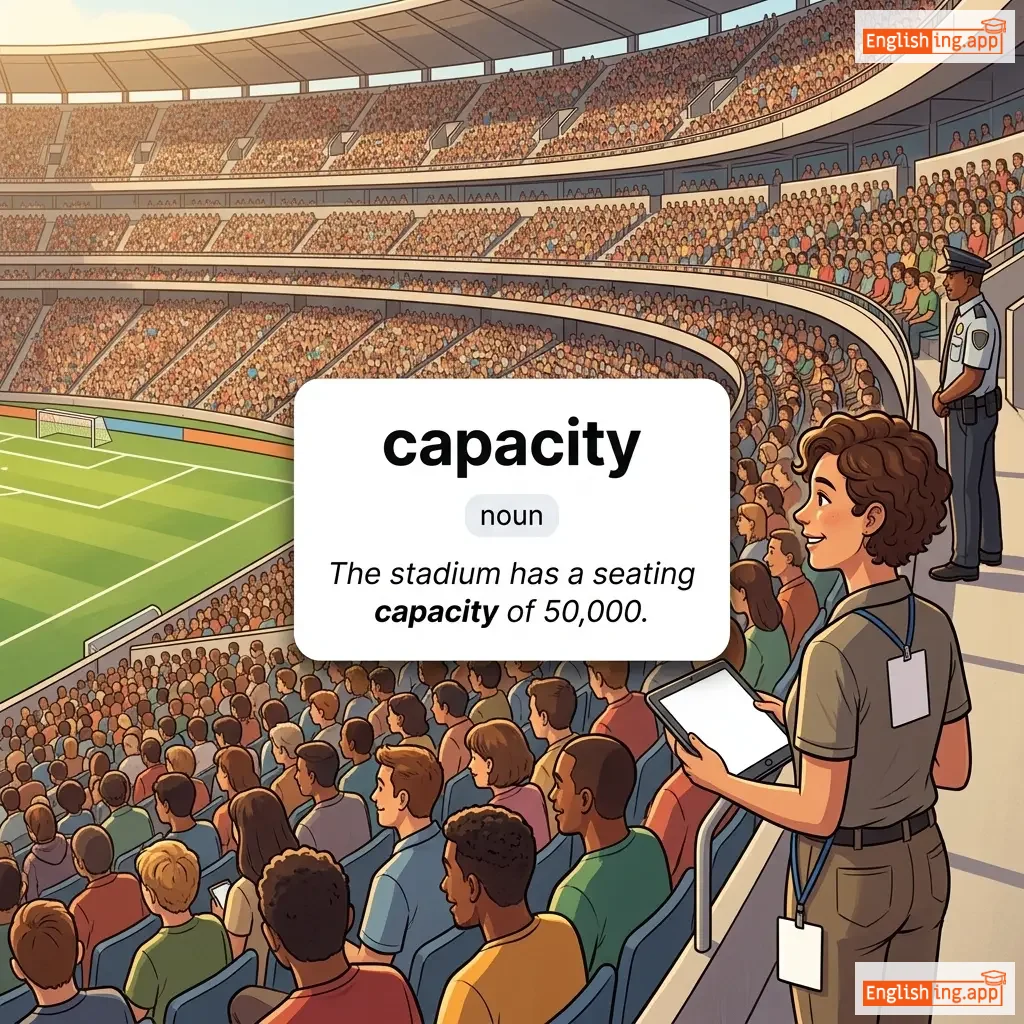
the maximum amount that something can contain or produce; ability to do something

"The stadium has a seating capacity of 50,000."

"スタジアムの座席容量は50,000です。" (Sutajiamu no zaseki yorō wa 50,000 desu.)
noun
/kəˈpærɪsən/
馬のための装飾的なカバー; 豪華で精緻な衣服や装飾 (uma no tame no sōshokuteki na kabā; gōka de seichi na ifuku ya sōshoku)

an ornamental covering for a horse; rich and elaborate clothing or decoration

"The king’s horse was adorned with a golden caparison."
"王の馬は金色のカパリソンで飾られていました。" (Ō no uma wa kiniro no kaparison de kazararete imashita.)
capillaries definition card — visual illustration of the meaning
noun
/kəˈpɪl.ər.iz/
毛細血管 (mōsaiketsukan)

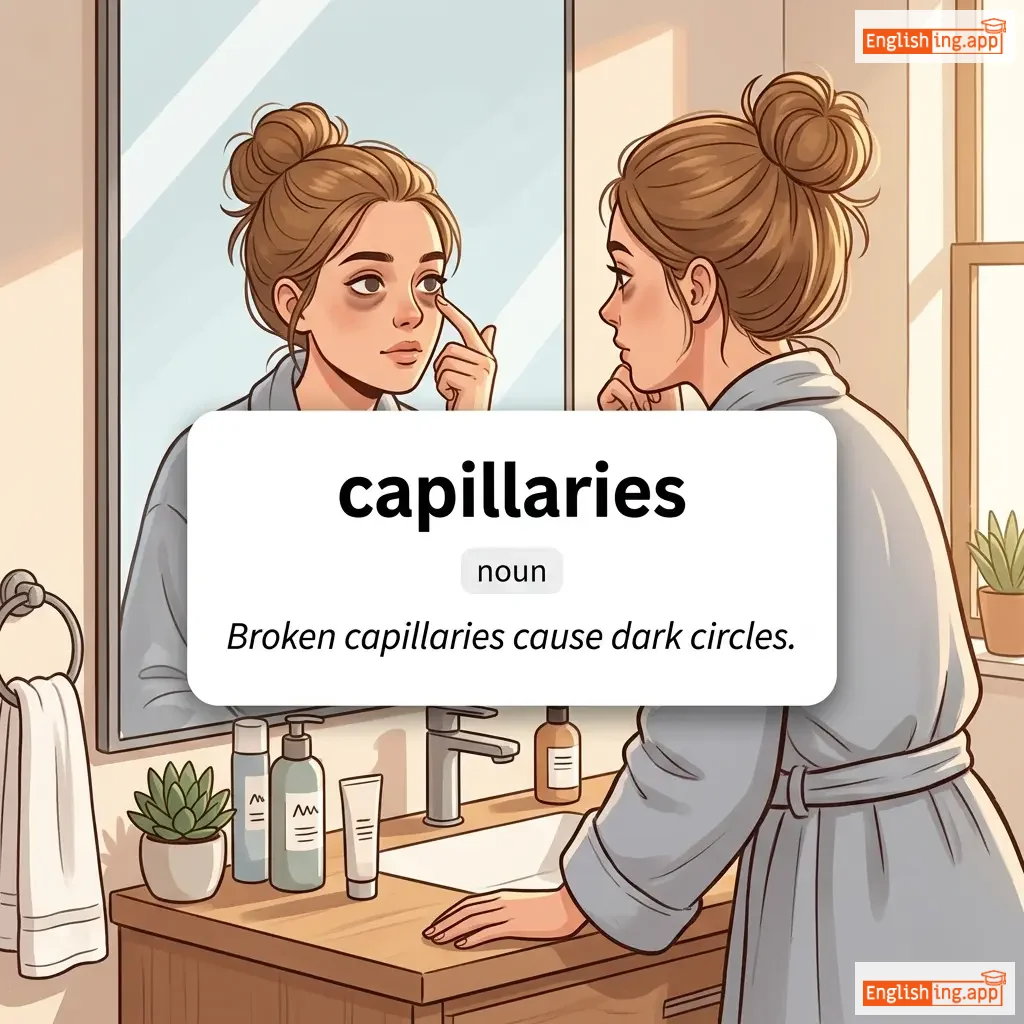
Any of the fine branching blood vessels that form a network between the arterioles and venules.

"Broken capillaries cause dark circles."

"壊れた毛細血管は暗い輪を引き起こす。" (Kowareta mōsaiketsukan wa kurai wa o hikiokosu.)
noun
/ˈkæpɪˌlɛri/
毛細血管 (mōsaiketsukan)

a very thin blood vessel that connects arteries and veins

"Oxygen passes from the blood into tissues through capillaries."

"酸素は血液から組織に毛細血管を通って移動します。" (Sanso wa ketsueki kara soshiki ni mōsaiketsukan o tōtte idō shimasu.)
noun
/ˈkæpɪtl/
首都 / 資本 (shuto / shihon)

a city that serves as the seat of government; also wealth in the form of money or assets

"Dhaka is the capital of Bangladesh."
"ダッカはバングラデシュの首都です。" (Dakka wa Banguradeshu no shuto desu.)
capitalism definition card — visual illustration of the meaning
noun
/ˈkæpɪtəlɪzəm/
資本主義 (shihon shugi)

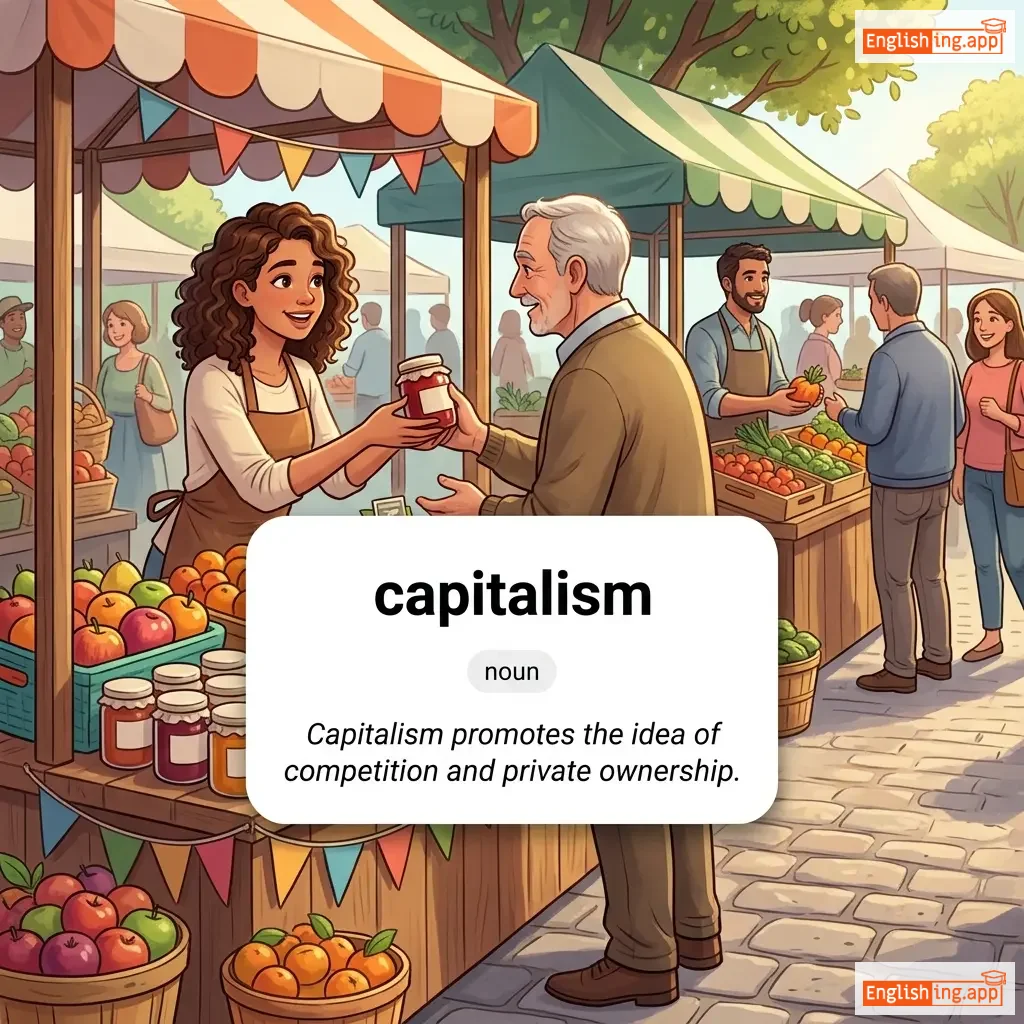
an economic system where private individuals or corporations control the means of production and distribution of goods

"Capitalism promotes the idea of competition and private ownership."

"資本主義は競争と私有財産の概念を促進します。" (shihon shugi wa kyōsō to shiyū zaisan no gainen o sokushin shimasu.)
noun/adjective
/ˈkæpɪtəlɪst/

a person who supports or believes in capitalism; a wealthy business owner

"The capitalist believes in the freedom of the market."

capitalization definition card — visual illustration of the meaning
noun
/ˌkæp.ɪ.təl.aɪˈzeɪ.ʃən/
資本化 (shihonka)

The provision of capital for a company or the total value of a company's shares.

"The startup secured significant capitalization from investors."

"スタートアップは投資家から重要な資本化を確保しました。" (Sutātoappu wa tōshika kara jūyō na shihonka o kakuho shimashita.)
verb
/kəˈpɪtjʊˌleɪt/
降伏する (kōfuku suru)

to surrender or give in after resisting

"The army had no choice but to capitulate to the enemy."

"軍隊は敵に降伏せざるを得なかった。" (Guntai wa teki ni kōfuku sezaru o enakatta.)
noun
/kəˈpriːs/
気まぐれ (kimagure)

a sudden, unpredictable change of mood or behavior

"She bought the expensive dress on a caprice."
"彼女は気まぐれで高価なドレスを買った。" (Kanojo wa kimagure de kouka na doresu o katta.)
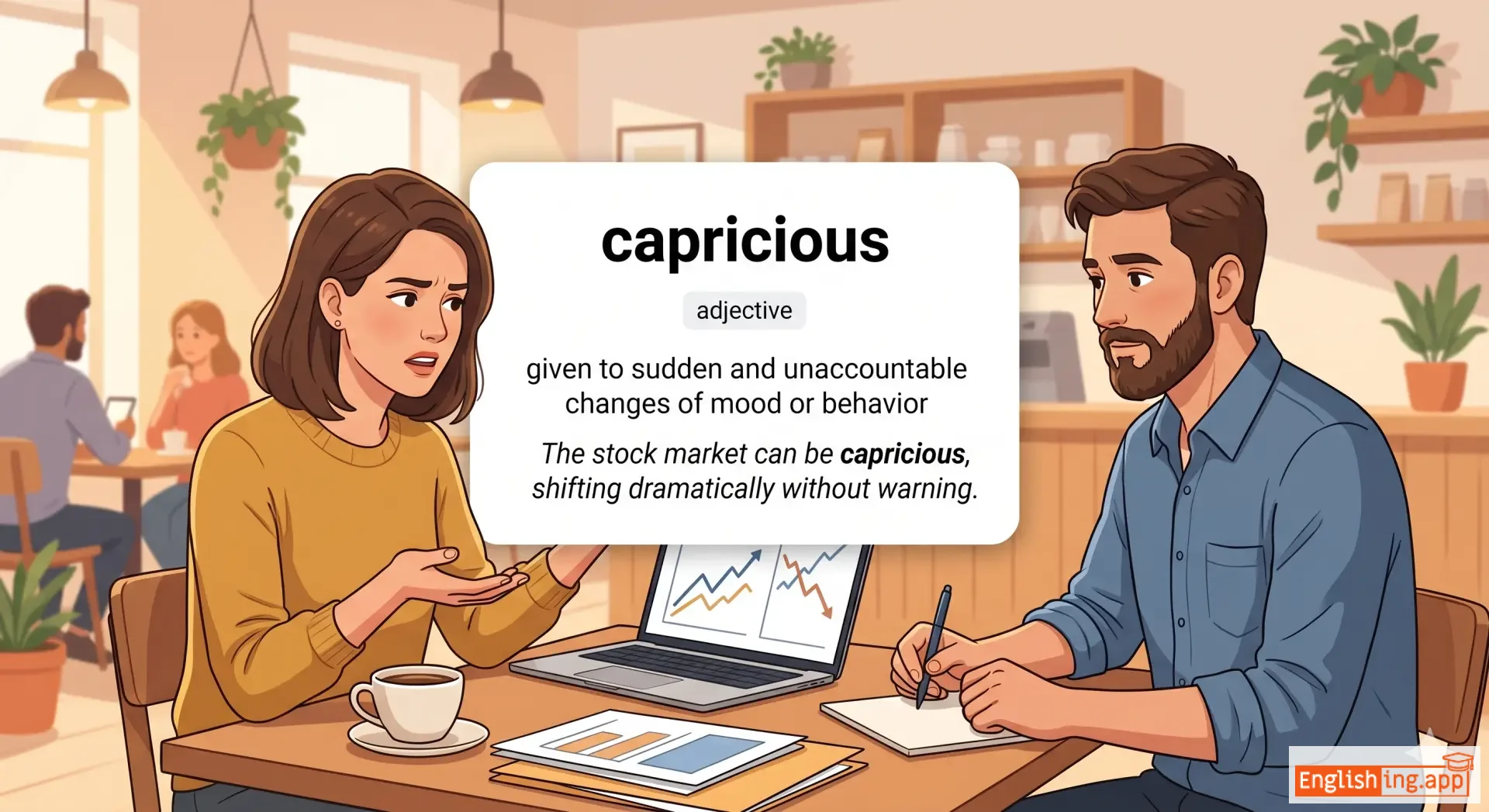
capricious definition card — visual illustration of the meaning
adjective
/kəˈprɪʃəs/
気まぐれな (kimagure na)

given to sudden and unaccountable changes of mood or behavior

"The stock market can be capricious, shifting dramatically without warning."

"株式市場は気まぐれで、予告なしに劇的に変動することがあります。" (kabushiki shijō wa kimagure de, yokoku nashi ni gekiteki ni hendō suru koto ga arimasu.)
noun
/ˈkæp.sɪ.kəm/
ピーマン (pīman)

sweet pepper; bell pepper; colorful vegetable used in cooking

"Add red and green capsicum to make the dish colorful and nutritious."

"赤と緑のピーマンを加えて、料理を色鮮やかで栄養満点にしましょう。" (Aka to midori no pīman o kuwaete, ryōri o iro azayaka de eiyō manten ni shimashou.)
verb
/ˈkæp.saɪz/
転覆する (tenpuku suru)

to overturn in the water

"The small fishing boat capsized during the storm."
"小さな漁船が嵐の中で転覆した。" (Chiisana gyosen ga arashi no naka de tenpuku shita.)
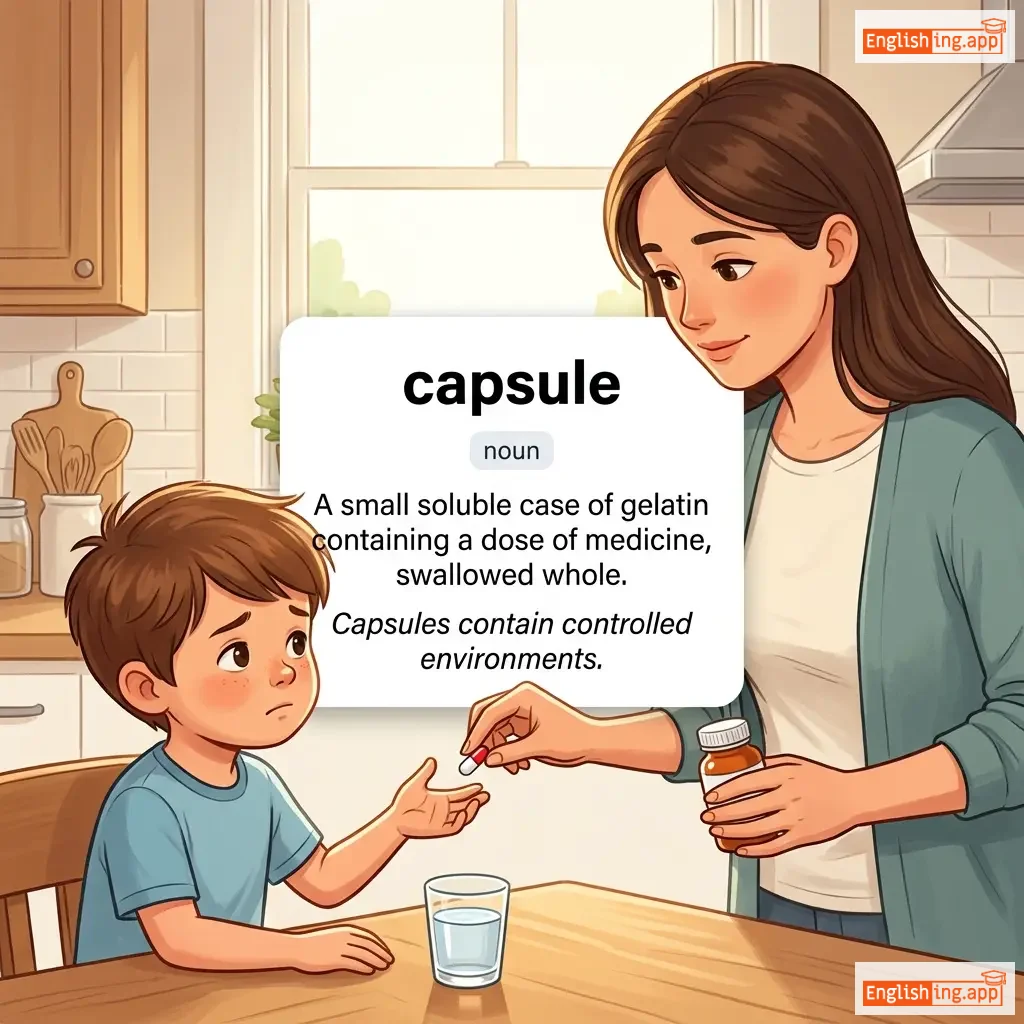
capsule definition card — visual illustration of the meaning
noun
ˈkæp.sjuːl
カプセル。薬の1回分を含むゼラチン製の小さな溶解ケースで、丸ごと飲み込む。 (Kapuseru. Kusuri no 1 kai bun o fukumu zerachin-sei no chiisana yōkai kēsu de, marugoto nomikomu.)

A small soluble case of gelatin containing a dose of medicine, swallowed whole.

"Capsules contain controlled environments."

"カプセルはコントロールされた環境を含んでいます。" (Kapuseru wa kontorōrされta kankyō o fukundeimasu.)
noun
/ˈkæptɪn/
キャプテン (kyaputen)

the leader of a team, ship, or group

"The captain led his team to victory."

"キャプテンはチームを勝利に導いた。" (Kyaputen wa chiimu o shouri ni michibiita.)
noun
/ˈkæp.ʃən/
キャプション (kyapushon)

a brief explanation or description accompanying an illustration or photograph

"The caption under the photo explained who the people were."
"写真の下のキャプションは、誰がその人々であるかを説明しました。" (Shashin no shita no kyapushon wa, dare ga sono hitobito de aru ka wo setsumei shimashita.)
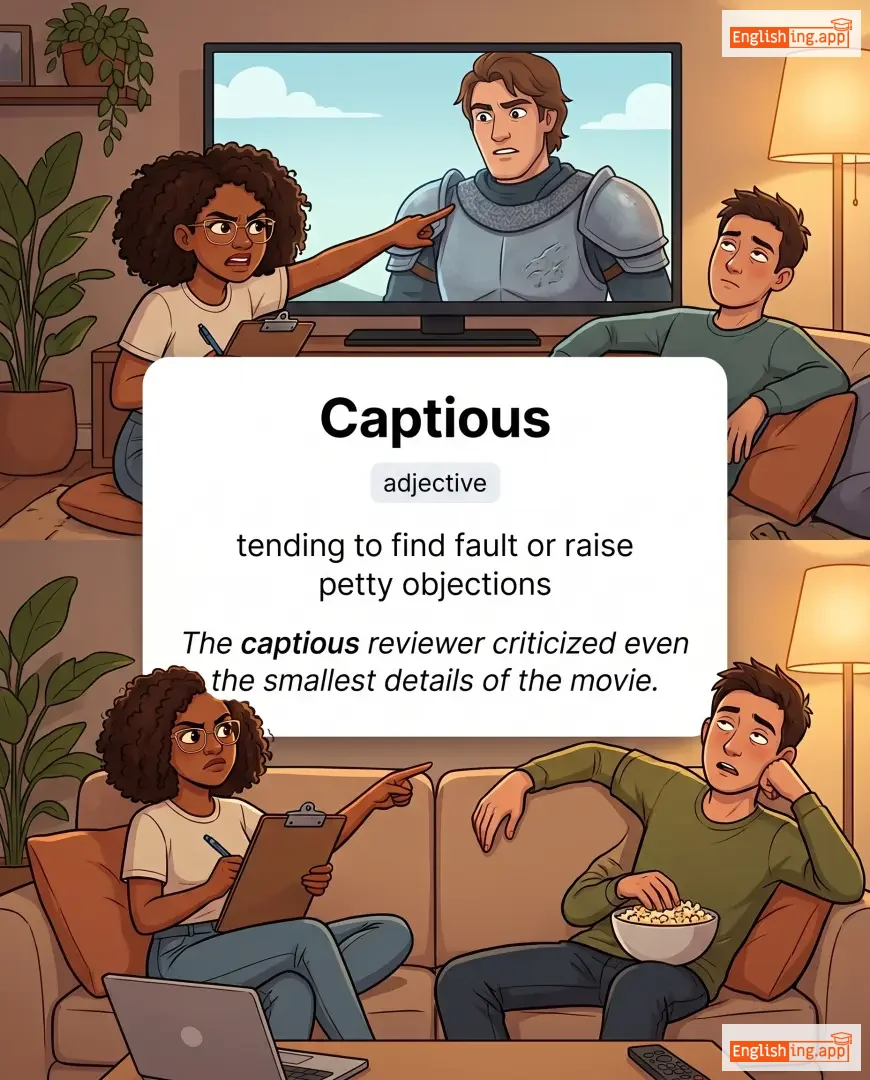
Captious definition card — visual illustration of the meaning
adjective
/ˈkæp.ʃəs/
難癖をつける (nanpeki o tsukeru)

tending to find fault or raise petty objections

"The captious reviewer criticized even the smallest details of the movie."

"難癖をつける評論家は映画の最も小さな詳細まで批判した。" (Nanpeki o tsukeru hyōronka wa eiga no mottomo chiisana shōsai made hihan shita.)
captivate definition card — visual illustration of the meaning
verb
/ˈkæp.tɪ.veɪt/
魅了する (miryō suru)

to attract and hold the attention of someone

"The singer’s voice captivated the entire audience."

"歌手の声は観客全体を魅了しました。" (Kashu no koe wa kankyaku zentai o miryō shimashita.)
noun
/ˈkæp.tɪv/
捕虜 (horyo)

a person who has been taken prisoner or an animal that has been confined

"The captive was held in a small cell for several months."

"捕虜は数ヶ月間小さな部屋に閉じ込められていた。" (Horyo wa suukagetsu kan chiisana heya ni tojikomere rarete ita.)
noun
/kæpˈtɪvɪti/
監禁 (kankan)

the state of being imprisoned, confined, or kept under control

"The rare bird has been bred in captivity."

"その珍しい鳥は飼育下で繁殖しました。" (Sono mezurashī tori wa shiikuka de hanshoku shimashita.)
noun
/ˈkæptər/
捕虜監視者 (horyo kanshisha)

a person or group who has captured someone or something

"The hostage managed to escape from his captors."

"人質はその捕虜監視者から逃げることができました。" (Hitojichi wa sono horyo kanshisha kara nigeru koto ga dekimashita.)
verb
/ˈkæptʃər/
キャプチャ (kyapuchā)

to take control of something or someone by force

"The soldiers managed to capture the enemy base."

"兵士たちは敵の基地を占拠することに成功しました。" (Heishitachi wa teki no kichi o senkyo suru koto ni seikou shimashita.)
noun
/kɑːr/
(kuruma)

a road vehicle with an engine, four wheels, and seats for passengers

"She bought a new car last week."

"彼女は先週新しい車を買った。" (Kanojo wa senshū atarashī kuruma o katta.)
noun
/kəˈræf/
カラフェ (karafe)

a glass container without handles used for serving drinks like water or wine

"The waiter brought a carafe of water to the table."

"ウェイターはテーブルに水のカラフェを持ってきた。" (Ueitā wa tēburu ni mizu no karafe o mottekita.)
noun
/ˈkærəˌpeɪs/
カメやカニの背中を覆う硬い殻 (kame ya kani no senaka o fukū katai kara)

the hard shell covering the back of some animals like turtles and crabs

"The turtle withdrew into its carapace for protection."

"カメは保護のためにカラパスに引っ込んだ。" (Kame wa hogo no tame ni karapasu ni hikkomda.)
noun
/ˈkærət/
宝石の重さの単位 (hōseki no omosa no tan'i)

a unit of weight for precious stones, equal to 200 milligrams

"She received a two-carat diamond ring for her engagement."

"彼女は婚約のために2カラットのダイヤモンドリングをもらいました。" (Kanojo wa kon'yaku no tame ni 2 karatto no daiyamondo ringu o moraimashita.)
noun
/ˈkær.ə.væn/
キャラバン (kyaraban)

a group of people traveling together, especially through desert areas

"The merchant caravan crossed the desert with camels carrying precious goods."

"商人のキャラバンは、貴重な商品を運ぶラクダと共に砂漠を越えました。" (Shōnin no kyaraban wa, kichōna shōhin o hakobu rakuda to tomo ni sabaku o koemashita.)
noun
/ˈkær.ə.weɪ siːdz/
キャラウェイシード (kyarawei shiido)

aromatic seeds of the caraway plant used as a spice in cooking and baking

"The bread was flavored with caraway seeds."

"パンはキャラウェイシードで風味づけされた。" (pan wa kyarawei shiido de fumidzuke sareta)
noun
/ˌkɑːrboʊˈhaɪdreɪt/
炭水化物 (tansui kabutsu)

a nutrient that provides energy, found in foods like rice, bread, and sugar

"Rice and potatoes are rich in carbohydrates."
"ご飯とポテトは炭水化物が豊富です。" (Gohan to poteto wa tansui kabutsu ga hōfu desu.)
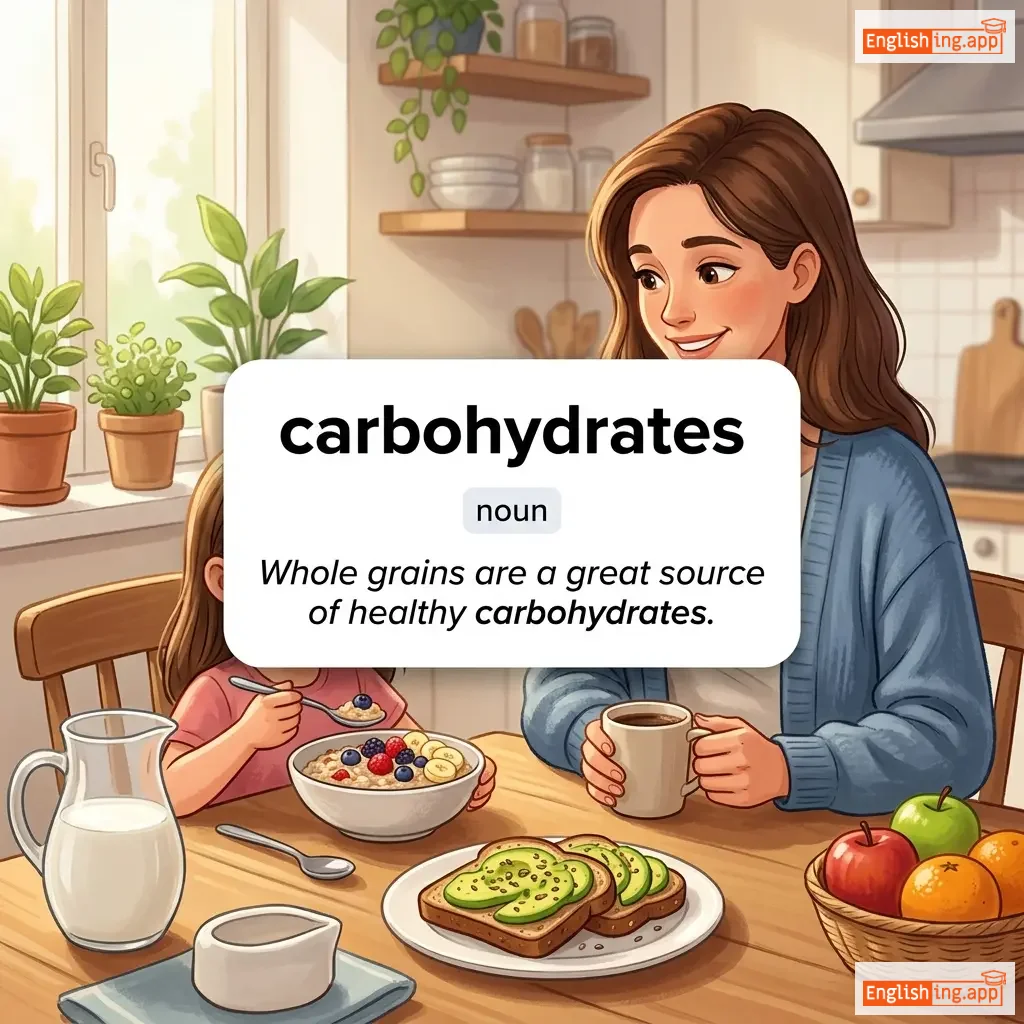
carbohydrates definition card — visual illustration of the meaning
noun
/ˌkɑː.bəʊˈhaɪ.dreɪts/
炭水化物 (tansui kabutsu)

Organic compounds consisting of carbon, hydrogen, and oxygen, serving as a primary source of energy for the body.

"Whole grains are a great source of healthy carbohydrates."
"全粒穀物は健康的なカーボハイドレートの素晴らしい源です。" (Zenryū komotsu wa kenkōteki na kābohaidorēto no subarashī minamoto desu.)
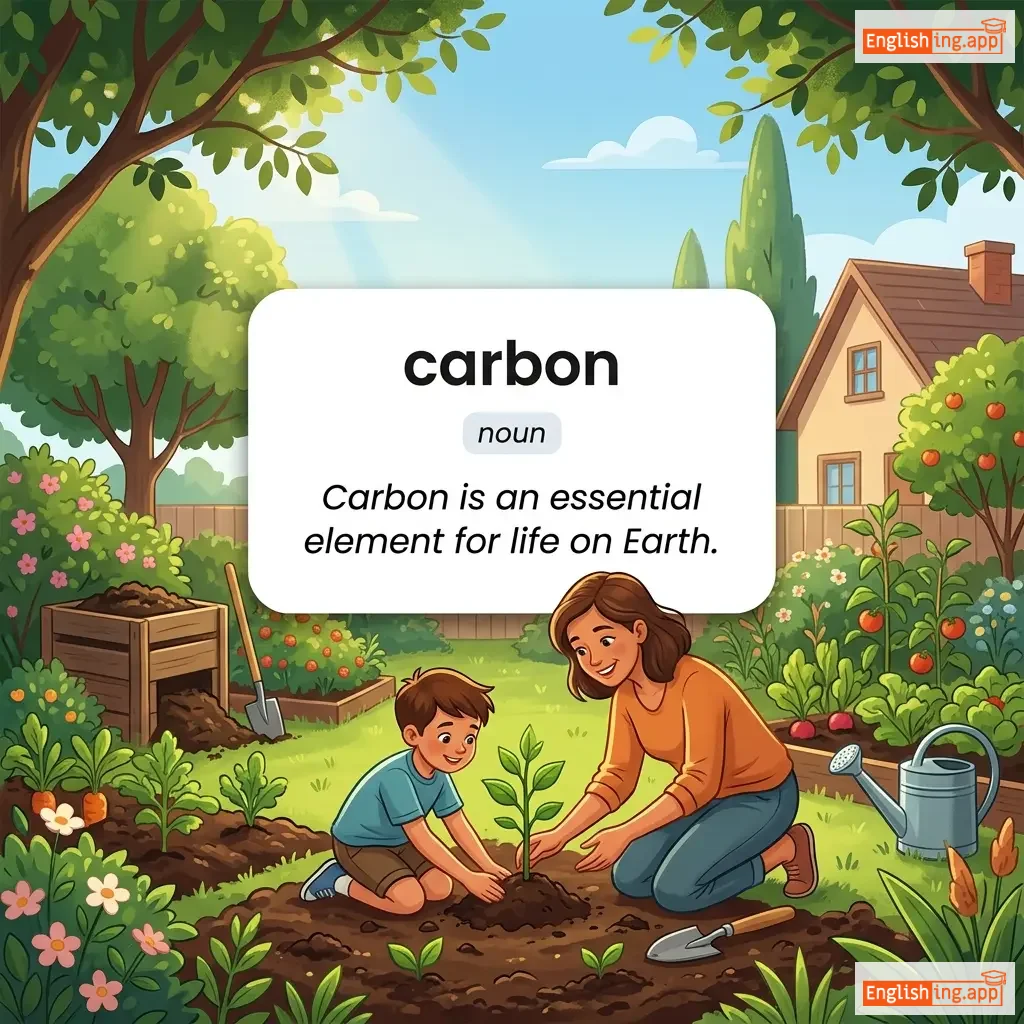
carbon definition card — visual illustration of the meaning
noun
/ˈkɑːrbən/
炭素 (tanso)

a chemical element found in all living things and used as fuel when combined with oxygen

"Carbon is an essential element for life on Earth."

"炭素は地球上の生命にとって不可欠な元素です。" (tanso wa chikyuujou no seimei ni totte fukaketsu na gensu desu)
carbon footprint definition card — visual illustration of the meaning
noun
/ˈkɑː.bən ˈfʊt.prɪnt/
カーボンフットプリント (kaabon futtopurinto)

The amount of carbon dioxide and other carbon compounds emitted due to the consumption of fossil fuels by a particular person, group, etc.

"Reducing carbon footprint is essential for combating climate change."
"カーボンフットプリントを減らすことは、気候変動と戦うために重要です。" (Kaabon futtopurinto o herasu koto wa, kikō hendō to tatakau tame ni jūyō desu.)
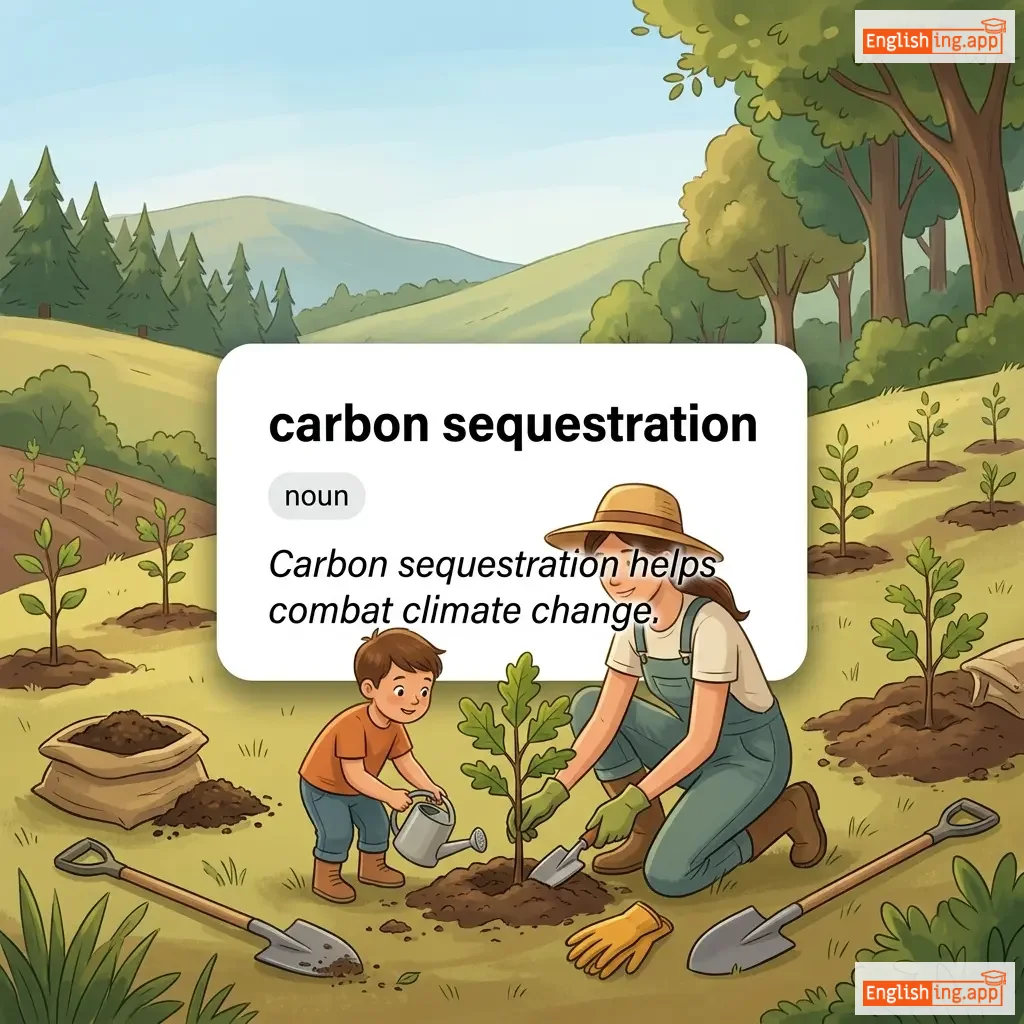
carbon sequestration definition card — visual illustration of the meaning
noun
ˈkɑː.bən ˌsiː.kwɪˈstreɪ.ʃən
炭素隔離 (tanso kakuri)

The process of storing carbon dioxide in vegetation, soils, geological formations, and the ocean to reduce carbon dioxide concentrations in the atmosphere.

"Carbon sequestration helps combat climate change."

"炭素隔離は気候変動と戦うのに役立ちます。" (Tanso kakuri wa kikou hendou to tatakau no ni yakudachimasu.)
carbon-neutral definition card — visual illustration of the meaning
adjective
ˌkɑː.bən ˈnjuː.trəl
カーボンニュートラル (kaabon nyuutoraru)

Having a balance between emitting carbon and absorbing carbon from the atmosphere; not adding to overall carbon emissions.

"The company aims to be carbon-neutral by 2030."

"この会社は2030年までにカーボンニュートラルを達成することを目指しています。" (Kono kaisha wa 2030 nen made ni kaabon nyuutoraru wo tassei suru koto wo mezashiteimasu.)
noun
/ˈkɑːrkəs/
動物の死体 (doubutsu no shitai)

the dead body of an animal, especially after being slaughtered

"Vultures fed on the carcass left in the field."
"ハゲワシは野原に残された死体を食べていた。" (Hagewashi wa nohara ni nokosareta shitai o tabete ita.)
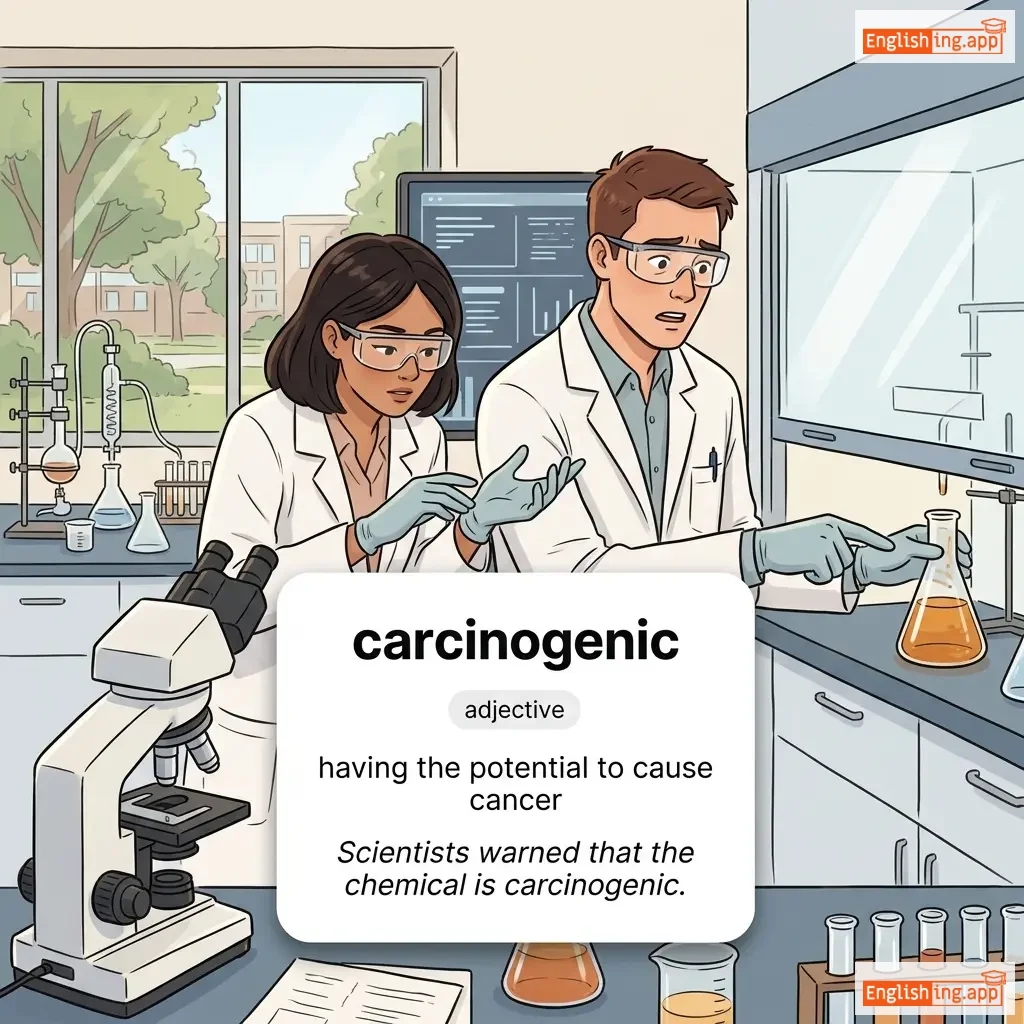
carcinogenic definition card — visual illustration of the meaning
adjective
/ˌkɑːrsɪnəˈdʒɛnɪk/
発がん性の (hatsugan-sei no)

having the potential to cause cancer

"Scientists warned that the chemical is carcinogenic."

"科学者たちはその化学物質が発がん性があることを警告しました。" (Kagakusha-tachi wa sono kagakubushitsu ga hatsugan-sei ga aru koto o keikoku shimashita.)
💳

card

noun
/kɑːrd/

A small, flat piece of stiff paper or thin cardboard used for various purposes, such as identification, greetings, or playing games.

"She handed me her business card after the meeting."

noun
/ˈkɑːrdəməm/
カルダモン (karudamon)

aromatic seeds from a plant in the ginger family, used as a spice

"The recipe calls for a pinch of ground cardamom."

"レシピにはひとつまみの粉末カルダモンが必要です。" (Reshipi ni wa hitotsumami no funmatsu karudamon ga hitsuyō desu.)
adjective
/ˈkɑːr.di.æk/
心臓の (shinzou no)

Relating to the heart.

"The patient was admitted with a cardiac condition."
"患者は心臓の病状で入院しました。" (Kanja wa shinzou no byoujou de nyuuin shimashita.)
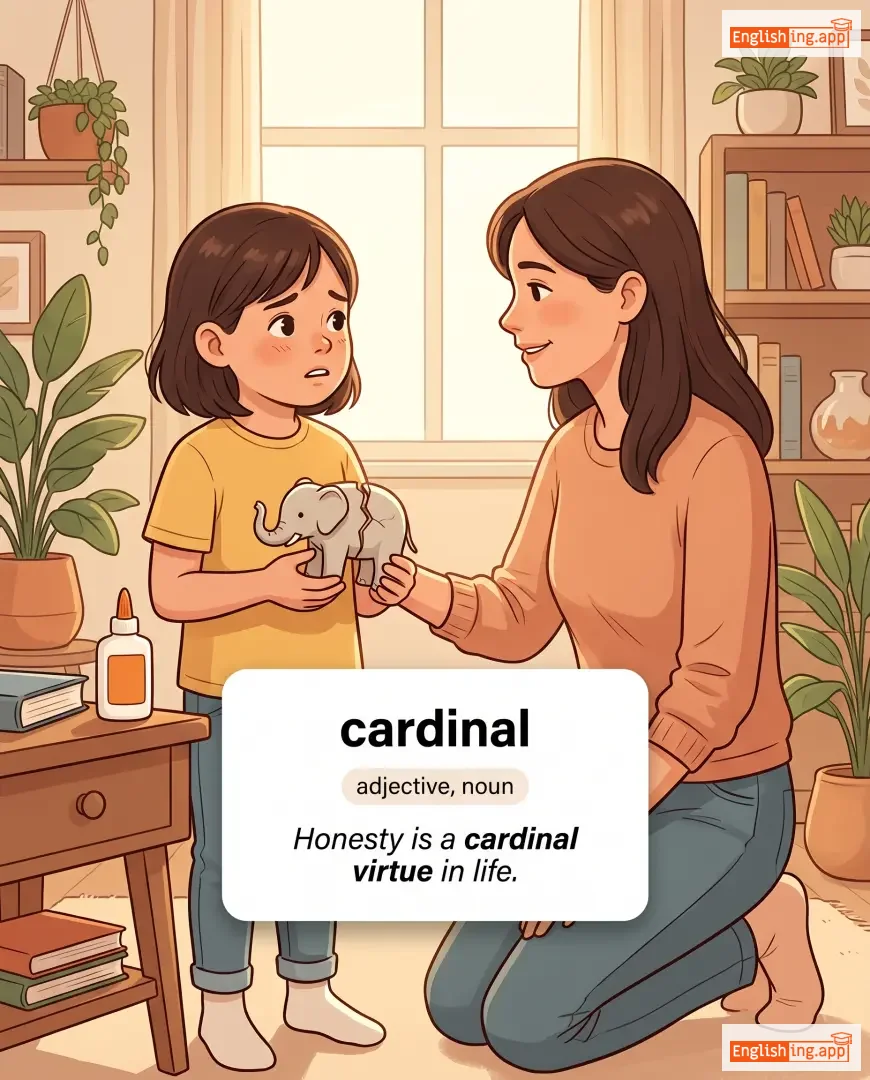
cardinal definition card — visual illustration of the meaning
adjective, noun
/ˈkɑːr.dɪ.nəl/
基本的な / 重要な (kihontekina / jūyōna)

As an adjective: of prime importance; as a noun: a high-ranking Catholic clergyman or a type of bird.

"Honesty is a cardinal virtue in life."

"正直は人生における重要な美徳です。" (Shōjiki wa jinsei ni okeru jūyōna bitoku desu.)
noun
/ˌkɑːr.diˈɒl.ə.dʒɪst/
心臓専門医 (shinzō senmoni)

A doctor specializing in diagnosing and treating heart diseases.

"She made an appointment with a cardiologist for her chest pain."
"彼女は胸の痛みのために心臓専門医に予約を取りました。" (Kanojo wa mune no itami no tame ni shinzō senmoni ni yoyaku o torimashita.)
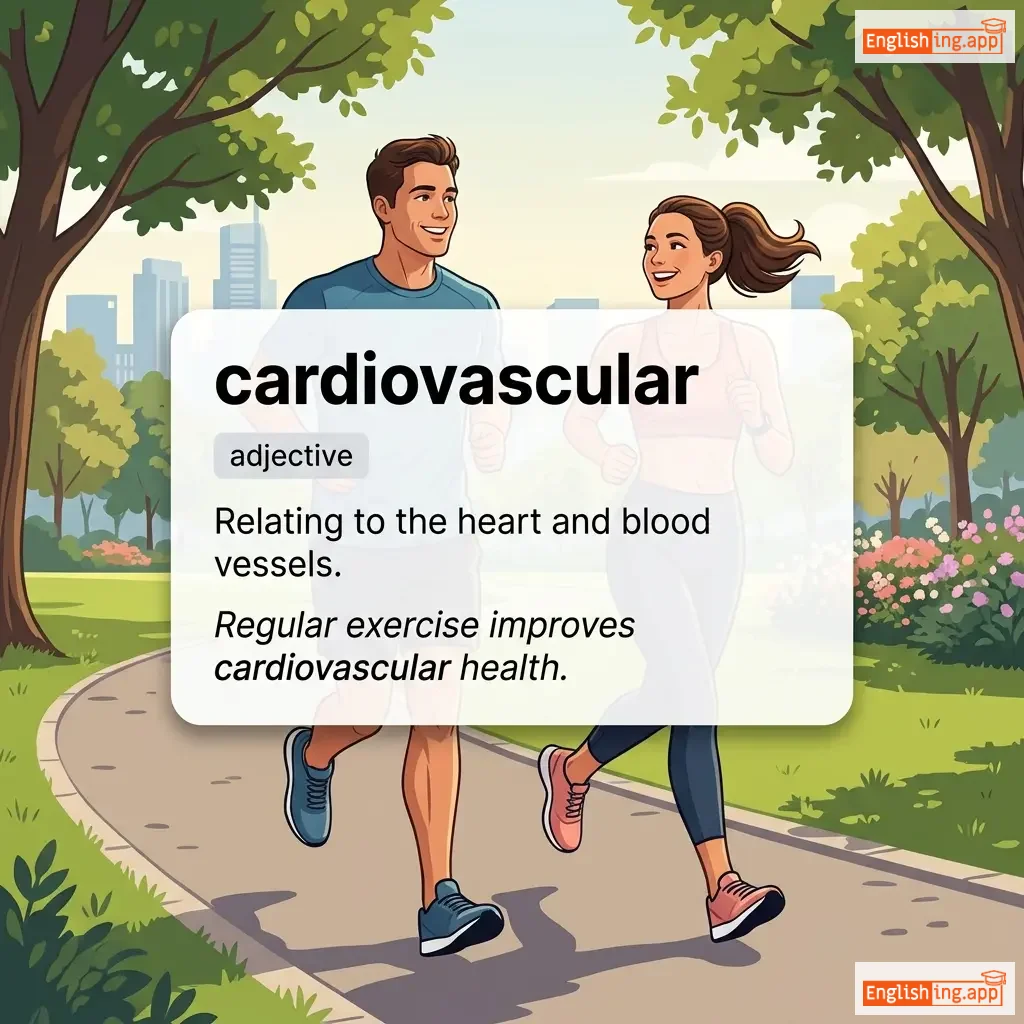
cardiovascular definition card — visual illustration of the meaning
adjective
/ˌkɑː.di.əʊˈvæs.kjʊ.lər/
心臓と血管に関連する (shinzou to kekkan ni kanren suru)

Relating to the heart and blood vessels.

"Regular exercise improves cardiovascular health."

"定期的な運動は心血管の健康を改善します。" (Teikitekina undou wa shinkekkann no kenkou wo kaizen shimasu.)
noun/verb
/kɛr/
ケア (kea)

The process of looking after someone or something; to be concerned or interested.

"She took great care of her younger brother."

"彼女は弟の世話をとてもよくしていました。" (Kanojo wa otouto no sewa o totemo yoku shiteimashita.)