語彙集

英単語辞書 | 単語の意味、定義、例文

noun
/kɔːrs flaʊər/
粗挽き小麦粉 (aragi komugiko)

coarsely ground flour with larger particles, typically used for baking bread

"She used course flour to make homemade bread with a rustic texture."

"彼女は手作りのパンを作るために、素朴な質感を持つコースフラワーを使用しました。" (Kanojo wa tedzukuri no pan wo tsukuru tame ni, soboku na shitsukan wo motsu kōsu furawā wo shiyou shimashita.)
noun
/ˈkɔːrsər/
速い馬または狩猟馬 (hayai uma matawa shuryou uma)

a swift horse or a hunting horse

"The knight rode a fast courser into battle."

"騎士は速いコーサーに乗って戦いに向かった。" (Kishi wa hayai kōsā ni notte tatakai ni mukatta.)
noun,verb
/kɔːrt/
裁判所または注目や好意を求める場所 (saibansho matawa chumoku ya koui wo motomeru basho)

a place where legal cases are heard or to seek favor or attention

"He courted the judge with respect."

"彼は裁判官に敬意を示して求婚した。" (Kare wa saibankan ni keii wo shimeshite kyuukon shita.)
adjective
/ˈkɜːrtiəs/
礼儀正しい (reigi tadashii)

polite, respectful, or considerate in manner

"The staff at the hotel were very courteous to all guests."

"ホテルのスタッフはすべてのゲストに非常に礼儀正しく接しました。" (Hoteru no sutaffu wa subete no gesuto ni hijou ni reigi tadashiku sesshimashita.)
noun
/ˈkɜːrtəsi/
礼儀、優しさ、または特権 (reigi, yasashisa, matawa tokken)

polite behavior or a polite action; a favor or privilege

"He opened the door as a courtesy."

"彼は礼儀としてドアを開けました。" (Kare wa reigi to shite doa o akemashita.)
noun
/ˈkɔːtruːm/

a room in which legal cases are heard and decided by a judge

"The witness was called to testify in the courtroom."

noun
/ˈkʌzn/
いとこ (itoko)

A child of one's uncle or aunt.

"My cousin is coming to visit us this weekend."

"私のいとこが今週末に遊びに来ます。" (Watashi no itoko ga konshūmatsu ni asobi ni kimasu.)
🧙‍♀️

coven (コヴン)

noun
/ˈkʌvən/
魔女の集まり (majo no atsumari)

a group or gathering of witches

"The witches met secretly in a coven in the forest."

"魔女たちは森の中で魔女の集まりに密かに集まりました。" (Majo-tachi wa mori no naka de majo no atsumari ni hisokani atsumarimashita.)
noun
/ˈkʌvənənt/
契約 (keiyaku)

a formal agreement or promise, often legally binding

"The landlord and tenant signed a covenant to maintain the property."
"家主と借家人は財産を維持するために契約に署名しました。" (Yanushi to shakuya-nin wa zaisan o iji suru tame ni keiyaku ni shomei shimashita.)
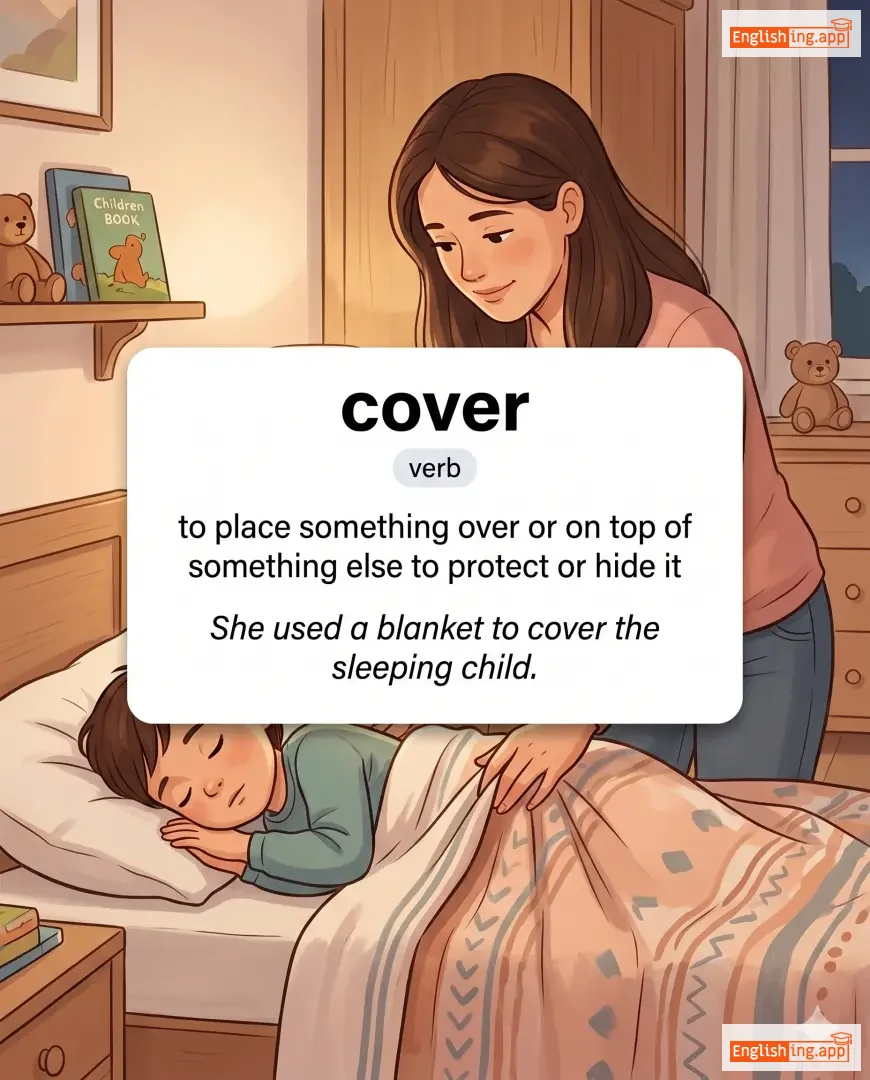
cover definition card — visual illustration of the meaning
verb
/ˈkʌvər/
覆う (ōu)

to place something over or on top of something else to protect or hide it

"She used a blanket to cover the sleeping child."

"彼女は寝ている子供をカバーするために毛布を使った。" (Kanojo wa nete iru kodomo o kābā suru tame ni mōfu o tsukatta.)
noun
/ˈkʌvərɪdʒ/
報道 (hōdō)

The extent or scope of something, such as insurance protection or media reporting.

"The news channel provided extensive coverage of the event."
"ニュースチャンネルはそのイベントを広範囲に報道しました。" (Nyūsu channeru wa sono ibento o kōhan'i ni hōdō shimashita.)
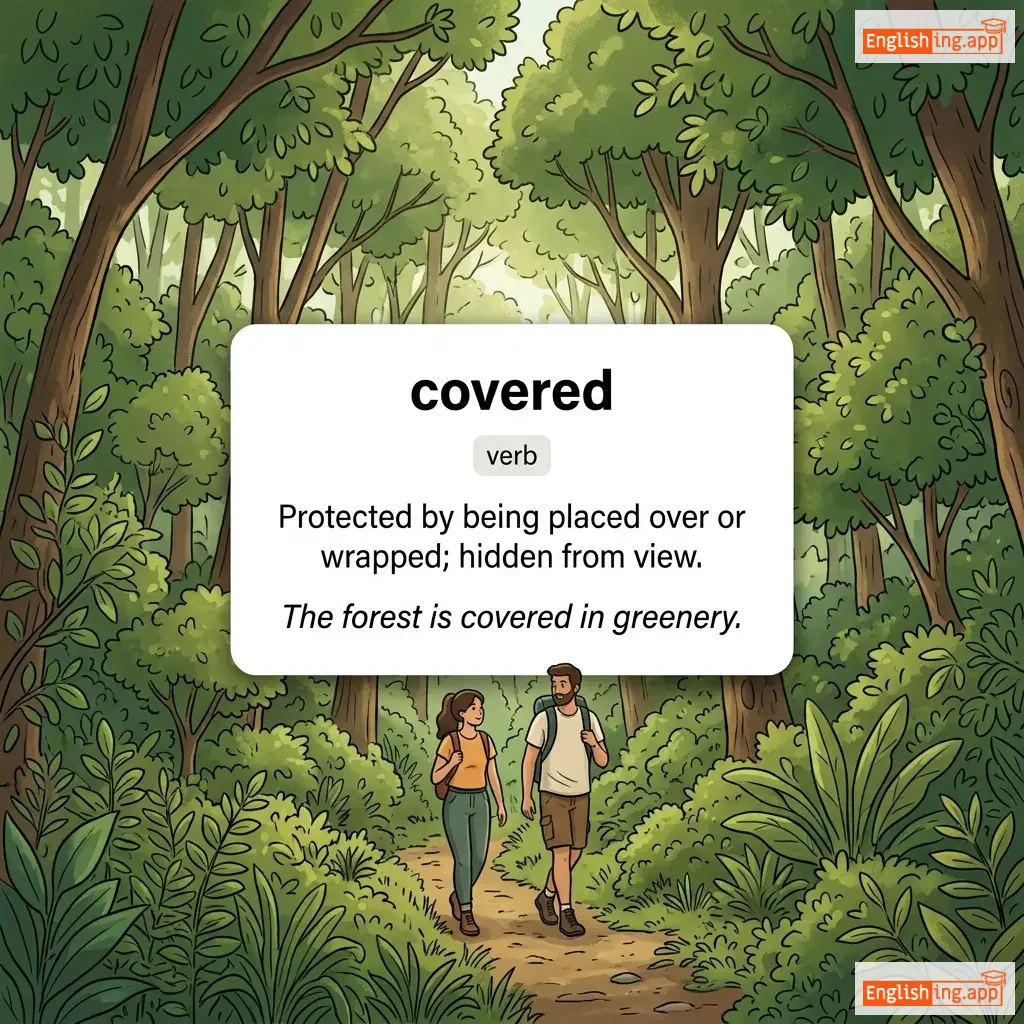
covered definition card — visual illustration of the meaning
verb
/ˈkʌv.ərd/
覆われた (ōwareta)

Protected by being placed over or wrapped; hidden from view.

"The forest is covered in greenery."

"森は緑で覆われています。" (Mori wa midori de ōwareteimasu.)
covert definition card — visual illustration of the meaning
adjective
/ˈkoʊvərt/
秘密 (himitsu)

hidden, secret, or not openly acknowledged

"The spy conducted a covert operation behind enemy lines."

"スパイは敵の線の後ろで秘密の作戦を行った。" (Supai wa teki no sen no ushiro de himitsu no sakusen o okonatta.)
verb
/ˈkʌvət/
切望する (sesoku suru)

to desire something belonging to someone else

"He coveted his neighbor's new car."
"彼は隣人の新しい車を欲しがっていました。" (Kare wa rinjin no atarashii kuruma o hoshigatte imashita.)
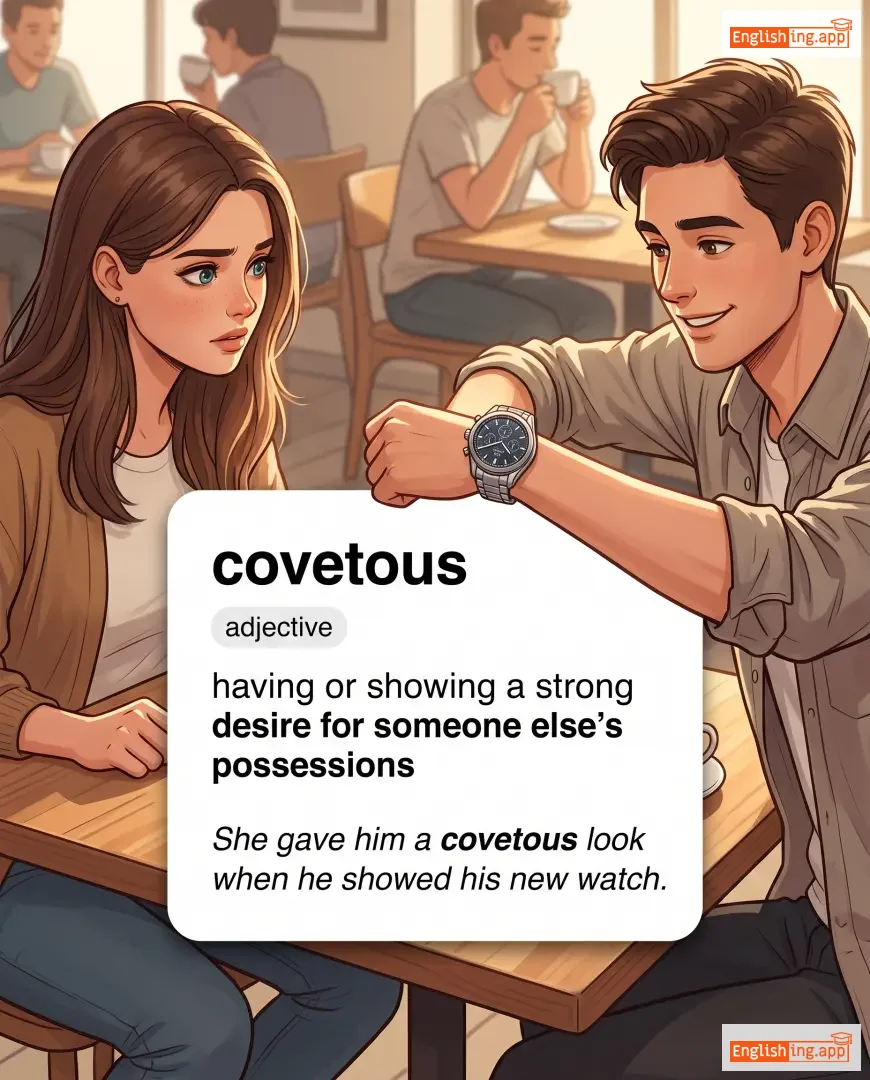
covetous definition card — visual illustration of the meaning
adjective
/ˈkʌvətəs/
欲張り (yokubari)

having or showing a strong desire for someone else's possessions

"She gave him a covetous look when he showed his new watch."

"彼は新しい時計を見せたとき、彼女は欲しがる目を向けた。" (Kare wa atarashī tokei o miseta toki, kanojo wa hoshigaru me o muketa.)
noun
/ˈkʌvi/
小さな鳥の群れ (chiisana tori no mure)

a small group of birds, especially partridges or quails

"A covey of quails flew across the field."

"コヴィのウズラの群れが畑を飛び越えた。" (Kovi no uzura no mure ga hatake o tobikoeta.)
🐄

Cow

noun
/kaʊ/

a large domesticated bovine animal kept for milk or meat

"The farmer milked the cow early in the morning."

noun
/ˈkaʊ.ərd/
臆病者 (okubyou-sha)

a person who lacks the courage to do or endure dangerous or unpleasant things

"He called himself a coward for not standing up to the bully."

"彼はいじめっ子に立ち向かわなかったので、自分を臆病者だと言った。" (Kare wa ijimekko ni tachimukawanakatta node, jibun o okubyou-sha da to itta.)
noun
/ˈkaʊərdɪs/
臆病 (okubyō)

lack of courage; behavior showing fear

"His cowardice prevented him from speaking up."

"彼の臆病は彼が発言するのを妨げた。" (Kare no okubyō wa kare ga hatsugen suru no o samatage ta.)
noun
/ˈkaʊbɔɪ/
カウボーイ (kaubōi)

a man, typically one on horseback, who herds and tends cattle

"The cowboy rode across the plains."

"カウボーイは平原を横断していた。" (Kaubōi wa heigen o ōdan shite ita.)
verb
/ˈkaʊər/
恐怖で縮こまる (kyoufu de chijikomareru)

to crouch down in fear

"The child cowered behind the sofa during the thunderstorm."

"子供は雷の間、ソファの後ろで恐怖で縮こまっていた。" (Kodomo wa kaminari no aida, sofa no ushiro de kyoufu de chijikomatte ita.)
noun
/ˈkɒksweɪn/
舵手 (dasshu)

the person in charge of navigating and steering a boat, especially a racing or small boat

"The coxswain shouted instructions to the rowing team."
"コックスウェインはローイングチームに指示を出した。" (Kokkusuwein wa rōingu chīmu ni shiji o dashita.)
adjective
/kɔɪ/
控えめな, 内気な (hikaeme na, uchiki na)

reluctant to give details or reveal feelings; shy or reserved

"She gave a coy smile when asked about her plans."

"彼女は自分の計画について聞かれたとき、控えめな笑顔を見せた。" (Kanojo wa jibun no keikaku ni tsuite kikareta toki, hikaeme na egao wo miseta.)
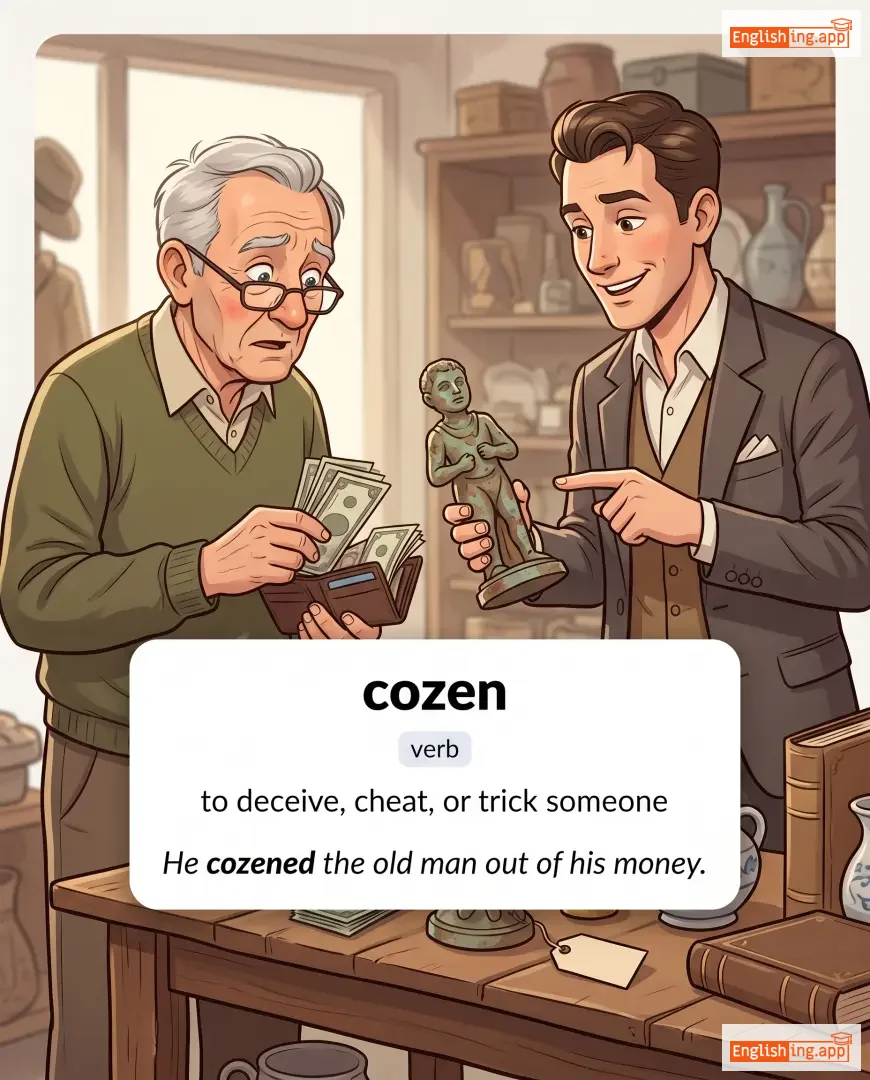
cozen definition card — visual illustration of the meaning
verb
/ˈkʌzən/
だます, 騙す (damasu, damasu)

to deceive, cheat, or trick someone

"He cozened the old man out of his money."

"彼は老人をだましてお金を取った。" (Kare wa rōjin wo damashite okane wo totta.)
adjective
/ˈkoʊzi/
居心地の良い (kyōshindeyoi)

giving a feeling of comfort, warmth, and relaxation

"We sat in a cozy little café on a rainy day."

"雨の日に小さな居心地の良いカフェで座っていました。" (Ame no hi ni chiisana kyōshindeyoi kafe de suwatte imashita.)
noun
/kræb/
カニ (kani)

a crustacean with a broad carapace, stalked eyes, and five pairs of legs, the first pair of which are modified as pincers

"The crab scuttled sideways across the sand."

"カニは砂の上を横向きに這って行った。" (Kani wa suna no ue o yokomuki ni hatte itta.)
adjective
/ˈkræbɪd/
読みにくい、機嫌が悪い (yominikui, kigen ga warui)

difficult to read or understand; ill-tempered

"His handwriting was crabbed and almost illegible."

"彼の手書きは読みにくく、ほとんど判読不能だった。" (Kare no tegaki wa yominikukute, hotondo handoku funō datta.)
verb
/kræk/
幸せ (shiawase)

To break or cause to break without complete separation; to make a sharp sound.

"The glass cracked when it was dropped on the floor."

"彼女は賞を受け取ったとき、幸せを隠すことができませんでした。" (Kanojo wa shō o uketotta toki, shiawase o kakusu koto ga dekimasen deshita.)
noun
/ˈkreɪ.dəl/
揺り籠 (yurikago)

a small bed for a baby, especially one that rocks from side to side

"The baby sleeps peacefully in the cradle."

"赤ちゃんは揺り籠で静かに寝ています。" (Akachan wa yurikago de shizuka ni neteimasu.)
noun
/kræft/
技術、工芸、手工芸 (gijutsu, kougei, shukougei)

an activity involving skill in making things by hand; a trade or occupation

"She has mastered the craft of pottery."

"彼女は陶芸の技術を習得しています。" (Kanojo wa tougei no gijutsu o shuutoku shiteimasu.)
adjective
/ˈkræfti/
ずるい, 狡猾, 騙し (zurui, kōkatsu, damashi)

skilled at achieving goals through cunning or deceit; sly

"The crafty fox evaded the hunters again."

"ずる賢いキツネは再び狩人たちをかわしました。" (Zurukashikoi kitsune wa futatabi kariutachi o kawashimashita.)
noun
/kræɡ/
急な崖や岩の面 (kyuu na gake ya iwa no men)

a steep or rugged cliff or rock face

"The hikers climbed the jagged crag to reach the summit."

"ハイカーたちは頂上に到達するために険しい崖を登った。" (Haikaa-tachi wa choujou ni toutatsu suru tame ni kewashii gake o nobotta.)
adjective
/kræmpt/
窮屈, 不快適な小ささ (kyoukutsu, fukaiteki na chiisasa)

uncomfortably small or restricted

"The room was so cramped that we could barely move."

"部屋はとても窮屈で、ほとんど動けませんでした。" (Heya wa totemo kyoukutsu de, hotondo ugokemasen deshita.)
noun
/kreɪn/
クレーン (kuren)

a large tall bird with long legs and neck; a machine for lifting heavy objects

"The graceful crane stood motionless by the water's edge."

"優雅なクレーンは水辺に静止して立っていた。" (Yūga na kurēn wa mizube ni seishi shite tatte ita.)
noun
/ˈkreɪniəm/
頭蓋骨 (zugaikotsu)

the skull, especially the part enclosing the brain

"The archaeologists carefully examined the ancient cranium."

"考古学者たちは古代の頭蓋骨を慎重に調べました。" (Kōkogakusha-tachi wa kodai no zugaikotsu o shinchō ni shirabemashita.)
adjective
/ˈkræŋki/
機嫌が悪い (kigen ga warui)

bad-tempered, easily annoyed, or irritable

"The child gets cranky when he is hungry."

"その子供はお腹が空くと機嫌が悪くなります。" (Sono kodomo wa onaka ga suku to kigen ga waruku narimasu.)
verb
/kræʃ/
幸せ (shiawase)

To collide violently; to suddenly stop working (for machines or computers).

"The car crashed into the wall at high speed."

"彼女は賞を受け取ったとき、自分の幸せを隠せなかった。" (Kanojo wa shō o uketotta toki, jibun no shiawase o kakusenakatta.)
adjective
/kræs/
無神経な、感受性や洗練さが欠けている (mushinken na, kanjusei ya senrensā ga kakete iru)

lacking sensitivity, refinement, or intelligence

"His crass remarks offended everyone at the meeting."

"彼の無神経な発言は会議で全員を怒らせました。" (Kare no mushinken na hatsugen wa kaigi de zen'in o okorase mashita.)
verb
/kreɪv/
強く欲する, 渇望する (tsuyoku hossuru, katsubou suru)

to have a strong desire for something

"She craves adventure and often travels to remote places."
"彼女は冒険を渇望し、しばしば遠くの場所へ旅行します。" (Kanojo wa bouken wo katsubou shi, shibashiba tooku no basho e ryokou shimasu.)
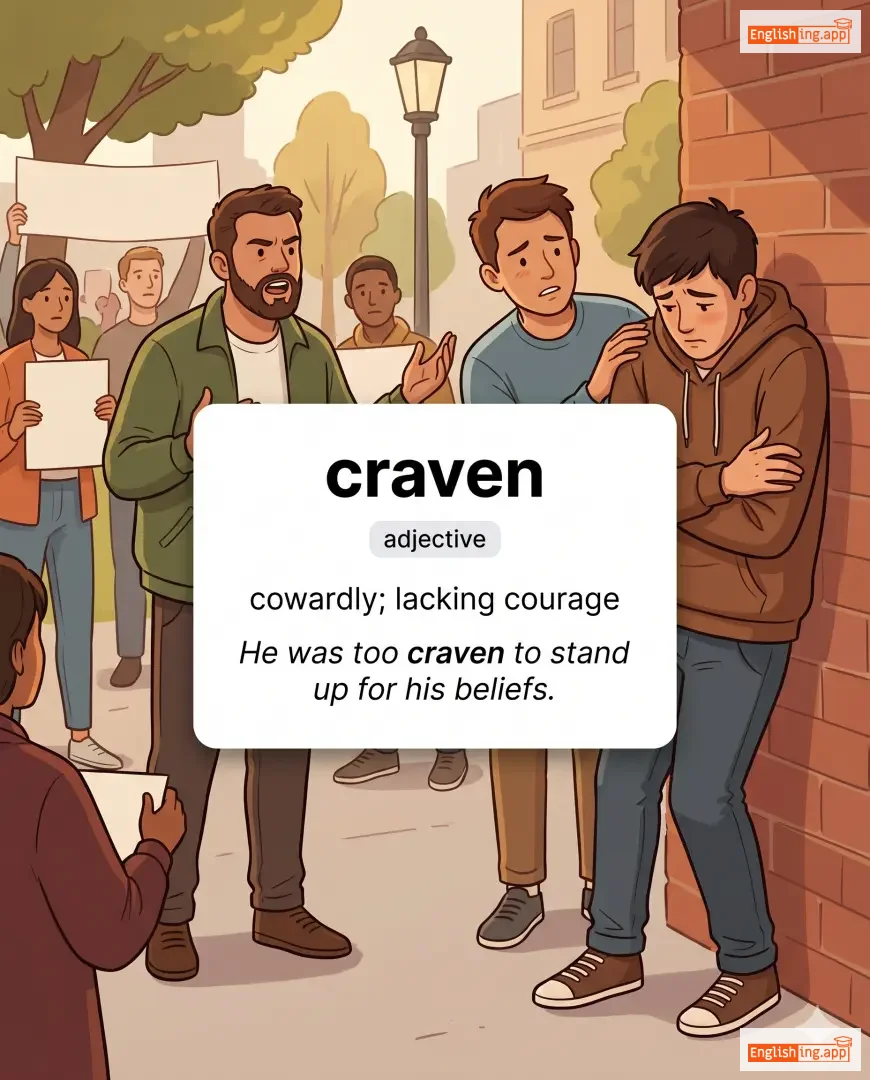
craven definition card — visual illustration of the meaning
adjective
/ˈkreɪvən/
臆病 (okubyō)

cowardly; lacking courage

"He was too craven to stand up for his beliefs."

"彼は自分の信念のために立ち上がるにはあまりにも臆病でした。" (Kare wa jibun no shinnen no tame ni tachiagaru ni wa amari ni mo okubyō deshita.)
noun
/ˈkreɪvɪŋ/
強い欲求 (tsuyoi yokkyuu)

a strong desire for something

"She has a craving for chocolate every evening."
"彼女は毎晩チョコレートが欲しくなる。" (Kanojo wa maiban chokorēto ga hoshiku naru.)
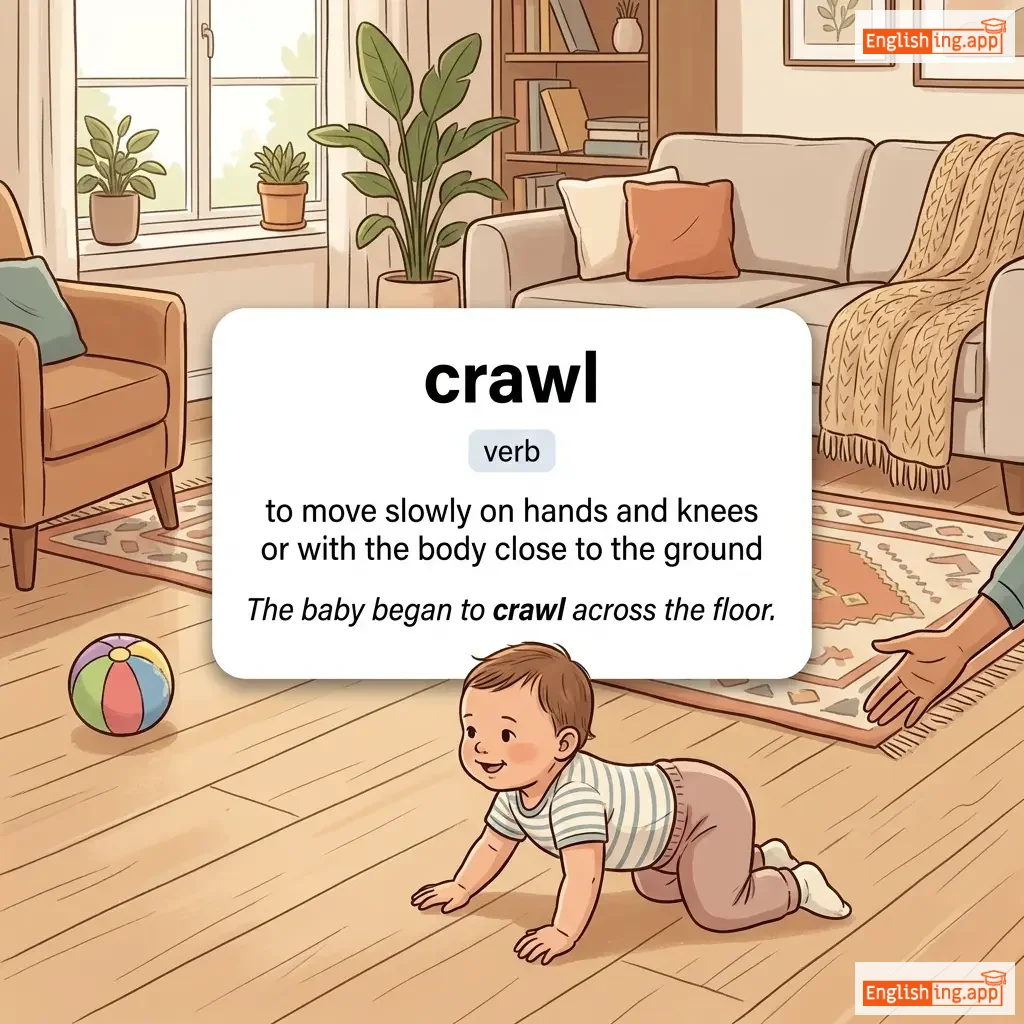
crawl definition card — visual illustration of the meaning
verb
/krɔːl/
這う (hau)

to move slowly on hands and knees or with the body close to the ground

"The baby began to crawl across the floor."

"赤ちゃんは床を這い始めました。" (Akachan wa yuka o hai hajimemashita.)
adjective
/ˈkreɪzi/
クレイジー (kureijī)

mentally unsound; extremely foolish or enthusiastic

"He had a crazy idea that actually worked."

"彼は実際にうまくいったクレイジーなアイデアを持っていた。" (Kare wa jissai ni umaku itta kureijī na aidea o motte ita.)
verb
/kriːk/
高い音できしむ音を立てる (takai on de kishimu oto o tateru)

to make a high-pitched, squeaking noise when moved

"The old door creaked as she opened it."

"古いドアは彼女が開けるときにきしんだ。" (Furui doa wa kanojo ga akeru toki ni kishinda.)
noun
/kriːm/
クリーム (kuriimu)

A thick, fatty part of milk that rises to the top; also a soft substance used in cooking or cosmetics.

"She added some cream to her coffee."

"彼女はコーヒーにクリームを加えた。" (Kanojo wa koohii ni kuriimu wo kuwaeta.)
noun
/ˈkriːməri/
クリーム製造所 (kurīmu seizōjo)

a place where milk and cream are processed and dairy products are made

"The local creamery produces fresh butter and cheese daily."

"地元のクリーム製造所は毎日新鮮なバターとチーズを作っています。" (Jimoto no kurīmu seizōjo wa mainichi shinsen na batā to chīzu o tsukutteimasu.)
adjective
/ˈkriːmi/
クリームのような滑らかでリッチな質感 (kurīmu no yōna nameraka de ricchi na shitsukan)

having a smooth, rich texture like cream

"She poured a creamy sauce over the pasta."

"彼女はパスタにクリーミーなソースをかけた。" (Kanojo wa pasuta ni kurīmī na sōsu o kaketa.)
noun, verb
/kriːs/
しわ, 折り目 (shiwa, orime)

a line or fold produced on paper, cloth, or other material; to make a fold or wrinkle

"She ironed the shirt carefully to remove every crease."
"彼女はシャツを慎重にアイロンがけして、すべてのしわを取り除きました。" (Kanojo wa shatsu o shinchō ni airon gake shite, subete no shiwa o torinozokimashita.)
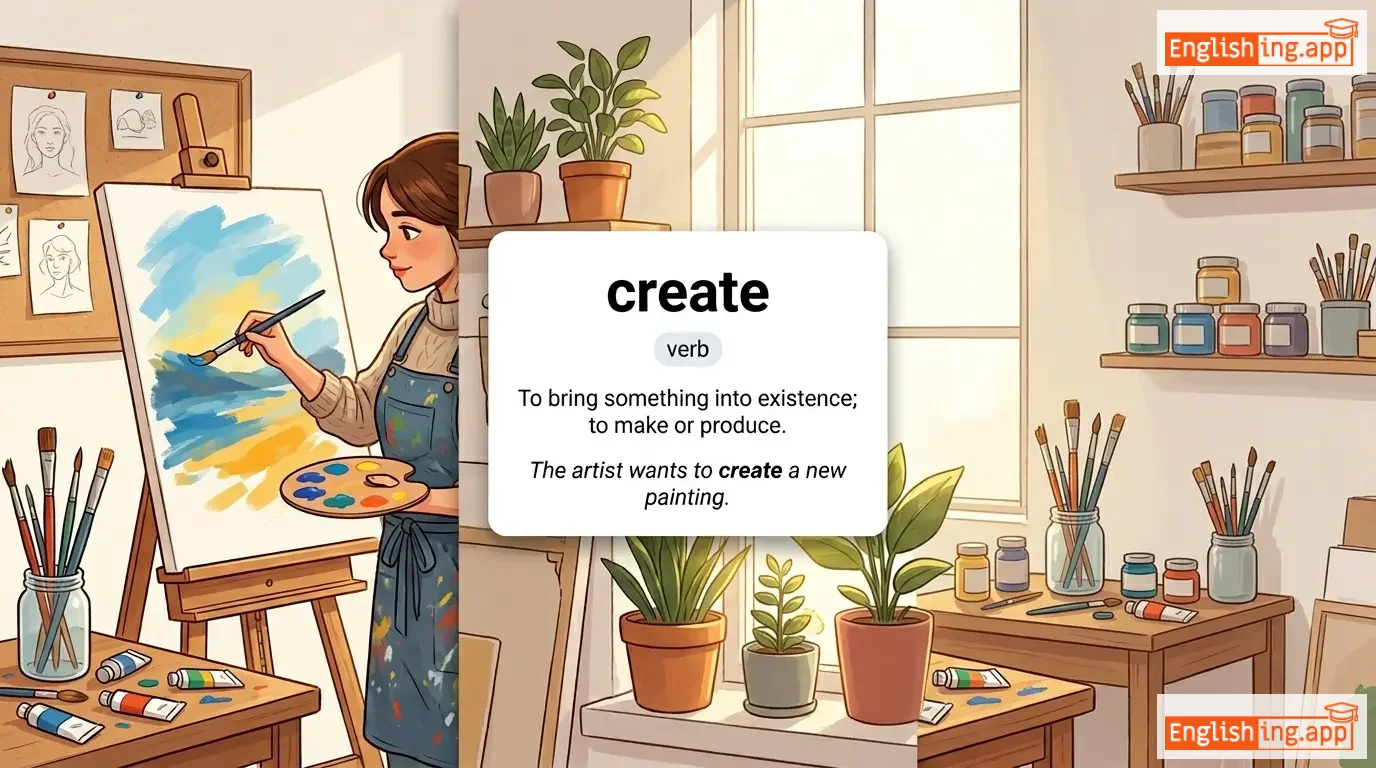
create definition card — visual illustration of the meaning
verb
/kriˈeɪt/
作る (tsukuru)

To bring something into existence; to make or produce.

"The artist wants to create a new painting."
"アーティストは新しい絵を作りたい。" (Ātisuto wa atarashī e o tsukuritai.)
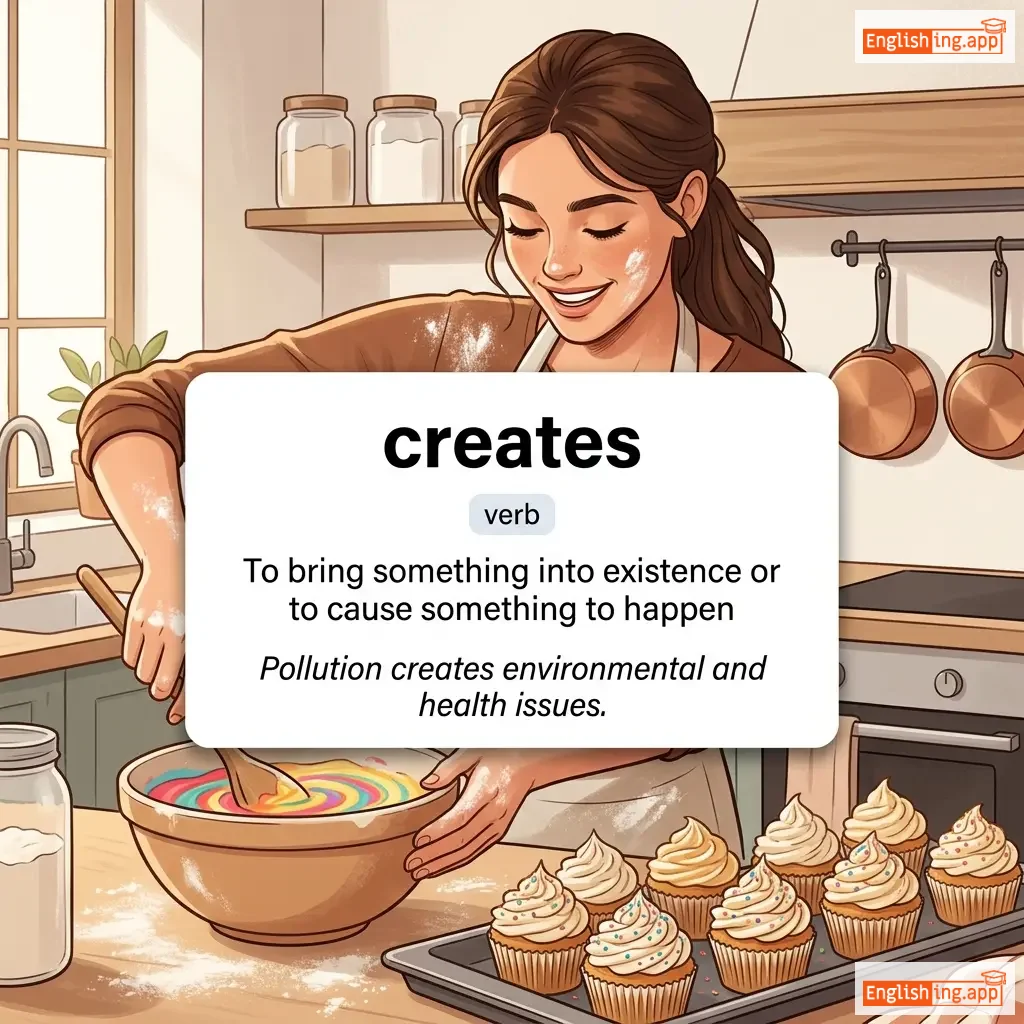
creates definition card — visual illustration of the meaning
verb
kriˈeɪts
作り出す (tsukuridasu)

To bring something into existence or to cause something to happen

"Pollution creates environmental and health issues."

"汚染は環境と健康問題を引き起こします。" (Osenshimasu wa kankyō to kenkō mondai o hikiokoshimasu.)