語彙集

英単語辞書 | 単語の意味、定義、例文

adjective
/ˌkæləˈrɪfɪk/
カロリーの高い (karorī no takai)

Relating to the amount of energy contained in food or fuel.

"Chocolate is highly calorific, so it should be eaten in moderation."

"チョコレートは非常にカロリーが高いため、適量を食べるべきです。" (Chokorēto wa hijō ni karorī ga takai tame, tekiryō o taberu beki desu.)
verb
/kəˈlʌmnieɪt/
中傷する (chuushou suru)

To make false and damaging statements about someone; to slander.

"He was furious when he realized they had calumniated his reputation."
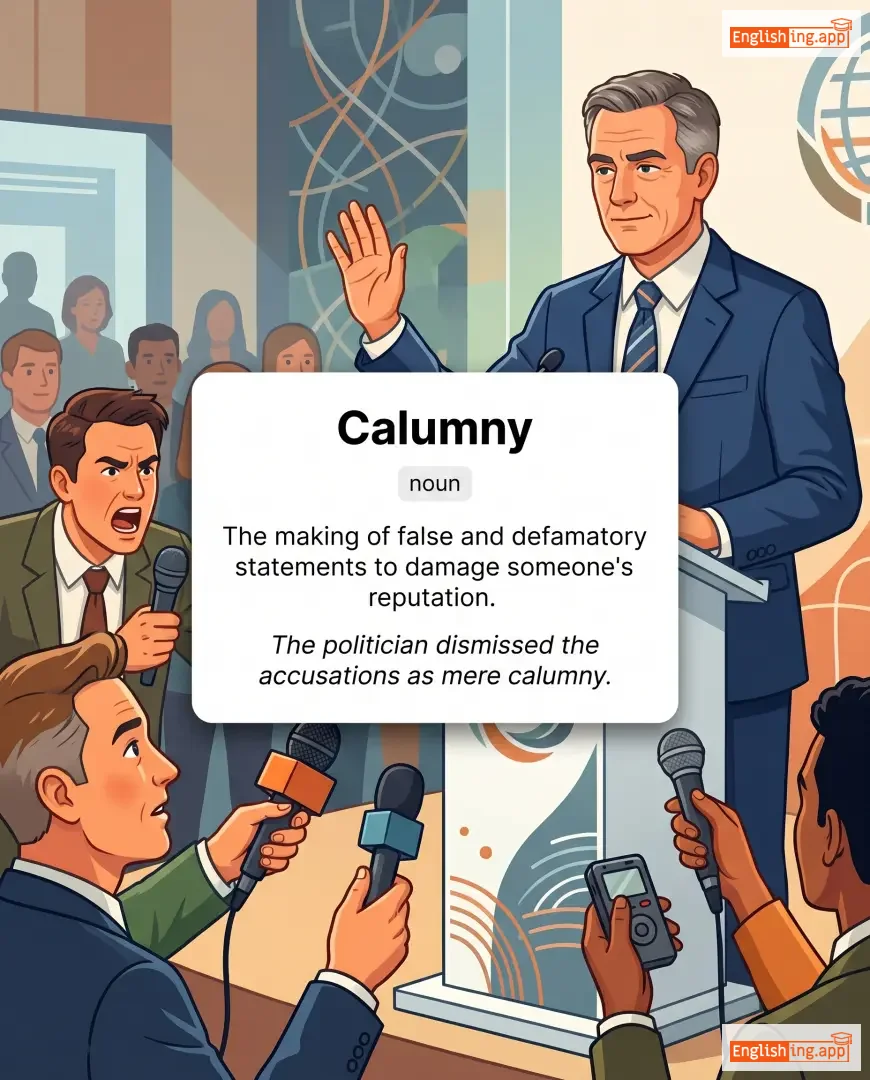
"彼は、彼らが彼の評判を中傷したことに気づいたとき、怒っていました。" (Kare wa, karera ga kare no hyouban o chuushou shita koto ni kizuita toki, okotte imashita.)
Calumny definition card — visual illustration of the meaning
noun
/ˈkæləmni/
中傷 (chuushou)

The making of false and defamatory statements to damage someone's reputation.

"The politician dismissed the accusations as mere calumny."

"政治家はその告発を単なる中傷だと一蹴した。" (Seijika wa sono kokuhatsu wo tannaru chuushou da to isshuu shita.)
✝️

calvary

noun
/ˈkælvəri/

A place or experience of intense suffering, originally the site of Jesus’s crucifixion.

"For many refugees, the journey across the desert was a calvary."

noun
/ˈkælvɪnɪzəm/
カルヴァン主義 (karuvan shugi)

A Protestant theological system based on John Calvin’s teachings, emphasizing predestination and the sovereignty of God.

"Calvinism played a major role in shaping Protestant theology."

"カルヴァン主義はプロテスタント神学の形成に重要な役割を果たした。" (Karuvan shugi wa Purotesutanto shingaku no keisei ni juuyou na yakuwari wo hatashita.)
verb
/ˈkælvɪnaɪz/
カルヴァン主義の原則を取り入れる (Karuvan shūgimu no gensoku o toriireru)

to imbue with the principles or doctrines of Calvinism

"The preacher sought to calvinize the community with strict teachings."
"伝道師は厳格な教義でコミュニティをカルヴァン主義化しようとした。" (Dendōshi wa genkaku na kyōgi de komyuniti o karuvan shūgimuka shiyō to shita.)
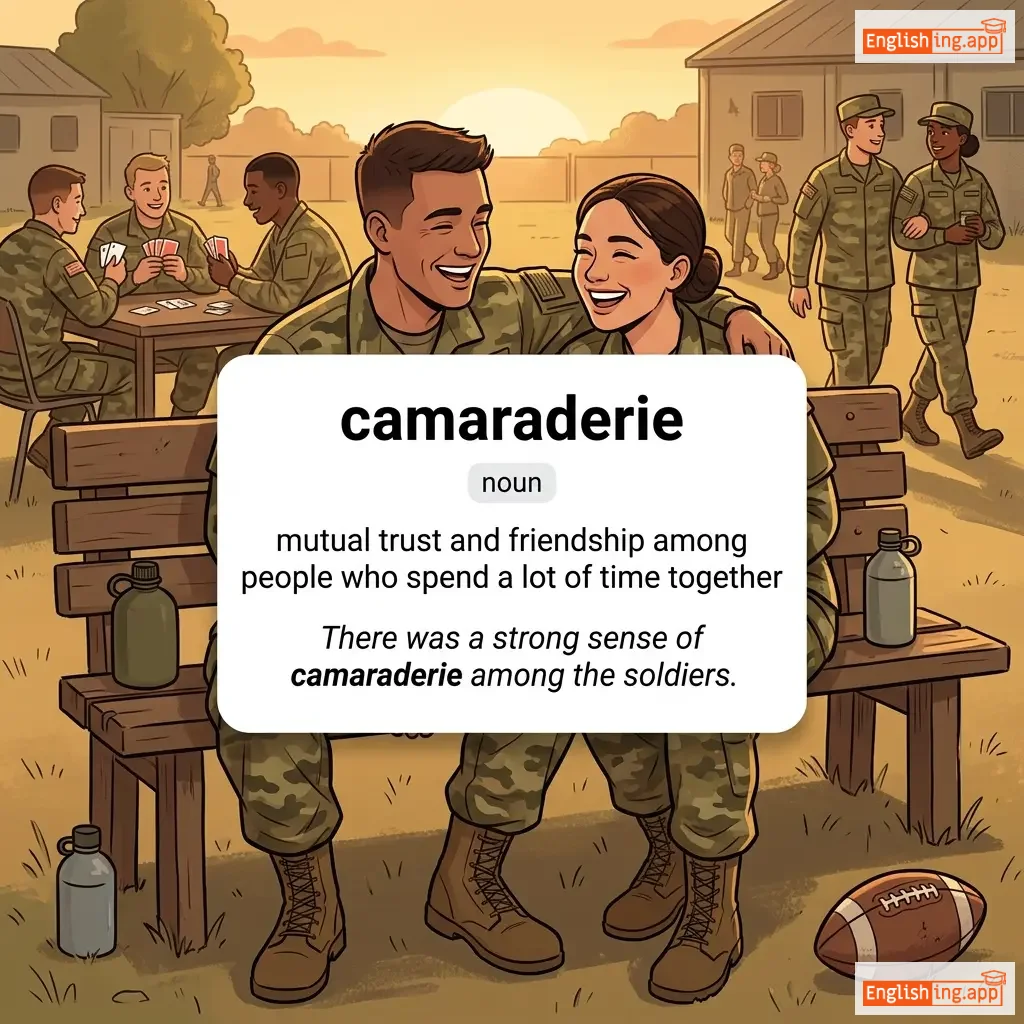
camaraderie definition card — visual illustration of the meaning
noun
/ˌkæməˈrɑːdəri/
仲間意識 (nakamaishiki)

mutual trust and friendship among people who spend a lot of time together

"There was a strong sense of camaraderie among the soldiers."

"兵士たちの間に強い仲間意識があった。" (Heishi-tachi no aida ni tsuyoi nakama ishiki ga atta.)
verb
/keɪm/
来た (kita)

past tense of 'come'

"She came to the party on time."

"彼女はパーティーに時間通りに来た。" (Kanojo wa pātī ni jikan dōri ni kita.)
noun
/ˈkæm.əl/
ラクダ (rakuda)

a large animal with one or two humps on its back that lives in hot dry places

"The camel walked slowly across the desert sand."

"ラクダは砂漠の砂をゆっくり歩きました。" (Rakuda wa sabaku no suna o yukkuri arukimashita.)
noun
/ˈkæmi.oʊ/
カメオ (cameo)

a small but significant role in a play, film, or show, often performed by a well-known person

"The actor made a surprise cameo in the movie."

"その俳優は映画でサプライズのカメオを果たした。" (Sono haiyuu wa eiga de sapuraizu no cameo wo hatashita.)
noun
/ˈkæm.rə/

a device used for taking photographs or recording videos

"She bought a new camera for her photography class."

noun
/ˈkæməˌflɑːʒ/
カモフラージュ (kamofurāju)

the act of hiding or disguising something by making it blend with its surroundings

"The soldiers used camouflage to hide from the enemy."

"兵士たちは敵から隠れるためにカモフラージュを使用しました。" (Heishitachi wa teki kara kakureru tame ni kamofurāju o shiyō shimashita.)
noun, verb
/kæmp/
キャンプ地 (kyampuchi)

a place where people stay temporarily in tents or cabins, often outdoors; to stay in such a place

"We decided to camp by the lake during the summer holiday."

"私たちは夏休みに湖の近くでキャンプすることに決めました。" (Watashitachi wa natsu yasumi ni mizuumi no chikaku de kyanpu suru koto ni kimemashita.)
noun, verb
/kæmˈpeɪn/
キャンペーン (kyanpēn)

a planned series of activities to achieve a specific goal, especially in politics, marketing, or war

"The company launched a campaign to promote its new product."

"その会社は新しい製品を促進するためにキャンペーンを開始しました。" (Sono kaisha wa atarashī seihin o sokushin suru tame ni kyanpēn o kaishi shimashita.)
noun
/ˈkæm.fər/
カンフル (kanfuru)

a white crystalline substance with a strong aromatic smell, used in medicine and religious ceremonies

"The temple was filled with the fragrant smoke of burning camphor."
"寺院は燃えているカンフルの芳香煙で満たされていました。" (Jiin wa moete iru kanfuru no hōkō kemuri de mitasarete imashita.)
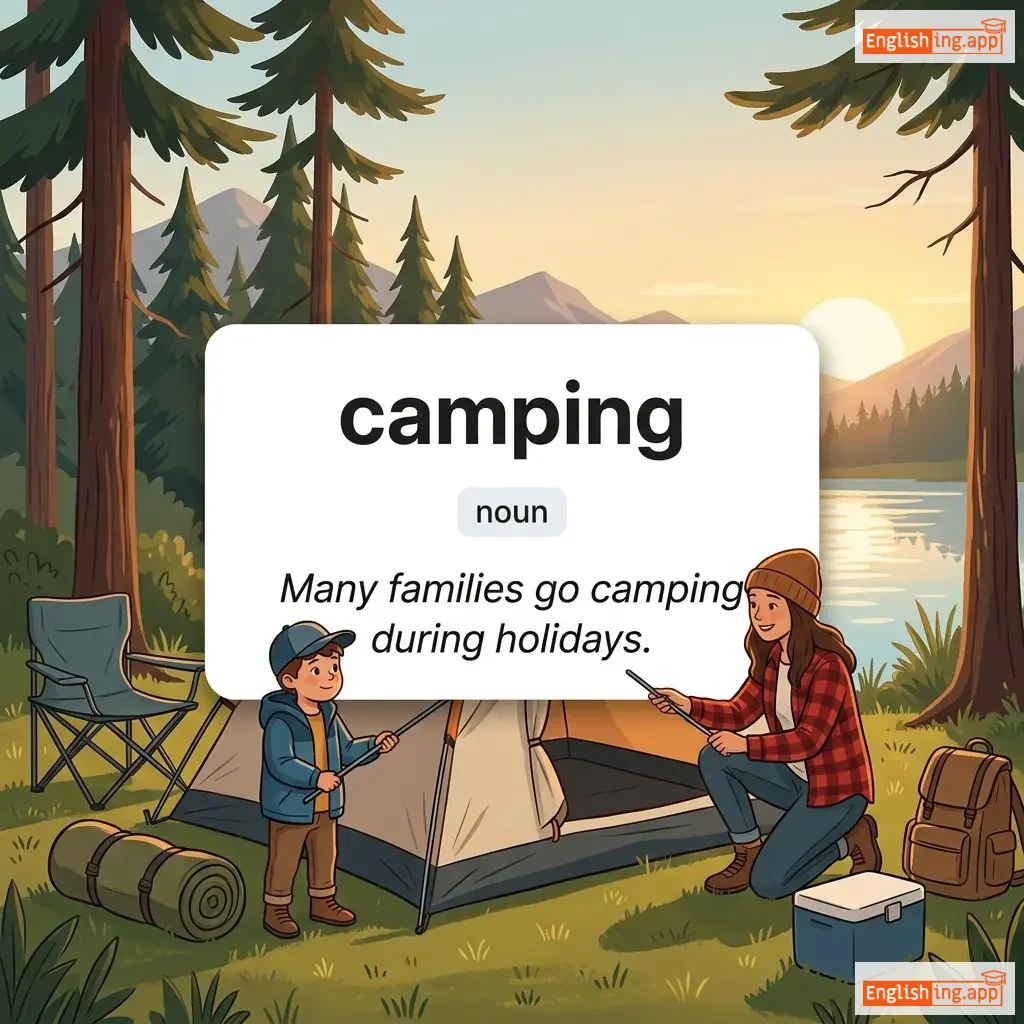
camping definition card — visual illustration of the meaning
noun
ˈkæm.pɪŋ
キャンプ (kyanpu)

Living outdoors temporarily, especially for recreation; staying in a tent or similar shelter.

"Many families go camping during holidays."

"多くの家族が休暇中にキャンプに行きます。" (Ōku no kazoku ga kyūka-chū ni kyanpu ni ikimasu.)
noun
/ˈkæmpəs/
キャンパス (kyampasu)

The grounds and buildings of a university, college, or school.

"The university campus is filled with students during the fall semester."

"大学のキャンパスは秋学期中に学生でいっぱいです。" (daigaku no kyampasu wa aki gakki-chū ni gakusei de ippai desu.)
modal verb
/kæn/
できる (dekiru)

to be able to; to have the ability or possibility to do something

"I can solve this problem easily."

"私はこの問題を簡単に解決できます。" (Watashi wa kono mondai o kantan ni kaiketsu dekimasu.)
noun
/ˈkeɪ.nə.naɪt/
カナン人 (kananjin)

a member of a people who lived in the ancient land of Canaan in the Middle East

"The Canaanites were known for their advanced trade networks."

"カナアン人は先進的な貿易ネットワークで知られていました。" (Kananjin wa senshinteki na bōeki nettowāku de shirarete imashita.)
adjective
/kəˈneɪdiən/
カナダの (kanada no)

Relating to Canada or its people.

"She enjoys Canadian culture and traditions."

"彼女はカナダの文化と伝統を楽しんでいます。" (Kanojo wa Kanada no bunka to dentou o tanoshindeimasu.)
noun
/kəˈnæl/
運河 (unga)

an artificial waterway constructed for navigation, irrigation, or drainage

"The canal was built to help transport goods across the region."

"運河は地域内で物資の輸送を助けるために建設されました。" (Unga wa chiiki nai de busshi no yusou o tasukeru tame ni kensetsu saremashita.)
canard definition card — visual illustration of the meaning
noun
/kəˈnɑːrd/

a false or unfounded story or rumor

"The article turned out to be nothing more than a canard."

noun
/kəˈnɛəri/
カナリア (kanaria)

a small, usually yellow bird known for its singing; also used as a warning sign in dangerous conditions

"The canary sang beautifully in its cage."

"カナリアは自分の檻の中で美しく歌っていました。" (kanaria wa jibun no ori no naka de utsukushiku utatte imashita.)
verb
/ˈkænsəl/
キャンセル (kyanseru)

to decide that something planned will not take place

"The flight was canceled due to heavy rain."

"フライトは激しい雨のためキャンセルされました。" (Furaito wa hageshī ame no tame kyansel saremashita.)
noun
/ˌkænsəˈleɪʃən/
取消 (torikeshi)

the act of stopping something that was planned or scheduled; the act of nullifying or invalidating something

"The airline announced the cancellation of several flights due to bad weather."

"悪天候のため、いくつかの便が取り消されました。" (akutenko no tame ikutsuka no bin ga torikesaremashita)
noun
/ˈkænsər/
がん (gan)

A disease in which abnormal cells divide uncontrollably and destroy body tissue.

"Smoking is a leading cause of lung cancer."

"喫煙は肺がんの主な原因です。" (Kitsuen wa haigan no omona gen'in desu.)
adjective
/ˈkændɪd/
率直な (ritsu choku na)

Truthful and straightforward; frank

"She gave a candid account of the challenges she faced."

"彼女は直面した課題について率直な報告をした。" (Kanojo wa chokumen shita kadai ni tsuite ritsu choku na hōkoku o shita.)
noun
/ˈkændɪdeɪt/
候補者 (kōhosha)

A person who applies for a job or is nominated for election.

"The candidate gave a strong speech during the debate."

"候補者は討論中に強いスピーチを行いました。" (Kōhosha wa tōron-chū ni tsuyoi supīchi o okonaimashita.)
candidates definition card — visual illustration of the meaning
noun
ˈkæn.dɪ.deɪts
候補者 (kouhosha)

A person who applies for a job or is nominated for election; someone being considered for a position.

"Candidates undergo a rigorous selection process."

"候補者は厳格な選考プロセスを経ます。" (Kōhosha wa genkaku na senkō purosesu o emasu.)
noun
/ˈkændɪdnəs/
率直 (rōchoku)

The quality of being open, honest, and straightforward

"Her candidness during the meeting impressed everyone."

"会議中の彼女の率直さは皆に感銘を与えました。" (Kaigi chū no kanojo no rōchokusa wa mina ni kanmei o ataemashita.)
noun
/ˈkændl/
ろうそく (rousoku)

a stick of wax with a wick that burns to give light

"She lit a candle during the power cut."

"停電中に彼女はろうそくを灯しました。" (Teiden-chū ni kanojo wa rōsoku o tomoshimashita.)
candor definition card — visual illustration of the meaning
noun
/ˈkændər/
率直 (sotchoku)

The quality of being open and honest in expression

"His candor in admitting mistakes earned him respect."

"間違いを認める彼の率直さは彼に尊敬をもたらした。" (Machigai wo mitomeru kare no sōchokusa wa kare ni sonkei wo motarashita.)
noun
/ˈkændi/
キャンディ (kyandi)

a sweet food made with sugar or chocolate, often in small pieces

"The children were excited to get candy on Halloween."

"子供たちはハロウィンでキャンディをもらって興奮していた。" (Kodomotachi wa Harouīn de kyandi o moratte kōfun shite ita.)
adjective, noun
/ˈkeɪnaɪn/
犬に関する / 犬歯 (inu ni kansuru / ken-shi)

Relating to dogs; also refers to the pointed teeth in humans and animals

"The police trained a canine unit for search operations."

"警察は捜索活動のために警察犬ユニットを訓練した。" (Keisatsu wa sōsaku katsudō no tame ni keisatsuken yunitto o kunren shita.)
noun, verb
/ˈkæŋkər/

A fungal disease of plants; an ulcerous sore in the mouth; to corrupt or destroy slowly

"The tree was infected with a canker that damaged its bark."

noun
/ˈkænə/
カンナ (kanna)

a tropical flowering plant with large, colorful flowers and broad leaves

"The bright orange canna lilies grew tall beside the pond."

"明るいオレンジ色のカンナリリーが池の横に高く成長しました。" (Akarui orenji-iro no kanna rīrī ga ike no yoko ni takaku seichō shimashita.)
noun
/ˈkæn.ɪ.bəl/
人食い (hitogui)

a person who eats the flesh of other human beings

"The explorer's journal described rumors of cannibals living on the remote island."

"探検家の日記には、遠くの島で人食いが生きているという噂が書かれていました。" (Tankenka no nikki ni wa, tōku no shima de hitogui ga ikite iru to iu uwasa ga kakarete imashita.)
noun
/ˈkænən/
大砲 (taihō)

large heavy gun that fires cannonballs or shells

"The castle was defended by several large cannons."

"城は数台の大きなキャノンで守られていた。" (Shiro wa suudai no ōkina kyanon de mamorarete ita.)
adjective
/ˈkæni/
抜け目のない (nukemeno nai)

Having good judgment, especially in business or practical matters; shrewd.

"She made a canny investment in real estate."

"彼女は不動産で抜け目のない投資をしました。" (Kanojo wa fudousan de nukemeno nai toushi o shimashita.)
noun
/kəˈnuː/
カヌー (kanū)

a narrow boat pointed at both ends and moved with a paddle

"They paddled their canoe down the peaceful stream."

"彼らは穏やかな小川をカヌーで漕いだ。" (Karera wa odayakana ogawa o kanū de koida)
canon definition card — visual illustration of the meaning
noun
/ˈkænən/
規範 (kihan)

A general law, rule, principle, or collection of sacred books accepted as genuine.

"The book is now considered part of the literary canon."

"その本は現在、文学の規範の一部と見なされています。" (Sono hon wa genzai, bungaku no kihan no ichibu to minasarareteimasu.)
adjective
/kəˈnɒnɪkəl/
カノニカル / 受け入れられた (kanonikari / ukeirerareta)

Conforming to a general rule or accepted standard; officially recognized.

"Shakespeare’s works are considered canonical in English literature."
"シェイクスピアの作品は英文学においてカノニカルと見なされています。" (Sheikusupia no sakuhin wa eibungaku ni oite kanonikaruto minasarateimasu.)
verb
/ˈkænənaɪz/

To officially declare a dead person a saint; to regard as great or significant.

"The church canonized the martyr after years of investigation."

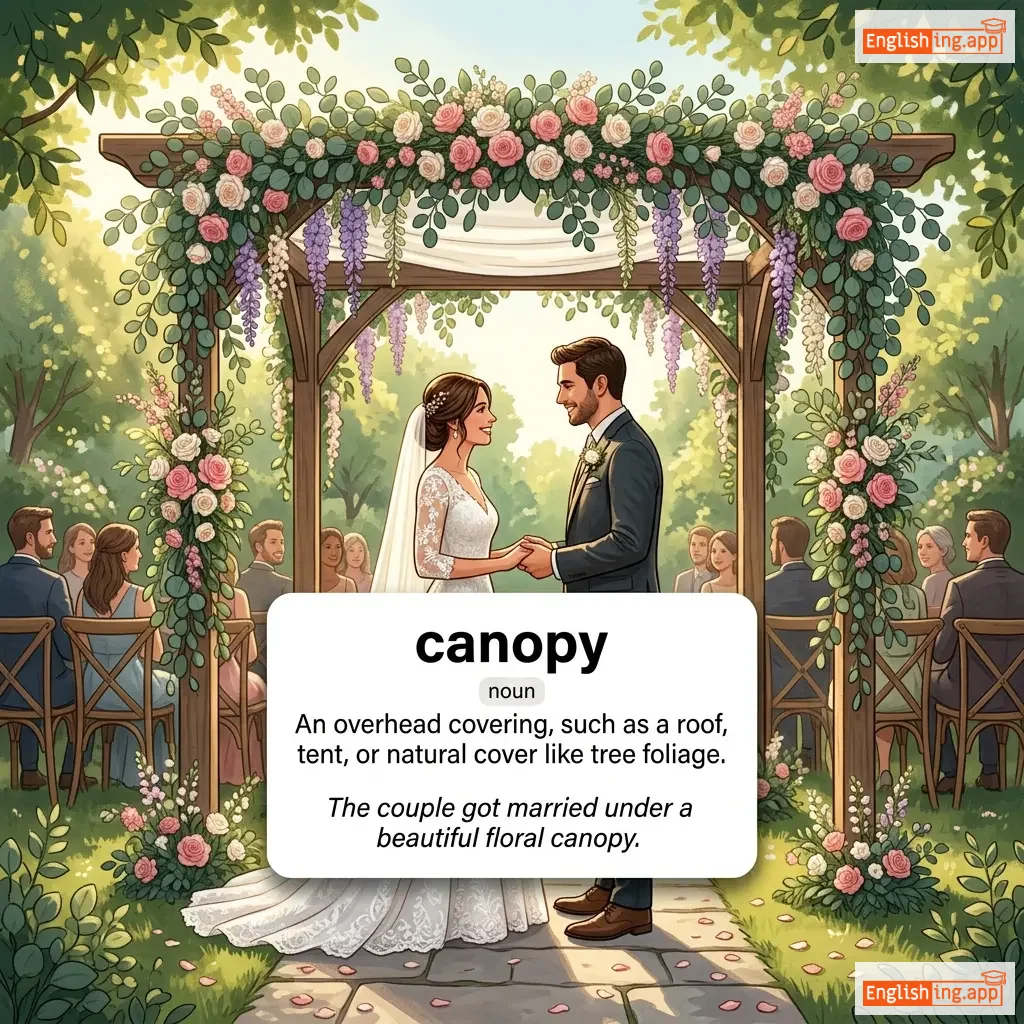
canopy definition card — visual illustration of the meaning
noun
/ˈkænəpi/
キャノピー (kyanopī)

An overhead covering, such as a roof, tent, or natural cover like tree foliage.

"The couple got married under a beautiful floral canopy."

"カップルは美しい花のカノピーの下で結婚しました。" (Kappuru wa utsukushī hana no kanopī no shita de kekkon shimashita.)
cant definition card — visual illustration of the meaning
noun
/kænt/
偽善的な言葉 (gizen-teki na kotoba)

Hypocritical and insincere talk, especially about moral or religious principles.

"The politician's speech was filled with cant about honesty and integrity."
"その政治家の演説は、誠実さと誠実性についての偽善的な言葉で満ちていた。" (Sono seijika no enzetsu wa, seijitsusa to seijitsusei ni tsuite no gizen-teki na kotoba de michite ita.)
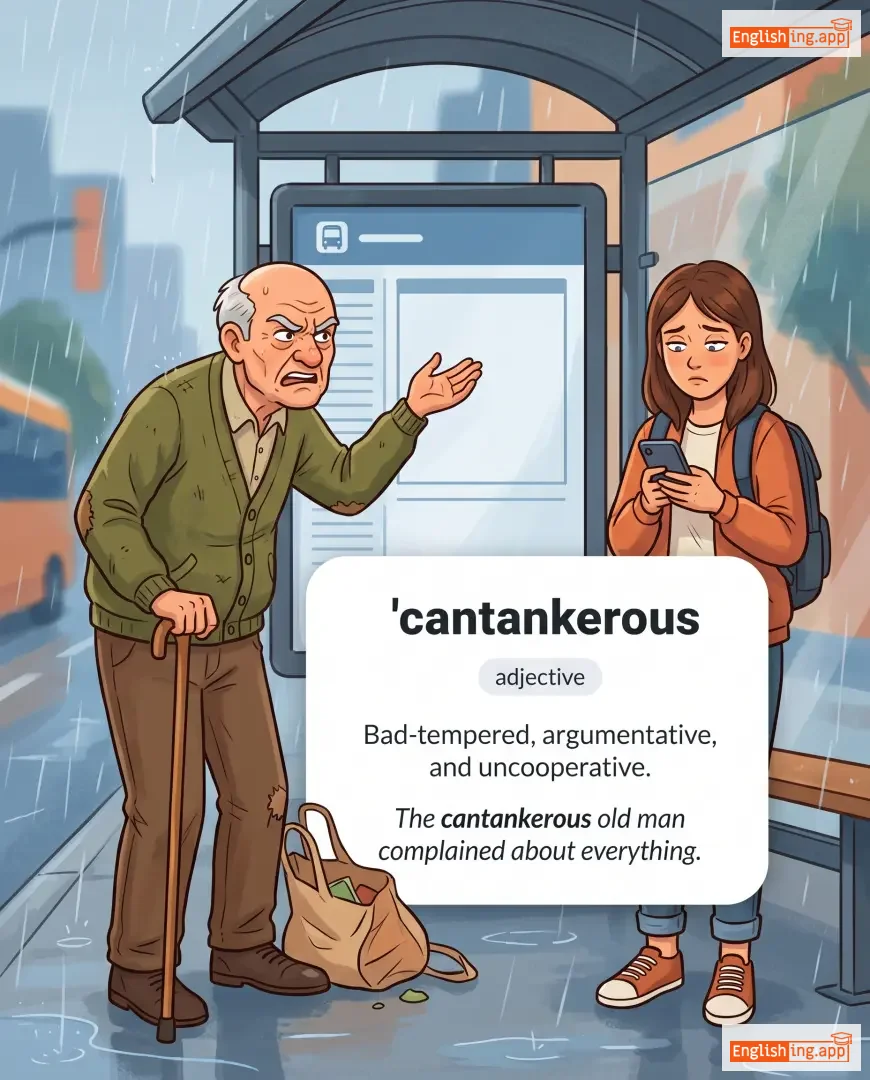
cantankerous definition card — visual illustration of the meaning
adjective
/kænˈtæŋ.kər.əs/
気難しい (kimuzukashī)

Bad-tempered, argumentative, and uncooperative.

"The cantankerous old man complained about everything."

"その気難しい老人は何にでも不満を言った。" (Sono kimuzukashī rōjin wa nani ni demo fuman o itta.)
noun
/kænˈtɑː.tə/
カンタータ (kantāta)

A vocal composition with instrumental accompaniment, typically in several movements, often involving a choir.

"The choir performed a beautiful cantata during the festival."

"合唱団は祭りの間に美しいカンタータを演奏しました。" (Gasshōdan wa matsuri no aida ni utsukushī kantāta o ensō shimashita.)
verb
/ˈkæn.tər/
軽いギャロップ (karui gyaroppu)

To ride a horse at a controlled, easy pace between a trot and a gallop.

"She cantered her horse across the field with ease."

"彼女は馬を簡単にフィールドを走らせた。" (Kanojo wa uma o kantan ni fīrudo o hashiraseta.)
noun
/ˈkæn.toʊ/
カント (kanto)

A main division of a long poem, especially in epic poetry.

"The Divine Comedy is divided into several cantos."

"神曲は複数のカントに分かれています。" (Shinkyoku wa fukusuu no kanto ni wakareteimasu.)
noun
/kænˈtuːnmənt/
軍事基地 (gunji kichi)

A permanent military station or garrison town.

"The army established a new cantonment near the border."

"軍隊は国境近くに新しい軍事基地を設立しました。" (Guntai wa kokkyou chikaku ni atarashii gunji kichi wo setsuritsu shimashita.)