語彙集

英単語辞書 | 単語の意味、定義、例文

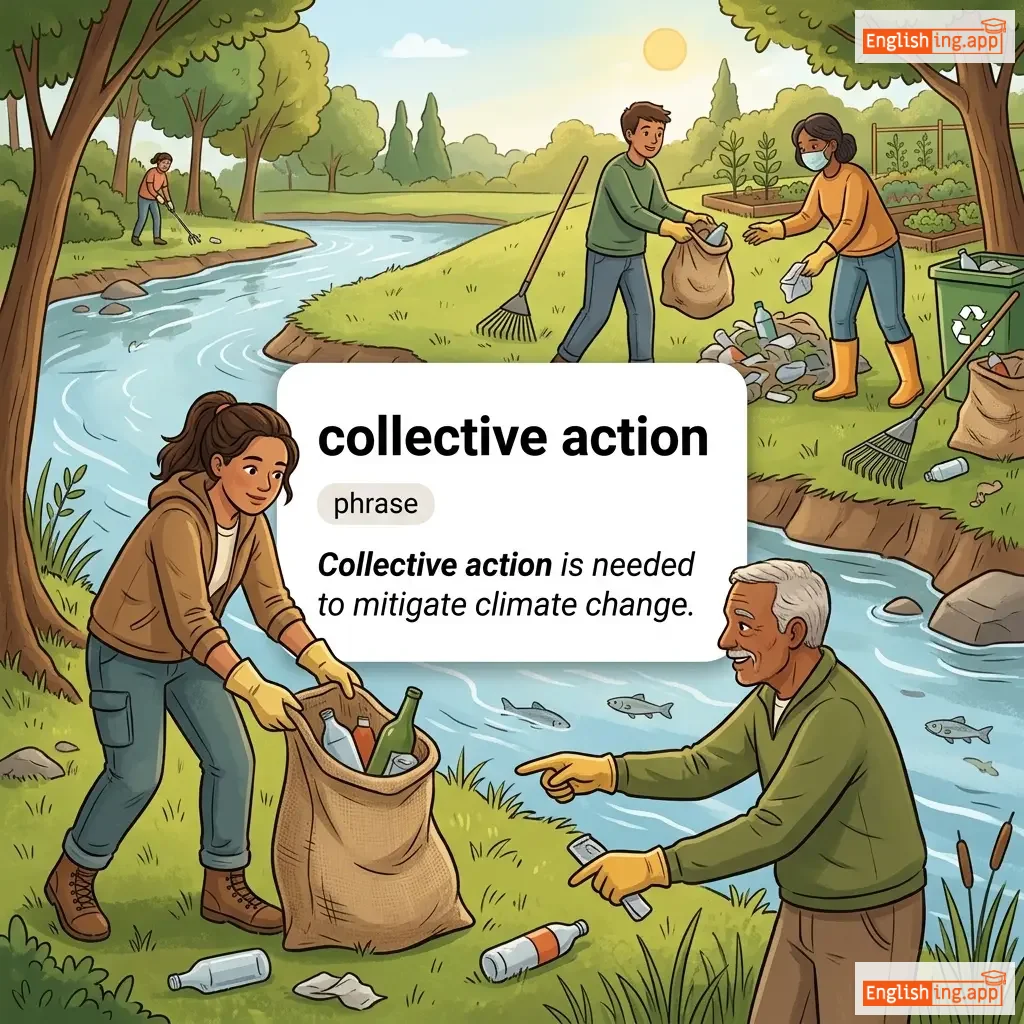
collective action definition card — visual illustration of the meaning
phrase
kəˈlek.tɪv ˈæk.ʃən
集団行動 (korekutibu akushon)

Action taken by a group of people working together toward a common goal or purpose.

"Collective action is needed to mitigate climate change."
"気候変動を緩和するには、集団行動が必要です。" (kikou hendou o kanwa suru ni wa shuudan koudou ga hitsuyou desu.)
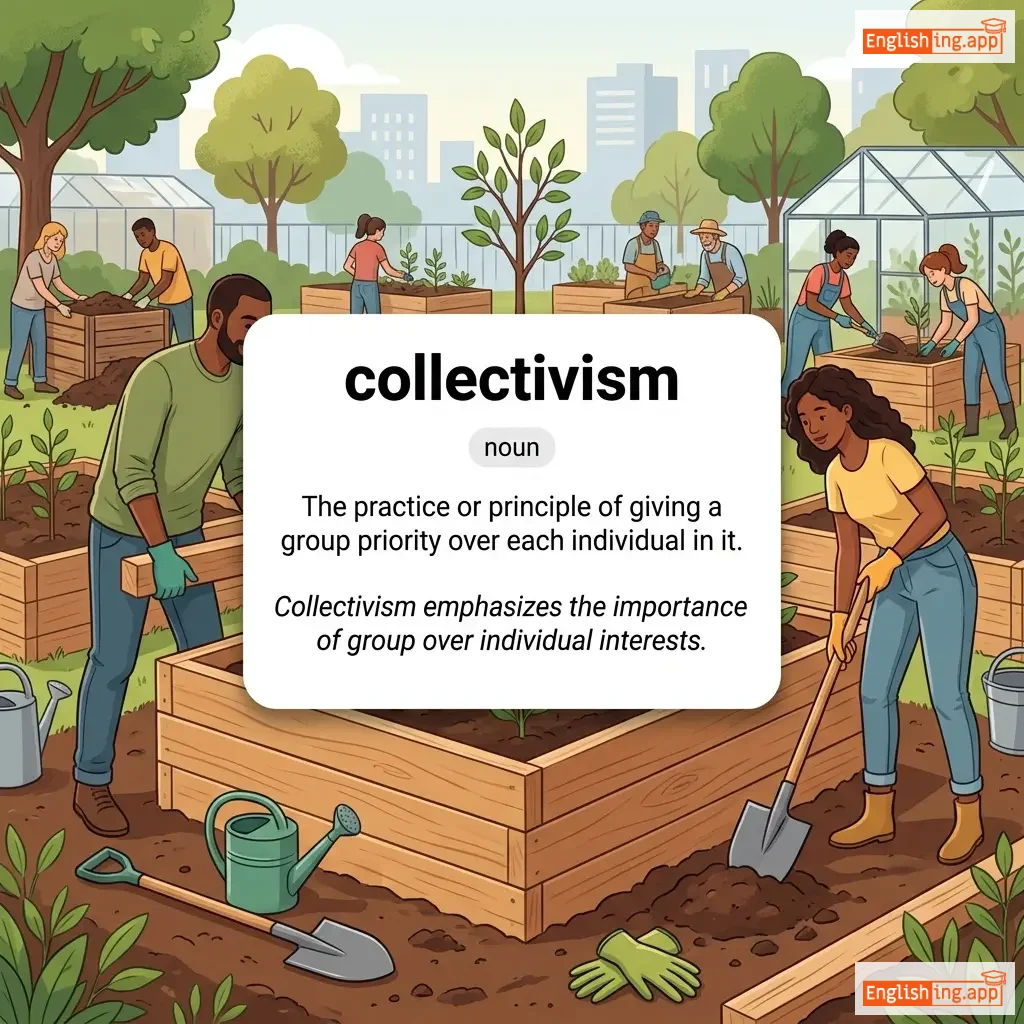
collectivism definition card — visual illustration of the meaning
noun
kəˈlɛktɪvɪzəm
集団主義 (shuudanshugi)

The practice or principle of giving a group priority over each individual in it.

"Collectivism emphasizes the importance of group over individual interests."

"集団主義は、個人の利益よりもグループの利益を重視します。" (Shuudanshugi wa, kojin no rieki yori mo gurūpu no rieki o jūshi shimasu.)
noun
/kəˈlɛktər/

a person who collects things as a hobby or job

"He is a stamp collector with thousands of rare items."

noun
/ˈkɒlɪdʒ/
大学 (daigaku)

An educational institution where students study for degrees or professional qualifications.

"She hopes to attend college in the city next year."

"彼女は来年、市内の大学に通うことを望んでいます。" (Kanojo wa rainen, shinai no daigaku ni kayou koto o nozondeimasu.)
noun
/kəˈliːdʒən/
大学生 (daigakusei)

a student of a college

"The collegians were preparing for the cultural festival."

"大学生たちは文化祭の準備をしていました。" (Daigakusei tachi wa bunkasai no junbi o shite imashita.)
collide definition card — visual illustration of the meaning
verb
/kəˈlaɪd/
衝突する (shōtotsu suru)

to come into violent contact; crash into something

"Two cars collided at the busy intersection."

"2台の車が混雑した交差点で衝突しました。" (2-dai no kuruma ga konzatsu shita kōsaten de shōtotsu shimashita.)
noun
/ˈkɒliər/
炭鉱労働者 (tankou roudousha)

a person who works in coal mines or a ship carrying coal

"The collier spent long hours underground extracting coal."

"炭鉱労働者は地下で長時間石炭を掘り出していた。" (Tankou roudousha wa chika de nagajikan sekitan wo horidashite ita.)
noun
/kəˈlɪʒən/
衝突 (shoutotsu)

an instance of two or more objects crashing into each other

"The collision on the highway caused a major traffic jam."
"高速道路での衝突が大きな交通渋滞を引き起こしました。" (Kousoku douro de no shoutotsu ga ookina koutsuu juutai wo hikiokoshimashita.)
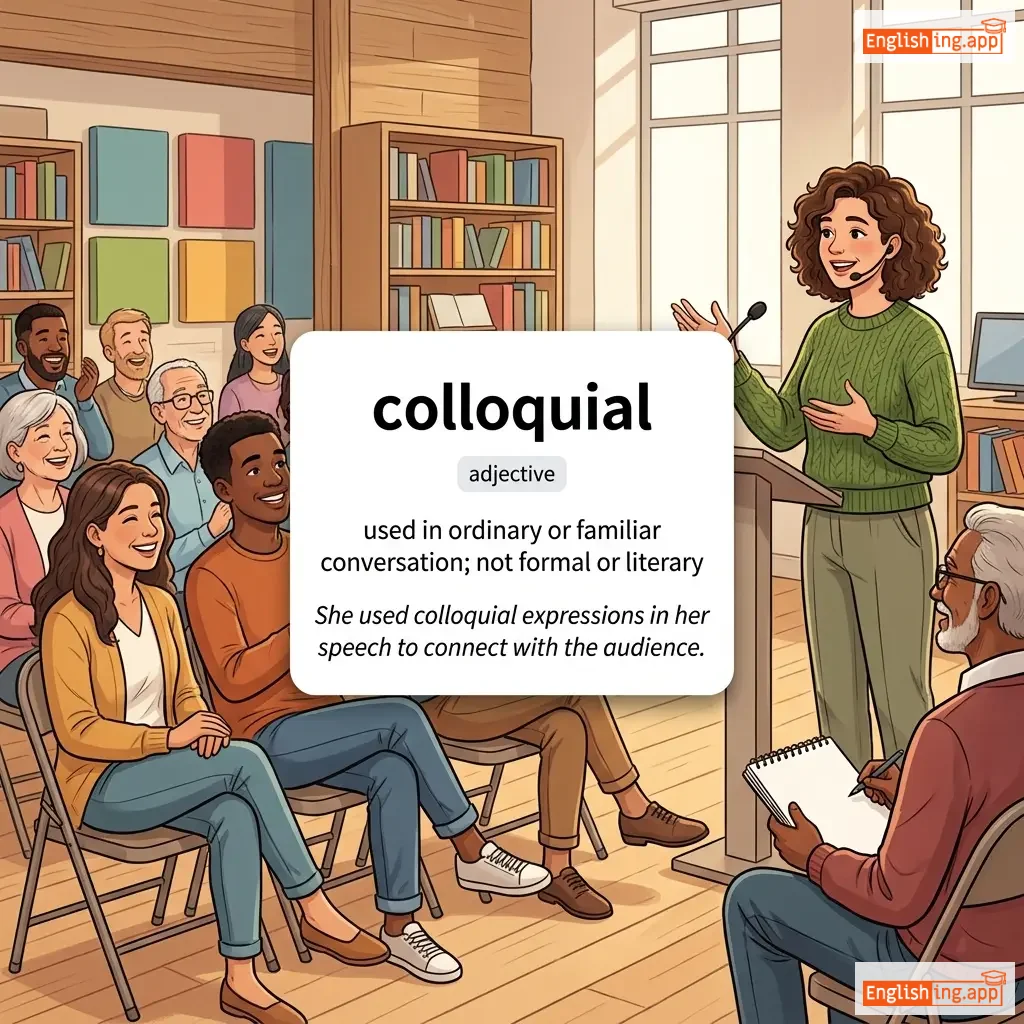
colloquial definition card — visual illustration of the meaning
adjective
/kəˈloʊkwiəl/
口語的 (kōgoteki)

used in ordinary or familiar conversation; not formal or literary

"She used colloquial expressions in her speech to connect with the audience."

"彼女は演説で観客とつながるために口語的な表現を使いました。" (Kanojo wa enzetsu de kankyaku to tsunagaru tame ni kōgoteki na hyōgen o tsukaimashita.)
noun
/kəˈloʊkwiəˌlɪzəm/
口語表現 (kōgo hyōgen)

a word or phrase used in informal speech or writing

"The novel is full of regional colloquialisms."

"その小説は地域の口語表現で満ちている。" (Sono shōsetsu wa chiiki no kōgo hyōgen de michite iru.)
noun
/ˈkɒl.ə.kwi/
正式な対話 (seishiki na taiwa)

A formal conversation or dialogue, often on serious or academic topics.

"The professors engaged in a deep colloquy about the future of education."

"教授たちは教育の未来について深い対話を交わしました。" (Kyōjotachi wa kyōiku no mirai ni tsuite fukai taiwa o kawashimashita.)
verb
/kəˈluːd/
共謀する (kyoubou suru)

To secretly cooperate or conspire with others, often for a deceitful purpose.

"The two companies colluded to fix prices in the market."

"2社は市場で価格を決定するために共謀しました。" (2 sha wa shijou de kakaku wo kettei suru tame ni kyoubou shimashita.)
noun
/kəˈluːʒən/
共謀 (kyōbō)

A secret agreement or cooperation, especially for an illegal or dishonest purpose.

"There was evidence of collusion between the officials and the contractors."
"役人と契約者の間で共謀の証拠がありました。" (Yakunin to keiyakusha no aida de kyōbō no shōko ga arimashita.)
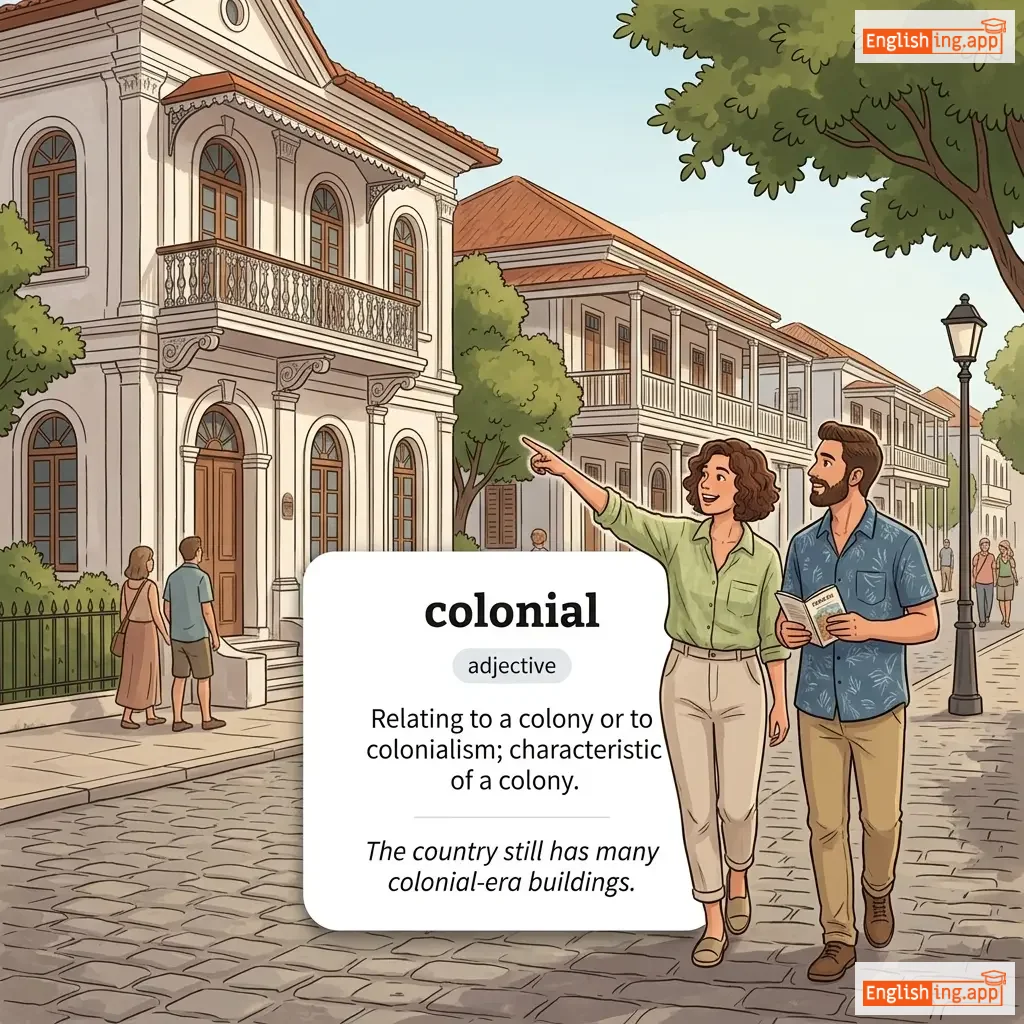
colonial definition card — visual illustration of the meaning
adjective
/kəˈloʊniəl/
植民地の (shokuminchi no)

Relating to a colony or to colonialism; characteristic of a colony.

"The country still has many colonial-era buildings."

"その国にはまだ多くの植民地時代の建物があります。" (Sono kuni ni wa mada ooku no shokuminchi jidai no tatemono ga arimasu.)
noun
/ˌkɒl.əˈneɪd/
コロネード (koronēdo)

A row of evenly spaced columns supporting a roof, often in classical architecture.

"The visitors admired the grand colonnade at the entrance of the temple."

"訪問者は寺院の入り口で壮大なコロネードに感嘆していました。" (Hōmonsha wa jiin no iriguchi de sōdaina koronēdo ni kantan shiteimashita.)
noun
/ˈkɒləni/
植民地 (shokumindi)

a territory or community controlled by another country or group of people

"India was once a British colony."

"インディアはかつてイギリスの植民地でした。" (India wa katsute Igirisu no shokumindi deshita.)
noun
/ˈkʌl.ər/
(iro)

The property possessed by an object of producing different sensations on the eye as a result of the way it reflects or emits light.

"Blue is her favorite color."

"青は彼女のお気に入りの色です。" (Ao wa kanojo no okiniiri no iro desu.)
adjective
/ˈkʌlərfəl/
カラフル (karafuru)

having bright colors; full of variety or interest

"The festival was full of colorful decorations."
"その祭りはカラフルな装飾でいっぱいでした。" (Sono matsuri wa karafuru na sōshoku de ippai deshita.)
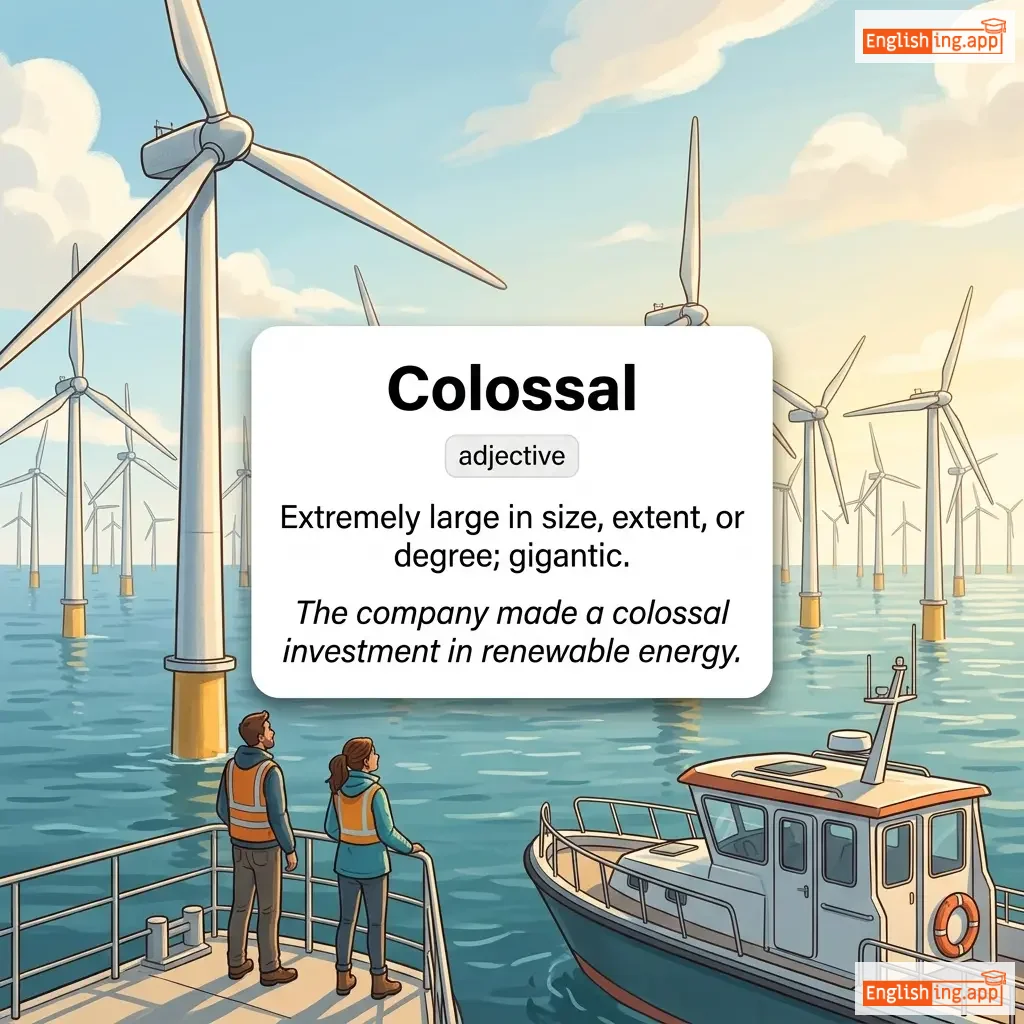
Colossal definition card — visual illustration of the meaning
adjective
/kəˈlɒsəl/
巨大な (kyodaina)

Extremely large in size, extent, or degree; gigantic.

"The company made a colossal investment in renewable energy."

"その会社は再生可能エネルギーに巨大な投資をしました。" (Sono kaisha wa saiseikanō enerugī ni kyodaina tōshi o shimashita.)
noun
/kəˈlɒsəs/
巨人 (kyojin)

A person or thing of enormous size, importance, or ability.

"Einstein was a colossus in the world of science."

"アインシュタインは科学の世界で巨人でした。" (Ainshutain wa kagaku no sekai de kyojin deshita.)
noun
/ˈkʌl.ər/
(iro)

the property possessed by an object of producing different sensations on the eye as a result of the way it reflects light; hue, tint, shade

"What is your favorite colour for painting the bedroom walls?"

"寝室の壁を塗るためのお気に入りの色は何ですか?" (Shinshitsu no kabe o nuru tame no okiniiri no iro wa nan desu ka?)
noun
/koʊlt/
子馬 (koba)

a young male horse, especially one under four years old

"The farmer trained the young colt to accept a saddle."

"農夫は若いコルトを鞍を受け入れるように訓練しました。" (Nōfu wa wakai koruto o kura o ukeireru yō ni kunren shimashita.)
adjective
/ˈkoʊltɪʃ/

Playful, energetic, and not fully mature or disciplined.

"The coltish boy ran around the field without a care."

noun
/ˈkɒləm/

A vertical structure that supports a building; also a section of text arranged vertically in a newspaper or table.

"The ancient temple had tall marble columns."

noun
/ˈkɒləmnɪst/
コラムニスト (koramunisuto)

a journalist who regularly writes articles or opinions for a newspaper or magazine

"The columnist wrote an article about climate change."

"コラムニストは気候変動に関する記事を書きました。" (Koramunisuto wa kikō hendō ni kansuru kiji wo kakimashita.)
noun
/ˈkoʊmə/
コーマ (koma)

A deep state of prolonged unconsciousness caused by illness or injury.

"The patient remained in a coma for several weeks."

"患者は数週間コーマ状態にありました。" (Kanja wa suushukan koma joutai ni arimashita.)
adjective
/ˈkoʊməˌtoʊs/
昏睡状態の (konsui joutai no)

In a state of deep unconsciousness, resembling or related to coma.

"The comatose patient was kept under constant observation."

"その昏睡状態の患者は、継続的に観察されていました。" (Sono konsui joutai no kanja wa, keizokuteki ni kansatsu sarete imashita.)
noun
/koʊm/
(kushi)

a toothed device for arranging or cleaning the hair

"She used a comb to style her hair before the party."

"彼女はパーティーの前に髪を整えるために櫛を使いました。" (kanojo wa pātī no mae ni kami o totonoeru tame ni kushi o tsukaimashita)
verb
/ˈkɒmbæt/
戦う (tatakau)

to fight against something, especially to reduce or stop it

"The government is taking steps to combat corruption."

"政府は汚職と戦うための措置を講じています。" (Seifu wa oshoku to tatakau tame no sochi o kōjiteimasu.)
noun
/ˌkɒmbɪˈneɪʃən/
組み合わせ / 混合 (kumiawase / kongō)

The act of joining or mixing two or more things together.

"This dish is a perfect combination of sweet and spicy flavors."

"この料理は甘いと辛いフレーバーの完璧な組み合わせです。" (Kono ryōri wa amai to karai furēbā no kanpeki na kumiawase desu.)
verb
/kəmˈbaɪn/
結合する (ketsugou suru)

To bring two or more things together to form a single unit.

"They decided to combine their resources for the project."

"彼らはプロジェクトのためにリソースを結合することに決めました。" (Karera wa purojekuto no tame ni risōsu o ketsugou suru koto ni kimemashita.)
adjective
/kəmˈbaɪnd/
結合された (ketsugō sareta)

formed by bringing together separate parts or elements

"The combined effort of the team led to success."

"チームの共同の努力は成功をもたらしました。" (Chīmu no kyōdō no doryoku wa seikō o motarashimashita.)
adjective
/kəmˈbʌstɪbəl/
可燃性の (kanensei no)

Capable of catching fire and burning easily.

"Dry leaves are highly combustible."

"乾燥した葉は非常に可燃性があります。" (Kansou shita ha wa hijou ni kanensei ga arimasu.)
come definition card — visual illustration of the meaning
verb
/kʌm/
幸せ (shiawase)

to move or travel toward or into a place thought of as near or familiar

"She will come to the party later."

"彼女は賞を受け取ったとき、自分の幸せを隠すことができませんでした。" (Kanojo wa shō o uketotta toki, jibun no shiawase o kakusu koto ga dekimasen deshita.)
noun
/ˈkʌmbæk/
カムバック (kamu bakku)

A return to a former status or success after a period of decline.

"The singer made a remarkable comeback after years of silence."

"歌手は何年もの沈黙の後、見事なカムバックを果たした。" (Kashu wa nannen mono chinmoku no ato, migotona kamu bakku o hatashita.)
noun
/ˈkɒmədi/
コメディ (komedi)

A type of entertainment that is intended to make people laugh.

"We watched a hilarious comedy at the theater."

"私たちは劇場で面白いコメディを見ました。" (Watashitachi wa gekijou de omoshiroi komedi o mimashita.)
adjective
/ˈkʌmli/
美しい (utsukushii)

Attractive or pleasant in appearance.

"The actress was known for her comely features."

"女優は彼女の美しい特徴で知られていました。" (Joyū wa kanojo no utsukushī tokuchō de shirarete imashita.)
noun
/kəˈmɛstɪbəl/
食べられる (taberareru)

An item of food that can be eaten.

"The picnic basket was full of delicious comestibles."

"ピクニックバスケットにはおいしい食べられる食べ物が詰まっていた。" (Pikunikku basuketto ni wa oishii taberareru tabemono ga tsumatte ita.)
noun
/ˈkɒm.ɪt/
彗星 (suisei)

a celestial object consisting of ice and dust that develops a tail when approaching the sun

"Halley's Comet appears in the sky every 76 years."

"ハレー彗星は76年ごとに空に現れます。" (Harē suisei wa 76-nen goto ni sora ni arawaremasu.)
noun
/ˌkʌmˈʌpəns/
報い (mukui)

A deserved punishment or fate; just deserts.

"The corrupt official finally got his comeuppance in court."

"腐敗した役人は最終的に裁判所で自分の報いを受けた。" (Fuhai shita yakunin wa saishuuteki ni saiban-sho de jibun no mukui o uketa.)
noun
/ˈkʌmfərt/
快適さ (kaitekisa)

a state of physical ease and freedom from pain or distress

"The soft chair gave him great comfort."

"その柔らかい椅子は彼に大きな快適さを与えました。" (Sono yawarakai isu wa kare ni ōkina kaitekisa o ataemashita.)
comfortable definition card — visual illustration of the meaning
adjective
/ˈkʌmf.tə.bəl/
快適な (kaiteki na)

providing physical ease and relaxation; free from stress or worry

"This chair is so comfortable that I could sit here all day."

"この椅子はとても快適で、私は一日中ここに座っていられます。" (Kono isu wa totemo kaiteki de, watashi wa ichinichijū koko ni suwatte iraremasu.)
adverb
/ˈkʌmftəbli/
快適に (kaiteki ni)

in a comfortable manner; without difficulty or effort; with ease

"She was sitting comfortably in her favorite chair."

"彼女はお気に入りの椅子に快適に座っていました。" (Kanojo wa okiniiri no isu ni kaiteki ni suwatte imashita.)
adjective
/ˈkɒmɪk/
コミカル (komikaru)

causing or meant to cause laughter

"The movie had several comic scenes."

"映画にはいくつかのコミカルなシーンがありました。" (Eiga ni wa ikutsuka no komikaru na shīn ga arimashita.)
adjective
/ˈkɒmɪkəl/
滑稽な (kokēna)

Funny in a strange or silly way; amusing.

"His comical expressions made everyone laugh."

"彼の滑稽な表情は皆を笑わせました。" (Kare no kokēna hyōjō wa mina o warawase mashita.)
adjective
/ˈkʌmɪŋ/
来る (kuru)

approaching or happening soon

"We are preparing for the coming festival."

"私たちは来る祭りの準備をしています。" (Watashitachi wa kuru matsuri no junbi o shiteimasu.)
noun
/ˈkɒmɪti/
礼儀、相互尊重 (reigi, sōgo sonchō)

Courtesy and considerate behavior towards others; mutual respect.

"The meeting was conducted with comity and respect."

"会議は礼儀と尊重の精神で行われました。" (Kaigi wa reigi to sonchō no seishin de okonawaremashita.)
verb
/kəˈmænd/
命令 (meirei)

to give an order authoritatively; to control or direct

"The general commanded the soldiers to move forward."
"将軍は兵士たちに前進するよう命じた。" (Shōgun wa heishi-tachi ni zenshin suru yō meijita.)
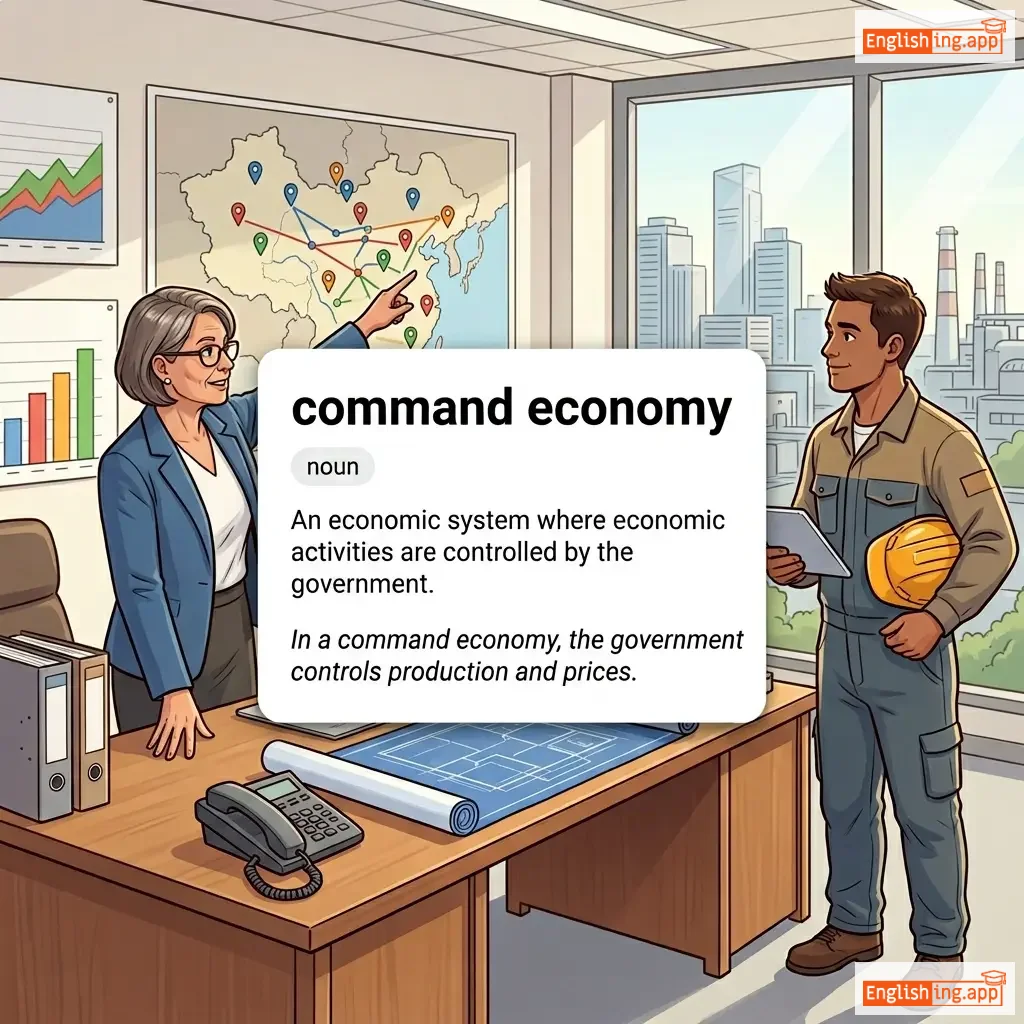
command economy definition card — visual illustration of the meaning
noun
kəˈmɑːnd ɪˈkɒn.ə.mi
計画経済 (keikaku keizai)

An economic system where economic activities are controlled by the government.

"In a command economy, the government controls production and prices."

"計画経済では、政府が生産と価格を管理します。" (Keikaku keizai de wa, seifu ga seisan to kakaku o kanri shimasu.)
verb
/ˌkɒmənˈdɪə/
強制的に奪う (kyouseiteki ni ubau)

To take control or possession of something, often by force or authority.

"The soldiers commandeered the villagers’ homes during the war."

"戦争中に兵士たちは村人たちの家を強制的に奪った。" (Sensou-chuu ni heishi-tachi wa murabito-tachi no ie o kyouseiteki ni ubatta.)