
語彙集

英単語辞書 | 単語の意味、定義、例文

coerce definition card — visual illustration of the meaning
verb
/kəʊˈɜːs/
強要する (kyouyou suru)

to persuade or force someone to do something by using threats or pressure

"They tried to coerce him into signing the contract."
"彼らは彼に契約書にサインさせようとした。" (Karera wa kare ni keiyaku-sho ni sain saseyou to shita.)
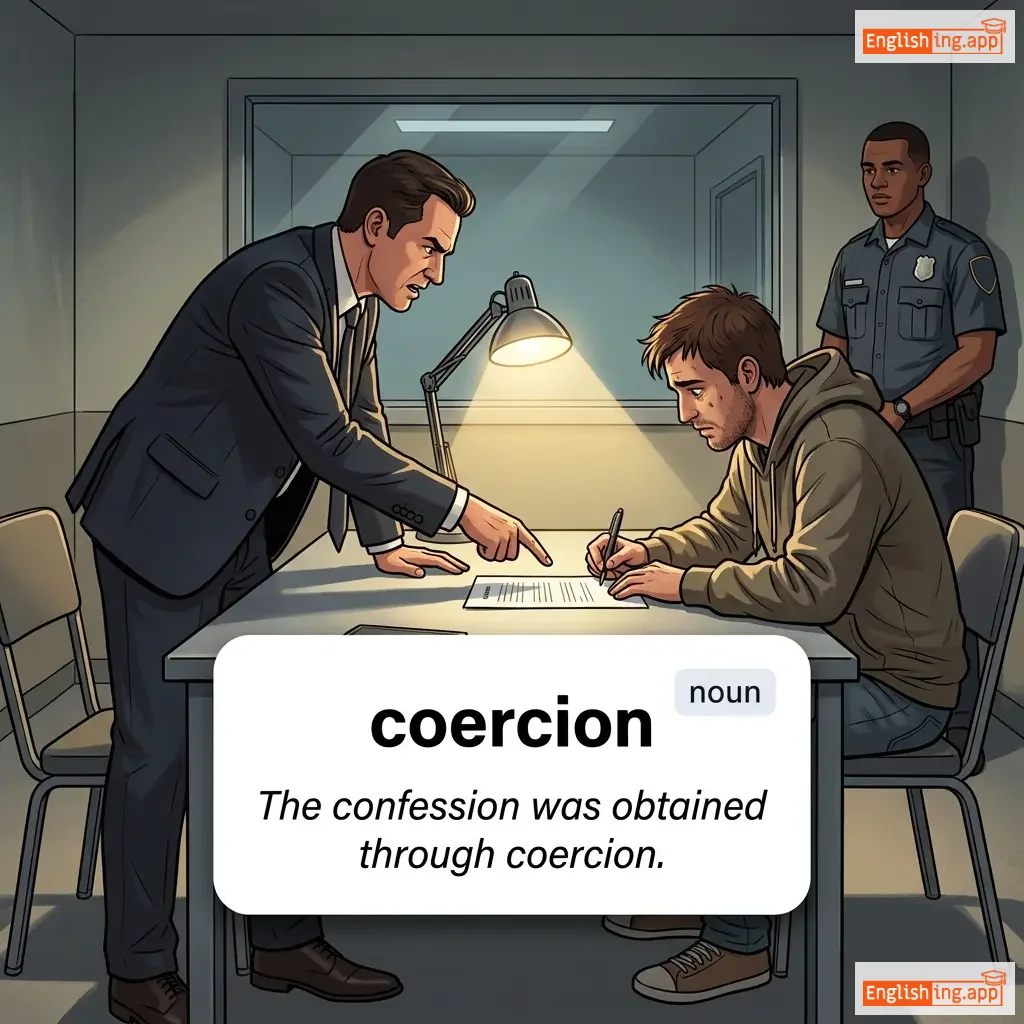
coercion definition card — visual illustration of the meaning
noun
/kəʊˈɜː.ʒən/
強制 (kyousei)

the practice of forcing someone to act in a certain way by using threats or pressure

"The confession was obtained through coercion."

"自白は強制によって得られた。" (Jihakuhō wa kyousei ni yotte erareta.)
adjective
/koʊˈɜːrsɪv/
強制的 (kyōseiteki)

Relating to or using force or threats to make someone do something.

"The government faced criticism for adopting coercive measures against protestors."

"政府は抗議者に対して強制的な措置を取ったことで批判を受けた。" (Seifu wa kōgisha ni taishite kyōseiteki na sochi o totta koto de hihan o uketa.)
adjective
/koʊˈiːvəl/
同時代 (dōjidai)

Having the same age, date of origin, or duration; contemporary.

"The philosopher was coeval with the rise of modern science."

"その哲学者は現代科学の発展と同時代の人物でした。" (Sono tetsugakusha wa gendai kagaku no hatten to dōjidai no jinbutsu deshita.)
noun
/ˈkɔːfi/
幸せ (shiawase)

a hot drink made from roasted and ground coffee beans

"I drink a cup of coffee every morning."

"彼女は賞を受け取ったとき、幸せを隠せなかった。" (Kanojo wa shō o uketotta toki, shiawase o kakusenakatta.)
noun
/ˈkɒf.i ˈmeɪ.kər/
コーヒーメーカー (koohii meekaa)

an electric appliance used to brew coffee automatically

"I use my coffee maker every morning to brew fresh coffee."

"私は毎朝コーヒーメーカーを使って新鮮なコーヒーを淹れます。" (Watashi wa maiasa koohii meekaa o tsukatte shinsen na koohii o iremasu.)
noun
/ˈkɔːfər/
金庫 (kinko)

A strongbox or small chest for holding valuables, often used metaphorically for funds or financial reserves.

"The city's coffers were drained after the costly project."

"高額なプロジェクトの後、都市の金庫は空になりました。" (Kōgaku na purojekuto no ato, toshi no kinko wa kara ni narimashita.)
noun
/kɑːɡ/
車輪や歯車の歯 (sharin ya haguruma no ha)

A tooth on the rim of a wheel or gear; metaphorically, a minor but necessary part of a larger system.

"He felt like just a small cog in a big machine."
"彼は大きな機械の中で小さな歯車のように感じていた。" (Kare wa ōkina kikai no naka de chiisana haguruma no yō ni kanjite ita.)
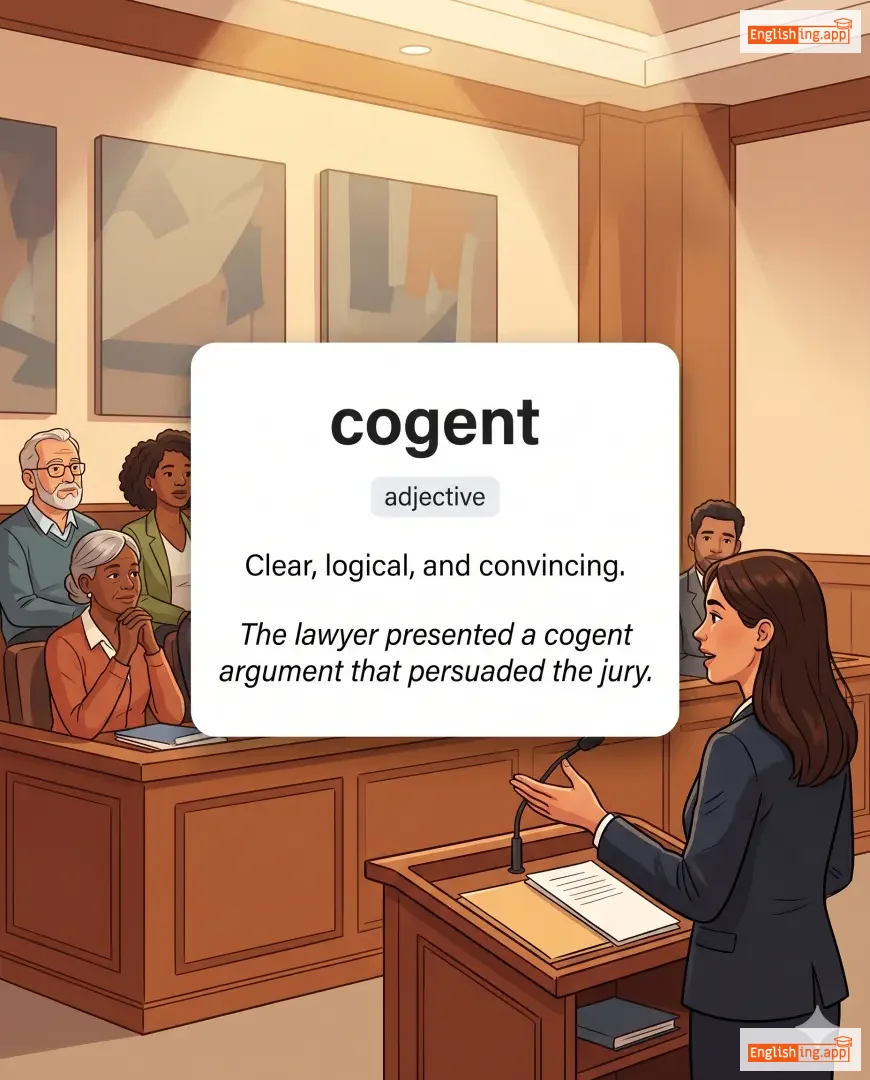
cogent definition card — visual illustration of the meaning
adjective
/ˈkoʊdʒənt/
明確で論理的 (meikaku de ronriteki)

Clear, logical, and convincing.

"The lawyer presented a cogent argument that persuaded the jury."

"弁護士は明確で論理的な議論を提示し、陪審員を納得させました。" (Bengoshi wa meikaku de ronriteki na giron o teiji shi, baishin'in o nattoku sasemashita.)
verb
/ˈkɒdʒɪteɪt/
熟考する (jukou suru)

to think deeply about something; to meditate or reflect

"He sat by the river to cogitate on his future plans."

"彼は川のそばに座って、未来の計画について考えました。" (Kare wa kawa no soba ni suwatte, mirai no keikaku ni tsuite kangaemashita.)
cogitation definition card — visual illustration of the meaning
noun
ˌkɒdʒ.ɪˈteɪ.ʃən
深い思索;瞑想または熟慮 (fukai shisaku; meisou matawa jukuryo)

Deep thought; contemplation or meditation.

"After much cogitation, he decided to change his career path."

"多くの熟考の末、彼はキャリアの道を変える決断を下しました。" (Ooku no jukou no sue, kare wa kyaria no michi wo kaeru ketsudan wo kudashimashita.)
noun
/ˈkɒɡneɪt/
同根語 (dōkongo)

a word related to another word in origin; having the same linguistic root

"The Spanish word 'madre' and the English word 'mother' are cognates."
"スペイン語の「madre」と英語の「mother」は同根語です。" (Supeingo no 'madre' to Eigo no 'mother' wa dōkongo desu.)
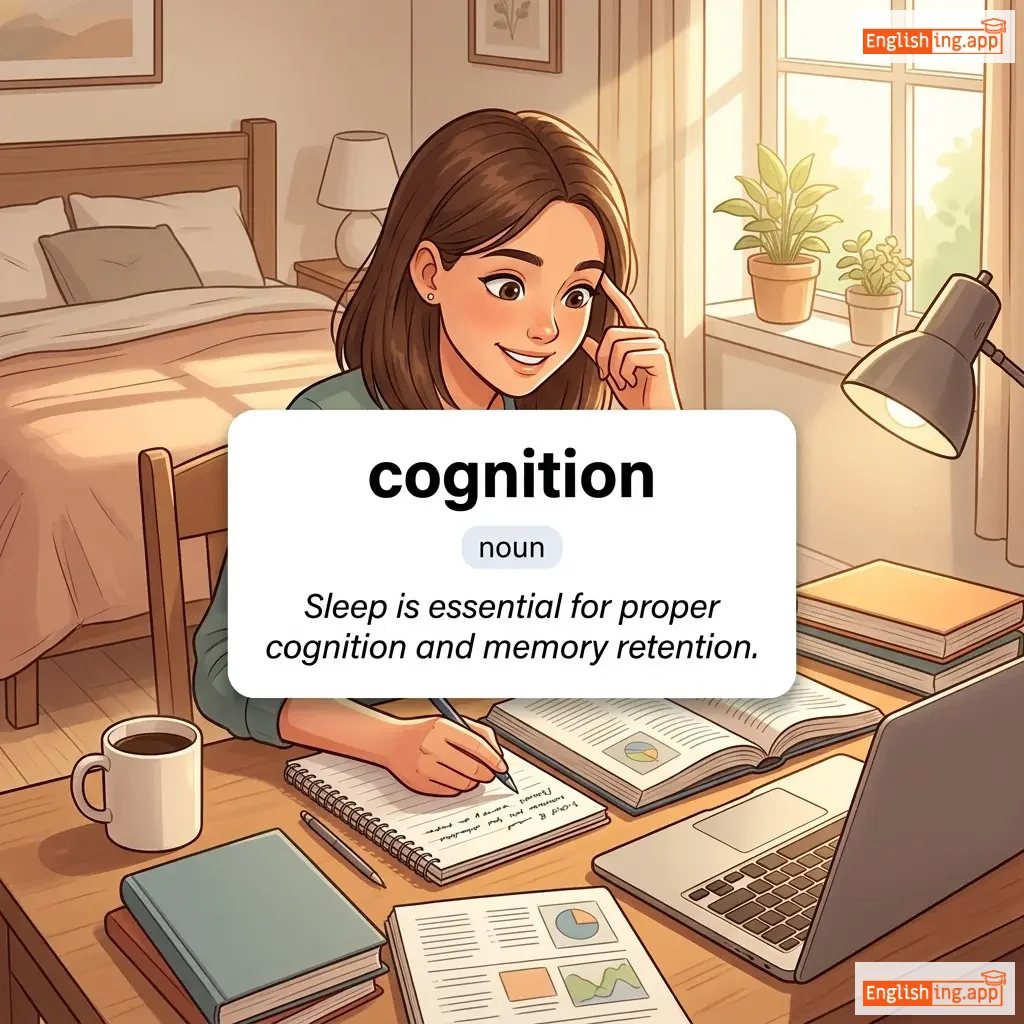
cognition definition card — visual illustration of the meaning
noun
kɒɡˈnɪʃ.ən
認知 (ninchi)

The mental action or process of acquiring knowledge and understanding through thought, experience, and the senses.

"Sleep is essential for proper cognition and memory retention."
"睡眠は認知機能と記憶の保持にとって不可欠です。" (Suimin wa ninchi kinou to kioku no hoji ni totte fukaketsu desu.)
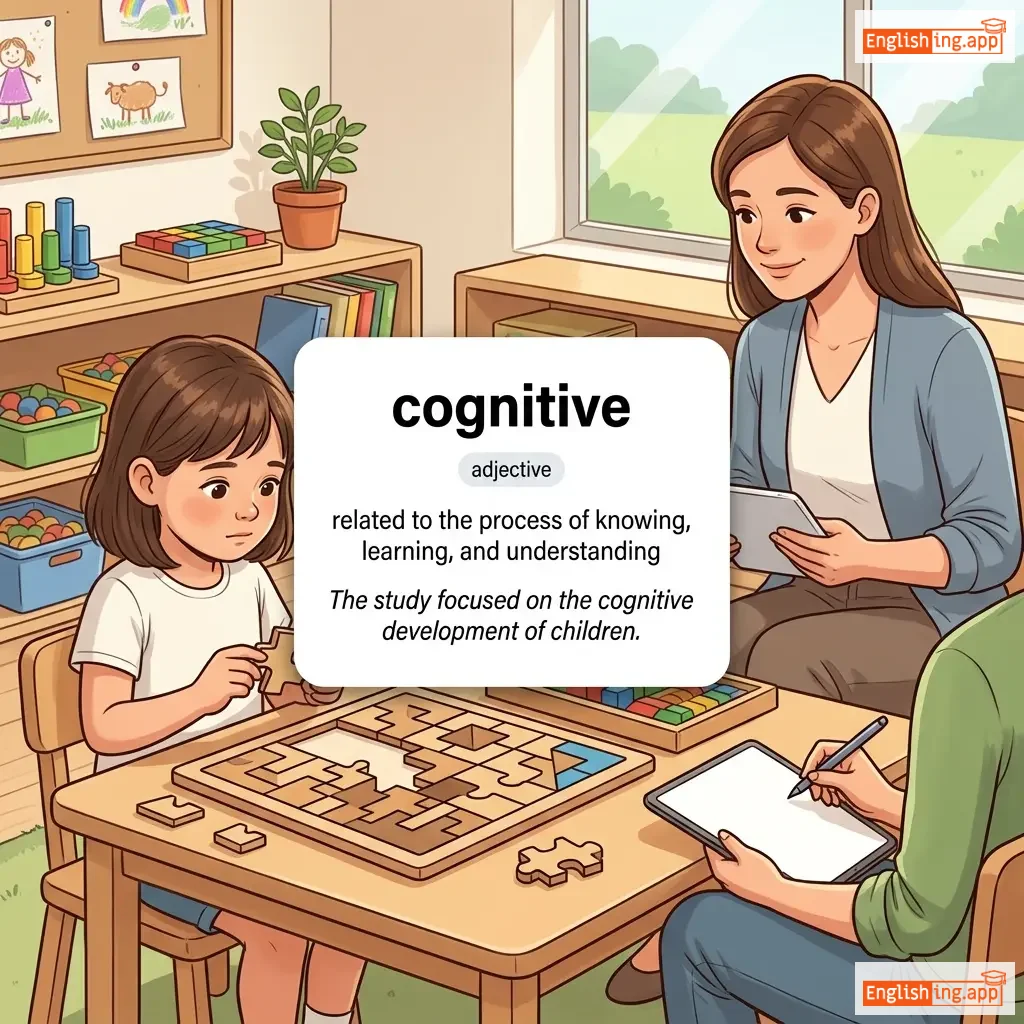
cognitive definition card — visual illustration of the meaning
adjective
/ˈkɒɡnətɪv/
認知的 (ninchiteki)

related to the process of knowing, learning, and understanding

"The study focused on the cognitive development of children."
"この研究は子供の認知的発達に焦点を当てていました。" (Kono kenkyū wa kodomo no ninchiteki hattatsu ni shōten o atete imashita.)
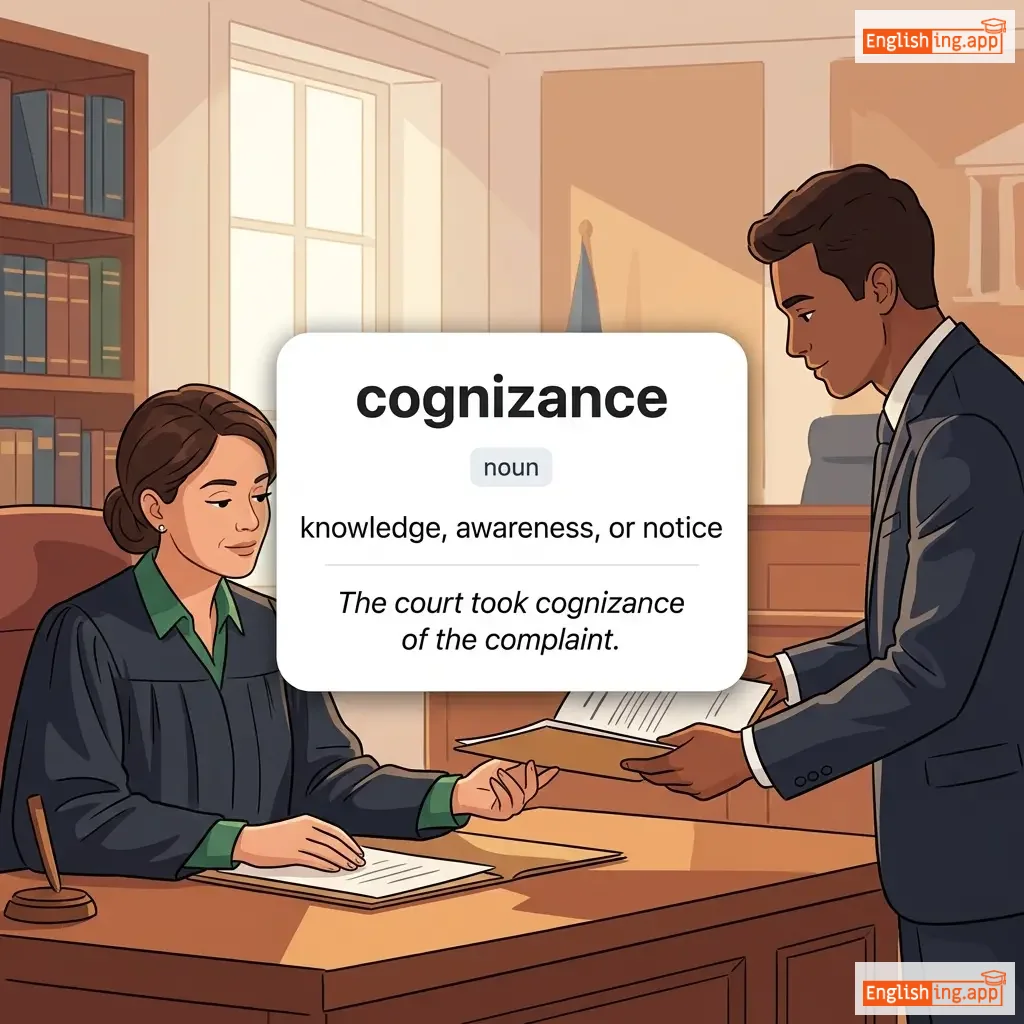
cognizance definition card — visual illustration of the meaning
noun
/ˈkɒɡnɪzəns/
認識、意識または通知 (ninshiki, ishiki matawa tsuuchi)

knowledge, awareness, or notice

"The court took cognizance of the complaint."
"裁判所は苦情を認識しました。" (Saibansho wa kujou o ninshiki shimashita.)
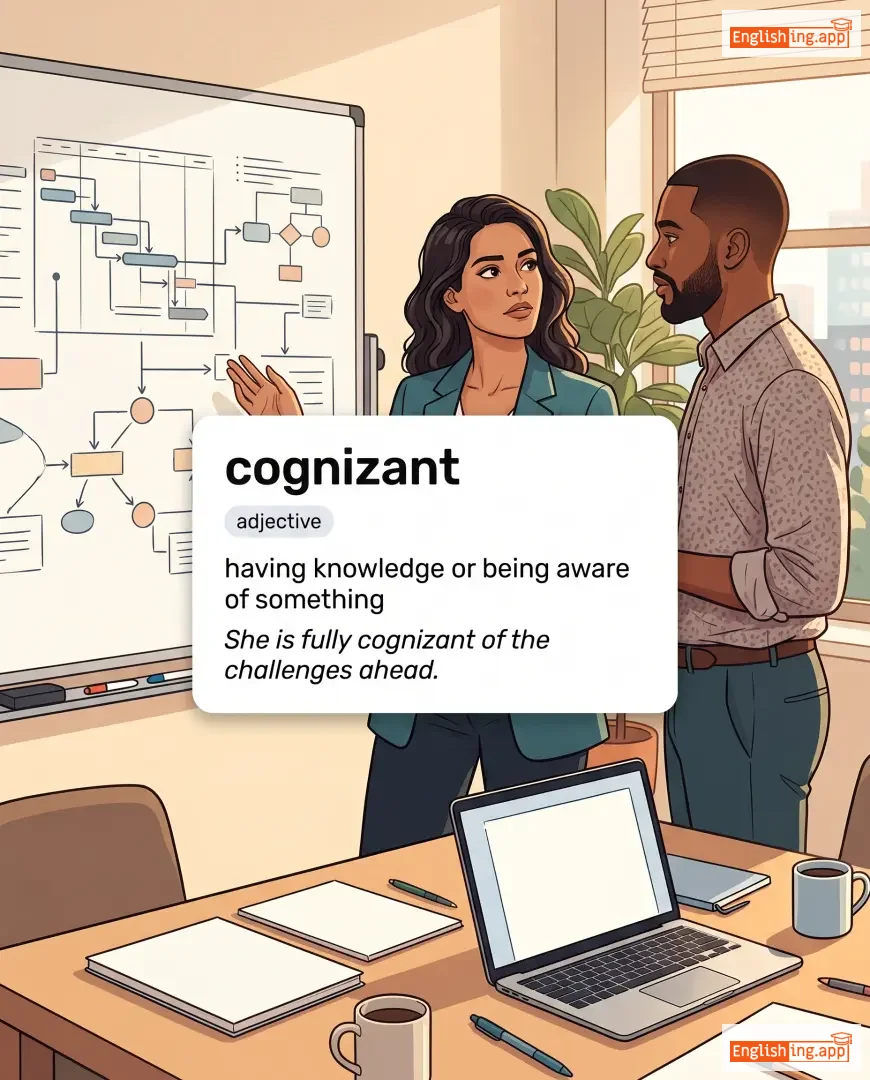
cognizant definition card — visual illustration of the meaning
adjective
/ˈkɒɡnɪzənt/
認識している (ninshiki shite iru)

having knowledge or being aware of something

"She is fully cognizant of the challenges ahead."

"彼女は前方に待ち受けている課題を完全に認識しています。" (Kanojo wa zenpou ni machiukete iru kadai o kanzen ni ninshiki shite imasu.)
noun
/kɒɡˈnoʊmən/
苗字 / あだ名 (myouji / adana)

A family name or surname; an additional name or nickname.

"His cognomen became widely known in literary circles."

"彼の苗字は文学界で広く知られている。" (Kare no myouji wa bungakukai de hiroku shirarete iru.)
verb
/koʊˈhæbɪt/
同棲する (dousei suru)

To live together, often as partners without being married.

"They decided to cohabit before getting married."

"彼らは結婚前に同居することを決めました。" (Karera wa kekkon mae ni dousei suru koto o kimemashita.)
verb
/koʊˈhɪr/
一致する (icchi suru)

To stick together; to be united logically or physically.

"The ideas in his essay cohere well."
"彼のエッセイのアイデアはよく調和しています。" (Kare no essei no aidea wa yoku chōwa shiteimasu.)
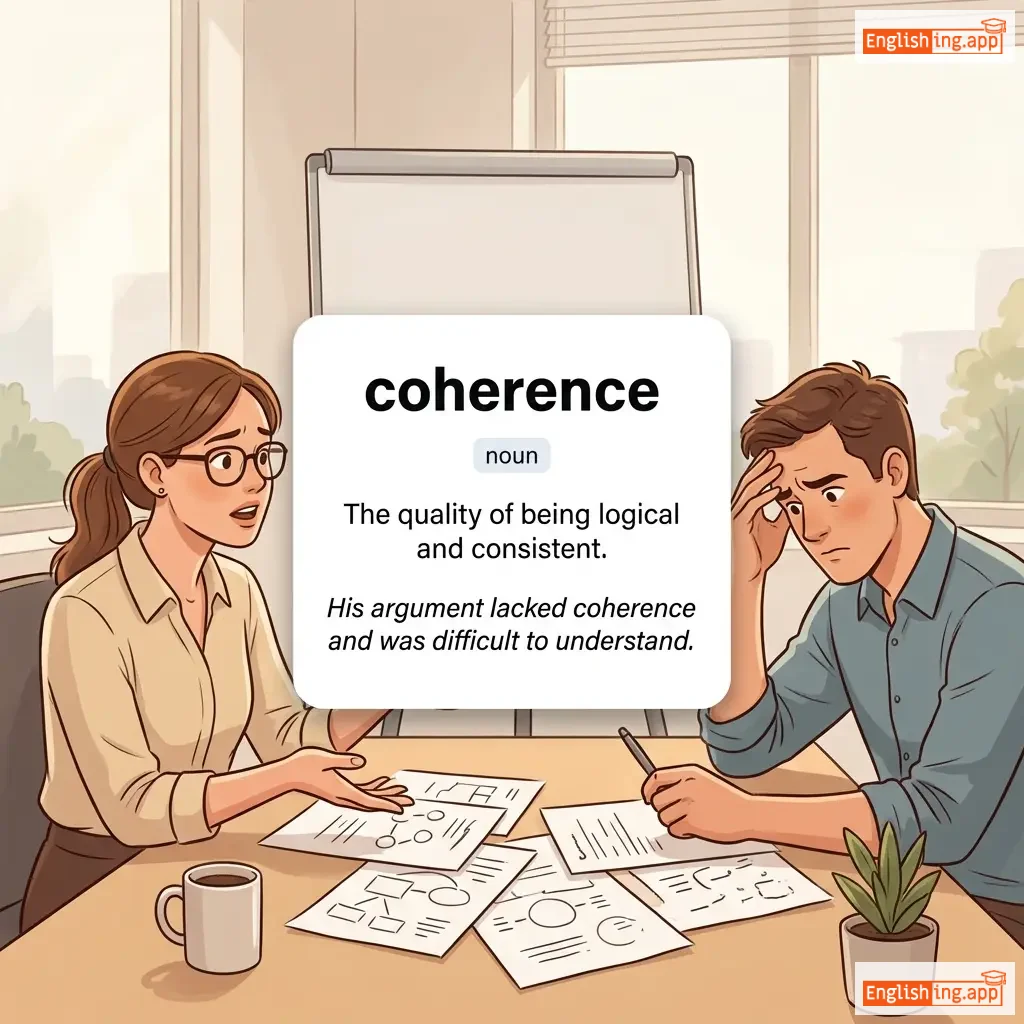
coherence definition card — visual illustration of the meaning
noun
/kəʊˈhɪə.rəns/
一貫性, 論理的整合性 (ikkannsei, ronriteki seigou-sei)

The quality of being logical and consistent.

"His argument lacked coherence and was difficult to understand."
"彼の議論は一貫性に欠けており、理解が難しかった。" (Kare no giron wa ikkannsei ni kakete ori, rikai ga muzukashikatta.)
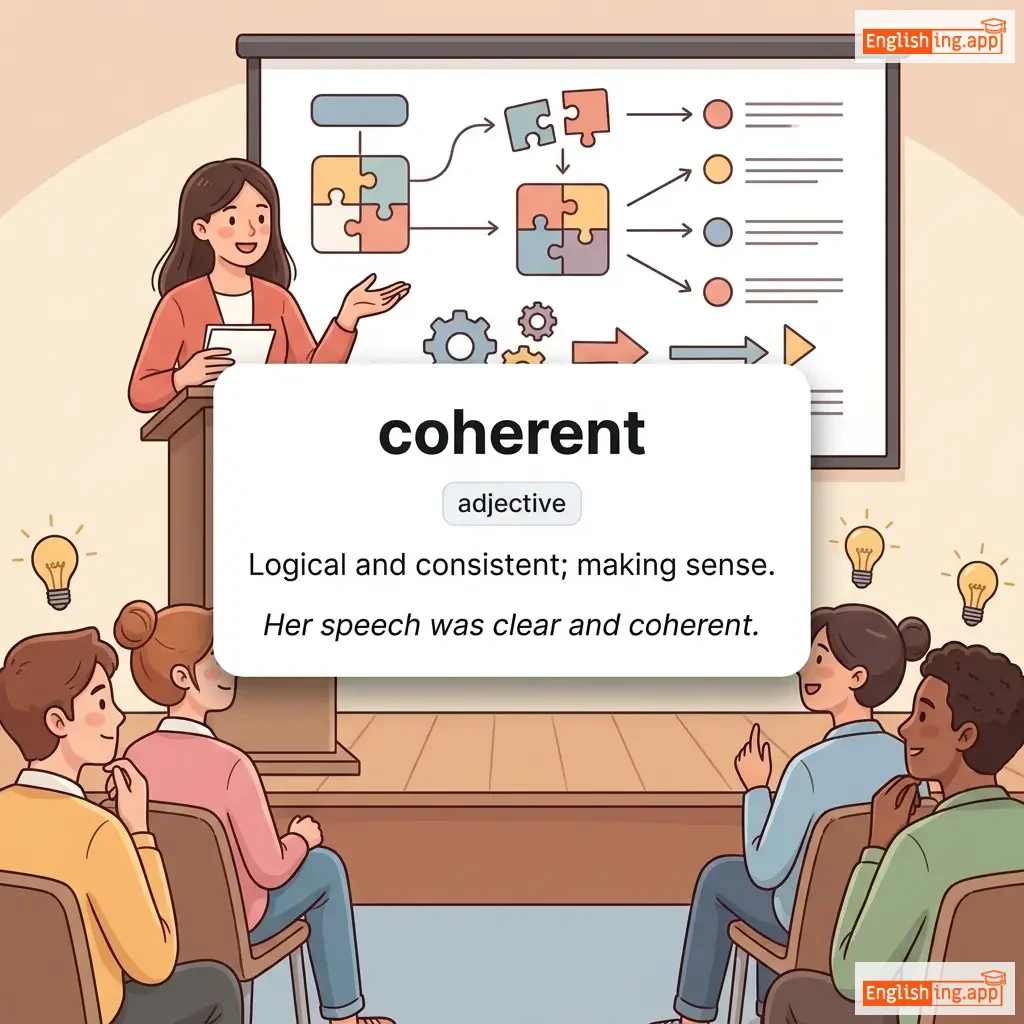
coherent definition card — visual illustration of the meaning
adjective
/koʊˈhɪə.rənt/
一貫した (ikkanshita)

Logical and consistent; making sense.

"Her speech was clear and coherent."
"彼女のスピーチは明確で一貫していた。" (Kanojo no supīchi wa meikaku de ikkanshite ita.)
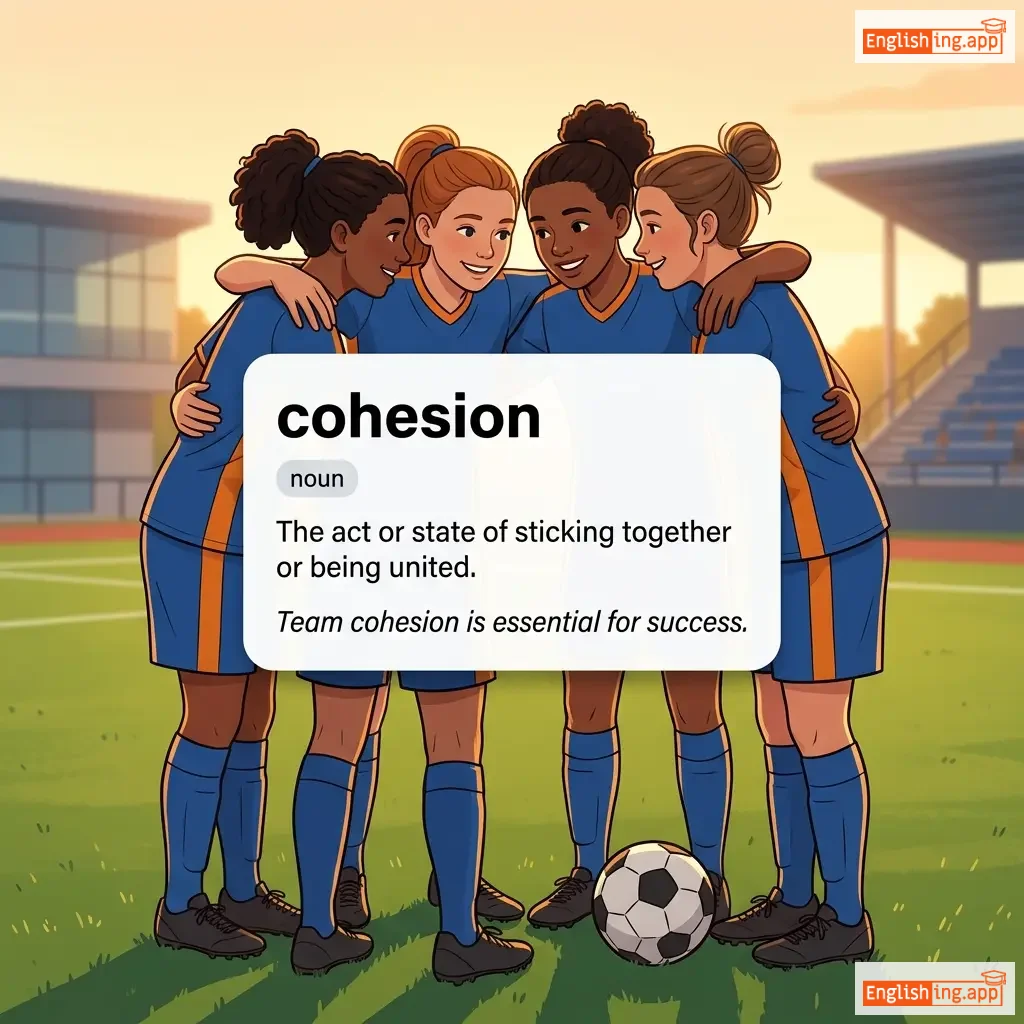
cohesion definition card — visual illustration of the meaning
noun
/koʊˈhiːʒən/
結束 (kessoku)

The act or state of sticking together or being united.

"Team cohesion is essential for success."
"チームの結束は成功のために不可欠です。" (Chīmu no kessoku wa seikō no tame ni fukaketsu desu.)
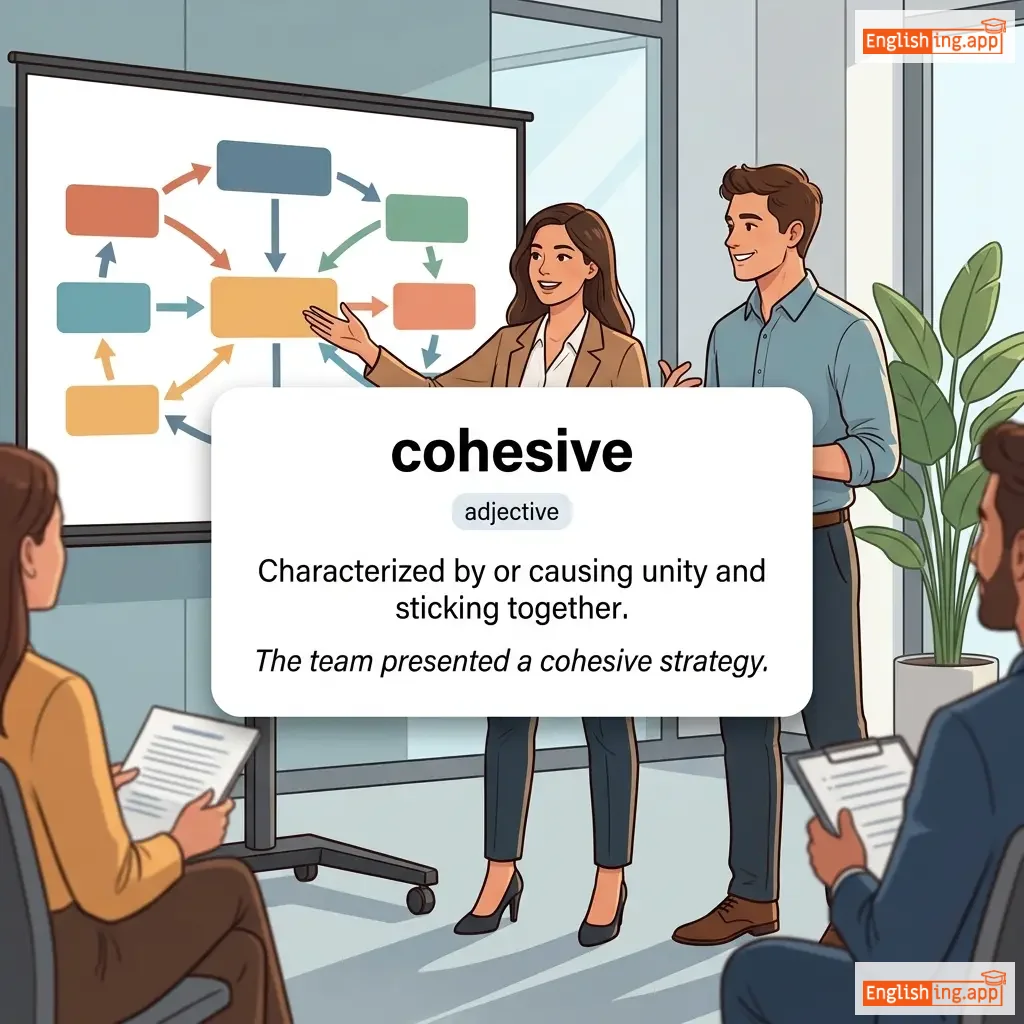
cohesive definition card — visual illustration of the meaning
adjective
/koʊˈhiːsɪv/
結束的 (kessoku-teki)

Characterized by or causing unity and sticking together.

"The team presented a cohesive strategy."
"チームは統一された戦略を発表しました。" (Chīmu wa tōitsu sareta senryaku o happyō shimashita.)
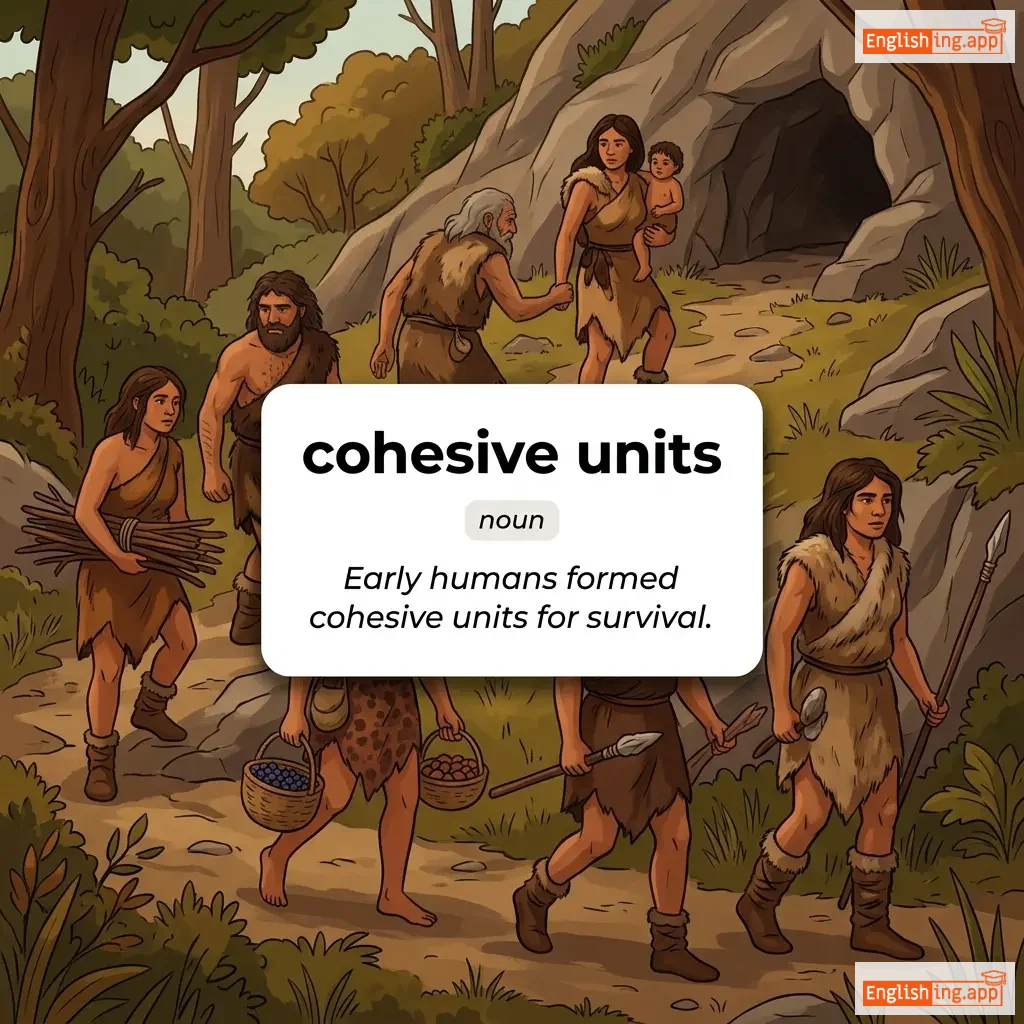
cohesive units definition card — visual illustration of the meaning
noun
koʊˈhisɪv ˈjunɪts
結束した単位 (kessoku shita tan'i)

Groups or organizations that work together as unified wholes, with members closely bound together.

"Early humans formed cohesive units for survival."

"初期の人類は生存のために結束した単位を作った。" (Shoki no jinrui wa seizon no tame ni kessoku shita tan'i o tsukutta.)
noun
/ˈkoʊhɔːrt/
コホート (kohoto)

A group of people with a shared characteristic, usually of the same age or with a common experience.

"The study tracked a cohort of students over ten years."

"その研究は10年にわたり学生のコホートを追跡しました。" (Sono kenkyū wa 10-nen ni watari gakusei no kohoto o tsuiseki shimashita.)
👨‍👩‍👧‍👦

cohorts (コホーツ)

noun
/ˈkoʊhɔːrts/
コホート (kohōto)

Groups of people who share a common feature or experience.

"Researchers compared the health outcomes of different cohorts."

"研究者たちは異なるコホートの健康結果を比較しました。" (Kenkyū-sha tachi wa kotonaru kohōto no kenkō kekka o hikaku shimashita.)
noun
/kwɑːˈfjʊr/
髪型 (kamigata)

A person's hairstyle, typically an elaborate one.

"Her elegant coiffure impressed everyone at the party."

"彼女のエレガントな髪型はパーティーで皆を感動させました。" (Kanojo no ereganto na kamigata wa paatii de mina o kandou sasemashita.)
🪙

coin

noun, verb
/kɔɪn/

A flat piece of metal used as money; as a verb, to invent a new word or phrase.

"The government decided to coin a new term for the program."

verb
/ˌkoʊ.ɪnˈsaɪd/
一致する (icchi suru)

To occur at the same time or to be in agreement.

"The meeting coincided with her birthday."

"会議は彼女の誕生日と一致しました。" (Kaigi wa kanojo no tanjōbi to itchi shimashita.)
noun
/koʊˈɪnsɪdəns/
偶然 (guuzen)

A remarkable or surprising occurrence of events at the same time by chance.

"It was pure coincidence that we met at the airport."

"空港で会ったのは完全に偶然でした。" (Kuukou de atta no wa kanzen ni guuzen deshita.)
adjective
/koʊˈɪnsɪdənt/
同時 (douji)

Occurring at the same time; occupying the same position in space or time.

"The festival was coincident with the national holiday."

"フェスティバルは国民の祝日と同時でした。" (Fesutibaru wa kokumin no shukujitsu to douji deshita.)
noun
/kɔɪnz/
コイン (koin)

Flat, typically round pieces of metal issued by a government as money.

"He collected old coins from different countries."

"彼はさまざまな国から古いコインを集めました。" (Kare wa samazama na kuni kara furui koin o atsumemashita.)
noun
/ˈkɒləndər/
ざる (zaru)

A bowl with holes used for draining liquid from food such as pasta or vegetables.

"She poured the pasta into a colander to drain the water."

"彼女は水を切るためにパスタをざるに注ぎました。" (Kanojo wa mizu o kiru tame ni pasuta o zaru ni sosogimashita.)
adjective/noun
/koʊld/
寒い (samui)

having a low temperature; lacking warmth

"It was so cold outside that she wore two jackets."

"外はとても寒かったので、彼女はジャケットを二枚着ました。" (Soto wa totemo samukatta node, kanojo wa jaketto o nimai kimashita.)
noun
/koʊld drɪŋk/
冷たい飲み物 (tsumetai nomimono)

A chilled beverage; a refreshing drink served cold

"I ordered a cold drink to beat the summer heat."

"夏の暑さを乗り切るために冷たい飲み物を注文しました。" (Natsu no atsusa o norikiru tame ni tsumetai nomimono o chūmon shimashita.)
collaborate definition card — visual illustration of the meaning
verb
/kəˈlæbəreɪt/
共同作業する (kyoudou sagyou suru)

To work jointly with others, especially on an intellectual or creative project.

"The two companies decided to collaborate on a new project."

"二つの会社は新しいプロジェクトでコラボレートすることに決めました。" (Futatsu no kaisha wa atarashii purojekuto de korabo-re-to suru koto ni kimemashita.)
collaboration definition card — visual illustration of the meaning
noun
/kəˌlæbəˈreɪʃən/
協力 (kyōryoku)

the action of working together with others to produce or achieve something

"The project was a result of close collaboration between two companies."

"このプロジェクトは二つの企業間の密接な協力の結果でした。" (Kono purojekuto wa futatsu no kigyōkan no missetsu na kyōryoku no kekka deshita.)
collage definition card — visual illustration of the meaning
noun
/kəˈlɑːʒ/
コラージュ (koraju)

A piece of art made by sticking various materials such as photographs or paper onto a surface.

"She created a collage using old magazine pictures."

"彼女は古い雑誌の写真を使ってコラージュを作りました。" (Kanojo wa furui zasshi no shashin o tsukatte koraju o tsukurimashita.)
verb
/kəˈlæps/
崩壊する (hōkai suru)

to fall down or inward suddenly; to break down completely

"The old building collapsed after the earthquake."

"古い建物は地震後に崩壊しました。" (Furui tatemono wa jishin-go ni hōkai shimashita.)
adjective
/kəˈlæpsəbl̩/
折りたたみ式 (oritatamishiki)

able to be folded down or reduced in size

"She bought a collapsible chair for camping."

"彼女はキャンプ用に折りたたみ式の椅子を買いました。" (Kanojo wa kyampu you ni oritatamishiki no isu o kaimashita.)
noun
/ˈkɒlər/
(kiri)

the part of a shirt, coat, or dress that goes around the neck

"He adjusted his shirt collar before entering the meeting."

"彼は会議に入る前にシャツの襟を調整しました。" (Kare wa kaigi ni hairu mae ni shatsu no kiri o chousei shimashita.)
noun
/ˈkɒl.ə.bəʊn/
鎖骨 (sokotsu)

either of the pair of bones joining the breastbone to the shoulder blades; clavicle

"He broke his collar-bone in the accident."

"事故で鎖骨を骨折しました。" (Jiko de sokotsu o kossetsu shimashita.)
verb
/kəˈleɪt/
整理する (seiri suru)

to collect, arrange, and combine in order

"The secretary collated the reports before the meeting."

"秘書は会議前に報告書を整理した。" (Hisho wa kaigi mae ni hōkokusho o seiri shita.)
collateral definition card — visual illustration of the meaning
noun
/kəˈlætərəl/
担保 (tanpo)

something pledged as security for repayment of a loan

"He used his house as collateral for the bank loan."

"彼は銀行ローンの担保として自宅を使用しました。" (Kare wa ginkō rōn no tanpo to shite jitaku o shiyō shimashita.)
noun
/kəˈleɪʃən/
コレクション (korekushon)

the act of collecting, comparing, and arranging in proper order

"The librarian spent hours on the collation of old manuscripts."

"図書館員は古い手稿のコレクションに数時間を費やしました。" (Toshokani wa furui shukō no korekushon ni suū jikan o tsuiyashimashita.)
noun
/ˈkɒliːɡ/
同僚 (dōryō)

a person with whom one works, especially in a profession or business

"She invited her colleagues to the office party."

"彼女はオフィスパーティーに同僚を招待しました。" (Kanojo wa ofisu pātii ni dōryō o shōtai shimashita.)
collect definition card — visual illustration of the meaning
verb
/kəˈlekt/
集める (atsumeru)

To gather or bring together items from different places.

"She likes to collect stamps as a hobby."

"彼女は趣味として切手を集めるのが好きです。" (Kanojo wa shumi to shite kitte o atsumeru no ga suki desu.)
adjective
/kəˈlɛktɪd/
冷静 (reisei)

calm and in control of oneself

"She remained calm and collected during the crisis."

"危機の間、彼女は冷静でコレクテッドでした。" (Kiki no aida, kanojo wa reisei de collected deshita.)
noun
/kəˈlɛkʃən/
コレクション (korekushon)

a group of things gathered together

"She has a large collection of rare books."

"彼女は珍しい本の大きなコレクションを持っています。" (Kanojo wa mezurashī hon no ōkina korekushon o motteimasu.)
collective definition card — visual illustration of the meaning
adjective
/kəˈlɛktɪv/
集団的 (shūdanteki)

done by people acting as a group

"The decision was made by collective agreement."

"その決定は集団的合意によってなされた。" (Sono kettei wa shūdanteki gōi ni yotte nasareta.)