語彙集

英単語辞書 | 単語の意味、定義、例文

noun, verb
/klɒt/
血栓 (kessen)

a thick mass of coagulated liquid, especially blood; to form such a mass.

"The doctor removed a blood clot from the patient."

"医者は患者から血栓を取り除きました。" (Isha wa kanja kara kessen wo tori nokoshimashita.)
noun
/klɒθ/
(nuno)

fabric or material made by weaving or knitting fibers

"The table was covered with a white cloth."
"テーブルは白い布で覆われていました。" (Tēburu wa shiroi nuno de ōwarete imashita.)
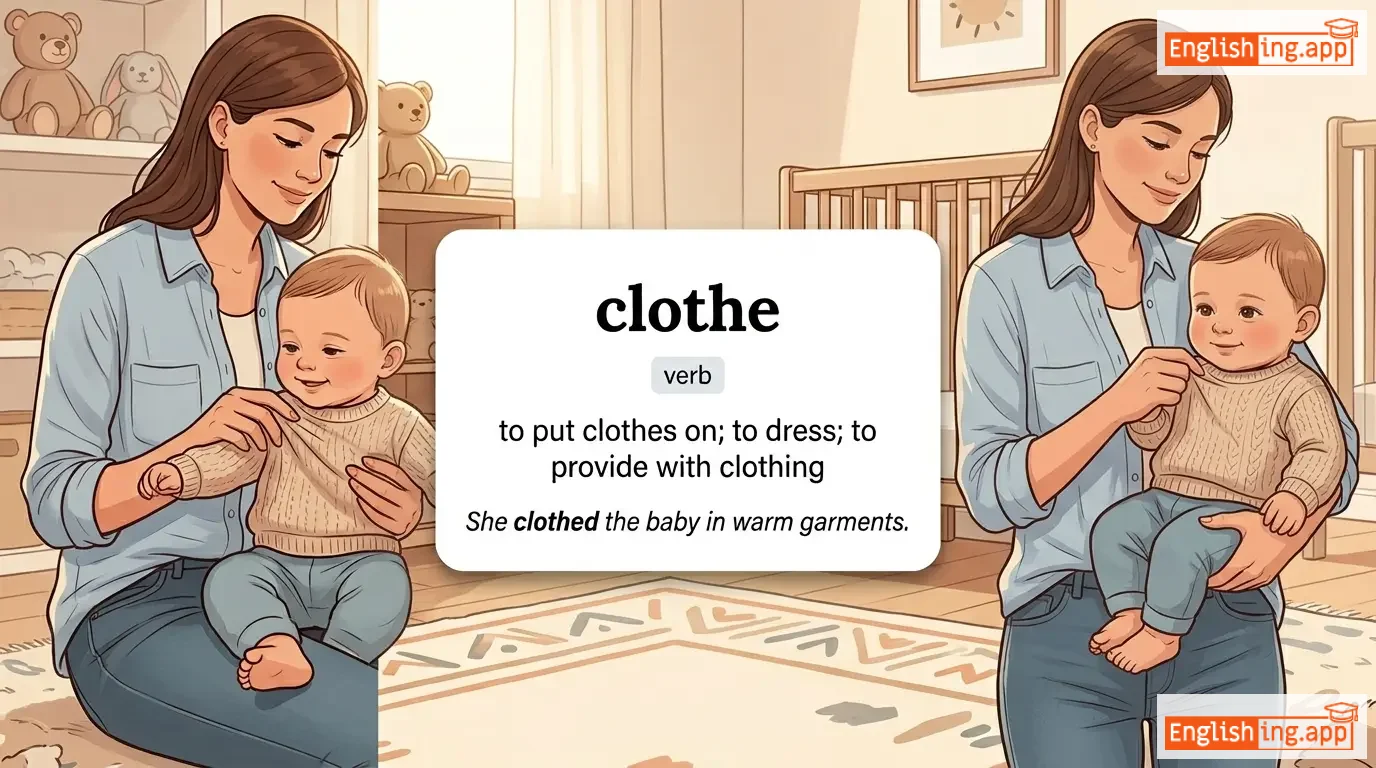
clothe definition card — visual illustration of the meaning
verb
/kloʊð/
服を着せる (fuku o kiseru)

to put clothes on; to dress; to provide with clothing

"She clothed the baby in warm garments."

"彼女は赤ちゃんを暖かい服で着せました。" (Kanojo wa akachan o atatakai fuku de kisemashita.)
noun
/kloʊðz/
(fuku)

garments worn on the body

"She bought new clothes for the party."

"彼女はパーティーのために新しい服を買いました。" (Kanojo wa paatii no tame ni atarashii fuku o kaimashita.)
noun
/kloʊðz ˈaɪərn/
アイロン (airon)

An electric appliance used to remove wrinkles from clothes by applying heat and pressure

"I need to use the clothes iron to make my shirt look neat for the meeting."

"私は会議のためにシャツをきれいに見せるためにアイロンを使う必要があります。" (Watashi wa kaigi no tame ni shatsu o kirei ni miseru tame ni airon o tsukau hitsuyou ga arimasu.)
noun
/ˈkloʊðiər/
衣料品商 (iryōhin-shō)

a person or company that makes, sells, or deals in clothes.

"The town’s clothier displayed fine suits in his shop window."

"町の衣料品商は店の窓に素晴らしいスーツを展示しました。" (Machi no iryōhin-shō wa mise no mado ni subarashī sūtsu o tenji shimashita.)
noun
/ˈkloʊðɪŋ/
衣服 (ifuku)

items worn to cover the body; apparel collectively

"Warm clothing is essential in winter."

"冬には暖かい衣服が必要です。" (Fuyu ni wa atatakai ifuku ga hitsuyō desu.)
noun
/ˈkloʊtʃər/
討論終了手続き (tōron shūryō tetsuzuki)

a procedure for ending a debate and taking a vote.

"The Senate invoked cloture to end the lengthy debate."

"上院は長時間の討論を終わらせるためにクロチュールを適用しました。" (Jōin wa chōjikan no tōron o owaraseru tame ni kurotyūru o tekiyō shimashita.)
noun, verb
/klaʊd/
(kumo)

a visible mass of condensed water vapor in the sky; to make something less clear

"Dark clouds gathered before the storm."

"嵐の前に暗い雲が集まった。" (Arashi no mae ni kurai kumo ga atsumatta.)
noun
/ˈklaʊdˌbɜːrst/
突然の豪雨 (totsuzen no gōu)

a sudden and very heavy rainfall

"The picnic was ruined by a sudden cloudburst."

"ピクニックは突然の豪雨で台無しになった。" (Pikunikku wa totsuzen no gōu de dainashi ni natta.)
noun
/klaʊt/
影響力 (eikyōryoku)

influence or power, especially in politics or business

"The businessman has a lot of political clout."

"そのビジネスマンは政治的な影響力を持っています。" (Sono bijinesuman wa seijiteki na eikyōryoku o motteimasu.)
noun
/kloʊv/
クローブ (kuroobu)

aromatic flower buds of a tree in the family Myrtaceae, used as a spice

"She added a few cloves to the mulled wine for extra flavor."

"彼女はワインにいくつかのクローブを加えて、風味を増しました。" (Kanojo wa wain ni ikutsuka no kuroobu o kuwaete, fūmi o mashimashita.)
noun
/klaʊn/
ピエロ (piero)

a comic entertainer who wears funny clothes and makeup

"The clown made the children laugh with his tricks."

"ピエロは自分のトリックで子供たちを笑わせました。" (Piero wa jibun no torikku de kodomotachi o warawasemashita.)
adjective
/ˈklɔɪ.ɪŋ/
甘ったるい (amattarui)

too sweet, rich, or sentimental, making it unpleasant

"The dessert was so cloying that I couldn't finish it."

"デザートは甘ったるすぎて、私はそれを食べ終えることができませんでした。" (Dezāto wa amattaru sugite, watashi wa sore o tabe oeru koto ga dekimasen deshita.)
noun
/klʌb/
クラブ (kurabu)

an organization of people with a common interest; also a place for social gatherings or entertainment

"He joined the local tennis club to meet new people."

"彼は新しい人々に会うために地元のテニスクラブに参加しました。" (Kare wa atarashii hitobito ni au tame ni jimoto no tenisu kurabu ni sanka shimashita.)
noun
/kluː/
手がかり (tegakari)

a piece of evidence or information used in the detection of a crime or solving a puzzle

"The detective found a clue near the window."

"探偵は窓の近くで手がかりを見つけました。" (Tantei wa mado no chikaku de tegakari o mitsukemashita.)
adjective
/ˈklʌm.zi/
不器用 (bukiyou)

awkward in movement or lacking skill

"He is so clumsy that he drops things all the time."

"彼はとても不器用で、いつも物を落としてしまいます。" (Kare wa totemo bukiyou de, itsumo mono o otoshite shimaimasu.)
noun
/ˈklʌstər/
クラスター (kurasutā)

a group of similar things or people positioned close together

"The grapes grew in a tight cluster."

"ぶどうは密なクラスターで成長した。" (Budō wa mitsu na kurasutā de seichō shita.)
noun
/ˌkovuːɪɡˈzɪs.təns/
共存 (kyouzon)

the state of existing together at the same time or in the same place; peaceful cohabitation

"The peaceful co-existence of different cultures makes this city unique."

"異なる文化の平和的共存がこの都市をユニークにしています。" (Kotonaru bunka no heiwateki kyousei ga kono toshi o yuniiku ni shiteimasu.)
coach definition card — visual illustration of the meaning
noun/verb
/koʊtʃ/
コーチ (kōchi)

a person who trains or instructs others in a sport or skill; or to give training to someone

"The coach helped the players improve their skills."

"コーチは選手たちのスキル向上を助けました。" (Kōchi wa senshu-tachi no sukiru kōjō o tasukemashita.)
noun
/ˈkoʊtʃ.mən/
御者 (gyosha)

a person who drives a horse-drawn carriage or coach

"The coachman skillfully guided the horses through the busy streets."

"御者は熟練して馬を賑やかな通りを通り抜けさせました。" (Gyosha wa jukuren shite uma o nigiwaka na tōri o tōrinukemashita.)
noun
/koʊˈædʒətər/
補佐 (hosa)

a person who helps or assists another, especially in a religious or official capacity

"The bishop appointed a coadjutor to assist him with his duties."

"司教は自分の義務を手伝うために補佐を任命した。" (Shikyō wa jibun no gimu o tetsudau tame ni hosa o ninmei shita.)
noun
/koʊˈæɡjələnt/
凝固剤 (gyoukodzai)

a substance that causes blood or another liquid to clot

"The doctor applied a coagulant to stop the bleeding quickly."
"医者は出血をすぐに止めるために凝固剤を使いました。" (Isha wa shukketsu o sugu ni tomeru tame ni gyoukodzai o tsukaimashita.)
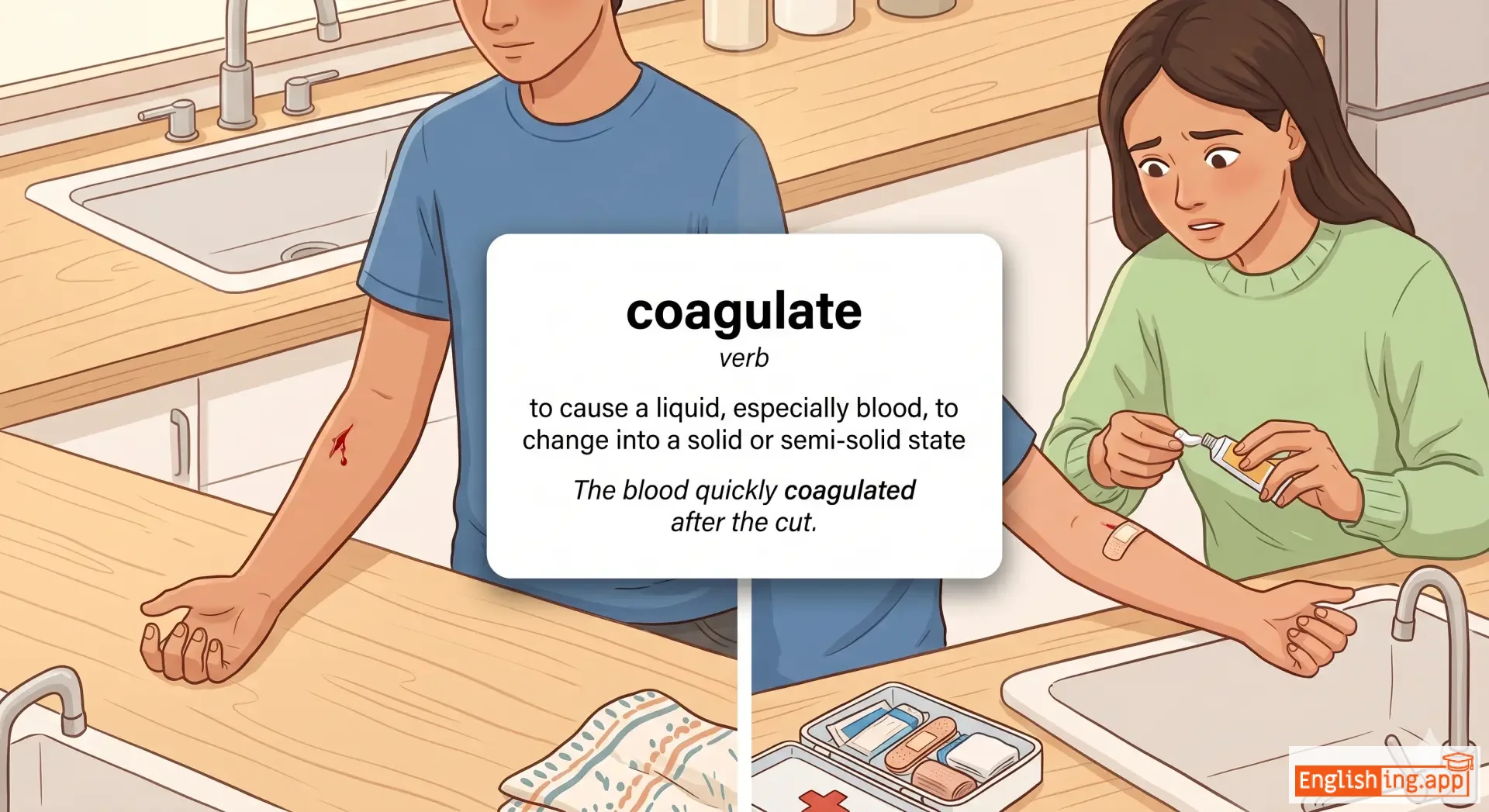
coagulate definition card — visual illustration of the meaning
verb
/koʊˈæɡjəˌleɪt/
凝固 (gyōkō)

to cause a liquid, especially blood, to change into a solid or semi-solid state

"The blood quickly coagulated after the cut."

"切り傷の後、血液はすぐに凝固しました。" (Kirikizu no ato, ketsueki wa sugu ni gyōkō shimashita.)
noun
/koʊl/
石炭 (sekitan)

a black or dark brown rock used as fuel, formed from decomposed plant matter

"The factory still uses coal as its main source of energy."
"工場は依然として石炭を主要なエネルギー源として使用しています。" (Kōjō wa izen toshite sekitan o shuyō na enerugī gen toshite shiyō shiteimasu.)
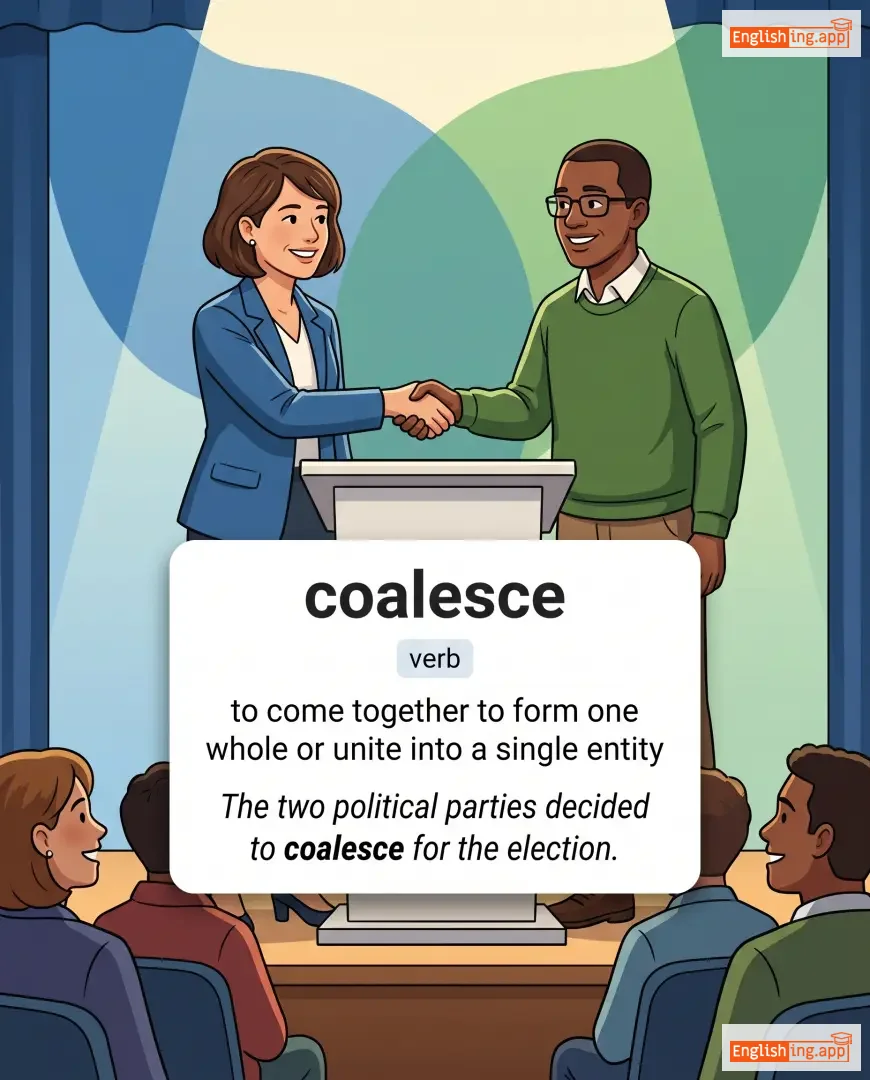
coalesce definition card — visual illustration of the meaning
verb
/ˌkoʊəˈlɛs/
団結する (danketsu suru)

to come together to form one whole or unite into a single entity

"The two political parties decided to coalesce for the election."
"二つの政治的な政党は選挙のために団結することを決定しました。" (Futatsu no seijiteki na seitō wa senkyo no tame ni danketsu suru koto o kettei shimashita.)
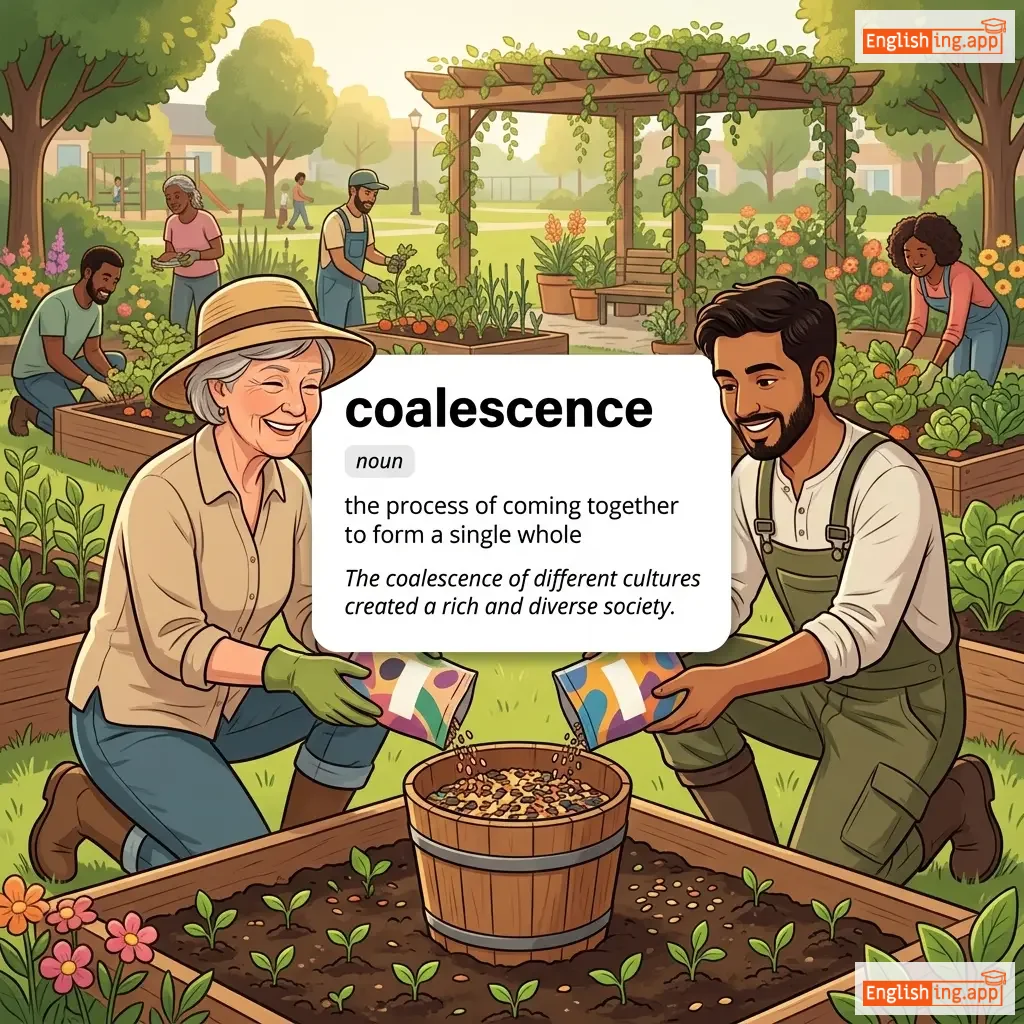
coalescence definition card — visual illustration of the meaning
noun
/ˌkoʊəˈlɛsəns/
融合 (yūgō)

the process of coming together to form a single whole

"The coalescence of different cultures created a rich and diverse society."

"異なる文化の融合は、豊かで多様な社会を作り上げました。" (Kotonaru bunka no yūgō wa, yutaka de tayō na shakai o tsukuri agemashita.)
noun
/ˌkoʊəˈlɪʃən/
連立 (renritsu)

a temporary alliance of distinct parties, persons, or states for joint action

"Several parties formed a coalition to pass the new law."

"いくつかの政党が新しい法律を通すために連立を組んだ。" (Ikutsuka no seitō ga atarashī hōritsu o tōsu tame ni renritsu o kunda.)
adjective
/kɔːrs/
粗い, ざらざら (arai, zara-zara)

Rough in texture or manner; not smooth or refined.

"The fabric felt coarse to the touch."

"その布は触るとざらざらしていた。" (Sono nuno wa sawaru to zara-zara shiteita.)
noun, verb
/koʊst/
海岸 (kaigan)

noun: the land along the edge of the sea; verb: to move easily without effort or power

"They walked along the coast enjoying the sea breeze."

"彼らは海風を楽しみながら海岸を歩いていました。" (Karera wa umikaze wo tanoshimi nagara kaigan wo aruiteimashita.)
adjective
/ˈkəʊstəl/
海岸の (kaigan no)

relating to or near a coast or shoreline

"They built a resort in a coastal area."

"彼らは海岸の地域にリゾートを建てました。" (Karera wa kaigan no chiiki ni rizōto o tatemashita.)
noun/verb
/koʊt/
幸福 (kōfuku)

an outer garment worn outdoors, or a layer covering something

"She wore a red coat to keep warm in the winter."
"彼女は賞を受け取ったとき、自分の幸福を隠せませんでした。" (Kanojo wa shō o uketotta toki, jibun no kōfuku o kakusemasen deshita.)
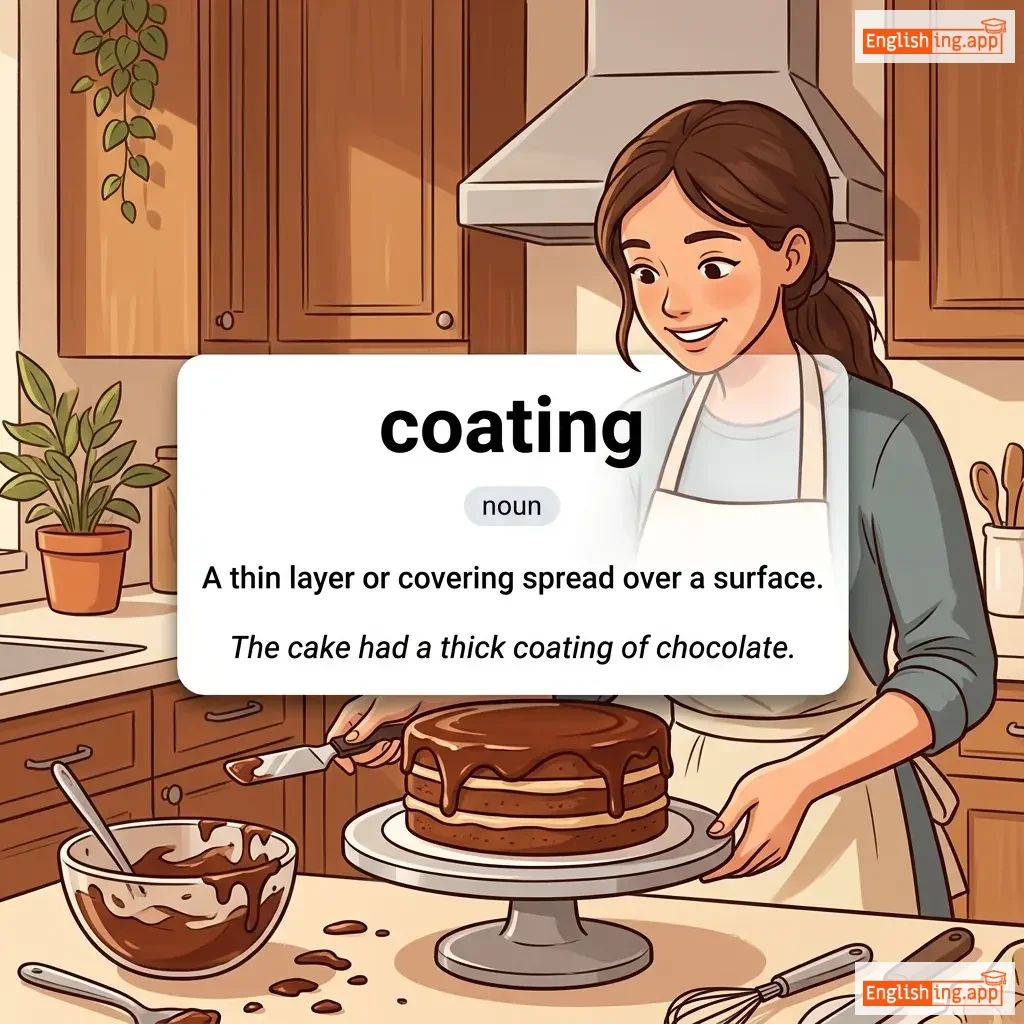
coating definition card — visual illustration of the meaning
noun
/ˈkoʊ.tɪŋ/
コーティング (kōtingu)

A thin layer or covering spread over a surface.

"The cake had a thick coating of chocolate."

"ケーキには厚いチョコレートのコーティングが施されていました。" (Kēki ni wa atsui chokorēto no kōtingu ga hodokosarete imashita.)
verb
/koʊks/
説得する (settoku suru)

to persuade someone gently or gradually to do something

"She managed to coax the cat out of the tree with some food."

"彼女は食べ物で猫を木からおろすことができました。" (Kanojo wa tabemono de neko o ki kara orosu koto ga dekimashita.)
noun
/ˈkɒb.lər/
靴屋 (kutsuya)

a person who repairs shoes and other leather goods

"The cobbler fixed my broken shoes perfectly."

"靴屋は私の壊れた靴を完璧に修理しました。" (Kutsuya wa watashi no kowareta kutsu o kanpeki ni shūri shimashita.)
noun
/ˈkoʊ.brə/
コブラ (kobura)

a venomous snake with a hood that can be spread when threatened

"The cobra raised its hood and hissed at the intruder."

"コブラはフードを上げ、侵入者にシューっと音を立てました。" (kobura wa fūdo o age, shin'nyū-sha ni shūtto oto o tatemashita)
noun
/kəˈkeɪn/
コカイン (麻薬) (kokain)

a powerful and addictive illegal drug made from coca leaves

"He was arrested for possessing cocaine."

"彼はコカイン所持で逮捕されました。" (Kare wa kokain shoji de taiho saremashita.)
noun
/kɒk/
雄鶏 (ondori)

an adult male chicken

"The cock crowed loudly at dawn to wake everyone up."

"雄鶏は夜明けに大声で鳴き、皆を起こしました。" (Ondori wa yoake ni oogoe de naki, mina o okoshimashita.)
noun
/kɒˈkeɪd/
リボンのロゼット (ribon no rozetto)

a rosette or knot of ribbon, usually worn on a hat as a badge of office or party

"The soldier wore a red cockade on his cap."

"兵士は帽子に赤いリボンのロゼットを付けていました。" (Heishi wa bōshi ni akai ribon no rozetto o tsukete imashita.)
noun
/ˌkɒk.əˈtuː/
コカトゥ (kokato)

a large parrot with a prominent crest that can be raised or lowered

"The white cockatoo raised its beautiful crest."

"白いコカトゥは美しい冠羽を上げました。" (Shiroi kokato wa utsukushī kanpu o agemashita.)
noun
/ˈkɒk.roʊtʃ/
ゴキブリ (gokiburi)

a flat brown insect that is commonly found in kitchens and other warm places

"A cockroach ran across the kitchen floor quickly."

"ゴキブリが台所の床を素早く走った。" (Gokiburi ga daidokoro no yuka o subayaku hashitta.)
noun
/ˈkɒkskoʊm/
雄鶏の冠の花 (Ondori no kanmuri no hana)

a tropical plant with bright, velvety flowers that resemble a rooster's comb

"The bright red cockscomb flowers added vibrant color to the garden bed."

"鮮やかな赤い雄鶏の冠の花が庭の花壇に鮮やかな色を加えました。" (Azayakana akai ondori no kanmuri no hana ga niwa no kadan ni azayakana iro o kuwaemashita)
noun
/ˈkɒkˌteɪl/
カクテル (kakuteru)

a mixed drink typically containing alcohol and other ingredients.

"She ordered a cocktail at the bar."

"彼女はバーでカクテルを注文した。" (Kanojo wa bā de kakuteru o chuumon shita.)
noun
/ˈkoʊkənʌt/

a large brown seed with hard shell containing white flesh and coconut water

"We drank coconut water directly from the coconut."

noun
/kɒd fɪʃ/
タラ (tara)

A large marine fish with white flesh, commonly used for food

"The fisherman caught a large cod fish in the North Atlantic."
"漁師は北大西洋で大きなタラを捕まえた。" (ryoushi wa kita taiseyou de ookina tara o tsukamaeta)
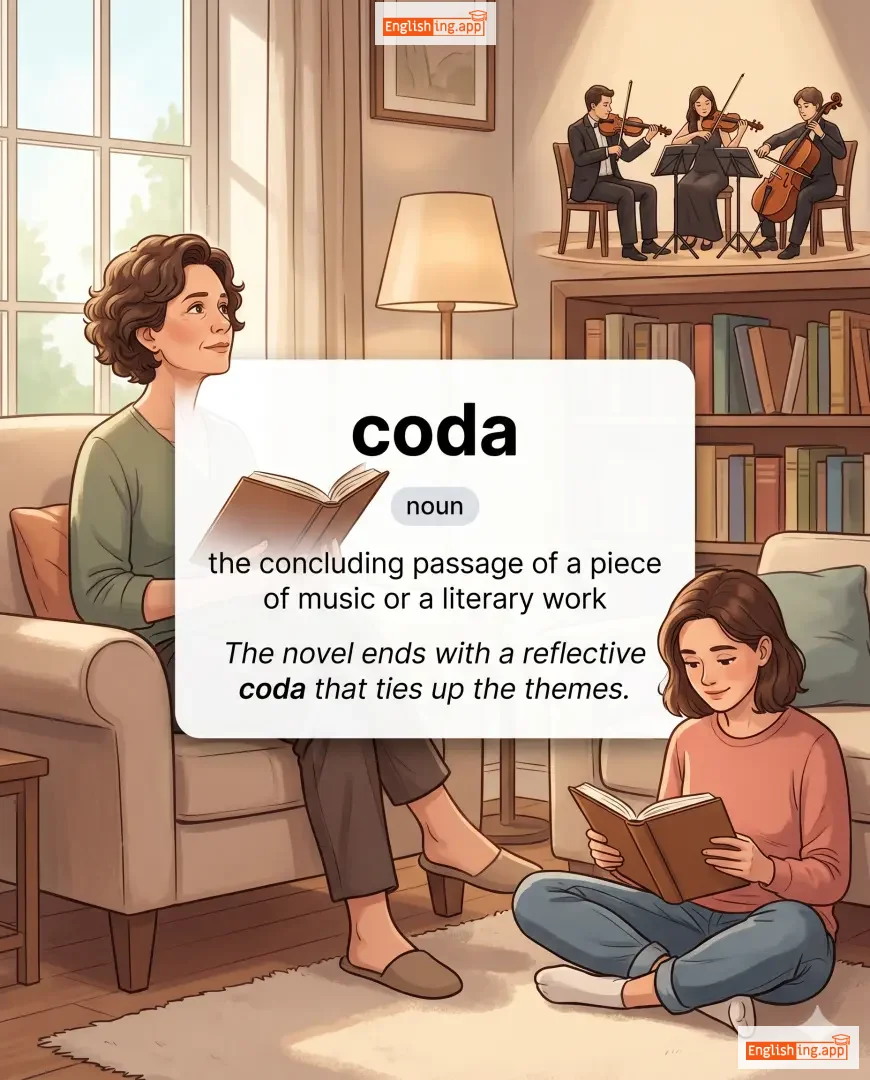
coda definition card — visual illustration of the meaning
noun
/ˈkoʊdə/
コーダ (koda)

the concluding passage of a piece of music or a literary work

"The novel ends with a reflective coda that ties up the themes."

"その小説は、テーマを結びつける反省的なコーダで終わります。" (Sono shousetsu wa, tēma o musubitsukeru hanseiteki na koda de owarimasu.)
verb
/ˈkɒd.l̩/
過保護にする (kahogo ni suru)

to treat someone with excessive care or kindness, often in a way that is overprotective

"Parents should support their children without coddling them."

"親は子供を甘やかさずにサポートすべきです。" (Oya wa kodomo o amayakasa zu ni sapōto subeki desu.)
noun/verb
/koʊd/
コード (kōdo)

a system of words, letters, or symbols used to represent information or instructions

"He wrote a code to solve the problem on the computer."

"彼はコンピュータで問題を解決するためのコードを書きました。" (Kare wa konpyūta de mondai o kaiketsu suru tame no kōdo o kakimashita.)
noun
/ˈkɒd.ɪ.sɪl/
遺言補遺 (igon hoi)

a legal document that makes changes or additions to an existing will

"He added a codicil to his will to include his granddaughter."
"彼は自分の遺言に孫娘を含めるためにコディシルを加えました。" (Kare wa jibun no igon ni magomusume o fukumeru tame ni kodishiru o kuwaemashita.)
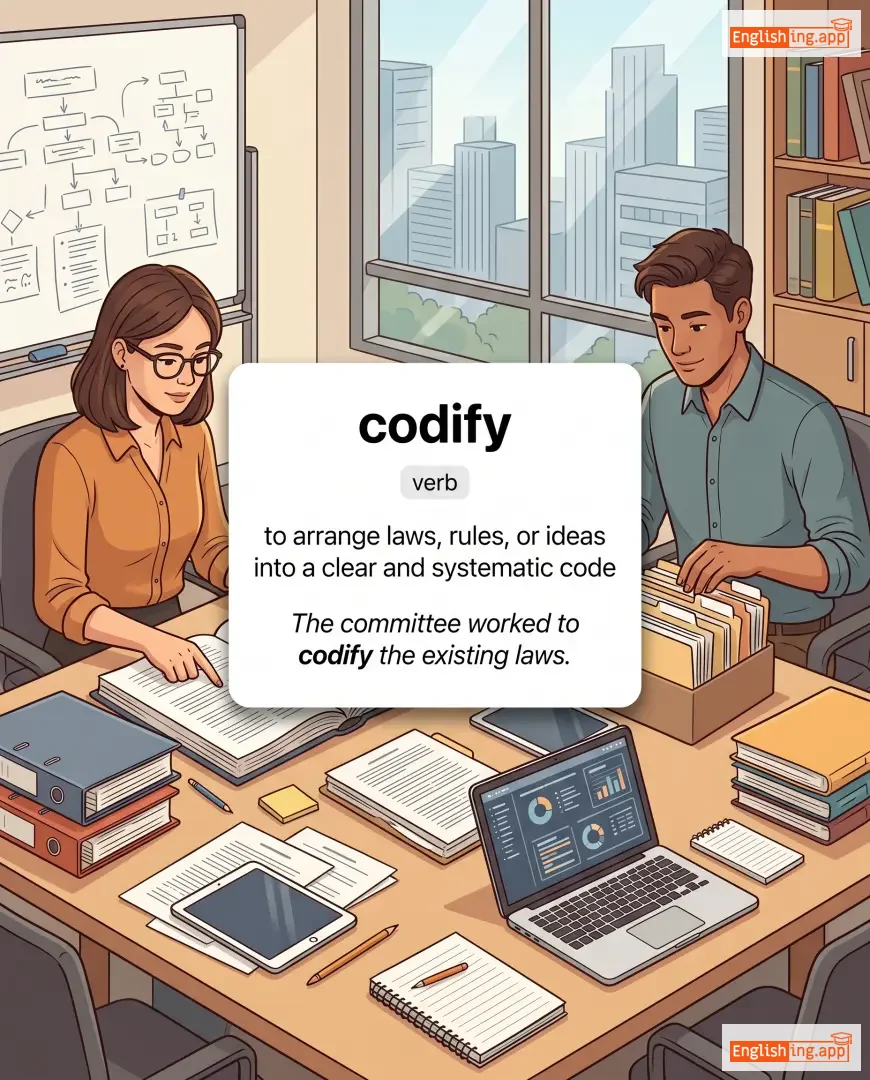
codify definition card — visual illustration of the meaning
verb
/ˈkəʊ.dɪ.faɪ/
体系化する (taikeika suru)

to arrange laws, rules, or ideas into a clear and systematic code

"The committee worked to codify the existing laws."

"委員会は既存の法律を体系化するために取り組みました。" (Iinkai wa kizon no hōritsu o taikeika suru tame ni torikimimashita.)