語彙集

英単語辞書 | 単語の意味、定義、例文

noun
/bɪˈliːvər/
信者 (shinja)

a person who believes in something, especially a religious faith, idea, or principle

"She is a strong believer in hard work and honesty."

"彼女は努力と正直さを強く信じている。" (kanojo wa doryoku to shojikisa o tsuyoku shinjite iru)
verb
/bɪˈlɪtl/
軽視する (keishi suru)

To make someone or something seem less important or less valuable.

"He often belittled his coworkers to feel superior."

"彼はしばしば自分を優位に感じるために同僚を軽視していた。" (Kare wa shibashiba jibun o yūi ni kanjiru tame ni dōryō o keishi shiteita.)
🔔

Bell

noun
/bɛl/

a hollow object, usually made of metal, that makes a ringing sound when struck

"The school bell rang loudly at noon."

noun
/bel ˈæp.əl/
ベルリンゴ (beru ringo)

a tropical fruit with a crisp texture and sweet taste, scientifically known as Syzygium malaccense

"The bell apple tree produces beautiful red fruits that are popular in tropical regions."

"ベルリンゴの木は美しい赤い果物を生産し、熱帯地域で人気があります" (Beru ringo no ki wa utsukushī akai kudamono o seisan shi, nettai chiiki de ninki ga arimasu)
noun
/bɛl/
美しい女性 (utsukushii josei)

A beautiful woman, especially the most attractive woman at a gathering.

"She was the belle of the ball that evening."

"彼女はその晩の舞踏会のベルでした。" (Kanojo wa sono ban no butoukai no beru deshita.)
adjective
/ˈbɛlɪˌkoʊs/
戦闘的 (sentō-teki)

Showing a tendency to argue or fight; aggressive.

"His bellicose attitude often got him into unnecessary conflicts."

"彼の戦闘的な態度はしばしば不必要な対立を引き起こした。" (Kare no sentō-teki na taido wa shibashiba fuhitsuyōna tairitsu o hikiokoshita.)
belligerent definition card — visual illustration of the meaning
adjective
/bəˈlɪdʒərənt/
好戦的な (kōsenteki na)

Hostile and aggressive; eager to fight.

"She became belligerent when the waiter got her order wrong."

"彼女はウェイターが注文を間違えたとき、好戦的になった。" (Kanojo wa weitaa ga chūmon o machigaeta toki, kōsenteki ni natta.)
noun
/ˈbɛlˌwɛðər/
先駆者 (senkusha)

A person or thing that leads or indicates a trend.

"The company is seen as a bellwether of the technology industry."

"その会社はテクノロジー業界の先駆者と見なされています。" (Sono kaisha wa tekunorojī gyōkai no senkusha to minasareteimasu.)
noun
/ˈbɛli/
お腹 (onaka)

The front part of the human body below the chest; stomach or abdomen.

"He rubbed his belly after the big meal."

"彼は大きな食事の後、お腹を擦った。" (Kare wa ōkina shokuji no ato, onaka o sutta.)
verb
/bɪˈlɒŋ/
所属する (shozoku suru)

to be in the right place or to be a member of a group

"She felt she truly belonged to the team."

"彼女はチームに本当に所属していると感じていました。" (Kanojo wa chīmu ni hontōni shozoku shite iru to kanjite imashita.)
adjective
/bɪˈlʌvɪd/
愛されている (aisareteiru)

dearly loved, highly regarded

"She was the beloved queen of the kingdom."

"彼女は王国の愛されている女王でした。" (Kanojo wa ōkoku no aisareteiru joō deshita.)
preposition
/bɪˈloʊ/
(shita)

At a lower level or position than something else.

"The basement is below the ground floor."

"地下室は一階の下にあります。" (Chikashitsu wa ikkai no shita ni arimasu.)
👖

Belt

noun
/bɛlt/

a strip of material worn around the waist to support clothes or as decoration

"He tightened his belt before leaving for work."

verb
/bɪˈmoʊn/
嘆く (nageku)

To express discontent or sorrow over something.

"Critics bemoaned the lack of diversity in the film."

"批評家たちは映画の多様性の欠如を嘆いた。" (Hihyōka-tachi wa eiga no tayō-sei no ketsujo o nageita.)
verb
/bɪˈmjuːz/
困惑させる (konwaku saseru)

To confuse or puzzle someone.

"The complex instructions bemused the new employees."

"複雑な指示が新しい従業員を困惑させました。" (Fukuzatsu na shiji ga atarashī jūgyōin o konwaku sasemashita.)
adjective
/bɪˈmjuːzd/
困惑した, ぼんやりした (konwaku shita, bonyari shita)

confused, puzzled, or lost in thought

"She looked bemused when he asked the strange question."

"彼が奇妙な質問をしたとき、彼女は困惑しているように見えた。" (Kare ga kimyō na shitsumon o shita toki, kanojo wa konwaku shite iru yō ni mieta.)
noun
/bɛntʃ/
ベンチ (benchi)

a long seat for several people, typically made of wood or stone

"They sat on the park bench watching the sunset."

"彼らは公園のベンチに座って夕日を見ていました。" (Karera wa kouen no benchi ni suwatte yuuhi wo miteimashita.)
benchmark definition card — visual illustration of the meaning
noun
/ˈbɛntʃmɑːrk/
基準 (kijun)

a standard or point of reference against which things are compared or assessed

"The company set a new benchmark for customer service."

"その会社は顧客サービスの新しい基準を設定しました。" (Sono kaisha wa kokyaku saabisu no atarashī kijun o settei shimashita.)
benchmarking definition card — visual illustration of the meaning
noun
/ˈbɛntʃˌmɑːr.kɪŋ/
ベンチマーキング (benchimākingu)

Comparing with a specific industry or competitor to set standards

"Companies use benchmarking to assess their performance."

"企業はパフォーマンスを評価するためにベンチマーキングを使用します。" (Kigyō wa pafōmansu o hyōka suru tame ni benchimākingu o shiyō shimasu.)
verb
/bɛnd/
曲げる / かがむ (mageru / kagamu)

to curve something or cause it to change shape; to move the body or part of it downward or forward

"She had to bend down to pick up the coin."

"彼女はコインを拾うためにかがむ必要がありました。" (Kanojo wa koin o hirou tame ni kagamu hitsuyou ga arimashita.)
adjective
/ˈbɛndi/
柔軟な (jūnan na)

Easily curved or flexible.

"The bendy straw made it easier to drink from the cup."

"曲がるストローでカップから飲むのが楽になった。" (Magaru sutōrō de kappu kara nomu no ga raku ni natta.)
preposition
/bɪˈniːθ/
(shita)

in or to a lower position than something; under

"The cat was hiding beneath the bed."

"猫はベッドの下に隠れていた。" (Neko wa beddo no shita ni kakurete ita.)
noun
/ˌbɛnɪˈdɪkʃən/
祝福 (shukufuku)

a blessing or expression of good wishes, often at the end of a religious service

"The priest gave a final benediction before the congregation left."

"神父は会衆が去る前に最後の祝福を与えました。" (Shinpu wa kaishū ga saru mae ni saigo no shukufuku o ataemashita.)
noun
/ˈbɛnɪˌfæktər/
寄付者, 恩人 (kifusha, onjin)

a person who gives money or help to a cause or individual

"The school received a large donation from an anonymous benefactor."

"学校は匿名の寄付者から大きな寄付を受け取りました。" (Gakkō wa tokumei no kifusha kara ōkina kifu o ukemashita.)
noun
/ˈbɛnɪfɪs/
教会職 (kyōkai shoku)

a permanent church appointment for which property and income are provided

"The bishop appointed him to a wealthy benefice."
"司教は彼を裕福な教会職に任命しました。" (Shikyō wa kare o yūfukuna kyōkai shoku ni ninmei shimashita.)
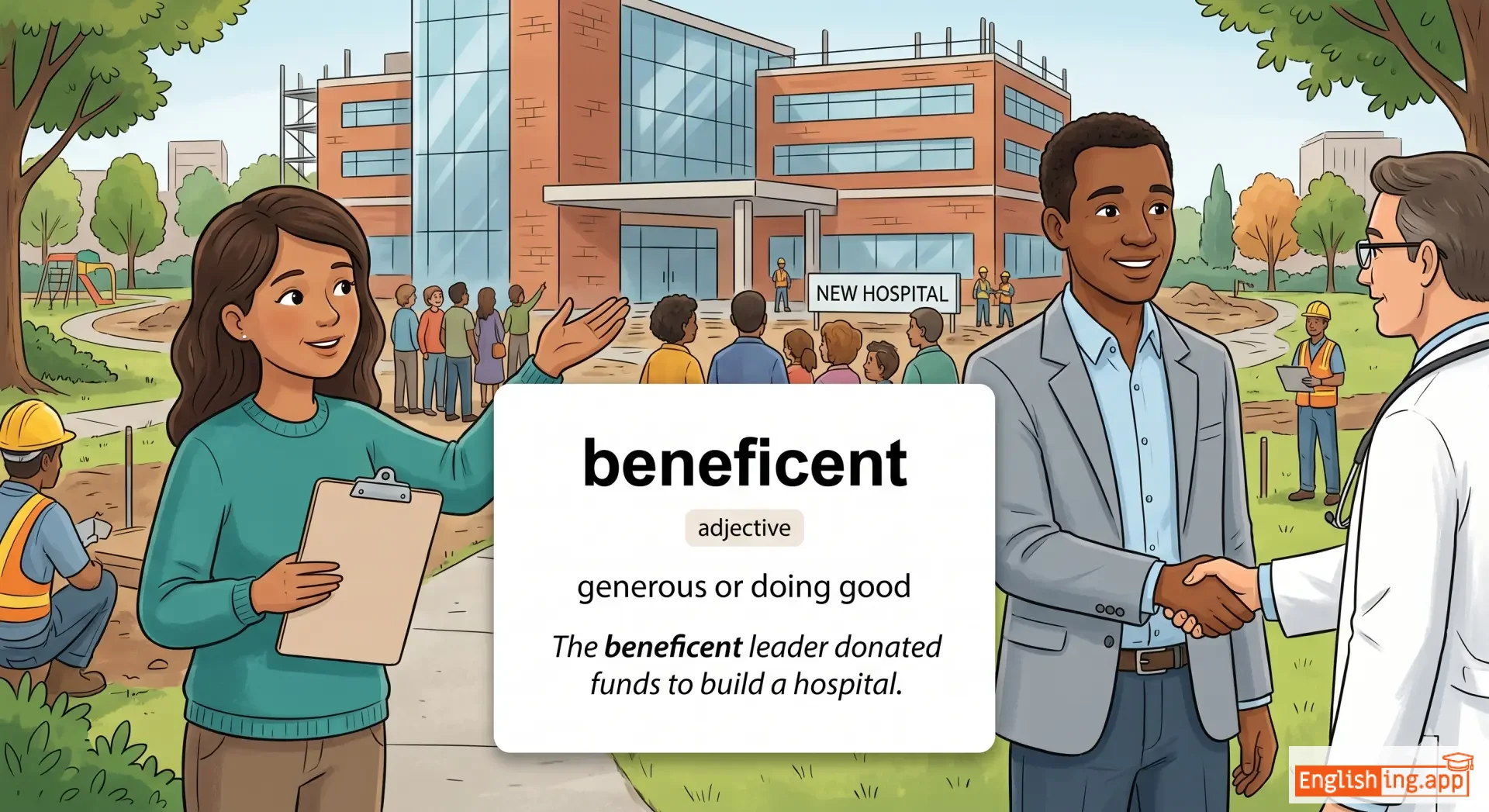
beneficent definition card — visual illustration of the meaning
adjective
/bəˈnɛfɪsənt/
慈悲深い, 寛大な (jihi fukai, kandaina)

generous or doing good

"The beneficent leader donated funds to build a hospital."

"寛大な指導者は病院を建設するために資金を寄付しました。" (Kandaina shidōsha wa byōin o kensetsu suru tame ni shikin o kifu shimashita.)
beneficial definition card — visual illustration of the meaning
adjective
/ˌbɛnɪˈfɪʃəl/
有益な (yuueki na)

producing good or helpful results; favorable or advantageous

"Regular exercise is beneficial for your health."

"定期的な運動はあなたの健康に有益です。" (Teikiteki na undou wa anata no kenko ni yūeki desu.)
noun
/ˌbɛnɪˈfɪʃəri/
受益者 (shūekisha)

a person who receives something, especially money or property, from a will or insurance policy

"She is the sole beneficiary of her father’s estate."

"彼女は父親の遺産の唯一の受益者です。" (Kanojo wa chichioya no isan no yuiitsu no shūekisha desu.)
noun/verb
/ˈbɛnɪfɪt/
利益 / 便益 (rieki / ben'eki)

an advantage, profit, or good effect; to receive help or an advantage

"Employees benefit from the company’s health insurance program."
"従業員は会社の健康保険プログラムから利益を得ます。" (jūgyōin wa kaisha no kenko hoken puroguramu kara rieki o emasu.)
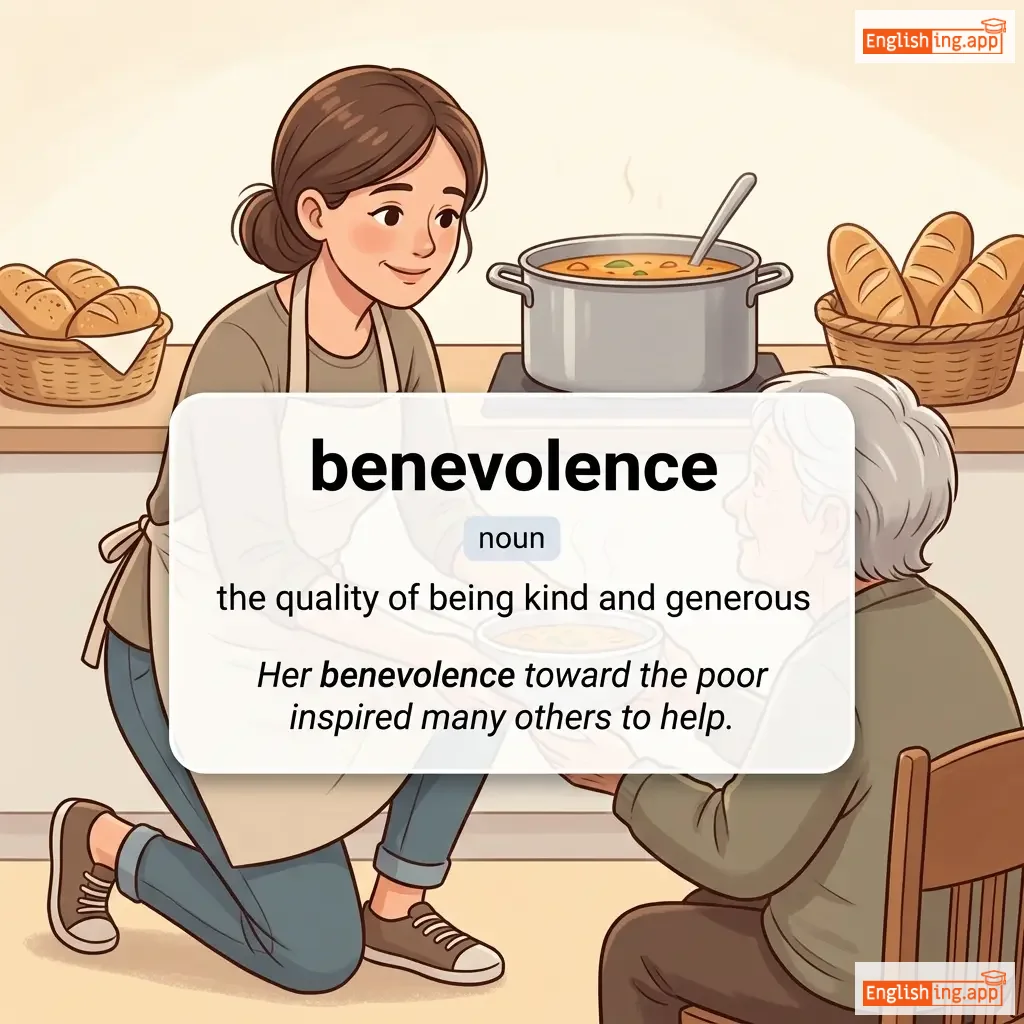
benevolence definition card — visual illustration of the meaning
noun
/bəˈnɛvələns/
慈善 (jizen)

the quality of being kind and generous

"Her benevolence toward the poor inspired many others to help."

"貧しい人々への彼女の慈善は、多くの人々を助けるように促しました。" (Mazushii hitobito e no kanojo no jizen wa, ooku no hitobito wo tasukeru you ni unagimashita.)
benevolent definition card — visual illustration of the meaning
adjective
/bəˈnɛvələnt/
慈悲深い (jihi fukai)

well-meaning and kindly; generous

"The benevolent teacher helped students beyond the classroom."

"慈悲深い教師は教室を超えて生徒を助けました。" (Jihi fukai kyoushi wa kyoushitsu o koete seito o tasukemashita.)
adjective
/bɪˈnaɪtɪd/
暗い、無知な (kurai, muchina)

In a state of intellectual or moral ignorance; overtaken by darkness.

"The explorers were lost in the benighted forest without any guide."

"探検家たちはガイドなしで暗い森の中で迷子になった。" (Tankenka-tachi wa gaido nashi de kurai mori no naka de maigo ni natta.)
adjective
/bɪˈnaɪn/

Gentle, kind, or not harmful (especially of a disease or tumor).

"The doctor assured her that the tumor was benign."

adjective
/bɪˈnɪɡnənt/
慈悲深い, 親切な (jihi fukai, shinsetsu na)

Kindly and benevolent in nature.

"The teacher’s benignant attitude made the students feel comfortable."

"先生の寛大な態度が学生たちを快適にさせた。" (Sensei no kandaina taido ga gakuseitachi o kaiteki ni saseta.)
noun
/bɪˈnɪɡnəti/
親切, 優しさ (shinsetsu, yasashisa)

The quality of being kind and gentle.

"She treated everyone with benignity and respect."

"彼女はすべての人に対して親切と尊敬を持って接しました。" (Kanojo wa subete no hito ni taishite shinsetsu to sonkei o motte sesshimashita.)
noun
/ˈbɛnɪsən/
祝福 (shukufuku)

A blessing or benefit.

"The rain was a benison for the drought-stricken farmers."

"その雨は干ばつに苦しむ農民たちにとって祝福でした。" (Sono ame wa kanbatsu ni kurushimu noumin-tachi ni totte shukufuku deshita.)
adjective
/bɛnt/
決意 / 傾向 (ketsui / keikou)

strongly determined or having a natural talent or inclination for something

"She is bent on becoming a successful lawyer."

"彼女は成功した弁護士になる決意を固めている。" (Kanojo wa seikou shita bengoshi ni naru ketsui o katamete iru.)
verb
/bɪˈnʌm/
麻痺させる (mahi saseru)

to make physically numb or without sensation; to make mentally dull or insensitive

"The freezing wind seemed to benumb his fingers within minutes."
"凍える風が数分で彼の指を麻痺させた。" (Kogoeru kaze ga sufun de kare no yubi o mahi saseta)
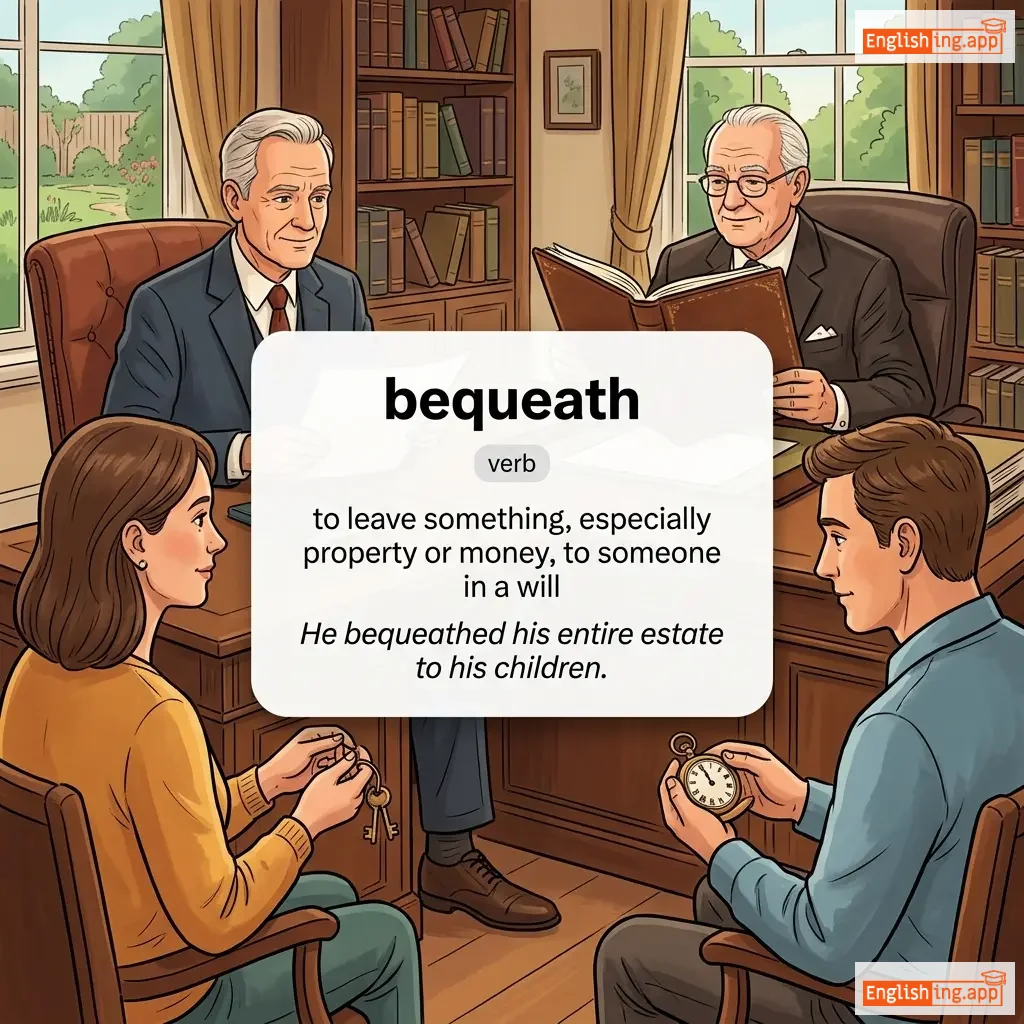
bequeath definition card — visual illustration of the meaning
verb
/bɪˈkwiːð/
遺贈する (izō suru)

to leave something, especially property or money, to someone in a will

"He bequeathed his entire estate to his children."

"彼はすべての財産を子供たちに遺贈した。" (Kare wa subete no zaisan o kodomotachi ni izō shita.)
verb
/bɪˈreɪt/
叱る (shikaru)

to scold or criticize angrily

"The teacher berated the student for being late."

"先生は遅刻した生徒を叱った。" (Sensei wa chikoku shita seito wo shikatta.)
verb
/bɪˈriːv/
大切な人を失う (taisetsu na hito o ushinau)

to deprive someone of a loved one through death

"She was bereaved of her husband last year."

"彼女は昨年、夫を亡くしました。" (Kanojo wa sakunen, otto o nakushimashita.)
adjective
/bɪˈriːvd/
愛する人を失った人 (aisuru hito o ushinatta hito)

suffering the loss of a loved one through death

"The bereaved mother wept silently at the funeral."

"その悲しみに暮れる母親は葬儀で静かに泣いていた。" (Sono kanashimi ni kureru hahaoya wa sougi de shizuka ni naite ita.)
noun
/bɪˈriːvmənt/

The state of having lost a loved one through death.

"She received many letters of sympathy during her time of bereavement."

adjective
/bɪˈrɛft/
失われた (ushinawareta)

Deprived of or lacking something, especially a nonmaterial asset.

"After the betrayal, he felt bereft of hope and trust."

"裏切りの後、彼は希望と信頼を失ったと感じた。" (Uragiri no ato, kare wa kibou to shinrai wo ushinatta to kanjita.)
adjective
/bəˈzɜːrk/
狂気 (kyouki)

Out of control with anger or excitement; wild or frenzied.

"The fans went berserk when their team won the championship."

"ファンはチームが優勝したとき、狂気になった。" (Fan wa chiimu ga yuushou shita toki, kyouki ni natta.)
noun
/bɜːrθ/
寝台 / 停泊場所 (shindai / teibaku basho)

A place to sleep on a ship or train; a ship's allocated place at a dock.

"They reserved a lower berth on the overnight train."

"彼らは夜行列車で下段の寝台を予約しました。" (Karera wa yakō ressha de gedan no shindai o yoyaku shimashita.)
verb
/bɪˈsiːtʃ/
懇願する (konkan suru)

To ask someone urgently and fervently to do something; to beg.

"He beseeched the judge for mercy."

"彼は裁判官に慈悲を請いました。" (Kare wa saiban kan ni jihi wo inorimashita.)
⚔️

beset

verb
/bɪˈsɛt/

to trouble, harass, or attack on all sides

"The village was beset by constant floods."

preposition
/bɪˈsaɪd/
隣に (tonari ni)

next to or at the side of someone or something

"She sat beside her best friend during the ceremony."

"彼女は式の間、最良の友達の隣に座っていました。" (Kanojo wa shiki no aida, sairyō no tomodachi no tonari ni suwatte imashita.)
adverb, preposition
/bɪˈsaɪdz/
そのほか (sono hoka)

in addition to; apart from

"Besides English, he also speaks French."

"英語のほかに、彼はフランス語も話します。" (Eigo no hoka ni, kare wa Furansugo mo hanashimasu.)