語彙集

英単語辞書 | 単語の意味、定義、例文

noun
/ˈbʌskɪn/
厚底ブーツ (atsuzoko būtsu)

A type of thick-soled boot that reaches halfway to the knee; also associated with tragic drama in ancient times.

"The actor wore a buskin as part of his classical costume."

"俳優は彼のクラシックな衣装の一部としてバスキンを履いていました。" (Haiyū wa kare no kurashikku na ishō no ichibu toshite basukin o haiteimashita.)
💥

bust

noun/verb
/bʌst/

As a noun: A sculpture of a person's head, shoulders, and chest; As a verb: To break, smash, or arrest.

"The police busted the gang last night."

verb, noun
/ˈbʌsəl/
騒々しさ、忙しさ (sowazushisa, isogashisa)

to move in an energetic or noisy manner; busy activity in a place

"The marketplace bustled with vendors and customers."

"市場は販売員と顧客で賑わっていた。" (Ichiba wa hanbaiin to kokyaku de nigiwatte ita.)
adjective
/ˈbʌsti/
胸が豊かな (mune ga yutaka na)

having a large or full bust; describing a woman with a prominent chest

"The actress was often described as busty in fashion magazines."

"その女優はファッション雑誌でよく胸が豊かなと表現された。" (Sono joyuu wa fasshon zasshi de yoku mune ga yutaka na to hyougen sareta)
adjective
/ˈbɪzi/
忙しい (isogashii)

actively engaged in work or activity; occupied

"He is too busy to answer the phone."

"彼は電話に出るのがあまりにも忙しい。" (Kare wa denwa ni deru no ga amari ni mo isogashii.)
but definition card — visual illustration of the meaning
conjunction
/bʌt/
でも (demo)

used to introduce a phrase or clause contrasting with what has already been mentioned

"She wanted to go out, but it was raining heavily."

"彼女は外出したがっていたが、激しく雨が降っていた。" (Kanojo wa gaishutsu shitagatte ita ga, hageshiku ame ga futte ita.)
noun
/ˈbʊt.ʃər/
肉屋 (nikuya)

a person whose job is cutting up and selling meat in a shop

"The butcher recommended the best cut of beef for our dinner."

"肉屋は私たちの夕食のために最高の牛肉の切り身を勧めました。" (Nikuya wa watashitachi no yūshoku no tame ni saikō no gyūniku no kirimi o susumemashita.)
🐐

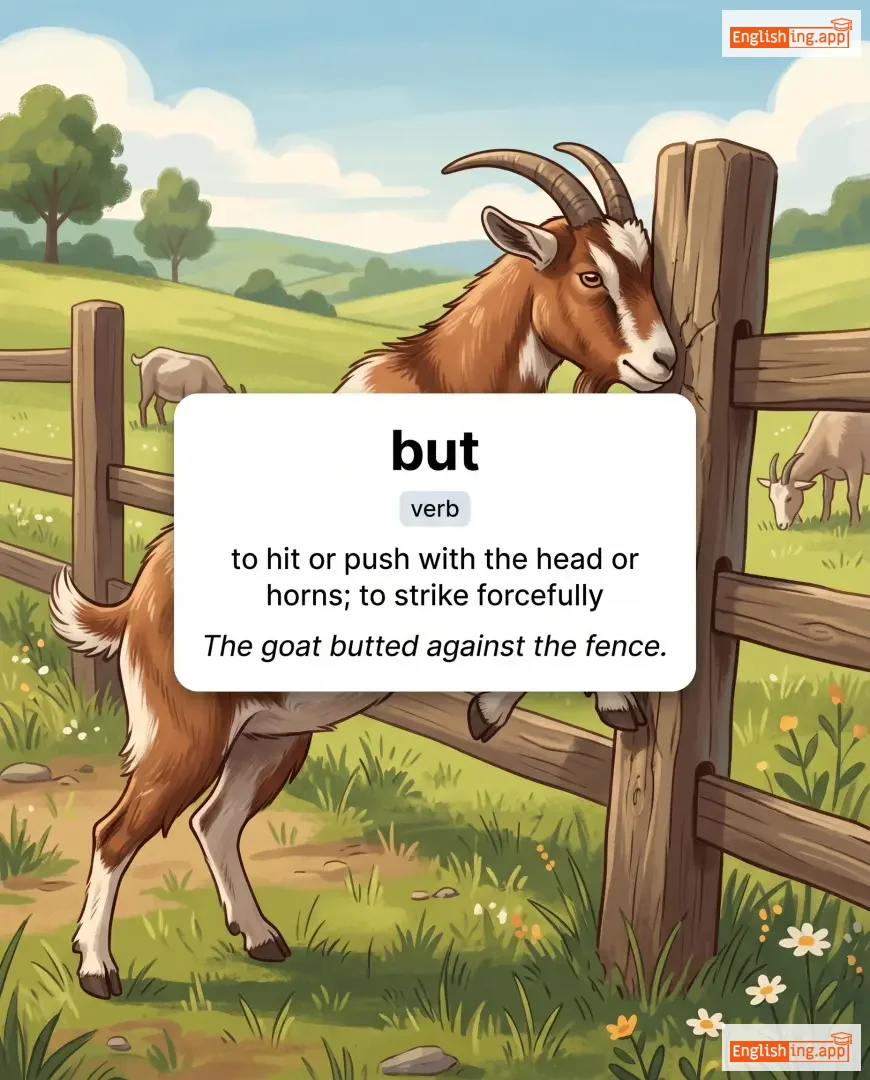
butt

noun, verb
/bʌt/

to hit or push with the head or horns; the end part of something, especially a cigarette

"The goat butted the fence with its horns."

noun
/bjuːt/
ビュート (byuto)

an isolated hill with steep sides and a flat top, common in arid regions

"The travelers could see a tall butte rising in the desert."

"旅行者たちは砂漠の中に高いビュートが立ち上るのを見ることができました。" (Ryokō-sha-tachi wa sabaku no naka ni takai byūto ga tachiagaru no o miru koto ga dekimashita.)
noun, verb
/ˈbʌtər/

a pale yellow edible fat made from cream; to spread butter on something

"She buttered a slice of bread before eating."

noun
/ˈbʌt.ər fɪʃ/
バターフィッシュ (bata fish)

a small, smooth-skinned marine fish

"The butter-fish is popular in Bengali cuisine."

"バターフィッシュはベンガル料理で人気があります。" (bata fish wa bengaru ryori de ninki ga arimasu)
noun
/ˈbʌt.ər.flaɪ/
(chou)

a flying insect with large colorful wings

"The beautiful butterfly landed on the flower."

"美しい蝶が花の上に止まりました。" (Utsukushī chou ga hana no ue ni tomarimashita.)
noun
/ˈbʌtərflaɪ/
蝶々 (chōchō)

an insect with large, often brightly colored wings that flies during the day

"A beautiful butterfly landed on the flower."

"美しい蝶々が花の上に止まった。" (Utsukushī chōchō ga hana no ue ni tomatta.)
noun
/ˈbʌt.ə.flaɪ piː/
蝶豆 (chōmame)

a blue flowering plant with butterfly-shaped flowers, used to make herbal tea

"Butterfly pea flowers turn tea into a beautiful blue color."
"蝶豆の花はお茶を美しい青色に変えます。" (chōmame no hana wa ocha o utsukushī aoiro ni kaemasu.)
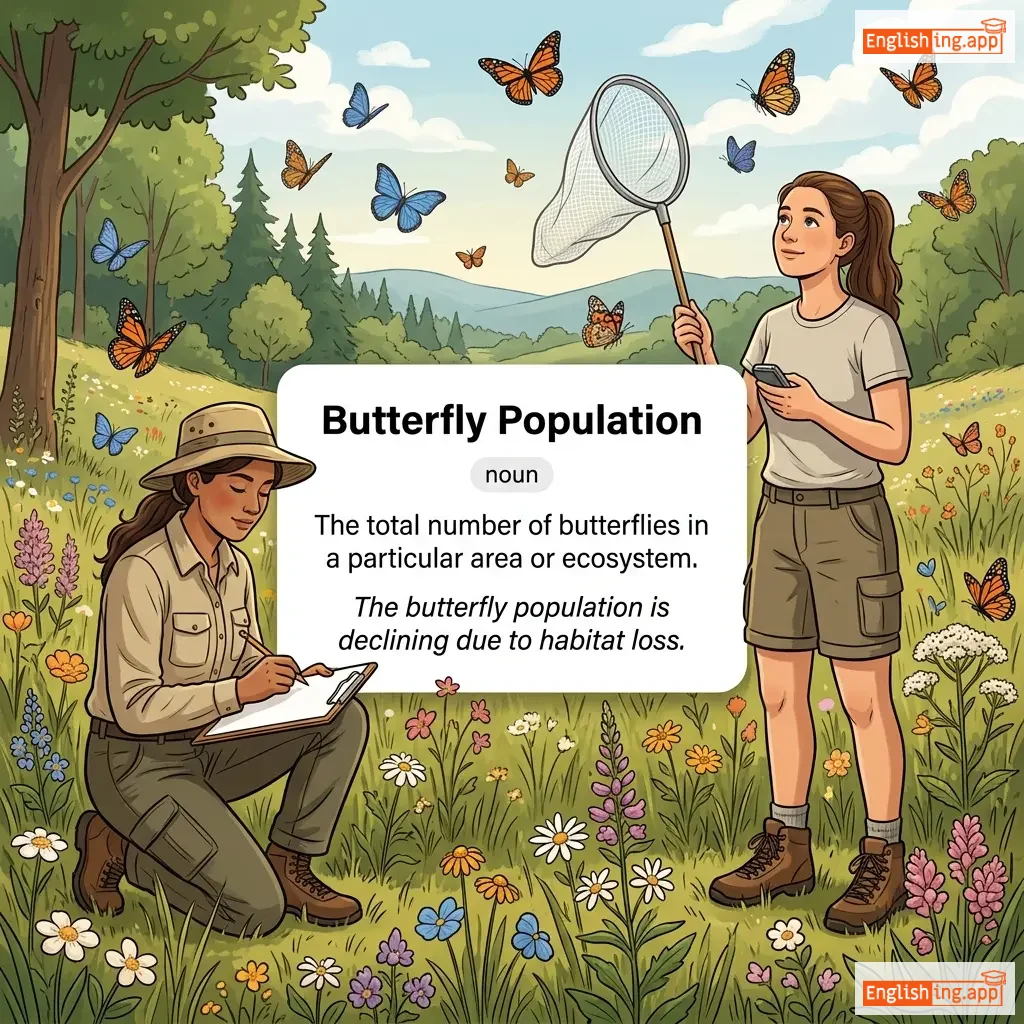
Butterfly Population definition card — visual illustration of the meaning
noun
ˈbʌtərflaɪ ˌpɒpjəˈleɪʃən
蝶の個体数 (chou no kotaisu)

The total number of butterflies in a particular area or ecosystem.

"The butterfly population is declining due to habitat loss."
"蝶の個体数は生息地の喪失によって減少しています。" (Chou no kotaisu wa seisokuchi no sōshitsu ni yotte genshō shiteimasu.)
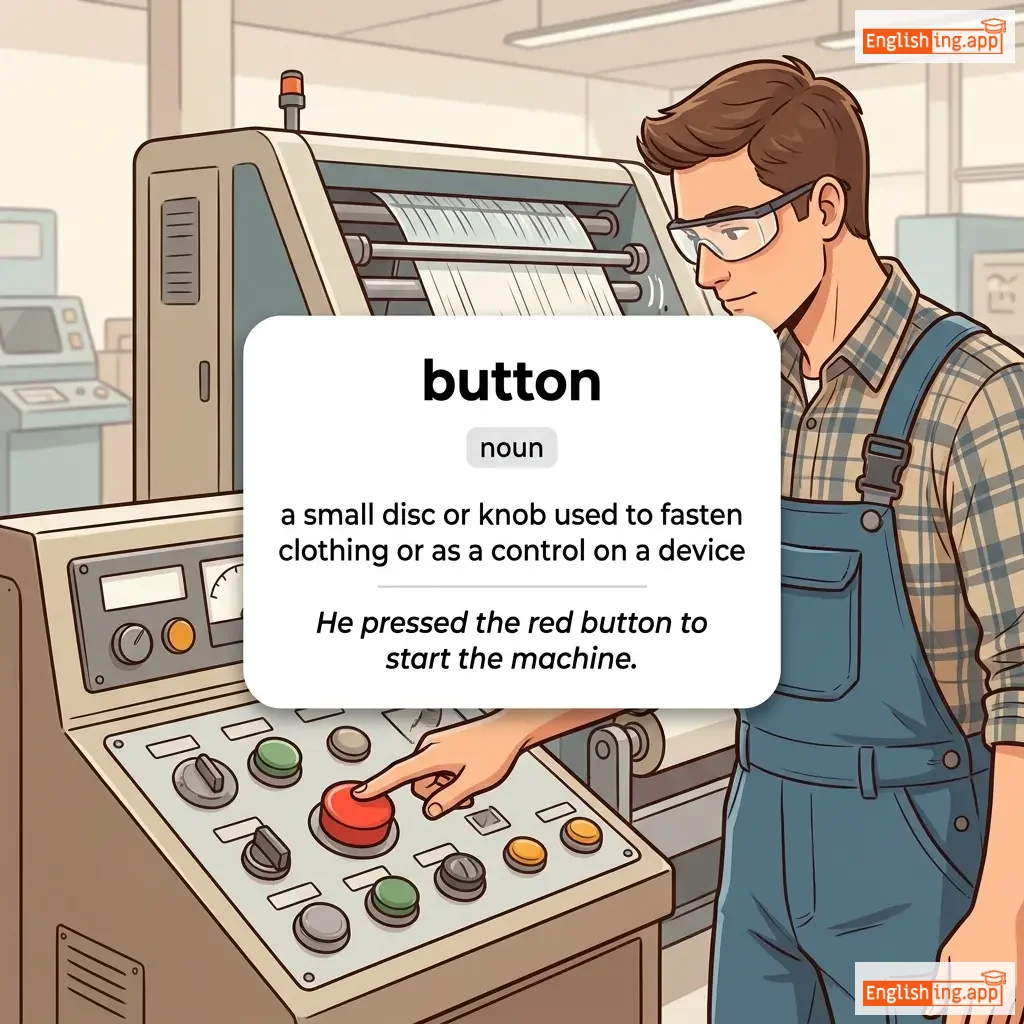
button definition card — visual illustration of the meaning
noun
/ˈbʌtən/
ボタン (botan)

a small disc or knob used to fasten clothing or as a control on a device

"He pressed the red button to start the machine."
"彼は機械を起動するために赤いボタンを押しました。" (Kare wa kikai o kidō suru tame ni akai botan o oshimashita.)
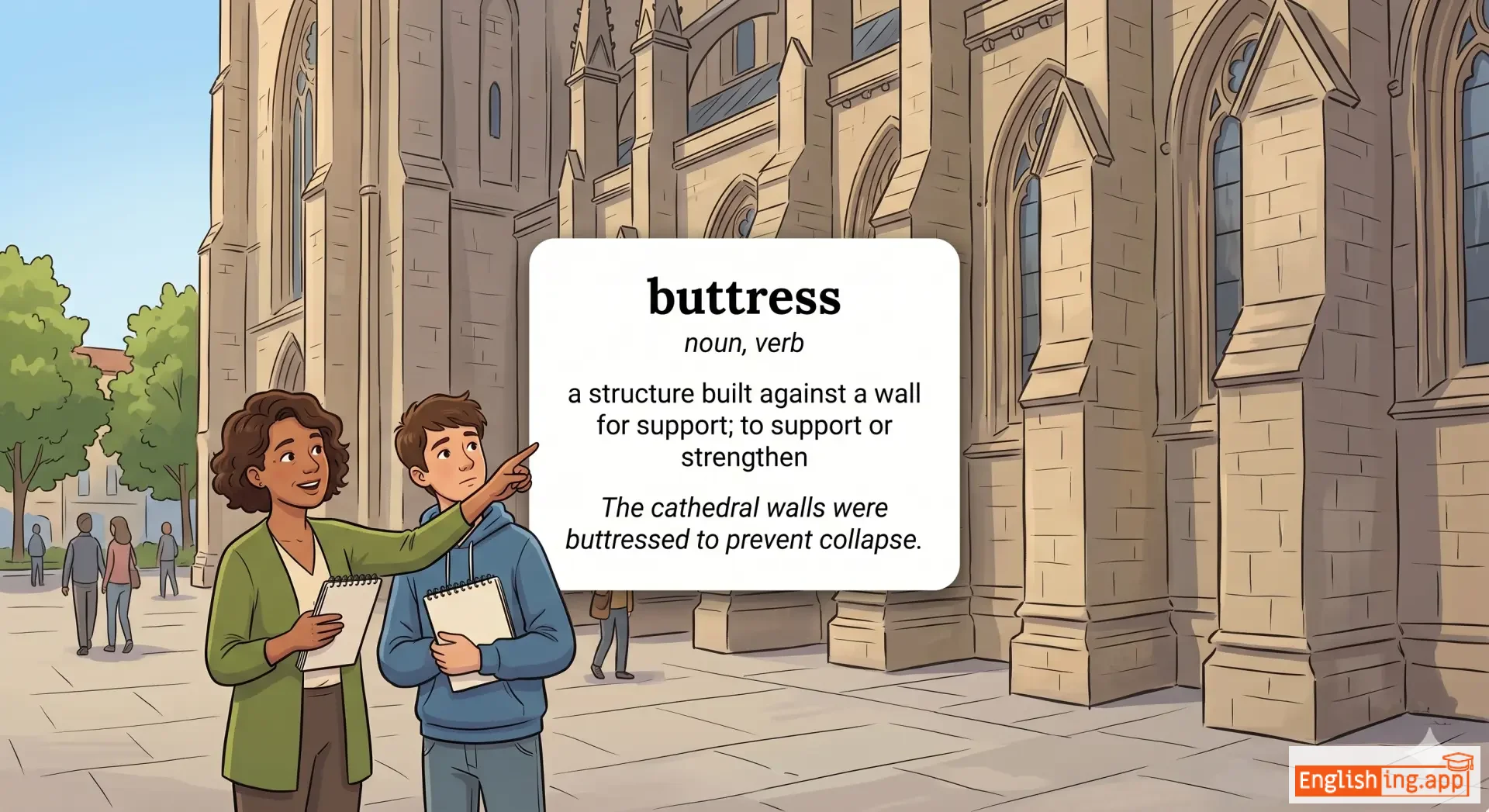
buttress definition card — visual illustration of the meaning
noun, verb
/ˈbʌtrəs/
支柱, 支え (shichū, sasae)

a structure built against a wall for support; to support or strengthen

"The cathedral walls were buttressed to prevent collapse."

"大聖堂の壁は崩壊を防ぐために支えられていました。" (Daiseidō no kabe wa hōkai o fūgu tame ni sasaerareteimashita.)
adjective
/ˈbʌksəm/
豊満で魅力的な女性 (hōman de miryokuteki na josei)

Plump, with a full figure and often large-breasted, especially used to describe women.

"The actress was described as a cheerful and buxom woman."

"女優は明るくて豊満な女性として描かれました。" (Joyū wa akarukute hōman na josei toshite egakaremashita.)
buy definition card — visual illustration of the meaning
verb
/baɪ/
買う (kau)

to acquire something in exchange for money

"She went to the market to buy fresh vegetables."

"彼女は新鮮な野菜を買うために市場に行きました。" (Kanojo wa shinsen na yasai o kau tame ni ichiba ni ikimashita.)
noun
/ˈbaɪər/
買い手 (kaite)

a person who makes a purchase

"The buyer inspected the car before making payment."

"買い手は支払い前に車を検査しました。" (Kaite wa shiharai mae ni kuruma o kensa shimashita.)
noun, verb
/bʌz/
ブーンという音 (buun to iu oto)

to make a low continuous humming sound; a feeling of excitement or interest

"I could hear the phone buzz during the meeting."

"会議中に電話がブーンと鳴るのが聞こえた。" (Kaigichuu ni denwa ga buun to naru no ga kikoeta)
preposition
/baɪ/
によって (niyotte)

indicating the agent performing an action, or the means of achieving something

"The book was written by a famous author."

"その本は有名な作家によって書かれました。" (Sono hon wa yuumei na sakka niyotte kakaremashita.)
noun
/ˈbaɪ.lɔː/
地方条例 (chihō jōrei)

A rule made by a company, organization, or local authority to control the actions of its members.

"The city council passed a new by-law regulating street vendors."

"市議会は、街頭の販売業者を規制する新しい条例を可決しました。" (Shigikai wa, gaitō no hanbaigyōsha o kisei suru atarashī jōrei o kaketsu shimashita.)
interjection
/baɪ/
さようなら (sayounara)

used to say goodbye; a short and informal farewell

"I said bye to her before leaving."

"出発する前に彼女にさようならと言った。" (shuppatsu suru mae ni kanojo ni sayounara to itta)
noun/adjective
/ˈbaɪ.ɡɒn/
過ぎ去った (sugisatta)

Something belonging to an earlier time; past and no longer existing.

"He often talks about the traditions of bygone days."

"彼はよく過去の日々の伝統について話します。" (Kare wa yoku kako no hibi no dentō ni tsuite hanashimasu.)
noun
/ˈbaɪ.laɪn/
作家の名前の行 (sakka no namae no gyou)

A line in a newspaper or magazine article that names the writer.

"Her byline appeared on the front page of the newspaper."

"彼女の名前は新聞の一面に載っていました。" (Kanojo no namae wa shinbun no ichimen ni notte imashita.)
adjective
/ˈbɪz.ən.taɪn/ or /ˈbaɪ.zənˌtiːn/
複雑 (fukuzatsu)

Extremely complicated and detailed; relating to the Byzantine Empire or its style.

"The new tax regulations are so byzantine that few understand them."

"新しい税法は非常に複雑で、ほとんどの人は理解できません。" (Atarashii zeihou wa hijou ni fukuzatsu de, hotondo no hito wa rikai dekimasen.)