語彙集

英単語辞書 | 単語の意味、定義、例文

adjective
/ˌɔːtəˈkrætɪk/
独裁的 (dokusaiteki)

Relating to a ruler who has absolute power and does not consult others.

"The manager’s autocratic style discouraged employees from sharing their ideas."

"マネージャーの独裁的なスタイルは、従業員が自分の考えを共有することを思いとどまらせました。" (Manējā no dokusaiteki na sutairu wa, jūgyōin ga jibun no kangae o kyōyū suru koto o omoitorodomasemashita.)
automate definition card — visual illustration of the meaning
verb
/ˈɔːtəmeɪt/

To use machines or computers to control or operate a process, making it automatic.

"The company decided to automate its customer service operations."

adjective
/ˌɔːtəˈmætɪk/
自動 (jidou)

working by itself without direct human control

"This car has an automatic transmission."

"この車には自動変速機があります。" (Kono kuruma ni wa jidou hensokuki ga arimasu.)
adverb
/ˌɔːtəˈmætɪkli/
自動的に (jidouteki ni)

without human control or intervention; done by itself

"The door closes automatically after you enter."
"ドアは自動的に閉まります。" (Doa wa jidouteki ni shimari masu.)
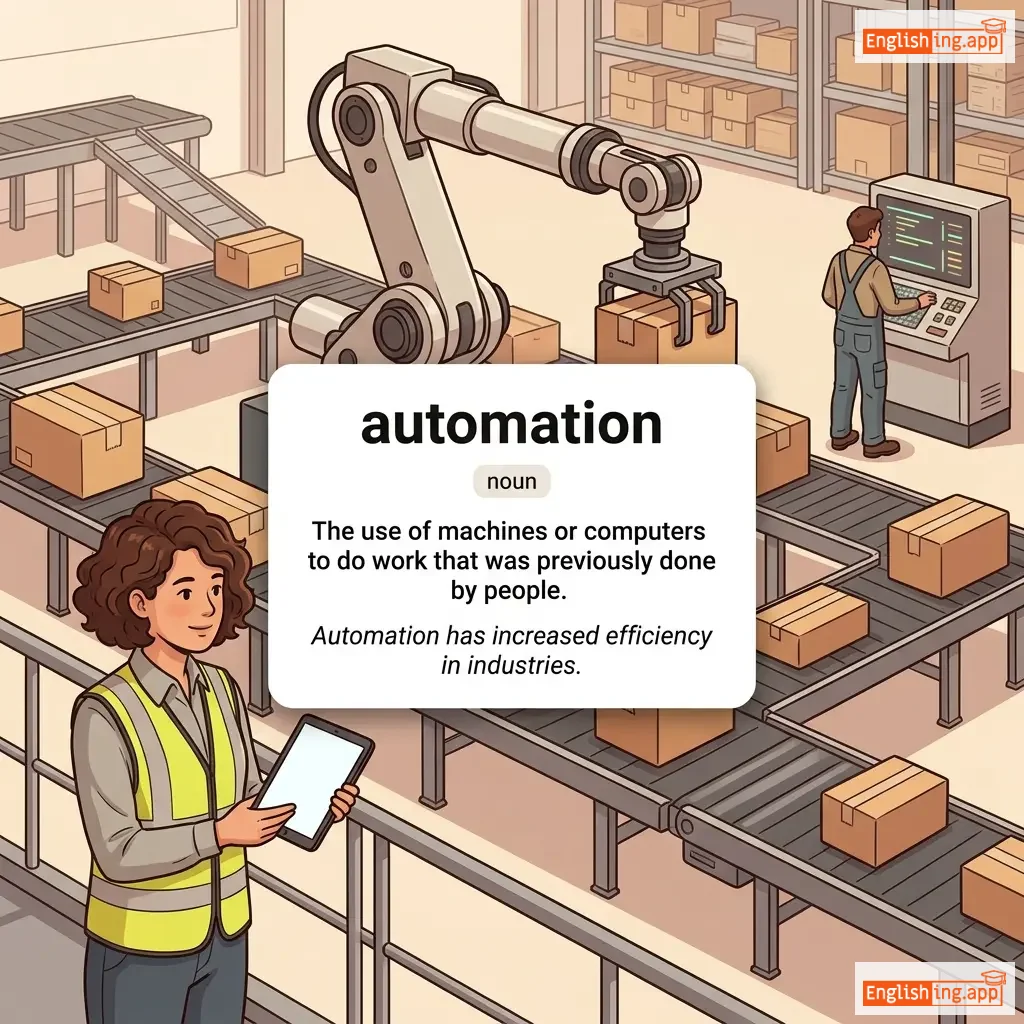
automation definition card — visual illustration of the meaning
noun
ˌɔː.təˈmeɪ.ʃən
自動化 (jidouka)

The use of machines or computers to do work that was previously done by people.

"Automation has increased efficiency in industries."

"オートメーションは産業の効率を向上させました。" (Otomeshon wa sangyou no kouritsu wo koujou sasemashita.)
noun
/ɔːˈtɒmətən/
自動機械 (jidou kikai)

A machine that works automatically; also refers to a person who behaves like a machine, without thinking.

"He worked like an automaton, without showing any emotion."

"彼は感情を見せずにオートマトンのように働いていました。" (Kare wa kanjou o misezu ni automaton no you ni hataraite imashita.)
noun
/ˈɔːtəmoʊbiːl/
(kuruma)

a road vehicle powered by an engine, typically with four wheels

"He bought a new automobile last week."
"彼は先週、新しい車を買いました。" (Kare wa senshu, atarashii kuruma o kaimashita.)
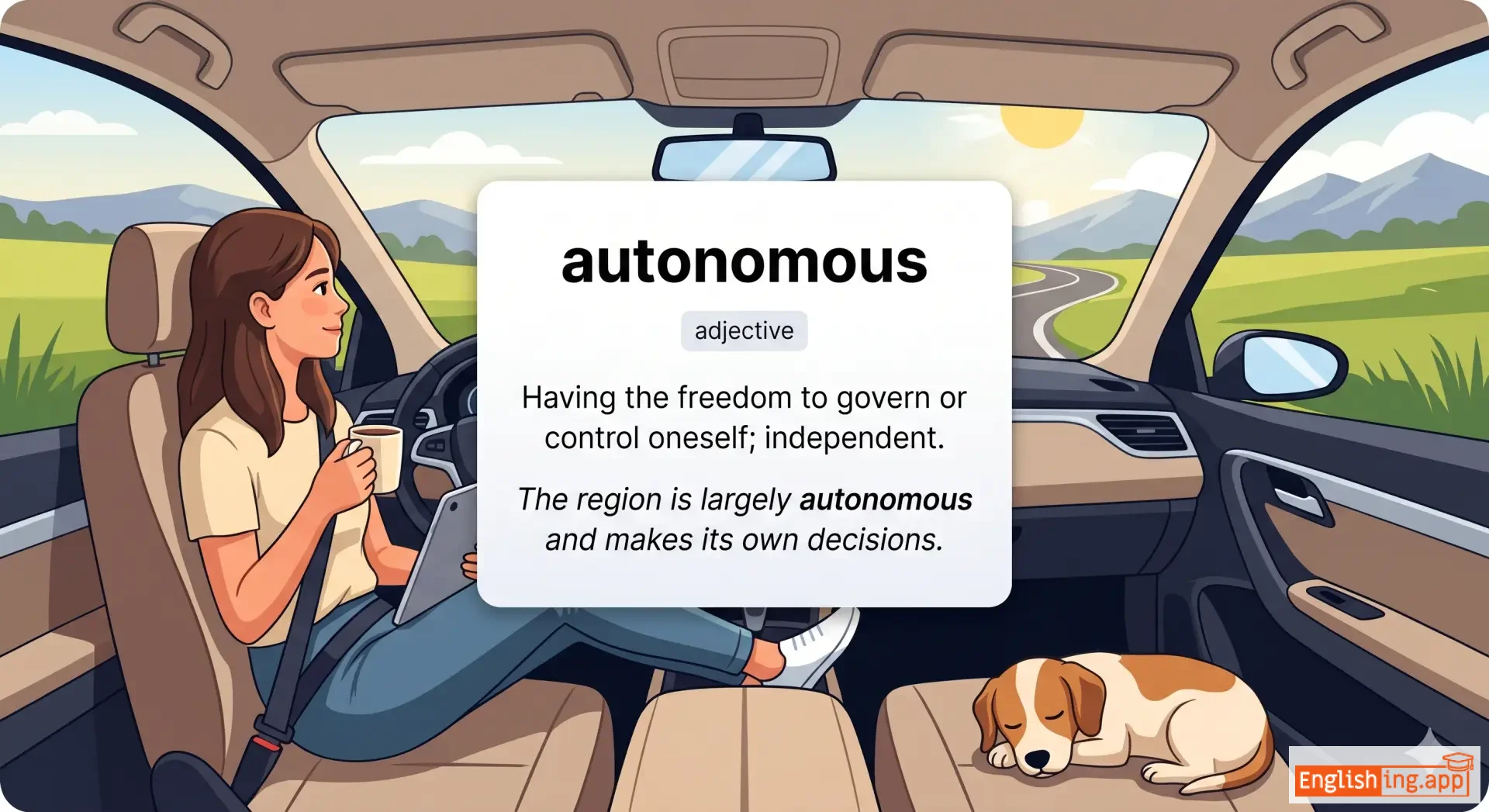
autonomous definition card — visual illustration of the meaning
adjective
/ɔːˈtɒnəməs/
自律的 (jiritsuteki)

Having the freedom to govern or control oneself; independent.

"The region is largely autonomous and makes its own decisions."
"その地域は主に自律的であり、自分の決定を下します。" (Sono chiiki wa omoni jiritsuteki de ari, jibun no kettei o kudashimasu.)
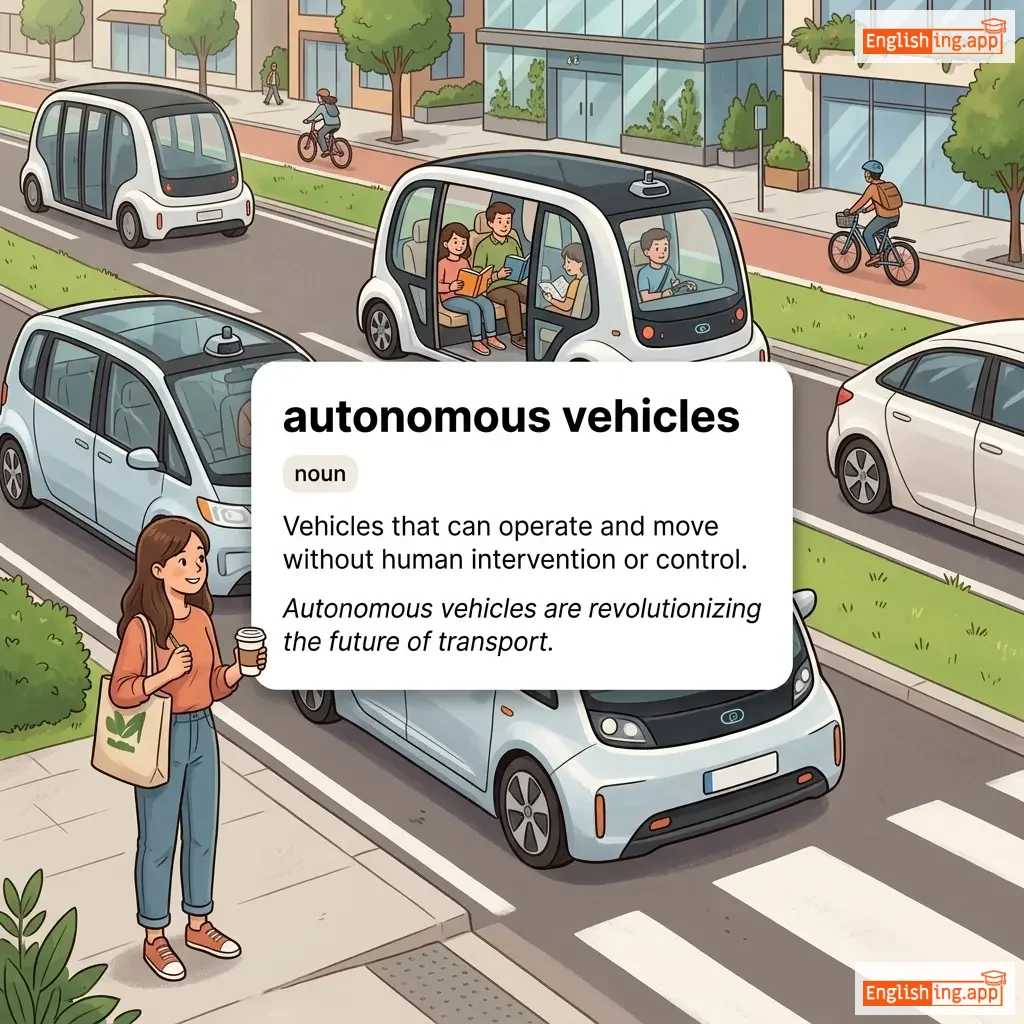
autonomous vehicles definition card — visual illustration of the meaning
noun
/ɔːˈtɒn.ə.məs ˈviː.ɪ.kəlz/
自動運転車 (jidou unten sha)

Vehicles that can operate and move without human intervention or control.

"Autonomous vehicles are revolutionizing the future of transport."

"自動運転車は交通の未来を革新しています。" (Jidou unten sha wa koutsuu no mirai wo kakushin shiteimasu.)
adverb
/ɔːˈtɒnəməsli/
自律的に (jiritsuteki ni)

In an independent or self-governing manner.

"The robot can operate autonomously without human intervention."
"ロボットは人間の介入なしで自律的に動作できます。" (Robotto wa ningen no kainyū nashi de jiritsuteki ni dōsa dekimasu.)
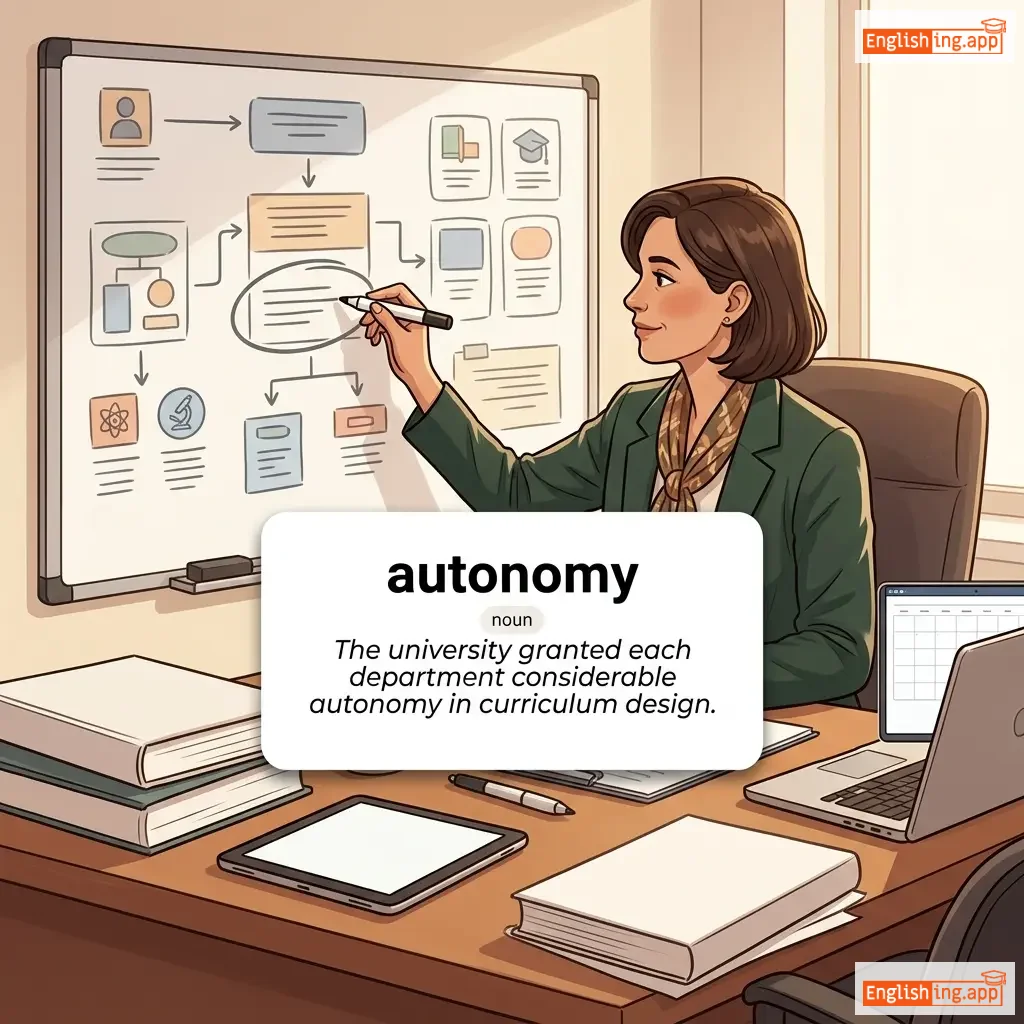
autonomy definition card — visual illustration of the meaning
noun
/ɔːˈtɒnəmi/
自律 (jiritsu)

the right or condition of self-government; independence or freedom to act or make decisions

"The university granted each department considerable autonomy in curriculum design."

"大学は各部門にカリキュラム設計において相当の自律を認めました。" (Daigaku wa kaku bumon ni karikyuramu sekkei ni oite sōtō no jiritsu o mitomemashita.)
noun, verb
/ˈɔːtɒpsi/
検死 (kenshi)

a post-mortem examination to discover the cause of death or the extent of disease

"The autopsy revealed that the victim had died from poisoning."

"検死は、犠牲者が中毒で亡くなったことを明らかにしました。" (Kenshi wa, giseisha ga chudoku de nakunatta koto wo akiraka ni shimashita.)
noun
/ˈɔːtəm/
(aki)

the season between summer and winter, when leaves fall from trees

"The trees look beautiful in autumn, with colorful leaves falling."

"木々は秋に美しく見え、カラフルな葉が落ちています。" (Kigi wa aki ni utsukushiku mie, karafuru na ha ga ochiteimasu.)
adjective
/ɔːˈtʌmnəl/
秋の (aki no)

relating to or characteristic of autumn; occurring in autumn

"The autumnal colors of red and gold filled the forest."

"赤と金の秋の色が森を満たした。" (Aka to kin no aki no iro ga mori o mitashita.)
adjective, noun
/ɔːɡˈzɪliəri/
補助的 (hojoteki)

(adjective) providing supplementary or additional help and support; (noun) a person or thing that provides auxiliary support

"The hospital has an auxiliary power generator in case of emergencies."

"病院には緊急時用の補助電力発電機があります。" (Byōin ni wa kinkyū ji yō no hojodenryoku hatsudengki ga arimasu.)
verb
/əˈveɪl/
利用する (riyousuru)

to make use of something; to be of use or benefit

"You should avail yourself of this opportunity."

"この機会を利用すべきです。" (kono kikai o riyou subeki desu)
noun
/əˌveɪləˈbɪləti/
利用可能性 (riyō kanōsei)

the state of being able to be used or obtained

"The availability of clean water is crucial for health."

"清潔な水の利用可能性は健康にとって非常に重要です。" (Seiketsu na mizu no riyō kanōsei wa kenkō ni totte hijō ni jūyōdesu.)
adjective
/əˈveɪləbl/
利用可能 (riyō kanō)

Able to be used, obtained, or accessed.

"The product is now available in all stores."
"その製品はすべての店舗で利用可能です。" (Sono seihin wa subete no tenpo de riyō kanō desu.)
noun, verb
/ˈævəlæntʃ/

(noun) a mass of snow, ice, and rocks falling rapidly down a mountainside; a sudden overwhelming quantity; (verb) to descend like an avalanche

"The avalanche buried the mountain road under tons of snow."

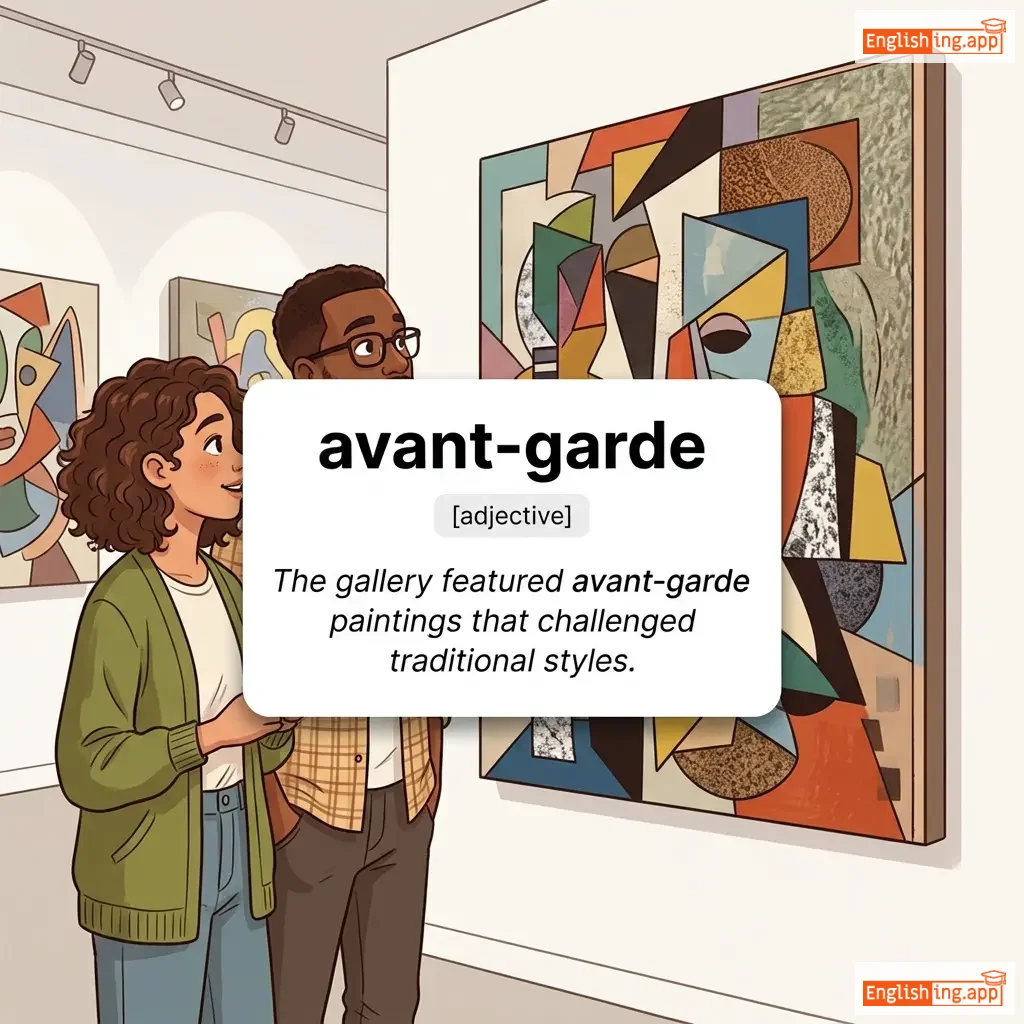
avant-garde definition card — visual illustration of the meaning
adjective
/ˌævɒ̃ˈɡɑːrd/
アヴァンギャルド (avangyarudo)

innovative, experimental, or ahead of its time, especially in the arts and culture

"The gallery featured avant-garde paintings that challenged traditional styles."

"ギャラリーは伝統的なスタイルに挑戦するアヴァンギャルドな絵画を展示しました。" (Gyararī wa dentō-teki na sutairu ni chōsen suru avangyarudo na kaiga o tenji shimashita.)
noun
/ˌævɒ̃ˈɡɑːrd/
アバンギャルド (abangyarudo)

people or works that are innovative, experimental, and ahead of their time

"The avantgarde of the 20th century reshaped modern art."
"20世紀のアバンギャルドは現代アートを再形成した。" (20 seiki no abangyarudo wa gendai āto o saikeisei shita.)
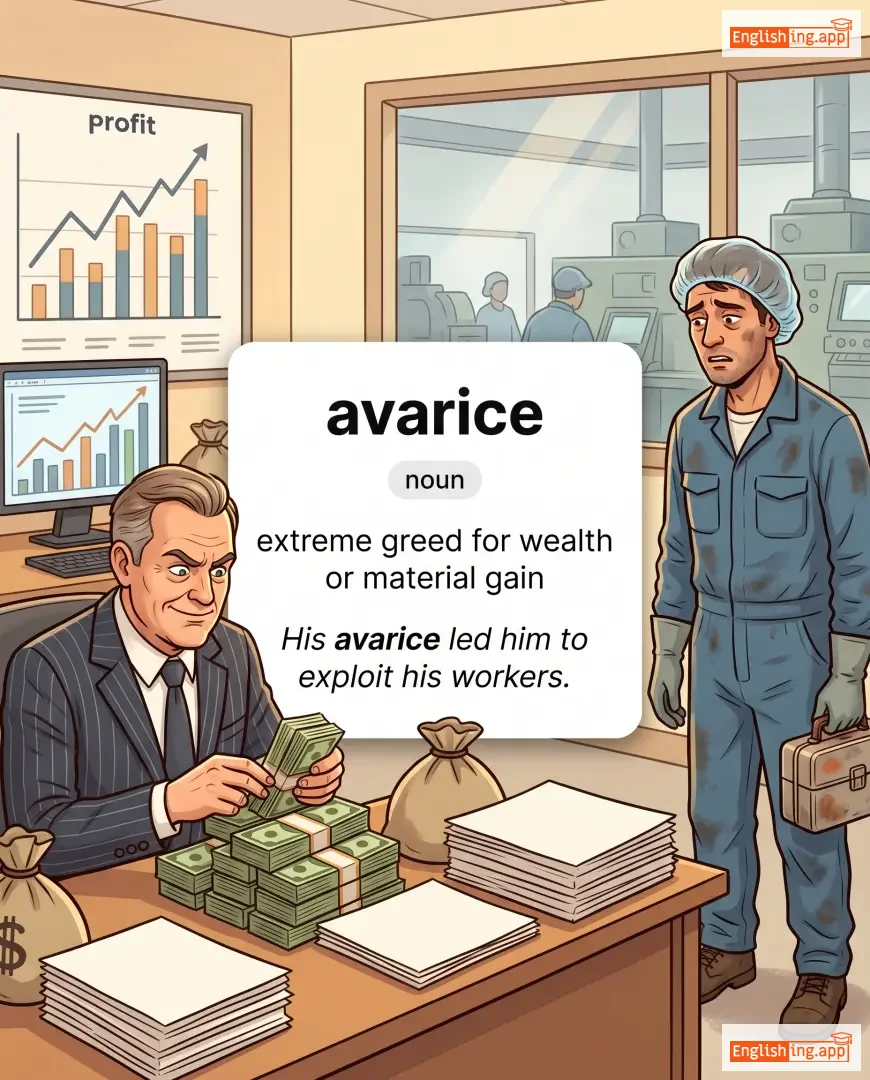
avarice definition card — visual illustration of the meaning
noun
/ˈævərɪs/
強欲 (gyōyoku)

extreme greed for wealth or material gain

"His avarice led him to exploit his workers."

"彼の強欲は彼を労働者を搾取することに導いた。" (Kare no gyōyoku wa kare o rōdōsha o sakushu suru koto ni michibiita.)
adjective
/ˌævəˈrɪʃəs/
貪欲な (donyoku na)

having or showing extreme greed for wealth or material gain

"The avaricious landlord increased the rent unfairly."

"貪欲な家主は不公平に家賃を上げました。" (Donyoku na yanushi wa fukōhei ni yachin o agemashita.)
noun
/ˈævətɑːr/
アバター (avatar)

an icon or figure representing a person in digital contexts; in Hinduism, a divine incarnation

"She changed her social media avatar to a new cartoon image."

"彼女はソーシャルメディアのアバターを新しいカートゥーン画像に変更しました。" (Kanojo wa sōsharumedia no avatar o atarashī kātūn gazō ni henkō shimashita.)
verb
/əˈvɛndʒ/
復讐する (fukushū suru)

to inflict harm in return for an injury or wrong done to oneself or another

"He vowed to avenge his brother's death."
"彼は兄の死を復讐することを誓った。" (Kare wa ani no shi o fukushū suru koto o chikatta.)
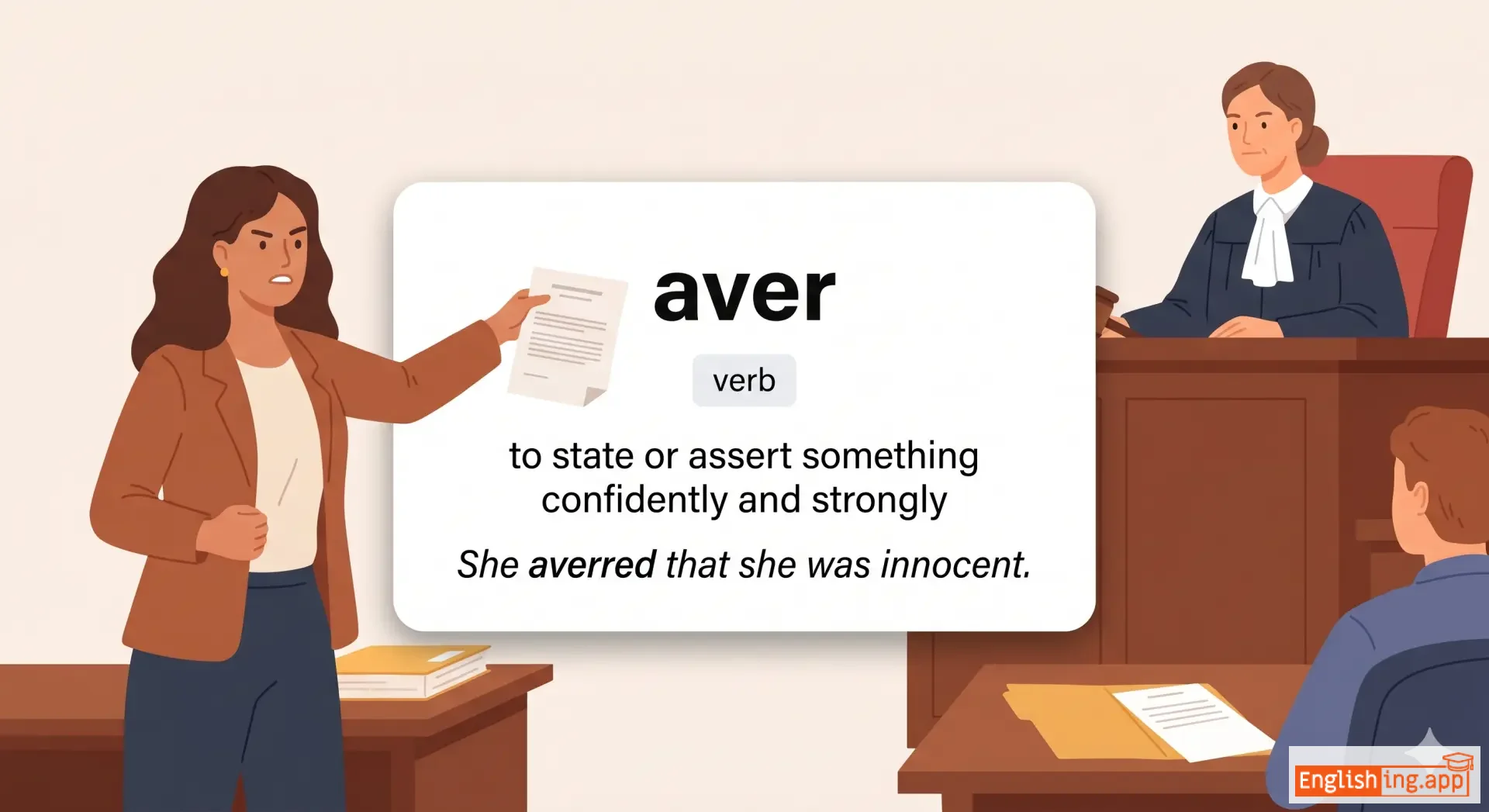
aver definition card — visual illustration of the meaning
verb
/əˈvɜːr/
断言する (dangen suru)

to state or assert something confidently and strongly

"She averred that she was innocent."
"彼女は無罪だと主張した。" (Kanojo wa muzai da to shuchou shita.)
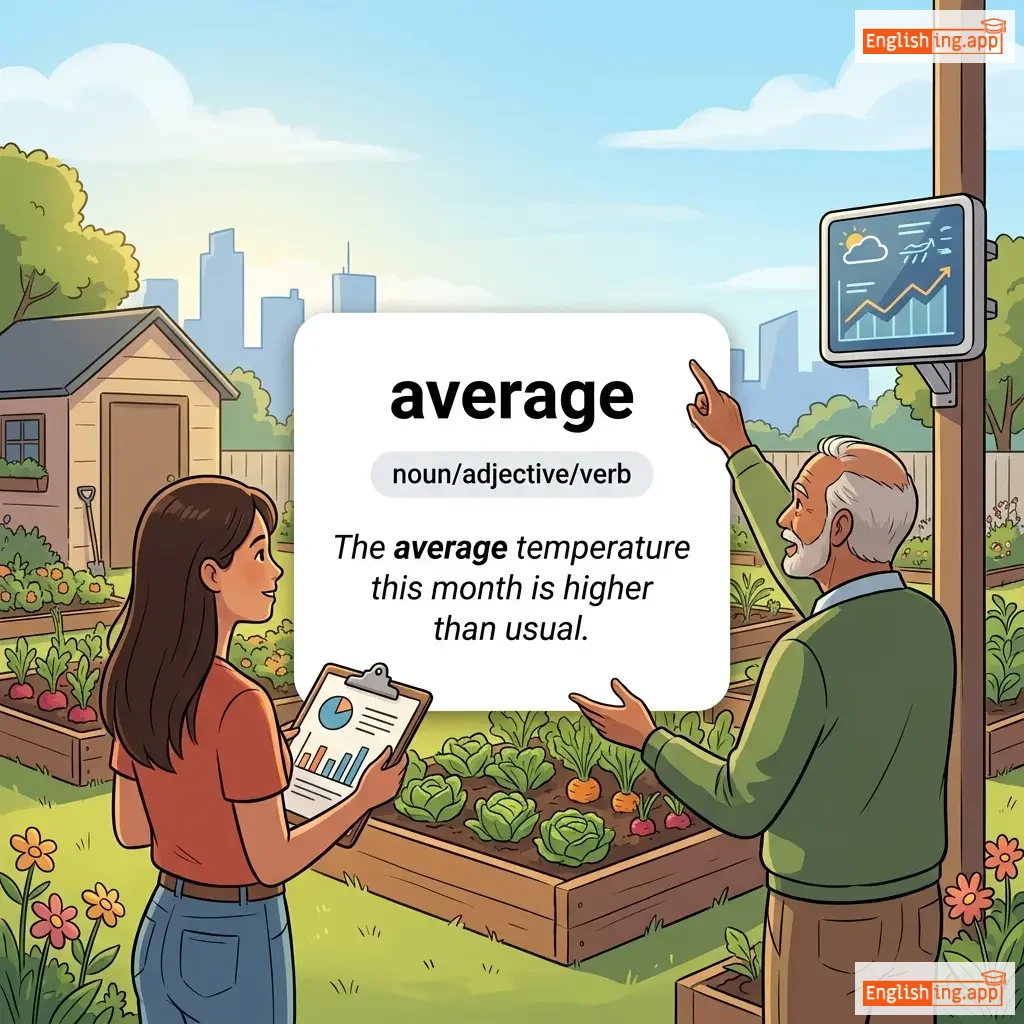
average definition card — visual illustration of the meaning
noun/adjective/verb
/ˈævərɪdʒ/
平均 (heikin)

the result obtained by adding several quantities together and then dividing by the number of quantities; typical or normal level

"The average temperature this month is higher than usual."

"今月の平均気温は通常より高いです。" (Kongetsu no heikin kion wa tsūjō yori takai desu.)
adjective
/əˈvɜːrs/
嫌悪 (ken'o)

having a strong dislike of or opposition to something

"He was averse to taking unnecessary risks."

"彼は不必要なリスクを取ることに嫌悪感を抱いていた。" (Kare wa fuhitsuyou na risuku o toru koto ni ken'okan o daite ita.)
noun
/əˈvɜːrʒən/
嫌悪 (ken'o)

a strong feeling of dislike or unwillingness towards something

"She has a strong aversion to smoking."

"彼女は喫煙に強い嫌悪感を持っています。" (Kanojo wa kitsuen ni tsuyoi ken'okami o motteimasu.)
verb
/əˈvɜːrt/
避ける (sakeru)

to prevent something bad from happening or to turn away one's eyes or thoughts

"Quick action helped avert a disaster."

"迅速な対応が災害を回避する手助けとなった。" (Jinsoku na taiō ga saigai o kaishi suru tetsudake to natta.)
noun
/ˈeɪ.viˌɛr.i/
鳥小屋 (tori koya)

a large enclosure for keeping birds

"The zoo built a new aviary for exotic parrots."

"動物園はエキゾチックなオウムのために新しい鳥小屋を作った。" (Dōbutsuen wa ekizochikkuna ōmu no tame ni atarashī tori koya o tsukutta.)
adjective
/ˈæv.ɪd/
熱心な (nesshin na)

having an eager desire or enthusiasm for something

"She is an avid reader of mystery novels."

"彼女はミステリー小説の熱心な読者です。" (Kanojo wa misuterī shōsetsu no nesshin na dokusha desu.)
noun
/əˈvɪdəti/
熱意 (netsui)

extreme eagerness or enthusiasm

"He accepted the offer with avidity."

"彼は熱意を持ってその提案を受け入れました。" (Kare wa netsui o motte sono teian o ukeiremashita.)
noun
/ˌæv.əˈkɑː.doʊ/
アボカド (abokado)

a green pear-shaped fruit with creamy flesh and high fat content, often used in healthy diets

"Avocado is rich in healthy fats and is popular in salads and toast."
"アボカドは健康に良い脂肪が豊富で、サラダやトーストに人気があります。" (Abokado wa kenkou ni yoi shibou ga houfu de sarada ya tosuto ni ninki ga arimasu.)
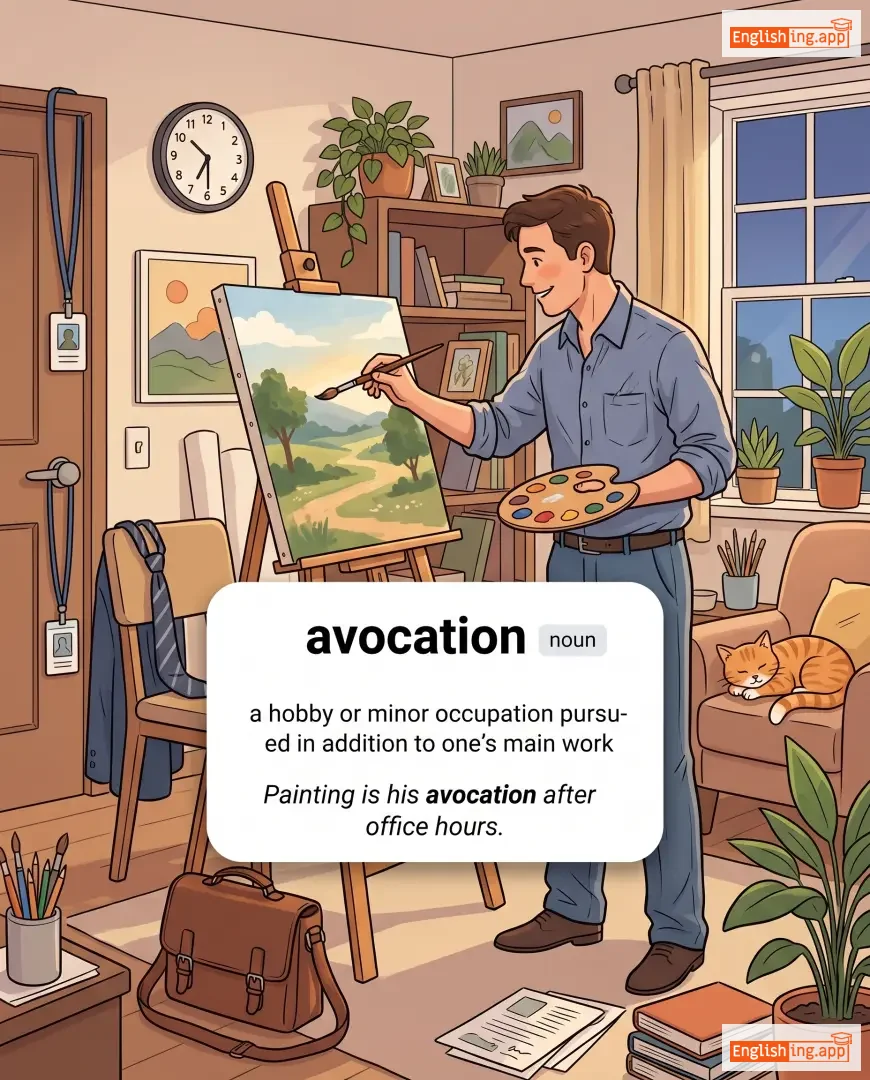
avocation definition card — visual illustration of the meaning
noun
/ˌæv.oʊˈkeɪ.ʃən/
副業 (fukugyo)

a hobby or minor occupation pursued in addition to one's main work

"Painting is his avocation after office hours."

"絵画はオフィスの後の彼の副業です。" (Kaiga wa ofisu no ato no kare no fukugyo desu.)
verb
/əˈvɔɪd/
避ける (sakeru)

To keep away from or stop oneself from doing something.

"He tries to avoid junk food."

"彼はジャンクフードを避けようとしています。" (Kare wa janku fūdo o sakeyō to shiteimasu.)
adjective
/əˈvɔɪdəbl/
避けられる (sakerareru)

able to be prevented or avoided

"Most of the damage was avoidable with proper planning."

"適切な計画があれば、ほとんどの被害は避けられた。" (tekisetsu na keikaku ga areba hotondo no higai wa sakerareta)
noun
/əˈvɔɪdəns/
回避 (kaihi)

the act of staying away from something; deliberate prevention of contact or confrontation

"Avoidance of difficult conversations can create bigger problems later."

"難しい会話を回避すると、後でより大きな問題を生むことがある。" (muzukashii kaiwa o kaihi suru to atode yori ookina mondai o umu koto ga aru)
verb
/əˈvaʊtʃ/
主張する (shuchou suru)

to affirm or assert something as true

"He avouched his innocence before the judge."

"彼は裁判官の前で無実を主張しました。" (Kare wa saiban-kan no mae de mujitsu o shuchou shimashita.)
verb
/əˈvaʊ/
公然と宣言する (kōzen to sengen suru)

to openly declare or admit something, often publicly and firmly

"He avowed his loyalty to the cause without hesitation."

"彼はためらうことなく、彼の忠誠心をその活動に公然と誓った。" (Kare wa tamerau koto naku, kare no chūseishin o sono katsudō ni kōzen to chikatta.)
verb
/əˈvʌls/
引き裂く (hikisaku)

to tear away or separate forcibly, especially in medical or geological contexts

"The surgeon had to avulse the damaged tissue during the operation."
"外科医は手術中に損傷した組織を引き裂かなければならなかった。" (Geka-i wa shujutsu-chuu ni sonshou shita soshiki wo hikisakunakereba naranakatta.)
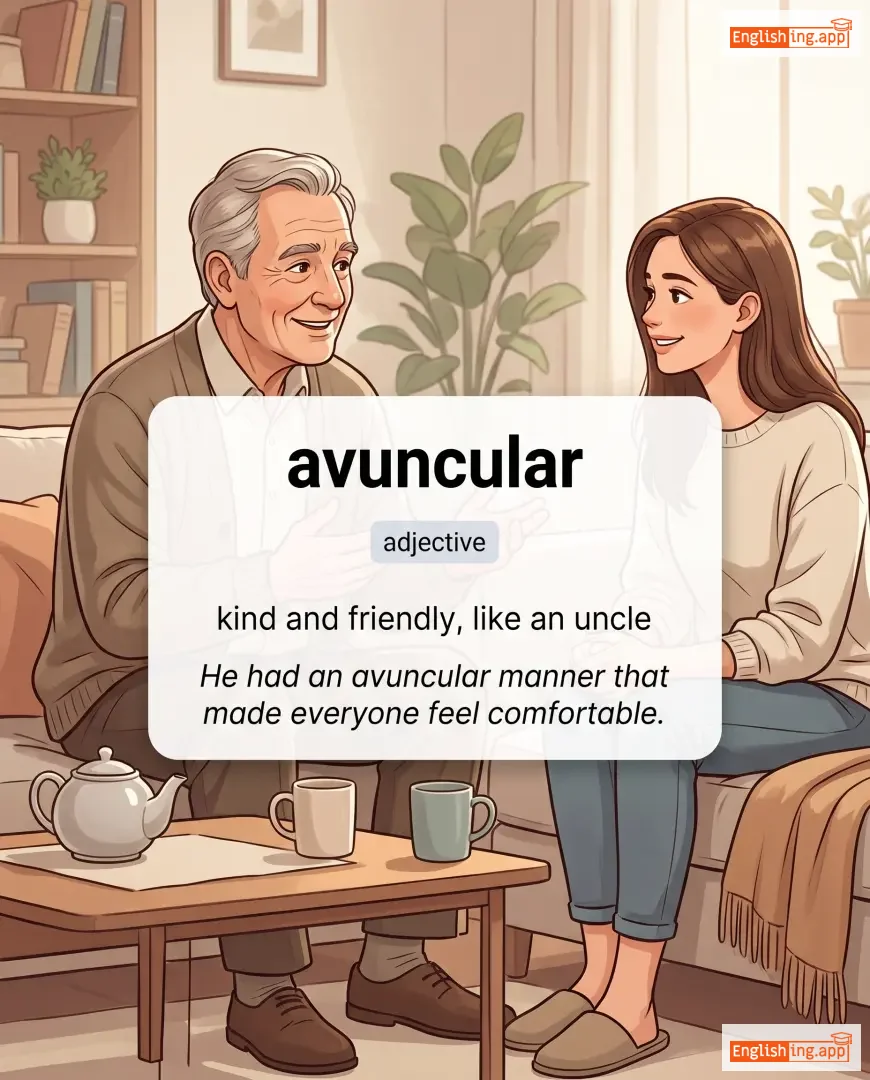
avuncular definition card — visual illustration of the meaning
adjective
/əˈvʌŋkjələr/
おじさんのように親切 (ojisan no you ni shinsetsu)

kind and friendly, like an uncle

"He had an avuncular manner that made everyone feel comfortable."
"彼は、みんなが快適に感じるようなアヴァンクラールな態度を持っていました。" (Kare wa, minna ga kaiteki ni kanjiru you na avunkuraru na taido o motte imashita.)
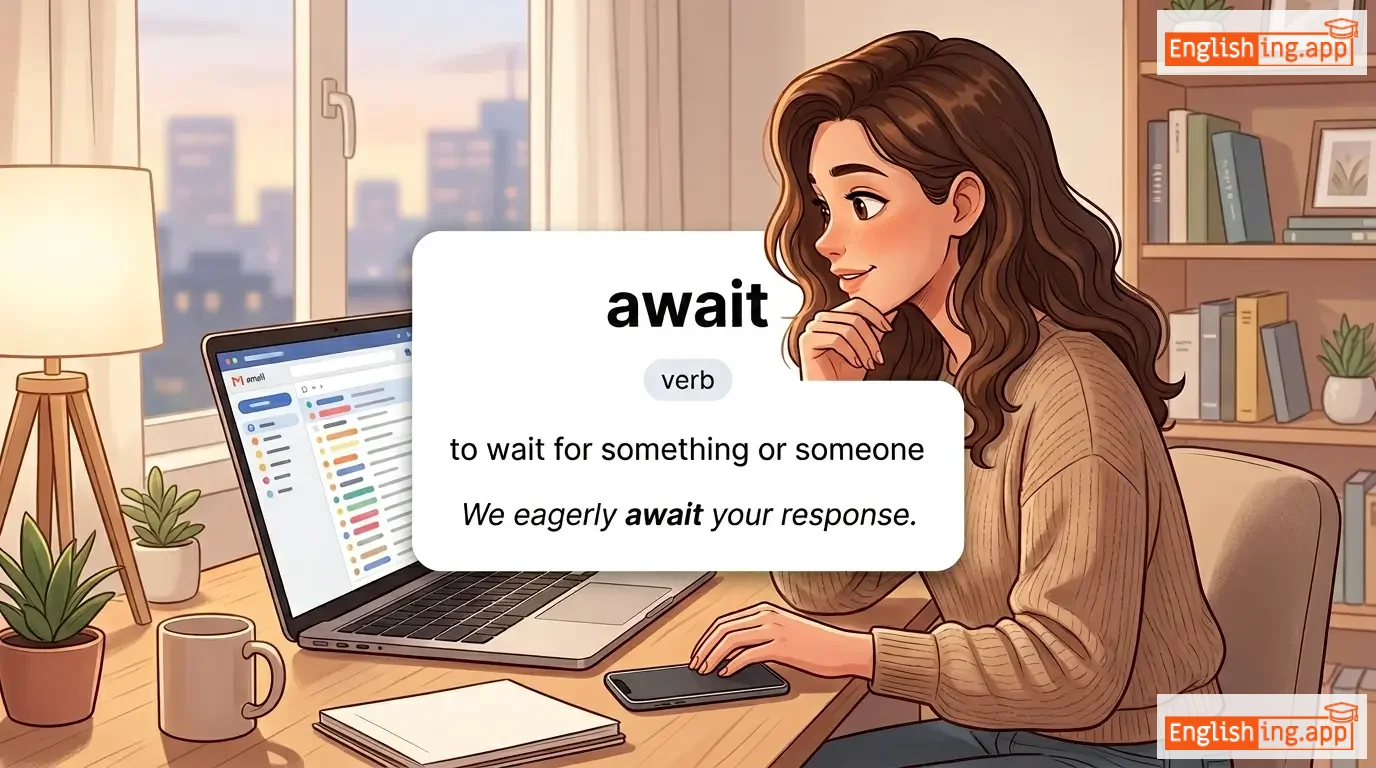
await definition card — visual illustration of the meaning
verb
/əˈweɪt/
待つ (matsu)

to wait for something or someone

"We eagerly await your response."

"私たちはあなたの返答を楽しみに待っています。" (Watashitachi wa anata no hentou o tanoshimi ni matteimasu.)
verb/adjective
/əˈweɪk/
目覚めている (mezameteiru)

to stop sleeping; not asleep

"She was still awake when I got home."

"彼女は帰宅したときもまだ目覚めていた。" (Kanojo wa kitaku shita toki mo mada mezamete ita.)
verb
/əˈweɪkən/
目覚めさせる (mezamesaseru)

to stop sleeping; to cause to become aware

"The loud noise awakened the entire neighborhood."

"大きな音が目覚めさせ、近所全体を起こした。" (Ookina oto ga mezamesase, kinjo zentai wo okoshita.)
noun/verb
/əˈwɔːrd/
(shou)

a prize or recognition given for an achievement; to give a prize or recognition

"She received an award for her outstanding performance."

"彼女は優れたパフォーマンスで賞を受けました。" (Kanojo wa sugureta pafōmansu de shō o ukemashita.)
adjective
/əˈwɛər/
気づいている (kizuite iru)

having knowledge or perception of a situation or fact

"She is aware of the risks involved."

"彼女はそのリスクに気づいている。" (Kanojo wa sono risuku ni kizuite iru.)
noun
/əˈwɛərnəs/

knowledge or perception of a situation, fact, or issue

"Public awareness of climate change is increasing."

adjective
/əˈwɒʃ/
水浸し (mizumashi)

covered or flooded with water or something in large quantities

"The market was awash with cheap imported goods."

"市場は安価な輸入品で水浸しだった。" (Shijō wa anka na yunyūhin de mizumashi datta.)
🏃‍♂️

Away (アウェイ)

adverb
/əˈweɪ/
遠く (tōku)

at a distance from a particular place, person, or thing

"She walked away without saying a word."

"彼女は一言も言わずに歩いて行った。" (Kanojo wa hitokoto mo iwazu ni aruite itta.)