词汇表

英语词汇词典 | 单词含义、定义和示例

preposition
/wɪð/
(yu)

indicating the person or thing that is accompanying or involved with someone or something else

"She went to the market with her friend."

"她和朋友一起去了市场。" (Tā hé péngyǒu yīqǐ qùle shìchǎng.)
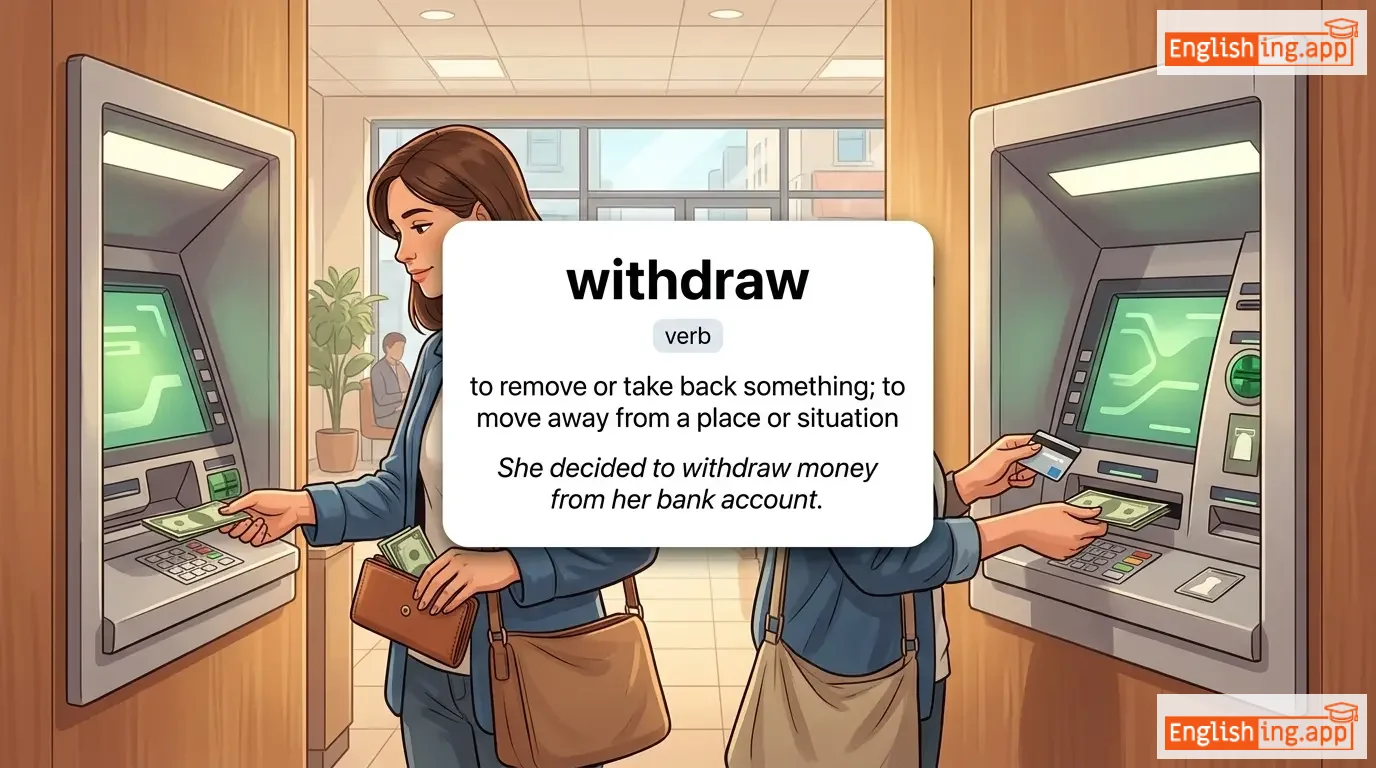
withdraw definition card — visual illustration of the meaning
verb
/wɪðˈdrɔː/

to remove or take back something; to move away from a place or situation

"She decided to withdraw money from her bank account."

noun
/wɪðˈdrɔːəl/
提款 (tí kuǎn)

the act of taking something back or removing oneself from a situation

"He made a withdrawal of $500 from his bank account."

"他从银行账户提取了500美元。" (Tā cóng yínháng zhànghù tíqǔle 500 měiyuán.)
adjective
/wɪðˈdrɔːn/
孤僻 (gūpì)

quiet and shy; not wanting to talk to others

"After the incident, he became withdrawn and avoided his friends."

"事件发生后,他变得孤僻,并避开了他的朋友。" (Shìjiàn fāshēng hòu, tā biàn dé gūpì, bìkāi le tā de péngyǒu.)
verb
/ˈwɪð.ər/
枯萎 (kūwěi)

to dry up and die, typically used for plants

"The flowers will wither without enough water."

"花朵没有足够的水分会枯萎。" (Huāduǒ méiyǒu zúgòu de shuǐfèn huì kūwěi.)
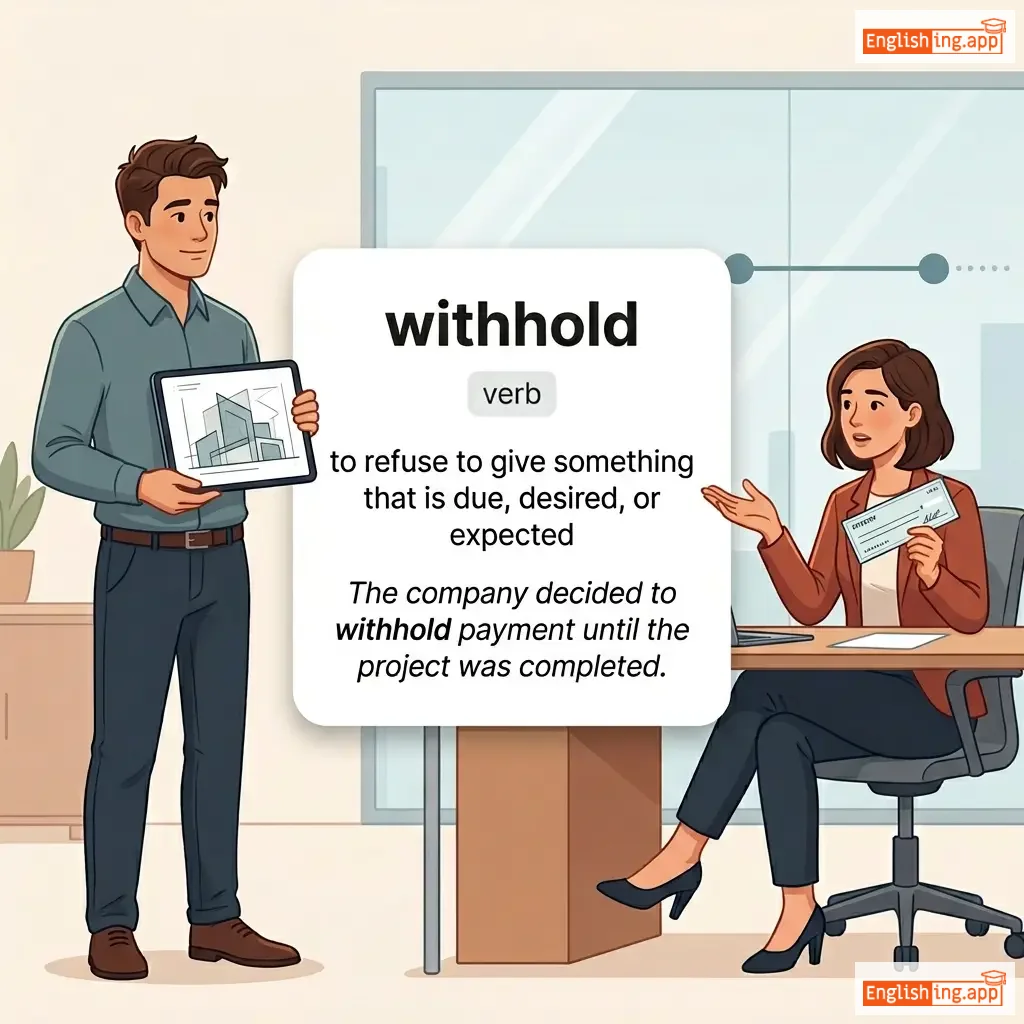
withhold definition card — visual illustration of the meaning
verb
/wɪðˈhoʊld/

to refuse to give something that is due, desired, or expected

"The company decided to withhold payment until the project was completed."

preposition
/wɪðˈɪn/
内部 (neibu)

inside the limits of something, or as part of a particular space or time

"The keys are within the drawer."

"钥匙在抽屉里。" (Yàoshi zài chōutì lǐ.)
preposition
/wɪðˈaʊt/
没有 (méiyǒu)

in the absence of, or not having something

"He left without saying goodbye."

"他离开时没有说再见。" (Tā líkāi shí méiyǒu shuō zàijiàn.)
verb
/wɪðˈstænd/
承受 / 抵抗 (chéngshòu / dǐkàng)

to resist or endure something without being harmed

"This building can withstand strong earthquakes."

"这座建筑能够承受强烈的地震。" (Zhè zuò jiànzhú nénggòu chéngshòu qiángliè de dìzhèn.)
adjective
/ˈwɪtləs/
愚蠢的 (yúchǔn de)

lacking intelligence or good sense

"It was a witless decision to leave the door unlocked."

"把门留 unlocked 是一个愚蠢的决定。" (Bǎ mén liú unlocked shì yīgè yúchǔn de juédìng.)
noun
/ˈwɪtlɪŋ/
傻瓜 / 假装聪明 (shǎguā / jiǎzhuāng cōngmíng)

a person who has little wit or pretends to be witty

"He acted like a witling among scholars."
"他在学者中表现得像个傻瓜。" (Tā zài xuézhě zhōng biǎoxiàn dé xiàng gè shǎguā.)
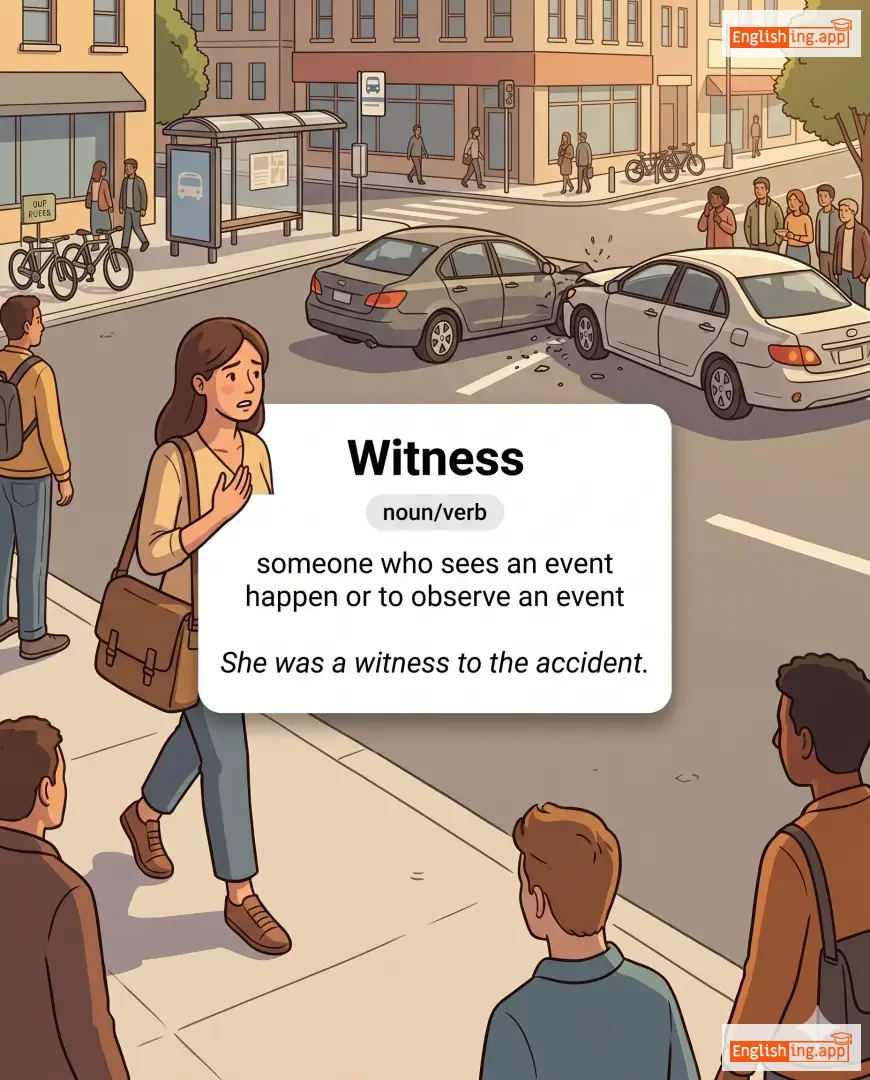
Witness definition card — visual illustration of the meaning
noun/verb
/ˈwɪtnɪs/
见证人 (jianzhengren)

someone who sees an event happen or to observe an event

"She was a witness to the accident."

"她是事故的见证人。" (Tā shì shìgù de jiànzhèngrén.)
noun
/ˈwɪtɪˌsɪzəm/
机智的评论 / 笑话 (jīzhì de pínglùn / xiàohuà)

a clever or funny remark

"Her witticism made everyone laugh during the meeting."

"她的机智评论让所有人都在会议期间笑了。" (Tā de jīzhì pínglùn ràng suǒyǒu rén dōu zài huìyì qījiān xiàole.)
adverb
/ˈwɪtɪŋli/
故意 (gùyì)

Consciously and intentionally; on purpose.

"He wittingly withheld information from the police."

"他故意隐瞒了警方的信息。" (Tā gùyì yǐnmánle jǐngfāng de xìnxī.)
adjective
/ˈwɪt.i/
机智的; 有趣的 (jīzhì de; yǒuqù de)

having or showing quick intelligence; amusing in a clever way

"Her witty response to the critic's question impressed the entire audience."

"她机智的回答让批评者的问题给整个观众留下了深刻的印象。" (Tā jīzhì de huídá ràng pīpíng zhě de wèntí gěi zhěnggè guānzhòng liúxiàle shēnkè de yìnxiàng.)
🧙‍♂️

Wizard (wīzārd)

noun
/ˈwɪzərd/
巫师 (wūshī)

a man who is supposed to have magical powers; a person who is very skilled in a particular area

"The wizard performed amazing magic tricks."

"那位巫师展示了惊人的魔术。" (nà wèi wūshī zhǎnshìle jīngrén de móshù.)
noun
/ˈwɪzərdri/
魔法技艺 (mófǎ jìyì)

The art or practice of magic; great skill or expertise in something.

"The programmer's wizardry amazed everyone in the room."

"程序员的魔法技艺让房间里的每个人都感到惊讶。" (Chéngxùyuán de mófǎ jìyì ràng fángjiān lǐ de měi gè rén dōu gǎndào jīngyà.)
verb
/ˈwɪzn/
枯萎 (kūwěi)

To become dry, shrunken, and wrinkled.

"The flowers began to wizen after days without water."

"花朵在几天没有水后开始枯萎。" (Huāduǒ zài jǐ tiān méiyǒu shuǐ hòu kāishǐ kūwěi.)
adjective
/ˈwɪzn feɪst/
干燥皱巴巴的面孔 (gānzào zhòubābā de miànkǒng)

Having a dry, wrinkled, and withered face.

"A wizen-faced old man sat quietly in the corner."

"一个干燥皱巴巴的面孔的老人静静地坐在角落里。" (Yī ge gānzào zhòubābā de miànkǒng de lǎorén jìngjìng de zuò zài jiǎoluò lǐ.)
adjective
/ˈwɪznd/
皱缩的 (zhòusuō de)

Shriveled, wrinkled, or withered, often due to age.

"The wizened tree stood in the field for centuries."

"那棵皱缩的树在田野中屹立了几个世纪。" (Nà kē zhòusuō de shù zài tiányě zhōng yì lìle jǐ gè shìjì.)
verb
/ˈwɒb.l̩/
摇晃 (yaohuang)

to move unsteadily from side to side; to shake or tremble slightly

"The table began to wobble when he leaned on it."

"当他依靠在桌子上时,桌子开始摇晃。" (Dang ta yikao zai zhuozi shang shi, zhuozi kaishi yaohuang.)
noun
/woʊ/
悲伤 (beishang)

great sorrow, distress, or trouble

"Her heart was filled with woe after hearing the sad news."

"她在听到悲伤的消息后,心中充满了悲伤。" (Ta zai tingdao beishang de xiaoxi hou, xinzhong chongman le beishang.)
adjective
/ˈwoʊ.fəl/
悲惨的 (bēicǎn de)

full of woe; very sad or miserable; also used to mean very bad or deplorable

"He gave me a woeful look when he lost the match."

"当他输掉比赛时,他给了我一个悲惨的眼神。" (Dāng tā shūdiào bǐsài shí, tā gěile wǒ yīgè bēicǎn de yǎnshén.)
noun
/woʊz/
困境 (kùnjìng)

great sorrow or distress; troubles

"The company faced financial woes after the market crash."

"公司在市场崩溃后面临财务困境。" (Gōngsī zài shìchǎng bēngkuì hòu miànlín cáiwù kùnjìng.)
noun
/wʊlf/
(lang)

a wild carnivorous animal related to the dog, living and hunting in packs

"The wolf howled loudly under the full moon."

"狼在满月下大声嚎叫。" (Lang zài mǎnyuè xià dàshēng háo jiào.)
noun
/ˈwɪmən/
女人 (nǚrén)

an adult human female

"The woman at the counter helped me."

"柜台上的女人帮了我。" (Guìtái shàng de nǚrén bāngle wǒ.)
noun
/ˈwʌndər/
奇迹 (qiji)

a feeling of amazement and admiration, caused by something beautiful, remarkable, or unfamiliar

"The view from the mountain was a true wonder."

"从山顶看到的景色真是一个奇迹。" (Cóng shāndǐng kàn dào de jǐngsè zhēnshi yīgè qíjì.)
adjective
/ˈwʌndərfəl/
美妙 (měimiào)

extremely good or impressive

"She had a wonderful time at the party."

"她在派对上度过了一个美妙的时光。" (Tā zài pàiduì shàng dùguòle yīgè měimiào de shíguāng.)
adjective
/ˈwɒŋki/
不稳定的; 不可靠的; 不正常工作 (wongki)

unstable; unreliable; not working properly

"The old chair was wonky and wobbled every time someone sat on it."

"那把旧椅子不稳定,每次有人坐下时都会摇晃。" (Nà bǎ jiù yǐzi bù wěn dìng, měi cì yǒu rén zuò xià shí dōu huì yáo huàng)
adjective
/woʊnt/ or /wɔːnt/
习惯 (xíguàn)

accustomed or used to doing something

"She rose early, as she was wont to do."
"她早早起床,正如她习惯做的那样。" (Tā zǎo zǎo qǐ chuáng, zhèng rú tā xíguàn zuò de nà yàng.)
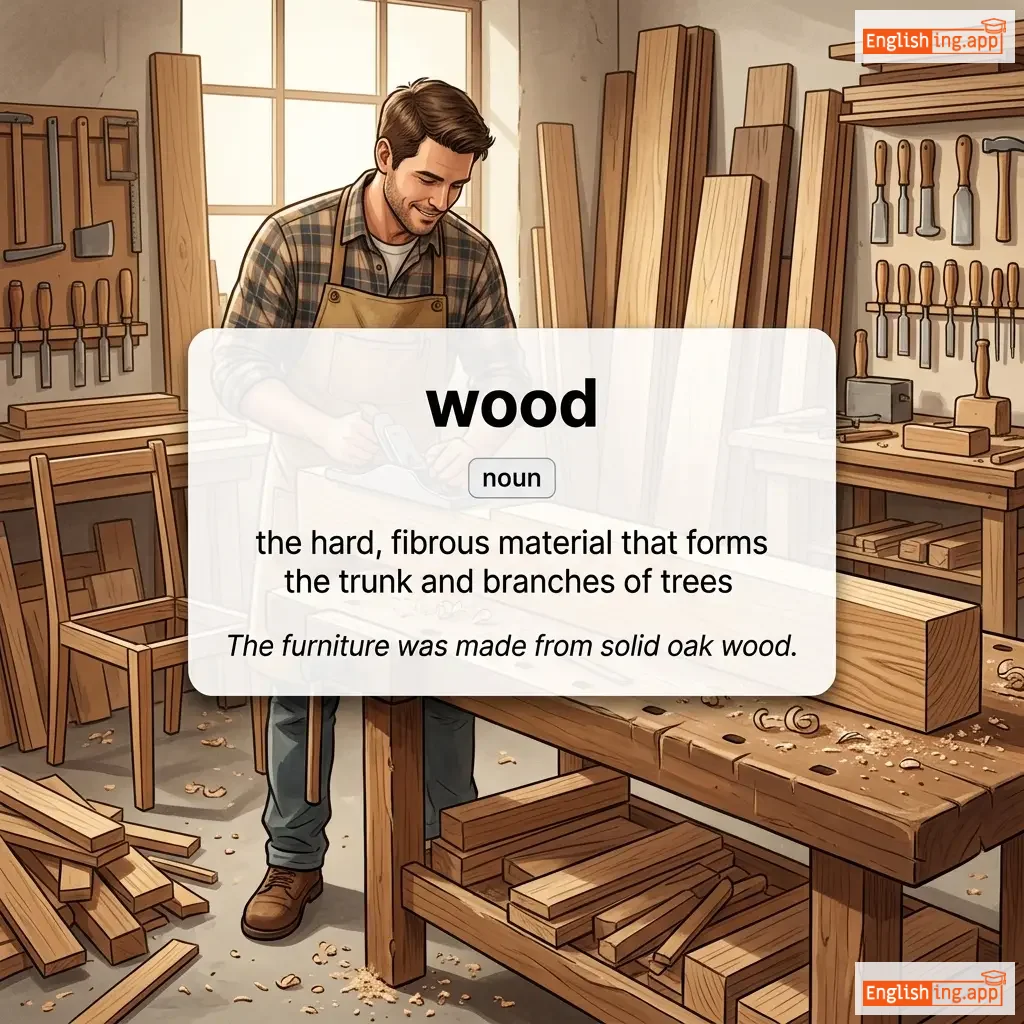
wood definition card — visual illustration of the meaning
noun
/wʊd/
木材 (mucai)

the hard, fibrous material that forms the trunk and branches of trees

"The furniture was made from solid oak wood."

"家具是由坚固的橡木制成的。" (Jiajù shì yóu jiāngù de xiàngmù zhìchéng de.)
noun
/wʊd ˈæp.əl/
木苹果 (mu pingguo)

a hard-shelled tropical fruit with aromatic pulp used in beverages and medicine

"The wood apple has a hard shell but sweet pulp inside."

"木苹果有坚硬的外壳,但里面的果肉很甜" (Mu pingguo you jian ying de wai ke, dan limian de guo rou hen tian)
adjective
/ˈwʊdən/
木制的 (mùzhì de)

made of wood

"The house had beautiful wooden floors."

"这座房子有美丽的木地板。" (Zhè zuò fángzi yǒu měilì de mù dìbǎn.)
noun
/ˈwʊd.ən ˈsæn.dəl/
木制凉鞋 (mùzhì liángxié)

a type of footwear made of wood, typically worn as traditional shoes

"She wore wooden sandals to the traditional ceremony."

"她在传统的仪式上穿着木制凉鞋。" (Tā zài chuántǒng de yíshì shàng chuānzhe mùzhì liángxié.)
noun
/ˈwʊd.pek.ər/
啄木鸟 (zhuómùniǎo)

a bird that pecks at tree bark to find insects and create nesting holes

"The woodpecker hammered against the oak tree."

"啄木鸟敲击橡树。" (Zhuómùniǎo qiāojī xiàngshù)
noun
/ˈwʊlən dres/
羊毛裙子 (yangmao qunzi)

a dress made from wool fabric, typically worn in cold weather

"She wore a warm woolen dress during the winter months."

"她在冬季穿了一件温暖的羊毛裙子。" (Ta zai dongji chuānle yī jiàn wēnnuǎn de yángmáo qúnzi.)
noun
/wɜːrd/
(ci)

a single distinct meaningful element of speech or writing

"He looked up the word in the dictionary."

"他在字典中查找了这个词。" (Ta zai zidian zhong chazhao le zhe ge ci.)
noun
/wɜːrd fɔːrˈmeɪʃən/
构词法 (gouci fa)

the process by which new words are created or existing words are modified in a language

"Word formation helps learners understand how new vocabulary develops in English."
"构词法有助于理解英语词汇。" (gouci fa youzhu yu lijie yingyu cihui)
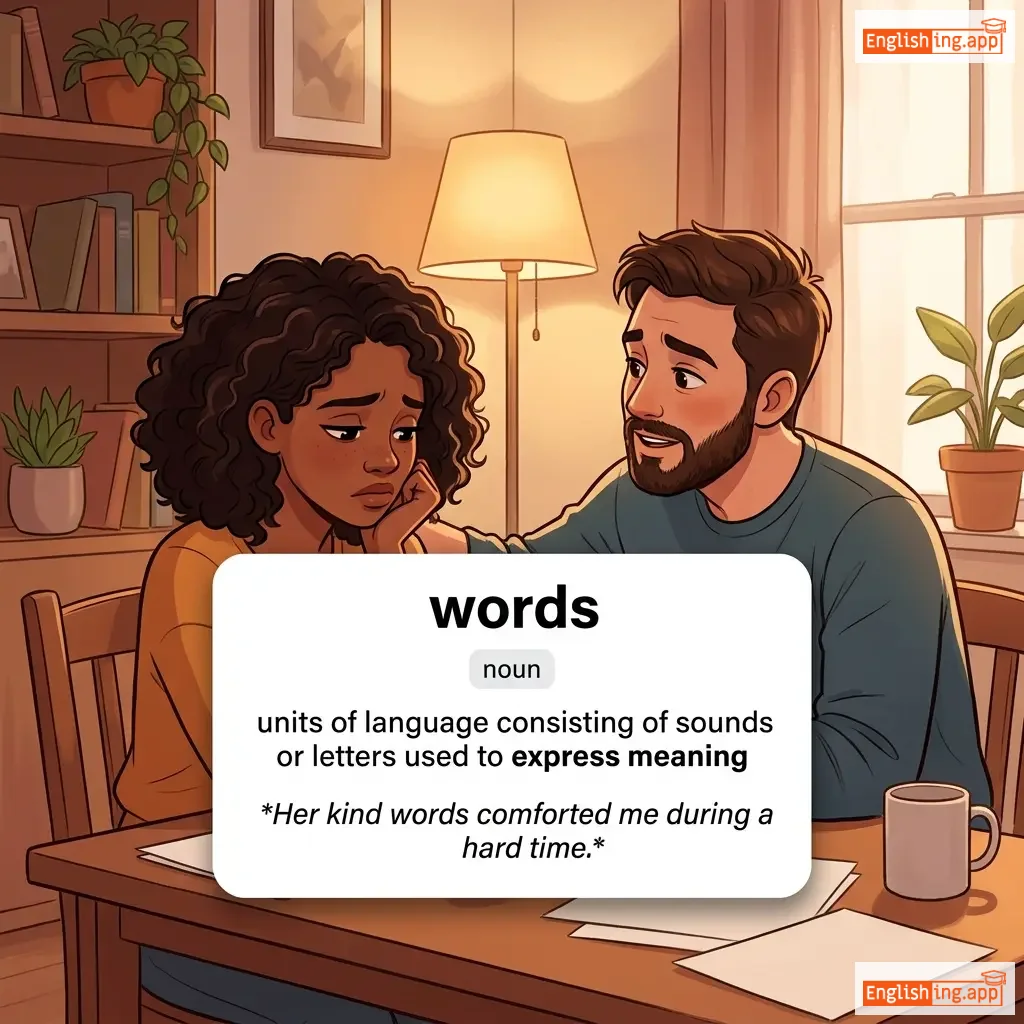
words definition card — visual illustration of the meaning
noun
/wɜːdz/
词语 (ciyu)

units of language consisting of sounds or letters used to express meaning

"Her kind words comforted me during a hard time."
"她温暖的话语在困难时给予了我安慰。" (Ta wenruan de huayu zai kunnan shi jiayu le wo anwei.)
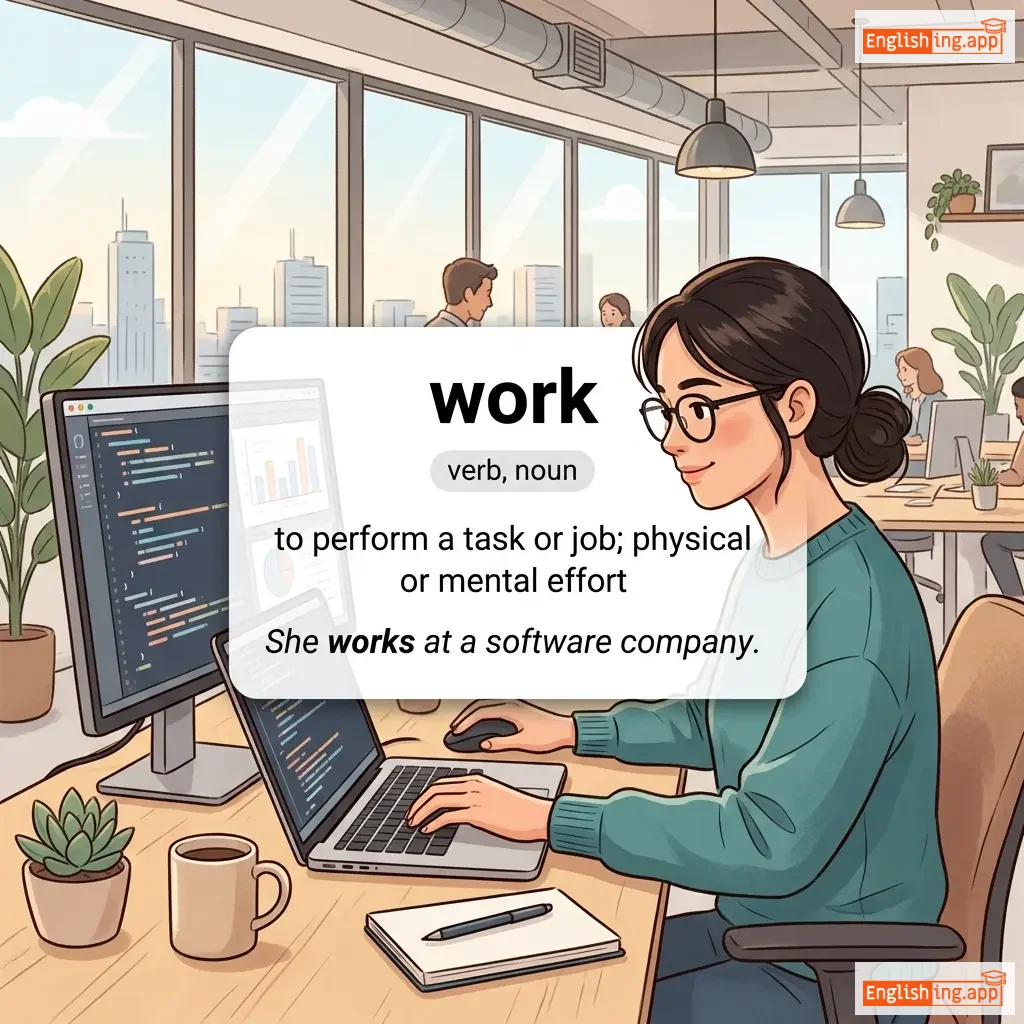
work definition card — visual illustration of the meaning
verb, noun
/wɜːrk/
工作 (gongzuo)

to perform a task or job; physical or mental effort

"She works at a software company."
"她在一家软件公司工作。" (Ta zai yi jia ruanjian gongsi gongzuo.)
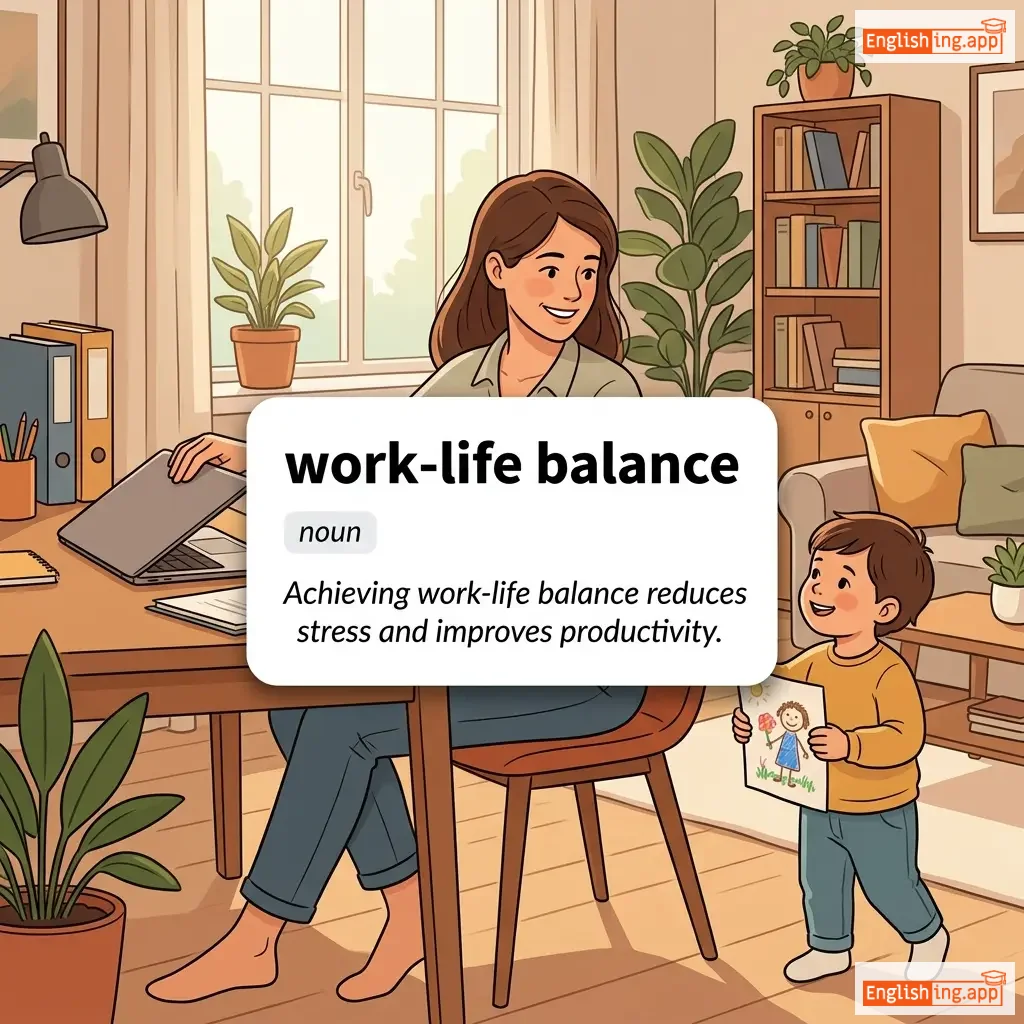
work-life balance definition card — visual illustration of the meaning
noun
/ˈwɜːrk laɪf ˈbæl.əns/
工作与生活平衡 (gongzuo yu shenghuo pingheng)

The equilibrium between personal and professional life, ensuring neither dominates at the expense of the other.

"Achieving work-life balance reduces stress and improves productivity."

"实现工作与生活的平衡可以减轻压力并提高生产力。" (Shixian gongzuo yu shenghuo de pingheng keyi jianqing yali bing tigao shengchanli.)
adjective
/ˈwɜːrkəbəl/
可行的; 实用的 (ke xing de; shi yong de)

capable of being done or put into effect; practical

"We need a workable solution to solve this problem quickly."

"我们需要一个可行的解决方案来迅速解决这个问题。" (Wǒmen xūyào yīgè kěxíng de jiějué fāng'àn lái xùnsù jiějué zhège wèntí.)
noun
/ˈwɜːrkər/
工人 (gongren)

a person who is employed to perform tasks or duties

"The workers were busy building the bridge."

"工人们忙着建造桥梁。" (Gōngrén men mángzhe jiànzào qiáoliáng.)
workflow definition card — visual illustration of the meaning
noun
/ˈwɜːk.fləʊ/
工作流,过程顺序 (gongzuo liu, guocheng shunxu)

The sequence of processes through which a piece of work passes from initiation to completion.

"A well-structured workflow enhances productivity."

"一个结构良好的工作流程可以提高生产力。" (Yī gè jiégòu liánghǎo de gōngzuò liú kěyǐ tígāo shēngchǎnlì.)
noun
/ˈwɜːrkˌfɔːrs/
劳动力 (laodongli)

the people engaged in or available for work

"The company is looking to expand its workforce by 20%."

"公司计划将其劳动力扩大20%。" (Gongsi jihua jiang qi laodongli kuoda 20%.)
adjective
/ˈwɜːrkɪŋ/
工作 (gongzuo)

engaged in physical or mental effort to achieve a goal or task

"She is working on her project right now."

"她正在进行她的项目工作。" (Ta zhengzai jinxing ta de xiangmu gongzuo.)
noun
/ˈwɜːrkɪŋ mæn/
工人 (gongren)

a man engaged in manual labor or industrial work, often considered as part of the working class

"The working-man fought hard for better wages and conditions."

"工人为了更好的工资和工作条件而努力奋斗。" (Gongren weile geng hao de gongzi he gongzuo tiaojian er nuli fendou.)
workload definition card — visual illustration of the meaning
noun
ˈwɜːrkˌləʊd
工作量 (gongzuoliang)

The amount of work to be done by someone or something.

"His workload has increased dramatically in the past month."

"他的工作量在上个月急剧增加。" (Tā de gōngzuò liàng zài shàng gè yuè jíjù zēngjiā.)
adjective
/ˈwɜːkmənˌlaɪk/
务实 (wùshí)

Showing efficient, competent, and practical skill, but without flair or creativity.

"The carpenter delivered a workmanlike performance on the project."
"木匠在项目中交付了一个务实的表现。" (Mùjiàng zài xiàngmù zhōng jiāofùle yīgè wùshí de biǎoxiàn.)
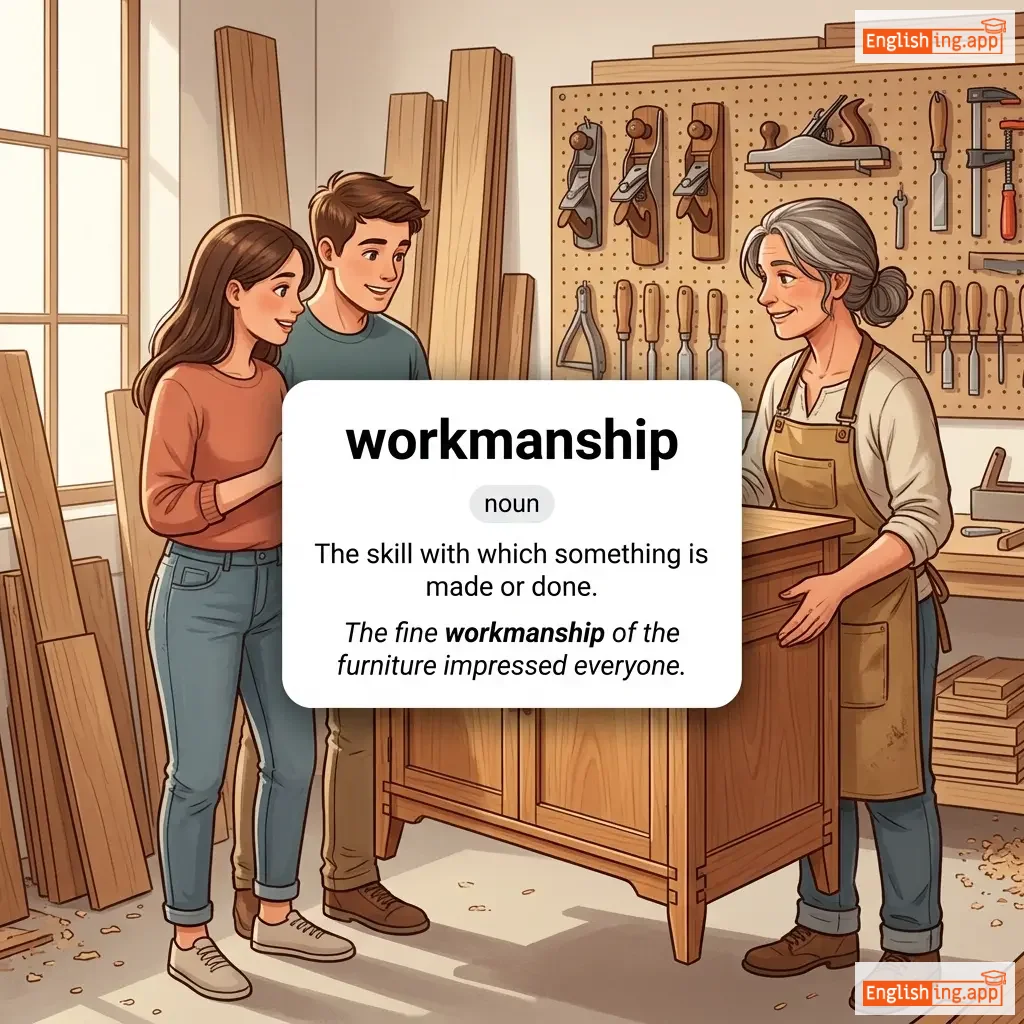
workmanship definition card — visual illustration of the meaning
noun
/ˈwɜːkmənˌʃɪp/
工艺 (gōngyì)

The skill with which something is made or done.

"The fine workmanship of the furniture impressed everyone."

"家具的精湛工艺给每个人留下了深刻印象。" (Jiājù de jīngzhàn gōngyì gěi měi gè rén liú xià le shēnkè yìnxiàng.)