词汇表

英语词汇词典 | 单词含义、定义和示例

👩‍❤️‍👨

wife (wǎifū)

noun
/waɪf/
妻子 (qīzi)

a woman who is married to someone

"She is the wife of the famous author."

"她是著名作家的妻子。" (Tā shì zhùmíng zuòjiā de qīzi.)
verb
/ˈwɪɡəl/
摇动, 扭动 (yaodong, niudong)

To move or cause to move with small rapid movements from side to side.

"The baby wiggled happily in her mother's arms."

"宝宝在妈妈的怀里高兴地扭动。" (Bǎobǎo zài māmā de huílǐ gāoxìng de niǔdòng.)
adjective
/waɪld/
野生 (yesheng)

living or growing in the natural environment; uncontrolled or untamed

"The children ran wild in the park."

"孩子们在公园里肆意奔跑。" (Haizimen zai gongyuan li siyi benpao.)
noun
/waɪld bɔːr/
野猪 (ye zhu)

a wild pig that lives in forests and has long curved teeth

"The wild boar ran through the forest quickly."

"野猪快速地穿过森林。" (ye zhu kuaisu de chuan guo senlin)
noun
/ˈwɪldənəs/
荒野 (huangye)

an area of land that has not been changed by people and is still in its natural state

"They camped in the wilderness far from the city."

"他们在远离城市的荒野中露营。" (Tāmen zài yuǎn lí chéngshì de huāngyě zhōng lùyíng.)
noun
/ˈwaɪldˌlaɪf/
野生动物 (ye sheng dong wu)

animals, birds, and plants living in their natural environment

"The park is home to a wide variety of wildlife."
"这个公园是各种野生动物的家园。" (Zhege gongyuan shi ge zhong ye sheng dong wu de jia yuan.)
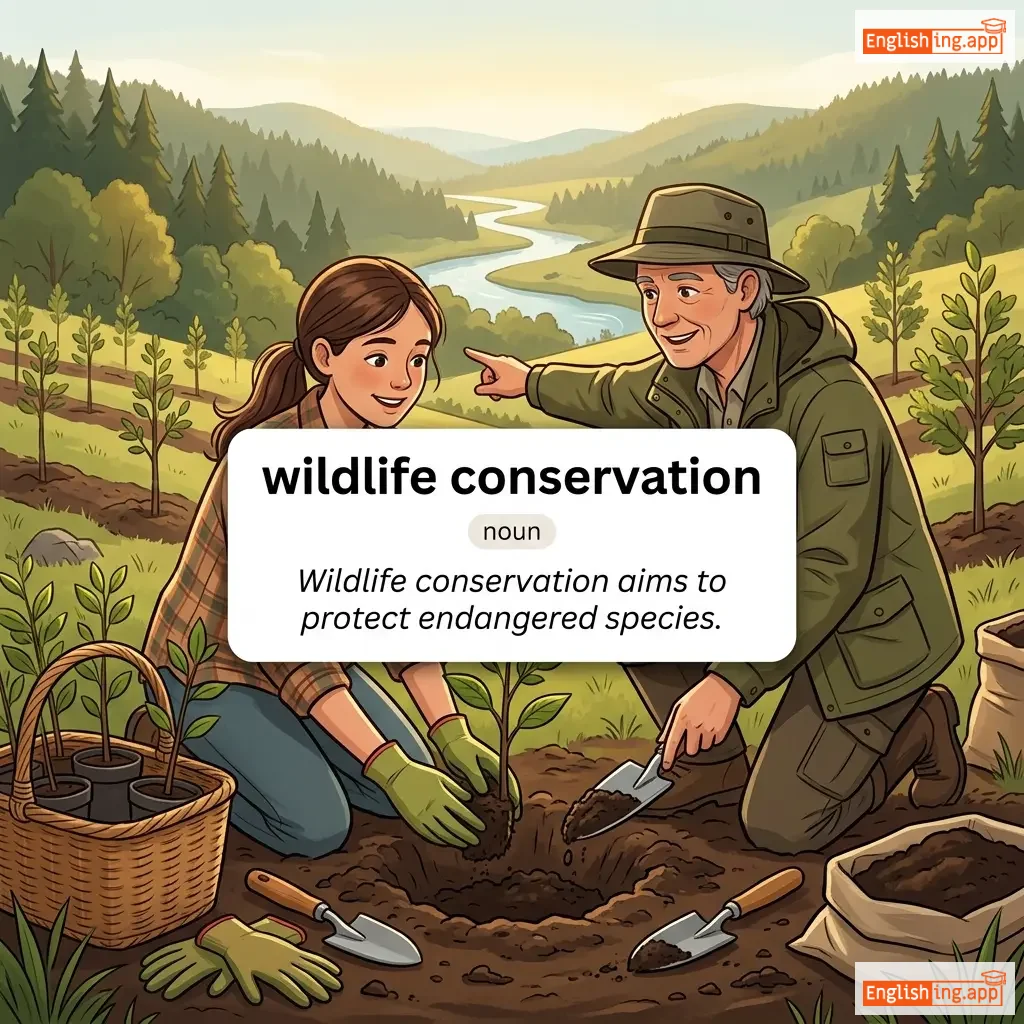
wildlife conservation definition card — visual illustration of the meaning
noun
/ˈwaɪld.laɪf ˌkɒnsərˈveɪʃən/
野生动物保护 (yěshēng dòngwù bǎohù)

The practice of protecting wild animal species and their habitats in order to maintain healthy wildlife species or populations and to restore, protect or enhance natural ecosystems.

"Wildlife conservation aims to protect endangered species."
"野生动物保护旨在保护濒危物种。" (Yěshēng dòngwù bǎohù zhǐ zài bǎohù bīnwēi wùzhǒng.)
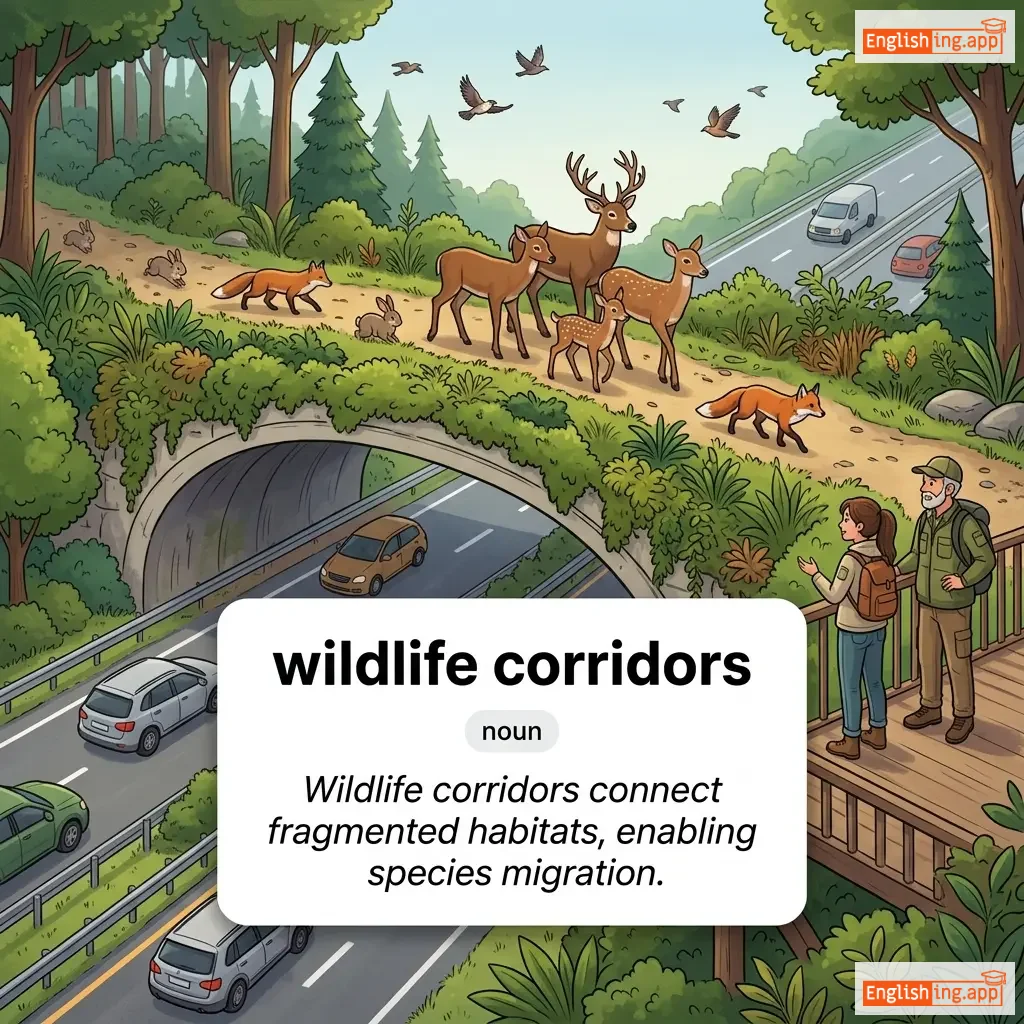
wildlife corridors definition card — visual illustration of the meaning
noun
ˈwaɪldlaɪf ˈkɔːrɪdɔːrz
野生动物走廊 (yěshēng dòngwù zǒuláng)

Areas of habitat connecting wildlife populations separated by human activities or structures.

"Wildlife corridors connect fragmented habitats, enabling species migration."

"野生动物走廊连接破碎的栖息地,促进物种迁徙。" (Yěshēng dòngwù zǒuláng liánjiē pòsuì de qīxī dì, cùjìn wùzhǒng qiānxǐ.)
noun
/waɪl/
狡猾, 欺骗 (jiaohua, qipian)

A trick or clever scheme meant to deceive or outwit someone.

"He used every wile to win her trust."

"他用了所有的狡猾来赢得她的信任。" (Ta yongle suoyou de jiaohua lai yingde ta de xinren.)
adjective
/ˈwɪl.fəl/
固执的; 故意的 (guzhi de; guyi de)

deliberately stubborn; done on purpose; intentional

"His wilful disobedience led to punishment."

"他的故意不服从导致了惩罚。" (Tā de gùyì bù fúcóng dǎozhìle chéngfá.)
noun, verb
/wɪl/
意愿 (yiyuan)

expressing future tense or intention; a legal document

"She will attend the meeting tomorrow."

"她明天将参加会议。" (Ta mingtian jiang canjia huiyi.)
adjective
/ˈwɪlfəl/
任性 (rènxìng)

Deliberate, intentional, or stubbornly determined to do as one wants.

"Her willful disregard for the rules got her into trouble."

"她任性地忽视规则让她陷入了麻烦。" (Tā rènxìng de hūshì guīzé ràng tā xiànrùle máfan.)
adjective
/ˈwɪlɪŋ/
愿意 (yuànyì)

ready, inclined, or eager to do something

"She was willing to help with the project."

"她愿意帮助这个项目。" (tā yuànyì bāngzhù zhège xiàngmù.)
adverb
/ˈwɪl.ɪŋ.li/
自愿地 (zìyuàn de)

in a willing manner; voluntarily; with free will

"She willingly helped her neighbors during the emergency."

"她在紧急情况下自愿帮助了她的邻居。" (tā zài jǐnjí qíngkuàng xià zìyuàn bāngzhù le tā de línjū)
noun
/ˈwɪlɪŋnəs/
意愿 (yiyuan)

the quality of being prepared or ready to do something

"Her willingness to help others made her very popular."

"她愿意帮助他人的态度使她变得非常受欢迎。" (Ta yuanyi bangzhu taren de taidu shi ta biande feichang shou huanying.)
adjective
/ˈwɪloʊi/
优雅、苗条且柔韧,如同柳树 (youyao, miaotiao qie rouren, ru tong liushu)

Gracefully tall, slender, and flexible, like a willow tree.

"She moved with a willowy elegance across the stage."
"她在舞台上优雅地移动,像柳树一样。" (ta zai wutai shang youyao de yidong, xiang liushu yiyang)
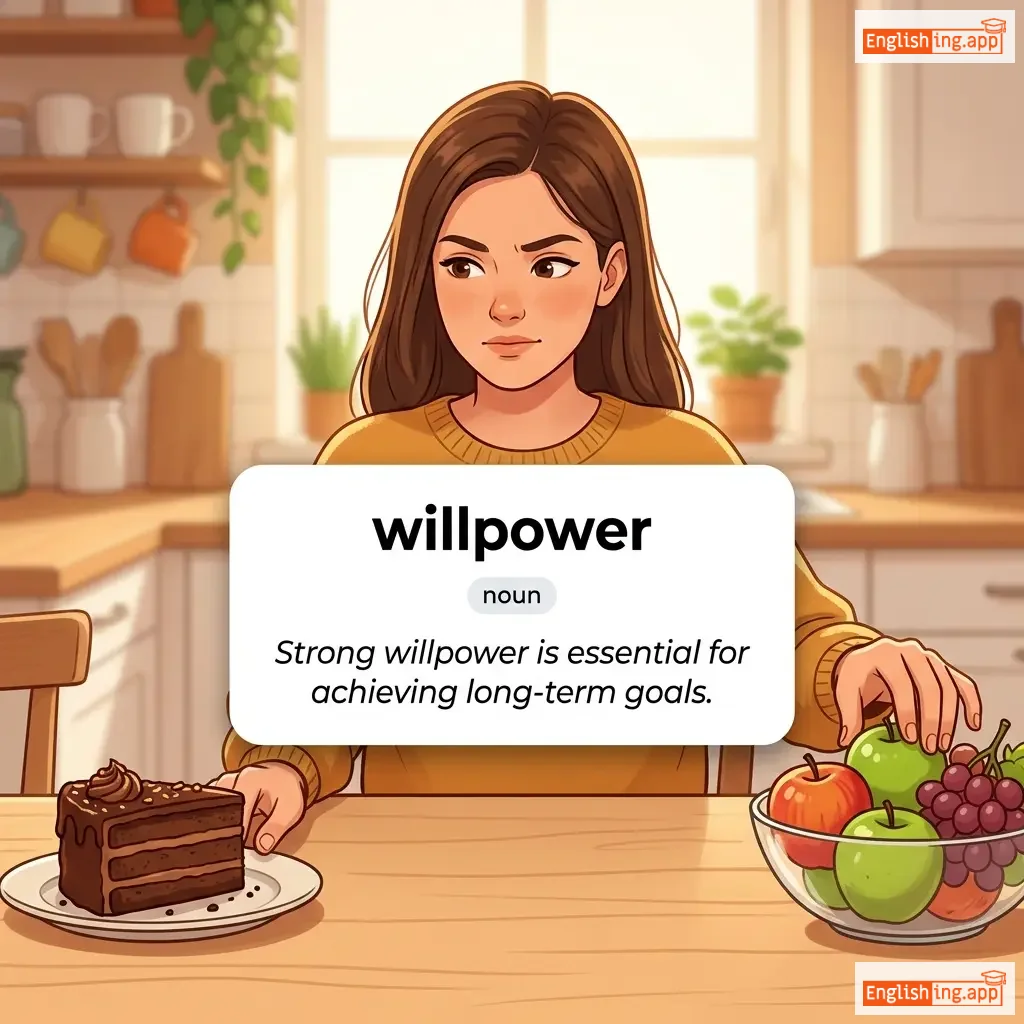
willpower definition card — visual illustration of the meaning
noun
ˈwɪl.paʊər
意志力 (yìzhìlì)

The ability to control your thoughts and actions in order to achieve what you want to do.

"Strong willpower is essential for achieving long-term goals."

"强大的意志力对实现长期目标至关重要。" (Qiángdà de yìzhìlì duì shíxiàn chángqī mùbiāo zhìguān zhòngyào.)
verb
/wɪlt/
枯萎 (kūwěi)

To become limp, weak, or drooping, often due to lack of water or energy.

"The flowers wilted in the heat of the sun."

"花朵在太阳的炙热下枯萎。" (Huāduǒ zài tàiyáng de zhìrè xià kūwěi.)
adjective
/ˈwaɪli/
狡猾 (jiǎo huá)

Skilled at gaining an advantage, especially by being clever or deceitful.

"The wily fox outsmarted the hunters."

"狡猾的狐狸智胜猎人。" (Jiǎo huá de húli zhì shèng liè rén.)
win definition card — visual illustration of the meaning
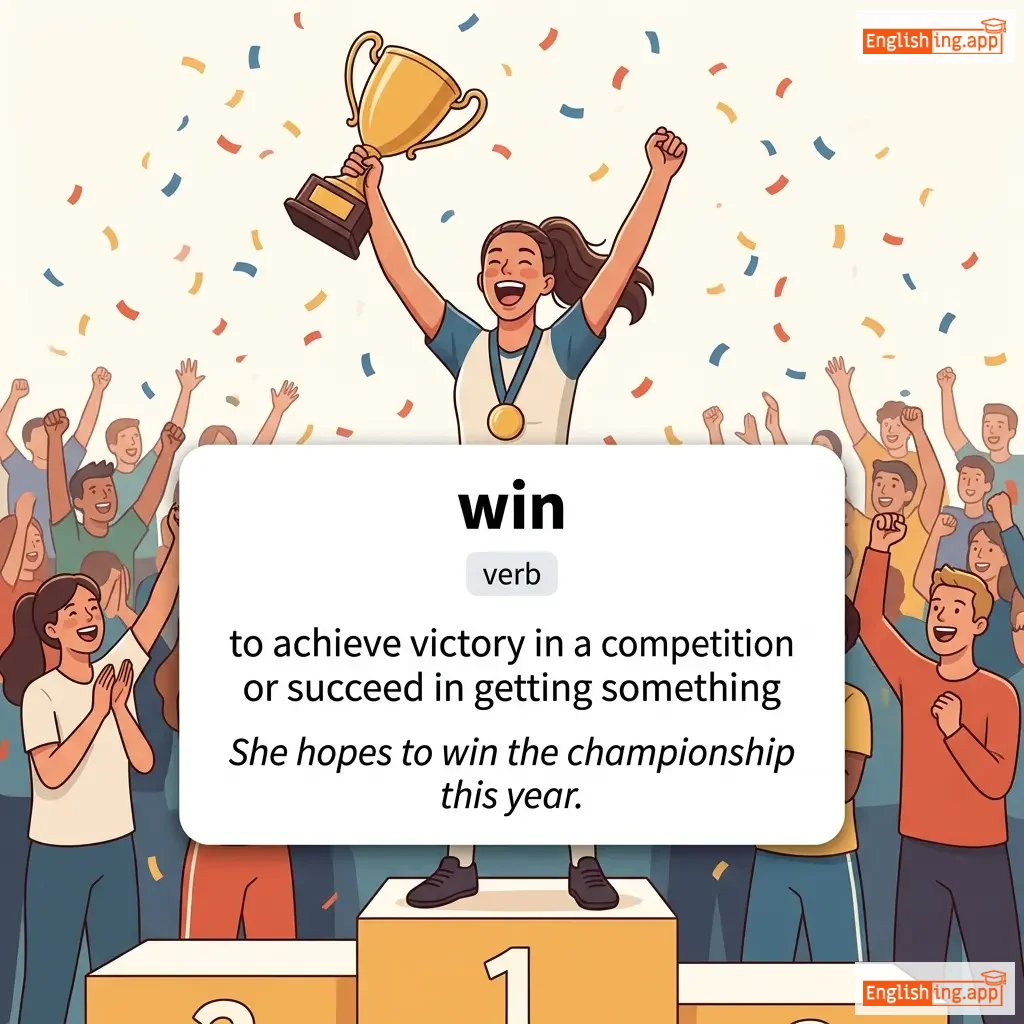
🏆

win

verb
/wɪn/

to achieve victory in a competition or succeed in getting something

"She hopes to win the championship this year."

😣

wince

verb
/wɪns/

To make an involuntary movement of the face or body as a result of pain or distress.

"He winced when the doctor touched his injured arm."

noun
/wɪnd/
(feng)

moving air, especially in the form of a current of air blowing from a particular direction

"The wind is blowing strong today."
"今天风很大。" (Jīntiān fēng hěn dà.)
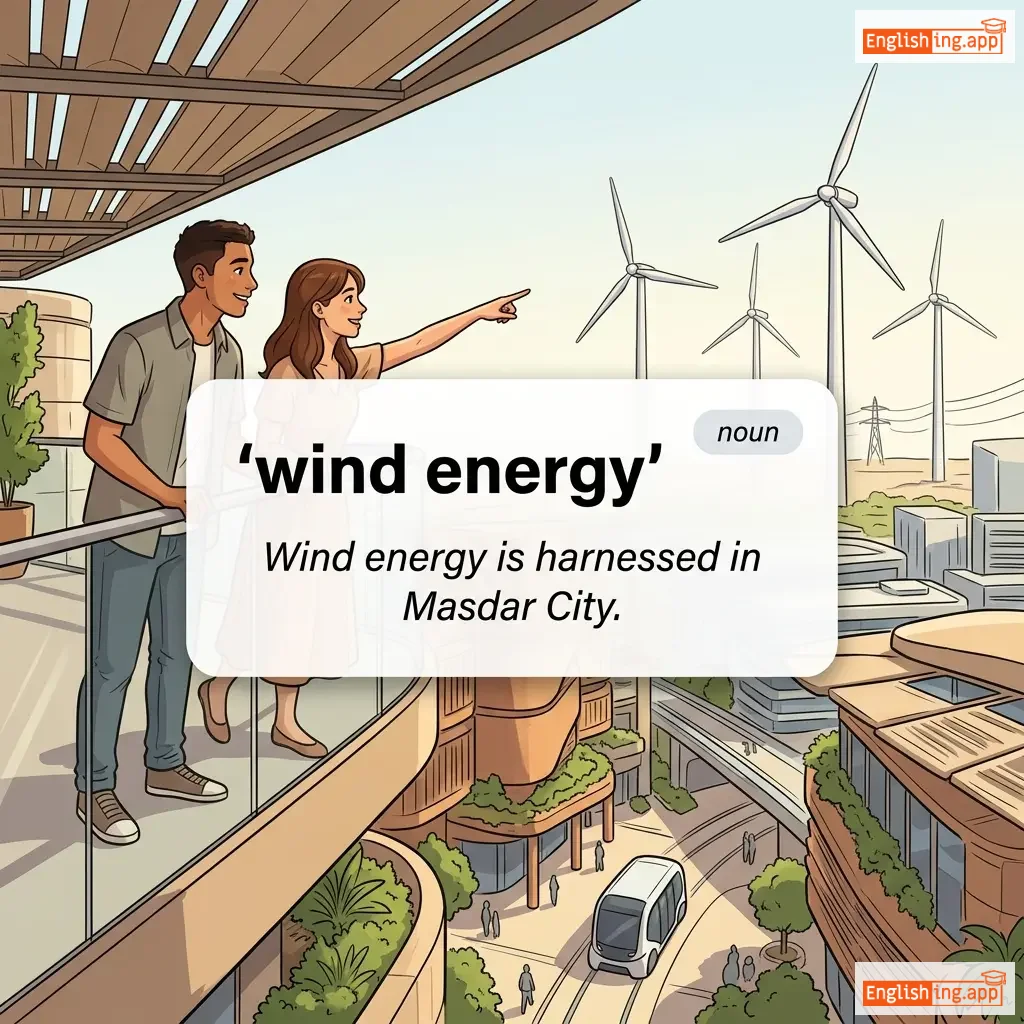
wind energy definition card — visual illustration of the meaning
noun
wɪnd ˈen.ə.dʒi
风能 (feng neng)

Energy generated from wind using wind turbines to convert kinetic energy into electrical power.

"Wind energy is harnessed in Masdar City."

"风能在马斯达尔市得到利用。" (Feng neng zai Masdar shi dedao liyong.)
noun
/ˈwɪndbæɡ/
话多的人 (huà duō de rén)

a person who talks too much, especially in a boring or boastful way

"Everyone avoided the windbag at the party because he never let anyone else speak."

"大家在聚会上避免接近那个话多的人,因为他从不让别人说话。" (dà jiā zài jù huì shàng bì miǎn jiē jìn nà ge huà duō de rén, yīn wèi tā cóng bù ràng bié rén shuō huà.)
noun
/ˈwɪndfɔːl/
意外收获 (yiwai shouhuo)

an unexpected piece of good fortune, typically a large amount of money

"The startup received a windfall when a major client paid for a full year in advance."

"初创公司因一个重要客户提前支付了一整年的费用,获得了意外收获。" (Chuchuang gongsi yin yi ge zhongyao kehu tiqian zhifule yi zheng nian de feiyong, huodele yiwai shouhuo.)
noun
/ˈwɪndəʊ/
窗户 (chuanghu)

an opening in a wall or structure that allows light or air to pass through, usually covered with glass or other material

"I opened the window to let the fresh air in."

"我打开了窗户,让新鲜空气进来。" (Wo dakaile chuanghu, rang xinxian kongqi jinlai.)
adjective
/ˈwɪndi/
有风的 (you feng de)

characterized by strong wind; also, using too many words and saying little

"It was so windy that the umbrellas flipped inside out."

"风太大了,伞都被吹翻了。" (feng tai da le san dou bei chui fan le)
noun
/waɪn/
(jiu)

an alcoholic drink made from fermented grapes or other fruits

"They served a glass of red wine at the dinner."

"他们在晚餐时提供了一杯红酒。" (Tāmen zài wǎncān shí tígōngle yī bēi hóngjiǔ.)
noun
/ˈwaɪnəri/
酿酒厂 (niàngjiǔchǎng)

a place where wine is made

"They visited a famous winery in France."
"他们参观了法国的一家著名酒厂。" (Tāmen cānguānle Fǎguó de yījiā zhùmíng jiǔchǎng.)
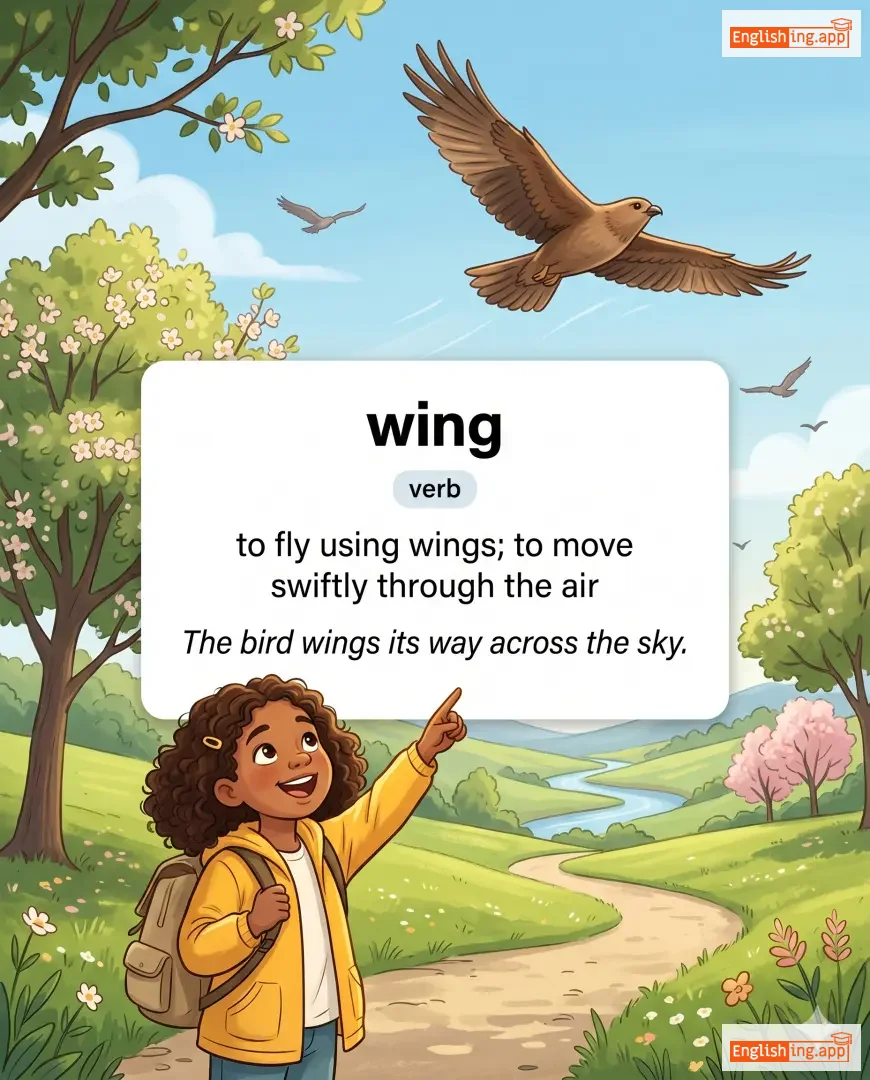
wing definition card — visual illustration of the meaning
noun
/wɪŋ/
翅膀 (chìbǎng)

a part of a bird or aircraft that is used for flying

"The bird flapped its wings and flew away."

"鸟展开翅膀飞走了。" (Niǎo zhǎn kāi chìbǎng fēi zǒu le.)
noun
/ˈwɪŋˌspæn/
翼展 (yizhan)

the distance from the tip of one wing to the tip of the other wing

"The eagle has an impressive wingspan of over two meters."

"老鹰的翼展超过两米。" (Laoying de yizhan chao guo liang mi.)
noun
/ˈwɪnər/
赢家 (yíngjiā)

a person who wins a competition or contest

"She was the winner of the race."

"她是比赛的赢家。" (Tā shì bǐsài de yíngjiā.)
adjective; noun; gerund
/ˈwɪnɪŋ/
获胜的 (huosheng de)

achieving victory or success; attractive or pleasing in a way that brings success

"She has a winning attitude that inspires the whole team."

"她有一种获胜的态度,激励着整个团队。" (Ta you yizhong huosheng de taidu jili zhe zhengge tuandui)
verb
/ˈwɪn.oʊ/
筛选;将谷物与稻草分离 (shaixuan; jiang guwu yu daocao fenli)

to remove the less desirable parts from a group; originally, to separate grain from chaff by blowing air

"The committee will winnow the list of applicants to ten finalists."

"委员会将把申请者名单减少到十个决赛选手。" (Wei yuan hui jiang ba shenqingzhe mingdan jianshao dao shige jue sai xuan shou.)
adjective
/ˈwɪnsəm/
迷人 (mírén)

pleasant and attractive in a fresh, innocent, or charming way

"Her winsome smile instantly put the nervous guests at ease."

"她迷人的微笑立即让紧张的客人感到放松。" (Tā mírén de wéixiào lìjí ràng jǐnzhāng de kèrén gǎndào fàngsōng.)
noun
/ˈwɪntər/
冬天 (dongtian)

the coldest season of the year, typically from December to February in the Northern Hemisphere

"Winter in the north can be very harsh with heavy snowfall."

"北方的冬天可能非常严酷,伴随着大量降雪。" (Beifang de dongtian keneng feichang yanku, bansuizhe daliang jiangxue.)
adjective
/ˈwɪntri/
冬季的 (dōngjì de)

Characteristic of or suitable for winter; cold and bleak.

"The wintry wind made everyone shiver as they walked outside."
"冬季的风让所有人在外面走路时颤抖。" (Dōngjì de fēng ràng suǒyǒu rén zài wàimiàn zǒulù shí chàn dǒu.)
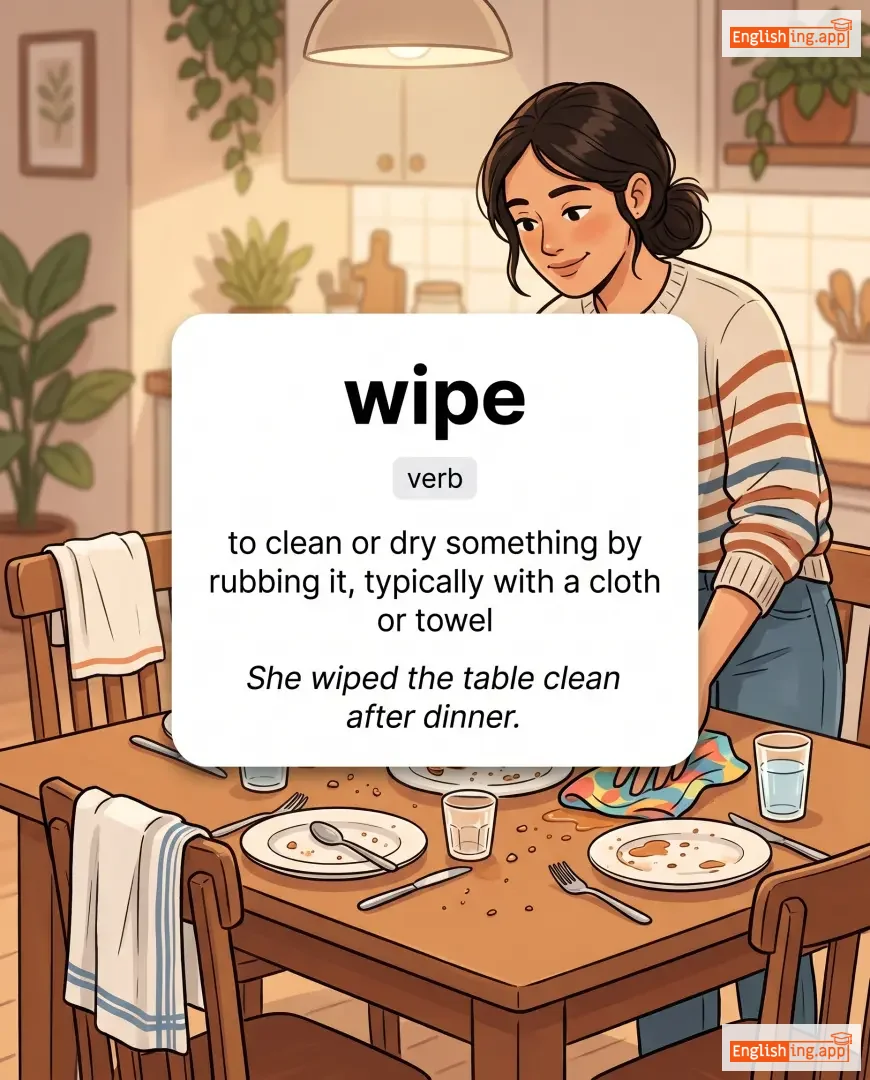
wipe definition card — visual illustration of the meaning
verb
/waɪp/
擦拭 (ca shi)

to clean or dry something by rubbing it, typically with a cloth or towel

"She wiped the table clean after dinner."

"她在晚餐后擦了桌子。" (Ta zai wancan hou ca le zhuozi.)
noun
/ˈwaɪər/
电线 (dianxian)

a thin, flexible thread of metal used to conduct electricity or connect things

"The electrician fixed the wire to restore the power."

"电工修理了电线以恢复电力。" (Diàngōng xiūlǐle diànxiàn yǐ huīfù diànlì.)
adjective
/ˈwaɪə.ləs/
无线; 无电缆 (wúxiàn; wú diànlǎn)

operating without wires; using radio waves for communication

"My wireless headphones provide excellent sound quality without any cables."

"我的无线耳机提供了出色的音质,完全没有电缆。" (wǒ de wúxiàn ěrjī tígōngle chūsè de yīnzhì, wánquán méiyǒu diànlǎn.)
adjective
/ˈwaɪəri/
瘦弱而强壮 (shòu ruò ér qiáng zhuàng)

Lean, tough, and strong, often with sinewy muscles.

"The wiry athlete moved with remarkable speed and agility."

"那个瘦弱的运动员以惊人的速度和敏捷性移动。" (Nàgè shòu ruò de yùn dòng yuán yǐ jīng rén de sù dù hé mǐn jié xìng yí dòng.)
noun
/ˈwɪzdəm/
智慧 (zhihui)

the ability to make sound judgments and decisions based on knowledge and experience

"His wisdom in solving complex problems was admired by everyone."

"他在解决复杂问题上的智慧受到了所有人的赞赏。" (Ta zai jiejue fuza wenti shang de zhihui shoudaole suoyouren de zan chang.)
adjective
/waɪz/
聪明 (congming)

having or showing experience, knowledge, and good judgment

"It was wise of him to save money for the future."

"他为未来存钱是明智的。" (Tā wèi wèilái cún qián shì míngzhì de.)
wish definition card — visual illustration of the meaning
verb
/wɪʃ/
许愿 (xǔ yuàn)

to desire something or hope for something to happen

"I wish you all the best in your new job."

"我祝你在新工作中一切顺利。" (Wǒ zhù nǐ zài xīn gōngzuò zhōng yīqiè shùnlì.)
noun
/wɪsp/
一小束或一片 (yi xiao shu huo yi pian)

A small thin or twisted bunch, piece, or amount of something.

"A wisp of smoke rose from the chimney."

"一缕烟雾从烟囱升起。" (Yi lü yanwu cong yancong shengqi.)
adjective
/ˈwɪspi/
细薄而脆弱 (xì bó ér cuì ruò)

Thin, delicate, and weak in appearance or form.

"Her wispy hair blew gently in the breeze."
"她那细薄的头发在微风中轻轻飘动。" (Tā nà xì bó de tóufǎ zài wēifēng zhōng qīngqīng piāodòng.)
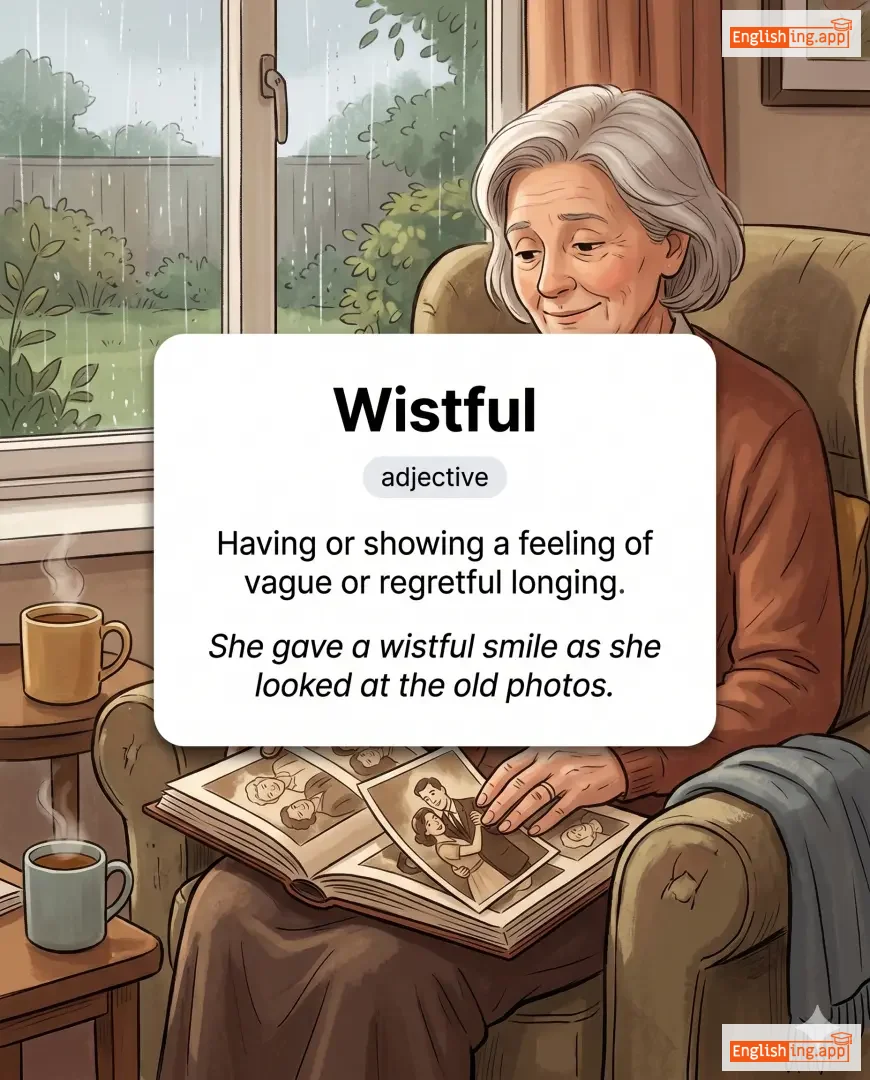
Wistful definition card — visual illustration of the meaning
adjective
/ˈwɪstfəl/
伤感的 (shānggǎn de)

Having or showing a feeling of vague or regretful longing.

"She gave a wistful smile as she looked at the old photos."

"她看着旧照片时,露出了一个伤感的微笑。" (Tā kànzhe jiù zhàopiàn shí, lùchūle yīgè shānggǎn de wéixiào.)
noun
/wɪt/
机智 (jizhi)

the ability to use words and ideas in a quick and inventive way to create humor

"Her sharp wit made everyone laugh at the party."

"她的机智让每个人在聚会上都笑了。" (ta de jizhi rang meige ren zai juhui shang dou xiao le.)
🧙‍♀️

Witch (witch)

noun
/wɪtʃ/
女巫 (nǚwū)

a woman thought to have magic powers, especially evil ones; a practitioner of witchcraft

"The old witch cast a spell on the prince."

"老女巫对王子施了个魔法。" (Lǎo nǚwū duì wángzǐ shīle gè mófǎ.)
🧙‍♀️

witchcraft (巫术)

noun
/ˈwɪtʃ.krɑːft/
巫术 (wushù)

the practice of magical skills, spells, and abilities

"In old times, many people believed in witchcraft."

"在古代,许多人相信巫术。" (Zài gǔdài, xǔduō rén xiāngxìn wūshù.)