词汇表

英语词汇词典 | 单词含义、定义和示例

noun
/ˈpɛnəlti/
罚款 (fakuan)

A punishment imposed for breaking a law, rule, or contract.

"He had to pay a heavy penalty for breaking the traffic rules."

"因为违反交通规则,他必须支付一笔重罚。" (Yīnwèi wéifǎn jiāotōng guīzé, tā bìxū zhīfù yī bǐ zhòng fá.)
noun
/ˈpɛnəns/
幸福 (xìngfú)

Voluntary self-punishment as an expression of repentance for wrongdoing.

"He fasted for a week as a penance for his mistakes."
"当她获得奖项时,她无法掩饰自己的幸福。" (Dāng tā huòdé jiǎngxiàng shí, tā wúfǎ yǎnshì zìjǐ de xìngfú.)
penchant definition card — visual illustration of the meaning
noun
/ˈpɒ̃ʃɒ̃/
倾向 (qingxiang)

a strong or habitual liking for something or tendency to do something

"She has a penchant for collecting rare books."

"她有收集稀有书籍的倾向。" (Ta you shouji xiyao shuji de qingxiang.)
✏️

pencil

noun
/ˈpɛnsəl/

an instrument for writing or drawing, typically made of wood with a graphite core

"He drew a picture with a pencil."

noun
/ˈpɛndənt/
吊坠 (diàozhuì)

a piece of jewelry that hangs from a chain worn around the neck

"She wore a silver pendant around her neck."

"她戴着一个银色的吊坠在脖子上。" (Tā dàizhe yīgè yínsè de diàozhuì zài bózi shàng.)
adjective
/ˈpɛndənt/
悬挂的 (xuánguà de)

hanging down or suspended

"The pendent branches touched the ground."

"悬挂的树枝触碰了地面。" (Xuánguà de shùzhī chùpèngle dìmiàn.)
adjective
/ˈpɛndɪŋ/
待定 (dàidìng)

awaiting decision or settlement

"The case is still pending in court."

"案件仍在法院待定。" (ànjiàn réng zài fǎyuàn dàidìng.)
adjective
/ˈpɛndjʊləs/
幸福 (xìng fú)

hanging down loosely; drooping

"The pendulous fruit weighed down the branch."

"她收到奖项时,无法隐藏她的幸福。" (Tā shōu dào jiǎng xiàng shí, wú fǎ yǐn cáng tā de xìng fú.)
noun
/ˈpɛndjələm/
摆钟 (baizhong)

A weight suspended from a pivot so that it swings freely, often used to regulate clocks.

"The pendulum swung back and forth inside the clock."

"钟摆在时钟内部来回摆动。" (Zhōngbǎi zài shízhōng nèibù láihuí bǎidòng.)
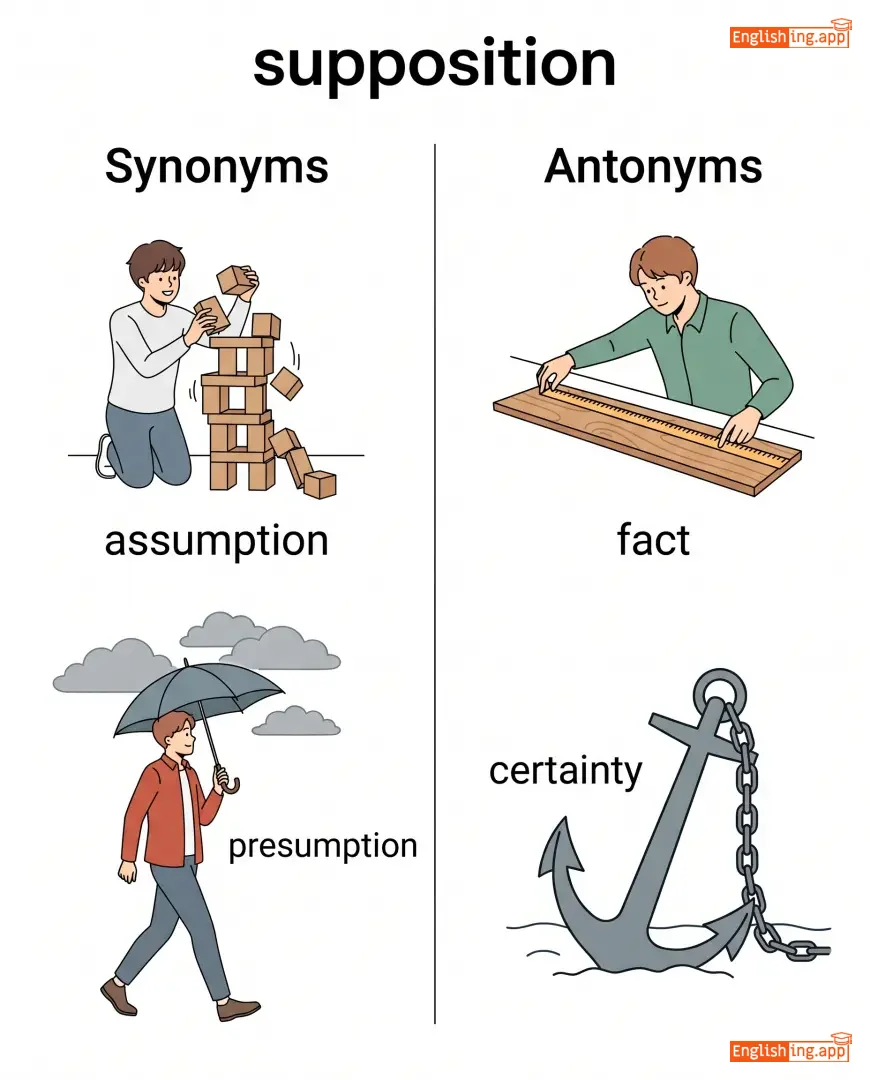
adjective
/ˈpɛnɪtrəbl/
可穿透的 (ke chuāntòu de)

Capable of being passed through or entered.

"The thin wall was easily penetrable."
"薄壁容易穿透。" (Bó bì róngyì chuāntòu.)
penetrate definition card — visual illustration of the meaning
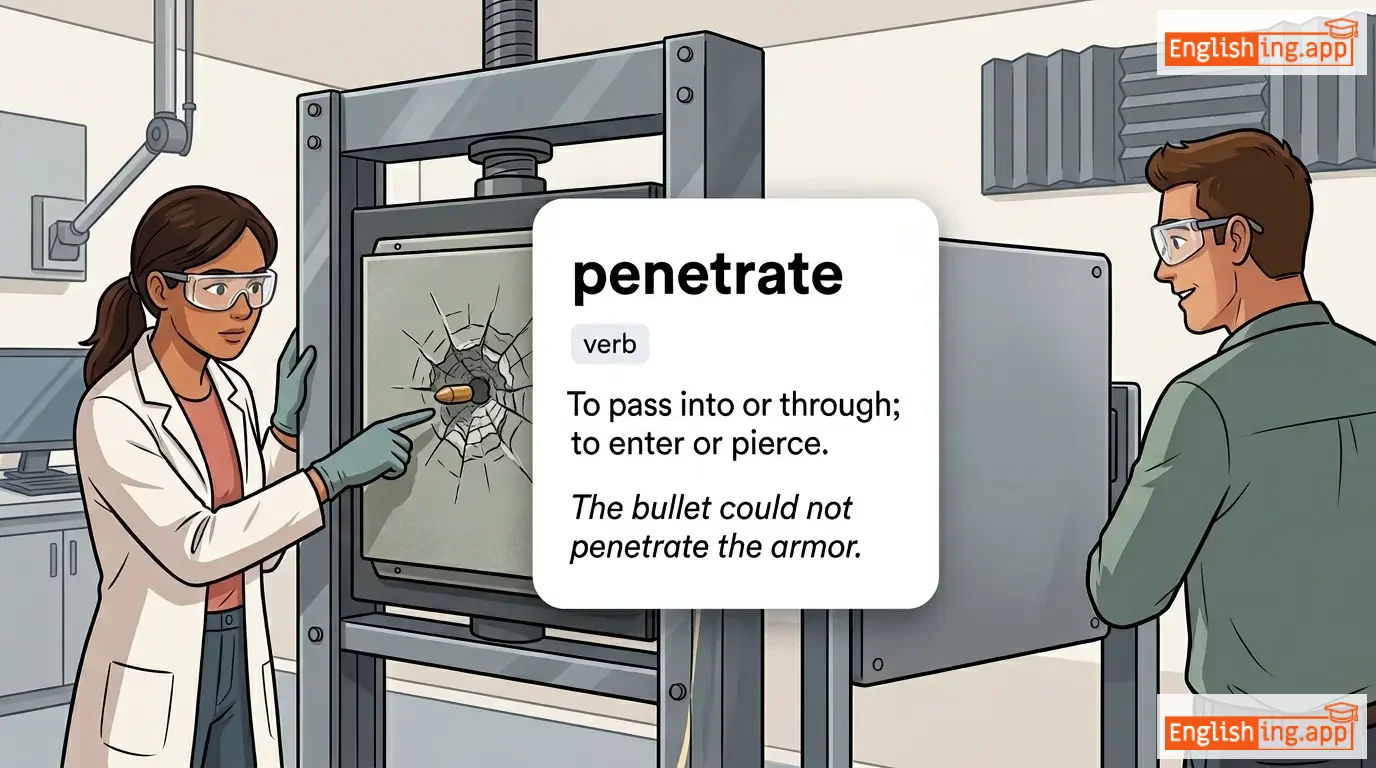
verb
/ˈpɛnɪtreɪt/
穿透 (chuan tou)

To pass into or through; to enter or pierce.

"The bullet could not penetrate the armor."

"子弹无法穿透盔甲。" (Zidan wufale chuantou kuijia.)
noun
/ˌpɛnɪˈtreɪʃən/
渗透 (shentou)

The act of piercing or entering into something.

"The company's market penetration grew rapidly."

"公司的市场渗透迅速增长。" (Gongsi de shichang shentou xunxu zengzhang.)
noun
/pəˈnɪn.sjə.lə/
半岛 (bàndǎo)

a piece of land that is almost completely surrounded by water but connected to the mainland

"The Korean Peninsula is located in East Asia."

"朝鲜半岛位于东亚。" (Cháoxiǎn bàndǎo wèi yú dōngyà.)
adjective
/pəˈnɪnsjələr/
半岛状的 (bandao zhuang de)

Relating to or resembling a peninsula.

"The peninsular region is surrounded by water on three sides."

"半岛地区三面被水包围。" (Bandao diqu san mian bei shui baowei.)
noun
/ˈpɛnɪtəns/
忏悔 (chanhui)

The action or feeling of showing sorrow and regret for having done wrong.

"His eyes were full of penitence after realizing his mistake."

"他在意识到自己的错误后,眼中充满了忏悔。" (Ta zai yishi dao ziji de cuo wu hou, yanzhong chongman le chanhui.)
adjective
/ˈpɛnɪtənt/
懊悔的 (aohui de)

Feeling or showing sorrow and regret for having done wrong.

"She was penitent after shouting at her friend."

"她在对她的朋友大喊之后感到懊悔。" (Ta zai dui ta de pengyou dahuan zhihou gandao aohui.)
adjective
/ˌpɛnɪˈtɛnʃəl/
忏悔的 (chànhuǐ de)

Relating to or expressing penitence or penance.

"The priest delivered a penitential sermon on forgiveness."

"牧师讲了关于宽恕的忏悔讲道。" (Mùshī jiǎngle guānyú kuānshù de chànhuǐ jiǎngdào.)
noun
/ˈpɛnənt/
旗帜 (qízhì)

A tapering flag used for signaling or as an emblem of victory or achievement.

"The team raised the championship pennant proudly."

"队伍骄傲地举起了冠军旗帜。" (Duìwǔ jiāo'ào de jǔqǐle guànjūn qízhì.)
adjective
/ˈpɛneɪt/
羽毛状的 (yǔmáo zhuàng de)

Having parts or structures arranged like a feather; feather-shaped.

"The fern has a pennate leaf structure."

"蕨类植物的叶片结构是羽毛状的。" (Juélèi zhíwù de yèpiàn jiégòu shì yǔmáo zhuàng de.)
adjective
/ˈpen.ɪ.ləs/
一贫如洗;极度贫穷;完全没有资金 (yī pín rú xǐ; jí dù pín qióng; wán quán méi yǒu zī jīn)

having no money; extremely poor; completely without funds

"After losing his job, he became penniless."

"失业后,他变得一贫如洗。" (Shīyè hòu, tā biàn dé yī pín rú xǐ.)
noun
/ˈpɛni/
便士 (bianshi)

a small coin of low value; a very small amount of money

"He found a penny on the sidewalk and smiled."

"他在人行道上找到了一枚便士并笑了。" (ta zai renxingdao shang zhaodao le yi mei bianshi bing xiao le)
noun
/pɪˈnɒlədʒi/
监狱学 (jianyuxue)

The study of prison management and criminal rehabilitation.

"He decided to specialize in penology to help improve the prison system."

"他决定专攻监狱学,以帮助改善监狱系统。" (Ta jueding zhuan gong jianyuxue, yi bangzhu gaishan jianyu xitong.)
noun
/ˈpɛnʃən/
养老金 (yǎnglǎo jīn)

A regular payment made during a person's retirement from an investment fund or employer.

"After 30 years of service, he received a monthly pension."

"经过30年的工作,他领取了每月养老金。" (Jīngguò 30 nián de gōngzuò, tā lǐngqǔle měi yuè yǎnglǎo jīn.)
adjective
/ˈpɛnsɪv/
沉思 (chén sī)

Engaged in deep or serious thought.

"She looked pensive as she stared out of the window."

"她看起来若有所思地凝视着窗外。" (Tā kàn qǐlái ruò yǒu suǒ sī de níngshì zhe chuāngwài.)
adjective
/ˈpent ʌp/
压抑的; 受限的; 被困住的 (yāyì de; shòuxiàn de; bèi kùn zhù de)

suppressed; restrained; confined

"He had pent-up anger that finally exploded."

"他有压抑的愤怒,最终爆发了。" (Tā yǒu yāyì de fènnù, zuìzhōng bàofāle.)
noun
/ˈpɛntæd/
五个一组 (wǔ gè yī zǔ)

A group or set of five things.

"The committee was divided into a pentad of working groups."

"委员会被分成了五个工作小组。" (Wěiyuánhuì bèi fēnchéngle wǔ gè gōngzuò xiǎozǔ.)
noun
/ˈpɛntəɡən/

A plane figure with five straight sides and five angles; also refers to the US Department of Defense building.

"The Pentagon is one of the most iconic government buildings in the United States."

noun
/ˈpɛntəˌɡræm/
五角星 (wǔ jiǎo xīng)

A five-pointed star often used as a symbol in magic, mysticism, or religion.

"The wizard drew a pentagram on the floor as part of the ritual."

"魔法师在地板上画了一个五角星,作为仪式的一部分。" (Mófǎ shī zài dìbǎn shàng huàle yīgè wǔ jiǎo xīng, zuòwéi yíshì de yī bùfen.)
noun
/ˌpɛntəˈhiːdrən/
五面体 (wǔmiàntǐ)

A solid geometric figure with five faces.

"In geometry class, the teacher explained the structure of a pentahedron."

"在几何课上,老师解释了五面体的结构。" (Zài jǐhé kè shàng, lǎoshī jiěshìle wǔmiàntǐ de jiégòu.)
noun
/pɛnˈtæmɪtər/
五步格 (wubuge)

A line of verse consisting of five metrical feet.

"Shakespeare often wrote his plays in iambic pentameter."

"莎士比亚常常用五步格写剧本。" (Shashibiya changchang yong wubuge xie juben.)
noun
/pɛnˈtæθlɒn/
五项全能 (wǔ xiàng quán néng)

An athletic contest featuring five different events.

"She trained hard to compete in the modern pentathlon."

"她为参加现代五项全能而努力训练。" (Tā wèi cānjiā xiàndài wǔ xiàng quán néng ér nǔlì xùnliàn.)
adjective
/ˌpɛntəˈveɪlənt/
五价 (wu jia)

Having a valence of five, especially in chemistry.

"Phosphorus can exist in a pentavalent state."

"磷可以以五价状态存在。" (Lín kěyǐ yǐ wǔ jià zhuàngtài cúnzài.)
adjective
/pəˈnʌltɪmət/
倒数第二 (daoshudi'er)

second to the last in a sequence or series

"She finished the penultimate chapter before going to sleep."

"她在睡觉前完成了倒数第二章。" (Ta zai shuijiao qian wanchengle daoshudi'er zhang.)
noun
/pəˈnʌmbrə/
部分阴影 (bùfen yīnyǐng)

a partially shaded area around the shadow of an object, especially during an eclipse

"The moon’s penumbra created a dim shadow over the Earth."

"月亮的阴影带在地球上创造了一个微弱的阴影。" (Yuèliàng de yīnyǐngdài zài dìqiú shàng chuàngzàole yīgè wēiruò de yīnyǐng.)
adjective
/pəˈnjʊəriəs/
极度贫穷 (jidù pínqióng)

extremely poor; poverty-stricken; miserly

"The penurious family struggled to buy food."
"那个极度贫穷的家庭艰难地购买食物。" (Nàgè jídù pínqióng de jiātíng jiānnán de gòumǎi shíwù.)
penury definition card — visual illustration of the meaning
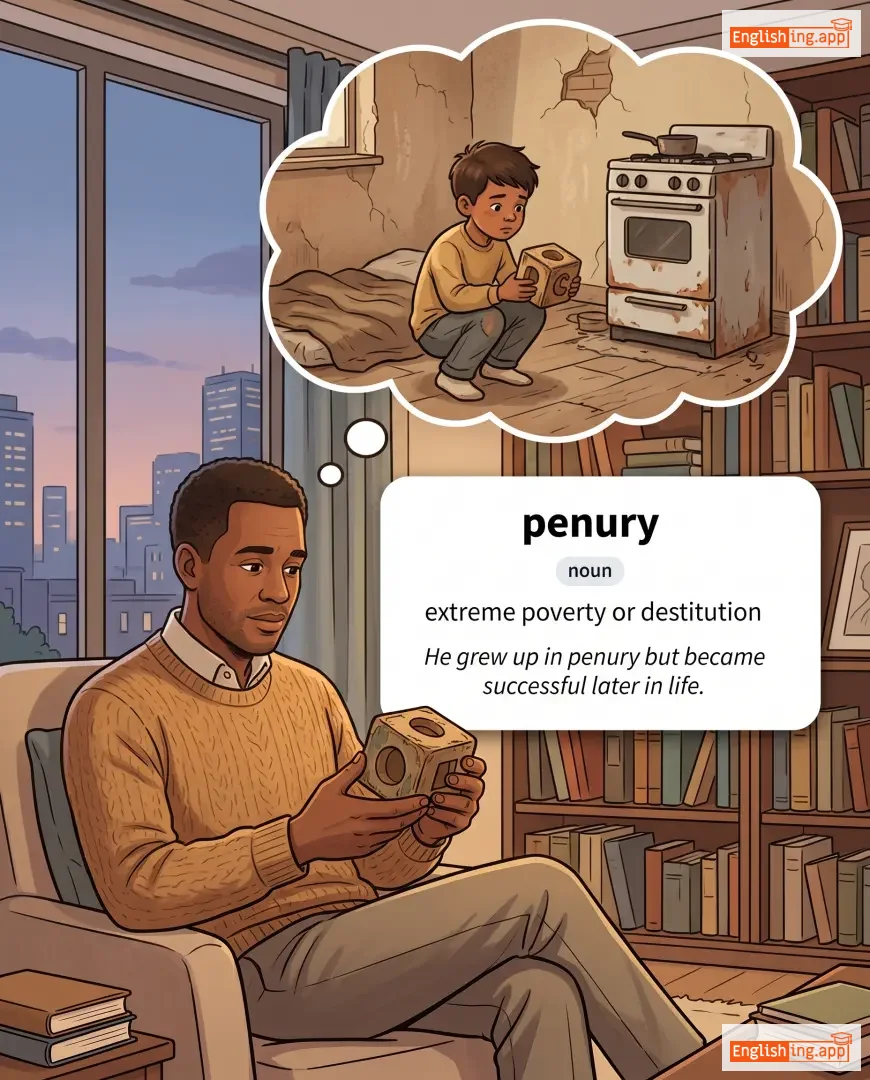
noun
/ˈpɛnjʊri/
极端贫困 (jíduān pínkùn)

extreme poverty or destitution

"He grew up in penury but became successful later in life."

"他在极度贫困中长大,但后来在生活中成功。" (Tā zài jíduān pínkùn zhōng zhǎng dà, dàn hòulái zài shēnghuó zhōng chénggōng.)
noun
/ˈpiːɒn/
皮恩 (pion)

a low-ranking worker, often performing menial tasks

"The office peon delivered the files to each department."

"办公室的皮恩将文件送到每个部门。" (Bàngōngshì de pí ēn jiāng wénjiàn sòng dào měi gè bùmén.)
noun
/ˈpiːpl/
人们 (renmen)

a group of human beings collectively

"The people in the town gathered for the festival."

"城里的人们为节日聚集。" (Cheng li de renmen wei jieri juzhi.)
noun
/ˈpɛpər/
胡椒 (hújiāo)

a pungent spice obtained from pepper plants, used to flavor food

"I like to add pepper to my soup."

"我喜欢在我的汤里加胡椒。" (Wǒ xǐhuān zài wǒ de tāng lǐ jiā hújiāo.)
preposition
/pɜːr/
每人 (meiren)

for each, according to

"The tickets are priced at $20 per person."

"票价为每人20美元。" (Piaojia wei meiren 20 meiyuan.)
noun
/pɜːr bɔɪld raɪs/
预煮米 (yù zhǔ mǐ)

Rice that has been partially boiled in the husk before milling; parboiled rice

"Per boiled rice retains more nutrients than regular white rice."

"预煮米比普通白米保留更多营养成分。" (Yù zhǔ mǐ bǐ pǔtōng bái mǐ bǎoliú gèng duō yíngyǎng chéngfèn.)
adverb
/pɜːr ˈseɪ/
本身 (běnshēn)

By or in itself; intrinsically.

"The idea is not bad per se, but it needs improvement."

"这个想法本身并不好,但需要改进。" (Zhège xiǎngfǎ běnshēn bìng bù hǎo, dàn xūyào gǎijìn.)
verb
/pəˈræmbjʊˌleɪt/
漫步 (man bu)

To walk through or travel around, especially for leisure.

"They perambulated the old town, enjoying the sights."

"他们在古城漫步,享受着美丽的景色。" (Tāmen zài gǔ chéng màn bù, xiǎngshòu zhe měilì de jǐngsè.)
noun
/pəˈræm.bjə.leɪ.tər/
婴儿车 (perambulator)

a four-wheeled carriage for a baby; baby stroller or pram

"She pushed the perambulator through the park while the baby slept peacefully."
"她推着婴儿车穿过公园,而婴儿安静地睡着。" (Tā tuī zhe yīng ér chē chuān guò gōng yuán, ér yīng ér ān jìng de shuì zhe.)
perceivable definition card — visual illustration of the meaning
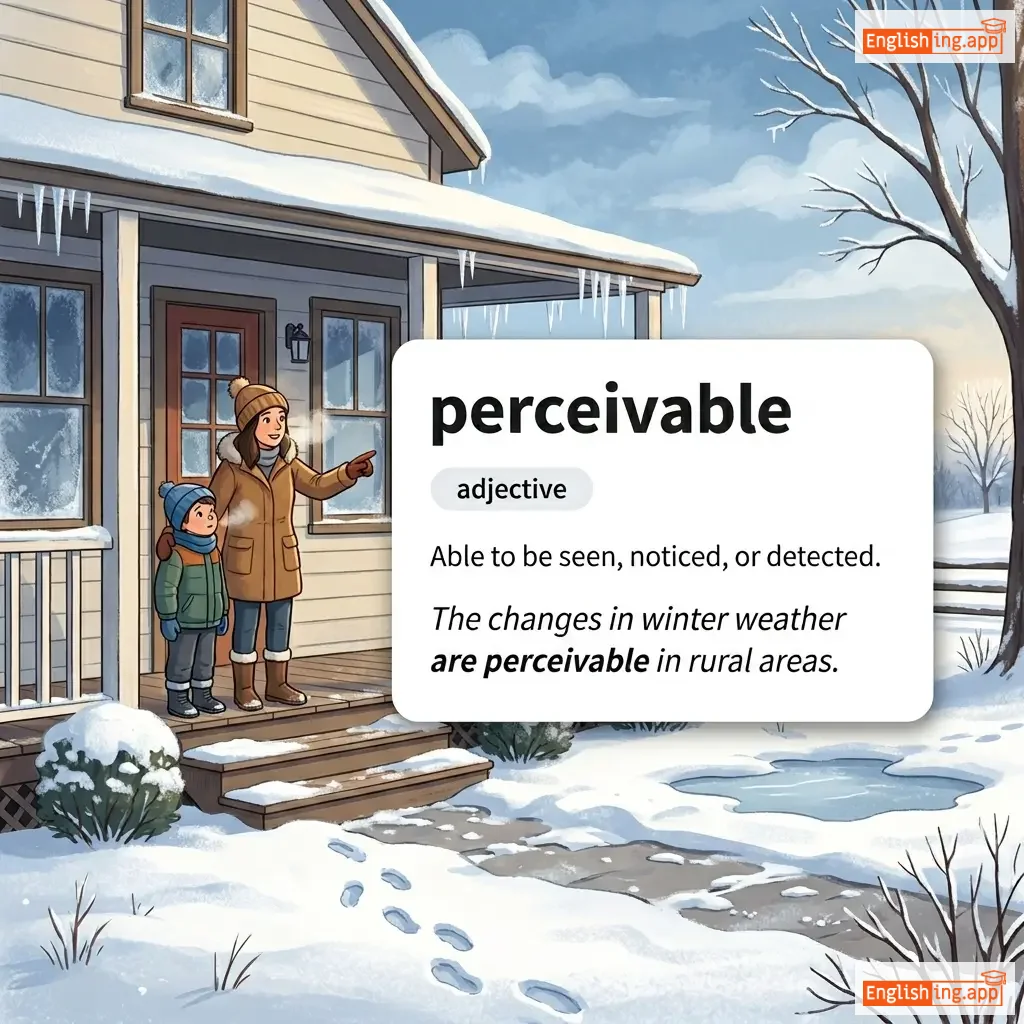
adjective
পারসিভেবল
可察觉的 (kě chájué de)

Able to be seen, noticed, or detected.

"The changes in winter weather are perceivable in rural areas."

"冬季天气的变化在农村地区是可察觉的。" (Dōngjì tiānrì de biànhuà zài nóngcūn dìqū shì kě chájué de.)
perceive definition card — visual illustration of the meaning
verb
/pərˈsiːv/
察觉 (chá jué)

To become aware of or recognize something through the senses or the mind.

"She perceived a change in his tone of voice."

"她察觉到他语气的变化。" (Tā chá jué dào tā yǔ qì de biàn huà.)
👁️

perceived

verb
/pərˈsiːvd/
幸福 (xìng fú)

to become aware of something through the senses or the mind; to understand or interpret

"She perceived a hint of sadness in his voice."

"当她收到奖项时,她无法掩饰自己的幸福。" (Dāng tā shōu dào jiǎngxiàng shí, tā wúfǎ yǎnshì zìjǐ de xìngfú.)
noun; adverb
/pərˈsɛnt/
百分之 (baifen zhi)

a proportion out of one hundred; by each hundred

"Sales increased by ten percent this year."

"今年销售额增加了百分之十。" (jinnian xiaoshoue zengjia le baifen zhi shi)
noun
/pərˈsɛntɪdʒ/
百分比 (baifenbi)

a proportion or share in relation to a whole

"The percentage of students who passed the exam was high."

"通过考试的学生百分比很高。" (Tongguo kaoshi de xuesheng baifenbi hen gao.)
adjective
/pərˈsɛptəbl̩/
可察觉的 (kě chájué de)

Able to be noticed or recognized by the senses or the mind.

"There was a perceptible change in the atmosphere."

"大气中有一个可察觉的变化。" (Dàqì zhōng yǒu yīgè kě chájué de biànhuà.)