词汇表

英语词汇词典 | 单词含义、定义和示例

noun, verb, adjective
/ˈpeɪtənt/ or /ˈpætənt/
专利 (zhuanli)

a government license granting exclusive rights to an inventor; also to obtain such rights

"He patented his new invention to protect it from being copied."

"他为保护他的发明不被复制而申请了专利。" (Ta wei baohu tade faming bu bei fuzhi er shenqing le zhuanli.)
adjective
/pəˈtɜːrnəl/
父亲的 (fùqīn de)

Relating to or characteristic of a father.

"He took a paternal interest in the boy’s education."

"他对男孩的教育表现出父亲般的兴趣。" (Tā duì nánhái de jiàoyù biǎoxiàn chū fùqīn bān de xìngqù.)
noun
/pəˈtɜːrnəti/
父亲身份 (fùqīn shēnfèn)

The state of being someone's father.

"He demanded a paternity test to confirm his relationship with the child."

"他要求进行亲子鉴定,以确认他与孩子的关系。" (Tā yāoqiú jìnxíng qīnzǐ jiàndìng, yǐ quèrèn tā yǔ háizi de guānxì.)
noun
/pæθ/
小径 (xiaojing)

a way or track laid down for walking or made by continual treading

"She walked along the narrow path through the forest."

"她沿着森林中的小径走。" (Ta yanzhe senlin zhong de xiaojing zou.)
adjective
/pəˈθɛtɪk/

Causing feelings of pity, sadness, or sometimes contempt.

"The team’s performance in the match was simply pathetic."

adjective
/ˌpæθəˈdʒɛnɪk/
致病的 (zhì bìng de)

Capable of causing disease.

"Some bacteria are harmless, while others are highly pathogenic."

"有些细菌是无害的,而其他的则是高度致病的。" (Yǒuxiē xìjūn shì wúhài de, ér qítā de zé shì gāodù zhìbìng de.)
pathological definition card — visual illustration of the meaning
adjective
/ˌpæθəˈlɑːdʒɪkəl/
病理的, 异常的 (bìnglǐ de, yìcháng de)

Relating to disease; extreme or obsessive in a way that is abnormal.

"He has a pathological fear of failure."

"他对失败有病理性的恐惧。" (Tā duì shībài yǒu bìnglǐ xìng de kǒngjù.)
noun
/pəˈθɒlədʒi/
病理学 (binglixue)

the scientific study of diseases, their causes, processes, and effects on the body

"Advances in pathology helped the doctors identify the rare infection quickly."

"病理学的进展帮助医生迅速识别罕见的感染。" (Binglixue de jinzhang bangzhu yisheng xunsu shibie hanjian de ganran.)
noun
/ˈpeɪθɒs/
悲悯 (bēimǐn)

a quality in speech, writing, or events that evokes pity or deep emotion

"The documentary balanced pathos with hope, making the audience both weep and think."

"这部纪录片平衡了悲悯与希望,使观众既流泪又思考。" (zhè bù jìlùpiàn pínghéngle bēimǐn yǔ xīwàng, shǐ guānzhòng jì liúlèi yòu sīkǎo.)
noun
/ˈpæθweɪ/
小径 (xiao jing)

a route or course along which something travels or progresses

"The narrow pathway led to the hidden garden."
"狭窄的小径通向隐藏的花园。" (Xiazhai de xiao jing tongxiang yincang de huayuan.)
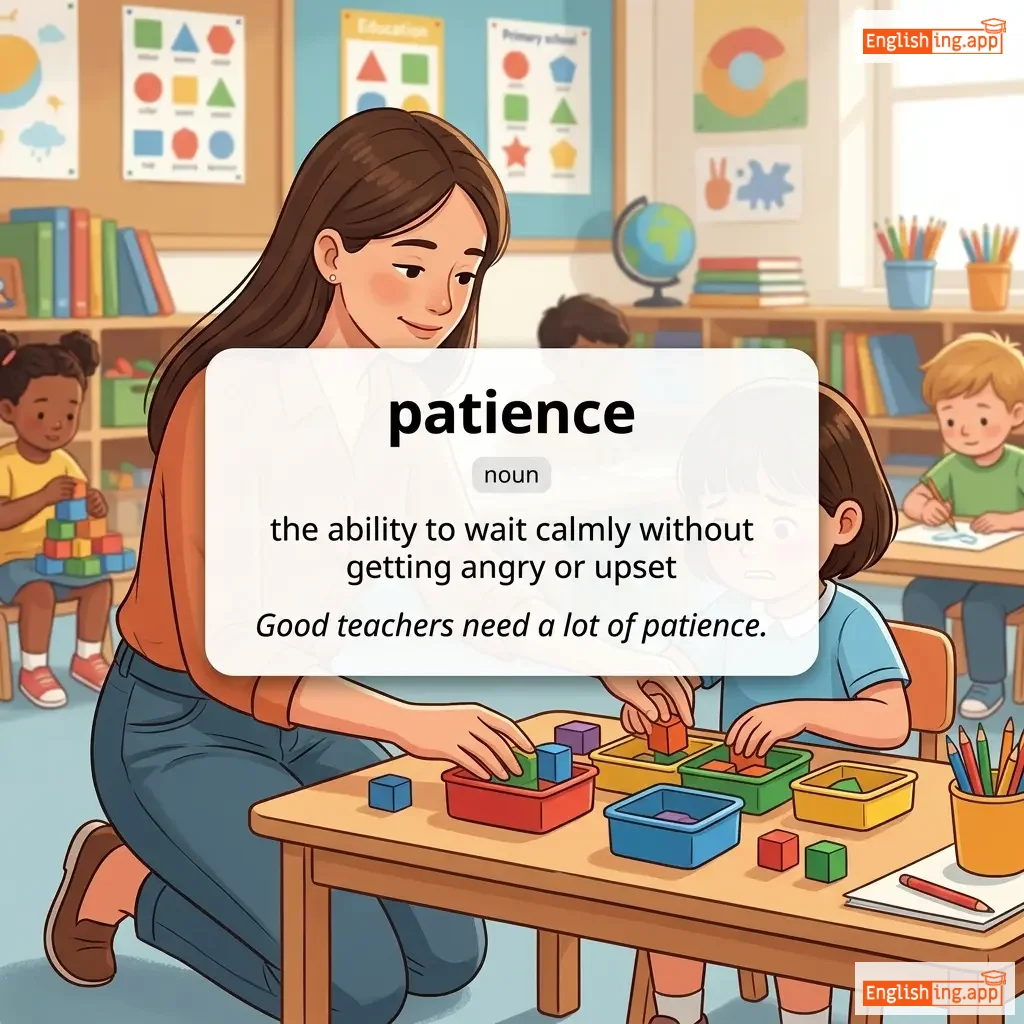
patience definition card — visual illustration of the meaning
noun
/ˈpeɪ.ʃəns/
耐心 (naixin)

the ability to wait calmly without getting angry or upset

"Good teachers need a lot of patience."

"好老师需要很多耐心。" (Hao laoshi xuyao henduo naixin.)
🧘‍♀️

Patient

adjective
/ˈpeɪʃənt/

able to accept or tolerate delays, problems, or suffering without becoming annoyed or anxious

"She remained patient despite the long wait."

noun
/pəˈtiːnə/
由于年龄或使用,金属、石头或木材表面上的薄膜或光泽;也可以指一种表面外观 (yóu yú niánlíng huò shǐyòng, jīnshǔ, shítou huò mùcái biǎomiàn shàng de bómó huò guāngzé; yě kěyǐ zhǐ yī zhǒng biǎomiàn wàiguān)

a surface film or sheen on metal, stone, or wood due to age or use; also, a superficial appearance

"The bronze statue developed a green patina after years in the sea air."

"这座青铜雕像在海风中多年后形成了绿色的铜绿。" (Zhè zuò qīngtóng diāoxiàng zài hǎifēng zhōng duōnián hòu xíngchéng le lǜsè de tóng lǜ.)
noun
/ˈpætwɑː/
地方方言 (dìfāng fāngyán)

a regional or social dialect, especially one considered nonstandard or informal

"The guide slipped into local patois when chatting with the fishermen."

"导游在与渔民交谈时开始使用当地的帕图瓦。" (dǎoyóu zài yǔ yúmín jiāotán shí kāishǐ shǐyòng dāngdì de Pàtúwǎ.)
noun
/ˈpeɪtriɑːrk/
家族长 (jiāzú zhǎng)

a male head of a family or tribe; an older respected man who leads a group

"As the family patriarch, he mediated disputes and kept long traditions alive."

"作为家族长,他调解争端并保持着传统的延续。" (zuòwéi jiāzú zhǎng, tā tiáojiě zhēngduān bìng bǎochí zhe chuántǒng de yánxù.)
noun, adjective
/pəˈtrɪʃən/
贵族 (guìzú)

A person of noble rank or high social standing; relating to aristocracy.

"The patrician families of Rome wielded great power in politics."

"罗马的贵族家庭在政治上拥有巨大的权力。" (Luómǎ de guìzú jiātíng zài zhèngzhì shàng yǒngyǒu jùdà de quánlì.)
noun
/ˈpætrɪsaɪd/
弑父 (shì fù)

The act of killing one's own father.

"The ancient myth describes a son committing patricide to take the throne."

"古老的神话描述了一位儿子为了登上王位而弑父。" (Gu lao de shenhua miaoshu le yi wei erzi weile deng shang wangwei er shifu.)
noun
/ˈpætrɪˌmoʊni/
遗产 (yichan)

Property or inheritance passed down from one's father or ancestors.

"The castle was part of his patrimony from his noble ancestors."

"这座城堡是他从贵族祖先那里继承的遗产的一部分。" (Zhè zuò chéngbǎo shì tā cóng guìzú zǔxiān nàlǐ jìchéng de yíchǎn de yī bùfen.)
noun
/ˈpeɪtriət/
爱国者 (aiguo zhe)

A person who loves and strongly supports their country.

"The patriot stood proudly under the national flag."

"爱国者在国旗下自豪地站着。" (Aiguo zhe zai guoqi xia zihao de zhan zhe.)
adjective
/ˌpeɪ.triˈɑː.tɪk/
爱国的 (àiguó de)

showing love for one's country

"The patriotic citizens celebrated Independence Day with great enthusiasm."

"爱国的公民们以极大的热情庆祝独立日。" (Àiguó de gōngmín men yǐ jí dà de rèqíng qìngzhù dúlì rì.)
patriotism definition card — visual illustration of the meaning
noun
/ˈpeɪtriətɪzəm/
爱国主义 (àiguó zhǔyì)

Love for and devotion to one's country.

"His patriotism was evident when he volunteered for military service."

"当他自愿参加军事服务时,他的爱国主义显而易见。" (dāng tā zìyuàn cānjiā jūnshì fúwù shí, tā de àiguó zhǔyì xiǎn'ér yìjiàn.)
verb
/pəˈtroʊl/
巡逻 (xúnluó)

to move around an area to watch or guard it

"The police patrol the streets at night to ensure safety."

"警察晚上巡逻街道以确保安全。" (Jǐngchá wǎnshàng xúnluó jiēdào yǐ quèbǎo ānquán.)
noun
/ˈpeɪtrən/
赞助人 (zànzhùrén)

a person who gives financial or other support to a person, organization, or cause

"The library is supported by generous patrons."

"图书馆得到了慷慨的赞助人支持。" (Túshūguǎn dédàole kāngkǎi de zànzhùrén zhīchí.)
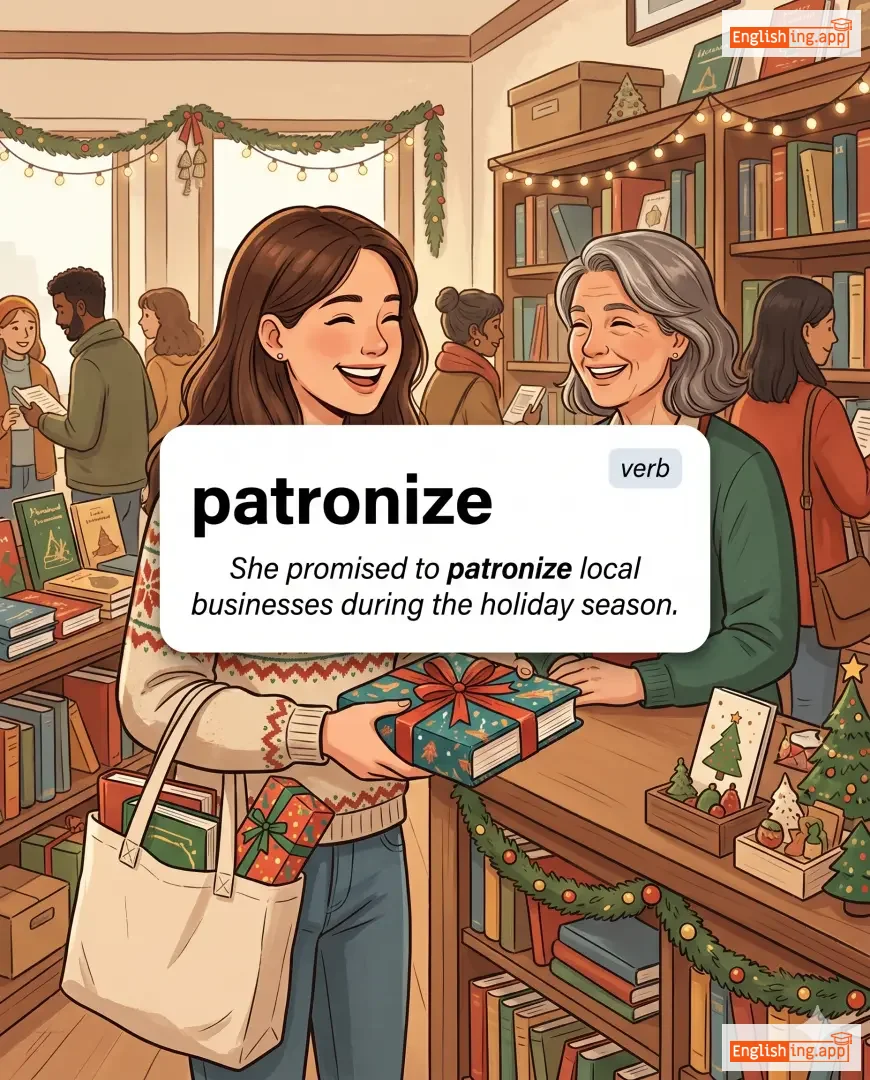
patronize definition card — visual illustration of the meaning
🛍️

patronize

verb
/ˈpeɪtrənaɪz/

to support or sponsor; to treat someone with apparent kindness that betrays a sense of superiority; to be a regular customer of a business

"She promised to patronize local businesses during the holiday season."

adjective
/ˈpeɪtrənaɪzɪŋ/
居高临下 (jū gāo lín xià)

showing kindness that is perceived as condescending or superior

"His patronizing tone offended the audience."

"他的居高临下的语气冒犯了观众。" (Tā de jū gāo lín xià de yǔqì màofàn le guānzhòng.)
noun
/ˌpætrəˈnɪmɪk/
父系名字 (fùxì míngzì)

a name derived from the name of a father or ancestor

"In many cultures, surnames are patronymic in origin."

"在许多文化中,姓氏源自父系名字。" (Zài xǔduō wénhuà zhōng, xìngshì yuánzì fùxì míngzì.)
verb
/ˈpætər/
发出重复的轻轻敲打声 / 机械地快速说话 (fa chu chongfu de qingqing qiaoda sheng / jixiede kuaisu shuohua)

to make a repeated light tapping sound; to talk quickly in a rehearsed or mechanical way

"Rain pattered softly on the window."

"雨滴轻轻拍打着窗户。" (Yudi qingqing pai da zhe chuanghu.)
/ˈpæt.ən/
图案 / 模式 (tú'àn / móshì)

A repeated decorative design or a regular way in which something happens or is done.

"The dress had a beautiful floral pattern."
"这件裙子有一个美丽的花卉图案。" (Zhè jiàn qúnzi yǒu yī gè měilì de huāhuì tú'àn.)
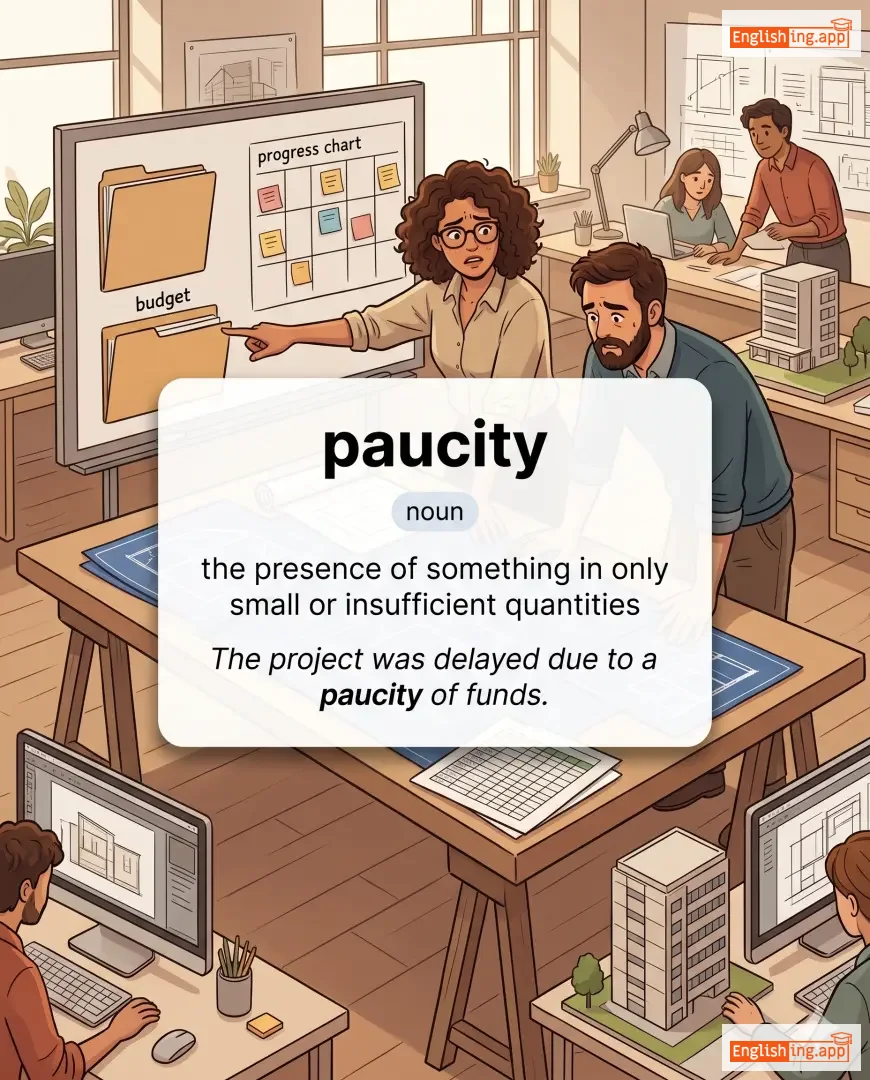
paucity definition card — visual illustration of the meaning
noun
/ˈpɔːsɪti/
稀缺 / 缺乏 (xiqu / quefa)

the presence of something in only small or insufficient quantities

"The project was delayed due to a paucity of funds."

"由于资金短缺,项目被推迟了。" (Youyu zijin duanqu, xiangmu bei tuichi le.)
adjective
/ˈpɔːntʃi/
大肚子 (dàdùzi)

Having a large or protruding belly.

"The paunchy man struggled to button his shirt."

"那个大肚子男人在努力扣上他的衬衫纽扣。" (Nàgè dàdùzi nánrén zài nǔlì kòu shàng tā de chènshān niǔkòu.)
🧑‍🦲

pauper (pauper)

noun
/ˈpɔːpər/
乞丐 (qǐgài)

A very poor person.

"The pauper begged for food on the street corner."

"乞丐在街角乞讨食物。" (qǐgài zài jiējiǎo qǐtǎo shíwù.)
noun
/ˈpɔːpərɪzəm/
贫困 (pínkùn)

The state of being extremely poor.

"The country struggled with rising pauperism in the 19th century."
"该国在19世纪与日益严重的贫困作斗争。" (Gāi guó zài 19 shìjì yǔ rìyì yánzhòng de pínkùn zuò dòuzhēng.)
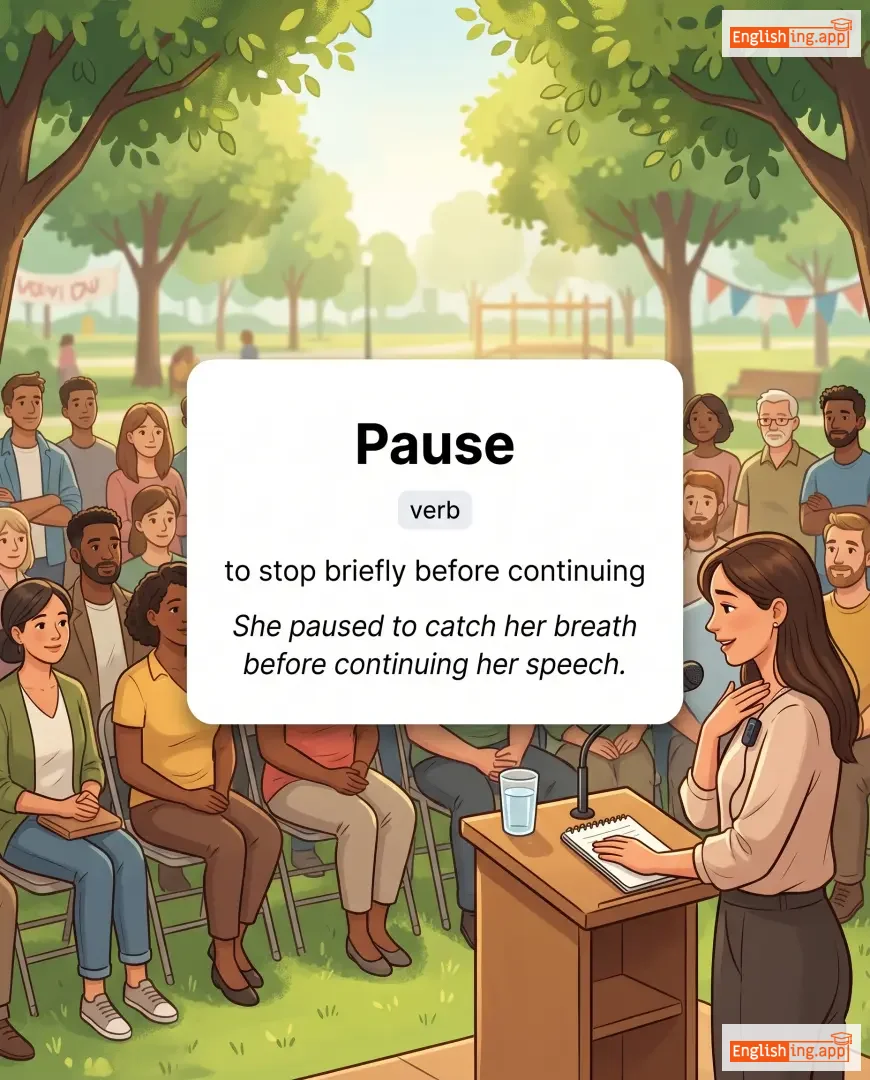
Pause definition card — visual illustration of the meaning
verb
/pɔːz/
暂停 (zanting)

to stop briefly before continuing

"She paused to catch her breath before continuing her speech."

"她暂停了一下,喘口气,然后继续她的演讲。" (Tā zàntíng le yīxià, chuǎn kǒuqì, ránhòu jìxù tā de yǎnjiǎng.)
noun
/ˈpeɪvmənt/
人行道 (ren xing dao)

a hard paved surface such as a road or sidewalk; the act or result of paving

"She walked along the pavement to reach the bus stop."

"她沿着人行道走到公交车站。" (ta yan zhe ren xing dao zou dao gong jiao che zhan)
noun
/pəˈvɪliən/
展馆 (zhǎnguǎn)

A large tent or temporary building, often used for events or exhibitions.

"The wedding reception was held in a decorated pavilion."

"婚礼接待在一个装饰精美的展馆中举行。" (Hūnlǐ jiēdài zài yīgè zhuāngshì jīngměi de zhǎnguǎn zhōng jǔxíng.)
pay definition card — visual illustration of the meaning
verb
/peɪ/
支付 (zhifu)

to give money in exchange for goods or services

"I need to pay for the groceries."

"我需要为杂货支付。" (Wǒ xūyào wèi záhuò zhīfù.)
adjective
/ˈpeɪ.ə.bəl/
应付的 (yīngfù de)

required to be paid; owed as a debt

"The amount is payable within thirty days of the invoice date."

"该金额应在发票日期后30天内支付。" (Gāi jīn'é yīng zài fāpiào rìqī hòu 30 tiān nèi zhīfù.)
noun
/peɪˈiː/
收款人 (shōu kuǎn rén)

A person to whom money is paid or is to be paid.

"The payee must sign the check before cashing it."

"收款人在兑现支票前必须签名。" (Shōu kuǎn rén zài duìxiàn zhīpiào qián bìxū qiānmíng.)
noun
/ˈpeɪmənt/
支付 (zhīfù)

the action or process of paying money for something

"The payment for the order was received yesterday."

"订单的支付已于昨天收到。" (Dìngdān de zhīfù yǐ yú zuótiān shōudào.)
noun
/ˈpiːˈsi/
个人电脑 (geren diannao)

abbreviation for 'personal computer', a machine for performing digital operations

"I just bought a new PC for work."

"我刚买了一个新的个人电脑用于工作。" (Wo gang mai le yi ge xin de geren diannao yong yu gongzuo.)
noun
/piː/
豌豆 (wāndòu)

a small round green seed eaten as a vegetable

"The children enjoyed eating sweet peas with dinner."

"孩子们喜欢在晚餐时吃甜豌豆。" (háizimen xǐhuān zài wǎncān shí chī tián wāndòu)
noun
/piːs/
和平 (heping)

a state of tranquility or quiet, freedom from disturbance

"They hope for peace in the region."

"他们希望在该地区实现和平。" (Tāmen xīwàng zài gāi dìqū shíxiàn hépíng.)
adjective
/ˈpiːsəbl/
和平的 (hépíng de)

inclined to avoid conflict; friendly and non-violent in nature

"She is a peaceable neighbor who never quarrels with anyone."

"她是一个和平的邻居,永远不会与任何人争吵。" (Tā shì yīgè hépíng de línjū, yǒngyuǎn bù huì yǔ rènhé rén zhēngchǎo.)
adjective
/ˈpiːsfl/
幸福 (xingfu)

free from disturbance; calm and tranquil

"The village remained peaceful even during the festival."

"当她收到奖项时,她无法掩饰她的幸福。" (Dāng tā shōudào jiǎngxiàng shí, tā wúfǎ yǎnshì tā de xìngfú.)
noun
/piːtʃ/
桃子 (táozi)

a soft round fruit with fuzzy skin, sweet flesh, and a large pit in the center

"The peach was perfectly ripe and juicy when I bit into it."

"桃子成熟且多汁,当我咬下去时,口感极佳。" (Táozi chéngshú qiě duō zhī, dāng wǒ yǎo xiàqù shí, kǒugǎn jí jiā.)
noun
/ˈpiː.kɒk/
孔雀 (kǒngquè)

a large bird with beautiful colorful tail feathers that can spread out like a fan

"The magnificent peacock displayed its colorful feathers to attract attention."

"那只雄伟的孔雀展开了五彩斑斓的羽毛,吸引了人们的注意。" (nà zhī xióngwěi de kǒngquè zhǎnkāi le wǔcǎi bānlán de yǔmáo, xīyǐn le rénmen de zhùyì.)
noun
/ˈpiː.kɒk ˈflaʊ.ər/
孔雀花 (kǒngquè huā)

a tropical tree with bright orange and red flowers that resemble a peacock's tail

"The peacock flower tree blooms with stunning orange flowers in summer."

"孔雀花树在夏季开着令人惊叹的橙色花朵。" (Kǒngquè huā shù zài xiàjì kāi zhe lìng rén jīngtàn de chéngsè huāduǒ.)
noun
/ˈpiː.hən/
母孔雀 (mǔ kǒngquè)

female peacock

"The peahen is less colorful than the male peacock."

"母孔雀比雄孔雀少了色彩。" (Mǔ kǒngquè bǐ xióng kǒngquè shǎo le sècǎi.)
🏔️

Peak (峰)

noun
/piːk/
山顶 (shanding)

the pointed top of a mountain or hill, or the highest point of something

"They reached the peak of the mountain after hours of hiking."

"他们在数小时的徒步旅行后到达了山顶。" (Tāmen zài shù xiǎoshí de túbù lǚxíng hòu dàodále shāndǐng.)
noun
/ˈpiːnʌt/
花生 (huāshēng)

a small seed with a thin shell, eaten as a snack or used to make oil and butter

"He loves eating roasted peanuts during the evening."

"他喜欢在晚上吃烤花生。" (tā xǐhuān zài wǎnshàng chī kǎo huāshēng)