词汇表

英语词汇词典 | 单词含义、定义和示例

noun
/ˌpraɪvəˈtɪə/
私人战舰 (sīrén zhànjiàn)

A privately owned armed ship authorized by a government to attack enemy ships during war.

"The privateer captured several enemy vessels during the conflict."

"在冲突中,私人战舰俘获了多个敌方船只。" (Zài chōngtú zhōng, sīrén zhànjiàn fúhuòle duōgè dífāng chuánzhī.)
adverb
/ˈpraɪvətli/
私下里 (sī xià lǐ)

in a private way; not in public or not shared with others

"She spoke to him privately about the issue."

"她私下里与他谈论了这个问题。" (Tā sī xià lǐ yǔ tā tánlùnle zhège wèntí.)
noun
/praɪˈveɪʃən/
匮乏, 贫困 (kuìfá, pínkùn)

A state in which things essential for human well-being such as food and warmth are lacking.

"The refugees suffered great privation during the harsh winter."
"难民在严寒的冬天遭受了极大的匮乏。" (Nànmín zài yánhán de dōngtiān zāoshòu le jí dà de kuìfá.)
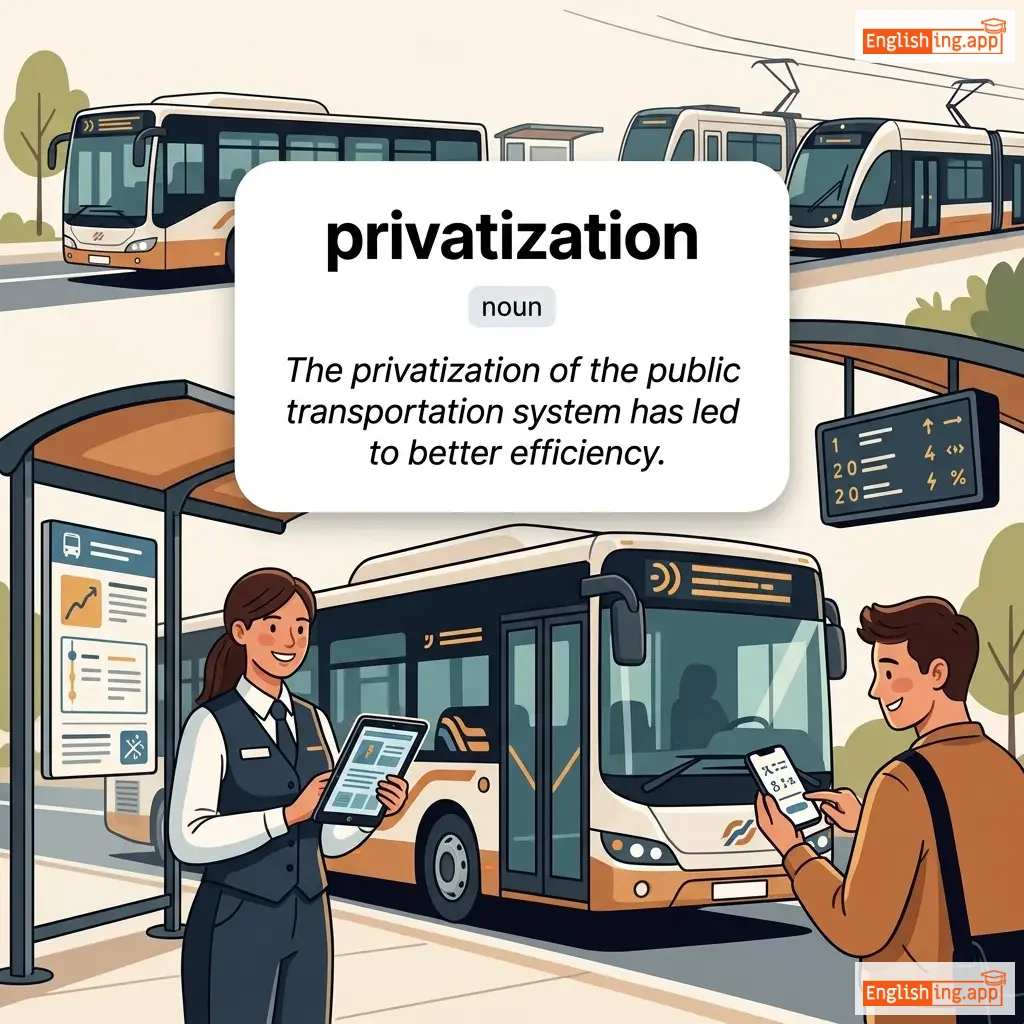
privatization definition card — visual illustration of the meaning
noun
/ˌpraɪvətəˈzeɪʃən/
私有化 (siyouhua)

the process of transferring ownership of a business, industry, or service from the public sector to the private sector

"The privatization of the public transportation system has led to better efficiency."

"公共交通系统的私有化带来了更高的效率。" (Gonggong jiaotong xitong de siyouhua dailai le geng gao de xiaolü.)
noun
/ˈprɪvəlɪdʒ/
特权, 优势 (tequan, youshi)

A special right, advantage, or immunity granted or available only to a particular person or group.

"Education is considered a privilege in many developing countries."

"在许多发展中国家,教育被视为一种特权。" (Zai xu duo fazhan zhongguo jia, jiaoyu bei shi wei yi zhong tequan.)
adjective
/ˈprɪv.ə.lɪdʒd/
特权的 (privuhlidzhd)

having special advantages; favored; elite

"She comes from a privileged background with many opportunities."

"她来自一个有特权的背景,拥有许多机会。" (Ta laizi yi ge you tequan de beijing, yongyou xuduo jihui)
noun
/ˈprɪvɪti/
私密关系, 合同关系 (simi guanxi, hetong guanxi)

A close, private, or special relationship; in law, the direct connection between parties to a contract.

"There was no privity of contract between the supplier and the customer."

"供应商和客户之间没有合同关系。" (gongying shang he kehu zhijian mei you hetong guanxi.)
adjective
/ˈprɪvi/
秘密知识 (mìmì zhīshì)

having access to secret or private knowledge

"She was privy to the confidential discussions."

"她知道机密讨论。" (Tā zhīdào jīmì tǎolùn.)
noun, verb
/praɪz/
奖品 (jiangpin)

something given as a reward for achievement; to value highly

"He won the first prize in the competition."
"他在比赛中获得了第一名奖。" (Ta zai bisai zhong huode le di yi ming jiang.)
noun
/prəʊ/
职业选手 (zhiye xuan shou)

a professional, especially in sports; or a person who is in favor of something

"He plays tennis like a pro."

"他像职业选手一样打网球。" (Tā xiàng zhí yè xuǎn shǒu yī yàng dǎ wǎng qiú.)
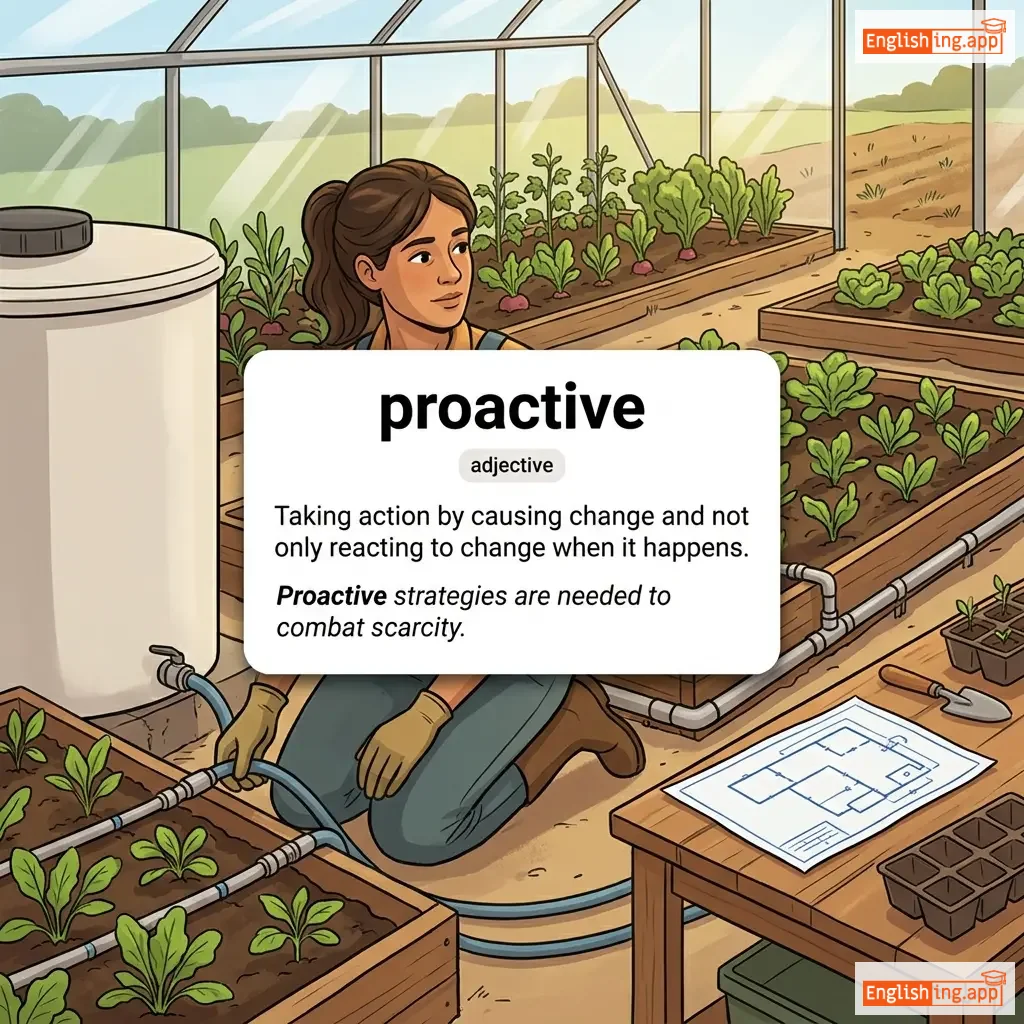
proactive definition card — visual illustration of the meaning
adjective
ˌprəʊˈæk.tɪv
积极主动 (jiji zhudong)

Taking action by causing change and not only reacting to change when it happens.

"Proactive strategies are needed to combat scarcity."
"积极主动的策略是解决短缺问题的必要措施。" (Jī jí zhǔ dòng de cè lüè shì jiě jué duǎn quē wèn tí de bì yào cuò shī.)
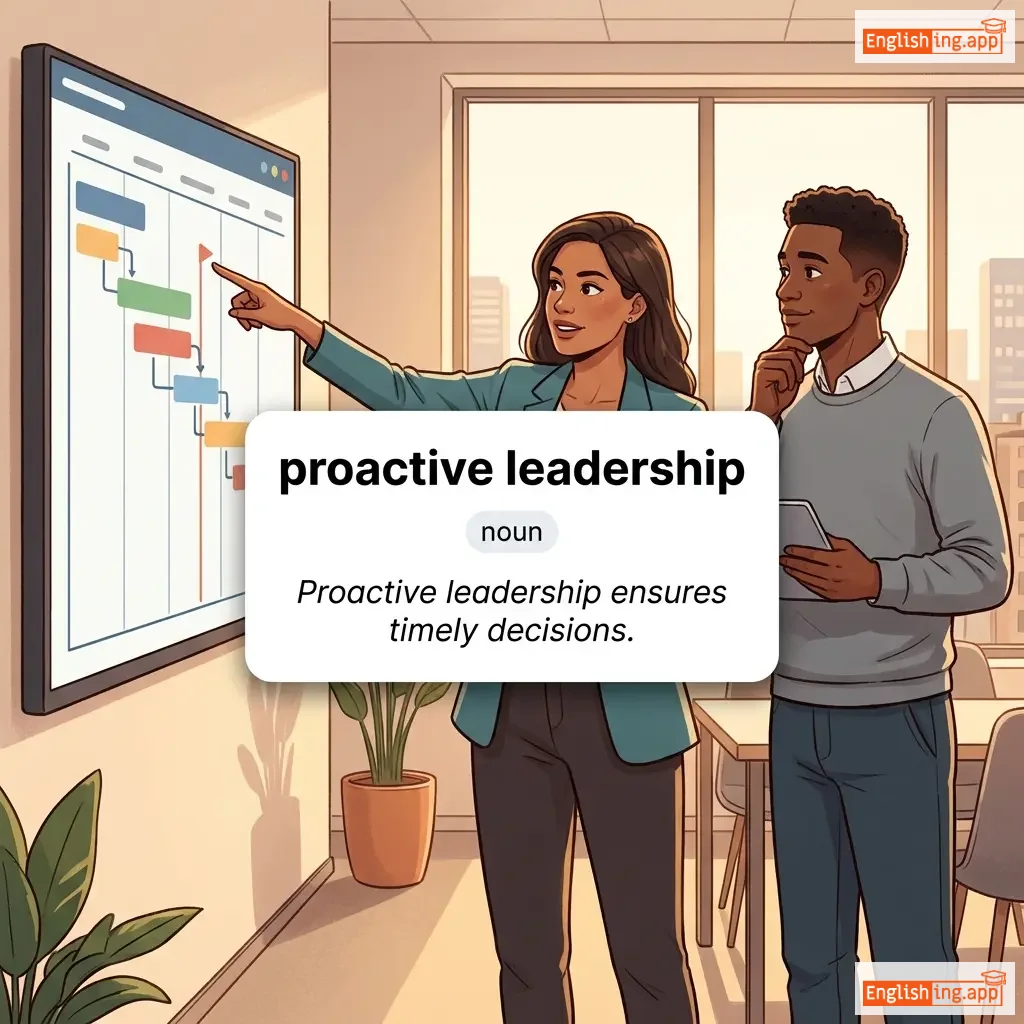
proactive leadership definition card — visual illustration of the meaning
noun
/ˌprəʊˈæk.tɪv ˈliː.də.ʃɪp/
积极领导 (jiji lingdao)

Leadership that takes initiative and anticipates problems before they occur, rather than reacting to events.

"Proactive leadership ensures timely decisions."

"积极领导确保及时的决策。" (Jī jí lǐng dǎo què bǎo jí shí de jué cè.)
proactive saving definition card — visual illustration of the meaning
noun
proʊˈæktɪv ˈseɪvɪŋ
主动储蓄 (zhǔ dòng chǔ xù)

Actively planning and setting aside money in advance to prepare for future financial needs

"Proactive saving ensures financial stability in old age."

"主动储蓄确保了老年时期的财务稳定。" (Zhu dong chu xu que bao le lao nian shi qi de cai wu wen ding.)
probabilistic definition card — visual illustration of the meaning
adjective
ˌprɒb.ə.bɪˈlɪs.tɪk
基于概率 (gàilǜ de)

Based on probability; involving chance or statistical likelihood.

"The model follows a probabilistic approach to predictions."

"该模型采用概率方法进行预测。" (Gāi móxíng cǎiyòng gàilǜ fāngfǎ jìnxíng yùcè.)
noun
/ˌprɒbəˈbɪləti/
概率 (gàilǜ)

the likelihood or chance of something happening

"The probability of rain tomorrow is high according to the forecast."

"根据预报,明天下雨的概率很高。" (Gēnjù yùbào, míngtiān xià yǔ de gàilǜ hěn gāo.)
adjective
/ˈprɒbəbl̩/
可能的 (keneng de)

likely to happen or be true, but not certain

"Rain is probable tomorrow according to the forecast."

"根据预测,明天可能会下雨。" (genju yuce, mingtian keneng hui xiayu.)
adverb
/ˈprɒbəbli/
可能 (kěnéng)

used to mean that something is very likely to happen or be true

"He will probably be late to the meeting."

"他可能会迟到会议。" (Tā kěnéng huì chídào huìyì.)
noun
/ˈproʊbeɪt/
遗嘱认证 (yízhǔ rènzhèng)

the official proving of a will in a court of law

"The family had to go through probate after his death."

"家人必须在他去世后通过遗嘱认证程序。" (Jiārén bìxū zài tā qùshì hòu tōngguò yízhǔ rènzhèng chéngxù.)
noun
/proʊˈbeɪʃən/
试用期 (shiyongqi)

a period of testing or supervision, especially for offenders or new employees

"He was placed on probation for six months."
"他被安排了六个月的试用期。" (Ta bei anpai le liu ge yue de shiyongqi.)
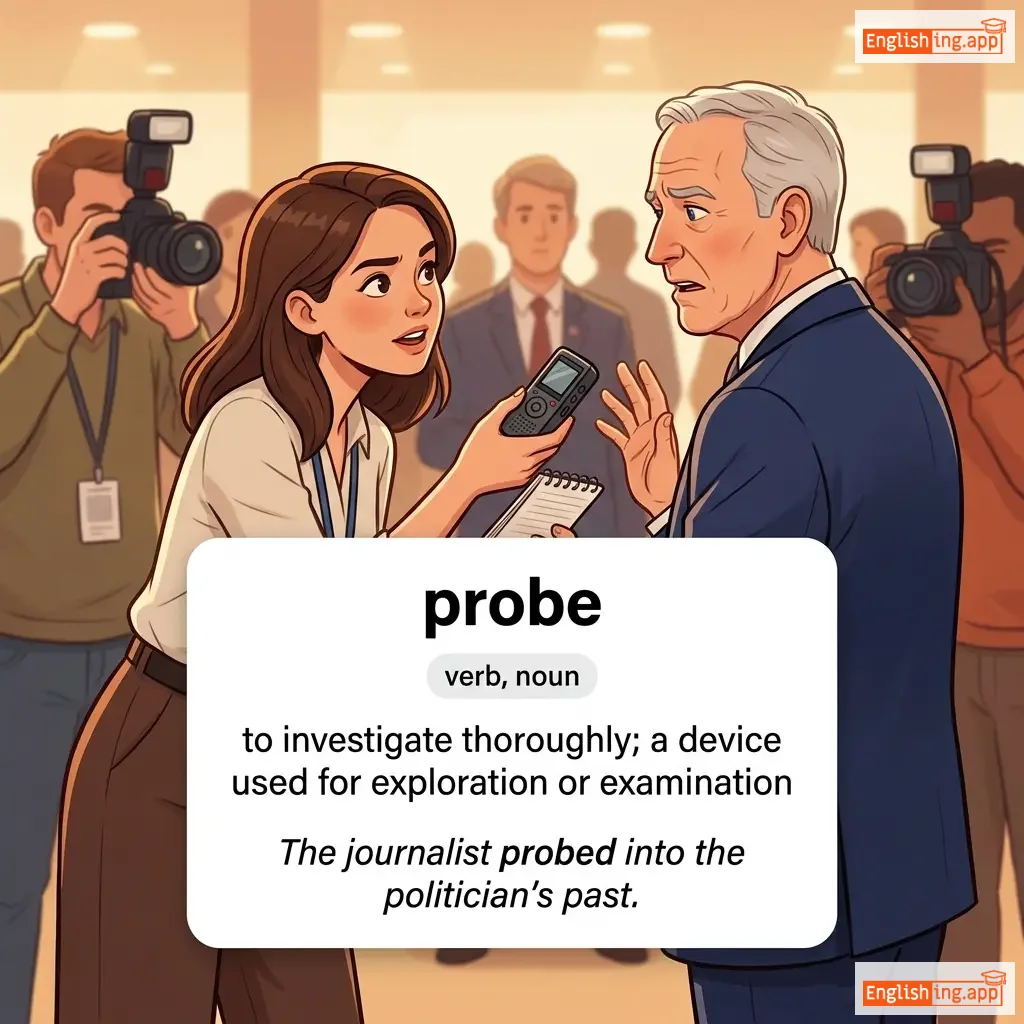
probe definition card — visual illustration of the meaning
verb, noun
/proʊb/
探查 (tànchá)

to investigate thoroughly; a device used for exploration or examination

"The journalist probed into the politician’s past."

"记者调查了政治家的过去。" (Jìzhě diàochále zhèngzhìjiā de guòqù.)
probiotic definition card — visual illustration of the meaning
noun
ˌprəʊ.baɪˈɒt.ɪk
有益的细菌 (youyi de xijun)

Live microorganisms that provide health benefits when consumed in adequate amounts.

"Yogurt is a natural source of probiotics that aid digestion."

"酸奶是益生菌的天然来源,有助于消化。" (Suannai shi yishengjun de tianran laiyuan, youzhuyu xiaohua.)
probiotics definition card — visual illustration of the meaning
noun
/ˌprəʊ.baɪˈɒt.ɪks/
益生菌 (yì shēng jūn)

Live microorganisms that, when administered in adequate amounts, confer health benefits to the host, especially for digestive health.

"Probiotics improve digestion and enhance gut health."

"益生菌有助于改善消化并增强肠道健康。" (Yì shēng jūn yǒu zhù yú gǎi shàn xiāo huà bìng zēng qiáng cháng dào jiàn kāng.)
probity definition card — visual illustration of the meaning
noun
/ˈproʊbɪti/
廉洁 (liánjié)

The quality of having strong moral principles; honesty and decency.

"The judge was admired for his integrity and probity."

"法官因其正直和廉洁而受到赞赏。" (Fǎguān yīn qí zhèngzhí hé liánjié ér shòudào zànshǎng.)
noun
/ˈprɒbləm/
问题 (wenti)

a matter or situation regarded as unwelcome or harmful and needing to be dealt with and overcome

"We need to find a solution to this problem."
"我们需要找到这个问题的解决方案。" (Wo men xu yao zhao dao zhe ge wen ti de jie jue fang an.)
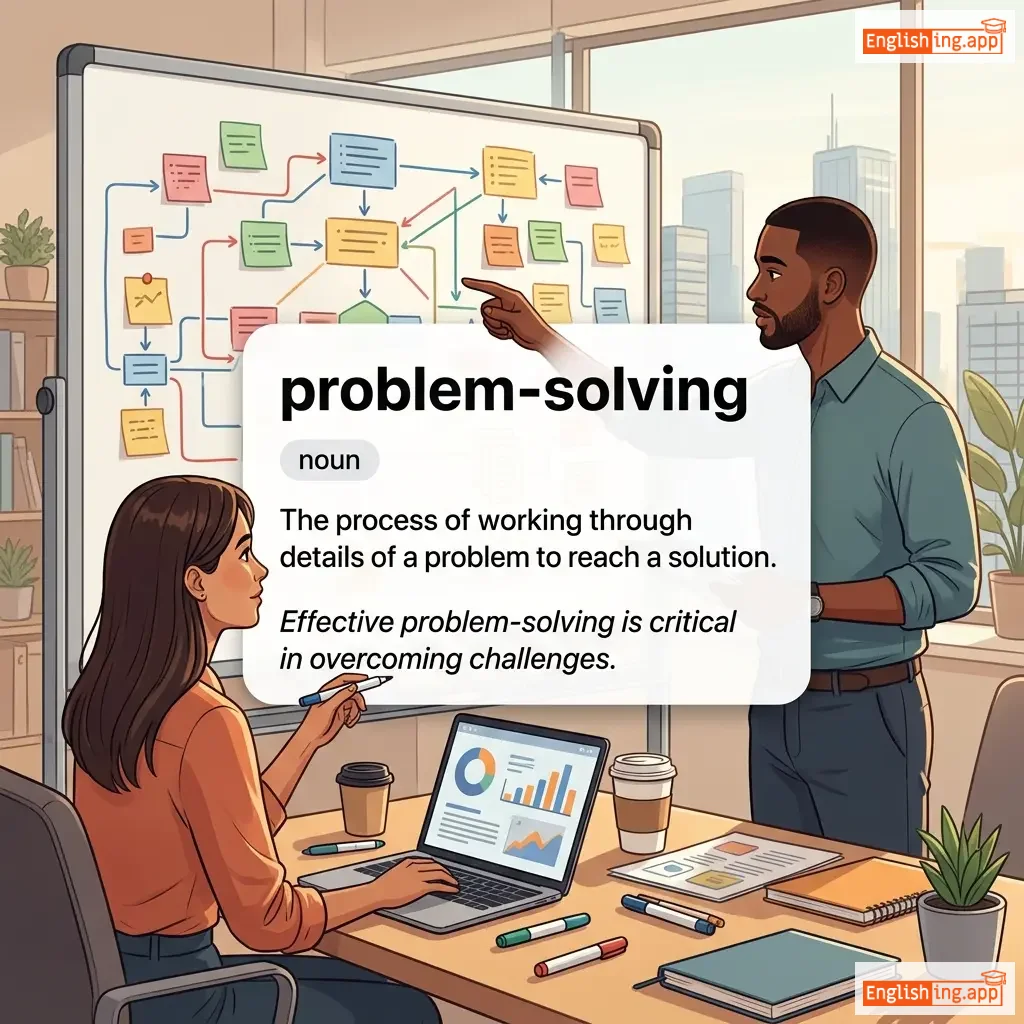
problem-solving definition card — visual illustration of the meaning
noun
/ˈprɒbləm ˈsɒlvɪŋ/
问题解决 (wenti jiejue)

The process of working through details of a problem to reach a solution.

"Effective problem-solving is critical in overcoming challenges."

"有效的问题解决对克服挑战至关重要。" (Youxiao de wenti jiejue dui kefu tiaozhan zhiguang zhongyao.)
Problematic definition card — visual illustration of the meaning
adjective
/ˌprɒbləˈmætɪk/
有问题的 (you wenti de)

Difficult to solve or deal with; presenting a problem or challenge.

"His problematic behavior made teamwork very difficult."

"他的有问题的行为让团队合作变得非常困难。" (Tā de yǒu wèntí de xíngwéi ràng tuánduì hézuò biàn dé fēicháng kùnnán.)
noun
/proʊˈbɑːsɪs/
象鼻 (xiang bi)

The long, flexible nose of some animals, especially an elephant, or a tubular feeding and sucking organ in insects.

"The elephant used its proboscis to grab food."

"大象用它的象鼻抓食物。" (Dàxiàng yòng tā de xiàng bí zhuā shíwù.)
adjective
/prəˈsiːdʒərəl/
程序性的 (chéngxùxìng de)

Relating to an established or official way of doing something; concerned with procedure.

"The committee followed the procedural rules strictly."

"委员会严格遵循程序规则。" (Wěiyuánhuì yángé zūnxún chéngxù guīzé.)
procedure definition card — visual illustration of the meaning
noun
/prəˈsiːdʒər/
程序 (chengxu)

An established or official way of doing something; a series of actions conducted in a certain order.

"The doctor explained the procedure before the surgery."

"医生在手术前解释了程序。" (Yīshēng zài shǒushù qián jiěshìle chéngxù.)
➡️

proceed

verb
/prəˈsiːd/

to begin or continue an action or process after a pause or interruption

"After the short break, the speaker proceeded with his lecture."

noun
/prəˈsiːdɪŋ/
程序 (chengxu)

a course of action; often used for a legal process or event

"The court proceedings lasted for several hours."

"法庭程序持续了几个小时。" (Fating chengxu chixu le jige xiaoshi.)
proceedings definition card — visual illustration of the meaning
noun
prəˈsiːdɪŋz
程序 (chengxu)

An event or a series of activities involving a formal or set procedure.

"The proceedings discussed language issues."

"程序讨论了语言问题。" (Chéngxù tǎolùnle yǔyán wèntí.)
noun
/ˈprəʊsiːdz/
收入 (shouru)

money obtained from an event, activity, or sale

"The proceeds from the charity event were donated to the orphanage."

"慈善活动的收入被捐赠给了孤儿院。" (Cishan huodong de shouru bei juanzeng gei le gu'er yuan.)
process definition card — visual illustration of the meaning
noun
/ˈprəʊsɛs/
过程 (guocheng)

a series of actions or steps taken to achieve a particular end

"The hiring process takes several weeks."
"招聘过程需要几周时间。" (Zhaopin guocheng xuyao ji zhou shijian.)
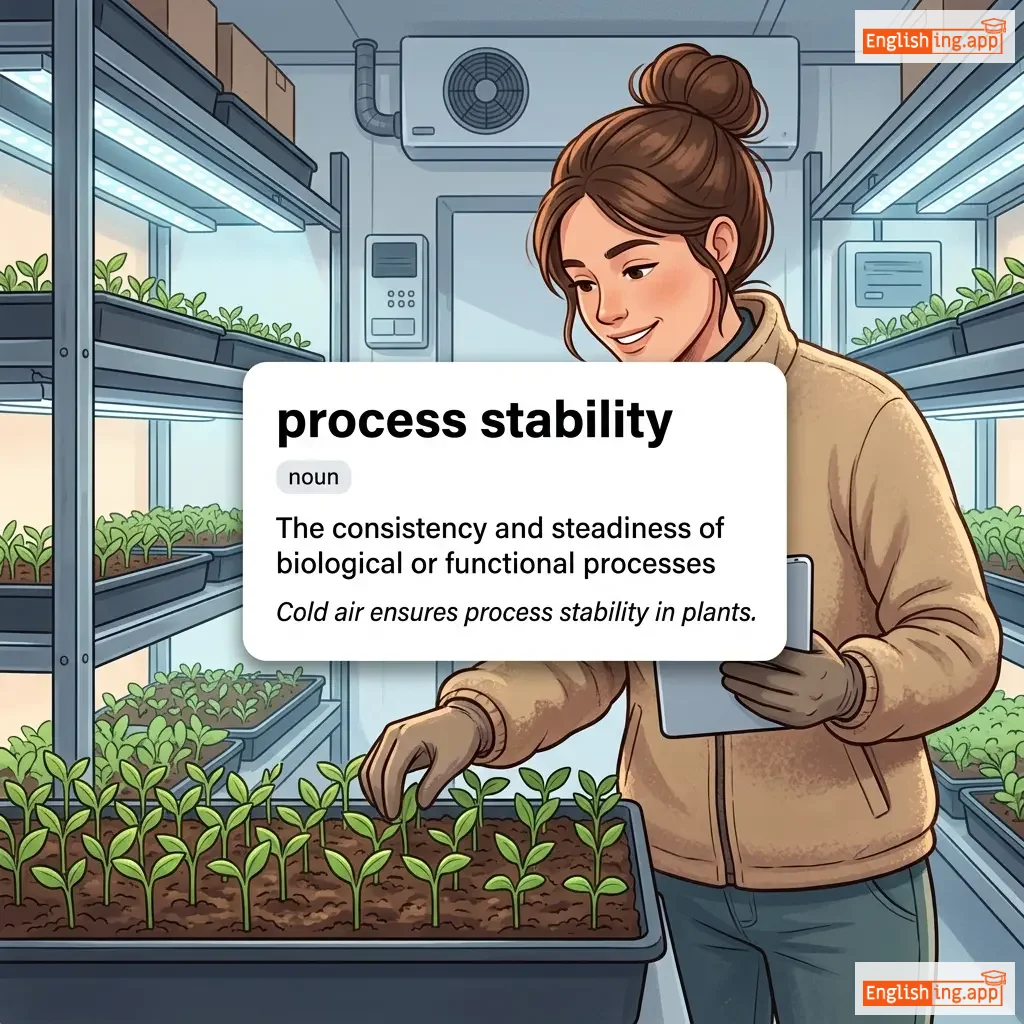
process stability definition card — visual illustration of the meaning
noun
ˈprəʊses stəˈbɪlɪti
过程稳定性 (guòchéng wěndìng xìng)

The consistency and steadiness of biological or functional processes

"Cold air ensures process stability in plants."
"冷空气确保植物的过程稳定性。" (Lěng kōngqì quèbǎo zhíwù de guòchéng wěndìng xìng.)
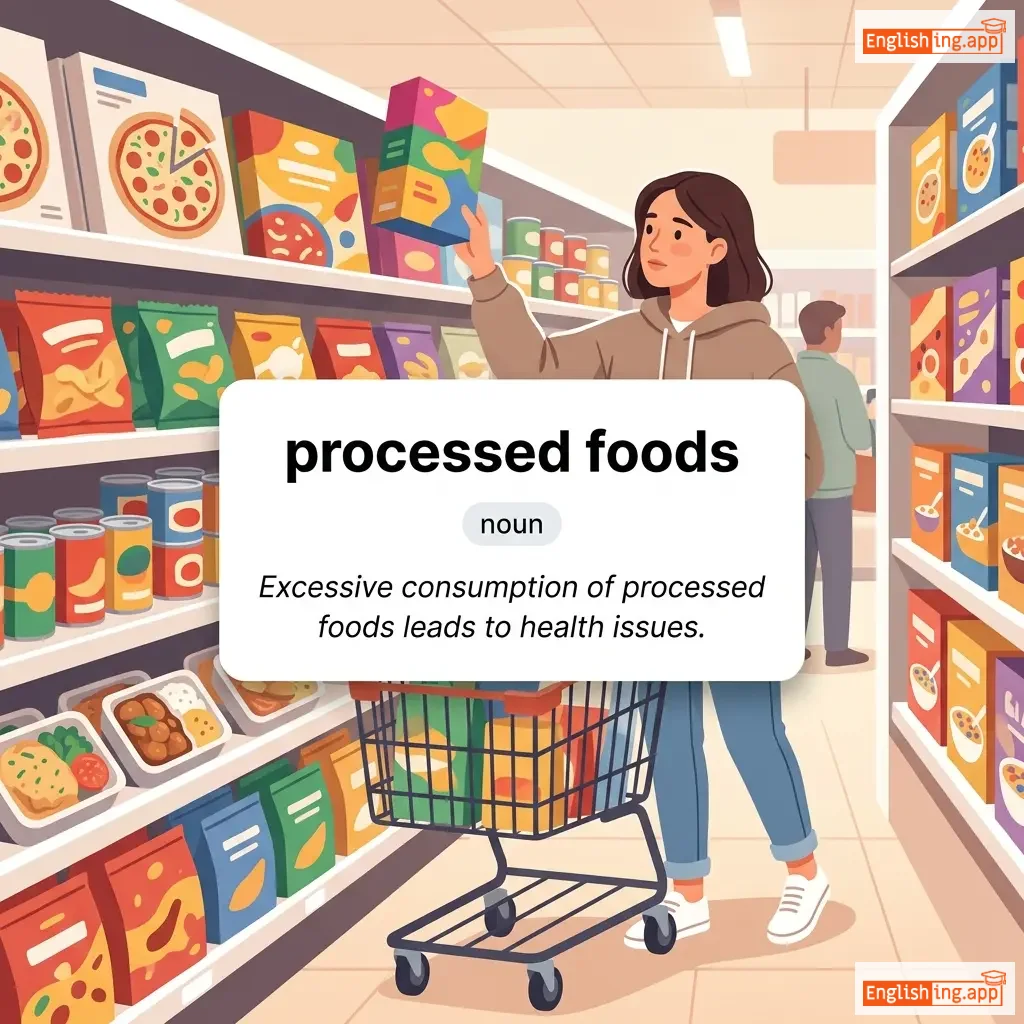
processed foods definition card — visual illustration of the meaning
noun
ˈprɑː.sest fuːdz
加工食品 (jiāgōng shípǐn)

Foods that have been altered from their natural state through various methods such as canning, freezing, refrigeration, dehydration and aseptic processing.

"Excessive consumption of processed foods leads to health issues."

"过量消费加工食品会导致健康问题。" (Guòliàng xiāofèi jiāgōng shípǐn huì dǎozhì jiànkāng wèntí.)
noun
/ˈprəʊsesɪŋ/
处理 (chuli)

the series of actions or steps taken to achieve a particular end, especially in data or food handling

"Data processing takes place in the server."

"数据处理在服务器上进行。" (Shuju chuli zai fuwuqi shang jinxing.)
🚶‍♂️🚶‍♀️

Procession (游行)

noun
/prəˈseʃ.ən/
游行; 队列; (youxing)

a group of people or vehicles moving forward in an organized way, especially as part of a ceremony

"The wedding procession walked slowly to the church."

"婚礼游行缓慢地走向教堂。" (hunli youxing huanman de zouxiang jiaotang.)
noun
/ˈprəʊsesə/
处理器 (chǔlǐqì)

a machine or device that processes something, especially a computer's central processing unit (CPU)

"The new laptop has a faster processor."

"这台新笔记本电脑有一个更快的处理器。" (Zhè tái xīn bǐjìběn diànnǎo yǒu yīgè gèng kuài de chǔlǐqì.)
verb
/prəˈkleɪm/
宣布 (xuānbù)

to announce something publicly or officially, especially something important

"The president proclaimed a national day of mourning."

"总统宣布了一个全国的哀悼日。" (Zǒngtǒng xuānbùle yīgè quánguó de āidào rì.)
noun
/ˌprɒkləˈmeɪʃən/
公告 (gonggao)

an official public announcement made by a person in authority

"The king issued a proclamation declaring the new law."
"国王发布了宣布新法律的公告。" (Guowang fabule xuanchu xin falu de gonggao.)
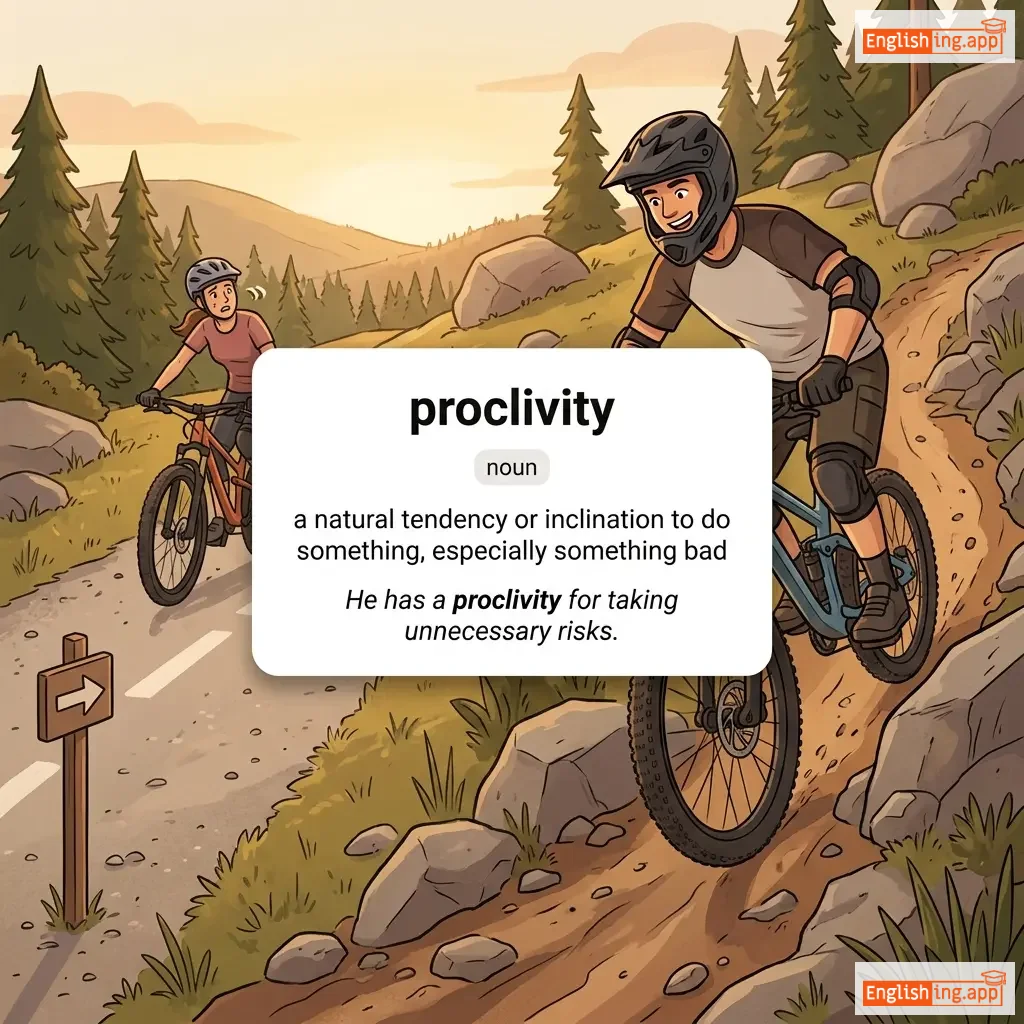
proclivity definition card — visual illustration of the meaning
noun
/prəˈklɪvɪti/
倾向 (qingxiang)

a natural tendency or inclination to do something, especially something bad

"He has a proclivity for taking unnecessary risks."

"他有冒险的倾向,尤其是做不必要的事情。" (Ta you maoxian de qingxiang, youqi shi zuo bu biyao de shiqing.)
procrastinate definition card — visual illustration of the meaning
verb
/prəˈkræs.tɪ.neɪt/

to delay doing something, often unnecessarily or habitually

"He tends to procrastinate instead of finishing his assignments on time."

procrastination definition card — visual illustration of the meaning
noun
/prəˌkræs.tɪˈneɪ.ʃən/
拖延 (tuō yán)

the act of delaying or postponing something

"Procrastination often leads to unnecessary stress before deadlines."

"拖延症常常导致在截止日期前产生不必要的压力。" (Tuō yán zhèng chángcháng dǎozhì zài jiézhǐ rìqī qián chǎnshēng bù bìyào de yālì.)
noun
/ˈprɒk.tər/
监考员 (jiān kǎo yuán)

a person who supervises students during an examination

"The proctor reminded students to keep their phones switched off."

"监考员提醒学生关闭手机。" (jiān kǎo yuán tíxǐng xuéshēng guānbì shǒujī.)
verb
/prəˈkjʊər/
采购 (caigou)

to obtain something, especially with effort or difficulty

"They managed to procure enough supplies for the expedition."

"他们设法为远征筹集到足够的物资。" (Tāmen shèfǎ wèi yuǎnzhēng chóují dào zúgòu de wùzī.)
procurement definition card — visual illustration of the meaning
noun
/prəˈkjʊə.mənt/
采购 (caigou)

the process of obtaining goods or services, often for business or government

"The company focuses on the efficient procurement of raw materials."

"公司专注于原材料的高效采购。" (Gōngsī zhuānzhù yú yuán cáiliào de gāoxiào cǎigòu.)
verb
/prɒd/
(tui)

to poke or push someone or something with a finger, foot, or pointed object

"She prodded him in the arm to get his attention."

"她用手肘轻轻推了推他,引起了他的注意。" (Ta yong shouzhou qingqing tui le tui ta, yinqi le ta de zhuyi.)
prodigal definition card — visual illustration of the meaning
adjective
/ˈprɒdɪɡəl/
挥霍无度 (huīhuò wúdù)

spending money or resources freely and recklessly; wastefully extravagant

"The prodigal son returned home after wasting his inheritance."

"浪子回头,回到家中,在浪费了遗产之后。" (Làngzǐ huítóu, huídào jiāzhōng, zài làngfèi le yíchǎn zhīhòu.)
noun
/ˌprɒdɪˈɡæləti/
挥霍 (huihuo)

the quality of being wastefully extravagant

"His prodigality with money left him bankrupt."

"他对金钱的挥霍让他破产。" (Ta dui jinqian de huihuo rang ta pochang.)