procrastinate (拖延)

verb
/prəˈkræs.tɪ.neɪt/
拖延, 延迟, 推迟 (tuōyán, yánchí, tuīchí)

含义

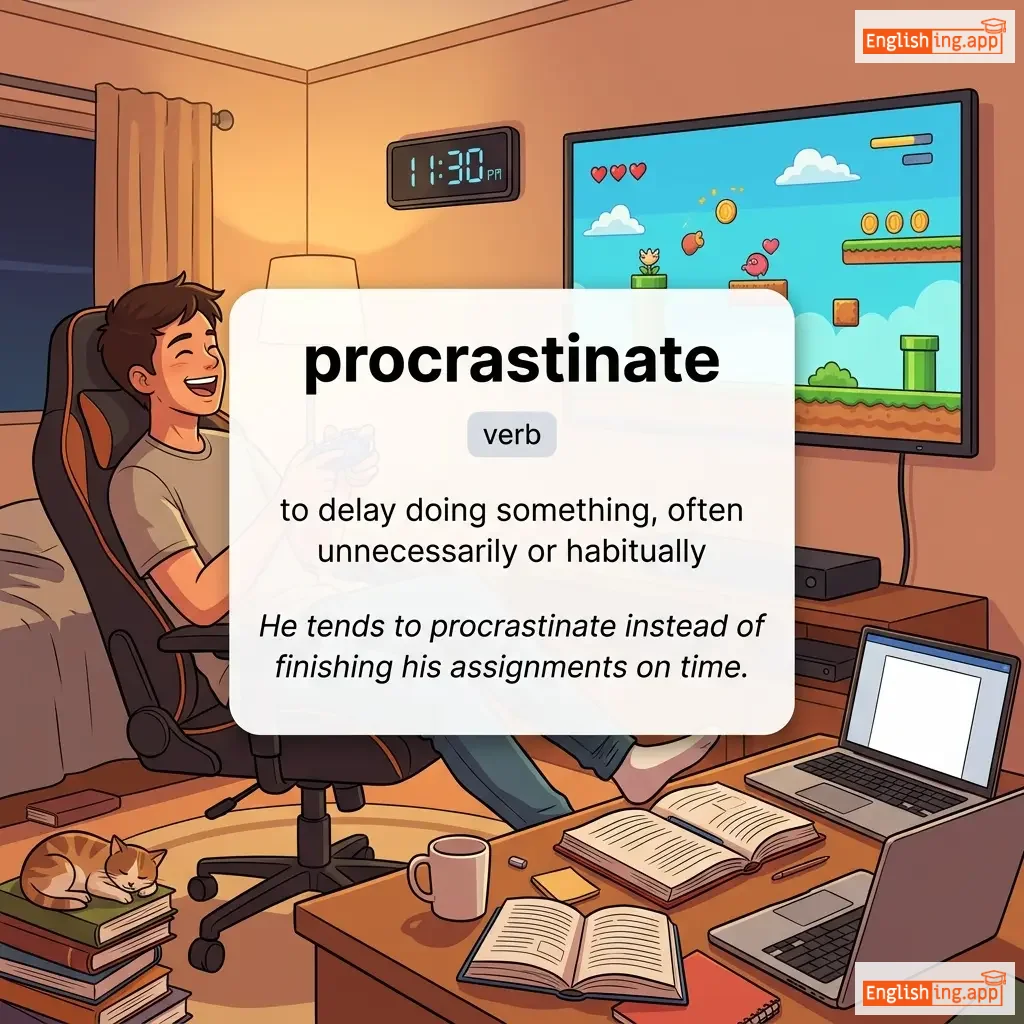
to delay doing something, often unnecessarily or habitually
To delay or postpone action; to put off doing something, especially out of habitual carelessness or laziness.
含义翻译
延迟或推迟行动;特别因为习惯性的疏忽或懒惰而不做某事。
Yánchí huò tuīchí xíngdòng; tèbié yīnwèi xíguàn xìng de shūhuǐ huò lǎnduò ér bù zuò mǒu shì.

例句

He tends to procrastinate instead of finishing his assignments on time.

He tends to procrastinate when facing difficult tasks.

他在面对困难任务时倾向于拖延。
Tā zài miànduì kùnnán rènwù shí qīngxiàng yú tuōyán.

示例表达

procrastinate till tomorrow

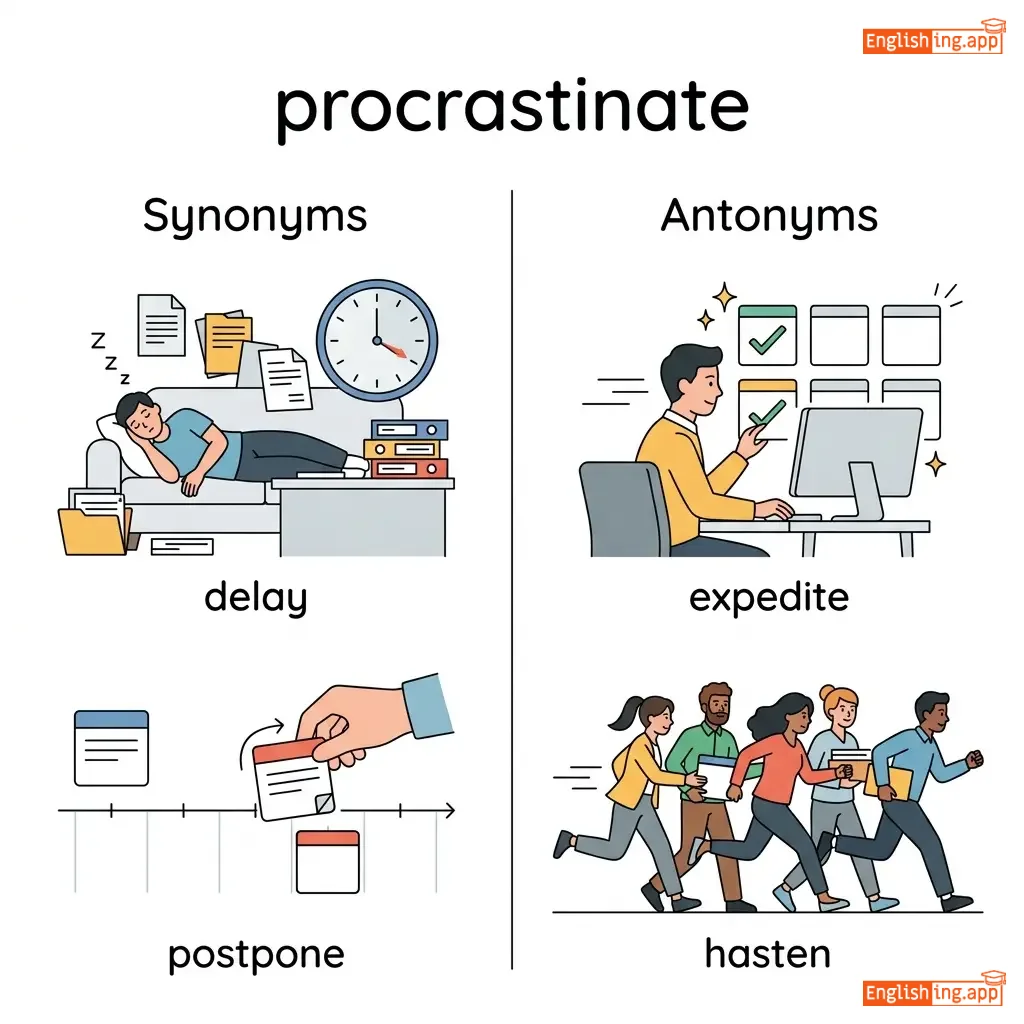
同义词

delay, postpone, stall, defer, put off
条目 1
delay, postpone, stall, defer, put off
条目 2
delay, postpone, defer, stall

反义词

expedite, hasten, advance, complete, rush
条目 1
expedite, hasten, advance
条目 2
expedite, complete, hasten, rush

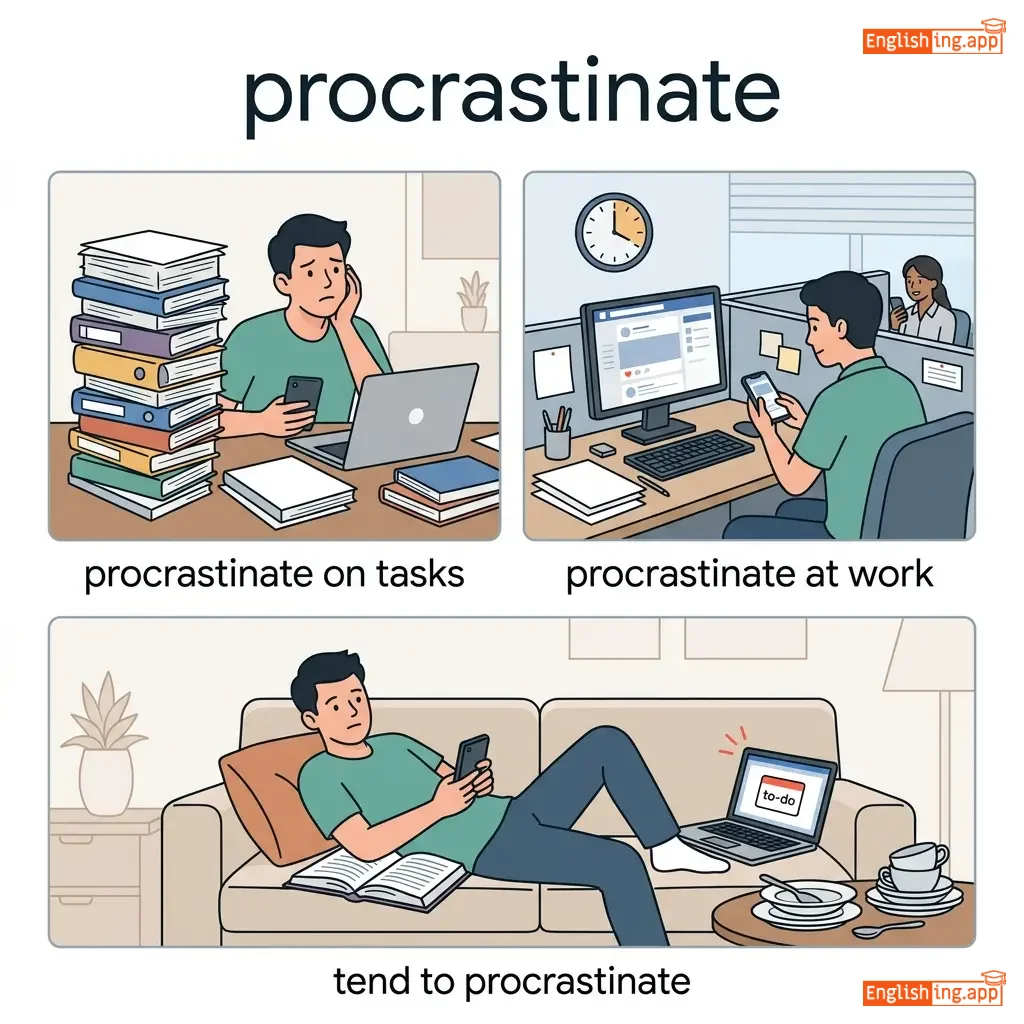
搭配词

procrastinate on tasks, procrastinate at work, tend to procrastinate

更多例句

I rarely attempt not to procrastinate.
我很少尝试不去拖延。
Wo hen shao changshi bu qu tuoyan.

相关词汇

To continually criticize, nag, or dominate (especially a husband).
To remove someone from a position or place of power or authority.
to treat with scorn or contempt (archaic form of disdain)
to mix or combine; to move among people and engage socially
to offer something for acceptance; to present
To be aware of beforehand; to predict or expect.

探索更多