词汇表

英语词汇词典 | 单词含义、定义和示例

noun
/ˈnoʊzˌɡeɪ/
花束 (huā shù)

a small bunch of flowers, typically given as a gift or carried for decoration

"She carried a nosegay of fresh roses to the ceremony."

"她拿着一束新鲜的玫瑰花去参加仪式。" (Tā názhe yī shù xīnxiān de méiguī huā qù cānjiā yíshì.)
nostalgia definition card — visual illustration of the meaning
noun
/nəˈstældʒə/
怀旧 (huáijiù)

a sentimental longing for the past, often for a period or place with happy memories

"The old photographs filled her with nostalgia."

"那些旧照片让她充满了怀旧感。" (Nàxiē jiù zhàopiàn ràng tā chōngmǎnle huáijiù gǎn.)
noun
/ˈnɒs.trɪl/
鼻孔 (bíkǒng)

either of the two openings in the nose through which air passes

"The doctor checked each nostril for any blockage."
"医生检查了每个鼻孔,寻找任何阻塞物。" (yīshēng jiǎnchá le měi gè bíkǒng, xúnzhǎo rènhé zǔsè wù.)
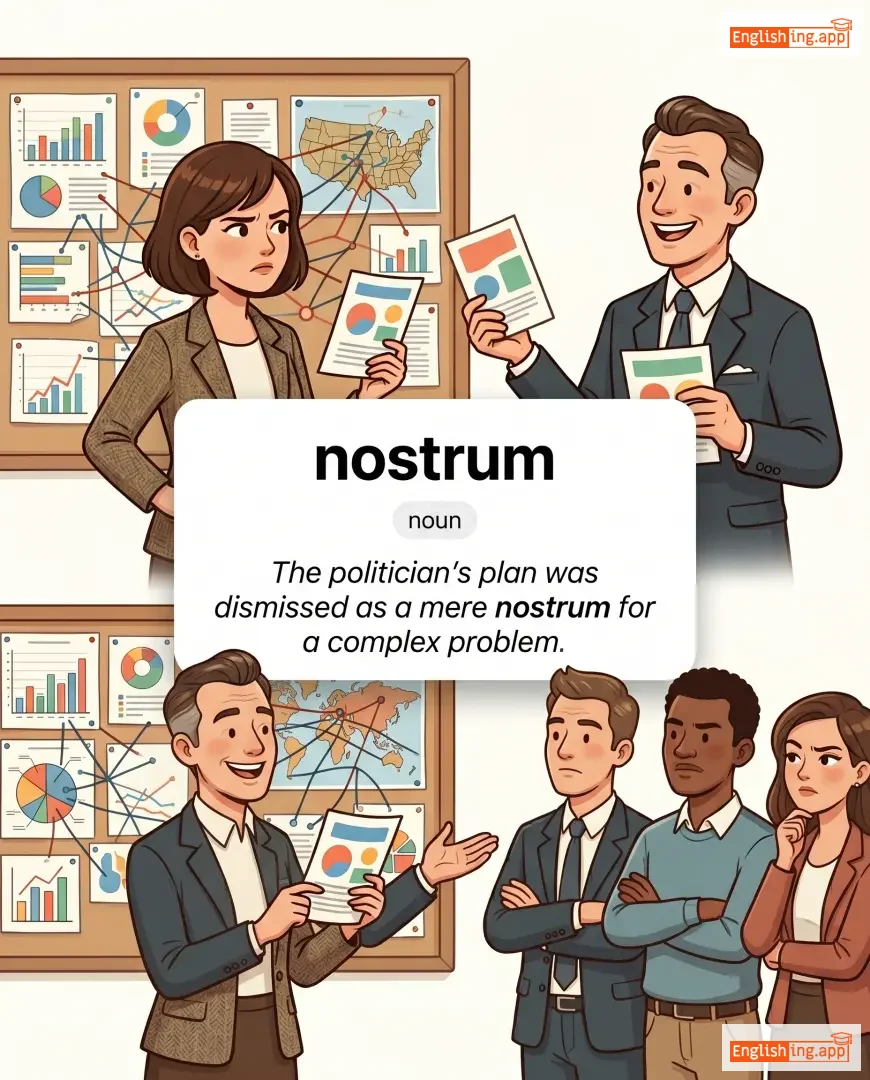
nostrum definition card — visual illustration of the meaning
noun
/ˈnɑːstrəm/
无效的药物 (wuxiao de yaowu)

a medicine or remedy, especially one that is not considered effective; a questionable solution

"The politician’s plan was dismissed as a mere nostrum for a complex problem."

"政治家的计划被视为一个复杂问题的简单无效药物。" (Zhèngzhì jiā de jìhuà bèi shì wéi yīgè fùzá wèntí de jiǎndān wúxiào yàowù.)
adverb
/nɒt/
(bu)

used to make a word or phrase negative

"I do not like spicy food."

"我不喜欢辣的食物。" (Wǒ bù xǐhuān là de shíwù.)
adjective
/ˈnoʊtəbl/
显著 (xian3zhu4)

worthy of attention or notice; remarkable

"She made a notable contribution to the project."

"她对这个项目做出了显著的贡献。" (Ta dui zhe ge xiangmu zuo chu le xian3zhu4 de gongxian.)
adverb
/ˈnoʊtəbli/
显著地 (xian zhu de)

used to indicate something worthy of attention or significant

"She is notably talented in painting."

"她在绘画方面非常有才华。" (Ta zai huihua fangmian feichang you caihua.)
noun
/noʊˈteɪʃən/
符号系统 (fúhào xìtǒng)

A system of symbols or signs used to represent information, especially in mathematics or music.

"The teacher explained the notation used in the algebra equations."

"老师解释了代数方程中使用的符号系统。" (Lǎoshī jiěshìle dàishù fāngchéng zhōng shǐyòng de fúhào xìtǒng.)
noun
/nɑːtʃ/
刻痕 (kè hén)

A small cut or groove on the edge or surface of something; a level or degree of achievement.

"He carved a notch on the stick to mark the days."

"他在棍子上刻了一个刻痕,以标记天数。" (Tā zài gùnzi shàng kè le yīgè kè hén, yǐ biāojì tiānshù.)
note definition card — visual illustration of the meaning
noun, verb
/noʊt/
便条 (biàn tiáo)

a brief record of facts, topics, or thoughts written down; to observe or remark upon something

"She wrote a quick note to remind herself of the meeting."

"她写了一张快速的便条,提醒自己开会的事。" (Tā xiěle yī zhāng kuài sù de biàn tiáo, tí xǐng zì jǐ kāi huì de shì.)
noun
/ˈnoʊtbʊk/

a small book with blank or ruled pages for writing notes; also a portable computer

"She opened her notebook to jot down some ideas."

adjective, verb
/ˈnoʊtɪd/
著名 (zhùmíng)

well known or famous; written down or observed

"He is a noted author in the field of history."

"他是历史领域的著名作家。" (Tā shì lìshǐ lǐngyù de zhùmíng zuòjiā.)
pronoun
/ˈnʌθɪŋ/
什么都没有 (shénme dōu méiyǒu)

not anything; no thing

"She has nothing to worry about."
"她没有什么可担心的。" (Tā méiyǒu shénme kě dānxīn de.)
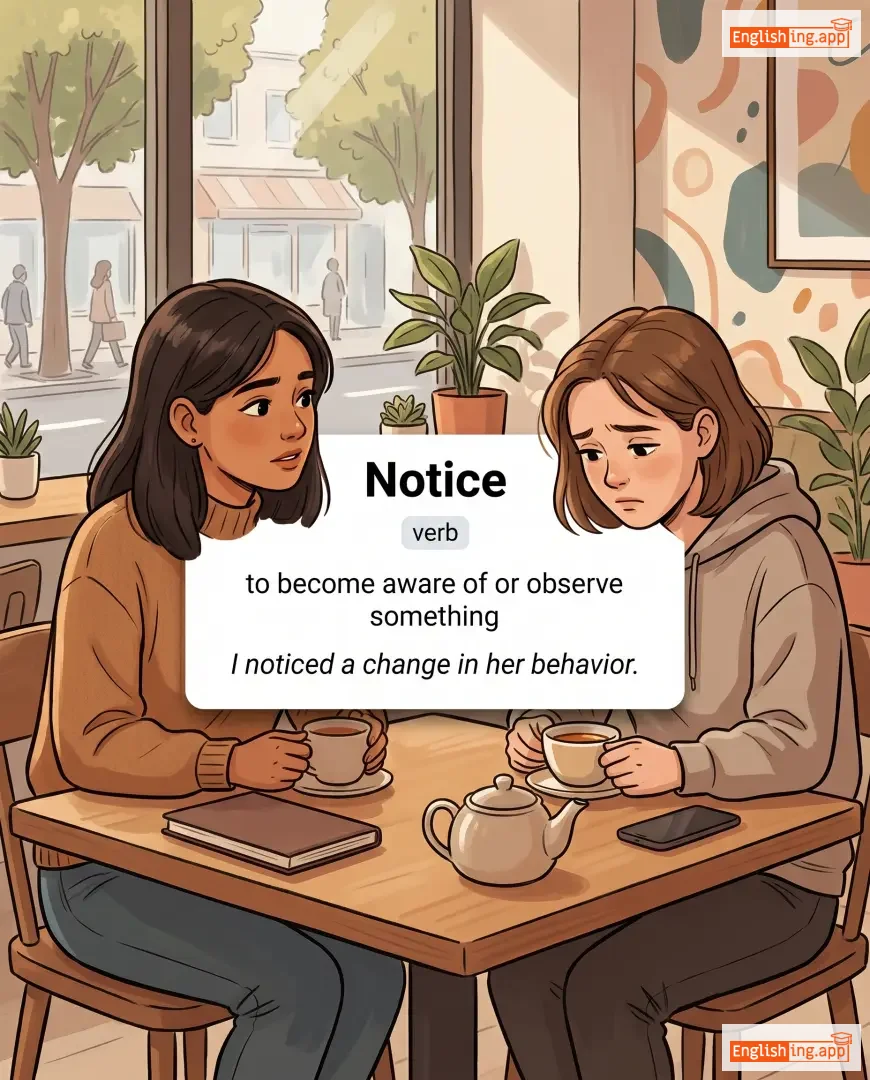
Notice definition card — visual illustration of the meaning
noun
/ˈnoʊtɪs/
通知 (tongzhi)

a written or printed announcement or notification

"He gave me a notice about the meeting."

"他给了我关于会议的通知。" (Ta gei le wo guanyu huiyi de tongzhi.)
adjective
/ˈnoʊtɪsəbl/
显著的 (xiǎnzhù de)

Easily seen, observed, or recognized.

"There was a noticeable improvement in her performance."

"她的表现有了显著的改善。" (Tā de biǎoxiàn yǒu le xiǎnzhù de gǎishàn.)
noun
/ˌnəʊtɪfɪˈkeɪʃən/
通知 (tongzhi)

an official or formal notice or message informing someone of something; an alert delivered by a system or device

"You will receive a notification when your application is approved."
"当你的申请被批准时,你会收到通知。" (dang ni de shenqing bei pizhun shi ni hui shoudao tongzhi)
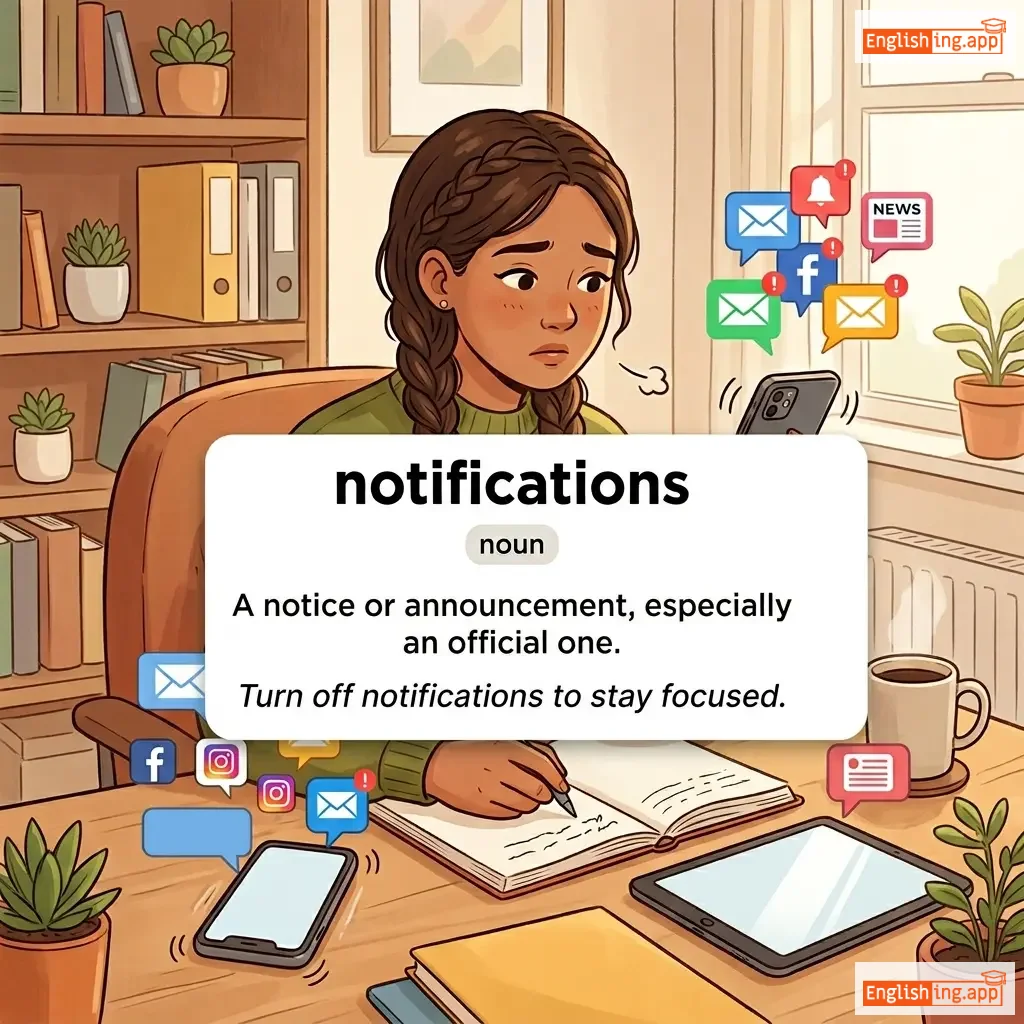
notifications definition card — visual illustration of the meaning
noun
/ˌnoʊtɪfɪˈkeɪʃənz/
通知 (tongzhi)

A notice or announcement, especially an official one.

"Turn off notifications to stay focused."

"关闭通知以保持专注。" (Guānbì tōngzhī yǐ bǎochí zhuānzhù.)
verb
/ˈnoʊtɪfaɪ/
通知 (tongzhi)

to inform someone officially about something

"The manager will notify the staff about the schedule change."

"经理将通知员工关于时间表的变化。" (Jīnglǐ jiāng tōngzhī yuángōng guānyú shíjiān biǎo de biànhuà.)
noun
/ˈnoʊʃən/
概念 (gai nian)

An idea, belief, or concept about something.

"He had a vague notion of what she wanted."

"他对她想要什么有一个模糊的概念。" (Ta dui ta xiang yao shenme you yige mohu de gainian.)
noun
/ˌnoʊtəˈraɪəti/
恶名 (e ming)

The state of being famous or well-known for something bad.

"The criminal gained notoriety for his daring escapes."

"罪犯因其大胆的逃脱而声名狼藉。" (Zuifan yin qi dadan de taotuo er shengming langji.)
adjective
/nəˈtɔːriəs/
臭名昭著 (chòumíng zhāozhù)

Famous or well-known for something bad or undesirable

"The area is notorious for its high crime rate."

"该地区因其高犯罪率而臭名昭著。" (Gāi dìqū yīn qí gāo fànzuì lǜ ér chòumíng zhāozhù.)
preposition/adverb/conjunction
/ˌnɒtwɪθˈstændɪŋ/
尽管如此 (jǐn guǎn rúcǐ)

In spite of; despite

"Notwithstanding the challenges, the team completed the project."

"尽管面临挑战,团队完成了项目。" (Jǐn guǎn miàn lín tiǎo zhàn, tuánduì wán chéng le xiàng mù.)
verb
/ˈnʌrɪʃ/
滋养 (ziyang)

To provide with food or other substances necessary for growth, health, and good condition

"Good books nourish the mind."
"好书滋养心灵。" (Hao shu ziyang xinling.)
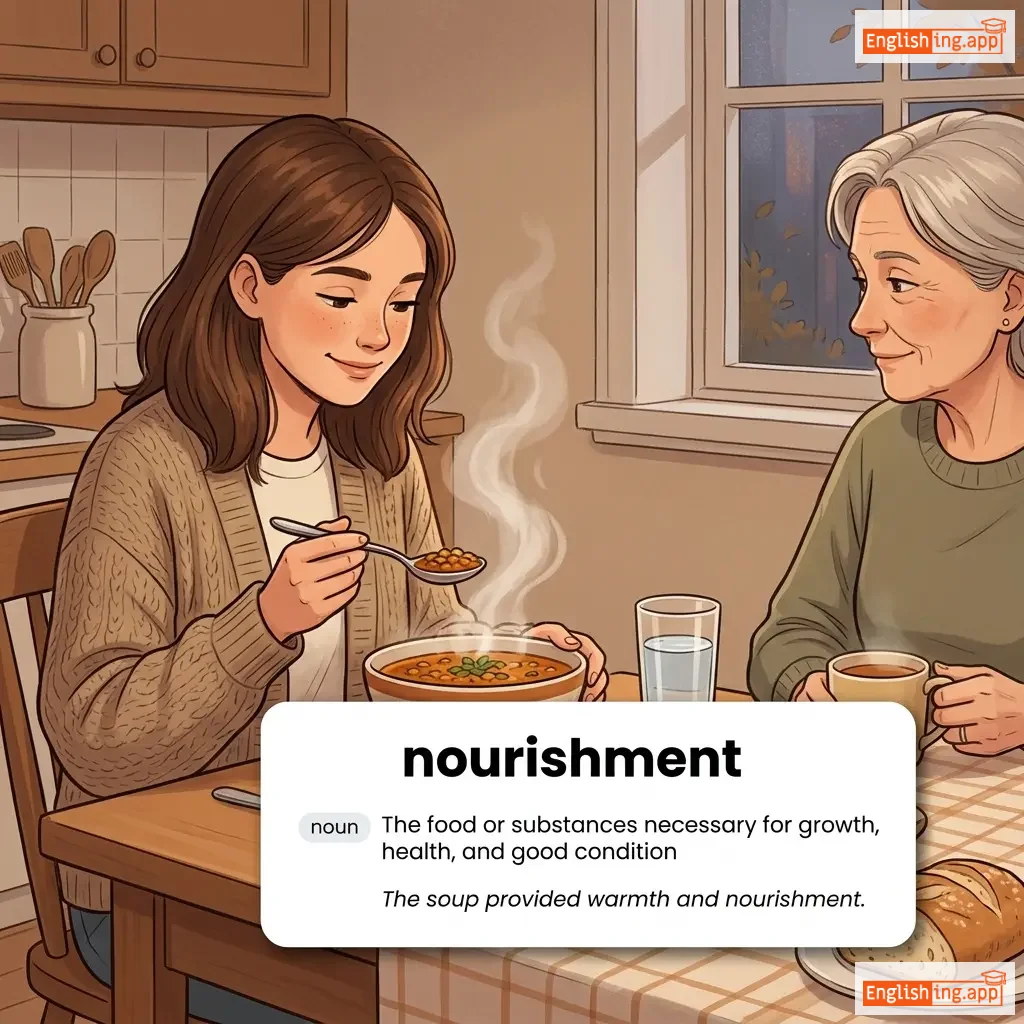
nourishment definition card — visual illustration of the meaning
noun
/ˈnʌrɪʃmənt/
营养 (yingyang)

The food or substances necessary for growth, health, and good condition

"The soup provided warmth and nourishment."

"这碗汤提供了温暖和营养。" (Zhe wan tang tigongle wennuan he yingyang.)
noun
/ˈnoʊvə/
新星 (一颗星星突然亮度增加,然后缓慢返回到原始状态) (nova)

A star showing a sudden large increase in brightness and then slowly returning to its original state

"Astronomers observed a bright nova in the sky."

"天文学家在天空中观察到了一颗明亮的新星。" (Tian wenxuejia zai tiankong zhong guancha dao le yi ke mingliang de xinxing.)
noun/adjective
/ˈnɒvəl/
小说 / 新的 (xiaoshuo / xin de)

A long fictional narrative; also something new or unusual.

"She spent the weekend reading a historical novel."

"她在周末阅读了一本历史小说。" (Ta zai zhoumo yuedule yi ben lishi xiaoshuo.)
noun
/ˈnɒvəlɪst/
小说家 (xiǎoshuōjiā)

a person who writes novels

"The novelist spent years writing his new book."

"小说家花了多年写他的最新小说。" (Xiǎoshuōjiā huāle duōnián xiě tā de zuìxīn xiǎoshuō.)
noun
/ˌnɒvəˈlɛt/
短篇小说 (duǎnpiān xiǎoshuō)

A short novel or long short story.

"The author published a novellette as a preview of her upcoming series."
"作者作为她即将发布的系列的预览,发布了一个短篇小说。" (Zuòzhě zuòwéi tā jíjiāng fābù de xìliè de yùlǎn, fābùle yīgè duǎnpiān xiǎoshuō.)
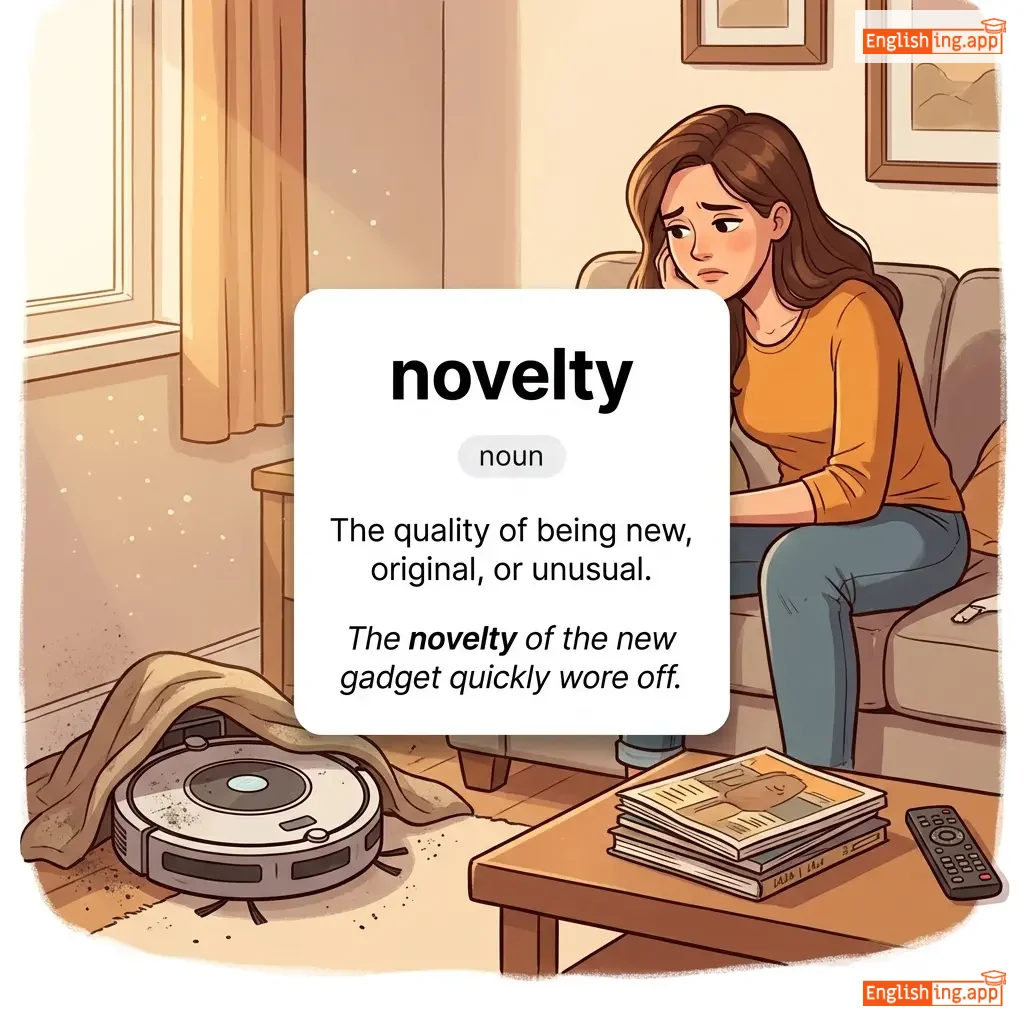
novelty definition card — visual illustration of the meaning
noun
/ˈnɒvəlti/
新颖 (xinying)

The quality of being new, original, or unusual.

"The novelty of the new gadget quickly wore off."

"新款小工具的新颖感很快就消失了。" (Xīn kuǎn xiǎo gōngjù de xīnyǐng gǎn hěn kuài jiù xiāoshī le.)
noun
/noʊˈvɛmbər/
十一月 (shiyi yue)

the eleventh month of the year in the Gregorian calendar

"November is often cool and quiet before winter begins."

"十一月通常在冬天开始前比较凉爽而安静。" (shiyi yue tongchang zai dongtian kaishi qian bijiao liangshuang er anjing)
noun
/ˈnɒvɪs/
新手 (xīnshǒu)

A person new to or inexperienced in a field or activity.

"He is still a novice at playing the guitar."

"他在弹吉他时仍然是个新手。" (Tā zài tán jítā shí réngrán shì gè xīnshǒu.)
adverb
/naʊ/
现在 (xianzai)

at the present moment or time

"I am studying now."

"我现在正在学习。" (Wǒ xiànzài zhèngzài xuéxí.)
adverb
/ˈnaʊədeɪz/
如今; 现在 (rujin; xianzai)

at the present time; in these times

"Now-a-days, people prefer online shopping."

"现在人们更喜欢在线购物。" (Xianzai renmen geng xihuan zaixian gouwu.)
adverb
/ˈnaʊədeɪz/
如今 (rújīn)

At the present time; in contrast with the past.

"Nowadays, many people prefer shopping online."

"如今,许多人更喜欢在线购物。" (Rújīn, xǔduō rén gèng xǐhuān zàixiàn gòuwù.)
adverb
/ˈnoʊˌwɛr/
无处 (wuchu)

in or to no place; not anywhere

"The missing keys were nowhere to be found."

"丢失的钥匙无处可找。" (Diushi de yaoshi wuchu ke zhao.)
adjective
/ˈnɑːkʃəs/
有害的 (youhai de)

harmful, poisonous, or very unpleasant

"The factory released noxious fumes into the air."

"工厂释放了有害气体进入空气。" (Gongchang shifang le youhai qiti jinru kongqi.)
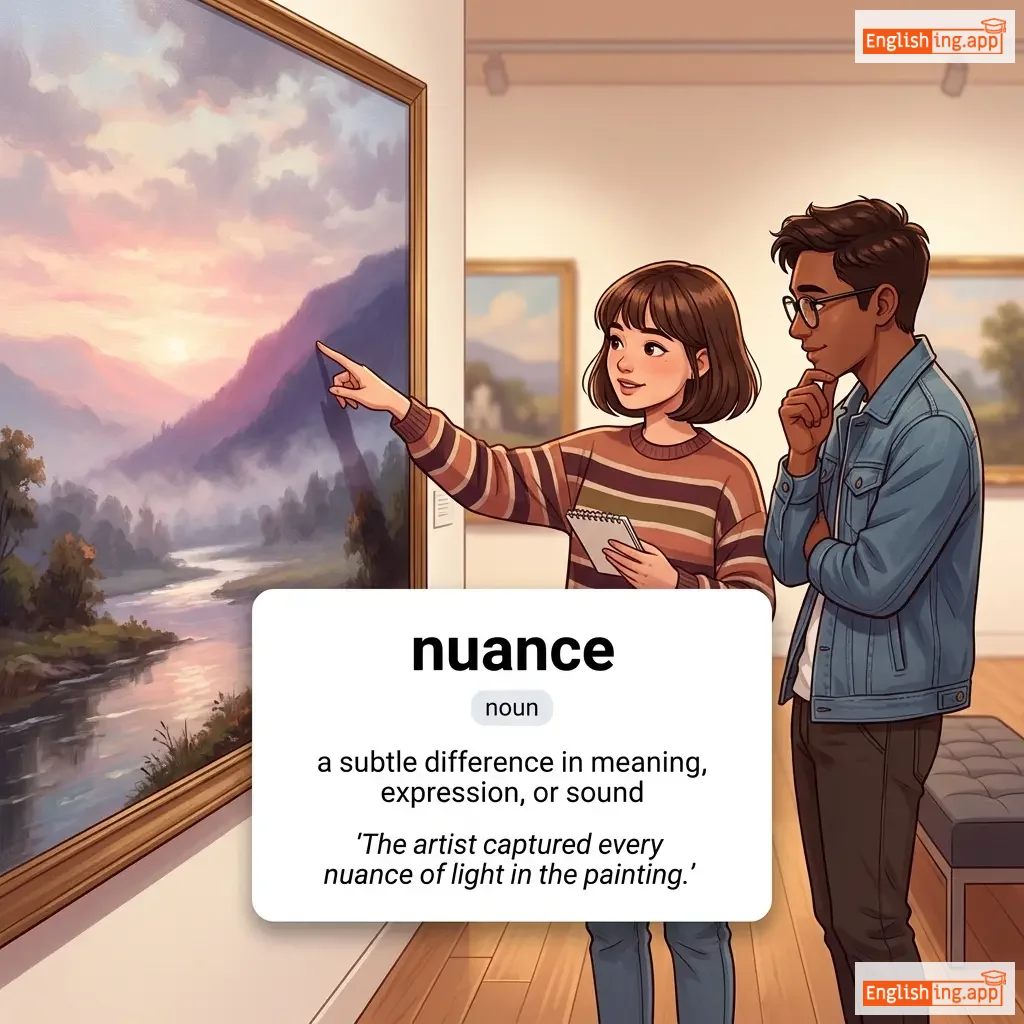
nuance definition card — visual illustration of the meaning
noun
/ˈnuːˌɑːns/

a subtle difference in meaning, expression, or sound

"The artist captured every nuance of light in the painting."

adjective
ˈnuː.ɑːnst
有细微差别的 (yǒu xì wēi chābié de)

Characterized by subtle shades of meaning or expression; having or characterized by subtle and often appealingly complex qualities.

"His argument was nuanced and well-structured."

"他的论点有细微差别且结构良好。" (Tā de lùnzhēng yǒu xì wēi chābié qiě jiégòu liánghǎo.)
adjective
/ˈnjuːbaɪl/
年轻的女孩 (niánqīng de nǚhái)

of a young woman, sexually mature and suitable for marriage

"The village was celebrating the festival with its nubile maidens dancing."

"村庄正在庆祝节日,跳舞的是年轻的女孩。" (Cūnzhuāng zhèngzài qìngzhù jiérì, tiàowǔ de shì niánqīng de nǚhái.)
adjective
/ˈnuːkliər/
核能 (hénéng)

relating to the nucleus of an atom or to nuclear energy

"The country is developing nuclear energy."

"该国正在开发核能。" (Gāi guó zhèngzài kāifā hénéng.)
verb
/ˈnuːkliˌeɪt/
成核 (chenghe)

to form into a nucleus or bring together into a central part

"The droplets began to nucleate around tiny particles in the air."
"水滴开始在空气中的微小颗粒周围形成核。" (Shuǐdī kāishǐ zài kōngqì zhōng de wēi xiǎo kēlì zhōuwéi xíngchéng hé.)
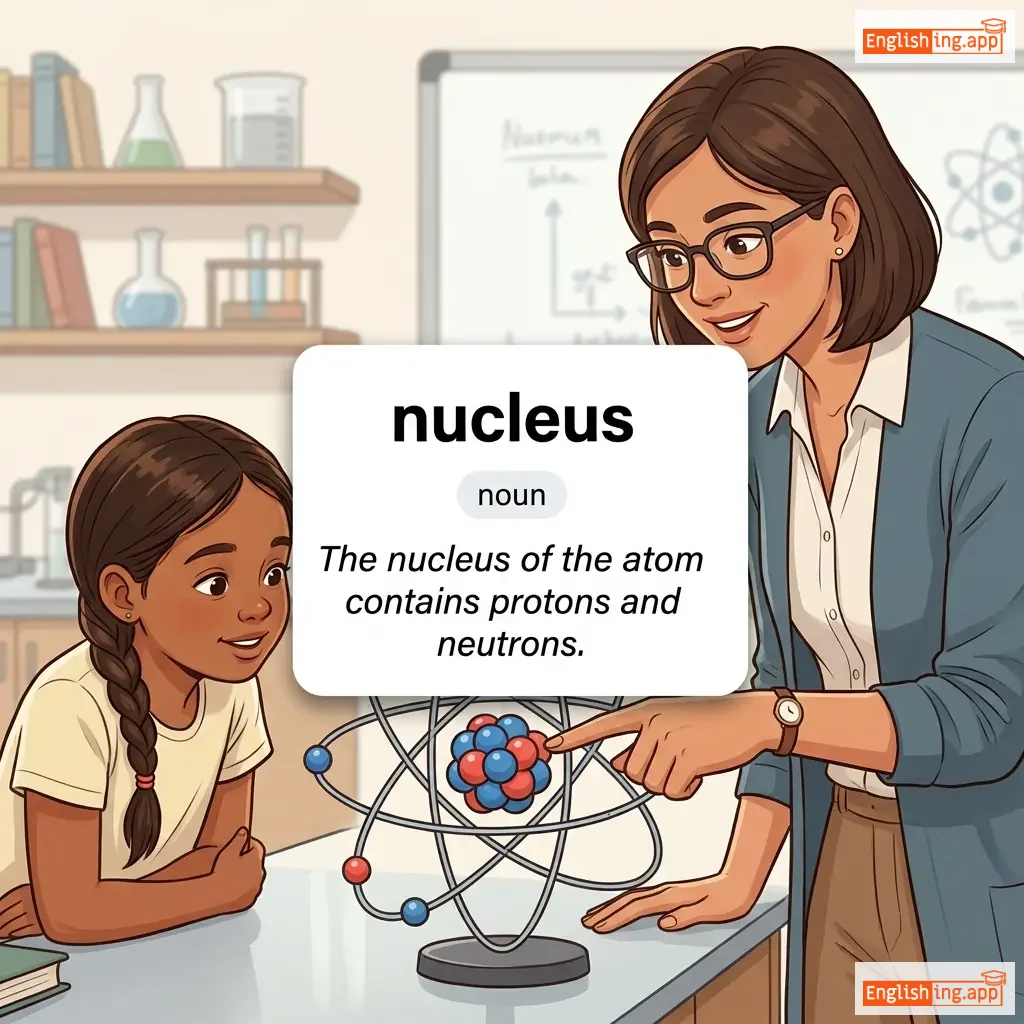
nucleus definition card — visual illustration of the meaning
noun
/ˈnjuː.kli.əs/
原子核 (yuánzǐhé)

The central and most important part of something, forming the basis for its activity and growth; in biology, the central part of a cell.

"The nucleus of the atom contains protons and neutrons."

"原子核包含质子和中子。" (Yuánzǐhé bāohán zhìzǐ hé zhōngzǐ.)
adjective
/nuːd/
裸体 (luǒtǐ)

Wearing no clothes; naked.

"The artist painted a nude model."

"艺术家画了一位裸体模特。" (Yìshùjiā huàle yī wèi luǒtǐ mótè.)
verb
/nʌdʒ/
轻推 (qing tui)

To push someone gently, usually with your elbow, in order to attract attention.

"She nudged him to be quiet during the meeting."
"她在会议中轻轻地用肘部推了他一下,让他保持安静。" (Ta zai huiyi zhong qingqing de yong zhoubu tui le ta yixia, rang ta baochi anjing.)
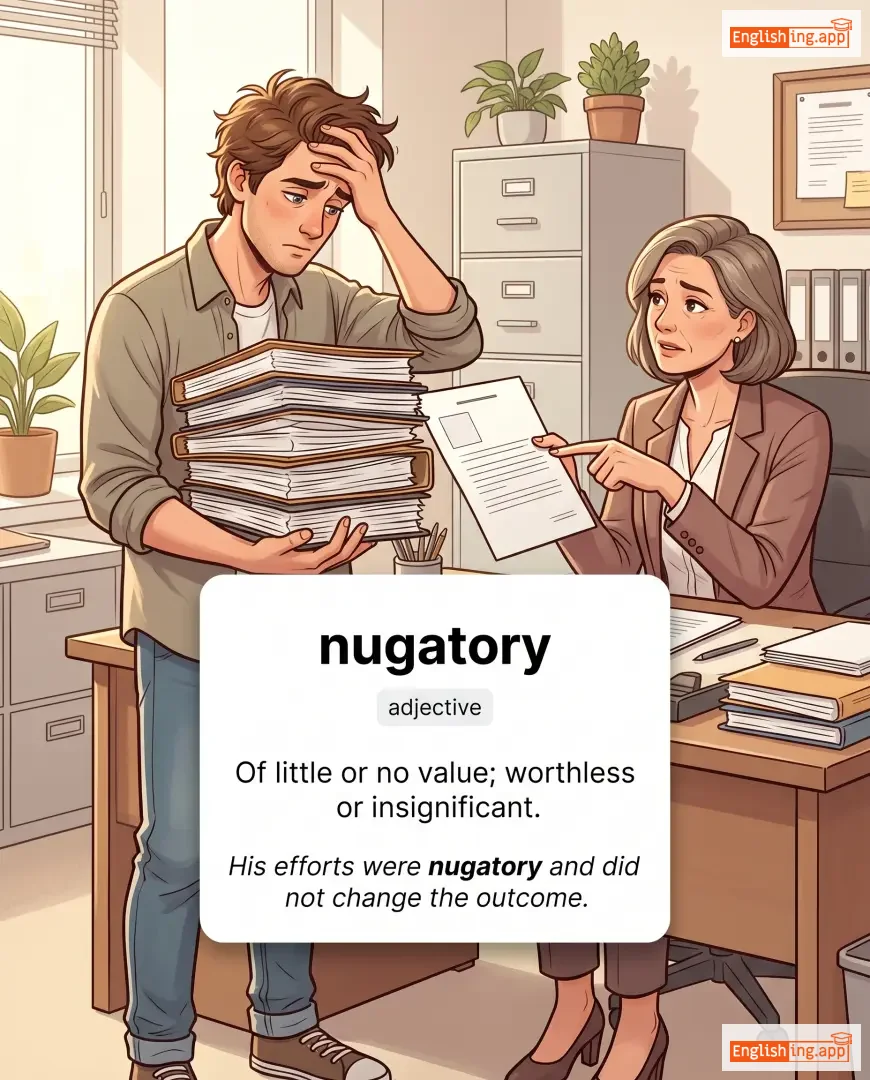
nugatory definition card — visual illustration of the meaning
adjective
/ˈnjuː.ɡə.tɔːr.i/
微不足道 (weibuzhidao)

Of little or no value; worthless or insignificant.

"His efforts were nugatory and did not change the outcome."

"他的努力微不足道,未能改变结果。" (Tade nuli weibuzhidao, wei neng gaibian jieguo.)
noun
/ˈnjuː.səns/
麻烦 (mafan)

A person, thing, or situation that causes inconvenience or annoyance.

"The loud construction noise was a nuisance to the neighbors."

"吵闹的施工噪音是邻居们的麻烦。" (Chao nao de shigong zaoyin shi linjumen de mafan.)
nullify definition card — visual illustration of the meaning
verb
/ˈnʌlɪfaɪ/

to make legally null and void; to cancel or invalidate

"The contract was nullified due to fraud."

noun
/ˈnʌmbər/
号码 (haoma)

a mathematical value used to count, measure, or label

"She gave me her phone number."

"她给了我她的电话号码。" (Ta gei le wo ta de dianhua haoma.)
adjective
/ˈnjuː.mər.ə.bəl/
可计数的; 数得出的 (ke jishu de; shu de chu)

capable of being counted; countable

"The stars in the sky are not numerable."

"天空中的星星是不可计数的。" (tiānkōng zhōng de xīngxīng shì bù kě jìshù de.)
noun
/ˌnjuːməˈreɪʃən/
计数 (jishu)

the action or process of counting or assigning numbers

"The teacher explained the basics of numeration to the students."

"老师向学生解释了计数的基础知识。" (Laoshi xiang xuesheng jieshi le jishu de jichu zhishi.)