词汇表

英语词汇词典 | 单词含义、定义和示例

adjective
/ˈnɔːtɪkəl/
航海 (hanghai)

relating to ships, sailors, or navigation on water

"He studied nautical charts before setting sail."

"他在起航前研究了航海图。" (Ta zai qihang qian yanjiu le hanghai tu.)
adjective
/ˈneɪvəl/
海军的 (haijun de)

relating to a country's navy or military ships

"The country invested heavily in naval defense."

"该国在海军防御方面进行了大量投资。" (Gai guo zai haijun fangyu fangmian jin xing le daliao touzi.)
noun
/ˈneɪ.vəl fɔːrs/
海军 (hǎijūn)

the branch of a nation's armed services that conducts military operations at sea

"The naval force protected the country's coastline from enemy attacks."

"海军保护了国家的海岸线免受敌人攻击" (hǎijūn bǎohùle guójiā de hǎi'àn xiàn miǎn shòu dírén gōngjī)
noun
/neɪv/
教堂的中央部分 (jiàotáng de zhōngyāng bùfen)

the central part of a church building intended to accommodate the congregation

"The choir sang beautifully in the church nave."

"合唱团在教堂的内夫里唱得非常动听。" (Héchàngtuán zài jiàotáng de nèifū lǐ chàng dé fēicháng dòngtīng.)
👶

Navel

noun
/ˈneɪvəl/

the small hollow or raised area in the middle of the stomach, also called the belly button

"The baby’s navel was carefully cleaned after birth."

adjective
/ˈnæv.ɪ.ɡə.bəl/
可通航的 (ke tong hang de)

Able to be sailed on or through by ships or boats.

"The river is navigable for large cargo ships."
"这条河流适合大型货船通行。" (Zhe tiao he liu shi he da xing huo chuan tong xing.)
navigate definition card — visual illustration of the meaning
verb
/ˈnæv.ɪ.ɡeɪt/

To plan and direct the course of a ship, vehicle, or journey.

"The captain navigated the ship safely through the storm."

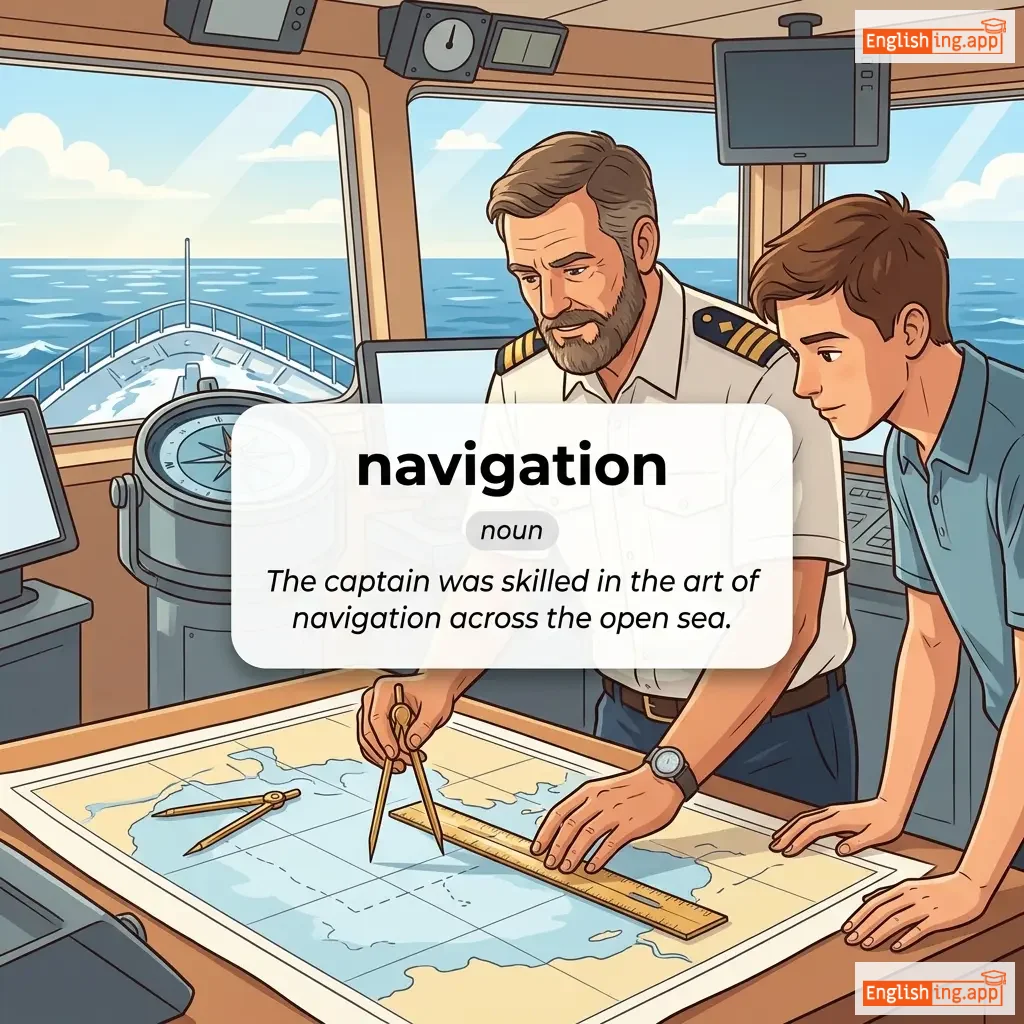
navigation definition card — visual illustration of the meaning
noun
/ˌnævɪˈɡeɪʃən/
导航 (daohang)

the process or activity of accurately determining one's position and planning and following a route

"The captain was skilled in the art of navigation across the open sea."

"船长擅长在开阔海洋中的导航艺术。" (chuánzhǎng shàncháng zài kāikuò hǎiyáng zhōng de dǎoháng yìshù.)
noun
/ˈneɪvi/
海军 (haijun)

the branch of armed forces that conducts military operations at sea

"He joined the navy after graduating from college."

"他在大学毕业后加入了海军。" (Tā zài dàxué bìyè hòu jiārùle hǎijūn.)
noun
/ˈneɪˌseɪ.ɪŋ/
负面言论 (fùmiàn yánlùn)

The act of expressing negative or pessimistic views.

"His constant naysaying discouraged the team."

"他不断的负面言论使团队失去了动力。" (Tā bùduàn de fùmiàn yánlùn shǐ tuánduì shīqùle dònglì.)
noun
/ˌɛn.biː.esˈpiː/
不间断空格 (bu jian duan kong ge)

a non-breaking space character in HTML used to prevent an automatic line break at its position

"Use   in HTML to add a space that won't break into a new line."

"在HTML中使用 添加一个不会换行的空格。" (zai HTML zhong shiyong  tianjia yige bu hui huanhang de kongge.)
noun
/niːp/
低潮 (dīcháo)

A tide just after the first or third quarters of the moon when the difference between high and low tide is least.

"During a neap tide, the water level change is minimal."

"在低潮期间,水位变化最小。" (Zai dīcháo qījiān, shuǐwèi biànhuà zuìxiǎo.)
preposition
/nɪə(r)/
(jin)

At or to a short distance away; close in space, time, or relationship.

"There is a park near my house."

"我家附近有一个公园。" (Wo jia fujin you yige gongyuan.)
adverb
/ˈnɪərbaɪ/
附近; 在附近 (fùjìn; zài fùjìn)

close to; not far away; in the neighborhood

"There is a grocery store nearby."

"附近有一家杂货店。" (Fùjìn yǒu yī jiā záhuòdiàn.)
adjective
/ˈnɪəˌbaɪ/
附近 (fujin)

close to a particular place or person

"The nearest gas station is nearby."

"最近的加油站就在附近。" (Zui jin de jia you zhan jiu zai fujin.)
adverb
/ˈnɪəli/
几乎 (jīhū)

almost, but not completely

"She nearly missed the bus."

"她差点错过了公交车。" (Tā chàdiǎn cuòguòle gōngjiāochē.)
adjective
/niːt/
整洁 (zhěngjié)

tidy, orderly, and well-arranged; simple and elegant

"His handwriting is very neat and easy to read."

"他的字迹很整洁,容易阅读。" (Tā de zìjì hěn zhěngjié, róngyì yuèdú.)
adverb
/ˈniːtli/
整齐地; 干净地 (zhěngqí de; gānjìng de)

in a tidy and orderly way; carefully and precisely

"She arranged the books neatly on the shelf."

"她把书整齐地放在书架上。" (Tā bǎ shū zhěngqí de fàng zài shūjià shàng.)
noun
/ˈneb.jʊ.lə/
星云 (xingyun)

A cloud of gas and dust in outer space, sometimes visible in the night sky.

"The Orion Nebula is one of the brightest in the sky."

"猎户座星云是天空中最明亮的之一。" (Liè hù zuò xīng yún shì tiānkōng zhōng zuì míngliàng de zhī yī.)
adjective
/ˈnɛbjələs/
朦胧 (ménglóng)

Unclear, vague, or ill-defined; resembling a cloud or haze.

"His plan for the future was still nebulous and hard to understand."

"他对未来的计划仍然是朦胧的,难以理解。" (tā duì wèilái de jìhuà réngrán shì ménglóng de, nán yǐ lǐjiě.)
adverb
/ˌnɛsəˈsɛrɪli/
不一定 (bù yí dìng)

as a necessary result; inevitably

"It doesn’t necessarily mean you’re wrong."

"这不一定意味着你错了。" (Zhè bù yí dìng yìwèizhe nǐ cuòle.)
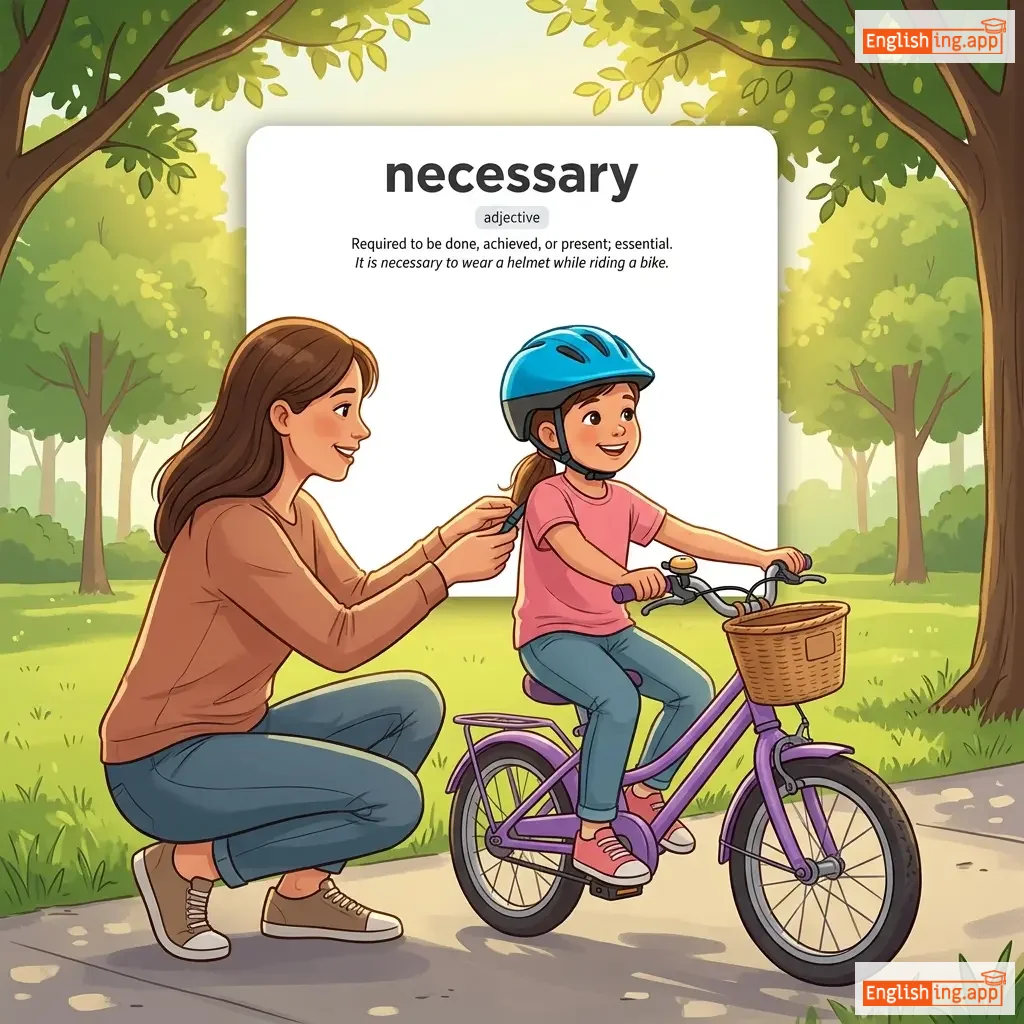
necessary definition card — visual illustration of the meaning
adjective
/ˈnɛsəsɛri/

Required to be done, achieved, or present; essential.

"It is necessary to wear a helmet while riding a bike."

verb
/nəˈsɛsɪteɪt/
使成为必要 (shǐ chéngwéi bìyào)

To make something necessary or unavoidable.

"The heavy rains necessitated the cancellation of the event."
"大雨使得活动的取消成为必然。" (Dàyǔ shǐdé huódòng de qǔxiāo chéngwéi bìrán.)
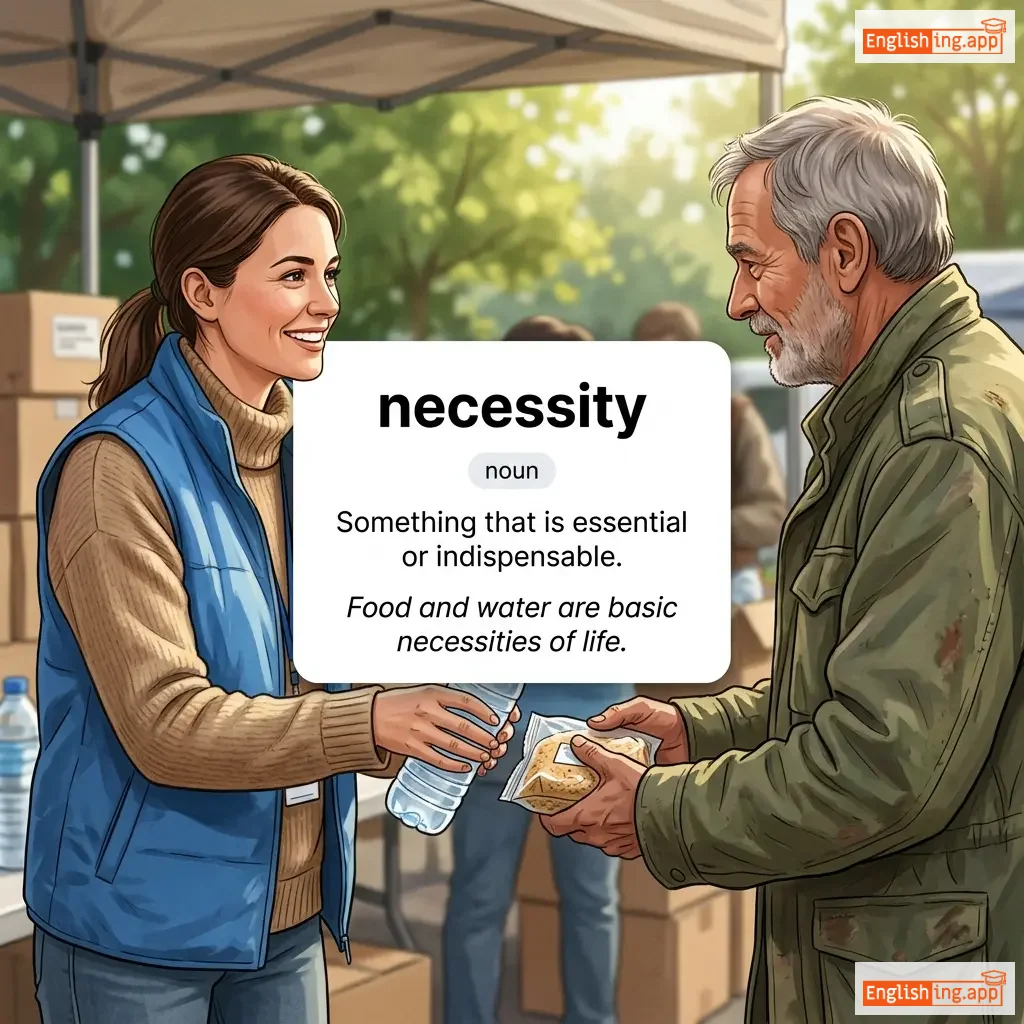
necessity definition card — visual illustration of the meaning
noun
/nəˈsɛsəti/
必要性 (bì yào xìng)

Something that is essential or indispensable.

"Food and water are basic necessities of life."

"食物和水是生活中的基本必需品。" (Shíwù hé shuǐ shì shēnghuó zhōng de jīběn bìxū pǐn.)
noun
/nɛk/
脖子 (bozi)

the part of the body connecting the head and the shoulders

"She wore a necklace around her neck."

"她脖子上戴着一条项链。" (Tā bózi shàng dàizhe yītiáo xiàngliàn.)
noun
/ˈnek.ləs/
项链 (xianglian)

a piece of jewelry that is worn around the neck

"She wore a beautiful diamond necklace to the party."

"她在派对上戴着一条漂亮的钻石项链。" (Tā zài pàiduì shàng dàizhe yītiáo piàoliang de zuànshí xiàngliàn.)
noun
/ˈnɛkˌlaɪn/
领口 (lǐngkǒu)

the edge of a garment around the neck, especially as cut to form a particular shape

"The dress has a beautiful V-shaped neckline."

"这件裙子有一个漂亮的V形领口。" (Zhè jiàn qúnzi yǒu yīgè piàoliang de V xíng lǐngkǒu.)
noun
/ˈnek.taɪ/
领带 (lingdai)

a strip of cloth worn around the neck under a shirt collar and tied in front

"He adjusted his necktie before the important meeting."

"他在重要会议前调整了他的领带。" (Tā zài zhòngyào huìyì qián tiáozhěngle tā de lǐngdài.)
noun
/nɪˈkrɒlədʒi/
讣告 (fugao)

An obituary notice or a list of people who have recently died.

"The newspaper published a necrology of notable figures who passed away that year."

"报纸发布了该年已故知名人物的讣告。" (Baozhi fabulei gai nian yigou zhiming renwu de fugao.)
🧙‍♂️

necromancer

noun
/ˈnɛkrəˌmænsər/

a person who practices necromancy; a wizard or magician who claims to communicate with the dead

"The villagers feared the old necromancer who lived at the edge of the forest."

noun
/ˈnɛkrəˌmænsi/
死灵法 (sǐlíng fǎ)

the practice of communicating with the dead, often to predict the future

"Ancient texts described rituals of necromancy performed by priests."

"古代的文献描述了由祭司执行的死灵法仪式。" (Gǔdài de wénxiàn miáoshùle yóu jìsī zhíxíng de sǐlíng fǎ yíshì.)
noun
/nəˈkrɒpəlɪs/
古代墓地 (gǔdài mùdì)

a large ancient cemetery with elaborate tombs

"The archaeologists discovered artifacts in the necropolis of the ancient city."

"考古学家在古城的内克罗波利斯中发现了文物。" (Kǎogǔxuéjiā zài gǔ chéng de nèikèluōbōlìsī zhōng fāxiànle wénwù.)
noun
/nɛˈkroʊsɪs/
坏死 (huàisǐ)

the death of body tissue due to disease, injury, or lack of blood supply

"The doctor explained that the patient’s wound showed signs of necrosis."
"医生解释说,病人的伤口显示出坏死的迹象。" (Yīshēng jiěshì shuō, bìngrén de shāngkǒu xiǎnshì chū huàisǐ de jìxiàng.)
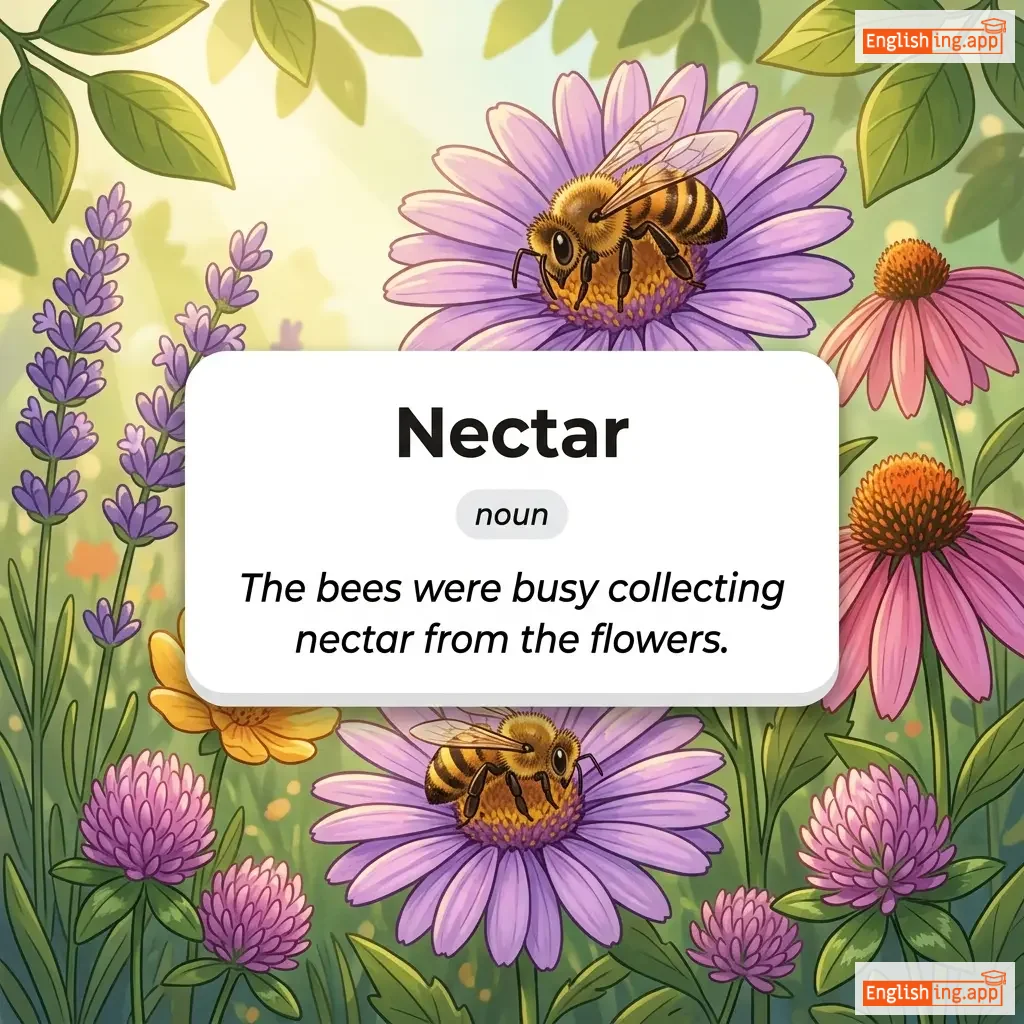
Nectar definition card — visual illustration of the meaning
noun
/ˈnɛktər/
甘露 (ganlu)

a sweet liquid produced by flowers and collected by bees; in mythology, the drink of the gods

"The bees were busy collecting nectar from the flowers."

"蜜蜂忙于从花朵中采集甘露。" (Mifeng mangyu cong huaduo zhong caiji ganlu.)
noun
/ˈnɛktəriːn/
油桃 (一种光滑皮肤的桃子品种) (youtao)

A smooth-skinned variety of peach.

"She bought a basket of fresh nectarines from the market."

"她从市场上买了一篮子新鲜的油桃。" (Ta cong shichang shang mai le yi lanzi xinxian de youtao.)
need definition card — visual illustration of the meaning
verb
/niːd/
需要 (xū yào)

to require something or someone

"I need your help with this task."

"我需要你的帮助来完成这个任务。" (Wǒ xū yào nǐ de bāng zhù lái wán chéng zhè ge rèn wù.)
noun, verb
/ˈniː.dəl/
(zhēn)

a small thin metal tool with a point used for sewing or injecting; to provoke or annoy someone

"The nurse used a sterile needle for the injection."

"护士使用了无菌针头进行注射。" (Hùshì shǐyòng le wújūn zhēntóu jìnxíng zhùshè.)
adjective
/ˈniːd.ləs/
不必要的 (needluhs)

unnecessary; not required; without purpose

"The argument was needless and could have been avoided."

"这场争论是多余的,本来可以避免。" (zhe chang zhenglun shi duoyu de, benlai keyi bimian)
noun
/ˈniːdəlwɜːrk/
针线活, 刺绣 (zhēn xiàn huó, cìxiù)

The craft of sewing, embroidery, or knitting done with a needle.

"Her grandmother taught her the art of needlework."

"她的祖母教她针线活的艺术。" (Tā de zǔmǔ jiāo tā zhēn xiàn huó de yìshù.)
adjective
/ˈniːdi/
贫困的 (pínkùn de)

Lacking the basic necessities of life; poor.

"The charity provides food and shelter for needy families."

"慈善机构为贫困家庭提供食物和住所。" (Císhàn jīgòu wèi pínkùn jiātíng tígōng shíwù hé zhùsuǒ.)
adjective
/nɪˈfɛəriəs/
邪恶的,犯罪的,或道德上糟糕的 (xiee de, fanzui de, huo daode shang zaogao de)

Wicked, criminal, or morally bad.

"The police uncovered a nefarious plot to cheat investors."

"警方揭露了一个邪恶的阴谋,试图欺骗投资者。" (Jingfang jielu le yige xiee de yinmou, shitu qipian touzizhe.)
negate definition card — visual illustration of the meaning
verb
/nɪˈɡeɪt/

To cancel out or make ineffective; to deny the truth of something.

"The new evidence will negate the claims made earlier."

noun
/nɪˈɡeɪʃən/
否定 (fǒudìng)

The act of denying something; the contradiction or absence of something.

"The theory is built on the negation of traditional beliefs."
"理论建立在对传统信仰的否定之上。" (Lǐlùn jiànlì zài duì chuántǒng xìnyǎng de fǒudìng zhī shàng.)
negative definition card — visual illustration of the meaning
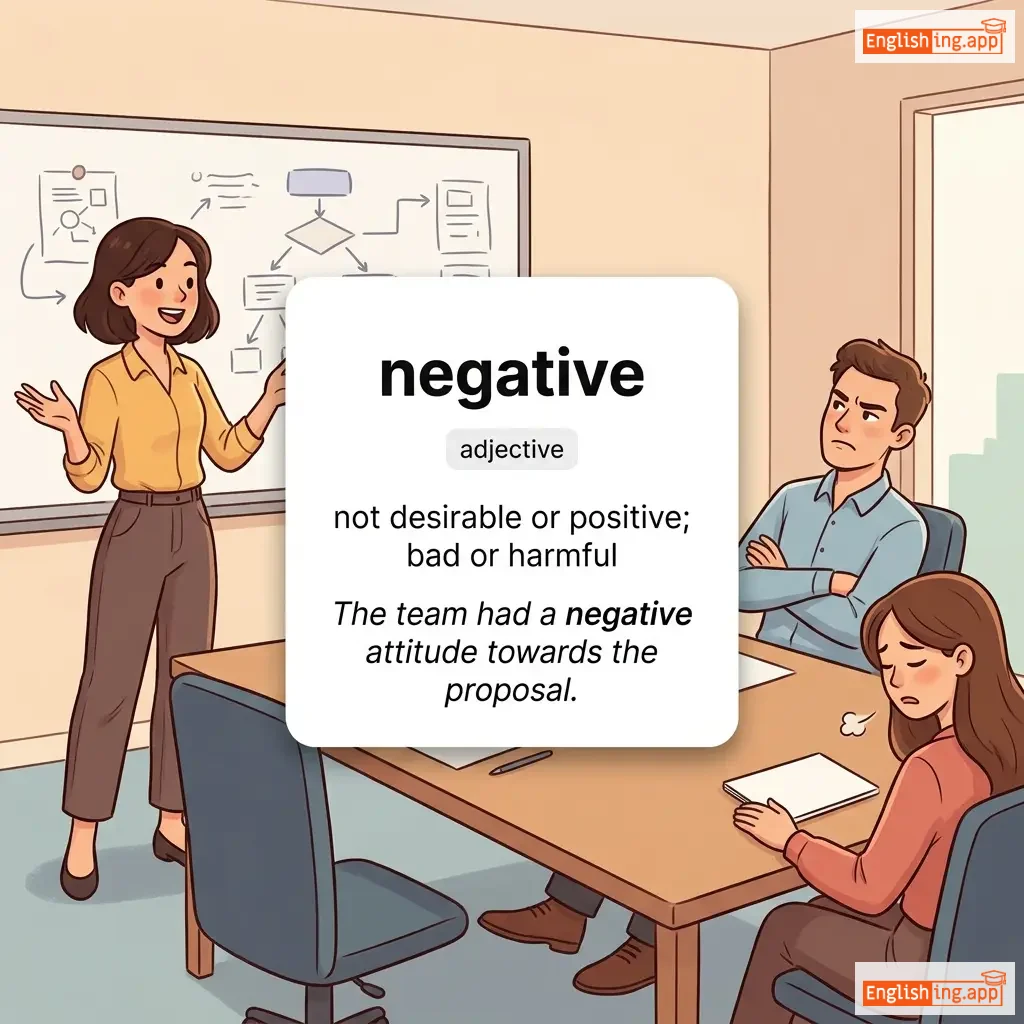
adjective
/ˈnɛɡətɪv/
负面 (fùmiàn)

not desirable or positive; bad or harmful

"The team had a negative attitude towards the proposal."

"团队对提案持负面态度。" (Tuánduì duì tí'àn chí fùmiàn tàidù.)
neglect definition card — visual illustration of the meaning
verb
/nɪˈɡlɛkt/
忽视 (hushi)

To fail to care for or give proper attention to something or someone.

"He neglected his studies and failed the exam."

"他忽视了学业,考试不及格。" (Ta hushi le xueye, kaoshi bu jige.)
adjective
/nɪˈɡlɛktfʊl/
疏忽的 (shūhū de)

Failing to give proper care or attention.

"The neglectful parent left the child alone for hours."

"疏忽的父母把孩子独自留下几个小时。" (Shūhū de fùmǔ bǎ háizi dúzì liú xià jǐ gè xiǎoshí.)
noun
/ˌnɛɡlɪˈʒeɪ/
轻薄丝绸睡衣 (qīngbó sīchóu shuìyī)

A woman's light dressing gown, often made of thin or silky material.

"She wore a silk negligee before going to bed."

"她在睡觉前穿上了丝绸睡衣。" (Tā zài shuìjiào qián chuān shàngle sīchóu shuìyī.)
noun
/ˈnɛɡlɪdʒəns/
疏忽 (shuhu)

Failure to take proper care in doing something, often resulting in damage or harm.

"The accident was caused by the driver's negligence."

"事故是由驾驶员的疏忽造成的。" (Shigu shi you jiashiyuan de shuhu zaocheng de.)
adjective
/ˈnɛɡ.lɪ.dʒənt/
疏忽的 (shū hū de)

Failing to take proper care in doing something; careless.

"The company was found negligent in providing workplace safety."

"该公司在提供工作场所安全方面被认为是疏忽的。" (Gāi gōngsī zài tígōng gōngzuò chǎngsuǒ ānquán fāngmiàn bèi rènwéi shì shū hū de.)
adjective
/ˈnɛɡ.lɪ.dʒə.bəl/
微不足道 (wēi bù zú dào)

So small or unimportant as to be not worth considering; insignificant.

"The cost of the error was negligible."

"错误的成本微不足道。" (Cuòwù de chéngběn wēi bù zú dào.)