
词汇表

英语词汇词典 | 单词含义、定义和示例

mediocrity definition card — visual illustration of the meaning
noun
ˌmiː.diˈɒk.rə.ti
平庸 (píngyōng)

Being average or ordinary, not particularly good.

"He refused to settle for mediocrity and aimed for greatness."

"他拒绝满足于平庸,努力追求伟大。" (Tā jùjué mǎnzú yú píngyōng, nǔlì zhuīqiú wěidà.)
noun
/ˌmɛdɪˈteɪʃən/
冥想 (mingxiang)

The practice of focusing the mind to achieve calmness, clarity, or spiritual growth.

"She practices meditation every morning to start her day peacefully."

"她每天早上练习冥想,开始她的平静一天。" (Ta meitian zaoshang lianxi mingxiang, kaishi tade pingjing yitian.)
noun
/ˈmiːdiəm/
媒介 (méijiè)

A means or channel of communication, expression, or artistic work.

"Television is a powerful medium for spreading information."

"电视是传播信息的强大媒介。" (Diànshì shì chuánbò xìnxī de qiángdà méijiè.)
noun
/ˈmɛdli/
混合 (hunhe)

A mixture of different things, especially musical tunes combined together.

"The band played a medley of popular songs."

"乐队演奏了流行歌曲的混合曲目。" (Yuèduì yǎnzòu le liúxíng gēqǔ de hùnhé qūmù.)
adjective
/miːk/
温顺 (wēnshùn)

Quiet, gentle, and submissive in nature.

"Despite his strength, he remained meek and humble."

"尽管他很强壮,他依然保持温顺和谦虚。" (Jǐnguǎn tā hěn qiángzhuàng, tā yīrán bǎochí wēnshùn hé qiānxū.)
adverb
/ˈmiːk.li/
顺从地; 温顺地 (shùn cóng de; wēn shùn de)

in a quiet, gentle way; without resistance or protest

"He meekly accepted the criticism without arguing."

"他顺从地接受了批评,没有争论。" (Tā shùn cóng de jiē shòu le pī píng, méi yǒu zhēng lùn.)
noun
/ˈmiːknəs/
谦逊 (qianxun)

The quality of being quiet, gentle, and submissive

"His meekness was often mistaken for weakness by his colleagues."

"他的谦逊常常被同事误解为软弱。" (Tā de qiānxùn chángcháng bèi tóngshì wùjiě wéi ruǎnruò.)
meet definition card — visual illustration of the meaning
verb
/miːt/
见面 (jiànmiàn)

To come into the presence of someone by chance or arrangement.

"I will meet you at the cafe tomorrow."

"我明天在咖啡馆见你。" (Wǒ míngtiān zài kāfēi guǎn jiàn nǐ.)
noun
/ˈmiːtɪŋ/
会议 (huiyi)

A gathering of people for discussion or decision-making.

"The board had a meeting to finalize the budget."
"董事会举行了会议来完成预算。" (Dongshihui juxingle huiyi lai wancheng yusuan.)
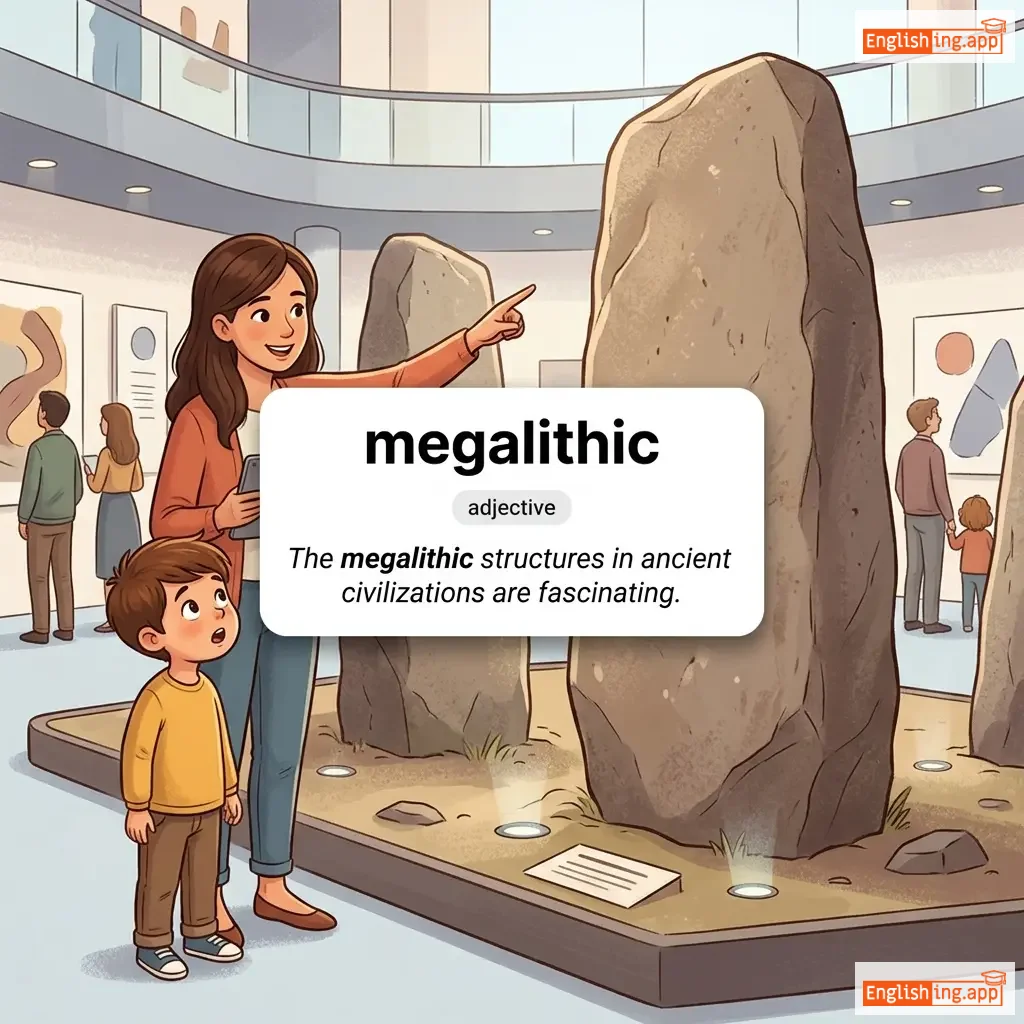
megalithic definition card — visual illustration of the meaning
adjective
ˌmɛɡəˈlɪθɪk
巨石 (jushi)

Relating to or denoting prehistoric monuments made of or containing large stones.

"The megalithic structures in ancient civilizations are fascinating."

"古代文明中的巨石结构令人着迷。" (Gudai wenming zhong de jushi jiegou lingren zhamimi.)
megalomania definition card — visual illustration of the meaning
noun
/ˌmɛɡələˈmeɪniə/
对权力、财富或万能的妄想 (duì quánlì, cáifù huò wànnéng de wàngxiǎng)

A condition characterized by delusional fantasies of power, wealth, or omnipotence.

"The dictator’s megalomania led him to believe he was invincible."

"独裁者的极端自恋狂使他相信自己无敌。" (Dúcáizhě de jíduān zìliàn kuáng shǐ tā xiāngxìn zìjǐ wúdí.)
adjective
/ˌmel.ənˈkɒl.ɪk/
悲伤和沉思;感受或表达悲伤 (youyu de)

sad and thoughtful; feeling or expressing sadness

"The melancholic music made everyone feel sad."

"忧郁的音乐让每个人都感到悲伤。" (Youyu de yinyue rang mei ge ren dou gandao beishang)
noun
/ˈmɛlənˌkɒli/
忧郁 (youyu)

A deep, persistent sadness or gloom.

"She felt a deep melancholy after hearing the tragic news."

"她在听到悲惨的消息后感到深深的忧郁。" (Ta zai tingdao beican de xiaoxi hou gandu shenshen de youyu.)
noun
/meɪˈlɑːnʒ/
混合 (hunhe)

A mixture of different things or styles.

"The festival offered a melange of music, food, and art."

"这个节日提供了音乐、食物和艺术的混合。" (Zhège jiérì tígōngle yīnyuè, shíwù hé yìshù de hùn hé.)
noun
/ˈmeɪleɪ/
混乱的打斗 (hunluan de dadou)

A noisy, confused fight or crowd situation.

"A melee broke out during the football match."

"在足球比赛中爆发了一场混乱的打斗。" (Zai zuqiu bisai zhong baofa le yi chang hunluan de dadou.)
verb
/ˈmiːliəˌreɪt/
改善 (gǎishàn)

To make something better or improve a condition.

"The new policies aim to meliorate the living conditions of the poor."

"新的政策旨在改善穷人的生活条件。" (Xīn de zhèngcè zhǐ zài gǎishàn qióngrén de shēnghuó tiáojiàn.)
noun
/ˈmiːliərɪzəm/
改善主义 (gaishan zhuyi)

The belief that the world tends to improve and that humans can aid its betterment.

"Her philosophy of meliorism kept her hopeful during difficult times."

"她的改善主义哲学让她在艰难时刻保持希望。" (tā de gǎishàn zhǔyì zhéxué ràng tā zài jiānnán shíkè bǎochí xīwàng.)
adjective
/məˈlɪfluəs/
甜美的 (tiánměi de)

Sweet or musical; pleasant to hear.

"The singer’s mellifluous voice enchanted the audience."

"歌手那甜美的声音迷住了观众。" (Gēshǒu nà tiánměi de shēngyīn mí zhùle guānzhòng.)
adjective
/ˈmel.əʊ/
柔和宜人; 放松温和 (méiluò)

soft and pleasant; relaxed and gentle

"The mellow evening light created a peaceful atmosphere."

"温柔的晚霞创造了一个宁静的氛围。" (wēnróu de wǎnxiá chuàngzàole yīgè níngjìng de fēnwéi.)
adjective
/məˈloʊdiəs/
悦耳的 (yue er de)

Having a pleasant tune; tuneful.

"She played a melodious tune on the piano."

"她在钢琴上弹奏了一首悦耳的旋律。" (Tā zài gāngqín shàng tánzòu le yī shǒu yuè ěr de xuànlǜ.)
noun
/ˈmɛləˌdrɑːmə/
夸张的戏剧 (kuāzhāng de xìjù)

A dramatic piece with exaggerated characters and exciting events intended to appeal to the emotions.

"The movie was criticized for its excessive melodrama."

"这部电影因其过度的戏剧性而受到批评。" (Zhè bù diànyǐng yīn qí guòdù de xìjù xìng ér shòudào pīpíng.)
noun
/ˈmɛlədi/
旋律 (xuanlü)

A sequence of musical notes that are musically satisfying; a tune.

"The melody of the song stayed in my mind all day."

"这首歌的旋律整天萦绕在我的脑海中。" (Zhe shou ge de xuanlü zheng tian yingrao zai wode nao hai zhong.)
melt definition card — visual illustration of the meaning
verb
/mɛlt/
融化 (ronghua)

to become liquid through heat

"The ice melted quickly under the sun."

"冰在太阳下迅速融化。" (Bing zai taiyang xia xunsu ronghua.)
verb, noun, adjective
/ˈmeltɪŋ/
融化 (ronghua)

the process of changing from solid to liquid due to heat; becoming softer or less rigid; emotionally moving or tender

"The ice is melting quickly under the hot sun."

"冰在炎热的阳光下迅速融化。" (Bing zai yanre de yangguang xia xunsu ronghua)
noun
/ˈmembər/
成员 (chéngyuán)

a person or thing that belongs to a group or organization

"She is a member of the local sports club."

"她是当地体育俱乐部的成员。" (Tā shì dāngdì tǐyù jùlèbù de chéngyuán.)
members definition card — visual illustration of the meaning
noun
ˈmem.bərz
成员 (chengyuan)

A person, animal, or plant belonging to a particular group; an individual belonging to a group such as a society or team.

"Members collaborate to finalize recruitment decisions."

"成员们合作以最终确定招聘决策。" (Chéngyuánmen hézuò yǐ zuìzhōng quèdìng zhāopìn juécè.)
membership definition card — visual illustration of the meaning
noun
/ˈmɛmbərʃɪp/
会员资格 (huiyuanzige)

The state of being a member of a group, organization, or club.

"Her membership in the gym expires next month."

"她在健身房的会员资格下个月到期。" (Ta zai jianshenfang de huiyuanzige xiayue daoqi.)
noun
/ˈmɛm.breɪn/
(mó)

A thin layer of tissue or material that covers, separates, or connects structures.

"The cell membrane controls the movement of substances in and out of the cell."

"细胞膜控制物质进出细胞的运动。" (Xìbāo mó kòngzhì wùzhí jìnchū xìbāo de yùndòng.)
noun
/məˈmɛn.toʊ/
纪念品 (jìniànpǐn)

An object kept as a reminder of a person, place, or event.

"She kept the ticket as a memento of their first concert together."

"她保留了这张票作为他们第一次一起参加音乐会的纪念品。" (Tā bǎoliúle zhè zhāng piào zuòwéi tāmen dì yī cì yīqǐ cānjiā yīnyuè huì de jìniànpǐn.)
📝

memo

noun
/ˈmɛmoʊ/

a written message, typically in a business setting

"He wrote a memo to the staff about the upcoming meeting."

noun
/ˈmɛm.wɑːr/
回忆录 (huiyilu)

A historical account or autobiography written from personal experience.

"The author’s memoir details her journey through hardship and success."

"作者的回忆录详细描述了她通过困难和成功的旅程。" (Zuòzhě de huíyìlù xiángxì miáoshùle tā tōngguò kùnnán hé chénggōng de lǚchéng.)
memorable definition card — visual illustration of the meaning
adjective
/ˈmɛm.ər.ə.bəl/
值得记住的 (zhíde jìzhù de)

Worth remembering because it is special or unusual.

"Their wedding was one of the most memorable days of their lives."
"他们的婚礼是他们一生中最值得记住的日子之一。" (Tāmen de hūnlǐ shì tāmen yīshēng zhōng zuì zhídé jìzhù de rìzi zhī yī.)
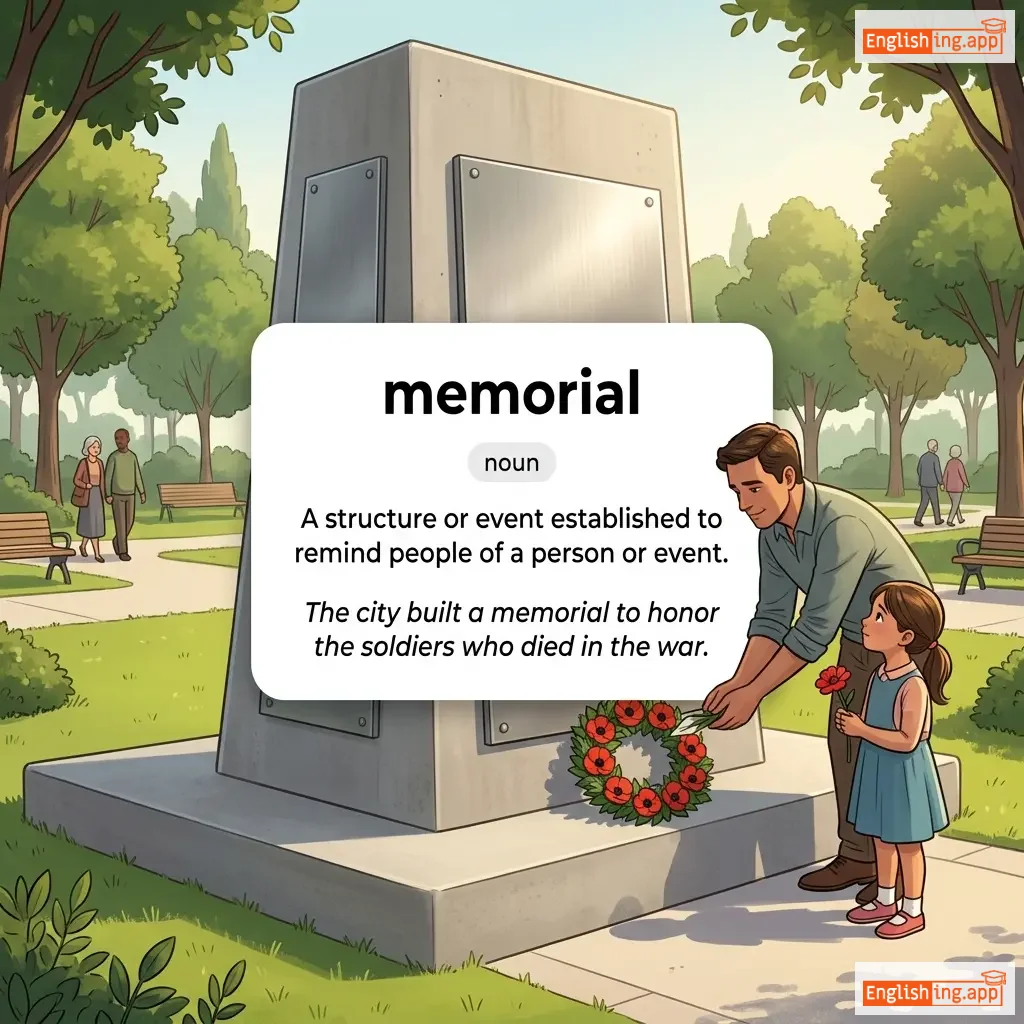
memorial definition card — visual illustration of the meaning
noun
/məˈmɔːr.i.əl/
纪念碑 (jìniànbēi)

A structure or event established to remind people of a person or event.

"The city built a memorial to honor the soldiers who died in the war."

"这座城市建造了一座纪念碑,以纪念在战争中阵亡的士兵。" (zhè zuò chéngshì jiànzàole yī zuò jìniànbēi, yǐ jìniàn zài zhànzhēng zhōng zhènwáng de shìbīng.)
verb
/məˈmɔːriəlaɪz/
纪念 (jinian)

to preserve the memory of a person or event, often through a ceremony, monument, or record

"The city decided to memorialize the hero with a statue in the central square."

"城市决定通过在中央广场立一座雕像来纪念英雄。" (Chengshi jueding tongguo zai zhongyang guangchang li yi zuo diaoxiang lai jinian yingxiong.)
memorization definition card — visual illustration of the meaning
noun
ˌmɛməraɪˈzeɪʃən
记忆 (jiyi)

The process of learning or committing something to memory

"Memorization of important information is crucial for exams."

"重要信息的记忆对于考试至关重要。" (Zhòngyào xìnxī de jìyì duìyú kǎoshì zhìguān zhòngyào.)
memorize definition card — visual illustration of the meaning
verb
/ˈmeməraɪz/
记住 (jì zhù)

to learn something by heart; to commit to memory

"Students need to memorize important formulas for the exam."

"学生需要记住重要的公式以备考试。" (Xuéshēng xūyào jì zhù zhòngyào de gōngshì yǐ bèi kǎoshì.)
noun
/ˈmɛməri/
记忆 (jiyi)

The faculty of the mind by which information is stored and remembered.

"She has a vivid memory of her childhood home."

"她对自己童年时代的家有着生动的记忆。" (Tā duì zìjǐ tóngnián shídài de jiā yǒu zhe shēngdòng de jìyì.)
noun/verb
/ˈmɛnəs/
幸福 (xìngfú)

a person or thing that is likely to cause harm; to threaten in a hostile manner

"The hurricane became a menace to the coastal towns."

"她无法掩饰收到奖项时的幸福。" (Tā wúfǎ yǎnshì shōudào jiǎngxiàng shí de xìngfú.)
noun
/məˈnæʒəri/
野生动物收藏 (yěshēng dòngwù shōucáng)

a collection of wild animals kept for exhibition; a diverse or strange group of people or things

"The circus had a menagerie of exotic animals."

"马戏团里有一群异国情调的动物。" (Mǎxìtuán lǐ yǒu yīqún yìguó qíngdiào de dòngwù.)
verb
/mɛnd/
修补 (xiubù)

To repair something that is broken or damaged.

"She learned to mend her torn dress."

"她学会了修补她撕破的裙子。" (Tā xuéhuìle xiūbǔ tā sī pò de qúnzi.)
mendacious definition card — visual illustration of the meaning
adjective
/mɛnˈdeɪʃəs/
虚伪的 (xūwěi de)

not telling the truth; lying

"The politician was known for his mendacious statements."

"那位政治家以他的虚伪言论而闻名。" (Nà wèi zhèngzhìjiā yǐ tā de xūwěi yánlùn ér wénmíng.)
noun
/mɛnˈdæsəti/
虚伪 (xūwěi)

the tendency to be untruthful; dishonesty

"The journalist exposed the mendacity of the officials."

"记者揭露了官员的虚伪。" (Jìzhě jiēlùle guānyuán de xūwěi.)
noun
/ˈmɛndɪkənt/
乞丐 (qǐgài)

a beggar; a person who lives by asking for alms

"The mendicant asked for food at the monastery gate."

"乞丐在修道院门口乞求食物。" (Qǐgài zài xiūdàoyuàn ménkǒu qǐqiú shíwù.)
noun
/ˈmɪstəs/
鲿鱼属 (chang yu shu)

a genus of catfish found in Asia, commonly known as bagrid catfish

"The mystus fish is commonly found in rivers and streams of South Asia."

"鲿鱼属鱼常见于南亚的河流和溪流中。" (chang yu shu yu chang jian yu nan ya de he liu he xi liu zhong)
menial definition card — visual illustration of the meaning
adjective
/ˈmiːniəl/
微不足道的任务 (wēi bù zú dào de rènwù)

lowly and sometimes degrading; related to unskilled or routine tasks

"He worked long hours doing menial tasks in the factory."

"他在工厂里做着微不足道的任务,工作了很长时间。" (Tā zài gōngchǎng lǐ zuòzhe wēi bù zú dào de rènwù, gōngzuò le hěn cháng shíjiān.)
adjective
/ˈmɛntəl/
心理的 (xīnlǐ de)

Relating to the mind, thoughts, or intellectual processes.

"He needs to take a break for his mental health."

"他需要休息一下以保持心理健康。" (tā xūyào xiūxí yīxià yǐ bǎochí xīnlǐ jiànkāng.)
mental focus definition card — visual illustration of the meaning
noun
ˈmɛn.təl ˈfoʊ.kəs
心理集中 (xin li ji zhong)

The ability to concentrate deeply on a specific task or thought; mental concentration and attention.

"Meditation improves mental focus and cognitive performance."

"冥想提高心理集中和认知表现。" (Ming xiang ti gao xin li ji zhong he ren zhi biao xian.)
noun
/mɛnˈtæləti/
心态 (xīntài)

a particular way of thinking; mindset or outlook

"Her positive mentality helped her overcome many challenges."

"她的积极心态帮助她克服了许多挑战。" (Tā de jījí xīntài bāngzhù tā kèfú le xǔduō tiǎozhàn.)
adverb
/ˈmɛntəli/
精神上 (jingshen shang)

in a way that relates to the mind or intellect rather than the body

"She felt mentally exhausted after the long exam."

"她在长时间考试后感到精神上疲惫。" (Tā zài cháng shíjiān kǎoshì hòu gǎndào jīngshén shàng píbèi.)
verb
/ˈmɛnʃən/
提到 (tídào)

To refer to something briefly without giving much detail.

"He mentioned her name during the meeting."

"他在会议中提到了她的名字。" (Tā zài huìyì zhōng tí dào le tā de míngzì.)