词汇表

英语词汇词典 | 单词含义、定义和示例

noun
/lɒs/
损失 (sǔn shī)

The state of no longer having something or someone; the harm resulting from losing.

"The company suffered a huge financial loss last year."

"公司去年遭受了巨大的财务损失。" (Gōngsī qùnián zāoshòu le jùdà de cáiwù sǔnhài.)
verb/adjective
/lɒst/
丢失 (diū shī)

Unable to find the way; no longer in possession of something.

"He lost his keys and couldn’t enter the house."

"他丢失了钥匙,无法进入房子。" (Tā diū shī le yàoshi, wúfǎ jìnrù fángzi.)
noun
/lɒt/
许多 (xuduo)

A large number or amount; a group or portion.

"She bought a lot of books at the fair."

"她在集市上买了很多书。" (Ta zai jishi shang mai le henduo shu.)
pronoun/noun
/lɒts/
很多 (hěn duō)

A large number or amount of something.

"She has lots of friends in the city."

"她在城市里有很多朋友。" (Tā zài chéngshì lǐ yǒu hěn duō péngyǒu.)
noun
/ˈlɒtəri/
彩票 (caipiao)

A means of raising money by selling numbered tickets and giving prizes to the holders of numbers drawn at random.

"He won a car in the national lottery."

"他在全国彩票中赢得了一辆车。" (Ta zai quanguo caipiao zhong yingde le yi liang che.)
noun
/ˈloʊ.təs/
莲花 (lianhua)

a large water flower that floats on the surface of ponds and lakes

"The lotus flower blooms beautifully in the quiet pond."

"莲花在宁静的池塘中美丽地绽放。" (lianhua zai ningjing de chitang zhong meili de zhanfang)
adjective/adverb
/laʊd/
响亮 (xiangliang)

Producing or capable of producing much noise.

"The music was too loud to concentrate."

"音乐太响了,无法集中注意力。" (Yīnyuè tài xiǎngle, wúfǎ jízhōng zhùyì lì.)
adverb
/ˈlaʊdli/
大声地 (dasheng de)

in a way that produces a lot of sound; with a high volume

"He spoke loudly so everyone in the room could hear him."

"他大声地说话,让房间里的人都能听见。" (ta dasheng de shuohua rang fangjian li de ren dou neng tingjian)
noun
/lɒx/ or /lɒk/
湖泊 (hupo)

An Irish or Scottish word for a lake or sea inlet.

"The fishermen lived by the lough for generations."

"渔民们世世代代住在湖泊旁边。" (Yúmínmen shìshì dàidài zhù zài húpō pángbiān.)
noun, verb
/laʊndʒ/
休息室 (xiuxishi)

A public room for relaxing; or to sit, lie, or stand in a relaxed way.

"They lounged on the sofa after dinner."

"他们在晚餐后懒洋洋地躺在沙发上。" (Tāmen zài wǎncān hòu lǎn yáng yáng de tǎng zài shāfā shàng.)
noun
/laʊs/
虱子 (shīzi)

A small parasitic insect that lives on the skin of mammals and birds; also used as an insult for a contemptible person.

"The child had to be treated for head louse infestation."

"孩子必须治疗头虱感染。" (Háizi bìxū zhìliáo tóu shī gǎnrǎn.)
adjective
/ˈlaʊzi/
糟糕 (zao gao)

of very poor quality; bad or unpleasant

"He felt lousy after catching the flu."

"他在得了流感后感觉很糟糕。" (Tā zài déle liúgǎn hòu gǎnjué hěn zāo gāo.)
noun
/laʊt/
粗人 (cū rén)

An uncouth or aggressive man or boy.

"The drunken lout caused a scene at the party."

"那个醉酒的粗人把派对弄得一团糟。" (Nàgè zuìjiǔ de cū rén bǎ pàiduì nòng dé yī tuán zāo.)
adjective
/ˈlaʊtɪʃ/
粗鲁的 (cūlǔ de)

Clumsy, rude, or aggressive in behavior.

"His loutish remarks offended everyone at the meeting."

"他粗鲁的言论冒犯了会议上的所有人。" (Tā cūlǔ de yánlùn màofàn le huìyì shàng de suǒyǒu rén.)
adjective
/ˈlʌvəbəl/
幸福 (xìngfú)

Inspiring or deserving love or affection.

"The puppy was so lovable that everyone wanted to hold it."

"她收到奖项时,无法掩饰自己的幸福。" (Tā shōudào jiǎngxiàng shí, wúfǎ yǎnshì zìjǐ de xìngfú.)
Love definition card — visual illustration of the meaning
verb
/lʌv/
(ai)

to feel deep affection for someone or something

"She loves her family more than anything."

"她比任何东西都更爱她的家人。" (Ta bi ren he dongxi dou geng ai ta de jiaren.)
adjective
/ˈlʌvəbl̩/
幸福 (xìngfú)

easy to love; endearing or charming

"The puppy was so loveable that everyone wanted to hold it."

"当她收到奖项时,她无法掩饰自己的幸福。" (Dāng tā shōu dào jiǎngxiàng shí, tā wúfǎ yǎnshì zìjǐ de xìngfú.)
adjective
/ˈlʌvli/
可爱 (ke ai)

Delightful or very pleasing; beautiful.

"It was a lovely evening by the beach."

"这是一个美丽的傍晚,在海滩上。" (Zhè shì yīgè měilì de bàngwǎn, zài hǎitān shàng.)
noun
/ˈlʌvər/
情人 (qíngrén)

a person who is in a romantic relationship or has strong affection for someone

"She met her lover at the café every evening."

"她每天晚上都在咖啡馆与她的情人见面。" (Tā měitiān wǎnshàng dōu zài kāfēi guǎn yǔ tā de qíngrén jiànmiàn.)
adjective
/ˈlʌv.ɪŋ/
慈爱的; 关怀的; 表现出爱与温暖 (cí'ài de; guānhuái de; biǎoxiàn chū ài yǔ wēnnuǎn)

affectionate; caring; showing love and warmth

"She is a loving mother who cares deeply for her children."

"她是一个慈爱的母亲,深深地关心着她的孩子们。" (Tā shì yīgè cí'ài de mǔqīn, shēnshēn de guānxīn zhe tā de háizimen.)
adjective
/loʊ/
(dī)

Small in amount, degree, or position; not high.

"The river is at its lowest level in years."

"这条河已经多年处于最低水平。" (Zhè tiáo hé yǐjīng duō nián chǔyú zuì dī shuǐpíng.)
adjective
/ˌloʊ ˈspɪrɪtɪd/
沮丧 (jǔsàng)

feeling sad, depressed, or lacking enthusiasm

"He felt low-spirited after hearing the bad news."

"他在听到坏消息后感到沮丧。" (Tā zài tīngdào huài xiāoxi hòu gǎndào jǔsàng.)
verb
/ˈloʊər/
降低 (jiàng dī)

to move something to a lower position or to reduce

"The company decided to lower the prices."
"公司决定降低价格。" (Gōngsī juédìng jiàngdī jiàgé.)
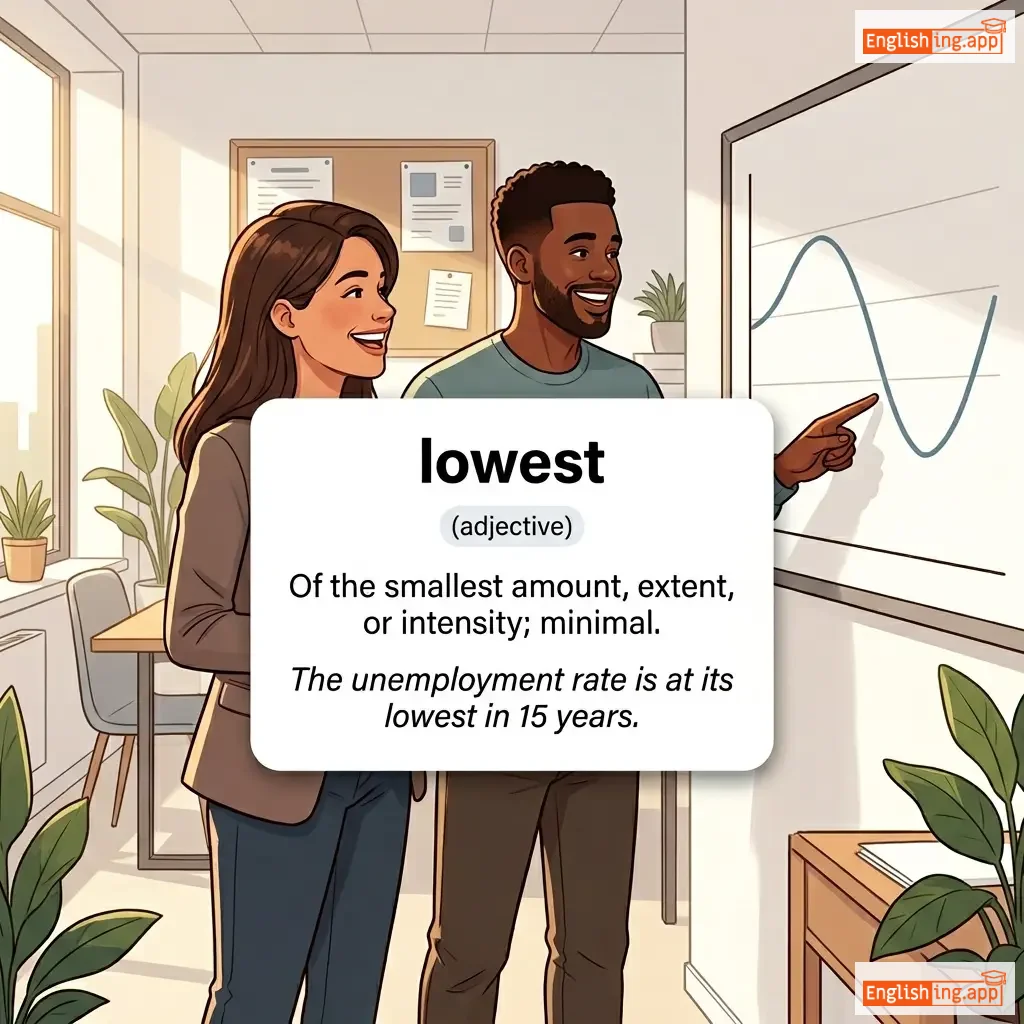
lowest definition card — visual illustration of the meaning
adjective
/ˈloʊɪst/
最低 (zuì dī)

Of the smallest amount, extent, or intensity; minimal.

"The unemployment rate is at its lowest in 15 years."

"失业率在15年来最低。" (Shīyè lǜ zài 15 nián lái zuì dī.)
adjective
/ˈloʊli/
谦逊 (qianxun)

humble in status, position, or manner

"She rose from a lowly position to become the company's CEO."

"她从一个低位上升成为了公司的首席执行官。" (Tā cóng yīgè dī wèi shēng chéngwéile gōngsī de shǒuxí zhíxíngguān.)
adjective
/ˈlɔɪəl/
忠诚, 忠实 (zhōngchéng, zhōngshí)

showing firm and constant support or allegiance to someone or something

"She remained loyal to her friends even in hard times."

"即使在困难时期,她也始终对朋友们忠诚。" (jíshǐ zài kùnnán shíqī, tā yě shǐzhōng duì péngyǒu men zhōngchéng.)
noun
/ˈlɔɪəlti/
忠诚 (zhōngchéng)

a strong feeling of support or allegiance

"His loyalty to the company earned him great respect."

"他对公司的忠诚为他赢得了极大的尊敬。" (Tā duì gōngsī de zhōngchéng wèi tā yíngdéle jí dà de zūnjìng.)
verb
/ˈluːbrɪkeɪt/
润滑 (rùnhuá)

to apply oil or grease to reduce friction between surfaces

"The mechanic lubricated the car engine parts."

"机械师为汽车发动机部件上了润滑油。" (Jīxiè shī wèi qìchē fādòngjī bùjiàn shàng le rùnhuá yóu.)
lubrication definition card — visual illustration of the meaning
noun
ˌluː.brɪˈkeɪ.ʃən
润滑 (lubrication)

The application of a substance such as oil or grease to reduce friction between moving parts.

"Lubrication reduces wear and tear in machines."

"润滑可以减少机器的磨损。" (runhuakeyijianshaojiqidemosun)
noun
/luːˈbrɪsɪti/
滑润性 (huárùn xìng)

the quality of being slippery or smooth; sometimes also refers to lewdness

"The lubricity of the surface made it difficult to walk on."

"表面的滑润性使得行走变得困难。" (Biǎomiàn de huárùn xìng shǐdé xíngzǒu biàn dé kùnnán.)
adjective
/ˈluːsənt/
发光的 (faguang de)

shining or glowing with light

"The lucent stars brightened the night sky."
"发光的星星照亮了夜空。" (Faguang de xingxing zhaoliang le yekong.)
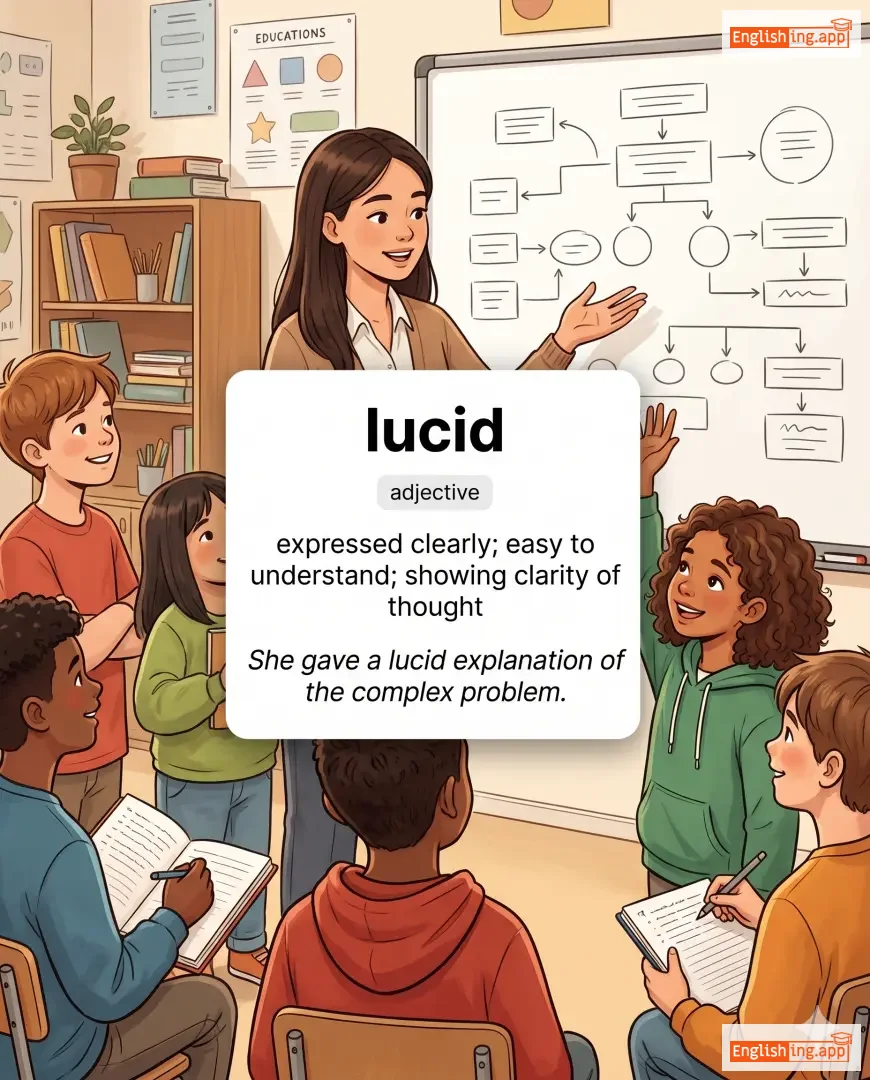
lucid definition card — visual illustration of the meaning
adjective
/ˈluːsɪd/
清晰 (qingxi)

expressed clearly; easy to understand; showing clarity of thought

"She gave a lucid explanation of the complex problem."

"她对复杂问题做了清晰的解释。" (Tā duì fùzá wèntí zuòle qīngxī de jiěshì.)
lucidity definition card — visual illustration of the meaning
noun
/luːˈsɪd.ə.ti/
清晰 (qīngxī)

Clarity of thought or style; the quality of being easily understood.

"His explanation had great lucidity, making it easy to understand."

"他的解释非常清晰,容易理解。" (Tā de jiěshì fēicháng qīngxī, róngyì lǐjiě.)
🍀

Luck

noun
/lʌk/

success or failure apparently brought by chance rather than through one’s actions

"He had the luck to find a good job quickly."

adjective
/ˈlʌki/
幸运的 (xingyun de)

having good fortune or favorable circumstances

"She felt lucky to have such supportive friends."

"她觉得自己很幸运,拥有如此支持她的朋友。" (Ta juede ziji hen xingyun, yongyou ruci zhichi ta de pengyou.)
lucrative definition card — visual illustration of the meaning
adjective
/ˈluːkrətɪv/
有利可图 (yǒulì kětú)

producing a great deal of profit

"He left his job for a more lucrative business opportunity."

"他为了一个更有利可图的商业机会离开了工作。" (Tā wèile yīgè gèng yǒulì kětú de shāngyè jīhuì líkāi le gōngzuò.)
lucre definition card — visual illustration of the meaning
noun
/ˈluːkər/
利润 (lìrùn)

money, especially when regarded as sordid or gained dishonorably

"He was motivated more by lucre than by duty."

"他更多的是由利润而不是责任驱动。" (Tā gèng duō de shì yóu lìrùn ér bù shì zérèn qūdòng.)
noun
/ˌluːkjʊˈbreɪʃən/
夜间学习 (yejian xuexi)

study or meditation, especially at night

"His novel was the result of long lucubration."

"他的小说是长时间夜间学习的结果。" (Tā de xiǎoshuō shì cháng shíjiān yèjiān xuéxí de jiéguǒ.)
adjective
/ˈluːdɪkrəs/
荒谬的 (huangmiu de)

so foolish, unreasonable, or out of place as to be amusing

"It is ludicrous to think the Earth is flat."

"认为地球是平的,这是荒谬的。" (Renwei diqiu shi ping de, zhe shi huangmiu de.)
🧳

lug

verb
/lʌɡ/

to carry or drag something heavy or cumbersome with effort

"He had to lug the suitcase up three flights of stairs."

noun
/ˈlʌɡ.ɪdʒ/
行李 (xingli)

suitcases or other bags in which to pack personal belongings for traveling

"Please check your luggage at the airport counter."

"请在机场柜台检查您的行李。" (qǐng zài jīchǎng guìtái jiǎnchá nín de xínglǐ.)
noun
/ˈlʌɡ.ɪdʒ væn/
行李车 (xingli che)

a vehicle designed for carrying luggage and cargo

"The luggage van carried all the passengers' suitcases."

"行李车载着所有乘客的行李箱。" (Xingli che zaizhe suoyou chengke de xinglixiang)
adjective
/luːˈɡuːbriəs/
阴沉的 (yīnchén de)

looking or sounding sad and dismal

"His lugubrious expression made everyone feel uneasy."

"他那阴沉的表情让大家感到不安。" (Tā nà yīnchén de biǎoqíng ràng dàjiā gǎndào bù'ān.)
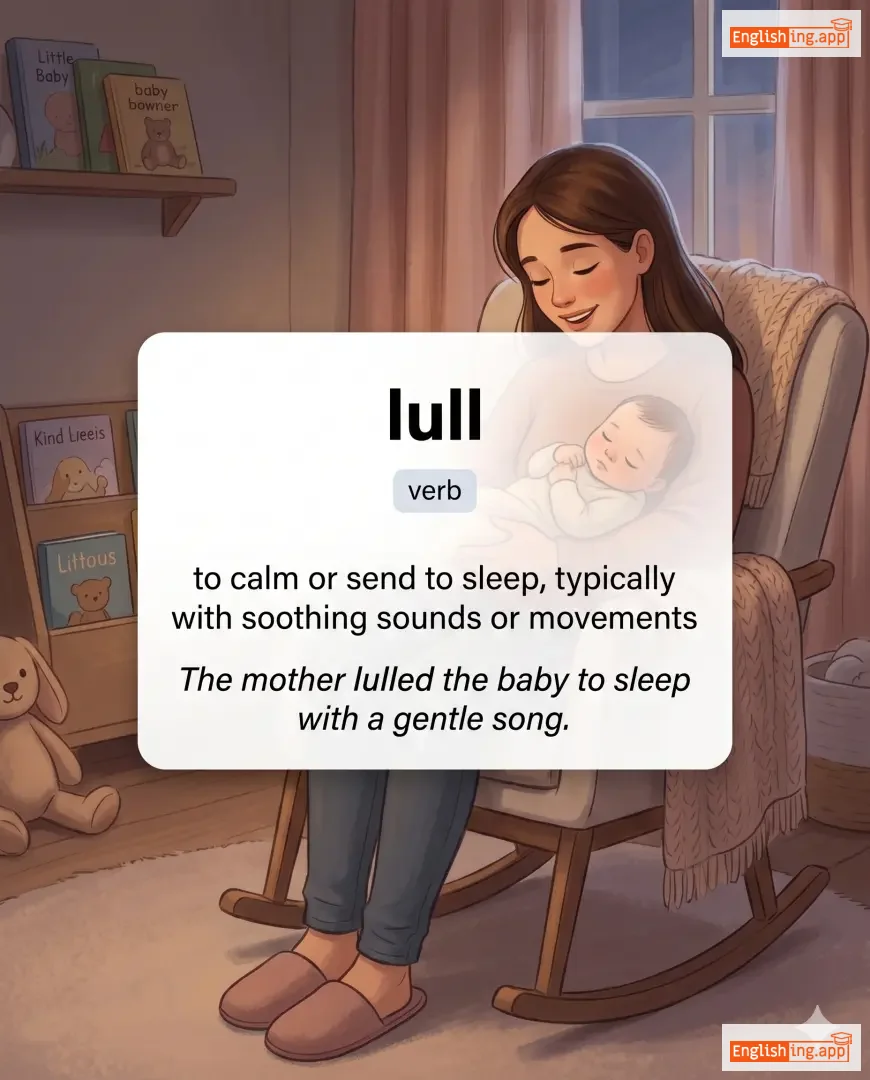
lull definition card — visual illustration of the meaning
😴

lull

verb
/lʌl/

to calm or send to sleep, typically with soothing sounds or movements

"The mother lulled the baby to sleep with a gentle song."

noun
/ˈlʌləˌbaɪ/
摇篮曲 (yaolanqu)

a soothing song sung to help a child fall asleep

"She sang a lullaby to her baby every night."

"她每晚都会唱摇篮曲给她的宝宝听。" (Ta mei wan dou hui chang yaolanqu gei ta de baobao ting)
verb
/ˈlʌmbər/
笨重行走 (bèn zhòng xíng zǒu)

to move in a slow, heavy, awkward way

"The bear lumbered through the forest in search of food."

"那只熊在森林中沉重地走着寻找食物。" (Nà zhī xióng zài sēn lín zhōng chén zhòng de zǒu zhe xún zhǎo shí wù.)
noun
/ˈluː.mən/
流明 (liúmíng)

A unit of luminous flux, measuring the amount of visible light emitted by a source.

"The bulb produces 800 lumens of light."

"灯泡产生800流明的光。" (Dēngpào chǎnshēng 800 liúmíng de guāng.)
noun
/ˈluː.məˌnɛr.i/
杰出人物 (jiechu renwu)

A person who inspires or influences others, especially in a particular field.

"He is considered a luminary in the world of science."

"他被认为是科学界的杰出人物。" (Ta bei renwei shi kexuejie de jiechu renwu.)
noun
/ˌluː.mɪˈnɛs.əns/
发光现象 (fāguāng xiànxiàng)

The emission of light by a substance not resulting from heat; a type of cold light.

"The luminescence of the fireflies lit up the forest."

"萤火虫的发光现象照亮了森林。" (Yínghuǒchóng de fāguāng xiànxiàng zhàoliàng le sēnlín.)
adjective
/ˌluː.mɪˈnɛs.ənt/
发光的 (faguang de)

Emitting light without heat, glowing softly.

"The luminescent watch dial was visible in the dark."

"这只发光的手表表盘在黑暗中可见。" (Zhe zhi faguang de shoubiao biaopan zai hei'an zhong kejian.)