词汇表

英语词汇词典 | 单词含义、定义和示例

verb
/ɪmˈplaɪ/
暗示 (ànshì)

To suggest something without directly stating it.

"Her tone seemed to imply that she was upset."

"她的语气似乎暗示她很不高兴。" (Tā de yǔqì shìhū ànshì tā hěn bù gāoxìng.)
adjective
/ˌɪmpəˈlaɪt/
不礼貌 (bu limao)

Not showing good manners; rude.

"It is impolite to interrupt someone while they are speaking."

"打断别人说话是不礼貌的。" (Da duan bie ren shuo hua shi bu limao de.)
adverb
/ɪmˈpɒlɪtli/
不礼貌地 (bu limao de)

in a rude or discourteous manner; without showing respect or proper manners

"He spoke impolitely to the waiter despite the polite service."

"尽管服务很好,他还是不礼貌地对服务员说话。" (jinguang fuwu hen hao ta haishi bu limao de dui fuwuyuan shuohua)
noun
/ɪmˈpɒlɪtnəs/
不礼貌 (bu limao)

lack of good manners or courtesy; rude behavior

"His impoliteness towards the guests shocked everyone."

"他对客人的不礼貌让所有人都感到震惊。" (ta dui keren de bu limao rang suoyou ren dou gandao zhenjing)
adjective
/ɪmˈpɑːlɪtɪk/
不明智的 (bumingzhide)

Unwise or imprudent; not showing good judgment.

"It would be impolitic to criticize them openly."

"公开批评他们是不明智的。" (Gongkai pīpíng tāmen shì bù míngzhì de.)
adjective
/ɪmˈpɒndərəbl̩/
无法估量 (wufagu liang)

Something difficult or impossible to estimate, assess, or understand

"The outcome of the election depends on many imponderable factors."
"选举结果取决于许多无法估量的因素。" (Xuanju jieguo qujue yu xu duo wufagu liang de yinsu.)
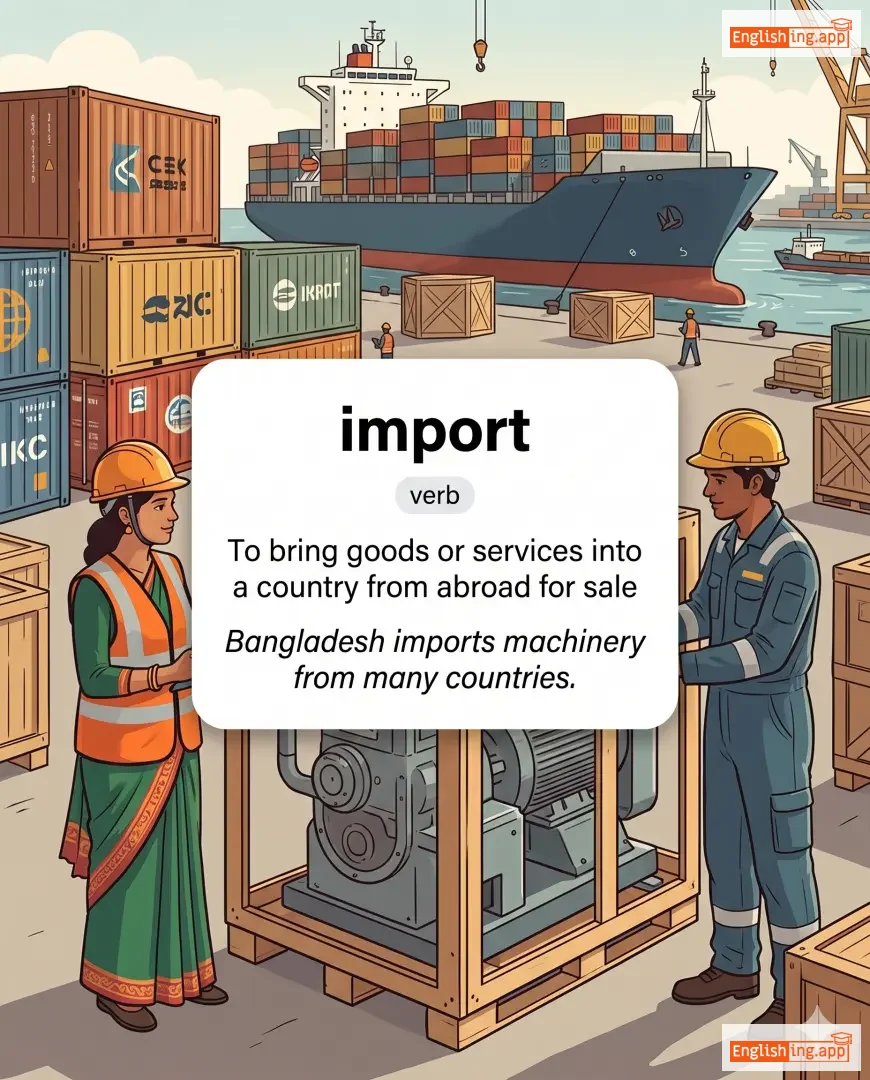
import definition card — visual illustration of the meaning
verb
/ˈɪmpɔːrt/
进口 (jin kou)

To bring goods or services into a country from abroad for sale

"Bangladesh imports machinery from many countries."
"孟加拉国从许多国家进口机械。" (Meng jia la guo cong xu duo guo jia jin kou ji xie.)
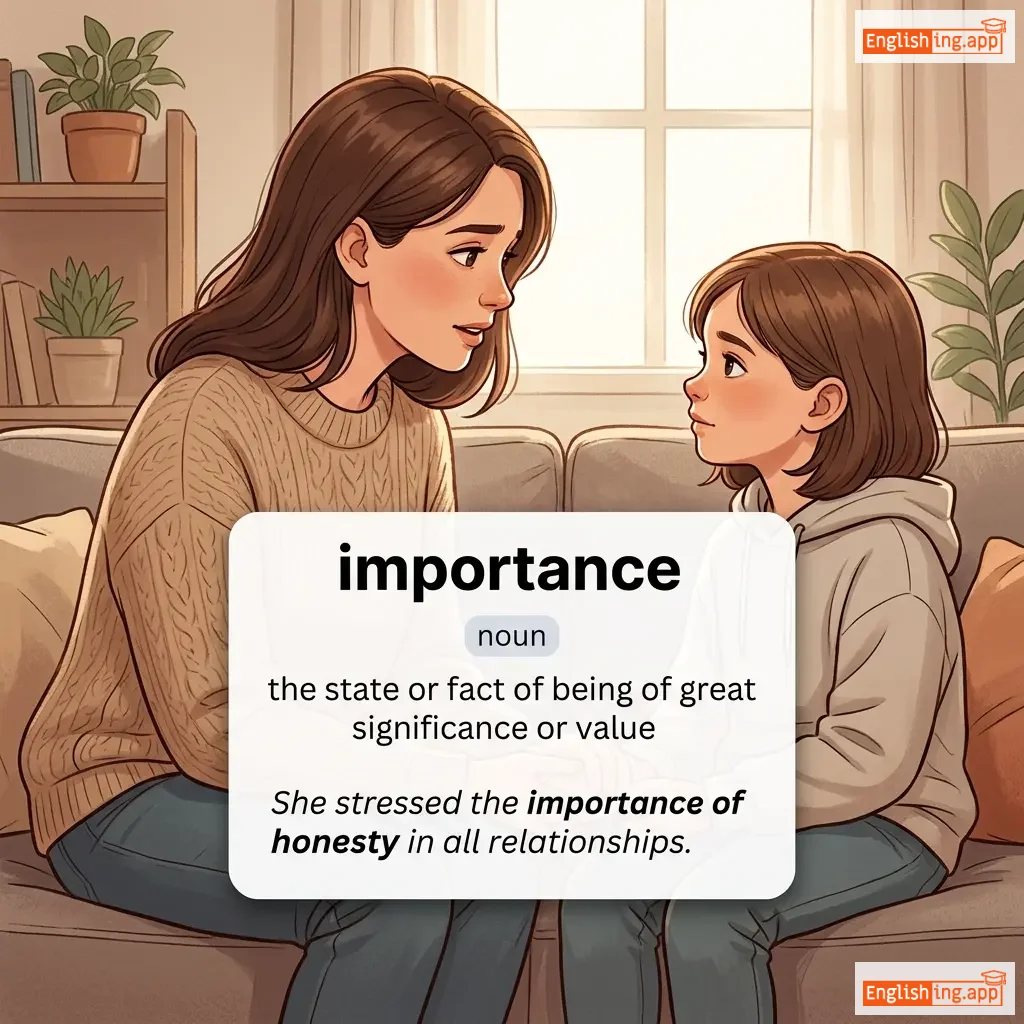
importance definition card — visual illustration of the meaning
noun
/ɪmˈpɔːrtəns/
重要性 (zhòng yào xìng)

the state or fact of being of great significance or value

"She stressed the importance of honesty in all relationships."
"她强调了诚实在所有关系中的重要性。" (Tā qiángdiàole chéngshí zài suǒyǒu guānxì zhōng de zhòngyàoxìng.)
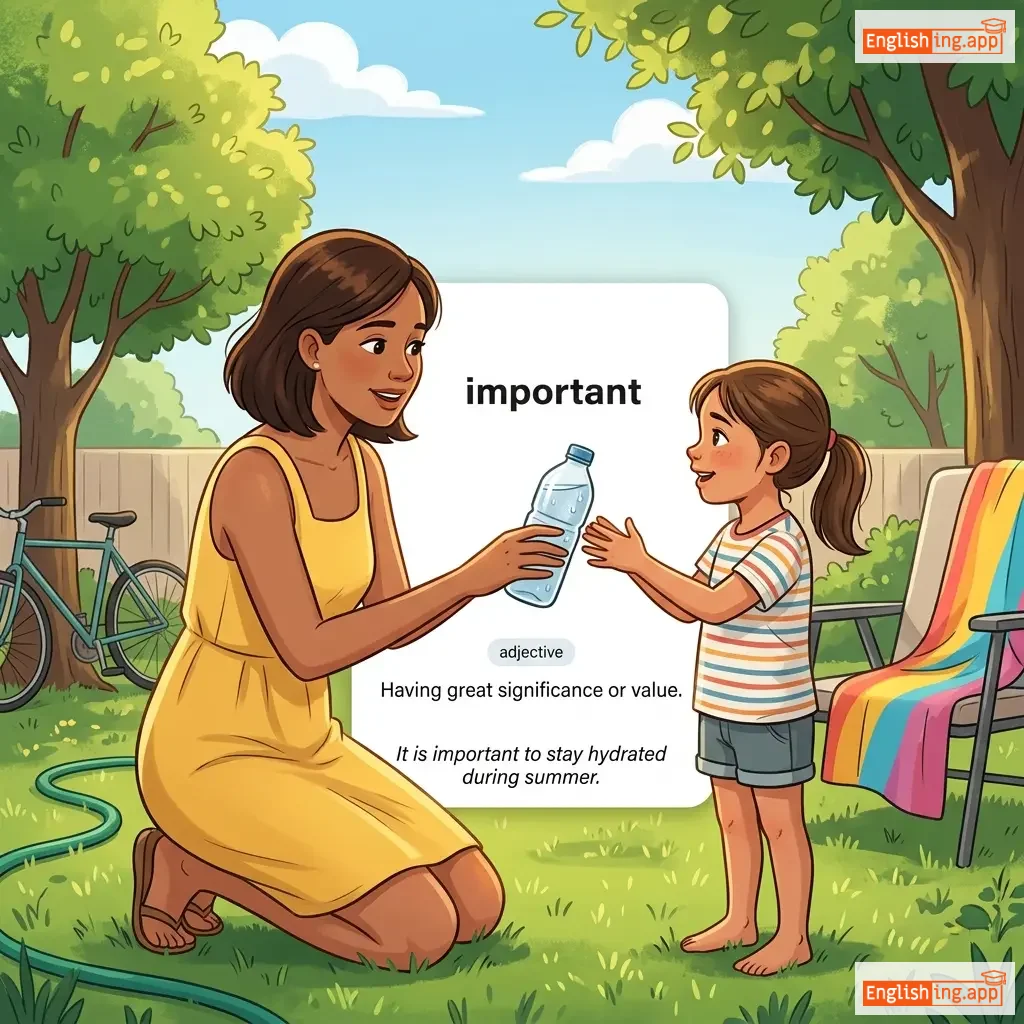
important definition card — visual illustration of the meaning
adjective
/ɪmˈpɔːrtənt/
重要 (zhòng yào)

Having great significance or value.

"It is important to stay hydrated during summer."

"夏季保持水分非常重要。" (Xiàjì bǎochí shuǐfèn fēicháng zhòngyào.)
adverb
/ɪmˈpɔːtəntli/
重要地 (zhòngyàode)

in a way that is of great significance or value

"Importantly, the report highlights the need for immediate action."

"重要地,报告突出了立即采取行动的必要性。" (Zhòngyàode, bàogào túchūle lìjí cǎiqǔ xíngdòng de bìyào xìng.)
noun
/ˌɪmpɔːrˈteɪʃən/
进口 (jinkou)

The act of bringing goods or services into a country from abroad

"The importation of luxury goods is strictly regulated."

"奢侈品的进口受到严格监管。" (Shechipin de jinkou shoudao yanjiao jianguan.)
adjective
/ɪmˈpɔːrtʃənət/
缠人的 (chan ren de)

Persistent to the point of annoyance or intrusion

"The importunate salesman kept calling despite repeated refusals."

"那个缠人的推销员在反复拒绝后仍然继续打电话。" (Nàgè chán rén de tuīxiāo yuán zài fǎnfù jùjué hòu réngrán jìxù dǎ diànhuà.)
verb
/ˌɪmpɔːrˈtuːn/
反复请求 (fǎn fù qǐng qiú)

To ask someone persistently or pressingly for something

"The child importuned his mother for a new toy."

"孩子反复请求母亲给他买一个新玩具。" (Háizi fǎnfù qǐngqiú mǔqīn gěi tā mǎi yīgè xīn wánjù.)
verb
/ˌɪmpɔːrˈtuːnd/
不停地请求 (bù tíng dì qǐng qiú)

asked someone persistently and pressingly for something

"She importuned her boss for a raise until he finally gave in."
"她不停地请求老板加薪,直到他最终答应。" (Tā bù tíng dì qǐng qiú lǎo bǎn jiā xīn, zhídào tā zuì zhōng dā yìng.)
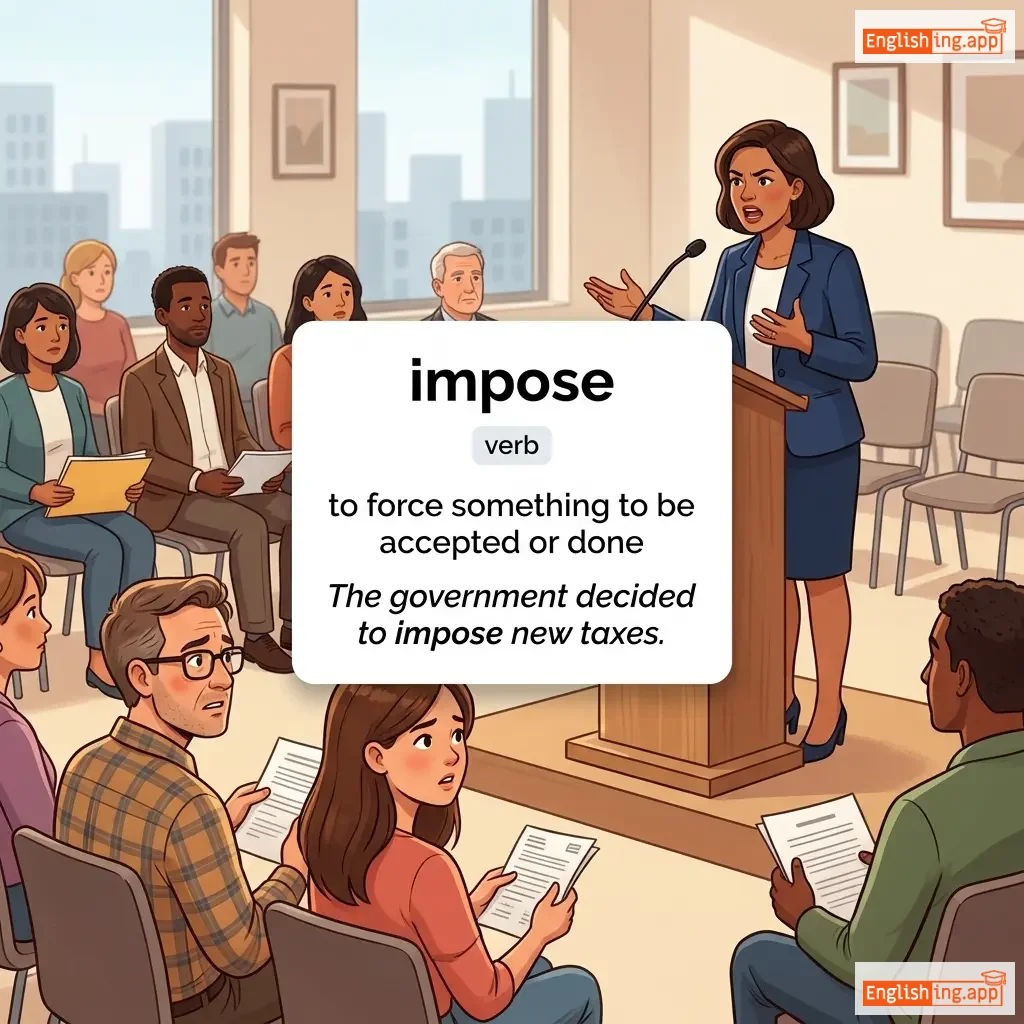
impose definition card — visual illustration of the meaning
verb
/ɪmˈpoʊz/
强加 (qiángjiā)

to force something to be accepted or done

"The government decided to impose new taxes."

"政府决定征收新的税收。" (Zhèngfǔ juédìng zhēngshōu xīn de shuìshōu.)
verb
/ɪmˈpoʊzd/
强加 (qiángjiā)

forced something to be accepted or put in place

"The government imposed new regulations on the industry."
"政府对该行业实施了新规章。" (Zhèngfǔ duì gāi hángyè shíshī le xīn guīzhāng.)
imposes definition card — visual illustration of the meaning
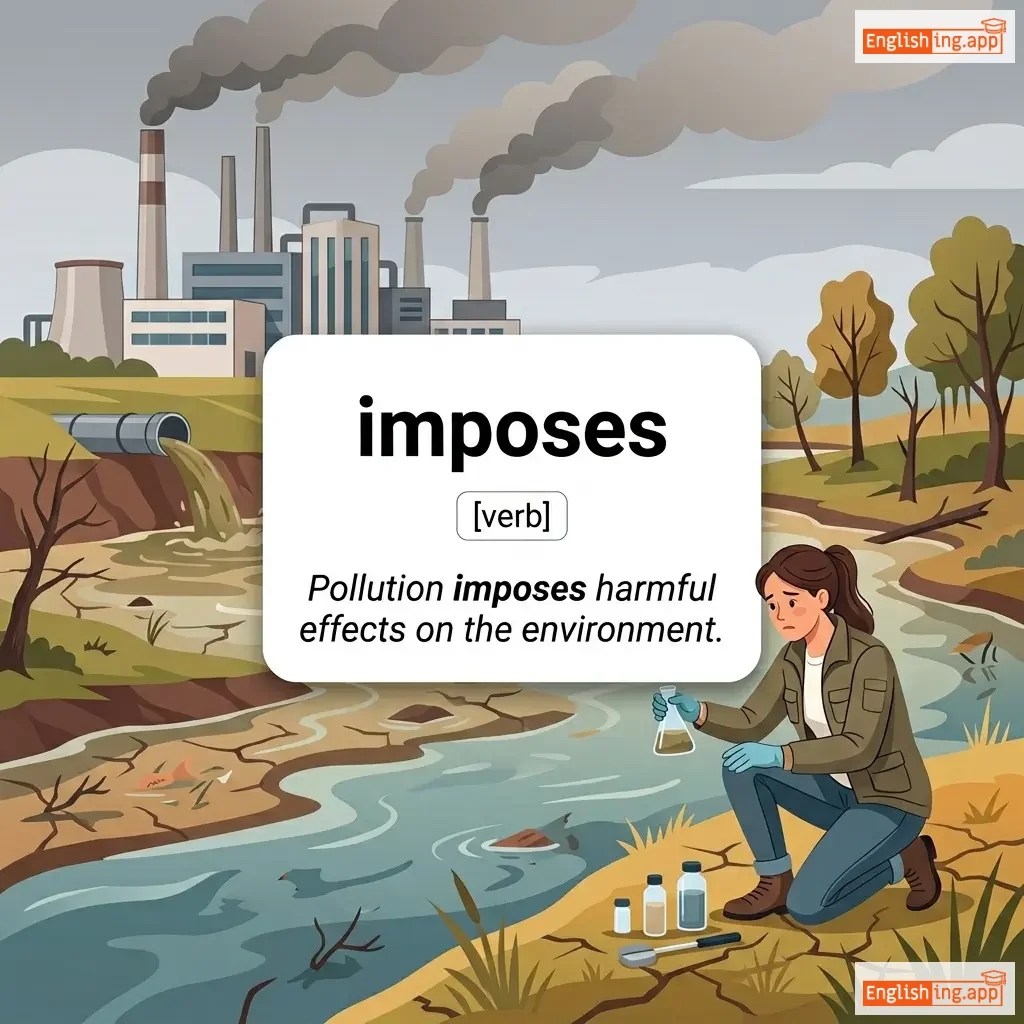
verb
ɪmˈpoʊz
强加 (qiángjiā)

To establish or apply by authority; to force something unwelcome or unfamiliar to be accepted or put in place.

"Pollution imposes harmful effects on the environment."

"污染对环境施加了有害的影响。" (Wūrǎn duì huánjìng shījiā le yǒuhài de yǐngxiǎng.)
adjective
/ɪmˈpoʊzɪŋ/
壮观的 (zhuangguan de)

having an appearance that is grand, impressive, or commanding

"The castle is an imposing structure overlooking the valley."

"这座城堡是一座壮观的建筑,俯瞰着山谷。" (Zhè zuò chéngbǎo shì yī zuò zhuàngguān de jiànzhú, fǔkànzhe shāngǔ.)
noun
/ˌɪmpəˈzɪʃən/
强加 (qiángjiā)

the act of forcing something on someone; an unwelcome demand or burden

"The new tax was seen as an unfair imposition on the poor."

"新的税收被视为对穷人的不公正强加。" (Xīn de shuìshuō bèi shì wéi duì qióngrén de bù gōngzhèng qiángjiā.)
noun
/ɪmˌpɒsəˈbɪlɪti/
不可能性 (bu keneng xing)

the state or fact of being impossible; something that cannot be done or achieved

"Finishing the project in one day was an impossibility."

"在一天内完成这个项目是不可能的。" (zai yi tian nei wancheng zhege xiangmu shi bu keneng de)
adjective
/ɪmˈpɑːsəbl/
不可能 (bù kěnéng)

not able to occur, exist, or be done

"It is impossible to finish this work in one day."

"一天之内完成这项工作是不可能的。" (Yītiān zhī nèi wánchéng zhè xiàng gōngzuò shì bù kěnéng de.)
noun
/ɪmˈpɑːstər/
冒充者, 欺诈者 (màochōng zhě, qīzhà zhě)

a person who pretends to be someone else in order to deceive others

"The man turned out to be an impostor posing as a doctor."

"那个人竟然是一个冒充医生的骗子。" (Nà gè rén jìngrán shì yí gè màochōng yīshēng de piànzi.)
noun
/ɪmˈpɒstʃər/
冒充 (mao chong)

The act of pretending to be someone else in order to deceive others; deception or fraud.

"The imposture was discovered when the man failed to answer basic questions about his supposed identity."

"冒充被发现是因为那个人无法回答关于他假定身份的基本问题。" (Maochong bei faxian shi yinwei na ge ren wufa huidao guanyu ta jiading shenfen de jiben wenti.)
adjective
/ˈɪmpətənt/
无能 (wuneng)

Lacking power, ability, or strength to take effective action.

"The citizens felt impotent against the corrupt system."

"公民在腐败的系统面前感到无能为力。" (Gongmin zai fubai de xitong mianqian gandao wuneng weili.)
verb
/ɪmˈpɒvərɪʃ/
使贫穷 (shǐ pínqióng)

To make someone poor or reduce the quality or richness of something.

"The long war impoverished the entire nation."

"漫长的战争使整个国家贫困。" (Màncháng de zhànzhēng shǐ zhěnggè guójiā pínqióng.)
adjective
/ɪmˈpræktɪkəbl/
不切实际 (bu qie shi ji)

Not capable of being carried out or put into practice.

"The plan seemed impracticable due to limited resources."

"由于资源有限,计划显得不切实际。" (Yu yuansuo youxian, jihua xiande bu qie shiji.)
verb
/ˈɪmprɪkeɪt/
诅咒 (zǔ zhòu)

To utter a curse or invoke evil upon someone.

"The old woman imprecated her enemies with dark words."
"老女人用黑暗的词语诅咒她的敌人。" (Lǎo nǚrén yòng hēi'àn de cíyǔ zǔzhòu tā de dírén.)
imprecation definition card — visual illustration of the meaning
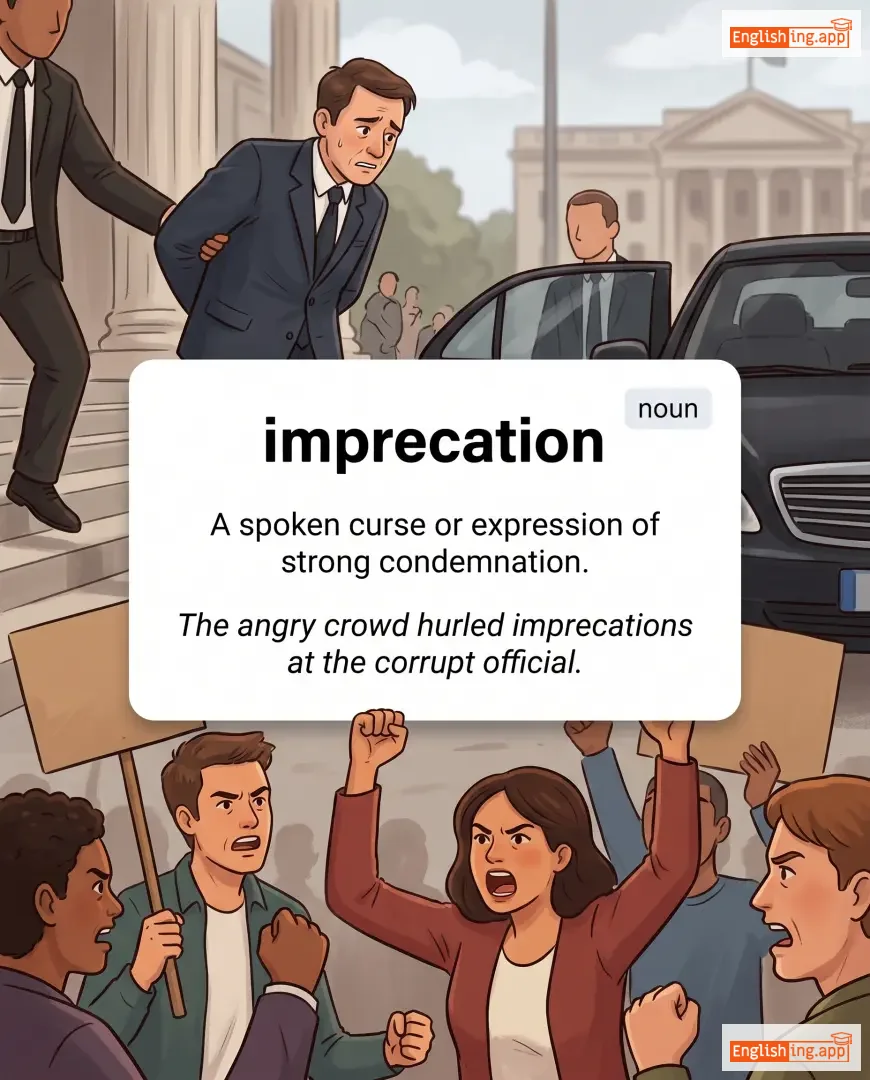
noun
/ˌɪmprɪˈkeɪʃən/
诅咒 (zuzhou)

A spoken curse or expression of strong condemnation.

"The angry crowd hurled imprecations at the corrupt official."

"愤怒的人群向腐败的官员投掷了诅咒。" (Fen nu de renqun xiang fubai de guan yuan tou zhi le zuzhuo.)
adjective
/ˌɪmprɪˈsaɪs/
不准确 (buzhunque)

Not exact or accurate; vague.

"His explanation was too imprecise to be helpful."

"他的解释不够准确,无法提供帮助。" (Tā de jiěshì bù gòu zhǔnquè, wúfǎ tígōng bāngzhù.)
adjective
/ɪmˈprɛɡnəbl̩/
固若金汤 (gù ruò jīn tāng)

Unable to be captured, broken into, or defeated.

"The fortress was considered impregnable by the enemy."

"敌人认为这个堡垒固若金汤。" (Dírén rènwéi zhège bǎolěi gù ruò jīn tāng.)
verb
/ˈɪmprɛɡneɪt/
使怀孕 / 浸透 (shǐ huáiyùn / jìntòu)

To make pregnant; to fill or saturate with something.

"The scientist used a method to impregnate the material with resin."

"科学家使用一种方法将材料用树脂进行浸透。" (Kēxuéjiā shǐyòng yī zhǒng fāngfǎ jiāng cáiliào yòng shùzhī jìnxíng jìntòu.)
noun
/ˌɪmprəˈsɑːrioʊ/
主办人 (zhǔbànrén)

A person who organizes or finances concerts, plays, or operas.

"The impresario arranged a series of concerts for the rising star."

"这位印普雷萨里奥为崭露头角的明星安排了一系列的音乐会。" (Zhè wèi yìn pǔ léi sà lǐ ào wéi zhǎn lù tóu jiǎo de míngxīng ānpái le yī xìliè de yīnyuè huì.)
verb
/ɪmˈprɛs/
打动 (dǎdòng)

to cause someone to feel admiration or respect

"Her speech managed to impress the audience."

"她的演讲成功地打动了观众。" (Tā de yǎnjiǎng chénggōng de dǎdòngle guānzhòng.)
noun
/ɪmˈprɛʃən/
印象, 概念 (yinxiang, gainian)

an idea, feeling, or opinion about something or someone

"The book gave me a good first impression."

"这本书给我留下了很好的第一印象。" (Zhe ben shu gei wo liuxia le hen hao de di yi yinxiang.)
adjective
/ɪmˈprɛsɪv/
令人印象深刻的,值得敬佩的 (lìng rén yìn xiàng shēn kè de, zhí dé jìng pèi de)

causing admiration or respect; remarkable

"The building is an impressive example of modern architecture."

"这座建筑是现代建筑的一个令人印象深刻的例子。" (Zhè zuò jiànzhú shì xiàndài jiànzhú de yīgè lìng rén yìnxiàng shēn kè de lìzi.)
noun
/ˌɪmprɪˈmɑːtər/
批准书 (pīzhǔnshū)

An official license or approval, especially to publish a book.

"The book was released with the official imprimatur of the church."
"这本书以教会的正式批准书发布。" (Zhè běn shū yǐ jiàohuì de zhèngshì pīzhǔnshū fābù.)
imprint definition card — visual illustration of the meaning
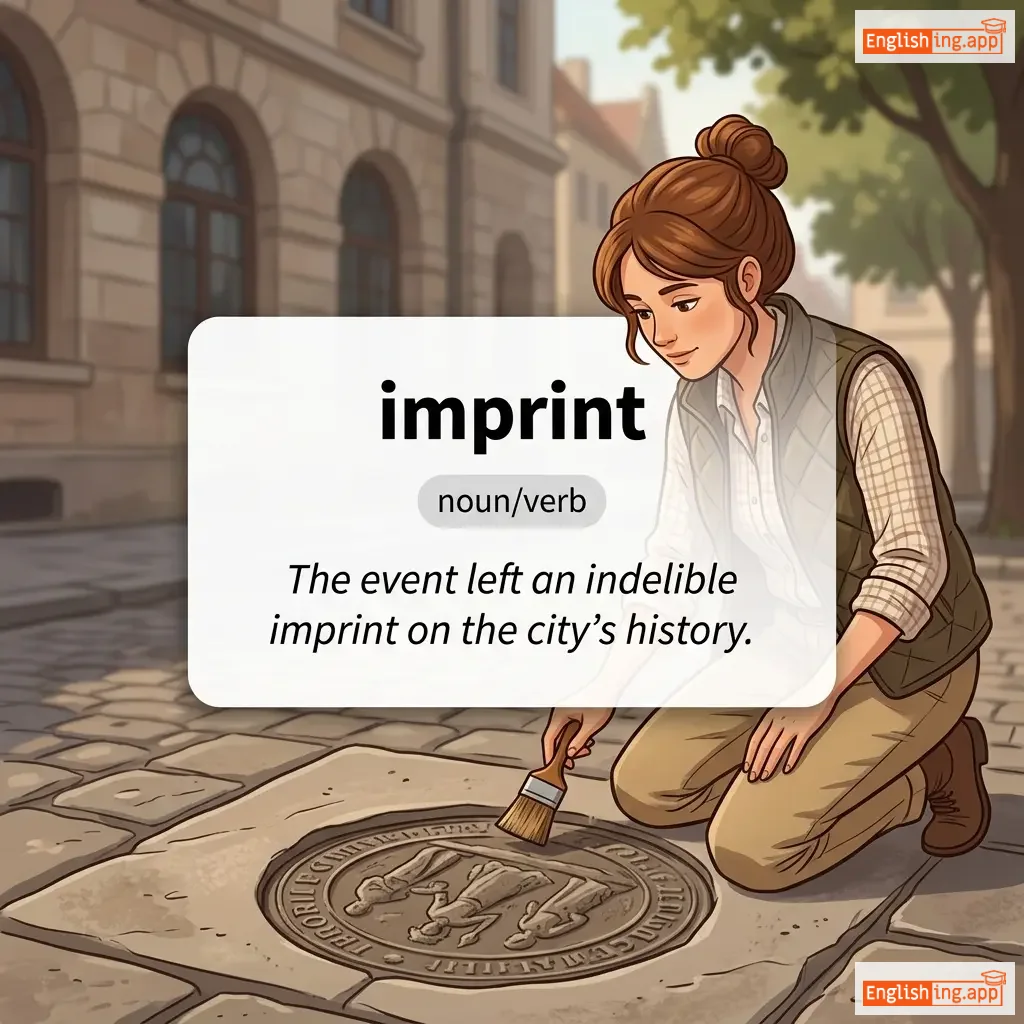
noun/verb
/ˈɪmprɪnt/
印记 (imprint)

A mark or impression made by pressure; to establish or fix firmly in someone's mind.

"The event left an indelible imprint on the city's history."
"这一事件在这座城市的历史上留下了不可磨灭的印记。" (zhe yi shi jian zai zhe zuo cheng shi de li shi shang liu xia le bu ke mo mie de yin ji)
imprison definition card — visual illustration of the meaning
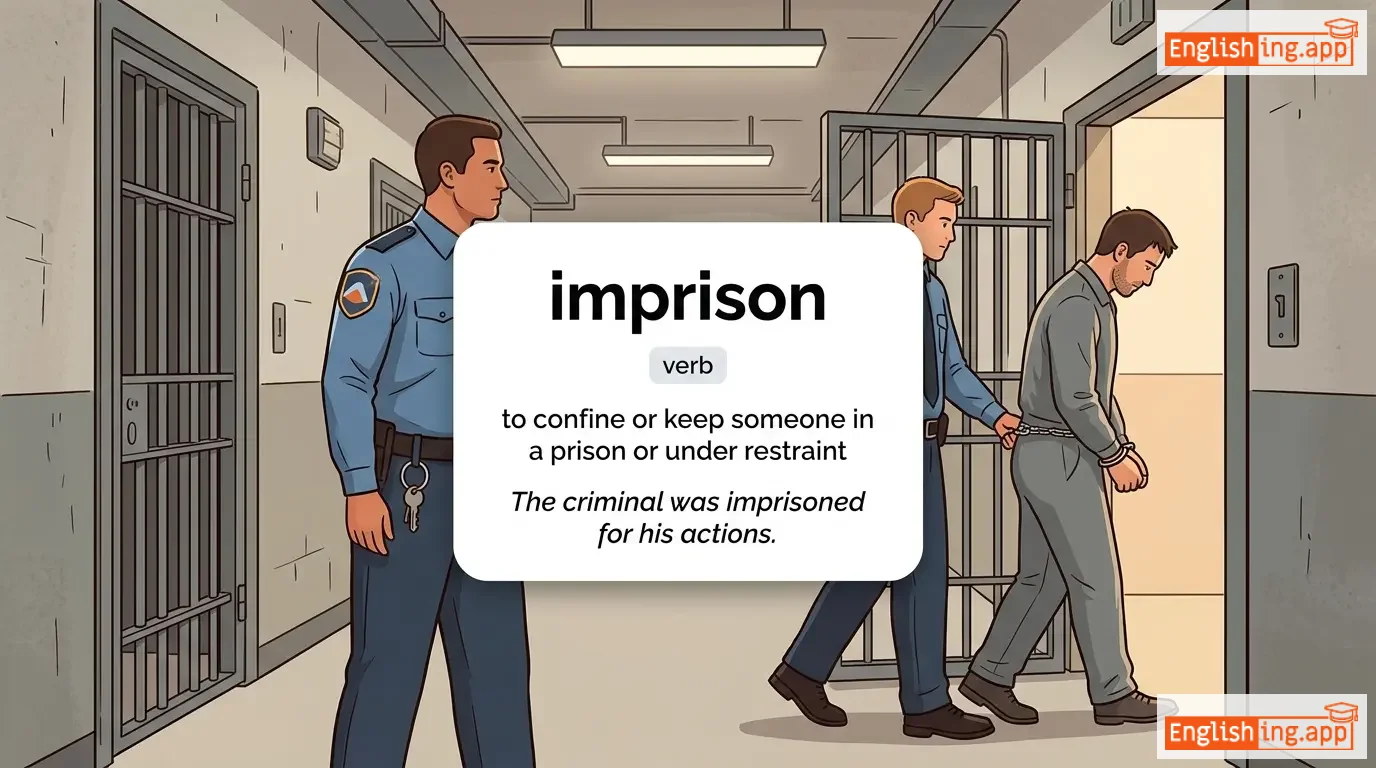
verb
/ɪmˈprɪzən/
监禁 (jianjin)

to confine or keep someone in a prison or under restraint

"The criminal was imprisoned for his actions."

"罪犯因其行为被监禁。" (Zuifan yin qi xingwei bei jianjin.)
noun
/ɪmˈprɪzənmənt/
监禁 (jianjin)

the act of putting someone in prison; the state of being confined as punishment

"He faced imprisonment for violating the court order."

"他因违反法院命令而面临监禁。" (Ta yin weifan fayuan mingling er mianlin jianjin)
noun
/ɪmˌprɒb.əˈbɪl.ə.ti/
不可能性 (bù kěnéng xìng)

the quality or state of being improbable; unlikely to be true or to happen

"The improbability of winning the lottery twice didn't stop her from buying tickets."

"两次赢得彩票的可能性几乎为零,但她仍然买了票。" (liǎng cì yíngdé cǎipiào de kěnéng xìng jīhū wéi líng, dàn tā réngrán mǎi le piào.)
adjective
/ɪmˈprɒbəbl/
不太可能的 (butaikanengde)

Not likely to be true or to happen.

"It seems improbable that he will arrive on time."
"看起来他准时到达的可能性很小。" (Kàn qǐlái tā zhǔnshí dào dá de kěnéng xìng hěn xiǎo.)
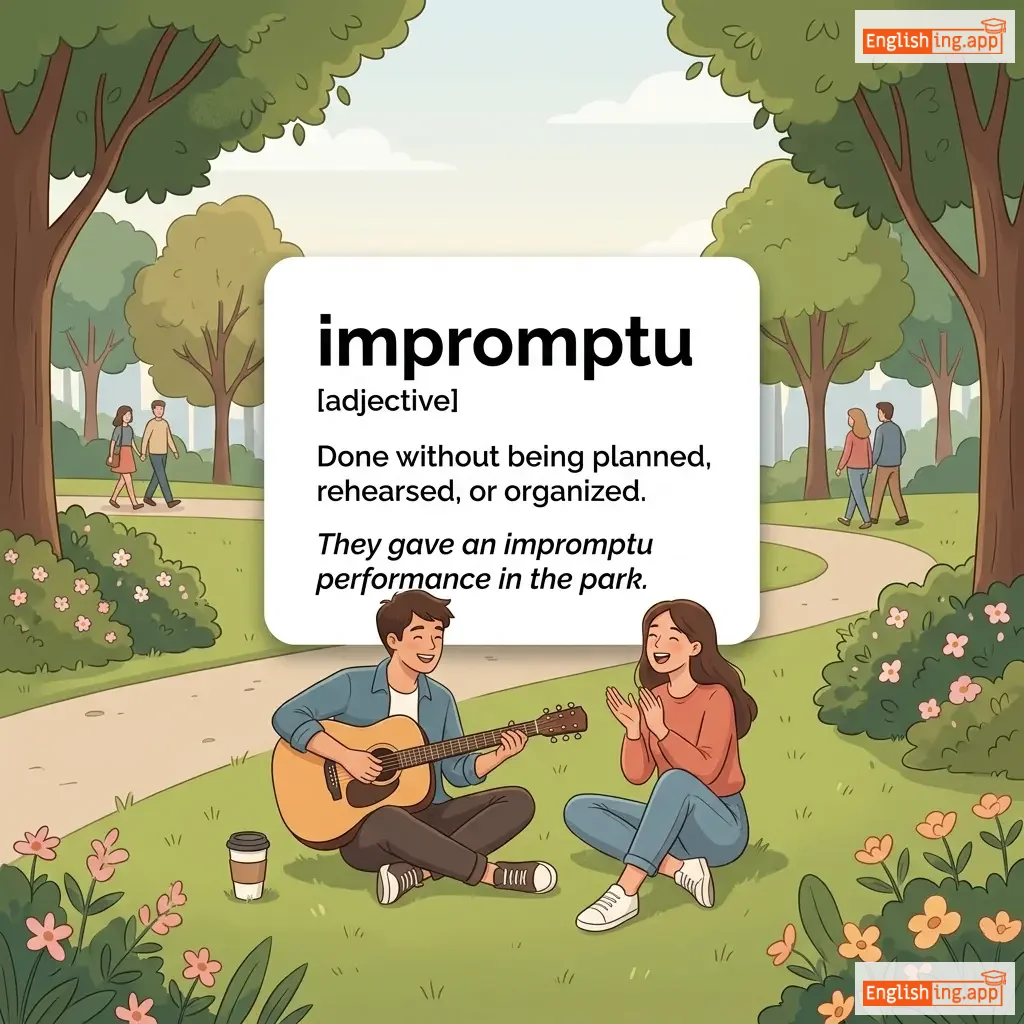
impromptu definition card — visual illustration of the meaning
adjective
/ɪmˈprɒmptjuː/
即兴 (jixing)

Done without being planned, rehearsed, or organized.

"They gave an impromptu performance in the park."

"他们在公园里进行了即兴表演。" (Tamen zai gongyuan li jinxing le jixing biaoyan.)
adjective
/ɪmˈprɒpər/
不适当 (bù shìdàng)

Not suitable or appropriate; against accepted standards.

"It is improper to talk loudly in the library."

"在图书馆大声讲话是不合适的。" (Zài túshūguǎn dàshēng jiǎnghuà shì bù shìdàng de.)
noun
/ˌɪmprəˈpraɪəti/
不当行为 (budang xingwei)

Failure to observe standards of honesty or modesty; improper behavior.

"The politician was accused of financial impropriety."

"该政治家被指控涉及财务不当行为。" (Gai zhengzhijia bei zhi kong sheji caiwu budang xingwei.)
verb
/ɪmˈpruːv/
改善 (gǎishàn)

to make something better or become better

"Regular practice will improve your skills."

"定期的练习将改善你的技能。" (dìngqī de liànxí jiāng gǎishàn nǐ de jìnéng.)
adjective
/ɪmˈpruːvd/
改进的 (gǎijìn de)

made better or enhanced in quality or condition

"Her health has significantly improved since last month."

"她的健康自上个月以来显著改善。" (Tā de jiànkāng zì shàng gè yuè yǐlái xiǎnzhù gǎishàn.)
noun
/ɪmˈpruːvmənt/
改善 (gǎishàn)

the act of making something better

"There has been a significant improvement in his health."
"他的健康有了显著改善。" (tā de jiànkāng yǒu le xiǎnzhù gǎishàn.)
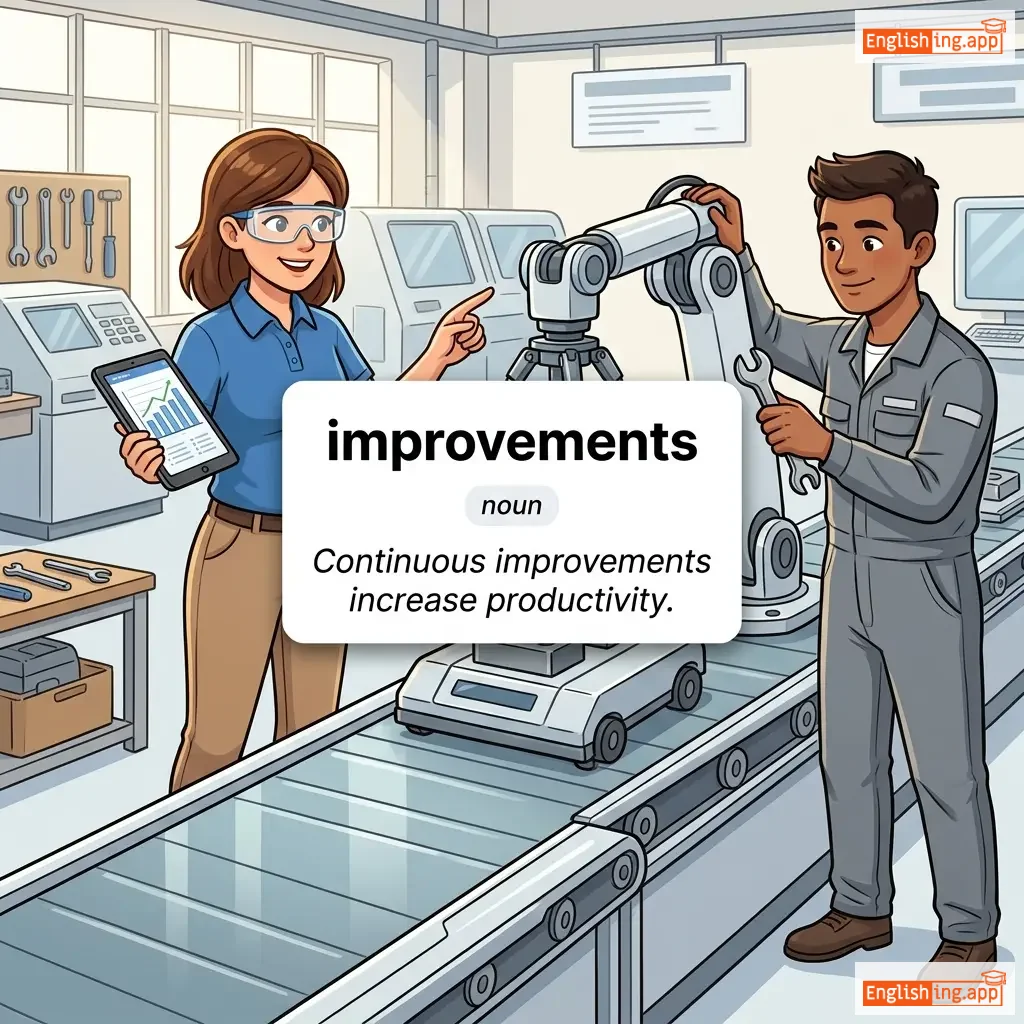
improvements definition card — visual illustration of the meaning
noun
ɪmˈpruːv.mənts
改善 (gaishan)

The action of making or becoming better; an instance of something becoming or being made better.

"Continuous improvements increase productivity."

"持续的改善提高了生产力。" (Chíxù de gǎishàn tígāo le shēngchǎnlì.)
noun
/ɪmˈprɑːvɪdəns/
缺乏远见 (que fa yuan jian)

Lack of foresight or care for future needs.

"His improvidence led to financial difficulties."

"他的缺乏远见导致了财务困难。" (ta de que fa yuan jian dao zhi le cai wu kun nan.)
adjective
/ɪmˈprɒvɪdənt/
缺乏远见 (quēfá yuǎnjiàn)

Not having or showing foresight; spending wastefully or without thought for the future.

"His improvident habits left him with no savings."

"他缺乏远见的习惯让他没有积蓄。" (Tā quēfá yuǎnjiàn de xíguàn ràng tā méiyǒu jīxù.)