词汇表

英语词汇词典 | 单词含义、定义和示例

noun
/hɪp/
臀部 (tún bù)

The part of the body on either side of the pelvis, or informal: trendy and fashionable.

"She put her hands on her hips."

"她把手放在臀部上。" (tā bǎ shǒu fàng zài tún bù shàng.)
noun
/ˌhɪp.əˈpɒt.ə.məs/
河马 (hema)

a large, mostly herbivorous mammal that lives in and around water in Africa

"The hippopotamus spends most of its day in the water."

"河马将大部分时间都花在水中。" (hema jiāng dà bùfèn shíjiān dōu huā zài shuǐ zhōng)
hire definition card — visual illustration of the meaning
verb
/ˈhaɪə(r)/
聘用 (pìnyòng)

to employ someone for a job or task

"The company decided to hire more staff this year."

"公司决定今年聘用更多员工。" (Gōngsī juédìng jīnnián pìnyòng gèng duō yuángōng.)
noun
/ˈhaɪərlɪŋ/
雇佣者 (gù yōng zhě)

A person who works for payment only, often with little loyalty or principle.

"The mercenary was dismissed as just a hireling with no real loyalty."

"雇佣兵被解雇,只是一个没有真正忠诚的雇佣者。" (Gù yōng bīng bèi jiěgù, zhǐshì yīgè méiyǒu zhēnzhèng zhōngchéng de gù yōng zhě.)
hirsute definition card — visual illustration of the meaning
adjective
/ˈhɜːrsuːt/

Having a lot of hair, especially in an unusual place.

"The hirsute man stood out in the crowd with his long beard."

pronoun
/hɪz/
他的 (tā de)

belonging to or associated with a male person previously mentioned

"This is his book on the table."

"这是他的书在桌子上。" (Zhè shì tā de shū zài zhuōzi shàng.)
adjective
/hɪˈspænɪk/
西班牙的 / 讲西班牙语的 (xībānyá de / jiǎng xībānyá yǔ de)

relating to Spain or Spanish-speaking countries, especially Latin America.

"She studies Hispanic culture and language."

"她学习西班牙文化和语言。" (Tā xuéxí xībānyá wénhuà hé yǔyán.)
noun
/hɪˈstɔːriən/
历史学家 (lìshǐ xuéjiā)

a person who studies or writes about history

"The historian gave a lecture on ancient civilizations."

"历史学家讲授了一堂关于古代文明的讲座。" (Lìshǐ xuéjiā jiǎngshòule yī táng guānyú gǔdài wénmíng de jiǎngzuò.)
historic definition card — visual illustration of the meaning
adjective
/hɪˈstɔːrɪk/
历史性的 (lishixing de)

Famous or important in history; likely to be remembered in history.

"The historic agreement changed the course of the nation."

"历史性的协议改变了国家的进程。" (Lishi xing de xieyi gaibianle guojia de jincheng.)
adjective
/hɪˈstɔːrɪkəl/
历史的 (lishide)

Related to history or past events.

"The museum has a large collection of historical documents."

"博物馆收藏了大量历史文件。" (Bowuguan shoucang le dalian lishi wenjian.)
adverb
/hɪˈstɒrɪkli/
历史上 (lishi shang)

in a way that relates to history or past events

"Historically, this city was a major trade center."

"历史上,这座城市曾是一个重要的贸易中心。" (Lishi shang, zhe zuo chengshi ceng shi yige zhongyao de maoyi zhongxin.)
History definition card — visual illustration of the meaning
noun
/ˈhɪstəri/
历史 (lishi)

the study of past events

"She is studying the history of medieval Europe."
"她正在研究中世纪欧洲的历史。" (Ta zhengzai yanjiu zhongshi ji Ouzhou de lishi.)
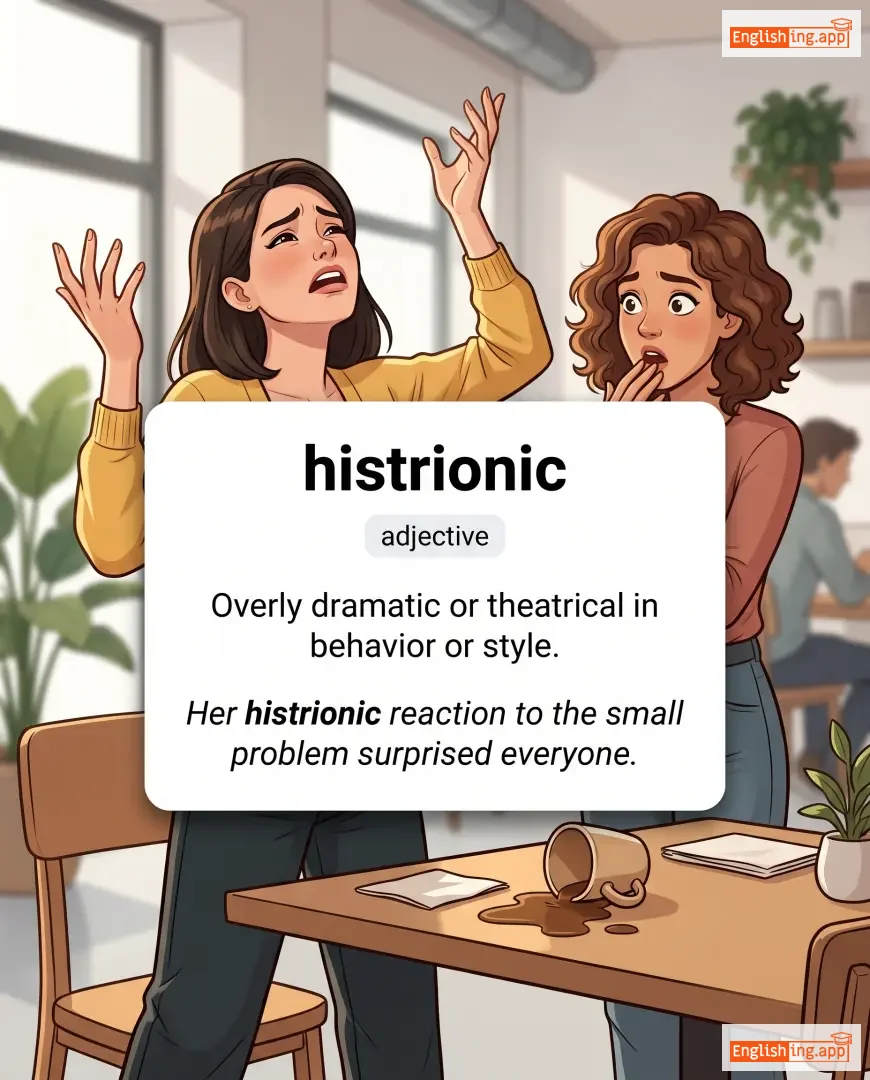
histrionic definition card — visual illustration of the meaning
adjective
/ˌhɪstriˈɒnɪk/

Overly dramatic or theatrical in behavior or style.

"Her histrionic reaction to the small problem surprised everyone."

verb
/hɪt/
(da)

to strike someone or something with force

"He accidentally hit the ball into the window."

"他不小心把球打进了窗户。" (Ta bu xiaoxin ba qiu da jin le chuanghu.)
noun
/haɪv/
蜂巢 (fēng cháo)

A structure where bees live and produce honey; also a place full of busy activity.

"The office was a hive of activity before the deadline."

"在最后期限之前,办公室就像一个蜂巢一样忙碌。" (zài zuìhòu qīxiàn zhīqián, bàngōngshì jiù xiàng yīgè fēngcháo yīyàng mánglù.)
verb
/hɔːrd/
囤积 (túnjī)

to accumulate and hide away a large supply of something, often secretly

"During the crisis, many people began to hoard food and water."

"在危机期间,许多人开始囤积食物和水。" (Zài wēijī qījiān, xǔduō rén kāishǐ túnjī shíwù hé shuǐ.)
adjective
/hɔːrs/
嘶哑 (sīyǎ)

having a rough, harsh, or weak voice, often due to illness or shouting

"After shouting all day at the rally, his voice was hoarse."

"在集会中大声喊叫了一整天后,他的嗓子变得沙哑。" (Zài jíhuì zhōng dàshēng hǎnjiào le yī zhěng tiān hòu, tā de sǎngzi biàn de sīyǎ.)
adjective
/ˈhɔːri/
灰色的, 古老的 (huī sè de, gǔ lǎo de)

gray or white with age; very old and respected

"The hoary oak tree stood as a witness to centuries of history."

"那棵古老的橡树作为世纪历史的见证者伫立。" (Nà kē gǔlǎo de xiàng shù zuòwéi shìjì lìshǐ de jiànzhèng zhě zhù lì.)
noun
/hoʊks/
骗局,欺诈 (piànjú, qīzhà)

a trick or false story meant to deceive people

"The news about aliens landing turned out to be a hoax."

"关于外星人降落的新闻被证明是一个骗局。" (Guānyú wàixīngrén jiàngluò de xīnwén bèi zhèngmíng shì yí gè piànjú.)
verb
/ˈhɑːbəl/
蹒跚 (pán shān)

to walk awkwardly with difficulty, usually due to injury

"He hobbled across the room after twisting his ankle."

"他在扭伤脚踝后,蹒跚地走过房间。" (Tā zài niǔ shāng jiǎohuái hòu, pán shān de zǒu guò fángjiān.)
noun
/ˈhɑː.bi/
爱好; 休闲活动; 消遣 (ài hào, xiū xián huó dòng, xiāo qiǎn)

an activity done regularly in one's leisure time for pleasure; a pastime or recreation

"Photography became her favorite hobby after she received a camera for her birthday."

"摄影成为她的最爱爱好,在她生日时收到了相机。" (Shèyǐng chéngwéi tā de zuì ài àihào, zài tā shēngrì shí shōudàole xiàngjī.)
noun
/ˈhɒki/
曲棍球 (qugunqiu)

a sport played with sticks and a ball or puck on ice or a field

"He plays hockey for the national team."

"他为国家队打曲棍球。" (Ta wei guoji dui da qugunqiu.)
noun
/ˈhɒdʒ.pɒdʒ/
混杂物 (hùn zá wù)

A confusing mixture of different things; a jumble.

"The essay was a hodgepodge of unrelated ideas."

"这篇文章是一些不相关的想法的混杂物。" (Zhè piān wénzhāng shì yīxiē bù xiāngguān de xiǎngfǎ de hùn zá wù.)
noun
/hoʊ/
锄头 (chutou)

a gardening tool with a thin metal blade used for breaking up soil and removing weeds

"The farmer used a hoe to remove weeds from his vegetable garden."

"农夫使用锄头从他的蔬菜园中移除杂草。" (Nongfu shiyong chutou cong tade shucai yuan zhong yichu zakao.)
noun
/hɔːɡ plʌm/
豺果 (chái guǒ)

tropical fruit with yellow skin and sour taste

"Hog plums are often used to make pickles and chutneys."

"豺果常用于制作腌制食品和酸辣酱。" (Chái guǒ cháng yòng yú zhìzuò yānzhì shípǐn hé suānlàjiàng.)
noun
/ˈhɒɡz.hɛd/
大桶 (da tong)

A large cask or barrel, traditionally used for storing liquids like wine or beer.

"The cellar was filled with hogsheads of ale."

"地下室里堆满了啤酒的大桶。" (Dixia shi li dui man le pijiu de da tong.)
hold definition card — visual illustration of the meaning
verb
/hoʊld/
握住 (wò zhù)

to grasp, carry, or keep in position; to maintain

"Please hold the door open for me."

"请为我把门保持打开。" (Qǐng wèi wǒ bǎ mén bǎochí dǎkāi.)
noun
/hoʊl/
(dong)

an opening, gap, or hollow place in a solid surface

"There is a hole in my shirt."

"我的衬衫上有一个洞。" (Wǒ de chènshān shàng yǒu yīgè dòng.)
noun
/ˈhɒlɪdeɪ/
假期 (jiàqī)

A day of celebration or rest when most people do not work.

"We are planning a trip during the summer holiday."

"我们计划在暑假期间去旅行。" (wǒmen jìhuà zài shǔjià qījiān qù lǚxíng.)
holistic definition card — visual illustration of the meaning
adjective
/hoʊˈlɪstɪk/
整体的 (zhěngtǐ de)

considering the whole rather than just the parts; comprehensive

"The doctor took a holistic approach to treatment."

"医生采取了整体治疗方法。" (Yīshēng cǎiqǔle zhěngtǐ zhìliáo fāngfǎ.)
adjective
/ˈhɑlːoʊ/
空的; 中空的; (kong de; zhong kong de;)

having an empty space inside; lacking substance or meaning; insincere

"The hollow tree trunk provided shelter for small animals."

"空心树干为小动物提供了庇护。" (Kongxin shu gan wei xiao dongwu tigong le bihù.)
noun
/ˈhɒl.ə.kɔːst/
大屠杀 (dà túshā)

A large-scale destruction, especially by fire; historically, the genocide of Jews during World War II.

"Millions of people perished during the Holocaust."

"在大屠杀期间,数百万人死亡。" (Zài dà túshā qījiān, shù bǎi wàn rén sǐwáng.)
noun
/ˈhoʊl.stər/
枪套 (qiāng tào)

A holder or case for carrying a gun, typically worn on a belt or shoulder.

"The sheriff kept his revolver in a leather holster."

"警长将他的左轮手枪放在皮革枪套里。" (Jǐngzhǎng jiāng tā de zuǒlún shǒuqiāng fàng zài pígé qiāng tào lǐ.)
adjective
/ˈhoʊli/
神圣的 (shensheng de)

Dedicated to God or a religious purpose; sacred.

"This temple is considered a holy place."

"这座寺庙被认为是一个神圣的地方。" (Zhe zuo simiao bei renwei shi yige shensheng de difang.)
noun
/ˈhɒm.ɪdʒ/ or /ˈɑː.mɑːʒ/
致敬 (zhìjìng)

Special honor, respect, or tribute shown publicly.

"The statue was built as an homage to the national hero."

"这座雕像是作为对民族英雄的致敬而建造的。" (Zhe zuo diaoxiang shi zuo wei dui minzu yingxiong de zhijing er jianzao de.)
noun
/hoʊm/
(jia)

the place where one lives, especially with family; a residence

"She finally returned home after a long journey."

"她在长途旅行后终于回到了家。" (tā zài cháng tú lǚ xíng hòu zhōng yú huí dào le jiā.)
home appliances definition card — visual illustration of the meaning
noun
hoʊm əˈplaɪ.ənsɪz
家用电器 (jiāyòng diànqì)

Electrical devices and machines used in households for daily tasks and convenience.

"Modern home appliances enhance convenience."

"现代家用电器提升了便利性。" (Xiàndài jiāyòng diànqì tíshēngle biànlìxìng.)
noun
/hoʊm ˈdɪstrɪkt/
家乡地区 (jiaxiang diqu)

the district where a person was born or originally comes from

"He returned to his home district after many years abroad."

"他在国外多年后回到了自己的家乡地区。" (ta zai guowai duonian hou huidailiao ziji de jiaxiang diqu)
noun
/ˈhoʊmlænd/
故乡 (gùxiāng)

a person's native country or region

"She returned to her homeland after ten years abroad."

"她在国外十年后回到了她的故乡。" (Tā zài guówài shí nián hòu huídàole tā de gùxiāng.)
adjective
/ˈhoʊmləs/
无家可归 (wú jiā kě guī)

Without a home, and therefore typically living on the streets.

"The organization helps homeless people find shelter."

"该组织帮助无家可归的人找到庇护所。" (Gāi zǔzhī bāngzhù wú jiā kě guī de rén zhǎodào bìhù suǒ.)
adjective
/ˈhoʊmli/
简单的 (jiǎndān de)

Plain or unattractive in appearance; simple and comfortable in style or character.

"Despite being homely, the cottage felt warm and welcoming."

"尽管看起来简单,但小屋感觉温暖而热情。" (Jǐnguǎn kàn qǐlái jiǎndān, dàn xiǎowū gǎnjué wēnnuǎn ér rèqíng.)
noun
/ˌhoʊmiˈɑːpəθi/
顺势疗法 (shunshi liaofa)

a system of alternative medicine based on treating diseases with highly diluted substances

"He believes in homeopathy for treating common colds."
"他相信顺势疗法来治疗常见感冒。" (Tā xiāngxìn shùnshì liáofǎ lái zhìliáo chángjiàn gǎnmào.)
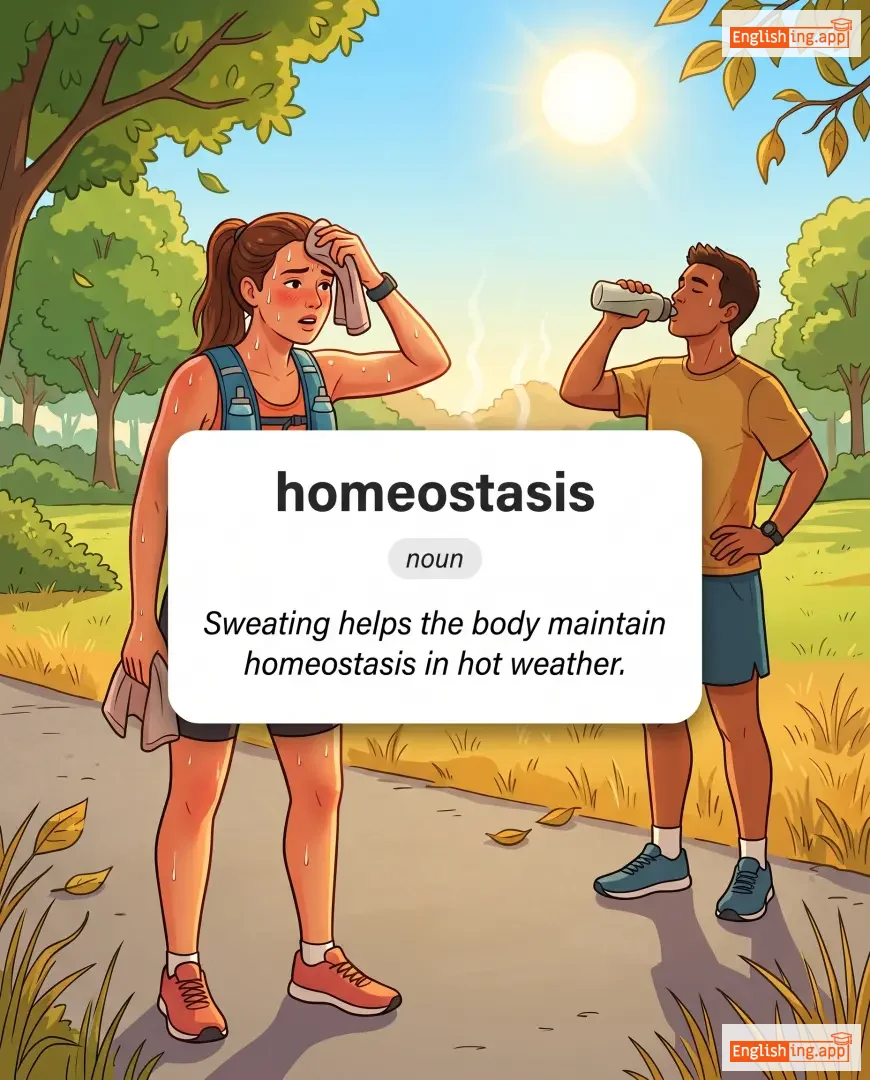
homeostasis definition card — visual illustration of the meaning
noun
/ˌhoʊmi.oʊˈsteɪsɪs/
体内平衡 (tǐ nèi píng héng)

The ability of a living system or organism to maintain internal stability despite changes in external conditions.

"Sweating helps the body maintain homeostasis in hot weather."
"出汗有助于身体在炎热天气中保持体内平衡。" (Chū hàn yǒuzhù yú shēntǐ zài yánrè tiānqì zhōng bǎochí tǐ nèi píng héng.)
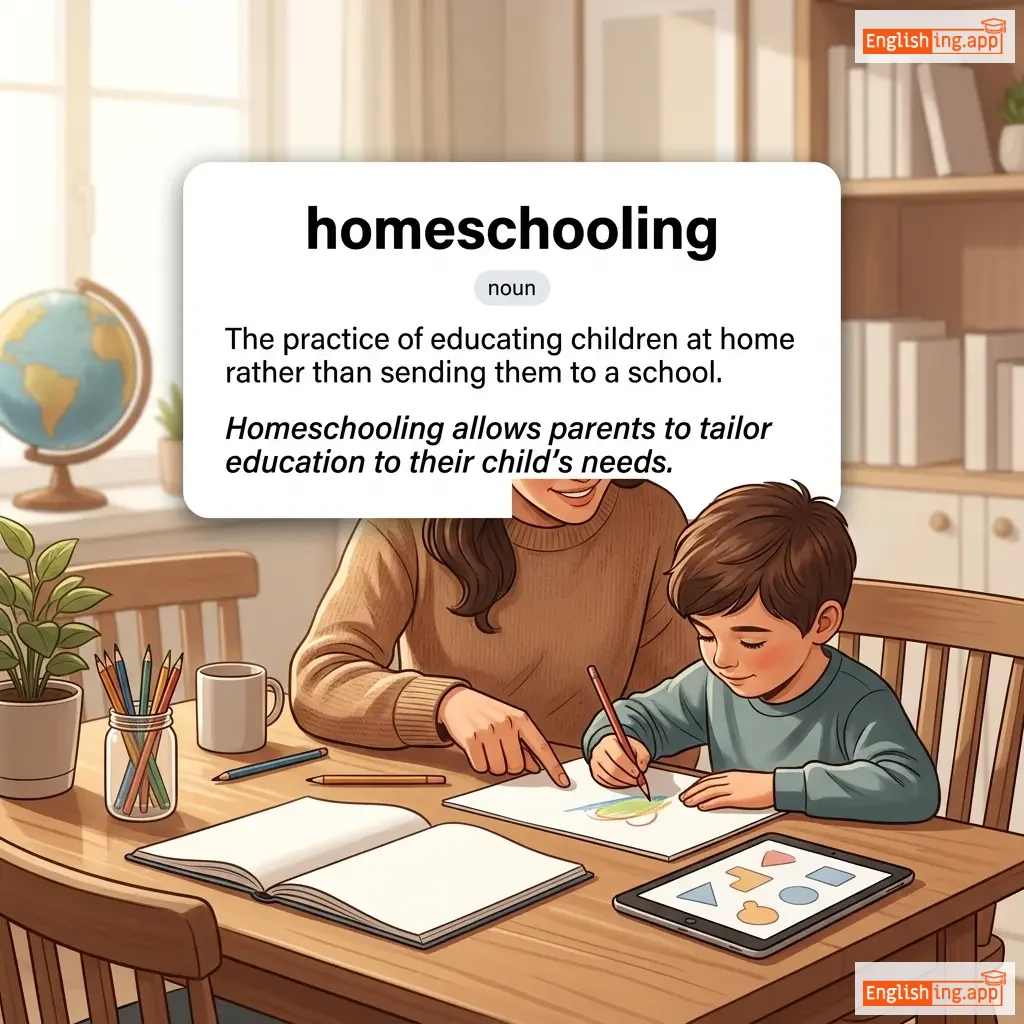
homeschooling definition card — visual illustration of the meaning
noun
ˈhoʊmˌskuː.lɪŋ
在家教育 (zai jia jiaoyu)

The practice of educating children at home rather than sending them to a school.

"Homeschooling allows parents to tailor education to their child's needs."

"家庭教育使父母能够根据孩子的需要定制教育。" (Jiating jiaoyu shi fumu nenggou genju haizi de xuyao dingzhi jiaoyu.)
adjective
/ˈhoʊmˌsɪk/
思乡; 思念家园和家人 (sī xiāng; sī niàn jiā yuán hé jiā rén)

feeling sad because you are away from home; longing for one's home and family

"She felt homesick during her first week at college."

"她在大学的第一周感到思乡。" (Tā zài dàxué de dì yī zhōu gǎndào sī xiāng.)
adjective
/ˈhoʊm.spʌn/
家制 (jiazhi)

Simple and unsophisticated; made at home rather than in a factory.

"She wore a homespun dress to the village festival."

"她穿着家制的衣服去参加村里的节日庆典。" (Tā chuānzhuó jiāzhì de yīfú qù cānjiā cūn lǐ de jiérì qìngdiǎn.)
noun
/ˈhoʊmwɜːrk/
家庭作业 (jiātíng zuòyè)

schoolwork that a student does at home

"I need to finish my math homework before dinner."

"我需要在晚餐前完成我的数学家庭作业。" (Wǒ xūyào zài wǎncān qián wánchéng wǒ de shùxué jiātíng zuòyè.)
noun
/ˈhɑːmɪsaɪd/
谋杀 (móushā)

the killing of one human being by another

"The police are investigating a case of homicide."

"警方正在调查一起谋杀案件。" (jǐngfāng zhèngzài diàochá yīqǐ móushā ànjiàn.)
Homily definition card — visual illustration of the meaning
noun
/ˈhɑː.mə.li/
讲道 (jiangdao)

A religious or moral lecture; a sermon.

"The priest delivered a touching homily on kindness."

"牧师讲了一个感人的讲道,讲的是仁慈。" (Mùshī jiǎngle yīgè gǎn rén de jiǎngdào, jiǎng de shì réncí.)
noun
/ˌhoʊmə.dʒəˈniːəti/

The quality or state of being all the same or all of the same kind.

"The cultural homogeneity of the village made it feel unified."