词汇表

英语词汇词典 | 单词含义、定义和示例

noun/verb
/hɛm/
衣边 (yī biān)

the edge of a piece of cloth that is folded and sewn; to fold and sew the edge of cloth

"She hemmed the dress to make it shorter."

"她把裙子的边缘缝上去,弄短了它。" (Tā bǎ qúnzi de biānyuán fèng shàngqù, nòng duǎnle tā.)
hemophilia definition card — visual illustration of the meaning
noun
ˌhiː.məˈfɪl.i.ə
血友病 (xuè yǒu bìng)

A medical condition in which the ability of the blood to clot is severely reduced, causing the sufferer to bleed severely from even a slight injury.

"Hemophilia treatment benefits from genetic editing."

"血友病治疗受益于基因编辑。" (Xuèyǒubìng zhìliáo shòuyì yú jīyīn biānjí.)
noun/verb
/ˈhɛmərɪdʒ/
出血 (chūxuè)

A significant loss of blood from a ruptured blood vessel, or to lose blood heavily.

"The patient suffered a severe brain hemorrhage."

"患者遭受了严重的脑出血。" (Huànzhě zāoshòule yánzhòng de nǎo chūxuè.)
noun
/hɛn/
母鸡 (mǔ jī)

female chicken

"The hen laid fresh eggs in the nest."

"母鸡在巢里下了新鲜的蛋。" (Mǔ jī zài cháo lǐ xià le xīnxiān de dàn.)
adverb
/hɛns/
因此 (yīncǐ)

for this reason; as a result

"She was the best candidate, hence she was chosen for the job."

"她是最优秀的候选人,因此她被选中担任这份工作。" (Tā shì zuì yōuxiù de hòuxuǎn rén, yīncǐ tā bèi xuǎnzhòng dānrèn zhè fèn gōngzuò.)
noun
/ˈhen.ə/
海娜 (haina)

a reddish-brown dye made from the powdered leaves of a tropical shrub, used to color hair and decorate skin

"The bride's hands were beautifully decorated with intricate henna patterns for her wedding ceremony."

"新娘的手被精美的指甲花纹装饰,用于她的婚礼仪式。" (Xinliang de shou bei jingmei de zhi jia huawen zhuangshi, yong yu ta de hunli yishi.)
verb
/ˈhɛnˌpɛk/

To continually criticize, nag, or dominate (especially a husband).

"He felt henpecked by his overly controlling wife."

noun
/ˈhɛptəˌɡɒn/
七边形 (qī biān xíng)

A polygon with seven sides and seven angles.

"The math teacher drew a heptagon on the board."

"数学老师在黑板上画了一个七边形。" (Shùxué lǎoshī zài hēibǎn shàng huàle yīgè qī biān xíng.)
noun
/ˈhɛptɑːrki/
七国联邦 (qī guó lián bāng)

A group of seven rulers or governments, especially the seven Anglo-Saxon kingdoms in early England.

"The history book described the heptarchy of Anglo-Saxon England."

"历史书描述了盎格鲁撒克逊英格兰的七国联合。" (Lì shǐ shū miáo shù le àng gé lǔ sà kè xùn yīng gé lán de qī guó lián bāng.)
pronoun
/hɜːr/
(ta)

used to refer to a female person or animal already mentioned or easily identified

"I saw her at the park yesterday."

"我昨天在公园看见了她。" (Wǒ zuótiān zài gōngyuán kànjiànle tā.)
noun/verb
/ˈhɛrəld/
先兆 (xian zhao)

A person or thing that announces or signals the approach of something; to announce or signal.

"The blooming flowers herald the arrival of spring."

"盛开的花朵预示着春天的到来。" (Sheng kai de huaduo yushi zhe chuntian de daolai.)
noun
/hɜːb/ (US) /hɜːb/ or /ɜːb/
草药 (caoyao)

a plant used for flavoring food, medicine, or perfume

"Basil is a popular herb used in Italian cuisine."

"罗勒是意大利料理中常用的草药。" (Luó lè shì yìdàlì liàolǐ zhōng chángyòng de cǎo yào.)
adjective
/hɜːrˈbeɪʃəs/
草本 (cǎo běn)

Relating to or resembling herbs; plants with soft, non-woody stems.

"The garden was filled with herbaceous plants that thrived in the summer."
"花园里充满了草本植物,它们在夏季茁壮成长。" (Huāyuán lǐ chōngmǎnle cǎoběn zhíwù, tāmen zài xiàjì zhuózhuàng chéngzhǎng.)
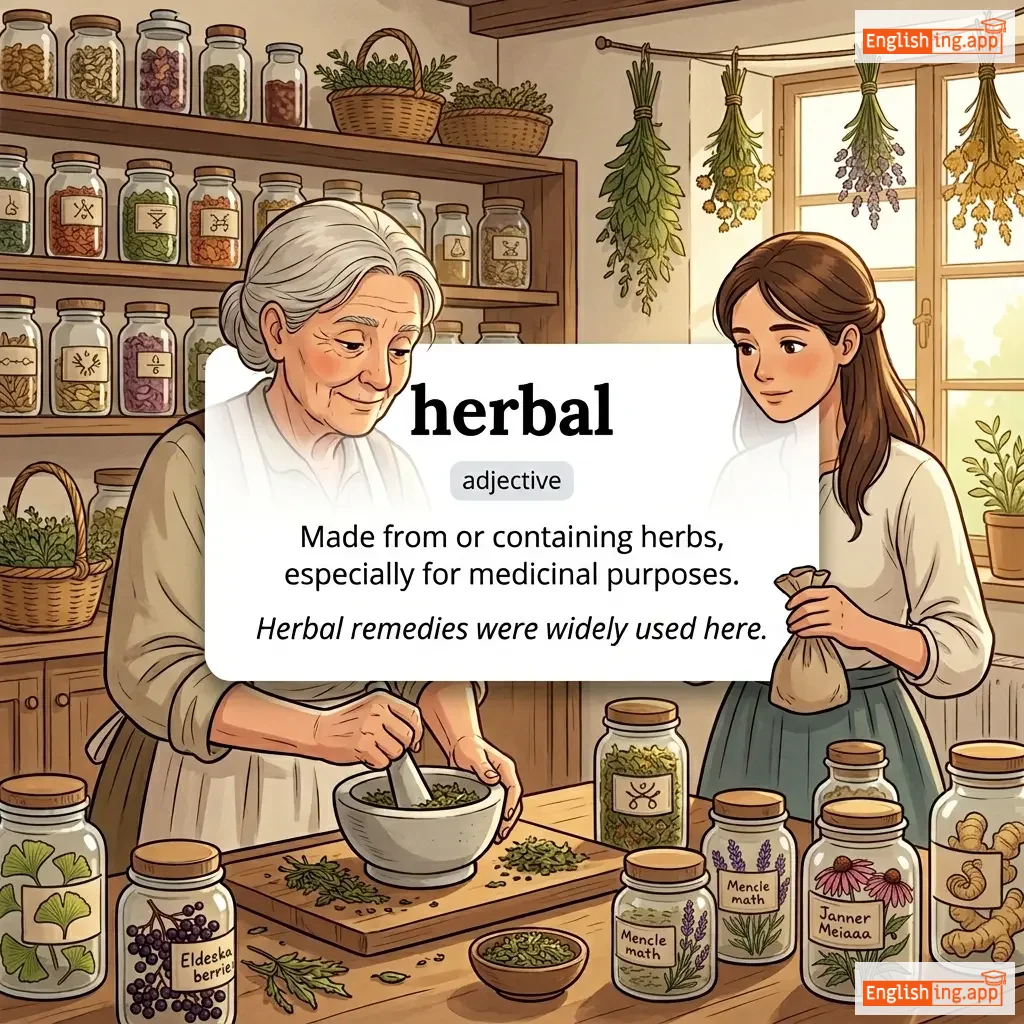
herbal definition card — visual illustration of the meaning
adjective
/ˈhɜː.bəl/
草药的 (cǎo yào de)

Made from or containing herbs, especially for medicinal purposes.

"Herbal remedies were widely used here."

"这里广泛使用草药疗法。" (Zhèlǐ guǎngfàn shǐyòng cǎo yào liáofǎ.)
noun
/hɜːrˈbɛəriəm/
植物标本馆 (zhíwù biāoběn guǎn)

A collection of preserved plant specimens and associated data used for scientific study.

"The university maintains a large herbarium for research and education."

"大学为研究和教育保持着一个大型植物标本馆。" (Dàxué wèi yánjiū hé jiàoyù bǎochí zhe yīgè dàxíng zhíwù biāoběn guǎn.)
noun
/ˈhɜːrbɪsaɪd/
除草剂 (chúcǎo jì)

A chemical substance used to kill unwanted plants, especially weeds.

"Farmers used herbicide to protect their crops from invasive weeds."
"农民们使用除草剂来保护他们的作物免受侵入性杂草的影响。" (Nóngmínmen shǐyòng chúcǎo jì lái bǎohù tāmen de zuòwù miǎn shòu qīnrùxìng zá cǎo de yǐngxiǎng.)
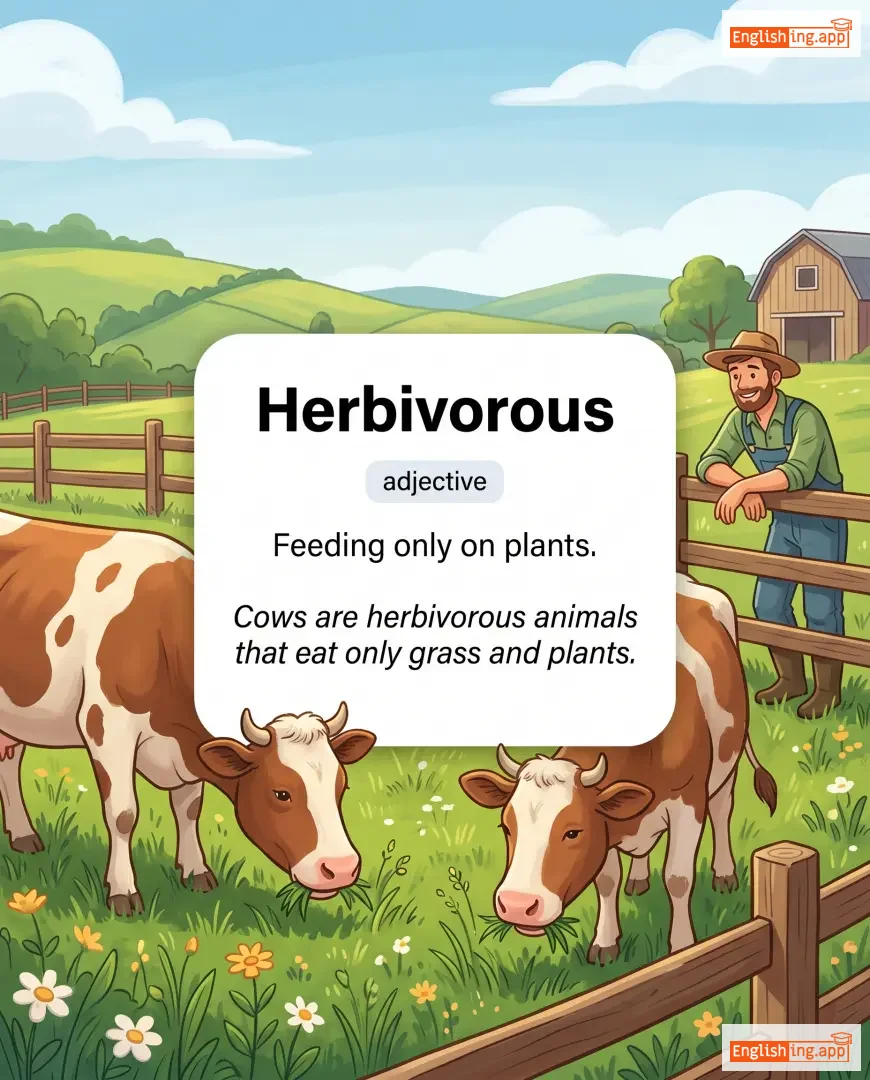
Herbivorous definition card — visual illustration of the meaning
adjective
/hɜːrˈbɪvərəs/
食草动物 (shī cǎo dòngwù)

Feeding only on plants.

"Cows are herbivorous animals that eat only grass and plants."

"牛是食草动物,只吃草和植物。" (Niú shì shī cǎo dòngwù, zhǐ chī cǎo hé zhíwù.)
adjective
/ˌhɜːrkjʊˈliːən/
极其困难 (jíqí kùnnán)

Requiring great strength or effort; very difficult to perform.

"It was a herculean task to rebuild the city after the disaster."

"灾难后重建城市是一项极其困难的任务。" (Zāinàn hòu chóngjiàn chéngshì shì yī xiàng jíqí kùnnán de rènwù.)
🐑

herd

noun/verb
/hɜːrd/

a large group of animals of the same type that live and feed together; or to gather animals into a group.

"The shepherd herded the sheep into the pen."

adverb
/hɪr/
这里 (zheli)

in, at, or to this place

"Please come here quickly."

"请快点来这里。" (Qing kuai dian lai zheli.)
adverb/noun
/ˌhɪərˈæftər/
从现在起 / 来世 (cong xianzai qi / laishi)

from now on; in the future; also refers to life after death.

"Hereafter, all reports must be submitted electronically."

"从现在起,所有报告必须通过电子方式提交。" (Cong xianzai qi, suoyou baogao bixu tongguo dianzi fangshi tijiao.)
adjective
/həˈrɛdəˌtɛri/
遗传的 (yíchuán de)

passed from parents to their children through genes or by inheritance.

"Diabetes can be a hereditary condition."

"糖尿病可能是一种遗传性疾病。" (Tángniàobìng kěnéng shì yī zhǒng yíchuán xìng jíbìng.)
noun
/ˈhɛrəsi/
异端 (yìduān)

belief or opinion that goes against established religious doctrine or accepted beliefs.

"In medieval times, heresy was often punished severely."

"在中世纪,异端常常受到严厉惩罚。" (Zai zhong shi ji, yìduān chángcháng shòudào yánlì chéngfá.)
noun
/ˈhɛrətɪk/
异端分子 (yìduān fēnzǐ)

a person who holds beliefs that go against established religious teachings or accepted beliefs.

"The church declared him a heretic for his radical ideas."

"教会因他的激进思想而宣判他为异端分子。" (jiàohuì yīn tā de jījìn sīxiǎng ér xuānpàn tā wéi yìduān fēnzǐ.)
adjective
/həˈrɛtɪkəl/
异端 (yìduān)

Relating to or characterized by departure from accepted beliefs or standards, especially in religion.

"The priest condemned the book as heretical."
"牧师将这本书谴责为异端。" (Mùshī jiāng zhè běn shū qiǎnzé wéi yìduān.)
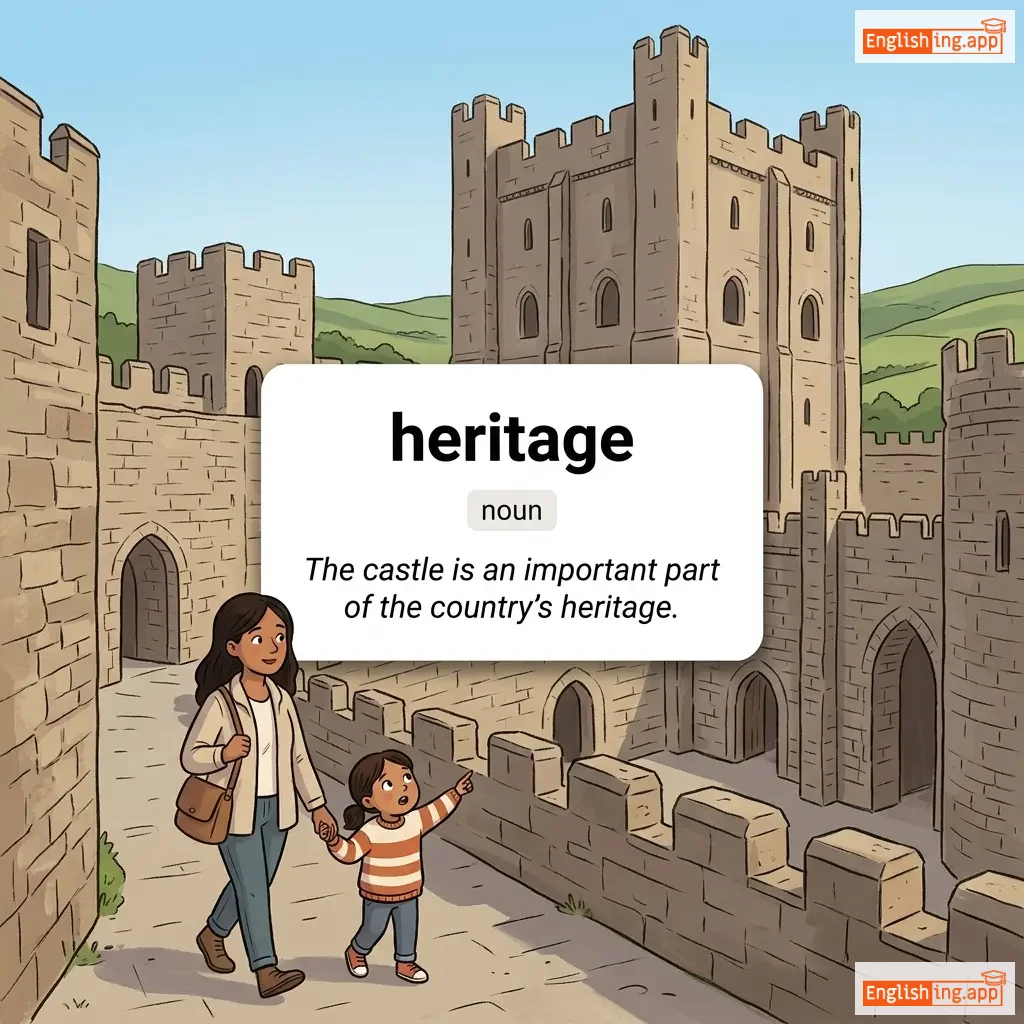
heritage definition card — visual illustration of the meaning
noun
/ˈhɛrɪtɪdʒ/
遗产 (yí chǎn)

Valued objects and qualities such as historic buildings and cultural traditions passed down from previous generations.

"The castle is an important part of the country's heritage."

"城堡是该国遗产的重要部分。" (Chéngbǎo shì gāi guó yíchǎn de zhòngyào bùfen.)
hermetic definition card — visual illustration of the meaning
adjective
/hərˈmɛtɪk/
密封的 (mìfēng de)

Completely sealed, especially so that no air can enter or escape.

"The medicine was kept in a hermetic container."

"药物被保存在一个密封的容器中。" (Yàowù bèi bǎocún zài yīgè mìfēng de róngqì zhōng.)
adverb
/hərˈmɛtɪkli/
密封地 (mifeng di)

In a way that is completely airtight or sealed off.

"The jars were hermetically sealed to preserve freshness."

"罐子被密封起来以保持新鲜。" (Guanzi bei mifeng qilai yi baochi xinxian.)
noun
/ˈhɜːrmɪt/
隐士 (yinshi)

A person who lives alone and apart from society, often for religious or spiritual reasons.

"The old hermit lived in a cave for decades."

"那位老隐士在一个洞穴里住了几十年。" (na wei lao yinshi zai yige dongxue li zhu le jishi nian.)
noun
/ˈhɜːrmɪtɪdʒ/
隐居地 (yinju di)

A secluded residence or retreat, often for a hermit or religious recluse.

"The monk spent years in a hermitage deep in the forest."

"那位和尚在森林深处的隐居地里度过了多年。" (Na wei he shang zai sen lin shen chu de yinju di li du guo le duo nian.)
noun
/ˈhɜːrniə/
疝气 (shanqi)

A medical condition where an organ pushes through the muscle or tissue holding it in place.

"The doctor diagnosed him with an inguinal hernia."

"医生诊断他有腹股沟疝气。" (Yisheng zhenduan ta you fugu gou shanqi.)
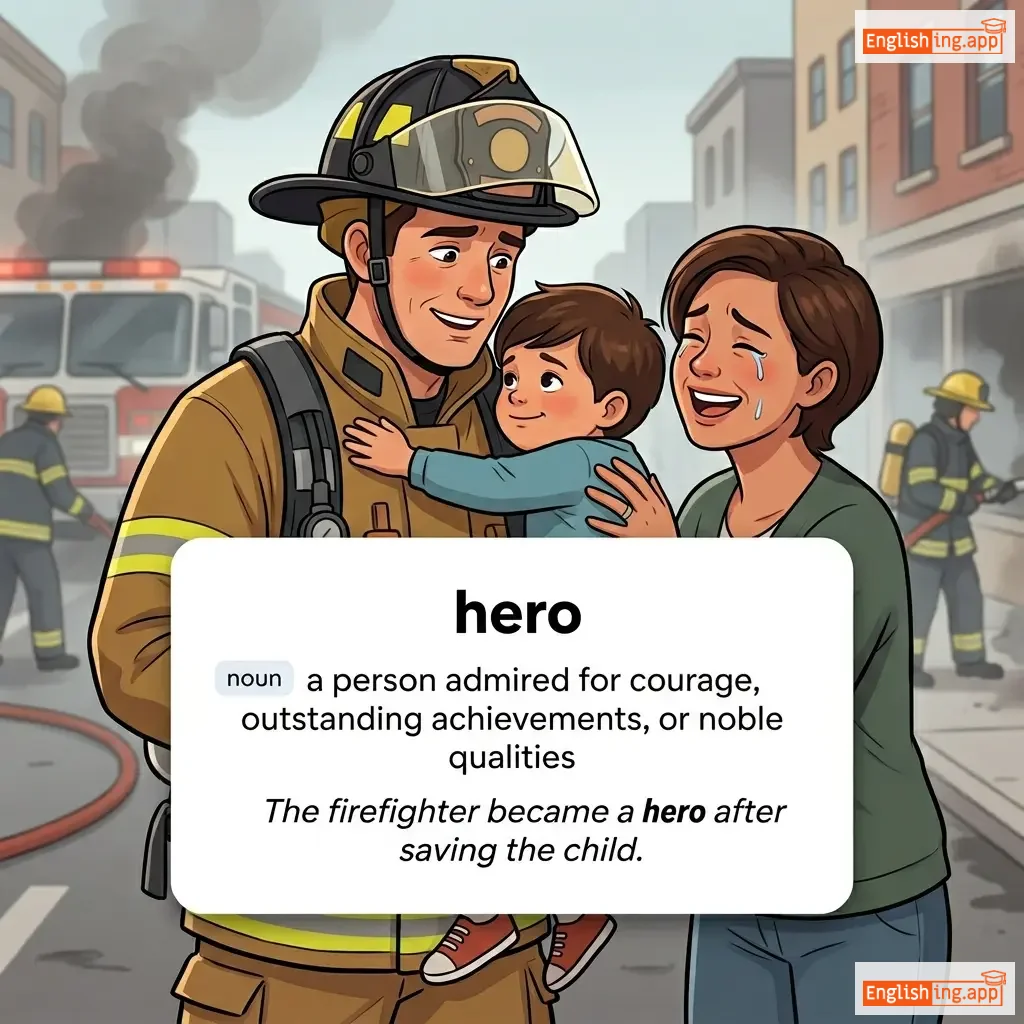
hero definition card — visual illustration of the meaning
noun
/ˈhɪəroʊ/
英雄 (yingxiong)

a person admired for courage, outstanding achievements, or noble qualities

"The firefighter became a hero after saving the child."

"消防员在救出孩子后成了英雄。" (Xiaofangyuan zai jiuchu haizi hou cheng le yingxiong.)
adjective
/hɪˈroʊɪk/
英勇的 (yingyong de)

showing great bravery or courage; relating to a hero or heroes

"The firefighter made a heroic effort to save the child."
"消防员英勇地努力拯救了那个孩子。" (xiaofangyuan yingyong de nuli zhengjiu le nage haizi)
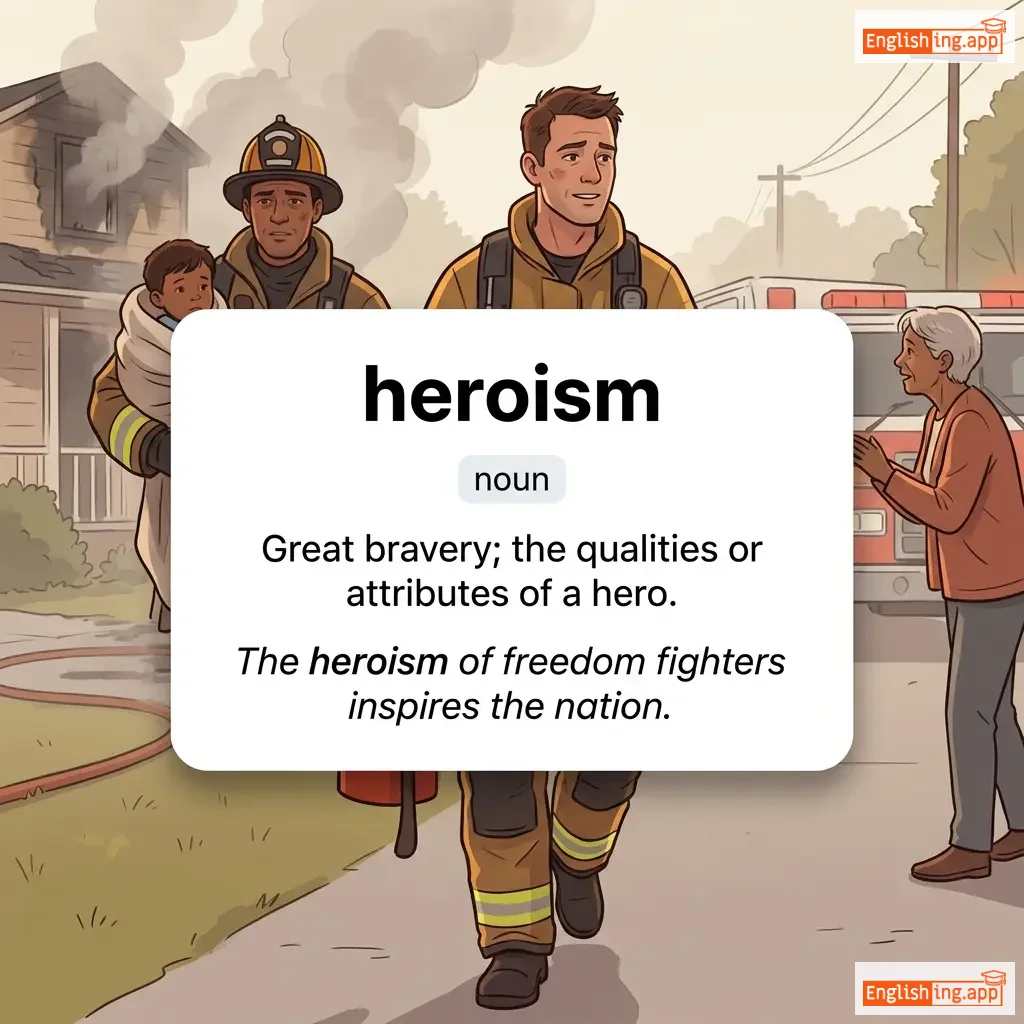
heroism definition card — visual illustration of the meaning
noun
ˈhɛroʊˌɪzəm
英雄主义 (yīngxióng zhǔyì)

Great bravery; the qualities or attributes of a hero.

"The heroism of freedom fighters inspires the nation."

"自由斗士的英雄主义激励着国家。" (Zìyóu dòushì de yīngxióng zhǔyì jīlìzhe guójiā.)
noun
/ˈherən/
苍鹭 (cang lu)

large wading bird with long legs and neck that feeds on fish

"The heron stood motionless by the water's edge, waiting for fish."

"苍鹭静静地站在水边,等待着鱼。" (Cang lu jing jing de zhan zai shui bian, deng dai zhe yu.)
noun
/ˌhɜːrpəˈtɒlədʒɪst/
爬虫学家 (páchóng xuéjiā)

A scientist who studies reptiles and amphibians.

"The herpetologist discovered a new species of frog in the rainforest."

"爬虫学家在雨林中发现了一种新青蛙物种。" (Páchóng xuéjiā zài yǔlín zhōng fāxiànle yī zhǒng xīn qīngwā wùzhǒng.)
👩‍👜

hers (赫尔斯)

pronoun
/hɜːrz/
她的(女性的)东西 (tā de (nǚxìng de) dōngxi)

used to refer to something that belongs to or is associated with a female person previously mentioned or easily identified.

"That blue bag is hers."

"那个蓝色的包是她的。" (Nàgè lán sè de bāo shì tā de.)
pronoun
/hɜːrˈsɛlf/
她自己 (tā zìjǐ)

used to refer to a female person as the object of a verb or preposition when she is the subject

"She prepared the meal all by herself."

"她自己做了饭。" (Tā zìjǐ zuòle fàn.)
noun
/ˈhɛzɪtəns/
犹豫 (youyu)

The quality or state of being reluctant or uncertain.

"Her hesitance to speak up delayed the decision."

"她的犹豫延迟了决定。" (Ta de youyu yanchi le jueding.)
noun
/ˈhɛzɪtənsi/
犹豫 (yóuyù)

The tendency to pause or delay due to uncertainty or fear.

"His hesitancy in answering made everyone doubt his confidence."

"他在回答时的犹豫让每个人都怀疑他的自信。" (Tā zài huídá shí de yóuyù ràng měi gè rén dōu huáiyí tā de zìxìn.)
adjective
/ˈhɛzɪtənt/
犹豫不决 (yóu yù bù jué)

uncertain or unwilling to do something quickly; showing doubt or reluctance

"She was hesitant to accept the job offer without more information."

"她在没有更多信息的情况下犹豫是否接受工作邀请。" (Tā zài méiyǒu gèng duō xìnxī de qíng kuàng xià yóu yù shì fǒu jiē shòu gōngzuò yāoqǐng.)
verb
/ˈhezɪteɪt/
犹豫 (yóuyù)

to pause before saying or doing something because you are uncertain or nervous.

"She hesitated before answering the question."

"她在回答问题之前犹豫了一下。" (Tā zài huídá wèntí zhīqián yóuyùle yīxià.)
noun
/ˌhɛzɪˈteɪʃən/

the act of pausing or being uncertain before doing something

"After a moment’s hesitation, he answered the question."

noun
/ˈhɛʃ.ən/
黄麻布 (huangma bu)

a strong coarse fabric made from jute or hemp, used for sacks and wrapping

"The farmer stored grain in hessian sacks."

"农民将谷物存储在黄麻布袋中。" (Nongmin jiang guwu cunchu zai huangma bu dai zhong.)
heterodox definition card — visual illustration of the meaning
adjective
/ˈhɛtərəˌdɒks/
异端 (yì duān)

not conforming with accepted or orthodox standards or beliefs

"The professor was known for his heterodox views on religion."

"教授以其在宗教问题上的异端观点而闻名。" (Jiàoshòu yǐ qí zài zōngjiào wèntí shàng de yìduān guāndiǎn ér wénmíng.)
noun
/ˌhɛtərəʤəˈniːɪti/
异质性 (yizhi xing)

the quality or state of being diverse in character or content

"The cultural heterogeneity of the city makes it vibrant and unique."

"这座城市的文化异质性使其充满活力且独特。" (Zhe zuo chengshi de wenhua yizhi xing shi qi chongman huoli qie dute.)
adjective
/ˌhɛtərəˈʤiːniəs/
异质的 (yì zhì de)

consisting of different kinds or diverse elements

"The classroom was filled with a heterogeneous group of students."

"教室里充满了一个异质的学生群体。" (Jiàoshì lǐ chōngmǎn le yīgè yì zhì de xuéshēng qúntǐ.)
adjective
/ˌhɛtərəʊˈmɔːrfɪk/
异形的 (yìxíng de)

Having different forms or shapes, especially in the same species or organism.

"Butterflies are heteromorphic during their life cycle, changing forms from larva to adult."

"蝴蝶在它们的生命周期中是异形的,从幼虫到成虫改变形态。" (Húdié zài tāmen de shēngmìng zhōuqī zhōng shì yìxíng de, cóng yòuchóng dào chéngchóng gǎibiàn xíngtài.)
heuristic definition card — visual illustration of the meaning
adjective
hjʊəˈrɪs.tɪk
启发式 (qǐfā shì)

Enabling a person to discover or learn something for themselves; using practical experience rather than theory.

"The scientist used a heuristic approach to solve the problem."

"科学家使用启发式方法来解决这个问题。" (Kēxuéjiā shǐyòng qǐfā shì fāngfǎ lái jiějué zhège wèntí.)
verb
/hjuː/
(kan)

To chop or cut something, especially wood or stone, with a tool.

"The workers hewed logs to build the cabin."

"工人们砍伐木材建造小屋。" (Gongrenmen kanfa mucai jianzao xiaowu.)