🔍heuristic (休瑞斯提克)

adjective
hjʊˈrɪs.tɪk
启发式 (qifashi)

含义

Enabling a person to discover or learn something for themselves; experimental learning approach.
Problem-solving approach using practical methods and learning from experience.
A method of finding solutions to problems through experience and trial.
含义翻译
使人能够自己发现或学习的;实验性学习方法。
shi ren nenggou ziji faxian huo xuexi de shiyanxing xuexi fangfa

例句

Teachers use heuristic techniques to encourage self-learning.

教师使用启发式技巧来鼓励自学。
jiaoshi shiyong qifashi jiqiao lai guli zixue

A heuristic approach helps students develop critical thinking.

启发式方法帮助学生发展批判性思维。
Qifahshi fangfa bangzhu xuesheng fazhan pipanxing siwei.

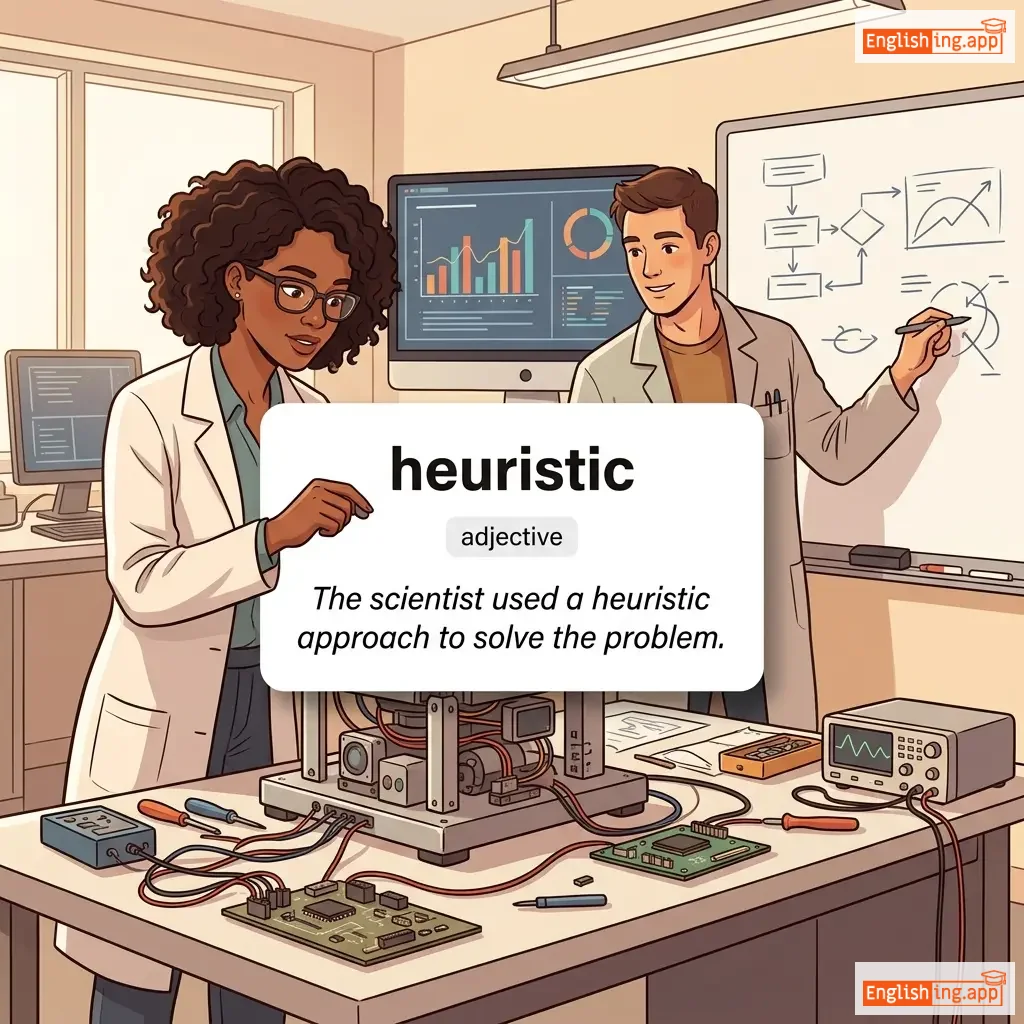
The professor used a heuristic approach to teach mathematics.
教授使用了一种启发式方法来教授数学。
Jiàoshòu shǐyòngle yī zhǒng qǐfā shì fāngfǎ lái jiàoshòu shùxué.

同义词

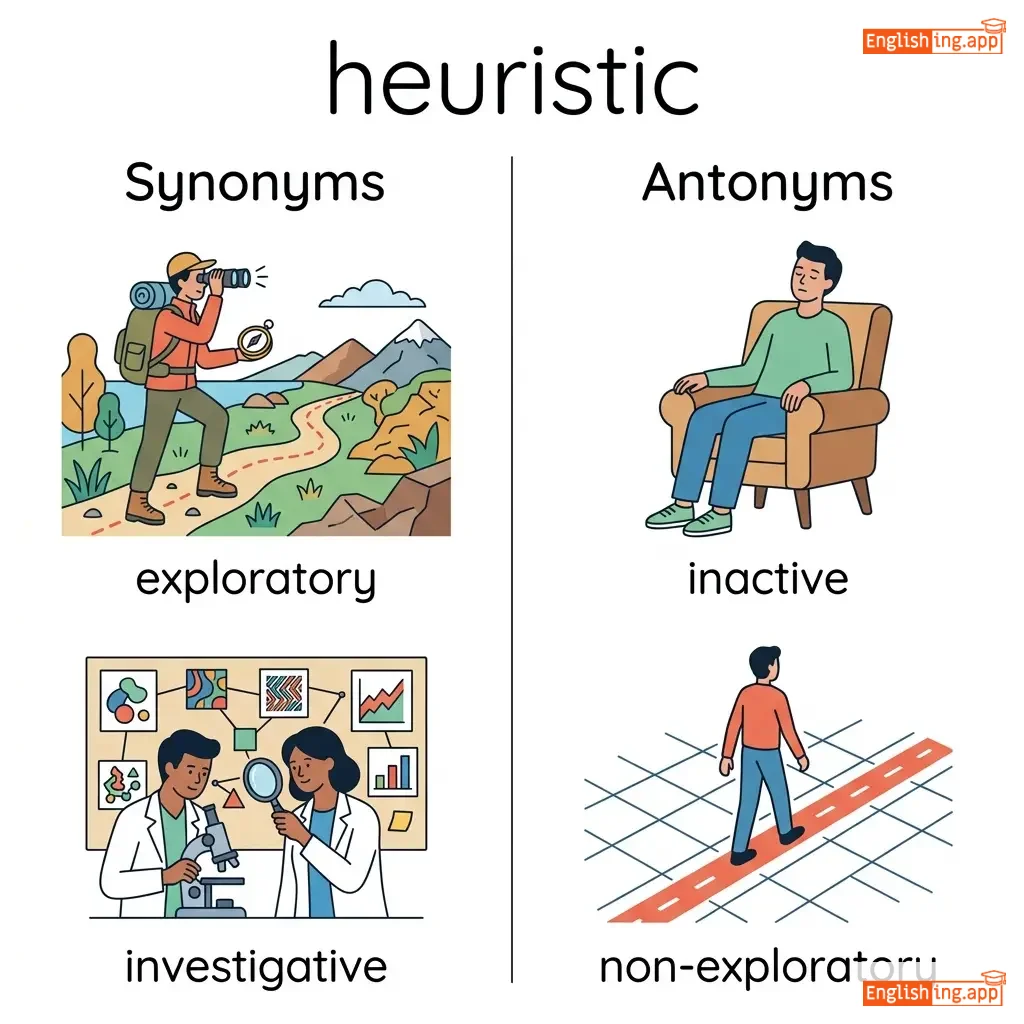
Exploratory, Problem-solving, Investigative, exploratory, investigative, problem-solving, Rule-of-thumb
条目 1
Exploratory, Problem-solving, Investigative
条目 2
exploratory, investigative, problem-solving
条目 3
Exploratory, Problem-solving, Rule-of-thumb

反义词

Uninquisitive, Non-experimental, Prescriptive, prescriptive, rigid, conclusive, Algorithmic, Fixed-rule
条目 1
Uninquisitive, Non-experimental, Prescriptive
条目 2
prescriptive, rigid, conclusive
条目 3
Algorithmic, Prescriptive, Fixed-rule

相关词汇

unwell; having a disease or illness; feeling nauseous
Captivating and holding one's attention completely; fascinating.
Rising in power or influence; dominant.
relating to rules, standards, or norms that govern behavior or beliefs
recognized or familiar; something that is identified or acknowledged
unsuccessful; futile; pointless;

探索更多