词汇表

英语词汇词典 | 单词含义、定义和示例

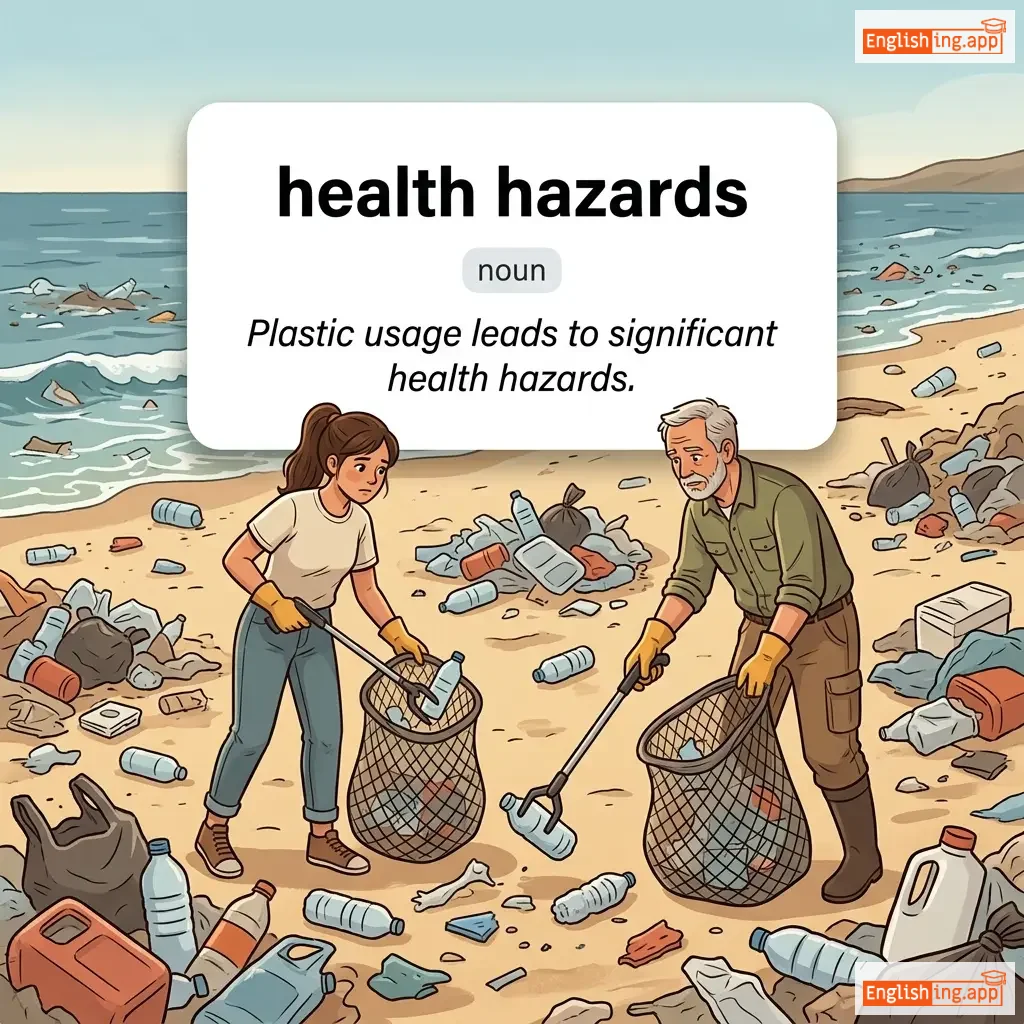
health hazards definition card — visual illustration of the meaning
noun
helθ ˈhæzərdz
健康危害 (jiànkāng wéihài)

Risks or dangers to physical health and well-being that can cause illness or injury.

"Plastic usage leads to significant health hazards."

"塑料使用导致重大的健康危害。" (Sùliào shǐyòng dǎozhì zhòngdà de jiànkāng wéihài.)
noun
/ˈhɛlθˌkɛər/
幸福 (xìngfú)

the organized provision of medical services to maintain or improve health

"Access to quality health-care is essential for every citizen."

"当她收到奖项时,她无法掩饰自己的幸福。" (Dāng tā shōu dào jiǎngxiàng shí, tā wúfǎ yǎnshì zìjǐ de xìngfú.)
noun
/ˈhɛlθˌkɛər/
医疗保健 (yīliáo bǎojiàn)

the organized provision of medical care to people

"The country invested heavily in healthcare to improve public health."

"该国在医疗保健方面进行了大量投资,以改善公共健康。" (Gāi guó zài yīliáo bǎojiàn fāngmiàn jìnxíngle dàliàng tóuzī, yǐ gǎishàn gōnggòng jiànkāng.)
adjective
/ˈhɛlθfəl/
有益健康的 (yǒu yì jiànkāng de)

Promoting good health; beneficial to health.

"A healthful diet includes fresh fruits and vegetables."

"有益健康的饮食包括新鲜的水果和蔬菜。" (Yǒu yì jiànkāng de yǐnshí bāokuò xīnxiān de shuǐguǒ hé shūcài.)
healthy definition card — visual illustration of the meaning
adjective
/ˈhɛlθi/
幸福 (xìng fú)

Being in good physical or mental condition; promoting good health.

"She follows a healthy lifestyle by exercising regularly."

"她无法掩饰收到奖项时的快乐。" (Tā wúfǎ yǎnshì shōudào jiǎngxiàng shí de kuàilè.)
verb
/hɪr/
听见 (tīngjiàn)

To perceive sound with the ear.

"I can hear birds singing outside."

"我可以听到外面的鸟在唱歌。" (Wǒ kěyǐ tīngdào wàimiàn de niǎo chànggē.)
noun
/ˈhɪərɪŋ/
听力 / 听证会 (tīnglì / tīngzhènghuì)

the ability to perceive sounds or an official meeting to listen to arguments or evidence

"The judge scheduled a hearing for next week."

"法官安排了下周的听证会。" (Fǎguān ānpái le xià zhōu de tīngzhènghuì.)
verb
/ˈhɑːrkən/
专心听 (zhuānxīn tīng)

To listen attentively; to give heed.

"He would hearken to his mentor’s advice before making decisions."

"他在做决定之前,会专心听导师的建议。" (Tā zài zuò juédìng zhīqián, huì zhuānxīn tīng dǎoshī de jiànyì.)
noun
/ˈhɪərseɪ/
谣言 (yaolian)

Information received from other people that cannot be substantiated; rumor.

"The decision was based on hearsay, not evidence."

"该决定是基于谣言,而不是证据。" (Gai jueding shi jiyu yaolian, er bushi zhengju.)
noun
/hɜːrs/
灵车; (língchē)

a vehicle for conveying the coffin at a funeral; a funeral car

"The black hearse slowly made its way to the cemetery, followed by a procession of mourners."

"黑色的灵车缓缓驶向墓地,后面跟着一队哀悼的人。" (Hēisè de língchē huǎn huǎn shǐ xiàng mùdì, hòumiàn gēnzhe yī duì āidào de rén.)
noun
/hɑːrt/
心脏 (xīnzàng)

the organ that pumps blood through the body; also the center of emotions

"Her heart was beating fast with excitement."

"她的心因兴奋而快速跳动。" (Tā de xīn yīn xīngfèn ér kuàisù tiàodòng.)
heartbeat definition card — visual illustration of the meaning
noun
/ˈhɑːt.biːt/
心跳 (xintiao)

A pulsation of the heart, especially as perceptible to the touch or audible with a stethoscope.

"Rubbing the eyes helps normalize the heartbeat."

"揉眼睛有助于使心跳恢复正常。" (Rou yanjing youzhu yu shi xintiao huifu zhengchang.)
adjective
/ˈhɑːrtˌbreɪkɪŋ/
令人心碎的; 令人痛心的; 心碎的 (lìng rén xīn suì de; lìng rén tòng xīn de; xīn suì de)

causing overwhelming distress; very sad or disappointing

"The documentary showed heartbreaking scenes of children in poverty."

"纪录片展示了贫困中孩子们令人心碎的场景。" (Jìlùpiàn zhǎnshì le pínkùn zhōng háizimen lìng rén xīn suì de chǎngjǐng.)
verb
/ˈhɑːrtən/
鼓舞 (gǔwǔ)

To give courage, confidence, or hope.

"The teacher’s encouragement heartened the students."

"老师的鼓励给学生们带来了勇气。" (Lǎoshī de gǔlì gěi xuéshēngmen dàilái le yǒngqì.)
adverb
/ˈhɑr.tɪ.li/
衷心地; 全心全意 (zhōng xīn dì; quán xīn quán yì)

in a sincere and enthusiastic manner; wholeheartedly

"She heartily welcomed her guests to the party."

"她衷心地欢迎她的客人来到派对。" (tā zhōng xīn dì huān yíng tā de kè rén lái dào pài duì.)
adjective
/ˈhɑːrtˌrɛndɪŋ/
令人心碎 (lìng rén xīn suì)

Causing great sadness or distress; very moving emotionally.

"The documentary showed heartrending scenes of war victims."

"纪录片展示了战争受害者令人心碎的场景。" (Jìlùpiàn zhǎnshìle zhànzhēng shòuhài zhě lìng rén xīn suì de chǎngjǐng.)
adjective
/ˈhɑːrti/
热情友好; 丰富而滋养 (reqing youhao; fengfu er ziyang)

enthusiastic and friendly; substantial and nourishing

"He gave us a hearty welcome when we arrived at his home."

"当我们到达他家时,他给了我们热情的欢迎。" (Dang women daoda ta jia shi, ta gei le women reqing de huanying.)
heat definition card — visual illustration of the meaning
noun/verb
/hiːt/
热 / 加热 (rè / jiārè)

intensity of hotness; to make something warm or hot

"They heated the soup on the stove."

"他们在炉子上加热了汤。" (Tāmen zài lúzi shàng jiārè le tāng.)
adjective
/ˈhiːðənɪʃ/
野蛮 (yěmán)

Lacking culture or religion; barbaric or uncivilized.

"They considered the ancient tribe’s rituals heathenish."

"他们认为古老部落的仪式是野蛮的。" (Tāmen rènwéi gǔlǎo bùluò de yíshì shì yěmán de.)
noun
/ˈhɛvən/
天堂 (tiāntáng)

the place believed to be the home of God and the afterlife of the good; a state of extreme happiness

"They believe that good people go to heaven after death."

"他们相信好人死后会去天堂。" (Tāmen xiāngxìn hǎo rén sǐhòu huì qù tiāntáng.)
adjective
/ˈhevənli/
天上的; 神圣的; 美味的 (tiānshàng de; shénshèng de; měiwèi de)

relating to heaven; extremely pleasant or beautiful

"The chocolate cake had a heavenly taste that melted in my mouth."

"巧克力蛋糕有一种天上的味道,在我口中融化了。" (qiǎokèlì dàngāo yǒu yī zhǒng tiānshàng de wèidào, zài wǒ kǒu zhōng rónghuà le.)
adverb
/ˈhɛvɪli/
沉重地 / 大量 (chénzhòng de / dàliàng)

to a great degree; with a lot of weight, intensity, or force

"It rained heavily all night."

"整晚都下着大雨。" (Zhěng wǎn dōu xià zhe dàyǔ.)
adjective
/ˈhɛvi/
沉重 (chenzhong)

having great weight; difficult to lift or move

"The box was too heavy for her to carry alone."

"箱子太重,她一个人搬不动。" (Xiāngzi tài zhòng, tā yī gèrén bān bù dòng.)
noun
/ˈhɛklər/
打扰者 (dǎrǎo zhě)

A person who interrupts a speaker with rude or aggressive comments.

"The politician remained calm despite the heckler shouting from the crowd."

"尽管人群中有打扰者大声叫喊,政治家仍然保持冷静。" (Jǐnguǎn rénqún zhōng yǒu dǎrǎo zhě dàshēng jiàohǎn, zhèngzhìjiā réngrán bǎochí lěngjìng.)
adjective
/ˈhek.tɪk/
忙碌的; 激烈的; 充满活动的 (máng lù de; jī liè de; chōng mǎn huó dòng de)

very busy and full of activity; frantic; characterized by intense activity or excitement

"My schedule has been hectic lately with back-to-back meetings."

"最近我的日程表因为连场会议而变得忙碌。" (zuì jìn wǒ de rì chéng biǎo yīn wèi lián chǎng huì yì ér biàn de máng lù.)
verb
/ˈhɛktər/
以威胁的方式说话 (yǐ wēixié de fāngshì shuōhuà)

To talk to someone in a bullying or intimidating way.

"The manager hectored the staff into working overtime."

"经理威胁员工加班。" (Jīnglǐ wēixié yuángōng jiābān.)
hedge definition card — visual illustration of the meaning
noun, verb
/hɛdʒ/
篱笆 (líbā)

A fence or boundary formed by closely planted shrubs; also, to limit or qualify a statement.

"They planted a hedge around the garden for privacy."

"他们为隐私在花园周围种了篱笆。" (Tāmen wèi yǐnsī zài huāyuán zhōuwéi zhòngle líbā.)
noun
/ˈhedʒhɒɡ/
刺猬 (ciwei)

a small mammal with a spiny coat that can roll into a ball for defense

"The hedgehog rolled into a ball when it felt threatened."

"当刺猬感到威胁时,它滚成一团。" (Dang ciwei gandao weixie shi, ta gun cheng yituan.)
noun
/ˈhiːdəˌnɪzəm/
享乐主义 (xiǎnglè zhǔyì)

The pursuit of pleasure and self-indulgence as the highest goal.

"The lifestyle of the rich is often criticized as pure hedonism."

"富人的生活方式常被批评为纯粹的享乐主义。" (Fùrén de shēnghuó fāngshì cháng bèi pīpíng wéi chúncuì de xiǎnglè zhǔyì.)
noun
/ˈhiːdənɪst/
享乐主义者 (xiǎnglè zhǔyì zhě)

A person who believes that the pursuit of pleasure is the most important thing in life.

"She was called a hedonist because she always prioritized enjoyment over duty."

"她被称为享乐主义者,因为她总是优先享受而非履行责任。" (Tā bèi chēng wéi xiǎnglè zhǔyì zhě, yīnwèi tā zǒng shì yōuxiān xiǎngshòu ér fēi lǚxíng zérèn.)
verb
/hiːd/
注意 (zhuyi)

to pay attention to; to take notice of

"You should heed the teacher's advice."

"你应该听从老师的建议。" (Ni yinggai tingcong laoshi de jianyi.)
adjective
/ˈhiːdləs/
疏忽 (shūhū)

showing a reckless lack of care or attention

"He drove with heedless disregard for the rules."

"他开车时对规则表现出疏忽。" (Tā kāichē shí duì guīzé biǎoxiàn chū shūhū.)
noun
/hiːl/
脚跟 (jiao gen)

the back part of the human foot below the ankle

"Her shoe was rubbing against her heel."

"她的鞋子摩擦着她的脚跟。" (Ta de xiezi mocazhe ta de jiao gen.)
noun
/hɪˈdʒɛməni/ or /ˈhɛdʒəmoʊni/
霸权 (bàquán)

leadership or dominance, especially by one state or group over others

"The empire maintained its hegemony over neighboring states."

"帝国保持了对邻国的霸权。" (Dìguó bǎochí le duì lín guó de bàquán.)
🚶‍♂️

hegira (海吉拉)

noun
/ˈhɛdʒɪrə/ or /hɪˈdʒaɪrə/
迁徙, 流亡 (qianxi, liuwang)

a journey, especially when undertaken to escape from a dangerous or undesirable situation

"The refugees began their hegira across the desert."

"难民们开始了穿越沙漠的迁徙。" (Nanminmen kaishi le chuanjue shamo de qianxi.)
noun
/ˈhɛfər/
小母牛 (xiǎo mǔ niú)

a young cow that has not borne a calf

"The farmer raised a heifer for dairy production."

"农民为乳制品生产养了一头小母牛。" (Nóngmín wèi rǔzhìpǐn shēngchǎn yǎngle yī tóu xiǎo mǔ niú.)
noun
/haɪt/
高度 (gaodu)

the measurement of someone or something from base to top

"The height of the tower impressed the visitors."

"塔的高度给游客留下了深刻的印象。" (Ta de gaodu gei youke liuxia le shenke de yinxiang.)
verb
/ˈhaɪtən/
提高 (tígāo)

to make or become greater in intensity or degree

"The announcement served to heighten the excitement in the room."

"公告有助于提高房间里的兴奋。" (Gōnggào yǒu zhù yú tígāo fángjiān lǐ de xīngfèn.)
adjective
/ˈheɪ.nəs/
极恶 (jí è)

extremely wicked, deeply offensive, or shockingly evil

"The dictator was condemned for his heinous crimes against humanity."

"独裁者因其对人类的极恶罪行被判刑。" (Dúcáizhě yīn qí duì rénlèi de jí è zuìxíng bèi pànxíng.)
noun
/er/
继承人 (jicheng ren)

a person legally entitled to the property or rank of another on that person's death

"The young prince was the rightful heir to the throne and would become king someday."

"年轻的王子是合法的王位继承人,将来有一天会成为国王。" (niánqīng de wángzǐ shì héfǎ de wángwèi jìchéngrén, jiānglái yǒu yītiān huì chéngwéi guówáng.)
noun
/ˈɛər.luːm/
传家宝 (chuánjiābǎo)

a valuable object that has belonged to a family for several generations

"The ring is a family heirloom passed down from her grandmother."

"这枚戒指是家族的传家宝,代代相传。" (Zhè méi jièzhǐ shì jiāzú de chuánjiābǎo, dàidài xiāngchuán.)
noun
/ˈhɛlɪˌkɒptər/
直升机 (zhí shēng jī)

an aircraft with rotating blades that can take off and land vertically

"The helicopter landed safely on the hospital roof."

"直升机安全地着陆在医院的屋顶。" (Zhí shēng jī ānquán de zhuólù zài yīyuàn de wūdǐng.)
noun
/hɛl/
地狱 (diyu)

a place or state of great suffering and torment, often in religious belief

"He feared that his sins would send him to hell."

"他害怕他的罪会把他送入地狱。" (Tā hàipà tā de zuì huì bǎ tā sòng rù dìyù.)
interjection
/həˈloʊ/
哈啰 (hā luō)

a greeting or expression used when meeting someone or starting a conversation

"She answered the phone with a cheerful hello."

"她高兴地接起电话说了声哈啰。" (Tā gāo xìng de jiē qǐ diànhuà shuō le shēng hā luō.)
noun
/hɛlm/
领导, 舵 (lingdao, duo)

a position of leadership or the steering apparatus of a ship

"After years of service, she finally took the helm of the company."

"多年服务后,她最终接管了公司的领导权。" (Duonian fuwu hou, ta zuizhong jieguaile gongsi de lingdaozhiquan.)
noun
/ˈhɛl.mət/
头盔 (tóukuī)

a hard protective hat worn to protect the head

"The rider put on his helmet before starting the motorcycle."

"骑手在开始骑摩托车之前戴上了头盔。" (qí shǒu zài kāi shǐ qí mó tuō chē zhī qián dài shàng le tóu kuī.)
noun
/ˈhelmz.mən/
舵手; 船长 (duò shǒu; chuán zhǎng)

a person who steers a ship or boat; the person at the helm of a vessel

"The experienced helmsman skillfully guided the yacht through the narrow channel during the storm."

"经验丰富的舵手在暴风雨中熟练地引导游艇通过狭窄的航道。" (Jīngyàn fēngfù de duò shǒu zài bàofēngyǔ zhōng shúliàn de yǐndǎo yóutǐng tōngguò xiázhǎi de hángdào.)
Help definition card — visual illustration of the meaning
verb
/hɛlp/
帮助 (bangzhu)

To make it easier for someone to do something by offering services or resources.

"She helped her friend with the homework."

"她帮助她的朋友做作业。" (Ta bangzhu ta de pengyou zuo zuoye.)
adjective
/ˈhɛlpfəl/
有用的 (youyong de)

giving help or being useful

"The guide was very helpful during our trip."

"旅行期间,导游非常有用。" (Lvxing qijian, daoyou feichang youyong.)
adjective
/ˈhelp.ləs/
无助的; 虚弱的; 易受伤的 (wúzhù de; xūruò de; yì shòu shāng de)

unable to defend oneself or act without help; powerless; vulnerable

"The child felt helpless when lost in the crowded market."

"当孩子在拥挤的市场中迷路时,他感到无助。" (Dāng háizi zài yōngjǐ de shìchǎng zhōng mílù shí, tā gǎndào wúzhù.)