词汇表

英语词汇词典 | 单词含义、定义和示例

🐕

groom

verb
/ɡruːm/

to clean, brush, and care for the appearance of someone or something

"She spends hours grooming her dog every week."

noun
/ɡruːv/
沟槽 / 节奏 (gōucháo / jiézòu)

a long narrow cut or depression, or a rhythmic pattern in music

"The DJ kept the crowd dancing to the groove."

"DJ让人群跟随节奏跳舞。" (DJ ràng rénqún gēnsuí jiézòu tiàowǔ.)
adjective
/ɡroʊs/
恶心的 / 粗俗的 (èxīn de / cūsú de)

extremely unpleasant or disgusting; total before deductions

"He thought the food looked gross, but it tasted fine."

"他觉得食物看起来恶心,但味道还不错。" (Tā juéde shíwù kàn qǐlái èxīn, dàn wèidào hái bùcuò.)
adjective
/ɡroʊˈtɛsk/

comically or repulsively ugly or distorted

"The sculpture was so grotesque that it frightened the children."

noun
/ˈɡrɑːtoʊ/
洞窟 (dòngkù)

a small picturesque cave, often artificial

"Tourists visited the grotto hidden behind the waterfall."

"游客参观了隐藏在瀑布后的洞窟。" (Yóukè cānguānle yǐncáng zài pùbù hòu de dòngkù.)
noun/verb
/ɡraʊtʃ/
抱怨者 (bàoyuàn zhě)

a person who complains a lot or to complain in a grumpy way

"He is such a grouch in the morning before coffee."

"他早上喝咖啡前总是抱怨。" (Tā zǎoshang hē kāfēi qián zǒng shì bào yuàn.)
noun/verb
/ɡraʊnd/
地面 (dìmian)

the solid surface of the earth; to prohibit someone (often a child) from going out

"The children played on the ground near the house."

"孩子们在靠近房子的地方玩耍。" (Háizimen zài kàojìn fángzi de dìfāng wánshuǎ.)
noun
/ˈɡraʊnd kruː/
地勤人员 (diqin renyuan)

a team of people who maintain and service aircraft on the ground

"The ground crew prepared the plane for takeoff."

"地勤人员为飞机准备起飞。" (Dìqín rényuán wèi fēijī zhǔnbèi qǐfēi.)
noun
/ˈɡraʊnd flɔːr/
一楼 (yi lou)

the floor of a building at ground level; the starting level of an organization or activity

"The grocery shop is located on the ground floor of the building."
"杂货店在一楼。" (zahuo dian zai yi lou)
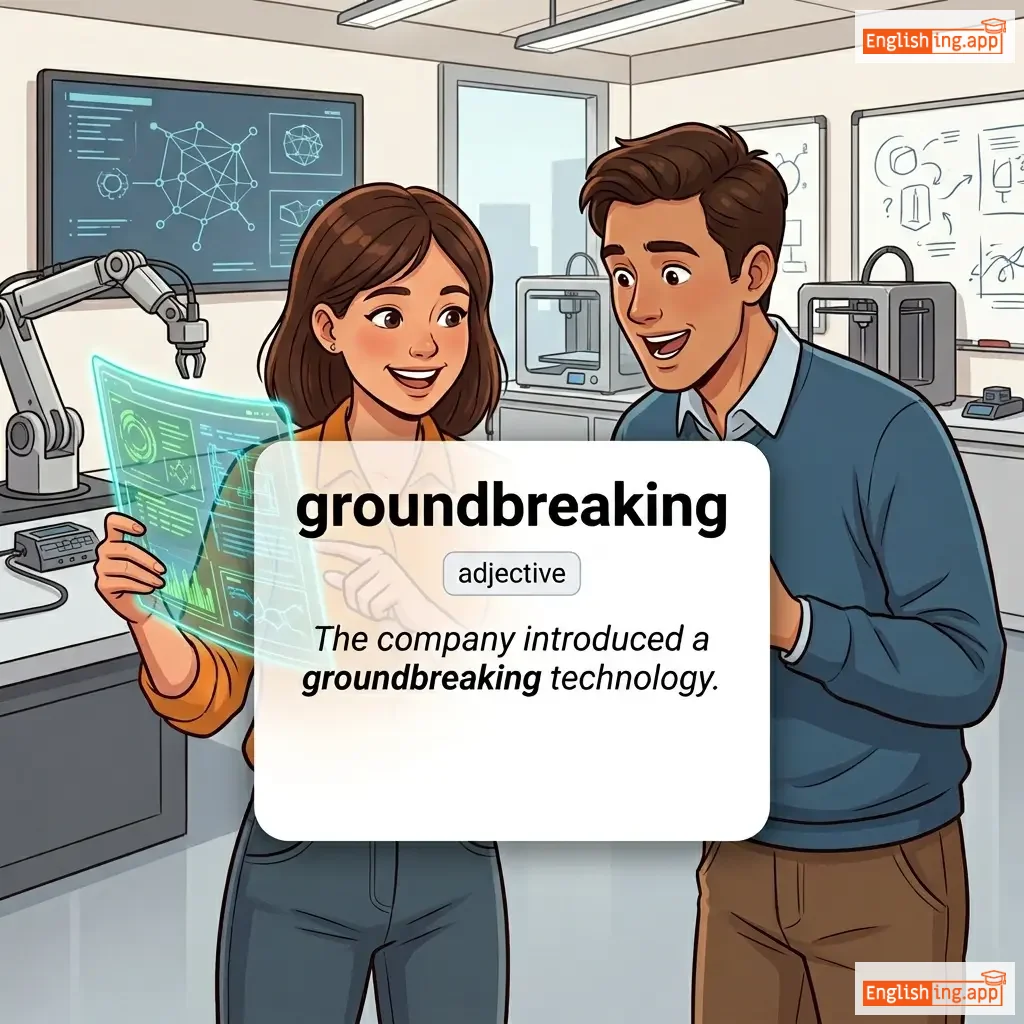
groundbreaking definition card — visual illustration of the meaning
adjective
ˈɡraʊndˌbreɪ.kɪŋ
突破性的 (tūpòxìng de)

Innovative and pioneering; introducing new ideas or methods that change conventional approaches.

"The company introduced a groundbreaking technology."
"公司引入了一项突破性的技术。" (Gōngsī yǐnrù le yī xiàng tūpòxìng de jìshù.)
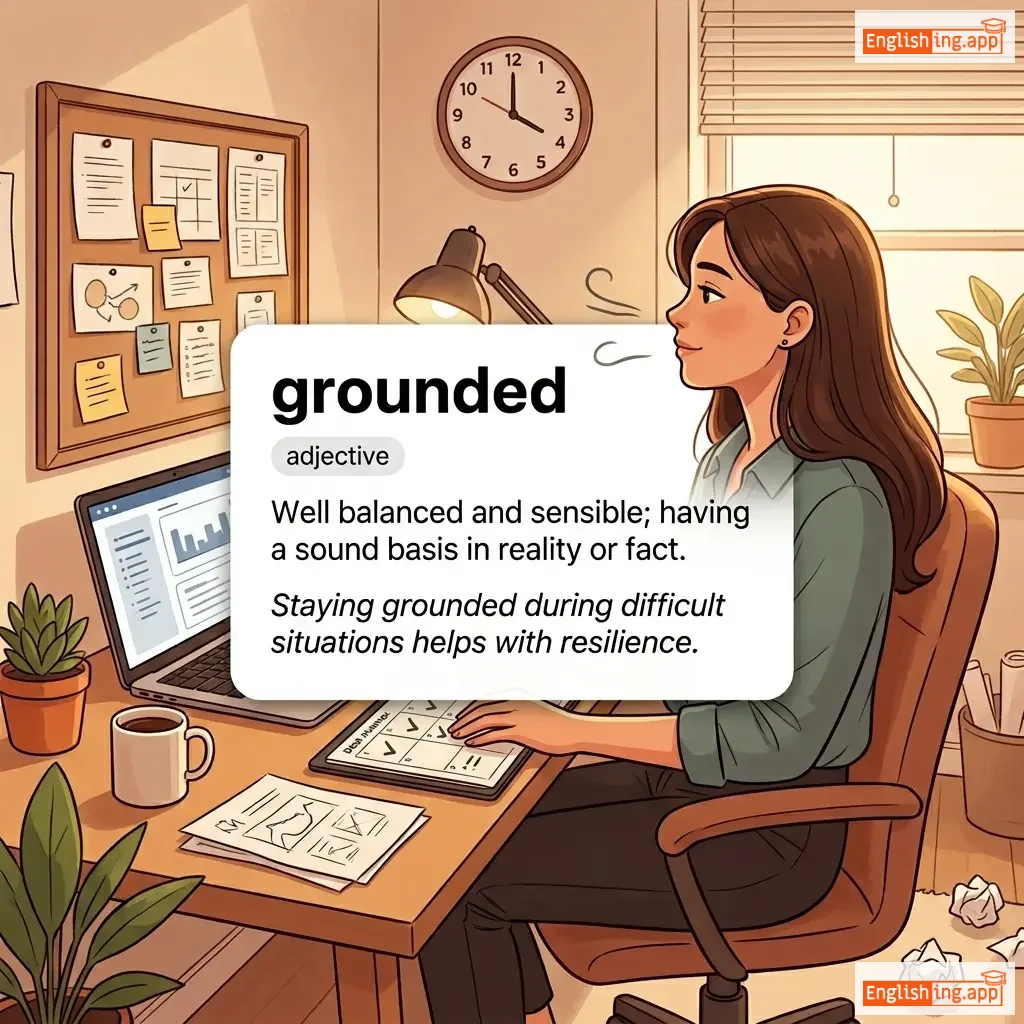
grounded definition card — visual illustration of the meaning
adjective
/ˈɡraʊndɪd/
脚踏实地 (jiǎo tà shí dì)

Well balanced and sensible; having a sound basis in reality or fact.

"Staying grounded during difficult situations helps with resilience."

"在困难的情况下保持脚踏实地有助于增强韧性。" (Zài kùnnán de qíngkuàng xià bǎochí jiǎo tà shí dì yǒu zhù yú zēngqiáng rènxìng.)
adjective
/ˈɡraʊnd.ləs/
无根据的; 毫无根据 (wu genju de; haowu genju)

without foundation or justification; baseless

"His accusations against her were completely groundless."

"他对她的指控完全没有根据。" (Ta dui ta de zhikong wanquan meiyou genju.)
noun, verb
/ɡruːp/
小组 (xiaozu)

A number of people or things considered together; to arrange things or people into categories.

"The students formed a study group."
"学生们组成了一个学习小组。" (Xueshengmen zucheng le yi ge xuexi xiaozu.)
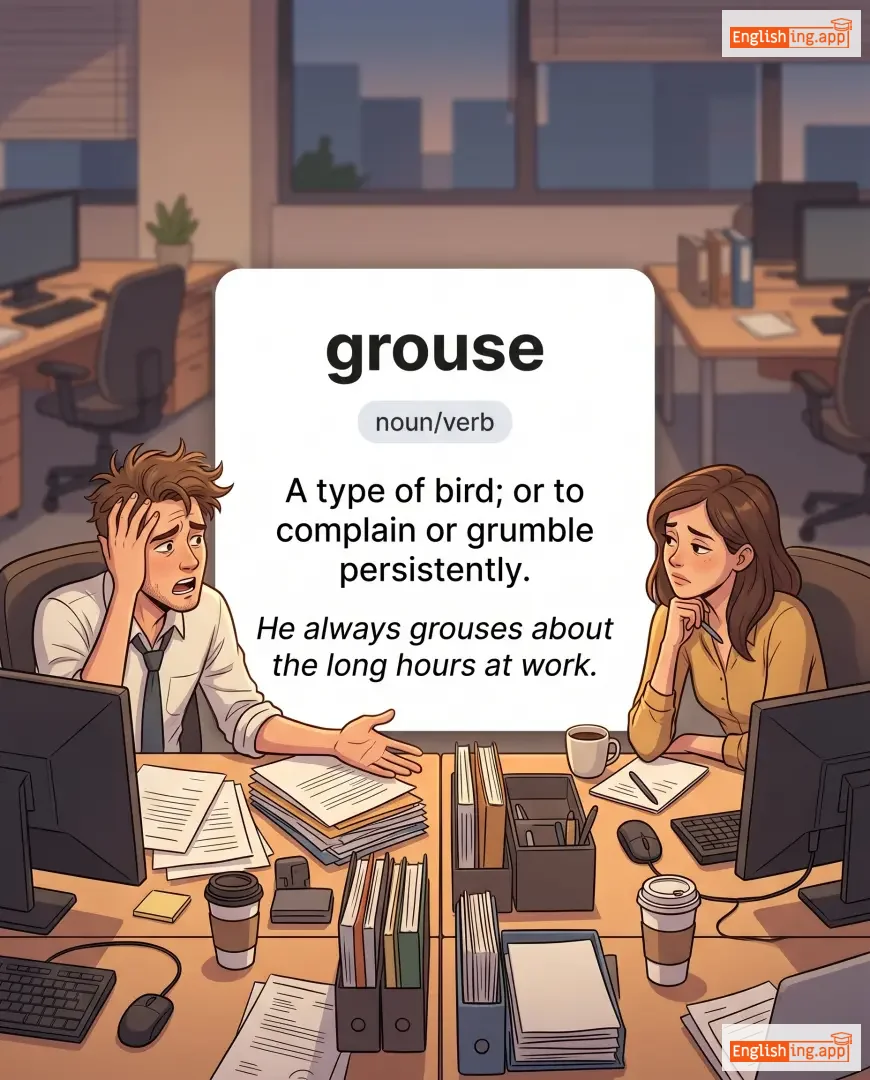
grouse definition card — visual illustration of the meaning
noun/verb
/ɡraʊs/
抱怨 / 一种鸟 (bàoyuàn / yī zhǒng niǎo)

A type of bird; or to complain or grumble persistently.

"He always grouses about the long hours at work."

"他总是抱怨工作时长。" (Tā zǒng shì bàoyuàn gōngzuò shícháng.)
noun
/ɡroʊv/
林地 / 小果园 (lindi / xiao guoyuan)

A small group of trees growing close together.

"They walked through the orange grove."

"他们走过橙树林。" (Tāmen zǒuguò chéng shùlín.)
verb
/ˈɡrʌvəl/

To act in an excessively humble or submissive way to gain favor.

"He groveled before his boss to avoid punishment."

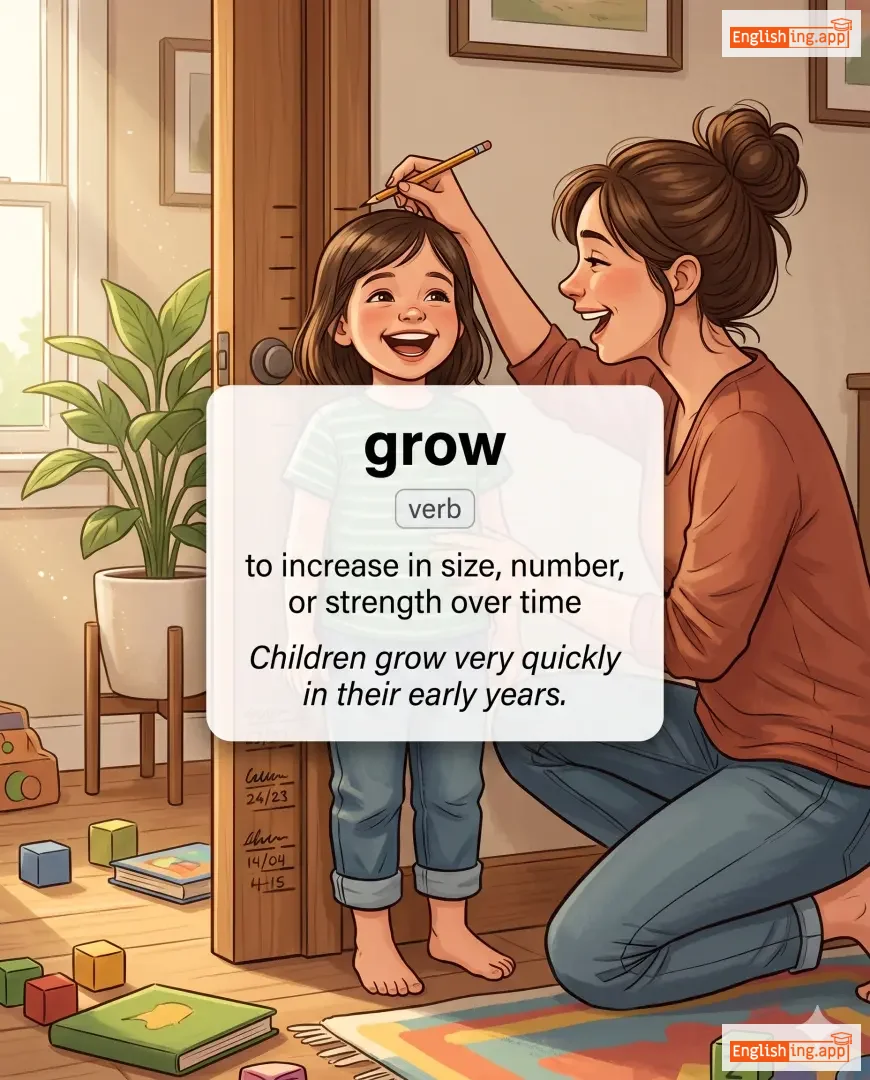
grow definition card — visual illustration of the meaning
verb
/ɡroʊ/
成长 (chengzhang)

to increase in size, number, or strength over time

"Children grow very quickly in their early years."

"孩子们在他们的早年成长得非常快。" (Haizimen zai tamen de zaonian chengzhang de feichang kuai.)
verb
/ˈɡroʊ.ɪŋ/
增长 (zēngzhǎng)

continuously increasing or developing

"There is a growing demand for renewable energy."

"对可再生能源的需求正在增长。" (Duì kě zàishēng néngyuán de xūqiú zhèngzài zēngzhǎng.)
verb/noun
/ɡraʊl/
咆哮 (páoxiào)

To make a low, guttural sound, often in anger (by animals or humans).

"The dog growled at the stranger."

"狗对陌生人咆哮。" (Gǒu duì mòshēng rén páoxiào.)
Growth definition card — visual illustration of the meaning
noun
/ɡroʊθ/
增长 (zēngzhǎng)

the process of increasing in size, number, or importance

"The company has shown remarkable growth in the last year."
"公司在去年表现出了显著的增长。" (Gōngsī zài qùnián biǎoxiàn chūle xiǎnzhù de zēngzhǎng.)
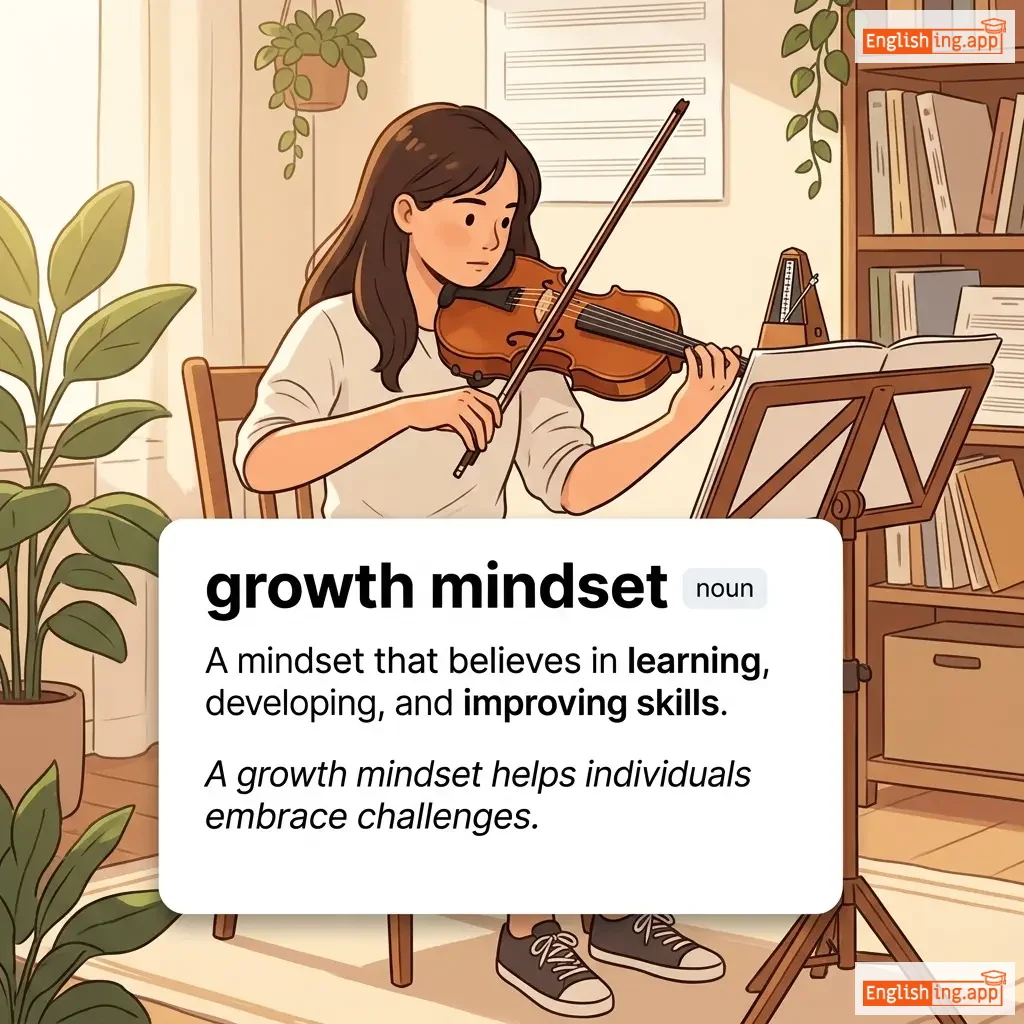
growth mindset definition card — visual illustration of the meaning
noun
/ɡroʊθ ˈmaɪnd.sɛt/
成长心态 (chéngzhǎng xīntài)

A mindset that believes in learning, developing, and improving skills.

"A growth mindset helps individuals embrace challenges."

"成长心态帮助个人迎接挑战。" (Chéngzhǎng xīntài bāngzhù gèrén yíngjiē tiǎozhàn.)
noun/verb
/ɡrʌdʒ/

A persistent feeling of ill will or resentment from a past insult or injury.

"She still holds a grudge against him for what happened years ago."

adjective
/ˈɡrʌdʒɪŋ/
不情愿的 (bu qingyuan de)

Reluctant or unwilling; given or allowed only with hesitation.

"She gave him a grudging smile after the argument."

"在争论后,她给了他一个不情愿的微笑。" (Zai zhenglun hou, ta geile ta yi ge bu qingyuan de weixiao.)
noun
/ˈɡruːəl/
用水或牛奶煮麦片等谷物做成的稀薄流质食物 (yòng shuǐ huò niúnǎi zhǔ mài piàn děng gǔ wù zuò chéng de xī bó liú zhí shí wù)

A thin liquid food made by boiling cereal (like oats) in water or milk.

"The poor children were given a bowl of gruel each morning."

"贫穷的孩子们每天早上都会喝一碗格鲁尔。" (Pínqióng de háizimen měitiān zǎoshang dū huì hē yī wǎn gélǔ'ěr.)
adjective
/ˈɡruːəlɪŋ/
艰苦的 (jiān kǔ de)

Extremely tiring and demanding.

"The athletes faced a grueling training session."

"运动员面对着艰苦的训练课程。" (Yùndòngyuán miànduìzhe jiānkǔ de xùnliàn kèchéng.)
adjective
/ˈɡruːsəm/
可怕 (kěpà)

Causing horror or disgust.

"The police discovered a gruesome crime scene."

"警方发现了一个可怕的犯罪现场。" (Jǐngfāng fāxiànle yīgè kěpà de fànzuì xiànchǎng.)
adjective
/ɡrʌf/
粗鲁 (cū lǔ)

Rough or stern in manner, speech, or voice.

"Despite his gruff manner, he was very kind-hearted."

"尽管他举止粗鲁,他还是非常善良。" (Jǐnguǎn tā jǔzhǐ cū lǔ, tā háishì fēicháng shànliáng.)
verb
/ˈɡrʌmbəl/
抱怨 (bàoyuàn)

to complain quietly or in a low voice

"She often grumbles about the traffic."

"她常常抱怨交通。" (Tā chángcháng bàoyuàn jiāotōng.)
adjective
/ˈɡrʌm.pi/
脾气坏的; 易怒的; (píqì huài de; yì nù de;)

bad-tempered and irritable; easily annoyed

"He was grumpy all morning because he didn't sleep well."
"他整个早上都很脾气坏,因为他睡得不好。" (Tā zhěnggè zǎoshang dōu hěn píqì huài, yīnwèi tā shuì dé bù hǎo.)
🐗

grunt

verb
/ɡrʌnt/

to make a low, rough sound, often when exerting effort or expressing annoyance

"He grunted as he lifted the heavy box."

noun/verb
/ˌɡærənˈtiː/

a formal promise or assurance, especially about the quality or durability of a product

"The company guarantees a refund if the product is faulty."

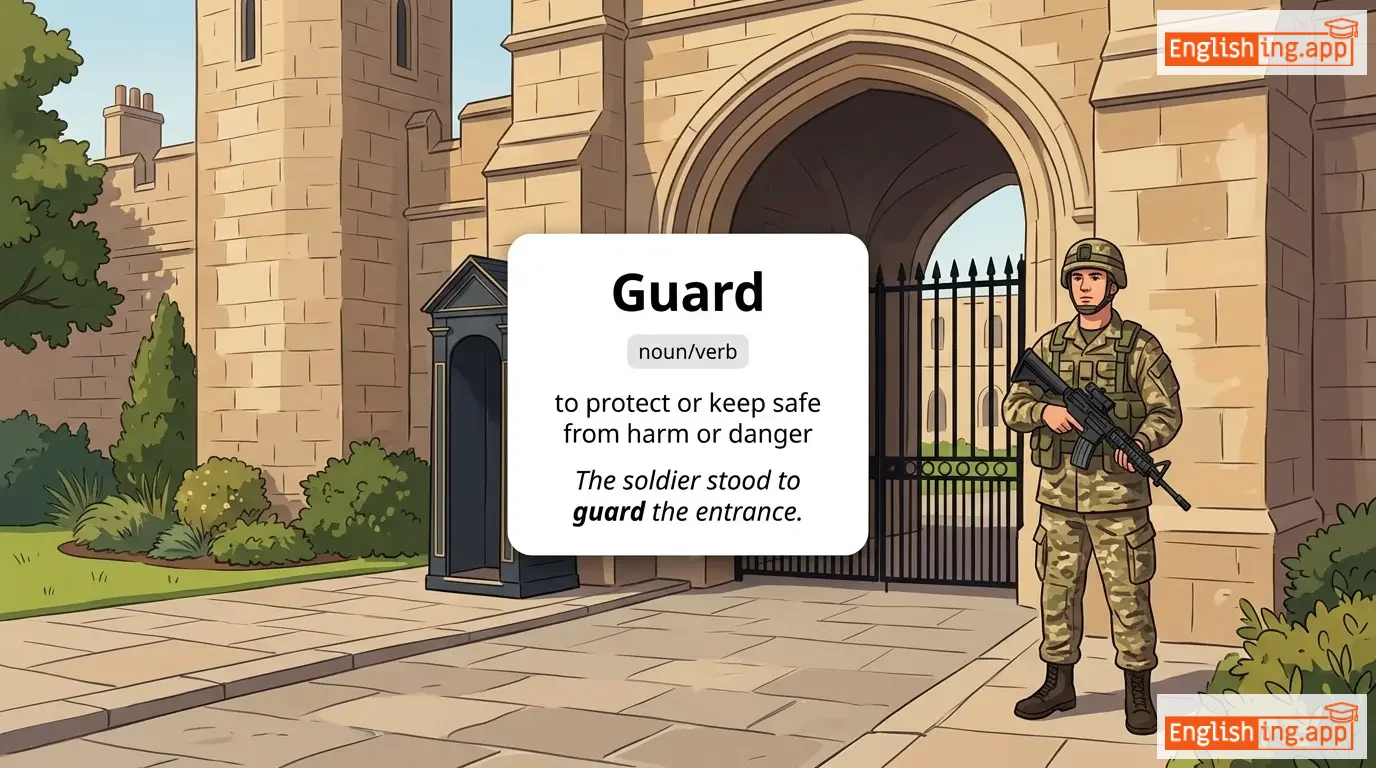
Guard definition card — visual illustration of the meaning
noun/verb
/ɡɑːrd/
守卫 / 保卫 (shǒuwèi / bǎowèi)

to protect or keep safe from harm or danger

"The soldier stood to guard the entrance."

"士兵站着守卫入口。" (Shìbīng zhànzhe shǒuwèi rùkǒu.)
adjective
/ˈɡɑːrdɪd/
谨慎 (jinshen)

Cautious and careful in speech or action, often to avoid giving too much away.

"He gave a guarded reply to the journalist."

"他给记者一个谨慎的回答。" (Ta gei jizhe yige jinshen de huida.)
👨‍👩‍👧‍👦

Guardian (监护人)

noun
/ˈɡɑːr.di.ən/
监护人; 守护者 (jiānhùrén; shǒuhù zhě)

a defender, protector, or keeper; a person legally responsible for the care of someone unable to manage their own affairs

"After her parents died, her uncle became her legal guardian and took care of her."

"在她的父母去世后,她的叔叔成为了她的法定监护人,并照顾了她。" (Zài tā de fùmǔ qùshì hòu, tā de shūshu chéngwéile tā de fǎdìng jiānhùrén, bìng zhàogùle tā.)
noun
/ˈɡwɑːvə/
番石榴 (fān shíliú)

a tropical fruit with sweet pink or white flesh and small seeds

"I love eating fresh guava from the tree in our garden."

"我喜欢从我们花园的树上吃新鲜的番石榴。" (wǒ xǐhuān cóng wǒmen huāyuán de shù shàng chī xīnxiān de fān shíliú)
noun
/ˈɡɜːrn.zi/
毛衣 (maoyi)

a knitted sweater; a type of woolen pullover

"He wore a warm guernsey during the cold winter evening."
"他在寒冷的冬季傍晚穿着一件温暖的毛衣。" (Tā zài hánlěng de dōngjì bàngwǎn chuānzhuó yī jiàn wēnnuǎn de máoyī.)
noun
/ɡəˈrɪlə/

a member of a small independent group taking part in irregular fighting, typically against larger forces

"The guerrilla fighters used ambushes to attack enemy positions."

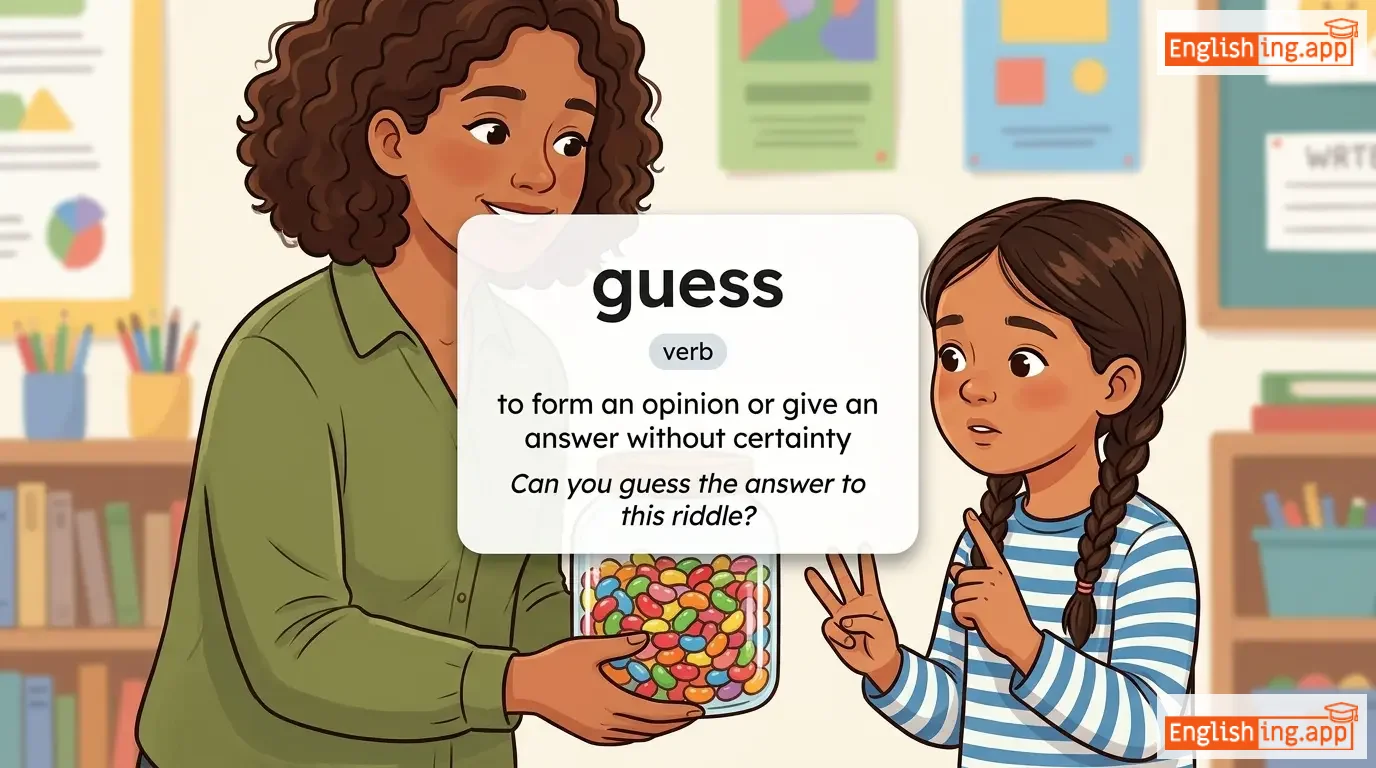
guess definition card — visual illustration of the meaning
verb
/ɡɛs/
猜测 (cāicè)

to form an opinion or give an answer without certainty

"Can you guess the answer to this riddle?"

"你能猜出这个谜语的答案吗?" (Nǐ néng cāi chū zhège míyǔ de dá'àn ma?)
noun
/ɡɛst/
客人 (kè rén)

a person invited to visit or stay in someone's home or attend an event

"We welcomed our guest with a warm smile."

"我们用温暖的微笑欢迎了我们的客人。" (Wǒmen yòng wēnnuǎn de wēixiào huānyíngle wǒmen de kèrén.)
noun/verb
/ɡəˈfɔː/
大笑 (dà xiào)

a loud and boisterous laugh

"The audience guffawed at the comedian’s joke."

"观众因喜剧演员的笑话而大声笑。" (Guānzhòng yīn xǐjù yǎnyuán de xiàohuà ér dà shēng xiào.)
noun
/ˈɡaɪdəns/
指导 (zhǐdǎo)

help or advice that is given to someone about what to do

"She sought her teacher’s guidance before making a decision."
"她在做决定之前向老师寻求指导。" (Tā zài zuò juédìng zhīqián xiàng lǎoshī xúnqiú zhǐdǎo.)
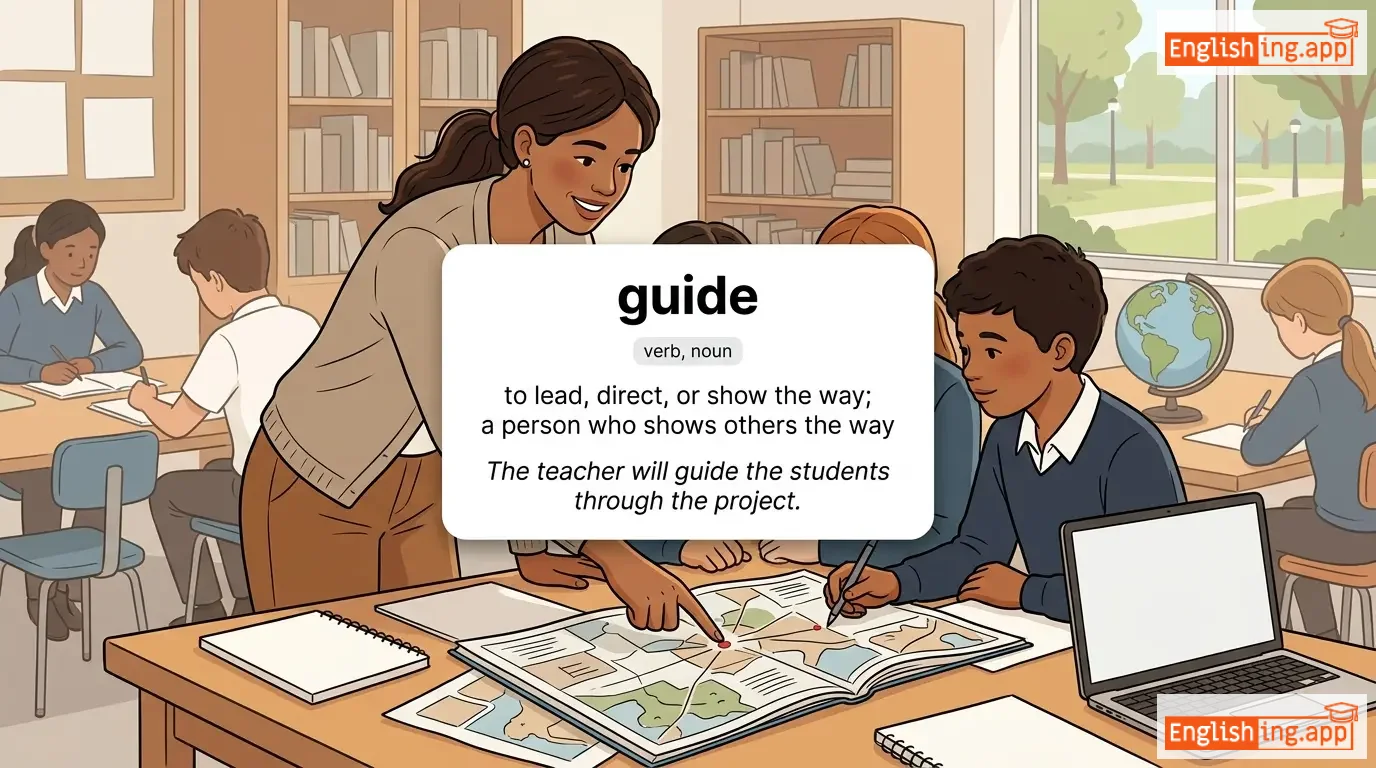
guide definition card — visual illustration of the meaning
verb, noun
/ɡaɪd/
幸福 (xìng fú)

to lead, direct, or show the way; a person who shows others the way

"The teacher will guide the students through the project."

"当她获得奖项时,她无法掩饰自己的幸福。" (Dāng tā huò dé jiǎng xiàng shí, tā wú fǎ yǎn shì zì jǐ de xìng fú.)
noun
/ˈɡaɪd.laɪn/
指导方针 (zhǐdǎo fāngzhēn)

a rule, instruction, or principle that provides direction

"The company issued new guidelines for employee safety."
"公司发布了新的员工安全指导方针。" (Gōngsī fābùle xīn de yuángōng ānquán zhǐdǎo fāngzhēn.)
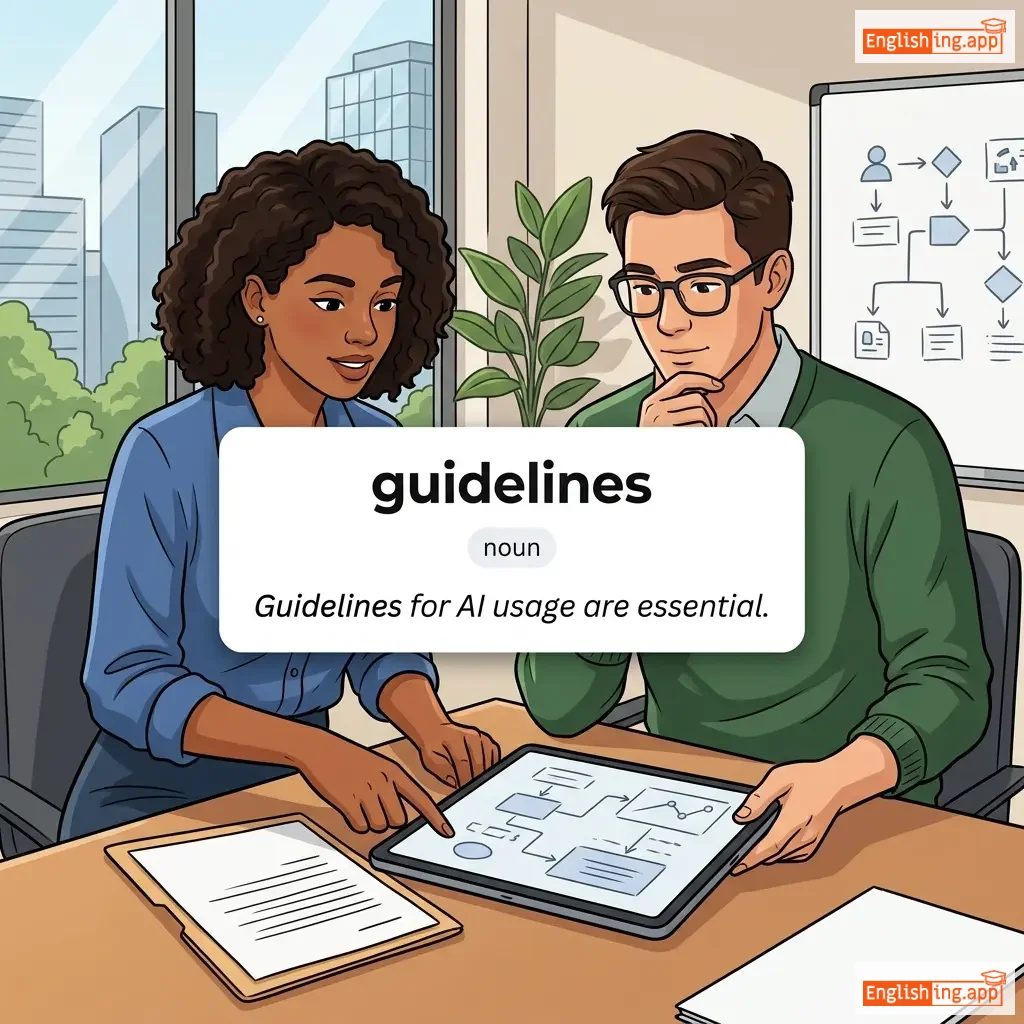
guidelines definition card — visual illustration of the meaning
noun
ˈɡaɪd.laɪnz
指南 (zhǐnán)

Rules or instructions that are given by an official organization telling you how to do something

"Guidelines for AI usage are essential."

"AI使用的指南是必要的。" (AI shǐyòng de zhǐnán shì bìyào de.)
noun
/ɡaɪl/
狡猾 (jiǎohuá)

Cleverness or cunning used to achieve a goal, often in a deceptive way

"He used guile to win the negotiation."
"他用狡猾的手段赢得了谈判。" (Tā yòng jiǎohuá de shǒuduàn yíngdéle tánpàn.)
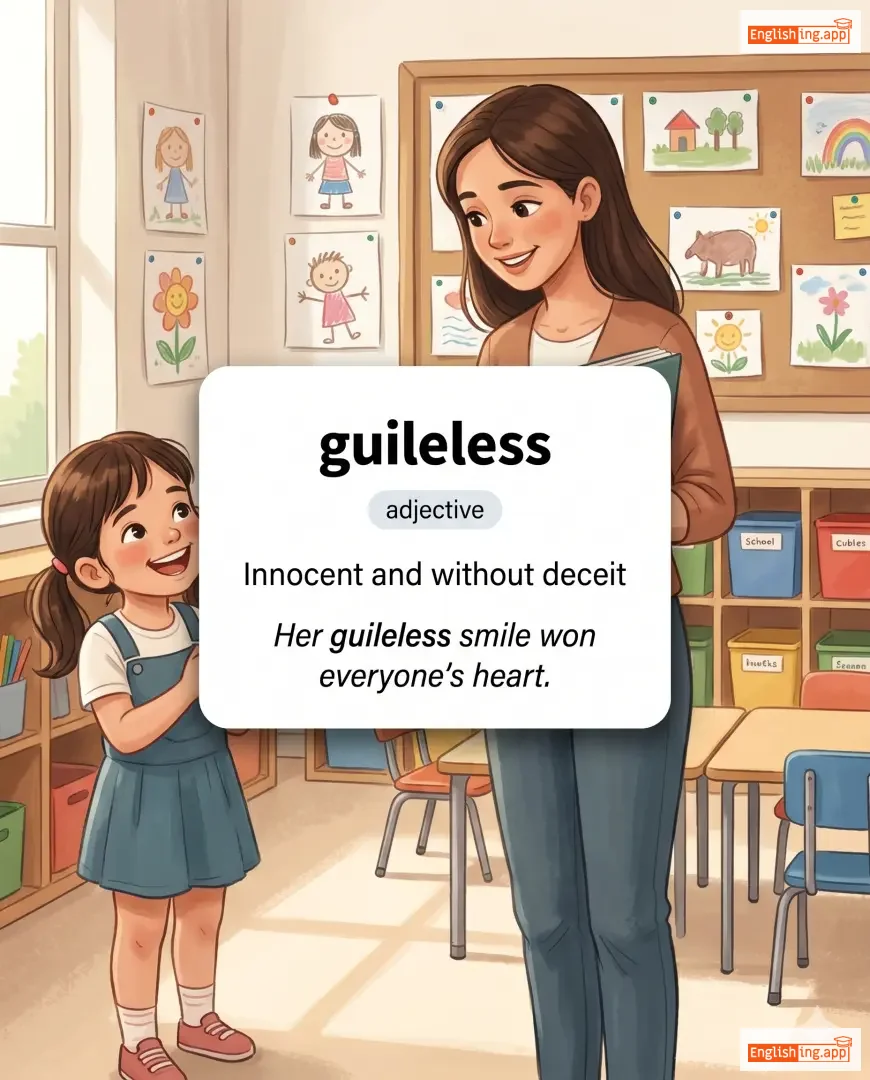
guileless definition card — visual illustration of the meaning
adjective
/ˈɡaɪlləs/
天真 (tian zhen)

Innocent and without deceit

"Her guileless smile won everyone’s heart."

"她天真的笑容赢得了所有人的心。" (Ta tian zhen de xiao rong ying de le suo you ren de xin.)
noun
/ɡɪlt/
罪恶感 (zuì è gǎn)

A feeling of responsibility or remorse for an offense or wrongdoing

"She felt deep guilt after lying to her friend."

"她在撒谎后感到深深的罪恶感。" (Tā zài sāhuǎng hòu gǎndào shēnshēn de zuì è gǎn.)
adjective
/ˈɡɪl.ti/
有罪的 (yǒuzuì de)

responsible for a crime or wrongdoing; feeling shame or regret

"He felt guilty after lying to his friend."

"他在对朋友撒谎后感到有罪。" (Tā zài duì péngyǒu sāhuǎng hòu gǎndào yǒuzuì.)
noun
/ˈɡɪni/
吉尼 (英国旧金币) (jini)

A former British gold coin; also refers to Guinea, a country in West Africa

"The antique coin was worth one guinea."
"古老的金币价值一个吉尼。" (Gu lao de jinbi jiazhi yige jini.)
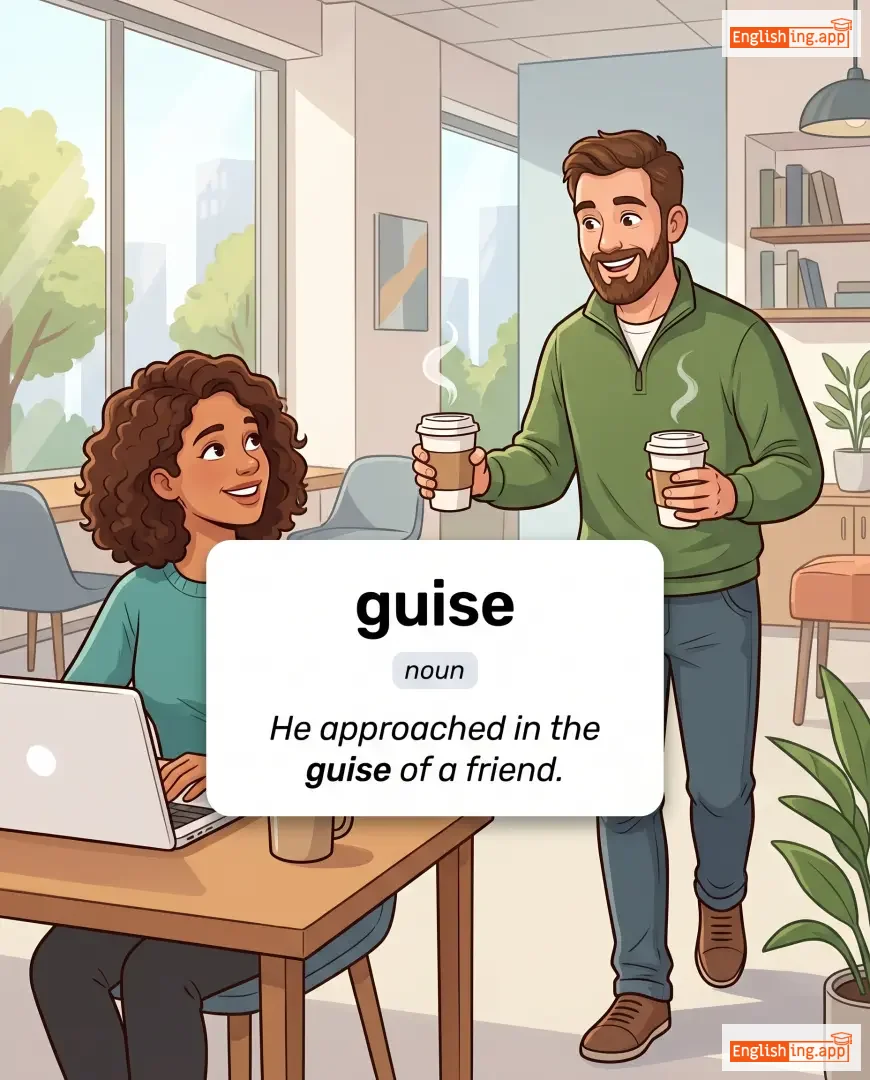
guise definition card — visual illustration of the meaning
noun
/ɡaɪz/
伪装 (weizhuang)

An external form, appearance, or manner of presentation, often hiding the true nature

"He approached in the guise of a friend."

"他以朋友的伪装接近。" (Ta yi pengyou de weizhuang jiejin.)