词汇表

英语词汇词典 | 单词含义、定义和示例

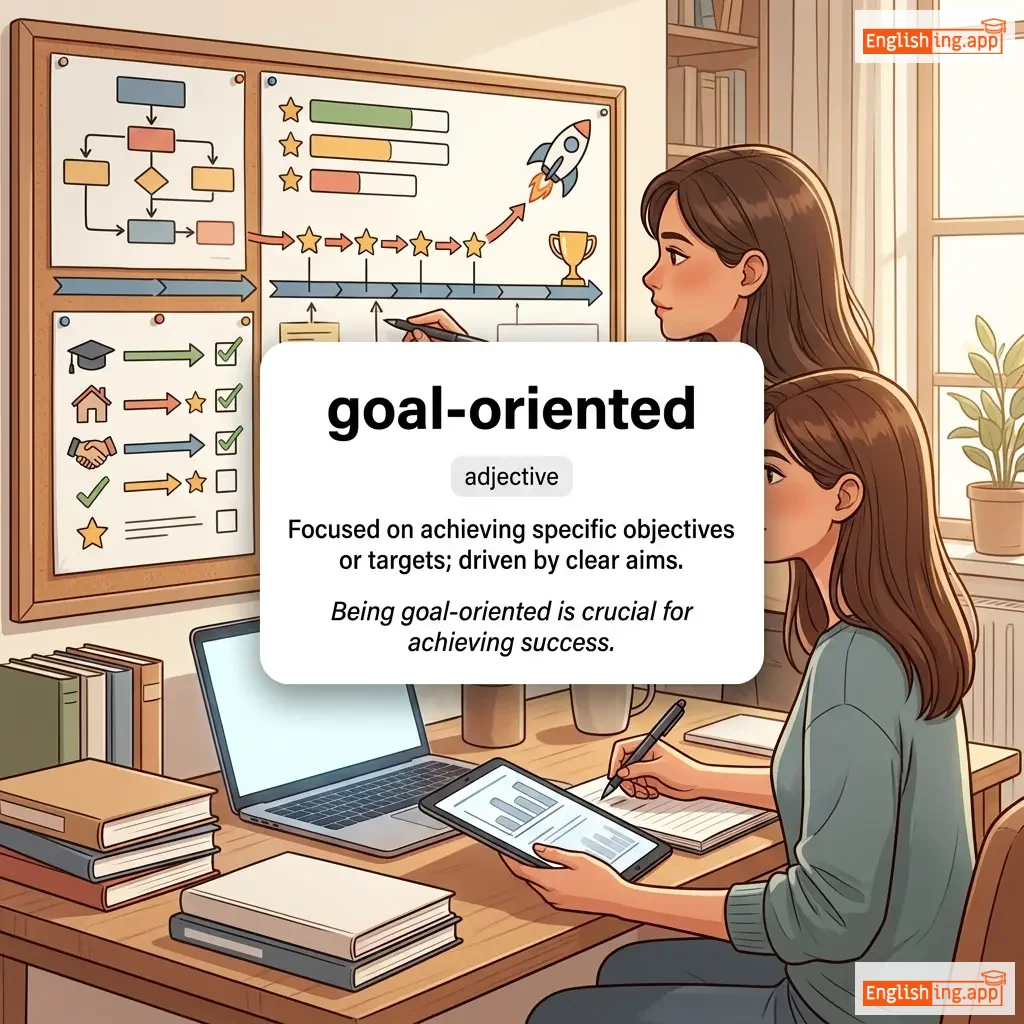
goal-oriented definition card — visual illustration of the meaning
adjective
/ɡəʊl ɔːˈrɪəntɪd/
目标导向 (mùbiāo dǎoxiàng)

Focused on achieving specific objectives or targets; driven by clear aims.

"Being goal-oriented is crucial for achieving success."

"目标导向是成功的关键。" (Mùbiāo dǎoxiàng shì chénggōng de guānjiàn.)
noun
/ɡoʊl ˈsɛt.ɪŋ/
目标设定 (mùbiāo shèdìng)

The process of identifying something that you want to accomplish and establishing measurable objectives to achieve it.

"Effective goal-setting helps individuals stay focused and motivated."

"有效的目标设定帮助个人保持专注和动力。" (Yǒuxiào de mùbiāo shèdìng bāngzhù gèrén bǎochí zhuānhù hé dònglì.)
goals definition card — visual illustration of the meaning
noun
ɡoʊlz
目标 (mùbiāo)

An aim or desired result; something that you want to achieve.

"Setting clear goals helps in achieving success."

"设定明确的目标有助于实现成功。" (Shè dìng míngquè de mùbiāo yǒu zhù yú shíxiàn chénggōng.)
noun
/ɡoʊt/
山羊 (shānyáng)

a hardy domesticated animal kept for its milk, meat, and hair

"The farmer keeps several goats for milk production."

"农民养了几只山羊来生产牛奶。" (nóngmín yǎngle jǐ zhī shānyáng lái shēngchǎn niúnǎi.)
verb
/ˈɡɑːbəl/
狼吞虎咽 (lángtūnhǔyàn)

to eat something quickly and greedily

"The children gobbled their food in minutes."

"孩子们在几分钟内狼吞虎咽地吃完了他们的食物。" (Háizimen zài jǐ fēnzhōng nèi lángtūnhǔyàn de chī wánle tāmen de shíwù.)
noun
/ɡɑːd/
上帝 (shàngdì)

a deity; a supreme being believed to control the universe

"People in different cultures worship God in various ways."

"不同文化的人以不同的方式崇拜上帝。" (bùtóng wénhuà de rén yǐ bùtóng de fāngshì chóngbài shàngdì)
verb
/ˈɡɑːɡəl/
睁大眼睛看 (zhēng dà yǎnjīng kàn)

to stare with wide open eyes, often in surprise or wonder

"The tourists goggled at the tall skyscrapers."

"游客们惊讶地盯着高耸的摩天大楼。" (Yóukèmen jīngyà de dīngzhe gāosǒng de mótiāndàlóu.)
noun
/ɡoʊld/
黄金 (huangjin)

a yellow precious metal used in jewelry and as money

"The ring was made of pure gold."

"这枚戒指是由纯金制成的。" (Zhè méi jièzhǐ shì yóu chún jīn zhìchéng de.)
noun
/ɡoʊld fɪʃ/
金鱼 (jinyu)

a small ornamental freshwater fish with golden or orange coloration, commonly kept as a pet

"The goldfish swam in circles around its glass bowl."

"金鱼在玻璃鱼缸里绕圈游动。" (jinyu zai boli yugang li raoyuan youdong)
noun
/ɡoʊld rɪŋ/
金戒指 (jin jie zhi)

a circular band of gold worn as jewelry, typically on a finger

"He gave her a beautiful gold ring for their anniversary."

"他为他们的周年纪念送给了她一枚漂亮的金戒指。" (Ta wei tamen de zhou nian jinian song gei le ta yi mei piaoliang de jin jie zhi.)
verb, noun
/ˈɡoʊld.brɪk/
逃避工作 (taobi gongzuo)

to avoid work or duty; a person who shirks responsibility

"He was accused of goldbricking while the rest of the team worked hard."

"他被指控逃避工作,而其他团队成员都在努力工作。" (Ta bei zhikong taobi gongzuo, er qita tuandui chengyuan dou zai nuli gongzuo.)
adjective
/ˈɡoʊldən/
金色的 (jīnsè de)

made of or resembling gold; precious or excellent

"This is a golden opportunity to learn new skills."
"这是一个学习新技能的金色机会。" (Zhè shì yīgè xuéxí xīn jìnéng de jīnsè jīhuì.)
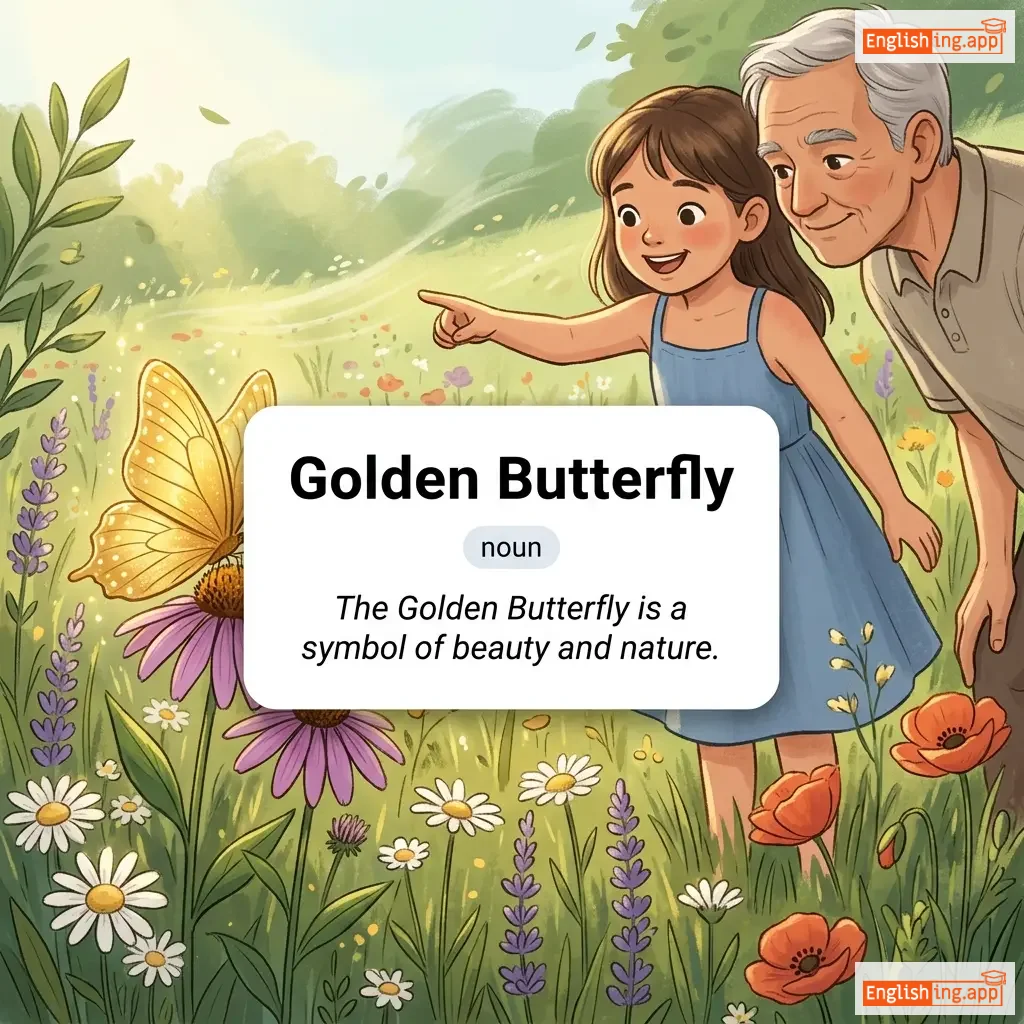
Golden Butterfly definition card — visual illustration of the meaning
noun
ˈɡoʊldən ˈbʌtərflaɪ
金色蝴蝶 (jinsè húdié)

A beautiful species of butterfly with golden coloration, symbolizing beauty and nature.

"The Golden Butterfly is a symbol of beauty and nature."

"金色蝴蝶是美丽和自然的象征。" (Jīnsè húdié shì měilì hé zìrán de xiàngzhēng.)
noun
/ˈɡoʊld.moʊ.hɜːr/
凤凰木 (goldmohur)

A tropical tree with bright orange-red flowers, also known as flame tree or royal poinciana

"The goldmohur tree bloomed beautifully in the summer heat."

"金莫胡树在夏天的炎热中盛开得十分美丽。" (jin mo hu shu zai xia tian de yan re zhong sheng kai de shi fen mei li)
noun
/ˈɡoʊld.smɪθ/
金匠 (jinjiang)

a person who makes or repairs articles of gold

"The goldsmith crafted a beautiful wedding ring."

"金匠制作了一枚美丽的婚戒。" (Jinjiang zhizao le yi mei meili de hunjie.)
noun
/ɡɒlf/
幸福 (xìng fú)

A game in which players use clubs to hit a ball into a series of holes on a course in as few strokes as possible.

"He spends his weekends playing golf with his friends."

"当她收到奖项时,她无法掩饰自己的幸福。" (Dāng tā shōu dào jiǎngxiàng shí, tā wúfǎ yǎnshì zìjǐ de xìngfú.)
adjective
/ɡʊd/
(hao)

Of high quality; morally right or beneficial.

"She is a good student who always helps her classmates."

"她是一个好学生,总是帮助她的同学。" (Tā shì yīgè hǎo xuéshēng, zǒng shì bāngzhù tā de tóngxué.)
interjection;noun
/ɡʊdˈbaɪ/
再见 (zaijian)

a polite expression used when leaving or ending a conversation; the act of parting

"She waved and said goodbye before leaving the station."

"她在离开车站前挥手说了再见。" (ta zai likai chezhan qian huishou shuo le zaijian)
noun
/ˈɡʊdnəs/
善良 (shanliang)

the quality of being morally good or virtuous

"Her goodness was evident in the way she treated others."

"她的善良在她对待他人的方式中表现得淋漓尽致。" (Ta de shanliang zai ta duidai taren de fangshi zhong biaoxian de linli jinzhi.)
goods definition card — visual illustration of the meaning
noun
ɡʊdz
商品 (gudz)

Merchandise or possessions; things that are bought and sold.

"The company produces high-quality goods for export."

"该公司为出口生产高质量的商品。" (Gai gongsi wei chukou shengchan gao zhiliang de shangpin.)
noun
/ɡʊdz treɪn/
货运列车 (huòyùn lièchē)

a train designed to transport cargo and freight rather than passengers

"The long goods train carried containers from the port to the inland depot."

"长货运列车从港口到内陆仓库运输集装箱。" (cháng huòyùn lièchē cóng gǎngkǒu dào nèilù cāngkù yùnshū jízhuāngxiāng.)
noun
/ɡuːs/
(e)

large waterbird with a long neck and webbed feet

"The goose swam gracefully across the pond."

"那只鹅优雅地游过池塘。" (Na zhi e youya di you guo chitang.)
noun
/ˈɡuːs.ber.i/
醋栗 (cù lì)

a small round green or red berry that grows on a thorny bush

"Gooseberries are rich in vitamin C and make excellent jams."

"醋栗富含维生素C,并可制成美味的果酱。" (cù lì fù hán wéishēngsù C, bìng kě zhì chéng měiwèi de guǒjiàng)
noun
/ˈɡuːs.bʌmps/
鸡皮疙瘩 (jī pí gē dá)

small raised bumps on the skin caused by cold, fear, or excitement

"The horror movie gave me goosebumps."

"那部恐怖电影让我起了鸡皮疙瘩。" (Nà bù kǒng bù diànyǐng ràng wǒ qǐle jī pí gē dá.)
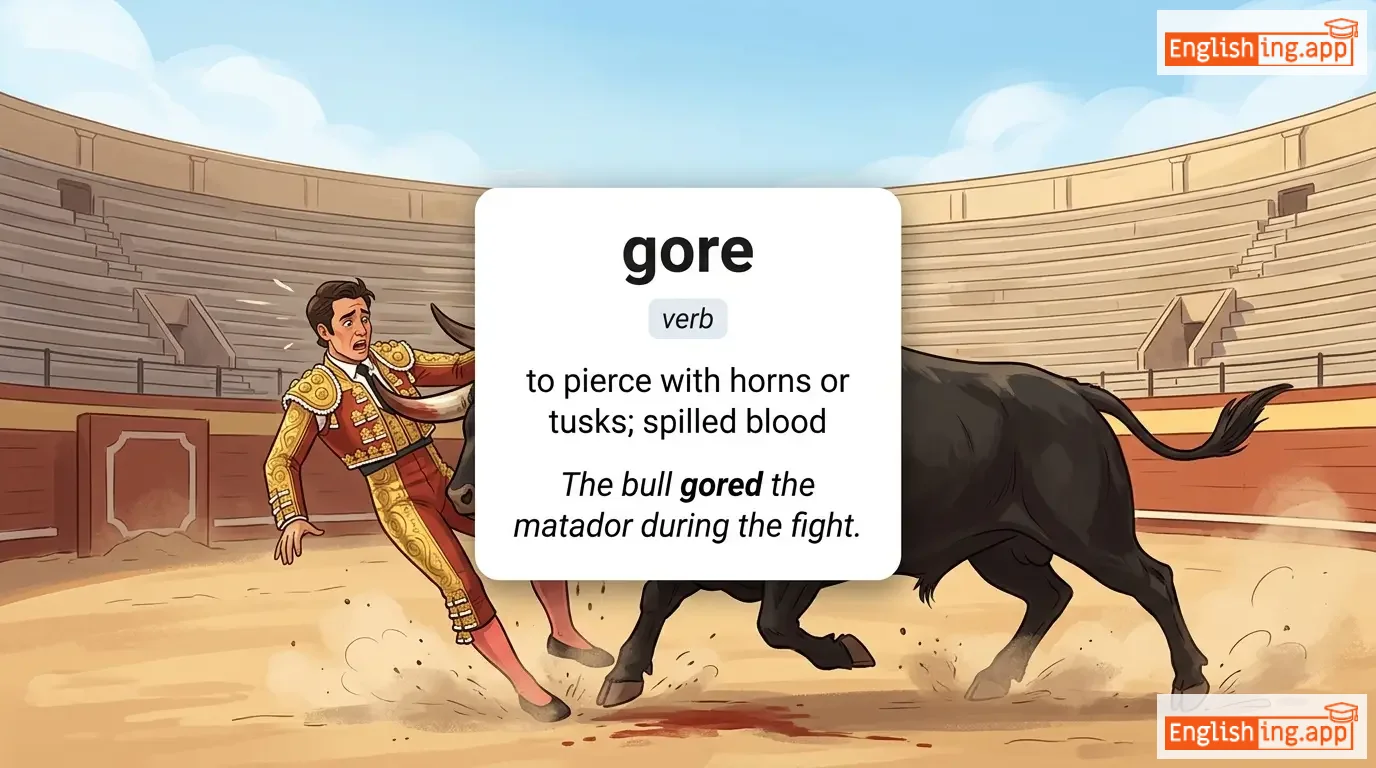
gore definition card — visual illustration of the meaning
verb
/ɡɔːr/
用角刺穿 (yòng jiǎo cìchuān)

to pierce with horns or tusks; spilled blood

"The bull gored the matador during the fight."

"公牛在斗牛过程中刺伤了斗牛士。" (Gōngniú zài dòuniú guòchéng zhōng cìshāng le dòuniú shì.)
verb, noun
/ɡɔːrdʒ/
贪婪地吃 / 山间狭谷 (tanlan de chi / shanjian xia gu)

to eat greedily; a narrow valley between mountains or hills

"They gorged themselves on pizza after the hike."

"他们在徒步旅行后大快朵颐地吃了比萨。" (Tamen zai tubu lüxing hou da kuai duoyi de chi le pizza.)
adjective
/ˈɡɔːrdʒəs/
美丽 (měilì)

Extremely beautiful or attractive.

"The bride looked gorgeous in her wedding dress."

"新娘在她的婚纱里看起来非常漂亮。" (Xīnniáng zài tā de hūnshā lǐ kàn qǐlái fēicháng piàoliang.)
noun
/ɡəˈrɪl.ə/
大猩猩 (dà xīng xing)

a large powerful ape found in the forests of central Africa

"The gorilla beat its chest to show dominance."

"大猩猩用力拍打胸脯以展示统治力。" (Dà xīng xing yòng lì pāi dǎ xiōngpú yǐ zhǎnshì tǒngzhì lì.)
adjective
/ˈɡɔːri/
血腥 (xuèxīng)

involving or showing a lot of bloodshed and violence

"The movie was too gory for children."

"这部电影对孩子来说太血腥了。" (Zhè bù diànyǐng duì háizi lái shuō tài xuèxīngle.)
noun
/ˈɡɒz.lɪŋ/
小鹅 (xiao e)

a young goose

"The mother goose carefully protected her goslings."
"母鹅小心翼翼地保护着她的小鹅。" (Mu e xiaoxin yiyi de baohuzhe ta de xiao e.)
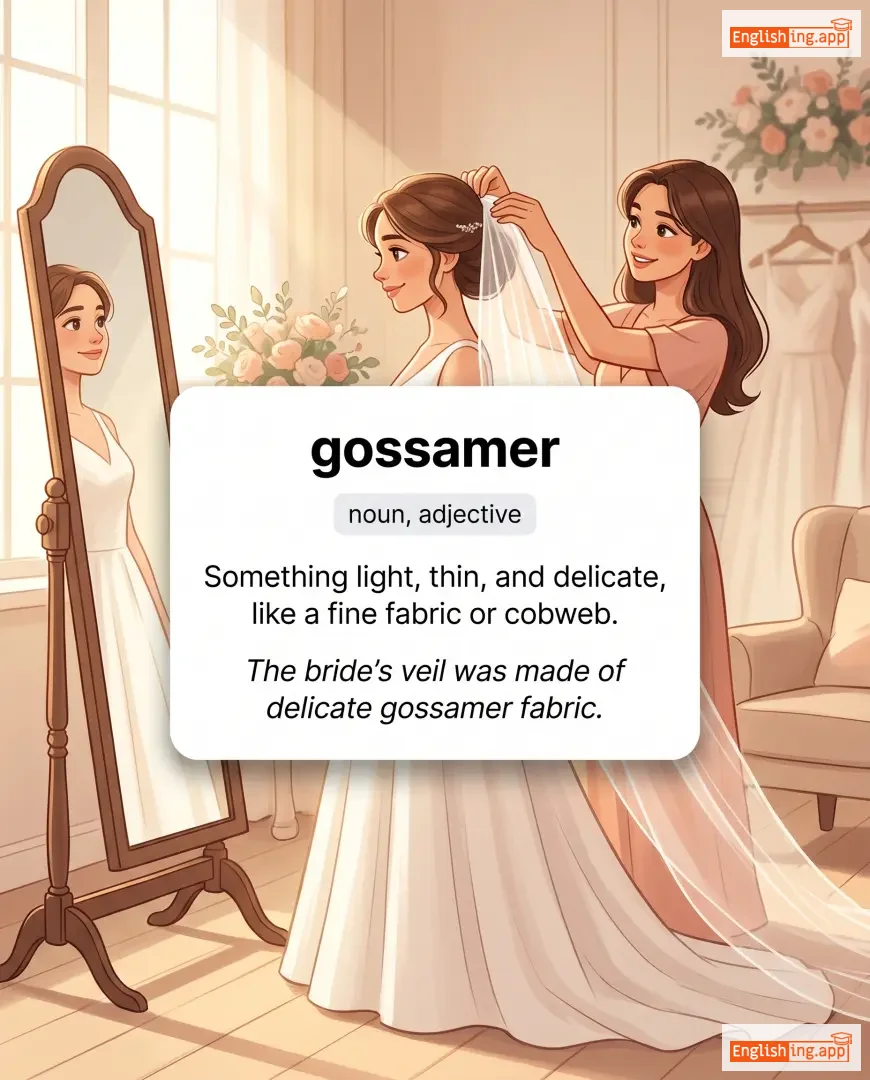
gossamer definition card — visual illustration of the meaning
noun, adjective
/ˈɡɒsəmər/
轻薄物 (qīngbó wù)

Something light, thin, and delicate, like a fine fabric or cobweb.

"The bride's veil was made of delicate gossamer fabric."
"新娘的面纱是由精致的高萨梅尔布料做成的。" (Xīnniáng de miànshā shì yóu jīngzhì de gāo sàméi'ěr bùliào zuòchéng de.)
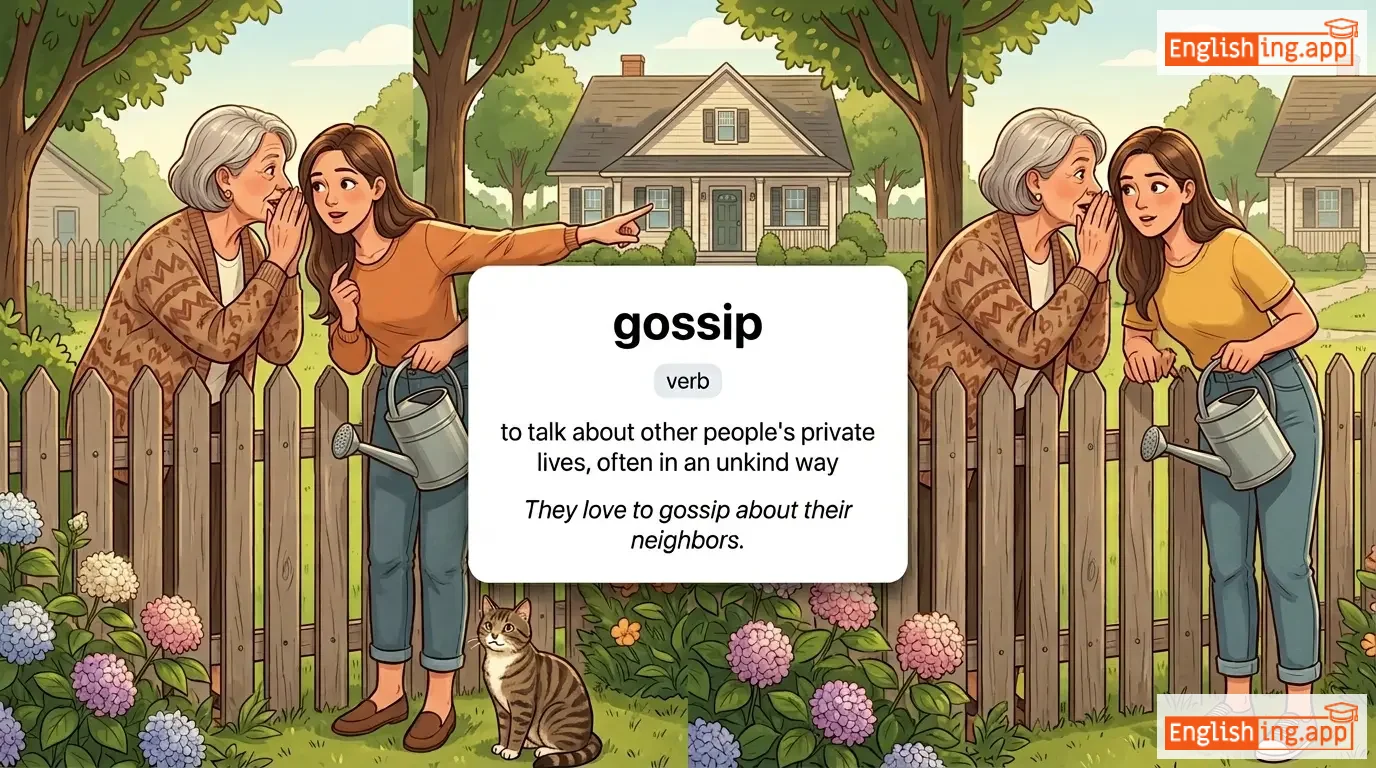
gossip definition card — visual illustration of the meaning
verb
/ˈɡɑːsɪp/
八卦 (bāguà)

to talk about other people's private lives, often in an unkind way

"They love to gossip about their neighbors."

"他们喜欢聊邻居的八卦。" (Tāmen xǐhuān liáo línjū de bāguà.)
gouge definition card — visual illustration of the meaning
verb, noun
/ɡaʊdʒ/
挖掘,漫天要价 (wājué, màn tiān yàojià)

To cut or scoop out a deep hole or groove; to overcharge unfairly.

"He accidentally gouged a hole in the wooden table."

"他不小心在木桌子上挖了个洞。" (Tā bù xiǎoxīn zài mù zhuōzi shàng wāle gè dòng.)
noun
/ɡɔːrd/
葫芦 (hulu)

A large fruit with a hard shell, often used as food or for making containers.

"The farmer harvested several gourds from the field."

"农民从田里收获了几只葫芦。" (Nongmin cong tian li shouhuo le ji zhi hulu.)
noun
/ˈɡʊrmənd/
美食家 (měishíjiā)

A person who enjoys eating a lot or has a great appetite for food.

"As a true gourmand, he never missed an opportunity to try new dishes."

"作为一名真正的美食家,他从不放过尝试新菜肴的机会。" (Zuòwéi yī míng zhēnzhèng de měishíjiā, tā cóng bù fàngguò chángshì xīn càiyáo de jīhuì.)
noun, adjective
/ˈɡʊrmeɪ/
美食家 (měi shí jiā)

A person who appreciates fine food and drink; also refers to high-quality food.

"They went to a gourmet restaurant to celebrate their anniversary."

"他们去了一家美食家餐厅庆祝他们的周年纪念。" (Tāmen qùle yījiā měi shí jiā cāntīng qìngzhù tāmen de zhōunián jìniàn.)
govern definition card — visual illustration of the meaning
🏛️

govern

verb
/ˈɡʌv.ən/

to control, direct, or strongly influence the actions and behavior of others, especially through laws or authority

"The country is governed by a coalition of parties."

governance definition card — visual illustration of the meaning
🏛️

governance

noun
/ˈɡʌvərnəns/

the action or manner of governing a state, organization, or people

"Good governance is key to building a strong, prosperous nation."

government definition card — visual illustration of the meaning
noun
/ˈɡʌvərnmənt/
政府 (zhèngfǔ)

The governing body of a nation, state, or community responsible for making and enforcing laws.

"The government announced a new policy on education."

"政府宣布了一项新的教育政策。" (zhèngfǔ xuānbùle yī xiàng xīn de jiàoyù zhèngcè.)
noun
/ˈɡʌvərnər/
州长 (zhouzhang)

An official appointed or elected to govern a state, territory, or organization.

"The governor addressed the citizens about the upcoming election."

"州长向公民们讲述了即将来临的选举。" (Zhōuzhǎng xiàng gōngmínmen jiǎngshùle jíjiāng láilín de xuǎnjǔ.)
noun
/ɡaʊn/
礼服 (lifu)

a long dress, typically worn on formal occasions; a loose robe worn for comfort or in professional settings

"She looked elegant in her evening gown at the graduation ceremony."

"她在毕业典礼上穿着晚礼服,看起来很优雅。" (Ta zai biyedianli shang chuanzhuo wan lifu kan qilai hen youya.)
verb
/ɡræb/
抓住 (zhuazhu)

To seize something quickly and firmly.

"He tried to grab the ball before it rolled away."

"他试图抓住球,在它滚走之前。" (Tā shìtú zhuā zhù qiú, zài tā gǔn zǒu zhīqián.)
noun
/ɡreɪs/
优雅, 优美 (yōuyǎ, yōuměi)

simple elegance or refined movement; goodwill and kindness

"She moved with grace across the stage."

"她优雅地走过舞台。" (Tā yōuyǎ de zǒu guò wǔtái.)
adjective
/ˈɡreɪs.fəl/
优雅的; 平滑的; 精致的; 具有优美的动作或举止 (yōuyǎ de; pínghuá de; jīngzhì de; jùyǒu yōuměi de dòngzuò huò jǔzhǐ)

elegant; smooth; refined; having beauty of movement or manner

"The dancer moved with graceful elegance."

"舞者优雅地移动。" (Wǔzhě yōuyǎ de yídòng.)
adjective
/ˈɡreɪsləs/
不雅 (bù yǎ)

Lacking elegance, charm, or social refinement.

"His graceless behavior embarrassed everyone at the party."

"他的不雅行为让派对上的每个人都感到尴尬。" (Tā de bù yǎ xíngwéi ràng pàiduì shàng de měi gè rén dōu gǎndào gāngà.)
adjective
/ˈɡreɪʃəs/
亲切 (qīnqiè)

Courteous, kind, and pleasant, especially to someone of lower status.

"The hostess was very gracious to all her guests."

"女主人对所有客人都很亲切。" (nǚ zhǔrén duì suǒyǒu kèren dōu hěn qīnqiè.)
noun
/ɡreɪˈdeɪʃən/
渐变 (jiànbiàn)

A gradual change from one stage, tone, or degree to another.

"The artist used subtle gradation of colors in her painting."

"艺术家在她的画作中使用了细腻的渐变色彩。" (Yìshùjiā zài tā de huàzuò zhōng shǐyòngle xìnì de jiànbiàn sècǎi.)
noun, verb
/ɡreɪd/
等级 (dengji)

A level of quality, rank, or performance; to assign a score or mark to work or performance.

"The teacher graded all the papers by the weekend."

"老师在周末之前批改了所有的作业。" (Lǎoshī zài zhōumò zhīqián pīgǎi le suǒyǒu de zuòyè.)
noun
/ˈɡreɪdiənt/
斜坡 (xiepō)

A gradual slope, or the degree of inclination of a surface.

"The cyclist struggled up the steep gradient of the hill."
"骑行者在爬陡峭的斜坡时遇到了困难。" (qíxíng zhě zài pá dǒuqiào de xiépō shí yù dào le kùnnán.)
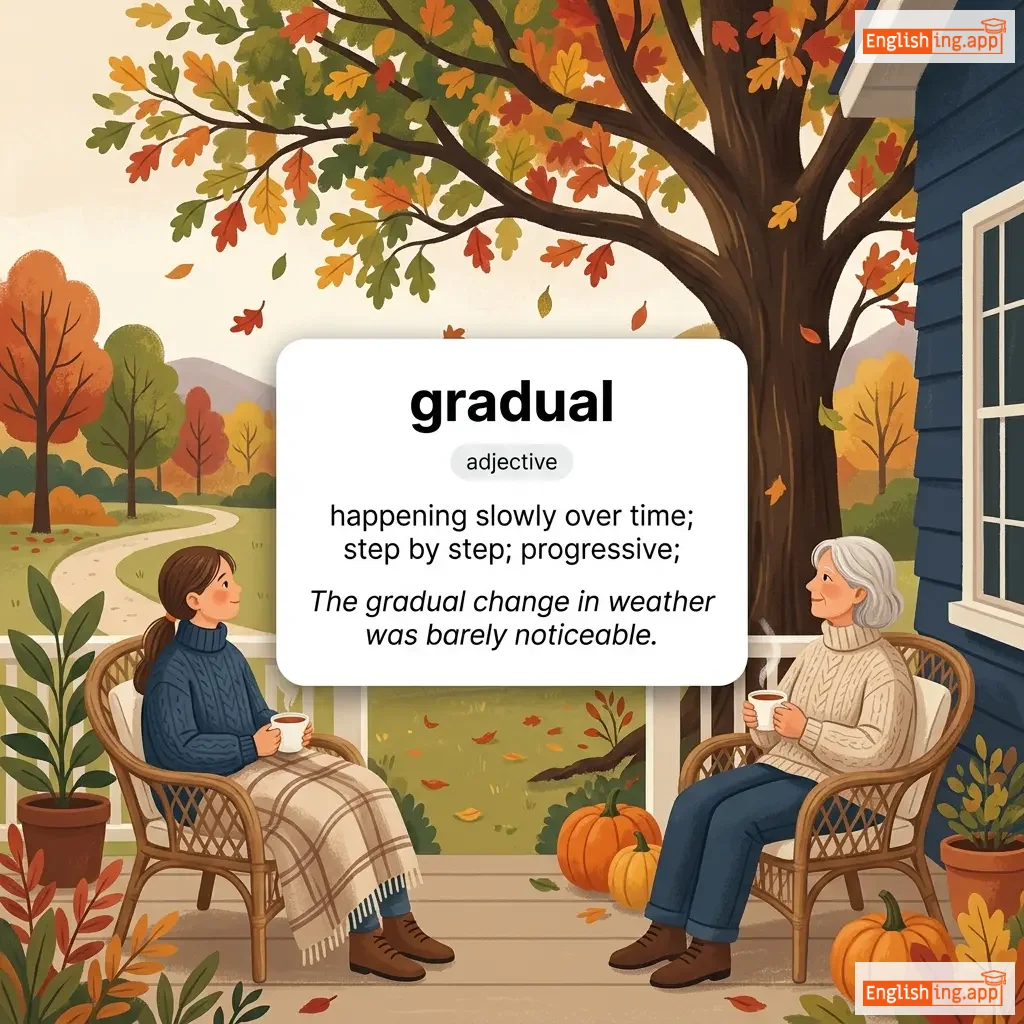
gradual definition card — visual illustration of the meaning
adjective
/ˈɡrædʒ.u.əl/
逐渐的; 逐步的; 进步的; (zhújiàn de; zhúbù de; jìnbù de;)

happening slowly over time; step by step; progressive;

"The gradual change in weather was barely noticeable."

"天气的渐变几乎没有引起注意。" (Tiānsì de jiànbìan jīhū méiyǒu yǐnqǐ zhùyì.)