
词汇表

英语词汇词典 | 单词含义、定义和示例

coerce definition card — visual illustration of the meaning
verb
/kəʊˈɜːs/
胁迫 (xie po)

to persuade or force someone to do something by using threats or pressure

"They tried to coerce him into signing the contract."
"他们试图威胁他签署合同。" (Tāmen shìtú wēixié tā qiānshǔ hé tóng.)
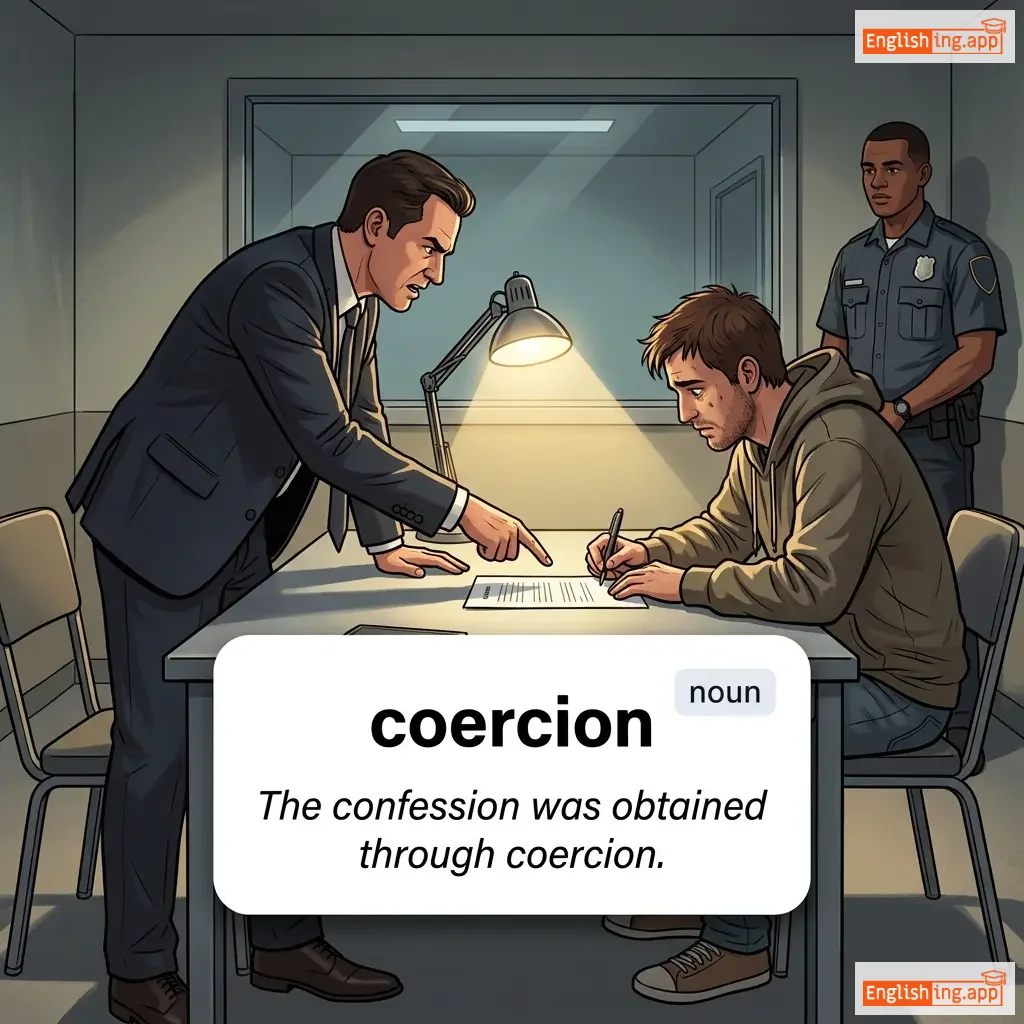
coercion definition card — visual illustration of the meaning
noun
/kəʊˈɜː.ʒən/
胁迫 (xiepo)

the practice of forcing someone to act in a certain way by using threats or pressure

"The confession was obtained through coercion."

"供词是通过胁迫获得的。" (Gòngcí shì tōngguò xiépò huòde de.)
adjective
/koʊˈɜːrsɪv/
强制性 (qiángzhìxìng)

Relating to or using force or threats to make someone do something.

"The government faced criticism for adopting coercive measures against protestors."

"政府因采用对抗议者的强制性措施而遭到批评。" (Zhèngfǔ yīn cǎiyòng duì kàngyì zhě de qiángzhìxìng cuòshī ér zāodào pīpíng.)
adjective
/koʊˈiːvəl/
同时代 (tóng shídài)

Having the same age, date of origin, or duration; contemporary.

"The philosopher was coeval with the rise of modern science."

"这位哲学家与现代科学的崛起是同一时代的。" (Zhè wèi zhéxuéjiā yǔ xiàndài kēxué de juéqǐ shì tóng yī shídài de.)
noun
/ˈkɔːfi/
幸福 (xìngfú)

a hot drink made from roasted and ground coffee beans

"I drink a cup of coffee every morning."

"她在获得奖项时,无法掩饰自己的幸福感。" (Tā zài huòde jiǎngxiàng shí, wúfǎ yǎnshì zìjǐ de xìngfú gǎn.)
noun
/ˈkɒf.i ˈmeɪ.kər/
咖啡机 (kafeiji)

an electric appliance used to brew coffee automatically

"I use my coffee maker every morning to brew fresh coffee."

"我每天早上使用我的咖啡机来冲泡新鲜的咖啡。" (iusemycoffeemakereverymorningtotobrewfreshcoffee)
noun
/ˈkɔːfər/
箱子 (xiangzi)

A strongbox or small chest for holding valuables, often used metaphorically for funds or financial reserves.

"The city's coffers were drained after the costly project."

"昂贵的项目后,城市的资金库被耗尽了。" (Ángguì de xiàngmù hòu, chéngshì de zījīn kù bèi hào jìnle.)
noun
/kɑːɡ/
轮子或齿轮上的齿 (lúnzi huò chǐlún shàng de chǐ)

A tooth on the rim of a wheel or gear; metaphorically, a minor but necessary part of a larger system.

"He felt like just a small cog in a big machine."
"他觉得自己只是一个大机器中的小齿轮。" (Tā juédé zìjǐ zhǐshì yīgè dà jīqì zhōng de xiǎo chǐlún.)
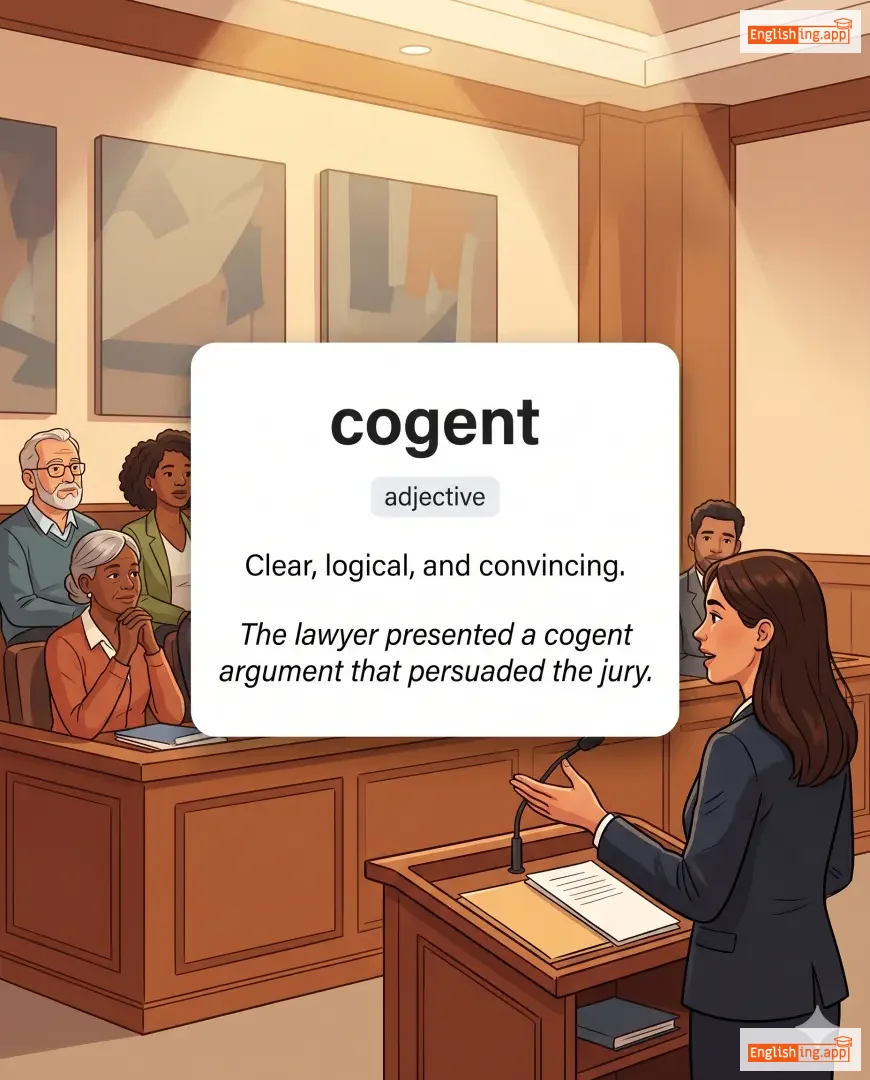
cogent definition card — visual illustration of the meaning
adjective
/ˈkoʊdʒənt/
清晰且合乎逻辑 (qīngxī qiě héhū luójí)

Clear, logical, and convincing.

"The lawyer presented a cogent argument that persuaded the jury."

"律师提出了一个清晰且合乎逻辑的论点,说服了陪审团。" (Lǜshī tíchūle yīgè qīngxī qiě héhū luójí de lùndiǎn, shuōfúle péishěn tuán.)
verb
/ˈkɒdʒɪteɪt/
深思 (shen si)

to think deeply about something; to meditate or reflect

"He sat by the river to cogitate on his future plans."

"他坐在河边,思考他的未来计划。" (Ta zuo zai he bian, sikao tade weilai jihua.)
cogitation definition card — visual illustration of the meaning
noun
ˌkɒdʒ.ɪˈteɪ.ʃən
深思熟虑;沉思或冥想 (shēnsī shúlǜ; chénsī huò míngxiǎng)

Deep thought; contemplation or meditation.

"After much cogitation, he decided to change his career path."

"经过深思熟虑后,他决定改变自己的职业道路。" (Jīngguò shēnsī shúlǜ hòu, tā juédìng gǎibiàn zìjǐ de zhíyè dàolù.)
noun
/ˈkɒɡneɪt/
同源词 (tongyuan ci)

a word related to another word in origin; having the same linguistic root

"The Spanish word 'madre' and the English word 'mother' are cognates."

"西班牙语单词'madre'和英语单词'mother'是同源词。" (Xibanya yu dan ci 'madre' he Yingyu ci 'mother' shi tongyuan ci.)
cognition definition card — visual illustration of the meaning
noun
kɒɡˈnɪʃ.ən
认知 (kogNishun)

The mental action or process of acquiring knowledge and understanding through thought, experience, and the senses.

"Sleep is essential for proper cognition and memory retention."
"睡眠对正确的认知和记忆保持至关重要。" (sleepisessentialforpropercognitionandmemoryretention)
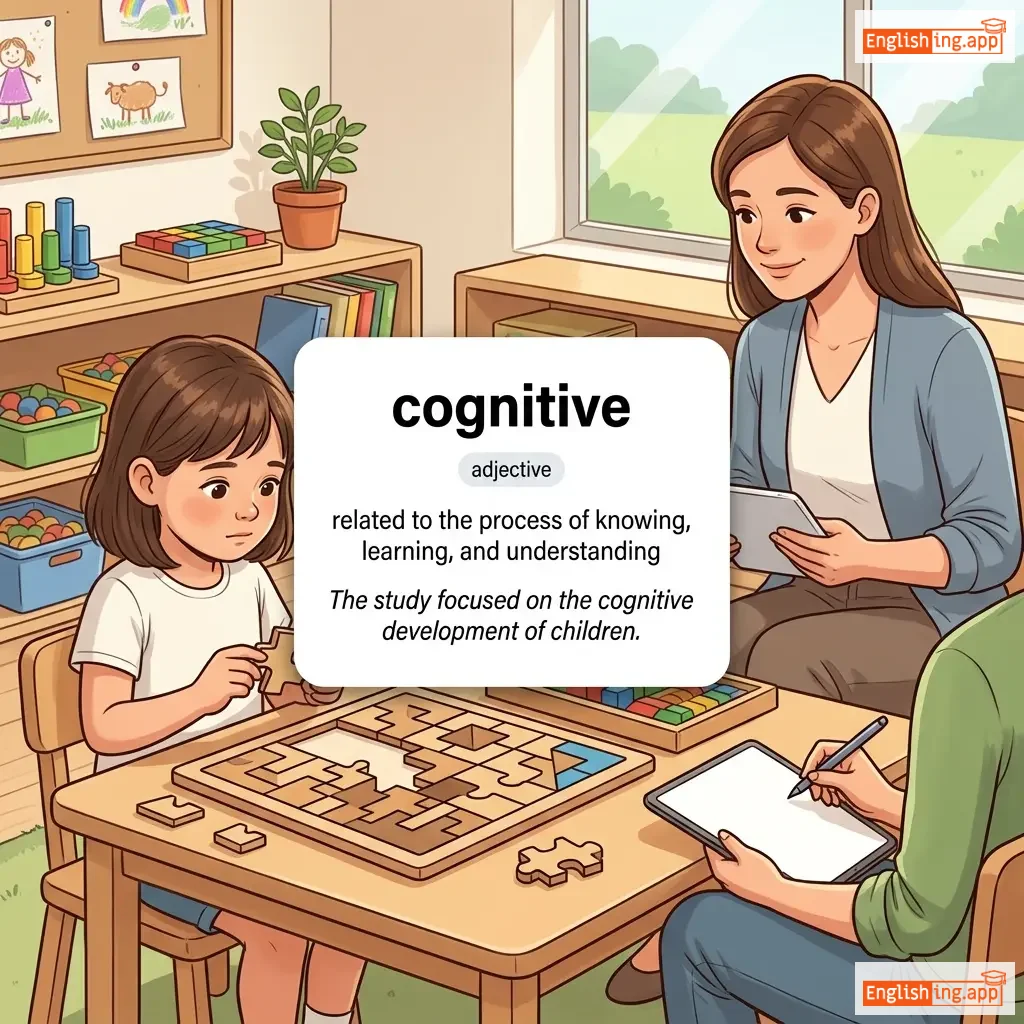
cognitive definition card — visual illustration of the meaning
adjective
/ˈkɒɡnətɪv/
认知的 (rèn zhī de)

related to the process of knowing, learning, and understanding

"The study focused on the cognitive development of children."
"该研究集中在儿童的认知发展上。" (Gāi yán jiū jí zhōng zài ér tóng de rèn zhī fā zhǎn shàng.)
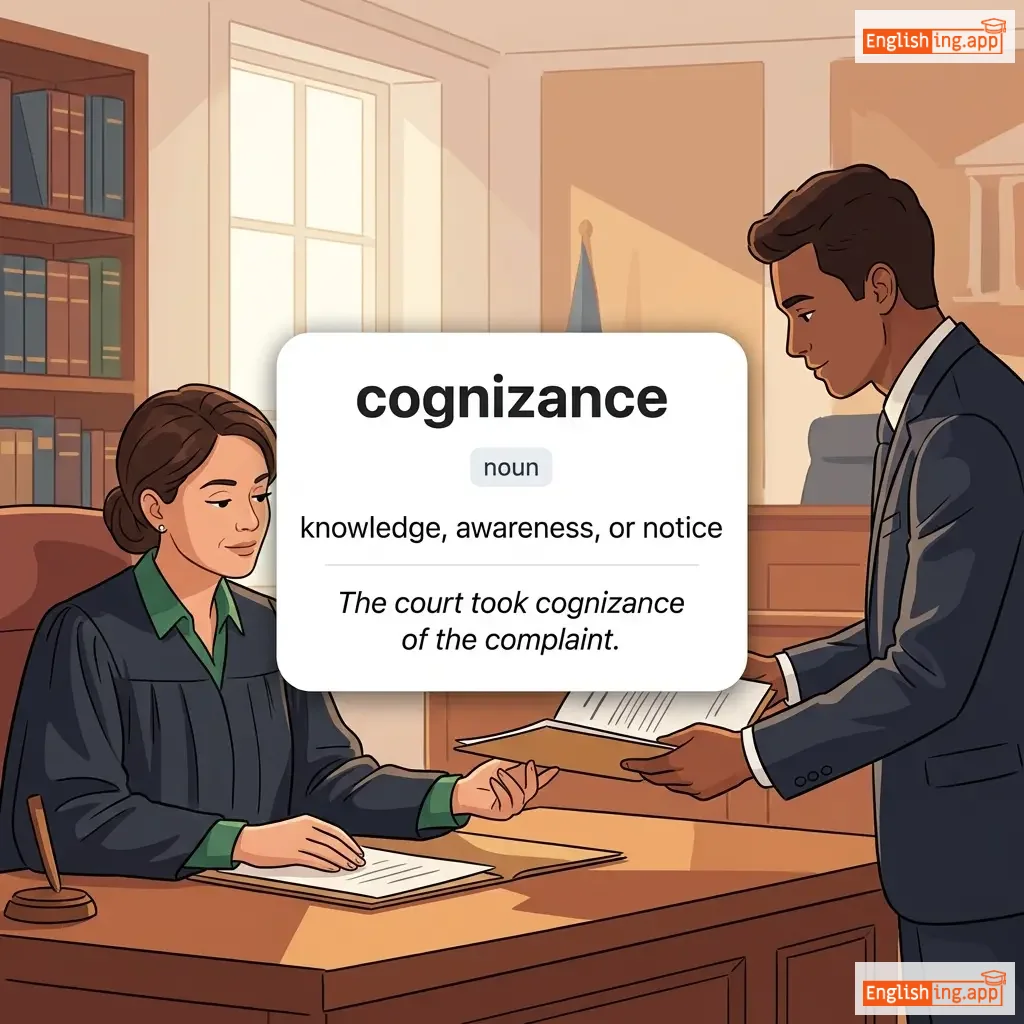
cognizance definition card — visual illustration of the meaning
noun
/ˈkɒɡnɪzəns/
知识,意识或通知 (zhīshì, yìshí huò tōngzhī)

knowledge, awareness, or notice

"The court took cognizance of the complaint."
"法院已经注意到投诉。" (Fǎyuàn yǐjīng zhùyì dào tóusù.)
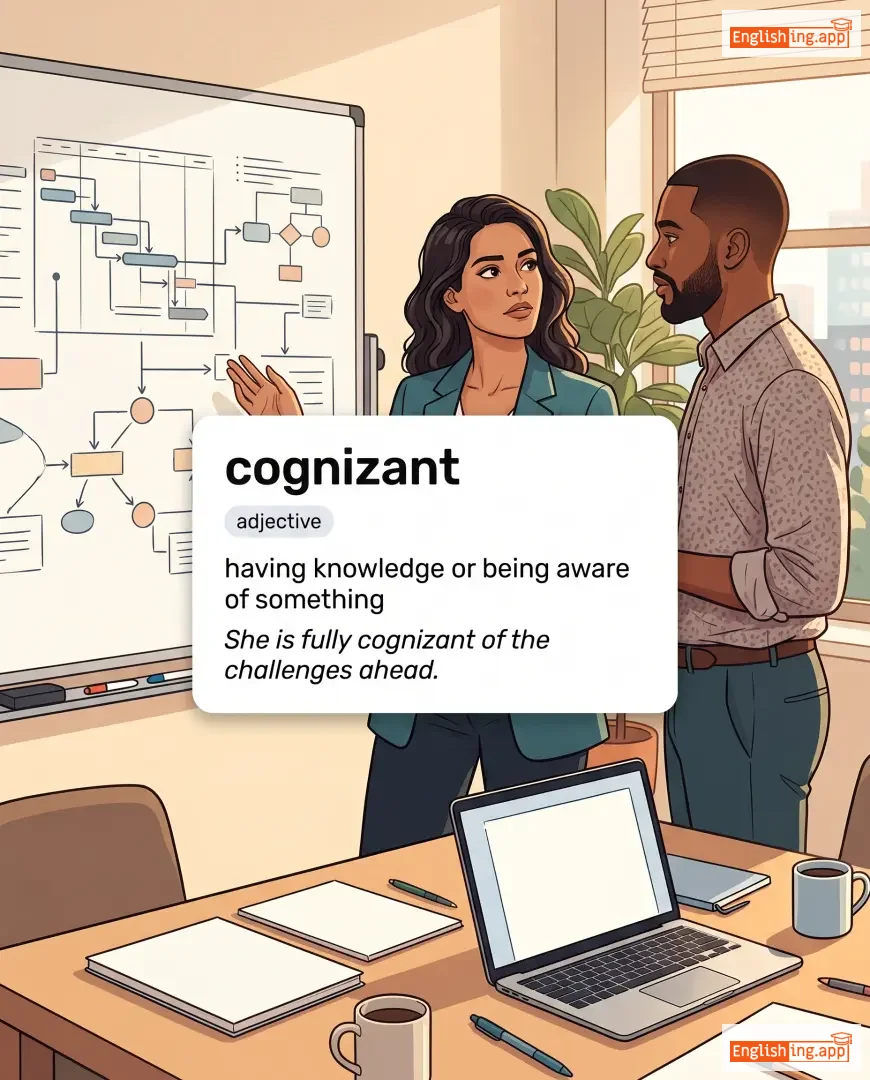
cognizant definition card — visual illustration of the meaning
adjective
/ˈkɒɡnɪzənt/
意识到 (yìshí dào)

having knowledge or being aware of something

"She is fully cognizant of the challenges ahead."

"她完全意识到前方的挑战。" (Tā wánquán yìshí dào qiánfāng de tiǎozhàn.)
noun
/kɒɡˈnoʊmən/
姓氏 / 绰号 (xìngshì / chuòhào)

A family name or surname; an additional name or nickname.

"His cognomen became widely known in literary circles."

"他的姓氏在文学界广为人知。" (Tā de xìngshì zài wénxué jiè guǎng wéi rén zhī.)
verb
/koʊˈhæbɪt/
同居 (tongju)

To live together, often as partners without being married.

"They decided to cohabit before getting married."

"他们决定在结婚前同居。" (Tamen jueding zai jiehuns qian tongju.)
verb
/koʊˈhɪr/
结合 (jiehe)

To stick together; to be united logically or physically.

"The ideas in his essay cohere well."

"他文章中的观点很好地结合在一起。" (Ta wenzhang zhong de guandian hen hao de jiehe zai yiqi.)
coherence definition card — visual illustration of the meaning
noun
/kəʊˈhɪə.rəns/
连贯性, 一致性, 逻辑性 (liánguànxìng, yīzhìxìng, luógíxìng)

The quality of being logical and consistent.

"His argument lacked coherence and was difficult to understand."

"他的论点缺乏连贯性,难以理解。" (Tā de lùndiǎn quēfá liánguànxìng, nán yǐ lǐjiě.)
coherent definition card — visual illustration of the meaning
adjective
/koʊˈhɪə.rənt/
连贯 (liánguàn)

Logical and consistent; making sense.

"Her speech was clear and coherent."
"她的演讲清晰且连贯。" (Tā de yǎnjiǎng qīngxī qiě liánguàn.)
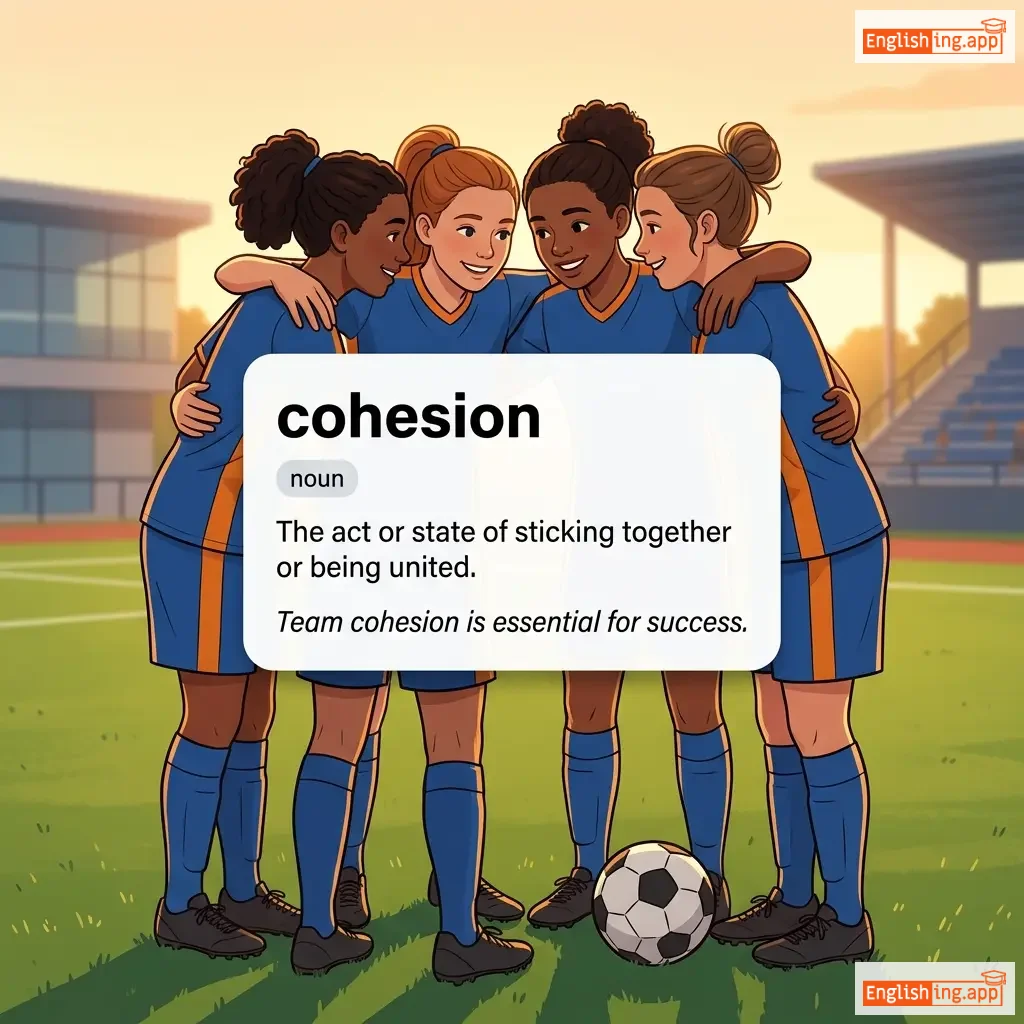
cohesion definition card — visual illustration of the meaning
noun
/koʊˈhiːʒən/
凝聚力 (ningjulì)

The act or state of sticking together or being united.

"Team cohesion is essential for success."
"团队凝聚力对成功至关重要。" (Tuánduì níngjùlì duì chénggōng zhìguān zhòngyào.)
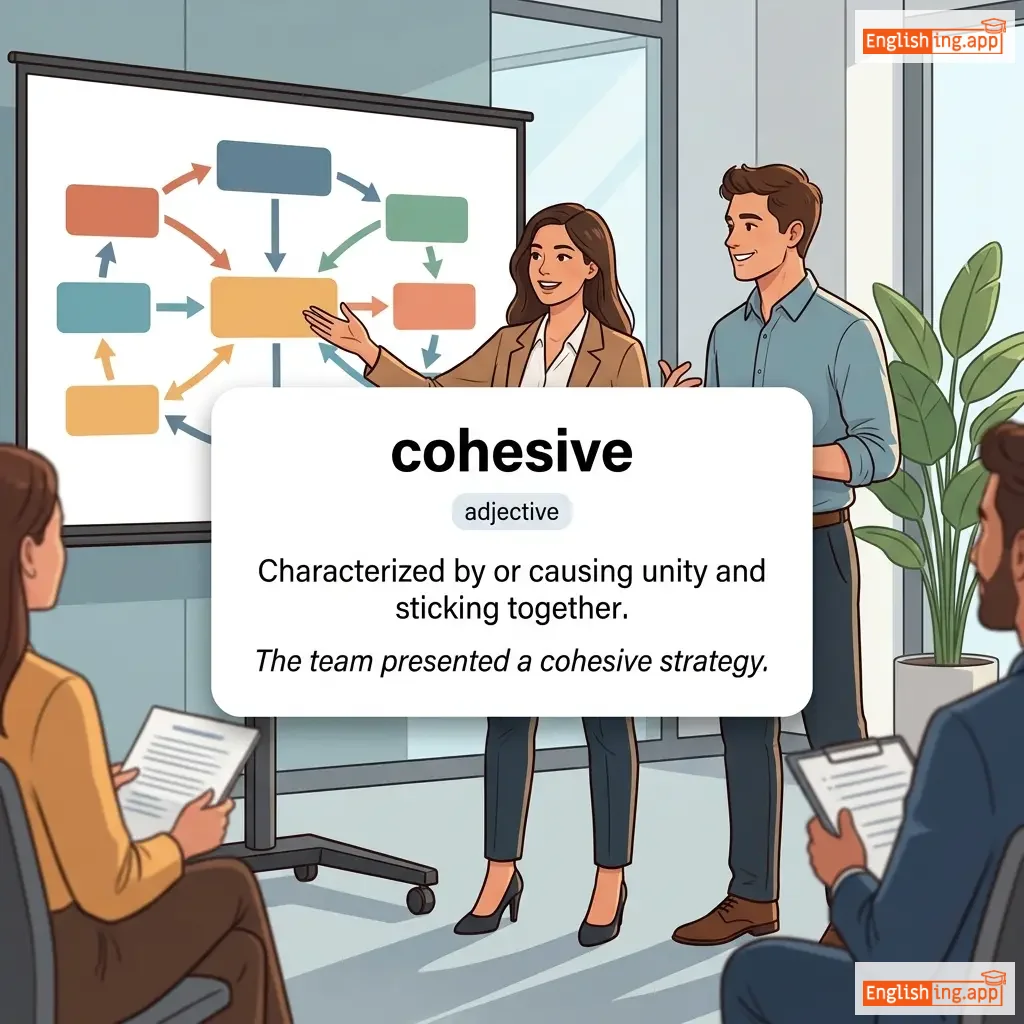
cohesive definition card — visual illustration of the meaning
adjective
/koʊˈhiːsɪv/
凝聚的 (níngjù de)

Characterized by or causing unity and sticking together.

"The team presented a cohesive strategy."
"团队提出了一个紧密的战略。" (tuánduì tíchūle yīgè jǐnmì de zhànlüè.)
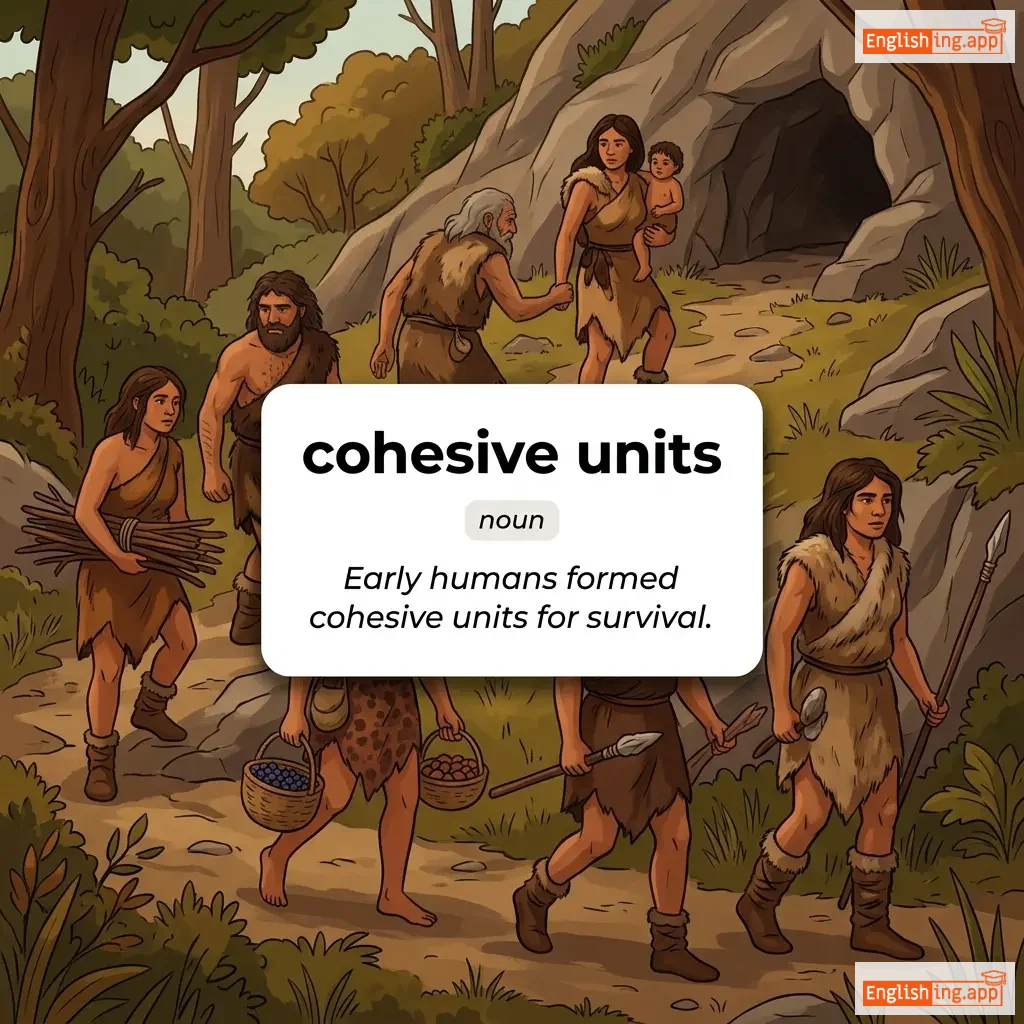
cohesive units definition card — visual illustration of the meaning
noun
koʊˈhisɪv ˈjunɪts
凝聚的单元 (níng jù de dān yuán)

Groups or organizations that work together as unified wholes, with members closely bound together.

"Early humans formed cohesive units for survival."

"早期人类为了生存,形成了凝聚的单元。" (Zǎoqī rénlèi wèile shēngcún, xíngchéngle níng jù de dān yuán.)
noun
/ˈkoʊhɔːrt/
同班 (tóngbān)

A group of people with a shared characteristic, usually of the same age or with a common experience.

"The study tracked a cohort of students over ten years."

"这项研究跟踪了一个由学生组成的同班人群,长达十年。" (Zhè xiàng yánjiū gēnzhōngle yī gè yóu xuéshēng zǔchéng de tóngbān rénqún, cháng dá shí nián.)
👨‍👩‍👧‍👦

cohorts (kohorts)

noun
/ˈkoʊhɔːrts/
队列 (duilie)

Groups of people who share a common feature or experience.

"Researchers compared the health outcomes of different cohorts."

"研究人员比较了不同队列的健康结果。" (Yanjiu renyuan bijiao le butong duilie de jiankang jieguo.)
noun
/kwɑːˈfjʊr/
发型 (faxing)

A person's hairstyle, typically an elaborate one.

"Her elegant coiffure impressed everyone at the party."

"她优雅的发型让聚会上的每个人都印象深刻。" (Ta youya de faxing rang juhui shang de meiren dou yinxiang shenke.)
🪙

coin

noun, verb
/kɔɪn/

A flat piece of metal used as money; as a verb, to invent a new word or phrase.

"The government decided to coin a new term for the program."

verb
/ˌkoʊ.ɪnˈsaɪd/
同时发生 (tóngshí fāshēng)

To occur at the same time or to be in agreement.

"The meeting coincided with her birthday."

"会议与她的生日重合。" (Huìyì yǔ tā de shēngrì chónghé.)
noun
/koʊˈɪnsɪdəns/
巧合 (qiaohu)

A remarkable or surprising occurrence of events at the same time by chance.

"It was pure coincidence that we met at the airport."

"我们在机场相遇纯粹是偶然的。" (Wo men zai ji chang xiang yu chun tui shi ou ran de.)
adjective
/koʊˈɪnsɪdənt/
同时 (tóng shí)

Occurring at the same time; occupying the same position in space or time.

"The festival was coincident with the national holiday."

"节日与国庆假日是同时发生的。" (Jiérì yǔ guóqìng jiàrì shì tóng shí fā shēng de.)
noun
/kɔɪnz/
硬币 (yingbi)

Flat, typically round pieces of metal issued by a government as money.

"He collected old coins from different countries."

"他收集了来自不同国家的旧硬币。" (Tā shōujíle láizì bùtóng guójiā de jiù yìngbì.)
noun
/ˈkɒləndər/
滤网 (lüwǎng)

A bowl with holes used for draining liquid from food such as pasta or vegetables.

"She poured the pasta into a colander to drain the water."

"她将意大利面倒入滤网中,以排出水分。" (Tā jiāng yìdàlìmiàn dào rù lǜwǎng zhōng, yǐ pái chū shuǐfèn.)
adjective/noun
/koʊld/
寒冷 (hanleng)

having a low temperature; lacking warmth

"It was so cold outside that she wore two jackets."

"外面太冷了,她穿了两件夹克。" (Wai mian tai leng le, ta chuan le liang jian jiake.)
noun
/koʊld drɪŋk/
冷饮 (lěng yǐn)

A chilled beverage; a refreshing drink served cold

"I ordered a cold drink to beat the summer heat."

"我点了一杯冷饮来缓解夏天的热度。" (Wǒ diǎnle yī bēi lěng yǐn lái huǎnjiě xiàtiān de rèdù.)
collaborate definition card — visual illustration of the meaning
verb
/kəˈlæbəreɪt/
合作 (hezuo)

To work jointly with others, especially on an intellectual or creative project.

"The two companies decided to collaborate on a new project."

"这两家公司决定在一个新项目上合作。" (Zhe liang jituan jueding zai yige xin xiangmu shang hezuo.)
collaboration definition card — visual illustration of the meaning
noun
/kəˌlæbəˈreɪʃən/
合作 (hezuo)

the action of working together with others to produce or achieve something

"The project was a result of close collaboration between two companies."

"该项目是两家公司之间密切合作的结果。" (Gāi xiàngmù shì liǎng jiā gōngsī zhī jiān mìqiè hézuò de jiéguǒ.)
collage definition card — visual illustration of the meaning
noun
/kəˈlɑːʒ/
拼贴画 (pintiehua)

A piece of art made by sticking various materials such as photographs or paper onto a surface.

"She created a collage using old magazine pictures."

"她用旧杂志的照片制作了一幅拼贴画。" (Tā yòng jiù zázhì de zhàopiàn zhìzuò le yī fú pintiehua.)
verb
/kəˈlæps/
崩塌 (bēng tā)

to fall down or inward suddenly; to break down completely

"The old building collapsed after the earthquake."

"老建筑在地震后倒塌了。" (Lǎo jiànzhú zài dìzhèn hòu dǎotā le.)
adjective
/kəˈlæpsəbl̩/
可折叠的 (ke zhedie de)

able to be folded down or reduced in size

"She bought a collapsible chair for camping."

"她为露营买了一个可折叠的椅子。" (Ta wei luying maile yige ke zhedie de yizi.)
noun
/ˈkɒlər/
领子 (lingzi)

the part of a shirt, coat, or dress that goes around the neck

"He adjusted his shirt collar before entering the meeting."

"他在进入会议之前调整了他的衬衫领子。" (Ta zai jinru huiyi zhiqian tiaozheng le ta de chenshan lingzi.)
noun
/ˈkɒl.ə.bəʊn/
锁骨 (suǒ gǔ)

either of the pair of bones joining the breastbone to the shoulder blades; clavicle

"He broke his collar-bone in the accident."

"他在事故中摔断了锁骨。" (Tā zài shìgù zhōng shuāi duànle suǒ gǔ.)
verb
/kəˈleɪt/
整理 (zhěng lǐ)

to collect, arrange, and combine in order

"The secretary collated the reports before the meeting."

"秘书在会议之前整理了报告。" (Mìshū zài huìyì zhīqián zhěnglǐ le bàogào.)
collateral definition card — visual illustration of the meaning
noun
/kəˈlætərəl/
担保品 (danbaopin)

something pledged as security for repayment of a loan

"He used his house as collateral for the bank loan."

"他把自己的房子作为银行贷款的担保品。" (Ta ba ziji de fangzi zuo wei yinhang dai kuan de danbaopin.)
noun
/kəˈleɪʃən/
汇编 (huìbiān)

the act of collecting, comparing, and arranging in proper order

"The librarian spent hours on the collation of old manuscripts."

"图书馆员花了几个小时整理古老的手稿。" (Túshūguǎn yuán huāle jǐ gè xiǎoshí zhěnglǐ gǔlǎo de shǒugǎo.)
noun
/ˈkɒliːɡ/
同事 (tongshi)

a person with whom one works, especially in a profession or business

"She invited her colleagues to the office party."

"她邀请了她的同事参加办公室聚会。" (Ta yaoqing le ta de tongshi canjia bàngōngshì jùhuì.)
collect definition card — visual illustration of the meaning
verb
/kəˈlekt/
收集 (shōují)

To gather or bring together items from different places.

"She likes to collect stamps as a hobby."

"她喜欢作为爱好收集邮票。" (Tā xǐhuān zuòwéi àihào shōují yóupiào.)
adjective
/kəˈlɛktɪd/
冷静 (lengjing)

calm and in control of oneself

"She remained calm and collected during the crisis."

"在危机中,她保持冷静和收拾好自己。" (Zai weiji zhong, ta baochi lengjing he shou shi hao ziji.)
noun
/kəˈlɛkʃən/
收藏 (shōují)

a group of things gathered together

"She has a large collection of rare books."

"她有一个很大的珍稀书籍收藏。" (Tā yǒu yīgè hěn dà zhēn xī shūjí shōucáng.)
collective definition card — visual illustration of the meaning
adjective
/kəˈlɛktɪv/
集体的 (jítǐ de)

done by people acting as a group

"The decision was made by collective agreement."

"这个决定是通过集体协议做出的。" (Zhège juédìng shì tōngguò jítǐ xiéyì zuòchū de.)