語彙集

英単語辞書 | 単語の意味、定義、例文

👩‍❤️‍👨

wife (ワイフ)

noun
/waɪf/
(tsuma)

a woman who is married to someone

"She is the wife of the famous author."

"彼女は有名な作家の妻です。" (Kanojo wa yūmei na sakka no tsuma desu.)
verb
/ˈwɪɡəl/
揺れる, 動かす (yureru, ugokasu)

To move or cause to move with small rapid movements from side to side.

"The baby wiggled happily in her mother's arms."

"赤ちゃんは母親の腕の中で幸せそうに揺れていました。" (Akachan wa hahaoya no ude no naka de shiawase sō ni yurete imashita.)
adjective
/waɪld/
野生 (yasei)

living or growing in the natural environment; uncontrolled or untamed

"The children ran wild in the park."

"子供たちは公園で野生的に走り回った。" (Kodomotachi wa kouen de yaseiteki ni hashirimawatta.)
noun
/waɪld bɔːr/
野生のイノシシ (yasei no inosishi)

a wild pig that lives in forests and has long curved teeth

"The wild boar ran through the forest quickly."

"ワイルドボアは森を速く駆け抜けた。" (wairudo boa wa mori wo hayaku kakenuketa)
noun
/ˈwɪldənəs/
荒野 (kouya)

an area of land that has not been changed by people and is still in its natural state

"They camped in the wilderness far from the city."

"彼らは都市から遠く離れた荒野でキャンプをしました。" (Karera wa toshi kara tōku hanareta kōya de kyampu o shimashita.)
noun
/ˈwaɪldˌlaɪf/
野生動物 (yasei doubutsu)

animals, birds, and plants living in their natural environment

"The park is home to a wide variety of wildlife."
"その公園は多種多様な野生動物の家です。" (Sono kōen wa tashu tayō na yasei dōbutsu no ie desu.)
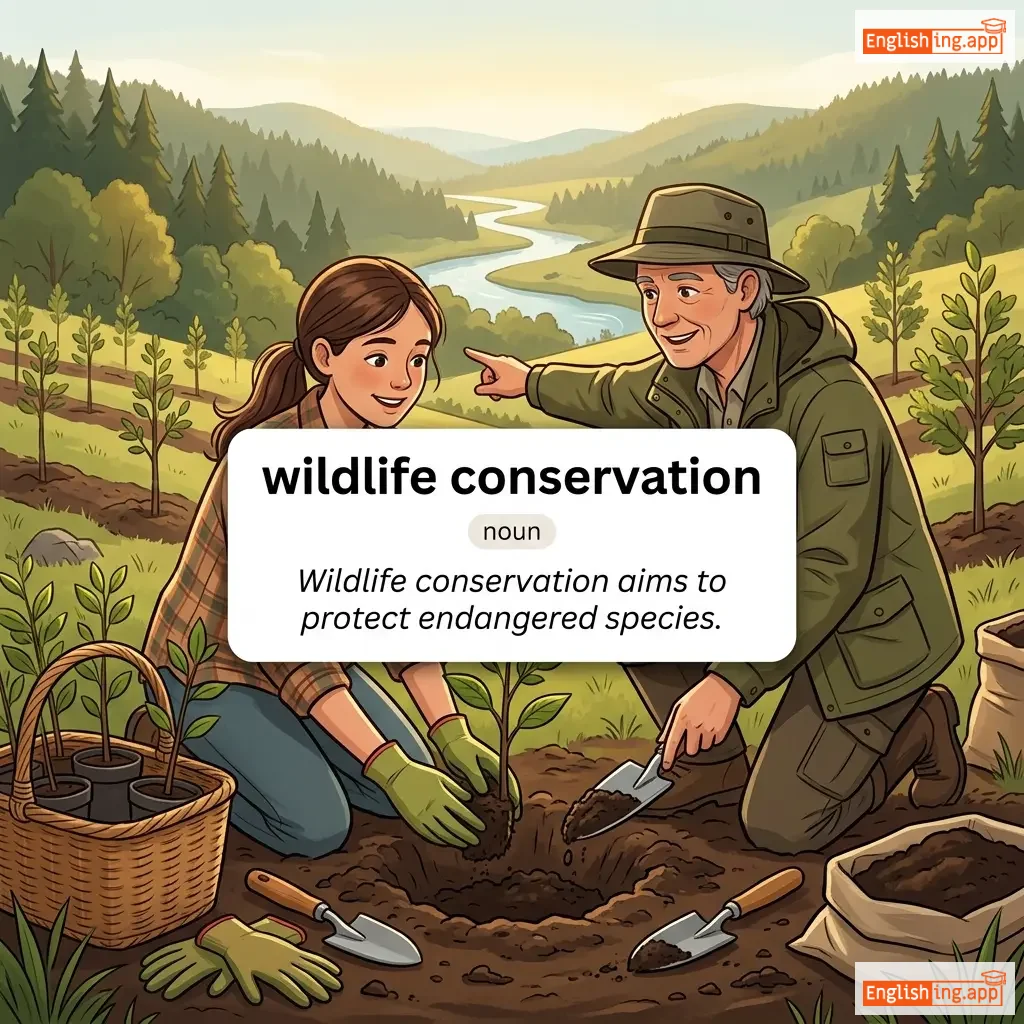
wildlife conservation definition card — visual illustration of the meaning
noun
/ˈwaɪld.laɪf ˌkɒnsərˈveɪʃən/
野生動物保護 (yasei dōbutsu hogo)

The practice of protecting wild animal species and their habitats in order to maintain healthy wildlife species or populations and to restore, protect or enhance natural ecosystems.

"Wildlife conservation aims to protect endangered species."
"野生動物保護の目的は絶滅危惧種を保護することです。" (Yasei dōbutsu hogo no mokuteki wa zetsumetsu kigū-shu o hogo suru koto desu.)
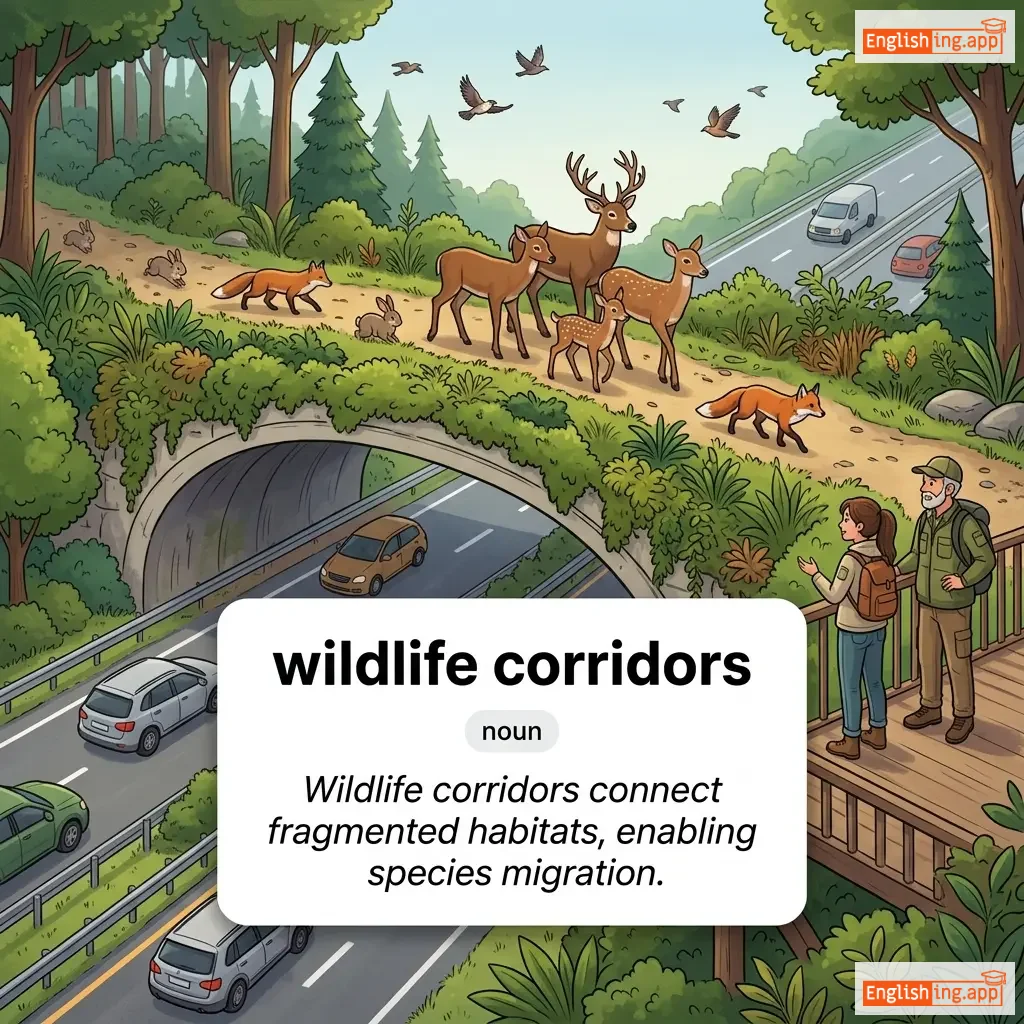
wildlife corridors definition card — visual illustration of the meaning
noun
ˈwaɪldlaɪf ˈkɔːrɪdɔːrz
野生動物の回廊 (yasei dōbutsu no kairō)

Areas of habitat connecting wildlife populations separated by human activities or structures.

"Wildlife corridors connect fragmented habitats, enabling species migration."

"野生動物の回廊は断片化した生息地を繋ぎ、種の移動を可能にします。" (Yasei dōbutsu no kairō wa danpenka shita seisokuchi o tsunagi, shū no idō o kanō ni shimasu.)
noun
/waɪl/
策略, 欺瞞 (satoraku, kiman)

A trick or clever scheme meant to deceive or outwit someone.

"He used every wile to win her trust."

"彼は彼女の信頼を勝ち取るためにあらゆる策略を使った。" (Kare wa kanojo no shinrai o kachitoru tame ni arayuru satoraku o tsukatta.)
adjective
/ˈwɪl.fəl/
頑固な; 意図的な (ganko na; itotekina)

deliberately stubborn; done on purpose; intentional

"His wilful disobedience led to punishment."

"彼の意図的な不服従は罰に繋がった。" (Kare no itoteki na fufukujuu wa batsu ni tsunagatta.)
noun, verb
/wɪl/
意志 (ishi)

expressing future tense or intention; a legal document

"She will attend the meeting tomorrow."

"彼女は明日会議に出席します。" (Kanojo wa ashita kaigi ni shusseki shimasu.)
adjective
/ˈwɪlfəl/
意図的 (itoteki)

Deliberate, intentional, or stubbornly determined to do as one wants.

"Her willful disregard for the rules got her into trouble."

"彼女の意図的なルール無視は、彼女をトラブルに巻き込んだ。" (Kanojo no itotekina rūru mushi wa, kanojo o toraburu ni makikonda.)
adjective
/ˈwɪlɪŋ/
意欲的 (iyokuteki)

ready, inclined, or eager to do something

"She was willing to help with the project."

"彼女はプロジェクトを手伝う意欲があった。" (Kanojo wa purojekuto o tetsudau iyoku ga atta.)
adverb
/ˈwɪl.ɪŋ.li/
自発的に (jihatsuteki ni)

in a willing manner; voluntarily; with free will

"She willingly helped her neighbors during the emergency."

"彼女は緊急時に自発的に隣人を助けました。" (kanojo wa kinkyū-ji ni jihatsuteki ni rinjin o tasukemashita)
noun
/ˈwɪlɪŋnəs/
意欲 (iyoku)

the quality of being prepared or ready to do something

"Her willingness to help others made her very popular."

"他の人を助ける意欲が彼女を非常に人気者にした。" (Hoka no hito o tasukeru iyoku ga kanojo o hijou ni ninki mono ni shita.)
adjective
/ˈwɪloʊi/
しなやかで細く、しなやかな柳のような (shinayaka de hosoku, shinayakana yanagi no yōna)

Gracefully tall, slender, and flexible, like a willow tree.

"She moved with a willowy elegance across the stage."
"彼女はステージをウィロウィなエレガンスで移動した。" (kanojo wa suteeji o uirooi na eregansu de idou shita)
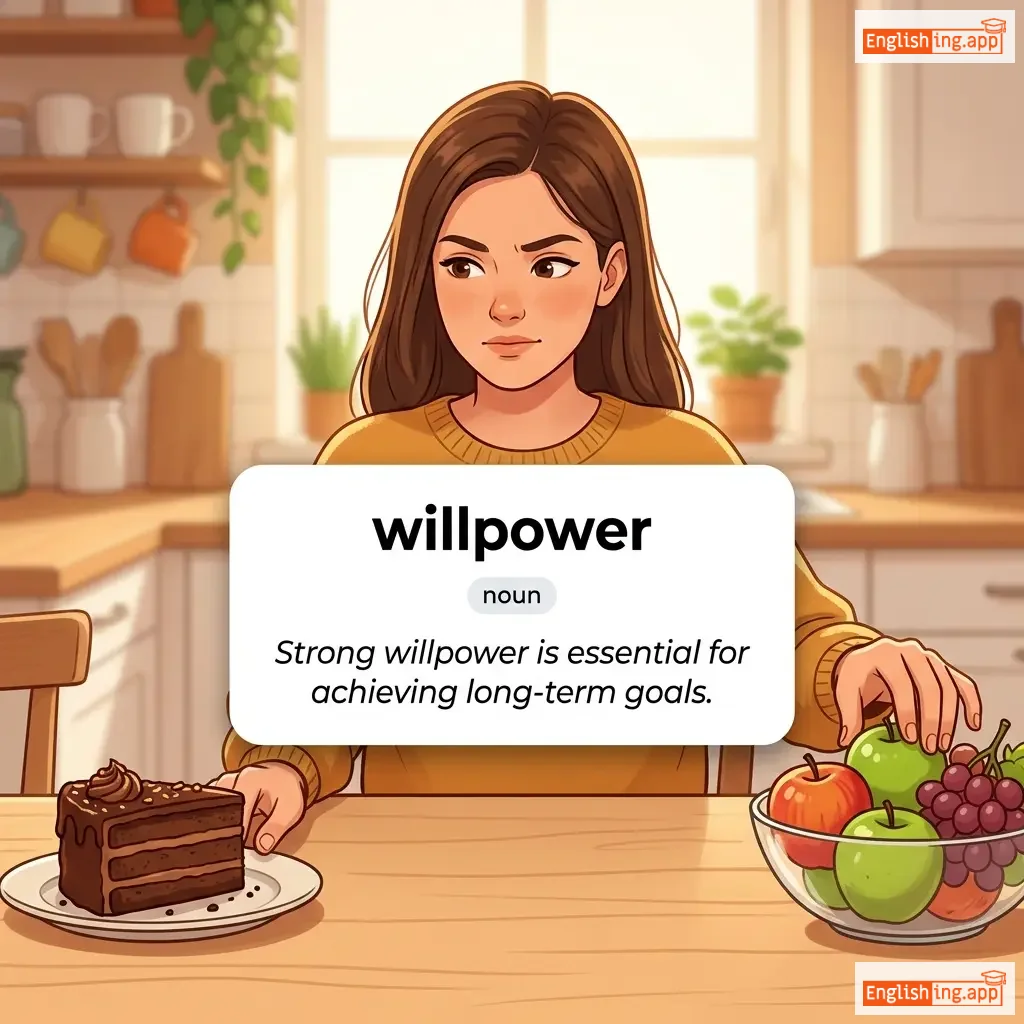
willpower definition card — visual illustration of the meaning
noun
ˈwɪl.paʊər
意志力 (ishiryoku)

The ability to control your thoughts and actions in order to achieve what you want to do.

"Strong willpower is essential for achieving long-term goals."

"強い意志力は長期的な目標を達成するために不可欠です。" (Tsuyoi ishiryoku wa chōkitekina mokuhyō o tassei suru tame ni fukaketsu desu.)
verb
/wɪlt/
しおれる (shioreru)

To become limp, weak, or drooping, often due to lack of water or energy.

"The flowers wilted in the heat of the sun."

"花は太陽の熱でしおれた。" (Hana wa taiyō no netsu de shioreta.)
adjective
/ˈwaɪli/
ずるい (zurui)

Skilled at gaining an advantage, especially by being clever or deceitful.

"The wily fox outsmarted the hunters."

"ずるいキツネは狩人を出し抜いた。" (Zurui kitsune wa kariudo o dashinuita.)
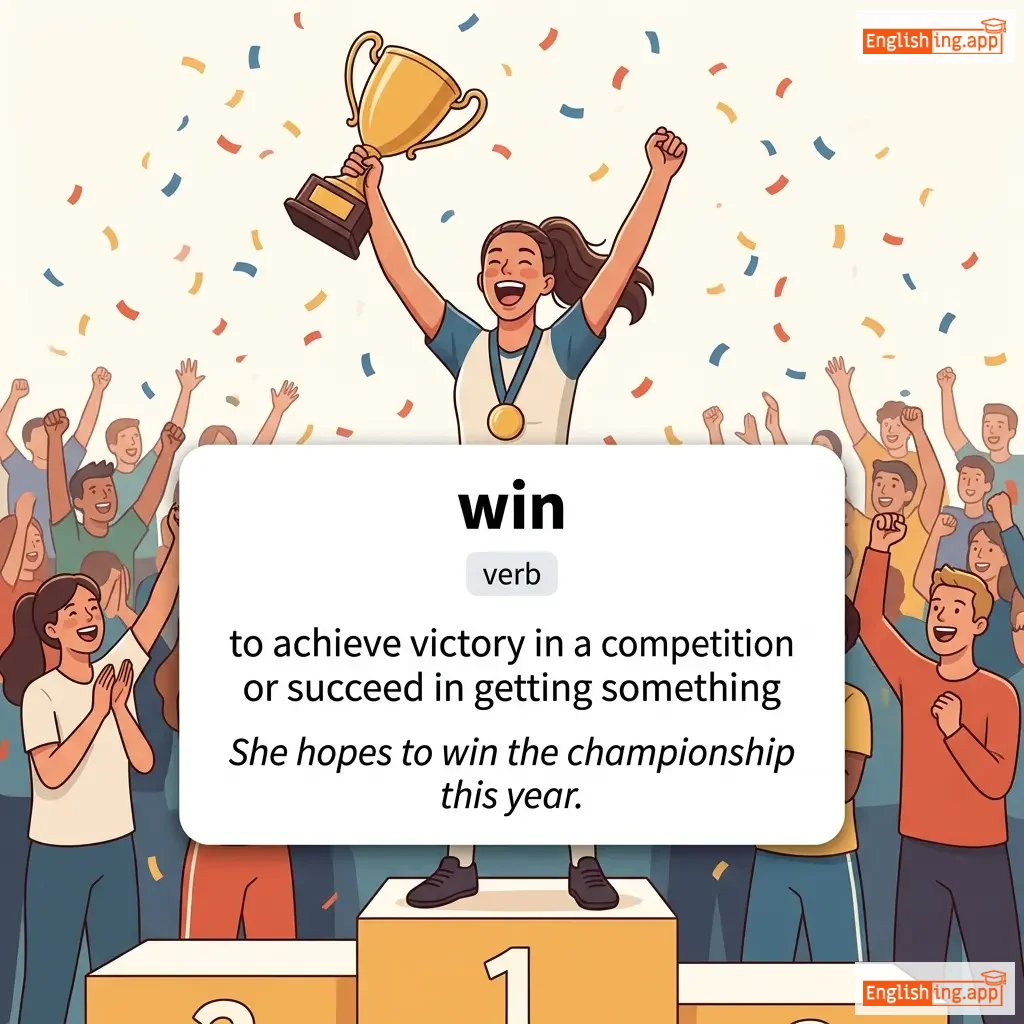
win definition card — visual illustration of the meaning
🏆

win

verb
/wɪn/

to achieve victory in a competition or succeed in getting something

"She hopes to win the championship this year."

😣

wince

verb
/wɪns/

To make an involuntary movement of the face or body as a result of pain or distress.

"He winced when the doctor touched his injured arm."

noun
/wɪnd/
(kaze)

moving air, especially in the form of a current of air blowing from a particular direction

"The wind is blowing strong today."
"今日は風が強い。" (Kyou wa kaze ga tsuyoi.)
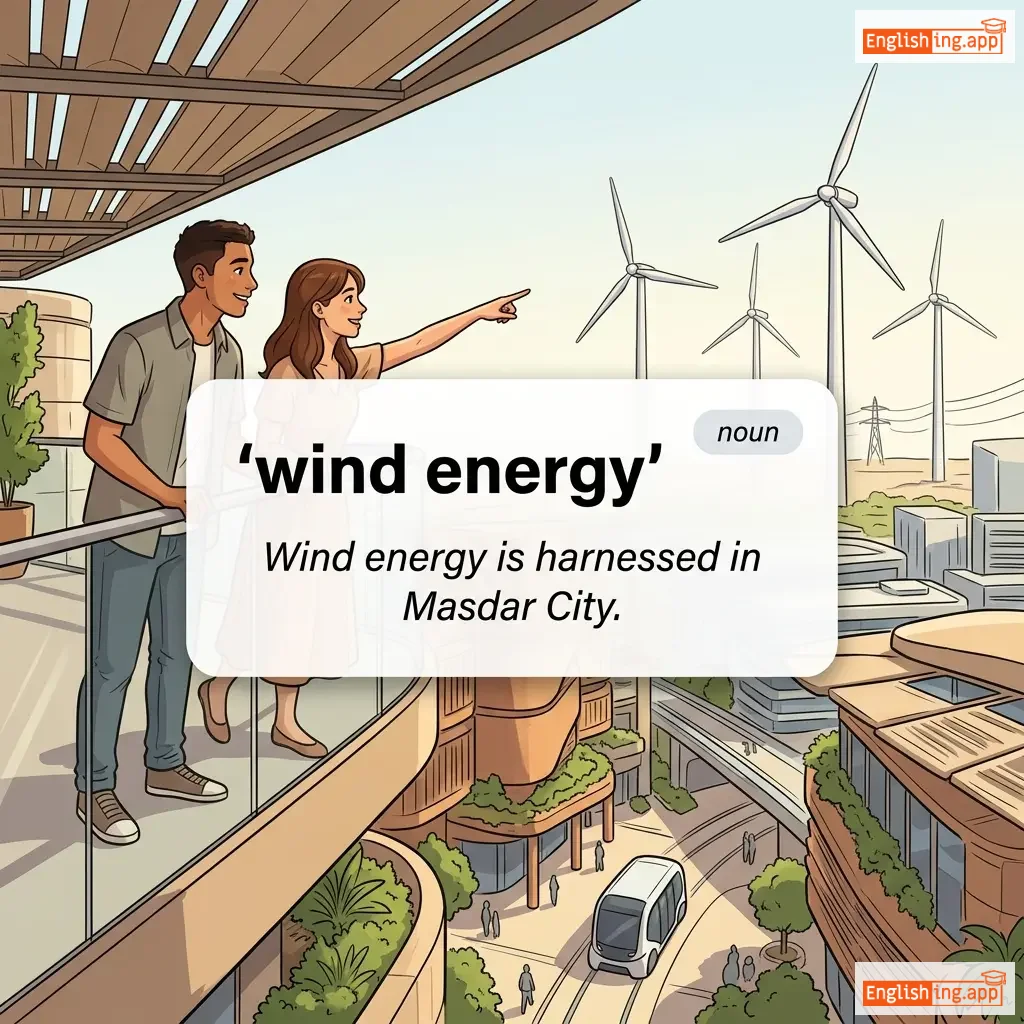
wind energy definition card — visual illustration of the meaning
noun
wɪnd ˈen.ə.dʒi
風力エネルギー (fūryoku enerugī)

Energy generated from wind using wind turbines to convert kinetic energy into electrical power.

"Wind energy is harnessed in Masdar City."

"風力エネルギーはマスダール市で活用されています。" (Fūryoku enerugī wa Masudāru-shi de katsuyō sareteimasu.)
noun
/ˈwɪndbæɡ/
おしゃべりな人 (oshaberi na hito)

a person who talks too much, especially in a boring or boastful way

"Everyone avoided the windbag at the party because he never let anyone else speak."

"パーティーでみんなはそのおしゃべりな人を避けた、なぜなら彼は他の誰にも話す機会を与えなかったから。" (Pātī de minna wa sono oshaberi na hito o saketa, nazenara kare wa hoka no dare ni mo hanasu kikai o ataenakatta kara.)
noun
/ˈwɪndfɔːl/
思いがけない利益 (omoigakenai rieki)

an unexpected piece of good fortune, typically a large amount of money

"The startup received a windfall when a major client paid for a full year in advance."

"スタートアップは重要な顧客が1年分前払いした際に思いがけない利益を得ました。" (Sutātopu wa jūyōna kokyaku ga 1 nenbun maebarai shita sai ni omoigakenai rieki o emashita.)
noun
/ˈwɪndəʊ/
(mado)

an opening in a wall or structure that allows light or air to pass through, usually covered with glass or other material

"I opened the window to let the fresh air in."

"私は新鮮な空気を入れるために窓を開けました。" (Watashi wa shinsetsuna kuuki o ireru tame ni mado o akemashita.)
adjective
/ˈwɪndi/
風の強い (kaze no tsuyoi)

characterized by strong wind; also, using too many words and saying little

"It was so windy that the umbrellas flipped inside out."

"風がとても強くて、傘がひっくり返った。" (kaze ga totemo tsuyokute kasa ga hikkurikaetta)
noun
/waɪn/
ワイン (waini)

an alcoholic drink made from fermented grapes or other fruits

"They served a glass of red wine at the dinner."

"彼らはディナーで赤ワインを一杯出しました。" (Karera wa dinā de aka wain o ippai dashimashita.)
noun
/ˈwaɪnəri/
ワイナリー (wainarī)

a place where wine is made

"They visited a famous winery in France."
"彼らはフランスの有名なワイナリーを訪れました。" (Karera wa Furansu no yūmei na wainarī o otozuremashita.)
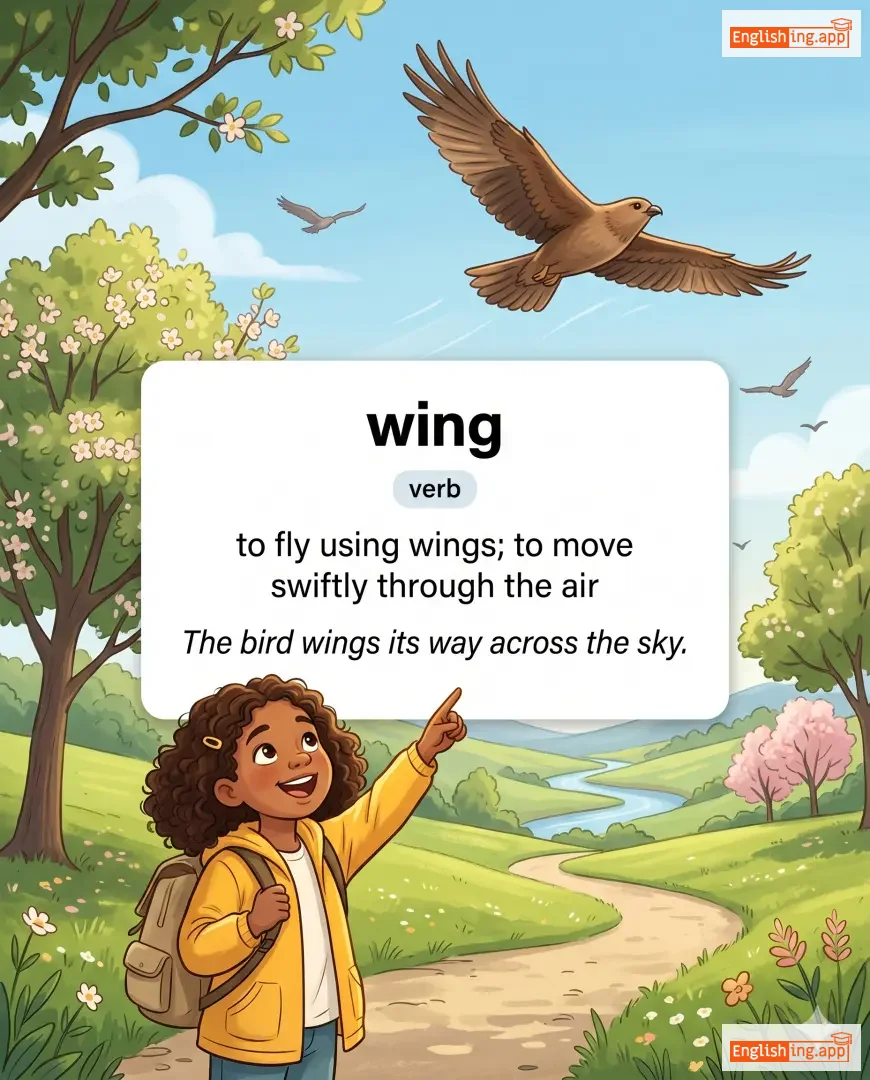
wing definition card — visual illustration of the meaning
noun
/wɪŋ/
(tsubasa)

a part of a bird or aircraft that is used for flying

"The bird flapped its wings and flew away."

"鳥は翼を広げて飛び立ちました。" (Tori wa tsubasa o hirogete tobitachimashita.)
noun
/ˈwɪŋˌspæn/
翼幅 (yokuhaba)

the distance from the tip of one wing to the tip of the other wing

"The eagle has an impressive wingspan of over two meters."

"ワシの翼幅は2メートル以上です。" (Washi no yokuhaba wa 2 meetoru ijou desu.)
noun
/ˈwɪnər/
勝者 (shōsha)

a person who wins a competition or contest

"She was the winner of the race."

"彼女はレースの勝者でした。" (Kanojo wa rēsu no shōsha deshita.)
adjective; noun; gerund
/ˈwɪnɪŋ/
勝利の (shouri no)

achieving victory or success; attractive or pleasing in a way that brings success

"She has a winning attitude that inspires the whole team."

"彼女はチーム全体を鼓舞する勝利の態度を持っている。" (Kanojo wa chiimu zentai o kobu suru shouri no taido o motte iru)
verb
/ˈwɪn.oʊ/
選別する;もみ殻から穀物を分ける (senbetsu suru; momigara kara kokumotsu wo wakeru)

to remove the less desirable parts from a group; originally, to separate grain from chaff by blowing air

"The committee will winnow the list of applicants to ten finalists."

"委員会は応募者のリストを10人のファイナリストに絞り込む予定です。" (Iinkai wa oubosha no risuto wo 10nin no fainarisuto ni shiborikomu yotei desu.)
adjective
/ˈwɪnsəm/
魅力的 (miryokuteki)

pleasant and attractive in a fresh, innocent, or charming way

"Her winsome smile instantly put the nervous guests at ease."

"彼女の魅力的な笑顔は、緊張していたゲストをすぐに安心させました。" (Kanojo no miryokuteki na egao wa, kinchou shite ita gesuto wo sugu ni anshin sasemashita.)
noun
/ˈwɪntər/
(fuyu)

the coldest season of the year, typically from December to February in the Northern Hemisphere

"Winter in the north can be very harsh with heavy snowfall."

"北の冬は非常に厳しく、大雪が降ることがあります。" (Kita no fuyu wa hijō ni kibishiku, ōyuki ga furu koto ga arimasu.)
adjective
/ˈwɪntri/
冬の (fuyu no)

Characteristic of or suitable for winter; cold and bleak.

"The wintry wind made everyone shiver as they walked outside."
"冬の風は、外を歩いているときにみんなを震えさせた。" (Fuyu no kaze wa, soto o aruite iru toki ni minna o furu eshita.)
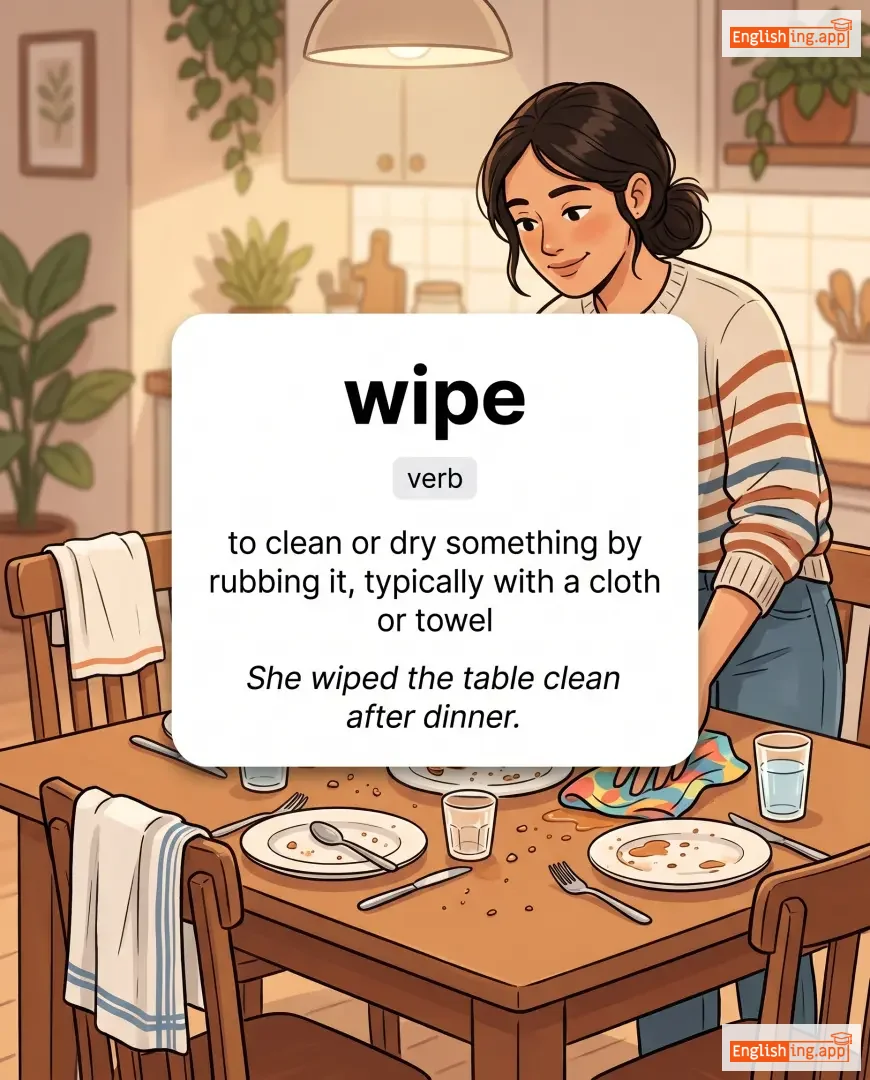
wipe definition card — visual illustration of the meaning
verb
/waɪp/
拭く (fuku)

to clean or dry something by rubbing it, typically with a cloth or towel

"She wiped the table clean after dinner."

"彼女は夕食後にテーブルを拭きました。" (Kanojo wa yuushoku go ni teeburu o fukimashita.)
noun
/ˈwaɪər/
ワイヤー (waiyā)

a thin, flexible thread of metal used to conduct electricity or connect things

"The electrician fixed the wire to restore the power."

"電気技師は電力を回復させるためにワイヤーを修理しました。" (Denki gishi wa denryoku o kaifuku saseru tame ni waiyā o shūri shimashita.)
adjective
/ˈwaɪə.ləs/
ワイヤレス; ケーブルなし (waiyaresu; kēburu nashi)

operating without wires; using radio waves for communication

"My wireless headphones provide excellent sound quality without any cables."

"私のワイヤレスヘッドフォンはケーブルなしで素晴らしい音質を提供します。" (watashi no waiyaresu heddofon wa kēburu nashi de subarashī onshitsu o teikyō shimasu)
adjective
/ˈwaɪəri/
細くて強く、丈夫な (hosokute tsuyokute, joubu na)

Lean, tough, and strong, often with sinewy muscles.

"The wiry athlete moved with remarkable speed and agility."

"その細いアスリートは驚くべき速度と敏捷性で動いた。" (Sono hosoi asurīto wa odorokubeki sokudo to binshōsei de ugoita.)
noun
/ˈwɪzdəm/
知恵 (chie)

the ability to make sound judgments and decisions based on knowledge and experience

"His wisdom in solving complex problems was admired by everyone."

"複雑な問題を解決する彼の知恵は、皆から賞賛されました。" (Fukuzatsu na mondai wo kaiketsu suru kare no chie wa, mina kara shousan saremashita.)
adjective
/waɪz/
賢い (kashikoi)

having or showing experience, knowledge, and good judgment

"It was wise of him to save money for the future."

"未来のためにお金を節約するのは賢明だった。" (Mirai no tame ni okane o setsuyaku suru no wa kenmei datta.)
wish definition card — visual illustration of the meaning
verb
/wɪʃ/
願う (negau)

to desire something or hope for something to happen

"I wish you all the best in your new job."

"あなたの新しい仕事での成功を祈っています。" (Anata no atarashī shigoto de no seikō o inotteimasu.)
noun
/wɪsp/
小さな束や部分 (chiisana taba ya bubun)

A small thin or twisted bunch, piece, or amount of something.

"A wisp of smoke rose from the chimney."

"煙のウィスプが煙突から上がった。" (Kemuri no wisupu ga entotsu kara agatta.)
adjective
/ˈwɪspi/
細くて儚い (hosokute hakanai)

Thin, delicate, and weak in appearance or form.

"Her wispy hair blew gently in the breeze."
"彼女の細い髪は風にそっと舞っていた。" (Kanojo no hosoi kami wa kaze ni sotto matte ita.)
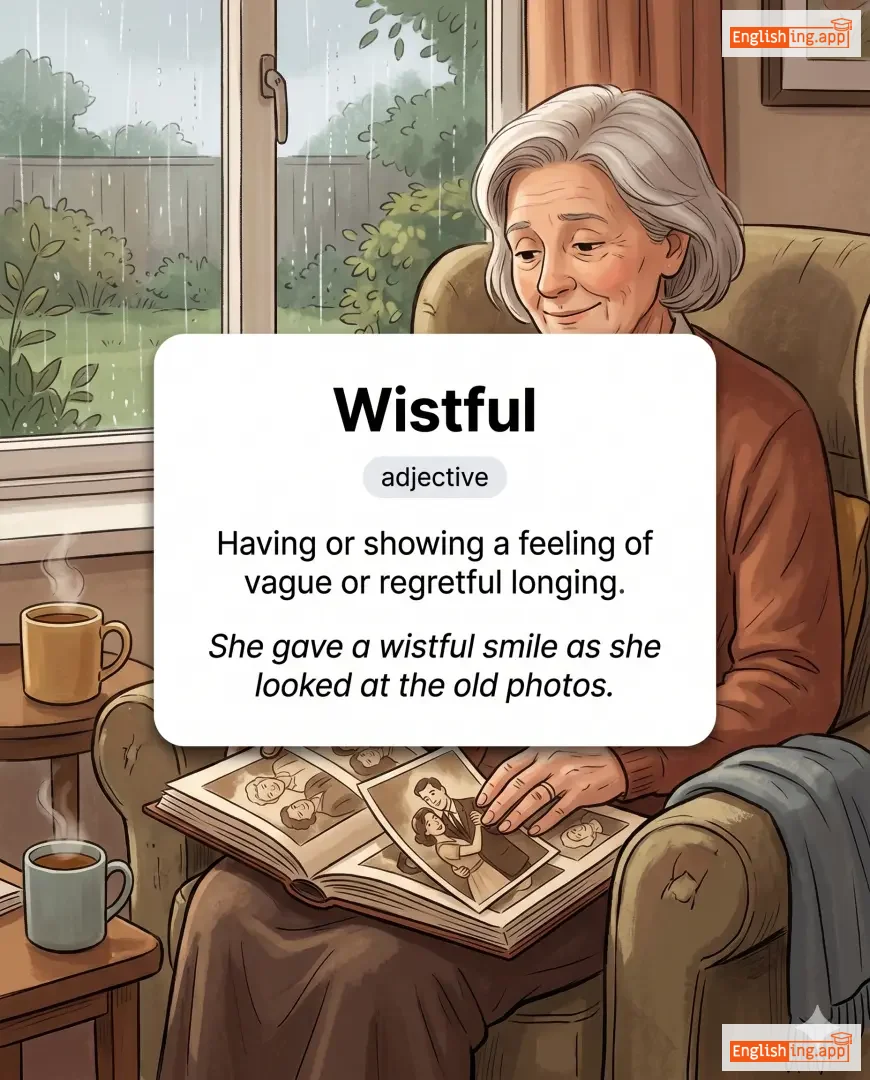
Wistful definition card — visual illustration of the meaning
adjective
/ˈwɪstfəl/
切ない (setsunai)

Having or showing a feeling of vague or regretful longing.

"She gave a wistful smile as she looked at the old photos."

"彼女は古い写真を見ながら切なげな笑顔を浮かべた。" (Kanojo wa furui shashin o minagara setsunage na egao o ukabeta.)
noun
/wɪt/
機知 (kichi)

the ability to use words and ideas in a quick and inventive way to create humor

"Her sharp wit made everyone laugh at the party."

"彼女の鋭い機知でパーティーのみんなが笑いました。" (kanojo no surudoi kichi de paatii no minna ga waraimashita.)
noun
/wɪtʃ/
魔女 (majo)

a woman thought to have magic powers, especially evil ones; a practitioner of witchcraft

"The old witch cast a spell on the prince."

"老女魔法使いは王子に呪文をかけた。" (Rōjo mahōtsukai wa ōji ni jumon o kaketa.)
noun
/ˈwɪtʃ.krɑːft/
魔女術 (majutsu)

the practice of magical skills, spells, and abilities

"In old times, many people believed in witchcraft."

"古代には、多くの人々が魔女術を信じていました。" (Kodai ni wa, ōku no hitobito ga majutsu o shinjite imashita.)