語彙集

英単語辞書 | 単語の意味、定義、例文

noun
/ˈvaɪnəri/
ぶどう園 (budouen)

A place where vines are cultivated, especially a vineyard or greenhouse for vines.

"The old vinery was filled with grapevines."

"古いぶどう園はぶどうのつるでいっぱいでした。" (Furui budouen wa budou no tsuru de ippai deshita.)
noun/adjective
/ˈvɪntɪdʒ/
ヴィンテージ / クラシック (vintage / kurashikku)

Relating to high quality from the past; classic; also the year of a wine harvest.

"She wore a vintage dress from the 1950s."

"彼女は1950年代のヴィンテージドレスを着ていました。" (Kanojo wa 1950 nendai no vintage doresu o kite imashita.)
noun
/ˈvɪntnər/
ワイン製造者 / ワイン販売者 (wain seizō-sha / wain hanbai-sha)

A person who makes or sells wine.

"The vintner explained the process of making red wine."

"ヴィントナーは赤ワインの作り方を説明しました。" (Vintnā wa aka wain no tsukurikata o setsumei shimashita.)
noun
/ˈvaɪəl/
古代の弦楽器の一種 (kodai no gengakki no isshu)

A stringed musical instrument of the Renaissance and Baroque periods, played with a bow and similar to but distinct from the violin family.

"The musician played an old viol in the chamber music concert."

"ミュージシャンは室内楽のコンサートで古いヴィオールを演奏しました。" (Myūjishan wa shitsunai gaku no konsāto de furui viōru o ensō shimashita.)
noun
/viˈoʊlə/ or /ˈvaɪələ/
ヴィオラ (viola)

A stringed instrument slightly larger than a violin, with a deeper and mellower tone.

"She chose to play the viola in the school orchestra."
"彼女は学校のオーケストラでヴィオラを演奏することを選びました。" (Kanojo wa gakkou no ookesutora de viola o ensou suru koto o erabimashita.)
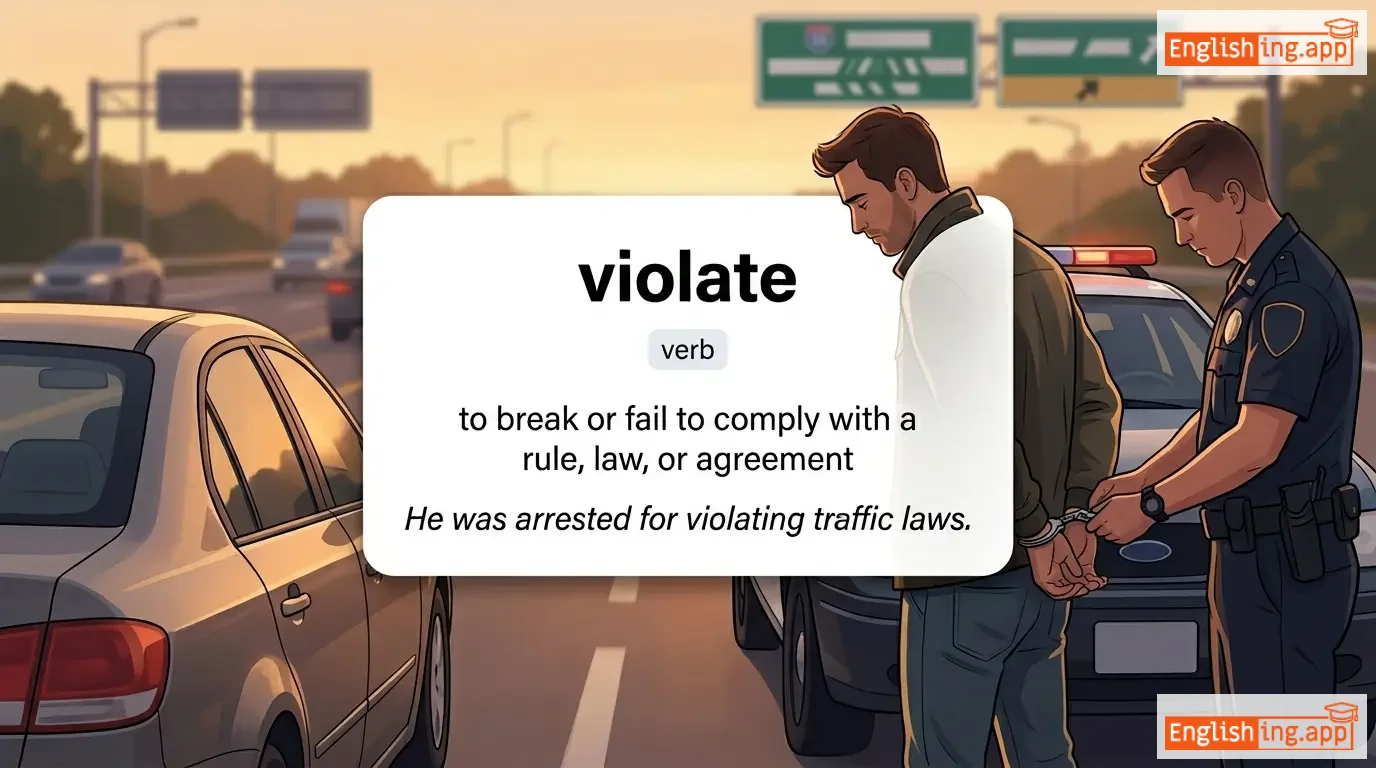
violate definition card — visual illustration of the meaning
verb
/ˈvaɪ.ə.leɪt/
違反する (ihan suru)

to break or fail to comply with a rule, law, or agreement

"He was arrested for violating traffic laws."

"彼は交通法を違反して逮捕された。" (Kare wa kōtsūhō o ihan shite taiho sareta.)
noun
/ˌvaɪəˈleɪʃən/
違反 (ihan)

The act of breaking or disregarding a law, rule, or agreement.

"Driving without a license is a violation of the law."

"免許なしで運転することは法律違反です。" (Menkyo nashi de unten suru koto wa hōritsu ihan desu.)
noun
/ˈvaɪəˌleɪtər/
違反者 (ihan-sha)

A person who breaks or disregards a law, rule, or agreement.

"The police caught the traffic violator at the intersection."

"警察は交差点で交通違反者を捕まえました。" (Keisatsu wa kōsaten de kōtsū ihan-sha o tsukamaemashita.)
noun
/ˈvaɪ.ə.ləns/
暴力 (bōryoku)

behavior involving physical force intended to hurt or damage

"The protest turned into an act of violence."

"抗議は暴力行為に変わった。" (Kōgi wa bōryoku kōi ni kawatta.)
adjective
/ˈvaɪ.ə.lənt/
暴力的 (bōryokuteki)

using or involving physical force intended to hurt or damage

"He became violent after hearing the bad news."

"悪いニュースを聞いた後、彼は暴力的になった。" (Warui nyūsu o kiita ato, kare wa bōryokuteki ni natta.)
adjective
/ˈvaɪə.lət/
紫色 (murasaki iro)

a bluish-purple color

"She wore a beautiful violet dress to the party."

"彼女はパーティーで美しい紫色のドレスを着ていました。" (Kanojo wa pātii de utsukushī murasaki iro no doresu o kite imashita.)
noun
/vaɪəˈlɪn/
ヴァイオリン (vaiorin)

a musical instrument with four strings that is played with a bow

"She plays the violin beautifully in the orchestra."

"彼女はオーケストラで美しくヴァイオリンを弾きます。" (Kanojo wa ōkesutora de utsukushiku vaiorin wo hikimasu.)
noun
/ˌviːələnsɛloʊ/
チェロ (chelo)

The full name of the cello, a large string instrument played with a bow and held between the knees.

"He practiced the violoncello for hours each day."

"彼は毎日何時間もビオロンチェロを練習しました。" (Kare wa mainichi nan jikan mo bioronchelo o renshū shimashita.)
noun
/ˈvaɪpər/
毒蛇 (dokuhebi)

a type of poisonous snake; metaphorically, a spiteful or treacherous person

"The viper lay hidden in the tall grass."

"そのヴァイパーは高い草の中に隠れていた。" (Sono vaipā wa takai kusa no naka ni kakurete ita.)
noun
/vəˈrɑːɡoʊ/
強引で支配的な女性 (gyouin de shihaiteki na josei)

a loud, overbearing woman; historically, a strong or courageous woman

"The play depicted the heroine as a fierce virago who defied tradition."

"その劇は、伝統に挑戦する勇敢なヴィラゴとしてヒロインを描きました。" (Sono geki wa, dentou ni chousen suru yuukan na virago toshite hiroin wo egakimashita.)
adjective
/ˈvɪrəl/
男性的 (danseiteki)

having traditionally masculine qualities, such as strength, energy, and sexual vigor

"The actor was admired for his virile appearance."

"俳優はその男性的な外見で賞賛されました。" (Haiyū wa sono danseiteki na gaiken de shōsan saremashita.)
noun
/vɜːrˈtuː/
美術に対する愛 (bijutsu ni taisuru ai)

a love of or taste for fine art, antiques, or curiosities

"The collector’s house was filled with objects of virtu."

"コレクターの家は美術品で満ちていました。" (Korekuta no ie wa bijutsuhin de michiteimashita.)
adjective
/ˈvɜːrtʃuəl/
バーチャル / 仮想 (bācharu / kasou)

existing or simulated on a computer or online rather than physically; almost but not exactly the same as

"The company held a virtual meeting with employees worldwide."

"その会社は世界中の従業員とバーチャルミーティングを開催しました。" (Sono kaisha wa sekaijū no jūgyōin to bācharu mītingu o kaisai shimashita.)
virtual classrooms definition card — visual illustration of the meaning
noun
ˈvɜː.tʃu.əl ˈklɑːs.ruːmz
バーチャル教室 (bācharu kyōshitsu)

An online learning environment where teachers and students interact via digital platforms.

"Virtual classrooms enable remote learning for students worldwide."
"バーチャル教室は、世界中の生徒にリモート学習の機会を提供します。" (Bācharu kyōshitsu wa, sekaijū no seito ni rimōto gakushū no kikai o teikyō shimasu.)
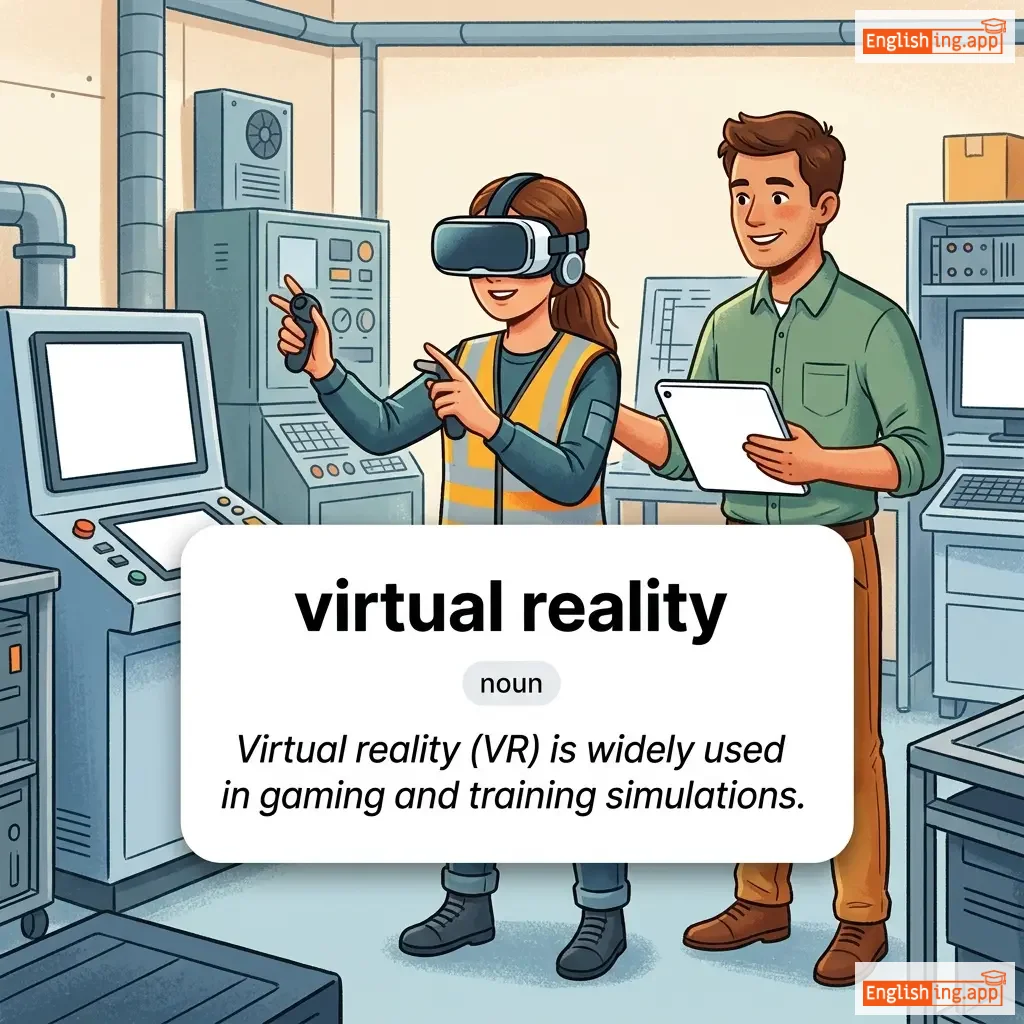
virtual reality definition card — visual illustration of the meaning
noun
/ˈvɜː.tʃu.əl riˈæl.ɪ.ti/
仮想現実 (kasou genjitsu)

Computer technology that creates an artificial three-dimensional environment where users can feel like they are in a real environment.

"Virtual reality (VR) is widely used in gaming and training simulations."

"仮想現実(VR)はゲームやトレーニングシミュレーションで広く使用されています。" (Kasou genjitsu (VR) wa gēmu ya torēningu shimurēshon de hiroku shiyō sareteimasu.)
adverb
/ˈvɜː.tʃu.ə.li/
ほとんど, バーチャル (hotondo, bācharu)

almost or nearly, but not completely; by means of computer technology

"The meeting was held virtually due to travel restrictions."

"旅行制限のため、会議はバーチャルで行われました。" (Ryokō seigen no tame, kaigi wa bācharu de okonawaremashita.)
noun
/ˈvɜːrtʃuː/
美徳 (bitoku)

High moral standards or a good quality considered morally good.

"Patience is considered a great virtue."
"忍耐は偉大な美徳と考えられています。" (Nintai wa idaina bitoku to kangae rareteimasu.)
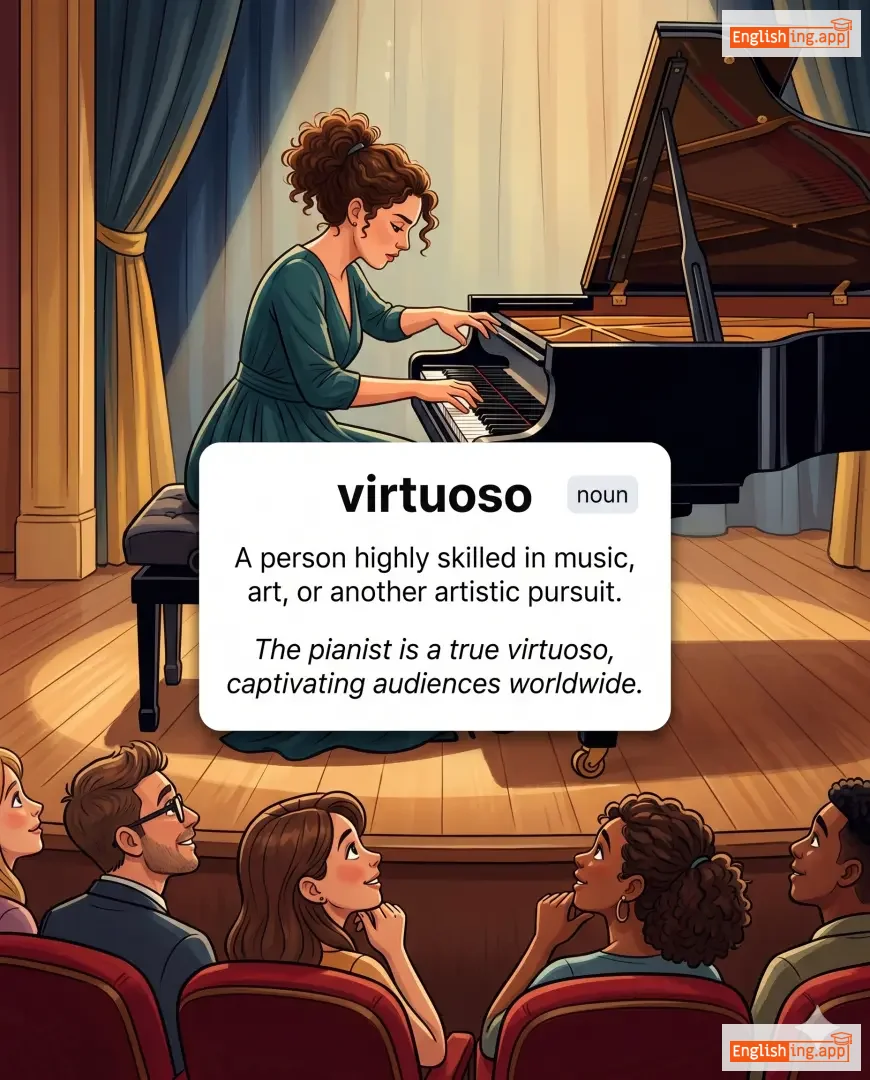
virtuoso definition card — visual illustration of the meaning
noun
/ˌvɜːrtʃuˈoʊsoʊ/
名人 (meijin)

A person highly skilled in music, art, or another artistic pursuit.

"The pianist is a true virtuoso, captivating audiences worldwide."

"そのピアニストは真の名人であり、世界中の観客を魅了しています。" (Sono pianisuto wa shin no meijin de ari, sekaijū no kankyaku o miryō shiteimasu.)
adjective
/ˈvɜːrtʃuəs/
徳のある (toku no aru)

Having or showing high moral standards.

"She is known as a virtuous woman who helps the poor."

"彼女は貧しい人々を助ける徳のある女性として知られています。" (Kanojo wa mazushī hitobito o tasukeru toku no aru josei toshite shirareteimasu.)
noun
/ˈvɪrjʊləns/
病原性 (byōgensei)

The severity or harmfulness of a disease or poison.

"Scientists studied the virulence of the new virus strain."

"科学者たちは新しいウイルス株の病原性を研究しました。" (Kagakusha-tachi wa atarashī uirusu kabu no byōgensei o kenkyū shimashita.)
adjective
/ˈvɪrjʊlənt/
非常に有害 (hijou ni yuugai)

Extremely severe or harmful in its effects.

"The virulent disease spread rapidly across the region."

"そのウイルス性の病気は地域全体に急速に広がりました。" (Sono uirusu-sei no byouki wa chiiki zentai ni kyūsoku ni hirogarimashita.)
noun
/ˈvaɪrəs/
ウイルス (uirusu)

A tiny infectious agent that can replicate only inside the living cells of an organism.

"The computer was infected with a dangerous virus."
"コンピュータは危険なウイルスに感染していました。" (Konpyūta wa kiken na uirusu ni kansen shite imashita.)
noun
/ˈviːzə/
ビザ (biza)

an official authorization or permission to enter, leave, or stay in a country

"She applied for a visa to study abroad."

"彼女は留学するためにビザを申請しました。" (Kanojo wa ryūgaku suru tame ni biza o shinsei shimashita.)
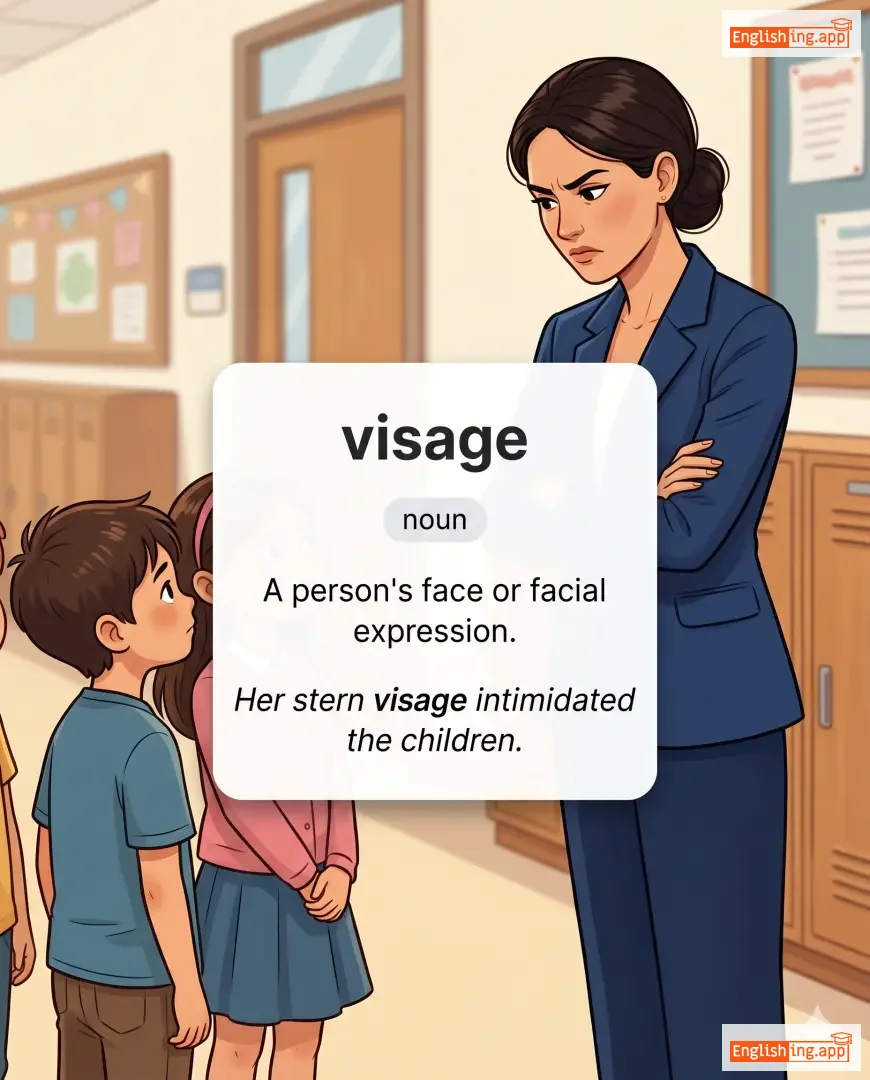
visage definition card — visual illustration of the meaning
noun
/ˈvɪzɪdʒ/
幸福 (kōfuku)

A person's face or facial expression.

"Her stern visage intimidated the children."

"彼女は賞を受け取ったとき、自分の幸福を隠すことができませんでした。" (Kanojo wa shō o uketotta toki, jibun no kōfuku o kakusu koto ga dekimasen deshita.)
adjective
/ˈvɪsɪd/
粘着性のある (nenchakusei no aru)

Having a thick, sticky consistency.

"The sap had a viscid texture that stuck to his hands."

"樹液はべたべたした質感で、彼の手にくっついていた。" (Jueki wa betabeta shita shitsukan de, kare no te ni kuttsuite ita.)
noun
/ˈvaɪkaʊnt/
子爵 (shikaku)

A British nobleman ranking below an earl and above a baron.

"The viscount inherited the estate from his father."

"子爵は父親から領地を相続しました。" (Shikaku wa chichioya kara ryōchi o sōzoku shimashita.)
viscous definition card — visual illustration of the meaning
adjective
/ˈvɪskəs/
粘性の (nensei no)

Having a thick, sticky consistency between solid and liquid.

"Honey is a viscous liquid that flows slowly."
"蜂蜜は遅く流れる粘性の液体です。" (Hachimitsu wa osoku nagareru nensei no ekitai desu.)
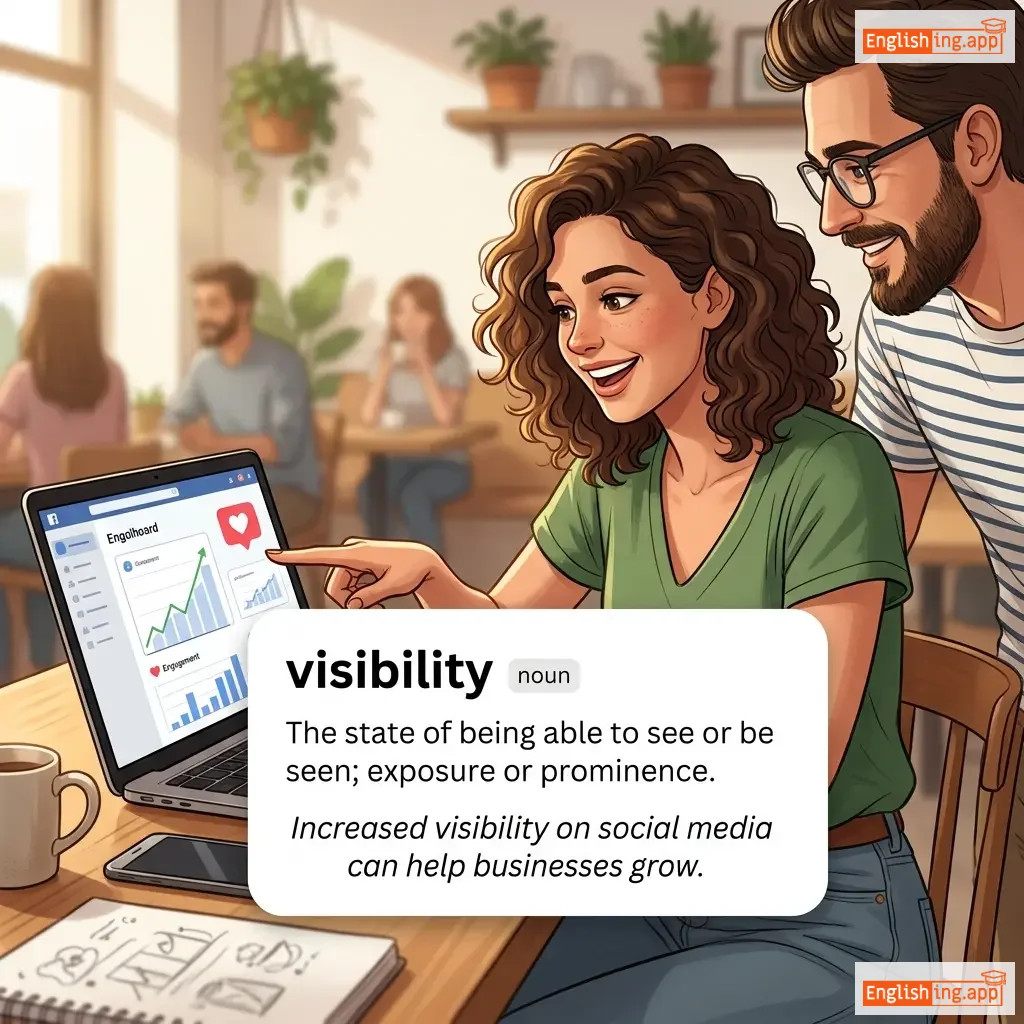
visibility definition card — visual illustration of the meaning
noun
/ˌvɪz.ɪˈbɪlɪti/
可視性 (kashisei)

The state of being able to see or be seen; exposure or prominence.

"Increased visibility on social media can help businesses grow."

"ソーシャルメディアでの可視性の向上は、ビジネスの成長に役立ちます。" (So-sharu media de no kashisei no koujou wa, bijinesu no seichou ni yakudachimasu.)
adjective
/ˈvɪzəbl/
可視的 (kashiteki)

able to be seen; perceptible by the eye

"The stars were clearly visible in the night sky."

"星は夜空ではっきりと見えました。" (Hoshi wa yozora de hakkiri to miemashita.)
vision definition card — visual illustration of the meaning
noun
/ˈvɪʒən/
幸せ (shiawase)

the ability to see or a mental image of something

"She had a clear vision of her future."

"彼女は賞を受け取ったとき、自分の幸せを隠すことができませんでした。" (Kanojo wa shou o uketotta toki, jibun no shiawase o kakusu koto ga dekimasen deshita.)
adjective
/ˈvɪʒəneri/
ビジョナリー (bijonarii)

Thinking about or planning the future with imagination and wisdom.

"She is considered a visionary leader in technology."
"彼女は技術分野でのビジョナリーなリーダーと見なされています。" (Kanojo wa gijutsu bunya de no bijonarii na rīdā to minasa reteimasu.)
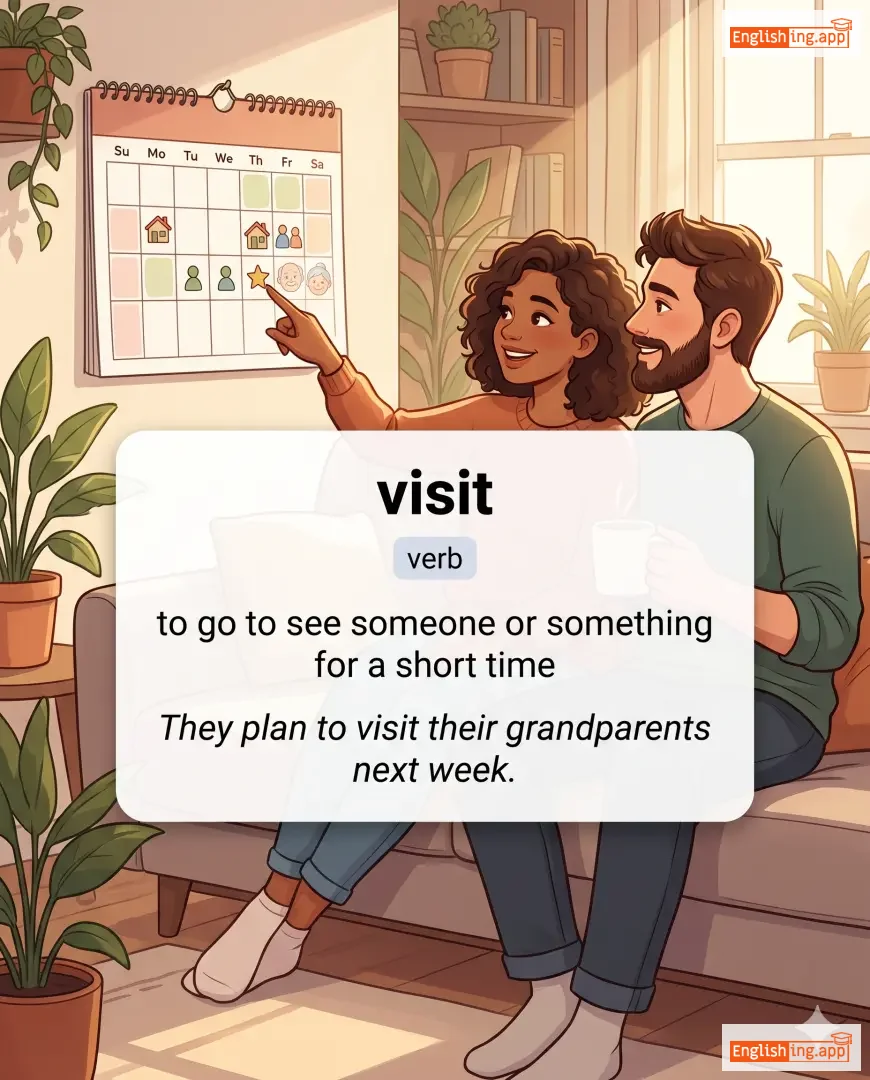
visit definition card — visual illustration of the meaning
verb
/ˈvɪzɪt/
訪問 (hōmon)

to go to see someone or something for a short time

"They plan to visit their grandparents next week."

"彼らは来週、祖父母を訪れる予定です。" (Karera wa raishū, sofubo o hōmon suru yotei desu.)
visiting definition card — visual illustration of the meaning
verb
/ˈvɪzɪtɪŋ/
訪問する (hōmon suru)

Going to see and spend time with someone or at a place.

"The group is visiting islands during the expedition."

"グループは探検中に島を訪問しています。" (Gurūpu wa tanken-chū ni shima o hōmon shiteimasu.)
noun
/ˈvɪzɪtər/
訪問者 (hōmonsha)

a person who goes to see a place or someone for a short time

"The museum had many visitors last weekend."

"博物館には先週末、多くの訪問者がいました。" (Hakubutsukan ni wa senshūmatsu, ōku no hōmonsha ga imashita.)
noun
/ˈvɪstə/
景色 (keshiki)

A pleasing view, especially one seen through a long, narrow opening.

"From the mountain top, we admired the breathtaking vista of the valley below."

"山の頂上から、私たちは谷底の息を呑むような景色を堪能しました。" (Yama no chōjō kara, watashitachi wa tani soko no iki o nomu yō na keshiki o tannō shimashita.)
adjective
/ˈvɪʒuəl/
視覚的 (shikakuteki)

Relating to seeing or sight.

"The movie was praised for its stunning visual effects."

"その映画は素晴らしい視覚的効果で賞賛されました。" (Sono eiga wa subarashī shikakuteki kōka de shōsan saremashita.)
verb
/ˈvɪʒuəlaɪz/
視覚化する (shikakuka suru)

To form a mental image of something; to imagine.

"She tried to visualize her success before the big presentation."

"彼女は大きなプレゼンテーションの前に自分の成功をビジュアライズしようとした。" (Kanojo wa ōkina purezentēshon no mae ni jibun no seikō o bijuaraisu shiyou to shita.)
visuospatial definition card — visual illustration of the meaning
adjective
ˌvɪz.ju.oʊˈspeɪ.ʃəl
視覚を通じて空間と物体の関係を理解することに関連する (shikaku o tōjite kūkan to butai no kankei o rikai suru koto ni kanren suru)

Related to understanding the relationship between space and objects through vision.

"Good visuospatial skills are important for architecture and design."

"優れたビジュアルスペーシャルスキルは建築とデザインにとって重要です。" (Sugureta bijuarusupēsharu sukiru wa kenchiku to dezain ni totte jūyō desu.)
adjective
/ˈvaɪtl/
不可欠 (fukaketsu)

essential or necessary for life or success

"It's vital to stay hydrated during the summer."
"夏の間に水分補給をすることは不可欠です。" (Natsu no aida ni suibun hokyū o suru koto wa fukaketsu desu.)
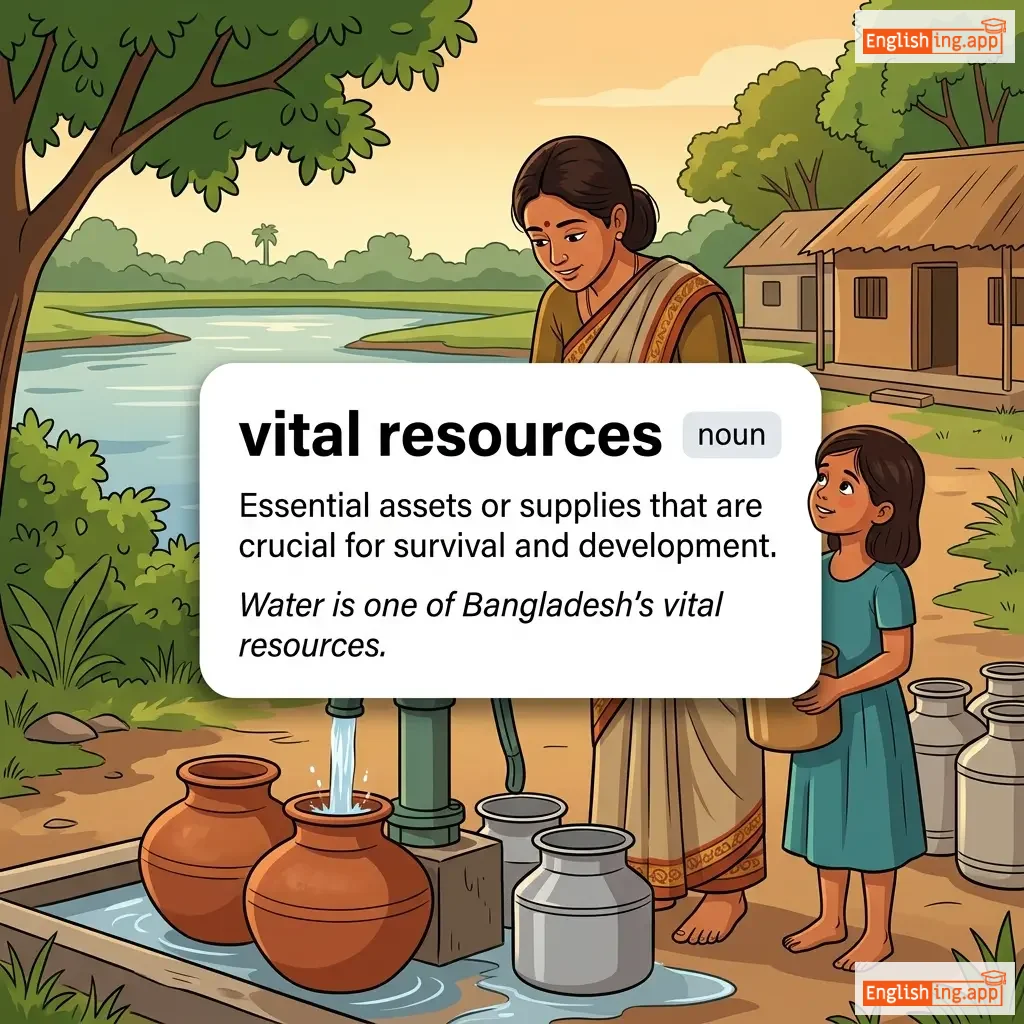
vital resources definition card — visual illustration of the meaning
noun
ˈvaɪtəl rɪˈsɔːrsɪz
重要な資源 (jūyō na shigen)

Essential assets or supplies that are crucial for survival and development.

"Water is one of Bangladesh's vital resources."
"水はバングラデシュの重要な資源の一つです。" (Mizu wa Banguradeshū no jūyō na shigen no hitotsu desu.)
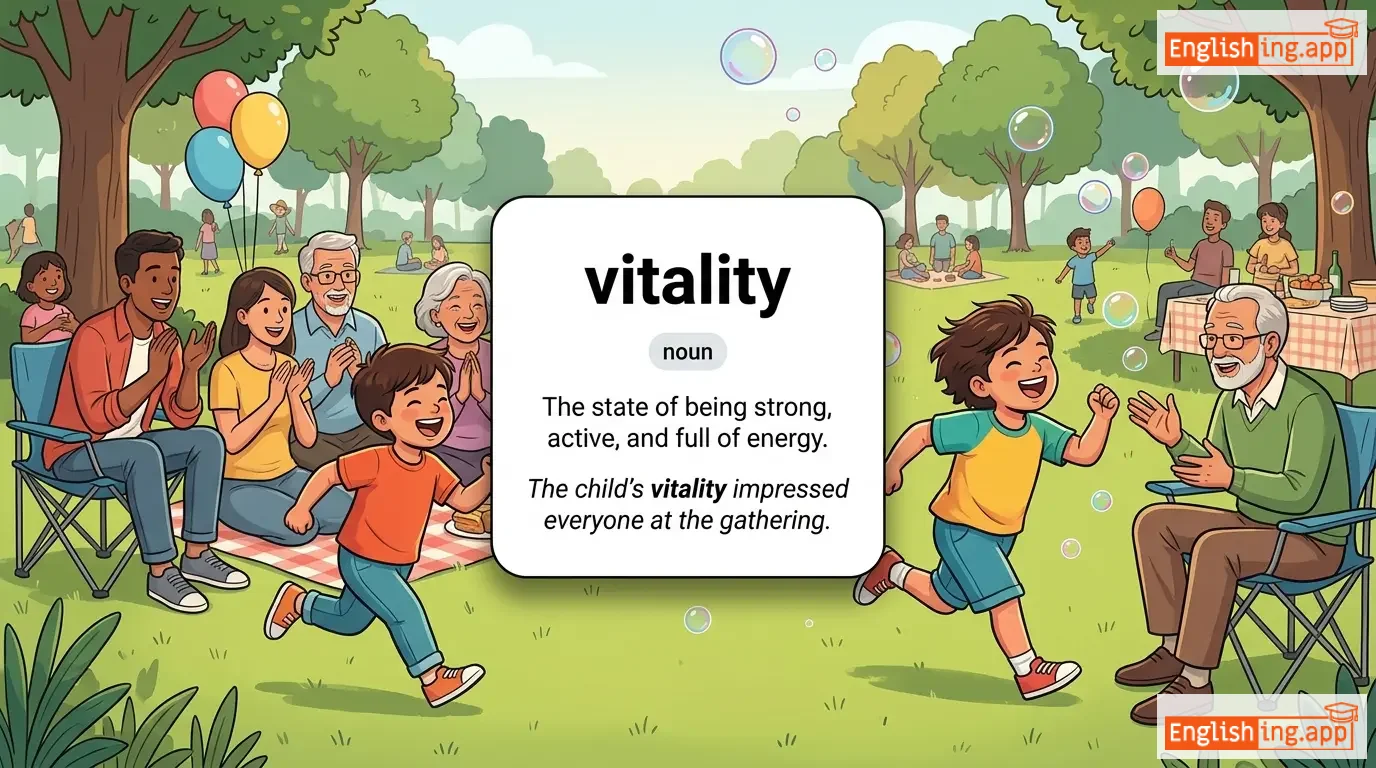
vitality definition card — visual illustration of the meaning
noun
/vaɪˈtæləti/
活力 (katsuryoku)

The state of being strong, active, and full of energy.

"The child’s vitality impressed everyone at the gathering."

"その子供の活力は集まりで皆を感動させました。" (Sono kodomo no katsuryoku wa atsumari de mina o kandō sasemashita.)
verb
/ˈvaɪtəlaɪz/
活力を与える (katsuryoku o ataeru)

To give life, energy, or strength to something.

"Fresh air and exercise can vitalize the body and mind."

"新鮮な空気と運動は体と心に活力を与えることができます。" (Shinsen na kūki to undō wa karada to kokoro ni katsuryoku o ataeru koto ga dekimasu.)
adverb
/ˈvaɪtəli/
極めて重要に (kiwamete juuyo ni)

in an extremely important or essential way; in a manner relating to life or vitality

"Access to clean water is vitally important for public health."

"清潔な水へのアクセスは公衆衛生にとって極めて重要です。" (Seiketsu na mizu e no akusesu wa koshu eisei ni totte kiwamete juuyo desu)
noun
/ˈvaɪtəmɪn/
ビタミン (bitamin)

a natural substance needed by the body to stay healthy

"Fruits and vegetables are rich sources of vitamins."

"果物や野菜はビタミンの豊富な源です。" (kudamono ya yasai wa bitamin no hōfu na minamoto desu.)
vitiate definition card — visual illustration of the meaning
verb
/ˈvɪʃieɪt/
損なう (sonanau)

to spoil, weaken, or make something less effective

"One careless remark can vitiate the entire argument."

"一つの不注意なコメントが議論全体を損なう可能性がある。" (Hitotsu no fuchūi na komento ga giron zentai wo sokonau kanōsei ga aru.)