語彙集

英単語辞書 | 単語の意味、定義、例文

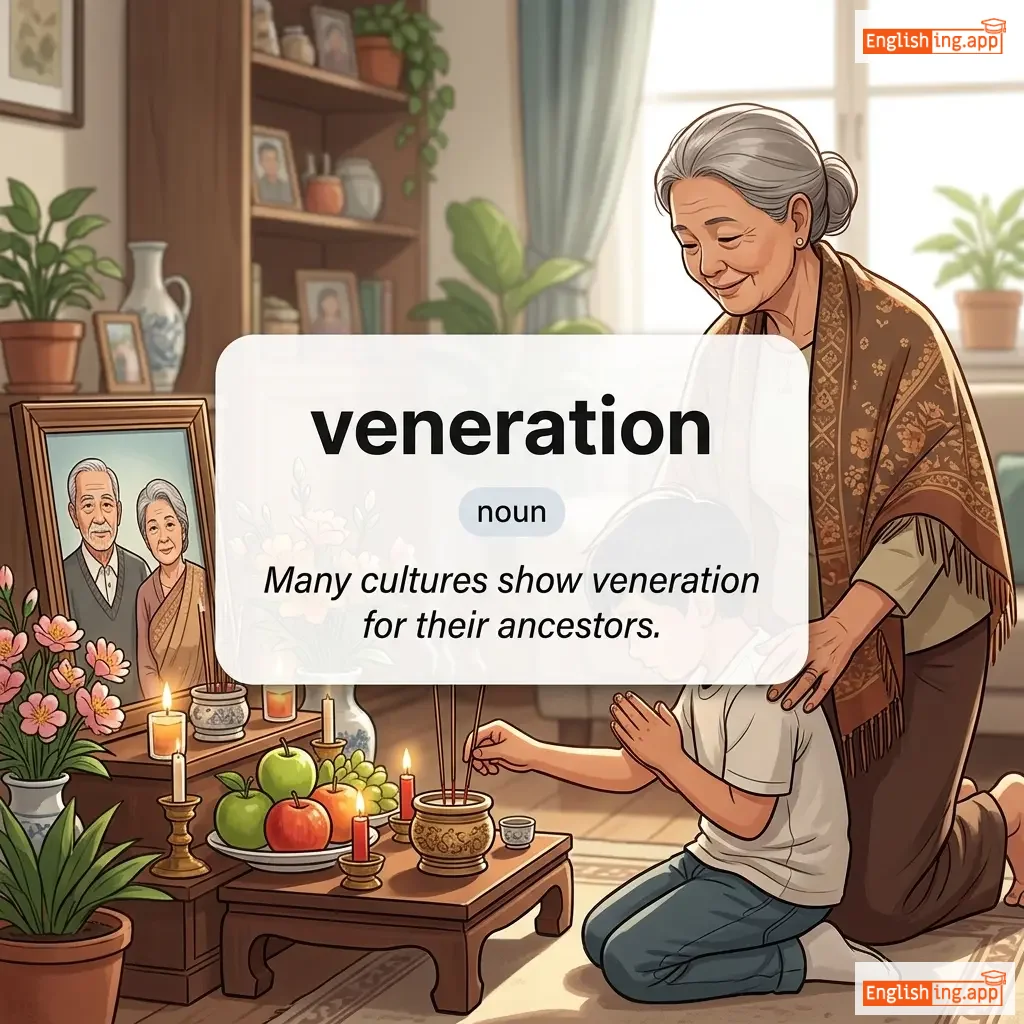
veneration definition card — visual illustration of the meaning
noun
ˌvɛn.əˈreɪ.ʃən
尊敬 (sonkei)

Great respect; reverence; the action of regarding with great respect or reverence.

"Many cultures show veneration for their ancestors."

"多くの文化が祖先に対して尊敬を示します。" (Ōku no bunka ga sosen ni taishite sonkei o shimeshimasu.)
adjective
/vəˈnɪəriəl/
性病の (seibyo no)

relating to sexual intercourse or sexually transmitted diseases

"Doctors warn about the dangers of venereal diseases."

"医師は性病の危険について警告しています。" (Ishi wa seibyo no kiken ni tsuite keikoku shiteimasu.)
noun
/ˈvendʒəns/
復讐 (fukushū)

punishment inflicted or retribution exacted for an injury or wrong; revenge

"He swore to seek vengeance against those who wronged him."

"彼は自分を傷つけた者に復讐すると誓った。" (Kare wa jibun o kizutsuketa mono ni fukushū suru to chikatta.)
adjective
/ˈvendʒ.fəl/
復讐心の強い (fukushūshin no tsuyoi)

seeking to harm someone in return for a perceived injury; vindictive

"She felt vengeful after her friend betrayed her trust."

"彼女は友達に裏切られた後、復讐心を感じた。" (Kanojo wa tomodachi ni uragirarareta ato, fukushūshin o kanjita.)
adjective
/ˈviːniəl/
許容される (kyoyō sareru)

forgivable, not seriously wrong

"Forgetting to call was a venial fault."

"電話をかけ忘れることは許される過ちでした。" (Denwa o kake wasureru koto wa kyoyō sareru ayamachi deshita.)
noun
/ˈvɛnɪsən/
鹿肉 (shikaniku)

meat from a deer

"The restaurant served venison steak with red wine."

"レストランは赤ワインと一緒に鹿肉のステーキを出しました。" (Resutoran wa akawain to issho ni shikaniku no sutēki o dashimashita.)
noun
/ˈvɛnəm/
毒液 (doku-eki)

a poisonous substance secreted by animals such as snakes or spiders; also used to describe intense ill will or malice

"The snake injected its venom into the prey."

"ヘビは獲物に毒液を注入した。" (Hebi wa emono ni doku-eki o chuunyuu shita.)
adjective
/ˈven.ə.məs/
毒性のある; 悪意のある; (dokusei no aru; akui no aru)

secreting venom; full of malice or spite; extremely hostile

"The venomous snake struck quickly at its prey."

"毒ヘビはすばやく獲物を攻撃した。" (Doku hebi wa subayaku emono wo kōgeki shita.)
adjective
/ˈviːnəs/
静脈の (jōmyaku no)

relating to the veins that carry blood to the heart

"The doctor examined the patient’s venous circulation."

"医者は患者の静脈循環を検査しました。" (Isha wa kanja no jōmyaku junkan o kensa shimashita.)
verb/noun
/vɛnt/
通気 / 空気やガスが通る開口部 (tsuuki / kuuki ya gasu ga tooru kaikoubu)

to release air, gas, or strong emotions; an opening that allows air, gas, or liquid to pass

"She vented her frustration after the long meeting."
"長い会議の後、彼女はフラストレーションを発散させました。" (Nagai kaigi no ato, kanojo wa furasureeshon wo hassan sasemashita.)
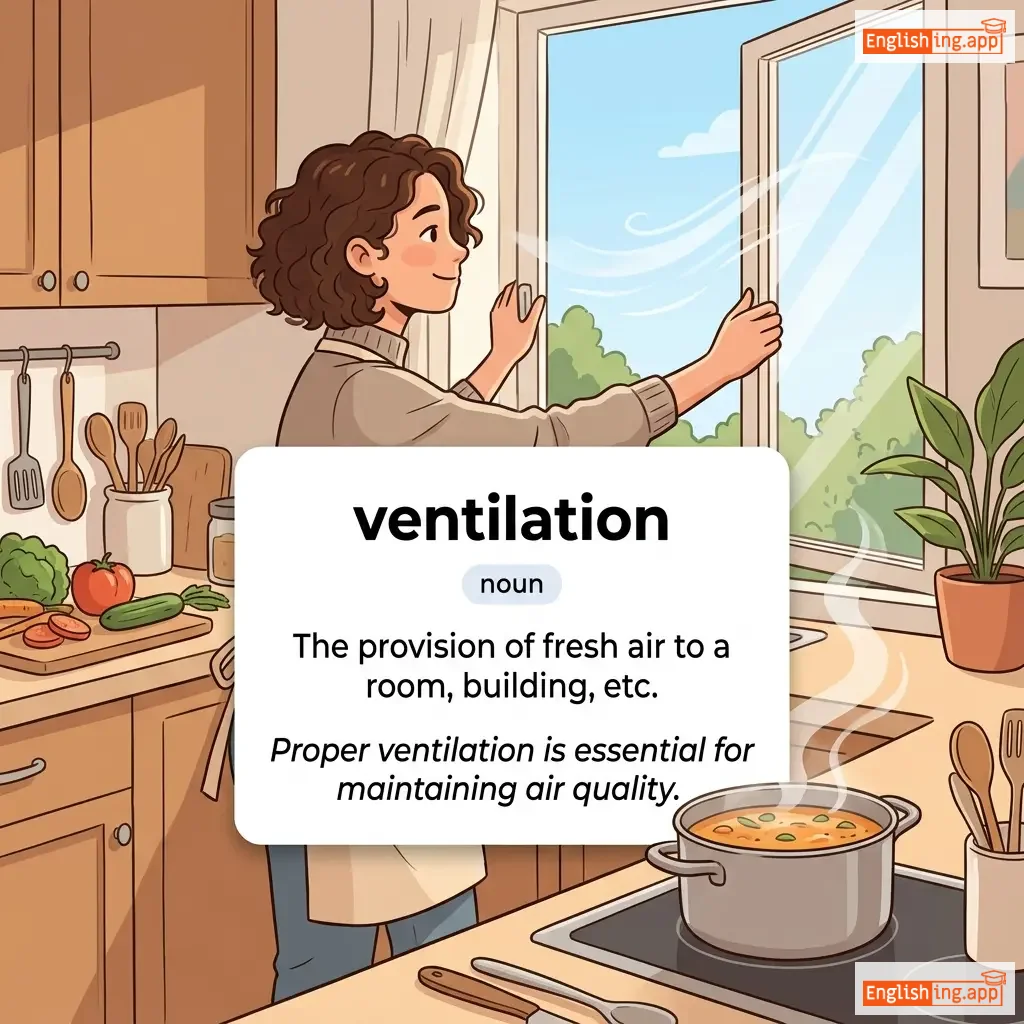
ventilation definition card — visual illustration of the meaning
noun
ˌvɛntɪˈleɪʃən
換気 (kanki)

The provision of fresh air to a room, building, etc.

"Proper ventilation is essential for maintaining air quality."

"適切な換気は、空気の質を維持するために不可欠です。" (Tekisetsu na kanki wa, kuuki no shitsu o iji suru tame ni fukaketsu desu.)
adjective
/ˈvɛntrəl/
腹側の (fukusoku no)

relating to the underside or abdominal part of an animal or organ

"The fish has a white ventral surface."
"その魚は白い腹側の表面を持っています。" (Sono sakana wa shiroi fukusoku no hyōmen o motteimasu.)
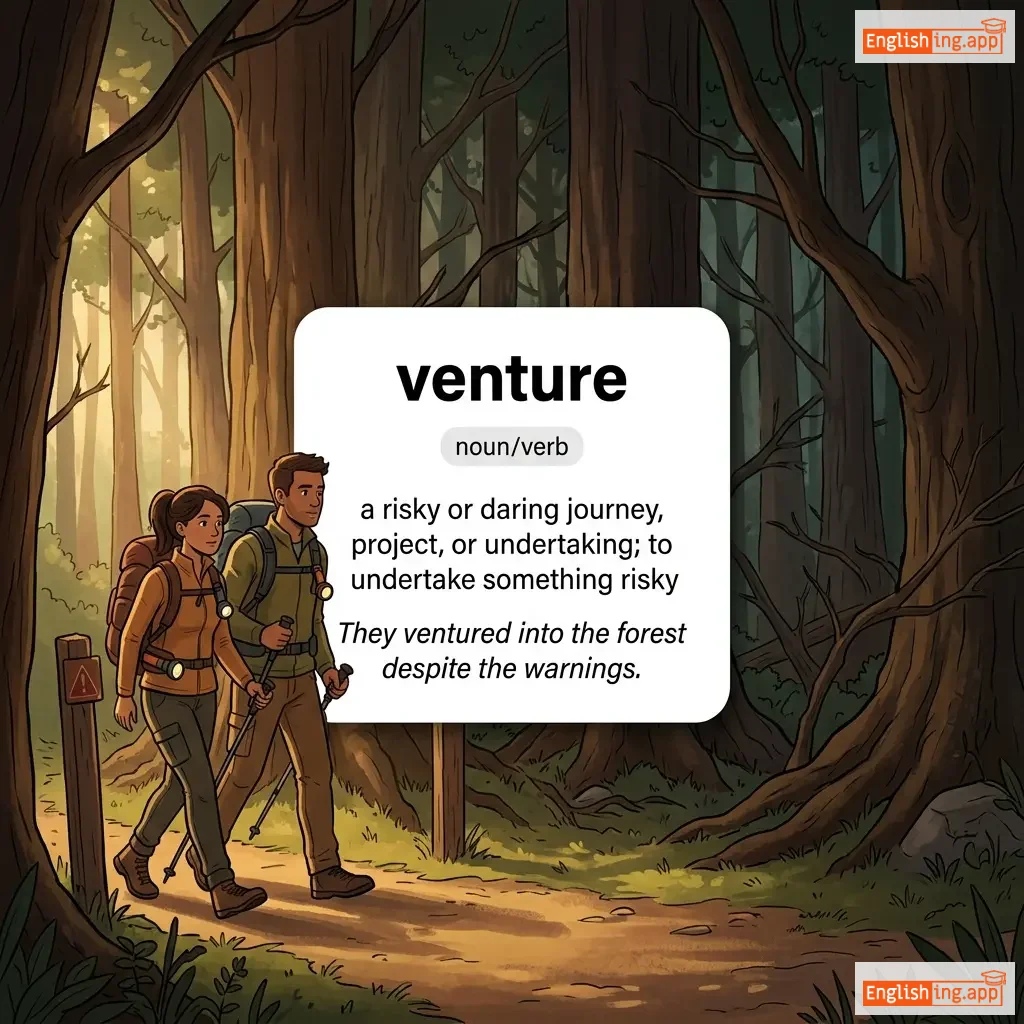
venture definition card — visual illustration of the meaning
noun/verb
/ˈvɛntʃər/
リスクのある事業 (risuku no aru jigyō)

a risky or daring journey, project, or undertaking; to undertake something risky

"They ventured into the forest despite the warnings."
"彼らは警告にもかかわらず森に踏み込んだ。" (Karera wa keikoku ni mo kakawarazu mori ni fumikonda.)
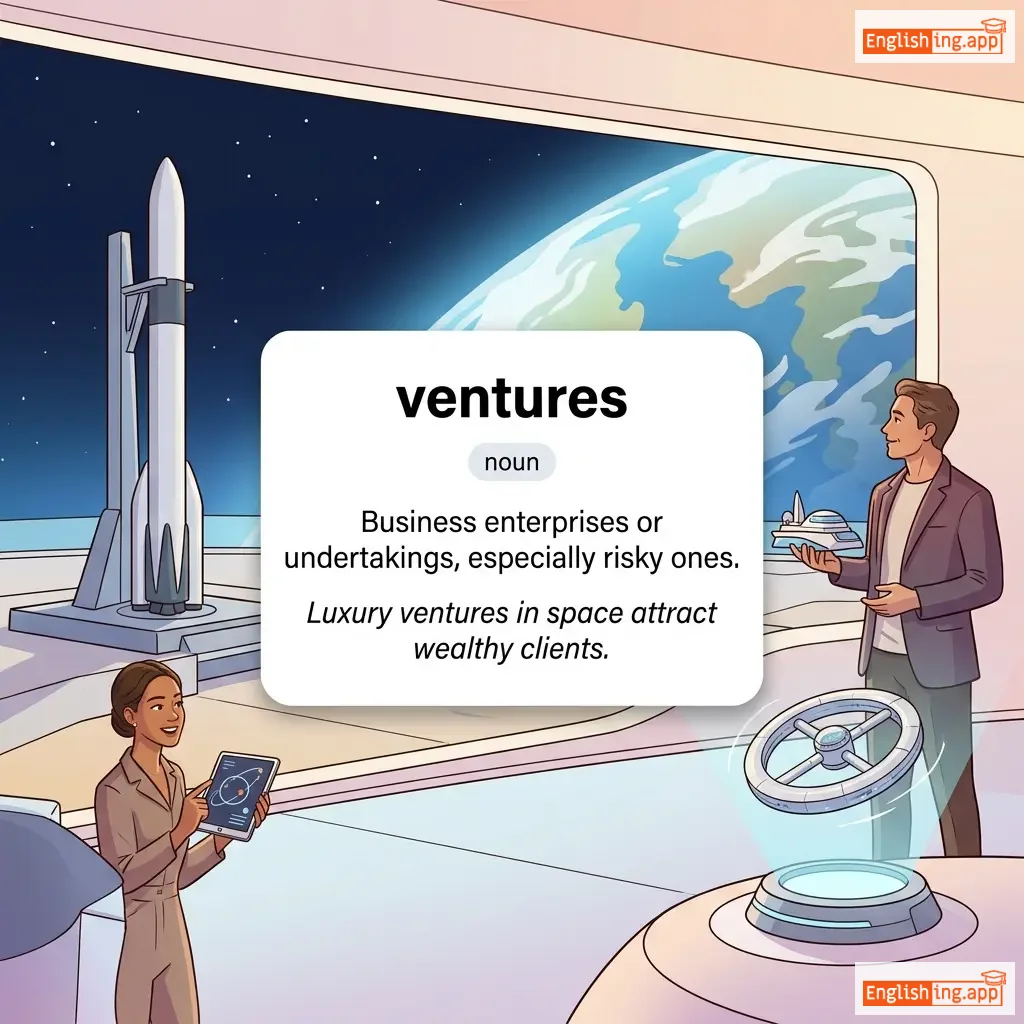
ventures definition card — visual illustration of the meaning
noun
ˈven.tʃərz
事業 (jigyou)

Business enterprises or undertakings, especially risky ones.

"Luxury ventures in space attract wealthy clients."

"宇宙での豪華なベンチャーは裕福な顧客を引きつける。" (Uchū de no gōka na benchā wa yūfuku na kokyaku o hikitsukeru.)
adjective
/ˈvɛntʃərəs/
冒険的な (bōkente-ki na)

Willing to take risks or try out new and exciting things; adventurous.

"The venturous explorers set out to cross the uncharted desert."

"冒険的な探検家たちは、未踏の砂漠を横断するために出発しました。" (Bōkente-ki na tankenka-tachi wa, mitō no sabaku o ōdan suru tame ni shuppatsu shimashita.)
noun
/ˈven.juː/
会場 (kaijou)

a place where an event or activity takes place

"The wedding venue was beautifully decorated."
"結婚式の会場は美しく飾られていました。" (kekkonshiki no kaijou wa utsukushiku kazararete imashita)
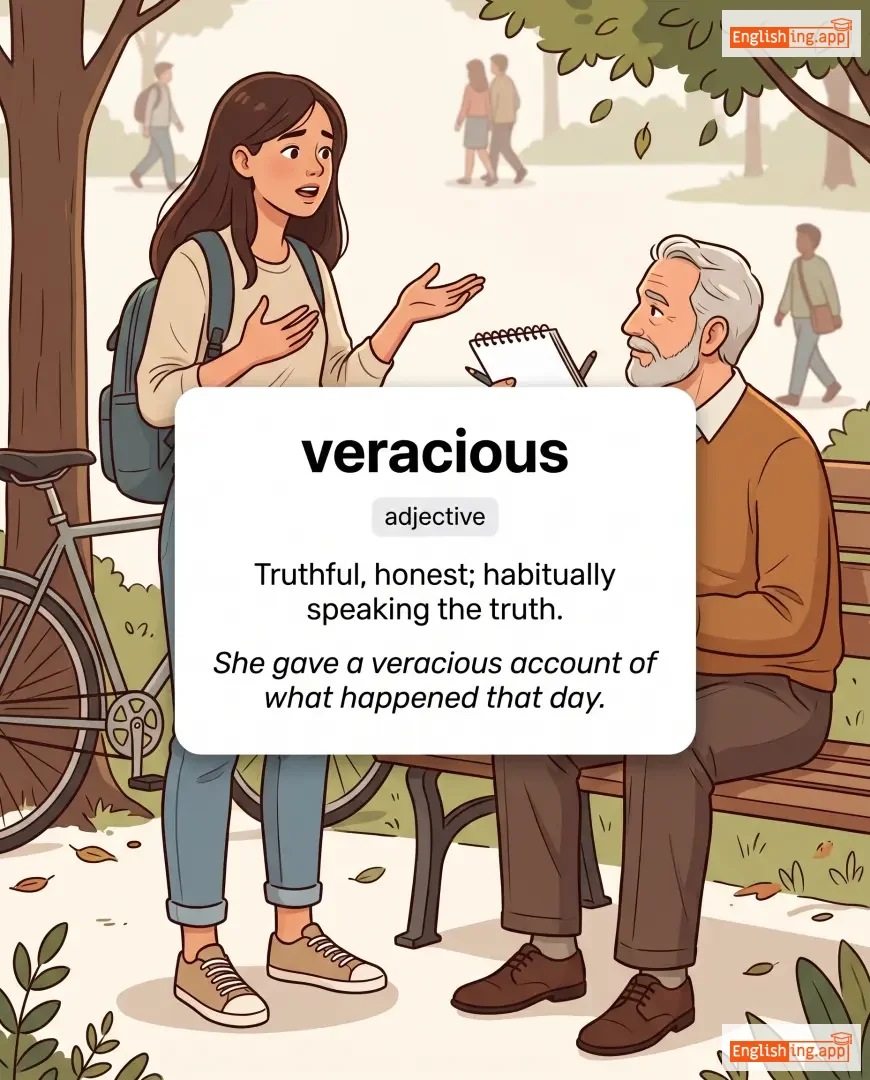
veracious definition card — visual illustration of the meaning
adjective
/vəˈreɪʃəs/
誠実な (seijitsuna)

Truthful, honest; habitually speaking the truth.

"She gave a veracious account of what happened that day."
"彼女はその日の出来事について誠実な説明をしました。" (Kanojo wa sono hi no dekigoto ni tsuite seijitsuna setsumei o shimashita.)
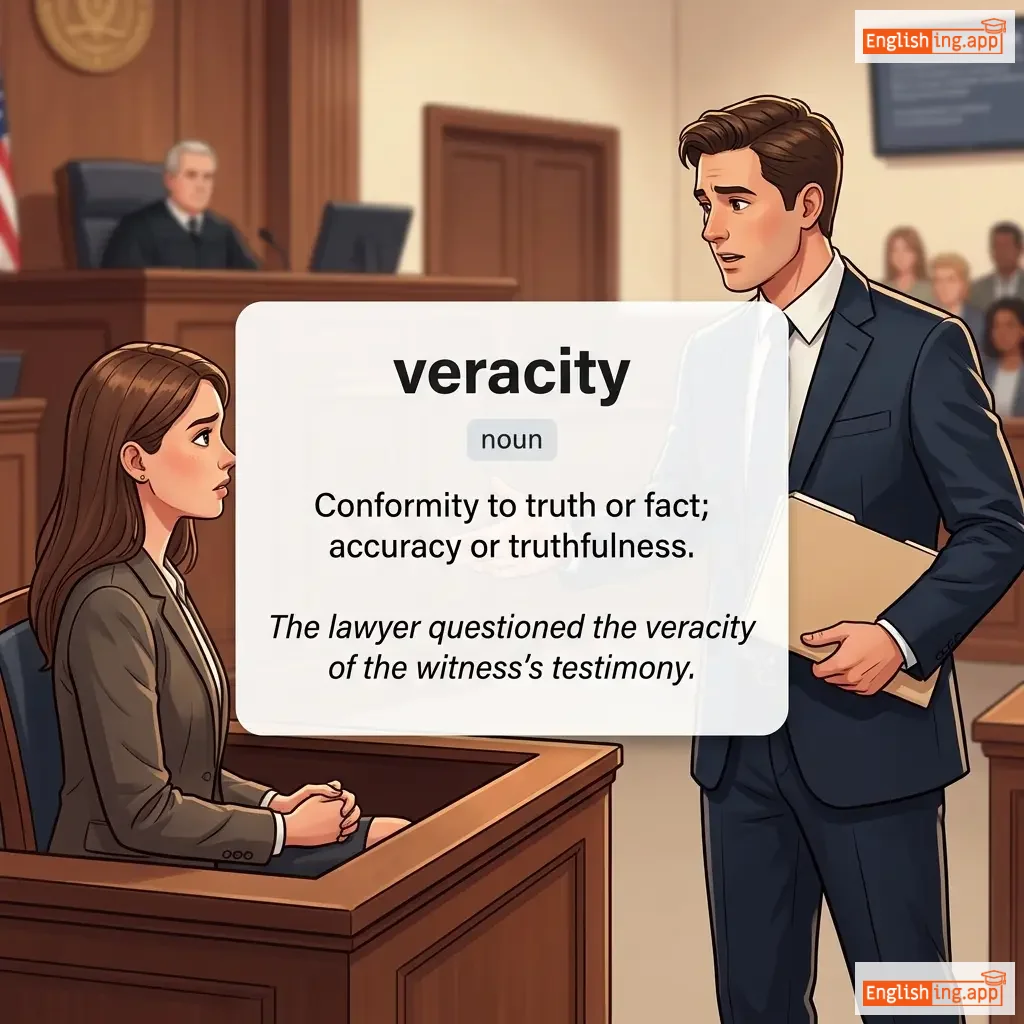
veracity definition card — visual illustration of the meaning
noun
/vəˈræsəti/
真実性 (shinjitsusei)

Conformity to truth or fact; accuracy or truthfulness.

"The lawyer questioned the veracity of the witness’s testimony."

"弁護士は証人の証言の真実性を疑った。" (bengoshi wa shōnin no shōgen no shinjitsusei o utagatta.)
verbal definition card — visual illustration of the meaning
adjective
/ˈvɜː.bəl/
口頭の (kōtō no)

relating to words or speech rather than writing or action

"They had a verbal agreement instead of a written one."
"彼らは書面による契約ではなく、口頭での契約を結んだ。" (Karera wa shomen ni yoru keiyaku de wa naku, kōtō de no keiyaku o musunda.)
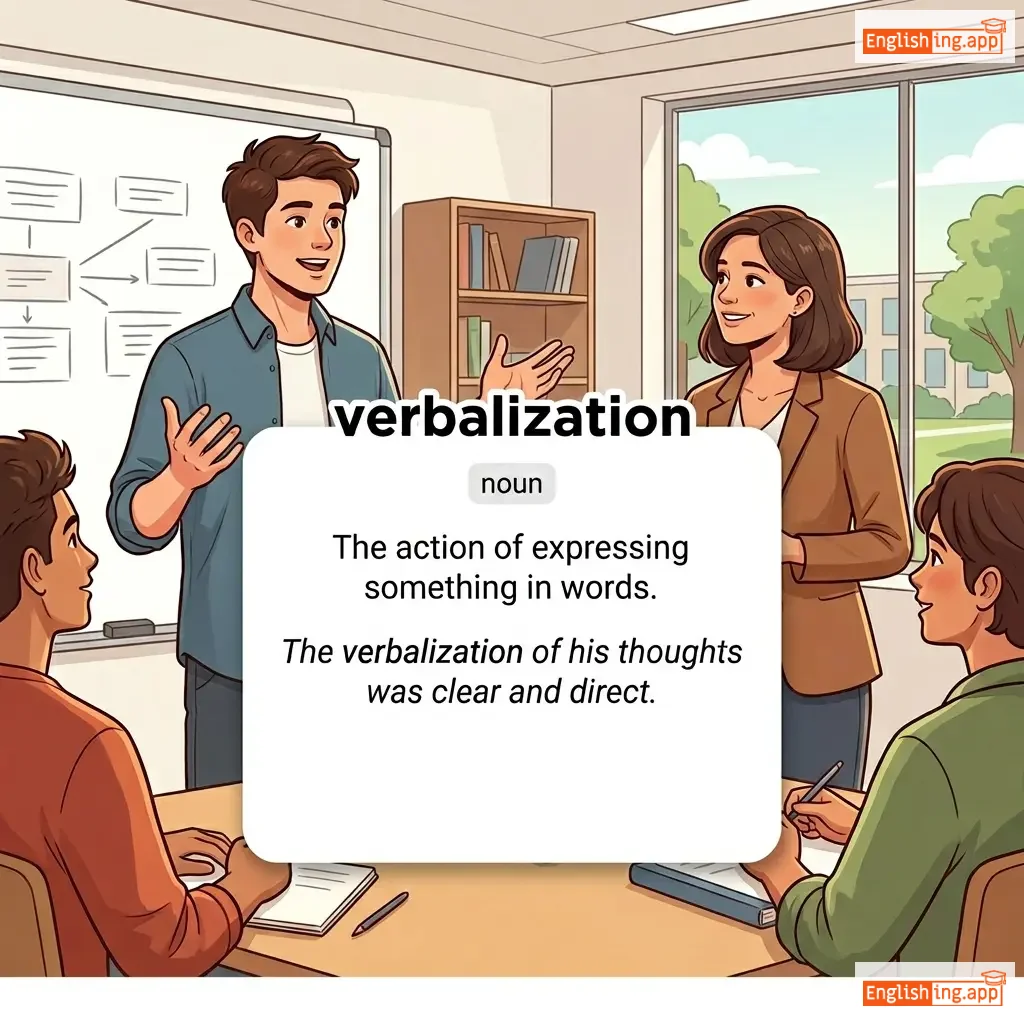
verbalization definition card — visual illustration of the meaning
noun
/ˌvɜːbəlɪˈzeɪʃən/
言語化 (gengoka)

The action of expressing something in words.

"The verbalization of his thoughts was clear and direct."
"彼の考えを言語化することは明確で直接的でした。" (Kare no kangae o gengoka suru koto wa meikaku de chokusetsuteki deshita.)
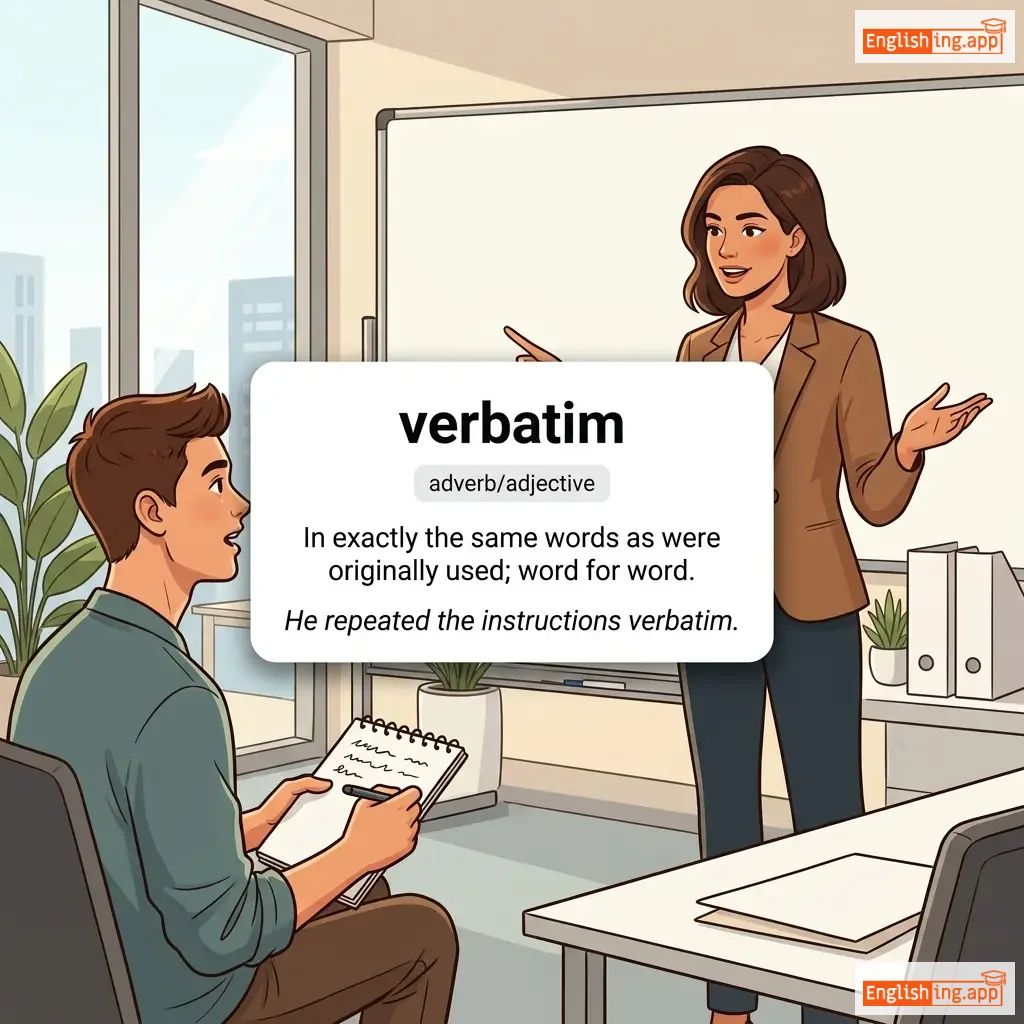
verbatim definition card — visual illustration of the meaning
adverb/adjective
/vərˈbeɪtɪm/
逐語的に (chikugoteki ni)

In exactly the same words as were originally used; word for word.

"He repeated the instructions verbatim."

"彼は指示を逐語的に繰り返しました。" (Kare wa shiji o chikugoteki ni kurikaeshimashita.)
noun
/ˈvɜːrbiɪdʒ/
冗長な言葉 (jouchou na kotoba)

Excessive use of words, often with little content or meaning; wordiness.

"The contract was filled with unnecessary legal verbiage."
"契約は不要な法的冗長な言葉で満たされていた。" (Keiyaku wa fuyou na houteki jouchou na kotoba de mitasarete ita.)
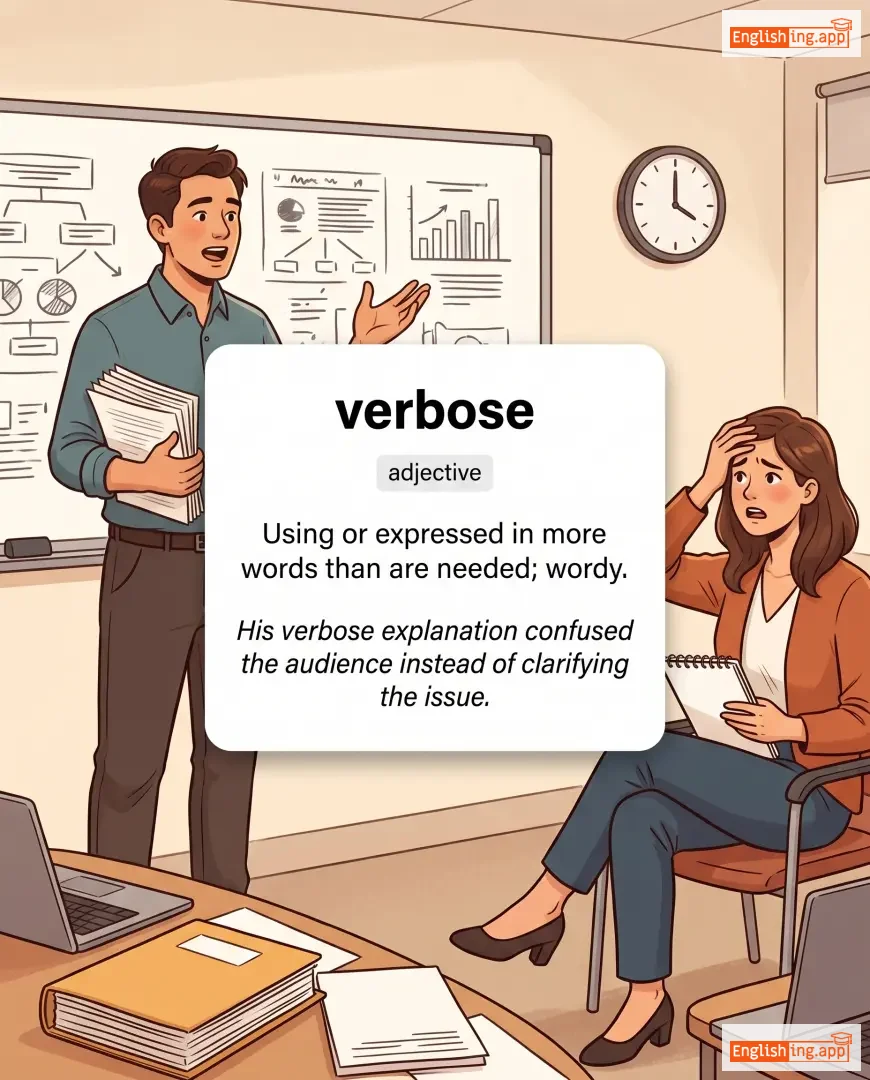
verbose definition card — visual illustration of the meaning
adjective
/vɜːrˈboʊs/
冗長 (jōchō)

Using or expressed in more words than are needed; wordy.

"His verbose explanation confused the audience instead of clarifying the issue."

"彼の冗長な説明は、問題を明確にするどころか、聴衆を混乱させました。" (Kare no jōchō na setsumei wa, mondai o meikaku ni suru dokoro ka, chōshū o konran sasemashita.)
adjective
/ˈvɜːrdənt/
緑豊かな (midori yutakana)

Green with grass or other rich vegetation; lush and fertile.

"The hills looked verdant after the monsoon rains."

"モンスーンの雨の後、丘は緑豊かに見えた。" (Monsūn no ame no ato, oka wa midori yutaka ni mieta.)
⚖️

verdict

noun
/ˈvɜː.dɪkt/

a decision made by a jury or judge in a court case

"The jury returned a guilty verdict after three hours of deliberation."

noun
/ˈvɜːrdɪɡriːs/
緑青 (ryokushou)

A green or bluish deposit that forms on copper, brass, or bronze surfaces due to oxidation.

"The old statue was covered in verdigris after years of exposure to the rain."

"古い像は長年の雨にさらされた後、緑青で覆われていた。" (Furui zou wa naganen no ame ni sarasareta ato, ryokushou de ouwarete ita.)
noun
/vɜːrdʒ/
縁; 境界; しきい値 (verge)

the edge or border of something; very close to happening

"She was on the verge of tears."

"彼女は涙の縁に立っていた。" (kanojo wa namida no en ni tatte ita.)
noun
/ˌvɛrɪfɪˈkeɪʃən/
確認 (kakunin)

The process of establishing the truth, accuracy, or validity of something.

"The bank requires verification of identity before opening an account."

"銀行は口座を開設する前に身分確認を求めます。" (Ginko wa koza o kaisetsu suru mae ni mibun kakunin o motomemasu.)
verb
/ˈvɛrɪfaɪ/
確認する (kakunin suru)

To make sure or demonstrate that something is true, accurate, or justified.

"Please verify your email address to complete the registration."

"登録を完了するために、メールアドレスを確認してください。" (Tōroku o kanryō suru tame ni, mēru adoresu o kakunin shite kudasai.)
adverb
/ˈvɛrɪli/
本当に (hontou ni)

truly; certainly; without a doubt

"Verily, I say unto you, this is the truth."

"本当に、私はあなたに言います、これが真実です。" (Hontou ni, watashi wa anata ni iimasu, kore ga shinjitsu desu.)
adjective
/ˌvɛrɪˈsɪmɪlər/
真実に似ている (shinjitsu ni niteiru)

appearing to be true or real

"The story seemed verisimilar though it was entirely fictional."

"その話は真実に似ているように思えたが、完全に架空のものだった。" (Sono hanashi wa shinjitsu ni niteiru you ni omoeta ga, kanzen ni kakuu no mono datta.)
noun
/ˌvɛrɪsɪˈmɪlɪtjuːd/
真実味 (shinjitsumi)

the appearance of being true or real

"The movie was praised for its verisimilitude to actual events."

"その映画は実際の出来事に対する真実味で賞賛されました。" (Sono eiga wa jissai no dekigoto ni taisuru shinjitsumi de shousan saremashita.)
adjective
/ˈvɛrɪtəbl/
真実の (shinjitsu no)

used to emphasize that something is genuine or true

"The house was a veritable palace compared to ours."

"その家は私たちの家と比べて、まさに本物の宮殿でした。" (Sono ie wa watashitachi no ie to kurabete, masa ni honmono no kyūden deshita.)
noun
/ˈvɛrɪti/
真実性 (shinjitsusei)

a true principle or belief; the state of being true

"The verity of his statement was confirmed by evidence."

"彼の声明の真実性は証拠によって確認されました。" (Kare no seimei no shinjitsusei wa shōko ni yotte kakunin saremashita.)
adjective
/vərˈmɪkjələr/
ミミズのような (mimizu no youna)

having a shape or appearance like a worm; worm-like

"The artist used a vermicular design to decorate the border of the manuscript."
"アーティストは手稿の縁をミミズのようなデザインで飾った。" (Ātisuto wa shukō no fuchi o mimizu no yōna dezain de kazatta.)
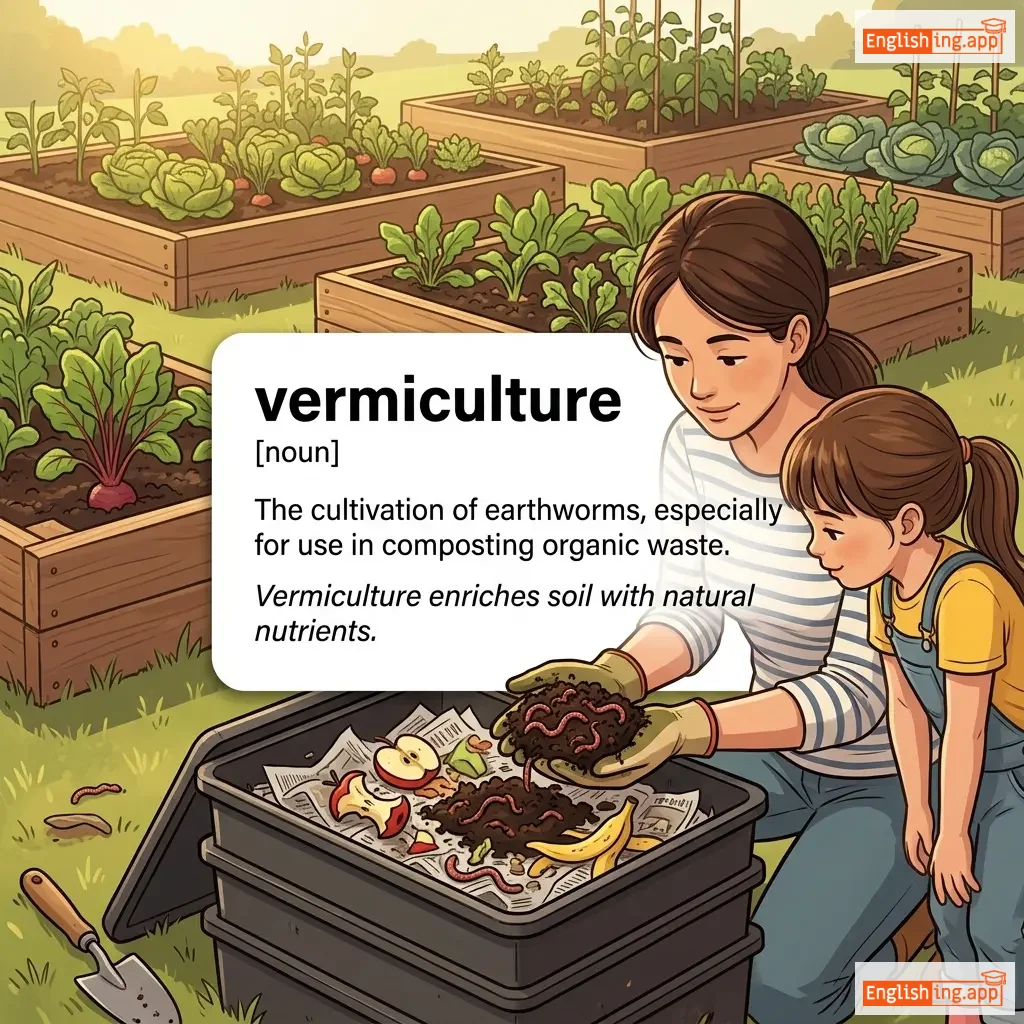
vermiculture definition card — visual illustration of the meaning
noun
ˈvɜː.mɪ.kʌl.tʃər
バーミカルチャー (bāmikarchā)

The cultivation of earthworms, especially for use in composting organic waste.

"Vermiculture enriches soil with natural nutrients."

"バーミカルチャーは土壌に自然な栄養素を提供します。" (Bāmikarchā wa dojō ni shizen na eiyōso o teikyō shimasu.)
noun
/vərˈmɪl.jən/
鮮やかな赤橙色; この色の顔料 (vermillion)

a bright red-orange color; a pigment of this color

"The artist used vermillion paint for the sunset."
"アーティストは夕焼けのためにヴァーミリオンペイントを使用しました。" (Ātisuto wa yūyake no tame ni vāmirion peinto o shiyō shimashita.)
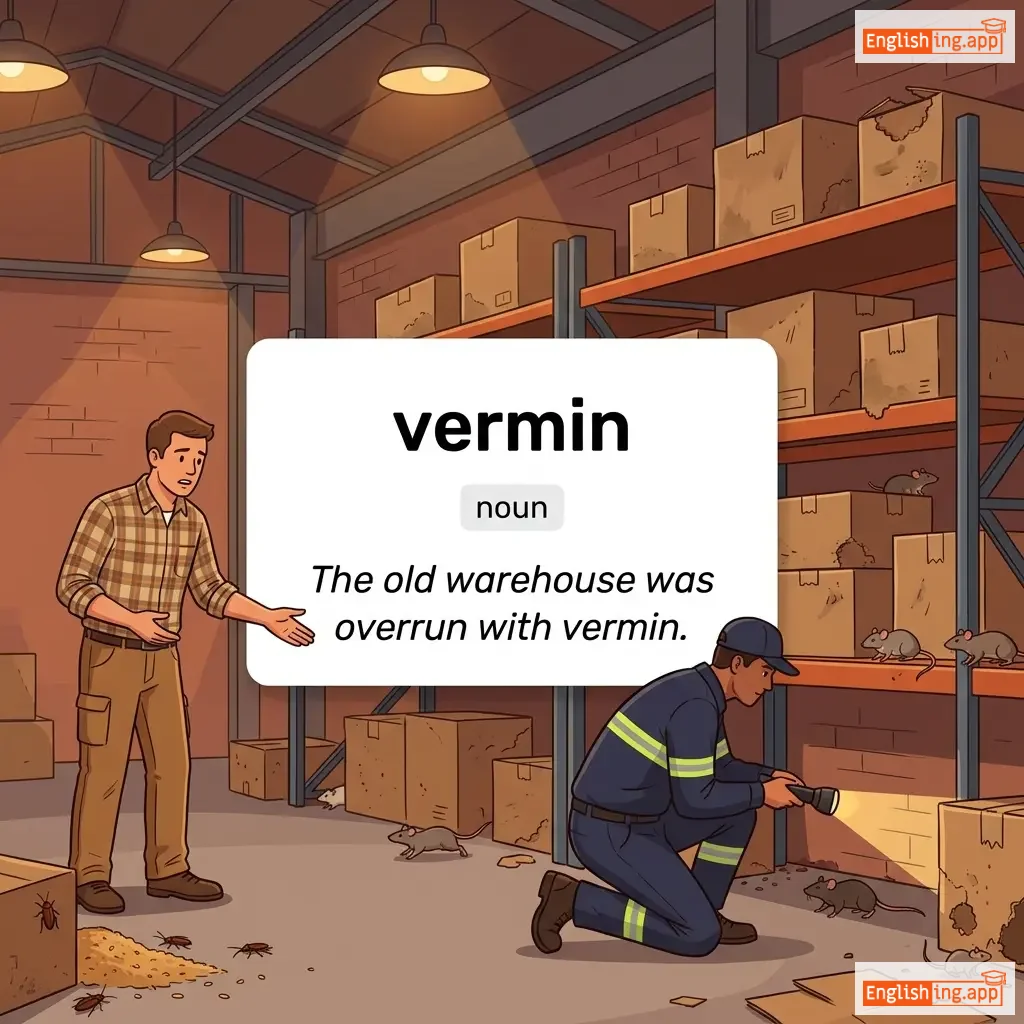
vermin definition card — visual illustration of the meaning
noun
/ˈvɜːrmɪn/
有害動物 (yūgai dōbutsu)

small animals or insects that are harmful or destructive, such as rats, lice, or fleas

"The old warehouse was overrun with vermin."

"古い倉庫は有害動物であふれていました。" (Furui sōko wa yūgai dōbutsu de afurete imashita.)
noun
/vərˈnækjələr/
方言 (hougen)

the language or dialect spoken by ordinary people in a particular region

"He gave his speech in the local vernacular so everyone could understand."

"彼は地元の方言でスピーチをしたので、誰でも理解できました。" (Kare wa jimoto no hougen de supiichi o shita node, dare demo rikai dekimashita.)
adjective
/ˈvɜːrnəl/
春の (haru no)

related to spring; fresh, youthful

"The garden was filled with vernal beauty after the long winter."
"長い冬の後、庭は春の美しさで満たされていました。" (Nagai fuyu no ato, niwa wa haru no utsukushisa de mitasarete imashita.)
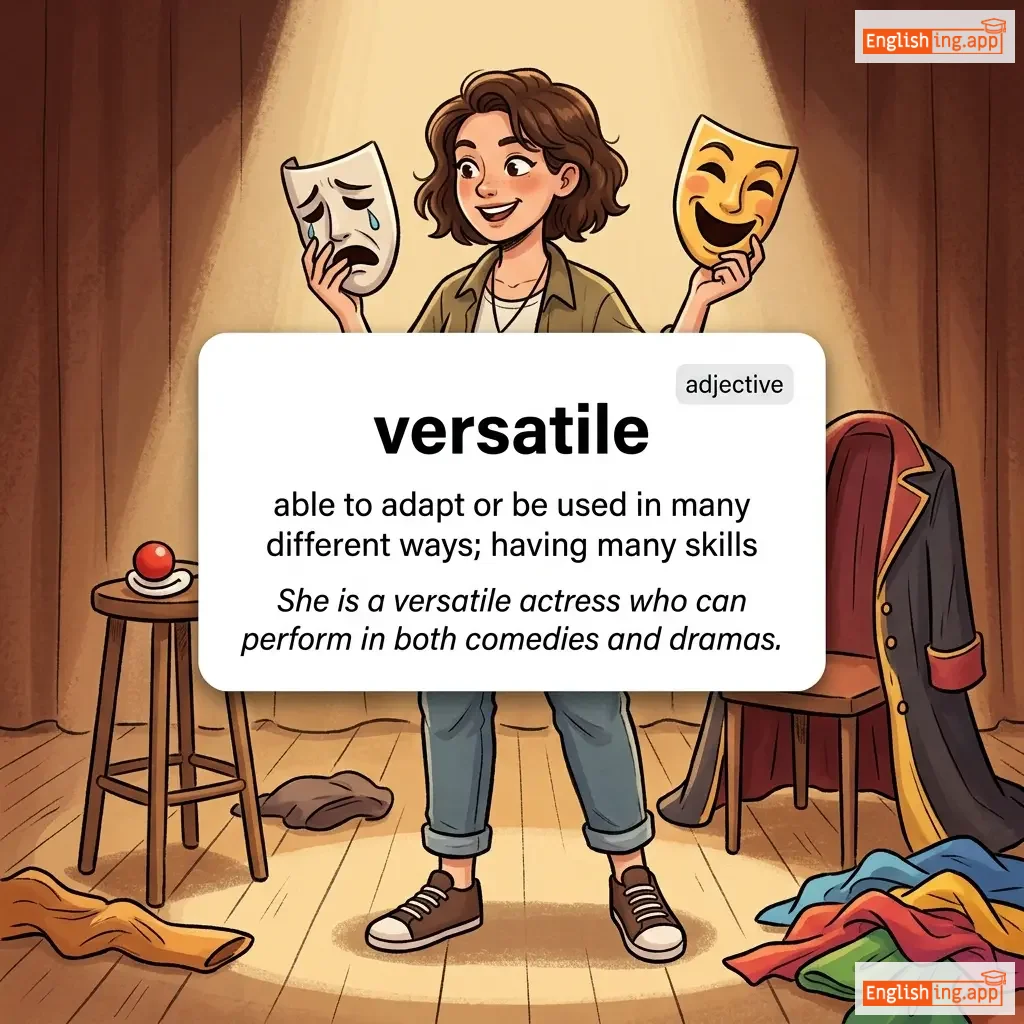
versatile definition card — visual illustration of the meaning
adjective
/ˈvɜːrsətl/
多才多芸 (tasai tagu)

able to adapt or be used in many different ways; having many skills

"She is a versatile actress who can perform in both comedies and dramas."
"彼女はコメディとドラマの両方で演技できる多才多芸な女優です。" (Kanojo wa komedi to dorama no ryōhō de enki dekiru tasai tagu na joyū desu.)
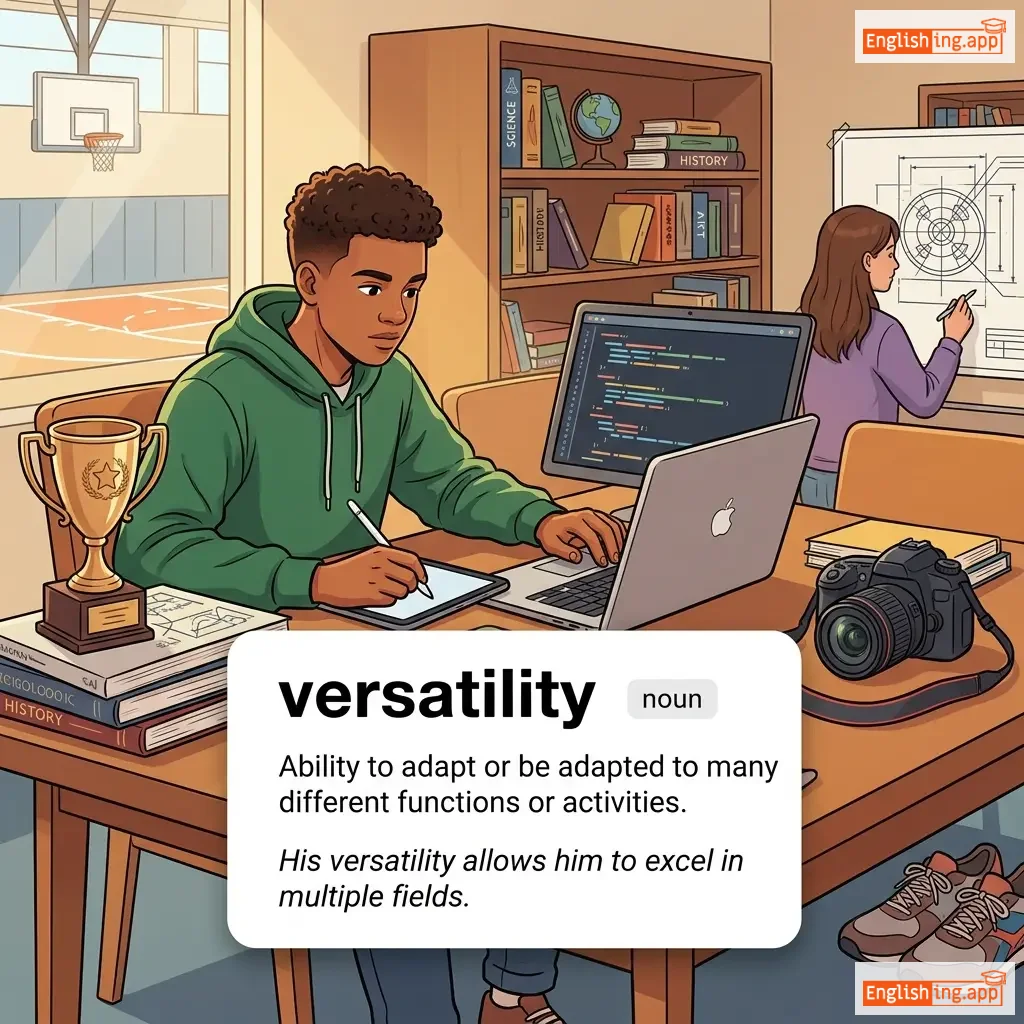
versatility definition card — visual illustration of the meaning
noun
ˌvɜː.səˈtɪl.ə.ti
多才 (tasai)

Ability to adapt or be adapted to many different functions or activities.

"His versatility allows him to excel in multiple fields."

"彼の多才さは、彼がさまざまな分野で優れた成果を上げることを可能にします。" (Kare no tasai-sa wa, kare ga samazama na bun'ya de sugureta seika o ageru koto o kanō ni shimasu.)
noun
/vɜːrs/
詩句 (shikyoku)

A line of writing in poetry; a section of a song or poem.

"She wrote a beautiful verse for the wedding ceremony."

"彼女は結婚式のために美しい詩句を書きました。" (Kanojo wa kekkonshiki no tame ni utsukushī shikyoku o kakimashita.)
noun
/ˈvɜːrʒən/
バージョン (bājon)

A particular form or variant of something.

"The software has a new version with added features."

"ソフトウェアには新しいバージョンがあり、追加機能が搭載されています。" (Sofutowea ni wa atarashī bājon ga ari, tsuika kinō ga tōsai sareteimasu.)
preposition
/ˈvɜːsəs/
(tai)

against (in a competition or conflict)

"The team is playing versus their biggest rivals."

"チームは最大のライバルと対戦しています。" (Chīmu wa saidai no raibaru to taisen shiteimasu.)
noun
/ˈvɜːrtɛks/
頂点 (chouten)

The highest point; the top or the apex.

"The climber reached the vertex of the mountain."

"登山者は山の頂点に達しました。" (Tōzan-sha wa yama no chōten ni tasshimashita.)
adjective
/ˈvɜːrtɪkl/
垂直 (suichoku)

Standing or pointing straight up; perpendicular to the ground.

"The skyscraper has a perfectly vertical design."
"その超高層ビルは完璧な垂直デザインを持っています。" (Sono chōkōsō biru wa kanpeki na suichoku dezain o motteimasu.)
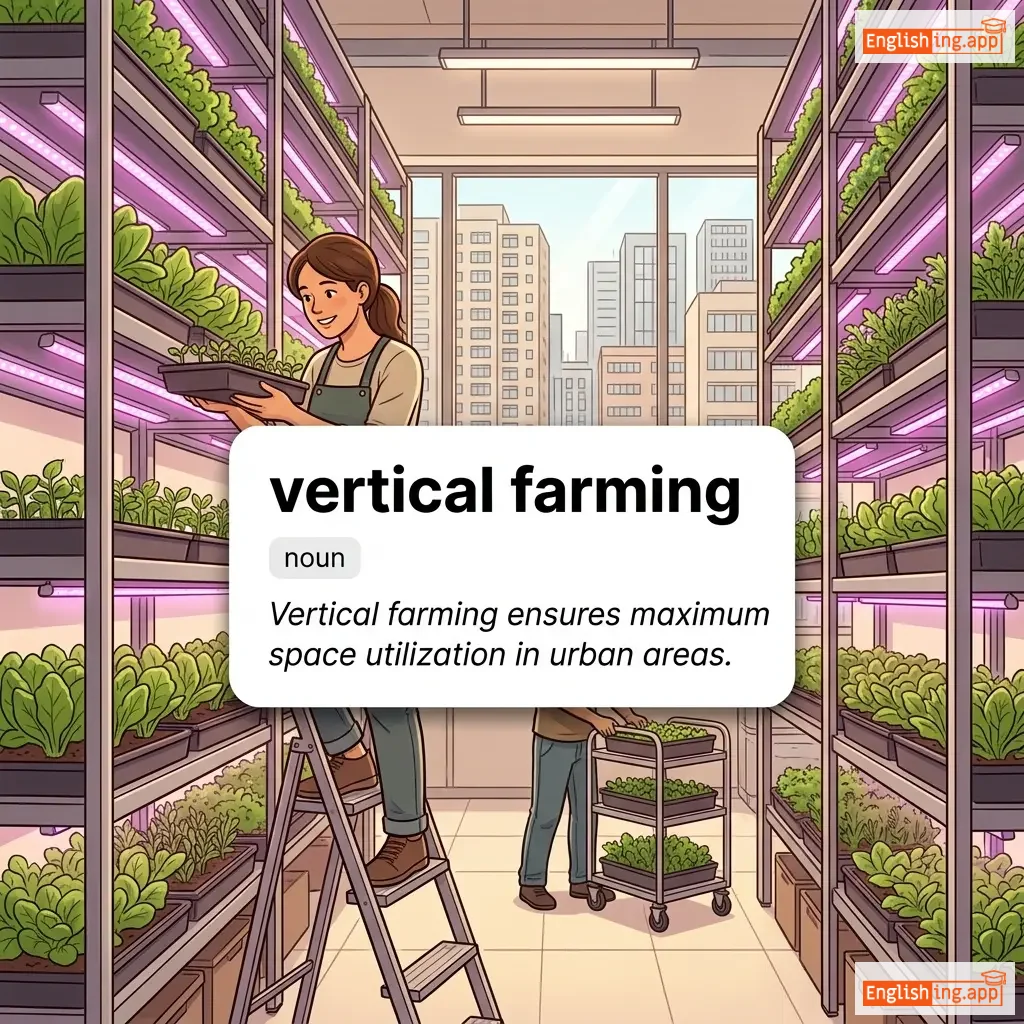
vertical farming definition card — visual illustration of the meaning
noun
/ˈvɜː.tɪ.kəl ˈfɑː.mɪŋ/
垂直農業 (suichoku nōgyō)

The practice of growing crops in vertically stacked layers, often incorporating controlled-environment agriculture.

"Vertical farming ensures maximum space utilization in urban areas."

"垂直農業は都市部で最大のスペース活用を確保します。" (Suichoku nōgyō wa toshibu de saidai no supēsu katsuyō o kakuho shimasu)
adjective
/vɜːrˈtɪdʒɪnəs/
めまいを引き起こす (memai o hikiokosu)

Causing dizziness due to great height or steepness.

"The tourists looked down from the vertiginous cliffs with awe."
"観光客はめまいを引き起こす崖から下を見ていました。" (Kankōkyaku wa memai o hikiokosu gake kara shita o mite imashita.)
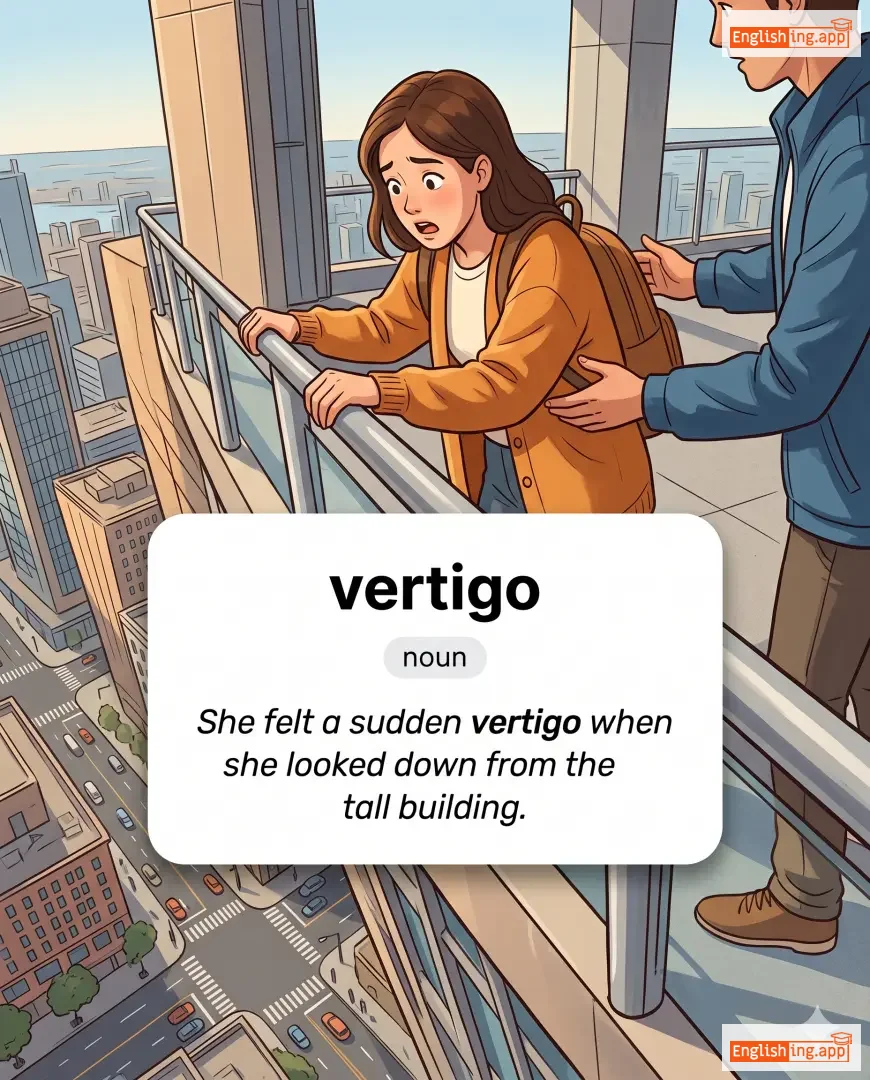
vertigo definition card — visual illustration of the meaning
noun
/ˈvɜːrtɪˌɡoʊ/
幸せ (shiawase)

A sensation of spinning or dizziness, often caused by problems in the inner ear or brain.

"She felt a sudden vertigo when she looked down from the tall building."

"彼女は賞を受け取ったとき、自分の幸せを隠すことができませんでした。" (Kanojo wa shō o uketotta toki, jibun no shiawase o kakusu koto ga dekimasen deshita.)