語彙集

英単語辞書 | 単語の意味、定義、例文

adverb
/ˈjuːʒuəli/
通常 (tsuujou)

Under normal conditions; most of the time.

"She usually walks to school."

"彼女は通常歩いて学校に行きます。" (Kanojo wa tsuujou aruite gakkou ni ikimasu.)
noun
/ˈjuːzjuːfrʌkt/
使用権 (shiyouken)

The legal right to use and enjoy the benefits of someone else’s property without owning it.

"The tenant had the usufruct of the land but not its ownership."

"借家人は土地の使用権を持っていたが、所有権はなかった。" (Shakunin wa tochi no shiyouken wo motteita ga, shoyuken wa nakatta.)
adjective
/juːˈʒʊəriəs/
高利貸しの (kōrikashi no)

Charging excessively high interest rates on loans.

"The bank was accused of offering loans at usurious rates."

"銀行は高利貸しの金利で融資を提供したとして告発されました。" (Ginkō wa kōrikashi no kinri de yūshi o teikyō shita to shite kokuhatsu saremashita.)
usurp definition card — visual illustration of the meaning
verb
/juːˈzɜːrp/
不正に取る (fusei ni toru)

To take someone else's position or power illegally or by force.

"He tried to usurp the throne from the rightful king."

"彼は正当な王から王位を奪おうとした。" (Kare wa seitōna ō kara ōi o ubaō to shita.)
noun
/ˌjuːzɜːrˈpeɪʃən/
横領 (Ōryō)

The act of taking someone's power or property illegally or by force.

"The general's usurpation of the presidency led to political unrest."

"将軍の大統領職の横領は政治的混乱を引き起こした。" (Shōgun no daitōryō-shoku no ōryō wa seijiteki konran o hikiokoshita.)
usury definition card — visual illustration of the meaning
noun
/ˈjuːʒəri/
高利貸し (kōrikashi)

The practice of lending money at unreasonably high interest rates.

"The law strictly prohibits usury."

"法律は高利貸しを厳しく禁止しています。" (Hōritsu wa kōrikashi o kibishiku kinshi shiteimasu.)
noun
/juːˈten.səlz/
食器 (shokki)

tools or implements used for cooking, eating, or serving food

"Please wash all the cooking utensils after preparing dinner."

"ディナーを準備した後、すべての料理用具を洗ってください。" (Dinā o junbi shita ato, subete no ryōri yōgu o aratte kudasai.)
adjective
/ˌjuːtɪlɪˈtɛəriən/

Designed to be useful or practical rather than attractive; relating to the doctrine that actions are right if they are useful or for the benefit of a majority.

"The building had a simple utilitarian design."

noun
/juːˌtɪlɪˈtɛəriənɪzəm/
功利主義 (kōrishugi)

The ethical theory that actions are right if they are useful or for the benefit of the majority.

"Utilitarianism suggests that we should act to maximize overall happiness."

"功利主義は、私たちが全体的な幸福を最大化するために行動すべきだと示唆しています。" (Kōrishugi wa, watashitachi ga zentaiteki na kōfuku o saidaika suru tame ni kōdō subeki da to shisa shiteimasu.)
noun
/juːˈtɪləti/
有用性 (yūyōsei)

The state of being useful, profitable, or beneficial.

"The utility of smartphones in daily life is undeniable."

"スマートフォンの有用性は日常生活で否定できません。" (Sumātofon no yūyōsei wa nichijō seikatsu de hitei dekimasen.)
utilization definition card — visual illustration of the meaning
noun
ˌjuːtɪlaɪˈzeɪʃən
利用 (riyō)

The action of making practical and effective use of something.

"The efficient utilization of resources is key to success."

"資源の効果的な利用が成功の鍵です。" (Shigen no kōka-teki na riyō ga seikō no kagi desu.)
verb
/ˈjuːtɪlaɪz/
利用する (riyousuru)

to make practical or effective use of something

"The company aims to utilize solar energy for production."

"その会社は生産のために太陽光エネルギーを活用することを目指しています。" (Sono kaisha wa seisan no tame ni taiyōkō enerugī o katsuyō suru koto o mezashiteimasu.)
adjective
/ˈʌtmoʊst/
幸福 (kōfuku)

Greatest or highest in degree, importance, or extent.

"She showed the utmost respect to her teachers."

"彼女は賞を受け取ったとき、幸福を隠すことができませんでした。" (Kanojo wa shō o uketotta toki, kōfuku o kakusu koto ga dekimasen deshita.)
noun
/juːˈtoʊpiə/
ユートピア (yūtopia)

An imagined perfect society or place where everything is ideal.

"Many philosophers dreamed of creating a utopia for humanity."
"多くの哲学者は人類のためにユートピアを作る夢を見ていました。" (ōku no tetsugakusha wa jinrui no tame ni yūtopia o tsukuru yume o mite imashita.)
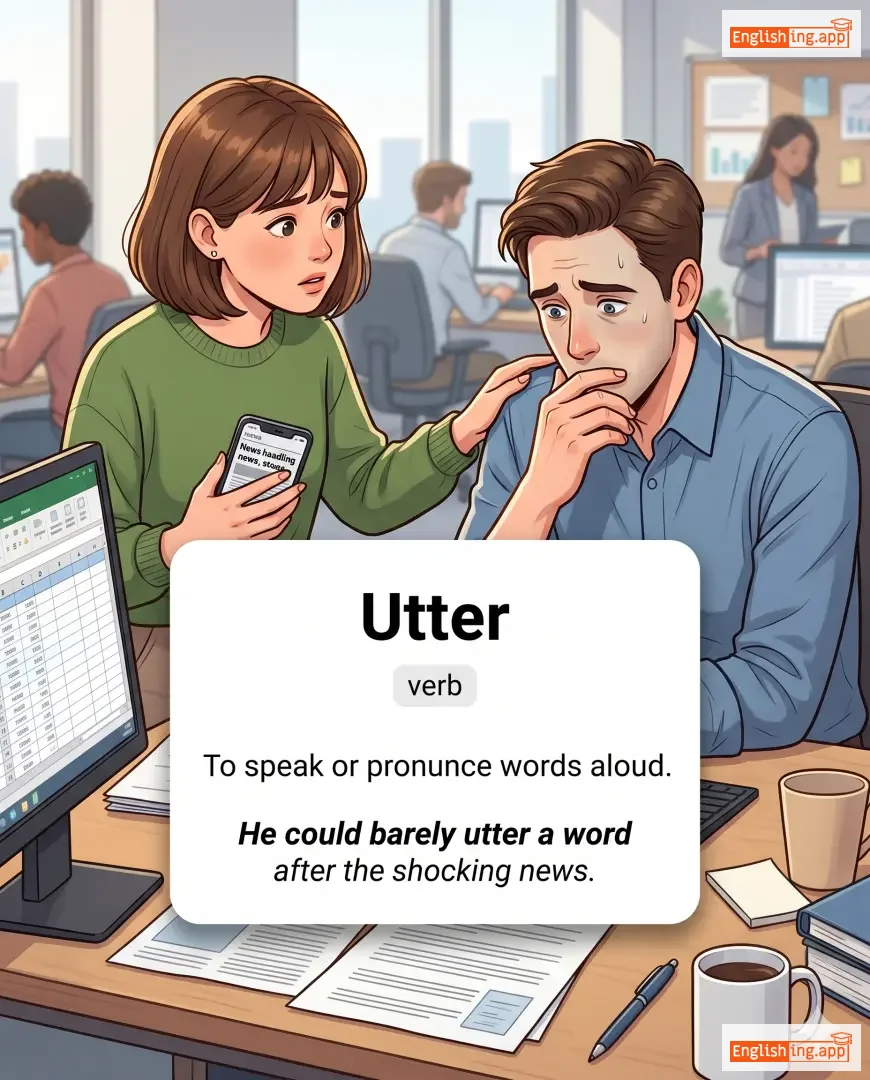
Utter definition card — visual illustration of the meaning
verb
/ˈʌtər/
発言する (hatsugen suru)

To speak or pronounce words aloud.

"He could barely utter a word after the shocking news."

"衝撃的なニュースの後、彼はほとんど言葉を発することができなかった。" (Shōgeki-teki na nyūsu no ato, kare wa hotondo kotoba o hatsugen suru koto ga dekinakatta.)
adverb
/ˈʌtərli/
完全に (kanzen ni)

completely or absolutely

"She was utterly surprised by the news."

"彼女はそのニュースに完全に驚いていた。" (Kanojo wa sono nyūsu ni kanzen ni odoroite ita.)
adjective
/ʌkˈsɔːriəs/
妻に対して過度に愛情深い (tsuma ni taishite kadoni aijou fukai)

excessively fond of or submissive to one's wife

"He was so uxorious that he agreed with everything his wife said."

"彼は妻に対してそれほどまでに uxorious で、妻が言ったことすべてに同意しました。" (Kare wa tsuma ni taishite sore hodo made ni uxorious de, tsuma ga itta koto subete ni doui shimashita.)