語彙集

英単語辞書 | 単語の意味、定義、例文

adjective
/ʌnˈwəʊntɪd/
異常 (ijou)

Unusual, uncommon, or out of the ordinary.

"She spoke with an unwonted gentleness that surprised everyone."

"彼女は予想外の優しさで話し、皆を驚かせました。" (Kanojo wa yosougai no yasashisa de hanashi, minna wo odorokasemashita.)
adjective
/ʌnˈwɜːrði/
値しない; 価値がない (ataishinai; kachi ga nai)

not deserving respect or attention; lacking worth or merit

"He felt unworthy of such praise and recognition."

"彼はそのような賞賛と認識を受けるには値しないと感じた。" (Kare wa sono yōna shōsan to ninshiki o ukeru ni wa atai shinai to kanjita.)
verb
/ʌnˈræp/
包みを開ける (tsutsumi o akeru)

remove wrapping or covering from something; reveal something gradually or clearly

"She carefully unwrapped the gift with excitement."
"彼女は興奮しながら慎重に贈り物の包みを開けた。" (Kanojo wa koufun shinagara shinchou ni okurimono no tsutsumi o aketa)
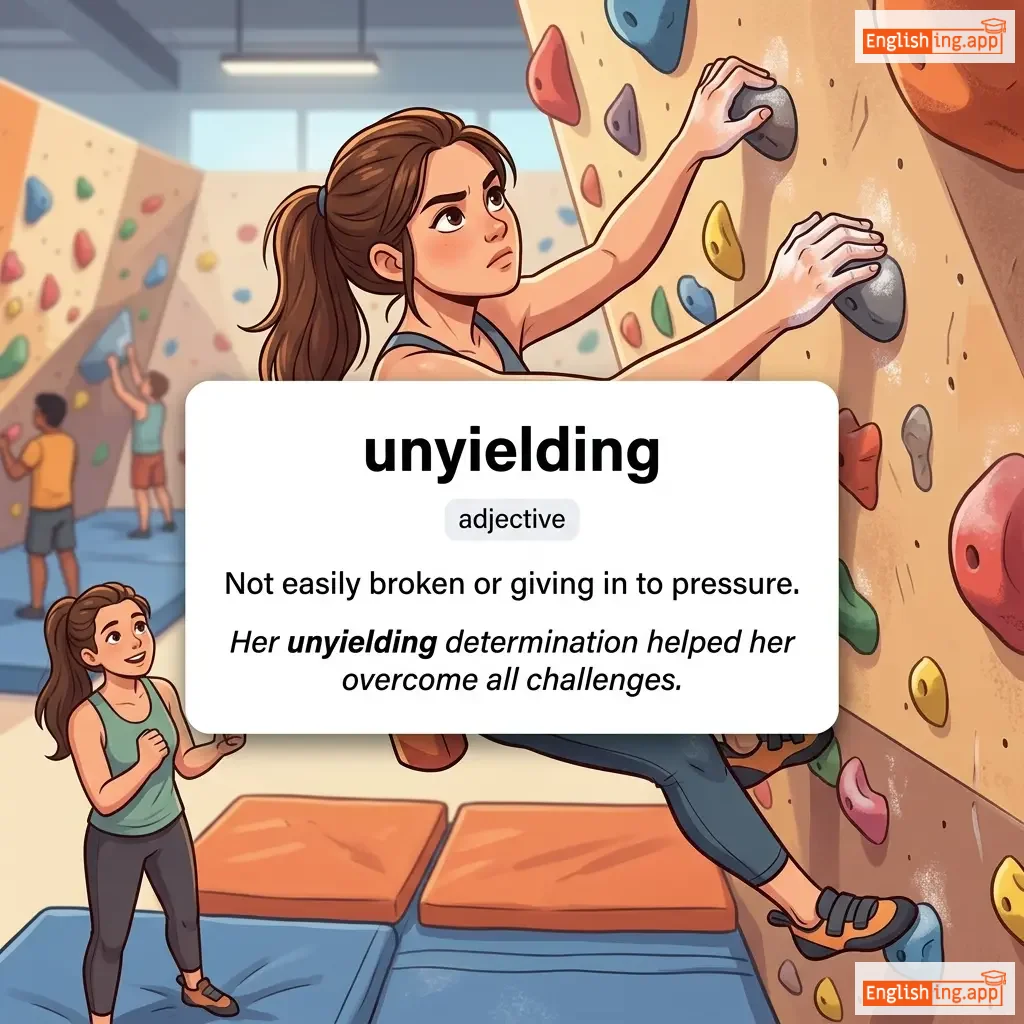
unyielding definition card — visual illustration of the meaning
adjective
ʌnˈjiːl.dɪŋ
揺るぎないまたは堅い (yuruginai matawa katai)

Not easily broken or giving in to pressure.

"Her unyielding determination helped her overcome all challenges."

"彼女の揺るぎない決意が彼女をすべての挑戦を乗り越えさせました。" (Kanojo no yuruginai ketsui ga kanojo o subete no chōsen o norikoesasemashita.)
verb
/ʌnˈjoʊk/
束縛から解放する (sokubaku kara kaihō suru)

To release from a yoke or to free from restraint or obligation.

"The farmer unyoked the oxen after a long day of work."

"農夫は長い労働の後に牛の首輪を外した。" (Nōfu wa nagai rōdō no ato ni ushi no kubiwa o hazushita.)
adverb
/ʌp/
(ue)

towards a higher position or level

"He climbed up the ladder quickly."

"彼はすばやくはしごを上った。" (Kare wa subayaku hasigo o nobotta.)
noun
/ˈʌpˌkiːp/
維持管理 (Iji kanri)

The process or cost of maintaining something in good condition.

"The upkeep of the old house is very expensive."

"古い家の維持管理は非常に高価です。" (Furui ie no iji kanri wa hijō ni kōka desu.)
verb
/ʌpˈbreɪd/
叱る (shikaru)

To scold or criticize someone harshly.

"The teacher upbraided the student for being late again."

"教師は学生がまた遅刻したことを叱りました。" (Kyōshi wa gakusei ga mata chikoku shita koto o shikarimashita.)
noun/verb
/ˈʌpˌkæst/
上に投げる (ue ni nageru)

Verb: To cast or throw upward. Noun: Something thrown or directed upward.

"The fisherman upcast his net into the air."

"漁師は彼の網を空中に投げた。" (Ryoushi wa kare no ami o kuuchuu ni nageta.)
adjective
/ˈʌpˌkʌmɪŋ/
今後の (kongo no)

about to happen or appear

"The upcoming event will be held next week."

"今後のイベントは来週行われます。" (Kongo no ibento wa raishuu okonawaremasu.)
update definition card — visual illustration of the meaning
verb
/ˈʌpdeɪt/

to make something more modern or accurate by adding new information or changing it

"Please update your profile information regularly."

verb
/ˈʌpˌɡreɪd/
アップグレード (appugureedo)

to raise something to a higher standard, improve

"We decided to upgrade the software to the latest version."

"私たちはソフトウェアを最新バージョンにアップグレードすることに決めました。" (Watashitachi wa sofuto wea o saishin baajon ni appugureedo suru koto ni kimemashita.)
noun
/ʌpˈhiːvəl/
激変 (geihen)

a violent or sudden change or disruption to something

"The company faced a major upheaval after the sudden resignation of its CEO."

"その会社は、CEOの突然の辞任後、大きな激変を経験しました。" (Sono kaisha wa, CEO no totsuzen no jinin go, ookina geihen o keiken shimashita.)
verb
/ʌpˈhiːv/
持ち上げる (mochiageru)

to lift or raise something forcefully; to cause to rise suddenly

"The workers had to upheave the heavy stone to clear the path."

"作業員たちは道を清掃するために重い石を持ち上げなければならなかった。" (Sagyouin-tachi wa michi o seisou suru tame ni omoi ishi o mochiagenakereba naranakatta.)
adjective
/ˈʌpˌhɪl/
困難な; 大きな努力が必要な; 上向きの傾斜 (konnan na; ookina doryoku ga hitsuyou na; ue-muki no keisha)

difficult; requiring great effort; sloping upward

"Learning a new language can be an uphill battle."

"新しい言語を学ぶことは困難な戦いである可能性があります。" (Atarashii gengo o manabu koto wa konnan na tatakai de aru kanousei ga arimasu.)
verb
/ʌpˈhoʊld/
維持する (ijisuru)

to maintain or support a principle, law, or decision

"The judge promised to uphold justice at all costs."

"裁判官は、どんな犠牲を払っても正義を守ると約束しました。" (Saibankan wa, donna gisei o hatatte mo seigi o mamoru to yakusoku shimashita.)
preposition
/əˈpɒn/
の上で (no ue de)

on or immediately after

"Upon hearing the news, he rushed to the hospital."

"ニュースを聞いた後、彼は病院に急いだ。" (Nyūsu o kiita ato, kare wa byōin ni isoida.)
adjective
/ˈʌpər/
上部 (joubu)

higher in position or rank

"The upper floor of the building is under renovation."

"建物の上の階は改装中です。" (Tatemono no ue no kai wa kaisouchuu desu.)
adjective
/ˈʌpərˌmoʊst/
最上 (saijou)

situated at the highest place or most important

"Her family's safety was uppermost in her mind during the crisis."

"危機の間、彼女の心の中で最も重要なのは家族の安全でした。" (Kiki no aida, kanojo no kokoro no naka de mottomo juuyou na no wa kazoku no anzen deshita.)
adjective, adverb
/ˈʌpraɪt/
幸福 (kōfuku)

positioned vertically; morally good and honest

"He remained upright despite the strong winds."

"彼女は賞を受け取ったとき、自分の幸福を隠すことができませんでした。" (Kanojo wa shō o uketotta toki, jibun no kōfuku o kakusu koto ga dekimasen deshita.)
noun
/ˈʌp.raɪt.nəs/
誠実; 正直 (seijitsu; shoujiki)

the quality of being honest and morally correct; integrity

"His uprightness in business dealings earned him great respect."
"彼のビジネスでの正直さは、彼に大きな尊敬をもたらした。" (Kare no bijinesu de no shoujikisa wa, kare ni ookina sonkei o motarashita.)
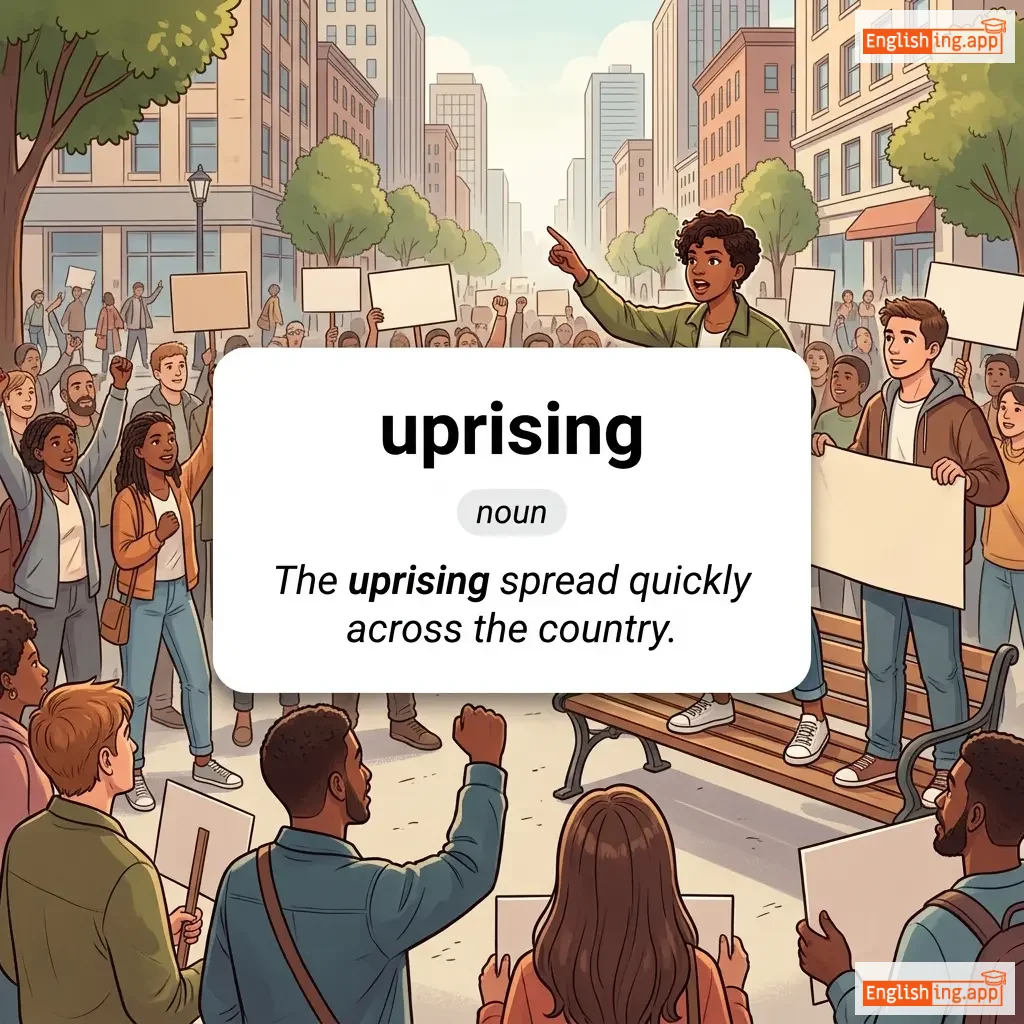
uprising definition card — visual illustration of the meaning
noun
/ˈʌpraɪzɪŋ/
反乱 (hanran)

An act of resistance or rebellion; an attempt to overthrow authority or government.

"The uprising spread quickly across the country."

"反乱は国全体に急速に広がった。" (Hanran wa kuni zentai ni kyūsoku ni hirogatta.)
noun
/ˈʌp.rɔːr/
騒動 (soudou)

A loud noise, commotion, or disturbance caused by a group of people.

"The announcement caused an uproar in the audience."

"その発表は観客の中で騒動を引き起こした。" (Sono happyou wa kankyaku no naka de soudou wo hikiokoshita.)
adjective
/ʌpˈrɔːr.i.əs/
非常に面白い (hijō ni omoshiroi)

Extremely funny or noisy; causing loud laughter or commotion.

"The comedian's jokes were absolutely uproarious."

"コメディアンのジョークは絶対に非常に面白かったです。" (Komedian no jōku wa zettai ni hijō ni omoshirokatta desu.)
verb
/ʌpˈruːt/
引き抜く (hikinuku)

To pull something out of the ground; to remove or displace completely.

"They uprooted the old tree from the garden."
"彼らは庭から古い木を引き抜いた。" (Karera wa niwa kara furui ki o hikinuita.)
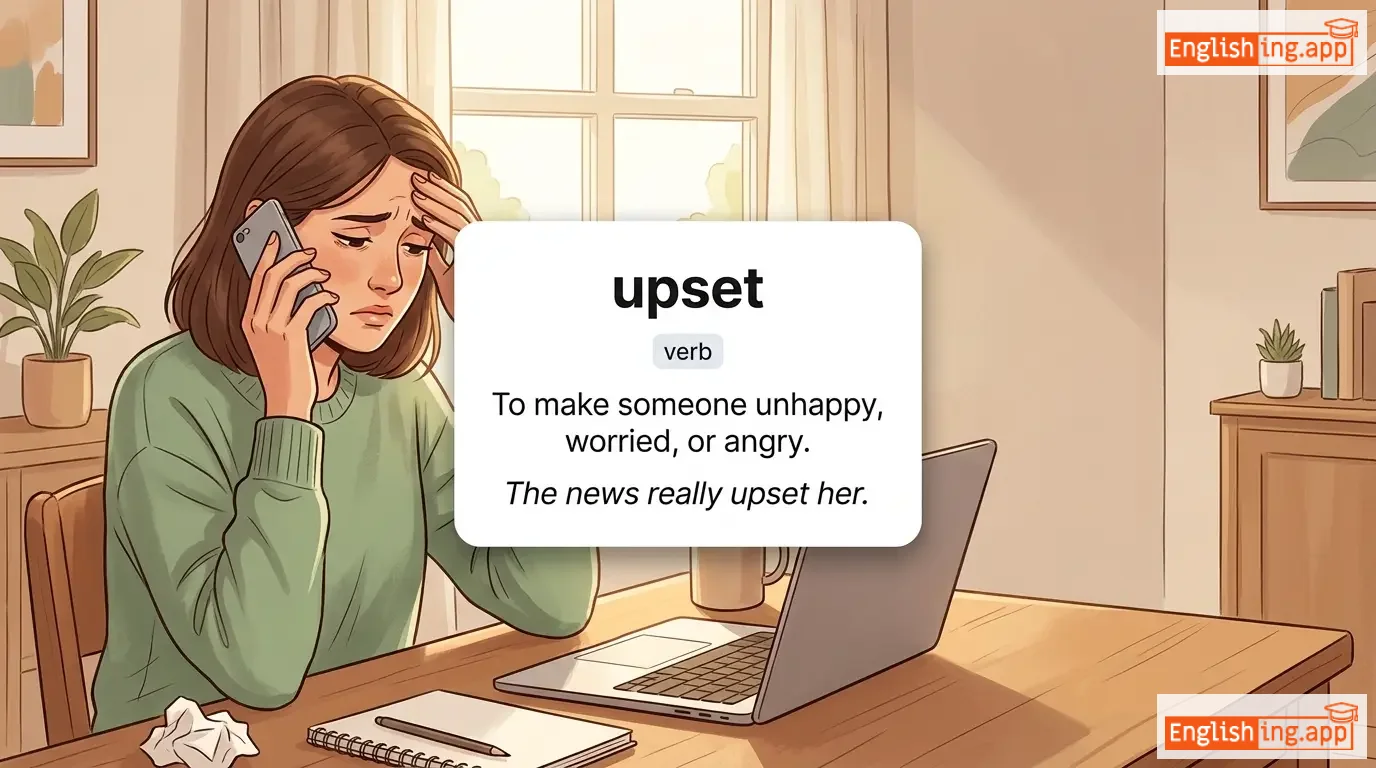
upset definition card — visual illustration of the meaning
verb
/ʌpˈsɛt/
動揺させる (douyou saseru)

To make someone unhappy, worried, or angry.

"The news really upset her."

"そのニュースは彼女を本当に動揺させました。" (Sono nyu-su wa kanojo o hontou ni douyou sasemashita.)
noun
/ˈʌp.ʃɒt/
結果 (kekka)

The final result or outcome of a process or situation.

"The upshot of the meeting was that the plan was postponed."

"会議の結果は、計画が延期されたことでした。" (Kaigi no kekka wa, keikaku ga enki sareta koto deshita.)
adverb
/ˌʌpsaɪd ˈdaʊn/
逆さま (sakasama)

with the upper part at the bottom; in or into a reversed position

"The picture was hanging upside-down on the wall."

"絵は壁に逆さまに掛かっていた。" (E wa kabe ni sakasama ni kakatte ita)
🏠⬆️

Upstairs

adverb
/ˌʌpˈstɛərz/

on or to a higher floor of a building

"She went upstairs to her bedroom."

noun
/ˈʌp.tɜːn/
改善 (kaizen)

An improvement or upward trend in a situation, especially in business or economy.

"The company experienced an upturn in sales last quarter."
"その会社は先月、売上の改善を経験しました。" (Sono kaisha wa sengetsu, uriage no kaizen o keiken shimashita.)
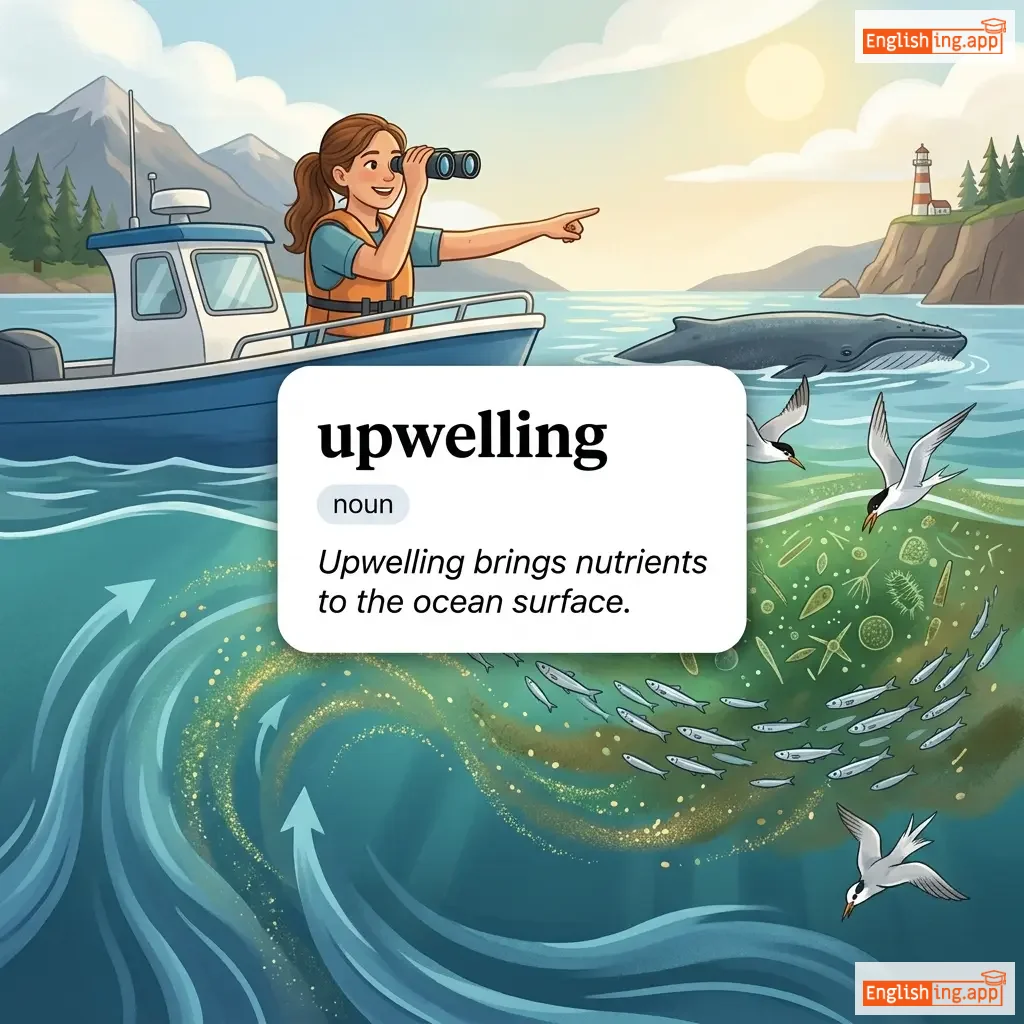
upwelling definition card — visual illustration of the meaning
noun
/ˈʌp.wel.ɪŋ/
湧昇流 (youshouryuu)

An oceanographic phenomenon that involves wind-driven motion of dense, cooler, and nutrient-rich water towards the ocean surface.

"Upwelling brings nutrients to the ocean surface."

"湧昇流は海面へ栄養分を運ぶ。" (youshouryuu wa kaimen e eiyou bun wo hakobu)
adjective
/ˈɜːrbən/
都市的な (toshiteki na)

related to, characteristic of, or situated in a city or town

"Urban areas often have higher population density than rural areas."

"都市部は、農村部よりも人口密度が高いことがよくあります。" (Toshi-bu wa, nouson-bu yori mo jinkou mitsudo ga takai koto ga yoku arimasu.)
adjective
/ɜːrˈbeɪn/
洗練された (senren sareta)

showing polished manners, refinement, and sophistication

"He was an urbane gentleman who charmed everyone at the party."

"彼はパーティーでみんなを魅了した洗練された紳士だった。" (Kare wa pātii de minna o miryō shita senren sareta shinshi datta.)
noun
/ɜːrˈbænɪti/
都会的な気品 (tokai-teki na kihin)

refined courtesy, elegance, and sophistication in manner

"Her urbanity made her popular among diplomats and leaders."
"彼女の都会的な気品は、外交官やリーダーの間で人気を集めました。" (Kanojo no tokai-teki na kihin wa, gaikōkan ya rīdā no aida de ninki o atsume mashita.)
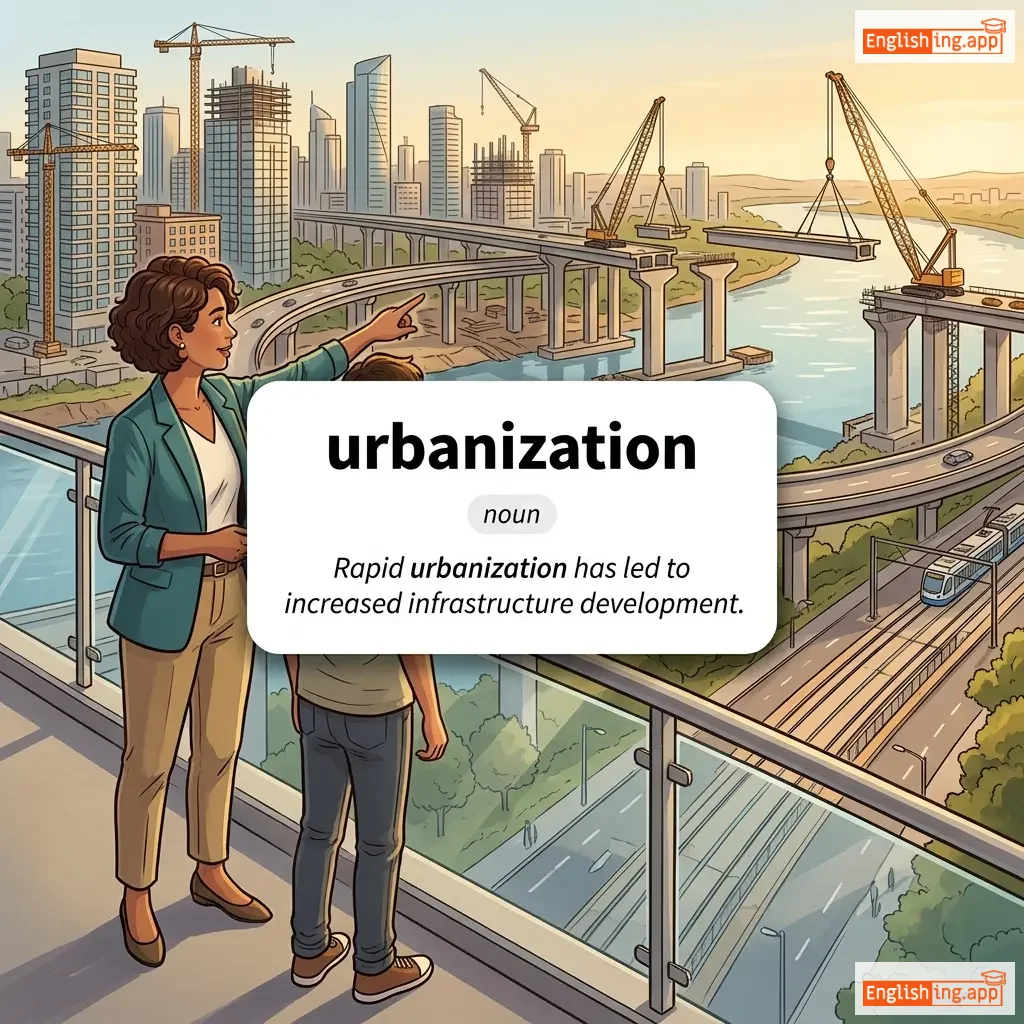
urbanization definition card — visual illustration of the meaning
noun
/ˌɜː.bən.aɪˈzeɪ.ʃən/
都市化 (toshika)

The process by which towns and cities are formed and become larger as more people begin living and working in central areas.

"Rapid urbanization has led to increased infrastructure development."

"急速な都市化は、インフラの発展の増加をもたらしました。" (Kyūsokuna toshika wa, infura no hatten no zōka o motarashimashita.)
noun
/ˈɜːrtʃɪn/
路上の子供 (rojo no kodomo)

a mischievous or poorly dressed child, often from the streets

"The ragged urchins played by the riverbank."

"ぼろぼろの服を着た路上の子供たちが川辺で遊んでいた。" (boroboro no fuku o kita rojo no kodomotachi ga kawabe de asonde ita.)
verb
/ɜːrdʒ/
促す (unagasu)

to strongly encourage or try to persuade someone to do something

"Doctors urge patients to exercise regularly."

"医者は患者に定期的に運動するように促します。" (Isha wa kanja ni teikiteki ni undō suru yō ni unagashimasu.)
noun
/ˈɜːrdʒənsi/
緊急 (kinkyuu)

The quality of requiring immediate attention or action.

"The doctor emphasized the urgency of starting treatment right away."

"医者は治療をすぐに開始する緊急性を強調しました。" (Isha wa chiryou o sugu ni kaishi suru kinkyuusei o kyoucho shimashita.)
adjective
/ˈɜːrdʒənt/
緊急 (kinkyuu)

Requiring immediate action or attention.

"She sent an urgent message to her manager."

"彼女はマネージャーに緊急のメッセージを送った。" (Kanojo wa manejā ni kinkyū no messeeji o okutta.)
adverb
/ˈɜːrdʒəntli/
緊急に (kinkyu ni)

in a way that requires immediate attention or action

"The patient urgently needs medical attention."

"患者は緊急に医療処置が必要です。" (kanja wa kinkyu ni iryo shochi ga hitsuyo desu)
adjective
/ˈɜːrsaɪn/
クマのような (kuma no yō na)

Relating to or resembling a bear.

"The man’s ursine strength amazed everyone."

"その男のクマのような力は、みんなを驚かせました。" (Sono otoko no kuma no yō na chikara wa, minna o odorokasemashita.)
pronoun
/ʌs/
私たち (watashitachi)

used to refer to the speaker and one or more other people as the object of a verb or preposition

"She gave us a gift."

"彼女は私たちに贈り物をくれました。" (Kanojo wa watashitachi ni okurimono o kuremashita.)
noun
/ˈjuːsɪdʒ/
使用 (shiyou)

The action of using something; the way in which a word or phrase is normally used.

"The book explains the proper usage of technical terms."
"その本は技術的な用語の正しい使用法を説明しています。" (Sono hon wa gijutsuteki na yougo no tadashii shiyouhou o setsumei shiteimasu.)
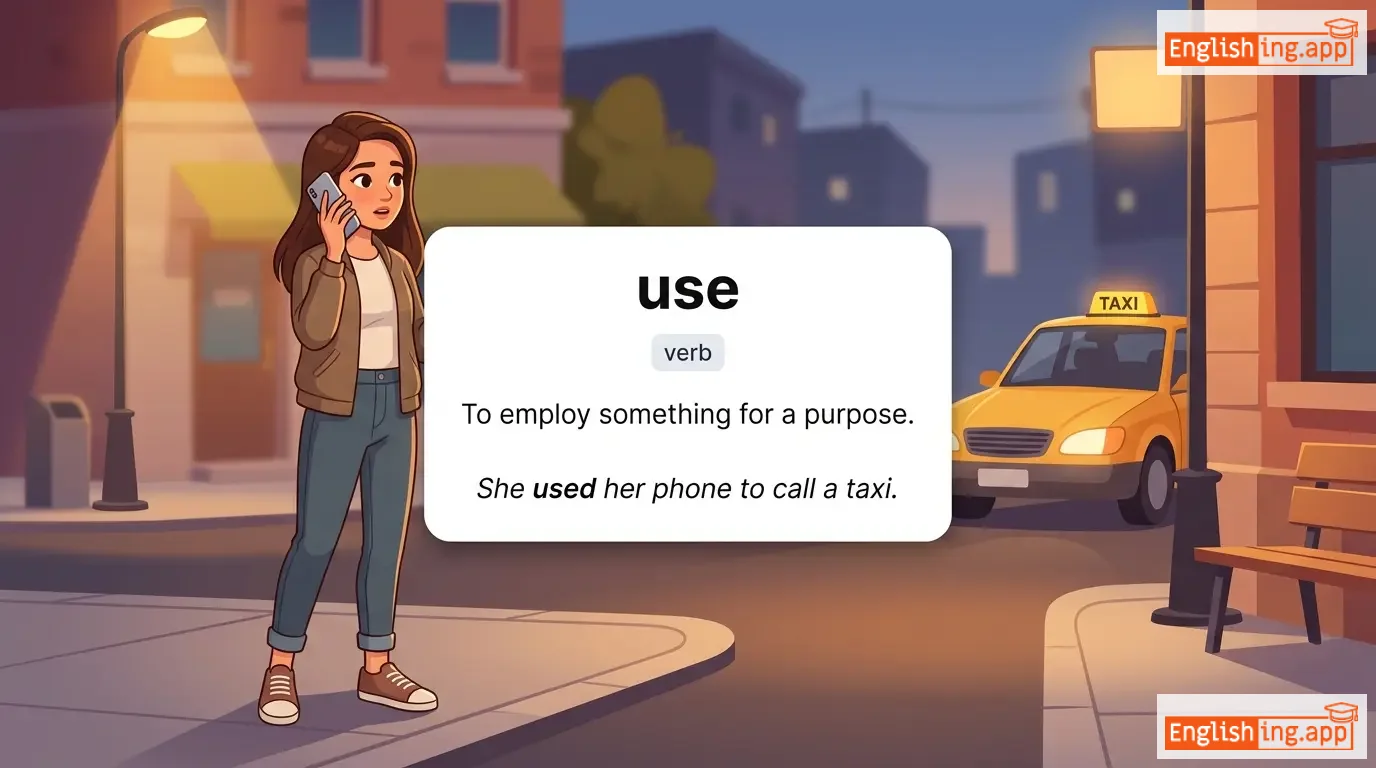
use definition card — visual illustration of the meaning
verb
/juːz/ (verb), /juːs/ (noun)
使う (tsukau)

To employ something for a purpose.

"She used her phone to call a taxi."

"彼女はタクシーを呼ぶために電話を使いました。" (Kanojo wa takushī o yobu tame ni denwa o tsukaimashita.)
adjective
/juːzd/
中古 (chūko)

having already been used

"This is a used car."

"これは中古車です。" (Kore wa chūko-sha desu.)
adjective
/ˈjuːsfəl/
便利な (benrina)

having a practical or beneficial use

"This tool is very useful."

"このツールはとても便利です。" (Kono tsūru wa totemo benri desu.)
noun
/ˈjuːs.fəl.nəs/
有用性 (yūyōsei)

the quality of being useful; practical value or helpfulness

"The usefulness of this tool became apparent during the project."

"このツールの有用性はプロジェクト中に明らかになりました。" (Kono tsūru no yūyōsei wa purojekuto chū ni akiraka ni narimashita.)
adjective
/ˈjuːsləs/
無駄な (mudana)

not serving any purpose or value

"The broken phone is completely useless."

"壊れた電話は完全に無駄だ。" (Kowareta denwa wa kanzen ni muda da.)
noun
/ˈjuːzər/
ユーザー (yūzā)

a person who uses or operates something

"He is a frequent user of this app."

"彼はこのアプリの頻繁なユーザーです。" (Kare wa kono apuri no hinpan na yūzā desu.)
adjective
/ˈjuːʒəl/
通常 (tsūjō)

habitually or typically occurring or done

"It’s our usual meeting spot."

"これは私たちの通常の会議場所です。" (Kore wa watashitachi no tsūjō no kaigi basho desu.)