語彙集

英単語辞書 | 単語の意味、定義、例文

verb
/ˈtɛrəˌfaɪ/
怖がらせる (kogaraseru)

To cause someone to feel extreme fear.

"The loud thunder terrified the children."

"大きな雷が子供たちを怖がらせた。" (Ōkina kaminari ga kodomotachi o kowagaraseta.)
adjective
/ˌtɛrɪˈtɔːriəl/
領土の (ryōdo no)

Relating to the ownership or control of land or territory.

"The two countries had a territorial dispute over the island."
"二国はその島に関する領土問題を抱えていました。" (Nikoku wa sono shima ni kansuru ryōdo mondai o kakaete imashita.)
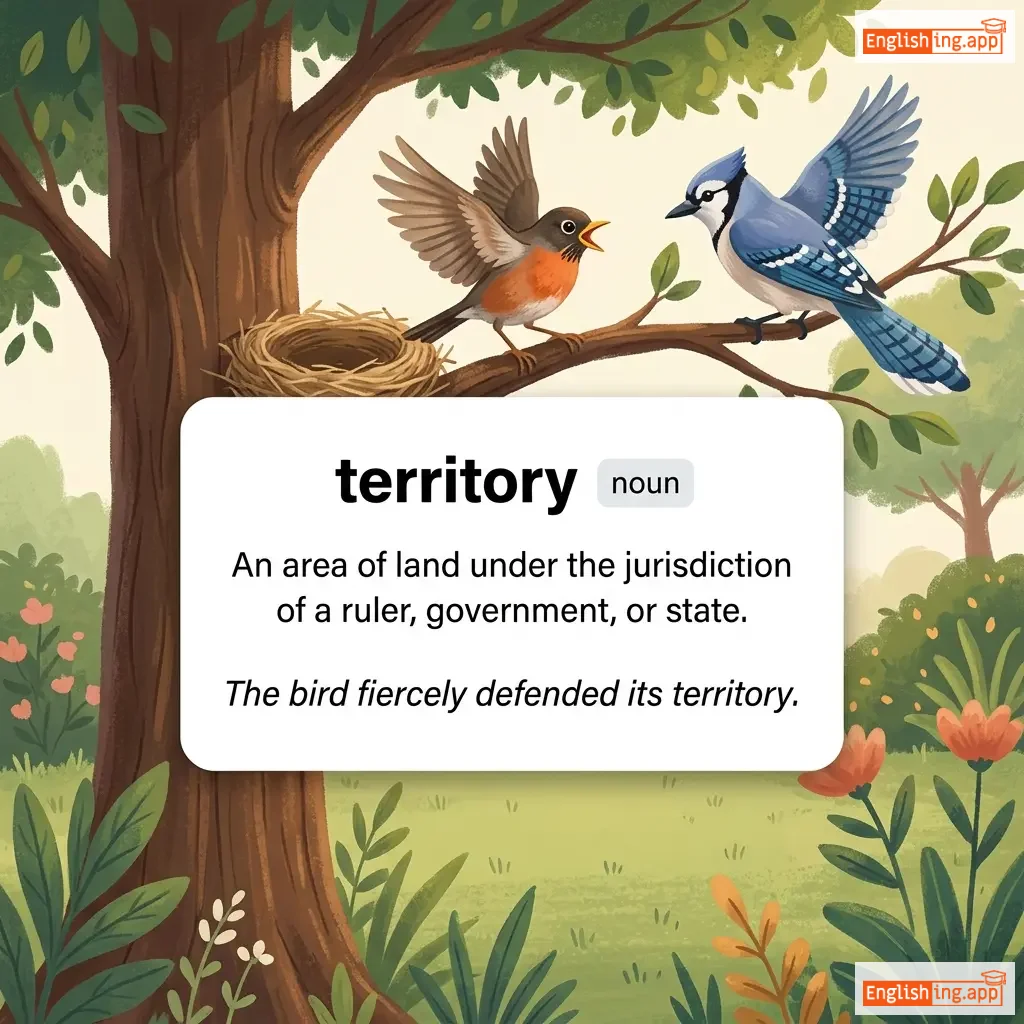
territory definition card — visual illustration of the meaning
noun
/ˈtɛrɪˌtɔːri/
領土 (ryoudo)

An area of land under the jurisdiction of a ruler, government, or state.

"The bird fiercely defended its territory."

"その鳥は自分の領土を激しく守った。" (Sono tori wa jibun no ryoudo o hageshiku mamotta.)
noun
/ˈtɛrər/
恐怖 (kyōfu)

Extreme fear or dread.

"The villagers fled in terror during the attack."

"村人たちは攻撃の際に恐怖におののいて逃げた。" (Mura hitotachi wa kōgeki no sai ni kyōfu ni ononoi te nigeta.)
noun
/ˈtɛrərɪzəm/
テロリズム (terorizumu)

the use of violence or threats to intimidate or coerce, especially for political purposes

"Terrorism is a serious threat to global peace and security."

"テロリズムは、世界の平和と安全に対する深刻な脅威です。" (Terorizumu wa, sekai no heiwa to anzen ni taisuru shinkoku na kyōi desu.)
noun
/ˈtɛrərɪst/
テロリスト (terorisuto)

a person who uses violence or threats to intimidate or coerce, especially for political purposes

"The terrorist was arrested by the police after the attack."

"テロリストは攻撃後、警察に逮捕されました。" (Terorisuto wa kōgeki go, keisatsu ni taiho saremashita.)
adjective
/tɜːrs/
簡潔 (kanketsu)

brief and to the point; sparing in the use of words

"His reply was terse and ended the conversation quickly."

"彼の返答は簡潔で、すぐに会話を終わらせた。" (kare no hentou wa kanketsu de, sugu ni kaiwa o owaraseta.)
3️⃣

tertiary

adjective
/ˈtɜːrʃieri/

third in order, rank, or level

"He is pursuing his tertiary education at the university."

adjective
/ˈtɛsəleɪtɪd/
タイル模様 (tairu moyou)

arranged in a pattern of repeated shapes fitting together without gaps

"The tessellated floor was made of colorful tiles arranged in perfect symmetry."
"テセレイテッドな床はカラフルなタイルで作られ、完璧な対称性で配置されていました。" (Tesserated na yuka wa karafuru na tairu de tsukurare, kanpeki na taishō-sei de haichi sarete imashita.)
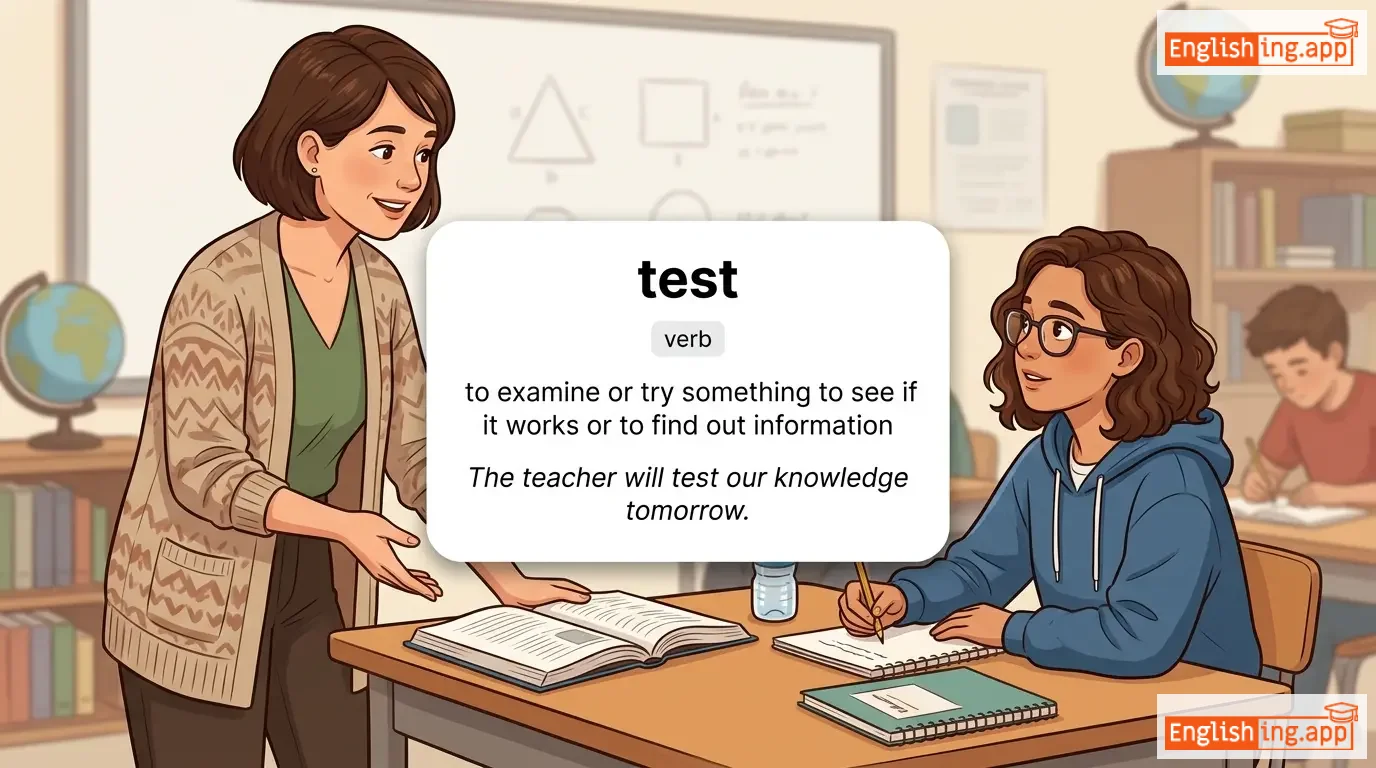
test definition card — visual illustration of the meaning
noun
/tɛst/
テスト (tesuto)

a procedure intended to establish the quality, performance, or reliability of something

"The test results will determine whether the treatment is effective."

"テストの結果は、治療が効果的かどうかを決定します。" (Tesuto no kekka wa, chiryō ga kōka-teki ka dō ka o kettei shimasu.)
noun
/ˈtɛstəmənt/
遺言 / 証拠 (igon / shouko)

a person's will; or strong evidence of something

"His success is a testament to his hard work and dedication."

"彼の成功は彼の努力と献身の証です。" (kare no seikou wa kare no doryoku to kenshin no shouko desu.)
noun
/ˈtɛsteɪtər/
遺言者 (yigonsha)

a person who has made a will

"The lawyer read the will of the deceased testator."

"弁護士は故人の遺言を読みました。" (Bengoshi wa kojin no yigon o yomimashita.)
verb
/ˈtɛstəfaɪ/
証言する (shougen suru)

to make a statement or declaration under oath or to give evidence

"She was called to testify in court about the accident."

"彼女は事故について証言するために裁判所に呼ばれました。" (Kanojo wa jiko ni tsuite shougen suru tame ni saibansho ni yoba remashita.)
noun
/ˌtɛstɪˈmoʊniəl/
推薦状 (suishenjō)

A formal statement testifying to someone's character, qualifications, or the quality of a product or service.

"The company shared a glowing testimonial from a satisfied customer."

"その会社は満足した顧客からの輝かしい推薦状を共有しました。" (Sono kaisha wa manzoku shita kokyaku kara no kagayakashī suishenjō o kyōyū shimashita.)
testimonials definition card — visual illustration of the meaning
noun
/ˌtɛstɪˈməʊnɪəlz/
推薦状, 証言 (suishenjou, shougen)

Written or spoken statements of praise or recommendation from clients or customers.

"Positive testimonials can enhance a company's reputation."

"ポジティブなテスティモニアルは企業の評判を高めることができます。" (Pojitibu na tesutimoniaru wa kigyou no hyouban wo takameru koto ga dekimasu.)
noun
/ˈtɛstəˌmoʊni/
証言 (shōgen)

A formal statement given in a court of law or evidence supporting a fact.

"Her testimony in court helped convict the criminal."

"彼女の証言は裁判で犯人を有罪にするのに役立ちました。" (Kanojo no shōgen wa saiban de han'nin o yūzai ni suru no ni yakudachimashita.)
noun
/ˈtɛstɪŋ/
テスト (tesuto)

the process of assessing or evaluating something, often by trying it out

"The testing of the new software is still ongoing."

"新しいソフトウェアのテストはまだ進行中です。" (Atarashī sofutōwēa no tesuto wa mada shinkōchū desu.)
adjective
/ˈtɛsti/
イライラした (iraira shita)

Easily irritated or annoyed.

"He became testy when asked the same question repeatedly."

"同じ質問を繰り返し聞かれると、彼はイライラしてきた。" (Onaji shitsumon o kurikaeshi kikareru to, kare wa iraira shite kita.)
verb
/ˈtɛðər/
繋ぐ (tsunagu)

To tie an animal with a rope or chain so it cannot move far.

"The farmer tethered the goat to a post."

"農夫はヤギを柱に繋ぎました。" (Nōfu wa yagi o hashira ni tsunagimashita.)
noun
/tɛkst/
テキスト (tekisuto)

a written or printed work or passage, especially a book or document

"The teacher asked us to read the text on page 50."

"先生は私たちにページ50のテキストを読むように言いました。" (Sensei wa watashitachi ni pēji 50 no tekisuto o yomu yō ni iimashita.)
noun
/ˈtɛkstbʊk/
教科書 (kyōkasho)

a book used for studying a subject in school or college

"She bought a new biology textbook for her class."

"彼女はクラスのために新しい生物学の教科書を買いました。" (Kanojo wa kurasu no tame ni atarashī seibutsugaku no kyōkasho o kaimashita.)
noun
/ˈtek.staɪl/
織物 (orimono)

a type of cloth or woven fabric made by knitting or weaving fibers

"Bangladesh is famous for its high-quality textile industry."

"バングラデシュはその高品質なテキスタイル産業で有名です。" (Banguradesh wa sono kōhinshitsu na tekisutairu sangyō de yūmei desu.)
noun
/ˈtɛkstʃər/
質感 (shitsukan)

the way something feels when you touch it; the quality of a surface or substance

"The fabric has a soft and smooth texture."
"その布は柔らかく滑らかな質感です。" (Sono nuno wa yawarakaku namerakana shitsukan desu.)
conjunction
/ðæn/
より (yori)

used to introduce the second element in a comparison

"She is taller than her brother."

"彼女は彼女の兄よりも背が高い。" (Kanojo wa kanojo no ani yori mo se ga takai.)
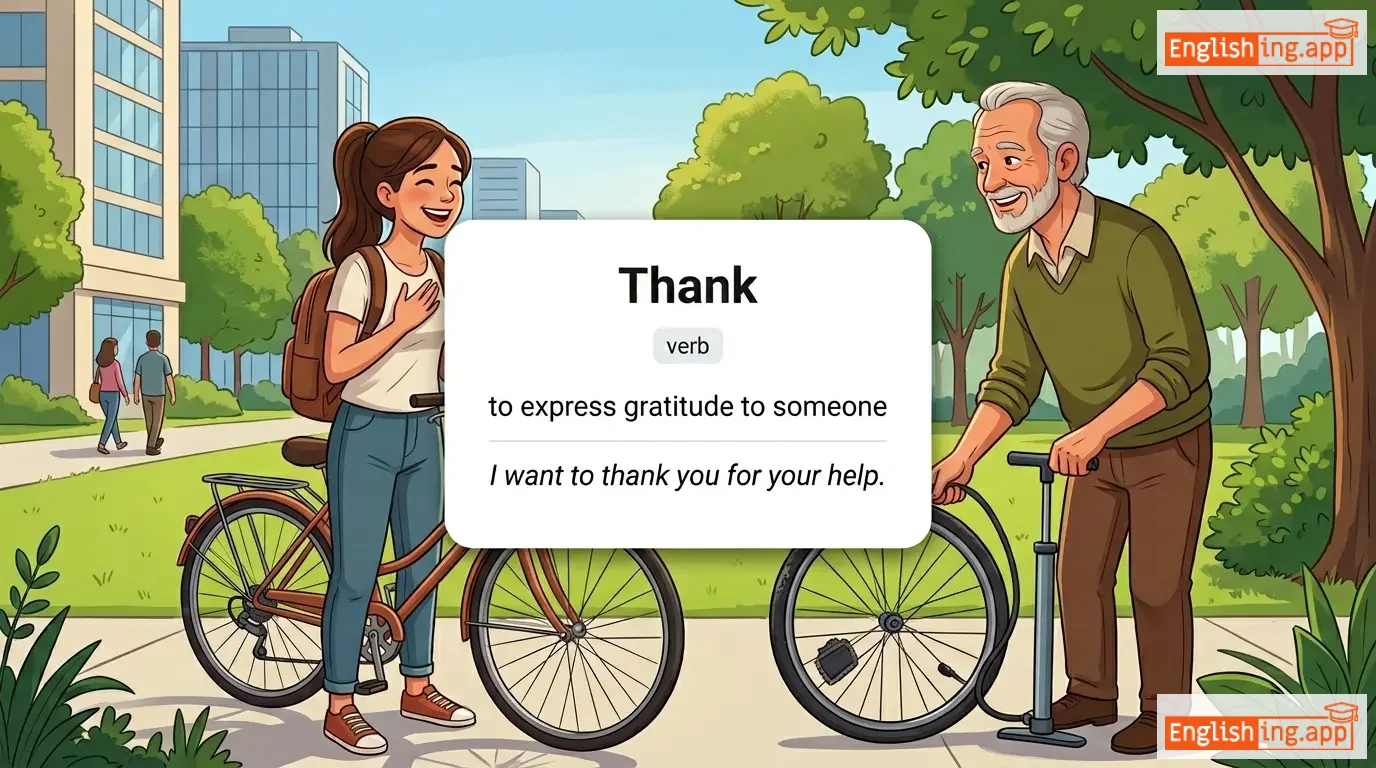
Thank definition card — visual illustration of the meaning
verb
/θæŋk/
感謝する (kansha suru)

to express gratitude to someone

"I want to thank you for your help."

"私はあなたの助けに感謝したいです。" (Watashi wa anata no tasuke ni kansha shitai desu.)
adjective
/ˈθæŋk.fəl/
感謝している (kansha shite iru)

pleased and relieved; expressing gratitude; appreciative

"I am thankful for all your help and support."

"あなたの助けとサポートに感謝しています。" (Anata no tasuke to sapōto ni kansha shite imasu.)
adverb
/ˈθæŋkfəli/
幸いにも (saiwai ni mo)

used to express relief or gratitude

"Thankfully, she arrived just in time for the meeting."

"幸いにも、彼女は会議にちょうど間に合いました。" (Saiwai ni mo, kanojo wa kaigi ni choudo mani aimashita.)
noun
/θæŋks/
ありがとう (arigatou)

an expression of gratitude

"Thanks for helping me with the project."

"プロジェクトを手伝ってくれてありがとう。" (Purojekuto wo tetsudatte kurete arigatou.)
noun
/ˈθæŋksˌɡɪvɪŋ/
感謝祭 (kanshasai)

an annual holiday in the US for giving thanks, celebrated with a meal

"We spent Thanksgiving dinner with our family."

"私たちは家族と一緒に感謝祭の夕食を過ごしました。" (Watashitachi wa kazoku to issho ni kanshasai no yūshoku o sugoshimashita.)
pronoun
/ðæt/
それ (sore)

used to identify a specific person or thing observed or heard

"That is my book on the table."

"それは私の本です、テーブルの上に。" (Sore wa watashi no hon desu, tēburu no ue ni.)
noun
/ˈθɔːməˌtɜrdʒɪst/
奇術師 (kijutsushi)

A worker of miracles or magician.

"The thaumaturgist amazed the audience with his tricks."

"その奇術師は技で観客を驚かせました。" (Sono kijutsushi wa waza de kankyaku o odorokasemashita.)
verb
/θɔː/
解凍する (kaitō suru)

to melt or cause to melt after being frozen

"The ice began to thaw in the sun."

"氷は太陽の下で溶け始めました。" (Kōri wa taiyō no shita de toke hajimemashita.)
🌞

the

article
/ðə/

used to specify a noun as something already mentioned or known

"The sun rises in the east."

noun
/ˈθiː.ɑːr.ki/
神政政治 (shinsei seiji)

Rule or government by the gods; divine sovereignty.

"In ancient cultures, some societies believed in thearchy where gods directly guided human affairs."

"古代の文化では、いくつかの社会が神々が人間の事柄を直接導く神政政治を信じていました。" (Kodai no bunka de wa, ikutsu ka no shakai ga kamigami ga ningen no koto o chokusetsu michibiku shinsei seiji o shinjite imashita.)
noun
/ˈθiːətər/
劇場 (gekijou)

a building or area for dramatic performances

"We are going to the theater tonight."

"今夜、私たちは劇場に行きます。" (Kon'ya, watashitachi wa gekijou ni ikimasu.)
adjective
/θiˈætrɪkl/
劇的 (gekiteki)

Relating to the theater or exaggerated and dramatic in behavior or style.

"Her theatrical performance won the audience's applause."

"彼女の劇的なパフォーマンスは観客の拍手を浴びた。" (Kanojo no gekiteki na pafōmansu wa kankyaku no hakushu o abita.)
noun
/θɛft/
窃盗 (settou)

the action or crime of stealing

"The theft of his wallet was reported to the police."

"彼の財布の盗難は警察に報告されました。" (Kare no saifu no settou wa keisatsu ni hōkoku saremashita.)
👨‍👩‍👧‍👦

their (ðɛər)

pronoun
/ðɛər/
彼らの (karera no)

belonging to or associated with the people or things previously mentioned

"Their house is on the corner."

"彼らの家は角にあります。" (Karera no ie wa kado ni arimasu.)
pronoun
/ðɛərz/
彼らの (karera no)

belonging to them; that which is theirs

"This book is theirs, not ours."

"この本は彼らのもので、私たちのではありません。" (Kono hon wa karera no mono de, watashitachi no de wa arimasen.)
noun
/ˈθiːɪzəm/
神義論 (shingiron)

Belief in the existence of a god or gods, especially a creator who intervenes in the universe.

"Theism is central to many world religions."

"神義論は多くの世界の宗教において中心的な存在です。" (Shingiron wa ōku no sekai no shūkyō ni oite chūshin-teki na sonzai desu.)
pronoun
/ðɛm/
彼ら (karera)

used to refer to people or things previously mentioned or easily identified

"I saw them at the park yesterday."

"昨日、公園で彼らを見かけました。" (Kinō, kōen de karera o mikakemashita.)
adjective
/θiːˈmætɪk/
テーマ的 (tēmateki)

Relating to or based on a theme.

"The book is organized into thematic chapters."
"その本はテーマごとに章が整理されています。" (Sono hon wa tēma goto ni shō ga seiri sareteimasu.)
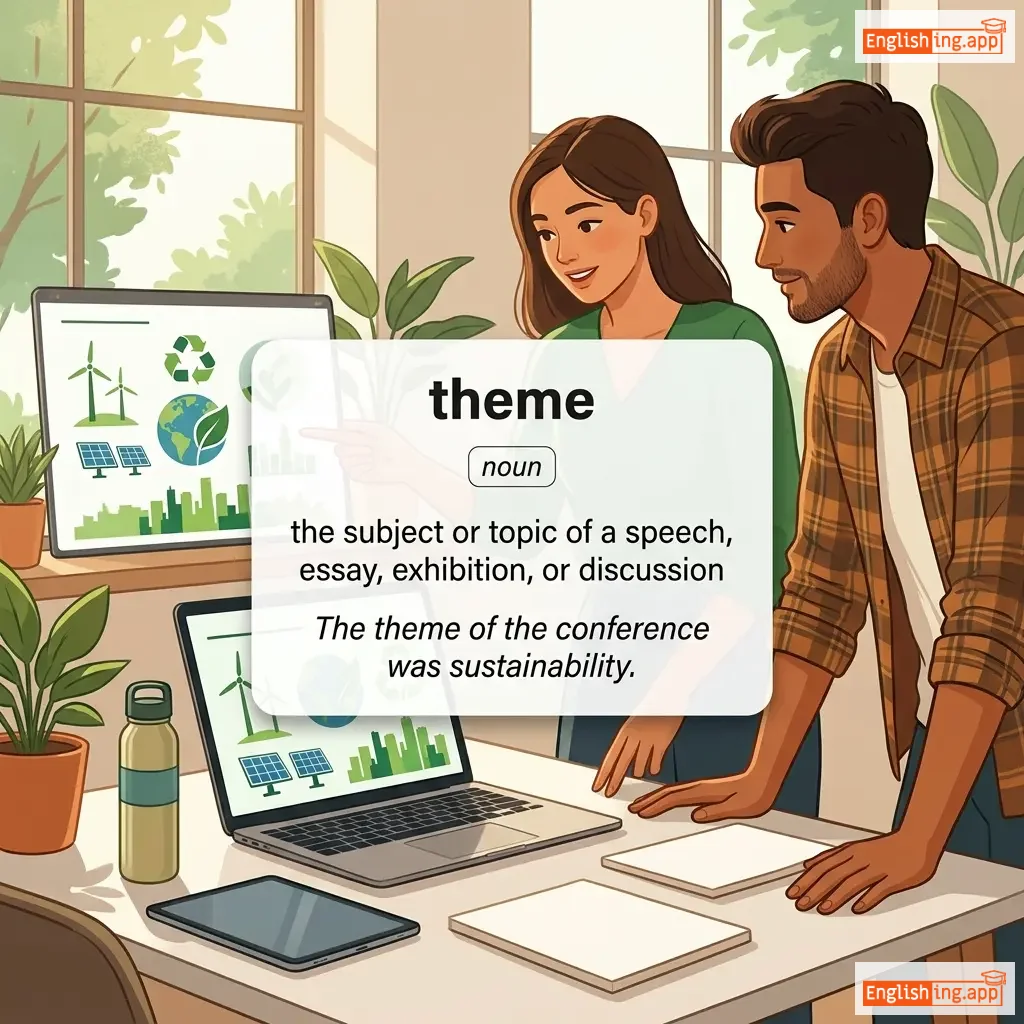
theme definition card — visual illustration of the meaning
noun
/θiːm/
テーマ (teema)

the subject or topic of a speech, essay, exhibition, or discussion

"The theme of the conference was sustainability."

"会議のテーマは持続可能性でした。" (Kaigi no teema wa jizoku kanousei deshita.)
pronoun
/ðəmˈsɛlvz/
自分で (jibun de)

used to emphasize the subject of the sentence or to refer to the subject doing something to itself

"They fixed the problem themselves."

"彼らは自分で問題を解決しました。" (Karera wa jibun de mondai o kaiketsu shimashita.)
adverb
/ðɛn/
それから (sorekara)

at that time; next in order of time or place

"We went to the park, and then we had lunch."
"公園に行って、その後昼食をとりました。" (Kōen ni itte, sono ato chūshoku o torimashita.)
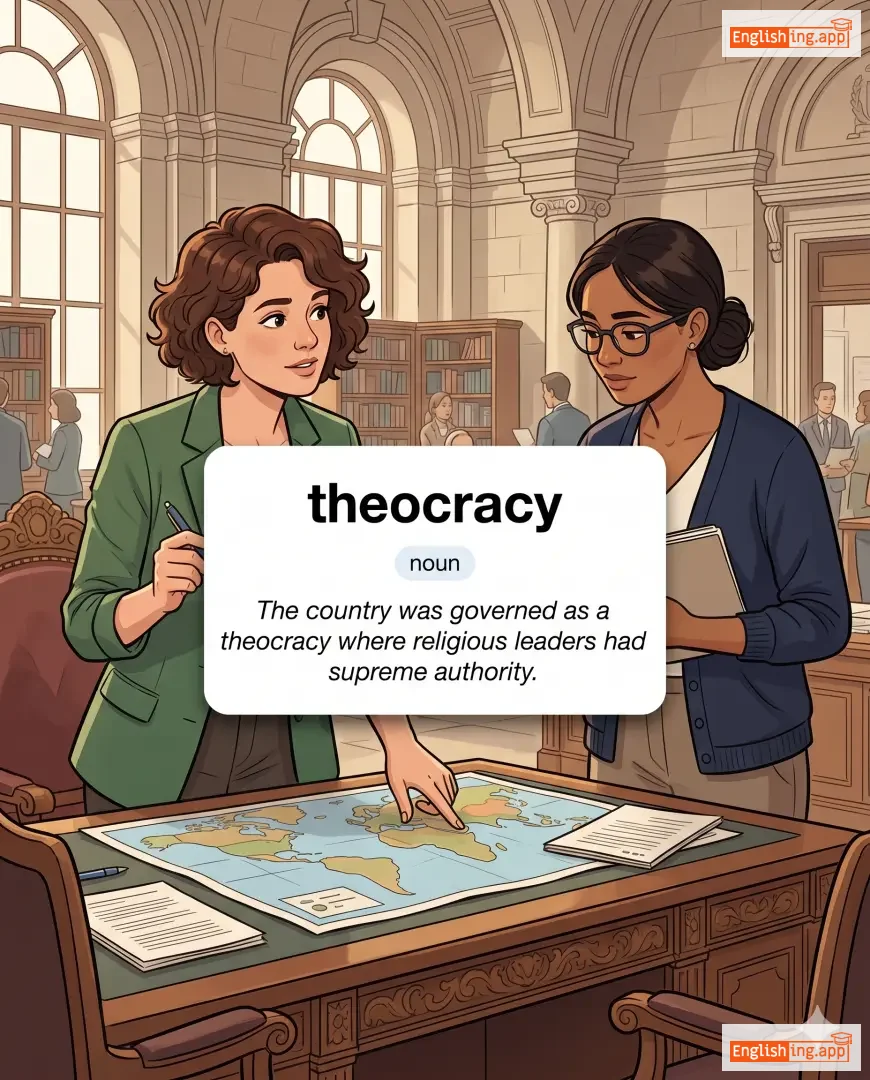
theocracy definition card — visual illustration of the meaning
noun
/θiˈɒkrəsi/
神権政治 (shinken seiji)

A system of government in which priests or religious leaders rule in the name of God or a deity.

"The country was governed as a theocracy where religious leaders had supreme authority."

"その国は神権政治として統治され、宗教指導者が最高の権限を持っていました。" (Sono kuni wa shinken seiji toshite tochi sare, shukyo shido sha ga saiko no kenken o motte imashita.)
noun
/θiˈɒkrəsi/
神権政治 (shinken seiji)

Government or rule by religious leaders or clergy.

"Theocrasy often merges religious authority with political power."

"神権政治はしばしば宗教的権威と政治的権力を融合させます。" (Shinken seiji wa shibashiba shukyo teki ken'i to seijiteki kenryoku o yugo sasemasu.)
noun
/ˌθiːəˈloʊdʒən/
神学者 (shingakusha)

A person who studies or is an expert in theology.

"Theologians often debate complex questions of faith and morality."

"神学者は信仰と道徳について複雑な問題を議論することがよくあります。" (Shingakusha wa shinkou to doutoku ni tsuite fukuzatsu na mondai wo giron suru koto ga yoku arimasu.)
adjective
/ˌθiːəˈlɒdʒɪkl/
神学的 (shingakuteki)

Relating to the study of theology or religious belief.

"He wrote a theological paper on the concept of divine justice."

"彼は神の正義の概念についての神学的な論文を書いた。" (Kare wa kami no seigi no gainen ni tsuite no shingakuteki na ronbun o kaita.)
noun
/θiˈɒlədʒi/
神学 (shingaku)

The study of the nature of God and religious beliefs.

"She is pursuing a degree in theology at the university."

"彼女は大学で神学の学位を取得しています。" (Kanojo wa daigaku de shingaku no gakui o shutsudō shiteimasu.)