語彙集

英単語辞書 | 単語の意味、定義、例文

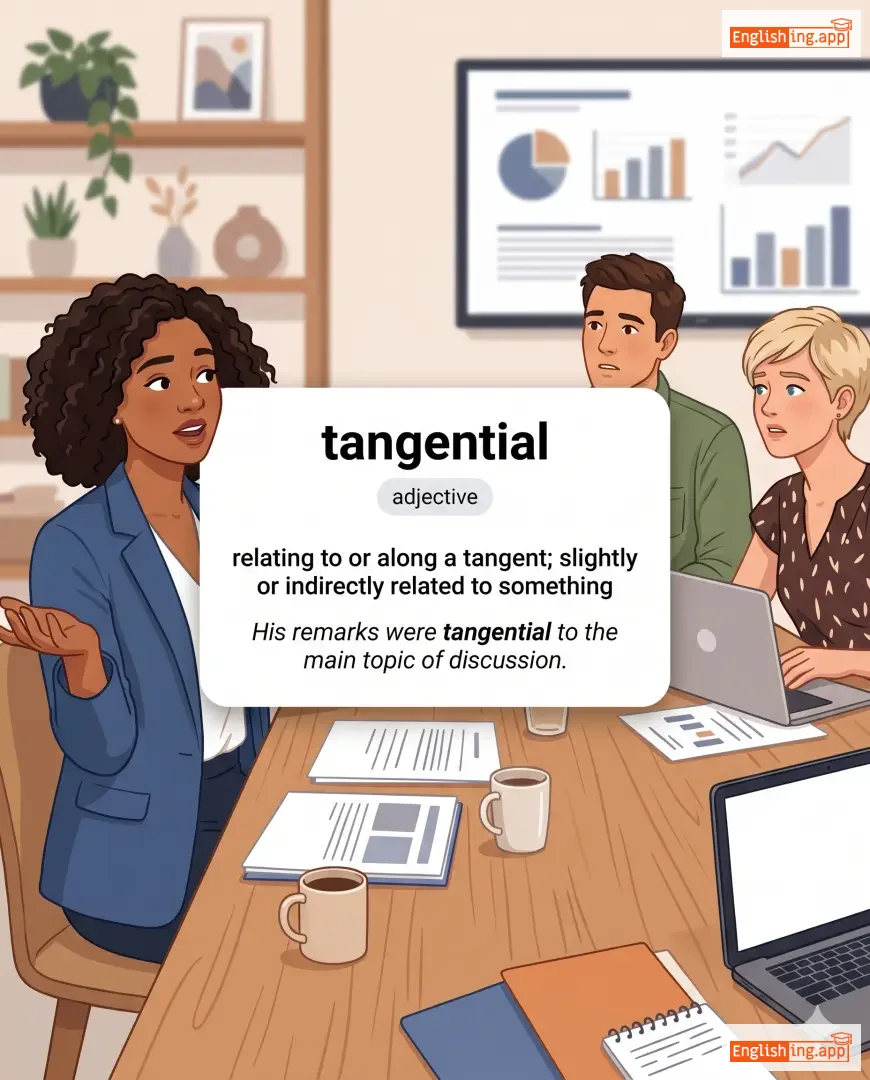
tangential definition card — visual illustration of the meaning
adjective
/tænˈdʒɛnʃəl/
接線の (sessenn no)

relating to or along a tangent; slightly or indirectly related to something

"His remarks were tangential to the main topic of discussion."
"彼のコメントは議論の主要なトピックには関連していなかった。" (Kare no komento wa giron no shuyōna topikku ni wa kanren shite inakatta.)
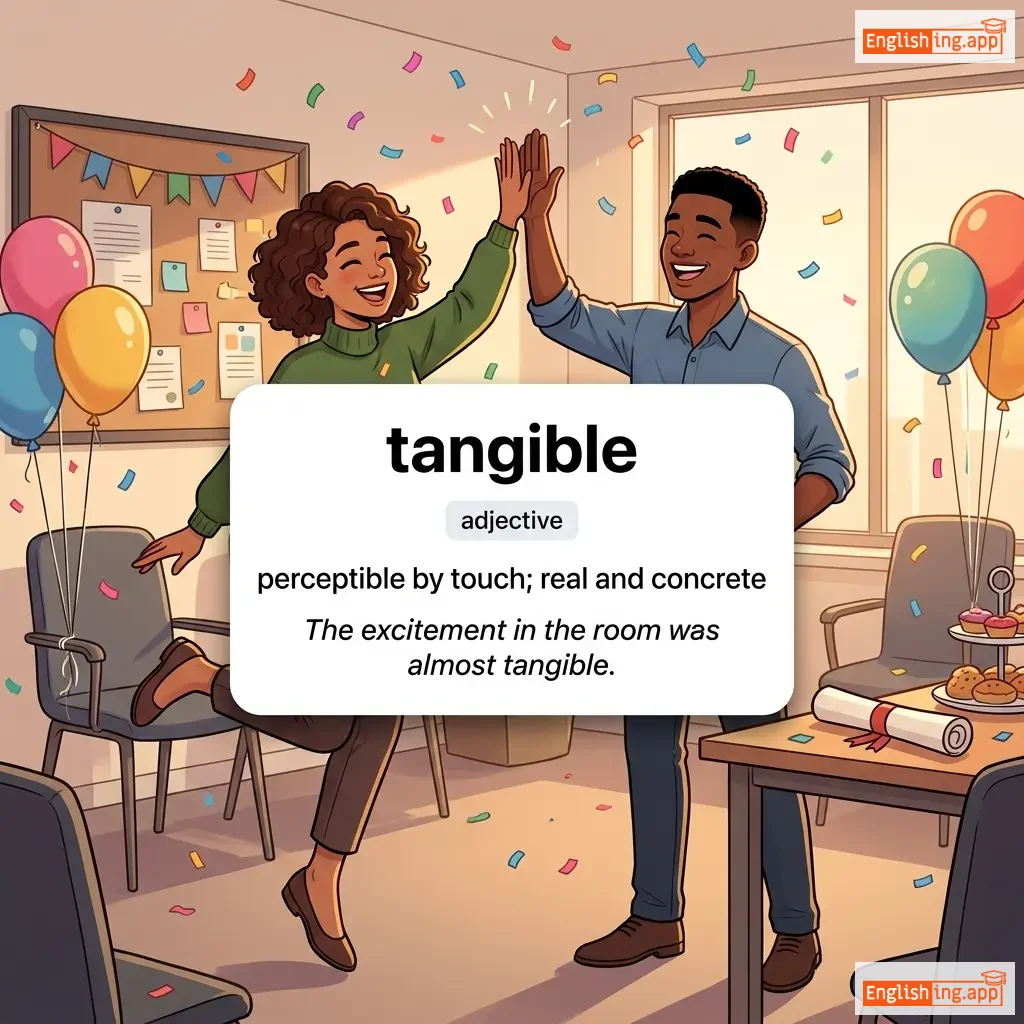
tangible definition card — visual illustration of the meaning
adjective
/ˈtændʒəbl/
触れることができる (fureru koto ga dekiru)

perceptible by touch; real and concrete

"The excitement in the room was almost tangible."

"部屋の中の興奮はほとんど触れることができた。" (Heya no naka no kōfun wa hotondo fureru koto ga dekita.)
adjective
/ˈtæŋ.i/
辛い (tsurai)

Having a strong, sharp, and pleasantly biting flavor or taste.

"The sauce had a tangy flavor that brightened the dish."

"そのソースは、料理をさらに美味しくした辛い味を持っていました。" (Sono sōsu wa, ryōri o sara ni oishiku shita tsurai aji o motte imashita.)
🚙

Tank

noun
/tæŋk/

a large, heavy military vehicle that moves on tracks and is armed with weapons

"The army sent tanks to the front lines."

noun
/ˈtæn.ər/
皮革職人 (hikaku shokunin)

A person whose job is to tan animal hides to make leather.

"The tanner worked long hours to produce fine leather."

"皮革職人は優れた革を作るために長時間働きました。" (Hikaku shokunin wa sugureta kawa o tsukuru tame ni chōjikan hatarakimashita.)
noun
/ˈtæn.ə.ri/
なめし革工場 (nameshi kawa koujou)

A place where animal hides are processed into leather.

"The tannery produced high-quality leather for export."

"なめし革工場は輸出のために高品質な革を生産しました。" (Nameshi kawa koujou wa yushutsu no tame ni kouhinshitsu na kawa o seisan shimashita.)
verb
/ˈtæn.tə.laɪz/
誘惑する (yūwaku suru)

To tease or torment someone with the promise of something desirable but unattainable.

"The aroma of the bakery tantalized the hungry children."

"ベーカリーの香りが空腹の子供たちを誘惑した。" (Bēkary no kaori ga kūfuku no kodomotachi wo yūwaku shita.)
adjective
/ˈtæn.tə.laɪ.zɪŋ/
魅惑的な (miwakuteki na)

Something that excites desire or interest, often by being just out of reach.

"She wore a tantalizing perfume that caught everyone's attention."

"彼女はみんなの注目を集める魅惑的な香水をつけていた。" (Kanojo wa minna no chūmoku o atsumeru miwakuteki na kōsui o tsukete ita.)
adjective
/ˈtæntəmaʊnt/
同等 (doutou)

Equivalent in seriousness or effect; virtually the same as.

"His refusal to speak was tantamount to an admission of guilt."

"彼の話さないことは罪を認めることと同等だった。" (Kare no hanasanai koto wa tsumi o mitomeru koto to doutou datta.)
noun
/ˈtæntrəm/
癇癪 (kanshaku)

An uncontrolled outburst of anger and frustration, typically in a young child.

"The child threw a tantrum when he didn’t get the toy."

"子供はおもちゃをもらえなくて癇癪を起こした。" (Kodomo wa omocha o moraenakute kanshaku o okoshita.)
verb
/tæp/
タップする (tappu suru)

to strike something lightly, usually with a quick, sharp sound

"He tapped on the door to get her attention."

"彼は彼女の注意を引くためにドアをタップしました。" (Kare wa kanojo no chuui o hiku tame ni doa o tappu shimashita.)
noun
/teɪp/
テープ (teepu)

a long, narrow strip of material, often sticky on one side, used for fastening or sticking things together

"I need some tape to seal this box."

"この箱を封をするためにテープが必要です。" (Kono hako o fuu o suru tame ni teepu ga hitsuyou desu.)
verb
/ˈteɪpər/
先細りになる (sakihosori ni naru)

To gradually decrease in width, thickness, or intensity.

"The road tapers off as it reaches the mountains."

"道路は山に到達するにつれて細くなります。" (Dōro wa yama ni tōtatsu suru ni tsurete hosoku narimasu.)
noun
/ˈtæpəstri/

A piece of thick textile fabric with pictures or designs woven into it, often hung on walls.

"The museum displayed an ancient tapestry from the 15th century."

noun
/təˈræntjʊlə/
タランチュラ (taranchura)

A large hairy spider found in warm regions.

"The tarantula crawled across the desert floor."

"タランチュラは砂漠の地面を這っていた。" (Tarantyura wa sabaku no jimen o hatte ita.)
adjective
/ˈtɑːrdi/
遅刻 (chikoku)

Delayed; arriving or happening late.

"The student received a warning for being tardy to class."

"学生は授業に遅れて警告を受けました。" (Gakusei wa jugyou ni okurete keikoku o ukemashita.)
target definition card — visual illustration of the meaning
noun
/ˈtɑːɡɪt/
目標 (mokuhyō)

a goal or objective that one aims to achieve

"The team set a target to increase sales by 20%."
"チームは売上を20%増加させることを目標に設定しました。" (Chīmu wa uriage o 20% zōka saseru koto o mokuhyō ni settei shimashita.)
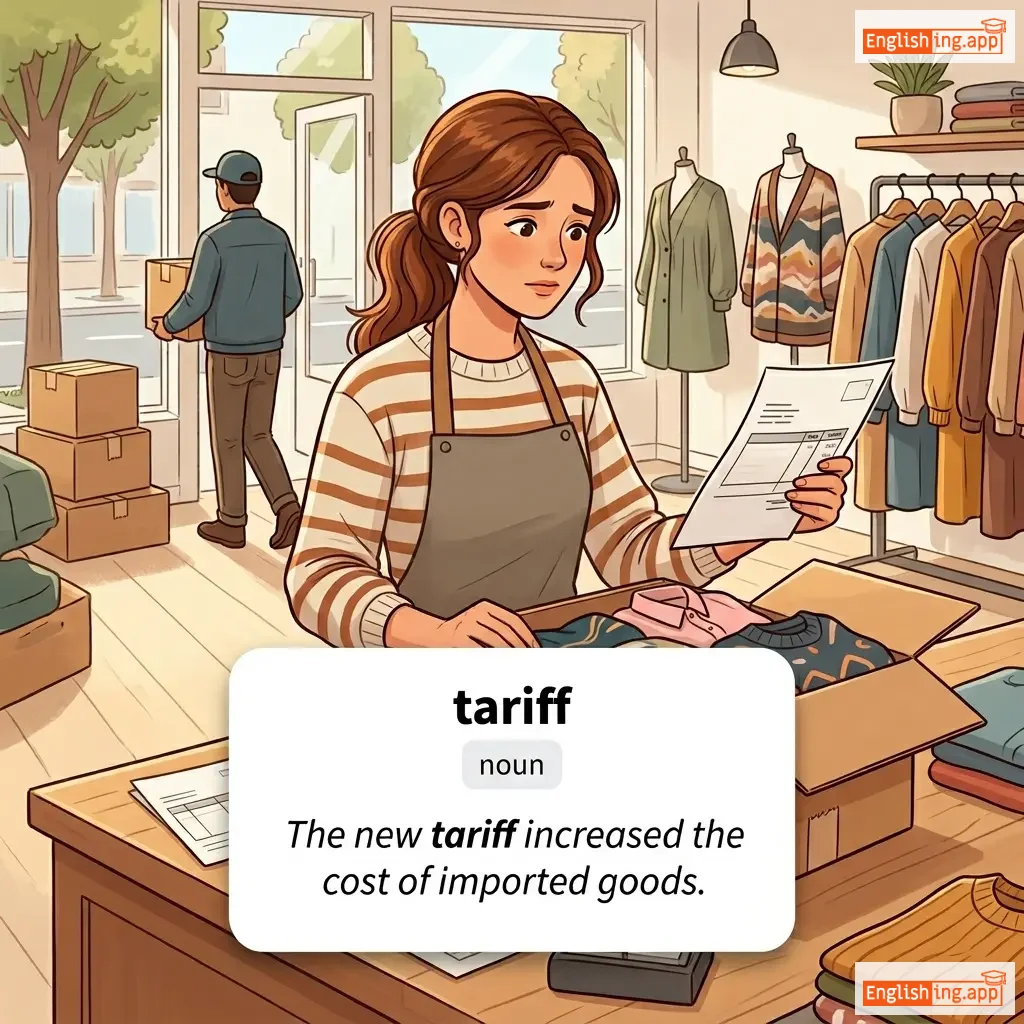
tariff definition card — visual illustration of the meaning
noun
/ˈtær.ɪf/
関税 (kansetai)

A tax imposed by the government on imported or exported goods, also known as duty, customs tax, or levy.

"The new tariff increased the cost of imported goods."

"新しい関税は輸入品のコストを増加させました。" (Atarashī kansetai wa yunyūhin no kosuto o zōka sasemashita.)
noun
/tɑːrn/
山間の湖 (sankan no mizuumi)

A small mountain lake or pool.

"We camped near a tranquil tarn in the highlands."

"私たちは高原で静かな山間の湖の近くにキャンプをしました。" (Watashitachi wa kougen de shizukana sankan no mizuumi no chikaku ni kyanpu o shimashita.)
verb
/ˈtɑːrnɪʃ/

To lose luster, especially as a result of exposure to air or moisture; to damage reputation.

"The silver jewelry tarnished quickly when left in the open air."

noun
/tɑːrˈpɔːlɪn/

A large sheet of strong, flexible, water-resistant material used for covering or protecting things.

"The workers used a tarpaulin to cover the construction materials from rain."

verb
/ˈtæri/
遅れる (okureru)

To delay or linger; to stay longer than intended.

"Do not tarry, or you will miss the train."

"遅れないで、さもないと電車に乗り遅れるよ。" (Okurenaide, samonaito densha ni noriokureru yo.)
🥧

tart

noun, adjective
/tɑːrt/

A small pie with a sweet or savory filling; or having a sharp, sour taste.

"She served a delicious apple tart for dessert."

noun
/tɑːsk/
タスク (tasuku)

a piece of work or duty to be done

"He completed the task before the deadline."
"彼は締め切り前にタスクを完了しました。" (Kare wa shimekiri mae ni tasuku o kanryou shimashita.)
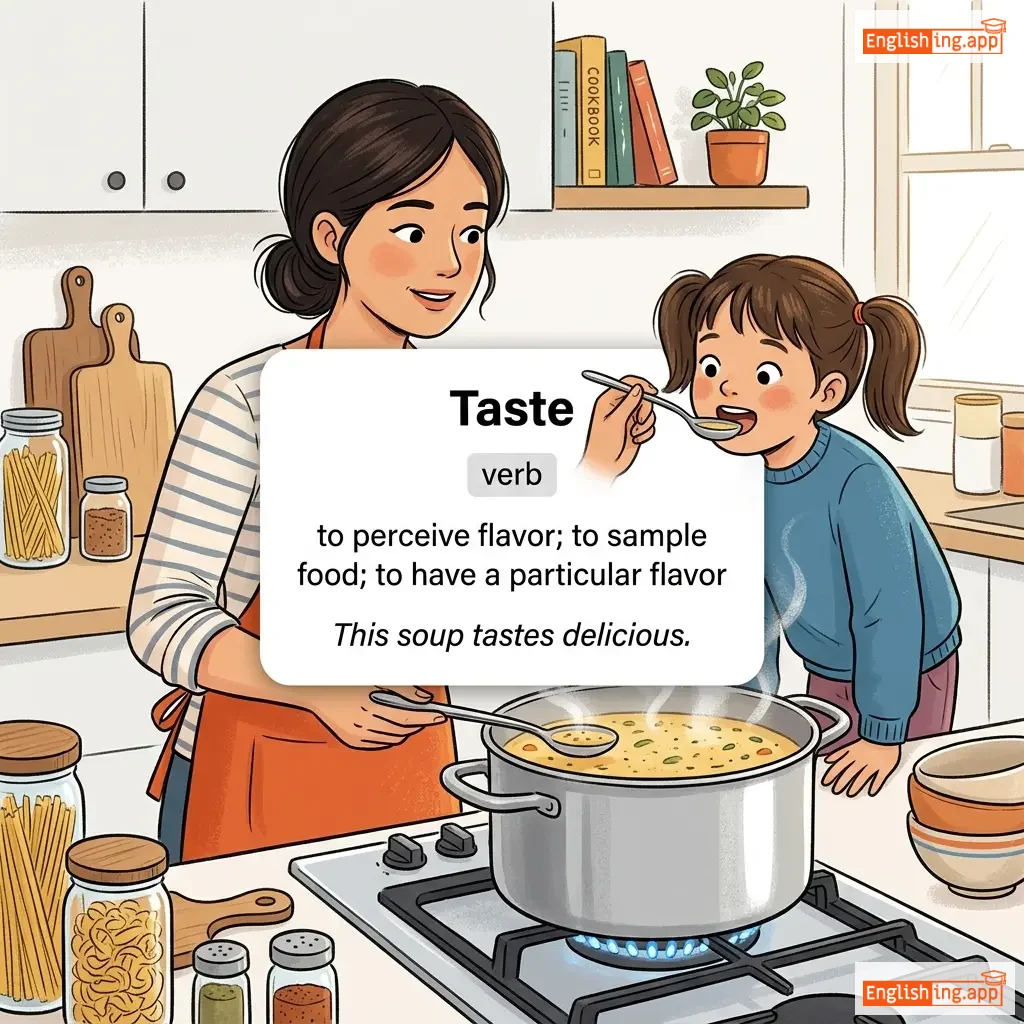
Taste definition card — visual illustration of the meaning
noun
/teɪst/
(aji)

the sensation of flavor perceived in the mouth

"The cake had a delicious taste."

"ケーキは美味しい味がしました。" (Kēki wa oishii aji ga shimashita.)
adjective
/ˈteɪst.fəl/
味わい深い; エレガント; 良いセンスのある (ajiwai fukai; ereganto; yoi sensu no aru)

showing good judgment in matters of style and beauty

"She decorated her home in a very tasteful manner."

"彼女は非常にセンスの良い方法で家を飾りました。" (Kanojo wa hijō ni sensu no yoi hōhō de ie o kazari mashita.)
adjective
/ˈteɪst.ləs/
味がない (aji ga nai)

lacking flavor; showing poor judgment in style

"The soup was completely tasteless and needed more seasoning."

"スープは完全に味がなく、さらに調味料が必要でした。" (Sūpu wa kanzen ni aji ga naku, sara ni chōmiryō ga hitsuyō deshita.)
adjective
/ˈteɪsti/
美味しい (oishii)

Having a pleasant, distinct flavor; delicious.

"The chef prepared a very tasty curry."

"シェフはとても美味しいカレーを作りました。" (Shefu wa totemo oishī karē o tsukurimashita.)
noun, verb
/ˈtætər/

A torn piece of cloth or clothing; to become ragged or torn.

"The old flag hung in tatters after the storm."

noun, adjective
/ˌtætərdɪˈmeɪliən/
ぼろぼろの服を着た人 (boroboro no fuku o kita hito)

A person dressed in ragged clothes; ragged or dilapidated in appearance.

"A tatterdemalion wandered the streets in search of food."

"タッターデマリオンは食べ物を探して通りを歩いていました。" (Tatterdemalion wa tabemono o sagashite toori o aruite imashita.)
adjective
/ˈtæti/
使い古しの (tsukai furushi no)

Worn out, shabby, or in poor condition.

"The sofa looked old and tatty after years of use."

"ソファは長年の使用で古くて使い古しのように見えた。" (Sofa wa naganen no shiyou de furukute tsukai furushi no you ni mieta.)
verb
/tɔːnt/
からかう (karakau)

to provoke or challenge someone with insulting remarks

"The bully tried to taunt him with cruel words."

"いじめっ子は残酷な言葉で彼をからかおうとした。" (Ijimekko wa zankokuna kotoba de kare wo karakaou to shita.)
adjective
/tɔːt/
ぴんと張った (pinto hatta)

stretched or pulled tight; tense

"The rope was pulled taut between the two poles."

"ロープは二つのポールの間でぴんと張られていました。" (Roopu wa futatsu no pooru no aida de pinto hararete imashita.)
adjective
/ˌtɔːtəˈlɒdʒɪkəl/
冗長な (jōchō na)

expressing something by repeating the same idea in different words; redundant

"Saying 'free gift' is considered tautological."
"'無料ギフト'と言うことは冗長と見なされます。" ('Muryō gifuto' to iu koto wa jōchō to minasaremasu.)
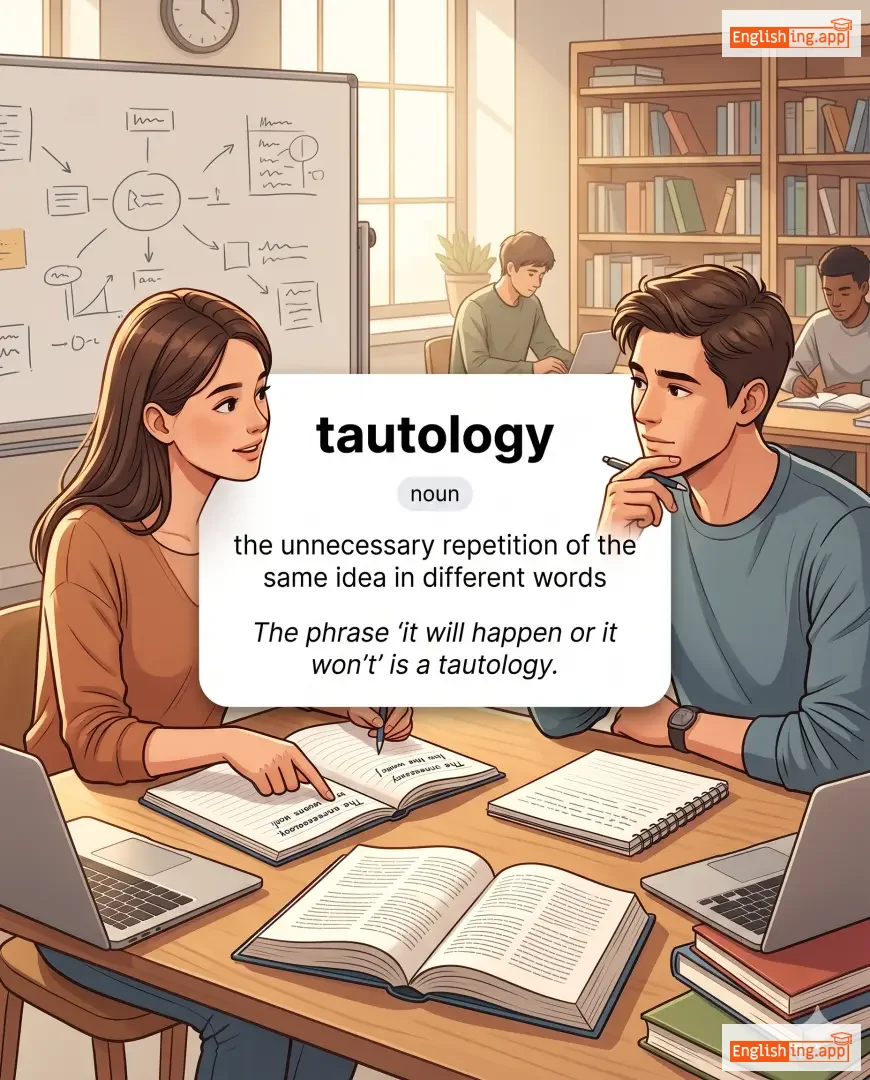
tautology definition card — visual illustration of the meaning
noun
/tɔːˈtɒlədʒi/
不必要な繰り返し (fuhitsuyou na kurikaeshi)

the unnecessary repetition of the same idea in different words

"The phrase 'it will happen or it won’t' is a tautology."

"'それは起こるかもしれないし、起こらないかもしれない'というフレーズはトートロジーです。" ('sore wa okoru kamoshirenai shi, okoranai kamoshirenai' to iu furezu wa tootoroji desu.)
adjective
/ˈtɔːdri/
安っぽくて派手だが、質が悪い (yasu pooku te hade da ga, shitsu ga warui)

cheap and showy but of poor quality

"She wore a tawdry necklace that broke easily."

"彼女は安っぽくて派手なネックレスをしていて、簡単に壊れた。" (Kanojo wa yasu pooku te hade na nekkuresu o shite ite, kantan ni kowareta.)
adjective
/ˈtɔːni/
黄褐色 (koukasseki)

A warm, sandy or golden-brown color.

"The owl's tawny feathers blended with the tree bark."

"フクロウの黄褐色の羽毛は木の皮と混ざり合った。" (Fukurou no koukasseki no umou wa ki no kawa to mazariatta.)
noun
/tæks/
税金 (zeikin)

a compulsory contribution to state revenue, typically levied on income or sales

"The government increased the tax rate on luxury goods."

"政府は贅沢品に対する税率を引き上げました。" (Seifu wa zeitakuhin ni taisuru zeiritsu o hikiagemashita.)
noun
/tækˈseɪʃən/
課税 (kazei)

The system of imposing and collecting taxes.

"Taxation is necessary for funding public services."

"課税は公共サービスの資金調達に必要です。" (Kazei wa kōkyō sābisu no shikin chōtatsu ni hitsuyō desu.)
noun
/ˈtæksi/
タクシー (takushii)

A car licensed to transport passengers in exchange for payment of a fare.

"We hailed a taxi to get to the airport."

"私たちは空港に行くためにタクシーを呼びました。" (Watashitachi wa kuukou ni iku tame ni takushii wo yobimashita.)
noun
/ˈtæk.si kæb/
タクシー (takushi)

A car that carries passengers for a fare, usually in cities

"We took a taxi cab to the restaurant."

"私たちはレストランにタクシーで行きました。" (watashitachi wa resutoran ni takushī de ikimashita.)
noun
/ˈtæksɪˌdɜːrmi/
剥製 (hakkosei)

The art of preparing, stuffing, and mounting the skins of animals for display.

"The museum had a large collection of taxidermy animals."

"博物館には大量の剥製が展示されていた。" (Hakubutsukan ni wa tairyo no hakkosei ga tenji sarete ita.)
adjective
/ˈtæksɪŋ/
大変 (taihen)

Requiring a lot of effort; physically or mentally demanding.

"Preparing for the exam was a taxing experience."

"試験の準備は大変な経験でした。" (Shiken no junbi wa taihen na keiken deshita.)
noun
/tækˈsɒnəmɪst/
分類学者 (bunruigakusha)

A scientist who classifies organisms into groups based on their characteristics.

"The taxonomist discovered a new species of insect."
"その分類学者は新しい昆虫の種を発見しました。" (Sono bunruigakusha wa atarashī konchū no shū o hakken shimashita.)
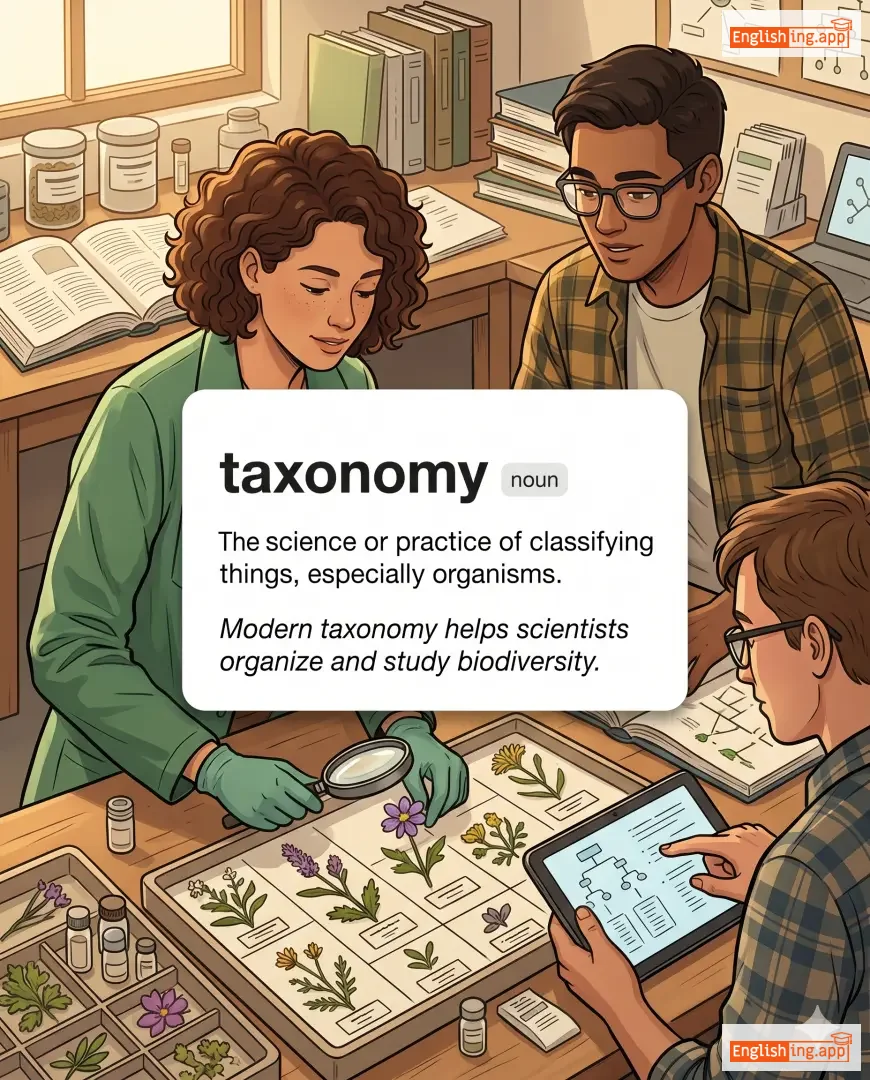
taxonomy definition card — visual illustration of the meaning
noun
/tækˈsɒnəmi/
分類学 (bunruigaku)

The science or practice of classifying things, especially organisms.

"Modern taxonomy helps scientists organize and study biodiversity."

"現代の分類学は、科学者たちが生物多様性を整理し、研究するのを助けます。" (gendai no bunruigaku wa, kagakusha-tachi ga seibutsu tayousei wo seiri shi, kenkyuu suru no wo tasukemasu.)
noun
/ˈtæksˌpeɪər/
納税者 (nōzeisha)

a person who pays tax to the government

"The taxpayers' money is used to fund public services."

"納税者のお金は公共サービスのために使われます。" (Nōzeisha no okane wa kōkyō sābisu no tame ni tsukawaremasu.)
noun
/tiː/
お茶 (ocha)

a hot drink made by infusing the dried, crushed leaves of the tea plant in boiling water

"I drink tea every morning to start my day."

"私は毎朝、1日を始めるためにお茶を飲みます。" (Watashi wa mai asa, ichinichi o hajimeru tame ni ocha o nomimasu.)
noun
/ˈtiː.pɒt/
ティーポット (tīpotto)

a container with a lid, handle, and spout for brewing and serving tea

"She poured hot water into the tea-pot to make tea."

"彼女はお茶を淹れるためにティーポットに熱いお湯を注いだ。" (Kanojo wa ocha o ireru tame ni tīpotto ni atsui oyu o sosogida.)
noun
/tiː ˈstreɪnər/
茶こし (chakoshi)

a small perforated device used to strain tea leaves from brewed tea

"I always use a tea-strainer when pouring tea into cups."
"私はお茶をカップに注ぐとき、いつも茶こしを使います。" (watashi wa ocha o kappu ni sosogu toki, itsumo chakoshi o tsukaimasu.)
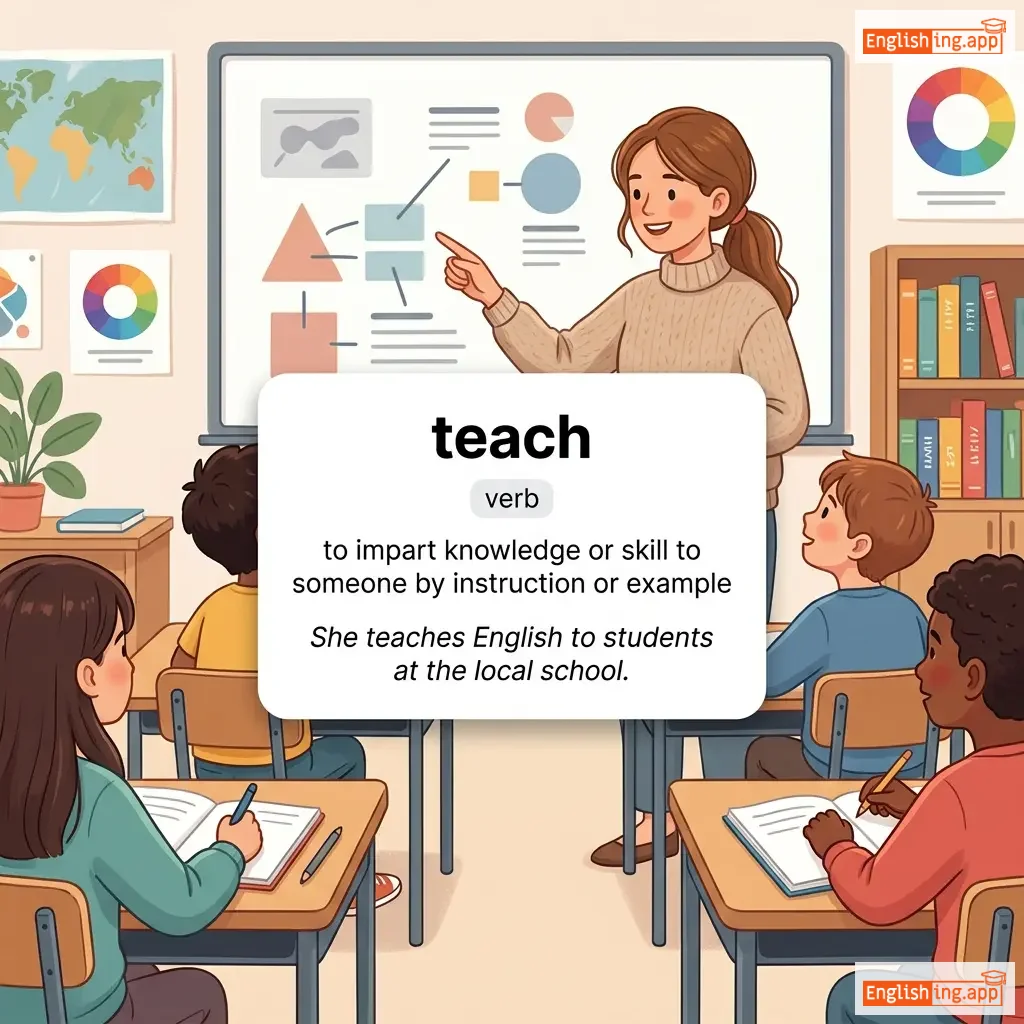
teach definition card — visual illustration of the meaning
verb
/tiːʧ/
教える (oshieru)

to impart knowledge or skill to someone by instruction or example

"She teaches English to students at the local school."

"彼女は地元の学校で学生に英語を教えています。" (Kanojo wa jimoto no gakkō de gakusei ni eigo o oshieteimasu.)