語彙集

英単語辞書 | 単語の意味、定義、例文

noun
/ˈtwaɪ.laɪt/
黄昏 (tasogare)

the soft glowing light from the sky when the sun is below the horizon; a period of decline

"We walked along the beach at twilight."

"私たちは黄昏時にビーチを歩いていました。" (Watashitachi wa tasogare-ji ni biichi o aruiteimashita.)
👯‍♂️

twin (ツイン)

noun
/twɪn/
双子 (futago)

either of two children born at the same time to the same mother

"They have twin girls."

"彼らには双子の女の子がいます。" (Karera ni wa futago no onnanoko ga imasu.)
noun
/twɪndʒ/
鋭い痛み (surudoi itami)

a sudden, sharp pain or an emotional pang

"He felt a twinge of guilt after lying to his friend."

"彼は友達に嘘をついた後、罪悪感の鋭い痛みを感じた。" (Kare wa tomodachi ni uso o tsuita ato, zaiakukan no surudoi itami o kanjita.)
verb
/twɪst/
ねじる, 回す (nejiru, mawasu)

to bend or turn something into a coil or spiral shape; to distort.

"He twisted the rope tightly around the pole."

"彼はロープを柱の周りにしっかりと巻きつけました。" (Kare wa roopu o hashira no mawari ni shikkari to makitsukemashita.)
noun
/ˈtwɪstər/
竜巻 (tatsumaki)

A tornado or something that twists; also refers to a challenging tongue twister.

"The twister destroyed several houses in the village."

"竜巻は村のいくつかの家を破壊しました。" (Tatsumaki wa mura no ikutsuka no ie o hakai shimashita.)
noun
/twɪt/
馬鹿; からかう (baka; karakau)

a silly or foolish person; to tease or make fun of someone

"Don't be such a twit and listen carefully."

"そんな馬鹿なことを言わないで、よく聞いて。" (sonna baka na koto o iwanaide, yoku kiite)
noun
/tuː/
(ni)

the number following one

"She has two children."

"彼女には二人の子供がいます。" (Kanojo ni wa futari no kodomo ga imasu.)
noun
/tuː θɜːrdz/
三分の二 (sanbun no ni)

a fraction equal to two parts of three; 2/3.

"Two-thirds of the students passed the exam."

"学生の三分の二が試験に合格しました。" (Gakusei no sanbun no ni ga shiken ni goukaku shimashita.)
noun
/ˈtuːsəm/
ツーサム (tsū sam)

A pair of people considered together, often in a romantic or competitive context.

"They entered the dance competition as a twosome."

"彼らはツーサムとしてダンスコンペティションに参加した。" (Karera wa tsū sam toshite dansu konpetishon ni sanka shita.)
noun
/taɪˈkuːn/
大富豪 (dai fugo)

a wealthy, powerful businessperson

"The real estate tycoon invested in several skyscrapers."
"不動産の大富豪は複数の超高層ビルに投資しました。" (Fudōsan no dai fugo wa fukusū no chō kōsō biru ni tōshi shimashita.)
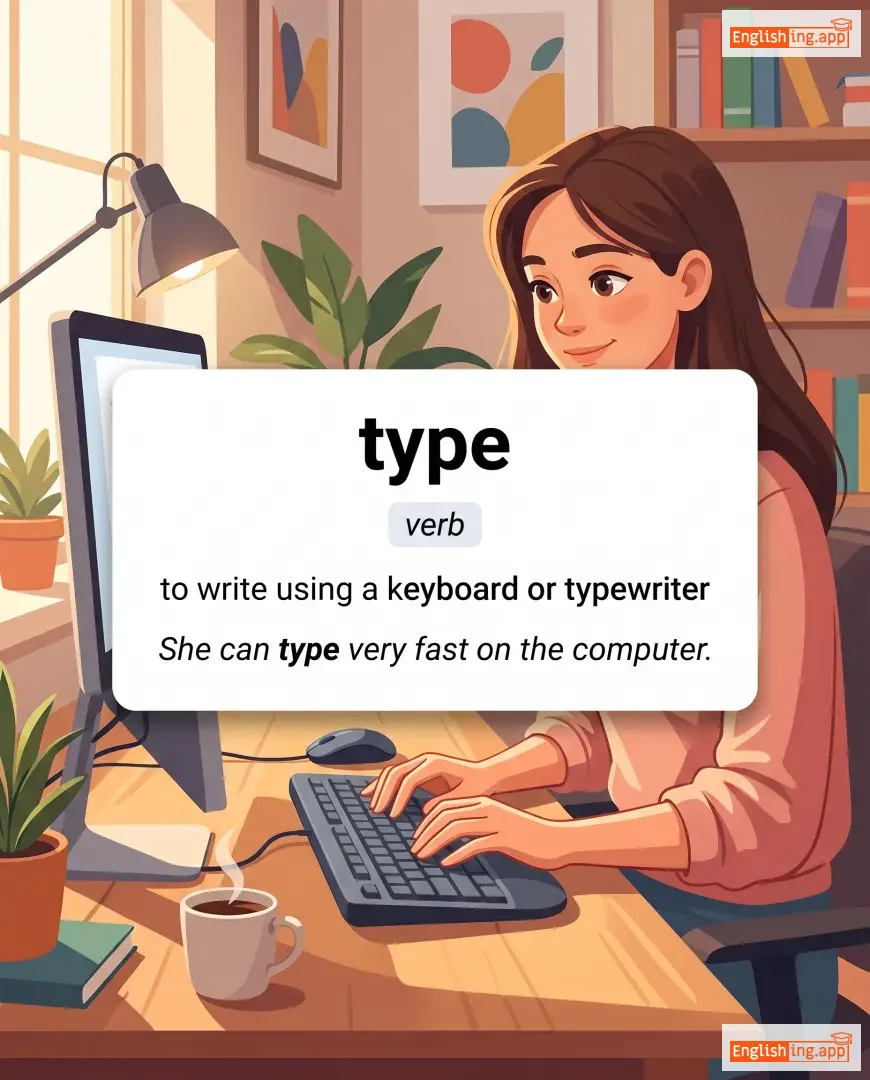
type definition card — visual illustration of the meaning
noun
/taɪp/
タイプ (taipu)

a category of people or things having common characteristics

"What type of music do you like?"

"どのタイプの音楽が好きですか?" (Dono taipu no ongaku ga suki desu ka?)
noun
/taɪˈfuːn/
台風 (taifū)

a tropical storm in the region of the Indian or western Pacific oceans

"The typhoon caused severe flooding in the coastal areas."

"台風は沿岸地域に甚大な洪水を引き起こしました。" (Taifū wa engan chiiki ni jindaina kōzui o hikiokoshimashita.)
adjective
/ˈtɪpɪkəl/
特定の種類の人や物の通常の特徴を持つ (tokutei no shurui no hito ya mono no tsūjō no tokuchō o motsu)

having the usual qualities of a particular type of person or thing

"It was a typical summer day, hot and humid."

"それは典型的な夏の日で、暑くて湿気がありました。" (Sore wa tenkeiteki na natsu no hi de, atsukute shikke ga arimashita.)
adverb
/ˈtɪpɪkli/
通常 (tsūjō)

in a way that is typical of a particular person, thing, or group

"She typically arrives at work at 9 AM."

"彼女は通常、午前9時に仕事に到着します。" (Kanojo wa tsūjō, gozen 9 ji ni shigoto ni tōchaku shimasu.)
verb
/ˈtɪpɪfaɪ/
代表する (daihyou suru)

to represent or be a typical example of something

"His leadership style typifies the new corporate culture."

"彼のリーダーシップスタイルは新しい企業文化を体現しています。" (Kare no rīdāshippu sutairu wa atarashī kigyō bunka o taigen shiteimasu.)
noun
/ˈtaɪpoʊ/
タイプミス (taipu misu)

a mistake made in typing

"The report was full of typos."

"レポートはタイプミスだらけだった。" (repōto wa taipu misu darake datta.)
adjective
/ˌtaɪpəˈɡræfɪkəl/
印刷ミス (insatsu misu)

relating to the style, arrangement, or appearance of printed text

"There was a typographical error in the book."

"本に印刷ミスがありました。" (Hon ni insatsu misu ga arimashita.)
noun
/taɪˈpɒɡrəfi/
タイポグラフィ (taipogurafi)

the art and technique of arranging type to make written language legible and visually appealing

"Good typography improves the readability of a website."

"良いタイポグラフィはウェブサイトの読みやすさを改善します。" (Yoi taipogurafi wa webusaito no yomiyasusa o kaizen shimasu.)
adjective
/tɪˈrænɪkəl/
暴君的 (bōkunteki)

exercising power in a cruel or arbitrary way

"The tyrannical ruler silenced all opposition."

"暴君の支配者はすべての反対意見を黙らせた。" (Bōkun no shihaisha wa subete no hantai iken o damaraseta.)
noun
/ˈtɪrəni/
圧政 (asshō)

Cruel and oppressive government or rule by a tyrant.

"The people revolted against the tyranny of their ruler."

"人々は支配者の圧政に反抗しました。" (Hitobito wa shihai-sha no asshō ni hankō shimashita.)
noun
/ˈtaɪ.rənt/
暴君 (bōkun)

a cruel and oppressive ruler; a person who exercises power in a harsh manner

"The people rebelled against the cruel tyrant."

"人々は残酷な暴君に反乱を起こしました。" (hitobito wa zankoku na bōkun ni hanran o okoshimashita)
noun
/ˈtaɪroʊ/
初心者 (shoshinsha)

A beginner or novice in a field or activity.

"As a tyro in programming, she needed constant guidance."

"プログラミングの初心者として、彼女は常に指導を必要としていた。" (Puroguramingu no shoshinsha toshite, kanojo wa jōnī shidō o hitsuyō toshite ita.)