語彙集

英単語辞書 | 単語の意味、定義、例文

adverb
/ˈsɜːrtʃɪŋli/
探求的に (tankyū-teki ni)

In a way that seems to look for hidden meanings or truth.

"She looked at him searchingly, hoping for an honest answer."

"彼女は正直な答えを望んで、探し求めるように彼を見つめた。" (Kanojo wa shōjiki na kotae o nozonde, sagashimotomoru yō ni kare o mitsumeta.)
noun
/ˈsiːskeɪp/
海の景色 (umi no keshiki)

A view or painting of the sea.

"The artist painted a beautiful seascape at sunset."

"アーティストは夕日で美しい海の景色を描きました。" (Atisuto wa yūhi de utsukushī umi no keshiki o egakimashita.)
noun/verb
/ˈsiːzən/
季節 / 味付け (kisetsu / aji tsuke)

One of the four periods of the year characterized by specific weather conditions; also, to add flavor to food.

"Spring is my favorite season of the year."

"春は私のお気に入りのシーズンです。" (Haru wa watashi no okiniiri no shīzun desu.)
adjective
/ˈsiːzənəbl/
季節に適した (kisetsu ni tekishita)

Appropriate to the time of year or season.

"We had seasonable weather for autumn."

"私たちは秋のために季節に合った天気を楽しみました。" (Watashitachi wa aki no tame ni kisetsu ni atta tenki o tanoshimimashita.)
adjective
/ˈsiːzənl/
季節的 (kisetsuteki)

Relating to or dependent on a particular season.

"Seasonal fruits are available in the market."
"季節の果物は市場で購入できます。" (Kisetsu no kudamono wa ichiba de kōnyū dekimasu.)
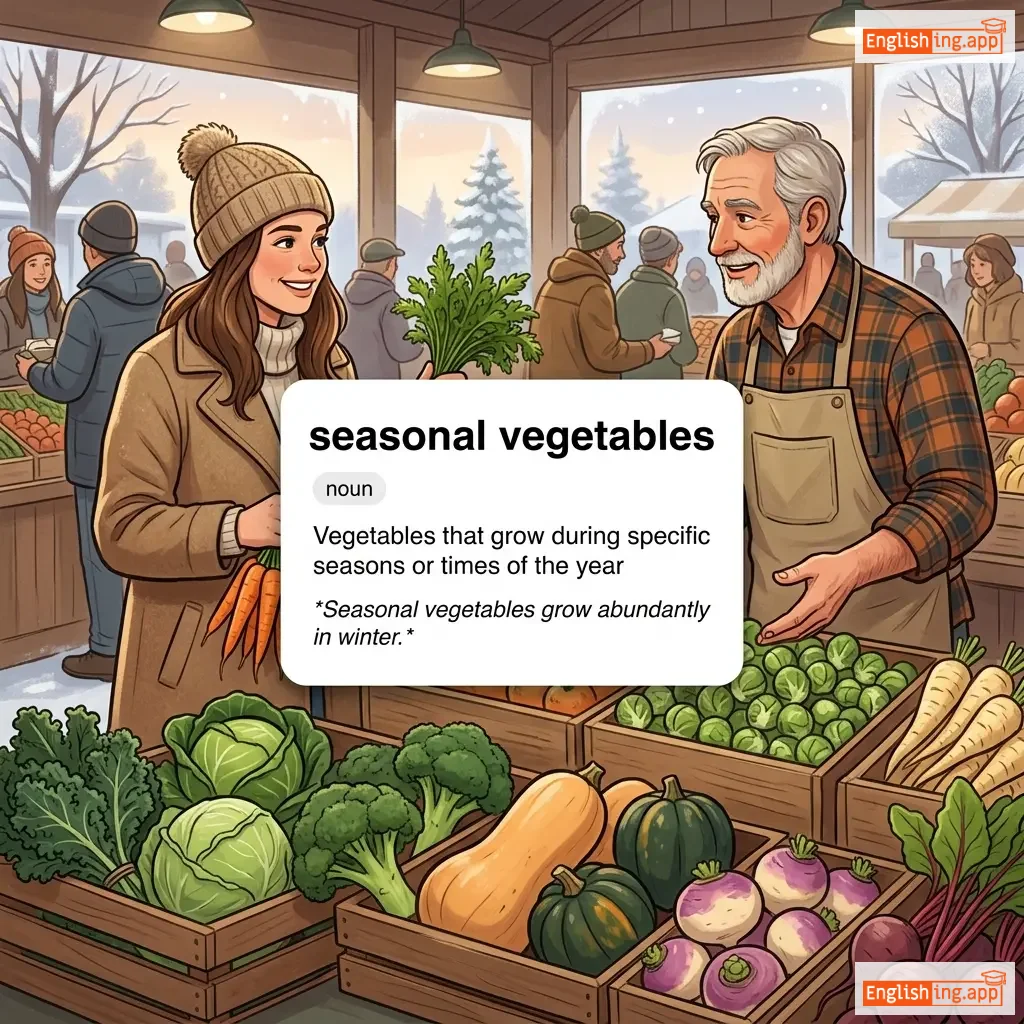
seasonal vegetables definition card — visual illustration of the meaning
noun
ˈsiːzənəl ˈvedʒtəbəlz
季節の野菜 (kisetsu no yasai)

Vegetables that grow during specific seasons or times of the year

"Seasonal vegetables grow abundantly in winter."

"季節の野菜は冬に豊富に育ちます。" (kisetsu no yasai wa fuyu ni houfu ni sodachimasu)
adjective/verb
/ˈsiːzənd/
経験豊富な / 味付けされた (keiken hōfu na / aji-tsuke sareta)

Experienced in a particular activity; also, flavored with spices.

"She is a seasoned teacher with over 20 years of experience."

"彼女は20年以上の経験を持つベテランの教師です。" (Kanojo wa 20-nen ijō no keiken o motsu beteran no kyōshi desu.)
noun
/siːt/
(seki)

a place to sit, especially a chair or other place for sitting

"I reserved a seat for you at the concert."

"コンサートであなたのために席を予約しました。" (Konsāto de anata no tame ni seki o yoyaku shimashita.)
adjective
/sɪˈbeɪʃəs/
皮脂に関連する (hishitsu ni kanren suru)

Relating to or secreting sebum, an oily substance from the skin.

"Acne is often caused by overactive sebaceous glands."

"ニキビは、過剰に活発な皮脂腺によって引き起こされることがよくあります。" (Nikibi wa, kajou ni kappatsu na hishisen ni yotte hikiokosareru koto ga yoku arimasu.)
noun
/ˈsiːkənt/
割線 (kassen)

A straight line that intersects a curve at two or more points.

"In geometry, a secant cuts the circle at two distinct points."

"幾何学では、割線は円を二つの異なる点で交差します。" (Kikagaku de wa, kassen wa en o futatsu no kotonaru ten de kōsashimasu.)
verb
/sɪˈsiːd/
脱退する (dattai suru)

To formally withdraw from a political or organizational union.

"Several states threatened to secede from the union."

"いくつかの州は連邦から脱退すると脅迫した。" (Ikutsuka no shū wa renpō kara dattai suru to kyōhaku shita.)
noun
/sɪˈsɛʃən/
分離 (bunri)

The action of formally withdrawing from membership of a federation or body.

"The secession of the southern states led to the Civil War."

"南部諸州の分離は南北戦争を引き起こした。" (Nanbu shoshuu no bunri wa nanboku sensou wo hikiokoshita.)
verb
/sɪˈkluːd/
隔離する (kakuri suru)

To keep someone away from other people; to isolate.

"The monk chose to seclude himself in the mountains."

"修道士は山で自分を孤立させることを選びました。" (Shūdōshi wa yama de jibun o koritsu saseru koto o erabimashita.)
adjective
/sɪˈkluːdɪd/
人里離れた (hitori banareta)

Placed apart from other people or things; private and quiet.

"They spent their vacation in a secluded beach house."

"彼らは人里離れたビーチハウスで休暇を過ごしました。" (Karera wa hitori banareta bīchi hausu de kyūka o sugoshimashita.)
noun
/sɪˈkluːʒən/
隠遁 (inton)

The state of being private, away from other people.

"She spent the weekend in complete seclusion in her cabin."

"彼女はキャビンで完全に隠遁した週末を過ごしました。" (Kanojo wa kyabin de kanzen ni inton shita shūmatsu o sugoshimashita.)
⏱️

second

noun
/ˈsekənd/

a unit of time equal to one sixtieth of a minute; also the position after first

"He finished the race in second place."

adjective
/ˌsekənd ˈreɪt/
二流 (niryu)

Of mediocre or inferior quality.

"The movie was entertaining but clearly second-rate compared to the original."

"その映画は面白かったが、オリジナルに比べて明らかに二流だった。" (Sono eiga wa omoshirokatta ga, orijinaru ni kurabete akirakani niryu datta.)
adjective
/ˈsekənderi/
二次的 (nitsuki no)

Less important than something else; derived from or dependent on something primary.

"Safety is our primary concern, while speed is only secondary."

"安全は私たちの最優先事項であり、速度は二次的なものです。" (Anzen wa watashitachi no sai yuusen jiko de ari, sokudo wa niji-teki na mono desu.)
adverb
/ˈsekəndli/
次に (tsugi ni)

Used to introduce the second point in a list of arguments or ideas.

"Firstly, we need funding; secondly, we need a strong team."

"まず、資金が必要です;次に、強力なチームが必要です。" (Mazu, shikin ga hitsuyō desu; tsugi ni, kyōryoku na chīmu ga hitsuyō desu.)
noun
/ˈsiːkrəsi/
秘密 (himitsu)

The action of keeping something secret or the state of being kept secret.

"The negotiations were conducted in complete secrecy."
"交渉は完全な秘密の中で行われた。" (Kōshō wa kanzen na himitsu no naka de okonawareta.)
noun
/ˈsiːkrət/

something that is kept or meant to be kept unknown or unseen by others

"He told me a secret about his childhood."

noun
/ˈsɛkrəteri/

a person employed to handle correspondence and manage routine tasks for an individual or organization

"The secretary scheduled the meeting for tomorrow."

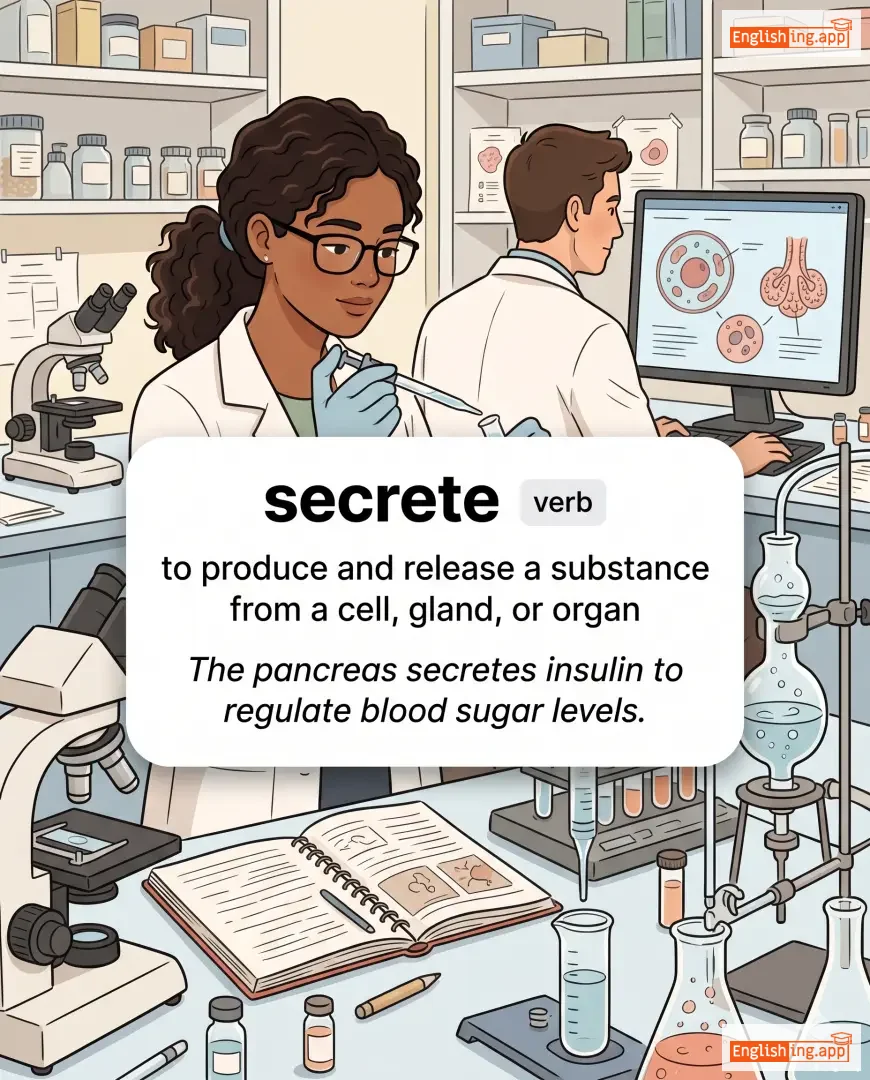
secrete definition card — visual illustration of the meaning
verb
/sɪˈkriːt/
分泌する (bimpisu suru)

to produce and release a substance from a cell, gland, or organ

"The pancreas secretes insulin to regulate blood sugar levels."

"膵臓は血糖値を調整するためにインスリンを分泌します。" (Suizō wa kettōchi o chōsei suru tame ni insurīn o bimpisu shimasu.)
noun
/sɪˈkriː.ʃən/
分泌 (bumpitsu)

a process by which substances are produced and discharged from a cell or gland

"Insulin secretion is crucial for blood sugar regulation."

"インスリン分泌は血糖値の調整に不可欠です。" (insurin bumpitsu wa kettouchi no chousei ni fukaketsu desu)
adverb
/ˈsiː.krət.li/
こっそり (kossori)

in a way that is hidden or not known by others

"She secretly planned a surprise party for her friend."

"彼女は友達のためにこっそりサプライズパーティーを計画した。" (Kanojo wa tomodachi no tame ni kossori sapuraizu paatii o keikaku shita.)
noun
/sɛkt/
宗派 (shūha)

a subgroup of a larger religious or political group, often with differing beliefs

"The group split into different sects due to doctrinal differences."

"グループは教義の違いにより、異なる宗派に分かれました。" (Gurūpu wa kyōgi no chigai ni yori, kotonaru shūha ni wakaremashita.)
adjective
/sɛkˈtɛəriən/
宗派的 (shūhatsu-teki)

relating to or characterized by the differences between sects, often leading to conflict

"The region has been troubled by sectarian violence for decades."

"この地域は数十年にわたり宗派的な暴力に悩まされてきました。" (Kono chiiki wa sūjūnen ni watari shūhatsu-teki na bōryoku ni nayamasa rete kimashita.)
noun
/ˈsɛkʃən/
セクション (sekushon)

a distinct part or subdivision of something larger

"This section of the report needs further review."

"この報告書のセクションは、さらに検討する必要があります。" (Kono hōkokusho no sekushon wa, sarani kentō suru hitsuyō ga arimasu.)
noun
/ˈsɛktər/
セクター (sekutā)

a distinct part or area of an economy, society, or industry

"The technology sector is growing rapidly."

"テクノロジーセクターは急速に成長しています。" (Tekunorojī sekutā wa kyūsoku ni seichō shiteimasu.)
sector-specific definition card — visual illustration of the meaning
adjective
ˈsek.tər spəˈsɪf.ɪk
業界特定 (gyoukai tokutei)

Relating to or designed for a particular sector or industry.

"Sector-specific policies attract targeted investments."

"業界特定の政策はターゲット投資を引き付けます。" (Gyoukai tokutei no seisaku wa taagetto toushi wo hikitsukemasu.)
adjective
/ˈsɛkjʊlər/
世俗的 (sezokuteki)

not connected with religious or spiritual matters

"The country adopted a secular constitution separating religion from state affairs."

"その国は、宗教と国家の問題を分離した世俗的な憲法を採用しました。" (Sono kuni wa, shūkyō to kokka no mondai o bunri shita sezokuteki na kenpō o saiyō shimashita.)
verb/adjective
/sɪˈkjʊər/
安全にする (anzen ni suru)

to make safe or protect; to fix something firmly in place

"Please secure the door before you leave."

"ドアを確実に閉めてください。" (Doa o kakujitsu ni shimete kudasai.)
security definition card — visual illustration of the meaning
noun
/sɪˈkjʊərɪti/
セキュリティ (sekyuriti)

the state of being free from danger or threat

"We need to improve our security measures at the airport."

"空港でのセキュリティ対策を改善する必要があります。" (Koukou de no sekyuriti taisaku wo kaizen suru hitsuyou ga arimasu.)
adjective, verb
/sɪˈdeɪt/
鎮静する (chinsei suru)

calm, quiet, and composed; or to administer a drug to make someone calm or sleep

"The nurse sedated the patient before the operation."

"看護師は手術の前に患者を鎮静しました。" (Kangoshi wa shujutsu no mae ni kanja o chinsei shimashita.)
noun
/ˈsɛdətɪv/
鎮静剤 (chinseizai)

A substance that calms the nerves or induces sleep.

"The doctor prescribed a sedative to help the patient sleep."

"医者は患者が眠れるように鎮静剤を処方しました。" (Isha wa kanja ga nemureru you ni chinseizai wo shohou shimashita.)
sedentary definition card — visual illustration of the meaning
adjective
/ˈsɛdntɛri/
座りがちな (suwarigachina)

Characterized by much sitting and little physical activity.

"A sedentary lifestyle can lead to health problems."

"座りがちな生活は健康問題を引き起こす可能性があります。" (suwarigachina seikatsu wa kenko mondai wo hikiokosu kanosei ga arimasu)
noun
/ˈsɛdəmənt/
堆積物 (taisekimotsu)

Solid particles that settle at the bottom of a liquid.

"The river carries a lot of sediment downstream."
"川は下流に多くの堆積物を運んでいます。" (Kawa wa karyū ni ōku no taisekimotsu o hakondeimasu.)
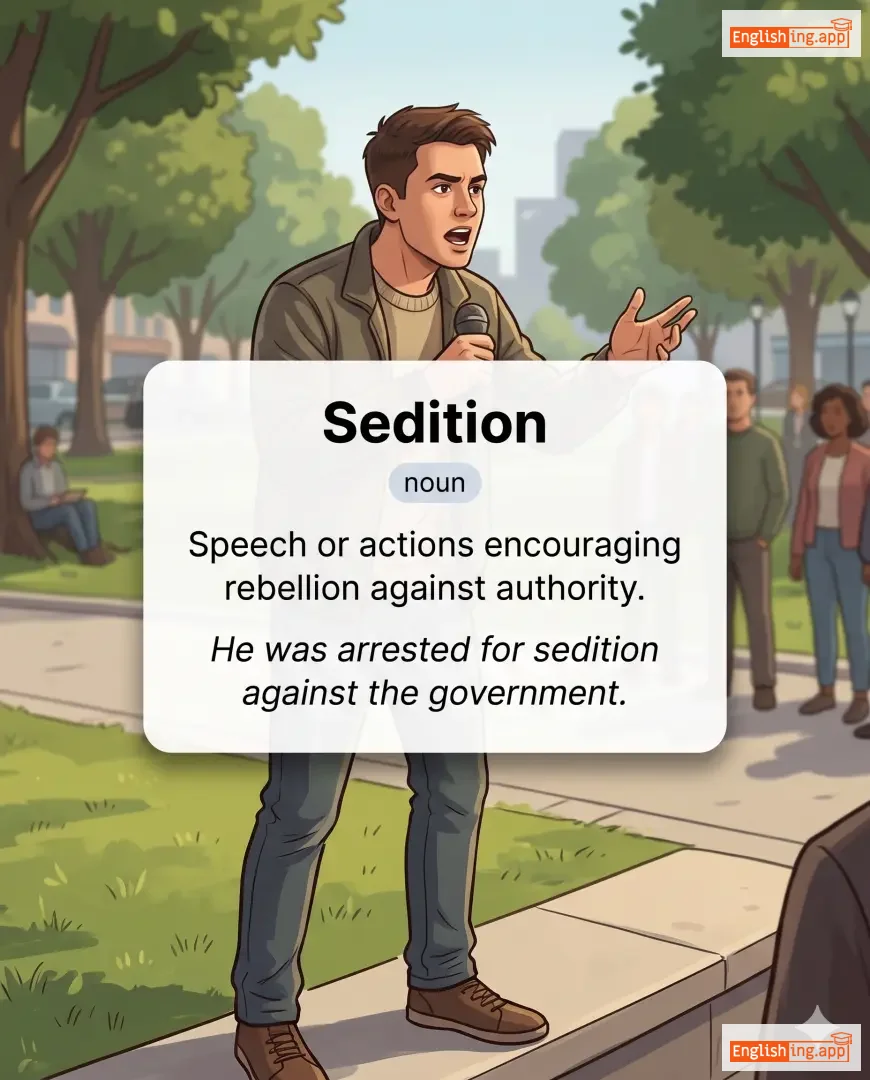
Sedition definition card — visual illustration of the meaning
noun
/sɪˈdɪʃən/
反乱扇動 (hanran sendō)

Speech or actions encouraging rebellion against authority.

"He was arrested for sedition against the government."

"彼は政府に対する反乱扇動で逮捕された。" (Kare wa seifu ni taisuru hanran sendō de taiho sareta.)
adjective
/sɪˈdɪʃəs/
扇動的 (sendō-teki)

Encouraging rebellion against authority.

"The activist spread seditious pamphlets among the crowd."

"活動家は群衆の中で扇動的なパンフレットを配布しました。" (Katsudōka wa gunshū no naka de sendō-teki na panfuretto o haifu shimashita.)
verb
/sɪˈdjuːs/

to attract someone into doing something, especially something they might not normally do

"The advertisement was designed to seduce customers into buying luxury products."

noun
/sɪˈdʌk.ʃən/
誘惑; 誘惑 (yuwaku; yuwaku)

the action of seducing someone; temptation to do something wrong

"He fell victim to the seduction of easy money."

"彼は簡単な金儲けの誘惑に負けた。" (Kare wa kantan na kane mouke no yuwaku ni maketa.)
Sedulous definition card — visual illustration of the meaning
adjective
/ˈsɛdʒʊləs/
勤勉な (kinmen na)

showing great care, attention, and diligence in work or tasks

"She was admired for her sedulous efforts in completing the project on time."

"彼女はプロジェクトを時間通りに完了させるための勤勉な努力で賞賛されました。" (Kanojo wa purojekuto o jikan dōri ni kanryou saseru tame no kinmen na doryoku de shousan saremashita.)
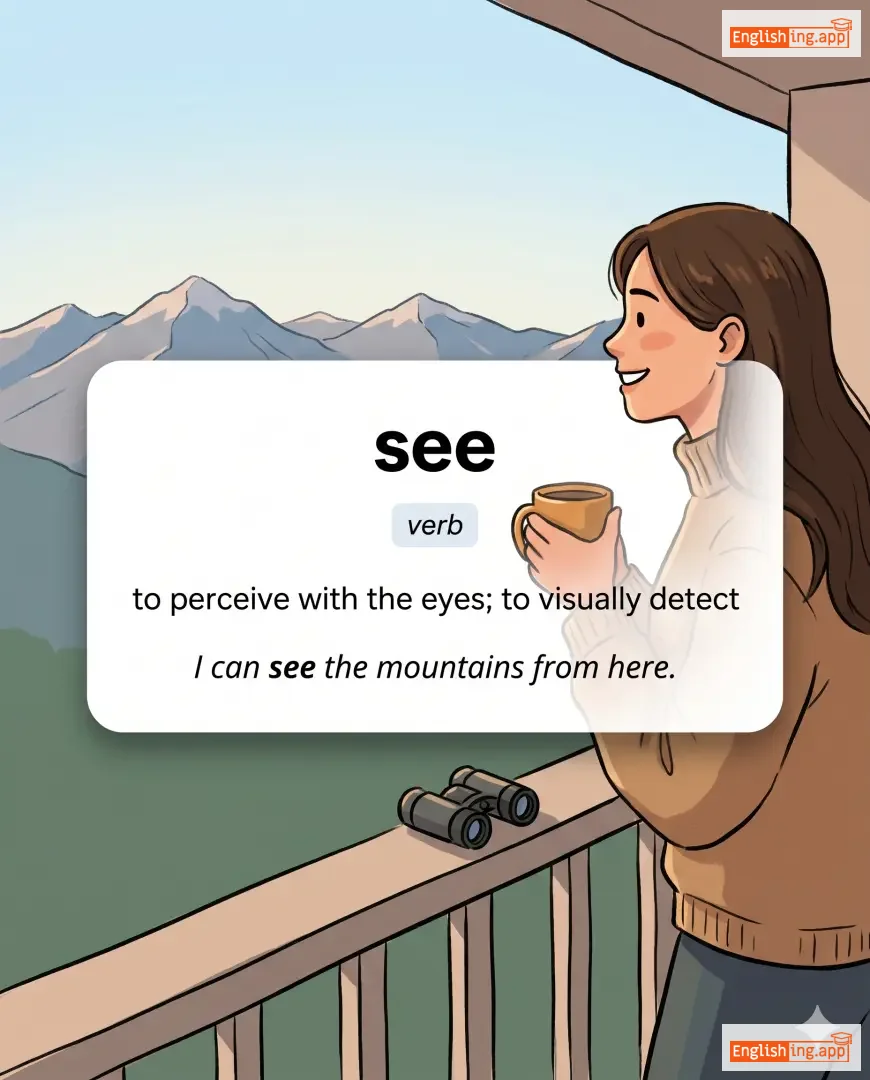
see definition card — visual illustration of the meaning
verb
/siː/
見る (miru)

to perceive with the eyes; to visually detect

"I can see the mountains from here."

"ここから山を見ることができます。" (Koko kara yama o miru koto ga dekimasu.)
noun
/siːd/
(tane)

the small, hard part of a plant from which a new plant can grow

"I planted a seed in the garden."

"私は庭に種を植えました。" (Watashi wa niwa ni tane o uemashita.)
adjective
/ˈsiːdi/
汚い / 古びた (kitanai / furubita)

dirty, shabby, or in bad condition; also feeling slightly unwell

"He stayed in a seedy motel near the bus station."

"彼はバス停の近くの安いモーテルに泊まった。" (Kare wa basutei no chikaku no yasui mōteru ni tomatta.)
verb
/siːk/
求める (motsumeru)

to try to find or obtain something; to attempt or desire to achieve

"He decided to seek advice from his mentor."

"彼はメンターからアドバイスを求めることに決めました。" (Kare wa mentā kara adobaisu o motomeru koto ni kimemashita.)
noun
/ˈsiːkər/
探求者 (tankyūsha)

a person who is looking for something, especially knowledge or truth

"The seeker traveled far to find the answers to his questions."

"探求者は自分の質問に対する答えを見つけるために遠くまで旅しました。" (Tankyūsha wa jibun no shitsumon ni taisuru kotae o mitsukeru tame ni tōku made tabimashita.)
verb
/siːm/
見える (mieru)

to give the impression of being something or having a particular quality

"He seems tired after the long journey."

"長い旅の後、彼は疲れているように見える。" (Nagai tabi no ato, kare wa tsukarete iru you ni mieru.)
adverb
/ˈsiː.mɪŋ.li/
一見, 見た目では静か (ikken, mitamede wa shizuka)

appearing to be true, but not necessarily so

"He was seemingly calm despite the chaos around him."

"周りの混乱にもかかわらず、彼は一見静かだった。" (Mawari no konran ni mo kakawarazu, kare wa ikken shizuka datta.)
adjective
/ˈsiːmli/
適切 (tekisetsu)

proper or appropriate in behavior or appearance

"It was not seemly to argue loudly during the ceremony."

"式典中に大声で議論するのは適切ではありませんでした。" (Shikiten-chuu ni oogoe de giron suru no wa tekisetsu de wa arimasen deshita.)