語彙集

英単語辞書 | 単語の意味、定義、例文

verb/noun
/skaʊl/
しかめっ面をする (shikametsura suru)

To frown in an angry or bad-tempered way.

"She scowled when she heard the unfair remark."

"彼女は不公平なコメントを聞いてしかめっ面をした。" (Kanojo wa fukōhei na komento o kiite shikametsura o shita.)
verb
/ˈskræmbəl/

to move or climb quickly using hands and feet; to mix or arrange in a hurried way

"The kids scrambled up the hill to catch the kite."

noun/verb
/skræp/
切れ端 / 捨てる (kirehata / suteru)

A small piece of something; to discard or get rid of something.

"He used a scrap of paper to jot down the number."

"彼はその番号を書くために紙の切れ端を使いました。" (Kare wa sono bangō o kaku tame ni kami no kirehata o tsukaimashita.)
verb
/skreɪp/
擦る, 引っ掻く (suru, hikkaku)

to remove or damage the surface of something by rubbing or scratching; to collect something by effort

"He scraped his knee while playing football."

"彼はサッカーをしているときに膝を擦りむきました。" (Kare wa sakka wo shite iru toki ni hiza wo surimukimashita.)
adjective
/ˈskræpi/
戦闘的 / 散らかった (sentōteki / chirakatta)

Determined and willing to fight or argue; also messy or disorganized.

"Despite being small, he was a scrappy fighter."

"小さくても、彼は戦闘的な戦士でした。" (Chīsakute mo, kare wa sentōteki na senshi deshita.)
noun (plural)
/skræps/
残り物 (nokorimono)

Small pieces left over from something; also small fights or quarrels.

"The dog ate the scraps from the table."

"犬はテーブルからの食べ残しを食べました。" (Inu wa tēburu kara no tabenokoshi o tabemashita.)
verb
/skrætʃ/
幸せ (shiawase)

to rub a surface or skin with something sharp or rough, often to relieve itching

"The cat scratched the door to be let in."

"彼女は賞を受け取ったとき、自分の幸せを隠すことができませんでした。" (Kanojo wa shō o uketotta toki, jibun no shiawase o kakusu koto ga dekimasen deshita.)
verb
/skrɔːl/
急いで乱雑に書く (isoide ranzatsu ni kaku)

to write or draw something quickly and carelessly, making it hard to read

"He scrawled his signature at the bottom of the page."

"彼はページの下部に署名をスクロールした。" (Kare wa pēji no kafu ni shomei o sukūrōru shita.)
adjective
/ˈskrɔːni/
痩せ細った (yasesotta)

very thin and bony, often looking unhealthy

"The scrawny boy could barely lift the heavy bag."

"その痩せ細った少年は重いバッグをほとんど持ち上げることができなかった。" (Sono yasesotta shōnen wa omoi baggu o hotondo mochiageru koto ga dekinakatta.)
verb
/skriːm/
叫ぶ (sakebu)

to make a loud, high-pitched sound, usually because of fear, pain, or excitement

"She screamed when she saw the spider."

"彼女はクモを見て叫びました。" (Kanojo wa kumo o mite sakebimashita.)
verb
/skriːtʃ/
きしみ音を立てる (kishimi on wo tateru)

to make a loud, high-pitched and unpleasant sound

"The car screeched to a halt."

"車はきしみ音を立てて急停止した。" (Kuruma wa kishimi on wo tate te kyū teishi shita.)
noun
/skriːd/
長く退屈な文書 (nagaku taikutsu na bunsho)

a long, tedious piece of writing or speech; also a layer of material like cement spread on a surface

"He delivered a long screed against corruption."
"彼は腐敗に反対する長いスピーチをしました。" (Kare wa fuhai ni hantai suru nagai supīchi o shimashita.)
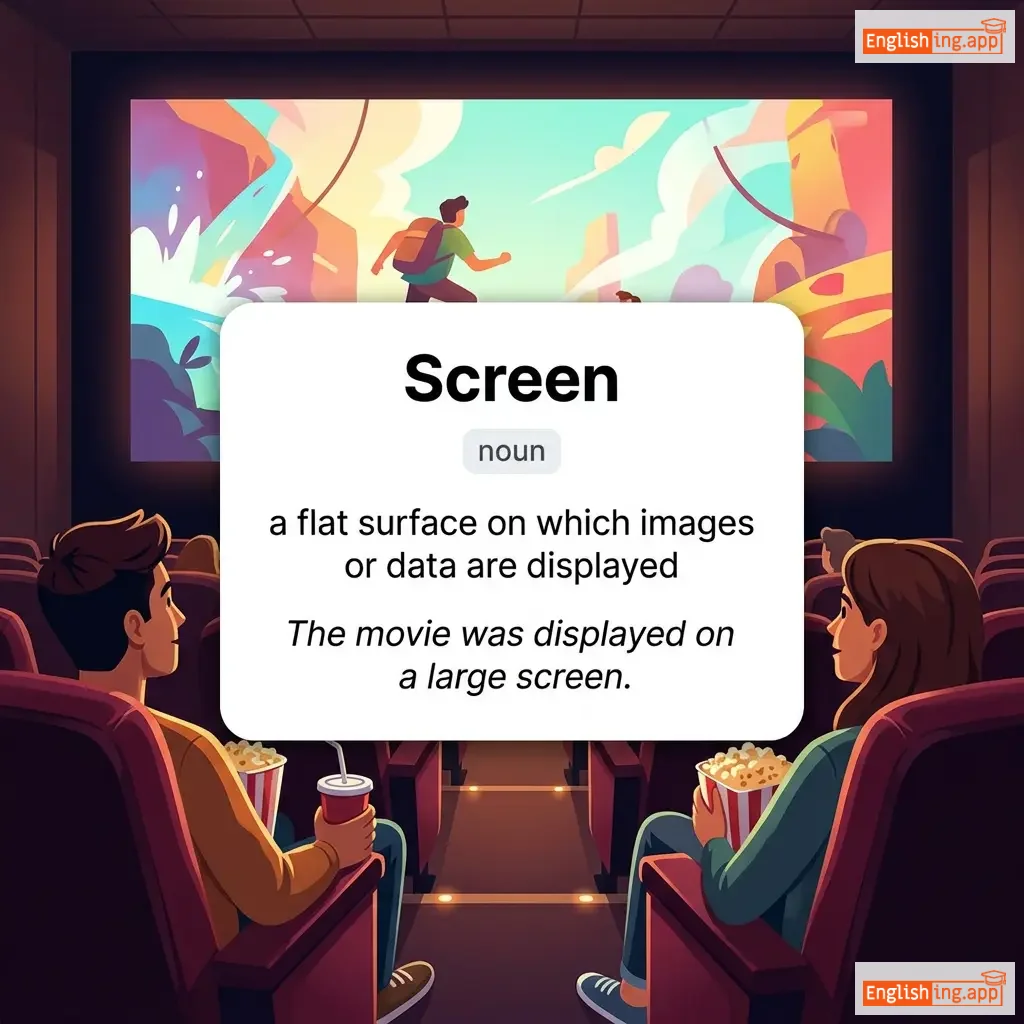
Screen definition card — visual illustration of the meaning
noun
/skriːn/
スクリーン (sukuriin)

a flat surface on which images or data are displayed

"The movie was displayed on a large screen."

"映画は大きなスクリーンに映し出されました。" (Eiga wa ookina sukuriin ni utsushidasharemashita.)
noun
/ˈskriːnɪŋ/
スクリーニングまたは上映 (sukuriiningu matawa jouei)

the act of examining or testing people to detect disease or evaluate suitability; a showing of a movie or program

"The hospital offered free health screening for all employees."

"病院はすべての従業員に無料の健康スクリーニングを提供しました。" (Byouin wa subete no juugyouin ni muryou no kenko sukuriiningu wo teikyoushimasita.)
screw definition card — visual illustration of the meaning
noun, verb
/skruː/
螺旋状の金属製ファスナー; 何かをねじで締める (rasenjou no kinzoku-sei fasunā; nanika o neji de shimeru)

a metal fastener with a helical ridge; to fasten or tighten something with a screw

"He screwed the shelf to the wall tightly."

"彼は棚を壁にしっかりとねじ込んだ。" (Kare wa tana o kabe ni shikkari to nejikonda.)
verb
/ˈskrɪbəl/
落書きする (rakugaki suru)

to write or draw carelessly or quickly

"The child scribbled all over the wall."

"子供は壁に落書きをした。" (Kodomo wa kabe ni rakugaki o shita.)
noun
/skraɪb/
書記 (shoki)

a person who writes documents, especially in ancient times; a professional copyist

"In ancient Egypt, scribes recorded important events."

"古代エジプトでは、スクライブは重要な出来事を記録しました。" (Kodai Ejiputo dewa, sukuraibu wa jūyōna dekigoto o kiroku shimashita.)
noun
/ˈskrɪmɪdʒ/
練習試合 (renshū shiai)

A practice game or informal match, often in sports, especially football.

"The team had a scrimmage before the official season started."

"チームは公式シーズンが始まる前に練習試合を行いました。" (Chīmu wa kōshiki shīzun ga hajimaru mae ni renshū shiai o okonaimashita.)
noun
/skrɪpt/
脚本 (kyakuhon)

The written text of a play, film, or broadcast; handwriting style.

"The actor memorized his lines from the script."

"俳優は脚本からセリフを覚えました。" (Haiyu wa kyakuhon kara serifu wo oboemashita.)
adjective
/ˈskrɪptʃərəl/
聖書に関連する (seisho ni kanren suru)

Relating to or contained in the scriptures or holy writings.

"The priest gave a scriptural reference during the sermon."
"牧師は説教中に聖書の参照をしました。" (Bokusha wa sekkyou-chuu ni seisho no sanshou o shimashita.)
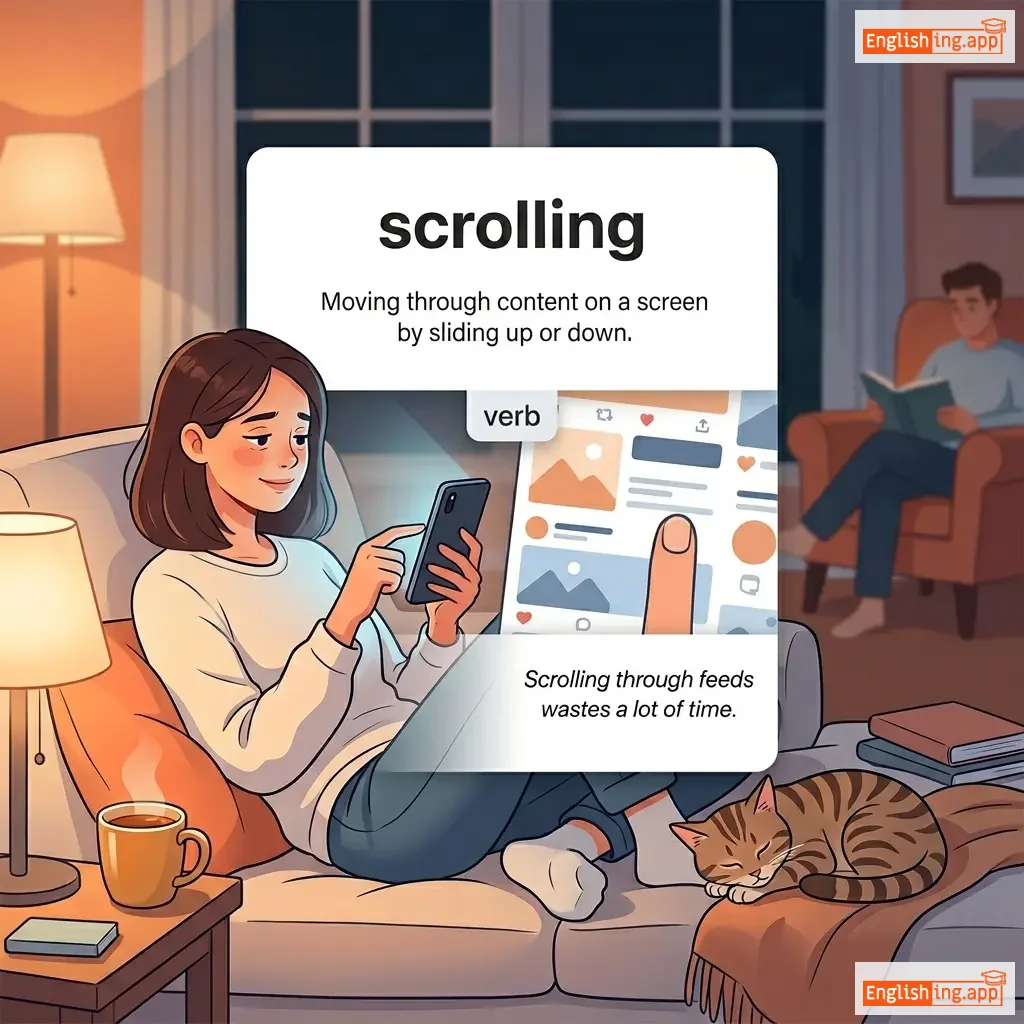
scrolling definition card — visual illustration of the meaning
verb
ˈskroʊlɪŋ
スクロール (sukurooru)

Moving text or graphics up or down on a computer screen to view different parts of them; continuously browsing through content.

"Scrolling through feeds wastes a lot of time."
"フィードをスクロールすることは多くの時間を無駄にします。" (Fi-do o sukuro-ru suru koto wa ōku no jikan o mudani shimasu.)
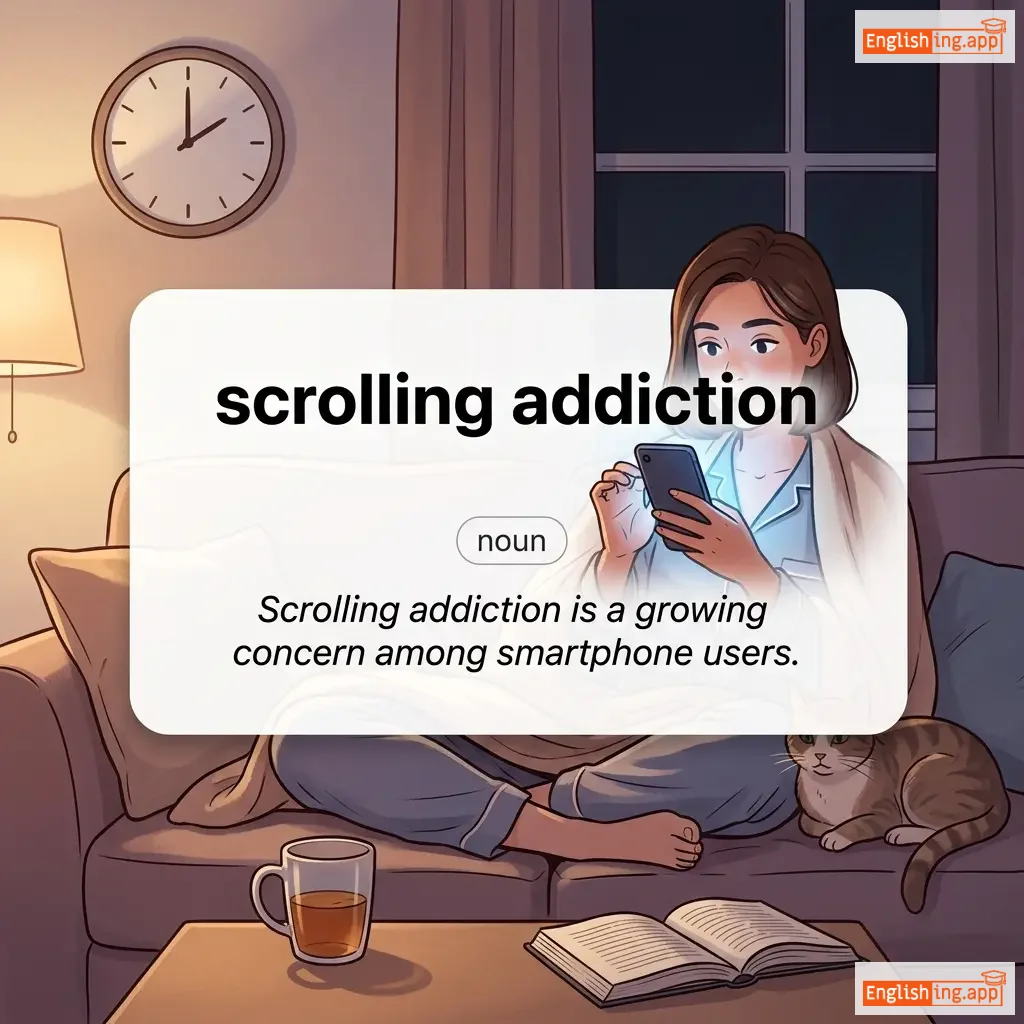
scrolling addiction definition card — visual illustration of the meaning
noun
স্ক্রোলিং অ্যাডিকশন
スクロール依存症 (sukurōru izonshō)

A compulsive need to continuously scroll through content on digital devices, particularly smartphones and social media platforms.

"Scrolling addiction is a growing concern among smartphone users."
"スクロール依存症はスマートフォンユーザーの間で増加している懸念事項です。" (Sukurōru izonshō wa sumātofon yūzā no aida de zōka shite iru kenentekina shikō desu.)
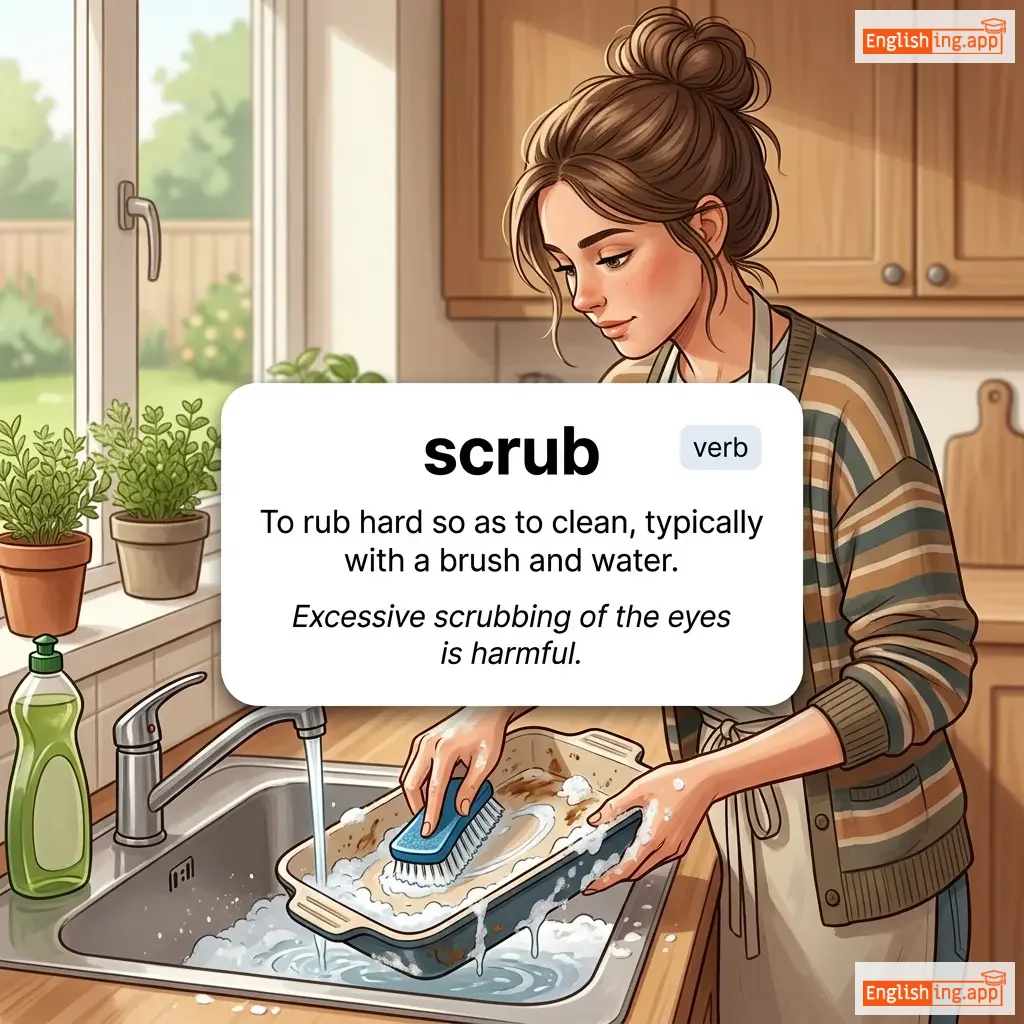
scrub definition card — visual illustration of the meaning
verb
/skrʌb/
こする (kosuru)

To rub hard so as to clean, typically with a brush and water.

"Excessive scrubbing of the eyes is harmful."

"目をこすることは過剰で有害です。" (Me o kosuru koto wa kajou de yuugai desu.)
adjective
/ˈskrʌfi/
乱雑または不潔な外見; 汚れたしぼんだ (ranzatsu matawa fuketsu na gaiken; yogoreta shibonda)

untidy or unkempt in appearance; shabby and worn

"The scruffy old dog wandered through the streets looking for food."

"そのみすぼらしい老犬は、食べ物を探して通りをさまよっていました。" (Sono misuborashii rōken wa, tabemono o sagashite tōri o samayotte imashita.)
adjective
/ˈskrʌmpʃəs/
美味しい (oishii)

extremely tasty or delicious

"She baked a scrumptious chocolate cake for the party."

"彼女はパーティーのために美味しいチョコレートケーキを焼きました。" (Kanojo wa pātī no tame ni oishii chokorēto kēki o yakimashita.)
noun
/ˈskruːpəl/
良心の呵責 (ryōshin no kashaku)

A moral or ethical consideration that restrains actions.

"He had no scruples about lying to get ahead."
"彼は前進するために嘘をつくことに対して良心の呵責を感じていなかった。" (Kare wa zenshin suru tame ni uso o tsuku koto ni taishite ryōshin no kashaku o kanjite inakatta.)
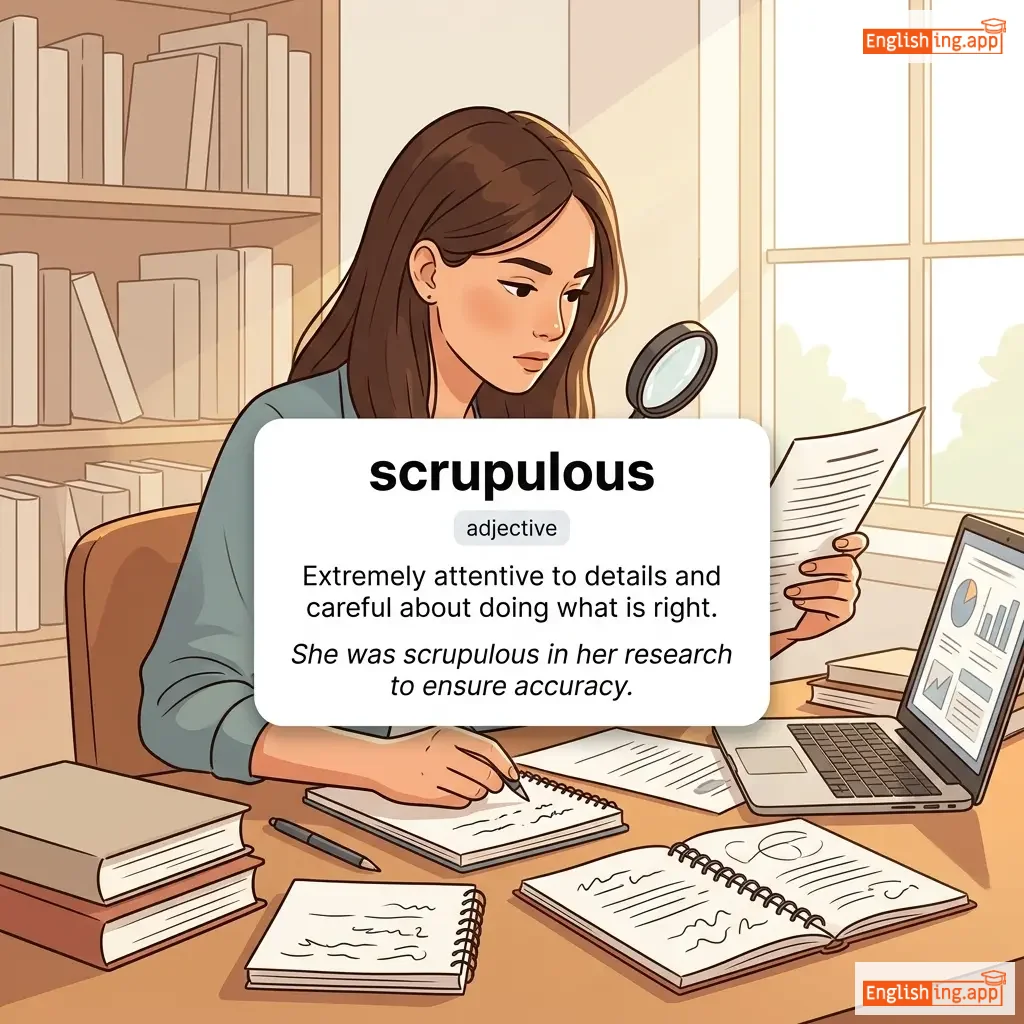
scrupulous definition card — visual illustration of the meaning
adjective
/ˈskruːpjələs/
几帳面 (kichoumen)

Extremely attentive to details and careful about doing what is right.

"She was scrupulous in her research to ensure accuracy."
"彼女は研究の中で正確さを確保するために几帳面だった。" (Kanojo wa kenkyuu no naka de seikaku-sa wo kakuho suru tame ni kichoumen datta.)
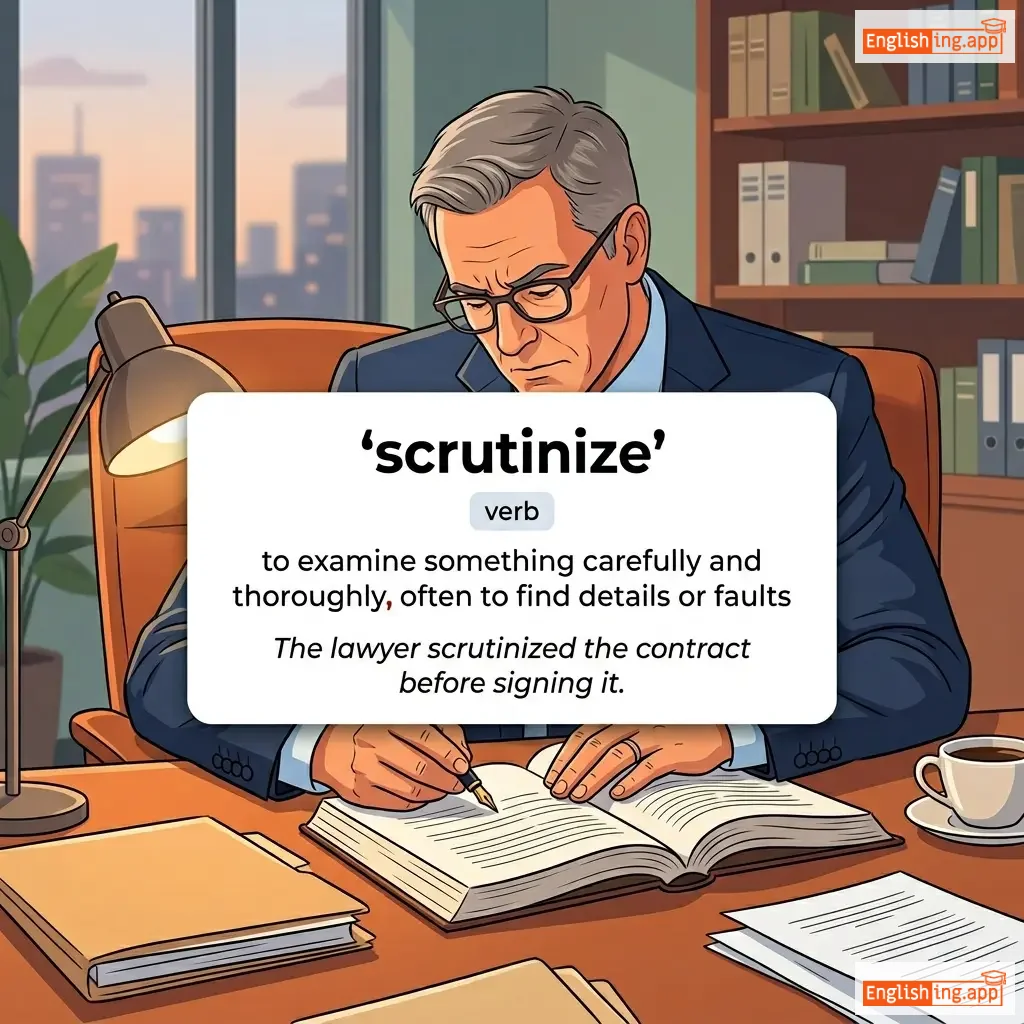
scrutinize definition card — visual illustration of the meaning
verb
/ˈskruː.tɪ.naɪz/

to examine something carefully and thoroughly, often to find details or faults

"The lawyer scrutinized the contract before signing it."
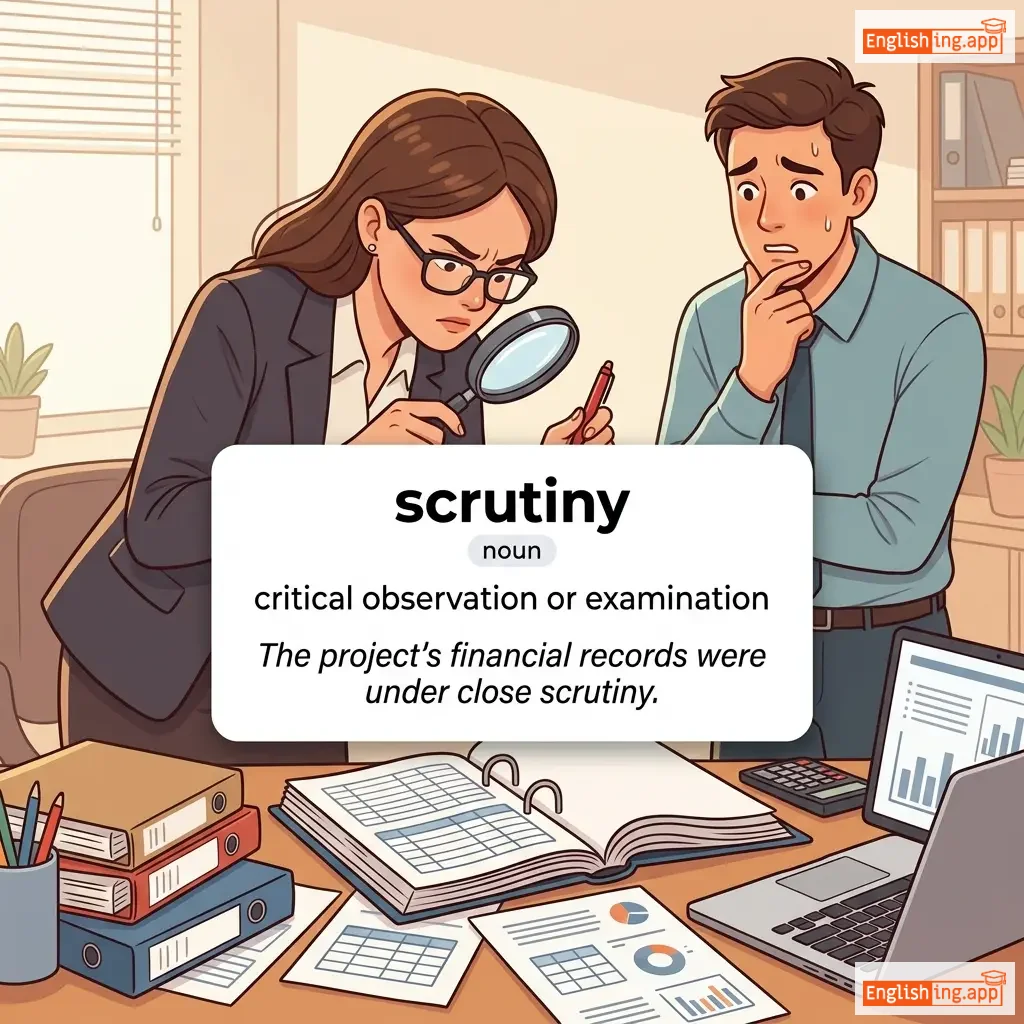
scrutiny definition card — visual illustration of the meaning
noun
/ˈskruːtɪni/
調査 (chousa)

critical observation or examination

"The project's financial records were under close scrutiny."

"そのプロジェクトの財務記録は厳重な調査を受けていました。" (Sono purojekuto no zaimu kiroku wa genjūna chōsa o ukete imashita.)
verb
/skʌf/
擦り傷 (surikizu)

to mark or scratch the surface of something by rubbing

"He scuffed his shoes on the pavement."

"彼は歩道で靴を擦り傷をつけた。" (Kare wa hodou de kutsu o surikizu o tsuketa.)
noun, verb
/ˈskʌf.əl/
乱闘 (rantou)

a short, confused fight or struggle; to engage in such a fight

"Two players scuffled on the field after the foul."

"ファウルの後、二人の選手がフィールドで殴り合った。" (Fauru no ato, futari no senshu ga fiirudo de naguriatta.)
noun
/ˈskʌl.i.ən/
台所の使用人 (daidokoro no shiyoujin)

a servant assigned the most menial kitchen tasks

"In medieval times, a scullion was responsible for cleaning pots and pans."

"中世の時代、スカリオンは鍋やフライパンを掃除する責任がありました。" (chūsei no jidai, sukarion wa nabe ya furaipan o sōji suru sekinin ga arimashita.)
verb
/skʌlpt/
幸せ (shiawase)

to create or shape something by carving or molding

"The artist sculpted a beautiful statue from marble."

"彼女は賞を受け取ったとき、自分の幸せを隠せなかった。" (Kanojo wa shou wo uketotta toki, jibun no shiawase wo kakusenakatta.)
noun
/ˈskʌlp.tər/
彫刻家 (chōkoku-ka)

an artist who creates sculptures by carving, modeling, or shaping materials

"The sculptor spent months creating a beautiful marble statue."
"彫刻家は美しい大理石の彫像を作るのに数ヶ月を費やしました。" (Chōkoku-ka wa utsukushī dairiseki no chōzō o tsukuru no ni sūkagetsu o tsuiyashimashita.)
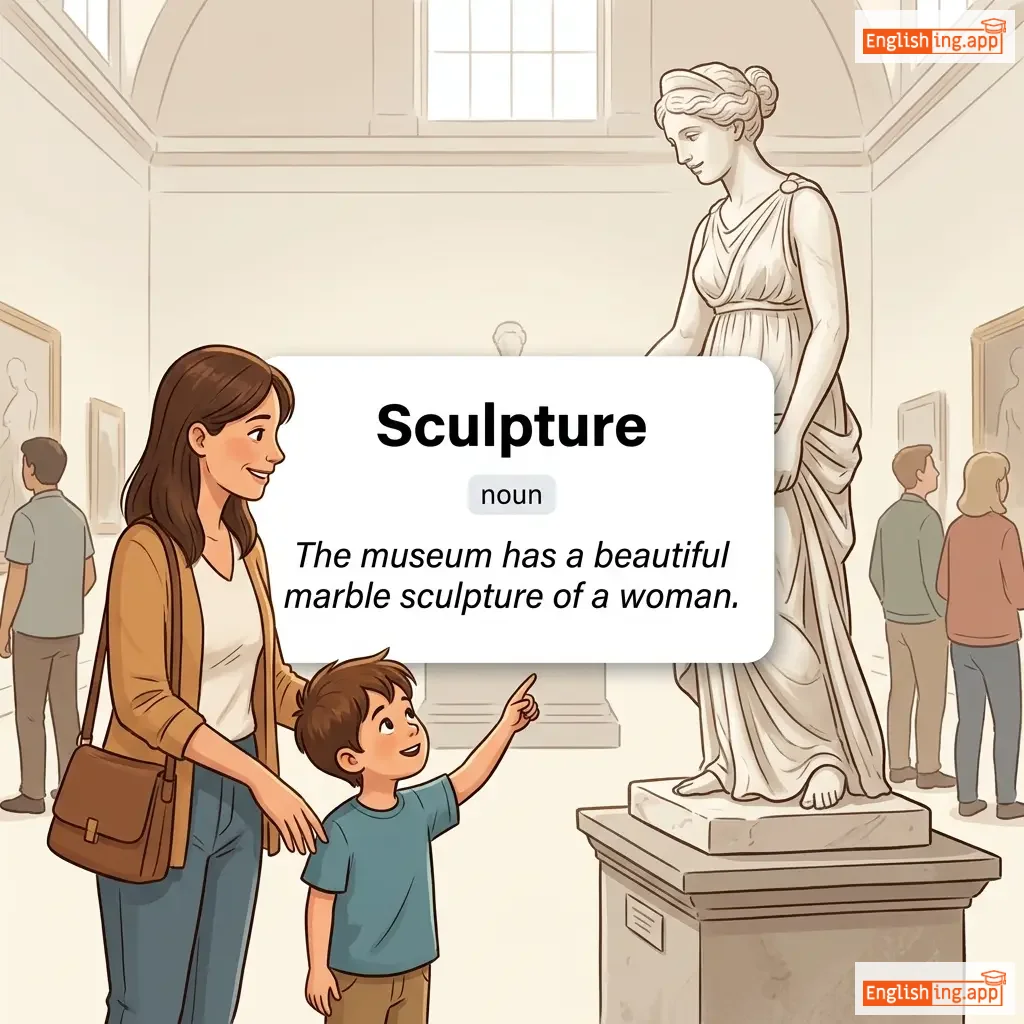
Sculpture definition card — visual illustration of the meaning
noun
/ˈskʌlp.tʃər/
彫刻 (choukoku)

the art of making two- or three-dimensional representative or abstract forms, especially by carving stone or wood or by casting metal or plaster

"The museum has a beautiful marble sculpture of a woman."

"博物館には美しい大理石の彫刻があります。" (Hakubutsukan ni wa utsukushii dairiseku no choukoku ga arimasu.)
adjective
/ˈskʌr.ɪ.ləs/
中傷的な (chūshō-teki na)

Using or expressed in coarse, abusive, or slanderous language.

"The politician faced criticism for his scurrilous remarks about his opponent."

"その政治家は対立候補についての中傷的な発言で批判を浴びた。" (Sono seijika wa tairitsukōho ni tsuite no chūshō-teki na hatsugen de hihan o abita.)
verb
/ˈskʌr.i/
速く走る (hayaku hashiru)

To move quickly with short, hurried steps.

"The mice scurried across the kitchen floor when the lights turned on."

"ライトがついたとき、ネズミたちはキッチンの床を速く走った。" (Raito ga tsuita toki, nezumi-tachi wa kicchin no yuka o hayaku hashitta.)
noun
/ˈskɜː.vi/
壊血病 (Kaiketsubyō)

A disease caused by a deficiency of vitamin C, leading to weakness, gum disease, and bleeding.

"Sailors often suffered from scurvy during long sea voyages without fresh fruits."

"水夫たちは、新鮮な果物がない長い海の航海中によく壊血病にかかっていました。" (Suifu-tachi wa, shinsen na kudamono ga nai nagai umi no kōkai-chū ni yoku kaiketsubyō ni kakatte imashita.)
verb
/ˈskʌt.əl/
幸せ (shiawase)

To run hurriedly with short, quick steps; or to deliberately sink a ship.

"The children scuttled back to their seats when the teacher entered."

"彼女は賞を受け取ったとき、幸せを隠せませんでした。" (Kanojo wa shō o uketotta toki, shiawase o kakusemasen deshita.)
noun
/saɪð/
(kama)

A tool with a long curved blade used for cutting grass or grain.

"The farmer sharpened his scythe before harvesting the wheat."

"農民は小麦を収穫する前に彼の鎌を研いだ。" (Nōmin wa komugi o shūkaku suru mae ni kare no kama o toida.)
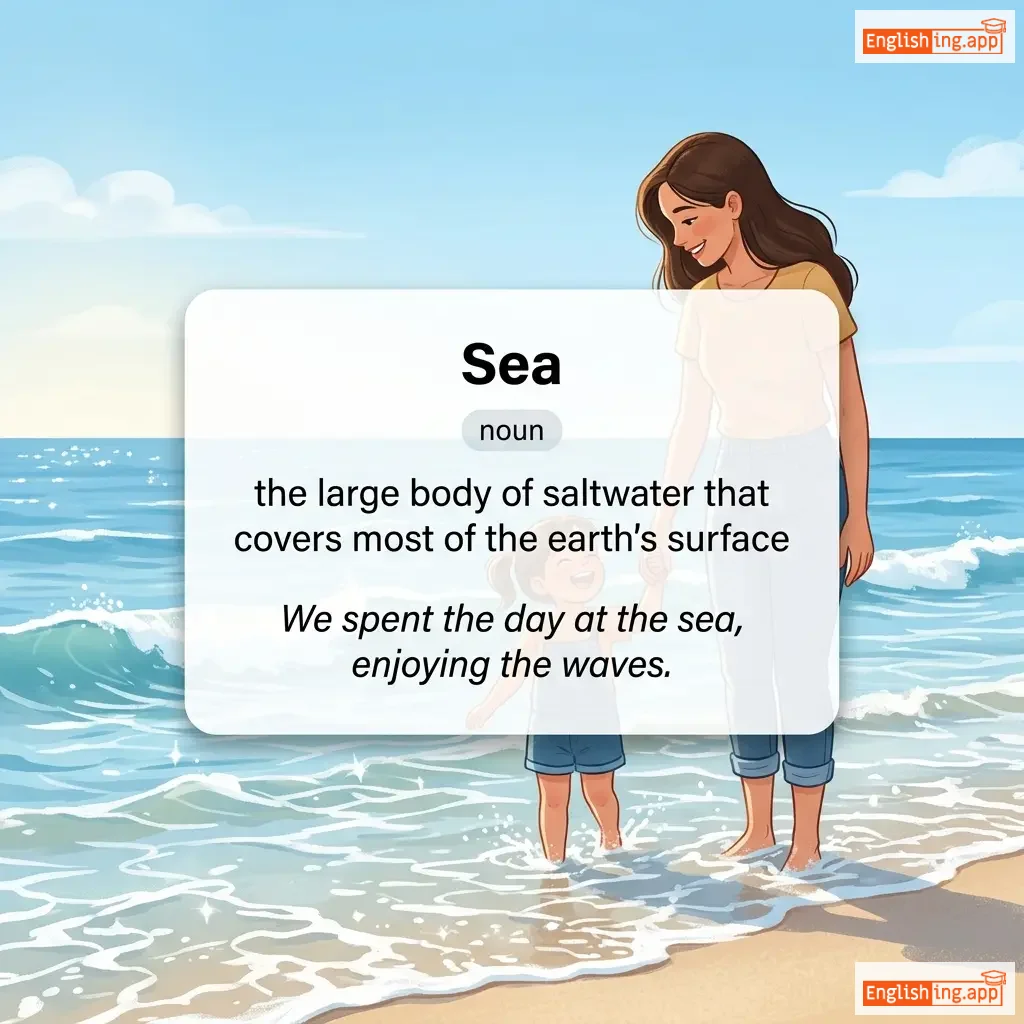
Sea definition card — visual illustration of the meaning
noun
/siː/
(umi)

the large body of saltwater that covers most of the earth's surface

"We spent the day at the sea, enjoying the waves."

"私たちは海で一日を過ごし、波を楽しみました。" (Watashitachi wa umi de ichinichi o sugoshi, nami o tanoshimimashita.)
noun
/ˈsiː.hɔːrs/
タツノオトシゴ (tatsuno otoshigo)

a small marine fish with segmented bony armor, an upright posture, and a curled prehensile tail

"The seahorse gracefully floated among the coral reefs."

"タツノオトシゴはサンゴ礁の中を優雅に浮かんでいました。" (Tatsuno otoshigo wa sangoryo no naka wo yuga ni ukandeimashita.)
verb
/siːl/
封印する、閉じる (fūin suru, toji ru)

to close or secure something tightly or officially confirm something

"He sealed the envelope before sending the letter."
"彼は手紙を送る前に封筒をシールしました。" (Kare wa tegami o okuru mae ni fūtō o shīru shimashita.)
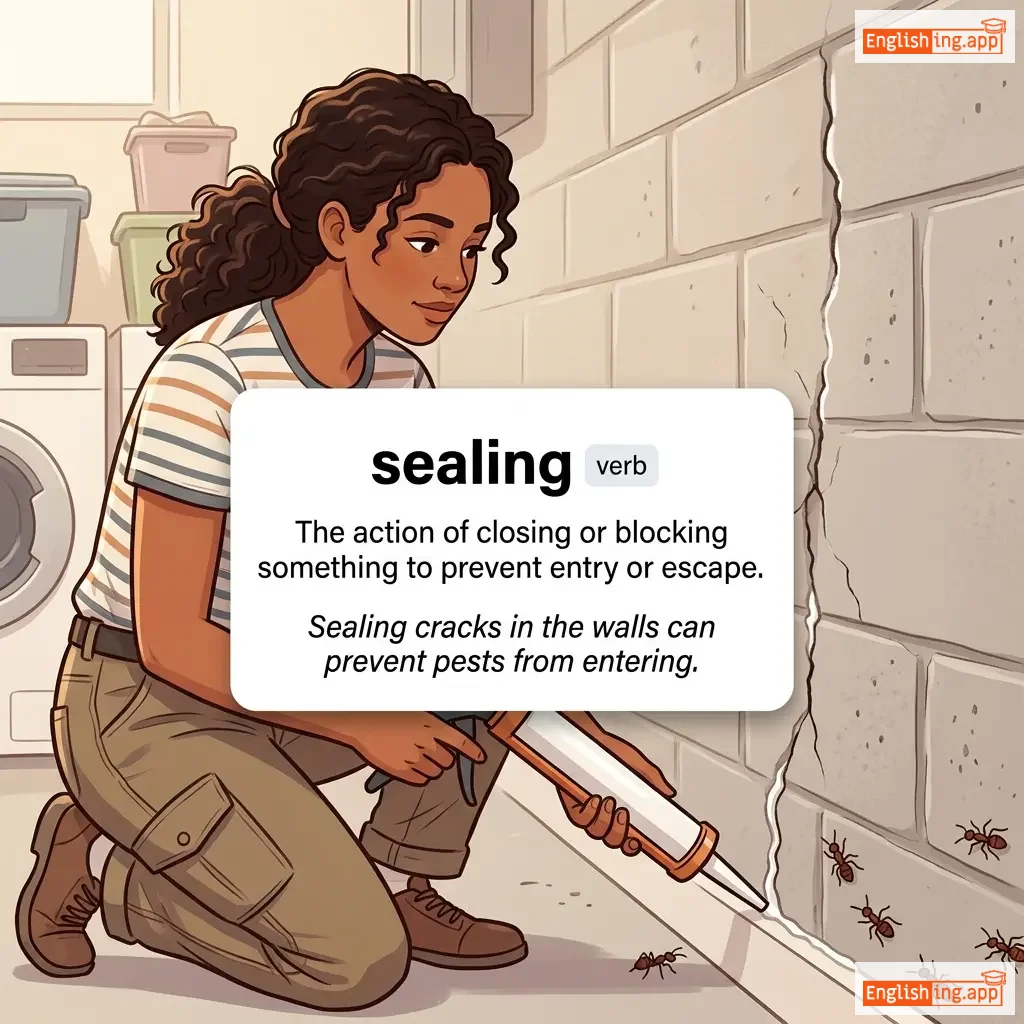
sealing definition card — visual illustration of the meaning
verb
ˈsiːlɪŋ
密閉する、封鎖する (mippei suru, fūsa suru)

The action of closing or blocking something to prevent entry or escape.

"Sealing cracks in the walls can prevent pests from entering."

"壁の亀裂を密閉することで害虫の侵入を防げます。" (Kabe no kiretsu o mippei suru koto de gaichū no shin'nyū o fusegemasu.)
noun
/ˈsiː.mən/
船員 (sen'in)

a person who works on a ship; sailor

"The experienced seaman navigated the ship through the storm."

"経験豊富な船員は嵐の中で船を操縦しました。" (Keiken hōfu na sen'in wa arashi no naka de fune o sōjū shimashita.)
seamless definition card — visual illustration of the meaning
adjective
/ˈsiːmləs/
シームレス (shi-mu-re-su)

Smooth and continuous, with no apparent gaps or spaces between one part and the next.

"The seamless integration of the two systems improved efficiency and reduced errors."

"二つのシステムのシームレスな統合は効率を向上させ、エラーを減らしました。" (Futatsu no shisutemu no shīmuresu na tōgō wa kōritsu o kōjō sase, erā o herashimashita.)
adjective
/ˈsiːmi/
低劣な、陰湿な (teiretsu na, inshitsu na)

Morally degraded, unpleasant, or sordid.

"The novel reveals the seamy side of city life."

"その小説は都市生活の裏面を明らかにします。" (Sono shōsetsu wa toshi seikatsu no uramen o akiraka ni shimasu.)
noun
/ˈseɪɑːns/
霊的なセッション (reiteki na sesshon)

A meeting where people attempt to communicate with the spirits of the dead.

"They held a seance to contact their late grandmother."
"彼らは亡くなった祖母と連絡を取るために霊的なセッションを開いた。" (Karera wa nakunatta sobo to renraku o toru tame ni reiteki na sesshon o hiraita.)
verb
/sɪr/
焼く (yaku)

To burn or scorch the surface of something with intense heat.

"The chef seared the steak to lock in the flavor."

"シェフは味を閉じ込めるためにステーキを焼きました。" (Shefu wa aji o tojikomeru tame ni suteeki o yakimashita.)
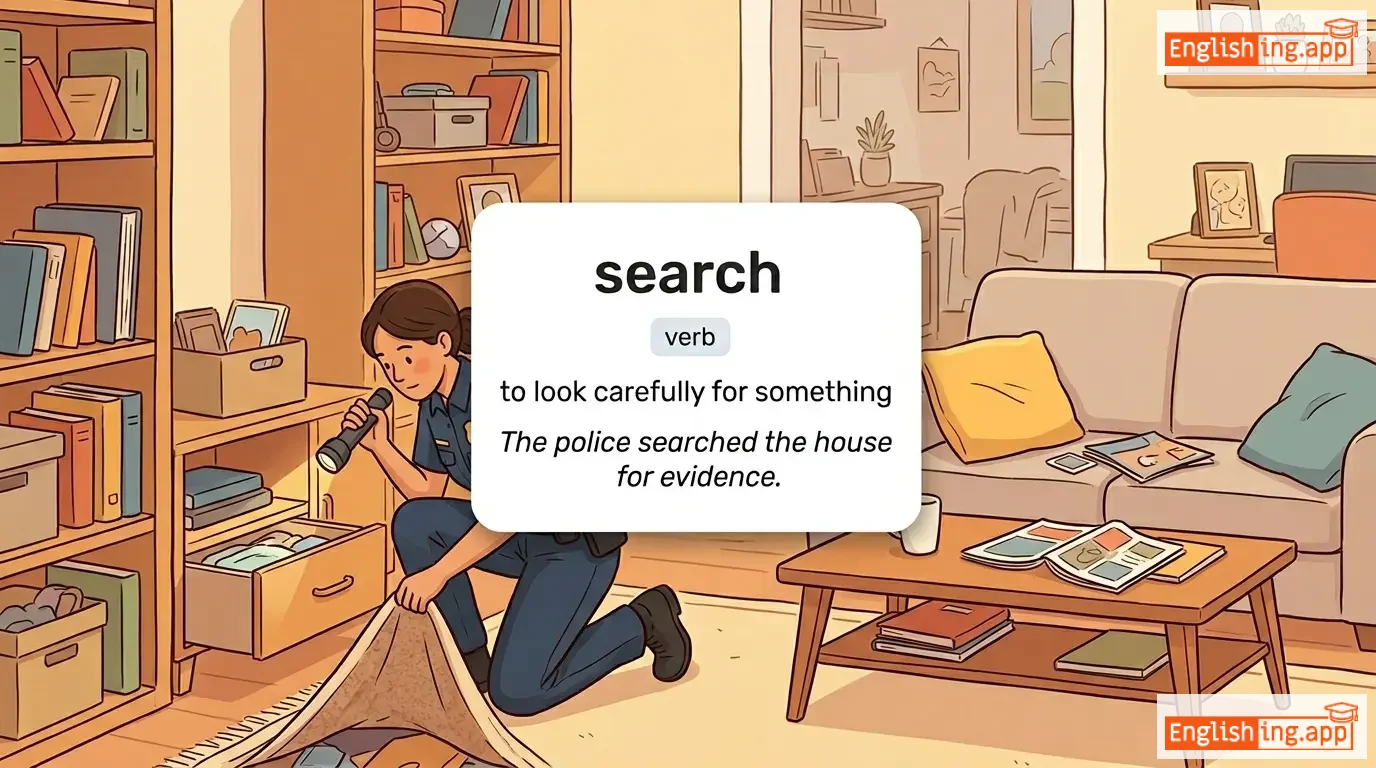
search definition card — visual illustration of the meaning
verb
/sɜːrtʃ/
検索 (kensaku)

to look carefully for something

"The police searched the house for evidence."

"警察は証拠を探すために家を捜索しました。" (Keisatsu wa shouko wo sagasu tame ni ie wo sousaku shimashita.)